Carry On Carnforth

News

Trips & Adventures – 30 May 2019

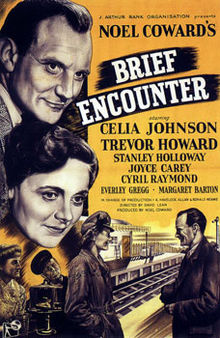
Eleven of us travelled by train to Carnforth Station – what a Carry On! The building was used as a location in the 1945 black and white film Brief Encounter and now has an extensive Heritage Centre and exhibitions space, including a small cinema.

The Beeching report in 1966 saw Carnforth lose many local services and in 1969 the refreshment room closed along with the sidings. The booking office closed in 1986 and in 1992 the buildings were in such a state of disrepair that Railtrack proposed to demolish them.

However, the Carnforth Trust was established in 1996 to raise money to preserve the buildings. The clock was repaired and re-started on 5 July 2003 and on 17 October 2003 the Heritage Centre opened. It now has 50,000 visitors a year and is staffed by volunteers.

We dined on chicken, chorizo and cheese baguettes with salad and coleslaw and other fine foods in The Station Master’s office which we took over as a group.

Carnforth Station is renowned for the film Brief Encounter which was ranked as the 12th best film ever and which was originally a half hour stage play by Noel Coward called “Still Life”. It was entirely set in the refreshment room. It was re-written under the direction of David Lean for the film version. By 1944 V1 and V2 rockets were landing in London but a London Station had been designated for use in the film. Because of the risk from attack the filming was moved up north which was considered to be safer. Also David Lean liked the slope at the station as he felt that Celia Johnson would look ridiculous running down steps which were at many stations.

Filming took place between February and May 1945 and the section at Carnforth was filmed in February 1945. Work on the film started late at night after the last trains had departed and finished early in the morning before the first local trains arrived. The refreshment room is not clearly visible from the platforms so the external part of the room which is seen in the film was in reality a painted “flat” specially erected on the platform in the space between the clock and the buildings.

The winter of 1944/1945  was bitterly cold and every night the cast and crew would break for a meal at 1.30am. The meal was taken in two dining cars. Celia Johnson did not enjoy the food but the local extras did. Sweets and chocolates were handed out during the production and these were surprising luxuries as sweets were rationed in the war.

We re-enacted a classic moment from the film when Trevor Howard and Celia Johnson were parting for the last time.

As a homage to Brief Encounter, most of the pictures can be seen in black and white here

Oldham Art Gallery

News

Trips & Adventures – 23 May 2019

This week Out In The City travelled to Oldham Art Gallery to meet the fantastic Out & About group. Our visit started at the Naked Bean Cafe where we enjoyed teas, coffees, soups, sandwiches, quiches and potato of the day!

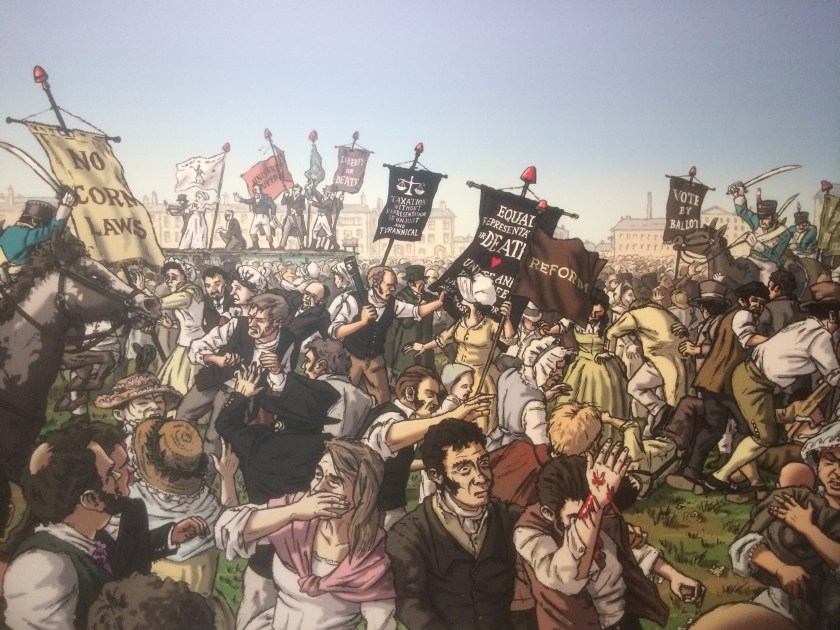
We had some great chats and then decided to make our way to the top floor to view the exhibitions. The latest exhibition marks 200 years since the notorious Peterloo Massacre. ‘From Waterloo to Peterloo’ explores the many stories linking Oldham and its people with the historic events of Peterloo.

From Waterloo to Peterloo

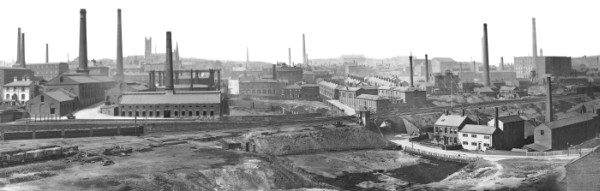
However, we were particularly impressed by the panoramic photograph of Oldham taken in 1876. This brought back many memories where we remembered smoke billowing from chimneys and houses with an outside toilet and no bathroom!

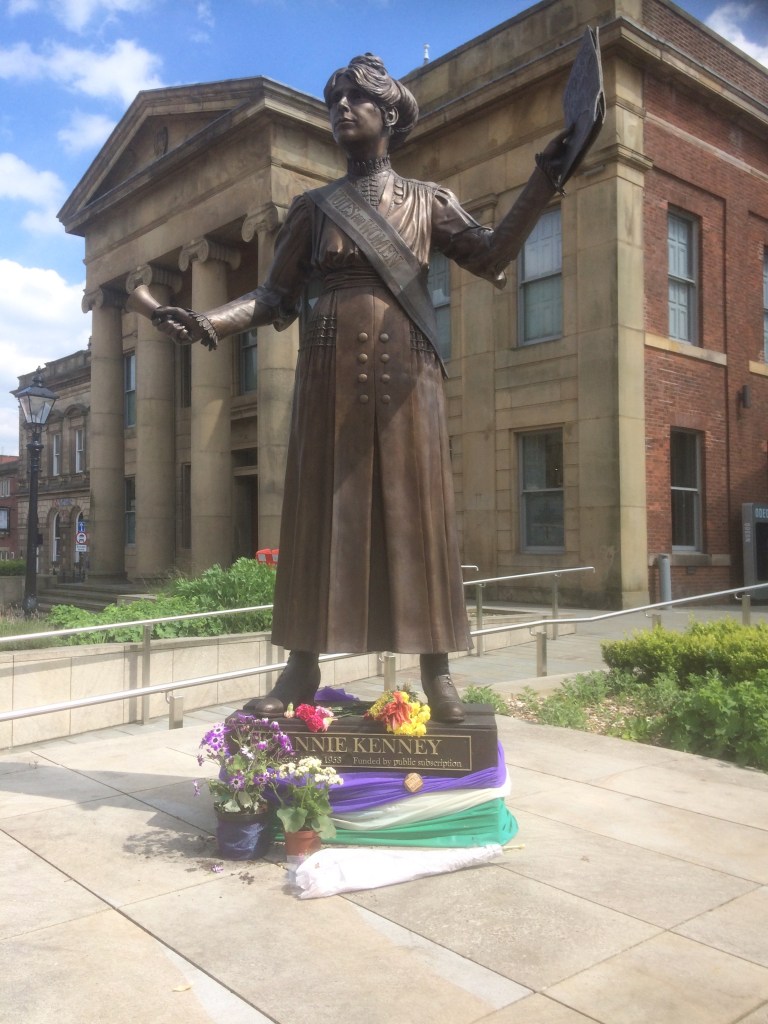
There was a lot to see from the temporary exhibitions to the permanent displays, but we decided to have a walk to Parliament Square to view the Annie Kenney statue.

Annie Kenney was the “underestimated” suffragette, who was arrested after asking Winston Churchill about voting rights.

Along with activist Christabel Pankhurst, she was photographed holding a large “Votes for Women” banner in a now-famous image.

Kenney was the only working class woman to hold a senior position in the Women’s Social and Political Union.

Annie Kenney statue

Thanks again to Out & About for hosting us. More pictures can be seen here.

What a Gay Week!

News

One of Larry Grayson’s sayings was: “What a Gay Day!” – well this has been a Gay Week.

  On Monday I went to the Pride in Ageing public consultation at the LGBT Foundation and had a nice chat with Lawrie Roberts, the Manager of a new programme of work at the Foundation to end the inequalities faced by older LGBT people.
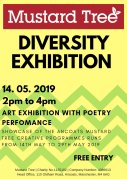
 

On Tuesday several members of Out In The City went to the launch of a “Diversity Exhibition” at the Mustard Tree charity which featured art and poetry and a slide show – “Travels of a Gay Squaddie”.


On Wednesday, after the Out In The City meeting, three of us visited the Manchester Metropolitan University for a lecture titled: “Unbuilding Gender: Trans* Anarchitectures in and Beyond the Work of Gordon Matta Clark”. The Queer Research Network Manchester had invited Jack Halberstam, a Professor of Gender Studies and English at Columbia University to talk about the new politics of trans*.

The lecture was so thought provoking and the range of material was breathtaking. This is Helen’s summary of the lecture:

Manchester Metropolitan University Research & Humanities – 15 May 2019

Our group was invited to attend the research event given by Jack Halberstam, and three members attended (Helen, Albert and Tony).

Jack Halberstam gave a world wind tour around his subject so that the participants could place his research in context and the functionality of action as it relates to our everyday structures and mores.

The built environment and how this impacts on us are often dictated by society’s values and moral judgements, certainly in the case of social institutions and ideas that actually influence people’s lives or views of the world and integration into society. For Jack this was a crucial component of Gender and Sexuality. He challenged the so-called common sense understanding of masculinity and femininity.

Jack used the work of Gordon Matta Clark, art and structural functionalism as a framework to better perceive how the built environment affects and indeed controls our lives. He raises the question how we as humans can survive within capitalism without a destruction and reorganisation of our built environment. The prospect of this without collaborative survival mechanisms is problematic.

For him the present structures produce an imbalance for humanity, an alienation and loss of a focal point almost losing our visibility of where we are within the natural evolution of  “humankInd” – something quite stark and brutal.

This was then juxtaposed so that destruction and reconstruction could provide growth to move away from these tight confines and provide a built environment, which fits the needs of humanity. By changing the architecture we change our lives and remove the dissonance and create harmony within its new structure.

Jack gave some basic examples, one being the reconstruction of gender neutral bathrooms given the controversial nature of trans women using women’s loos (certainly in the USA) when in fact it’s a non issue created by the political right. This whole issue is about the misogynistic nature of capitalist society. Indeed this creating difference is for the sole purpose of maintaining the status quo and male dominance within society.

Whilst this is a minor issue a more fundamental one is the use of and building of homes purely for investment. Jack argued that vast quantities of housing is not produced for use value but to store wealth. He felt that capitalists funded housing development actually knowing that it would never be occupied or used for homes. In a sense the empty properties create a pool of homeless people so that speculators can accumulate. Likewise many young people will never be able to own a home. He actually felt owning was part of the system and many people fell into this concept but in reality could not keep up with the mortgage payments. Jack’s view was based on his reflections on Gordon Matta Clark’s statement that “Nothing Works”. Nothing Works is an important message for the destruction and reconstruction of our built environment.

He ended his lecture by discussing the writings of Judith Butler – Undoing Gender. He felt the early feminists and even those anti-trans feminists of today are in actuality fighting the wrong battles. He referred to Paul B Preciado’s “Pornotopia – An Essay on Playboy’s Architecture and Biopolitics” and Audre Lorde’s quote “For the master’s tools will never dismantle the master’s house. They may allow us temporarily to beat him at his own game, but they will never enable us to bring about genuine change”. Your silence will not protect you …”

It sounds heavy, but in fact the lecture was an absolute treat.

Trips & Adventures – Thursday, 16 May 2019

We visited The Hardmans’ House at 59 Rodney Street, Liverpool – a fascinating home and photographic studio – that belonged to renowned photographer Edward Chambre Hardman and his wife Margaret.

Presented as it was in the 1950s during the height of their business, the house and all of the Hardmans’ original possessions perfectly preserve what life was like for this talented couple.

From the waiting room to the studio, the kitchen to the bedroom and the darkrooms to the exhibition rooms, there’s so much to see.

The house was both a business and home for the Hardmans. The majority of the house provided space for clients to wait, change their clothing and sit for photographs. Behind the scenes, the staff would be busy developing prints in the cellar and then preparing them to be sent to clients in the retouching room and mounting office.

The Hardmans lived in just three small rooms within the house. Their main focus was the prosperity of the business so they didn’t have much time for household chores. Preferring to dine out and to travel for inspiration, they spent very little time relaxing in their cramped living quarters at home.

The Hardmans photographed some gay icons: Ivor Novello – composer, actor and entertainer (on the wall behind Stuart) and Hugh Paddick, an English actor, whose most notable role was in the 1960s BBC radio show Round the Horne.

There are lots of great pictures here

Today, Friday 17 May, marks IDAHOBIT, the International Day against Homophobia, Biphobia and Transphobia. On this day 132 countries across the world will be raising awareness of LGBT rights.

Finally, the weekend marks a community event to celebrate LGBT+ diversity in Whalley Range. This occasion has been organised by local residents to bring together the wide range of talent, entertainment and creativity that exists in the neighbourhood.

If you got this far (!) … I said it had been a Gay Week.
 

Staircase House, Stockport

News

Trips & Adventures – 9 May 2019

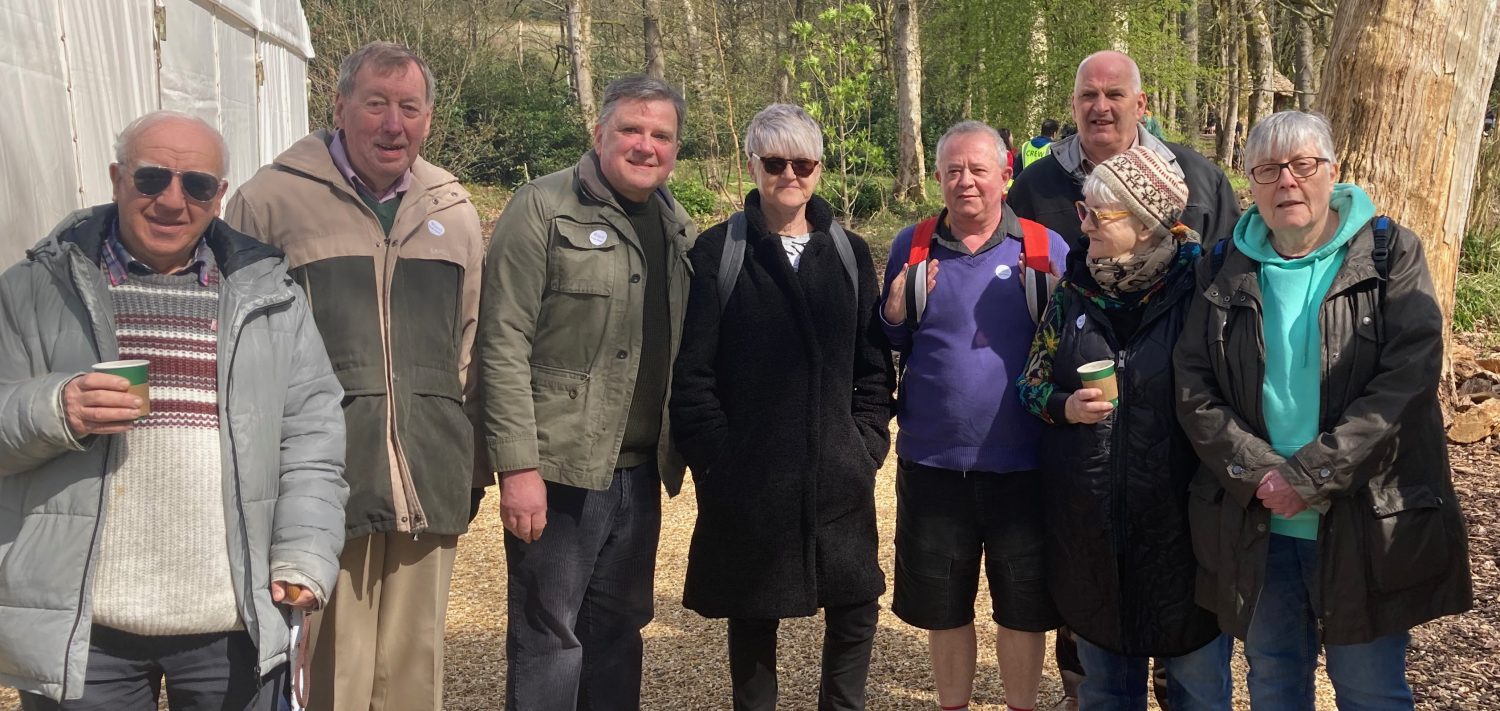
We took the 11.35am train from Piccadilly and found ourselves in Stockport eight minutes later!

We had decided to visit the Arden Arms due to their reputation for the excellent quality of beer and food, pub décor, value for money and exceptional customer service, and we weren’t disappointed. We actually arrived before the pub opened at 12.00 noon, but it quickly filled up.

The Arden Arms, on Millgate, central Stockport, was built in 1815 as a replacement for Ye Blew Stoops pub, a coach inn that dated back to 1650. It is thought to have had a tunnel that ran to nearby St Mary’s church and is believed to be the oldest pub in central Stockport.

The Arden Arms in 1900

As part of its colourful history the pub’s cellar was used to store dead bodies during influenza outbreaks, and George Raffald Junior, who built the Arden Arms, used to hide up nearby trees to catch any thieves targeting the pub.

The Arden was voted Greater Manchester’s Regional Pub of the Year in the 32nd edition of the Good Beer Guide published by the Campaign for Real Ale (CAMRA) and was additionally selected as Pub of the Year for the Manchester Food and Drink Festival back in 2008.

Just around the corner from the pub is The Staircase House – a “hidden gem”  on Market Place. It is a medieval building and is famous for its rare Jacobean cage-newel staircase (only three survive in the country) and is Stockport’s oldest town house.

We were given headsets to hear an audio guide so that we could delve into the past and discover how our ancestors lived from the 15th to the 20th centuries. The original part of the building dates back to 1460, with various parts added over the centuries, each room showing a different period. A protected face of the original outside wall shows various methods of construction.

The audio commentary did go on a bit too long in places but was very informative. Many of the items in the rooms can be picked up and we particularly enjoyed this interactive aspect. It was a great experience and well worth the visit.

Halifax: Shibden & Piece Halls

News

Trips & Adventures – 28 April 2019

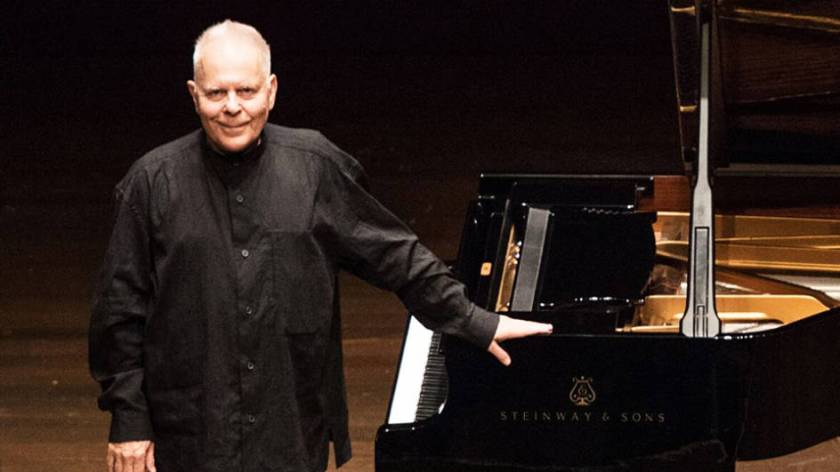
Stephen Kovacevich

American-born pianist Stephen Kovacevich moved to Britain to study with Dame Myra Hess and has since graced concert platforms across the world for over 50 years. He made his name with critically acclaimed recordings of Beethoven and Schubert with a special fascination for their late works.

As part of Bridgewater Hall’s International Concert Series, we heard:

J.S. Bach Partita No.4 in D, BWV 828;
Beethoven Sonata No.31 in A-flat, Op.110; and
Schubert Sonata No.21 in B-flat, D.960.

His recital of Beethoven’s Op.110 was fluently expressive, yet also intellectually compact, while Schubert’s last sonata in B-flat was grandly expansive and lyrical, as well as searchingly profound.

To be thorough, Stephen Kovacevich was born in San Pedro, Los Angeles, California, to a Croatian father and an American mother. When his mother remarried, his name was changed to Stephen Bishop, the name under which he performed in his early career. He later discovered that he was often being confused with the singer and guitarist Stephen Bishop. To avoid the confusion, he began performing as Stephen Bishop-Kovacevich and later simply as Stephen Kovacevich.

Trips & Adventures – 2 May 2019

Eleven of us ventured to Halifax to mark the occasion of Lesbian Visibility Day, by visiting Shibden Hall (Anne Lister’s house).

Called “Fred” by her lover and “Gentleman Jack” by Halifax residents, Anne Lister (1791 – 1840) is often called “the first modern lesbian” for her clear self-knowledge and openly lesbian lifestyle.

Throughout her life, she kept diaries that chronicled the details of her daily life, including her lesbian relationships. Her diaries contain more than 4 million words and about a sixth of them — those concerning the intimate details of her romantic and sexual relationships — were written in code. The code, derived from a combination of algebra and Ancient Greek, was deciphered in the 1930s.

However, on our visit we cracked the code! The photographs cannot tell a lie:

After visiting the Hall and gardens we made our way back to Halifax for a meal at the Square Chapel Arts Centre. The food was reasonable (except that the vegetarian meal was served with bacon) but I have never met a ruder salesperson. I ordered a black Americano coffee. When he was making the drink I enquired “Did I say, no milk?”, and he replied “Yes, you’ve already told me twice” (which was not true). When he served my pizza, he plonked it in the middle of the table and said “Make your mind up who wants it”. Perhaps he wanted to finish his shift, but his tone came across as very rude and nasty.

After the meal we had a wander around the Piece Hall, an 18th century cloth hall which now houses shops, bars and restaurants. It’s a spectacular building and lots of pictures can be seen here.