Bury Art Gallery & Museum … Out In The City members interviewed … Kelly Holmes

News

Bury Art Gallery and Museum

This week we gathered at the Bury Tram Stop Terminus and took the short walk to the local Wetherspoons pub – the Art Picture House. This is a striking Grade II listed building and is a fine example of an early 1920s cinema.

After dining it was just a short walk to the Bury Art Gallery and Museum. We were welcomed at reception by a very friendly member of staff who explained the layout of the building.

David Gilbert’s “Retrospective” filled the ground floor area. He was a self-taught sculptor and artist who worked predominantly in wood.

The basement featured an exhibition about Silver Street in Bury, whilst the top floor featured the “Lights” exhibition, the Bury Art Gallery and Tina’s Tea Rooms. The Tea Rooms are highly recommended and I’m sure we will visit again in the near future.

More photos can be seen here.

“When I see young LGBT people living openly, I feel joy – my generation didn’t have that

Many older LGBT people had to hide their sexuality in their youth for fear of rejection. Out In The City helps to support and connect them.

Loneliness in older adults is an acute problem in the LGBT community, most of whom have been shunned by society in their lives 
CREDIT: Paul Cooper & Jack Rear

In an upper floor room of Manchester’s Central Library, Out In The City, a group of trailblazers, are meeting; the first generation of LGBT people to grow old, out and open. 

“This group is about supporting each other,” explains their leader Tony, 67. “We’ve all been dragged through the hedge backwards. Some have lost friends, been ostracised by family, had issues around coming out and relationships. We can be there for one another.”

Age UK research shows 1.4 million older adults are often lonely. The problem is particularly acute in the LGBT community, most of whom have been shunned by society in their lives. Out In The City, supported by Age UK Manchester, helps connect and support them.

“Our oldest member is 93,” Tony explains. “Homosexuality was partially legalised in 1967. For the first 38 years of his life, he was illegal.”

Tony’s story is scarcely better. “When I told my parents as a teenager that I was gay, homosexuality was considered a mental illness, so they sent me to a psychiatrist,” he recalls. “I had neither an absent father nor an overbearing mother so the psychiatrist decided I couldn’t possibly be gay. When I persisted, my parents threw me out. I never saw them again.”

When Tony told his parents as a teenager that he was gay, homosexuality was considered a mental illness
CREDIT: Paul Cooper

Many openly gay people turned towards the community for support. Friendship groups became “logical families” after they’d lost biological ones. During the Aids epidemic, these surrogate families were blown apart. Tony knows more than 100 people who died of the disease. While straight people his age would have friends to rely on, many of his did not survive.

This is one of the reasons there are statistically fewer older LGBT people. According to 2020 ONS estimates, in the 65+ age bracket, there’s a ratio of one openly LGBT person to every 123 heterosexuals. In contrast, the ratio among 16- to 24-year-olds was 1:10.

Though LGBT people often rely on their community, Age UK has found that many older members feel excluded, perceiving traditional gay settings as being aimed at younger people. In 2018, gay charity Stonewall found 21 per cent of LGBT people aged 55-64 and 28 per cent of LGBT people aged 65+ have experienced ageism in LGBT settings.

“You hit a certain point then disappear,” says Andy, a 58-year-old from Wigan. Having not come out until he was 32, he knows about feeling invisible. Andy knew he was gay from the age of seven, but lived trying to deflect suspicion to avoid ridicule and abuse. It got lonely. “I started seeing my friends getting married. I realised I needed to say who I was, otherwise I’d be lonely for ever: no friends, no one to love, no one to care about me.”

Andy knew he was gay from the age of seven, but didn’t come out until he was 32 
CREDIT: Paul Cooper

Once he came out things began to improve, but it’s only since joining Out In The City two years ago that Andy feels he has found people who understand him. “I’ve become more confident,” he says. “I was frightened to be myself, living according to what other people wanted. I had to start living my life. People here get me.”

It’s the same for Levi, 59, a gay transman who joined the group after struggling with loneliness during lockdown.

Levi felt “lost and confused” unable to make sense of his gender dysphoria as a child without even the language to discuss it. “Life was awful,” he confesses. “Lots of suicide attempts, depression, sexual assaults, hospitalisations.”

After he began transitioning nearly a decade ago, Levi decided to move to Manchester in 2019. “I’d been living in a military town. You don’t last long as an out trans person in a place like that, but Manchester was where the streets were paved with gold. Or rainbows…”

Levi joined Out In The City after struggling with loneliness during lockdown
CREDIT: Paul Cooper

The transitioning process ground Levi down. “It’s tough: getting on the list, persuading multiple psychiatrists that you are who you say you are, hoops you’ve got to jump through,” he explains. “Then out of the wilderness was this group.”

For the first time in his life, Levi met people who affirmed him. “I’ve made more friends in the past few years than I’ve ever known,” he beams. “This group has saved my life.”

There’s immense value to spaces for older LGBT adults, says Levi. “When I see young LGBT people living openly, my heart fills with joy, but it’s complicated,” he says. “My generation didn’t have that. At this group there’s an understanding of the pressure that us older folks felt; the survivor’s guilt from living through Aids. I have gained so much from being able to talk to people who understand those things.”

Former Londoner Michael, 72, also recalls struggling with homophobia. As a gay Chinese chartered accountant, clashing parts of his identity left him feeling like “a fish out of water”.

For Michael, clashing parts of his identity left him feeling like “a fish out of water” 
CREDIT: Paul Cooper

Michael remembers the police raiding Gay’s The Word bookshop where he volunteered, and spending his first London Pride dodging photographers, lest his employers discover his sexuality. “I would have been fired,” he sighs. “It was a traumatic time to be gay.”

He survived through moments of joy. “Sneaking out to march in my first London Pride was exhilarating – I could finally be myself,” he says, grinning. “I felt free. It was marvellous to come across people discussing gay life, talking about gay literature. It’s much the same in this group.”

Out In The City isn’t just for those able to embrace their LGBT identities from their early years. Many who grew up in less accepting times felt obligated to assimilate and have only been able to come out later in life.

Norman, 72, came out as bisexual in 2019, after his wife of 43 years passed away.

After speaking to his family about his sexuality aged 17, he was referred to a psychiatric unit and “treated” with electroconvulsive and aversion therapy. “I realised no one was going to let me be who I am, so I had to get on with it,” he shrugs. At 22, he met Marilyn and fell in love. “She was the loveliest of people. I was happy, so I thought I must be straight,” Norman says. 

Norman came out as bisexual in 2019, after his wife of 43 years passed away
CREDIT: Paul Cooper

After 10 years of marriage, Norman suffered a breakdown and admitted to himself that he might be bisexual. It took him another 10 years to tell Marilyn, who already knew and accepted him.

They went on with their happy marriage, but when Marilyn passed away, Norman realised he needed to be open about his identity with other people. “There was a mountain inside me, ready to erupt,” he explains. “Out In The City has been a lifeline. I’ve made so many new friends. It has helped me relax and be myself.”

He advises others in his position to follow in his footsteps. “You will have no difficulty finding help,” he says. “Do not bottle it up, like I did. Tell a trusted friend. Once you’ve spoken to one person, you’ll feel the pressure easing.”

James, 83, has found enormous fulfilment since coming out later in life. “I got married to my wife in 1963 when being gay was illegal,” he says. “It was obvious to me that I was gay, but I couldn’t act on it. In those days all you got was scare stories in the tabloids.”

James found Out In The City 10 years ago and says: ‘It’s the best mental health support’
CREDIT: Paul Cooper

Loyalty to his wife kept James in the closet. “She was a wonderful woman, but she suffered from bipolar disorder,” he recalls. “If I had left her to do my thing she would have been hospitalised and never seen again. I couldn’t do that. I would have stayed with her until now if she’d lived.”

When his wife passed away from cancer in 2004, she offered her blessing for James to “get on with [his] life”. “I’ve always thought that was incredible,” he smiles. “After that I came out: I told my two kids, my friends, my church. It was a tremendous relief. Like uncaging a bird, I flew. I joined every gay group in Manchester. I started volunteering at the LGBT Foundation, on helplines, befriending services, health classes, even helping with finances.”

James’s son, daughter, and grandchildren have embraced him with open arms and there’s even been romance in his life. “I’m 83 – you’d think it’d be too late but I assure you it’s not!” he laughs.

Ten years ago, James discovered Out In The City and has been in awe of the friends he’s made in the group ever since. “They’ve taught me how to be me,” he explains. “It’s the best mental health support you could have.”

With equal rights enshrined in law for gay people, it’s easy to forget that the scars of the past are still close to the surface for people like Tony, Andy, Levi, Michael, Norman and James. Their generation has been racked with trauma and rejection, opportunities lost and lives wasted.

“The older LGBT community was born into a world in which same sex relationships were highly stigmatised and expressing their sexuality was a crime,” says Caroline Abrahams, charity director at Age UK.

“The repercussions of these formative experiences still shape people’s lives today. Despite huge strides forward, often hard-won by the extraordinary courage of older LGBT people, discrimination remains. It can become more of a struggle as ageist stereotypes are piled on top. It’s sad to acknowledge that as LGBT people age today they are still more likely to be lonely, to struggle financially, and find it hard to access healthcare that understands their needs and celebrates who they are.”

However, thanks to the determination and resilience of Out In The City and the relentless hard work of Age UK in supporting groups like it right across the country, there is hope that these older people can find the dignity, friendship and support as they age that they haven’t always experienced in their younger years.

Olympic champion Kelly Holmes says she’s ‘happy for the first time’ since coming out as gay

Dame Kelly Holmes came out as gay in June 2021. (Artur Widak / NurPhoto via Getty)

British Olympic champion Dame Kelly Holmes has said she feels “happy for the first time” after coming out publicly as gay. 

During an appearance on Loose Women the 52-year-old, who came out as a lesbian in June last year, reflected on how her life has changed.

She explained: “Since doing my documentary, called Being Me, and announcing publicly that I was a gay woman, a few months ago, it’s changed everything about me. I feel free, I’m happy for the first time in my life. I’ve met so many people too.”

Holmes explained how she was terrified of being open about her sexuality while serving in the army, due to the pre-2000 military ban on LGBT+ soldiers. 

“Some people still don’t know, but fear is a debilitating factor of life.

A lot of fear is irrational, but a lot of people have fear in their life and mine was worrying that I’d still be in trouble from the military because it was against the law to be gay while I was serving in the military.”

Reflecting on hiding her sexuality for 30 years, Holmes said she had tried to “change the narrative in her head”.

Dame Kelly Holmes says she feels ‘free’ since coming out as gay. (Getty)

“It’s ok to have the conversations we have and to just talk normally,” she said.
“When you’re having to constantly check yourself, everything that you say and do on a day-to-day basis, because you can’t talk about a partner, you can’t talk about where you went on holiday …”

Holmes said coming out has helped her “become more free”. 

In June last year Holmes said a terrifying brush with COVID-19 made her realise that she wanted to show the world her “real self”. 

Holmes shared that she had secret relationships with other soldiers during her 10 years in the British Army, risking being “court-martialled” and being jailed if they were caught. She described an incident when the Royal Military Police searched her accommodation in what she believed was a check to root out LGBT+ soldiers. 

Until 2000, it was illegal for people serving in the British military to be openly part of the LGBT+ community. Several LGBT+ veterans who served under the military ban have shared they were discharged from the forces, stripped of their medals or convicted under the vile laws. 

Recent activities: Christmas Drinks / Last Meeting of the Year / Bridgewater Hall … LGBT+ Rights Advances … Community Cafe

News

Recent activities:

Christmas drinks

Here are a few photos from the outing on 21 December at The Rem and the New York, New York:

Last Meeting of the Year

What a nice afternoon we had on 22 December 2022 at Cross Street Chapel for an Out In The City festive afternoon hosted by Gary, Derek and David.

We all provided a lovely buffet and Derek sang a jovial Victorian song called “The Carolers”, then all of us sang some carols after doing a fun Christmas quiz provided by Derek. Gary played the piano accompanying our singing. Finally David sang “When a Child is Born”. A good time was had by all.

‘Last Night of the Christmas Proms’

Ten members of Out In The City celebrated Boxing Day in style with the Manchester Concert Orchestra as they performed a stellar selection of great classics including:

Mendelssohn Hebrides Overture
Rossini Galop from William Tell Overture
Strauss Blue Danube Waltz
Bizet The Pearl Fisher’s Duet
Ravel Bolero
Rossini Largo Al Factotum
Bizet Danse Boheme
Elgar Nimrod
Goodwin Those Magnificent Men in Their Flying Machines
Puccini Nessun Dorma
Elgar Pomp & Circumstance No 1.

Nutcracker

Over two performances on 2 and 3 January nineteen members of Out In The City were entertained by the Varna International Ballet performing The Nutcracker.

Founded in 1947 and currently celebrating their 75th anniversary, the critically acclaimed Varna International Ballet came to the UK for the very first time. Renowned for its award-winning soloists and magnificent corps de ballet, the company has been delighting audiences for decades at home and abroad with its performances of the highest quality. The performance was superb. It was enchanting, the characters were mystical and the actual ballet was out of this world!

Seven international LGBT+ rights advances in 2022

From New Zealand to Greece to Zimbabwe, LGBT+ people worldwide gained key rights in 2022. Diligent, unending work by activists and pro-LGBT+ politicians led to victories for LGBT+ couples, intersex youth, people living with HIV and more.

Even in countries making significant advances for LGBT+ rights, the community still has a long way to go before realising total equality. Nevertheless, it is essential to celebrate the wins. Here are seven victories for the international LGBT+ community this year.

Marriage equality became a reality in Mexico, Slovenia, Cuba and Chile

In October, Slovenia officially legalised marriage equality and adoption, making it the first country in Eastern Europe to do so.

The historic moment came about after a 6-3 Constitutional Court decision in July said that same-sex marriage and adoption are constitutional rights. The court ordered parliament to add an amendment within six months.

In the same month, the entire country of Mexico achieved marriage equality after the final state approved it. In a 23 to 12 vote (with two abstentions), Tamaulipas became the 32nd state to legalise same-sex marriage after the state of Guerrero did so just the day before.  Seven of the 32 states approved marriage equality just this year.

Earlier, in March, Javier Silva and Jaime Nazar became the first gay couple to legally wed in Chile after the nation passed marriage equality legislation in December.

The new law also removed restrictions on same-sex couples around parentage, adoption rights and assisted reproduction. It also eliminated a requirement that transgender people get divorced before having their gender legally recognised.

And finally, in September, Cubans voted in favour of legalising same-sex marriage and adoption by gay couples, with about 67% of voters supporting the measures as part of updating the island nation’s four-decade-old “family code.”

The vote was noteworthy because the Cuban government has only held public referendums to shape its laws three other times since the country’s 1959 revolution.

Ireland voted to make trans people a protected class

In October, the Irish Cabinet voted in favour of a bill that says anyone convicted of purposefully inciting hatred or violence against a person due to their gender identity or expression could face up to five years in prison.

The updates to Irish hate crimes law – including making disabled people a protected class – were reportedly made based on international best practices.

Greece banned genital surgery on intersex babies

The parliament of Greece passed a law in July banning “sex-normalising” surgeries for babies born intersex.

Surgeries on intersex babies are often unnecessary for the child’s health and are performed so that adults feel better about how the child’s genitalia looks, even though the child cannot consent to the procedures.

Moreover, the surgeries can lead to loss of sexual sensation, sterilisation and psychological trauma, according to Intersex Greece.

The new law in Greece bans the procedures for children under 15 unless parents can obtain a court decision.

Zimbabwe decriminalised HIV transmission

This year, Zimbabwe officially decriminalised the transmission of HIV.

A UNAIDS press release stated that a legal assessment completed by Zimbabwe in 2019 found that criminalising the transmission of HIV created stigma for those living with the virus and also caused barriers to health care. The release also said criminalising transmission deters people from getting tested for HIV.

UNAIDS also touted the progress Zimbabwe has made in the fight against HIV, reporting that of the 1.3 million people living with HIV there, 1.2 million are on life-saving medications. Since 2010, HIV infections have decreased by 66% and AIDS-related deaths have decreased by 63%.

Trans people won the right to exist in Kuwait

In February, transgender equality activists scored a significant win in Kuwait as the country’s constitutional court struck down a law that has long been used to criminalise transgender identity.

Amnesty International welcomed the decision as a “major breakthrough.”

“Article 198 was deeply discriminatory, overly vague, and never should have been accepted into law in the first place,” Amnesty International Middle East and North Africa division deputy director Lynn Maalouf said.

She said that the ruling means that authorities in Kuwait “must also immediately halt arbitrary arrests of transgender people and drop all charges and convictions brought against them.”

New Zealand banned conversion therapy

In a 112-8 vote, the New Zealand parliament passed a law in February banning the harmful and discredited practice of conversion therapy.

Tokyo granted domestic partnerships to same-sex couples

As of November, couples who either live or work in Tokyo can be issued domestic partnership certificates.

Marriage equality is not recognised in Japan, but LGBT+ advocates hailed the move, allowing same-sex couples to be treated as married couples when it comes to housing, health care, and social services.

Rainbow LGBT

Community café is back!

This January the LGBT Foundation are offering you not one, but two opportunities to come to their centre at Fairbairn House, 72 Sackville Street, Manchester M1 3NJ. Get warm and cosy up with the community. The community café will be running on both Saturday and Sunday from 7 January onwards from 10.00am to 1.00pm.

Christmas at The Movies … Forefather of the LGBT+ Rights Movement … Next Meetings

News

Christmas at The Movies

On Thursday, 15 December members of Out In the City attended  the “Christmas at The Movies” concert in the stunning Bridgewater Hall.

Manchester Concert Orchestra and Canzonetta Choir performed music from the films: The Polar Express, Miracle on 34th Street, The Snowman (with Henry Brodrick), It’s a Wonderful Life, The Nightmare Before Christmas, Gremlins, Love Actually, A Christmas Carol and ET The Extra-Terrestrial.

After an interval we heard Sleigh Ride, Elf, The Chronicles of Narnia, Music from Harry Potter, The Grinch and Home Alone.

This was followed by two singers who sang iconic Christmas songs like Winter Wonderland, Have Yourself A Merry Little Christmas, White Christmas and Baby, It’s Cold Outside. Conductor, Toby Purser, briefly explained each performance. It was a most enjoyable concert.

Forefather of the LGBT+ rights movement

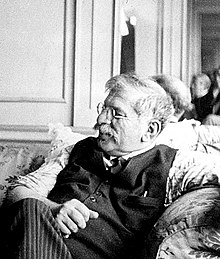
Henry Gerber – 29 June 1892 – 31 December 1972

Many people think the start of the modern rights gay rights movement began with the 1969 Stonewall Uprising or even the 1950s-era founding of “homophile” groups like The Mattachine Society or the Daughters of Bilitis.

But a recently published book suggests that Henry Gerber, a Chicago post-office worker, actually began laying the foundation of the gay rights movement back in 1925. He was born Heinrich Josef Dittmar, but changed his name upon emigrating to the United States in 1913.

The book, An Angel in Sodom: Henry Gerber and the Birth of the Gay Rights Movement by Jim Elledge, notes that, while serving as a military newspaper proof-reader in Germany during World War I, Gerber subscribed to several gay German magazines and spent time amongst the LGBT+ community in Berlin, where the US military wasn’t stationed at the time.

While there, Gerber was inspired by the Institute of Sexual Science, a transgender-inclusive research organisation headed by sexologist Magnus Hirschfeld. The organisation issued formal ID cards to trans people to help them avoid criminal cross-dressing charges.

Gerber observed how the German LGBT+ community had banded together to achieve visibility and political power. But in the US, LGBT+ people were afraid to publicly unite because anti-LGBT+ laws and social practices threatened to out them and imprison them, effectively ruining their lives in the process.

Inspired by Germany’s LGBT+ community, Gerber founded the innocuously named Society for Human Rights in Illinois on 10 December 1924. This was the first known homosexual organisation in the US. The society sought to “win the confidence and assistance of legal authorities and legislators” to help end the legal and social persecution of homosexuals. The group was exclusively dedicated to gay men, actively excluding bisexuals.

Gerber said he contacted “many prominent persons” and “noted medical authorities” to support his group, “but they usually refused to endanger their reputations.” Potential members also avoided his group. Even though “millions” of homosexuals lived in the US, Gerber found that very few were eager to let their names be on his group’s mailing list.

Gerber eventually found three poor friends to support his group as its national officers: a preacher who gave sermons about brotherly love to small Black groups, an “indigent laundry queen” (who, it later turned out, had a wife and two kids), and a railroad worker afraid of losing his job for being gay. In total, about nine people joined the group.

He also published two issues of a publication called Friendship and Freedom, but he found that his friends were too poor and illiterate to buy it let alone read it.

Gerber’s organisation came to an end one night in July 1925 at 2.00 am when a police detective and a local journalist knocked on his apartment door. The detective asked “where the boy was,” to Gerber’s confusion. He then took Gerber to the police station. The detective confiscated Gerber’s typewriter, notary public diploma, his personal diaries, bookkeeping accounts, and the society’s documents. The officer didn’t have a warrant, and Gerber never got his diaries back.

At the station, Gerber found that two of his group’s national officers had been arrested. The arrests had been covered in the local publication The Examiner under the headline “Strange Sex Cult Exposed.” The article claimed the aforementioned “laundry queen” had committed “strange sex acts” in front of his wife and kids, causing the wife to contact the police. The article also said the man had a pamphlet from the society encouraging men to “leave their wives and children.” Gerber called this a gross distortion of facts.

The police had no warrants for any of the three men’s arrests. As the “the sole evidence of my crime,” Gerber wrote, officers claimed they had found a cosmetic powder puff in his apartment. They also pointed to a passage in one of Gerber’s diaries that proclaimed “I love Karl,” though Gerber said the line was taken out of context and that he purposely left out any gay content from his diary that could’ve been used against him.

The judge in the case also said he thought that the society’s Friendship and Freedom magazine could be considered a violation of federal law forbidding the sending of obscene material through the mail. Gerber denied the magazine contained anything at all that could be considered “obscene.” In the end, a judge dismissed the men’s arrests, calling it an “outrage” that they had been arrested and detained without warrants in the first place.

As Gerber was released from jail, the prosecuting attorney told him that the pastor who served as the society’s national officer had confessed to sleeping with a boy – the boy the detective had asked Gerber about. Upon Gerber’s release, the detective derisively asked him, “What was the idea of the Society for Human Rights anyway? Was it to give you birds the legal right to rape every boy on the street?”

The arrest caused Gerber to lose his postal service job for “conduct unbecoming a postal worker.” His dismissal led to the end of his society. He referred to anti-gay arrests of the time as an “Unholy Inquisition” and compared the resulting trials to the public trials of Irish playwright Oscar Wilde.

Though his society ended, Gerber continued to support gay publications and social groups throughout the 1920s to the 1950s, though many of them had to publicly hide their associations to homosexuality, lest they be subject to legal persecution.

This persecution continued (and continues to this day), though the Stonewall Uprising and other rebellions marked important turning points where LGBT+ people refused to tolerate police abuse and public shaming any further.

Gerber died fifty years ago on 31 December 1972, at the age of 80, living long enough to see the Stonewall Uprising and the start of a new era of LGBT+ rights activism.

Next meetings

We are taking a break with this newsletter over the Christmas and New Year period.

The next outing is on Wednesday, 21 December – drinks in Gay Village (with your host Steve P). Meet in The Rem at 4.00pm … and start from there. Please join him for festive drinks.

The last meeting this year is on Thursday, 22 December from 2.00pm to 4.00pm at Cross Street Chapel, 29 Cross Street, Manchester M2 1NL. There will be a fun quiz.

However, there are still some social activities planned – see Next Outings – however, it’s too late to attend the free concerts if you haven’t already got your tickets.

The first meeting in the New Year will be Wednesday, 4 January 2023 at Manchester Central Library (Chief Librarian’s Office on 3rd Floor) from 2.00pm to 4.00pm.

Christmas Meal … Retirement Communities in the United States

News

Christmas Meal

The Out In The City Christmas meal was held at the Village Brasserie downstairs from the Velvet Hotel at 2 Canal Street, Manchester.

The restaurant has a great atmosphere and whilst people were arriving we enjoyed a glass of Kylie Rose Prosecco. The starters were vegetable soup, ham hock terrine or prawn cocktail. Our mains were turkey, nut roast, sea bass or beef, and our deserts were Christmas pudding, chocolate fudge brownie or apple pie. It was a really enjoyable day.

Photographs can be seen here.

10 retirement communities in the US where you can live as your authentic self

Finding a safe and supportive environment to age has become increasingly possible in recent years in traditionally friendly enclaves. San Francisco, New York, Los Angeles, Wilton Manors (near Miami) and Provincetown are some of the towns and cities where older adults can continue to live their best lives in the “gaybourhood”.

For many, though, a planned community is the preferred destination. A growing number are built and run with LGBT+ retirees in mind. Still, with an estimated 2.7 million people in that group, supply dedicated to this population segment has a long way to go to catch up with demand.

Here’s a list of 10 communities at the leading edge of serving LGBT+ retirees. From high-rises to log cabins, like-minded neighbours can also find comfortable living from coast to coast – and on the golf course.

Fountaingrove Lodge

1. Fountaingrove Lodge, Santa Rosa, CA

If you’re looking for a resort-like community with a continuum of care, Fountaingrove Lodge is ideal. Amenities on the 10-acre campus in Santa Rosa, CA, include golf, fine dining, a comprehensive wellness programme featuring fitness instruction, and as residents age, in-home continued care services. A memory centre programme for residents with cognitive impairment related to Alzheimer’s or dementia eases the burden of care for loved ones.

Stonewall Gardens, Palm Springs

2. Stonewall Gardens, Palm Springs, CA

In California, Palm Springs is already a mecca, so it makes sense that the desert oasis would be home to a first-class assisted living community for finding your chosen family. The development has 24 units and comes with the features you’d expect such as chef-prepared meals and an on-site nurse. It also offers multiple levels of medical care.

John C Anderson Appartments

3. The John C Anderson Apartments, Philadelphia, PA

Life at the John C Anderson Apartments in Philadelphia, located in the middle of the city’s gaybourhood, centres around the 6000 sq ft garden courtyard maintained by building residents. Built in 2014 with community input, the modern, airy complex features 67 affordable one-bedroom apartments with ceramic-tiled baths, wall-to-wall carpeting, and sun-filled, open floor plans, plus a community room adjacent to the courtyard for events, and retail shops serving senior needs on the ground floor, including a convenient coffee spot.

The Resort on Carefree Boulevard

4. The Resort on Carefree Boulevard, Ft Myers, FL

Options for lesbian-only communities are few, but this Ft Myers retirement village is a popular choice. The site features 278 home and Recreational Vehicle lots on 50 acres, many overlooking two women-made freshwater lakes. Amenities include a clubhouse with pool, fitness centre, hot tub, billiards room, library, clay room with kiln, card room, “a really great dance floor” and a wide variety of art programmes, plus tennis, pickleball, shuffleboard and bocce courts.

Carefree Cove Ashe Co., NC

5. Carefree Cove, Ashe Co., NC

This 165-acre gated community started as an entirely LGBT+ development but has welcomed straight allies in growing numbers. Set in the Blue Ridge Mountains of north western North Carolina, the forested community features 28 log-cabin homes and 78 lots available to build on; major development was stalled in the last recession. The tranquil setting, which includes a mountain stream and plenty of wildlife, is the development’s most-prized amenity.

Birds of a Feather Pecos, MN

6. Birds of a Feather, Pecos, MN

Just 30 minutes outside Santa Fe, New Mexico, Birds of a Feather is a 140-acre gated community founded in 2004. The independent living compound is designed for aging in place, with up to 3 acres ready for building either a custom home or one of several plans designed by architects for the community.

Rainbow Vista Gresham, OR

7. Rainbow Vista, Gresham, OR

Fifteen miles from Portland, OR, you’ll find Rainbow Vista, an apartment development geared toward active seniors. Studios and one-bedrooms come with a kitchenette. The communal facilities include a large event space, a video theatre, an exercise room, a game room with a pool table and a music room.

A Place for Us Cleveland, OH

8. A Place for Us, Cleveland, OH

For those not into moving south for retirement, this modern apartment complex in Cleveland, Ohio, offers city living in affordably priced one and two-bedroom apartments, plus amenities like a fitness centre and community room. Conveniently located close to transit, shopping and parks. It’s the first LGBT+-friendly senior housing complex in the state.

Town Hall Apartments Chicago, IL

9. Town Hall Apartments, Chicago, IL

Chicago’s Town Hall Apartments, located in the North Halsted gay district, comprises two buildings: a historic former police station and a colourful new six-story building next door featuring 79 units dedicated to affordable senior housing. Studio and one-bedroom apartments offer sweeping city views; a senior centre provides programmes, services and a full-time social worker. Outside, a sprawling, second-floor rooftop terrace is a popular destination, while the community Rainbow Room features event programming. The building also has a fitness and computer area. 60 percent of residents are LGBT+ older adults.

Village Hearth Durham, NC

10. Village Hearth, Durham, NC

Located on 15 acres in Durham, North Carolina, Village Hearth is a first-of-its-kind cohousing community that includes 28 single-story, fully equipped cottages with open floor plans, skylights, vaulted ceilings, and hardwood floors. The main complex features a common house with a gourmet kitchen plus exercise, game and craft rooms.

Free concerts at Bridgewater Hall … Scrabble Convention … Rainbow Call Companions … Rainbow Lottery

News

Bridgewater Hall

As Christmas approaches, we wanted to offer you the chance to attend some of the wonderful festive shows at Bridgewater Hall.

We’re delighted to be able to offer FREE tickets to the following shows, which feature wonderful performances of Christmas classics and more.

There are a limited number of tickets, so book here.

Thursday 15 December 7.30pm: ‘Christmas at the Movies’

Toby Purser conductor

Laura Tebbutt guest singer

Patrick Smyth guest singer

Canzonetta choir

Manchester Concert Orchestra

Don’t stay Home Alone this Christmas. Join the Manchester Concert Orchestra for a magical evening of Christmas treats at this concert of timeless classics, stuffed full of great music from your favourite festive films including: The Polar Express, Elf, E.T. The Extra-Terrestrial, Home Alone, White Christmas, Love Actually, It’s a Wonderful Life, The Nightmare Before Christmas, Miracle on 34th Street, Gremlins, The Chronicles of Narnia and The Snowman.

Monday 26 December, 3.00pm: ‘Last Night of the Christmas Proms’

Celebrate Boxing Day in style with the Manchester Concert Orchestra as they perform a stellar selection of great classics:

Mendelssohn Hebrides Overture
Rossini Galop from William Tell Overture
Strauss Blue Danube Waltz
Bizet The Pearl Fisher’s Duet
Ravel Bolero
Rossini Largo Al Factotum
Bizet Danse Boheme
Elgar Nimrod
Goodwin Those Magnificent Men in Their Flying Machines
Puccini Nessun Dorma
Elgar Pomp & Circumstance No.1

Hilary Davan Wetton conductor

Manchester Concert Orchestra

Monday 2 January, 5.30pm and

Tuesday 3 January, 7.30pm: ‘The Nutcracker’

The most famous fantasy ballets for all the family begins as night falls on Christmas Eve. As snowflakes fall outside, the warm glow of the open fire sends flickering shadows across the boughs of the Christmas tree and all the presents beneath. When midnight strikes we are swept away to a fairy-tale world where nothing is quite as it seems, toy dolls spring to life, the Mouse-king and his mouse-army battle with the Nutcracker Prince and we travel through the Land of Snow to an enchanted place where the magic really begins …

Varna International Ballet & Orchestra

Daniela Dimova Artistic Director
Peter Tuleshkov Music Director and Chief Conductor

Founded in 1947 and currently celebrating their 75th anniversary, the critically acclaimed Varna International Ballet comes to the UK for the very first time. Renowned for its award-winning soloists and magnificent corps de ballet, the company has been delighting audiences for decades at home and abroad with its performances of the highest quality.

To book your tickets please contact us here specifying name(s) and dates.

Scrabble Convention

Some of us had not played Scrabble for years but the rules were explained so that we all played in a consistent way. We formed teams of four and enthusiastically placed those letters on the board forming words and scoring points.

Scrabble is a game sold in 121 countries and is available in more than 30 languages; approximately 150 million sets have been sold worldwide, and roughly one-third of American and half of British homes have a Scrabble set. There are approximately 4,000 Scrabble clubs around the world.

It was a close run competition as the top three scores were 180 (Kevin), 177 (Cliff) and 176 (Neil). Tickets for two to Forever Manchester’s Birthday Party at the Kimpton Clocktower Hotel on 10 February 2023 were given to the winner and runner up. We have been shortlisted for Community Group of the Year and the evening will include a three course meal, live entertainment, awards presentations and a DJ.

We held a raffle and the winners received a box of biscuits, three calendars, a diary, a voucher for the café at Central Manchester Library and a key ring.

Rainbow Call Companions

Rainbow Call Companions is a free telephone befriending service specifically for LGBT+ people aged 75+ who would like to speak to someone who’s also LGBT+. 

The service was launched in March this year and in September was selected for a National Advisor for LGBT Health award.

Rainbow Call Companions is run by Re-engage to provide a safe and non-judgmental space for LGBT+ older people across the UK. Calls last for half an hour or so and you can chat about anything that interests you. What’s great is that the same volunteer phones you every time, so you can get to know each other and share stories and laughter – for as long as you both want.

Re-engage is committed to ending loneliness and social isolation for people in their 70s, 80s, 90s and beyond. Many people who get to such a great age find themselves with very limited social circles and social contact to look forward to.

Older LGBT+ people are  vulnerable to loneliness as a direct consequence of decades of privacy and self-concealment. This is a generation who grew up when  their  very being was deemed outrageous and illegal.  A lifetime of exposure to discrimination and stigma can lead to high levels of stress and a strong sense of isolation.  All too often, isolation is seen by older people as the price they have had to pay for their sexuality. 

If you are interested in using the service use the contact form or phone 0800 716 543 (Freephone).

Rainbow Lottery

We joined the Rainbow Lottery on 7 June 2021 and during that period we have had 49 winners! Forty have won 3 extra tickets, seven have won £25 and two have won £250. But the biggest winner has been Out In The City as we have received over £1250 in much needed funds.

Tickets cost just £1 per week and we receive 50p for each ticket bought. There’s always a chance to win up to £25,000, so buy those tickets and give our fundraising a boost.

With Christmas fast approaching, don’t forget that we have a fantastically festive prize to thank you for your ongoing support for Out In The City – a massive £1,000 John Lewis eGift Card!

From tech to toys, and furniture to fashion, you can one-stop-shop your last-minute Christmas shopping – and you can spend it in Waitrose too, for all your favourite festive treats!

The special prize draw will take place on Saturday 17 December. There’s no need to buy separate tickets, you will be automatically entered into this prize draw. Of course, you are welcome to buy additional tickets. Every ticket you buy is an extra chance to win, and an extra fundraising boost for Out In The City. It’s a win-win situation!

Thank you & good luck!

Go to https://www.rainbowlottery.co.uk/ and search for Out In The City to buy tickets.