Friends of Dorothy x Smart Barnett Art Exhibition … Holocaust Memorial Day … Story of a Gay Holocaust Survivor … Graying Rainbows Podcast

News

Friends of Dorothy x Smart Barnett Exhibition

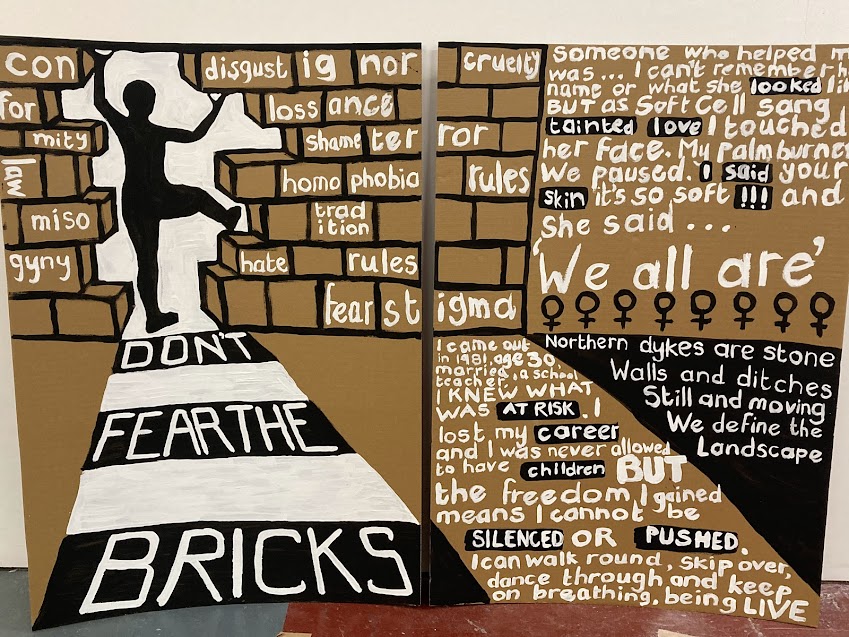
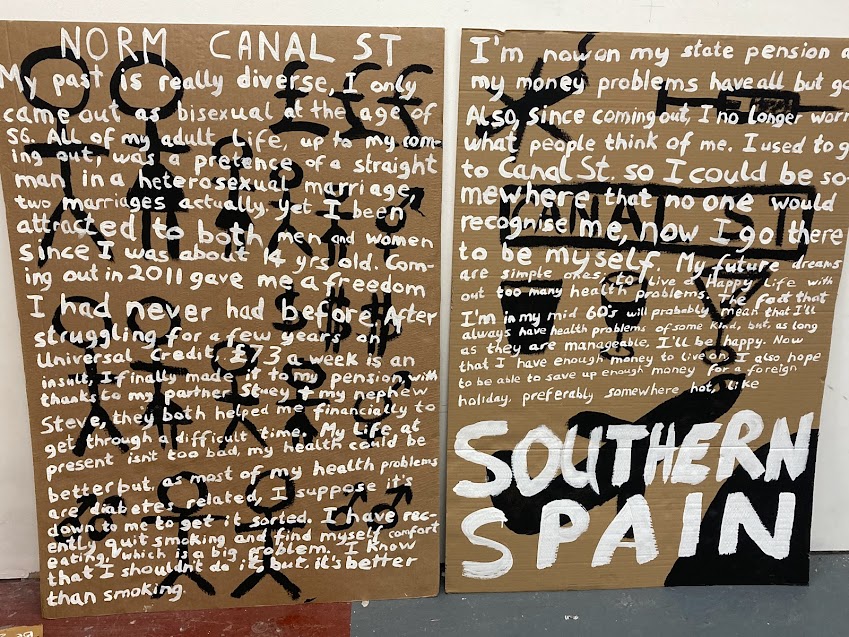
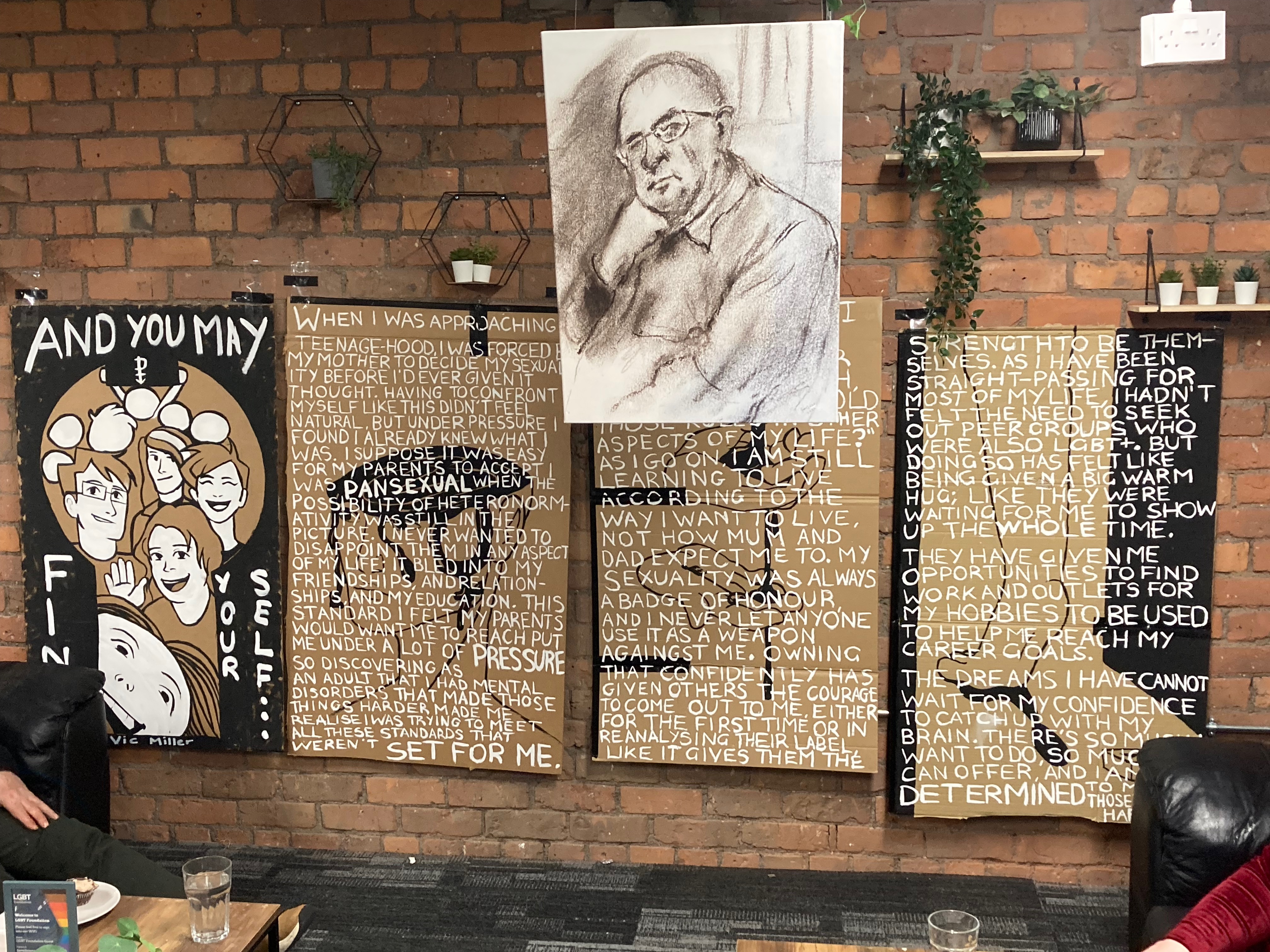
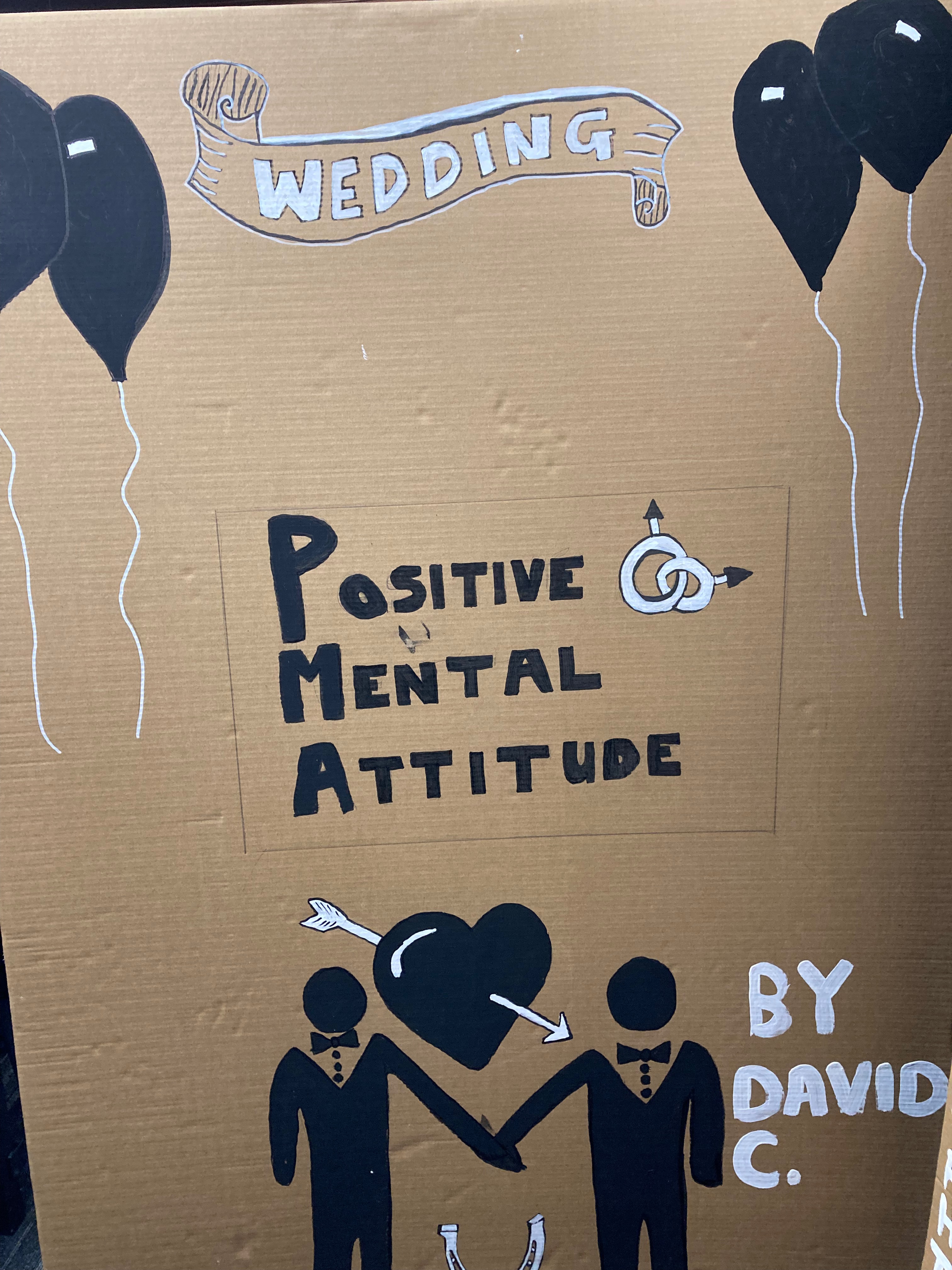
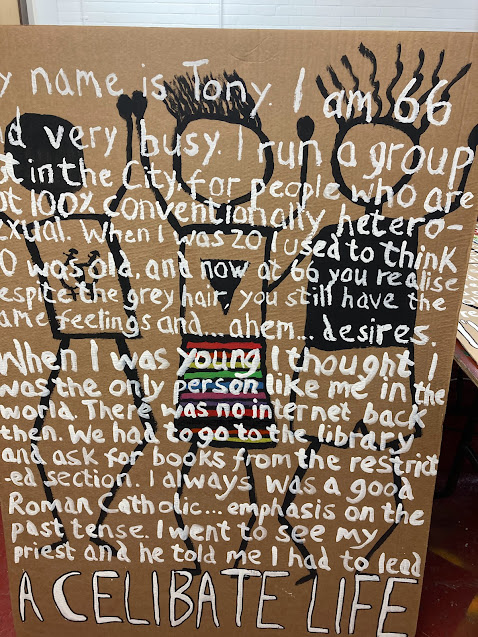
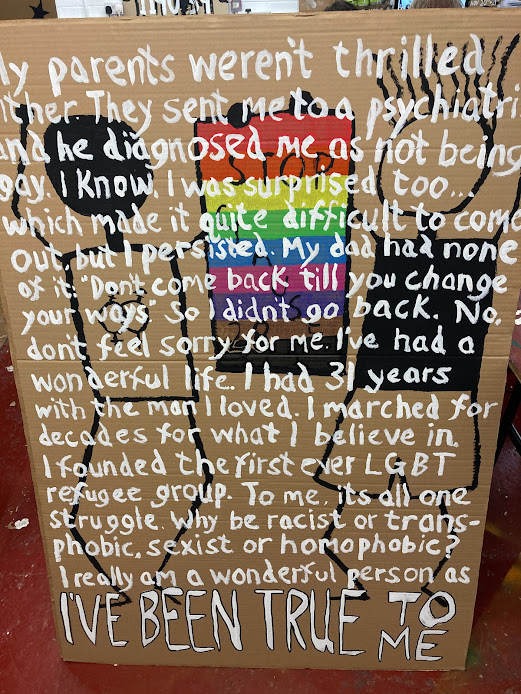
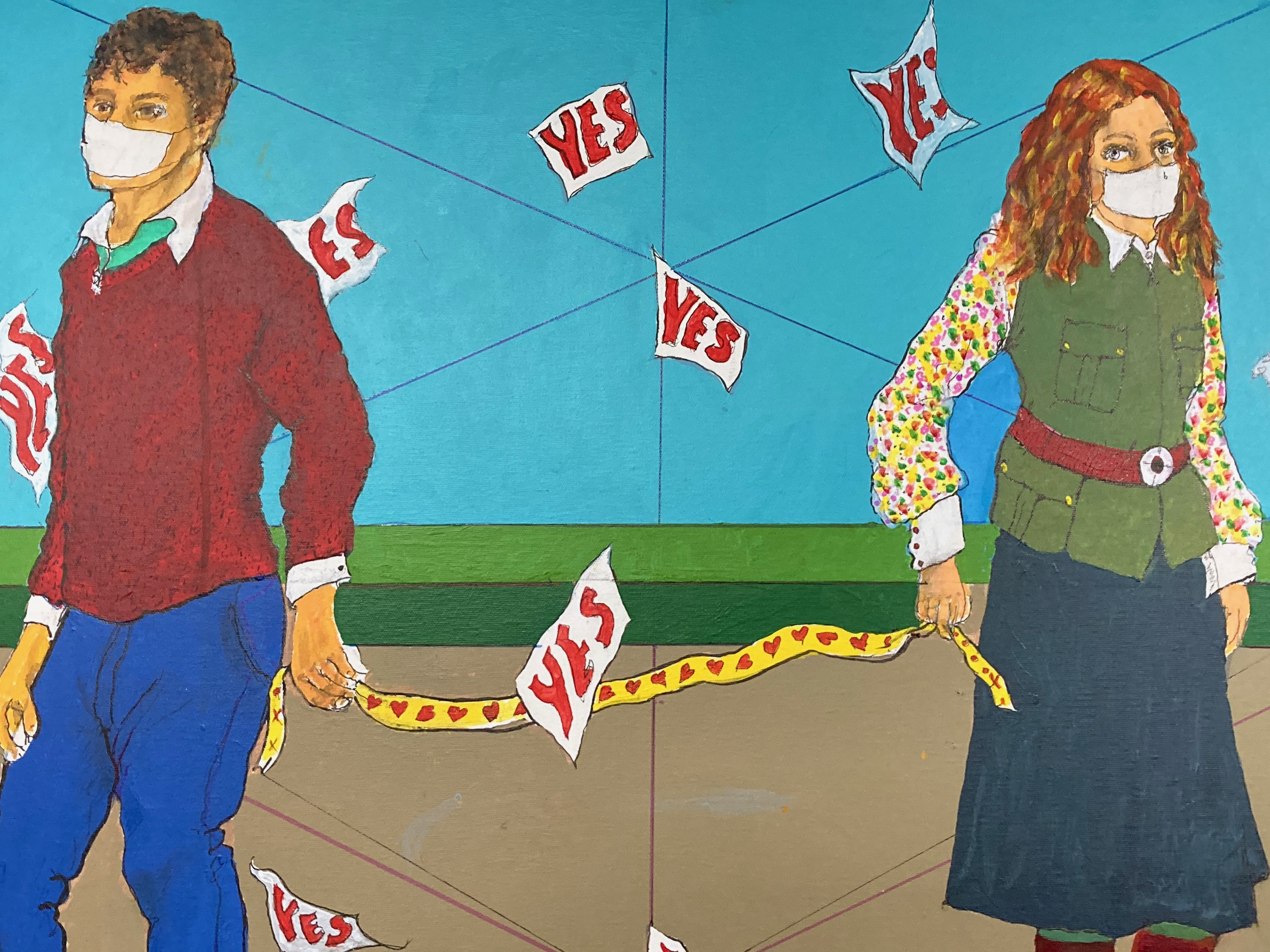
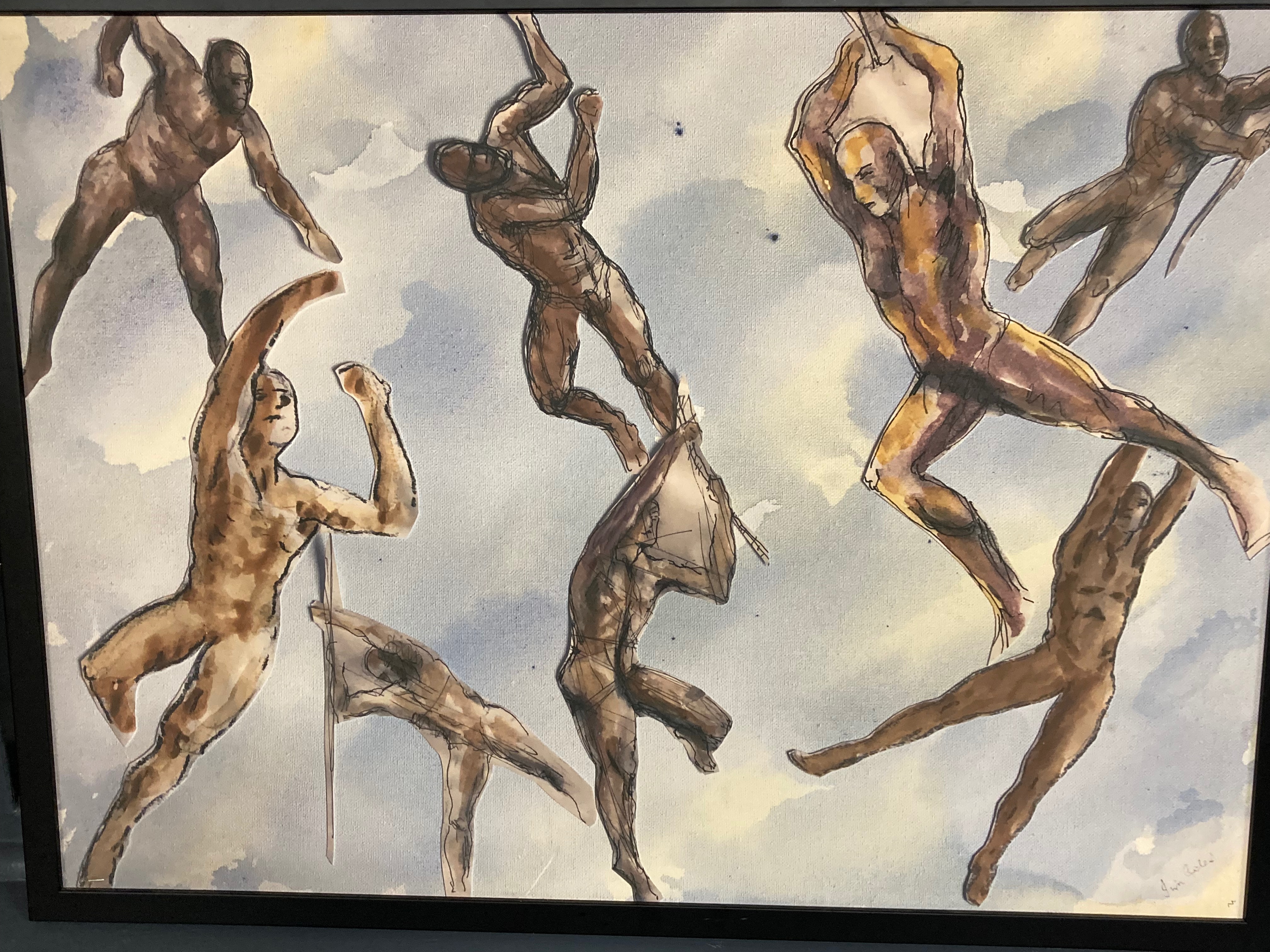
Our trip this week was a visit to a private viewing of the Friends of Dorothy x Smart Barnett Art Exhibition. This was the inaugural show by acclaimed artist and designer Smart Barnett at a gallery in Castlefield.

Showcasing his latest artworks alongside the largest collection of his work to date, Barnett draws inspiration from contemporary image cultures relating to online dating and web/screen based intimacy.

Smart Barnett is an artist and designer living and working in Manchester. His work sits at the intersection of textiles and digital art. Embroidery is at the core of Smart’s practice and the contrast of this often perceived, traditional technique combined with the imagery and themes within his work can be disarming and provocative.

Inside the safe, normative space of embroidery, Smart creates artworks that are expressive and bold.

A large mural comprising individual embroidery pieces covered an entire gallery wall some pieces of which were created exclusively for the Friends of Dorothy show. This was accompanied by an immersive presentation of Smart’s work around the other areas of the gallery. Alongside these works, the artist has created a special limited edition series of homeware items, postcards and signed limited prints.

This is an incredible exhibition involving gay male erotic imagery and themes of a sexual nature.

Sign up to the Friends of Dorothy newsletter here.

Follow on instagram here.

More photos can be seen here.

Holocaust Memorial Day

Auschwitz Liberation 1945

On 27 January 1945, Auschwitz concentration camp – a Nazi concentration camp and extermination camp in occupied Poland where more than a million people were murdered as part of the Nazis’ “Final Solution” to the Jewish question – was liberated by the Red Army during the Vistula–Oder Offensive. Although most of the prisoners had been forced onto a death march, about 7,000 had been left behind. The Soviet soldiers attempted to help the survivors and were shocked at the scale of Nazi crimes. The date is recognised as International Day of Commemoration in Memory of the Victims of the Holocaust.

I survived the Holocaust as a child – but it left me scared of coming out as gay

I was born on 1 September 1936 in Paris

My mother held me in her arms as she was ordered to face the wall in the living room with my brother Albert standing next to her.

The Nazi officer then went through into the bedroom with four policemen and beat my father until he screamed in pain and lost consciousness. My brother turned around briefly and caught a glimpse of the horror.

The policemen carried my father out of the flat using a blanket as a stretcher – and that was the last time I ever saw him before he was incarcerated in the notorious holding prison at Drancy for almost a year before being transferred to Auschwitz.

I was just five years old at the time and now – just over 80 years later – I’m alive to tell my story as a Holocaust survivor, but also a proud gay man living in London.

I was born on 1 September 1936 in Paris – of Polish-Jewish parents. My brother Albert was born five years earlier in Warsaw.

My parents sought to escape the dreadful conditions for Jews in Poland by moving to Paris. Soon after my birth, my family and I moved into a first-floor flat in the 11th arrondissement.

Whenever we heard movement outside, we had to make no noise at all for fear of being discovered
(Picture: Sacha Kester)

Life became increasingly threatened for Jews in Paris after the Nazi occupation on 14 June 1940. I was not yet four years old. As a baby, the warmth of my family life insulated me from the menacing atmosphere.

Nonetheless, I recall queuing with Albert for the yellow stars inscribed in capital letters ‘JUIF’ – the French word for Jew – that we were forced to wear on our clothing. The fact that this has stuck in my mind indicates that I must have been somehow aware that this requirement meant trouble for us.

One of the few memories I have of my father is him jumping me up and down on the bed – I still hold on to that to this day.

On 20 August 1941, he was taken away by the Nazis. This scene has been blotted from my memory, but Albert – being five years older than me – cannot forget it and it haunts him still. My mother was distraught but she knew she couldn’t let Albert and I suffer the same fate.

In July 1942, she must’ve received warning of an intended raid so, with the help of her sister, took Albert and I into hiding in a room in the Rue du Faubourg du Temple, which wasn’t far from where we were living at the time.

There, we were kept in the dark with the shutters closed and, whenever we heard movement outside, we had to make no noise at all for fear of being discovered.

My mother, like my father, was murdered in Auschwitz (Picture: Sacha Kester)

We’d later learn that this event on 16 and 17 July was the French police rounding up over 13,000 Jews – including 4,000 children. They were held in a bicycle velodrome and stadium called Le Vélodrome d’Hiver in extremely crowded conditions, without food, water or sanitary facilities. 

These poor people were then shipped in rail cattle cars to Auschwitz for their mass murder.

Over a year after our father’s arrest (which was a few days after my sixth birthday), Albert and I – together with Stella, a neighbour a year or so older than me – were taken on a train journey by an unknown Polish woman. It wasn’t possible for my mother to come with us, so she stayed behind. 

We ended up in a small village named Arrou, between Chartres and Le Mans. There, we went into hiding at the cottage of an elderly couple, Monsieur and Madame Sineau.

Their cottage had just one room plus a small lean-to. There was no electricity, no water, and no toilet. The nearby wood served as the latter. There was a wood burning stove for heating and cooking. Lighting was by means of candles and oil lamps.

Albert had to fetch water from a well a hundred metres away and carry the heavy bucket home.

Life became increasingly threatened for Jews in Paris after the Nazi occupation on 14 June 1940 (Picture: Sacha Kester)

The daughter of Madame Braconnier – our concierge in Paris – came to visit us one day in February 1943. She broke the news that our mother had been arrested. This was a shattering blow but I’m not sure I fully comprehended it.

My mother, like my father, was murdered in Auschwitz.

I attended the village school and I believe that all the villagers knew that we were Jewish children in hiding. German soldiers at one time occupied the village and set up tents in the woods near our cottage. Thankfully, no one denounced us. 

When the war ended in 1945, I was eight years old. We were brought back to Paris and stayed for a time with Madame Braconnier, the concierge of our old home.

Then I went to a succession of orphanages before Albert was able to contact distant relatives in London.

In December 1948 – when I was 12 – Albert and I went for a two-week holiday, at the invitation of the extensive London family, my grandmother’s first cousins. One of my clearest memories was marvelling at the carpet of an elderly relative’s home in Edgware, which was a far cry from the cold, hard floors I was used to.

I never returned to Paris, and I was formally adopted by the only childless couple in the family when I was 14. Albert went back to Paris to continue his education, but we kept in contact regularly.

I was formally adopted by the only childless couple in the family when I was 14 (Picture: Sacha Kester)

I went to school and university in the UK, studying natural sciences and then engineering. It was during my teenage years that I realised I was attracted to men. I found myself falling for guys, but always in secret – so of course, it was unrequited love.

Back in those days, it didn’t seem to be a possibility to be openly gay. To have a gay relationship was illegal and frowned upon – and it was hard for me knowing that gay men were persecuted for their sexuality during the Holocaust. For this reason, it just never occurred to me that I could explore any sort of gay lifestyle. 

By my 20s, I became a chemical engineer and I felt societal pressure to get married. It was in my late 20s that I was introduced to my wife via my cousin.

We got along well and we both loved singing so we joined a choir together and bonded over our passion for that. We got married when I was 30 and had two children together – a boy and a girl.

In our late 40s, our marriage hit a bad patch and we split up. The kids, who were teenagers by this point, chose to stay with me.

I take comfort in my family life (Picture: Sacha Kester)

It wasn’t until after we got divorced in my early 50s that I felt like I didn’t have to suppress my same-sex attractions. Gradually, I thought life was too short to stay in the closet so I went in search of a gay community.

Up until that point, I didn’t know anyone who was gay so I felt quite awkward. I can’t remember how but I came across a gay group in Harrow that would meet every week for drinks and socialising.

The first time I walked in, I felt very weird being there. I immediately fancied a couple of the guys there but I was just too anxious to talk to them. It took a full year of going to this social group every week before I worked up the courage to do anything with a man there.

It was beyond liberating to finally feel like my true self. At the time, we didn’t have the internet like we do now, so it was not that easy to meet people.

I came out to my children when I was around 55 – in 1991. They were in their teenage years and they were supportive but somewhat shocked that I had led a secret life for many years, especially my daughter who has always felt very close to me.

My kids and my grandkids are a huge source of joy for me (Picture: Sacha Kester)

My ex-wife has re-married. Now, she and I have a good relationship and I can truly count her as one of my best friends.

Since coming out, I’ve been in several long-term relationships with a few guys – including one with a younger man. We eventually lived and worked together, but things broke down after about seven years. We’re still friends today.

After I retired when I was about 65, I was talking to a friend of mine about what to do with my life and he recommended I join the London Gay Men’s Chorus because I liked singing and it would be a good place to meet people.

I was intrigued so I went along for a choir practice and almost 20 years later, I’m still a part of the group. In fact, I’m one of the longest-running members. I get such a strong sense of family from it, but also fun and friendship.

One of the most moving moments of my time with the choir was after the Orlando gay nightclub massacre in 2016 where 49 people died.

As a group, we gathered in Soho and after a minute’s silence to honour the victims, we broke out into an impromptu rendition of Simon and Garfunkel’s Bridge Over Troubled Water.

When I look back on my life, I feel lucky to have been spared the horrible fate of millions of oppressed people – including Jews, but also gay men. If I was just a little bit older and openly gay during the Second World War, I may not be alive today to tell my story.

I was lucky to have had the opportunity of making a new life in a country that respected human rights, tolerance, and diversity. I was also lucky to have been adopted into a loving family that helped me to flourish.

Today, even though I don’t have a partner, I take comfort in my family life – my kids and my grandkids are a huge source of joy for me. Even though my brother Albert and I live in different countries, we’re still close and we’re forever bonded by what we went through together.

At the age of 90, he’s an avid singer and actually is currently taking lessons to do solo performances! 
It’s important for me to share our story because I fear that history could repeat itself. Even in this country, we’re edging closer and closer to fascism and I know all too well the consequences of that.

For all those who have never experienced crimes against humanity such as those that occurred in the Holocaust, I want my life story to act as testimony in the hope we can prevent such things from ever happening again.

Graying Rainbows Podcast

The podcast launched in November 2018 and there are currently 57 episodes.

Graying Rainbows is a community that supports people of all genders and sexual identities, with a focus on the challenges of Coming Out LGBT+ later in life.

If you enjoy listening to podcasts go to the website.

Or subscribe in your favourite podcast app.

Quentin Crisp: Naked Hope … HIV vaccine failed … The word ‘Queer’ … Ian McKellen

News

Quentin Crisp: Naked Hope

Naked Hope depicts the legendary Quentin Crisp at two distinct phases of his extraordinary life.

Firstly in the late 1960s in his filthy Chelsea flat (“Don’t lose your nerve: after the first four years the dirt won’t get any worse”). Here Quentin surveys a lifetime of degradation and rejection. Repeatedly beaten for being flamboyantly gay as early as the 1930s, but also ostracised simply for daring to live life on his own terms.

The second part of the play transitions the audience to New York in the 1990s. Here a much older Quentin, finally embraced by society, regales the audience with his sharply-observed, hard-earned philosophy on how to have a lifestyle: “Life will be more difficult if you try to become yourself. But avoiding this difficulty renders life meaningless. So discover who you are. And be it. Like mad!”

Naked Hope is a glorious, truthful and uplifting celebration of a genuinely unique human being, and of the urgent necessity to be yourself.

A full house gathered in the Hope Mill Theatre, Manchester for Quentin Crisp: Naked Hope, written and performed by Mark Farrelly.

Mark Farrelly is an accomplished actor, he brings Quentin Crisp to life and tells the story with confidence and panache. Mark’s script is sharp, beautifully observed and weaves in Quentin’s own jokes, anecdotes and barbs.

At one point, I was invited on stage to read out questions from cards, to which Quentin responded. It was great fun.

In short, I thought this was an outstanding piece of theatre.

news

The only HIV vaccine in advanced trials has failed

The only vaccine still being tested against HIV in late-stage clinical trials has failed, researchers announced on 18 January 2023.

Known as Mosaico, the trial got underway in 2019 and was run out of eight nations in Europe and the Americas.

Almost 3,900 men who have sex with men and transgender people, all of which were considered to be at high risk of contracting HIV, took part in the study.

Scientists at the Johnson & Johnson-owned company Janssen Pharmaceuticals stated that the vaccine posed no health risks, though was simply ineffective at strengthening the immune system against HIV when compared with a placebo.

Dr Penny Heaton, a spokesperson for Johnson & Johnson, said: “We are disappointed with this outcome and stand in solidarity with the people and communities vulnerable to and affected by HIV. We remain steadfast in our commitment to advancing innovation in HIV, and we hope the data from Mosaico will provide insights for future efforts to develop a safe and effective vaccine.”

It is believed that this defeat will set progress toward developing a vaccine back by three to five years, though other early-stage trials could still prove effective.

PrEP (pre-exposure prophylaxis) reduces the risk of getting HIV from sex by about 99% when taken properly, while other medications make it possible for someone who is HIV-positive to be undetectable and therefore unable to pass the virus on.

The fight against HIV has come a long way since the epidemic began roughly 40 years ago, though the virus still infects around 1.5 million people per year and kills about 650,000.

Reviled, reclaimed and respected: the history of the word ‘queer’

Recently, a number of people have questioned or critiqued the use of the word “queer” to describe LGBT+ folk. One writer to the Guardian’s letters page claimed that the “q-word” was as derogatory and offensive as the “n-word”, and should not be used.

While there is a clear history of the word being used in aggressive and insulting ways, the meaning(s) and uses of queer have never been singular, simple or stable.

The origin of the word ‘queer’

Queer is a word of uncertain origin that had entered the English language by the early 16th century, when it was primarily used to mean strange, odd, peculiar or eccentric. By the late 19th century it was being used colloquially to refer to same-sex attracted men. While this usage was frequently derogatory, queer was simultaneously used in neutral and affirming ways.

The examples provided in the Oxford English Dictionary show this semantic range, including instances of homosexual men using queer as a positive self-description at the same time as it was being used in the most insulting terms.

Compare the neutral: “Fourteen young men were invited … with the premise that they would have the opportunity of meeting some of the prominent ‘queers’” (1914); the insulting: “fairies, pansies, and queers conducted … lewd practices” (1936); and self-affirmed uses: “young men who call themselves ‘queers’” (1952).

John Sholto Douglas, 9th Marquess of Queensberry (20 July 1844 – 31 January 1900), was a British nobleman, remembered for his role in the downfall of the Irish author and playwright Oscar Wilde, and is often cited as an early user of queer as a slur against same-sex attracted men.

In the 1960s and 1970s, as sexual and gender minorities fought for civil rights and promoted new ways of being in society, we also sought new names for ourselves. Gay liberationists began to reclaim queer from its earlier hurtful usages, chanting “out of the closets, onto the streets” and singing “we’re here, we’re queer and we’re not going shopping”.

The newsletters from the time reveal sustained questioning of the words, labels and politics of naming that lesbian and gay people could and should use about themselves. Some gay libbers even wanted to cancel the word homosexual because they felt it limited their potential and “prescribes a whole system of behaviour … which has nothing to do with my day-to-day living”.

In Australia, camp was briefly the most common label that lesbian women and gay men used to describe themselves, before gay became more prominent, used at that time by both homosexual men and women.

The evolving use of the word queer

In the early 1990s, gay had come to be used more typically to refer to gay men. Respectful and inclusive standards of language evolved to “lesbian and gay”, and then “LGBT”, as bisexuals and transgender people sought greater recognition.

Queer began to be used in a different way again: not as a synonym for gay, but as a critical and political identity that challenged normative ideas about sexuality and gender.

I am a faggot

Queer theory drew on social constructionism – the theory that people develop knowledge of the world in a social context – to critique the idea any sexuality or gender identity was normal or natural. This showed how particular norms of sexuality and gender were historically contingent.

Thinkers such as Michel Foucault, Michael Warner, Judith Butler, Eve Kosofsky Sedgewick and Lauren Berlant were enormously influential in the development of this new idea of queer. Some people began to identify as queer in the critical sense, not as a synonym for a stable gender or sexual identity, but to indicate a non-conforming gender or sexual identity.

Activists in groups such as Queer Nation also used queer in this critical sense as part of their more assertive, anti-assimilationist political actions.

Posters from Queer Nation’s Houston chapter

Queer as an umbrella term

From the early 2000s, it became more common to use queer as an umbrella term that was inclusive of the spectrum of sexual and gender identities represented in the LGBT+ acronym.

Today, queer is included among the terms lesbian, gay, bisexual, transgender, gender diverse, intersex, asexual, recognised in style guides, as the most respectful and inclusive way to refer to people with diverse sexualities and genders.

Of course, the different usages and meaning of words such as queer have often overlapped and have been hotly contested. Historical usages and associations persist and can sit uncomfortably next to contemporary reclamations.

Queer as a slur?

Contemporary concerns with queer’s historical use as a slur seem odd to some. The heritage report A History of LGBTIQ+ Victoria in 100 Places and Objects, surveys the complexity of language use in historical and contemporary society.

It is notable that almost all of the words that LGBT+ people use to describe ourselves today have been reclaimed from homophobic or transphobic origins.

In fact, it could be said that liberating words from non-affirming religious, clinical or colloquial contexts and giving them our own meanings is one of the defining characteristics of LGBT+ history.

While queer does have a history of being used as an insult, that has never been its sole meaning. Same-sex attracted and gender diverse folks have taken the word and have been ascribing it with better meanings for at least the past 50 years.

Queer’s predominant use today is as an affirming term that is inclusive of all people in the rainbow acronym. At a time when trans and gender diverse folk are facing particularly harsh attacks, I’m all for efforts to promote inclusion and solidarity.

Respectful language use doesn’t require us to cancel queer, but rather to be mindful of its history and how that history is experienced by others.

Ian McKellen talking about “love” just might bring you to tears

It’s hard to imagine anyone with a beating heart who doesn’t love Sir Ian McKellen.

The 83-year-old actor has been not only a beloved screen presence for decades but also an outspoken advocate for LGBT+ rights around the world since coming out in 1988.

And it turns out, the word “love” has special significance to him. On a recent episode of the Apple Music podcast Three Little Words, McKellen told hosts John Bishop and Tony Pitts why.

“If you ever arrive in Manchester,” the Lord of the Rings star explained, “And if you’re lucky enough to be able to afford a taxi, you get in the back of one and the taxi driver – usually a man, but not always – says ‘Where you going love?’”

McKellen paused, seemingly choking back sobs. “Oh, and I feel I’m home,” he continued. “Where grown men call strangers ‘love’. I think if we all did that, it would be a rather better place, wouldn’t it?”

Even more surprisingly, McKellen went on to connect that simple, everyday act of kindness and fellowship to issues around gender and pronouns.

“When people have got problems with gender, and pronouns, and so on,” he continued, “Love covers everything really. Just call everyone love.”

In a video that Bishop posted of the conversation on Twitter, he and Pitts are visibly moved by McKellen’s words, discussing the terms men use to refer to each other, and the shift they’ve seen in straight men’s ability to express affection with one another and with members of the LGBT+ community.

“I mean ‘comrade’ would do, or ‘brother,’ or ‘son,’ or whatever,” McKellen continues. “‘Man,’ yeah, ‘mate.’ Yeah, these are all good words. But … But ‘love’ … if that’s the start of our relationship, I don’t think we can go far wrong, can we?”

Everyone to be protected from conversion therapy … Church of England bishops refuse to back gay marriage

News

UK government to include transgender people in conversion therapy ban bill

Michelle Donelan, a Conservative MP for Chippenham, and Secretary of State for Digital, Culture, Media and Sport has confirmed that the Tory-led government will publish a draft conversion therapy ban that will “protect everyone,” following nearly a year of outrage over the exclusion of transgender people.

In a statement released on 17 January 2023, Donelan wrote:

“We recognise the strength of feeling on the issue of harmful conversion practices and remain committed to protecting people from these practices and making sure they can live their lives free from the threat of harm or abuse … It is right that this issue is tackled through a dedicated and tailored legislative approach, which is why we are announcing today that the government will publish a draft bill which will set out a proposed approach to ban conversion practices, this will apply to England and Wales. The bill will protect everyone, including those targeted on the basis of their sexuality, or being transgender.”

Donelan announcing the draft, which will arrive “shortly,” appears to confirm reports that Equalities Minister Kemi Badenoch will not oversee the ban. Badenoch has faced much criticism from the LGBT+ community over her trans-hostile statements.

It comes after then-Prime Minister Boris Johnson dropped plans for a legislative ban in March 2022, only to U-turn by moving ahead with a ban that would protect LGB people only.

The Conservative government first promised a conversion therapy ban in 2018 under Theresa May’s leadership.

The UK government’s own National LGBT Survey shows that 13 percent of trans people, and seven percent of all LGBT+ people have undergone or been offered so-called conversion therapy.

‘We’d love to be married in church’: C of E debates same-sex church weddings

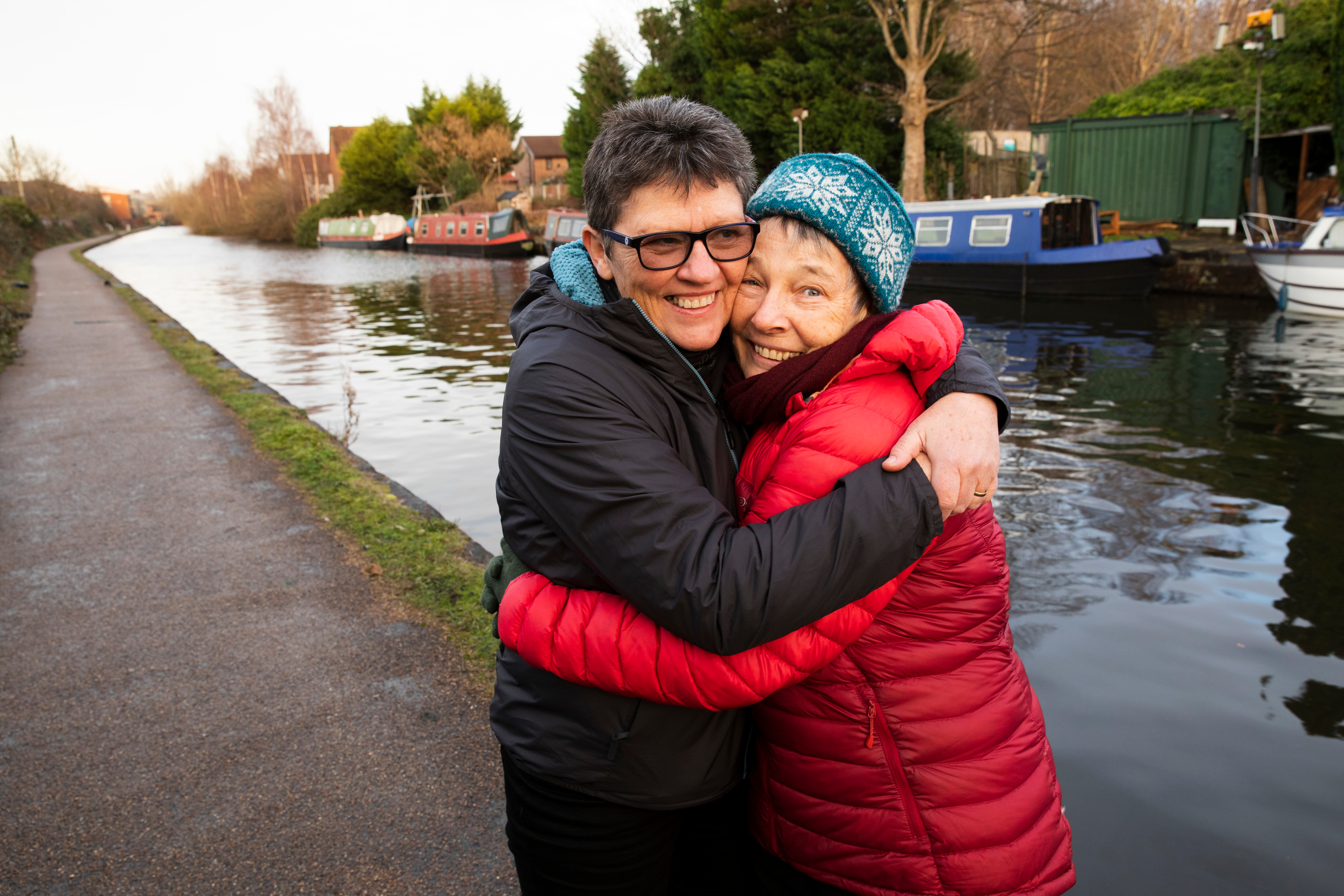
Civil partners Jay Greene and Rev Marion Clutterbuck at home in Bleadon, Somerset Photograph: The Guardian

For 23 years, Jay Greene and the Rev Marion Clutterbuck have devoted themselves to each other and to the Church of England.

Clutterbuck, 66, was one of the first female priests to be ordained in the 1990s. Greene, 69, has served on the church’s parliament, the General Synod, and she is a church commissioner.

Their faith “matters deeply to both of us”, said Greene. But despite the couple’s long and dedicated service to the C of E, it has denied them their dearest wish: to be married in church.

“We’d love to be married in church and to make our promises before God,” said Greene. “Marion has given her life to the C of E, and I have worked hard for the church. But it won’t allow us – and I feel really angry about it.”

Among Anglican churches in the west, the C of E is an outlier. Same-sex marriages are conducted or blessed by the church in Scotland, Wales, the US, Canada and New Zealand.

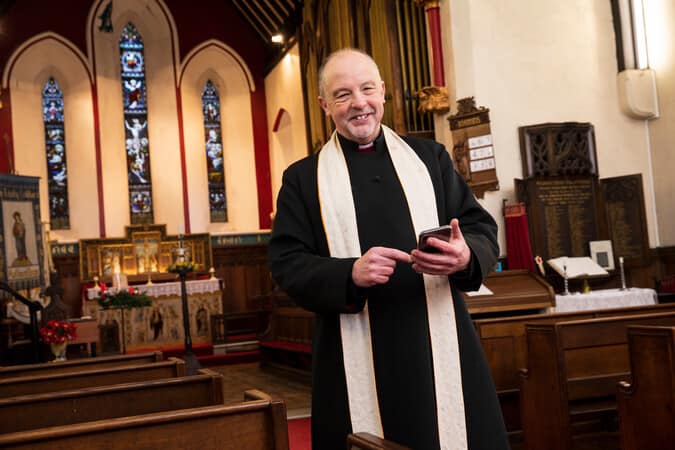
Church of England bishops refuse to back gay marriage

Justin Welby: ‘I am under no illusions that what we are proposing will appear to go too far for some and not far enough for others.’

The Church of England has rejected demands to allow clergy to conduct same-sex marriages but is proposing that couples who married in a civil ceremony may have their union blessed in church.

The C of E released “historic plans” on 18 January 2023 outlining a proposed way forward after decades of bitter and anguished division over sexuality. The proposal, endorsed by bishops this week, will be put to the C of E’s governing body, the General Synod, next month.

But the church will not change its existing doctrine, that marriage can be only between a man and a woman. Blessings for civil marriages will be voluntary for clergy, allowing those theologically opposed to opt out.

The C of E said it would “offer the fullest possible pastoral provision without changing the church’s doctrine of holy matrimony”. Same-sex couples would still be barred from getting married in a C of E church, but could have a service in which there would be prayers of dedication, thanksgiving or for God’s blessing on the couple in church following a civil marriage or partnership.

The bishops’ recommendations will frustrate campaigners for equal marriage, who say the C of E’s positions causes immense harm to LGBT+ people and is out of step with public opinion.

Bishops will issue an apology later this week to LGBT+ people for the “rejection, exclusion and hostility” they have faced in churches and the impact this has had on their lives.

The proposals came out of several meetings by bishops in recent months, which were the culmination of six years of consultations and discussions on same-sex marriage within the church.

Justin Welby, the archbishop of Canterbury, said: “This response reflects the diversity of views in the C of E on questions of sexuality, relationships and marriage – I rejoice in that diversity and I welcome this way of reflecting it in the life of our church.

“I am under no illusions that what we are proposing today will appear to go too far for some and not nearly far enough for others, but it is my hope that what we have agreed will be received in a spirit of generosity, seeking the common good.”

Jayne Ozanne, a longtime advocate for LGBT+ equality in the church, said the “small concession” meant “we are still second-class and discriminated against”.

Couple at Mona’s 440 Club, San Francisco, 1945. Mona’s is generally credited as being the first lesbian bar in the US.

Hidden LGBT+ Lives Finally Being Uncovered … Fabulosa! … Rainbow Lottery

News

Hidden LGBT+ lives finally being uncovered

The recent TV mini-series It’s a Sin won acclaim for its depiction of the Aids crisis in the UK during the 1980s and 1990s. But while people were raving about the show, many of them admitted to knowing little about the epidemic – and the destruction it wreaked among the gay community.

That’s because, even in today’s much more accepting society, the history of the gay and lesbian community is largely a forgotten history. For a long time, the mainstream public didn’t want to hear our stories.

In the past, the amazing stories of LGBT+ people were actively suppressed. The only interest used to be in censoring or denying any LGBT+ elements of the records of the past. So, things were kept from public display, passages were omitted from books and sexual relationships were presented as passionate friendships. That was wilful and deliberate distortion.

But now society is becoming much more welcoming, and there’s a huge appetite to hear our stories. And there are so many amazing stories to tell. 

On the one hand, there are the tales of famous figures like Greta Garbo, Michelangelo, Leonardo da Vinci, Marlene Dietrich, Tchaikovsky, Josephine Baker and Hans Christian Andersen, all of whom experienced same-sex desire or engaged in same-sex activity in societies that didn’t welcome it, often channelling their frustrations into creating remarkable work that went on, in some cases, to determine the course of Western culture. On the other hand are the invisible stories of the millions of everyday men and women whose lives made less of a mark but included events as dramatic as familial rejection, professional dismissal, social exclusion, blackmail, criminal conviction, imprisonment, torture, electric shock therapy, chemical castration and execution.

Arguably, even the most ordinary LGBT+ person of a certain age has lived an extraordinary life. Most LGBT+ people from the past went to great lengths to conceal their identity – sometimes marrying and starting families, at the very least destroying all evidence. After their deaths, if families found letters, diaries or photos, they usually destroyed them. This has made it all too easy for historians to erase our existence from the record and deny the contribution we’ve made to society.

Even when evidence does exist of same-sex relations – as is the case with 19th-century Yorkshire landowner Anne Lister or Queen Anne – this is often coded, covert or patchy.

For the LGBT+ community, telling our stories and knowing our history is a matter of both self-discovery and survival. History empowers us. At its most fundamental, it says: we have always been here. We have a place.

Fabulosa! : The Story of Polari, Britain’s Secret Gay Language by Paul Baker

Polari is a language that was used chiefly by gay men in the first half of the twentieth century. At a time when being gay could result in criminal prosecution – or worse – Polari offered its speakers a degree of public camouflage, a way of expressing humour, and a means of identification and of establishing a community.

In the mid-1960s it was thrust into the limelight by the characters Julian and Sandy, voiced by Hugh Paddick and Kenneth Williams, on the BBC radio show Round the Horne: ‘Oh Mr Horne, how bona to vada your dolly old eke!’

Did you know that William Shakespeare used the term bona (good, attractive) in Henry IV, Part 2? It was part of the expression bona roba (a lady wearing an attractive outfit). In “Fabulosa!”, Paul Baker recounts the story of Polari with skill, erudition, and tenderness. He traces its historical origins and describes its linguistic nuts and bolts, exploring the ways and the environments in which it was spoken, the reasons for its decline, and its unlikely re-emergence in the twenty-first century.

Rainbow Lottery

We have the perfect prize to help you kick off 2023 the right way!

You are guaranteed to love the newest prize: a whole YEAR of HelloFresh!

Saving some money on the weekly shop, eating fresh and healthy, these fantastic boxes deliver fresh high-quality ingredients direct to your door – with everything you need to create delicious dinners from scratch! Special dietary requirements? Going veggie or vegan this year? HelloFresh have got it covered – with loads of options to choose from, there’s something to suit everyone.

The special prize draw will take place on Saturday 25 February.

So now is the perfect time to give Out In The City a fundraising boost. There’s no need for existing supporters to buy a separate ticket – you will automatically be entered into the special draw, but of course you could buy extra tickets: the more tickets you have, the more chances to WIN!

Buy tickets here.

Stockport Air Raid Shelters … Census Maps … Greater Manchester Pride Events

News

Stockport Air Raid Shelters

This week we took the train from Manchester to Stockport to visit the Air Raid Shelters.

In the mid 1930s preparations were being made for the threat of war with Germany. This time the government knew that things would be different, that ordinary people in this country could be in great danger. There was now the capability to bomb towns and cities from the air and launch deadly gas attacks.

As early as 1935, planning had begun for Air Raid Precautions (ARP). Gas masks would be needed in their millions and air raid shelters designed and developed. ARP wardens, Fire and Ambulance Service workers and Special Police would be needed to protect the civilian population. Everyone would be required to contribute in some way. Men that were fit and able would be called to join the Armed Forces and women to take voluntary or paid jobs, many joining the workforce for the first time. These jobs would vary, from work in munitions factories and farming, to engineering and intelligence.

Then, on the 3 September 1939 Britain declared war on Germany.

The Manchester Blitz

The public expected air raids as soon as the war began, but they did not come. By August 1940 the Stockport Express was reporting that when the air raid sirens sounded people “seemed to take the matter as a joke”. All this changed in September 1940 when the blitz hit London with terrifying force.

Then on 22 December 1940 the sirens sounded in Manchester. Almost 300 German aircraft attacked the city for 12 hours, dropping high explosive bombs and thousands of incendiary devices.

The next evening saw a raid lasting six hours, 363 people were killed and over 1000 people injured. Hundreds of buildings were destroyed and 30,000 houses damaged leaving over 5000 people homeless.

In Stockport ten high-explosive bombs fell on Heaton Norris, Heaviley and Heaton Mersey. Thousands of incendiary bombs were dropped on the town but were quickly extinguished. The town was praised for its actions as without such promptness dealing with the incendiaries the attack could have been much worse. Even so, the Blitz had left four dead, 20 injured and hundreds of homes damaged in Stockport.

What do I do if a raid catches me in the street?

Follow the sign to Stockport’s nearest public shelter.

  • Keep a cool head.
  • Do not panic.
  • Keep your gas mask with you at all times.
  • Enter the shelters in an orderly fashion.
  • Familiarise yourself with the Emergency Evacuation Procedures.
  • Bunks and seating spaces cannot be reserved.
  • Try to make do with the space available without fuss.
  • Do not bring pets.
  • No litter.
  • Leave when the All Clear sounds.
  • Take all your belongings.

It was an interesting visit and very atmospheric. It was hard to imagine up to 6,500 people sheltering in the tunnels.

More photos can be seen here.

Census Maps

Census maps is an interactive tool to explore the 2021 Census. You can find out what people’s lives were like across England and Wales in March 2021.

One of the answers recorded by the person completing the census concerned sexual orientation. In Manchester the figures were:

Straight or Heterosexual 84.61%

Gay or Lesbian                                    3.34%        )

Bisexual                                             2.69%        )

Pansexual                                            0.42%        )         6.68%

Asexual                                             0.09%      )

Queer                                             0.10%   )

All Other sexual orientations                0.04%       )

Not answered                                    8.71%

Total                                                      100%

There was also a question on gender identity. In Manchester the figures were:

Gender identity the same as sex registered at birth                  91.66%

Gender identity different from sex registered at birth                 1.02%

Not answered                                                                        7.32%

Total                                                                                          100%        

The item on sexuality was introduced for the first time for equity monitoring.

In the UK as a whole, just over 3% of the population of English and Welsh citizens have declared themselves not to be heterosexual, a similar proportion to that estimated by the Office for National Statistics, which suggests a doubling in number since 2014. That is because increased social acceptance has allowed LGBT+ people to realise their authentic selves.

This is almost certainly an underestimation of the actual national diversity of sexual orientation. Non-responders are more likely to be LGBT+. It is reasonable to assume that those who are themselves part of the LGBT+ community are the most likely to show resistance to, and mistrust in, disclosing their sexuality to the government.

This is particularly true for older respondents, who are more likely to have a lived history of the criminalisation of homosexual behaviour and government-tolerated or created discriminatory policies.

The fluidity of sexuality is observable in the results: there are nearly as many bisexual and pansexual people as there are gay or lesbian. This justifies the complaints of campaigners about a phenomenon called “bi-erasure”: where bisexual people are often left out of conversations. Bi people face prejudice not just from straight citizens, but from gay and lesbian people, too: bi men are often treated as gay but in denial; bi women face widespread sexual objectification; and all are portrayed as sexually rapacious or tourists who don’t belong anywhere.

Little wonder, then, that research suggests bi people have worse mental health, specifically higher levels of anxiety and depressive symptoms, than gays or lesbians. While bisexuals are attracted to at least two genders, pansexuals are attracted to people regardless of gender. One contribution of this census must be a more thorough recognition of bi and pan people in our society.

The census maps released by the ONS reveal an anecdotal truth known to LGBT+ people but until now unseen in data: that many people leave rural communities and small towns in favour of major cities. London, Manchester and Brighton have, unsurprisingly, particularly high numbers.

The explanation is twofold: urban areas tend to be more accepting and have enclaves of LGBT+ culture; and it is easier for members of a small minority to find prospective partners if you congregate in the same areas. The truth is, large swaths of the country remain insufficiently welcoming for LGBT+ people, and our community will continue to up sticks in favour of urban areas until that changes.

But the most notable results relate to gender identity. Around half a per cent – or 262,000 citizens – declare themselves trans. Within this, a large number do not specify their identity, but of those who did declare there is an almost exactly equal split between trans women and trans men, as well as a significant number who are non-binary (people who do not identify as either male or female) or who have other gender identities.

The trans community is a tiny minority of the population of England and Wales – just 0.5% of the 45.7 million people who answered the question about gender identity on the census. Yet the trans community has faced a disproportionate and obsessive amount of negative attention from the media and political elites. From the data about how few trans people there are, we can assume that most people do not know someone who is trans – certainly not well – and their impressions could easily be formed by these negative stories about them in the media.

The recent history of LGBT+ is defined by a period of growing acceptance bookended by two moral panics. In the 2000s, anti-gay laws were rescinded while public attitudes dramatically transformed for the better. But in the 1980s and 1990s, gays and bisexuals were widely portrayed as sexual predators, brainwashers of children, deviants, weird fetishists, defined by mental illness, all while holding a “normal” majority to ransom. In the 2010s and 2020s, the exact same tunes have been sung about trans people.

Actions have consequences: hate crimes against trans people surged by 56% in the space of a year in 2020. The anti-trans moral panic is ricocheting across the LGBT+ rainbow: the community’s main civil rights organisation, Stonewall, is under fierce attack; LGBT+ public figures face relentless bullying on social media; and officially recorded homophobic hate crimes are increasing too. After the government refused to ban trans conversion practices, relations between LGBT+ communities and the government are worse than at any time since the 1980s.

The LGBT+ world is not without its own internal issues. It remains dominated by white, middle-class, cis gay men. There is much segregation between the different identities – although there is more mixing than there used to be – as well as scarring by major problems of racism.

Yet looking at this census, there are valuable lessons. The first is that the gay and bi community – through much struggle and sacrifice – emerged from the darkest shadows of oppression, and now we must stand with the trans community in the face of growing adversity. The opponents of the LGBT+ movement are stronger than they’ve been for a generation: they depend on our divisions to succeed. The second is that we need allies: a small minority cannot win total acceptance alone. So far we’ve come; so far to go.

Greater Manchester Pride Events Taking Place

Please note following dates for your diary:

Bury PrideSaturday 29 April
Pride in TraffordWednesday 17 – Saturday 20 May
Pride on the RangeSaturday 27 May
Salford Pink PicnicSaturday 17 June
Rochdale in RainbowsSaturday 24 June (provisional date)
SparkleFriday 8 – Sunday 10 July
Tameside PrideSaturday 15 July
Oldham PrideFriday 21 – Sunday 23 July
Pride in BoltonFriday 28 – Sunday 30 July
Stockport PrideSunday 30 July
Levenshulme PrideFriday 11 – Sunday 13 August
Wigan PrideSaturday 12 August
Prestwich PrideSaturday 12 – Monday 14 August
Manchester PrideFriday 25 – Monday 28 August
Didsbury PrideSaturday 2 September
Chorlton PrideDate To Be Confirmed
Pride in WythenshaweDate To Be Confirmed