Community Group of the Year … Six LGBT+ Guiding Lights … Launch of Out In The City Art Exhibition

News

Community Group of the Year Award

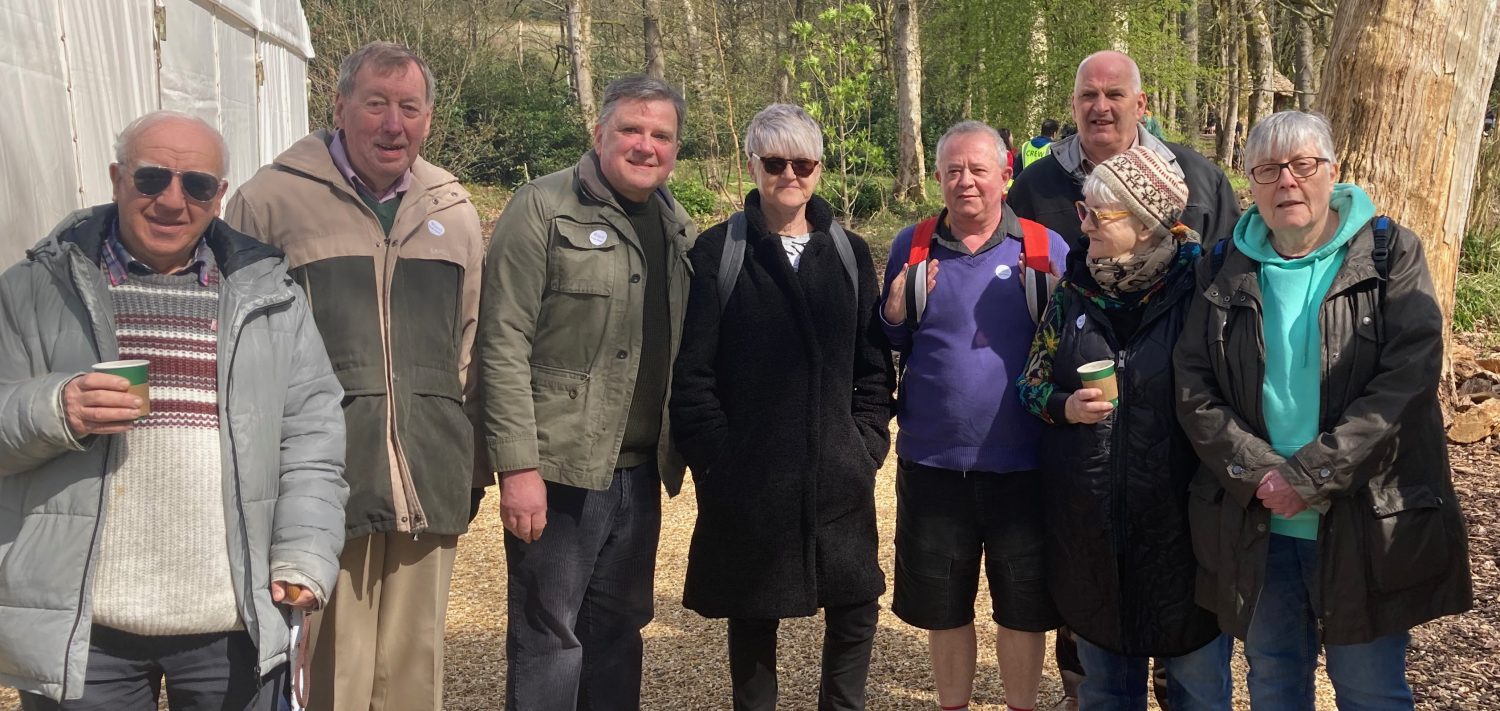
Out In The City joined over 400 passionate and dedicated Forever Manchester supporters at the historic Kimpton Clocktower Hotel to celebrate Forever Manchester’s Birthday Party. It was a time to celebrate a year of local people doing extraordinary things and making Greater Manchester’s communities become even greater.

The evening involved a drinks reception, three course dinner, entertainment and awards. Entertainment was provided by The Circus House, Bolton Mandhata Youth and the Manchester Proud Chorus.

The Community Group of the Year Award is given in recognition of a community group that has made a meaningful and significant impact, strengthening communities, making a difference, and putting smiles on people’s faces.

The shortlist was:

Ashton Community Chess Club

Buile Hill Mansion Association

Community Buds

On Top of the World

Out In The City

Trafford Handball.

… and the winner was Out In The City.

Congratulations to all the shortlisted groups. More photos can be seen here.

‘The joy is waking up and liking who you are’: six LGBT+ guiding lights on the long road to now

As World Pride descends on Sydney in one of the planet’s biggest celebrations of LGBT+ lives, images of youthful revellers will dominate television, print and online coverage and postings on social media.

So the arrival at Sydney Town Hall of the city’s first Coming Back Out Salon – already a fixture of the Melbourne social calendar – is something of a corrective. Welcoming all ages, the salon honours older LGBT+ people, recognising them as guiding lights.

‘There’s a youth obsession’: Tristan Meecham, cofounder of All The Queens Men, and Russ Gluyas, coordinator of the LOVE Project.

“As much as we talk about inclusivity, it is an ageist community,” says Tristan Meecham, the cofounder of All The Queens Men, which produces the salon. “The experiences of older LGBT+ people – being imprisoned, hospitalised, going through an epidemic – the younger communities haven’t quite acknowledged or understood the amount of trauma still in elders’ bones.”

Ageism can compound earlier discrimination and stigma, says Russ Gluyas, coordinator of the LOVE Project (Living Older Visibly and Engaged). “There’s a youth obsession and it’s becoming more annoying, perhaps not recognising the experiences and lived history and the enormous amount of stories and love,” Gluyas says.

Six LOVE Project ambassadors talk about life, wisdom, issues still faced and hopes ahead.

‘We were told … there was no way out’ – David Polson, 68

David Polson

I grew up in Christchurch, New Zealand in the 1960s, which was a really homophobic city. I went to a macho high school and was regularly beaten up. I realised from an early age I was gay.

Just after I turned 18, I was offered a scholarship at Sydney’s Ensemble theatre. When the plane took off for Australia, I felt this enormous burden lift off my shoulders. The theatre world was wonderful because I could be who I was.

The moment I was diagnosed with HIV, in 1984, I felt like I was falling down this black, bottomless pit of guilt, shame and terror. But somewhere down there this little voice said, “No, you’re not going to die; Aids will not kill you.”

We were told we had a terminal illness and there was no way out. There was enormous ignorance fuelling hatred, fear and discrimination. [But] I’ve never seen such an outpouring of love and unity from the LGBT+ community as I did during that period. I regard my gay friends as my family.

I went through 28 HIV drug trials over 20 years with the late immunologist Prof David Cooper, all horrendous. I use the term chemotherapy, so everyone understands what it was like. I had probably the best medical attention, but there are still older HIV-positive people isolated in rural areas that are not getting the help they need.

When David died in 2018, I was chatting to his widow, Dorrie, who said, “Polly, David never got to see his vision of an Aids museum in Sydney.” I said, “Dorrie, this is going to happen; you’ve given me a project.” [Former high court judge] Michael Kirby thought it was a great idea, but he said, “You also need to include the oppressed and persecuted queer people over the decades.”

We formed a committee and Qtopia, Sydney’s queer museum, is finally launching on 16 February. As chair, I’ve found this absolute thirst for knowledge from young people, wanting to get involved with their elders.

‘I really love my body’ – Apple Jack (AJ) Brown, 55

AJ Brown: ‘I’m not frightened of navigating forward.’

Growing up in Derbyshire in the United Kingdom, I never really understood what gender was. My role modelling was probably on my father but wasn’t gender-specific. When I hit puberty, the devastation I [felt at realising I] was going to be a [specific] gender was confronting. I thought of myself as androgynous.

When I came to Australia, I went into sex work, a whole rainbow melding of gender and sexuality. The “girls” [my breasts] earned me a lot of money – I was a double E-cup – and I used to work in lingerie. I decided when I stopped bleeding and was about to go into menopause that I would take testosterone.

I had top surgery [chest reconstruction], which doesn’t make you who you are; it’s a reflection of what your optic sees in the mirror or what you feel. Somebody once asked me, “Do you feel less like a man because you don’t have a penis?” I thought, “No, I really love my body.” I’ve always loved the sexual element; that feeling of what I can vibrate.

Trans masculine people have often gone under the radar. Yesterday, somebody gave me a hug because I’d lost my dog and said, “Big, built farmers like you, it’s all right to cry, mate.” I thought, “I don’t know who you’re talking to.”

I have a voice and I’m not frightened of navigating forward, but the biggest fear is going into hospital, being put into a retirement home [and being misunderstood]. In the community, you’ve had to build up a tool kit of resilience and to have that just taken away is almost like having your body taken away from your mind.

‘We bring encouragement to the younger ones to not be afraid’ – Eliese Embrey, 73

Eliese Embrey

I grew up in the UK and always knew I was different, a female in a male body. When I was seven, my parents gave me a birthday party and boys and girls in our street came. I remember looking around the table and thinking I didn’t belong with either group. From that moment, I became a solitary child.

At 13 or 14, I remember seeing a transgender model on television and realised it was possible to change your gender, but I kept that secret inside me. One day I read about the £10 passage to Australia and thought this was a chance to get away from provincial England, so at 19 I emigrated.

In my early 20s, I secretly started to live as a gay guy. I was put on to Camp, the Campaign Against Moral Persecution [the subject of a new play during Sydney World Pride]. I dressed flamboyantly, but it wasn’t sexually right for me. I really just wanted closeness, but I wasn’t emotionally strong enough at first to deal with the social ramifications of changing my gender.

I went back to the UK to transition at the Charing Cross hospital in London. My parents were very supportive, but after my mother died, the rest of the family confronted me and said if I transitioned, I wasn’t welcome. It was a simple choice: suicide or transition. So I left my family behind and I’ve been a trans woman now for more than 30 years.

For 40 years, I was afraid. It was like being locked in a room with no windows and no doors. After transitioning, there are windows and doors and you can walk out a free person. Life is wonderful. We bring encouragement to the younger ones to not be afraid. We live in a different time. There’s support now to live your authentic self.

My [lesbian] partner, Jacqy, and I have known each other for three years and recently at Parramatta Pride we were in charge of a Pride history stall. Jacqy turned to me and said, “What about you and I?”, I said, “We can be anything you want us to be.”

So we declared our love for each other then and there.

‘I did not know another person who was gay’ – Ros Hope, 74

Ros Hope: ‘I’m non-binary: my brain is half male and half female.’

Ros Hope: ‘I’m non-binary: my brain is half male and half female.’

I grew up a little out of Bankstown, in Panania. I’d skateboard around the back shops with the boys. I’m non-binary: my brain is half male and half female. If anyone asks, I say I’m “bi-brainery”.

I had a girlfriend from 17 to 19. I wanted to move out with her, but Mum said, “If you ever leave home, you can never come back.” I married and eventually, in 1996, when I was 48, I left my husband for a woman and our two teenage kids came with me. I’ve only been with women since.

I was a late bloomer becoming a gay person. I had huge anxiety until my 50s, probably because of not knowing what my sexuality was. My mother was 80 when I came out to her as gay. It was all about her: “What will people think about me?” She only softened later when she was in a nursing home and she accepted my sexuality in the end.

My partner and I did not know another person who was gay. It was isolating and it took a long time to come out properly. After my dad died, in 2004, I decided I was going to go out into the LGBTQI community. I joined a lesbian open house discussion group on a Tuesday night.

I left that [female] partner when I was 58. My current partner of six years identifies as lesbian; at least, I think she does. She knows what I am.

‘We never stop becoming who we are’ – Jessica-Su Tang, 70

Jessica-Su Tang

My early years, up to eight, were predominantly in Darlinghurst and then in 1960 we moved to Earlwood. I’ve got five sisters and I grew up around the three youngest sisters. I was always fascinated with the feminine, particularly their clothes, the textures.

I gravitated to becoming Jessica and 2009 was the year I determined to live as a female full-time. There’s more congruency I feel as Jessica than as my former persona. I chose Jessica because my other name had a J and I got used to signing the J.

I call myself trans feminine, as opposed to trans woman, because the debate is, what is a woman? But there’s no problem with being trans feminine. There’s a spectrum from masculinity to femininity and everyone falls somewhere along that.

I didn’t transition until I was 57 and I’m happy to have [waited] because I know that women are disempowered in so many ways, particularly around image and safety. I’ve never had really any negative feedback [about transitioning]. The real struggle is within yourself, actually getting rid of what didn’t serve you.

I’ve investigated various surgical options and I’m happy to say I’ve saved a lot of money. The joy is waking up and liking who you are. It’s never ending; we never stop becoming who we are. If the mind-body-soul connection is congruent, then there’s no conflict.

‘They were going to throw me in the river’ – Trevor Pritchard, 71

Trevor Pritchard: ‘I felt I was trailblazing.’

I grew up in inner-western Sydney. When I was 12, my father died. My older brother had cerebral palsy.

I came out as gay in 1970, when I was 18. On a Sunday afternoon in 1972 I was with a mixed crowd at the Scarborough Hotel, 60km south of Sydney, and got a lift back with three guys. They turned out to be absolute homophobes.

They took me to the Royal national park and tied me up with bricks and said they were going to throw me in the river. All of this went on for four hours. I said, “Look, if you murder me, you’ll murder my widowed mother and my brother, who is disabled”. Saying that saved my life.

In those days, you wouldn’t report an attack to the police, who had a homophobic attitude. I eventually put a submission into the NSW parliamentary inquiry into LGBTQ+ hate crimes. I developed post-traumatic stress disorder, a debilitating fear of heights.

Oxford Street became our haven. We’d spend a lot of time in bars. It was our community, but when HIV hit, the party was over. I was fortunate enough to be HIV-negative, but a lot of guys who have HIV have issues about how much money they’ve got to live on.

In 1988, when I climbed into management at a cigarette factory, I decided to do this as a manager who was gay: not flaunt it but not deny it. I felt I was trailblazing.

At 50, I left work on a redundancy after a company merger. I did a lot of travelling and some writing. Eventually I thought, “I’m getting too isolated,” and I joined Mature Age Gays. For the past five years I have been visiting older gay men in aged care centres. My present client, who has dementia, loved the performing arts [so] I’m reading a biography on dancer Rudolf Nureyev.

Oh … er, missus … note the date: 22 February, 5.30pm!

Launch of Out In The City Exhibition

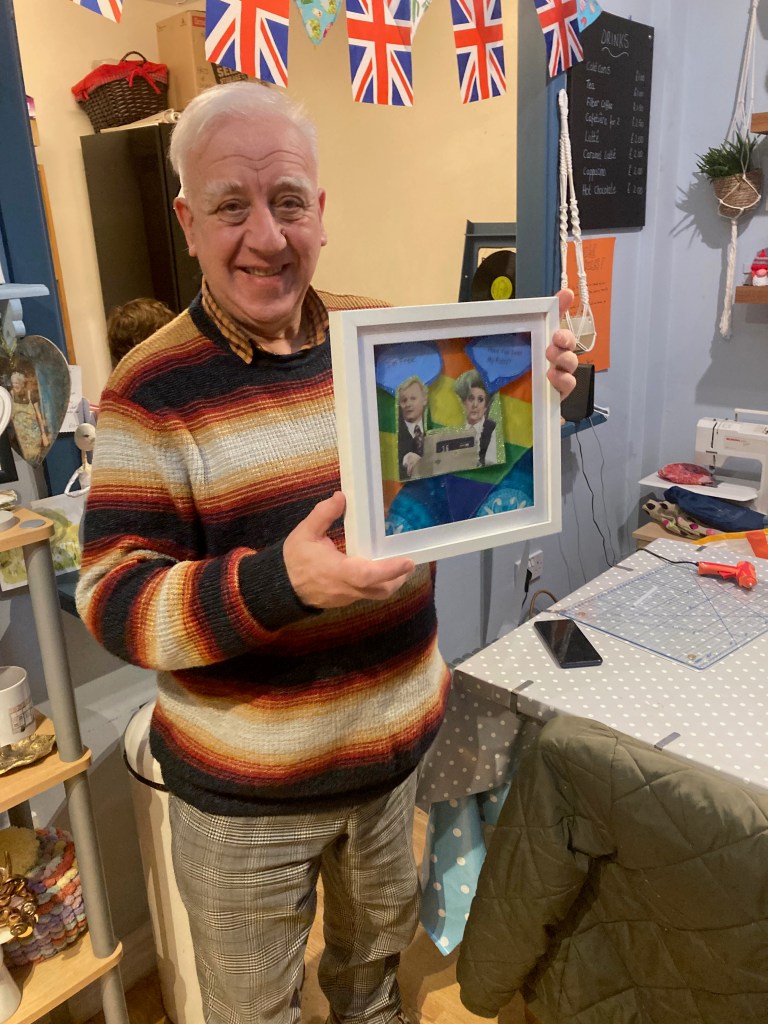
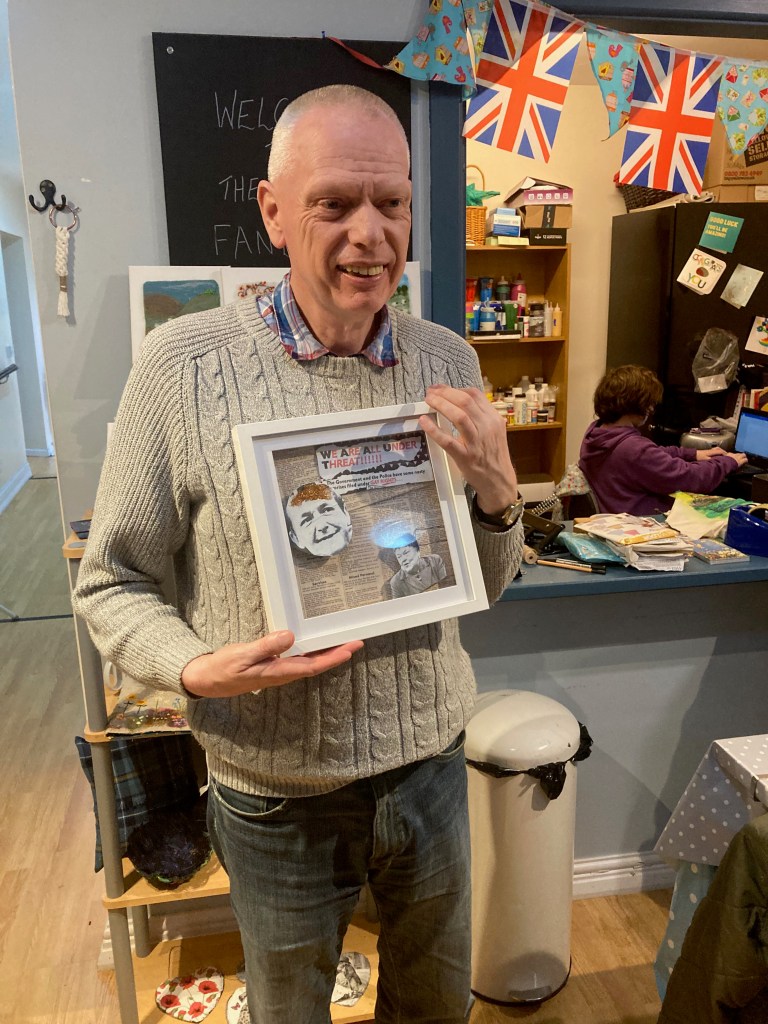
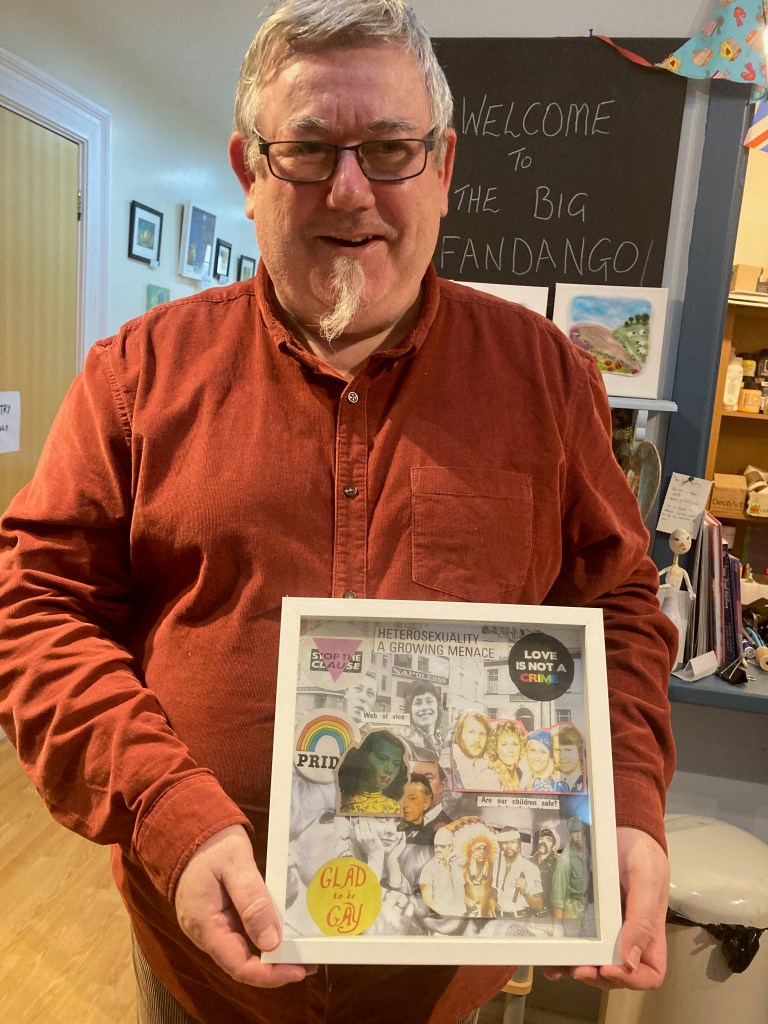
On Wednesday, 22 February from 5.30pm to 8.00pm we will be launching the Out In The City Creative Writing Art Exhibition as part of LGBT History Month.

The venue is LGBT Foundation, Fairbairn House (2nd Floor), 72 Sackville Street, Manchester M1 3NJ.

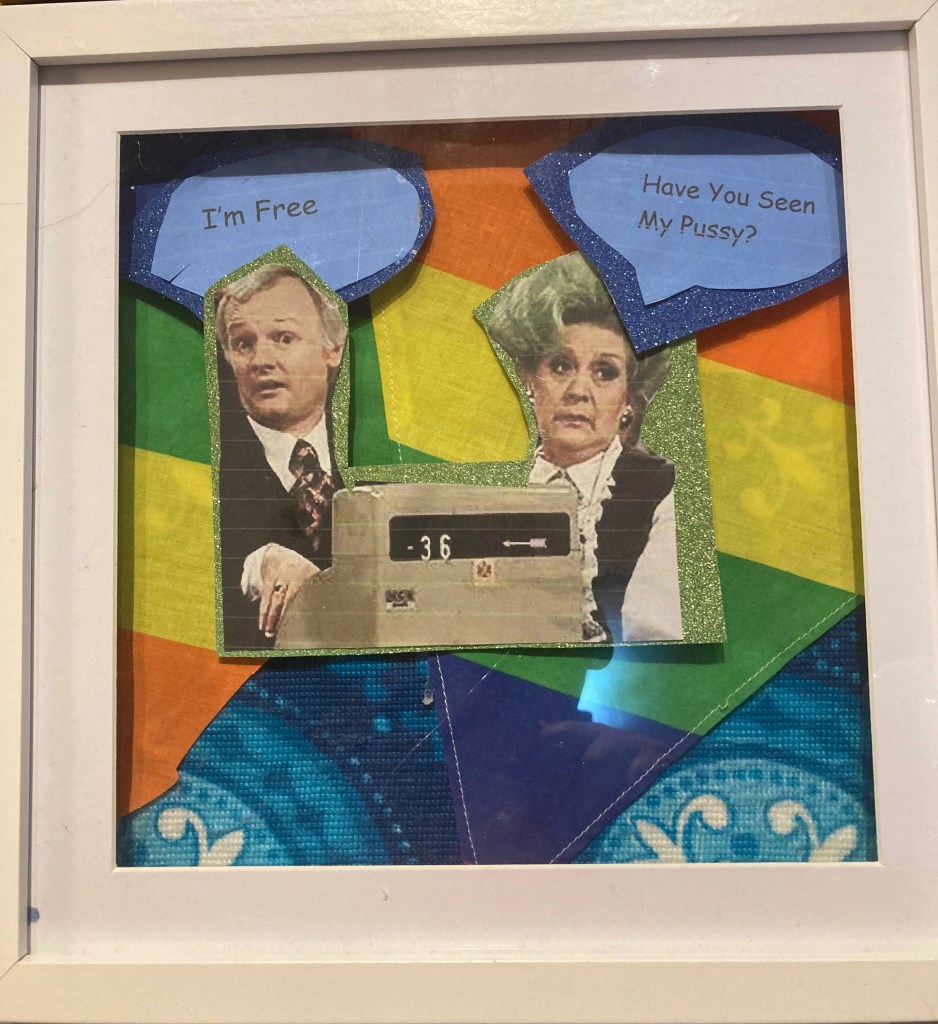
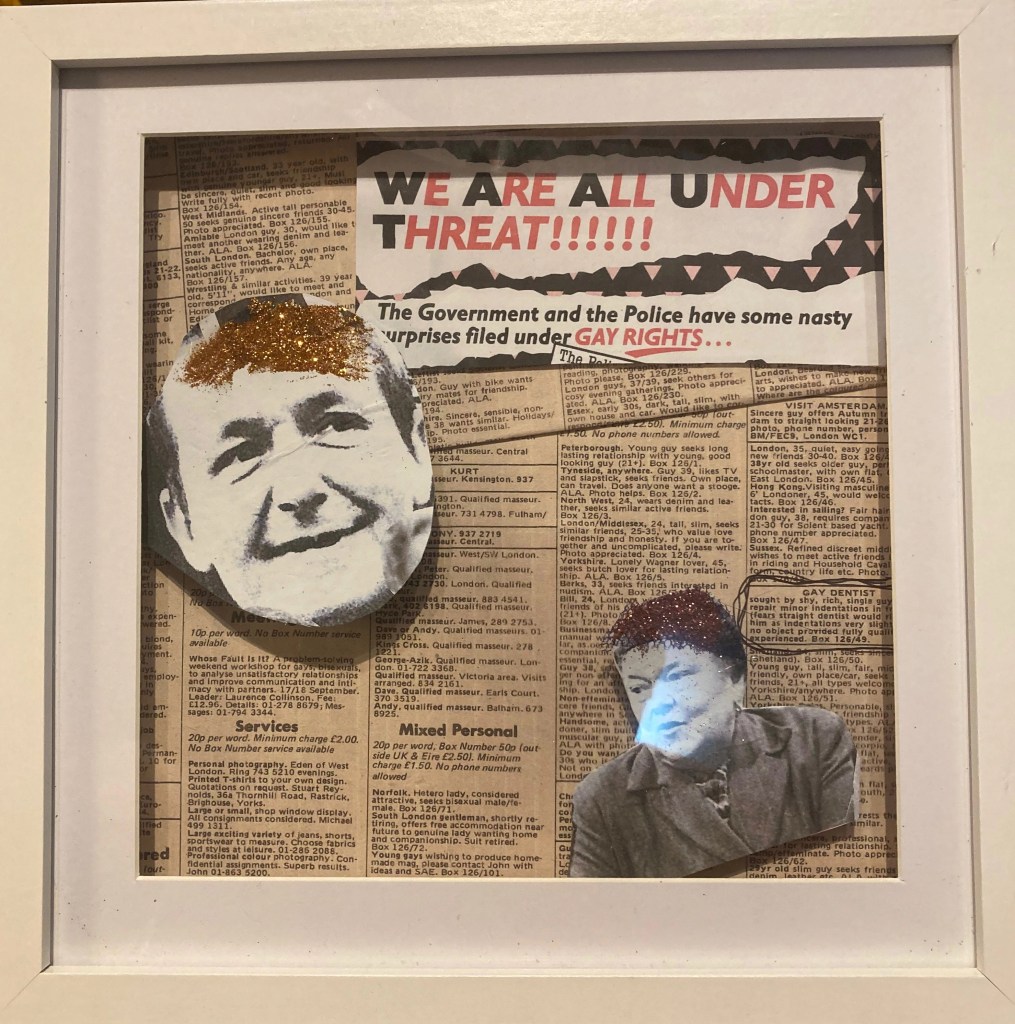
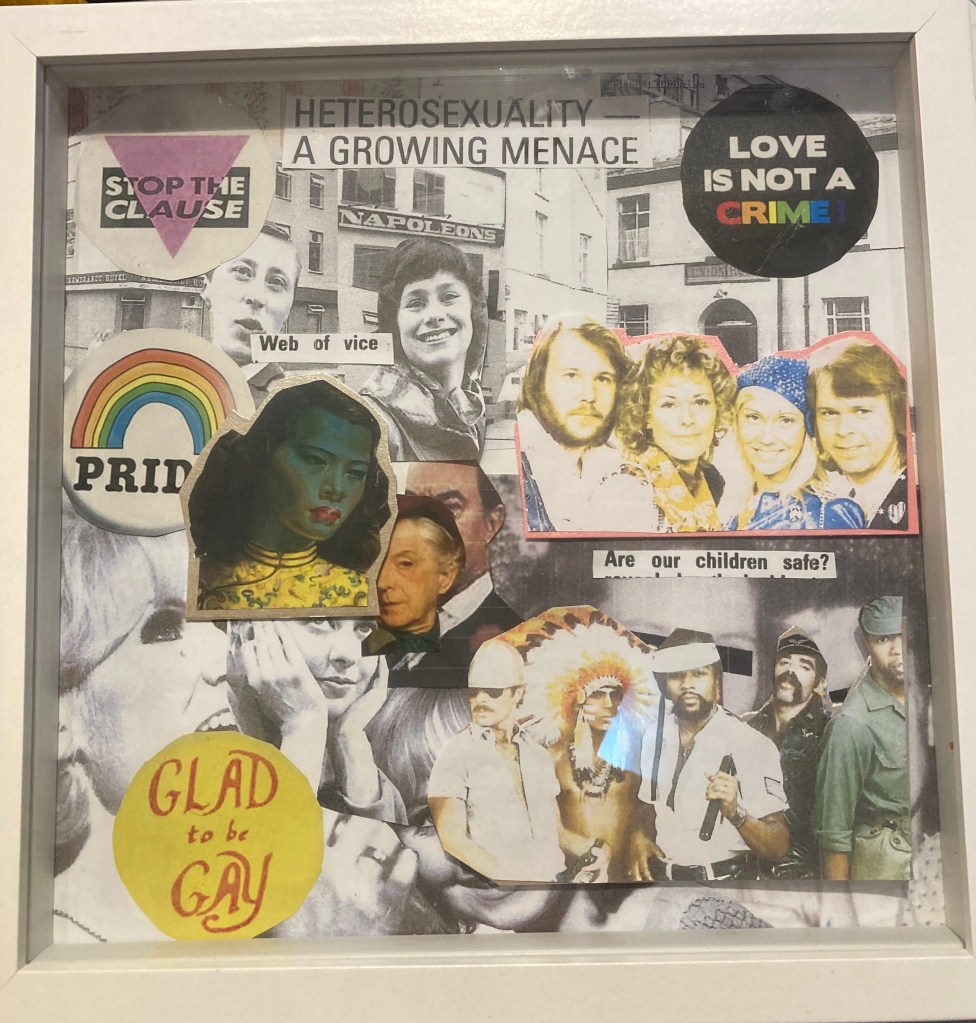
Come and see artworks by members of Out In The City produced with Manchester Street Poem.

Lowry Theatre … Valentine’s Night … Death Sentence Against Lesbian Activist Overturned! … One Year Ago Today

News

Lowry Theatre

The Lowry is a landmark quayside building comprising two theatres and galleries.

The Lowry is named after Laurence Stephen Lowry (1887 – 1976) – an artist who spent much of his life in Salford and whose work is strongly associated with the city.

Salford Museum and Art Gallery had been a long-standing collector of his work and some 400 individual works – as well as an extensive archive of photographs, press cuttings and exhibition catalogues – were transferred to The Lowry on its opening in April 2000.

Today, The Lowry provides critical and curatorial analysis of his work and seeks to raise his profile as an artist of international stature. Our trip to the Lowry Theatre Gallery involved a chaotic visit to a pizza restaurant, a red carpet welcoming people auditioning for the “Britain’s Got Talent” show and a glimpse of TV presenting duo Ant and Dec.

More photos can be seen here.

Beautiful Thing

Do you want to spend Valentines Night celebrating the best of LGBT+ films?

As part of the Love is Love: LGBTQ+ History Month Film Night event, Manchester Central Library, St Peter’s Square Manchester M2 5PD will be screening Beautiful Thing on Tuesday, 14 February at 6:00pm.

Register here.

Death Sentence Against Lesbian Activist “Sareh” Overturned!

Zahra Sedighi Hamadani (known as Sareh) Source: 6Rang

Amnesty International has reported that the death sentences against Iranian activists Zahra Sedighi-Hamadani (Sareh), 31, and Elham Chobdar, 24, have been overturned. The pair were sentenced to death for “corruption on Earth” in September 2022, while they were detained in Urmia jail, located in the Northwestern town of Urmia. 

“Corruption on Earth” is the Iranian title of capital crimes used to justify murdering those who “threaten social and political well-being.” Sareh and Chobdar were sentenced to death for their “perceived or real sexual orientation,” their support of LGBT rights on social media, and for “smuggling women and girls.”

“Through a complex, multi-layered and extraterritorial intelligence operation, the leader of a network involved in smuggling Iranian girls and women to neighbouring countries for the purpose of corruption and directing and supporting homosexual groups that work under the protection of (foreign) intelligence agencies,” The Intelligence Organisation of the Revolutionary Guards claimed.

Amnesty International called the allegations “spurious and baseless.” 

“The allegations stem from the women’s real or perceived sexual orientation and/or gender identity and in the case of Zahra Sedighi-Hamadani, association with other Iranian LGBTI asylum seekers fleeing systematic persecution in Iran,” Amnesty International reported. 

Sareh was first arrested by Iranian security forces when she tried to flee to Turkey, after returning to Iran from Iraqi Kurdistan, in late 2021. On top of “spreading corruption on Earth,” she was accused of “promoting homosexuality and Christianity,” and “communication with anti-Islamic Republic media channels.” 

“The accusations stem from her public defence of LGBTI rights, including on her social media platforms such as Telegram and Instagram, and during an appearance in a BBC documentary aired in May 2021 about the abuses that LGBTI people suffer in the Kurdistan Region of Iraq,” Amnesty International reported.

The accusation of promoting Christianity was for when she wore a cross necklace and attended a house church in Iran several years ago.

Sareh was interrogated for 53 days. While in detention she was subjected to degrading insults about her appearance and “lifestyle,” as well as death threats. Interrogators threatened to take her two children away. At the same time, Sareh’s friends were arrested and forced to provide confessions against her. Some were aired on state TV.

In a video posted before she departed for Turkey, she said: “If I reach the other side it’ll be ok. If not, it’ll be obvious what has happened. I’m sending this video … so that you understand how much pressure we bear.”

6-rang, an Iranian gay support network, reported at the time, “It is clear to all of us that what has taken place is not due process, but a re-run of a show familiar to many of us who grew up in the suffocating atmosphere of the Islamic Republic.

Sareh must be released immediately and unconditionally. We ask all human rights organisations and the media not to ignore Sareh’s detention, and to work for her freedom.”

The two women are no longer on death row. Their cases have now been referred to the lower court, but the women remain in custody. 6-rang has created a petition to ensure the women’s release and safety.

One year ago today – A Minute’s Violence

Derek Jarman’s work creates a sacred space for us. At the launch of Jarman’s PROTEST! exhibition at Manchester Art Gallery there was a minute’s silence for World AIDS Day. In return, one year ago today, we offered A Minute’s Violence for Derek Jarman, inspired by the queer magick of his work and his activist life.

We cast a circle in the gallery and for a solid minute we each read simultaneously and aloud from a different text. The “violence” of our title comes from the intensity and urgency of our subjects: AIDS trauma, deportations, lesbian (in)visibility, racism, the Catholic church. Here is the film that Lee and Ben generously made of our zap – an experience of joy, excitement and power connecting us with queer heritage and community.

Robinson’s Brewery tour … New Elizabeth Taylor Biography … The Historian with a busload of LGBT+ Books

News

Robinson’s Brewery tour

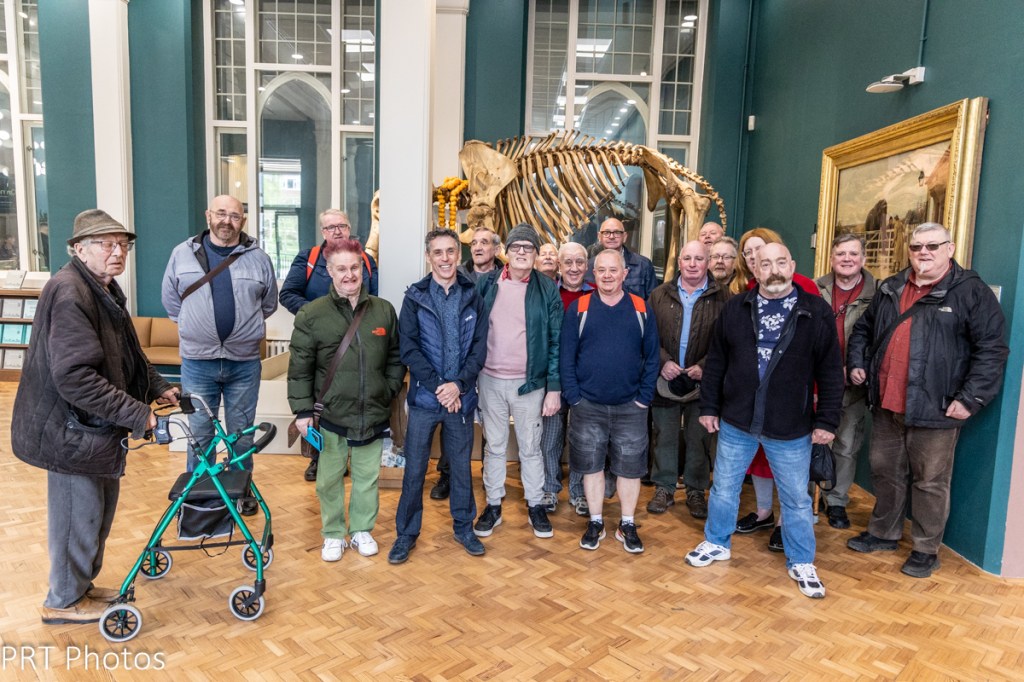
Robinson’s Brewery, based in the historic town of Stockport, offers a tour which reveals the secrets behind their award-winning brewing process. It also gives you insights into original and new equipment.

With our guide, Gary, we submerged ourselves in over 181 years of brewing excellence and discovered the heritage of this proudly independent family brewery.

As we journeyed through the brew house, we learnt how the ingredients are selected which produce the distinctive tastes and aromas of Robinson’s ales. Gary also explained the science and technical information behind the brewing process.

No visit to the brewery is complete without seeing Bobek and Mojo, the handsome Shire horses. We also had the opportunity to browse the gift shop before sampling some beers at the nearby Arden Arms.

More photos can be seen here.

New bio illuminates Liz Taylor’s decades of support for LGBT+ community

In the mid-1980s, actor Roddy McDowell threw a dinner in honour of Bette Davis’s birthday. Davis thought it was “vulgar” when Elizabeth Taylor and actress Pia Zadora, tried on each other’s diamond rings. “Oh, get over it, Bette,” Taylor, an actress, philanthropist and LGBT+ icon, told Davis.

One Friday in 1998, Taylor learned that a friend of her assistant had died, alone, with no money for his burial, from AIDS. Taylor wanted her business manager to arrange for the man who had died to be buried. She was outraged when she learned that this couldn’t be done ASAP. “We will not f****** wait until Monday,” Taylor said, “We will do it right now.” 

These are two of the entertaining, moving and revealing stories told about Taylor in “Elizabeth Taylor: The Grit & Glamour of an Icon” by Kate Andersen Brower.

Many bios written about celebs have the shelf life of a quart of milk. Thankfully, this isn’t the case with Brower’s bio of Taylor.

Taylor, who lived from 1932 to 2011, was, for most of her life, not only a celebrity – but a household name, a worldwide subject of admiration, titillation and gossip.

But Taylor was so much more than catnip for the paparazzi. She was a feminist, an often underrated actress, businesswoman, senator’s wife, addict, mother, lover of animals, a proponent of gun control, an opponent of anti-Semitism, philanthropist and LGBT+ history hero.

Yet, despite the hype, glam and all that’s been written about Taylor, many aren’t aware of the multi-facets of her life.

It is the first authorised biography of Taylor. Usually, this is the kiss of death for a biography. Few want their family members to be revealed as three-dimensional people with not only talent, but flaws.

Thankfully, Brower’s Taylor bio escapes the trap of hagiography. Brower began writing the biography after talking with former Senator John Warner, who was married to Taylor from 1976 to 1982. (Warner died in 2021.) 

Warner was one of Taylor’s seven husbands. He and Taylor remained friends after they divorced. Warner connected Brower with Taylor’s family who wanted the story of Taylor to be told. Brower was given access to a trove of new source material: to Taylor’s archives – 7,358 letters, diary entries, articles, and personal notes and 10,271 photographs. Brower drew on unpublished interviews with Taylor, and extensively interviewed Taylor’s family and friends.

In her 79 years, Taylor did and lived so much, that telling the story of her life is like trying to put the Atlantic Ocean into one bottle of water. Yet, Brower makes Taylor come alive as an earthy, glam hero with flaws and struggles.

Taylor, who performed with Burton in Shakespeare’s “Taming of the Shrew,” was as proficient at cursing as the Bard was at writing sonnets. “I love four-letter words,” Taylor said, “they’re so terribly descriptive.”

She was renowned for caring for friends and strangers. During September 11, Taylor was in New York. She paid for a toothless woman, who was looking for a job, to get teeth, and comforted fire fighters. A fire fighter wondered if Taylor was really at his fire station. “You bet your ass, I am,” Taylor said. 

Taylor loved her children. Yet, her kids were often (due to her work) left with nannies or enrolled in boarding schools.

Due partly to life-long back pain sustained from an injury she sustained while filming “National Velvet” when she was a child, Taylor struggled with a life-long addiction to pills.

In “Elizabeth Taylor,” Brower illuminates Taylor’s decades of support and friendship with the LGBT+ community. Early in her career, she formed close friendships with gay actors Rock Hudson, Montgomery Clift and James Dean. “Without homosexuals there would be no culture,” Taylor said.

Decades later, it’s easy to forget how horrible things were during the AIDS crisis in the 1980s and 1990s. Brower vividly brings back the horror and the tireless work Taylor did for AIDS research. At a time when people wouldn’t use a telephone touched by someone with AIDS, Brower reports, Taylor would hug patients with AIDS in hospices. She jumped into bed to hold her friend Rock Hudson when he was dying from AIDS when no one would go near him, Brower writes. “I’m resilient as all hell,” Taylor said.

Taylor’s legacy is more important than ever.

Meet the historian who is driving a bus full of banned LGBT+ books across the US

Actor Adam Powell and historian Eric Cervini have raised $100,000 for the Queer Book Bus. Credit: Courtesy Eric Cervini

With LGBT+ books under attack in the US at record rates, author Eric Cervini and his boyfriend, actor Adam Powell, knew they wanted to take action. While others are organising with protests, drag queen story hours, days of reading and other important acts of resistance, Cervini and Powell have their own spin on what to contribute to the movement – and that spin has wheels.

The pair are working on buying, then building, what they call the Rainbow Book Bus, a bookmobile carrying LGBT+ books to small towns. After reaching their crowdfunding goal of USD $100,000 at the end of December, Cervini and Powell are now able to pay a specialised company to retrofit a school bus to become a beacon of LGBT+ literature. 

“Our goal is to have at least an early version of it ready by Pride (in June).” We want to have a bus that is converted – it may not be fully decked out, but it will be functioning as a travelling book shop / book fair in the summer of 2023.” 

The conversion of the 28-foot bus involves tearing out all of the seats, installing bookcases and stocking it with LGBT+ books. The bus will travel the US and host pop-up book festivals in places like parking lots, with tables and chairs, signs and information about local LGBT+ organisations and their resources in addition to books. They’ll be selling works including young adult fiction, history, landmark classics, memoirs and more, including the often-banned All Boys Aren’t Blue by George M Johnson, Fun Home: A Family Tragicomic by Alison Bechdel and This Book Is Gay by Juno Dawson.

A widely renowned historian who is the bestselling author of The Deviant’s War: The Homosexual vs the United States of America and the executive producer of The Book of Queer, Cervini is inspired by the black, gay civil rights activist Bayard Rustin’s activism involving buses: the Freedom Rides of the 1940s to 1960s.

“The entire philosophy is that you bring your humanity and your dignity to these spaces that are trying to exclude you, and what that does is create this conflict – and unfortunately, that’s what it is, it’s a conflict – where one side is completely non-violent and doing nothing but trying to take a bus, and the other side goes ballistic,” Cervini says. “It becomes very clear who has the moral dignity in that scenario, who has the moral upper hand.”

“I think you’re seeing echoes of that now,” Cervini continues, “at drag story hours, where you have these incredible performers or educators or librarians who are simply trying to educate kids and make them feel welcome in their own communities, and they’re being attacked violently.” Cervini says he wants to use the bus to introduce books in places where LGBT+ authors may take professional and safety risks to promote their own book.

Cervini fully expects uproar in the towns the Rainbow Book Bus visits, but that’s part of the plan. If the event draws attention, he hopes local youth will hear about it and will be able to hear about regional resources through the event. 

“If I had known there was an LGBT centre near me and all the amazing events that they threw – because certainly it existed – maybe I could have found a way to get into the big city. If I had known that they existed, I think that that would have been life-changing,” Cervini says. “So, creating that physical presence of saying we’re here and we’re queer despite how scary some of these areas can be for queer folks, hopefully that will get people excited about connecting with the resources and the volunteers and the heroes who are already working so hard in these towns.”

The $100,000 raised so far only funds the creation of the bus, but to keep it going, Cervini and Powell are still fundraising. They also hope to partner with a non-profit organisation to be able to give books away instead of selling them. Currently, the proceeds of the book sales go toward funding the bus, and to LGBT+ authors.

As an historian, Cervini takes the long view. “The targeting of queer literature is as old as queer literature itself, from Sappho to The Well of Loneliness to today. This is a tactic that those in power have used to consolidate their own power: they create a moral panic,” he says.  “And yet, queer creators, whether it was James Baldwin or Gore Vidal, have persisted and created beautiful art that isn’t just important on a literary level, but on a personal level to so many readers who are growing up in towns that don’t have this literature in their libraries. And making these works as accessible as possible is something that got me really, really excited.”

Gertrude Stein & Alice B Toklas … Centre for Ageing Better Image Library

News

Gertrude Stein and Alice B Toklas

Gertrude Stein (3 February 1874 – 27 July 1946) was an American novelist, poet, playwright and art collector. Born in Pittsburgh, Pennsylvania and raised in Oakland, California, Stein moved to Paris in 1903, and made France her home for the remainder of her life.

Gertrude Stein and the love of her life, Alice B Toklas (30 April 1877 – 7 March 1967), first met in Paris on 8 September 1907.

Stein and Toklas became extremely influential in the development of modern art and literature. Together they hosted a Paris salon – one of the most celebrated salons in Europe – that attracted well-known members of the avant-garde artistic and literary world. Among their numerous colleagues, friends and patrons were Henri Matisse, Pablo Picasso, Thornton Wilder, Ernest Hemingway, Georges Braque, André Derain, Max Jacob, Guillaume Apollinaire, Henri Rousseau, Sherwood Anderson and Ezra Pound. “Everybody brought somebody,” Stein wrote, “and they came at any time … it was in this way that Saturday evenings began.”

Stein was an acclaimed modernist writer known for challenging conventional understandings of genre, narration and form. Toklas, a fierce advocate of Stein’s work, encouraged her to write The Autobiography of Alice B Toklas (1933), which brought the two women international recognition.

Shifting between biography, autobiography and memoir Stein was able to obscure the exact nature of her relationship with Toklas while telling the colourful story of the life they shared. Two well-known lesbian Jews, Stein and Toklas remained in France and survived both World Wars thanks to the protection afforded them by having made friends in high-places – at a price many have speculated may have included selling out French Jews in exchange for a guarantee of their own safety in the heart of fascism … an indelible dark stain on an otherwise striking personal history.

Stein is the author of one of the earliest coming out stories – QED – written in 1903 but suppressed by the author. It wasn’t published until after her death in 1950.

The more affirming essay “Miss Furr and Miss Skeene” is one of the first homosexual revelation stories to be published based on lesbian partners Maud Hunt Squire and Ethel Mars. The work, like QED, is informed by Stein’s growing involvement with a homosexual community. The work contains the word “gay” over 100 times, perhaps the first published use of the word “gay” in reference to same-sex relationships and those who have them.

In the 1980s, a cabinet in the Yale University Beinecke Library, which had been locked for an indeterminate number of years, was opened and found to contain some 300 love letters written by Stein and Toklas. They were made public for the first time, revealing intimate details of their relationship. Stein’s endearment for Toklas was “Baby Precious”, in turn Stein was for Toklas, “Mr Cuddle-Wuddle”.

Stein died at the age of 72 from stomach cancer in 1946. Toklas, who penned the famous Alice B Toklas Cookbook (1954), spent the remainder of her life protecting and promoting Stein’s legacy until her own death in 1967. They are interred in Paris in the Père Lachaise cemetery where they share a grave and a headstone.

Centre for Ageing Better

The Centre for Ageing Better has updated their image library!

The new collection aims to improve depictions of older people with different life experiences, highlighting people living across diverse communities and from a range of socio-economic backgrounds.

The new photos illustrate the experiences of people who are often under-represented – those who live on low incomes, identify as LGBTQ+ or are aged 70 and above. The collection showcases later life across the country, from Brighton to Manchester and beyond.

You can download the photos and use them for free now!

Rachel, 63, talks about her experience of being photographed for the Age-positive image library, as well as the importance of positive representation for older trans people.

“I’m a 63 years young Anglo-Australian dual national Trans woman, or a woman with a gender history as I prefer to say. I’m also a Lesbian so I have two footholds in the LGBTQ+ community.

I’m multifaceted and have packed a lot into 63 years. I trained in the UK in the mid to late 70s as a registered Nurse specialising in Orthopaedic Theatres and practised overseas in the Middle East in the 1980s before immigrating to Perth in Western Australia, which became my home until 2017 when I came here after my divorce, and to look after my Mum. I’m proudly Australian and like many expatriate Aussies I still consider it home.

I currently work in Broadcast Radio as a Radio Presenter, writing and presenting my own Transgender and Allies show called The Rachel Oliver Show. I’m active in the Transgender community and volunteer in a trans healthcare support capacity for a major LGBTQ+ charity among other activities.

The experience of being in the Age-positive image library was awesome, as is any opportunity to represent my LGBTQ+ community in promotional photo work.

I had completed a filmed training video interview that morning, so I was dressed in business attire rather than the 1950s Pin-Up style make-up and dress, which I usually prefer to wear for TV or modelling, so was a little different than usual. But change is often beneficial, and it was great to try out something different. The casually posed images taken of me enjoying a coffee and cake captured my bubbly personality and humour perfectly.

I certainly don’t feel old and there’s plenty of activity around me. I’m never lost for something to occupy myself with and being mature certainly doesn’t mean slowing down or inactivity.

I’m busier now with radio and other projects and interests than I was in my 30s. It’s important to change societal attitudes towards ageing by showing how positive and life affirming ageing can be and the contributions we can make to society as elders and critical thinkers.

Rachel on her laptop in a café

In regard to the LGBTQ+ community and in particular trans people, that’s an added complexity to ageing and one which carries its own issues. We’re no different to anyone else and are just ordinary people with extraordinary life stories which have brought us to this place, often later in life, as in my story where I came out at 50.

That was because societal restrictions towards LGBTQ+ people in the last century and especially trans people which have only really started to lift in the last couple of decades with the Gender Recognition Act. Societal restrictions against trans people are still continuing now, as our trans rights continue to be under attack. Consequently, it’s vital to see positive depictions of us in photos and the media to inspire and consolidate our position in society.

The transgender community is a small one, at less than 262,000 in the UK, based on the last census figures. But that’s actually a population which in fact is bigger than many small countries. And yet there’s a distinct lack of positive imagery of people in the trans community and especially of mature over 50 trans people going about our daily business and contributing to society as members of the wider community.

I don’t feel old until my arthritic joints rudely remind me that I can’t do certain physical things I could do with ease in my 20s. My mind hasn’t aged, except to gain more maturity, become awakened to injustice and discriminatory attitudes, involve itself in applying critical thinking and to absorb information from lived experience.”

Patrick is 73 and a retired teacher. Here he talks about his experience of being photographed for the Age-positive image library.

“Doing the photo shoot for the image library was a very enjoyable experience. It was made even more special by having the photos taken with my long-standing friend David: firstly, in our line dancing outfits, and then in everyday gear, chatting, having afternoon tea and using a computer.

It’s important that older people are seen to be healthy, active, and still useful members of society. It’s particularly important that members of the LGBTQ+ community are seen in this way, and not just a minority group with no significant role to play in society, especially when we’re older.

I would like to see more of a variety of interests and activities represented in the image library photos. For example, in addition to being a line dancer, I’m in a walking group, play badminton, as well as a great traveller all over the world.

Getting older has its negatives, but a lot of positives too. It is a natural part of the life cycle, and it doesn’t worry me. I’m 73, a big number, but still young in my attitude to life. I am lucky enough to own my own place, am comfortable financially, and enjoy life. The one thing I personally don’t want to happen in future years is to end up in a care home, where I might have to ‘go back in the closet’. I value my independence and will do my best to ensure that doesn’t happen.

While the aches and pains occur more frequently, and last longer, I try to keep myself fit and healthy and involved in many social groups, which is so important.”

Our Song … Bricktop (the woman with Le Wow) … Launch of Out In The City Exhibition

News

Downtown

One of our funders – Forever Manchester – sent us a bizarre, off the wall request.

From Friday, 3 February at 1.00pm they will be launching The Forever Manchester Audio Show, which will be a monthly programme on ALL fm (96.9 fm).

The programme will include a mix of “community snapshots” and Forever Manchester were enquiring if there was a particular song that describes our group and could be featured on the radio.

We didn’t have an adopted song, but after speaking to a few members of the group we came up with the 1965 hit “Downtown” by Petula Clark. The song starts:

“When you’re alone and life is making you lonely
You can always go
Downtown
When you’ve got worries all the noise and the hurry
Seems to help I know
Downtown”

… and continues:

“And you may find somebody kind to help and understand you
Someone who is just like you and needs a gentle hand
To guide them along
So maybe I’ll see you there
We can forget all our troubles, forget all our cares

So go downtown
Things will be great when you’re
Downtown”

The vintage of the song and the lyrics seem appropriate to describe Out In The City.
Bricktop: Red Hair, Paris, the Harlem Renaissance, and the Woman with Le Wow

(14 August 1894 – 1 February 1984)

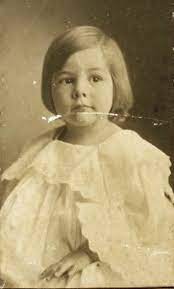
Ada Beatrice Queen Victoria Louise Virginia Smith aka “Bricktop” / Historical photo

“Greatness comes from a person knowing who (s)he is, being satisfied with nothing but the best, and still behaving like a warm and gracious human being.”

Ada Beatrice Queen Victoria Louise Virginia Smith was born in 1894 in rural West Virginia. Ada’s family went north to Chicago when she was four. By the time she was 14, she was hanging around vaudeville theatres and the saloons that accommodated Black performers (plus the accompanying underworld).

Dubbed “Bricktop” for her red hair, her singing and dancing were eventually noticed, and she began to appear on vaudeville stages, contracted through the aegis of the hated-but-no-alternative “Theatre Owners Booking Association” — TOBA, nicknamed “Tough on Black Asses.”

She tired of the unpredictability of the TOBA and went to Harlem after the First World War, where she wowed ‘em enough that she headlined at Connie’s Inn, a huge place with a 12-man orchestra. Sammy Richardson, the doyen of Black performers in Europe, offered her a gig at Le Grand Duc in Paris. Paris? Sure!

After a terrible voyage over in 1924, wracked with seasickness and doubts, Bricktop arrived at Le Grand Duc. It was a tiny, grimy spot. Broke and hungry, she burst into tears.

A kind waiter tried to cheer her with food, drink and general warmth. He was the 22-year-old Langston Hughes, who became a close friend. Determined to make it, Bricktop set to work and began creating a name for herself, treating people like old friends, hiring the best musicians, serving the strongest drinks …

But her now friend Cole Porter decided she needed her own club and put his money up with hers to open Club Bricktop in the Montmartre. People came for the atmosphere and equal treatment for all. Among the 300 or so jazz clubs in Paris in the late ‘20s, Bricktop’s was special. In fact, it was where musicians and staff from other clubs gathered when they finished working.

Busboys, expats, Parisians, the rich and the broke, all carried on among artists and writers, well known and not. You could see Bricktop teaching people like the Prince of Wales how to do the dance the Black Bottom. She wore clothes made for her by her confidante Elsa Schiaparelli. Naturally, her lover Josephine Baker was often there (a husband was in the mix too for a short time).

Harlem came to Paris with “L’Art et les Noirs.” The fact that you could be Black and eat where you wanted, live where you wanted, and love who you wanted contrasted so deeply with America. She hosted singers, musicians, and dancers, like Mable Mercer, King Oliver, and Meta Vaux Warrick Fuller.

Cole Porter could be seen pounding the piano and asking “How’m I doin’ Brickie? How’m I doin’?” (He was trying to woo young men).

One very late night, Bricktop’s good friend, the novelist F Scott Fitzgerald, was arrested for cavorting in a very important Parisian fountain. He kept shouting that he was a friend of Bricktop’s, so they couldn’t arrest him!

The gendarmes dragged Fitzgerald to Bricktop’s apartment building — everyone knew where both her club and apartment were. The doorman got Bricktop to get dressed and go down to the lobby. Yes, she did know him, but he couldn’t come in, as he would drip water all over the rug.

World War II meant fleeing Paris in 1940 — Nazis did not like Americans, and they really loathed Black people. Returning to New York, she tried to set up a new club, but couldn’t deal with US racism. She eventually returned to postwar Paris, but by then Americans were strongly disliked, as were Black people.

She went to Rome and established a club that catered to film royalty like Elizabeth Taylor and Richard Burton. But she tired of the long hours and returned home in 1965. After that, she occasionally performed. Bricktop published her autobiography in 1984 and months later died in her New York City bed with an amazing legacy.

Many of her papers are housed at Emory University.
Launch of Out In The City Exhibition

On Wednesday, 22 February from 5.30pm to 8.00pm we will be launching the Out In The City Creative Writing Art Exhibition as part of LGBT History Month.
The venue is LGBT Foundation, Fairbairn House (2nd Floor), 72 Sackville Street, Manchester M1 3NJ.

Come and see artworks by members of Out In The City produced with Manchester Street Poem.

Oh … er, missus … note the date: 22 February, 5.30pm!