International Women’s Day … Visit to Out In The City Art Showcase … New Secret Art Show with Friends of Dorothy

News

International Women’s Day

Heard Live is back! The true storytelling event, that harnesses the power of people’s lived experience to create positive change, is returning for International Women’s Day.

We would love to invite you along to the event, which is taking place on 8 March, 6.30pm – 9.30pm at Feel Good Club, 26 -28 Hilton Street, Manchester M1 2EH.  We would love to see you there for an evening of captivating stories and connection. Booking link is here.

Come and join us on Thursday, 9 March to visit the LGBT Foundation to view the Out In The City Art Showcase

Meet at 12.00 noon on corner of Sackville Street and Canal Street (opposite the Rem Bar) for visit until 1.00pm / 1.30pm prior to meeting.

Meeting – Cross Street Chapel – 2.00pm – 4.00pm

Jaz Warzynska from Manchester Pride will attend to discuss how Out In The City can get more involved with Manchester Pride.

Please let us know if you are attending here.

Friends of Dorothy – Super Nature

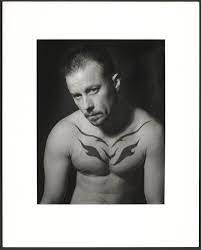
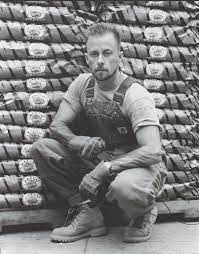
Two visionaries unite in Super Nature – a secret art show: Lee Baxter’s Stunning Landscapes Meet Roman Udalov’s LA-Inspired Photography.

Friends of Dorothy proudly present their third private art show in an ongoing series, dedicated to featuring some of the best queer artists from northern England.

This time, they are excited to present the work of local creative master, Lee Baxter alongside Roman Udalov, a legendary LA-based creative. Roman’s captivating work transports us to the mysterious plant world of East Hollywood and other Californian dreamscapes. 

Udalov’s art provides the perfect counterpoint to Manchester-based creative icon, Lee Baxter, who presents a new series of stunning photographs that capture the beauty of local plant life in and around his native Ancoats. 

Witness the magic that happens when two artistic worlds collide in a breathtaking exploration of SUPER NATUREBook your tickets now and don’t miss this unique opportunity to experience a fusion of queer art that celebrates nature in all its glory.

The exhibition will run between Saturday 11 March 2023 – Sunday 4 April 2023 at the Friends of Dorothy Private Gallery in Castlefield, Manchester. Book tickets here.

Towards a Queer History of Wigan … Bury Pride … You Speak Radio … My LGBT+ History Month

News

Thanks to Arthur Martland for researching and writing the following article:

Towards a Queer* History of Wigan

Wigan has a long queer history, as do most other places in the UK.  But where is it? And why is it not more widely known? At present all that has been identified would seem to be a few stray events, which are all in need of much further research. Not only is the paucity of historical records a problem, but also the fact that what has often been recorded has been penned by those who despise their queer brethren. Moreover, that which has been recorded is predominantly concerning queer men, where is the history of queer women, or of those who identify otherwise?

With regard to earlier records, there is a preponderance of criminal trials, usually accompanied by moralising cant and disparaging language. Few records produced by queer people themselves in Wigan have come to light so far, but, fingers crossed, there are some awaiting discovery.

The purpose of this article is to set out what little I have gleaned to date, which I hope, I and others are able to expand upon through further research and discoveries that will deliver a more comprehensive queer history of our borough, than is currently available.

The earliest record that has come to light is an indictment from 1760, wherein Ralph Harrison was accused of ‘that most detestable horrid and Sodomitical crime called buggery’ at Wigan. At that time, a guilty verdict meant a death sentence would be imposed; to date, however, Harrison’s fate remains unknown.

In 1806 Isaac Hitchin’s house at Great Sankey was raided by the authorities on suspicion of it being a ‘molly house’ (a term used at that time, and much earlier, to denote a house where queer men could meet others like them). A group of men were arrested, but many also escaped capture. Of those who did escape, records suggest that one was the scion of a local Wigan area landowning family. Of those arrested, all from lower class backgrounds, five were subsequently convicted at the Lancaster Assizes and hanged. The two magistrates whose evangelical zeal had fired their drive to root out Sodomites in Great Sankey wanted to continue their inquiries into several well-placed ‘gentlemen’ who lived locally, however local nobility lobbied the Home Office and the magistrates’ enquiries were swiftly curtailed.  

At the Lancaster Assize the following year, 1807, a man was convicted of attempting to ‘commit an unnatural crime’ at Wigan. He was sentenced to two years imprisonment and to stand on the pillory. For details regarding what cruelty pillorying entailed, I would refer the reader to research the punishment meted out to the queer men who met in Vere Street in London in 1810.

The persecution of those suspected of being queer in the Wigan area continued throughout the 19th century, with specific cases being identified in 1813, 1821 and 1847 (2 cases).

In addition to the prosecution of queer men in the 19th century, there were people in the Wigan area who came to the notice of the authorities as they chose to live, at least part, if not all, of their adult lives as members of the opposite sex. In 1860 the press reported a ‘Singular Case of concealment of Sex’ in its reporting of the life of John Murphy, who, whilst living his life as a man, was said to have been born a female by the name of Betty Lavin. And whilst the sensationally reported cases of Boulton and Park in London received daily national coverage when it was revealed that the two men had dressed as women and had paraded themselves across the capital, allegedly inviting other men to ‘conspire to commit sodomy’, similar cases of men attired as women for the suspected purpose of soliciting sexual contacts from other men were also reported in Tyldesley (1871) and in Wigan (1872).

In addition to the specific laws against buggery and sodomy, in the Criminal Law Amendment Act of 1886, a new offence of ‘gross indecency’ was formulated that criminalised virtually any sexual contacts between men whether in private or otherwise. This law was used to prosecute queer men in Wigan right up to the 1960s. One particular case however, in 1929, was against a local rugby player, who had played for both Leigh and Wigan clubs and who had even represented England in the English International Rugby Team of 1910. His prosecution was widely reported and destroyed his career and reputation.  On conviction he was sent to prison for 8 months with hard labour and he seems never to have recovered from the trauma.

Sir David Maxwell Fyfe

Arresting queer men for alleged acts of gross indecency, intensified after the Second World War, most notably during the 1950s thanks to the encouragement of a particularly homophobic Conservative Home Secretary, Sir David Maxwell Fyfe, and the widespread use of police entrapment. Incidentally, whilst Fyfe appointed the Wolfenden Committee, he did so in the belief that the committee would support the continued criminalisation of queer people. Thankfully, the committee after considering the laws against male homosexual activity, recommended that acts between consenting adults be decriminalised. Some politicians from both the Labour and Conservative Parties did not accept the committee’s proposals and continued to oppose reform, however, support for change was given by the, then, MP for Wigan, Alan Fitch.

Alan Horsfall

In 1958, local Atherton gay rights hero, Alan Horsfall helped to set up the Homosexual Law Reform Society, which subsequently became the Campaign for Homosexual Equality (CHE) and, in 1974, at a meeting in Pemberton, the Wigan CHE local group was founded.

As highlighted earlier, up to the 1950s, the most widely available historical records concerning queer Wiganers have come from Police and court records; this presents obvious difficulties for the historian having to rely often only on the records kept by those who abhorred and detested queer people. Actual records from Queer Wiganers are virtually unknown until recent times, but some self-written records have come to light. In 1986 Kenneth Barrow set up the National Lesbian and Gay Survey to collect autobiographical reports from the community and the anonymous survey correspondent no 532, was a born Wiganer who reported their experience of growing up gay in the Wigan of the 1950s and 1960s. The current ‘Legacy of ’67 Project’ run by Mancunian artist, Jez Dolan and his partner, David Martin, are collecting oral histories of queer people and have included at least one recording from Wigan and hopefully more will follow.

The latter end of the 20th century saw great improvements in the legal and social position of queer people, but the struggle for basic rights was by no means easy, with many setback, especially following the introduction of Section 28 by the Conservative Government in 1988 (the notorious Section 28 stated that a local authority “shall not intentionally promote homosexuality or publish material with the intention of promoting homosexuality” nor “promote the teaching in any maintained school of the acceptability of homosexuality as a pretended family relationship”. This Section remained in place in England until 2003. Whilst the section revealed to some the true nature of the ‘nasty party’, Labour politicians too were split on their support for gay rights, as could be shown earlier when, in 1982, Wigan councillors voted to prevent information about gay support services from being distributed in their area. Thankfully times and minds did change and now we have full council support for both the Leigh and Wigan Pride events.

Hopefully you can see that there are some important starting points emerging for a queer history of the borough, which, with further research, will give a fuller picture of our shared lives.

© Arthur Martland

(*) Footnote:

The word ‘queer’ which in the late 19th and 20th centuries was widely used as a derogatory term for a gay man, has in recent decades begun to be reclaimed from its former pejorative use to become a positive self-identifier by LGBTQI people. ‘Queer’ is widely employed by artists and academics as an umbrella term to refer to all things non-heteronormative. Thus, ‘queer’ is often used to describe any sexual orientation or gender identity that is not heterosexual nor cisgender. For example, people who are lesbian, gay, asexual, or transgender may identify as queer.

Bury Pride

Join us for Bury Pride – celebrating love and diversity!

Bury Pride is the first Pride of the season and you can attend not only to have the most amazing time but to show your support to a cause that matters.

The event runs from 10.00am to 6.00pm on Saturday 29 April 2023.

This is a ticket only event. You will need to present your ticket to gain entry. Tickets are free – reserve a spot here.

Further information here.

You Speak Radio

With these podcasts students have been paired with LGBT+ activists such as Helen Zia, Bamby Salcedo, Phill Willson, and more.

In episode one, youth interviewer Cassidy All talks to journalist Helen Zia about her career in journalism and activism. After finding out about Cassidy’s interest in journalism, Helen Zia tells Cassidy what it was like to break into the journalism industry in the 1980s. Zia shares stories of her early struggles as a young journalist and talks about the role that integrity and perseverance has played in her career. Combining journalism and activism, Helen Zia speaks about how she fought to represent the groups and issues she cares about, and the necessity of paving the way for others.

Listen to all episodes here.

My LGBT+ History Month

LGBT+ History Month has been a busy month comprising:

  • Four Out In The City meetings
  • Out In The City trips:
    • Robinson’s brewery tour
    • Lowry Theatre
    • “(Un)Defining Queer” exhibition at Whitworth Art Gallery
    • Oldham Art Gallery
  • Out In The City Art Showcase launch at LGBT Foundation
  • OUTing the Past Festival at People’s History Museum
  • Contact Theatre:
    • “House of Suarez Presents: The Vogue Ball”
    • “Lady Bushra: Robbed”
    • “Ginny Lemon and Sister Sister”
  • Forever Manchester’s Annual Birthday Party – Out In The City awarded “Community Group of the Year”
  • LGBTQ+ History Month Literary Salon at Portico Library
  • Bi Film Fest – “Kajillionaire”, “Cicada” and 4 short films
  • “Journey to Dungeness” short film at Manchester Art Gallery
  • Love is Love: LGBTQ+ History Month Film Night – “Beautiful Thing” at Manchester Central Library
  • Vigil in memory of Brianna Ghey
  • Section 28 Handling Session in Manchester Central Library
  • Private view of launch of “Legacy of ’67” exhibition
  • Meet the Volunteer Manager Pizza Party at LGBT Foundation
  • Mindfulness Workshop at LGBT Foundation
  • “Section 28 – 35 Years On in Manchester” at Manchester Central Library
  • Pride in Ageing Advisory Group at LGBT Foundation
  • Community Session: Survivors Manchester at The Proud Place
  • “Hidden Voices: Hidden Histories” at Bury Met
  • Sophie Labelle – The Transgender Agenda
  • Manchester Cares Documentary Club – “A Secret Love”

Two events were cancelled due to strikes:

  • Vocal Cancer Workshop
  • LGBTQ+ Lecture “Love, Sex and the City: A LGBT+ History for Belfast”

Listen to some little known songs to celebrate LGBT+ History Month – the annual month-long observance of lesbian, gay, bisexual and transgender history and the history of the gay rights movement. I hope you will enjoy. Press here.

Oldham Art Gallery … Out In The City Art Showcase … Legacy of ’67

News

Oldham Art Gallery

After travelling by tram and taking a short cut through Spindle’s Shopping Centre we squeezed into a packed Wetherspoons pub – “The Up Steps Inn”. There we enjoyed lunch before making our way to the Oldham Art Gallery.

Tony Husband, a multi-award winning cartoonist, was giving a talk In Gallery 3 about his current exhibition. His work has appeared in numerous publications in this country and abroad including The Times, The Spectator and Private Eye for whom he has contributed to every issue for the last 37 years, maybe more!

He also has published over 60 books. Tony loves music, nature, fine wines and, er, Man United.

This exhibition brings together a range of Tony Husband’s best-known work. Expect to laugh out loud.

See more photos here.

Out In The City Art Showcase

Out In The City launched the Creative Writing Art Exhibition on Wednesday, 22 February at the LGBT Foundation.

Artworks were shown by members of Out In The City (Bill, David, Mindy, Norman, Norman, Pauline and Tony) produced with the help and advice of Somerset and Simon from Manchester Street Poem. There were also artworks by Vicky on display together with paintings by Jim.

We also had the opportunity to look around the LGBT Foundation premises as about ten of us had never been to the building before.

Legacy of ‘67

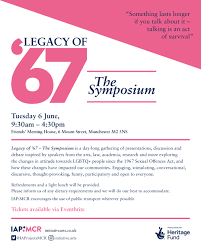
Jez Dolan’s solo show – Legacy of ’67 – is on display in the Reading Room on the first floor of Manchester Central Library.

The show is part of a larger project, supported by the National Lottery Heritage Fund, that explores the changes in the law that have affected LGBT+ people since the Sexual Offences Act in 1967 that partially decriminalised homosexual acts between men in private.  

For the last twelve months Initiative Arts has been capturing the stories of people who have grown up between the ‘60s and the ‘80s to find out how these changes have affected them. They have recorded their testimony, which can be found in Archives+ at the Central Library and have conducted original research of contemporaneous source material to explore the changing attitudes towards LGBT+ people in general society.

Initiative Arts commissioned visual artist Jez Dolan to respond to this project and he has produced a series of eight original works that are on display in the Reading Room, together with an exhibition of original material from the archive.

Jez Dolan is an artist living and working in Manchester. His practice underlines the intersections between queerness, sexuality, identity, and memory. He works across multiple platforms including drawing, performance, printmaking and most recently painting.

The next stage of the project is “Great Indecencies” – a darkly comic play with music, that explores LGBTQIA+ memory, and the beginnings of homosexuality’s decriminalisation. It is the culmination of Legacy of ’67: Initiative Art’s year-long project that captures the real-life accounts of LGBT+ people during the last 50 years, charting the effect of a major change in the law in 1967 and its aftermath.  

The play is on Thursday, 30 March to Saturday 1 April 2023 at 7.30pm at The Edge Theatre and Arts Centre, Manchester Road, Chorlton, Manchester M21 9JG. Tickets are £15 / £13.

Book here.

Fabulous LGBT+ Couples … Rainbow Lottery … International Women’s Day

News

Let’s travel back in time and remember some of the most fabulous LGBT+ couples

We all have a favourite LGBT+ couple, one that melts our hearts and makes us believe in love and happy endings – but what about the romances through history that unknowingly paved the way for LGBT+ people today?

Honouring those before us is so important, as it allows us to reflect on how far we’ve come as a community while celebrating the bravery of those who lived as their true LGBT+ selves, whether publicly or behind closed doors before there were any protections for people like them.

So, let’s travel back in time and remember some of the most fabulous LGBT+ couples.

Virginia Woolf and Vita Sackville-West

Virginia Woolf and Vita Sackville-West

Virginia Woolf and Vita Sackville-West met at a 1920s dinner party, with Woolf offering to publish a book Sackville-West had been working on with her husband.

They quickly bonded over their love for literature and past emotional trauma, forming a strong emotional connection, which blossomed into romance. Their husbands were aware of their affair, but never did anything about it and remained respectful.

The two were lovers for ten years, with fellow poet and novelist Sackville-West and her tumultuous family history becoming the inspiration behind Orlando: A Biography. The gender-shifting protagonist became one of Woolf’s most popular creations.

After enjoying a sexually satisfying relationship for the first time, Woolf’s affair with Sackville-West ended in the late 1920s, but they remained close friends.

Anne Lister and Ann Walker

Anne Lister and Ann Walker

If you’re a fan of the series “Gentleman Jack,” you’ll certainly know who Anne Lister and Ann Walker are.

Lister is often referred to as the first modern lesbian, living totally without shame and presenting as far more masculine than the other ladies around her in the 1800s. She also made no secret of her desire to only spend her life with another woman.

She met Walker in the 1820s and they connected on various occasions over the years. In a monumental moment in history, landowner Lister and young heiress Walker took the sacrament together in 1834 in what is thought to be the first lesbian marriage.

Now, the Holy Trinity Church in Goodramgate, York, displays an official blue plaque on the wall outside to mark the occasion.

Lister and Walker did a great deal of travelling together, and they cohabited in the Lister estate, Shibden Hall, until she died in 1840.

It was only hundreds of years later that her story could be shared after coded diaries were discovered that documented her romantic relationships with other women.

Michelangelo and Tommaso de Cavalieri

Michelangelo and Tommaso de Cavalieri

Italian sculptor Michelangelo and nobleman Tommaso de Cavalieri met in 1532 in Rome, and they remained close throughout their lives.

Then 57 years old, Michelangelo was instantly infatuated with Cavalieri’s appearance, as he fit the artist’s notions of ideal masculine beauty. In fact, Michelangelo described him as the “light of our century, paragon of all the world.”

Cavalieri became the object of Michelangelo’s passion, his muse, and the inspiration for letters, numerous poems, and works of visual art.

They were devoted to one another until the painter’s death, at which Cavalieri was present, in 1564.

Tennessee Williams and Frank Merlo

Tennessee Williams and Frank Merlo

Tennessee Williams was an openly gay author and playwright, writing plays such as “A Streetcar Named Desire” and “Cat on a Hot Tin Roof.” Meanwhile, Frank Merlo was a working-class Italian American from New Jersey who performed on stage occasionally but was primarily Williams’ personal assistant.

The pair met in 1948 at a bar, and they soon hit off a relationship that lasted for 15 years. Describing the first time he clasped eyes on Merlo in his memoirs, Williams wrote: “… he leaned smoking against the porch railing and he was wearing Levis and I looked and looked at him. My continual and intense scrutiny must have burned through his shoulders, for after a while, he turned toward me and grinned.”

Williams and Merlo lived together in Manhattan, and they were some of the star’s most productive and happy years. Alas, their relationship became strained due to Williams’ promiscuity and his drug and alcohol abuse.

Despite this, Williams remained by Merlo’s side in 1962 when he was diagnosed with lung cancer; Merlo died the following year. It’s known that his last words to his lover were: “I’m used to you now,” which the actor accepted as a declaration of love.

Jean Cocteau and Jean Marais

Jean Cocteau and Jean Marais

Writer Jean Cocteau met Jean Marais when Cocteau was 48 and Marais was 24. Marais had seen drawings by Cocteau, and they reminded him of himself. 

After they managed to meet, they were lovers for many years, and they even made several films together, with Marais having starred in most of Cocteau’s most well-known projects, including “Beauty and the Beast” and “Orpheus”.

It’s known that their relationship was extremely passionate and intense, with Marais officially becoming his lover’s muse.

It’s also worth noting that the couple made the conscious decision to stay in Nazi-occupied Paris, despite the fascists’ attitudes towards homosexuality. They were openly gay and often ridiculed in the Nazi press.

Marais outlived Cocteau, who died of a heart attack in 1963. But, Marais described the late writer as the love of his life, wishing their paths had crossed sooner.

Eleanor Roosevelt and Lorena Hickok

Eleanor Roosevelt and Lorena Hickok

Former First Lady Eleanor Roosevelt and reporter Lorena Hickok first met on a Presidential campaign in 1932, with Hickok, the most famous woman journalist of her time, able to convince her editor that Roosevelt deserved her own reporter.

After growing close, it’s widely believed that they embarked on a love affair that lasted for several years. Hickok helped Roosevelt become more outspoken, and they worked together in her campaigns for democracy and human rights.

The nature of their very close relationship has been debated for years but in the 1970s, around 3,000 letters between them were discovered. They were warm, passionate, and typical love letters. They wrote to each other for three decades, sometimes twice a day.

Lili Elbe and Gerda Gottlieb

Lili Elbe and Gerda Gottlieb

You might know of Lili Elbe and Gerda Gottlieb if you’ve seen the movie “The Danish Girl.”

Elbe was a Danish painter and transgender woman, amongst the earliest recipients of gender-affirming surgery in 1930.

She met fellow painter and illustrator Gottlieb while attending the Royal Danish Academy of Fine Arts in Copenhagen. They dated for a few years and married in 1904 when Lili was 22 and Gerda was 19. They travelled through Italy and France, eventually settling in Paris in 1912.

During this time, Elbe began experimenting with her gender expression, wearing women’s clothing and changing her name and persona.

Sadly, as Danish law at the time did not recognize marriage between two women, their marriage was annulled in October 1930 by King Christian X. Elbe died the following year due to complications from surgery.

Rainbow Lottery

Whether you are trying to save some money on your weekly shop or just eat fresh and healthy, we’ve got the perfect prize for you.

As a thank you for your ongoing support for Out In The City, to kick off 2023 we’re giving you the chance to win an amazing prize: a whole YEAR of HelloFresh! These fantastic boxes deliver fresh high-quality ingredients direct to your door – with everything you need to create delicious dinners from scratch.

Special dietary requirements? Maybe you’re going veggie or vegan this year? HelloFresh have got you covered – with loads of options to choose from, there’s something to suit everyone!

The special prize draw will take place on Saturday 25 February. There’s no need to buy separate tickets, you will be automatically entered into this prize draw. Of course, you are welcome to buy additional tickets. Every ticket you buy is an extra chance to win, and an extra fundraising boost for Out In The City. It’s a win-win situation!

Thank you and good luck!

International Women’s Day

Heard Live is back! The true storytelling event, that harnesses the power of people’s lived experience to create positive change, is returning for International Women’s Day.

We would love to invite you along to the event, which is taking place on 8 March, 6.30pm – 9.30pm at Feel Good Club, 26 -28 Hilton Street, Manchester M1 2EH. 

As well as enjoying a curated line up of storytellers, telling some truly inspirational and incredible stories, true to their open mic roots, there will also be a couple of spaces open for budding storytellers. 

The event is raising money for The Pankhurst Trust to ensure the powerful story of the women who won the vote continues to inspire us all to challenge gender inequality, and to ensure that those suffering from domestic violence and abuse get the confidential help they need. We would love to see you there for an evening of captivating stories and connection. Booking link is here.

(Un)Defining Queer Exhibition … New Podcasts … Vintage photos

News

(Un)Defining Queer Exhibition

A short bus ride took us from Piccadilly Bus station to the university area where we dined at the Turing Tap, before visiting the Whitworth Art Gallery.

The current exhibition delves into the Whitworth’s collection to reveal a rich selection of works where artists have used their creativity to acknowledge their sexuality, or to explore and question gender identities.

(Un)Defining Queer is co-led by an intersectional group of participants who self-identify as LGBT+. Together, they propose how we can use a LGBT+ lens to disrupt binary notions of gender, sex and sexuality in order to challenge inequalities.

It is understood that labelling historic artists with contemporary notions of gender or sexuality is problematic because these concepts are nuanced, complex and individual. The word “Queer” has historically been used to discriminate but within the exhibition has been actively reclaimed and used in its broadest sense to be as inclusive to all gender and sexual minorities.

(Un)Defining Queer poses the question that without applying this language, how do we make LGBT+ communities visible within the collection? More specifically, the project and exhibition are seeking to redress historic omissions that have existed because of hetero-normative museum practice.

The exhibition has evolved from research and collaboration between the participants, staff, artists and activists over the last two years. The themes within the exhibition have been shaped and interpreted by the group.

This piece “Lesbian Strength” comprises embroidery and quilting on cotton by Sarah-Joy Ford.

More photos can be seen here.

New Podcasts

The Peter Tatchell Foundation has launched episode one of its new podcast – Be The Changepresented by former BBC journalist Simon Harris.

The topic of the inaugural episode centres on the origins of LGBT+ history month in the US in 1994 – and why it is important. Peter Tatchell discusses the impact the month has had and chooses three inspirational people from history who are LGBT+.

Be The Change is on all major platforms. See the website here.

Rompcast is a new podcast about gay men dating in a time before the internet – discussing how we met and where we met.

In the first episode 62-year old Colin talks about coming out in the 70’s and 80’s with stories of Moss Side riots, ITV World in Action and Queer as Folk.

In the second episode Ron, 79, from Cheshire talks about being gay from the 1950’s onwards; living with his partner Alan; AIDS and dealing with hospitals before and after the passing of the gay marriage bill. There’s also an insight into PrEP and dating online in your late 70’s.

Rompcast is on all major platforms. See the website here.

Some vintage photos:

The Gay Cookbook

Do you have the homosexual urge? Check your homosexual tendencies! “He” magazine 1956

“I’ve robbed the Rainbow to make you Gay”

Drag Kings of Paris, 1963