Christmas at The Movies … Forefather of the LGBT+ Rights Movement … Next Meetings

News

Christmas at The Movies

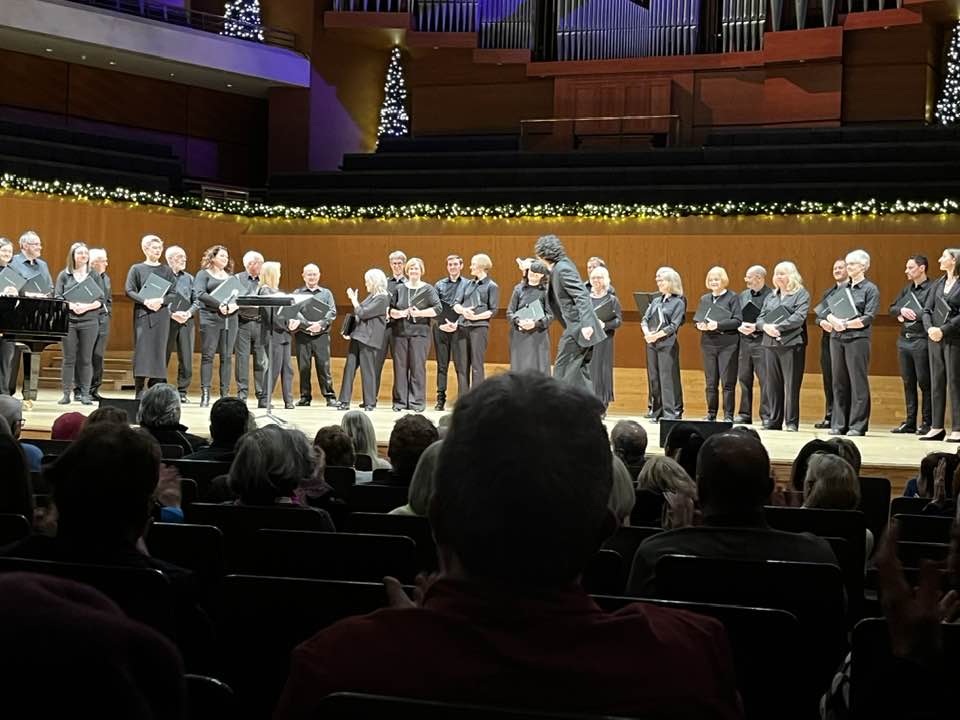
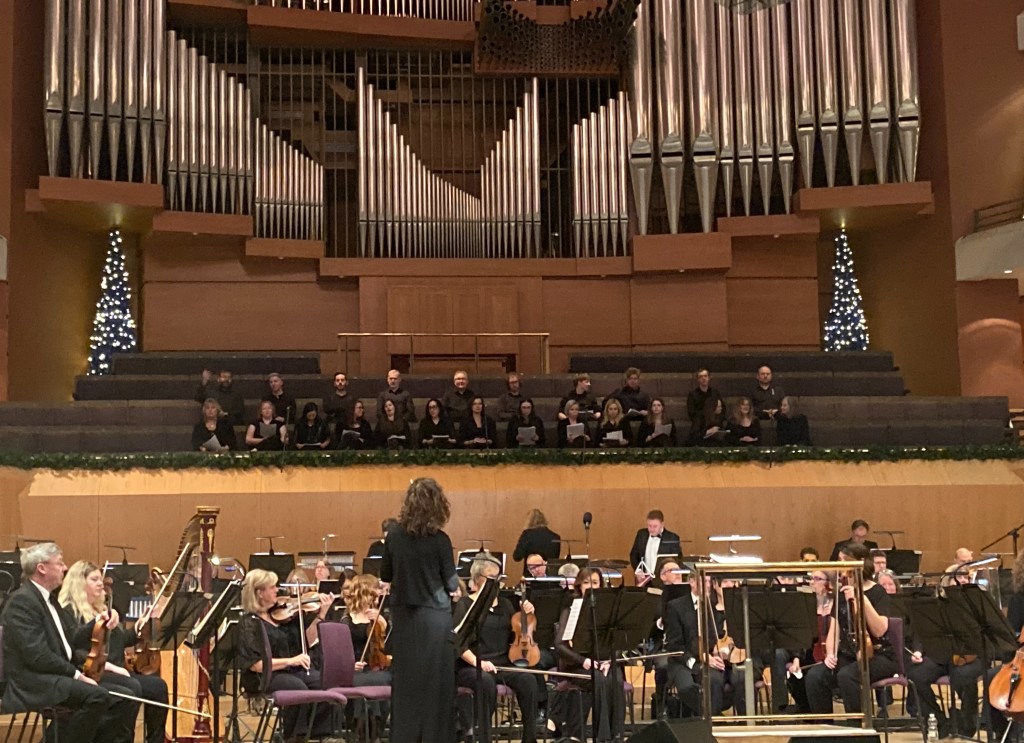
On Thursday, 15 December members of Out In the City attended  the “Christmas at The Movies” concert in the stunning Bridgewater Hall.

Manchester Concert Orchestra and Canzonetta Choir performed music from the films: The Polar Express, Miracle on 34th Street, The Snowman (with Henry Brodrick), It’s a Wonderful Life, The Nightmare Before Christmas, Gremlins, Love Actually, A Christmas Carol and ET The Extra-Terrestrial.

After an interval we heard Sleigh Ride, Elf, The Chronicles of Narnia, Music from Harry Potter, The Grinch and Home Alone.

This was followed by two singers who sang iconic Christmas songs like Winter Wonderland, Have Yourself A Merry Little Christmas, White Christmas and Baby, It’s Cold Outside. Conductor, Toby Purser, briefly explained each performance. It was a most enjoyable concert.

Forefather of the LGBT+ rights movement
Henry Gerber – 29 June 1892 – 31 December 1972

Many people think the start of the modern rights gay rights movement began with the 1969 Stonewall Uprising or even the 1950s-era founding of “homophile” groups like The Mattachine Society or the Daughters of Bilitis.

But a recently published book suggests that Henry Gerber, a Chicago post-office worker, actually began laying the foundation of the gay rights movement back in 1925. He was born Heinrich Josef Dittmar, but changed his name upon emigrating to the United States in 1913.

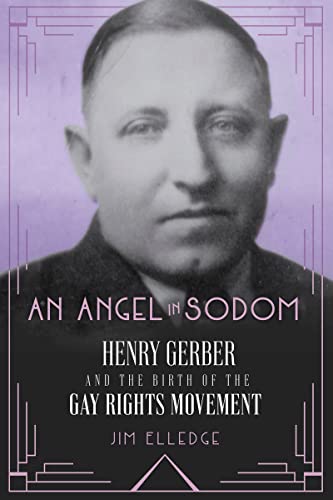
The book, An Angel in Sodom: Henry Gerber and the Birth of the Gay Rights Movement by Jim Elledge, notes that, while serving as a military newspaper proof-reader in Germany during World War I, Gerber subscribed to several gay German magazines and spent time amongst the LGBT+ community in Berlin, where the US military wasn’t stationed at the time.
While there, Gerber was inspired by the Institute of Sexual Science, a transgender-inclusive research organisation headed by sexologist Magnus Hirschfeld. The organisation issued formal ID cards to trans people to help them avoid criminal cross-dressing charges.

Gerber observed how the German LGBT+ community had banded together to achieve visibility and political power. But in the US, LGBT+ people were afraid to publicly unite because anti-LGBT+ laws and social practices threatened to out them and imprison them, effectively ruining their lives in the process.

Inspired by Germany’s LGBT+ community, Gerber founded the innocuously named Society for Human Rights in Illinois on 10 December 1924. This was the first known homosexual organisation in the US. The society sought to “win the confidence and assistance of legal authorities and legislators” to help end the legal and social persecution of homosexuals. The group was exclusively dedicated to gay men, actively excluding bisexuals.

Gerber said he contacted “many prominent persons” and “noted medical authorities” to support his group, “but they usually refused to endanger their reputations.” Potential members also avoided his group. Even though “millions” of homosexuals lived in the US, Gerber found that very few were eager to let their names be on his group’s mailing list.

Gerber eventually found three poor friends to support his group as its national officers: a preacher who gave sermons about brotherly love to small Black groups, an “indigent laundry queen” (who, it later turned out, had a wife and two kids), and a railroad worker afraid of losing his job for being gay. In total, about nine people joined the group.

He also published two issues of a publication called Friendship and Freedom, but he found that his friends were too poor and illiterate to buy it let alone read it.

Gerber’s organisation came to an end one night in July 1925 at 2.00 am when a police detective and a local journalist knocked on his apartment door. The detective asked “where the boy was,” to Gerber’s confusion. He then took Gerber to the police station. The detective confiscated Gerber’s typewriter, notary public diploma, his personal diaries, bookkeeping accounts, and the society’s documents. The officer didn’t have a warrant, and Gerber never got his diaries back.

At the station, Gerber found that two of his group’s national officers had been arrested. The arrests had been covered in the local publication The Examiner under the headline “Strange Sex Cult Exposed.” The article claimed the aforementioned “laundry queen” had committed “strange sex acts” in front of his wife and kids, causing the wife to contact the police. The article also said the man had a pamphlet from the society encouraging men to “leave their wives and children.” Gerber called this a gross distortion of facts.

The police had no warrants for any of the three men’s arrests. As the “the sole evidence of my crime,” Gerber wrote, officers claimed they had found a cosmetic powder puff in his apartment. They also pointed to a passage in one of Gerber’s diaries that proclaimed “I love Karl,” though Gerber said the line was taken out of context and that he purposely left out any gay content from his diary that could’ve been used against him.

The judge in the case also said he thought that the society’s Friendship and Freedom magazine could be considered a violation of federal law forbidding the sending of obscene material through the mail. Gerber denied the magazine contained anything at all that could be considered “obscene.” In the end, a judge dismissed the men’s arrests, calling it an “outrage” that they had been arrested and detained without warrants in the first place.

As Gerber was released from jail, the prosecuting attorney told him that the pastor who served as the society’s national officer had confessed to sleeping with a boy – the boy the detective had asked Gerber about. Upon Gerber’s release, the detective derisively asked him, “What was the idea of the Society for Human Rights anyway? Was it to give you birds the legal right to rape every boy on the street?”

The arrest caused Gerber to lose his postal service job for “conduct unbecoming a postal worker.” His dismissal led to the end of his society. He referred to anti-gay arrests of the time as an “Unholy Inquisition” and compared the resulting trials to the public trials of Irish playwright Oscar Wilde.

Though his society ended, Gerber continued to support gay publications and social groups throughout the 1920s to the 1950s, though many of them had to publicly hide their associations to homosexuality, lest they be subject to legal persecution.

This persecution continued (and continues to this day), though the Stonewall Uprising and other rebellions marked important turning points where LGBT+ people refused to tolerate police abuse and public shaming any further.

Gerber died fifty years ago on 31 December 1972, at the age of 80, living long enough to see the Stonewall Uprising and the start of a new era of LGBT+ rights activism.

Next meetings

We are taking a break with this newsletter over the Christmas and New Year period.

The next outing is on Wednesday, 21 December – drinks in Gay Village (with your host Steve P). Meet in The Rem at 4.00pm … and start from there. Please join him for festive drinks.

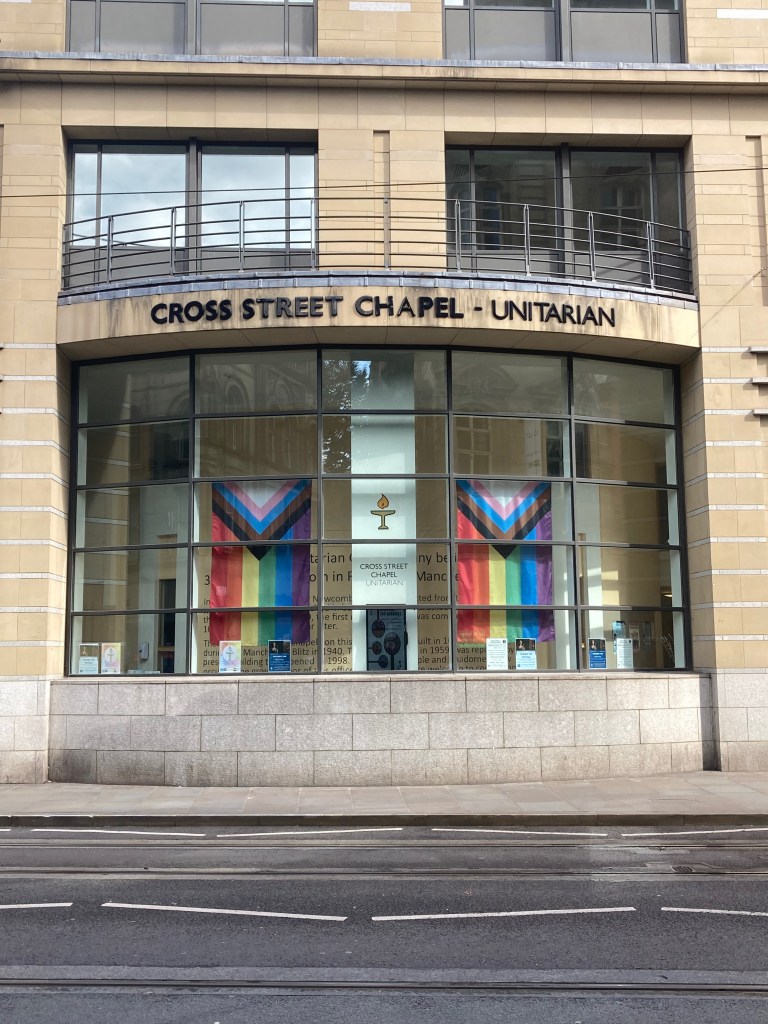
The last meeting this year is on Thursday, 22 December from 2.00pm to 4.00pm at Cross Street Chapel, 29 Cross Street, Manchester M2 1NL. There will be a fun quiz.
However, there are still some social activities planned – see Next Outings – however, it’s too late to attend the free concerts if you haven’t already got your tickets.

The first meeting in the New Year will be Wednesday, 4 January 2023 at Manchester Central Library (Chief Librarian’s Office on 3rd Floor) from 2.00pm to 4.00pm.

Christmas Meal … Retirement Communities in the United States

News

Christmas Meal

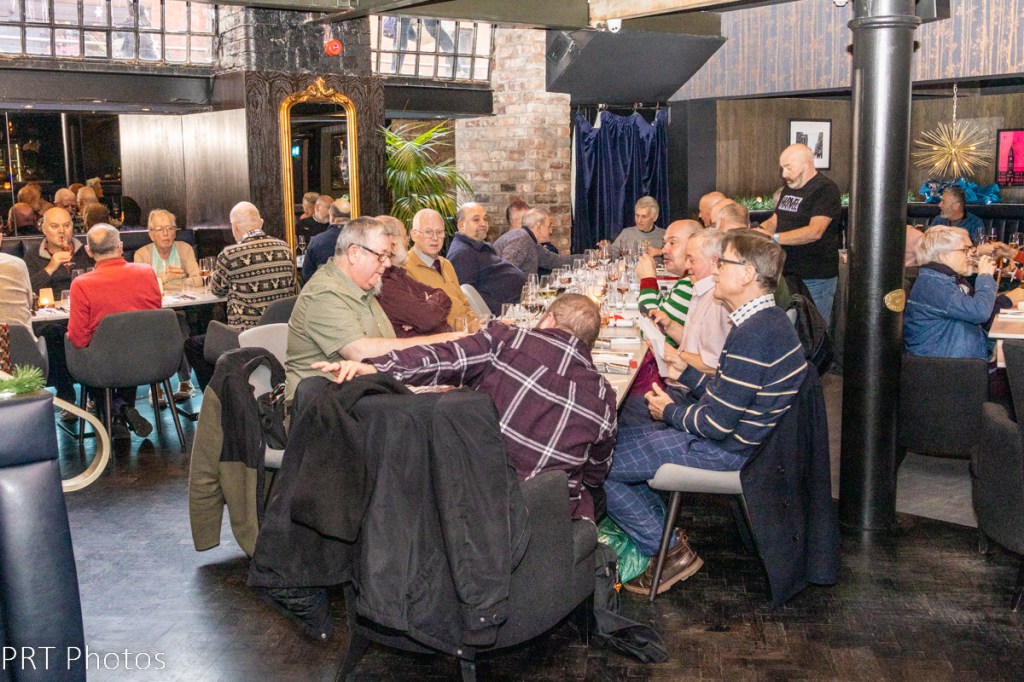
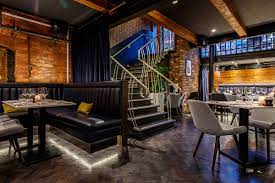
The Out In The City Christmas meal was held at the Village Brasserie downstairs from the Velvet Hotel at 2 Canal Street, Manchester.

The restaurant has a great atmosphere and whilst people were arriving we enjoyed a glass of Kylie Rose Prosecco. The starters were vegetable soup, ham hock terrine or prawn cocktail. Our mains were turkey, nut roast, sea bass or beef, and our deserts were Christmas pudding, chocolate fudge brownie or apple pie. It was a really enjoyable day.

Photographs can be seen here.

10 retirement communities in the US where you can live as your authentic self

Finding a safe and supportive environment to age has become increasingly possible in recent years in traditionally friendly enclaves. San Francisco, New York, Los Angeles, Wilton Manors (near Miami) and Provincetown are some of the towns and cities where older adults can continue to live their best lives in the “gaybourhood”.

For many, though, a planned community is the preferred destination. A growing number are built and run with LGBT+ retirees in mind. Still, with an estimated 2.7 million people in that group, supply dedicated to this population segment has a long way to go to catch up with demand.

Here’s a list of 10 communities at the leading edge of serving LGBT+ retirees. From high-rises to log cabins, like-minded neighbours can also find comfortable living from coast to coast – and on the golf course.

Fountaingrove Lodge

1. Fountaingrove Lodge, Santa Rosa, CA

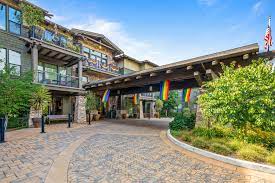
If you’re looking for a resort-like community with a continuum of care, Fountaingrove Lodge is ideal. Amenities on the 10-acre campus in Santa Rosa, CA, include golf, fine dining, a comprehensive wellness programme featuring fitness instruction, and as residents age, in-home continued care services. A memory centre programme for residents with cognitive impairment related to Alzheimer’s or dementia eases the burden of care for loved ones.

Stonewall Gardens, Palm Springs

2. Stonewall Gardens, Palm Springs, CA

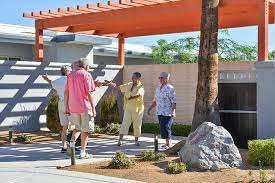
In California, Palm Springs is already a mecca, so it makes sense that the desert oasis would be home to a first-class assisted living community for finding your chosen family. The development has 24 units and comes with the features you’d expect such as chef-prepared meals and an on-site nurse. It also offers multiple levels of medical care.

John C Anderson Appartments

3. The John C Anderson Apartments, Philadelphia, PA

Life at the John C Anderson Apartments in Philadelphia, located in the middle of the city’s gaybourhood, centres around the 6000 sq ft garden courtyard maintained by building residents. Built in 2014 with community input, the modern, airy complex features 67 affordable one-bedroom apartments with ceramic-tiled baths, wall-to-wall carpeting, and sun-filled, open floor plans, plus a community room adjacent to the courtyard for events, and retail shops serving senior needs on the ground floor, including a convenient coffee spot.

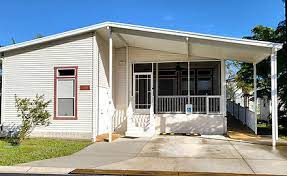
The Resort on Carefree Boulevard

4. The Resort on Carefree Boulevard, Ft Myers, FL

Options for lesbian-only communities are few, but this Ft Myers retirement village is a popular choice. The site features 278 home and Recreational Vehicle lots on 50 acres, many overlooking two women-made freshwater lakes. Amenities include a clubhouse with pool, fitness centre, hot tub, billiards room, library, clay room with kiln, card room, “a really great dance floor” and a wide variety of art programmes, plus tennis, pickleball, shuffleboard and bocce courts.

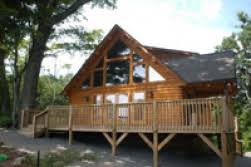
Carefree Cove Ashe Co., NC

5. Carefree Cove, Ashe Co., NC

This 165-acre gated community started as an entirely LGBT+ development but has welcomed straight allies in growing numbers. Set in the Blue Ridge Mountains of north western North Carolina, the forested community features 28 log-cabin homes and 78 lots available to build on; major development was stalled in the last recession. The tranquil setting, which includes a mountain stream and plenty of wildlife, is the development’s most-prized amenity.

Birds of a Feather Pecos, MN

6. Birds of a Feather, Pecos, MN

Just 30 minutes outside Santa Fe, New Mexico, Birds of a Feather is a 140-acre gated community founded in 2004. The independent living compound is designed for aging in place, with up to 3 acres ready for building either a custom home or one of several plans designed by architects for the community.

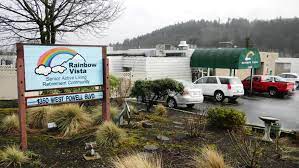
Rainbow Vista Gresham, OR

7. Rainbow Vista, Gresham, OR

Fifteen miles from Portland, OR, you’ll find Rainbow Vista, an apartment development geared toward active seniors. Studios and one-bedrooms come with a kitchenette. The communal facilities include a large event space, a video theatre, an exercise room, a game room with a pool table and a music room.
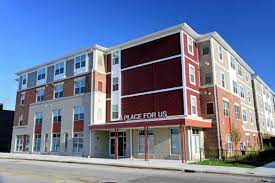
A Place for Us Cleveland, OH

8. A Place for Us, Cleveland, OH
For those not into moving south for retirement, this modern apartment complex in Cleveland, Ohio, offers city living in affordably priced one and two-bedroom apartments, plus amenities like a fitness centre and community room. Conveniently located close to transit, shopping and parks. It’s the first LGBT+-friendly senior housing complex in the state.

Town Hall Apartments Chicago, IL

9. Town Hall Apartments, Chicago, IL

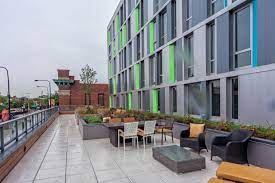
Chicago’s Town Hall Apartments, located in the North Halsted gay district, comprises two buildings: a historic former police station and a colourful new six-story building next door featuring 79 units dedicated to affordable senior housing. Studio and one-bedroom apartments offer sweeping city views; a senior centre provides programmes, services and a full-time social worker. Outside, a sprawling, second-floor rooftop terrace is a popular destination, while the community Rainbow Room features event programming. The building also has a fitness and computer area. 60 percent of residents are LGBT+ older adults.

Village Hearth Durham, NC

10. Village Hearth, Durham, NC

Located on 15 acres in Durham, North Carolina, Village Hearth is a first-of-its-kind cohousing community that includes 28 single-story, fully equipped cottages with open floor plans, skylights, vaulted ceilings, and hardwood floors. The main complex features a common house with a gourmet kitchen plus exercise, game and craft rooms.

Free concerts at Bridgewater Hall … Scrabble Convention … Rainbow Call Companions … Rainbow Lottery

News

Bridgewater Hall

As Christmas approaches, we wanted to offer you the chance to attend some of the wonderful festive shows at Bridgewater Hall.

We’re delighted to be able to offer FREE tickets to the following shows, which feature wonderful performances of Christmas classics and more.

There are a limited number of tickets, so book here.

Thursday 15 December 7.30pm: ‘Christmas at the Movies’

Toby Purser conductor

Laura Tebbutt guest singer

Patrick Smyth guest singer

Canzonetta choir

Manchester Concert Orchestra

Don’t stay Home Alone this Christmas. Join the Manchester Concert Orchestra for a magical evening of Christmas treats at this concert of timeless classics, stuffed full of great music from your favourite festive films including: The Polar Express, Elf, E.T. The Extra-Terrestrial, Home Alone, White Christmas, Love Actually, It’s a Wonderful Life, The Nightmare Before Christmas, Miracle on 34th Street, Gremlins, The Chronicles of Narnia and The Snowman.

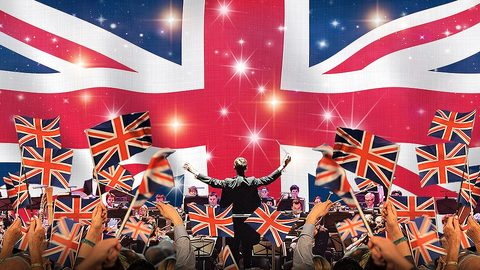
Monday 26 December, 3.00pm: ‘Last Night of the Christmas Proms’

Celebrate Boxing Day in style with the Manchester Concert Orchestra as they perform a stellar selection of great classics:

Mendelssohn Hebrides Overture
Rossini Galop from William Tell Overture
Strauss Blue Danube Waltz
Bizet The Pearl Fisher’s Duet
Ravel Bolero
Rossini Largo Al Factotum
Bizet Danse Boheme
Elgar Nimrod
Goodwin Those Magnificent Men in Their Flying Machines
Puccini Nessun Dorma
Elgar Pomp & Circumstance No.1

Hilary Davan Wetton conductor

Manchester Concert Orchestra

Monday 2 January, 5.30pm and

Tuesday 3 January, 7.30pm: ‘The Nutcracker’

The most famous fantasy ballets for all the family begins as night falls on Christmas Eve. As snowflakes fall outside, the warm glow of the open fire sends flickering shadows across the boughs of the Christmas tree and all the presents beneath. When midnight strikes we are swept away to a fairy-tale world where nothing is quite as it seems, toy dolls spring to life, the Mouse-king and his mouse-army battle with the Nutcracker Prince and we travel through the Land of Snow to an enchanted place where the magic really begins …

Varna International Ballet & Orchestra

Daniela Dimova Artistic Director
Peter Tuleshkov Music Director and Chief Conductor

Founded in 1947 and currently celebrating their 75th anniversary, the critically acclaimed Varna International Ballet comes to the UK for the very first time. Renowned for its award-winning soloists and magnificent corps de ballet, the company has been delighting audiences for decades at home and abroad with its performances of the highest quality.

To book your tickets please contact us here specifying name(s) and dates.

Scrabble Convention

Some of us had not played Scrabble for years but the rules were explained so that we all played in a consistent way. We formed teams of four and enthusiastically placed those letters on the board forming words and scoring points.

Scrabble is a game sold in 121 countries and is available in more than 30 languages; approximately 150 million sets have been sold worldwide, and roughly one-third of American and half of British homes have a Scrabble set. There are approximately 4,000 Scrabble clubs around the world.

It was a close run competition as the top three scores were 180 (Kevin), 177 (Cliff) and 176 (Neil). Tickets for two to Forever Manchester’s Birthday Party at the Kimpton Clocktower Hotel on 10 February 2023 were given to the winner and runner up. We have been shortlisted for Community Group of the Year and the evening will include a three course meal, live entertainment, awards presentations and a DJ.

We held a raffle and the winners received a box of biscuits, three calendars, a diary, a voucher for the café at Central Manchester Library and a key ring.

Rainbow Call Companions

Rainbow Call Companions is a free telephone befriending service specifically for LGBT+ people aged 75+ who would like to speak to someone who’s also LGBT+. 

The service was launched in March this year and in September was selected for a National Advisor for LGBT Health award.

Rainbow Call Companions is run by Re-engage to provide a safe and non-judgmental space for LGBT+ older people across the UK. Calls last for half an hour or so and you can chat about anything that interests you. What’s great is that the same volunteer phones you every time, so you can get to know each other and share stories and laughter – for as long as you both want.

Re-engage is committed to ending loneliness and social isolation for people in their 70s, 80s, 90s and beyond. Many people who get to such a great age find themselves with very limited social circles and social contact to look forward to.

Older LGBT+ people are  vulnerable to loneliness as a direct consequence of decades of privacy and self-concealment. This is a generation who grew up when  their  very being was deemed outrageous and illegal.  A lifetime of exposure to discrimination and stigma can lead to high levels of stress and a strong sense of isolation.  All too often, isolation is seen by older people as the price they have had to pay for their sexuality. 

If you are interested in using the service use the contact form or phone 0800 716 543 (Freephone).

Rainbow Lottery

We joined the Rainbow Lottery on 7 June 2021 and during that period we have had 49 winners! Forty have won 3 extra tickets, seven have won £25 and two have won £250. But the biggest winner has been Out In The City as we have received over £1250 in much needed funds.

Tickets cost just £1 per week and we receive 50p for each ticket bought. There’s always a chance to win up to £25,000, so buy those tickets and give our fundraising a boost.

With Christmas fast approaching, don’t forget that we have a fantastically festive prize to thank you for your ongoing support for Out In The City – a massive £1,000 John Lewis eGift Card!

From tech to toys, and furniture to fashion, you can one-stop-shop your last-minute Christmas shopping – and you can spend it in Waitrose too, for all your favourite festive treats!

The special prize draw will take place on Saturday 17 December. There’s no need to buy separate tickets, you will be automatically entered into this prize draw. Of course, you are welcome to buy additional tickets. Every ticket you buy is an extra chance to win, and an extra fundraising boost for Out In The City. It’s a win-win situation!

Thank you & good luck!

Go to https://www.rainbowlottery.co.uk/ and search for Out In The City to buy tickets.

Bridgewater Hall Christmas Concert … HIV Vaccine … Centre for Ageing Better … Diversity Role Models … Human Rights Day

News

Bridgewater Hall mid-day concert

A group of us went to the lunch time concert which featured a selection of Christmas songs from Europe (including Ukraine) and Central and South America.

The Manchester Chamber Choir was formed in 2002 and has become one of the UK’s most versatile and accomplished vocal ensembles. The programme was very varied and really enjoyable.

An early-stage HIV vaccine is showing positive results. If it works, it would be first successful HIV vaccine after almost 40 years of research

An HIV vaccine candidate is showing positive early results, prompting a critical component of the human immune response in 97% of vaccine recipients.

It was a small phase 1 trial testing a vaccine that was made out of an engineered version of a protein that exists on the HIV virus. This particle was designed to get the body ready to generate broadly neutralising antibodies, which are thought to be critical to create immunity against HIV. Broadly neutralising antibodies would recognise a large swath of HIV subtypes, which is necessary to provide immunity because the HIV virus mutates frequently. 

48 participants either received the vaccine candidate or a placebo, and 35 out of 36 of those dosed with the vaccine candidate showed activation of broadly neutralising antibody precursor B cells that could produce the first step on the way to immunity. The crux of this technique is essentially to train the immune system to recognise a wide array of naturally occurring HIV subtypes, according to William Schief, one of the authors of the study. Schief is a professor in the department of immunology and microbiology at Scripps Research.

“There’s only a few patches on the surface of the HIV spike that remain the same or relatively the same across different isolates. And we’re trying to elicit very specific antibodies that have very specific properties that allow them to bind to those exact patches,” Schief said.

In the phase 1 study, no one reported serious side effects, and other side effects like pain at the injection site or headaches were mild to moderate, and they resolved in one to two days. 

These results, published in the academic journal Science on 1 December 2022, which was World AIDS Day, were first announced in 2021 at the virtual conference hosted by the International AIDS Society HIV Research for Prevention. The trial was co-run by the International AIDS Vaccine Initiative and Scripps Research. 

Researchers have been trying to create an HIV vaccine for nearly 40 years.

HIV is notoriously difficult to vaccinate against. Part of this is because of HIV’s tendency to mutate. By evolving and changing quickly, it can avoid the immune system by making itself harder to recognise.

Additionally, virtually no one, short of a few high-profile cases, has been cured of an HIV infection. That means we don’t know what sorts of immune cells in the body can actually protect against infection. 

Theoretically, this vaccine will be the first in a series of multiple shots, each using a different HIV particle to train the immune system. As the shots progress, the molecules get closer and closer to that of the actual HIV viruses, until antibodies produced can bind to many different kinds of HIV.

“That’s sort of a whole new way of thinking about how to make a vaccine,” Schief said.

Moderna is developing its HIV vaccine based on similar research.

It will take time before phase 2 trials can begin, according to Schief, and there’s no guarantee that the vaccine will ultimately work.

But if it does, this technique could be used to make other vaccines, he said, like a universal corona virus or flu vaccine.

“We’re optimistic that there’s some chances that this approach may be helpful for more than just HIV,” said Schief, “even though if it only helps HIV that would be enormous.”

This article was originally published by Business Insider.

Centre for Ageing Better

Would you be interested in being photographed as part of the Centre for Ageing Better’s age-positive image library?

They are looking for LGBT+ people (and couples) over 50, based around Manchester who are happy to be photographed. The library is a publicly available resource, so anyone (communications professionals, journalists, advertisers etc) can download the photos.

They would like the shoots to take place either on week commencing 12th or 19th December, depending on people’s availability.

They would also give participants a voucher as a thank you for their time (if it’s less than an hour, £10, if it’s 1-3 hours, £35).

If you are interested in taking part, please drop an email to Dora Buckle at Dora.Buckle@ageing-better.org.uk

Diversity Role Models

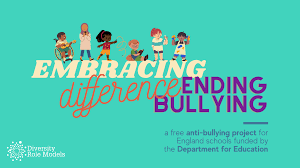
Diversity Role Models, an education inclusion charity, seek to tackle homophobic, biphobic and transphobic bullying. Their vision is an education system where everyone can be themselves without fear of being judged and can thrive.

Historically, they are an LGBTQ+ charity but with funding from the Department for Education for their anti-bullying staff training project ‘Embracing Difference, Ending Bullying’ they have been able to recruit an even more diverse pool of volunteers. 

The volunteer role models are often from marginalised or underrepresented groups, who come to schools (both in person and digitally) to share their lived experience stories with students and staff to develop empathy and trigger attitudinal change. They have many opportunities across Manchester (and the country using zoom/teams) for role models to join them in sessions to share their stories.

Here is a link to their website

If you want to sign up, then they would train and DBS check everyone at no cost to you. Please contact us here and more information will be sent.

Don’t Tell Us Who We Are

Human Rights Day is celebrated annually around the world on 10 December every year. The date was chosen to honour the United Nations General Assembly’s adoption and proclamation, on 10 December 1948, of the Universal Declaration of Human Rights.

Show your support for people enduring human rights abuses.

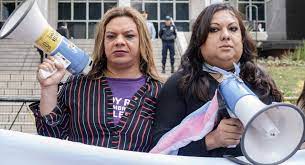
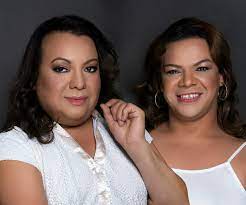
Yren Rotela and Mariana Sepúlveda want to live their lives freely and do things they love, like playing volleyball, dancing and going to the theatre. However, as trans women, Yren and Mariana are busy defending themselves against discrimination. They’ve been bullied, physically attacked and prevented from speaking out about the issues they face in their daily lives.

Trans people in Paraguay cannot legally change their names or obtain identity documents that match their gender identity, among other discriminatory practices.

This means trans students cannot get school certificates in their chosen names, which makes finding a job difficult. This inequality has motivated Yren and Mariana to become activists, to demand change. But protesting isn’t easy for trans people in Paraguay. Paraguay is a very conservative country that treats trans people and the wider LGBT+ community unfairly. It tries to make them invisible. Because of this, protests by trans groups are often banned, and in some cases demonstrations have been attacked.

Yren and Mariana have been fighting for years to change their legal names. If they could get documentation that matches who they are, it would mean the state had started to recognise their existence as trans women. As Yren says: “I came into the world to show who I am, not to be told who I am.”

Tell Paraguay to legally recognise the identity of trans people so they can exercise their rights.

  • Send an appeal letter (in English or Spanish) to the Paraguayan Authorities

Write to: President of the Supreme Court of Justice

Palacio de Justicia del Paraguay

Mariano Roque Alonso y Testanova

9° Piso, Torre Norte

C.P. N°001001

Asunción, Paraguay

    Salutation: Dear Mr President

In your letter ask him to legally recognise the identities of transgender people so that they can exercise their right to freedom of expression, association and protest under their self-perceived identities.

or email to: secretariageneralcsj@pj.gov.py

  • Send a message of support and solidarity

Address: Yren Rotela and Mariana Sepúlveda

c/o Amnesty International Paraguay,

Hassler 5229 entre Cruz del Defensor y Cruz del Chaco,

Asunción, Paraguay

The Bi Flag … ACT UP Disrupt St Patrick’s Cathedral, New York

News
The bisexual flag was launched on 5 December 1998

It is now ubiquitous in bi circles but it took a while to catch on.

The pink, purple and blue colours that have come to represent the bi community in their stripes were not new back in 1998, but refashioning them into a very simple flag was a bright idea from Michael Page of online chat forum BiCafe (a website which ran from 1997 until 2012 – sadly gone).

The USA-based BiCafe website was launched in 1997 and the flag was launched at its first birthday celebrations, on 5 December 1998.

In correspondence with a writer for the flagspot website Michael explained, “The pink colour represents sexual attraction to the same sex only (gay and lesbian), the blue represents sexual attraction to the opposite sex only (straight) and the resultant overlap colour purple represents sexual attraction to both sexes (bi).”

The “correct” bi flag design is made up of three distinct colour blocks, but sometimes people use a wash of colours from pink to blue via purple.

However that’s pretty well in keeping with his original concept, as Michael explained: The key to understanding the symbolism of the Bisexual pride flag is to know that the purple pixels of colour blend unnoticeably into both the pink and blue, just as in the ‘real world,’ where bi people blend unnoticeably into both the gay / lesbian and straight communities.”

Wouldn’t the rainbow flag do the job?

Michael wrote that the vast majority of bi people I have spoken with, feel no connection to the rainbow flag, the pink triangle, the black triangle, the Lambda symbol or the double-edged hatchet. These symbols are viewed as gay and lesbian icons, which was their initial intent.

The recent “progress flag” version of the rainbow flag adds stripes to address marginalisation and exclusion of trans people and people of colour from the rainbow, but leaves bi exclusion as an unaddressed issue.

After its launch the bi flag slowly spread as an image around the bi world, including appearing on the back of the programme booklet for the next International Bisexuality Conference, in 2000.

Despite this, in the late 1990s and 2000s it was still fairly unknown as a symbol in the wider LGBT scene, not least because in the days when colour printing was so much harder to afford, promotional materials for bi events, groups and projects tended to be in black and white.

But the growing internet access helped transform that. Today there are a plethora of web graphics using the three colours, as well as lots of bi-coloured accessories to subtly communicate your bi-ness to others.

The flag itself – now easily obtainable online for a few pounds as a small hand-held flag-on-a-stick or as a five foot long fabric sheet – makes a simple and popular cape to wear at LGBT pride events, turning the usual problem of bisexual invisibility on its head by literally wrapping yourself in the flag.

Over the years since it has flown from town halls worldwide and given us a code by which to know one another, it has helped end bisexual invisibility.

In 2020, it was at the centre of internet controversy over its ownership, which ultimately reaffirmed its place as a freely usable symbol for us all. So all of our thanks to Michael, and happy birthday the pink, purple and blue flag this 5 December.

ACT UP Disrupt Mass at St Patrick’s Cathedral, New York

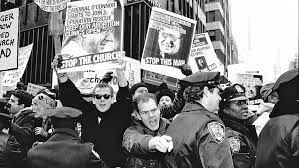
On 10 December 1989, AIDS activist group ACT UP (AIDS Coalition To Unleash Power) undertook one of their most controversial actions. In conjunction with the Women’s Health Action and Mobilization (WHAM!), they picketed outside St Patrick’s Cathedral but also took direct action inside.

Poster announcing the action at St Patrick’s Cathedral

The protesters had given advance notice of their intentions, which prompted a range of responses from authorities. The most drastic was having sniffer dogs sweep the Cathedral for explosives earlier in the day. Hundreds of uniformed police officers were assembled outside and plain clothes police officers mingled with the congregation inside.

Some 4,500 protesters gathered outside, some of them lying down in the street to block traffic on Fifth Avenue. Others carried a giant condom with the words “Cardinal O’Condom” written along the side. This was a reference to Cardinal John O’Connor who, in addition to his homophobic, anti-condom and anti-abortion preaching, was also a staunch opponent of sex education in schools.

The protesters also included artist Ray Navarro dressed as Jesus, supposedly covering the event for “the Fire and Brimstone Network”.

But it was events inside the Cathedral that proved the most controversial. It began with activists pretending to be ushers and handing out flyers to those entering the church, explaining why there would be a protest. Then, as O’Connor began to take Mass, activists lay down in the aisles or chained themselves to the pews. More activists stood up in the pews and shouted things like “Why are you murdering us?” and “Stop the Madness!”

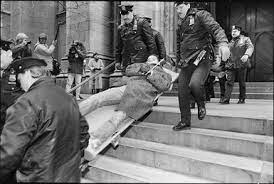
O’Connor, hoping to drown out the protests, asked the congregation to stand and pray. Activists merely shouted louder and started blowing whistles. Police and church heavies moved in to carry the protesters out. The majority had to be carried out on stretchers as they refused to get up from the floor of the aisle.

But even when this group of activists had been removed, there were still others inside, sitting quietly and pretending to be worshippers. These were the so-called ‘Speaking in Tongues’ group. Their strategy was to wait until Communion, then walk up as if to receive Communion. When they were offered the Communion wafer they would each make their own political statement.

The first member to do this was Tom Keane. The priest gave him the wafer and said, “This is the body of Christ.” Keane responded by saying “Opposing safe-sex education is murder.” He then laid on the floor himself in an attempt to prevent others from receiving Communion. The priest simply stepped over him and continued giving Communion.

Keane was one of 111 people arrested inside and outside the Cathedral. Ultimately, all of the protesters were charged with minor offences and given community sentences. Those who refused to undertake community service were tried but did not serve time in jail.