Macclesfield

News

Trips & Adventures – 21 February 2019

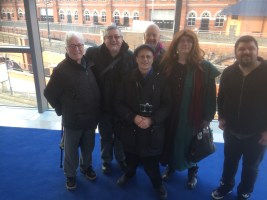
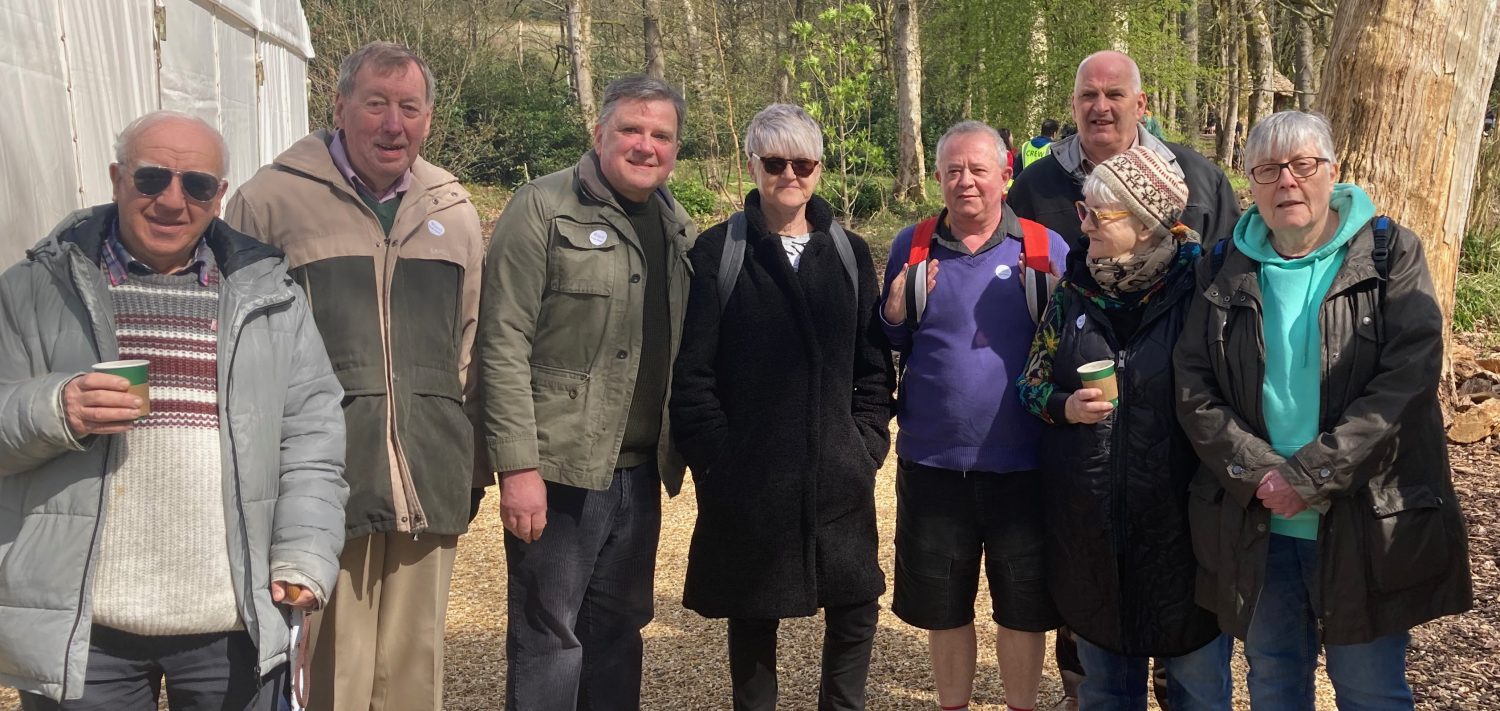
We caught the train from Piccadilly at 10.35am and arrived in Macclesfield just 20 minutes later. Macclesfield is a mill town in the east of Cheshire and has been accused of having few cultural amenities; in 2004, research was published in The Times naming Macclesfield and its borough the most uncultured town in Britain, based on its lack of theatres, cinemas and other cultural facilities.

From the train station we headed for the hilltop church of St Michael and All Angels which is approached from Water’s Green by a flight of 108 steps, which themselves are a local landmark. After climbing all those steps we had to take a break and have a coffee in Costa. 

We then had a very good meal in the Society Rooms, before visiting the Silk Museum.

Macclesfield was once the world’s biggest producer of finished silk – in 1832 there were 71 silk mills operating. The booming textile industries generated wealth and social change, and this wealth resulted in Macclesfield gaining collections of Egyptian antiquities. Two fiercely independent Victorian women (reading between the lines two lesbians), Marianne Brocklehurst and Mary Booth, known collectively as the MBs, are responsible for the Ancient Egypt collection in the Silk Museum. They were life-long companions and together they explored Egypt buying important objects from dealers and rummaging in the sand to find artefacts themselves.

Whilst in Luxor in March 1874 the MBs visited an Egyptian family who were selling some interesting antiquities. Under cover of darkness they entered their home and were struck by the painted mummy case which they purchased. The next problem was how to smuggle it on board their boat. The first attempt was unsuccessful. The MBs panicked at the sound of gunshots from the riverbank, but they managed to get the mummy on board. After opening the case, the MBs worried that the strong smells of resin and incense  would attract attention, decided to bury the body on the banks of the Nile!

We then had a private tour of a working mill museum, next door, Paradise Mill. Our expert guide, Tim, was very informative and we learnt a lot about the art of silk throwing and Jacquard weaving. It was a very interesting day out.

For more photos of the trips please go to photos
Saltaire

News

Trips & Adventures – 14 February 2019

Happy Valentine’s Day to all! (singles as well as couples). The ancient Romans may be responsible for the name of our modern day of love. Emperor Claudius II executed two men — both named Valentine — on February 14 in the 3rd century AD. Their martyrdom was honoured by the Catholic Church with the celebration of St Valentine’s Day.

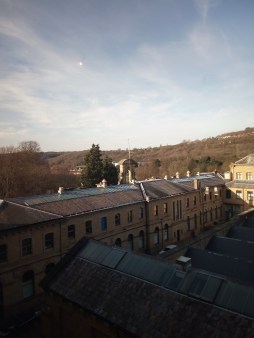
On this romantic day we travelled to Saltaire – a village near Bradford in West Yorkshire. It is named after Sir Titus Salt who built a textile mill, known as Salts Mill, and this village on the River Aire. Designed by architects, Lockwood and Mawson, Salts Mill was opened on Sir Titus Salt’s 50th birthday, 20 September 1853. In December 2001, Saltaire was designated a World Heritage Site by UNESCO.

We had a fantastic lunch in the Boathouse Inn – a chic contemporary pub / restaurant set in a refurbished, riverside Victorian boathouse. The food and service were excellent even though the place was very busy.

We explored Salts Mill which features exhibitions of paintings by David Hockney as well as books and lots of interesting curios. Unfortunately we were not able to take a cruise down the canal as we were off-season, but we had a very pleasant walk round Roberts Park on the other side of the River Aire. It was a great day out.

Museum of Science & Industry

News

Trips & Adventures –  7 February 2019

Yesterday we held a successful Hate Crime Awareness event with 25 attendees where we learnt all about hate crimes and hate incidents focussing on sexual orientation and transgender issues. Thanks to the folk from Church House who are always supportive, the volunteers – Leroy and Jim – and Nat and Ben (Police Community Safety Officers) who spoke to us about these vital issues and encouraged a free and wide-ranging discussion.

However, today we visited the White Lion, an old fashioned and traditional pub offering Chinese and Caribbean cuisine as well as traditional English dishes, before our visit to the Museum of Science & Industry.

The main purpose of our visit was to see Stephenson’s Rocket, the historic locomotive which was last in Manchester 180 years ago! The guide was very knowledgeable and enthusiastically explained how a steam train works, how the first inter-city railway made history right here in Manchester and how Rocket changed our world and the way we travel forever!

The museum houses the world’s oldest surviving passenger railway station and we also found time to take part in a weaving workshop.


Bridgewater Hall

News

Trips & Adventures – 30 January 2019

A few of us gathered at the Briton’s Protection pub for a quiet pie and a pint before meeting others in the Bridgewater Hall foyer. There we also met our guide, Glynn, who had worked at the concert hall for over 20 years.

The Bridgewater Hall is the iconic international concert venue in Manchester city centre, (which replaced the previous venue – the Free Trade Hall, which had poor acoustics). It cost around £42 million to build and currently hosts over 250 performances a year.

The hall is home to The Hallé orchestra, and is the primary concert venue for the BBC Philharmonic Orchestra. The building sits on a bed of 280 springs, which help reduce external noise and vibration from the road and passing trams.

The Bridgewater Hall held its first concert on 11 September 1996 and was officially opened on 4 December by Queen Elizabeth II, alongside the Duke of Edinburgh. The Bridgewater Hall was one of a number of structures built in the 1990s that symbolised the transition to a new and modern Manchester following de-industrialisation and the 1996 bombing.

We visited areas which are not normally open to the public including the undercroft where you can see the springs, and the performer’s changing rooms. It was great to see behind the scenes. Apparently Jessye Norman (an American opera singer associated in particular with the Wagnerian repertoire) refused to use the changing room, staying at the near-by Midland Hotel and getting a limousine to ferry her to the Bridgewater Hall!

On the plaza outside is the “Ishinki Touchstone”, a sculpture by Kan Yasuda made of polished Italian Carrara marble which is white streaked with bluish-grey. The stone weighs 18 tonnes and was installed in August 1996. It cost £200,000 and the rumour is that it is lucky to touch the stone. We all enjoyed another great day out.

Trips & Adventures – 1 February 2019 

Norman and Stuart went to a concert by the St Petersburg Philharmonic Orchestra at the Bridgewater Hall on Friday 1st February and it was free, donated by Manchester airport. Before the concert we had a drink in The Briton’s Protection, a nearby pub.
The programme was changed, as was the conductor who was to be Yuri Temirkanov but was replaced by Vassily Sinaisky. The music began with Symphony No 1 in D flat major The Classical, Op 25.  This was followed by The Second Piano Concerto by Rachmaninoff with soloist Freddy Kempf. After the interval the concert ended with a rousing performance of Tchaikovsky’s Symphony No 5 in E minor, Op 64.
We retired to the pub for another drink. Concert going is a thirsty business.

Strictly Come Dancing

News

Trips & Adventures – 26 January 2019

Six of us from Out in the City went to the Manchester Evening News Arena (courtesy of Unique X) for a VIP experience to see “Strictly Come Dancing” on tour. I have to admit I was a bit sceptical – I’m not a regular viewer of the show – OK, I’ve never seen a programme in full. But it was spectacular, sensational and stunning … and other words beginning with “s” (like superb).

Ore Oduba, a British television and radio presenter, best known for winning the fourteenth series of BBC One’s “Strictly Come Dancing”, hosted the show. Supported by a live band and some amazing singers, seven couples made up of a celebrity and a professional dancer did two dances each, from the classic waltz to the sultry rumba, and were marked out of 10 by four judges. These were Craig Revel Horwood, Dame Darcey Bussell, Shirley Ballas and Bruno Tonioli. When Dr Ranj and his partner danced a sexy salsa, Craig Revel Horwood said that it reminded him of the NHS – No Hip Swivel! We boo-ed playfully. Although one dance scored only 22 out of 40, the standard was generally so high that one dance scored 39 out of 40 and four dances scored full marks. However, the audience decided who won the ultimate prize; with fans having the power to vote for their favourites and choose who lifted the famous Glitterball Trophy.

The singers covered such gay classics as “I’m Coming Out” and “Dancing Queen(s)” when Craig and Bruno danced. When they sang “We are Family” it reminded me of the time I went to see Sister Sledge at the Hacienda Night Club. Only one sister turned up, but she still appeared on stage looking from left to right when she sang the lyrics: “We are family, I’ve got all my sisters with me”.

There were also professional dancers and a highlight for me was the dance performance at the end. The group led by two men dancing together filled me with pride and warm emotion. I shed a tear (don’t tell anyone!)

We had the chance to stand up and dance in our seats to the “Strictly Come Dancing” theme tune. There were costume changes, crowds and cha-cha-cha! Darlings, the whole event was fun, camper than a row of tents and totally Fab-U-Lous.