African Rainbow Family … Budding gardeners? … and LGBT depictions on the silver screen

News

African Rainbow Family

African Rainbow Family is a charity that supports lesbian, gay, bisexual, transgender and intersex people of African heritage living in the UK.

On 17 September 2020 from 10.00am to 9.00pm, African Rainbow Family will ‘takeover’ Ben Hardy’s Instagram channel! Join them on Instagram using @benhardy and follow @africanrainbowfamily

Support them with likes and comments and if you have questions, they will be happy to answer them.


Budding gardeners?

Photograph courtesy Howard Sooley

Michael Derek Elworthy Jarman (1942 -1994) was a film director, stage designer, diarist, artist, gardener and author.

Jarman was outspoken about homosexuality, his public fight for gay rights and his personal struggle with AIDS.

The LGBT Foundation are announcing the next stage of the collaboration with Manchester Art Gallery, launching ten ‘Derek Jarman Pocket Park Volunteer’ roles.

From the end of September 2020 volunteers will work with an artist (initially via Zoom, and eventually face-to-face get togethers) to plan and develop a new urban garden space at the front of Manchester Art Gallery, inspired by Derek Jarman’s garden at Prospect Cottage, Dungeness, Kent.

Applicants must be over 50, LGBT and from the Greater Manchester area.

If you are interested, click on the link here to see the role profile and complete the Volunteering form online.

A blue plaque commemorating Jarman was unveiled at Butler’s Wharf in London (where he had a studio in the 70s) on 19 February 2019, the 25th anniversary of his death.


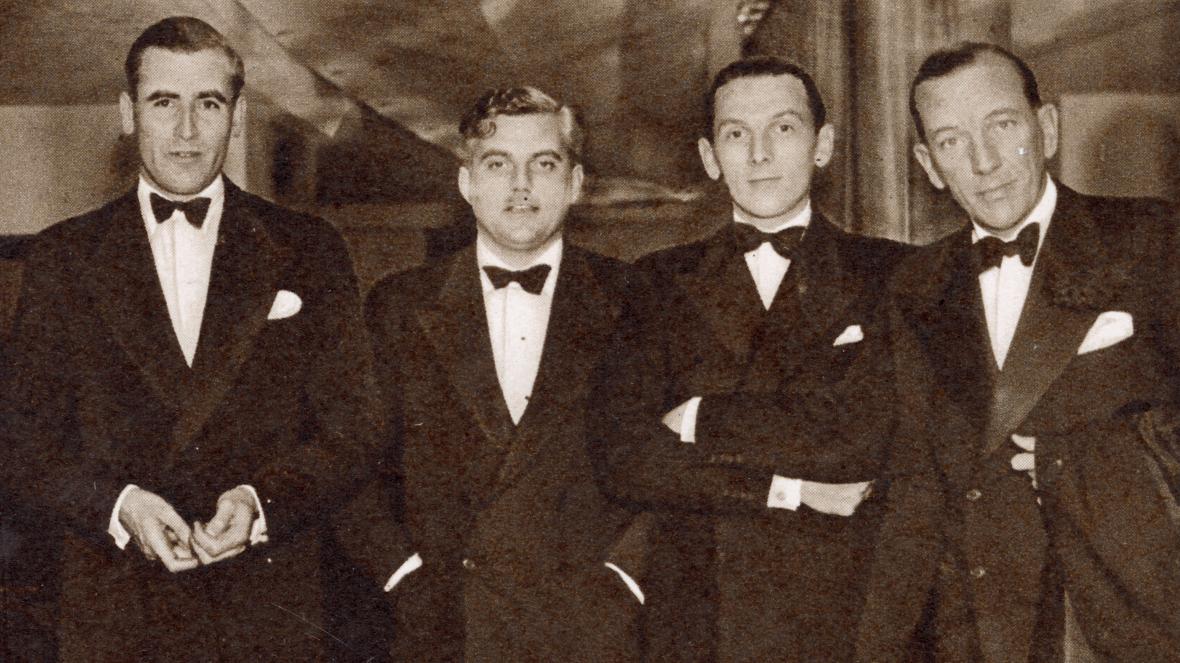
A couple of people have mentioned recently that they had returned to the pictures as cinemas have now re-opened. I also found, on another website, a poem by Charlie Chaplin which I found very inspirational and is reprinted below.

So I decided to look into the first representations of LGBT people on the “silver screen”.

The first notable suggestion of homosexuality on film was in 1895, when two men were shown dancing together in the William Kennedy Dickson motion picture The Dickson Experimental Sound Film, commonly labelled online and in three published books as The Gay Brothers. At the time, the men were not seen as gay or even flamboyant, but merely as acting fancifully. However, film critic Parker Tyler stated that the scene “shocked audiences with its subversion of conventional male behaviour”.

In silent film, such as Charlie Chaplin’s The Masquerader, it was quite popular for men to dress up as women for comic effect. In the film A Woman (1915), Chaplin dresses as a woman and plays with the affections of men.

During the late nineteenth century and into the 1920s and 30s, homosexuality was largely depicted through gender-based conventions and stereotypes. Oftentimes male characters intended to be identified as gay were flamboyant, effeminate, humorous characters on film.

The terms “pansy” and “sissy” became tagged to homosexuality and described “a flowery, fussy, effeminate soul given to limp wrists and mincing steps”. Because of his high-pitched voice and attitude, the pansy easily transitioned from the silent film era to the talking pictures where those characteristics could be taken advantage of. Gay male characters were depicted as having stereotypically feminine jobs, such as a tailor, hairdresser, or choreographer; reinforcing the stereotype that gay men were limited to certain careers. Lesbian characters did not have a title like gay men, but were still associated with crossdressing, a deep voice, and having a stereotypically masculine job.

The first erotic kiss between two members of the same sex in a film was in Cecil B DeMille’s Manslaughter (1922). Marlene Dietrich was the first leading lady to kiss another female on screen in 1930s Morocco.

During the period of the Great Depression in the 1930s, the cinema audience had significantly waned. Filmmakers produced movies with themes and images that had high shock value to prompt people to return to the theatres. This called for the inclusion of more controversial topics such as prostitution and violence, creating a demand for pansies and their lesbian counterparts to stimulate or shock audiences. With the new influx of these provocative subjects, debates arose regarding the negative effects these films could have.

In the 1931 film City Lights, written and directed by Charlie Chaplin, there are several scenes where Chaplin has a very peculiar relationship with a drunken millionaire (Harry Myers) he meets at a party. He goes home with the drunken rich man. They sleep in the same bed and Chaplin gives him a little love pat before he goes to sleep.

Later in the movie, when the same drunk man meets and recognises Chaplin on the street, he embraces him and kisses him on the mouth (or close to it). Clearly the joke is as conscious as it can be without being stated.

In the boxing scene, Chaplin is between bouts and sitting in the corner of the ring and the ring men are rubbing him on his arms and legs and one of the them slips his hand down inside Chaplin’s trunks where it is promptly removed by Charlie. Also, in a scene previous to the one just mentioned, he flirts (over the top) with another boxer in the dressing room to the extent that the boxer steps behind a curtain to pull off his pants and put on his trunks.

In the film Behind The Screen, an aspiring actress (Edna Purviance), desperate for work, disguises herself as a man and is hired at the studio as a stagehand when the regular crew strikes.

Charlie, discovering that the new stagehand is in fact a woman, gently kisses her just as Goliath (Eric Campbell) enters. “Oh you naughty boys!” Goliath remarks, as he teasingly pinches their cheeks and dances about in an effeminate manner before offering his backside to Charlie, which Charlie promptly kicks. This curious scene representing a homosexual situation is highly unusual in American commercial cinema for its time.

Outside the movies, Chaplin had a penchant for marrying teenage women and ended up fathering eleven children.

In an interview in 1957, when asked to clarify his political views, Chaplin stated: “As for politics, I am an anarchist. I hate government and rules – and fetters … People must be free.”

This is Charlie Chaplin at various ages. He wrote the poem below at age 70:

This is Life!

As I began to love myself

I found that anguish and emotional suffering

are only warning signs that I was living

against my own truth.

Today, I know, this is Authenticity.

As I began to love myself

I understood how much it can offend somebody

if I try to force my desires on this person,

even though I knew the time was not right

and the person was not ready for it,

and even though this person was me.

Today I call this Respect.

As I began to love myself

I stopped craving for a different life,

and I could see that everything

that surrounded me

was inviting me to grow.

Today I call this Maturity.

As I began to love myself

I understood that at any circumstance,

I am in the right place at the right time,

and everything happens at the exactly right moment.

So I could be calm.

Today I call this Self-Confidence.

As I began to love myself

I quit stealing my own time,

and I stopped designing huge projects

for the future.

Today, I only do what brings me joy and happiness,

things I love to do and that make my heart cheer,

and I do them in my own way

and in my own rhythm.

Today I call this Simplicity.

As I began to love myself

I freed myself of anything

that is no good for my health –

food, people, things, situations,

and everything that drew me down

and away from myself.

At first I called this attitude a healthy egoism.

Today I know it is Love of Oneself.

As I began to love myself

I quit trying to always be right,

and ever since

I was wrong less of the time.

Today I discovered that is Modesty.

As I began to love myself

I refused to go on living in the past

and worrying about the future.

Now, I only live for the moment,

where everything is happening.

Today I live each day,

day by day,

and I call it Fulfillment.

As I began to love myself

I recognized

that my mind can disturb me

and it can make me sick.

But as I connected it to my heart,

my mind became a valuable ally.

Today I call this connection Wisdom of the Heart.

We no longer need to fear arguments,

confrontations or any kind of problems

with ourselves or others.

Even stars collide,

and out of their crashing, new worlds are born.

Today I know: This is Life!

~Charlie Chaplin

Lockdown news … “Queer makeover” in retirement homes … HIV and Coronavirus

News

The guidance in England regarding meeting with others safely is changing from Monday 14 September 2020.

There are now national restrictions, local restrictions and specific restrictions.

Most boroughs of Greater Manchester (City of Manchester, Trafford, Bury, Tameside, Rochdale and Salford) are subject to local restrictions.

However, Stockport and Wigan are subject to the more generous national restrictions and Bolton and Oldham are subject to specific restrictions.

When Manchester is subject to the national restrictions we will be able to arrange meetings again.

Generally, you must not meet in a group of more than six, indoors or outdoors, but there are exceptions where groups can be larger than six people, including for work, and voluntary or charitable services.

Age UK Manchester have confirmed that, once local restrictions are eased, Out In The City fits under the exemption of a group that is “a voluntary or charitable service”. As long as the venue is Covid-19 secure, having undertaken a risk assessment, and the space is large enough to fully social distance, we can begin our meetings again.


Five retirement homes in Manchester to get “queer makeover” as part of project exploring LGBT+ visibility within older communities

A collection of artists will create work celebrating LGBT+ visibility in over-50’s at five retirement homes in Manchester (Image: Manchester Evening News)

A group of artists are partnering with older persons’ housing services across Greater Manchester in order to create work encouraging more inclusivity within sheltered housing and independent living schemes.

The Back In The Closet project by LGBT Foundation will see an artist work directly with staff and residents at a Manchester housing scheme to create an ‘artistic response’ to the experiences of residents.

Artists taking part in the residency include Trafford-based visual artist Jez Dolan, storyteller Lauren Sagar, filmmaker Anna Raczynski and visual artist Tamzin Forster.

Artists Rachel Anderson and Cis O’Boyle will also be involved as part of Idle Woman, a collaborative project focused on creating vibrant spaces for women through sculpture and performance.

“My practice as an artist is focused around queerness, identity and history, often through telling stories,” artist Jez Dolan explains of his involvement in the project.

Visual artist Jez Dolan is one of the artists to be taking part in the Back In The Closet project (Image: Jez Dolan)

“The Back in the Closet project has a real resonance with my ongoing work, and I’m really excited about the opportunity of sharing my practice with older LGBTQIA+ people living in residential settings.

As an older artist I’m looking forward to collaborating with communities of people and sharing our stories and shared histories, and looking at how we can make often unheard voices heard and appreciated.”

During September, each artist will spend a minimum of eight days remotely working with their partnered scheme.

Calico Homes, One Manchester, Trafford Housing Trust and Great Places Housing Group are all taking part in the project, which is in partnership with HouseProud and Great Places at Greater Manchester Combined Authority.

Cllr Brenda Warrington, Greater Manchester’s Lead for Age-Friendly and Equalities, said she hoped the project would lead to more ‘dignified and inclusive housing’ from housing associations.

“A survey in 2014 reported that two thirds of care home staff said there was not a single resident who was openly lesbian, gay, bisexual or trans where they worked,” Cllr Warrington said.

“We know this cannot be true and points to the fact that many older LGBT+ people feel uncomfortable and unable to disclose their sexual orientation or gender identity.

We can learn a lot through this scheme and by using art, residents and staff will have the chance to be creative and I look forward to seeing the end results.”

Launched last year by Sir Ian McKellen, LGBT Foundation’s Pride in Ageing programme was set up after growing concerns that many LGBT+ people over the age of 50 are living in isolation and regularly face discrimination.

During Manchester Pride, drag artist Cheddar Gorgeous joined Pride in Ageing to host virtual LGBT History quizzes and make-up tutorials specifically for the over-50’s.

Lawrie Roberts, Pride in Ageing Manager at LGBT Foundation, said he hoped the Back In The Closet project would help Manchester’s older LGBT+ community feel heard.

“Pride in Ageing aims to make Greater Manchester one of the best places to grow older as a LGBT+ person, and ensuring that people feel safe and comfortable to be open about their sexual orientation or trans status in the housing scheme in which they live is a huge part of achieving this,” he added.

“We are incredibly excited to be working with a group of hugely talented artists from across the North West and a network of housing providers across Greater Manchester on these residencies, which though creative practise will open up new conversations around LGBT+ visibility in retirement schemes.”


NAM is a charity who share information about HIV & AIDS.

Two UK studies find that HIV infection may be a risk factor for dying from COVID-19.

Two studies relating COVID-19 mortality in the UK to HIV status have both concluded that having HIV raises the risk of dying from COVID-19, after adjusting for age and some other factors.

The first (Bhaskaran) is a population survey of mortality risks, which relates death from COVID-19, as listed on death certificates, to HIV status recorded in National Health Service (NHS) primary care records.

The other (Geretti) is a prospective cohort study of mortality in patients who have been hospitalised due to COVID-19 and compares mortality in patients with and without HIV.

The first study finds that, since 1 February and up to 22 June, people with HIV had a 130% raised risk (i.e. 2.3 times the risk) of dying from COVID-19 compared with the general population (a risk similar to that seen in a recent study in South Africa’s Western Cape province, presented at AIDS 2020: Virtual in July).

The second study finds a 63% raised risk of dying of COVID-19 among the HIV-positive members in its database of hospitalised patients, once age and state of health on admission are taken into account. The database consists of the UK patient data from ISARIC, an international research consortium. It covers a slightly different time frame to the first study; from 18 January, when COVID-19 PCR testing first became available to UK hospitals, to 18 June.

Both studies face the problem that in the UK, where HIV is a lot rarer than in South Africa, they are working with small numbers of COVID-19 deaths in people with HIV. The first study found only 25 people whose HIV status was recorded in GP records and whose death certificates recorded death from COVID-19. The second study found 115 people hospitalised for COVID-19 who were recorded as having HIV, and virtually the same number of deaths, 26. Many but not all of these will be the same people. These small numbers make it very hard to show that their results are statistically significant and not just due to chance, and can lead to different results.

For instance, the first study found that the raised risk of death in people with HIV seemed even larger in people who self-described as Black, as opposed to any other ethnicity; the second did not find this association.

Interestingly, the first study found that, although this was not statistically significant owing to the low numbers, the higher risk of death was most evident during the first 60 days of the pandemic. The authors speculate that this may reflect less social distancing and/or greater vulnerability to infection during the early weeks, before people with HIV were advised to shield. Beyond day 90 of the pandemic (from 2 May) the increased risk due to HIV was no longer apparent.

The findings of both studies have been published as pre-print articles, which means they have not yet been peer-reviewed. In a statement issued in response to the studies, the British HIV Association (BHIVA) and allied organisations urge that the findings should be interpreted with caution, especially as due to limited figures and under-recording, the influence of other risk factors for COVID-19 mortality could be under-estimated.

King Lear competition … still in lockdown … It’s OK to be Takei!

News

First some good news – Congratulations to Patrick whose short story made the top 100 stories from over 7,000 entries in the national King Lear short story competition. His story was entitled “No Turning Back” and was an autobiographical chapter in his life.

Pauline’s haiku “Bees in Our Place” was also one of twenty liked by the judging panel:

Bees buzzing around

drinking nectar in our place

summer sun shining


Still in Local Lockdown

How are you? These are tough times? So much can happen in the blink of an eye. So I’m not blinking anymore! Ha ha!

On 4 September 2020 the Department of Health said the rate of infection is “still too high” to lift the restrictions on gatherings. The ban on two households mixing indoors continues in Manchester. But another review of the restrictions will take place by 11 September. So let’s hope for an easing of the restrictions soon.


It’s OK to be Takei

George Takei is an actor who was cast as Lt. Hikaru Sulu in Star Trek.

In the 1980s, he joined a gay club called the Frontrunners, and was struck by the fastest athlete in the group, Brad Altman, whom the actor recalls as “dashingly good-looking.”

Brad and George have now been together for 35 years, although George stayed in the closet until 2005 (when he was in his 60’s). The secret to that longevity, according to George, is “We truly are a team — me as the actor, writer, activist and Brad as the manager, scheduler and all-around essential guy. And we love being able to share our lives and our livelihood.”

This week George Takei was interviewed in The Guardian:

“My father was an Anglophile. He was a San Franciscan, but he loved all things English. He adored all the kings and queens and I’m named after the stuttering King George VI.

Getting cast as Lt Hikaru Sulu in Star Trek was life changing. The show’s creator, Gene Roddenberry, told me the idea was a metaphor for the fact that the earth’s strength lay in its diversity; people from all over the world, working out their problems and being a team – and boldly going where no one had gone before.

I was imprisoned shortly after my fifth birthday. The day is seared into my memory: 20 April 1942. I saw two soldiers marching up our driveway carrying rifles and I remember the California sun on their bayonets. My father told us that we were going away for a long vacation, but we actually were taken to the Rohwer War Relocation Center, a concentration camp for Japanese Americans.

We were American citizens that had nothing to do with Pearl Harbor, but 120,000 of us were categorised as enemy aliens even though we were all born in California. We were innocent Americans who happened to look exactly like the people that bombed Pearl Harbor. And for that we were being imprisoned.

My father wanted me to be an architect. I was an architecture student at UC Berkeley. I lasted two years, but my real passion was acting. My father said: “Look at television, look at the movies, look at Broadway. Those roles for Asians are terrible; all the stereotypes. Is that what you want to be?” I took that as a challenge to prove him wrong.

I only came out in my 60s. I’m an actor of my times. In the 20th century, if I wanted to be an actor, I couldn’t be out – although I did have a discussion, when I was in the closet, with Gene Roddenberry about the issue. I said: “Why don’t we have a script that metaphorically deals with the inequality of our system to people that are homosexual?” And he said: “All my characters have to be straight if I want to be on television.”

Arnold Schwarzenegger made me come out of the closet. Two years after Massachusetts passed a marriage-equality bill, California passed the bill, too, but it needed the signature of the governor, Schwarzenegger. But despite saying, ‘I’m from Hollywood; some of my friends are gays and lesbians,’ when he campaigned, he veto’d the vote. I decided to talk to the press as a gay man for the first time because of him.

People stop me in the street to talk about Star Trek every single day and it’s been going on for 54 years. It’s become part of my life and I don’t fight it.”


Manchester Pride Parade Movie, Lockdown latest, Pride train competition … and William Dorsey Swann

News, Pride parade

Here’s the full Manchester Pride Parade Movie:

Lockdown latest

Matt Hancock, Health Secretary, reviewed the local lockdown and the current restrictions across Greater Manchester were eased in Bolton, Stockport and Trafford. Wigan was brought in line with national restrictions last week, while Oldham is subject to stricter measures than the rest of the region.

Unfortunately, until restrictions are lifted in Manchester, Out In The City cannot meet.


Avanti West Coast launches pride train

Avanti West Coast is launching the UK’s first fully wrapped Pride train entirely staffed by an LGBTQ+ crew for its first official service.

The train operator has adopted the most recent iteration of the Pride flag which sees the addition of the colours black, brown, light blue, pink and white to bring people of colour, transgender people and those living with or who have been lost to HIV/AIDS to the forefront highlighting Avanti West Coast’s progressive commitment to diversity and inclusion.

West Coast Main line, Avanti West Coast Executive Director Commercial, Sarah Copley said: “I’m delighted to be launching our new Avanti West Coast Pride Train which represents everyone in the LGBTQ+ community.”

Pride train? You name it

Avanti West Coast have created a head-turning train especially for Pride. It’s so vibrant and colourful you can’t miss it. But one thing it’s missing is a name – which is where you come in. They would love your input, so send your winning suggestions by 13 September!

What if your entry is chosen? Well, it’s not just a big tick to go on your bucket list. But you’ll also get the star treatment at the train’s official naming event, and fly the flag at Pride next year.

Enter here

Editor’s comment: Trainy McTrain Face is not allowed.

Forgotten icon?

William Dorsey Swann was a gay liberation activist. Born into slavery in 1858, he was the first person in the United States to lead a queer resistance group and the first known person to self-identify as a “queen of drag”. Imagine the queenery of this icon.

He was a slave in Hancock, Maryland and was freed by Union soldiers after the Emancipation Proclamation went into effect. During the 1880s and 1890s, he organised a series of balls in Washington, D.C. He called himself the “queen of drag”. Most of the attendees at his gatherings were men who were former slaves, and were gathering to dance in their satin and silk dresses.

William was arrested in police raids numerous times, including in the first documented case of arrests for female impersonation in the United States, on 12 April 1888. In 1896, he was falsely convicted and sentenced to 10 months in jail for “keeping a disorderly house” (running a brothel).

After his sentencing, he requested a pardon from President Grover Cleveland. This request was denied, but he was the first American on record who pursued legal and political action to defend the LGBTQ community’s right to gather.

He was known to have been close with Pierce Lafayette and Felix Hall, two men who had also both been slaves and who formed the first known male same-sex relationship between enslaved Americans.

When William stopped organising and participating in drag events, his brother continued to make costumes for the drag community. Two of his brothers had also been active participants in his drag balls.

Imagine how intelligent and ambitious this man had to be to come up with drag balls in the 1800s! Imagine how many terrible concepts he had to unlearn by himself to be a confident gay black man who does drag in the 1800s!

Imagine how courageous he had to be to fight for LGBT people as a former slave in America in the 1800s!

William Dorsey Swann is the original queen, the original drag mother, the original activist. Tell his story!

Lockdown latest … and photos of older lesbians and gay men in Italy

News, Pride parade

Lockdown latest

Matt Hancock, Health Secretary, is expected to announce the results of the latest local lockdown review at some point today.

Last week he said local leaders in affected areas would be able to recommend which parts of the region should and should not be subject to restrictions.

Greater Manchester Mayor, Andy Burnham, has said there will not be a blanket lifting of the current restrictions across Greater Manchester.

Local lockdown restrictions are in place across all boroughs apart from Wigan, which was brought in line with national restrictions last week, while Oldham is also subject to stricter measures than the rest of the region.

Mr Burnham told a press conference on Wednesday that local leaders in Greater Manchester would be recommending that Stockport and Bolton follow Wigan out of lockdown this week – but whether that happens will be down to the government.

He also said they would be recommending that restrictions in the rest of the region remain as they are.

We should find out from Matt Hancock what decisions have been made at some point over the next few hours.

Until restrictions are lifted in Manchester, Out In The City cannot meet.


Manchester Pride are THRILLED to announce the FULL LINE-UP for Alternative Manchester Pride Festival!
Join us from the comfort of your home for an incredible weekend of activism, arts & culture, community, youth and family offerings, partying + MORE 🎉 United We Stream
Out In The City is part of the parade at 12.30pm and interview at 3.00pm on Saturday, 29 August.


Wish It Was a Coming Out: older gay people in Italy – in pictures

Photographer Melissa Ianniello’s long-term project investigates the double taboos of homosexuality and old age in Italy. The subjects of her intimate projects are a group of gay men and lesbians between 60 and 90 years old, captured as couples or alone in their own homes.

Umberto Davini, 68: Altopascio, Tuscany

Umberto has been a great traveller since he was young – he wanted to explore new realities and travel. In the 1970s he set off for India to meet the mystic Osho; it was the beginning of a very special trip that continues today, within him. He is vegetarian, almost vegan, loves nature, and for some time has dedicated himself to a new passion, photography. He enjoys photographing the stones that have been eroded over time or smoothed by the waterways, and tree trunks pulled on to the beach by waves.

Vittorino Panzani, 76, and William Belli, 69: Trento, Trentino-South Tyrol

Vittorino and William have been together for 47 years. Both came out at a very young age and immediately after started to actively participate in the LGBT movement. Over the years they have never missed the Pride festival and have travelled all over the world. They live in Trento, where they have been working for over 20 years as antiquarians, and were married in a civil union.

Maria Laura Annibali, 74 and Lidia Merlo, 72: Rome, Lazio

Maria and Lidia have known each other for 17 years. Their love blossomed at a mature age, but it struck like a classic bolt of lightning. It was Lidia who won over Maria: on top of a relentless courting full of sweet nothings and poetry, she wrote a dedication to Maria one night on the wall in front of her house: “I am passionately and hopelessly in love with you.” They began dating and soon after became an official couple. They recently married in a civil union.

Victor Palchetti-Beard, 67 and Gianni Manetti, 70: Florence, Tuscany

Victor and Gianni have been a couple for 43 years. Victor came to Italy in 1975 during his university years. Shortly after arriving, he met Gianni through shared friends and it was true love – but as an American he could not stay long in italy. So Gianni’s mother decided to adopt Victor in order to help her son start a family. However, this family cannot be made official with a civil union because the pair are brothers from a legal point of view.

Edda Billi, 86: Rome, Lazio

Edda was born in Follonica, in the coastal area of Maremma. She was a teenager when she fell in love with a older girl who drove a jeep and loved poetry and literature. It was this young woman who introduced Edda to the world of books and culture. The pressure that Edda’s family put on her because of her sexual orientation led her to move to Rome. She has become an emancipated woman: a poet, and activist with the separatist feminist movement. Even today, Edda refers to herself as being in love with women and with life.

Pasquale Ferro, 63: Ischitella, Campania

Pasquale was born in Naples. He had a difficult childhood, full of misery and violence, and he was denied the opportunity to attend school. Despite that he was able to redeem himself over the years. He discovered he was gay and came into contact with the homosexual scene in Naples. He began writing and doing theatre, letting himself get inspired by the street and its stories. In time he became a playwright and also worked as a journalist.

Paolo Melato, 71: Rome, Lazio

Paolo came out as gay when he was 30 years after the break-up of a heterosexual relationship. From that moment he started to see different men, generally younger than him, until he met his greatest love: a doctor. They stayed together for many years, until he was diagnosed with AIDS and died young. They spent many difficult years together: they had to deal with prejudice and fears in a period in which the disease was spreading quickly and little was known about it. Paolo now lives in an apartment with his dog.

Gianni Picciotto, 72: Perugia, Umbria

Gianni is of Sicilian origin. He came out as gay at a young age. He told his family, who welcomed and accepted him thanks to the help of his mother. While still a minor, Gianni met a man named Pino. Once Gianni had turned 18, they set off for Torino in search of work. They had an intense relationship for 52 years until Pino’s death in 2015. On 14 April 2020, Gianni died aged 72.
Giovanni Rodella, 66: Florence, Tuscany

Giovanni was born in the Mantova area but moved to Florence to do his military service once he was old enough. It was during his military conscription that he discovered he was gay. These were years of liberation for him – once he had overcome his feelings of guilt, he was finally able to come out to himself and accept his homosexuality. A professional photographer, Giovanni is an active participant in political and cultural events of the LGBT movement.

Lara Elia, 46, and Lia D’Urso, 64: Nicolosi, Sicily

Lara and Lia met online in 2009, in the field of lesbian feminism activism. Lia is a retired restorer from Catania, and Lara was born in Africa to an Italian father and English mother but was raised in Rome. She is a journalist who deals with scientific dissemination. They live in a small villa in Nicolosi where they divide their lives between their passion for gardening and love for their pets. They are avid activists who never miss Pride.

Anna Palla, 63: Cagliari, Sardinia

Having spent half her life in search of money and success, Anna decided to undertake a spiritual journey. This allowed her to free herself from her old “idols” and led to her own renaming. Today she feels like a free woman. She has found within herself what she was mistakenly looking for elsewhere.

Monica Maestri, 63, and Ornella Brugnara, 72: Trento, Trentino-South Tyrol

Monica and Ornella have been a couple since 1988. They met through mutual friends, even though at first Monica lived in Bologna and Ornella lived in Trento. Although they never had a real coming out experience, they have never tried to hide their relationship. They are fond of going to the mountains and cycling holidays, and love attending lesbian-themed cultural events.

Zeno Zappi, 65, and Massimo Coralli, 56: Imola, Emilia-Romagna

Zeno and Massimo have been together for 12 years. They are very close to their families who have known for a long time that they were gay. They live openly as homosexuals. They are united not only by their love, but also by their shared passion: creating jewellery from recycled material. This led them to open a business; most recently, they have tried to promote their artistic laboratory and their creations through street markets.

Tina Meriggi, 78, and Lorenza Accorsi, 72: Milan, Lombardy

Tina and Lorenza met at the over 40s social group held by ArciLesbica in Milan. At that time, Tina was almost 60 years old. Despite their age, their relationship was full of passion from the very beginning. It was during their first holiday at a nudist campsite in Normandy that they truly fell in love. Three years after they first met, Tina retired; from then on, they started to travel a lot, more than before, seeing the world together. In 2018 they were married in a civil union in Milan.


Me and My penis

A former police officer is confessing to being unable to drive without his penis becoming aroused. “Is it the rumble of the road on your balls?” he wonders aloud, while another young man in the group says: “I actually think my dick is in control [of me].” A third guy, in his 30s, describes his first attempt at masturbation: “I kind of hit it from side to side and it felt nice after a while.”

If these sound like the sort of stories you don’t often hear on mainstream TV, then that’s the point. Channel 4’s one-off show Me and My Penis aims to break the taboo around the male sex organ and start a frank conversation about masculinity.

Me and My Penis is on Channel 4 on 31 August.