Ten Pin Bowling

News

Trips & Adventures – 25 April 2019

This week’s trip was to the AMF Bowling at The Rock shopping centre in Bury; a modern ten pin bowling alley with 24 lanes packed with bowling fun, arcades, food, drink and activities! But first we popped into the Art Picture House, an early 1920’s cinema, exceptionally theatrical in its plan and decoration, but now converted into the local Wetherspoon’s pub.

Modern ten-pin bowling derives mainly from the German Kegelspiel which used nine pins set in a diamond formation. Some sources refer to an 1841 Connecticut law that banned ninepin bowling because of its perceived association with gambling and crime, and people were said to circumvent the prohibition by adding a tenth pin; other sources call this story a mere fable.

In any event, the enjoyment of kegeling by German peasants contrasted with the lawn bowling that was reserved for the upper classes, thus beginning bowling’s enduring reputation as a common man’s sport.

Although most of us had not bowled for years we enjoyed the afternoon and each of us scored a strike, knocking down all ten pins on the first roll of the ball. The “perfect” game is a score of 300, and although we didn’t quite manage that the winner reached a remarkable score of 127.

Lesbian Visibility Day – 26 April 2019

Lesbian Visibility Day, now embedded in the international LGBTQ+ calendar, is a celebration of the world’s diverse lesbian community.

Held on 26th April every year, Lesbian Visibility Day showcases women-loving-women, providing a platform for lesbian role models to speak out on the issues facing female sexual minorities.

The origins of the day remain mysterious, but is has been running since 2008. Having initially started in the US, Lesbian Visibility Day – thanks to the wonders of the worldwide web – is now celebrated internationally.

To mark the occasion, Out In The City will be visiting Shibden Hall (Anne Lister’s house) in Halifax on Thursday, 2nd May leaving Victoria train station at 10.20am.
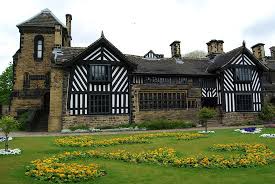
Anne Lister (1791 – 1840) was an English landowner, diarist, mountaineer, and traveller. Throughout her life, she kept diaries that chronicled the details of her daily life, including her lesbian relationships, her financial concerns, her industrial activities, and her work improving Shibden Hall.

Her diaries contain more than 4 million words and about a sixth of them — those concerning the intimate details of her romantic and sexual relationships — were written in code. The code, derived from a combination of algebra and Ancient Greek, was deciphered in the 1930s. Lister is often called “the first modern lesbian” for her clear self-knowledge and openly lesbian lifestyle. Called “Fred” by her lover and “Gentleman Jack” by Halifax residents, she suffered harassment for her sexuality, but recognised her similarity to the Ladies of Llangollen, whom she visited.
 

Hepworth Gallery, Wakefield

News

Trips & Adventures – 18 April 2019

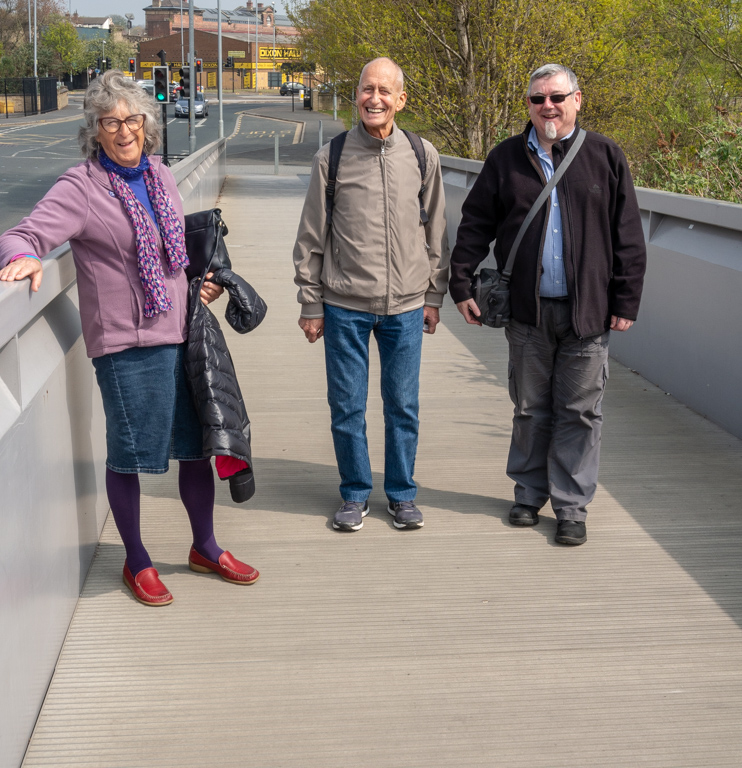
On a beautiful sunny day we took the train from Manchester to Wakefield, changing at Huddersfield and arriving in time for lunch!

It was a short walk to the Hepworth Gallery, an award winning art museum in Wakefield which opened on 21 May 2011. The gallery is situated on the south side of the River Calder and takes its name from artist and sculptor Barbara Hepworth who was born and educated in the city.

The Hepworth is home to Wakefield’s art collection – an impressive compendium of modern British art, including works by L S Lowry, Barbara Hepworth and Henry Moore as well as work by significant contemporary artists.

Our plan was to view the photographic exhibition “Modern Nature”: British photographs from The Hyman Collection, but we also saw Magdalene Odundo: The Journey of Things, an exhibition of vessels and historic objects that have inspired her from across the globe, as well as some of the permanent exhibits.

Barbara Hepworth (1903–1975), although deeply religious, had unorthodox beliefs, combining Christian Science and Anglicanism, and she saw her work as an extension of her faith. In 1955, she wrote, “Sculpture, to me, is primitive, religious, passionate, and magical – always, always, affirmative.”

More photos can be seen here.


Bury Pride Rainbow Train

News

Trips & Adventures – 14 April 2019

As part of Bury Pride, members of Out In The City joined hundreds of others on the first ever Rainbow Train, travelling on a steam train from Bury to Rawtenstall and back!

It was like travelling back in time to the golden age of steam. The history of the East Lancashire Railway is the story of a heroic struggle to keep a dying part of Britain’s heritage alive.

The Railway’s past is inextricably linked to that of the area’s industry. The railways provided industries with a vital link to the country’s network of imports, exports, raw materials and, most importantly, workers.

However, the influx of cars, trucks and buses on Britain’s roads soon made the railways a liability rather than a vital service, in the eyes of the government, and all but the bare minimum of stations were closed.

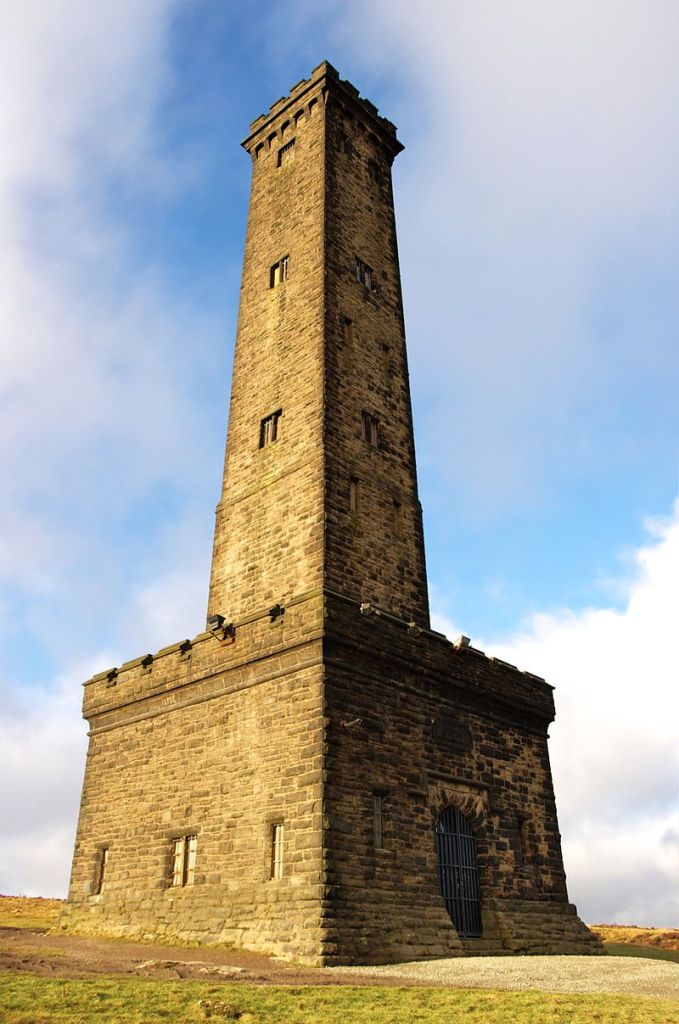
This is where the battle to preserve the East Lancashire Railway began. The railway continues to develop its services and we steamed from Bury, through Burrs Country Park, Summerseat, Ramsbottom and Irwell Vale to Rawtenstall passing the Peel Tower.

The memorial tower to Sir Robert Peel, also known as “Holcombe Tower” was opened in September 1852, occupying a prominent position 1,100 feet above sea level.

Frederick Peel was the principal guest of honour, and he declared the monument to be a splendid memorial to his father and to the principles of free trade. Unfortunately, large numbers who had travelled by excursion train from Salford arrived too late to witness the ceremony!

The Manchester Guardian, declared the tower to be not “a specimen of architectural beauty”. To this day a local Easter tradition entails people walking up the hill on Good Friday, often rolling hard-boiled eggs down the steep sides, although the significance of this is unclear.

We were entertained by a male voice choir at the beginning and (once a microphone had been sourced about 10 minutes before the end) by the one and only Miss Vivienne Lynsey hosting a show tune sing-a-long. Goody bags were given free to all train riders and a good time was had by all. There are loads of great pictures which can be accessed here

Bridgewater Hall Concert

News

Trips & Adventures – 11 April 2019

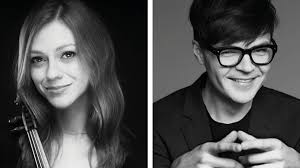
We were given free tickets for a mid-day concert at The Bridgewater Hall featuring Emily Nebel on violin and Alexey Pudinov on piano.

The performance was Elgar’s Violin Sonata in E minor Op.82 and Maurice Ravel’s Violin Sonata No. 2 in G major. The duo was formed in 2014 and has gained recognition for its unique sound and creative programming. They have received several awards and scholarships. We all enjoyed the concert tremendously.

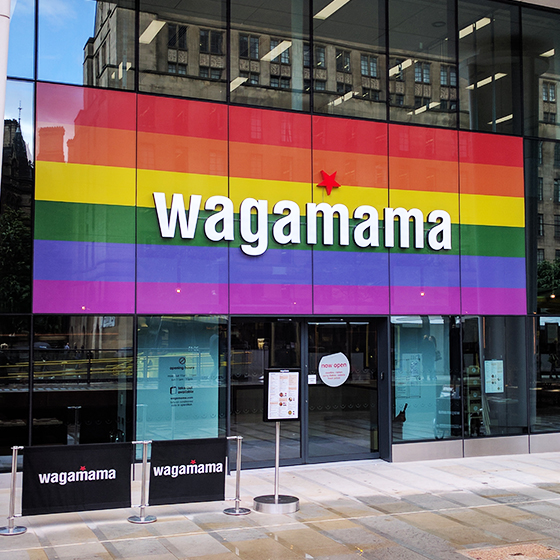
We then went on to Wagamama, a gay-friendly restaurant in St Peter’s Square. The restaurant not only has a rainbow decoration on the outside, but has a special rainbow table inside. It was now mid-afternoon but was still quite busy.

The menu contains popular Japanese and Asian cuisine in many popular categories, such as ramen, teppanyaki and curry dishes. We sampled several dishes including a range of tasty deserts and green tea (which is “on the house”).
We had planned to visit the “Leonardo Da Vinci: A Life In Drawing” exhibition at Manchester City Art Gallery, as it is the 500th anniversary of his death. However, we decided to give it a miss due to the approaching rush hour traffic. The exhibition is free of charge and is on until 6 May 2019, so we still have time to view it. 

Bolton

News

Trips & Adventures – 4 April 2019

We arrived in Bolton and made our way to the infamous Olympus Fish & Chip Restaurant for lunch – the menu features a varied selection including “Pensioner’s Specials” – but most of us settled for the Olympus Fish Special which includes cod or haddock (all obtained from sustainable sources), chips, mushy peas, white or brown bread and a pot of tea or cup of coffee.

The restaurant features a Schimmel grand piano but unfortunately there was no live pianist today.

We then walked down the precinct to view the Fred Dibnah statue. Fred Dibnah MBE (28 April 1938 – 6 November 2004) was an English steeplejack and television personality, and is a revered son of Bolton.

In mid-2000, he was awarded an honorary degree of Doctor of Technology for his achievement in engineering by Robert Gordon University in Aberdeen and on 19 July 2004 he was made an honorary Doctor of the University by the University of Birmingham.

Dibnah was appointed a Member of the Order of the British Empire in the 2004 New Year Honours for services to heritage and broadcasting. He said “I’m looking forward to meeting the Queen but I shall probably have to get a new cap. And I’d like to meet Prince Charles because we share the same views about modern architecture.”

On 7 July 2004, Dibnah went to Buckingham Palace to receive his award from the Queen. He initially planned to drive his traction engine into the palace grounds, but was refused as the Royal Parks Agency feared that its weight would damage the surface of The Mall.

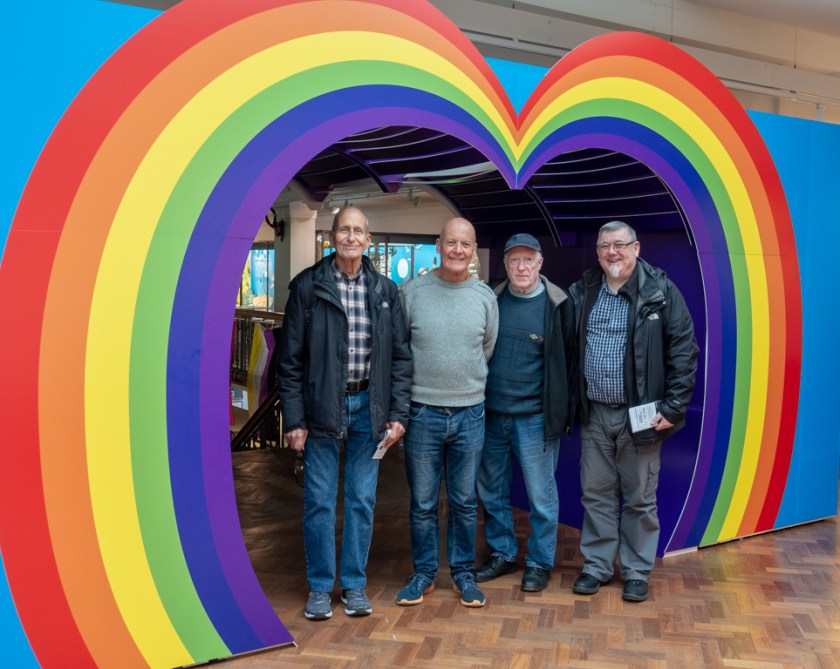
The main purpose of our visit to Bolton was to see the exhibition “Desire, Love, Identity: Exploring LGBTQ histories” at Le Mans Crescent, Bolton. The Bolton Museum is the only Northern venue to host this touring collection from The British Museum.

I was fascinated by the “secret museum”. During the 19th century, museums were one of the few places where members of the public could openly and respectably view representations of the naked human body. Some objects relating to sex and sexuality, however, challenged cultural sensibilities.

From around 1830 The British Museum had a restricted collection of objects relating to sex in its “Secret Museum”. This ceased to operate actively in 1953 and it no longer exists. Its objects were gradually absorbed into the main collection and displays.

If you would like to see some of those objects look at our photo page here.