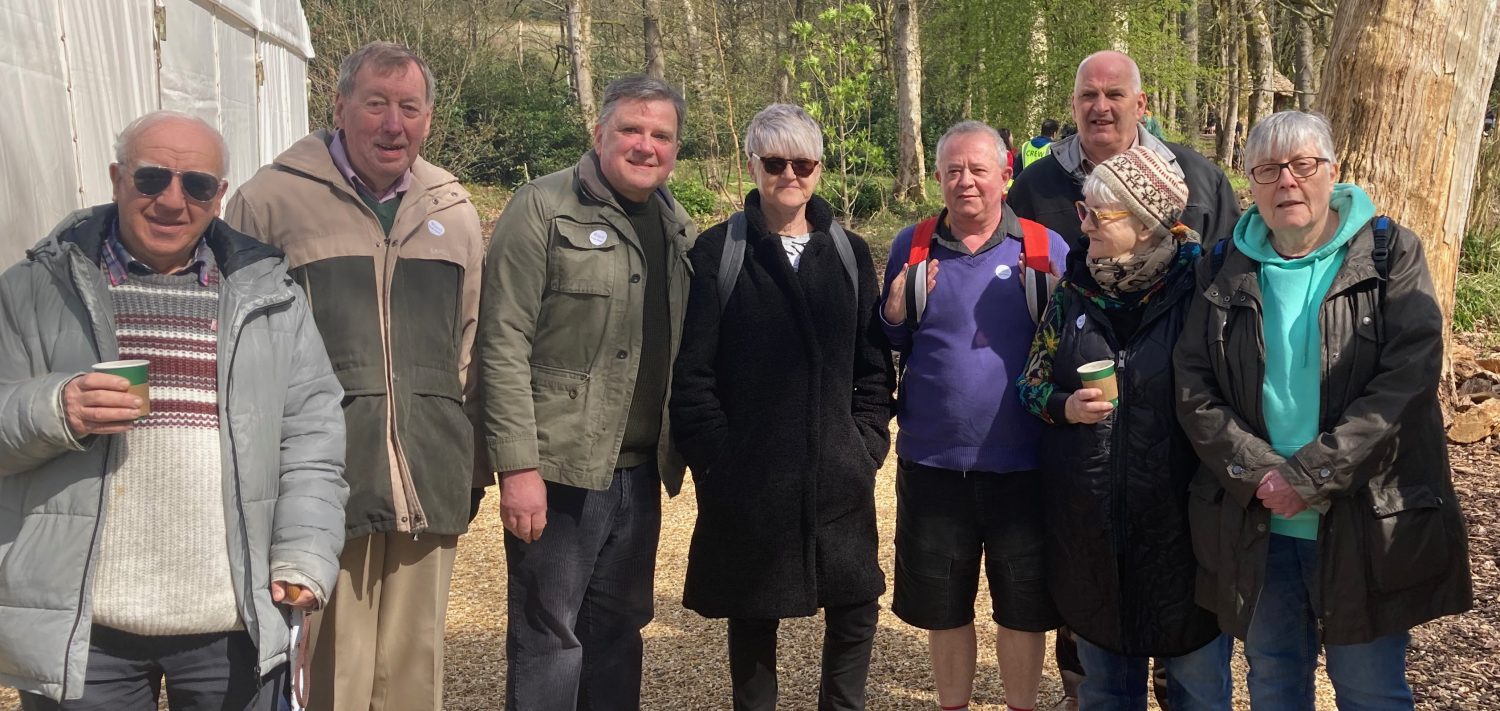
Air Raid Shelter, Stockport

News

Trips & Adventures – 12 September 2019

It only takes only a few minutes to travel from Piccadilly train station to Stockport train station, and there are trains every few minutes. After the difficulty and expense of getting to the Jodrell Bank Discovery Centre last week, it was a bit of a relief to have a local trip.

We walked to the Calvert’s Court, a Wetherspoon’s pub in the town centre. It was just like any other Wetherspoon’s pub, but we had some good conversations with the usual “Carry On” double entendres. We discussed how younger people seem to be at ease with terms like “queer” while some older people are still struggling with “gay”.

Again it was only a short walk to the Air Raid Shelters – a system of almost one mile of underground tunnels dug under Stockport during World War II to protect local inhabitants during air raids.

Four sets of underground air raid shelter tunnels for civilian use were dug into the red sandstone rock below the town centre. Preparation started in September 1938 and the first set of shelters was opened on 28 October 1939; Stockport was not bombed until 11 October 1940. The smallest of the tunnel shelters could accommodate 2,000 people and the largest 3,850. It was subsequently expanded to take up to 6,500 people.

The largest of the Stockport Air Raid Shelters have been open to the public since 1996 as part of the town’s museum service.

After our visit we decided to have a tea or coffee. We spotted a small cafe called “In or Out”. The question was: “Were we In or were we Out”? However, the young woman behind the counter was more interested in her telephone conversation than dealing with customers, so we walked out. Mr Essoldo suggested we try the Plaza. The building is in the Art Deco style and was built in 1932. The service was excellent and it was an enjoyable end to our visit.

Jodrell Bank

News

Trips & Adventures – 5 September 2019

Jodrell Bank is not easy to get to on public transport … it’s one small step for man, one giant leap for Out In The City!

The Jodrell Bank Observatory hosts a number of radio telescopes, and was established in 1945 by Bernard Lovell, a radio astronomer at the University of Manchester to investigate cosmic rays after his work on radar during the Second World War. It has since played an important role in the research of meteors, quasars, pulsars, masers and gravitational lenses, and was heavily involved with the tracking of space probes at the start of the Space Age.

The main telescope at the observatory is the Mark I (now known as the Lovell Telescope), which is the third largest steerable radio telescope in the world. There are also three other active telescopes at the observatory.

Since 13 July 1988 the Lovell Telescope has been designated as a Grade I listed building, and on 7 July 2019, the observatory became a UNESCO World Heritage Site.

2019 marks 50 years since humans first set foot on another celestial body. And so, in this, the 50th anniversary year of the historic moon landing, we heard the incredible story of Jodrell Bank’s role in the race to the Moon.


Jodrell Bank has been at the heart of ground-breaking and world-leading science for over 70 years. In the fascinating talk, One Giant Leap, we discovered newly released audio-visual material from the Jodrell Bank archives, featuring aspects of the both the American and Russian Space programmes. We then joined a Telescope Walking Tour. We were very impressed with both presenters.

We particularly enjoyed the Whispering Dishes. When you speak at the focus of one dish, the sound waves spread out from your mouth and reflect off its surface, forming a parallel beam. This beam travels to the other dish where the reverse happens, concentrating the sound again at the focus, so even your whispers can be heard clearly. The Lovell Telescope works in the same way collecting radio waves from outer space.

We learnt that microwaves and mobile telephones can affect the signals … but most importantly we learnt that next time we must take a picnic as the food provided in the café was the worst ever meal we have ever had in our whole lives!

Barrowford

News

Trips & Adventures – 29 August 2019

Our trip was to Barrowford, a large village in the Pendle district of Lancashire. We caught bus X43 (The Witchway) to Burnley and then changed to the Higherford bus to Barrowford.

We visited the George & Dragon which served delicious home made food – we were very impressed – before heading to the Pendle Heritage Centre.

This is a museum and visitor centre occupying Park Hill, a two-storey former farmhouse which has a 1661 date stone but was developed over an extended period between the 16th century and the beginning of the 18th century.

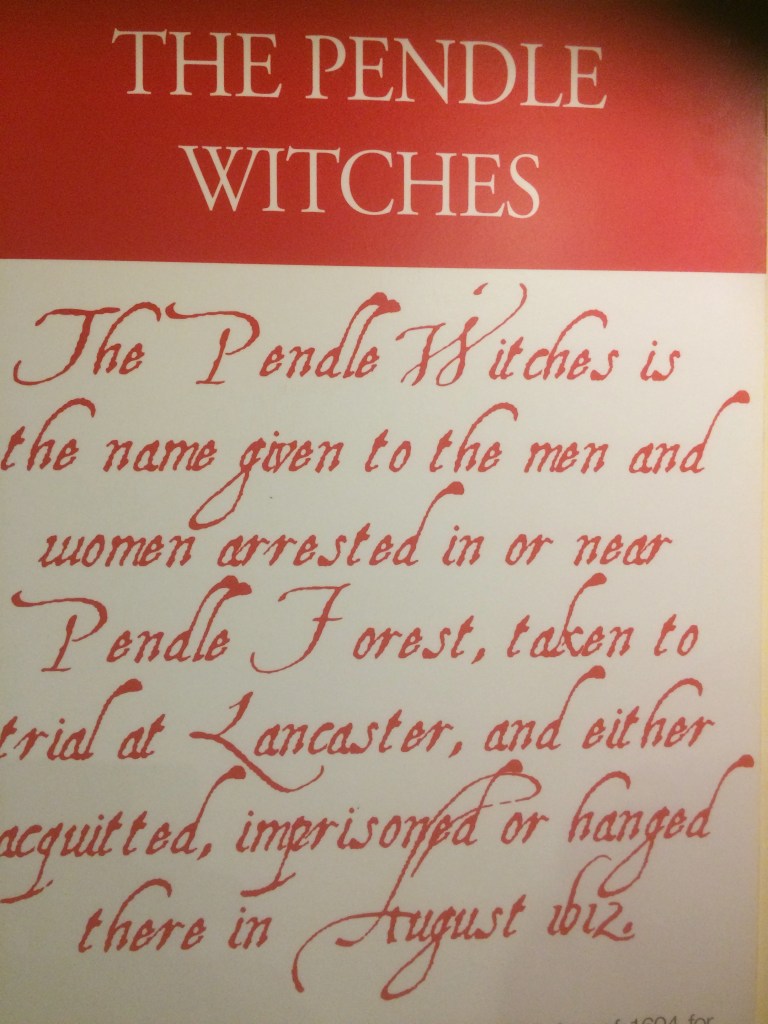
Park Hill has been restored using traditional building techniques to provide visitors with an insight on how the house has been developed and adapted and the centre attracts over 100,000 visitors a year. The permanent exhibitions include the story of Park Hill as a working farm, the history of the Bannister and Swinglehurst families who occupied the house and the Pendle witches. Sir Roger Bannister (who ran the first sub-four minute mile on 6 May 1954) is a descendant of the family that once lived here.

To commemorate the 400th anniversary of the trials of the Pendle witches, a new long-distance walking route called the Lancashire Witches Walk was created starting from the Pendle Heritage Centre. Ten waymarkers were installed along the route, each inscribed with a verse of a poem by Carol Ann Duffy.

We enjoyed our visit but the gift shop was a little overpriced – I mean £12.99 for a battered book and no discount offered!

For more photos click here

Manchester Central Library

News

Trips & Adventures – 22 August 2019

Our visit to the Central Library in Manchester was advertised as a “mystery trip”, but it was a bit of an open secret as the library staff decided to advertise the event publicly on a noticeboard outside the library itself as well as on their website and by email!

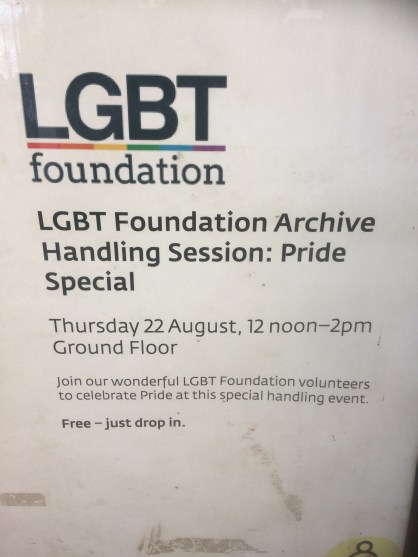
To tie in with Manchester Pride we had a guided tour of parts of the library which are not normally open to the general public, led by Larysa, the Archives and Heritage Specialist, followed by a handling session of the LGBT Foundation archives.

The library was constructed in 1934 in a circular design reminiscent of the Pantheon in Rome. The library’s foundation stone was laid by the Prime Minister Ramsay MacDonald, and the library was officially opened by King George V. In fact Manchester was the first local authority to provide a public lending and reference library after the passing of the Public Libraries Act 1850. The Manchester Free Library opened at Campfield in September 1852 at a ceremony attended by Charles Dickens.

It was fascinating to learn that items are stored in salt mines in Cheshire as well as in the basement which was previously home to the Library Theatre. We also saw the work area where degrading reel to reel tapes are being digitalised. We ended our trip to the library by viewing some of the archived materials. Thanks to Larysa and the LGBT Foundation volunteers who provided useful information and resources.

After a very interesting tour a few of us went to Wagamama for lunch.

Blue John Mine & Eyam

News

Trips & Adventures – 15 August 2019

A picture is worth a thousand words” is an English language adage. It refers to the notion that some complex ideas can be conveyed with just a single picture, this picture conveys its meaning or essence more effectively than a description does.

So head off to see the fantastic photos here (but press the back key to come back here!)

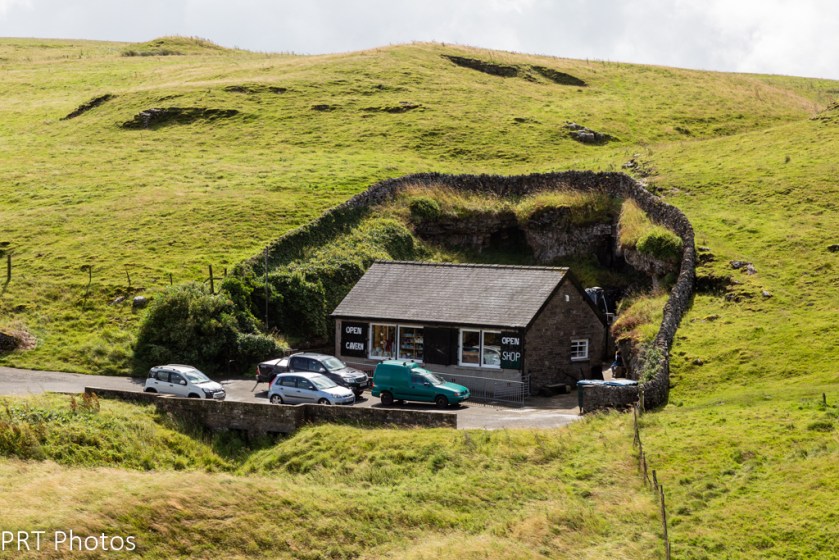
Our trip was to see the Blue John cavern, one of four show caves in Castleton, Derbyshire. The cavern takes its name from the semi-precious mineral Blue John, which is still mined in small amounts outside the tourist season and made locally into jewellery. The deposit itself is about 250 million years old.

The miners who work the remaining seams are also the guides for underground public tours. The eight working seams are known as Twelve Vein, Old Dining Room, Bull Beef, New Dining Room, Five Vein, Organ Room, New Cavern and Landscape.

In 1865, Blue John Cavern was the site of the first use of magnesium to light a photograph underground. It was taken by Manchester photographer Alfred Brothers.

Eleven of us ventured into the mine down 300 feet below the ground, through a number of caverns. None of us counted the 245 steps down (and 245 steps up again) as we were too busy gripping the handrail and concentrating on our footing. Walter took a tumble but thankfully no broken bones.

Our minibus then took us to Eyam, known as “the plague village”, in reference to how it chose to isolate itself after bubonic plague was discovered there, so as to prevent the infection spreading.

The history of the plague in the village began in 1665 when a flea-infested bundle of cloth arrived from London for the local tailor. Within a week his assistant George Vicars was dead and more began dying in the household soon after. As the disease spread, the villagers turned for leadership to their rector, the Reverend William Mompesson, and the Puritan Minister Thomas Stanley. These introduced a number of precautions to slow the spread of the illness from May 1666. They included the arrangement that families were to bury their own dead and relocation of church services to the natural amphitheatre of Cucklett Delph, allowing villagers to separate themselves and so reducing the risk of infection. Perhaps the best-known decision was to quarantine the entire village to prevent further spread of the disease.

The plague ran its course over 14 months and the church in Eyam has a record of 273 individuals who were victims of the plague.

We must mention Eyam Tea Rooms where we enjoyed nut roast, quiches, hominy pies and salads – the food was fantastic.