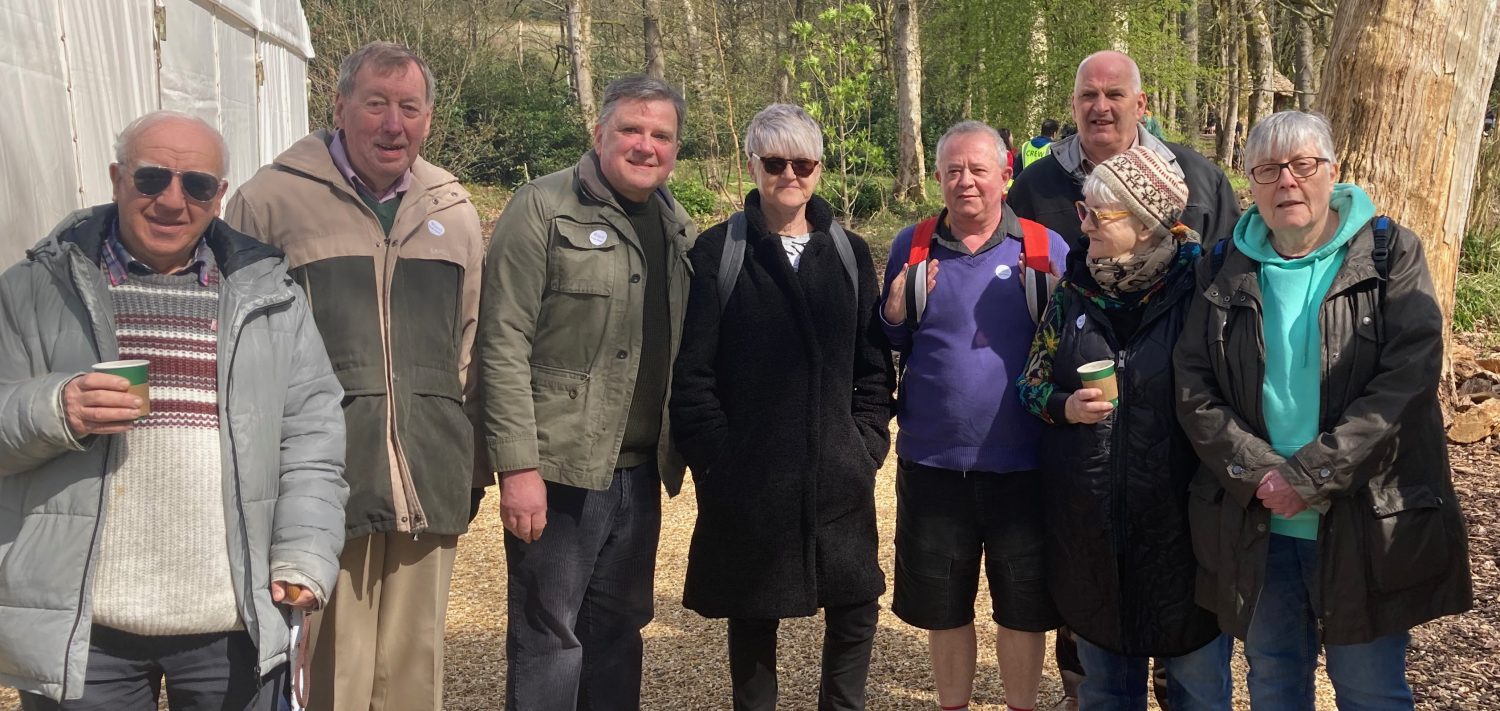
Maurice Dobson Museum and Heritage Centre
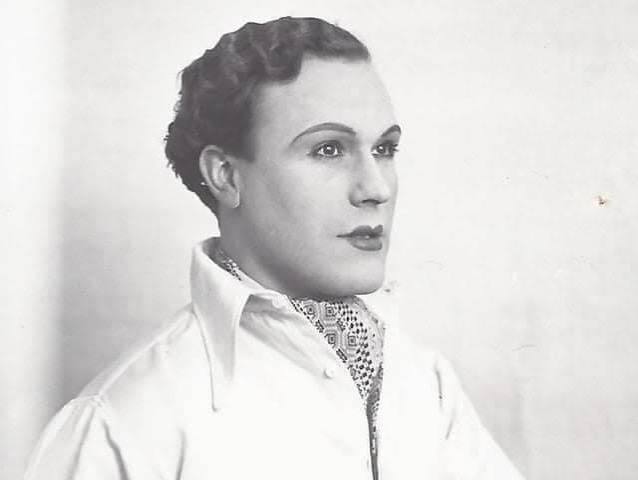
Maurice Dobson wore make-up, lived with Fred and was accepted in Darfield’s community, near Barnsley.
The carefully crimped hair, immaculately manicured eyebrows and flamboyant lipstick give this image all the hallmarks of 1950s fashion and femininity.
But what makes it remarkable is that this is a photograph of Maurice Dobson – former coal miner, war veteran and boxer – who was openly gay in his hometown of Barnsley during an era where homosexuality was illegal and rarely discussed.
A further twist is that Maurice and his partner Fred Halliday were – by and large – accepted as part of the Darfield community where Maurice had grown up and ran a corner shop in the post-war decades.
Today, Maurice Dobson’s home is a museum, and with the support of AutoTrader we hired a coach and travelled there.
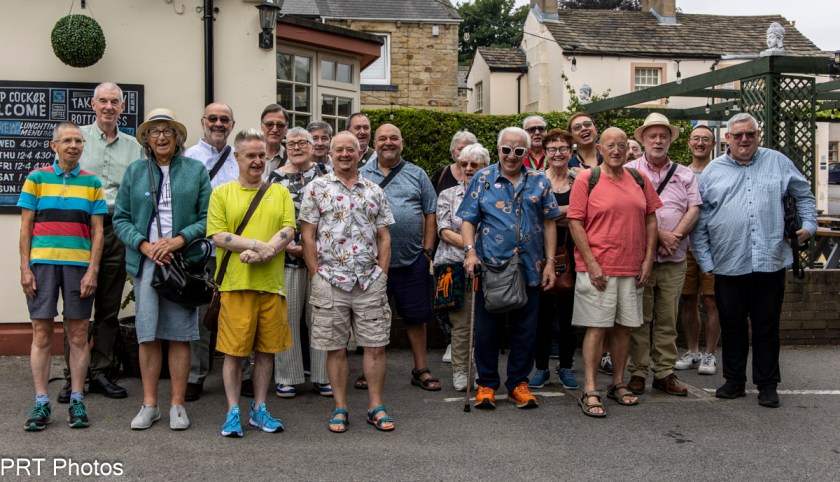
Our first stop was The Cross Keys where Daniel and his team prepared a fantastic lunch for us.
We visited the local church yard where a stone declared: “Near this place are the ashes of Fred Halliday & Maurice Dobson Together”.
We then visited the museum where Margaret and Maxine gave us a very interesting tour explaining everything in detail.
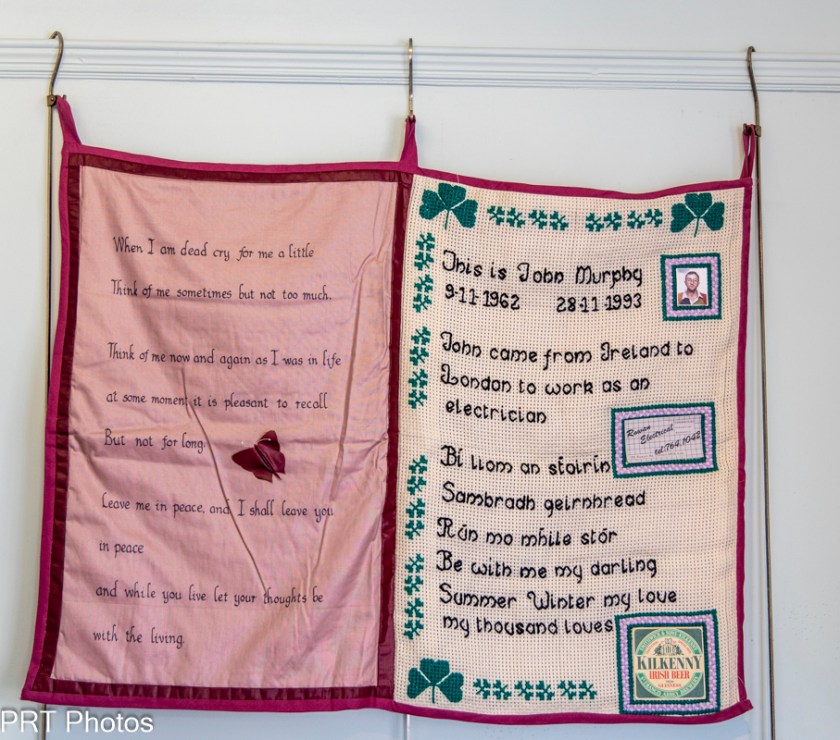
The shop area featured a panel from the UK AIDS Memorial Quilt in memory of John Murphy. We recently visited the Quilt in its entirety when it was displayed in Wakefield.
The coffee and cake in the museum café was excellent and the whole trip was a brilliant day out.
Maurice Dobson was an enigmatic and curious character. A former miner, WW2 veteran and antiques collector with a museum bearing his name.
He was born in Wombwell in 1912 and followed his father and brothers into the pit, working at Mitchell Main Colliery. After serving in North Africa and the Middle East throughout the Second Word War he returned to the Dearne Valley permanently in 1956 with his partner Fred Halliday. Together they ran the shop at 2 Vicar Road, Darfield, until the 1980s. The shop is now the Maurice Dobson Museum and Heritage Centre.
This short film brings together the memories of people who knew him.
In April 2016 the Dearne Valley Landscape Partnership worked with the Maurice Dobson Museum and Qdos Creates to produce a one-man play of the life of Maurice Dobson.
The script was written by Stephen Miller, DVLP Community Officer, based on archive research and speaking to people who knew Maurice. Maurice is performed by local actor Simon Carr and he was directed by Jow Rose. This is a filmed version of the play by Patteran Productions.
More photos can be seen here.

Dear Gilbert, Dear Gordon
If you missed the programme on Radio 4 last Sunday evening, don’t worry.
It is available for over a year on BBC Sounds – listen here.
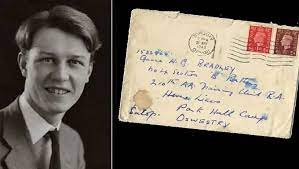
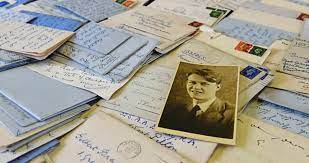
When museum curator Mark Hignett began buying WWII-era letters online, he believed he was piecing together the life of an ordinary soldier.
At first glance, the letters looked like typical correspondence: full of yearning, daily details and hopes for peace. But what emerged wasn’t just a wartime chronicle – it was a love story. As he kept on reading, he slowly realised they were letters from one male soldier to another.
At a time when homosexuality was criminalised in Britain and gay soldiers risked court martial, Gilbert and Gordon exchanged intimate, heartfelt correspondence, which are read for this programme by Olly Alexander.
Their letters spoke of longing, joy, fear and hope. In one, Gordon writes simply: “There is nothing more that I desire in life but to have you with me constantly.” In another, he reflects on how the world would see them: “The rest of the world have no conception of what our love is – they do not know that it is love.” It’s a reminder that while the law branded them criminals, they understood their bond as something deeply human, and deeply right.
That dream, however, sat alongside deep fear. In one letter, Gordon pleaded with Gilbert to destroy their correspondence: “Please darling, do this for me in deadly seriousness” – terrified of the consequences if their relationship were discovered. And yet, in another, he imagined a world that would understand: “Wouldn’t it be wonderful if all our letters could be published in a more enlightened time?”
Russia censors rainbow
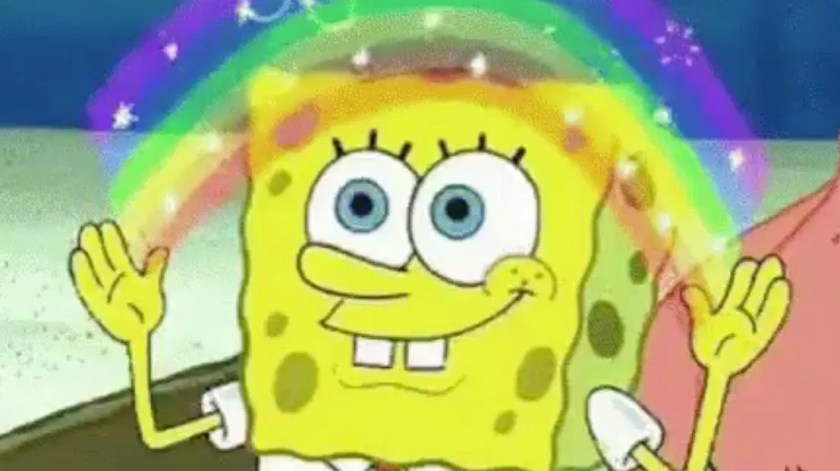
Amidst Russia’s crackdown on so-called LGBT+ propaganda, television viewers in the country noticed the censorship of a rainbow in a famous episode of the children’s cartoon Sponge Bob Square Pants.
In the episode, Sponge Bob speaks about the fun of using one’s imagination, and as he does so, his hands paint a rainbow over his head.
The moment has nothing to do with LGBT+ Pride, since rainbows are also something kids love for their colours. Nevertheless, a clip from the Russian version of the episode shows Sponge Bob painting not a rainbow, but a plain yellow arc over his head. Many have concluded the change was made in accordance with Russia’s so-called LGBT+ propaganda laws.
While the scene is not related to LGBT+ identities, there has long been speculation over Sponge Bob’s sexuality, which may have fuelled Russia’s decision to censor the moment.
Vladimir Putin’s anti-LGBT+ crusade first gained momentum in 2013 with his national ban on sharing “propaganda of non-traditional sexual relations” with minors. That prohibition effectively criminalised Pride parades and any public displays of affection by gay people in Russia.
In 2022, the Duma (lower house of the Russian parliament) expanded the propaganda ban to include all ages, criminalising “any action or the spreading of any information that is considered an attempt to promote homosexuality in public, online, or in films, books or advertising.”
In 2023, Russia’s Supreme Court ruled that the so-called “International LGBT movement” is a terrorist organisation.
Upcoming films at HOME Cinema
2 Tony Wilson Place, Manchester, M15 4FN
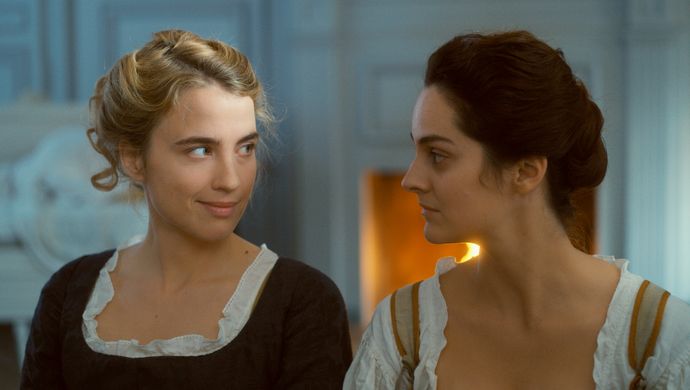
Portrait of a Lady on Fire
Friday, 17 July – 23 July – Various times (122 minutes)
French / Subtitled English
France in the late 18th century. Painter Marianne is commissioned by an affluent countess to paint the wedding portrait of her sheltered but headstrong daughter Héloïse, in the hope it will find her a wealthy husband.
While posing as her hired companion, Marianne is instructed to complete the portrait in secret, observing Héloïse by day and painting her by night. However, as the two women grow closer, their intimacy and attraction begins to blossom, paving the way for a simmering, star-crossed romance.
A heart-breaking period piece told with a distinctly modern feminist energy, Portrait of a Lady on Fire is the first female-directed film to win the Queer Palm at the Cannes Film Festival and cemented Céline Sciamma’s reputation as a world-class filmmaker.
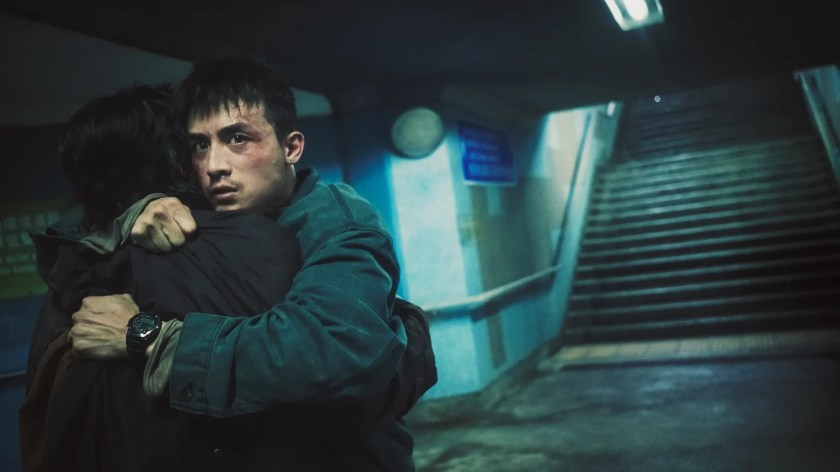
We’re Nothing At All
Friday, 17 July – 23 July – Various times (128 minutes)
Cantonese / Subtitled Chinese and English
On Valentine’s Day, a double-decker bus explodes in a fiery blast, killing many and leaving charred remains, with evidence pointing to a deliberate act by two passengers, Fai and Ike – a gay couple from troubled backgrounds living on the margins of society.
As retired forensic expert Lung Sir investigates, he uncovers their tragic story of abuse, homophobia, and despair, culminating in their decision to end their lives in a suicidal protest against an unjust world, leaving behind a haunting message: “On a beautiful day, we end our unbeautiful lives.”
Please note this work contains flashing images.
 Out in the City