
Mark Ashton (19 May 1960 – 11 February 1987)
Mark Ashton was born in Oldham on 19 May 1960. He was a gay rights activist and co-founder (with Mike Jackson) of the Lesbians and Gays Support the Miners (LGSM) support group. He was a member of the Communist Party of Great Britain and general secretary of the Young Communist League.
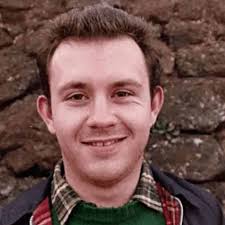
Richard Coles, from the band Bronski Beat, wrote in his book Fathomless Riches: Or How I Went From Pop to Pulpit: “Mark also worked for a while as a barman at the Conservative Club in King’s Cross, or, rather, as a barmaid, in drag, with a blonde beehive wig. I was never sure if the patrons worked out that he was really a man”.
Diagnosed with HIV/AIDS, Mark was admitted to Guy’s Hospital on 30 January 1987 and died 12 days later of Pneumocystis pneumonia.
The Terrence Higgins Trust memorialised Ashton in May 2014 on a plaque at the entrance to its London headquarters.
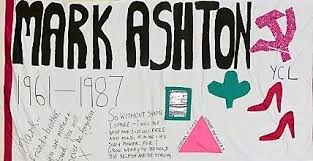
Ashton is also remembered on a panel on the NAMES Project AIDS Memorial Quilt.
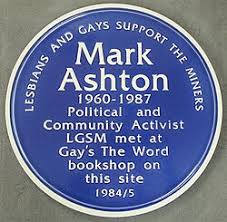
In 2017, on what would have been Ashton’s 57th birthday, a blue plaque was unveiled in his honour above the Gay’s The Word bookshop in Marchmont Street, London, the site where LGSM met and held meetings during the miners’ strike.
The LGSM’s activities were dramatised in Pride, a film released in September 2014.

New Books
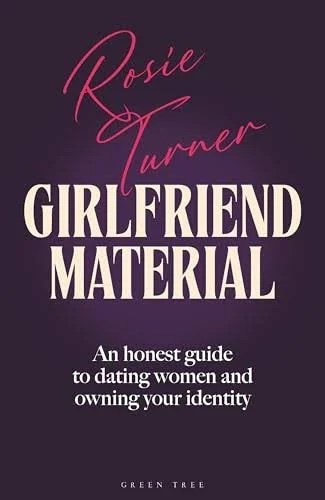
“Girlfriend Material” by Rosie Turner
In her new book podcaster Rosie Turner talks about the challenges and joys of embracing your true self later in life, the freedom of letting go of labels and why living authentically is the ultimate act of self-love
Rosie Turner is used to telling stories. For more than a decade, she worked behind the scenes as a BBC producer, shaping narratives for other people. Now, with millions of followers on TikTok and a debut book, she’s become the subject of her own one – a story that speaks directly to a growing number of women who are quietly, and sometimes painfully, re-examining who they are.
“I basically started doing terrible dating stories,” she says, laughing. What began as humorous accounts of failed dates with women quickly evolved into something more meaningful.
I started noticing that there were these comments (on my social media) and this need for advice for women, newly out women, like ‘Could you do some advice videos on how to kiss a woman?’ and ‘Who pays on a date?’”
What Turner tapped into wasn’t just curiosity – it was a gap. A space where women, often later in life, were trying to piece together identities they’d long set aside. Her new book, Girlfriend Material (Green Tree, £18.99), is her response: a candid, compassionate guide through what she calls the “chronological timeline” of coming out, from self-recognition to relationships, sex and the murky territory of situationships.
But beneath the humour and practical advice lies a deeper question – one that resonates far beyond sexuality alone: what happens when we don’t allow ourselves to fully know who we are?
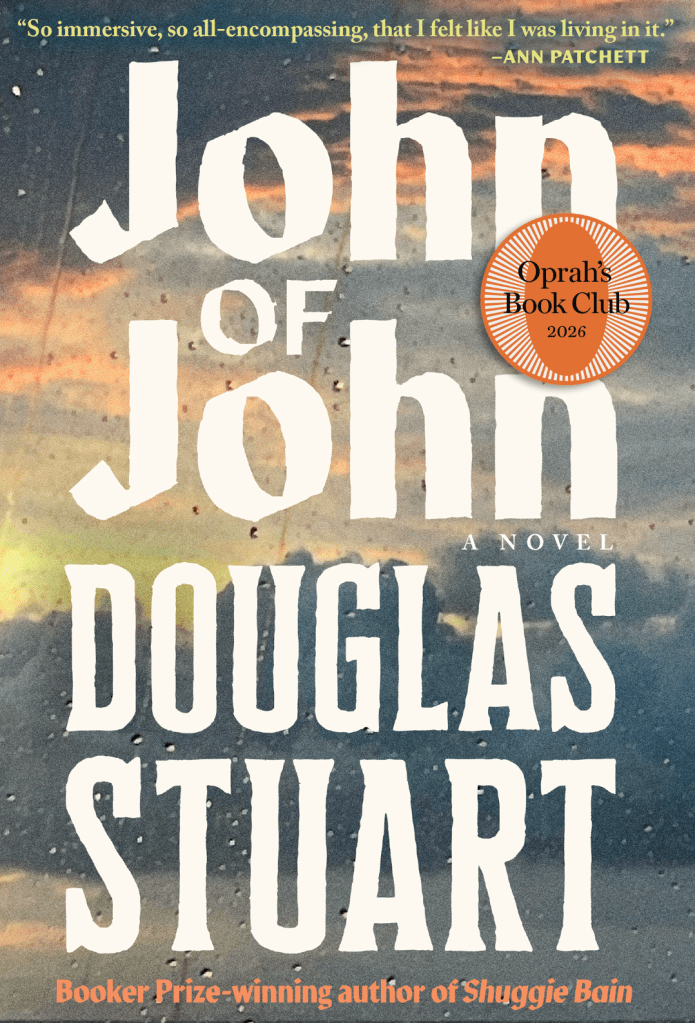
“John of John” by Douglas Stuart
From the Booker-winning author of Shuggie Bain and Young Mungo comes a vivid, moving and beautifully crafted novel following a young man returning to his Hebridean island home, a portrait of a close-knit community and a fraying family, of a father’s expectations and a son’s desires.
Out of money and with little to show for his art school education, John-Calum Macleod takes the ferry back home to the island of Harris to find that little has changed except for him. In the windswept croft where he grew up, Cal begrudgingly resumes his old life, stuck between the two poles of his childhood: his father John, a sheep farmer, tweed weaver and pillar of their local Presbyterian church, and his maternal grandmother Ella, a profanity-loving Glaswegian who has kept a faltering peace with her son-in-law for several decades. Cal wonders if any lonely men might be found on the barren hillsides of home, while John is dismayed by his son’s long hair and how he seems unwilling to be Saved. As lambing season turns to shearing season, everything seems poised to change as the threads holding together the fragile community become increasingly knotted.
John of John is a singular novel about duty and patience and the transformative power of the truth. It is a magnificent literary work that shows Douglas Stuart working at an even higher level of artistic creation.
What are 5 early signs of prostate cancer?
Early-stage prostate cancer often presents no symptoms at all. When symptoms do appear, they frequently mimic non-cancerous conditions like an enlarged prostate or urinary tract infections.
The 5 most commonly reported warning signs include:
- Urinary Changes: Needing to urinate frequently (especially at night), a weak or interrupted urine flow, sudden urgency, or difficulty starting and stopping.
- Painful Urination or Ejaculation: A distinct burning sensation or pain while passing urine or during ejaculation.
- Blood in Urine or Semen: The presence of blood.
- Erectile Dysfunction: Sudden difficulty in getting or maintaining an erection.
- Pain or Discomfort in the Pelvic Area: A dull pain or stiffness in the lower back, hips, thighs or pelvic region.
Other less common or advanced warning signs can include unexplained weight loss, persistent fatigue or swelling in the legs.
Important note for men and trans women: Experiencing these symptoms does not automatically mean you have cancer, but they must be investigated by a medical professional. If you notice any of these changes, book an appointment with your GP immediately to discuss testing such as a Prostate-Specific Antigen (PSA) blood test or a physical examination.
POEM: “Living with Mortality” by Pauline Smith
When we are younger
We think we could
Or will live
Forever
As we go through our lives
Following many different
Pathways
Trying to find happiness
And contentment
We have intricate
Complicated lives
Maybe children and grandchildren
As we get older
Now I am 78
Content and fulfilled
With my current life
My family and friends
Proud to be who I am
Life continues to surprise me
With extra helpings of love and warmth
And even with all the pills
I take … I thought
Maybe I could make it to my 90s
That is of course never ever
A guarantee
Yet it remains a hope
As I know
Ageing is a privilege
Not a right
Reaching 78 is in itself
An achievement
Last week I got the results
Of my recent kidney and bladder scan
And it was a shock
To be told that I have
An enlarged prostate
Is it cancer?
I don’t know yet
As I have a blood test
In 10 days to
Check if I have the Big C
Am I worried?
No
I am staying positive
As it may not be cancerous
If it is I will stay positive
And fight it
If it isn’t I will ask what is next
And I think if it isn’t
Then
More annual check-ups and tests
Am I frightened?
No
Worried?
No
I cannot change anything
At some stage we all die
And I have had such a rich full life
I am truly fortunate to have seen
And done so many rewarding things
Being selfish
I would like to see
My 2 year-old grandson
Become a teenager
I am so lucky
Mann and Mann
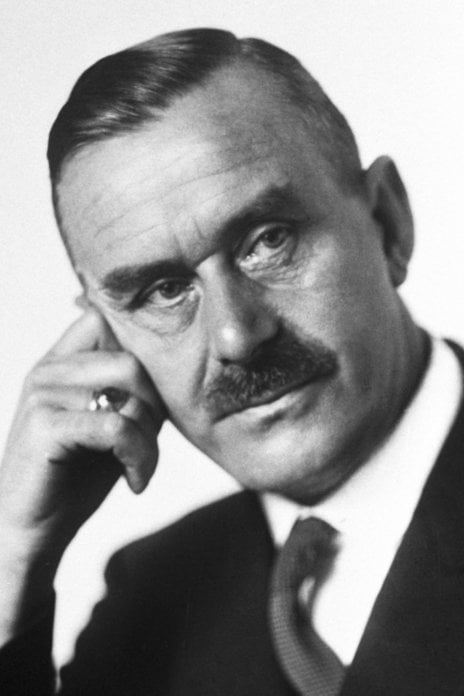
Thomas Mann was not only the winner of the 1929 Nobel Prize in Literature but was also a closeted gay guy. He had a life-long sexual attraction to men and teenage boys as revealed in his diaries. This was frequently reflected in his work, most prominently through the obsession of the elderly Aschenbach for the 14-year old Polish boy Tadzio in the novella Death in Venice. In his diaries he even admits to being sexually attracted to his own son Klaus (who he refers to as Essi) several times.
Thomas Mann’s son, Klaus, was a remarkable author in his own right. He published the first openly gay novel in the German language at the age of nineteen. His novel The Pious Dance, Adventure Book of a Youth (1926) is openly set in Berlin’s homosexual milieu. He went on to have a dazzling career in letters, publishing dozens of novels, plays, short stories and essays.
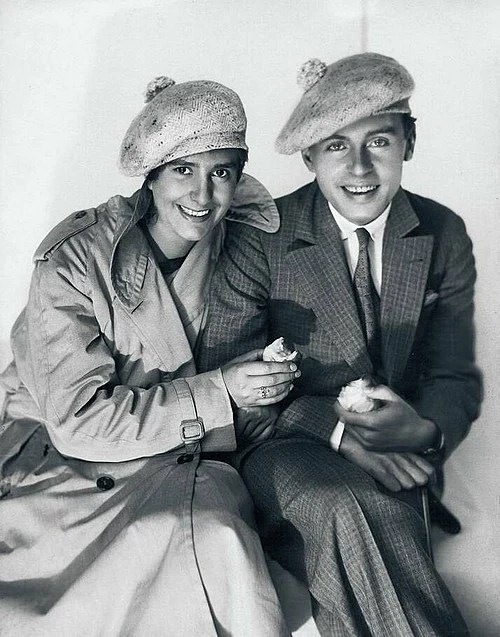
Photo: von Eduard Wasow
After Hitler came to power, Klaus fled Germany along with the rest of his family, became a committed antifascist, and eventually joined the US Army in World War II.
Ultimately, he was something of a tragic hero. After the war, he didn’t see a place for himself in a world that rejected homosexuality and ultimately rejected him. He killed himself on 21 May 1949, in a hotel room in Cannes.
 Out in the City
There is an absolutely brilliant biography about Klaus Mann which I read several years ago: Cursed Legacy: The Tragic Life of Klaus Mann by Frederic Spotts (Author). I highly recomment it.
Simon
LikeLike