

Concorde
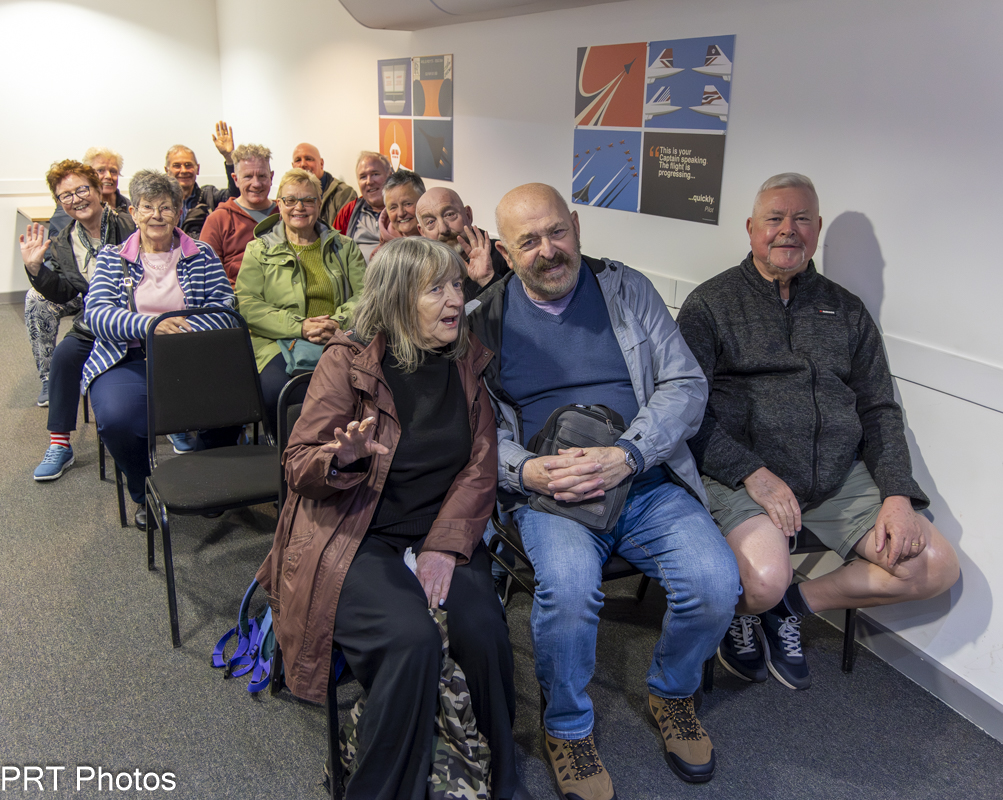
Thirty Out In The City members travelled from Chorlton Street Bus Station to the Manchester Runway Park with a stop off at The Romper pub for lunch.
Visiting the most iconic aircraft in history was a different and unique experience. We got the chance to experience sitting in the flight deck and saw where Queen Elizabeth II sat.
Unfortunately, we didn’t have the time to wander around the Runway Park and discover the additional aircraft, but there were unrivalled views of planes landing and taking off from Manchester Airport’s runway.
To quote one of our members: “It was a special visit to see British engineering at the forefront of technology.”
Coincidentally, there was a documentary on BBC4 Television last night “Concorde: A Supersonic Story” which told the story of the life of the most glamourous passenger plane that was ever built.
See more photos here.


My Dearest Senorita

Elisabeth Martinez stars as Adela, a solitary only child from a conservative family. She spends her days between the family antique shop and the catechism classes she teaches, marked by her mother’s protectiveness and the silence surrounding her intersex condition, which she is unaware of but which shapes her life.
An unexpected and beautiful friendship with a newly arrived priest, the return of a close childhood friend, and the arrival of a woman, Isabel, trigger a chain reaction that takes Adela on a journey of self-discovery, from Pamplona to Madrid, where her identity will need the love and support of others in order to be revealed.
This film is a loose adaptation of the 1972 film of the same name, starring José Luis López Vázquez and directed by Jaime de Armiñán, who co-wrote the screenplay with José Luis Borau. The film was nominated for the Academy Award for Best Foreign Language Film in 1972.
“My Dearest Senorita” is available on Netflix on 1 May.
Just Wilde About Hair
The evolution of Oscar Wilde’s hair offers insight into how he constructed and revised his public identity.
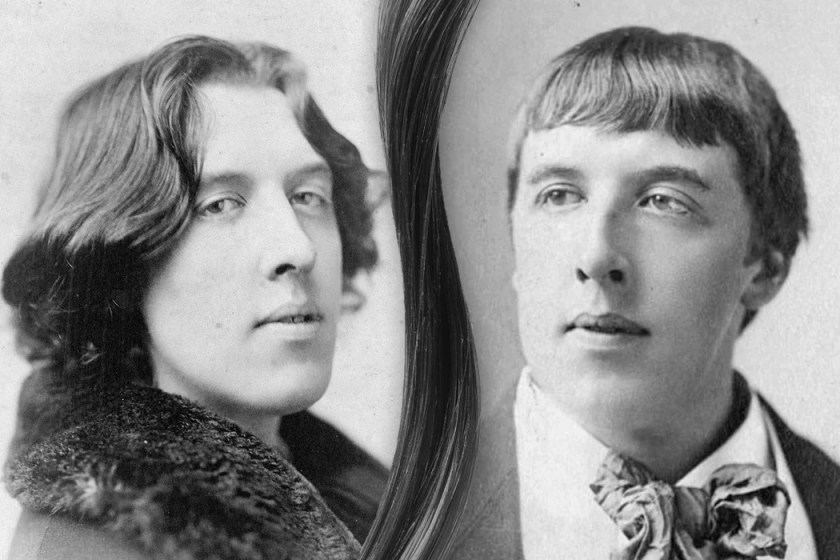
A quote attributed to Oscar Wilde claims that he told a US customs agent upon his 1882 arrival in the United States that he had nothing to declare but his genius. Actually, he probably never said this, but he might just as well have declared his collar-length hair. Combined with a clean-shaven face, this look was virtually unheard of for an adult male European of the middle- or upper-class. And it was this long hair that took New York by storm, even more than his poetry, wit or conversation.
The photographs of Wilde taken by Napoleon Sarony in New York in January 1882 proved so popular that Sarony had to take his fight to extend copyright protection for his photographs all the way to the Supreme Court. Wilde may have lived another nineteen years, but Sarony’s pictures of the 27-year-old have become the defining images of him, reproduced everywhere from books to the internet, even though that particular length of hair was quickly abandoned. Sarony laid some claim to inventing “Oscar Wilde”; he certainly shaped how we picture him today.
The next time Wilde was photographed by Sarony, on his second trip to New York in August 1883, Wilde had a completely different ‘do. This one was much shorter. These photos are harder to find. In an interview – because yes, his hair continued to be a topic of interest on both sides of the Atlantic – Wilde said his square-cut bangs were inspired by a Roman sculpture in the Louvre. Only after getting his hair cut in this style, Wilde claimed to have discovered that the “bust represented Nero, one of the worst behaved young men in the world, and yet a man of strong artistic passion.”
The 1883 Sarony photographs portray a hairstyle that doesn’t match the usual look for Nero. When Wilde’s enemies, which eventually included the weight of the British establishment, attacked him for his decadence, immorality, sensuality, effeminacy or homosexuality, they often likened him to the shameless Nero.
In light of the prevailing Victorians’ attitude to Nero, Wilde’s seemingly innocuous announcement that he adopted the young emperor’s hairstyle could be considered rash or even brave.
Wilde loved to shock and enjoyed having the public take his frivolities in earnest. He rejected the popular bent for moralising about historical figures. About Nero, Tiberius, and Cesare Borgia, Wilde wrote “they may fill us with terror or horror or wonder, but they do not harm us.” Wilde also used Nero as a goad. “Society must be amazed,” Wilde wrote in a letter to a friend, “and my Neronian coiffure has amazed it.”
In the Louvre the particular statue Wilde was likely inspired by is no longer considered to be of Nero!
Perhaps Wilde made up the Louvre story to deflect the fact that his hair style on returning to America was actually similar to a then-fashionable style among New York City “dudes.” Wilde, who called fashion a “form of ugliness so intolerable that we have to alter it every six months,” never wanted to be associated with anything as mundane as a trendy style.

George House Trust
George House Trust have been nominated at the prestigious National Diversity Awards in the multi-strand category.
They are incredibly grateful to the nominator and those who have voted for them. It means the world to have the support of our community.
Darren Knight, Chief Executive, stated: “We are living in uncertain times, and that makes one thing abundantly clear: regardless of the progress made in HIV prevention, treatment, and rights, we’ve all got to ensure that we continue working for a world where HIV holds no one back.”
Please consider voting for them! – here
Pride in Ageing at the LGBT Foundation
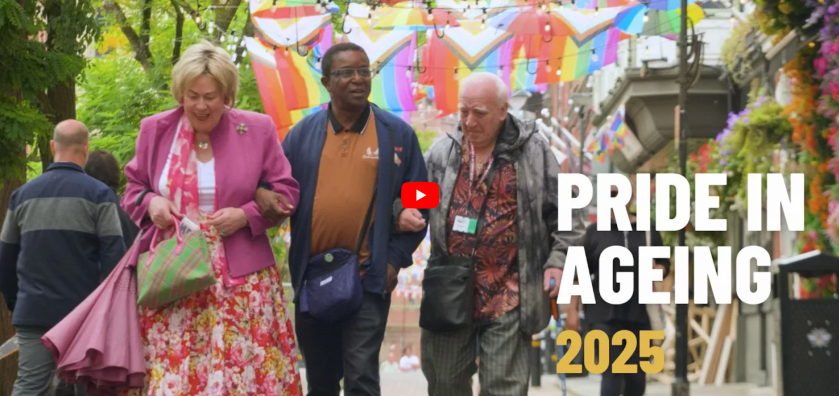
The Pride in Ageing 2025 video has been shortlisted for the final stages of the Smiley Charity Video Awards.
Voting is only open until 23 April for the People’s Choice Award – so get your skates on!
Please vote here
 Out in the City