Lake District Trip … 50 Years of UK Pride: Ted Brown, Peter Tatchell … and Royal Mail

News

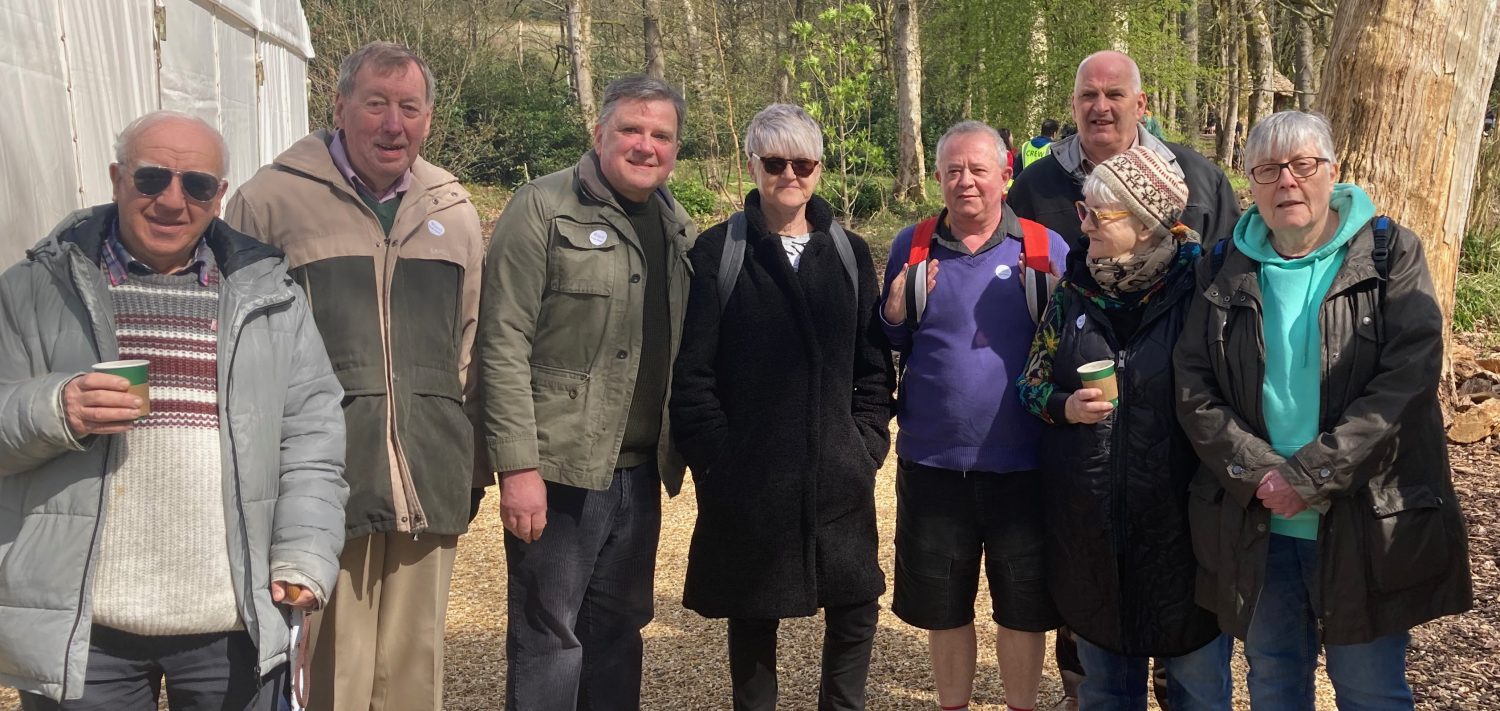
Lake District Trip

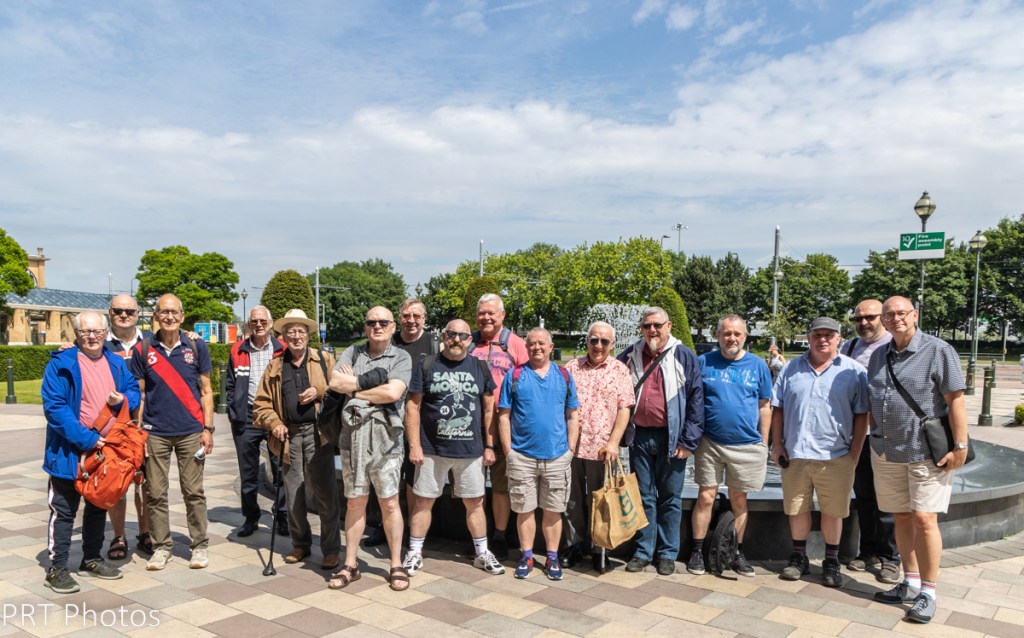
We met at Chorlton Street Bus Station and our coach took us to the Lake District in Cumbria. We had planned to visit Bowness, but the coach took us to Waterhead Pier, about a mile from the town of Ambleside on the other side of Lake Windermere, England’s largest natural lake.

The weather was a bit damp, but this didn’t spoil our visit. Some people sailed on the lake, while others explored Ambleside. The views of lakes, valleys and steep hills were fantastic.

More photos can be seen here.

50 Years of UK Pride: Ted Brown, Peter Tatchell … and Royal Mail

Class of 72 (from left): Tom Robinson, Stuart Feather, Mair Twissell, Roz Kaveney, Peter Tatchell, Andrew Lumsden, Ted Brown and Nettie Pollard. Photograph: Simon Webb / The Guardian

Ted Brown is a black LGBT rights pioneer who helped organise the UK’s first Gay Pride march in 1972, featuring a mass ‘kiss-in’ that, at the time, would have been considered gross indecency, which was against the law.
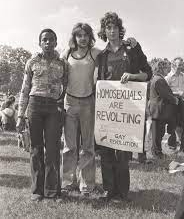
Ted Brown (left)

When Brown realised he was gay, homosexuality was illegal in Britain – the only person he came out to was his mother. She cried and told him he’d have to battle not just racism but homophobia too; both were rife in society at the time. At one point Brown felt so dismal about his future that he considered taking his own life. But inspired by the Stonewall Riots, he found hope in Britain’s Gay Liberation Front and became a key figure in fighting bigotry in the UK.

Fifty years on, says activist Ted Brown, people call it Britain’s first official Gay Pride, but there was nothing “official” about it. Pride 72 was not endorsed by the government, let alone the brands and corporations you might see at Pride today. It was not about rainbow flags or pop stars performing; it was fundamentally grassroots, and a challenge to society. Just five years after Britain’s partial decriminalisation of homosexuality in 1967, sex between men under the age of 21 was still banned, and displaying same-sex romantic affection in public was illegal. To take to the streets and show your face to the world was both radical and defiant.
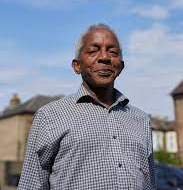
Here are some extracts from his moving life story:

Growing up gay and black. Telling his mother that he was gay

“I started going to a school called Eltham Green Comprehensive, was quite happy there although, again I was experiencing a fair amount of racism, and there was homophobia amongst the kids. It was quite common for children to be abused as – boys mostly, to be abused as being sissies.
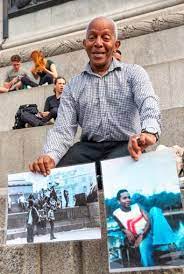
Anyway, around the age of eleven, around 1961, as I said, I was becoming aware of my attractions to one or two other boys in the school, and I mentioned this to my mother, and as most parents would do, and as is actually common, she felt that this was just a stage. It’s very common for kids to develop crushes on same sex people without there being any sexual overtones, erm, but I realised some time later, when I was about fifteen that these were not simply er … it wasn’t just simply a stage and that I was sexually attracted to these other boys, and I remember also that I told my mother at the time. I felt very lucky being able to tell my mum that I was – in my own words at the time – “I think I’m becoming homosexual” because I know that a lot of parents and a lot of other associates of the family would not be accepting – receptive, or understanding of their child telling them that they were homosexual in 1965. This was four years before the Stonewall riots in New York that started the modern lesbian and gay rights campaigning.”

First GLF meetings in London. Living in a GLF commune. Challenging sex roles
“Apparently Noel saw me at the meeting and says that he, found me very attractive at the time. I think I may have seen him, but I don’t remember him at that particular meeting and I, of course, didn’t know that we were going to be still together 44, 45 years later.

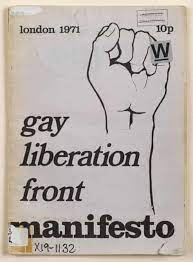
There were various meetings held at the Covent Garden, but for one reason or another, they were later moved to Notting Hill. Um … Powis Square in Notting Hill became the centre of several ongoing lesbian and gay meetings, and it was at those meetings that the Gay Liberation Front was formed, and this was a group of people who felt that lesbians and gay men should actively fight for our right both legally and socially. One of the slogans was that The Personal is Political, because many people who didn’t want to join argued that the law was one thing and um, that your personal life was something that you should keep away from everybody else. But we felt that your sexuality, your race, your age – all these things had implications both politically, socially and personally, and that we should um, look at them clearly and challenge the problems that arose from the discrimination and hostility that people often faced.

At one stage erm, by which time I had actually met Noel and we were beginning to get known as a couple, erm, it was suggested that there should be some communes set up by GLF. Gay Liberation Front. So that we could actually live the principals of The Personal is Political. Three communes were set up. One in Brixton – remnants of that still exist in Mayall Road in South London, not far from where I’m actually living now. Another in Notting Hill, and another in Bounds Green in North London. Noel and I moved into the one in North London. I can’t give or remember exactly the exact address of the house, but there were fourteen of us there, and we had twelve mattresses in the living room, and we agreed that we would share our food, we would share house cleaning responsibilities, that we would be open to erm, the friends, relatives and guests of other people, that we would encourage both the women and the men – there were only two women out of the group, to dress as they wanted to. If er, somebody wanted … a man wanted to dress in camp outfits or transgender items that was fine. If the women wanted to wear men’s clothes, or women’s clothes or whatever, we wouldn’t challenge them in the way that people normally would be outside, erm, and we would try to disrupt the gender classifications that we were used to. At one of the meetings that had set up um, GLF erm, the communes, a lot of the women walked out, because the habits were so ingrained in us of sexual division that at those meetings, when there was a break, many of the men expected the women to go and make the tea! (Laughs) And after a while the women said “Can you not see that you’re still carrying on the, you know, the nuclear family male dominated structure and that one of the things that we have been challenging when we set up GLF was the fact that both women and men, gay … lesbians and gay men, had habitually imitated heterosexual sex roles?”

Peter Tatchell: What it was like to march at the first UK Pride
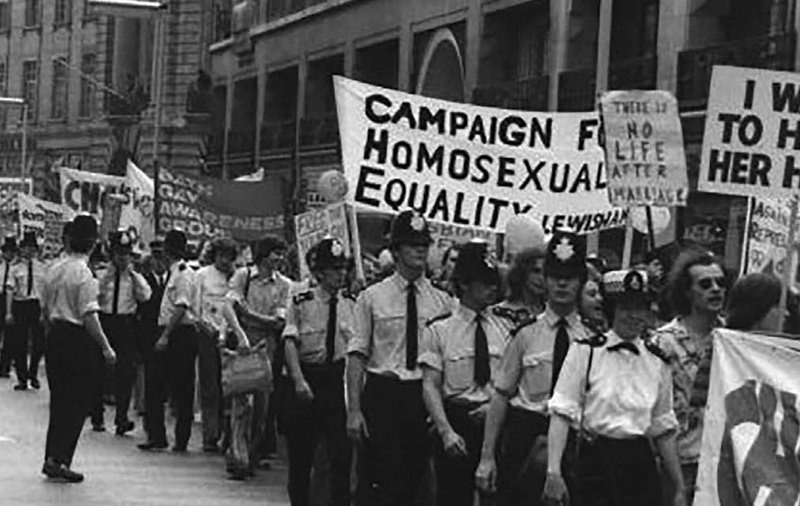
Looking back over the last 50 years, it is extraordinary how Pride has grown since that inaugural 1972 march (Jamie Gardiner)

“Way back in the early 1970s, I was a member of the newly-formed Gay Liberation Front (GLF). It was Britain’s first movement of openly lesbian, gay, bisexual and transgender people and the first to move beyond mere law reform, to take on the homophobia of the church, media, police and the medical and psychiatric professions.

To combat the invisibility and denigration of the queer community, we decided to organise a “Gay Pride” march, with the theme of being out and proud. This was a radical departure from the norm. In those days, nearly all LGBT+ people were closeted and many felt ashamed of their sexual orientation and gender identity.

I was one of about 30 GLF activists who organised that first UK Pride march, which took place in London on 1 July 1972. Only 700 people turned up. Many of my friends were too scared to march. They thought everyone would be arrested or bashed. That didn’t happen, but we were swamped by a heavy police presence.

Despite this intimidation, we were determined to have a fun time and make our point. The march was a carnival-style parade, which went from Trafalgar Square to Hyde Park. There were lots of extravagant costumes and cheeky banners poking fun at homophobes like the morality campaigner Mary Whitehouse. I marched with my then partner, jazz guitarist Peter Smith, carrying a placard that simply read: “Gay is Good” – a revolutionary idea in that era, when most people thought gay was very bad.

We received mixed reactions from the public, some hostile and some supportive – and a lot of curiosity and bewilderment. Most had never knowingly seen a LGBT+ person, let alone hundreds of queers marching to demand human rights.
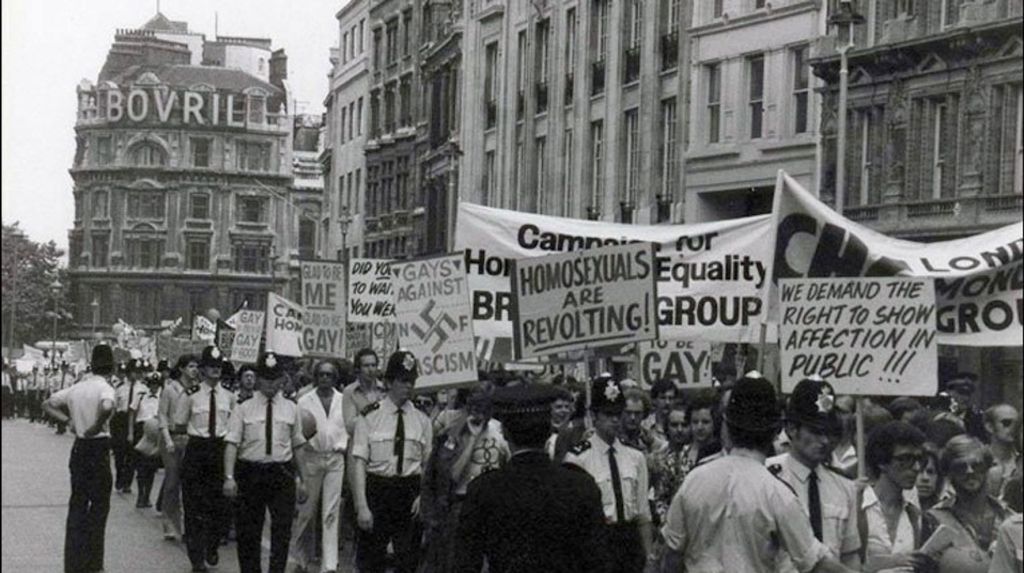
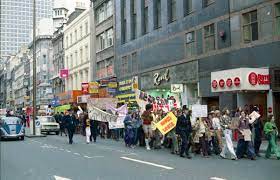
Unlike nowadays, Pride in 1972 had no commercialisation or corporate sponsorship – and no government funding or messages of support. Not a single politician joined us. The homophobic media refused to report Pride.

When the march arrived at Hyde Park, there was no festival or entertainment – just an impromptu DIY queer picnic, what we called a “Gay Day”. Everyone brought food, booze, dope and music. It was all shared around.

We played camped-up versions of party games like spin the bottle and drop the hanky. I won one of the games and my prize was a long, deep kiss with a gorgeous French gay activist who had come over from Paris to join us. But it was more than good fun. Because we were same-sex kissing in public, which was an arrestable offence in those days, it was also a gesture of defiance.
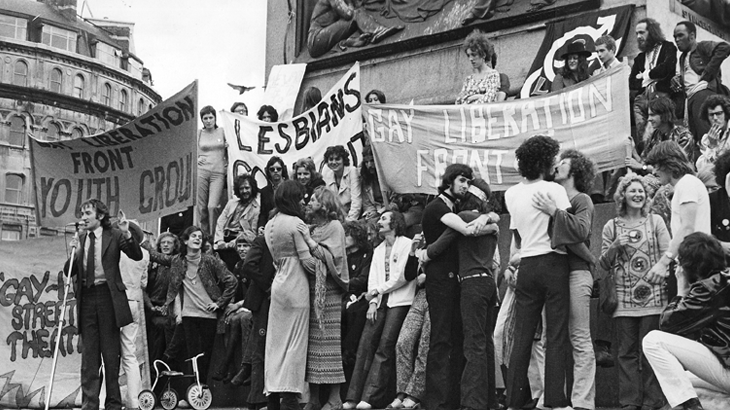
Looking back over the last 50 years, it is extraordinary how Pride has grown from one march with less than a thousand people to over 150 nationwide events with a combined attendance of a million.

The increasing acceptance of LGBTs is another big change. In 1972, homosexuality was still viewed as an illness, lesbian mothers had their kids taken off them by the courts, you could be sacked from your job for being LGBT+ and the police were at war with our community. Despite the partial decriminalisation of homosexuality in 1967, many aspects of gay male life remained illegal. Thousands of gay and bisexual men were still being arrested for consenting, victimless behaviour – often as a result of police entrapment operations using officers acting as agents provocateurs.

Although there remain many injustices to overcome, our community has made huge strides towards freedom over the last five decades. None of these gains has been given to us on a plate. Every advance has been the hard-won result of determined campaigning. It took us 34 years to win an equal age of consent and 43 years to win marriage equality!

There is no room for complacency. Although all the major anti-LGBT+ laws have now been repealed, trans people are still battling to reform the Gender Recognition Act so they can self-define and legally change their gender without having to get medical approval. We continue to wait for a ban on conversion therapy that was promised four years ago and the latest government proposal will only prohibit conversion practices targeted at young LGBs. It will not protect trans people at all.

Even today, two thirds of queer people have experienced anti-LGBT violence or abuse, and nearly half of LGBT+ kids in schools have suffered bullying. There remain some LGBTs, mostly from religious communities, who feel ashamed, depressed and sometimes suicidal about their orientation or identity.

Globally, we have a long way to go, with 70 nations criminalising same-sex relations. Penalties range from a few years in jail to life imprisonment. Twelve Muslim-majority nations have the death penalty. Thirty-five of the 69 criminalising countries are Commonwealth member states, acting in defiance of the human rights provisions of the Commonwealth Charter – with no rebuke from the Commonwealth Secretariat. For all these reasons, Pride is still important and needs to remain both a celebration and a protest.

See you on 1 July at 1.00pm at St Martin’s church in Trafalgar Square. We will be celebrating the exact 50th anniversary of the first Pride in the UK, with a march that retraces the route of the 1972 march to Hyde Park.”

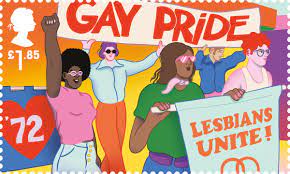
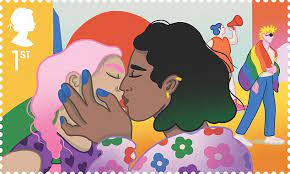
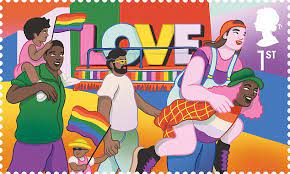
Royal Mail marks 50 years of UK Pride with colourful set of stamps
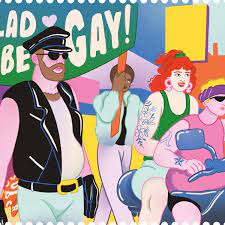
The stamps were illustrated by the award-winning artist Sofie Birkin. Photograph: Royal Mail / PA

On 1 July 1972 a crowd of people gathered in London’s Trafalgar Square and marched to Hyde Park chanting “Gay is fun! Gay is proud! Gay is beautiful!”

It was not the first march for LGBT+ rights in the UK, as similar protests had taken place in Highbury Fields, Islington, in 1970 and Trafalgar Square in 1971. But it was the first rally in the UK with the name “Gay Pride”, inspired by Pride events in the US.

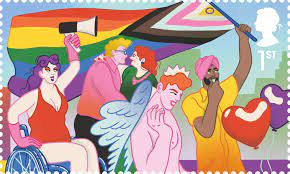
Fifty years on, Royal Mail is commemorating the landmark event with a set of eight illustrated stamps, art-directed by NB Studio and illustrated by the award-winning artist Sofie Birkin, whose work has featured in campaigns for brands such as Nike and Apple.

The stamps carry vibrantly coloured illustrations of typical scenes at Pride events, which are now an annual fixture at cities across the world. One stamp depicts a banner reading “love always wins”.
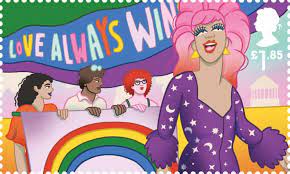
The ‘love always wins’ stamp. Photograph: Royal Mail / PA

One of the demands of the first Pride rally in the UK was greater legal equality for gay people. Homosexuality was partially decriminalised in England and Wales in 1967 yet police arrests of gay and bisexual men remained common in the years following.

However, a climate of homophobia only increased in the 1980s as the Aids epidemic led to a rise in attacks on LGBT+ people. The health crisis sparked new Pride events such as Manchester Pride, which began as an Aids fundraiser.

Throughout the 1990s, Pride spread across the UK. Pride Scotia launched in Scotland, with annual marches alternating between Edinburgh and Glasgow, and the first Cardiff Pride followed in 1999.

In the 2000s, attendance at Pride in London grew alongside increasing support for LGBT+ rights, and more events were launched under the Pride banner. By 2015 Pride in London was attracting one million people, and it continued to grow until the Covid pandemic forced cancellations in 2020 and 2021.

David Gold, the director of external affairs and policy at Royal Mail, said: “The vibrant, colourful Pride events that take place in towns and cities across the UK today trace their origins to a small number of people who marched through central London half a century ago to raise awareness of discrimination and inequality.” The stamps are available to pre-order from 23 June and go on general sale on 1 July.

Stonewall Rebellion … Kelly Holmes … Maybelle Blair

News

Stonewall Rebellion

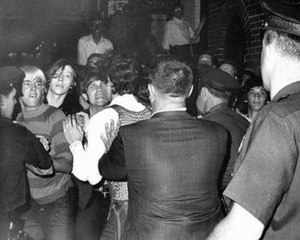
The events of the early morning of 28 June 1969 (known as The Stonewall Riots or the Stonewall Rebellion) were not the first instances of gays fighting back against police in New York City and elsewhere. Something special happened on that night in 1969, but it’s more complex than saying it all started with Stonewall.

While the community has always included all LGBT people, the one-word unifying term in the 1950s through the early 1980s was gay. Later (’70s/80s) this was expanded by many groups to lesbian and gay, then by the ’90s and ’00s to lesbian, gay, bisexual, transgender (LGBT). Also by the late eighties and early nineties, queer began to be reclaimed as a one-word alternative to the ever-lengthening string of initials, especially when used by radical political groups.

The only known photograph taken during the first night of riots, by freelance photographer Joseph Ambrosini, shows gay youth scuffling with police.

The New York Times of 29 June reported as follows:

The New York Times 29/6/1969

4 Policemen Hurt in “Village’ Raid

Melee Near Sheridan Square Follows Action at Bar

Hundreds of young men went on a rampage in Greenwich Village shortly after 3am yesterday after a force of plain-clothes men raided a bar that the police said was well-known for its homosexual clientele. Thirteen persons were arrested and four policemen injured.

The young men threw bricks, bottles, garbage, pennies and a parking meter at the policemen, who had a search warrant authorising them to investigate reports that liquor was sold illegally at the bar, the Stonewall Inn, 53 Christopher Street, just off Sheridan Square.

Deputy Inspector Seymour Pine said that a large crowd formed in the square after being evicted from the bar. Police reinforcements were sent to the area to hold off the crowd.

Plainclothes men and detectives confiscated cases of liquor from the bar, which Inspector Pine said was operating without a liquor licence.

The police estimated that 200 young men had been expelled from the bar. The crowd grew to close to 400 during the melee, which lasted about 45 minutes, they said.

Arrested in the melee, was Dave Van Ronk, 33 years old, of 15 Sheridan Square, a well-known folk singer. He was accused of having thrown a heavy object at a patrolman and later paroled in his own recognisance.

The raid was one of three held on Village bars in the last two weeks, Inspector Pine said.

Charges against the 13 who were arrested ranged from harassment and resisting arrest to disorderly conduct. A patrolman suffered a broken wrist, the police said.

Throngs of young men congregated outside the inn last night, reading aloud condemnations of the police.

A sign on the door said, “This is a private club. Members only.” Only soft drinks were being served.”

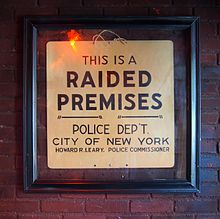
The sign left by police following the raid is now on display just inside the entrance.

Kelly Holmes

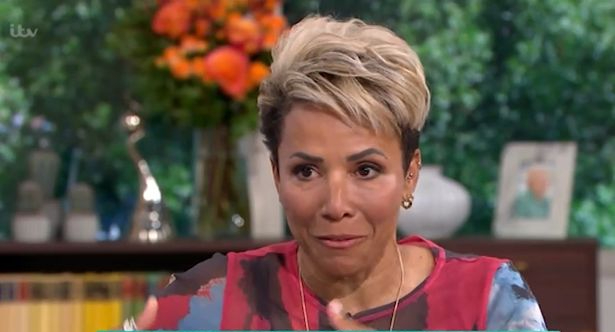
Kelly Holmes, the two-time gold medal-winning Olympic champion, has told the world she is gay after keeping her sexuality private for over 30 years.

Dame Kelly, now 52, said she realised she was gay at the age of 17 after kissing a fellow female soldier, and that her family and friends have known since 1997. She has spoken out during Pride Month and ahead of a documentary about her experiences called Being Me, where she talks to LGBT+ soldiers about their lives in the military now.

Maybelle Blair comes out at 95

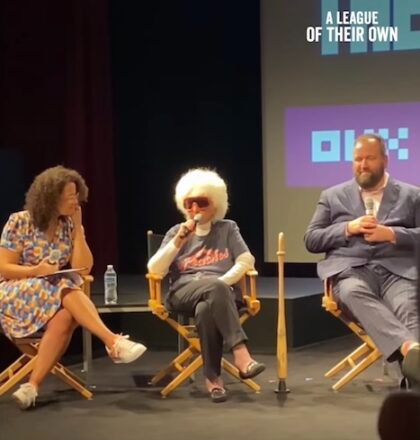
“I hid for 75, 85 years and this is actually basically the first time I’ve ever come out,” said Maybelle Blair, 95, who came out publicly for the first time during the premiere of the series “A League of Their Own”

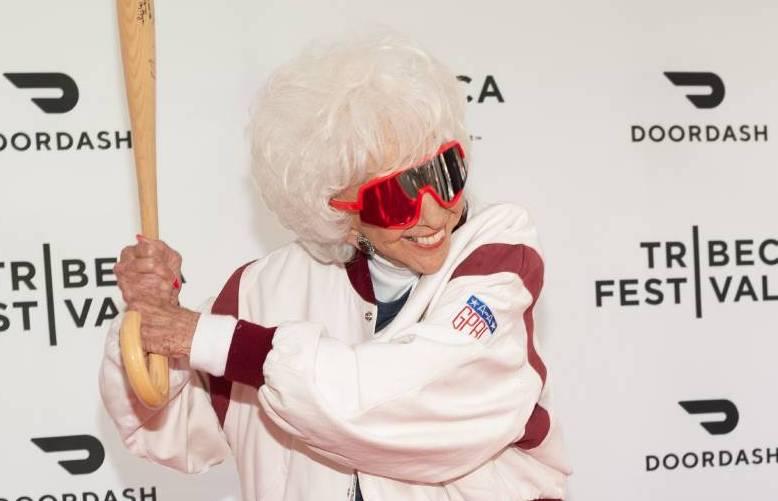
Maybelle “Mae” Blair, 95, recently came out publicly for the first time during the Tribeca Festival premiere of the Amazon Studios series “A League of Their Own.” She was a member of the All American Girls Professional Baseball League that the 1992 film and the new series are based.

At a panel discussion, Blair — also known as “All The Way Mae” — said she was happy to see players not having to hide their sexual orientation any longer and the acceptance found in the sport.

“I think it’s a great opportunity for these young girl ball players to come (to) realise that they’re not alone, and you don’t have to hide,” Blair shared. “I hid for 75, 85 years and this is actually basically the first time I’ve ever come out.”

Maybelle Blair

Maybelle Blair pitched for the Peoria Redwings in 1948. She then went on to play for the National Women’s Softball League in Chicago during the 1950s. Blair has spoken across the US in support of women’s baseball and has appeared on national morning shows and has been honoured at various baseball stadiums.

A League of Their Own” premieres on Amazon Prime on 12 August

Virtual Hideout … LGBT+ Majority Extra Care Housing Scheme Update … Rainbow Lottery

News

Virtual Hideout

On the game

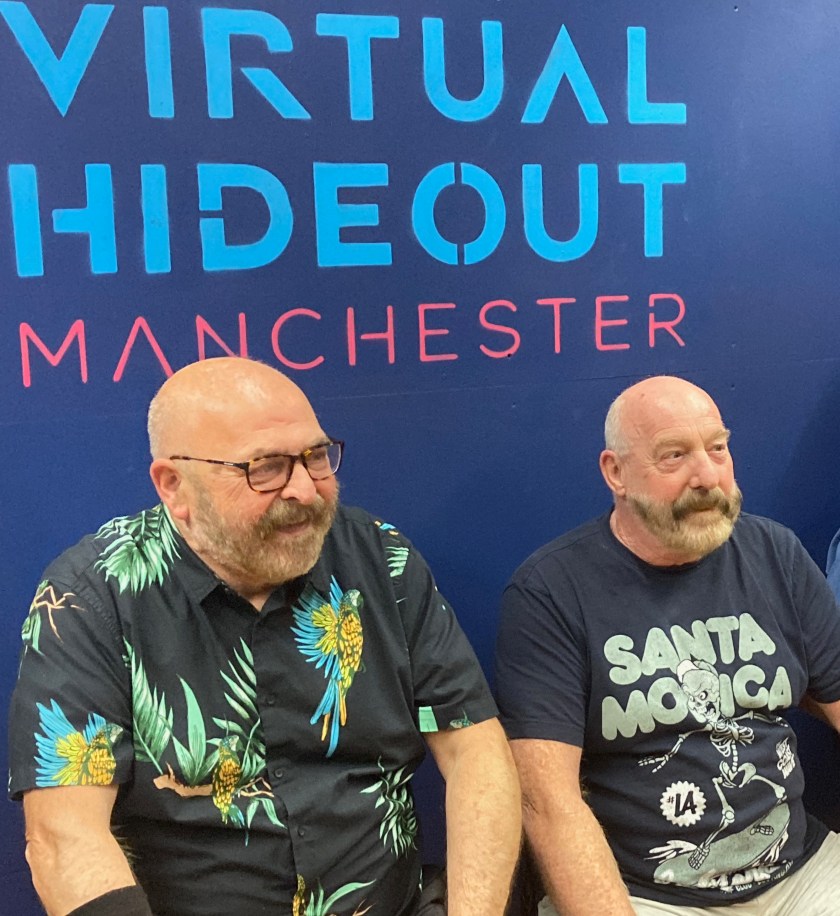
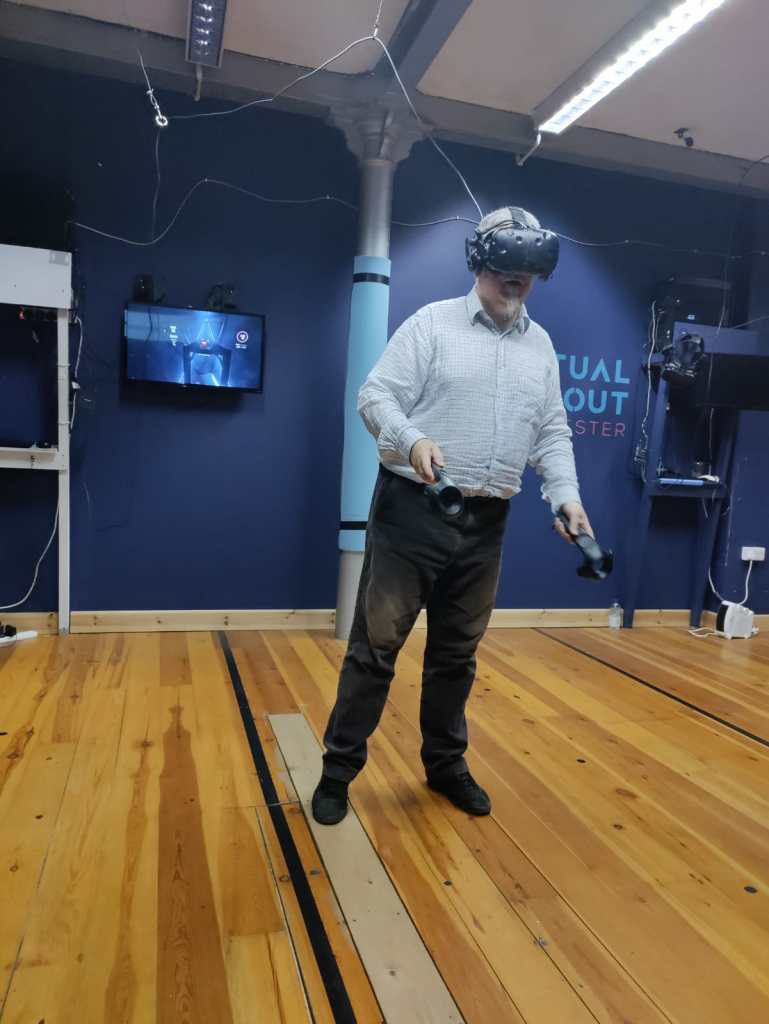
Virtual Hideout is a virtual reality gaming centre located in the heart of Manchester.

Twenty-four of us from Out In The City received a personalised, unique and immersive experience.

We sliced bananas and pineapples, dodged a huge whale and some slippery jellyfish and danced along to some pop songs.  The visit offered a fantastic and personal experience worked around us. A good time was had by all.

Lots of photos can be seen here.

LGBT+ Majority Extra Care Housing Scheme Update

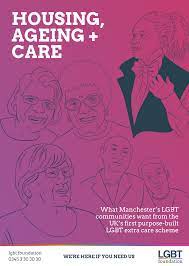
Manchester City Council (MCC), LGBT Foundation and Anchor have decided to end the tripartite negotiations around the delivery of the LGBT+ Majority Extra Care Housing Scheme. 

The Russell Road scheme is a flagship, first-of-its-kind development that will create a safe and welcoming housing community for older LGBT+ people in Manchester.  

This means creating and maintaining a long-term relationship between the Council, LGBT Foundation and the housing association developer – and eventual managing company – with MCC commissioning both care and support services in the new Extra Care scheme for future residents and LGBT Foundation providing services and support within the scheme.  

The three partners have agreed that the local management arrangements required to meet the specific needs of LGBT+ communities within Manchester city mean there will be other organisations better suited than Anchor to take it forward. The Council will begin the process to bring a new housing provider with extra care experience on board to deliver the new LGBT+ majority Extra Care housing project in Whalley Range, south Manchester.  

A new competition will be held later this year and the successful housing delivery partner will be part of a tripartite strategic partnership with Manchester City Council and LGBT Foundation. 

The housing association partner will own and be responsible for designing the scheme through a co-production approach with the Council and LGBT Foundation – alongside a Community Steering Group made up of local people in Whalley Range and members of the LGBT+ community.  

Dr Paul Martin OBE, Chief Executive of LGBT Foundation, said: “We are as committed as ever on delivering the right extra care scheme for the LGBTQ+ residents of Manchester, and we will continue to work with the Council to find the most appropriate partner to meet the needs of LGBTQ+ people over 55. 

Our research clearly demonstrates that the needs of LGBTQ+ older people are still not being addressed, and this scheme will help to ensure that these inequalities are met.  We are hopeful of a speedy resolution and along with our Community Steering Group we look forward to forming a strategic partnership with the new provider, to put communities at the heart of the development of this ground-breaking scheme.”   

Rainbow Lottery – Support Out In The City

As a thank you for your ongoing support of Out In The City we’ve got something extra special coming up for you – the chance to win a luxurious staycation with Forest Holidays! Unwinding in a secluded cabin, or relaxing in your own private hot tub – what could be better!?

The national draw  will take place on 25 June 2022. If you are already supporting us, there’s no need to buy separate tickets, you will be automatically entered into this prize draw. Of course, you are welcome to buy additional tickets. Every ticket you buy is an extra chance to win, and an extra fundraising boost for Out In The City. It’s a win-win situation!

If you wish to start supporting us, please buy your tickets here.

Thank you & good luck!

Traffic Lights supporting Pride Month

Pride in Ageing Video … Gateways Grind … AIDS: The Unheard Tapes … Pride events

News

Pride in Ageing video

To celebrate Pride in Ageing’s third birthday, a video has been produced featuring the lives and stories of some of the incredible older LGBTQ+ people Pride in Ageing serves.

Life inside the wild London club where lesbians were free to be themselves

Beryl Reid (as Oliver Hardy) during the filming of “The Killing of Sister George”. Photograph: David Newell Smith / The Observer

The Gateways is back. The longest-running lesbian club of all-time – the one whose actual clientele appeared in the 1968 film The Killing of Sister George; the one where Mick Jagger tried to talk the owner into letting him crash in a frock; the one that was a sanctuary to every class and sort of woman, from well-known figures such as the writer Patricia Highsmith and the artist Maggi Hambling (then an art student) to swimming-pool attendants at the Tooting Bec Lido – has been given a new lease of life in the first full-length documentary film to celebrate its history, and ensure that it is not erased.

Behind a dull green door on the corner of King’s Road and Bramerton Street in Chelsea, down some rickety steps to the basement lay the dive, a former strip club. The lease had been won in a bet at a broadcast boxing event at the Dorchester hotel by course bookie Ted Ware in 1943, and initially he offered it as a hang-out to a group of his lesbian pals who had been kicked out of their old Soho haunt the Bag O’ Nails pub after new owners took over and banned them.

Ted married an Italian actress, Gina Cerrato, in 1953 (they had a daughter, also named Gina, a year later) and the couple ran the club with Gina’s right-hand woman, Smithy, a former member of the US Air Force from California. They turned it into a women-only venue in 1967. After Ted’s death in 1979, Gina kept the club running but its last night was in 1985. She died in 2001.

I first met Gina Jnr (as she was never called) in Bristol in 1975 when she stood out as someone striking in a wide-striped black-and-gold form-fitting men’s suit with a Louise Brooks bob. Growing up, she says she had no idea of what sort of club her parents ran.

Family home life in the leafy mock-Tudor suburbia of Isleworth, West London, was unusual … but not to her. As well as her parents, Smithy had been invited to move in by Ted shortly after his daughter’s fourth birthday. He explained to Gina that it was in recognition of the kindness shown to him in New York as an illegal immigrant when he had been offered safe harbour by a black woman, and then a Jewish family.
There was no flamboyant atmosphere of bohemian chaos. The decor was monochrome: “My mother was never into chintz.” Bedtimes were strict; meals were served at the same hour every day; homework was not to be shirked; a neighbour would take her to church every Sunday. But Gina was aware that her family was more fun than her friends’ families, and if most of the people who visited were pairs of women friends, this seemed perfectly normal.
“When I went to other people’s houses I would find them extraordinarily suffocating and conventional. There’d be this ghastly father who was a boring old fart and a mother who was terribly uptight,” she recalls. “I was glad to go home to the laughter and fun. There was a lot more conversation, and I had a lot more access to my parents than my friends did to theirs. I could say what I wanted as well.”

Even as small children, she and her friends helped with jobs for the club: counting threepenny bits and sixpences from the till for the cigarette and fruit machines, and wiping down bottles of tonic water that were stored in the garage.

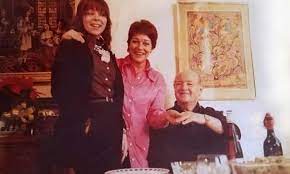
The Gateways around 1953. The woman holding a wine glass is Gina Ware

She was 13 when she discovered for the first time about the club’s clientele and purpose. “It was Sunday lunchtime and my mother and I were washing up after lunch. She said: ‘I want to talk to you about something because you’re going to hear about this at school. You do know what the club is, don’t you?’ I said: ‘What do you mean? It’s a club,’ and she said: ‘It’s a lesbian club, Gina.’

“I said: ‘What?’ And she said: ‘Lesbians! You know, women with women.’ So I was, like: ‘Really? Really?’”

“I think I then said: ‘Does Dad know?’ And she said: ‘He started it! It’s his club!’”

Neatly, it was a story in this newspaper about The Killing of Sister George and the club that persuaded Gina’s mother to explain.

In her mother’s final three weeks, there were a few astonishing revelations. The two Ginas were watching television together when Mick Jagger appeared and Gina Snr asked for the remote to turn the volume up, saying: “Oh, it’s Mick – such a lovely boy.”

He lived in Cheyne Walk, and would pass by the Gateways to get to the King’s Road. “And my mum would be outside, taking deliveries, doing the laundry or whatever, and she said that he used to stop and talk quite often.

“And I was, like: ‘You mean, you knew Mick Jagger?’ And she said: ‘Oh yes, and he was always so kind and respectful. He wanted to come into the club but I wouldn’t let him. He said: ‘Gina, please let me – I’ll wear a dress’, and I said: ‘Darling, I can’t – it’s women-only.’”

There was always speculation about the relationship between her mother and Smithy. On her death bed, her daughter finally asked her about it. “I said: ‘People always ask me, Mum, and I hate to ask you but were you and Smithy lovers?’ And she said: ‘Everybody always assumed that Smithy was madly in love with me and that I was playing her along. But no we weren’t, and the reason for that was that Smithy didn’t want it.’

“That was my first inkling that my mother must have been bisexual.”

The two Ginas and Ted Ware in the 1970s.

Regardless of their lack of intimate relations, Smithy and Gina Snr loved each other deeply. As did Gina and Ted, who was 25 years older than his wife. “Despite their age difference, they had fun together, and there was an intellectual bond because they both had very fast, sharp minds and were clever, charismatic people.

“We lived as a family. Smithy and my mother were both with my father when he died – all holding hands and taking care of him.”

When the club closed, Gina was very sad but knew that she couldn’t take it over by herself. The documentary Gateways Grind is a way of restoring its history, which is enmeshed with her own, and to see her parents again.

It is presented by Sandi Toksvig, who recalls her own visits to the club, and has interviews with former members. It is sharp, snappy, sassy and sexy – oh, and of course, very sapphic, too. The Gateways Grind, we learn, was a particularly popular dance there where tightly meshed groin action became literally orgasmic.

Gina says she feels “immensely proud and impressed by the work and the commitment [behind the documentary] and still astonished by the interest and love that people have for the Gateways and how they remember it.

“Because we didn’t always have that. There was a time when we were out of favour because we weren’t ‘the right sort of lesbians’.” The club was subjected to demonstrations by the likes of the Gay Liberation Front who disapproved of the secrecy of the club, at a time when women could lose their children for being gay. The indomitable Gina Snr’s response was to call the police on them.

“Gateways wasn’t about being political. Being lesbian was its default position. People coming who were ‘terribly lesbian’ and ‘terribly activist’ were shocked by the fact they weren’t considered special,” says Gina.

In January 2020, an application was made to English Heritage for a blue plaque next to what was the dull green door in Chelsea. It is supported by many prominent lesbians but the outcome is still pending.

Gina’s reaction? “It is very emotional for me in the sense that I loved all those people dearly. I know what they went through. It wasn’t all fun and games. There was a lot of sorrow, a lot of harshness, life was not a bed of roses for them.

“So, yes, it’s important to have that blue plaque because it’s a location that means an awful lot to people and something genuinely happened there.”

Gateways Grind will be on BBC4 on 21 June at 9.00pm.

Aids: The Unheard Tapes

John (Luke Hornsby)

This innovative three-part documentary series tells the story of the British AIDS crisis as it’s never been told before.

Forty years ago, a mysterious disease first appeared in Britain’s gay community. A deadly and complex virus with no known cure, the ‘gay plague’ arrived at a time when homophobia and discrimination were commonplace. Few could talk openly about their experiences – or their illness.

As the crisis grew, a small group of pioneering researchers began recording audio interviews with infected gay men and their friends. These interviews – a frank, intimate and sometimes humorous account of life at the heart of the AIDS epidemic – were archived in the British Library and have never been broadcast before. The series brings them to life with young actors who lip-sync to the original voice recordings.

AIDS: The Unheard Tapes combines these lip-synced historical testimonies with modern interviews from British activists, scientists, doctors and nurses who lived, worked and campaigned throughout the crisis.

Starting with the death of Heaven barman Terry Higgins in 1982, and ending in 1996 with the emergence of the first successful drug combinations, the series explores how pioneering medics and the gay community worked together to raise awareness, fight prejudice, and ultimately find ways to treat the devastating virus.

The audio testimony featured within this series is archived at the British Library and is publicly accessible. AIDS: The Unheard Tapes brings these interviews to a broadcast audience for the first time. The series is made in partnership with the Open University

Ignorance

The first part of this innovative series starts in London in 1982. Thirteen years after the partial decriminalisation of homosexuality, the largest gay club in Europe opens its doors, and Heaven is packed. Whispers begin to circulate of a mysterious new disease, a ‘gay cancer’ from New York, and Terry Higgins becomes one of the first people in Britain to die from what will become known as an Aids-related disease.

Revolutionary activists and doctors come together to discover what they can about this new virus, as numbers of those infected start to rise. Fear and stigma spread across the nation, contributing to a culture of extreme homophobia and ignorance. Gay activists take charge of trying to spread educational messages about safe sex for the first time.

The stories of men including David, Pete, John and Tony, recorded at the time, bring these experiences to life. Their real voices are lip synced by actors, giving first-hand insight into their lives at the time. They try to understand what they are hearing about Aids and cope with discovering their diagnoses at a time of heightened stigma and fear, when there is no cure.

As 1985 arrives, and with it the first HTLV-3 antibody test, the numbers of those infected with HIV gradually become clear, and the true scale of the epidemic begins to emerge.

About  Aids: The Unheard Tapes

Innovative series featuring interviews recorded at the height of the AIDS crisis in 80s and 90s Britain, lip-synced by actors, telling the story of HIV and AIDS in their own words. This show is broadcast on BBC Two on 27 June at 9.30pm. Episodes 2 and 3 will follow on 4 and 11 July respectively.

Derek Jarman Pocket Park

Manchester Art Gallery and Pride in Ageing at LGBT Foundation are working in partnership to create a Derek Jarman Pocket Park, which will be situated at the Mosley Street entrance of Manchester Art Gallery. 

This new community garden space has been designed and planted by a volunteer group of green-fingered LGBT+ over 50s from Greater Manchester, with support from artist Juliet Davis-Dufayard and funding from Pockets Parks and the Manchester Wellbeing Fund.

As well as providing a functional space for Manchester Art Gallery’s wellbeing work the garden will be a place for the people of Manchester and the wider world to come together, relax, share ideas and enjoy a taste of “immersive nature” in the centre of the city. Garden design support has been kindly provided by Exterior Architecture, the IGNITION Project and Royal Horticultural Society, and the garden will contain a number of innovative urban solutions to combat the effects of climate change.

The planting in the Derek Jaman Pocket Park is inspired by filmmaker, gay rights activist and gardener Derek Jarman’s celebrated garden in Dungeness as well as the life experiences of the LGBT+ volunteer group, who are of the same or similar generations to Jarman.

Almost 30 years on from Jarman’s landmark Queer exhibition at Manchester Art Gallery, this volunteer group continue to be inspired by the messages and movements for LGBT+ equality which Jarman and others started in the 1980s, and are supporting LGBT Foundation to continue their work towards a fair and equal society where all LGBT people can achieve their full potential. The garden space will be launched at Manchester Art Gallery on Wednesday, 22 June (by invitation only).

Download the programme here

Pride events

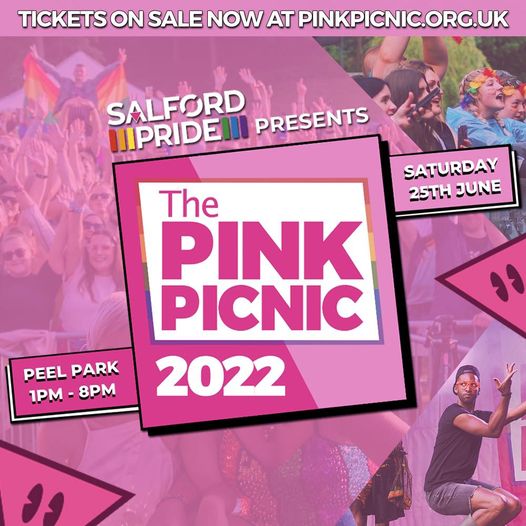
The Pink Picnic RETURNS in 2022! Join Salford Pride on Saturday 25 June, 1.00 – 8.00pm in Peel Park, Salford.

Grab your FREE general admission tickets now, for more info visit: https://pp22.eventbrite.co.uk/?aff=facebook

For those looking for a little extra PinkPLUS experience tickets are NOW on sale at an early bird price: https://pinkplus2022.eventbrite.co.uk/?aff=facebook

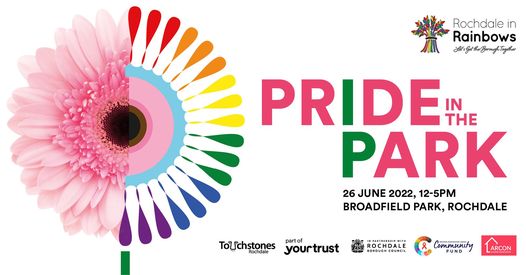
This year Rochdale in Rainbows is excited to present Pride in the Park! at Broadfield Park, Rochdale on 26 June from 12.00 noon to 5.00pm.

Join us for our first outdoor event – an afternoon filled with queer joy, family fun, performances and creative and wellbeing activities for LGBTQIA+ people and allies. There will also be stalls from local organisations, groups, and charities in Rochdale Borough.

Community Session … Mystery Trip … Manchester Day … Podcasts … Conversion Therapy Ban

News

Community Session: Out In The City

Manchester Pride invited Out In The City to present a Community Session to celebrate and let people know more about the incredible work we do to make LGBT+ life in Manchester so special for people over 50.

We informed the audience about who we are and the difficulties and challenges we have faced in our lifetimes. With talks, a short film, powerpoint presentations and a poem, we provided an opportunity for attendees to get to know us better and it all added up to an interesting evening.

Mystery trip

Eighteen of us met at Piccadilly Gardens Tram Stop at 11.00am to embark on a mystery trip. No clues had been provided other than we were taking the tram!

We changed at Cornbrook, got off at The Trafford Centre, walked through Selfridges, up the escalator, through to the ‘French Quarter’, past The Odeon Cinema … to the Paradise Island Adventure Golf.

We split into teams and teed off on the Temple Ruins Adventure – an amazing 18 hole crazy golf course, with a background of exotic wildlife, magnificent stone carvings and all sorts of paradise themed fun.

We were super competitive and I think we all scored a “hole in one”. Our scores varied widely, but Peter was the overall winner with a score of 45.

We dined at the Mardi Gras, a Wetherspoons pub, before taking the tram back to Manchester city centre. 

It was a very enjoyable day and there are lots of photos here.

New steps for Little Amal this Manchester Day

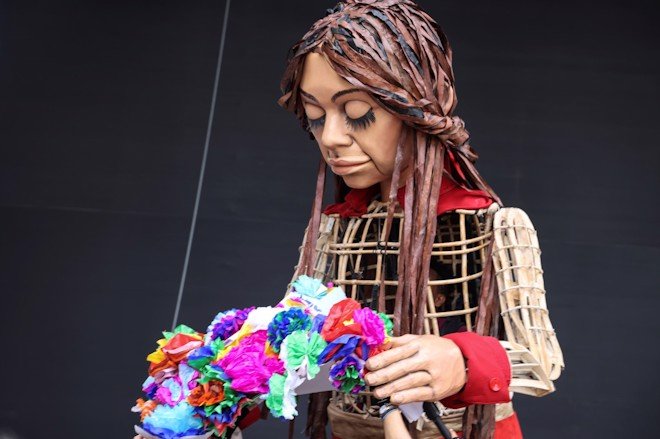
Last November we welcomed Little Amal, a 3.5-metre puppet of a ten-year-old refugee girl, as she ended an 8,000km journey in Manchester. On Sunday 19 June you can see her again as she walks in the iconic Manchester Day Parade before travelling across the UK, marking World Refugee Week.

You can plan your visit at the Manchester Day website and learn more about Amal’s journey by following @walkwithamal on social media.

We can’t wait to see the mesmerising Little Amal take to the street of Manchester!

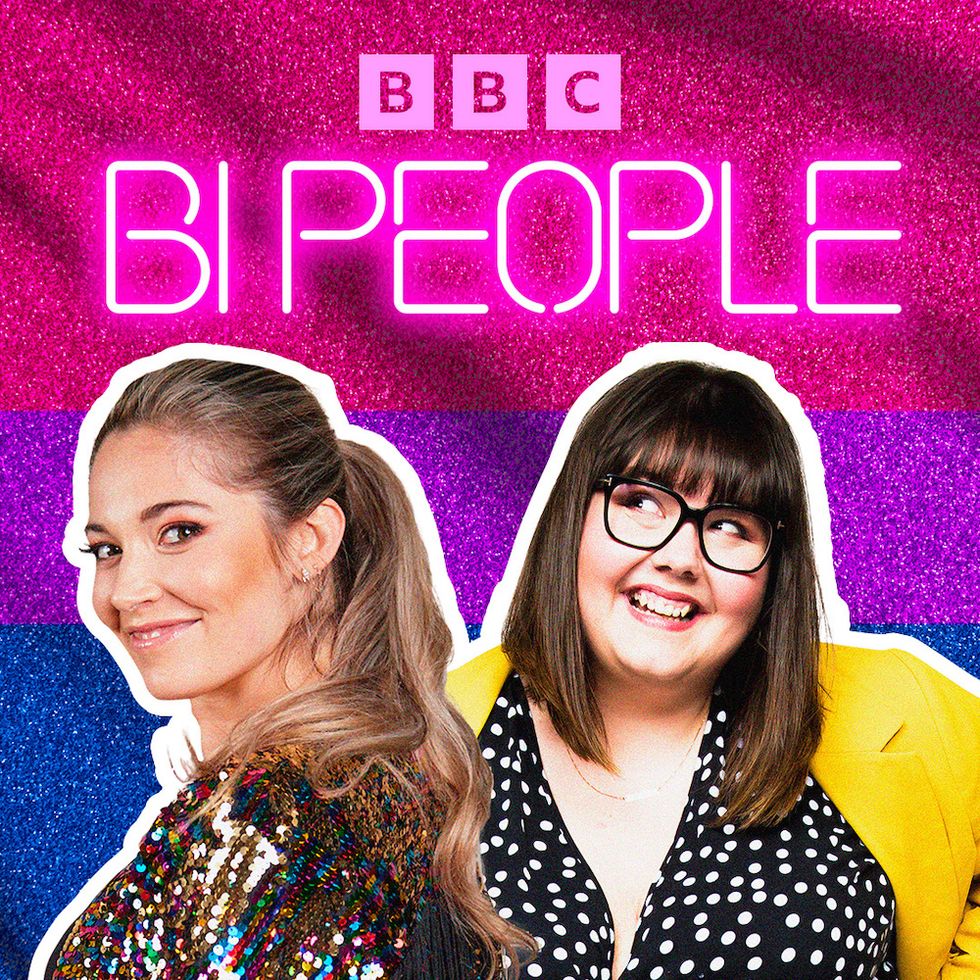
5 of the best LGBT+ podcasts on BBC Sounds

Whilst the importance of hearing from LGBT+ people doesn’t just fall to a few weeks, Pride Month offers us time to commemorate just how far the movement has come. We can support the LGBT+ community by standing in solidarity and learning more about its history and present realities.

In the lead up to Pride, BBC Sounds has a wealth of podcasts that platform vital stories exploring queer joy, trans visibility and more. So, whether you’re a fan of sports or Yungblud’s Doncaster accent, they’ve got you covered with an easy fix of brilliant LGBT+ podcasts, but be quick as they are only available for a few weeks. Go to BBC Sounds and search for the following:

Conversion Therapy Ban

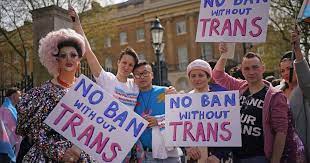
On Monday 13 June, MPs debated a petition calling for transgender people to be included in the Government’s proposed conversion therapy ban.

The debate was opened by Petitions Committee member Elliot Colburn MP, and Equalities Minister Mike Freer MP responded for the Government. A full transcript of everything that was said during the debate can be read here.