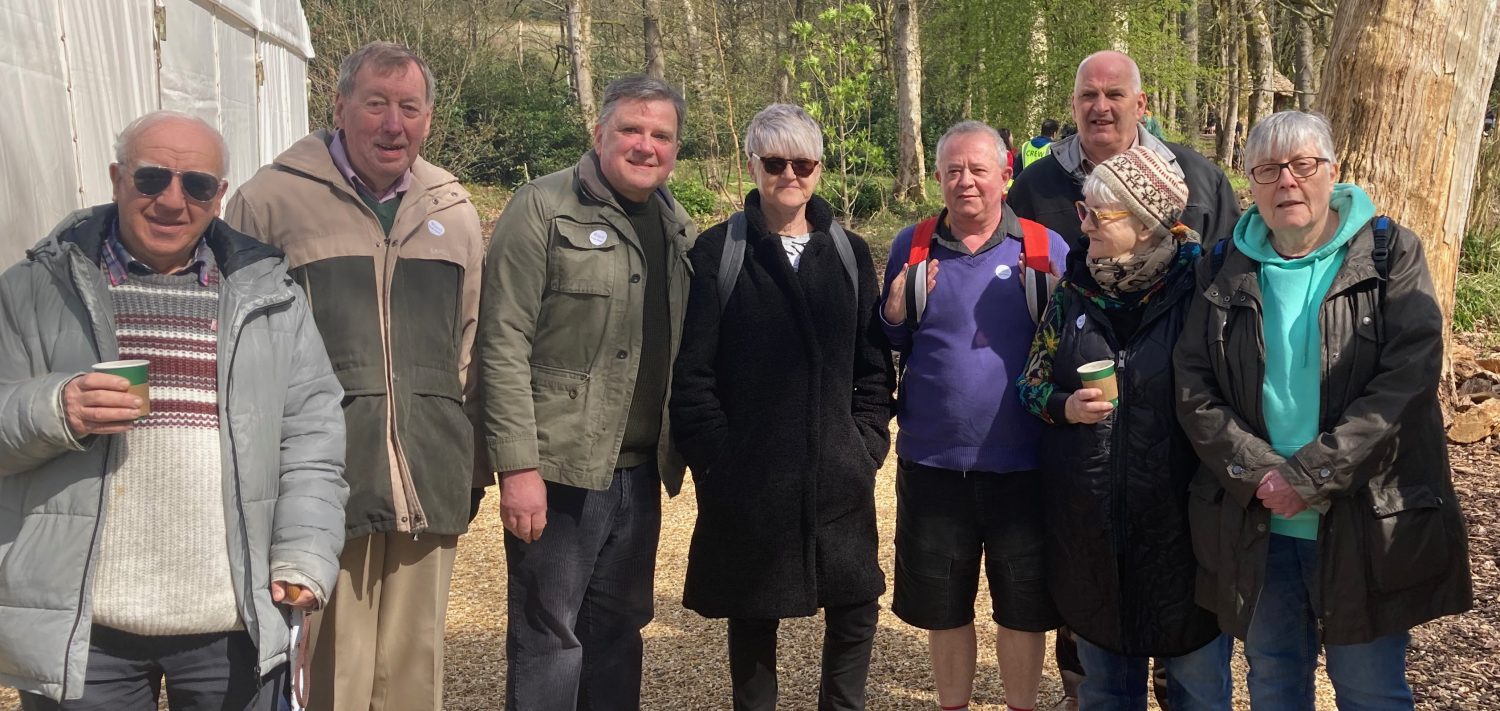
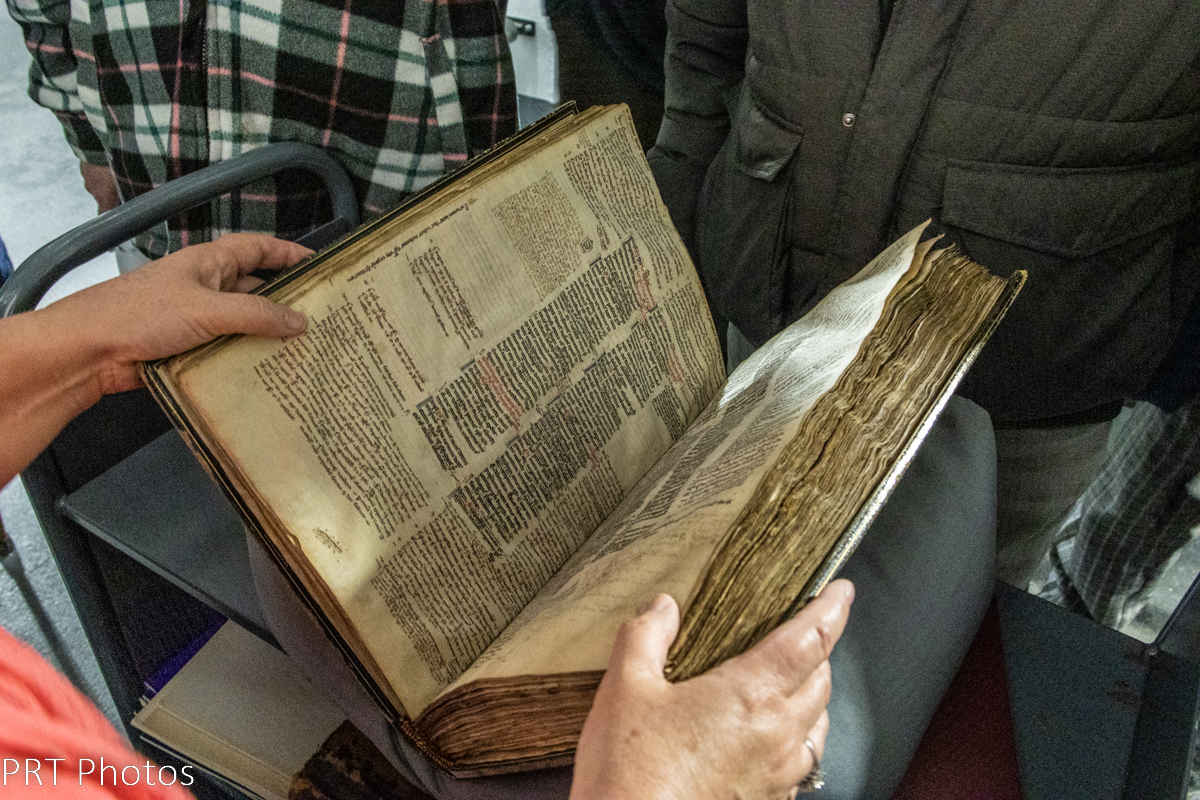
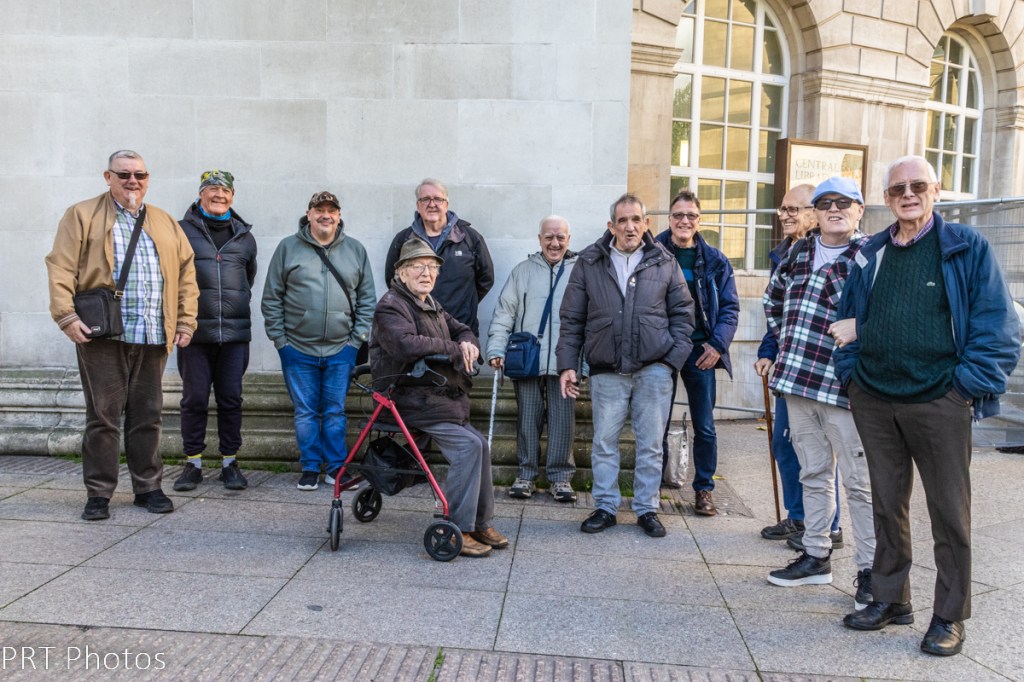
Last week we visited Manchester Central Library where we met our guide, Siobhan from Archives+. She showed us around the interactive items on the ground floor before visiting the lower ground floor strong rooms – an area not normally accessible to the general public.
The archives include documents, books, maps, photographs, plans, newspapers and magazines. Siobhan explained to us how to access the archives and collections free of charge.
A section of the archives is dedicated to the history of the LGBT+ community as it is an important part of the social and cultural history of Manchester and the North West.
Manchester has the United Kingdom’s largest lesbian, gay, bisexual and transgender community outside London and is renowned for its Gay Village centred around Canal Street. It has been the home of festivals such as Pride, It’s Queer Up North and Get Bent as well as celebrations around LGBT History Month.
The LGBT Foundation is the UK’s biggest LGBT charity while The Proud Trust has supported young people for more than 30 years. Manchester was the birthplace of the Campaign for Homosexual Equality in 1964 and we were hugely influential in the campaign against Clause 28 in the late 1980s and early 1990s.
The LGBT Foundation’s archive is now held at Central Library. It includes the LGBT Foundation’s own project and event files on HIV, sexuality, LGBT culture and sexual health as well as press cuttings, photographs and lots more.
There is also a wide range of published sources including Attitude magazine (1994 to present), the Pink Paper (1991 to present) and many other lesbian and gay publications such as Gay Times, Gay News, Diva, Boyz and Outnorthwest. The LGBT Foundation published Outnorthwest, the North West’s only free LGBT bi-monthly lifestyle, health and listings magazine, from 2000 to 2014.
The library archives even includes a copy of Tales from Out in the City: an Anthology of Memories (2009) – a volume of memories and reminiscences from older members of the gay community in Manchester, published by Out In The City / Age Concern.
It’s Queer Up North archives
Dance and debate, clubs and comedy, literature and live art, films and fairies, plays and puppetry, thespians and theory – these were just some of the experiences on offer from our city’s very own international LGBT arts festival, It’s Queer Up North.
Thanks to a Heritage Lottery Fund grant, the archives have been catalogued, repackaged and made available at Central Library. The collection as a whole includes promotional materials, artists’ files, photographs, and film from 1992-2006. In addition, an oral history project has recorded the memories and experiences of those involved with the festival.
Out In The City has been shortlisted for an award at Forever Manchester’s annual Birthday Party on Friday 10 February 2023 at the Kimpton Clocktower Hotel, Oxford Street, Manchester.
The Forever Manchester Birthday Party brings together over 400 passionate and dedicated Forever Manchester supporters to celebrate another great year of helping local people to do extraordinary things together.
This award is in the “Community Group of the Year” category and given in recognition of a community group or project that has made a meaningful and significant impact, strengthening communities, making a difference, and putting smiles on peoples faces.
The shortlist of Community Groups is:
Ashton Community Chess Club, Buile Hill Mansion Association, Community Buds, On Top of the World, Out In The City and Trafford Handball.
‘I’ve had hundreds of death threats, hundreds of violent assaults’
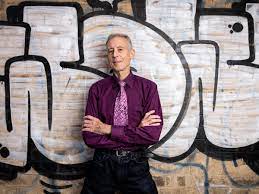
‘The roll of issues that need to be addressed is endless’ … Tatchell. Photograph: Jessica Hromas / The Guardian
Interview with Zoe Williams from The Guardian:
I speak to Peter Tatchell by zoom from Sydney, where he has recently arrived after his day in Qatar, protesting against that nation’s human rights abuses. He hasn’t slept in three days but is perfectly lucid and the weariness only tells in his minute corrections: “No, let me rephrase that”; “Sorry, let me think.” He is 70 years old, wrung out, back in Australia where he was born and raised, talking to me while fielding frequent phone calls. Has he no plans just to hang out for a bit, see some cousins? He’s a bit bemused by the question: “That’d be a very fine thing. But after Qatar I’ve got two other campaigns coming up – quiet time would be a stretch. I, with many others, have contributed to so many positive changes. It’s a great motivator.”
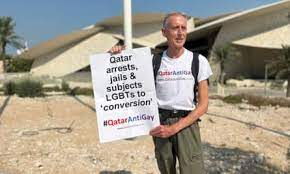
The protest in Qatar, which happened on 25 October, comprised only Tatchell and a colleague, Simon Harris, from Tatchell’s eponymous foundation. It featured a single placard, which they had smuggled into the country between the pages of a copy of the Daily Telegraph. “The only existing broadsheet newspaper today,” he says, pleased at the irony of the paper coming in handy, despite itself. The wording on the placard was: “Qatar arrests, jails & subjects LGBTs to ‘conversion’ #QatarAntiGay.” “I never dictated the terms,” he says. “I took the message directly from my contacts in Qatar.”
Tatchell held up his placard outside the National Museum of Qatar in Doha at 11.30am. “A Muslim woman walked past,” he says, “a horrified look on her face. She said: ‘You’d better put that away, you’ll end up in prison.’” He corrects himself. “Maybe those weren’t her exact words; she basically warned me that it’s not permitted.” He didn’t put it away, and 35 minutes later, state security officials arrived in big white Land Cruisers, the police soon joining them, nine men in all. Harris managed to upload some video of the protest – on Instagram, Tatchell looks dignified, solitary and incongruous, stood on sandy pebbles in front of the statement architecture of the museum – before the police took his camera and deleted the rest. The pair’s details were taken, their documents scrutinised. Tatchell says they were told, “what you’re doing is illegal, it’s not permitted in Qatar, the conversation was a mixture of broken English and broken French. It was very clear that we were not free to leave. We were there for 49 minutes before they eventually said: ‘OK, we advise you to go to the airport and get your flight.’ I interpreted that as a warning.”
‘I took the message directly from my contacts in Qatar’ … Tatchell staging his protest in Doha. Photograph: Peter Tatchell Foundation
There was some beef on social media later, as Tatchell’s YouTube channel had described the men as being “seized by the Qatari security services”; one academic at Qatar’s research university complained that Tatchell had misled people, lied even, since they were not arrested. It was just the fog of protest, the office losing contact briefly with Tatchell and Harris. Maybe Tatchell himself puts things a little strongly at times, but it’s hard to overstate how much sheer cortisol is coursing through the man during actions like these. “I knew that it was possible I’d spend some time in a police cell and possibly be prosecuted, even jailed. The view was that was unlikely and more likely that I’d be deported straight to Sydney. But I was very anxious, and we were always worrying that we’d made some inadvertent misstep and put the security services on to us. On Sunday night [before they left London], I hardly slept, rehearsing in my mind all the different scenarios. On the Monday night – it was an overnight flight – I was so anxious I couldn’t sleep a wink. In Doha on the day of the protest, my stomach was churning over, I had a very strong headache and despite the heat, I felt cold and a bit shivery. I had a constant urge to urinate and defecate.” The idea that he does this stuff blithely, for self-promotion, is for the birds, I think.
Yet, as last year’s Netflix documentary, Hating Peter Tatchell, puts it pithily, he is the focal point of an awful lot of hatred: “I’ve got a lot of bile and hatred against me over the decades because I ruffle feathers. I have made powerful people and their apologists very angry. It’s led to tens of thousands of hate mails, hundreds of death threats, hundreds of violent assaults.”
But if you engage seriously with what Tatchell is saying, I feel that he’s only doing what we all should be doing: the World Cup is about to take place in a country where LGBT+ people, women and migrant workers are oppressed and victimised. In waving this through on the promise that Qatar would somehow change, between the decision in 2010 and now, Fifa has legitimised the nation’s impunity and traduced the idea of universal human rights as a minimum entry requirement into the international club. The foreign secretary James Cleverly – this was presumably inadvertent, like so many of his remarks – distilled what this actually means, when he asked football fans to be “respectful of the host nation”, concluding: “I think with a little bit of flex and compromise at both ends, it can be a safe and secure World Cup.” Be a bit less gay just for a couple of weeks, and it’ll all be fine.
“The primary motivation of my work has always been a love of other people and a love of freedom, justice and equality of all human beings on this planet. I wouldn’t like to suffer. If I was suffering, I’d want other people to help.”
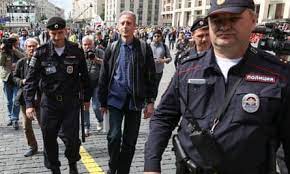
Tatchell being led away by Russian authorities in Moscow after his one-man protest at the World Cup, 2018. Photograph: Aaron Chown / PA
He hasn’t come out unscathed from this life. “It’s very tough,” he says at one point. “I have periods of real emotional meltdown and depression, feeling that despite the efforts of myself and many, many other people, we haven’t been able to prevent some terrible abuses.” But “lots of the issues that I and others championed decades ago are now mainstream,” he adds. Besides, “when you’re living under a tyrannical regime, you need international solidarity. The roll of issues that need to be addressed is endless.”
Records of gay military sackings deleted by Ministry of Defence
Jean MacDonald was dismissed from the Armed Forces for being gay
Military police records of service personnel who were dismissed from the Armed Forces for being gay have been destroyed.
Veterans who requested documents about investigations and interrogations into them by the military police have been told the files were deleted in 2010.
The Ministry of Defence advised it had a legal duty to ensure the details were erased from service records.
But one veterans’ group said: “To many, this may feel like a cover-up.”
The MoD only revealed the data had been destroyed after two veterans had been unable to obtain records of military investigations into their sexuality.
Campaign group Fighting with Pride said, without the information, it could be difficult for its members to reclaim lost pensions or compensation from the government.
Until 2000, people who were gay were barred from serving in the military. An independent review is currently looking at how the Armed Forces dealt with members of the LGBT+ community.
Full of shame
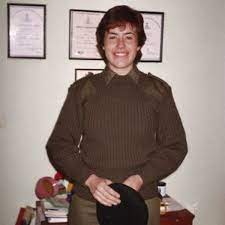
Jean MacDonald was a lance corporal in the Women’s Royal Army Corps. But in 1981 she was dismissed from the service for being gay.
“All of a sudden you’ve lost your whole career, you’ve lost your friends, you’ve lost your accommodation, you know, your whole way of life – it’s just full of shame,” she said.
After years of poor mental health she was diagnosed with complex PTSD. And in May this year, she requested her complete service records from the MoD.
Jean MacDonald was a lance corporal in the Women’s Royal Army Corps
Earlier this month, she received an email saying all record of the investigation into her by the Royal Military Police was destroyed in 2010. The email said it followed an order from the “Defence Police Chiefs’ Council”.
It added: “All investigations into offences relating solely to sexuality … were to be removed from our systems and deleted from the records of the affected service personnel.”
A search of the service police database produced only one document, which detailed the reasons for her dismissal. It read: “Conducting oneself disgracefully – unnatural act.”
Ms MacDonald said it left her feeling “invisible”. “We’re a bit of hidden history”.
Another veteran also discovered his Military Police Service record had been destroyed.
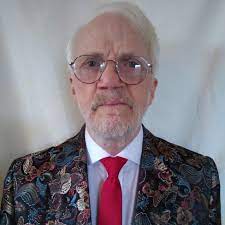
Tremaine Cornish, 66, was a private in the Royal Army Catering Corps, and also passed the All Arms Commando course. He joined at the age of 15 and was dismissed in 1977, having been accused of being homosexual.
It makes me furious
He said the Army “took away my life, my prospects, my sense of worth”.
When he applied for his complete service records this year, he was also told papers relating to the police investigation were “safely and appropriately disposed of”.
He was told it was done “in accordance with policing and data protection principles”.
However, Mr Cornish said it reinforced “the institutional homophobia we were attacked with”. “It makes me furious – furious about the state, furious about the institution, about the forces that we had signed up to.”
Tremaine Cornish was a private in the Royal Army Catering Corps
In January this year, the government announced it was setting up an independent review to look into the impact of the military ban on members of the LGBT+ community.
Lord Etherton, who is leading the review, has begun gathering evidence and is likely to look at possible means of compensation.
A MoD spokesman said the “historical policy prohibiting homosexuality in the Armed Forces was abhorrent”.
The spokesman added: “We deeply regret LGBT+ members serving in defence suffered injustice as a consequence. Our priority now is to understand the full impact of the historic ban and find appropriate ways to address the wrongs of the past.
“The policy followed at the time was to remove references to these former offences and investigations from service records. There was a legal duty to ensure these records were erased from individuals service records.”
Fighting with Pride estimates that between 5,000 and 15,000 men and women may have been affected by the policy between 1967 and 2000.
Craig Jones, from the organisation, is now calling for an urgent meeting with the defence secretary. “You can imagine what that looks like to people who will have a great deal of difficulty trusting the MoD and the government.”
Mr Jones said the MoD needs to provide clarity about what it has done and why.
Gay Rwandan man who found safety in the UK warns LGBT+ asylum seekers will be seen as criminals
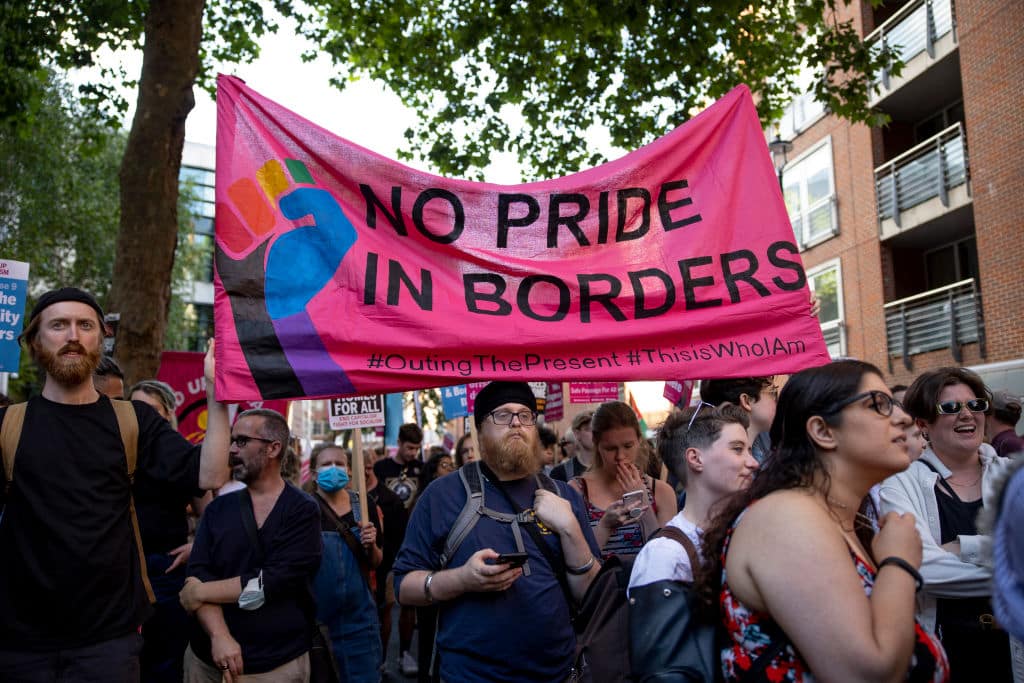
Martin Luther King had a dream to end segregation; Nelson Mandela had a dream to end apartheid in South Africa; Emmeline Pankhurst had a dream to gain equality for women in a sexist society. The Home Secretary, Suella Braverman shared with the public her ultimate dream: to witness a flight sending refugees and asylum seekers to Rwanda.
In June the 11th-hour European Court of Human Rights intervention prevented the first planned removal of asylum seekers, by a previous Home Secretary, from the UK to Rwanda.
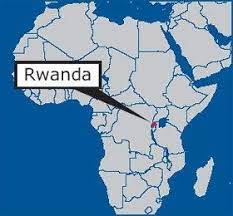
What is the situation for LGBT+ asylum seekers in Rwanda?
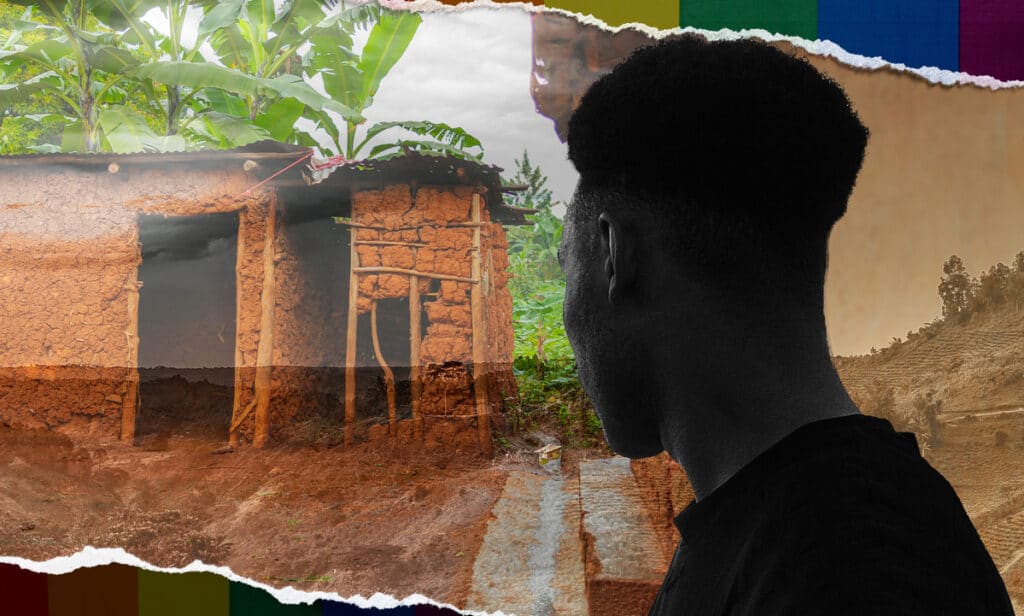
Innocent was finally free to be himself when he arrived in the UK. (Envato Elements / PinkNews)
Growing up gay in Rwanda was like “living in prison” for Innocent.
As a child, he was singled out by children and adults alike because he was seen as “feminine”. Teachers who should have tried to put a stop to homophobic bullying instead encouraged it, saying Rwandan culture didn’t accept queer people.
Innocent fled Rwanda and arrived in the UK as a refugee. He’s built a new life for himself as an openly gay man. For the first time, he feels free.
That’s why he was so shaken when he heard that the UK government is planning to deport asylum seekers it deems “illegal” to Rwanda. The plan, launched by previous Home Secretary Priti Patel, has been denounced as unnecessary, inhumane, racist, and a recipe guaranteed to result in the deaths of LGBT+ asylum seekers.
It has been met with legal challenges – including those that grounded the first scheduled deportation flight – but a change in leadership hasn’t stopped ministers from pushing ahead. Patel’s successor Suella Braverman has been slammed for saying it’s her “dream” and “obsession” to get the plan up and running.
It’s a bitter pill to swallow for Rwandans like Innocent – his experience of growing up in the country proved to him how dangerous it can be for LGBT+ people.
You feel like no one cares about your life – even God doesn’t like you, even God doesn’t love you.
Innocent knew he was gay by the time he was 13.
“Emotionally it was really challenging because all I wanted was just to change it,” he explains.
As a teenager, Innocent went to a priest to seek guidance about his sexuality. He hoped he would get support, but the response he received was “devastating”.
“At church they were preaching that God is love. I was naive and I was thinking, if God is love and this is a man of God, he’s going to be able to accept it – to at least see me as a human being.”
LGBT+ campaigners join Gay Liberation Front (GLF) veterans to mark the 50th anniversary of the first UK Pride march in 1972 by retracing their steps from Charing Cross to Hyde Park on 1st July 2022 in London, United Kingdom. The commemorative march is intended to recapture the roots of Pride as a protest as well as a celebration of LGBT+ rights, contrasting with the depoliticisation and commercialisation of Pride in London, and to call for LGBT+ liberation both in the UK and around the world. (photo by Mark Kerrison / In Pictures via Getty Images)
But the priest had the “opposite reaction” – he told Innocent that his feelings were sinful and that he must change if he wanted to avoid burning in hell.
“You feel like no one cares about your life – even God doesn’t like you, even God doesn’t love you. I felt powerless.”
At that time, Innocent was still reeling from the trauma of living through the Rwandan genocide. Over just 100 days in 1994, around 500,000 to 662,000 people – mostly from the Tutsi minority ethnic group – were murdered – Innocent’s parents were among them.
Because he was an orphan, Innocent was eligible to go to the UK as a refugee at the age of 16. He knew moving away would give him the chance to live openly as a gay man – something he would never be able to do in Rwanda.
“When I arrived in Europe, it was like getting out of hell,” he says.
Innocent has built a life for himself in the UK – he is now an out and proud gay man. He still keeps his sexuality from some of his relatives back home because he knows that attitudes have not changed.
That’s why he was “horrified” when he discovered the UK government was planning on deporting some asylum seekers to Rwanda.
“I was just wondering how that could happen,” he says.
“There’s a lot of evidence that sexual orientation and gender identity is still taboo and the government doesn’t want to do anything about that.
“People are still being bullied, being put in prison, being tortured almost, and rejected by the community wherever they go. That is how it is now for LGBT people who live there.”
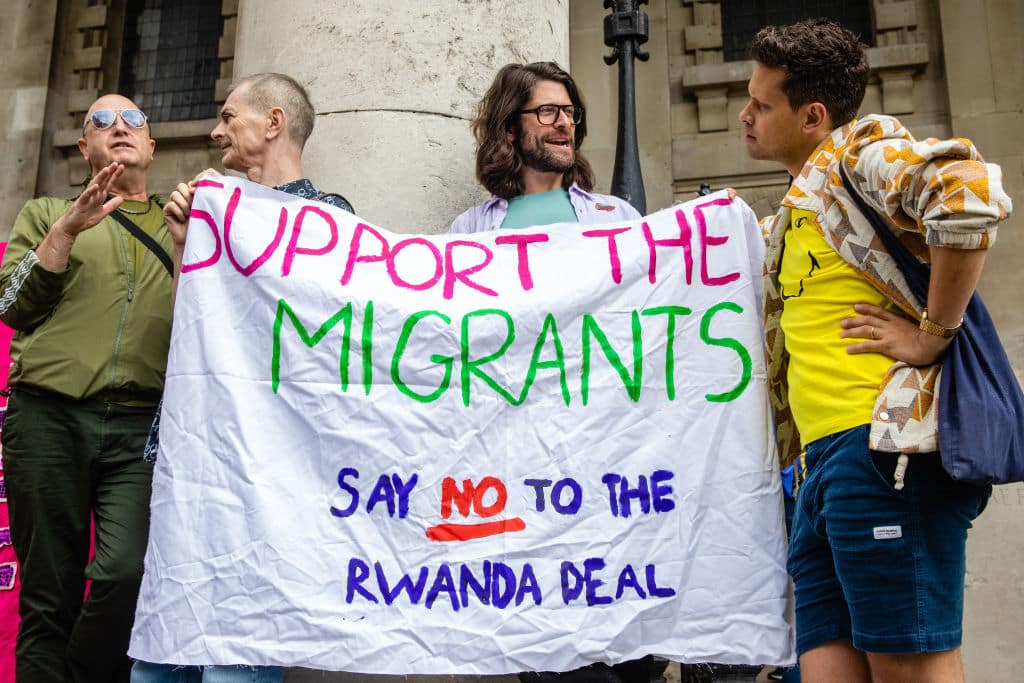
London, 13/6/22: Protesters from the LGBTQ+ group hold a banner during the demonstration at Home Office. Several hundreds of protesters demonstrate outside Home Office to oppose the offshore deportation plans from the UK government to deport asylum seekers to Rwanda. The appeal against the High court decision failed and the first deportation flight is scheduled for 14 June 2022 with 8 people including nationalities from Iranians, Iraqis, Albanians and Syrians. (Photo by Hesther Ng / SOPA Images / LightRocket via Getty Images)
If he had a chance to sit down with the Prime Minister and the Home Secretary, his message to them would be simple. “The policy has to change,” Innocent says.
“You can’t do it. You can’t just send people to a place where they will face discrimination. They will be seen as criminals.
What I would say is just do more research, understand how the LGBT community live in that country. Most of the people there – even some of my friends who are still there – they don’t exist. They live a lie, they get married, they have to lie to the police, they have to lie to their wives. You live a lie your entire life.”
He doesn’t think it’s right for asylum seekers to be sent away as part of the government’s wider effort to deter immigration.
“Even if it worked, do we really want to compromise human rights just to prevent people from coming to the UK? For me, that doesn’t sound like the UK values that I know.”
Rwanda refugee plan carries ‘disproportionately higher risk for LGBT+ people’
A spokesperson for Rainbow Migration, an LGBT+ asylum advocacy group, noted that the UK government’s plan to deport asylum seekers to Rwanda has been held up by legal challenges – but it is still planning flights for this year.
“We see that the risk is disproportionately higher for LGBTQI+ people, as Rwanda is a country from which people like Innocent flee and claim asylum because they are persecuted for their sexual orientation or gender identity,” the spokesperson said.
While homosexuality is no longer criminalised in Rwanda, same-sex sexual relations is still seen as a taboo issue – public attitudes towards LGBT+ people are not kind.
Even the UK government’s own website acknowledges that homosexuality is “frowned on” by many in Rwanda and that LGBT+ people may experience “discrimination and abuse, including from local authorities”
In June, a gay man from Uganda told Africa News that he was “beaten terribly” in Rwanda for being gay, while a trans woman told the publication: “I cannot go anywhere or apply for a job. Not because I am not capable of that, but because of who I am.”
A spokesperson for Rainbow Migration said there is “not much of a screening process that takes place” within the Home Office when a person’s asylum claim is being considered.
“This creates a high risk that they could be sent to Rwanda if the plan is eventually allowed to proceed.”
Britain’s Strongest Lesbian Couple
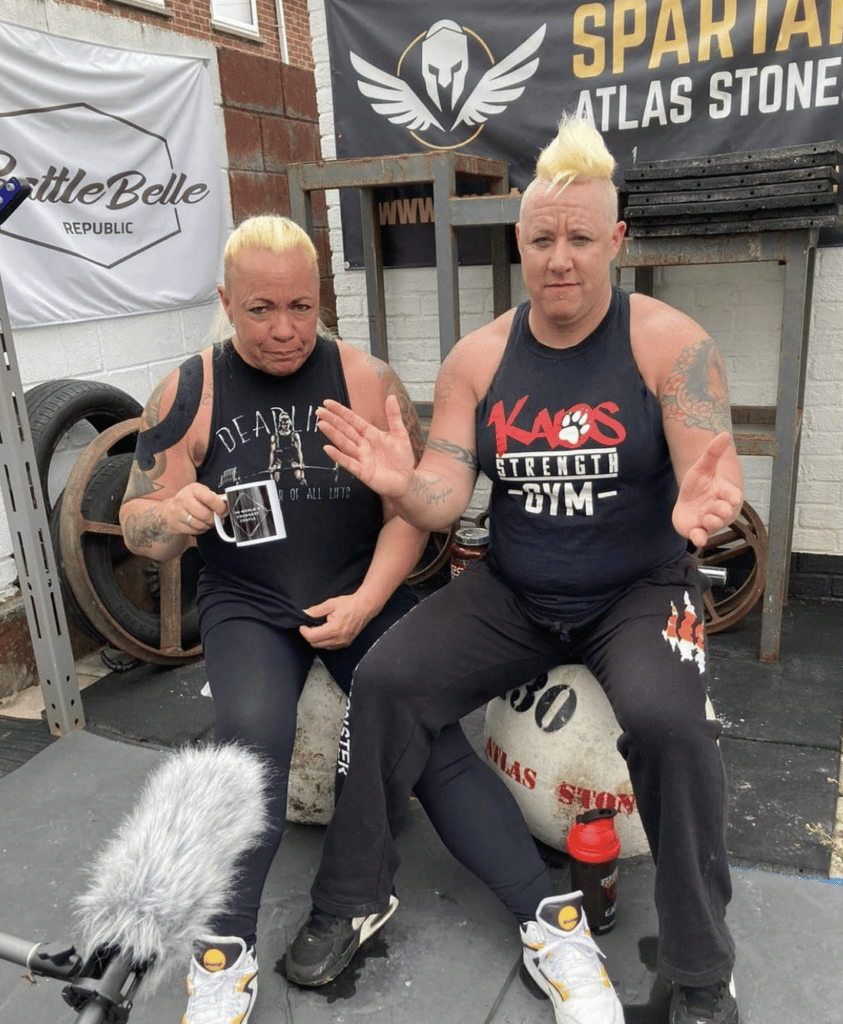
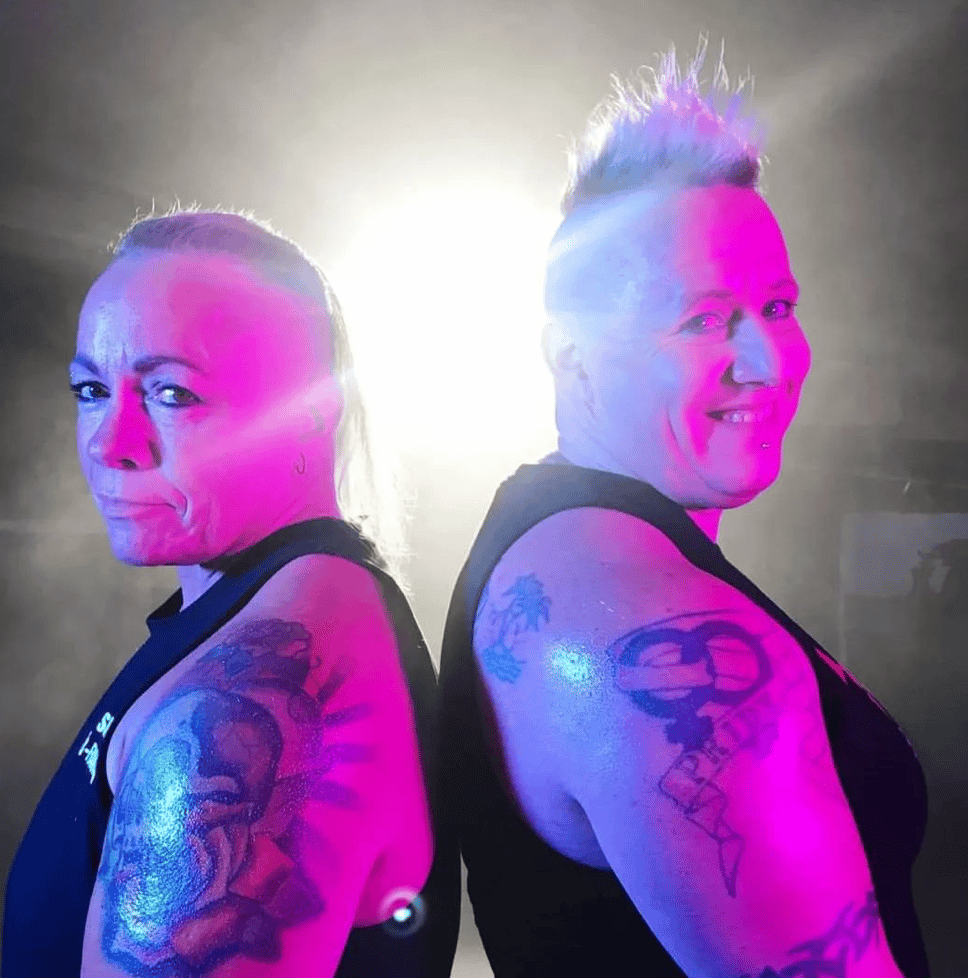
Britain’s strongest lesbian couple, wives Sue Taylor-Franklin and Sam Taylor
Sam Taylor and Sue Taylor-Franklin hope their presence in weightlifting will change people’s perceptions of women doing strength sports.
But they’re subjected to online abuse for simply being strong. While succeeding in weightlifting they are often subjected to nasty comments from people online, with some people “misgendering” them.
“I think there is a stigma that goes with being a strong woman. We look different, you know, we’re muscular and that’s our choice,” says Sue, who holds a world silver dollar record for deadlifting 300kgs from an 18 inch height.
“You don’t have to take it to the extreme, but we have because we’re not small people anyway.”
Their impressive strength has seen Sam and Sue featured in the BBC’s Our Lives series, where viewers get insight into their world of weightlifting.
Following the airing of Our Lives, the couple said they received some “nasty comments comparing them to men”.
“Even the most feminine people in the sport will get comments … they say horrendous things,” says Sam, who holds the title of the third Strongest Woman in the world for her age category.
“Sadly we’re used to it, but that isn’t right. We’re continually trying to break down those barriers to say you can look how you want and someone else’s opinion of how you look or present yourself is not their business.”
The couple agreed comments tend to come from “keyboard warriors” and thankfully they have never received any abuse in real life.
Sue Taylor-Franklin and Sam Taylor began filming their own feature length documentary last year
The couple, who live in Aberdare, South Wales, with their 12-year-old son Ollie, met in 2006 through mutual friends. They initially bonded over their devotion to the gym and in September 2019 tied the knot at Cardiff City Hall.
But the couple haven’t always been into weightlifting, with Sue, now 54, confessing she didn’t lift a weight until she was 50, in April 2018.
“We hope that people under the LGBTQ+ umbrella look at us and think if they can go lift weights so can I.”
Sue Taylor-Franklin and Sam Taylor met in 2006 through mutual friends
Sometimes, while competing, the couple go head to head, which has seen them become the first married couple to do so in a world competition.
They train together three to four times a week and are now preparing to win new titles. Next year they will take on a double Guinness World Record attempt and they’ll also compete again in the World’s Strongest Woman competition in Florida. They already hold the Guinness World Record for pulling a 48-tonne AirBus A320.
“We wanted to promote positivity and try to inspire others to show you can really hit rock bottom but then get on. Also to show it’s OK to be yourself.”
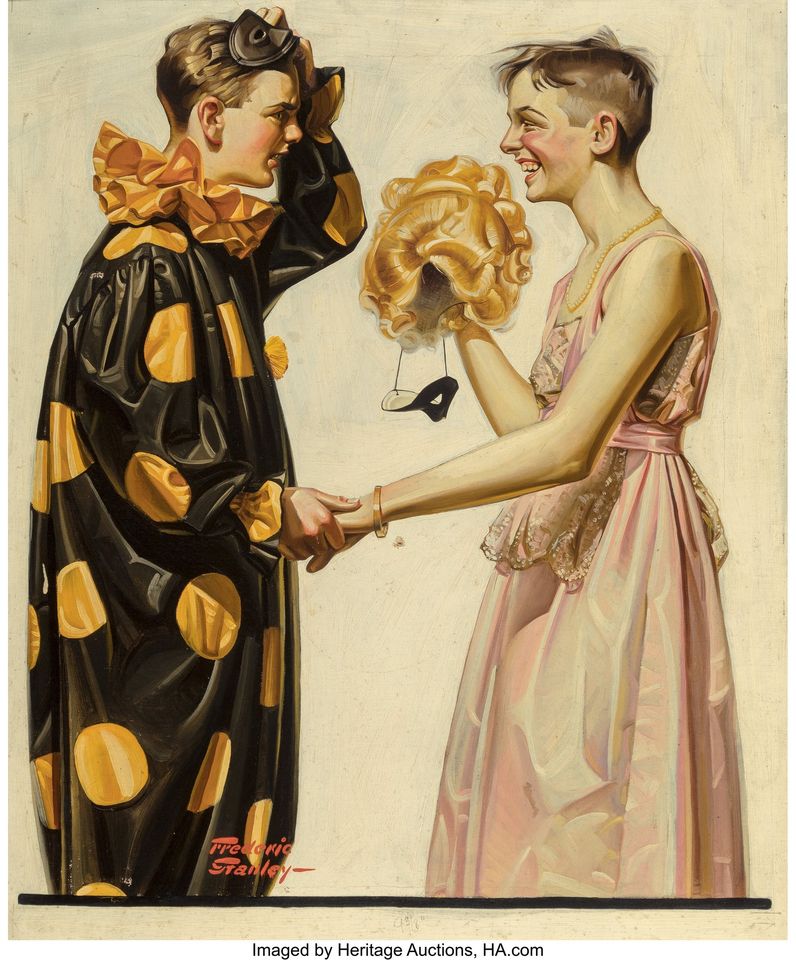
This was the cover of The Saturday Evening Post for Halloween 1921
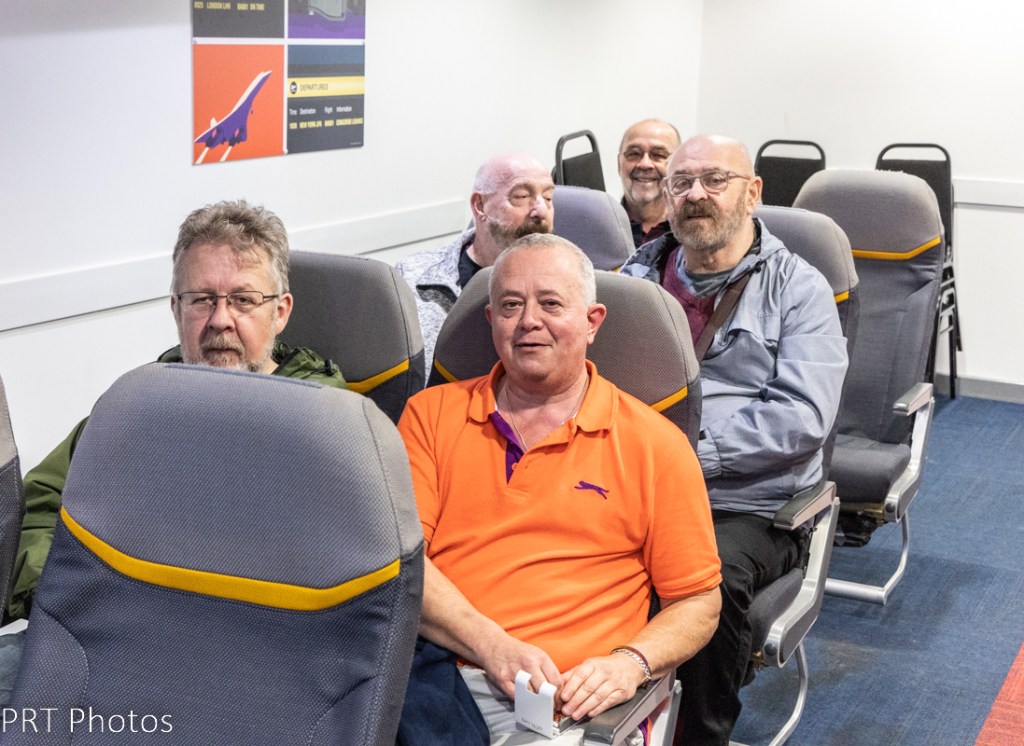
A group of us met at Piccadilly Train Station, made our way to Platform 13 and took the train to Manchester Airport. The Runway Visitor Park is about three miles away and so we took taxis to arrive in good time, meeting two or three others on the way.
The Runway Visitor Park is adjacent to the busy runways of Manchester Airport and has a raised viewing area where you can stand literally just a few yards away from the planes as they go past.
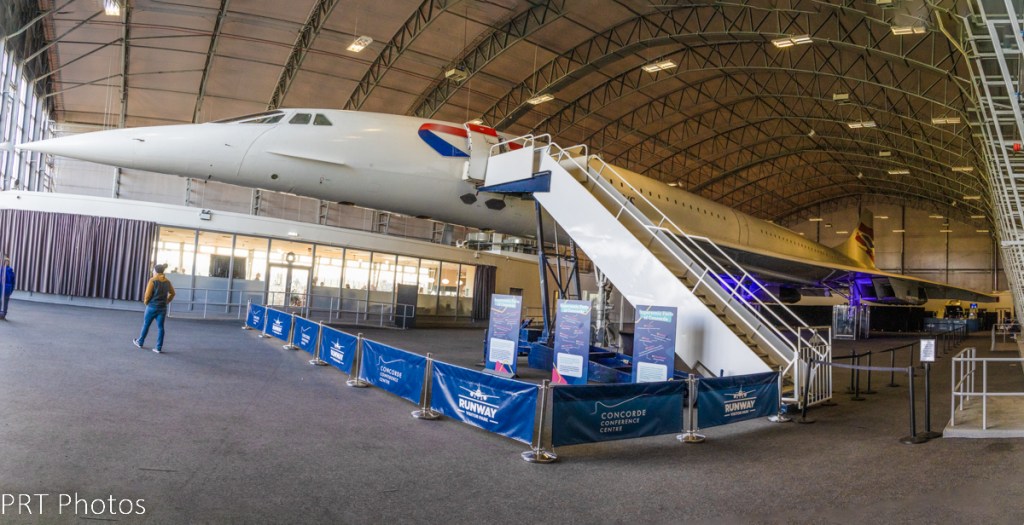
The Park is home to a variety of retired planes including the spectacular supersonic airline Concorde and former military spy plane, Nimrod. There’s also a DC-10, Avro RJX and a retro Trident airliner, offering a glimpse of what flying was like in the 1960’s and 1970’s.
We sat in the Avro Centre to watch a short film before making our way to the hangar, which housed the de-commissioned Concorde, one of the most iconic aircraft in history. We visited the flight deck in small groups, and were amazed at the array of switches and dials.
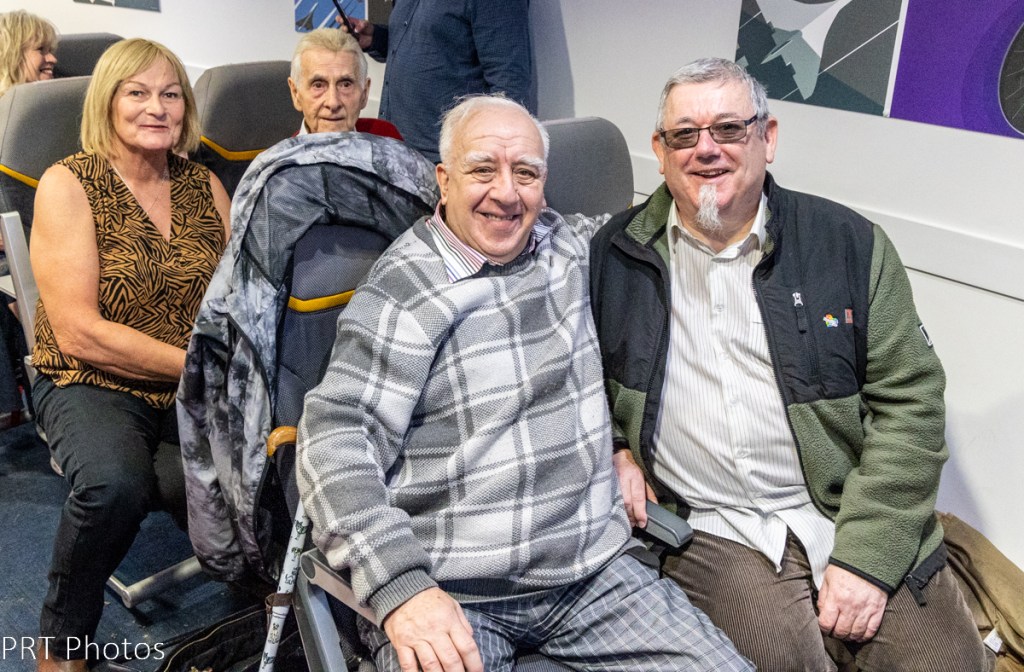
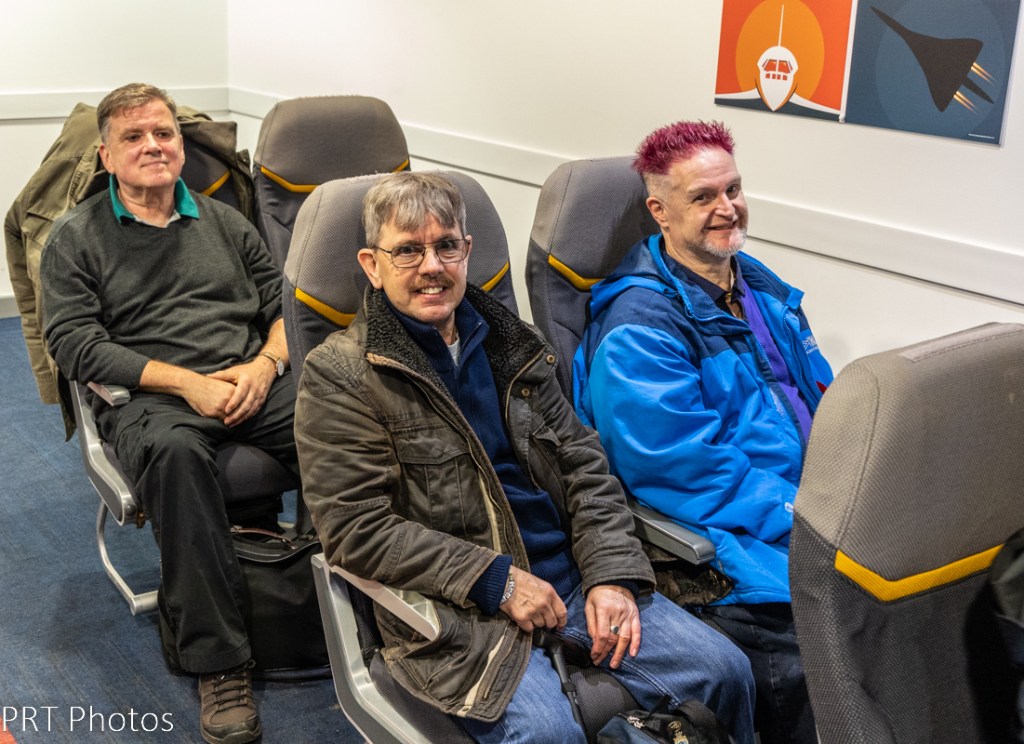
Once sat in the luxury leather seats, our guide gave us an interesting and informative talk and pointed out which regular seats were taken by Madonna, Michael Jackson, Phil Collins, Audrey Hepburn and David Frost. It was an amazingly unique experience.
Later we walked to the Romper Pub, just half a mile away and enjoyed a great meal.
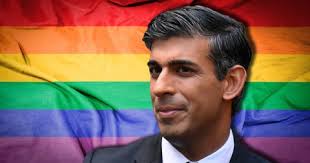
Where does Britain’s new Prime Minister Rishi Sunak stand on LGBT+ issues?
Conservative party leader and former treasury minister Rishi Sunak has become Britain’s Prime Minister.
Conservatives have helped secure vital LGBT+ rights in the country, including marriage equality, the pardoning of gay sex convictions, LGBT+ inclusive sex education, and eased blood donation restrictions for men who have sex with men.
However, the party has also overseen a rise in transphobic speech and hate crimes while rejecting a conversion therapy ban and asylum cases for LGBT+ refugees.
What is Rishi Sunak’s stance on transgender issues?
Transphobia seems unlikely to decrease under Sunak since he himself said that transgender women are not women during a Q&A on 25 August. A former minister accused Sunak of “pandering to bigots” with his comments.
He has said that transgender people should be respected, but has also called gender-neutral language and trans-inclusive policies part of “recent trends to erase women”. He has promised to release a “manifesto for women’s rights” that would call for banning trans women from women’s toilets and sports, positions that will likely increase the public harassment and isolation of trans individuals.
He also spoke about his desire to reform sex education at schools to ensure pupils are “shielded from inappropriate material”.
“Our laws must protect free speech, block biological men from competing in women’s sport and ensure that children are allowed to be children”, he said.
The LGBT+ Conservatives asked him about the “rising problem of transphobia” in the party.
He answered: “Prejudice against trans people is wrong. The Conservative Party is an open, welcoming family to everybody across society, no matter who they are and irrespective of their background”.
What is Rishi Sunak’s stance on conversion therapy?
Studies have shown that trans people are sent to conversion therapy in large numbers, even though the harmful pseudoscientific form of psychological torture has been disavowed by most major health associations. Despite this, the Conservative party has supported dropping trans people from a proposed national ban on conversion therapy, stating that a ban could have “unintended consequences.”
Some worry that teachers, parents, and therapists might be reluctant to work with children struggling with their gender identity if a trans-inclusive ban is passed. However, others say that such a ban could allow counsellors to “still help people fully explore their gender identity where appropriate” without using conversion therapy.
Mr Sunak has not said anything for or against banning conversion therapy – an issue which has been controversial for the Conservative Party for some years now. The Tories promised to ban it under Theresa May, in 2018, but went on to make multiple U-turns on the issue when Boris Johnson was PM.
What is Rishi Sunak’s stance on LGBTQ hate crimes?
Sunak has previously said, “I don’t want anybody in Britain to have to hide who they are or who they love out of fear. I want this to be the safest and greatest country in the world to be LGBT+.” But it’s unclear what steps he might take to address the issue, as anti-LGBT+ hate crimes have risen exponentially in Britain.
What is Rishi Sunak’s stance on LGBT+ refugees?
Sunak hasn’t seemed to make any comments about LGBT+ refugees seeking asylum in Britain. But he has expressed support for a government plan to send any asylum seekers to Rwanda for processing and possible resettlement there or somewhere other than Britain.
Though same-sex sexual encounters aren’t illegal in Rwanda, the country lacks LGBT+ anti-discrimination protections and has other human rights issues. British voters largely oppose the Rwanda Plan, despite Conservative support.
What is Rishi Sunak’s stance on HIV?
Sunak has said that he supports efforts to end HIV transmission in the UK by 2030 by following the HIV Action Plan, a national proposal to instate widespread prevention, testing, treatment, and retention country-wide.
But when Sunak served as Chancellor of the Exchequer, his proposed budget for autumn 2021 contained no funding for the plan.
What has Mr Sunak said in general?
Mr Sunak most recently spoke about the community during this summer’s leadership race, when he and the candidates he was running against were questioned by the LGBT+ Conservatives.
He said: “There is so much more we can do to take forward this country’s proud record of progress on LGBT+ rights.
From ending new HIV transmissions by 2030, to addressing instances of hate crime, to fostering a more tolerant, accepting society – there are many areas we need to address to improve the lives of LGBT+ people
I’m proud of the fact it was the Conservative Party that led the way and delivered marriage equality for LGBT+ people. I want to carry that torch forward and address the issues you face in day-to-day life.
Because I don’t want anybody in Britain to have to hide who they are or who they love out of fear. I want this to be the safest and greatest country in the world to be LGBT+”.
Sunak was elected by 100 Conservative party members in an undemocratic closed-door meeting rather than by British voters. As such, Sunak’s policy stances don’t reflect the people’s will.
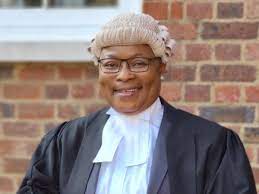
Barrister says she became legal expert while in Home Office immigration detention
Aderonke Apata was called to the bar on 13 October. ‘Without what the Home Office did to me I wouldn’t be a barrister today,’ she says. Photograph: Supplied
A refugee who has just been called to the bar says she has the Home Office to thank for her career after she became an amateur legal expert while locked up in a detention centre.
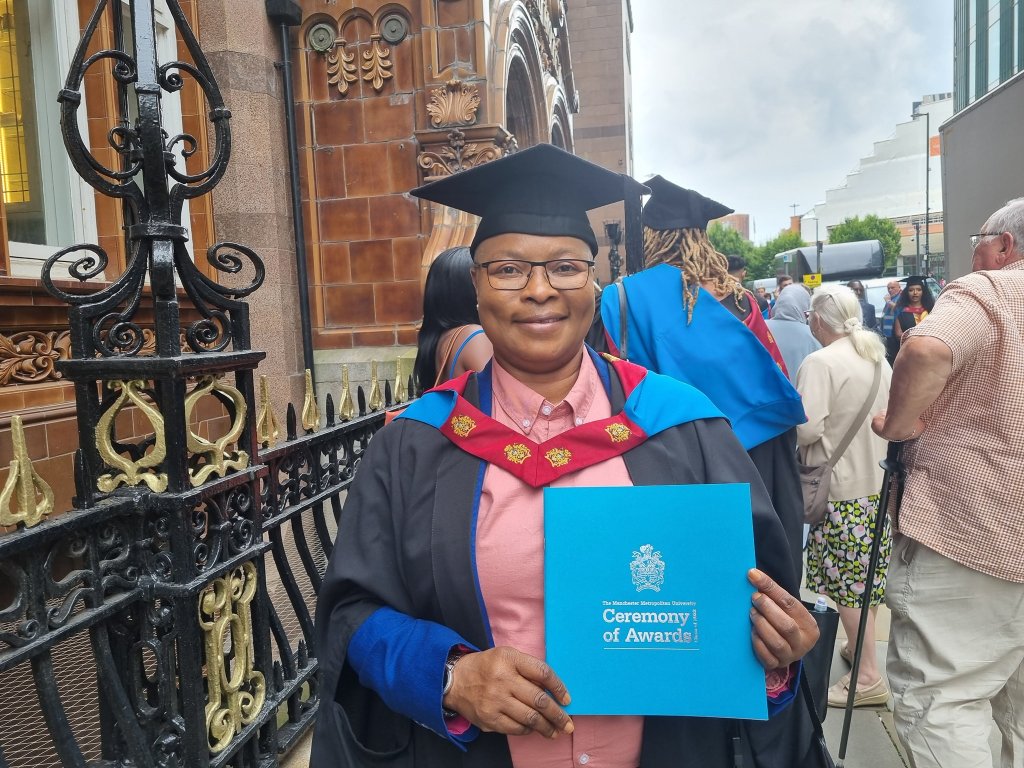
Aderonke Apata, 55, from Nigeria, said she was proud to take part in a ceremony last week where she, along with dozens of other newly qualified barristers, were formally called to the bar.
Aderonke was almost forcibly removed from the UK on a Home Office charter flight to Nigeria in January 2013 after her asylum claim, based on the fact that as a lesbian who had been persecuted in Nigeria her life would be in danger if she was returned there, was rejected.
Aderonke had completed a degree in microbiology before fleeing Nigeria and hoped to pursue a career in public health in the UK.
She was detained in Yarl’s Wood immigration detention centre in Bedfordshire, which at the time was used mainly for women, from the end of 2011 until the beginning of 2013, including a week spent in solitary confinement in 2012.
During her time in Yarl’s Wood, more women – who either could not understand English or did not understand what the Home Office had written in refusal letters about their immigration claims – turned to Aderonke for help in explaining what was happening with their legal cases.
“The type of language the Home Office uses is very difficult to understand. But I learned quite a bit about immigration law from reading the other women’s refusal letters during the period of more than a year that I was locked up,” said Aderonke.
She had received poor legal advice about her own case and when she was given removal directions from the Home Office for a flight to Nigeria for 24 January 2013, she decided she had to fight the removal herself.
She downloaded an interim injunction application for the high court and, with time running out, started faxing supporting documents to a member of staff at the charity Medical Justice, which works to support the health of immigration detainees.
The staff member ran to the high court with the documents. But escorts came to take Aderonke to the plane before she had finished faxing documents. She begged other detainees to continue faxing documents for her while she was being taken to the plane.
“An escort told me I would be fine going back to Nigeria but I could not reply. I knew it would not be fine and that returning to Nigeria would mean death for me. Suddenly the escort turned to me and shook my hand. He said: ‘Congratulations, your ticket has been cancelled. You won’t be flying to Nigeria. You must have a very good lawyer.’ I laughed and said that I had lodged the injunction application in the high court myself.”
Aderonke continued to represent herself for part of her case and later was able to secure legal representation, which helped her win her refugee status in 2017.
In 2018, she began her legal training with a law conversion course, before being formally called to the bar on 13 October.
“It didn’t dawn on me until I walked into the hall where the bar ceremony was being held that this was something monumental on my journey. Even if I can just help a few people as a barrister over the next few years I will be satisfied,” she said.
When she won her asylum case in 2017, Aderonke told the Guardian: “I will continue to do my bit in amplifying the voices of people who can only shout so far.”
She is now looking for pupillage and wants to specialise in immigration and human rights work.
“I was always drawn to giving people a helping hand. In Yarl’s Wood we were all in the same boat and we were all drowning. Helping others gave me the energy to carry on myself. When you are faced with a life or death situation that’s where the inner part of yourself comes out,” she said. “I knew I needed to fight because I could not return to Nigeria. If I hadn’t been detained in Yarl’s Wood for so long I probably would have pursued a career in public health. Without what the Home Office did to me I wouldn’t be a barrister today. In a way they trained me.”
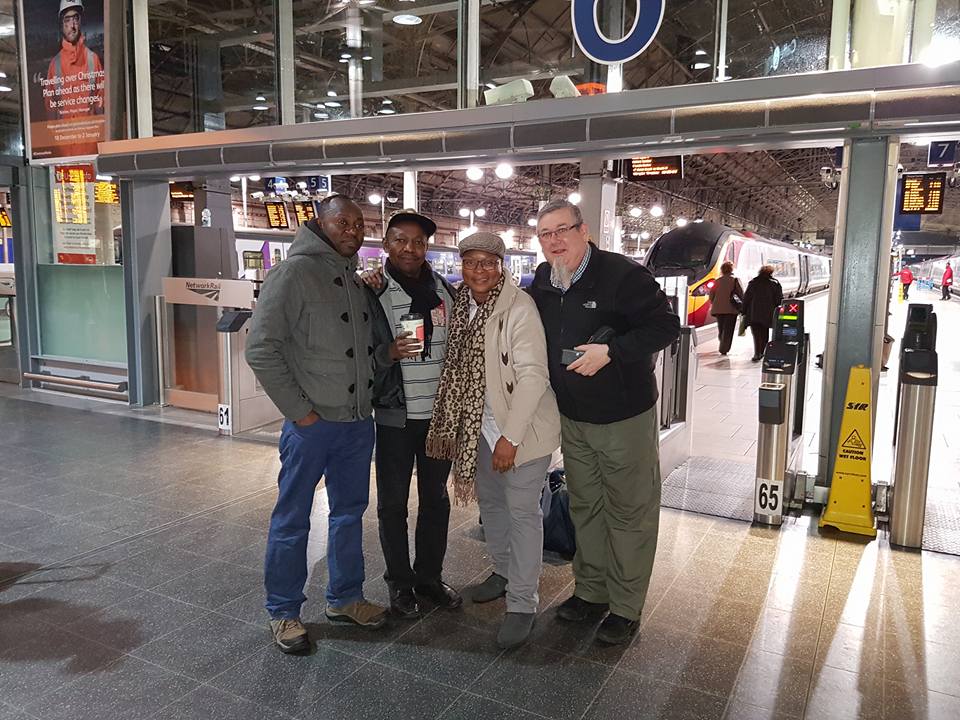
Piccadilly Train Station, Manchester – December 2016
Latest Global Marriage News
Slovakia Votes Against More Rights For LGBT Couples
The Slovakian Parliament has decided to keep registration of relationships exclusively for one man and one woman only. On 19 October 2022, it voted against a proposal that would grant same-sex couples inheritance rights and the right to access medical records, the so-called cohabitation partnership.
If the proposal had been passed, same-sex couples could register their partnership. This would grant them inheritance rights, entitlement to decide about medical treatments and compensation in the event of death or injury at work. However, even if the bill had been passed, same-sex couples would not have the same rights as heterosexual couples.
Gay Cuban Couple’s Long Wait To Tie The Knot
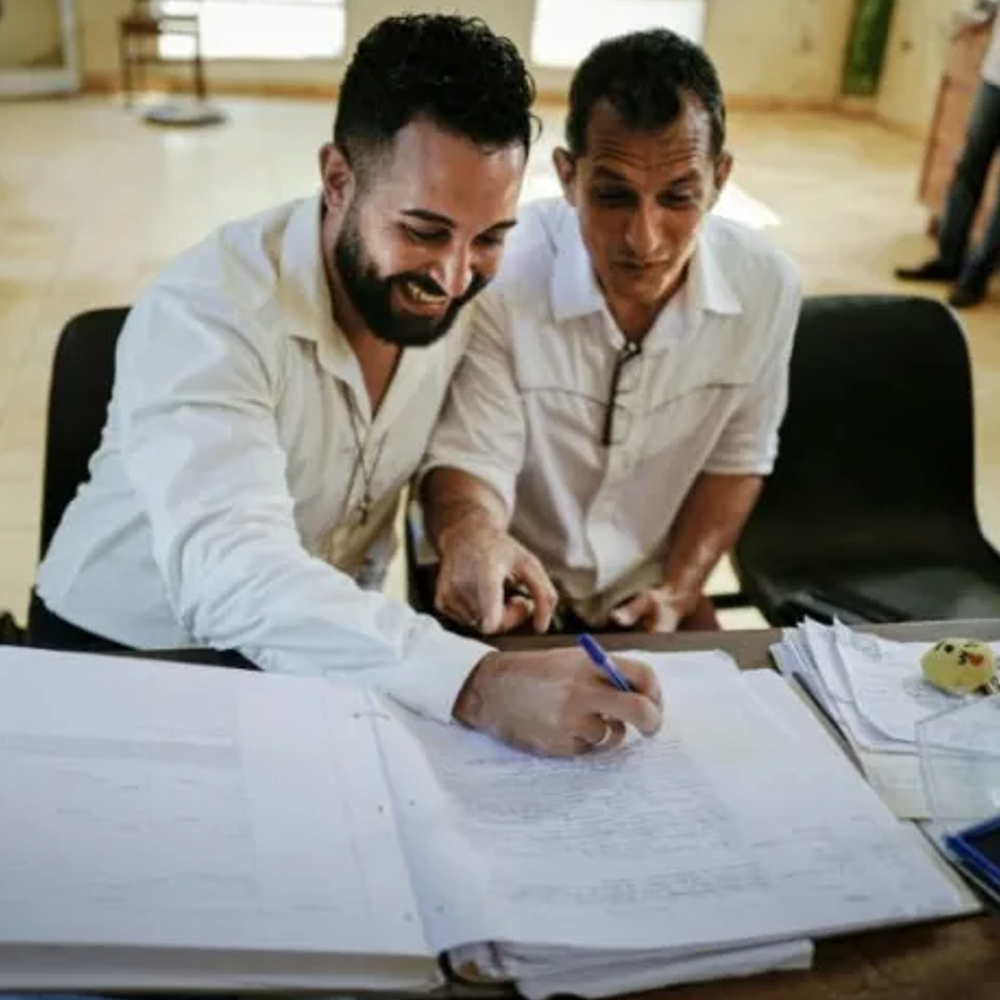
Adiel Gonzalez, a 32-year-old former theology student, was forced to break with his church eight years ago due to his sexuality. He became a fierce LGBT+ rights campaigner and on 20 October 2022, was able to tie the knot with his long-time partner and fellow activist Lazaro Gonzalez — among the first gay weddings celebrated in Cuba.
Thanks in large part to the efforts of the pair and others like them, Cuba finally approved same-sex marriage on 25 September 2022 after a long battle against religious and cultural resistance in the country. The Cuban family code adopted last month allows not only legal unions but also adoption, surrogate pregnancy for gay couples and parental rights for non-biological mothers and fathers.
Singapore Seeks To Amend Constitution To Protect Its Definition Of Marriage
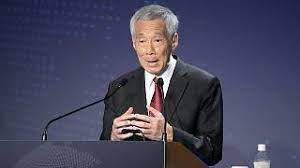
Singapore’s government filed bills in parliament on 20 October 2022 seeking to decriminalise sex between men, and to amend the constitution to prevent court challenges to laws and policies concerning marriage.
The proposed legislation in Singapore follows Prime Minister Lee Hsien Loong’s announcement in August of a plan to repeal Section 377A of its penal code, a legacy of British colonial rule and not used in decades, which carries punishments of up to two years in jail for sex between men. Recent surveys have shown attitudes towards LGBT people in Singapore have become more accepting. But changes have yet to be reflected in government policies, which deny LGBT couples access to subsidies and benefits available to heterosexual couples. Though repealing 377A has been largely welcomed by LGBT groups, some activists are disappointed that legalising same-sex unions or pursuing more equal policies towards LGBT couples are not being considered.
Times Gone By – LGBT History:
Claude Cahun – 25 October 1894 – 8 December 1954
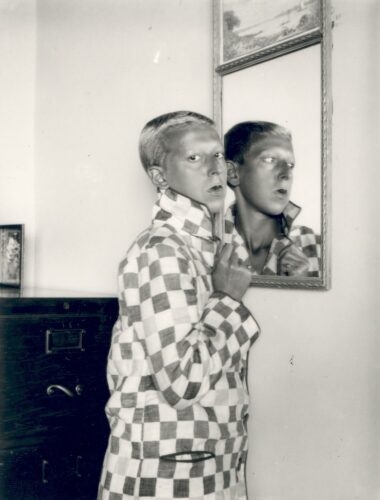
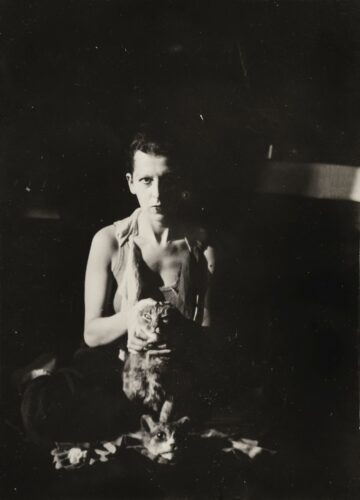
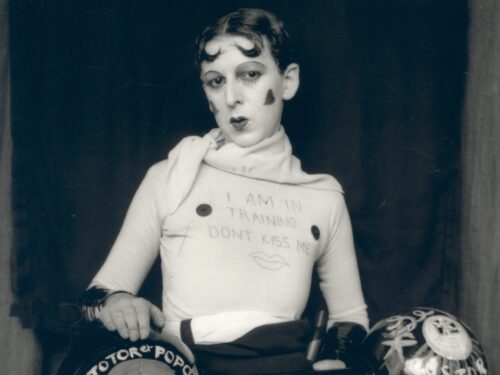
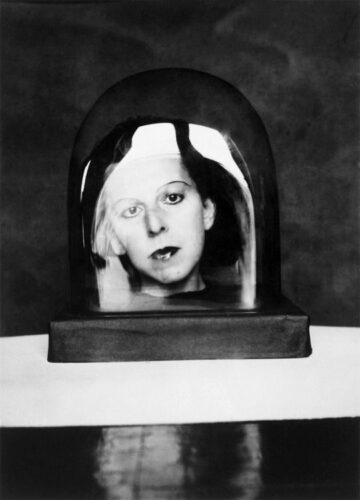
Claude Cahun is mostly known as a surrealist artist, specifically for their photographic work of self-portraits which have been described as presenting a ‘dizzying kaleidoscopic mix of mystery and exuberance’. Cahun is also known for their photo-montages, with whom their / her long-term partner Marcel Moore contributed in the capacity of ‘artist collaborator’. Cahun’s iconic photography has also been described as a ‘dialogue with multiplicity’. In a creative psychological context, it was an ongoing self-exploration of their character / personality through text and imagery. Cahun described it as a ‘hunt’ – presumably for self and identity.
Cahun was also a writer, sculptor, activist, and a propagandist and resistance worker during World War 2. Cahun was gay and if they were alive today may have identified as non-binary or perhaps more specifically genderfluid. Cahun stated: ‘Masculine? Feminine? It depends on the situation. Neuter is the only gender that always suits me’. In this context Cahun’s photographic self-exploration didn’t just depict a number of theatrical personalities but also explored gender identity and gender expression.
Cahun has been described as having ‘protested gender and sexual norms’ with their name change and as such they have attracted an increasing following amongst feminists and people within the LGBT community, and on an intellectual level the interest of art historians. Cahun in fact, was multi-talented as they were also a poet, critic, translator and essayist. However, it was through fully embracing their gender identity / fluidity that they are considered a groundbreaking artist.
Claude Cahun’s original name was Lucy Renee Mathilde Schwob born on 25 October 1894 into an intellectual Jewish family in Nantes. Their great uncle David Leon Cahun had been an orientalist, whilst their uncle Marcel Shwob was an avant-garde writer. Their mother Mary Antoinette Courebaisse was taken into a psychiatric facility because of her mental illness. As a teenager, Cahun also struggled with mental illness, including ‘suicidal thoughts’, bulimia and ‘crippling sadness’.
Cahun’s early education included the Parson’s Mead School in Surrey which was a private school. This was after they had unfortunately experienced anti-semitism at high school in Nantes. Cahun also studied at the University of Paris-Sorbonne. It was at the age of just 18 in 1912 that they made their first initial experimental photographic self-portraits. Their image making expression continued throughout the 1930s.
In about 1915 they had their hair cut very short and continued working on their photographic self- exploration at the same time. These photographs have been described as ‘cross-dressing experiments’ as they could be dressed as a ‘sportsman, sailor or dandy’.
Cahun adopted the pseudonym – Claude Cahun, as this was more gender neutral. They had previously used the names Claude Courlis after Curlew, and Daniel Douglas apparently taking inspiration from Lord Alfred Douglas.
Cahun creatively explored gender identity and the subconscious mind through surrealist photography. Their self-portraits featured outfits that defied conventional identification of feminine or masculine, and today would perhaps be described as gender neutral or fluid. Cahun in reference to their self-exploration famously stated, ‘Under this mask, another mask’ and ‘I will never be finished removing all these faces’. Taking this into consideration, Cahun’s work has generated interest beyond the history of photography, for example and significantly in Gender Studies.
Suzanne Malherbe, who also changed her / their name to Marcel Moore, became Cahun’s lifelong partner after they both settled in Paris in the early 1920s. It was after Cahun had moved to Paris that they became involved with the surrealist Parisian art scene – it was then that Cahun went on to collaborate with the famous Man Ray. Cahun and Moore, as well as being partners also collaborated on many creative projects. These included photomontages, sculptures and written works. Surprisingly, Cahun and their partner also became ‘step-siblings’ as Cahun’s divorced father married Moore’s widowed mother.
Cahun and Moore, after relocating in Paris, slowly became involved in the small Parisian avant-garde circle, who coincidentally were also exploring aspects of identity. Probably one of the most famous artists at the time ‘playing’ with gender was Marcel Duchamp who introduced Rose Selavy, his artistic character and female alter ego. Cahun and Moore in fact welcomed avant-garde artists and writers to the parties that they organised at their house around 1922.
Cahun and their partner also met the head of experimental theatre ‘Le Plateau’ – Pierre Albert Birot. Here, both again collaborated with Moore designing stage sets and costumes – Cahun concentrating on performance skills.
In this connection it is interesting to note that Cahun’s self-portraits incorporated elements of theatre and the aesthetics of surrealism. They also significantly ‘blurred’ gender indicators, partly through often showing only head and shoulders. In some pictures, Cahun’s head is shaved looking directly at the viewer; this together with the varying gender representations was apparently a way of undermining the ‘patriarchal gaze’.
Cahun had some of their writings published. These included ‘Heroines’ in 1925 which featured a ‘series of monologues’ based on female fairy tale characters. These were ‘intertwined’ with images of modern contemporary women as a means of making witty comparisons.
Cahun became involved with the ‘Association des Ecrivains et Artistes Revolutionnaires’ in 1932. They took part in certain surrealist exhibitions which included the London International Surrealist Exhibition and in Paris (1936) ‘Exposition Surrealiste d’Objets’.
Finally, as a surrealist artist, Cahun had mostly been written out of art history until their photographic work was included in an exhibition in 1986. Only then, Claude Cahun was recognised as a significant artist and gained an increasing following.





 Out in the City