Rededication of the Beacon of Hope … Coming Out in Later Life

News

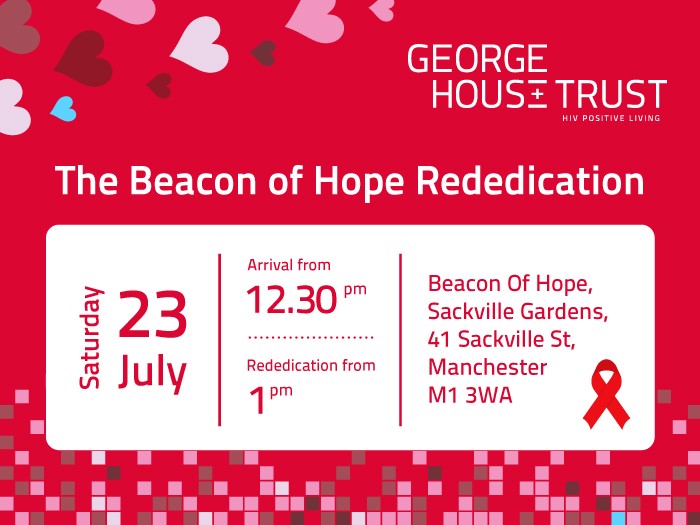
Rededication of the Beacon of Hope
Sackville Gardens, Manchester
23 July – 12.30pm to 2pm

Volunteers are invited to support George House Trust with a significant event in HIV history – the rededication of the Beacon of Hope.

Get involved with helping to signpost the public to the plaques detailing significant moments in HIV history and ensure the public arrive and leave the park safely.

If you wish to volunteer on the day, register your interest here.

‘When my wife fawned over Richard Gere, I was secretly thinking, phwoar!’: the people who come out in later life

(This article was written by Michael Segalov, and is re-printed from The Guardian.)
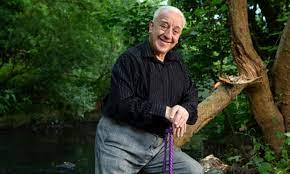
Norman Goodman: ‘When my wife died in 2017, part of me went with her. But at last I could shout about my sexuality.’ Photograph: Richard Saker / The Guardian

There is no right age or time to come out as lesbian, gay, bisexual or trans. These days, it is a rite of passage associated with the young; over generations, the average age for coming out has fallen. For some, though, it takes a little longer: last month, after 34 years in the public eye, the Olympic athlete Dame Kelly Holmes came out at the age of 52, for the first time speaking openly about her sexuality. She is by no means the only one. For some, it is a self-realisation that comes out of the blue; others may have spent a lifetime grappling with prejudice, with memories of a time when homosexuality was still criminalised, or a culture that once encouraged silence. Here, five LGBTQ+ people who came out later in life share their stories, proving that there is always time to embrace and explore identity or your sexuality.

Norman Goodman, 72, Manchester

When I was very young, I thought I was gay. It’s why, in the 1950s, I found school rather uncomfortable. Being Jewish meant being gay was never a possibility in my mind, even if our family wasn’t particularly orthodox or religious. With nowhere to turn, I became confused about my gender and sexuality. I was taken to doctors, psychiatrists and psychologists. I was admitted into a psychiatric unit and given a course of electroconvulsive therapy. Later, I had aversion therapy.

Watching Top of the Pops, I always fancied the blokes, but occasionally I’d find myself drawn to one of the women. So when I met Marilyn at the age of 22, and we got on so well, I decided I must be straight. We fell in love, and married two years later. With Marilyn by my side, I’d never been happier. Certainly, I knew I was still attracted to men as well: when my wife fawned over Richard Gere topless in a film, I was secretly thinking, “Phwoar!”

By 1984, I was working in a geriatric ward when a realisation hit me. “Hang on,” I said to myself, “I like men and women, too.” I was 34. Ten years later, I finally mustered the courage to tell Marilyn. At first, she thought I was messing around. After a few days of discussion, we agreed that we would keep it to ourselves. If I met a man, she said, it would be too much for her to handle. I had no intention of running off with blokes, I was just pleased to have shared my secret with her.

Ten years ago, my wife was diagnosed with non-Hodgkin lymphoma. After a horrendous five-year struggle, she passed away. When she died in 2017, a part of me went with her. We’d been married for more than 40 years. But this volcano deep inside me was preparing for an eruption. At last, I could shout about my sexuality – but I didn’t know how to come out, or what that would entail. I considered trying to do it on The Jeremy Kyle Show. Thankfully, I didn’t.

Then the opportunity just presented itself. I’m a volunteer at the Royal Exchange theatre in Manchester, and one day we were asked if we knew any older LGBTQ+ people who would participate in an oral history project. My hand shot up. The relief I felt was tremendous. From then, I wanted the whole world to know that I, Norman Goodman, am bisexual. Even today, saying that feels magnificent.

Since then, my entire world has changed. I got involved with Out in the City: a local 50+ LGBTQ+ group, which organises weekly outings. One day, Tony, the group’s coordinator, called me up and asked me out for a coffee. After a cinema trip, Tony told me he had feelings for me. I’d never been with a man before, and at first we kept things friendly. We went out a bit, he stayed the night a few times. I found myself falling for him. In January this year, we met up in Marks & Spencer and we decided to make a go of it. Seven months later, we’re still making each other happy.
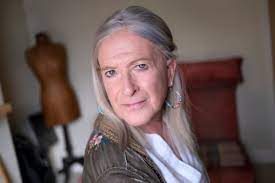
Cailin Edwards, 71: ‘In 2018, I told a friend I’d always felt myself to be a woman. It was the first time I’d said those words aloud.’ Photograph: Linda Nylind / The Guardian

Cailin Edwards, 71, London

I must have been only four or five when I first experienced gender dysphoria, although it wasn’t something I could articulate with any clarity. I never wanted to hang out with boys, only girls; I longed to dress like girls and women.

These feelings persisted, but I kept them hidden. I knew I had questions, deep desires I was desperate to explore. But I felt this shame. I didn’t want to be singled out or ridiculed. I studied and found work as an artist, I taught yoga, got married, and travelled the world as a professional photographer.

Then, in 2018, I found myself in a state of upheaval. I wasn’t being who I wanted to be. The body I lived in had never felt like my own. No longer could I deny the fact that I was a woman. It was making me miserable.

The prospect of losing my marriage, and my children not accepting who I am, terrified me more than anything. I was sitting on a park bench with a friend when I said to her: “I think I’ve always felt myself a woman.” It was the first time I’d said those words aloud. My friend said she had always thought it quite probable. We sat there, smiling.

Conveniently, I had a doctor’s appointment that afternoon. I brought it up, and was referred to the Gender Identity Clinic. It had taken so much for me to muster the courage to come out. Then I found out that the clinic had a 10-year waiting list. Instead, I started to self-medicate with hormones bought online.

I started to live out a dual life. I came out at college where I was retraining as a therapist, but at home it remained a secret. The first time I wore a skirt in public was in Bristol the following January. I felt the entire world was staring at me. Slowly, I became more confident.

During lockdown, I struggled. The hormones I’d been taking became inaccessible. Without oestrogen in my body, I went through menopause. I experienced the darkest moods I’d ever lived through. I saw an advert for Opening Doors London, an organisation that supports older LGBTQ+ people. There, I found my tribe. And, thankfully, through that, TransPlus – an innovative NHS pilot scheme – stepped in to offer me the support and healthcare I needed. I’d say they saved my life in the process. Now, I’m going to have gender reassignment surgery.

All this encouraged me to come out to friends and family. For the first time, I was being seen and heard. There were mixed responses. One old painter friend couldn’t comprehend the truth, which upset me greatly; some of my extended family wasn’t exactly accepting. But my children, grandchildren and dear friends have been unbelievably supportive – beyond what I could have ever hoped for. It has taken some time, but my former wife has been kind and generous. Our separation was amicable.

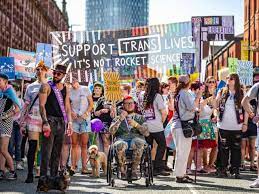
The hostility against trans people in politics, media and sport alarms me tremendously. But these days, I’ve decided not to give a shit about what others think of me. Training as a therapist has taught me to accept myself totally, be congruent with full confidence and positivity. I feel complete. I’m living the life I always knew I should, and I don’t take that privilege for granted.
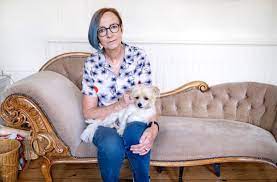
Evelyn Pittman: ‘Married to a man and with two kids, at the age of 53, I fell wildly in love with a woman.’ Photograph: Linda Nylind / The Guardian

Evelyn Pittman, 66, London

I had a very long, straight start in life: married to a man and with two kids. Then, at the age of 53, I fell wildly in love with a wonderful woman. In many ways, it seemed to come out of the blue but, looking back, it can’t have come from nowhere. I’ve thought a lot about why my sexuality was hidden for so long, even from me.

When I was young, the word “lesbian” wasn’t even in my vocabulary. I was, after all, a child of the 1950s. There was a conspiracy of silence; discovering a path to being queer just didn’t feel possible. So, at 53, it at last burst out of me. This woman and I got together, and it was truly magical.

My children at this point were in their 20s. We weren’t a family big on personal conversations at the dinner table, but I needed to tell them. I couldn’t keep it a secret. One evening I texted my daughter to say I wouldn’t be coming home that night because I had drunk a little too much to drive. It was totally out of character, and she clocked something was up. My son, meanwhile, had a lovely response: “Well, fair enough,” he said, “who wouldn’t love women?” Friends and family were wonderfully accepting. At this stage, I was a head teacher at a primary school. I’d started the job married to a man, and finished in a civil partnership with a woman.

As a teacher, a mother and a grandmother, I’m buoyed up by the world kids are entering into. Being different is never easy – there’s still hostility and prejudice to be found – but young people today, I hope, at least have the language to explain who they are and what they feel. We all like certainties in life, I think. They make us feel safe and comfortable. But opening yourself up to uncertainties at any age can be indescribably rewarding.
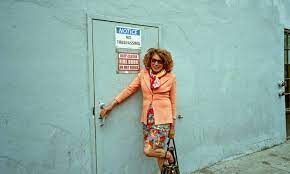
Donna Personna: ‘When I was 59, something shifted in my mind. It felt right that at last I started to identify as a woman publicly.’ Photograph: Azha Luckman / The Guardian

Donna Personna, 75, San Francisco

Activism has been a huge part of my life for as long as I can remember. In my college days, I worked with my fellow Latinos on equal-opportunity programmes; later, my focus turned to HIV and Aids. For the past 15 years, my efforts have been centred on social justice and transgender rights. I’m radical in every aspect of my life; for me, defining myself was never a priority. I’ve never looked for acceptance or approval, and have always detested labels. So, it was forever unsaid but, to my mind, I was always a girl, then a woman.

In 1967, here in San Francisco, we had the summer of love. It was all hippies, free love and peace, baby. I hooked up with a group called the Cockettes: an avant garde LGBTQ+ bearded drag troupe. Through that time, the guys suggested I try dressing up, but I always declined; it felt too complicated. A few years later, I gave in and donned a dress for the first time. In every way, it fitted me perfectly.

Still, I felt no great desire to explain myself to others. Then, aged 59, something shifted in my mind. It felt right that at last I started to identify as a woman publicly. With my parents now both deceased, I felt freed up to be myself. I’d spent a lifetime refusing to be put into a box, but this – to me – felt wholly natural.

Young LGBTQ+ folk today have their battles to fight. From preferred pronouns to basic rights, demands for progress continue. They’re on a mission to change laws and minds, and rightly so. I guess I’m old, so see things differently. I’m 75 years old, and am the baby of my family. My siblings are old and set in their ways; they know who I am, and the life I lead, and I’m content to leave the rest unspoken. My nieces and nephews, however, know me as the woman I am. They call me “tía”, aunt in Spanish.

When I speak to younger folks, I try to impart any wisdom I can: love and celebrate yourself, and if others agree that’s just a bonus. They’re demanding acceptance, but I’m over that. In asking for others’ approval, you give them power unnecessarily. It’s why I agreed to make a documentary about my life and self. I am who I am, and here it is – what you make of it is your problem.

To this day, labels frustrate me a lot. Even having to identify as transgender feels something of an aggression to me. Some day, I’m sure, that word will become history. For now, however, the revolution continues.

Donna, a film about Donna Personna, is released in cinemas and on Bohemia Euphoria on 15 July
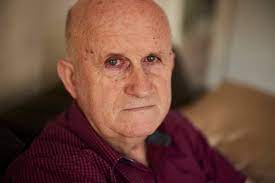
Bill Drayton: ‘Strangely enough, it’s my ex-wife, I really have to thank: it’s she who helped me come out of the closet after 29 years of marriage.’ Photograph: Christopher Thomond / The Guardian

Bill Drayton, 74, Blackpool

I moved to Blackpool last weekend. As soon as his spousal visa comes through, my husband is due to join me. Together, we’re about to start a new life, having met in 2014 when I was travelling in the Philippines. Strangely enough, it’s my ex-wife I really have to thank: it’s she who helped me come out of the closet. We were married for 29 years.

She and I first met at a concert in August 1985. From the outset, I think, she knew I was different. We married a few years later and loved each other dearly. All that time, I knew deep down I had these other feelings. They’d started when I’d been innocently infatuated with a boy at my prep school. While at public school, before the 1967 partial decriminalisation of homosexuality, it was thought of as being smutty and dirty despite the fact so many indulged in it.

When I had a breakdown in the early 90s, I presumed it was a consequence of the stresses of teaching. Retrospectively, I can see it was caused by the pressure of sustaining lies and facades; the guilt and shame of pretending I was straight when I wasn’t.

In 1992, I went to see a psychologist. One day, I sheepishly returned home, telling my wife that the doctor had suggested I might be a homosexual. We both denied it, despite each of us knowing he was right. From time to time, my wife would bring it up again, but I vehemently refused to engage with the possibility. I was petrified, and instead turned to evangelical Christianity.

In 2011, I went on a trip to America. While I was away, my wife picked up a book: it was about a married man in his 60s coming out as gay. She became determined to find out the definitive truth about me once and for all. After collecting me from the train station, she spied an opportunity. Out of the blue, she asked once more: “Are you gay?” Bleary-eyed, jet-lagged and barely thinking, I said yes. At once, this great weight lifted off my shoulders. I’d previously been diagnosed with depression and bipolar disorder. From that day on, I’ve never had another symptom.

The marriage was over, but our friendship deepened. We continued to live together. She was relieved to know the truth, I think, after decades of deception. But that couldn’t last for ever. Aged 63, I went on a date with a man for the first time. It was a revelation. I was like a child in a sweetshop after so many years of resisting temptation. That said, working through my internalised prejudice took time. I’d been taught by the church that homosexuals go to hell. Now, of course, I’ve said goodbye to this nonsense. Since then, my faith has broadened and deepened.

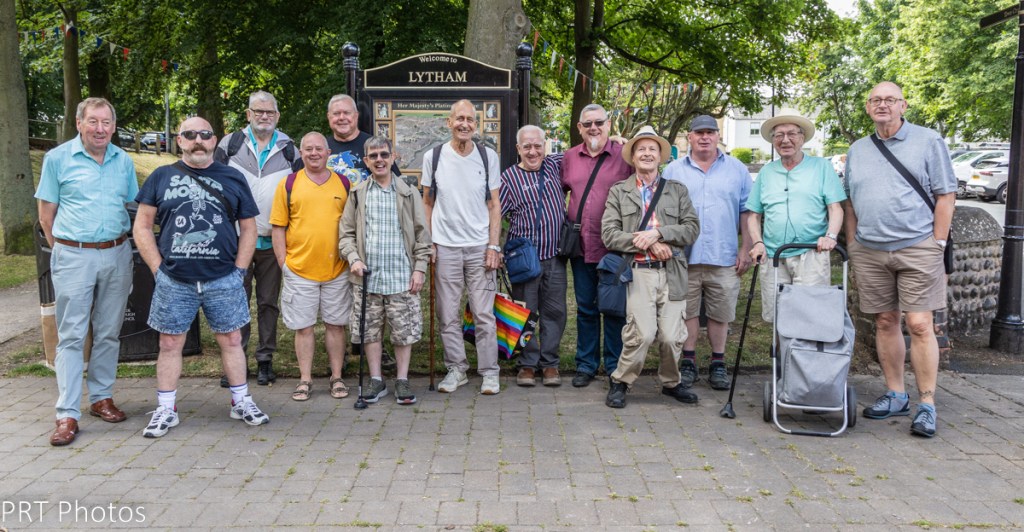
Lytham … International Non-Binary Day

News

Lytham

Lytham St Annes is a seaside town in the Borough of Fylde in Lancashire, directly south of Blackpool. The town is made up of the four areas of Lytham, Ansdell, Fairhaven and St Annes-on-Sea.

We visited leafy Lytham. The name Lytham comes from the Old English hlithum, plural of hlith meaning ‘(place at) the slopes’. Lytham is mentioned in the Domesday Book as Lidun.

The Green, a strip of grass running between the shore and the main coastal road, is a notable Lytham landmark – the restored Windmill and Old Lifeboat House Museum are here. The Green overlooks the estuary of the River Ribble and the Welsh mountains, and has recently seen an annual five-day musical festival. 

The festival has featured a variety of leading bands and musicians including The Human League, Madness, Nile Rodgers & Chic, The Human League, Kylie Minogue, Rod Stewart, Diana Ross, Duran Duran and Tears for Fears.

We split into small groups – some of us went to Senior’s Fish & Chips where they serve two pieces of cod, two haddock and two halibut with unlimited chips and unlimited tea or coffee, all for under £10.00.

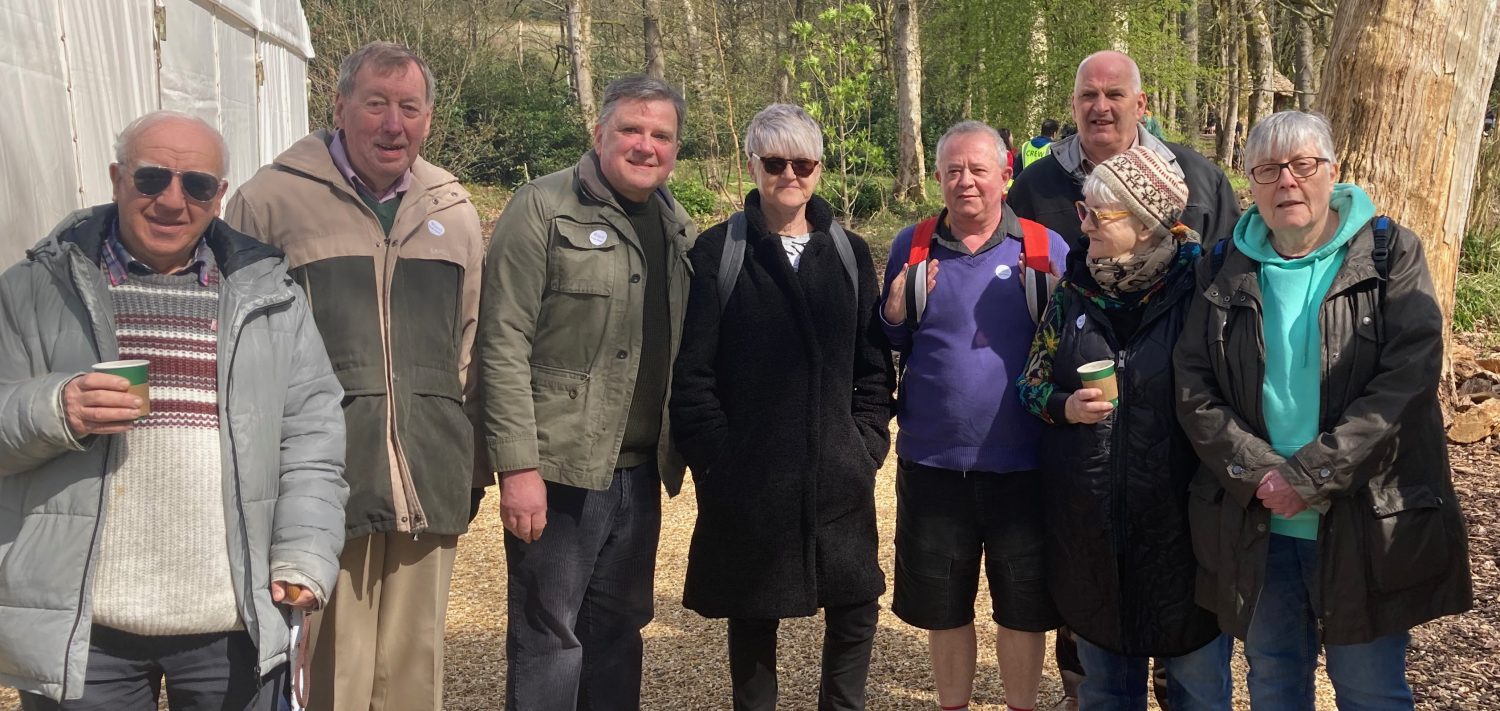
Another good day out with more photos here.

International Non-binary Day

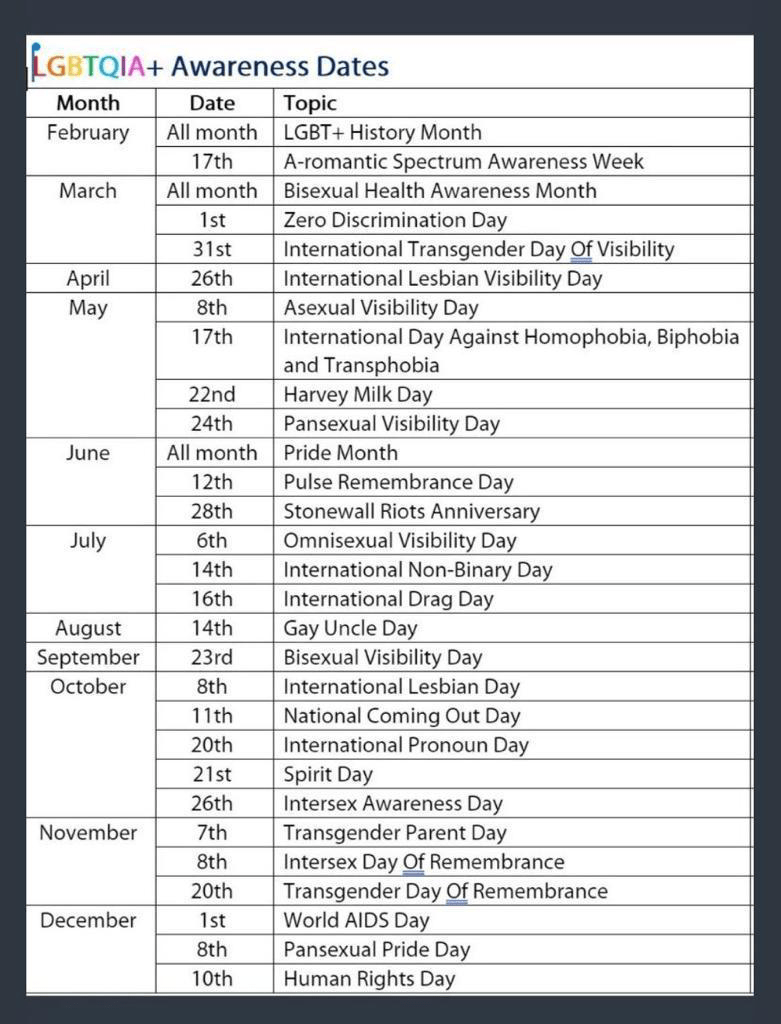
Thursday 14 July is International Non-binary Day. I‌t has been celebrated on 14 July since 2012. This date was chosen because it falls at the midpoint between International Women’s Day (8 March) and International Men’s Day (19 November).

Non-binary or genderqueer is an umbrella term for gender identities that are not solely male or female‍—‌identities that are outside the gender binary. Non-binary identities fall under the transgender umbrella, since non-binary people typically identify with a gender that is different from their assigned sex, though some non-binary individuals do not consider themselves transgender.

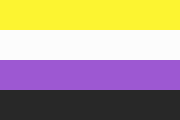
Non-binary pride flag

Non-binary people may identify as an intermediate or separate third gender, identify with more than one gender, no gender (agender), or have a fluctuating gender identity (genderfluid). Gender identity is separate from sexual or romantic orientation, and non-binary people have a variety of sexual orientations, just as cisgender people do. Being non-binary is also not the same as being intersex; most intersex people identify as either male or female.

Non-binary people as a group vary in their gender expressions, and some may reject gender “identities” altogether. Some non-binary people are medically treated for gender dysphoria with surgery or hormones, as trans men and trans women often are.

Being non-binary can be dismissed by some as a new fad, born from a western identity-obsessed culture – however non-binary people have been recognised and recorded round the world. In India non-binary people have been mentioned in Hindu texts dating back over 2000 years, and many cultures, such as some Native American peoples, Hawaiians, and Tahitians, have a history of inclusion of a third gender in their societies’ roles.

Bee Corner … Yulja Tsvetkova … Three men sentenced to death by stoning … Coming Out in the 1950s

News

Bee Corner

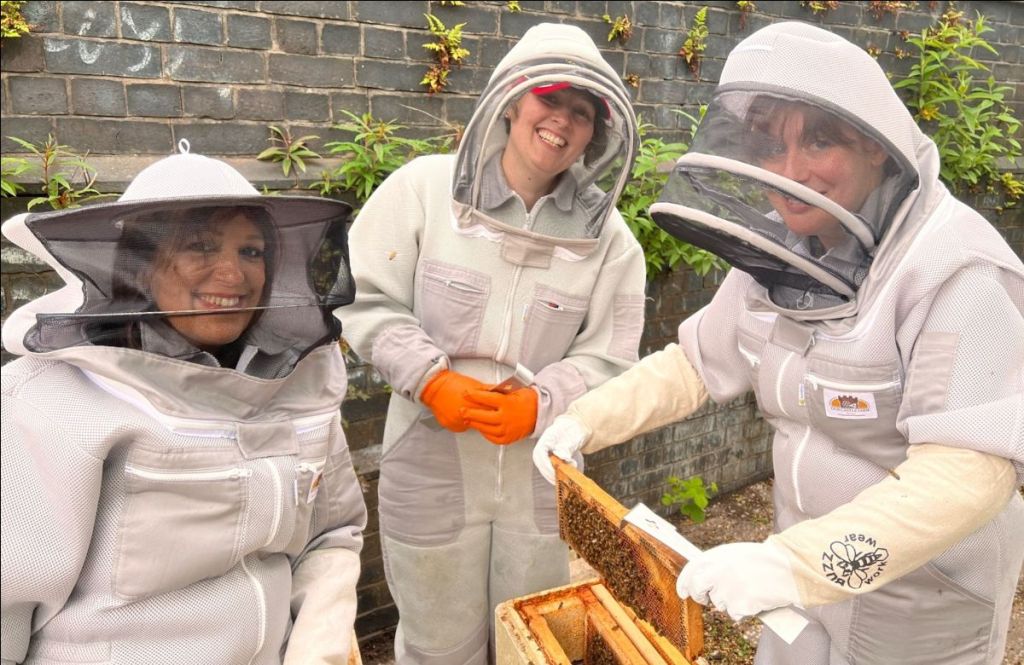
Amber McCormack with a core team of committed volunteers have transformed a neglected concrete space into a haven for humans and honey bees called “Bee Corner”.

It offers urban beekeeping experiences in the heart of Salford. Tucked away behind Islington Mill (on Chapel Street) is the place where you can come and observe the bees at work and explore the mysteries of the hive.

Amber is so enthusiastic and is a brilliant teacher. We learnt all about pollinators, local flora and fauna. We found out that a bee’s favourite flowers are Bee-gonias! If truth bee told, the benefits of having a hive is un-bee-lievable. It was a brilliant trip. I enjoyed it so much and hive never felt this way bee-fore.

Have a look at some bee-autiful photos here.

Yulja Tsvetkova

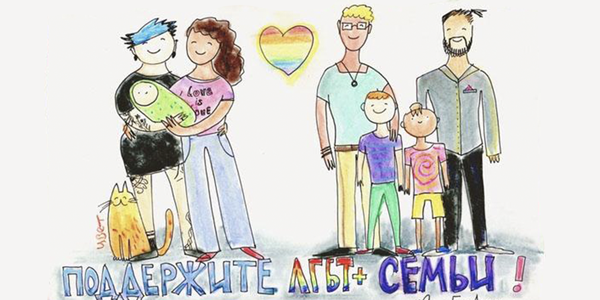
See the drawing above? The Russian text says “Family is where love is. Support LGBT+ families.” Yulja Tsvetkova made it last year to support a same-sex couple who had to flee Russia with their two adopted children after being targeted by the authorities.

After she shared the picture and other drawings promoting inclusivity on social media, the authorities brought trumped-up charges against her for violating the Russian “gay propaganda” law and distributing pornography, fined her 50,000 rubles (around £650), and put her under house arrest.

Just a few days ago, new charges have been brought up against her, and she could face up to six years in prison.

Please sign the petition to bring attention to her case.

As an activist, Yulja knows she’s not the first person to be targeted under the “gay propaganda” law. But with your help, she might be the last.

If enough people speak up, the charges might be dropped – and the “gay propaganda” law abolished once and for all. Sign Yulja’s petition today.

Three men sentenced to death by stoning for being gay in Nigeria

An Islamic sharia court in Nigeria has sentenced three gay men to death by stoning – including a man who was 70 years old.

(Simon Maina / AFP via Getty Images)

An Islamic sharia court in Ningi in the northern state of Bauchi convicted the men of engaging in homosexuality.

The state’s religious police force, the Hisbah Vanguard, operating through the commissioner – Adamu Dan Kafi – said the sharia court charged the trio following their arrest on 14 June in the village of Gwada.

The convicted men are Kamilu Ya’u (aged 20), Abdullahi Beti (aged 30) and Mal Haruna (aged 70). They were sentenced to death on 28 June 2022 by judge Munka’ilu Sabo-Ningi. None of them was represented by lawyers and all “confessed” to their crimes.

They were sentenced under section 134 of the 2001 Bauchi State Penal Law, which states: “Whoever commits the offence of sodomy shall be punished with death by stoning [rajim] or any other means decided by the state.”

They can, however, appeal the sentences within 30 days.

Bauchi is one of twelve Nigerian states, many in the north of the country, that subscribe to the Islamic legal system. Any death penalty handed down by the sharia courts needs to be rubber-stamped by the state governor, Bala Mohammed.

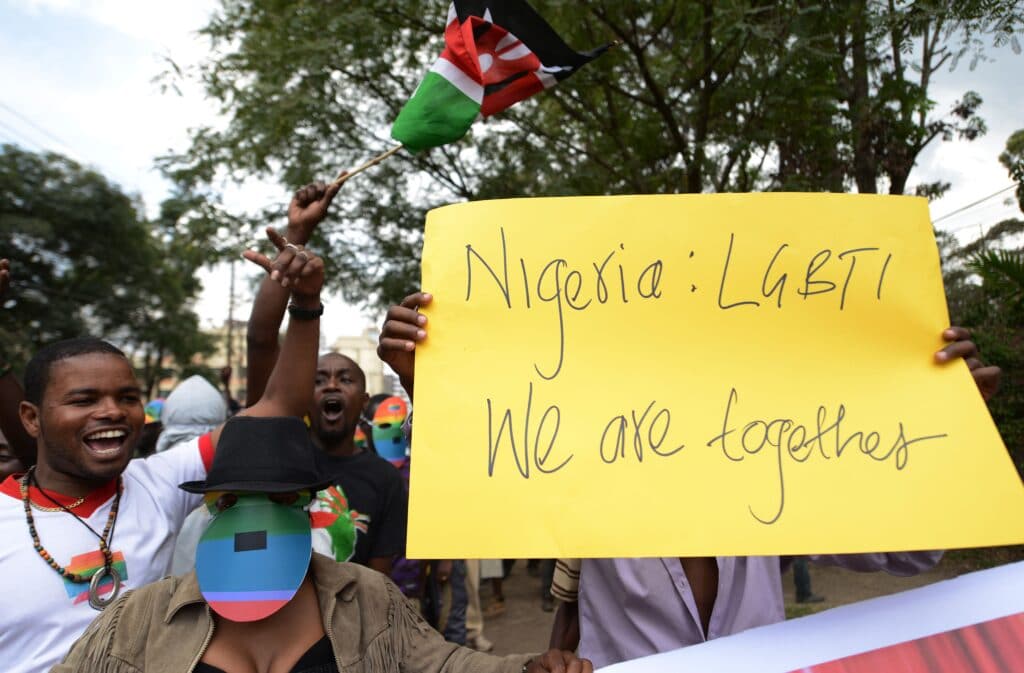
In Nigeria, deeply homophobic laws make the lives of LGBT+ Nigerians a daily struggle. Many feel unable to come out, with nine in ten Nigerians viewing homosexuality as something society should not accept, according to a 2019 Pew Research Center poll.

Homosexuality is illegal in all of Nigeria, regardless of whether the state has adopted sharia law or not. Secular federal laws slap LGBT+ people with a maximum of 14 years in jail.

The Same-Sex Marriage Prohibition Act, passed by parliament in 2013, criminalises all forms of same-sex unions and marriage equality across the nation.

The legislation makes LGBT+ couples who enter any kind of same-sex union liable for 14 years of incarceration, while even those who witness a same-sex wedding are imprisoned for 10 years.

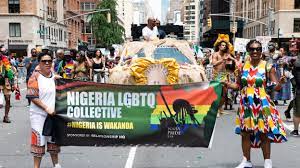
While historically there haven’t been many legal persecutions, the law has emboldened homophobes who prefer to take the laws into their hands to lynch suspected LGBT+ people and groups. These actions have successfully eroded many LGBT+ safe spaces into non-existence, and have effectively made things like a Pride celebration in Nigeria seem like a far-off dream.

The act didn’t just end at marriages, however. LGBT+ nightclub operators as well as those who run LGBTQ+ societies and organisations are liable for a decade in prison.

Coming Out in the 1950s: Stories of Our Lives

LGBT teens interview their LGBT elders who came out in the 1950s. BRILLIANT!! So glad to see teens interested in these stories & their history. Phyllis Lyon, Hadley Hall and Ron Rebholz are interviewed by Linnaea Weld, Jason Galisatus and Oscar Trinh.

50th Anniversary of Pride and Protest in the UK … Sparkle Weekend … Lady Bushra

News

50th Anniversary of Pride and Protest in the UK – the Veteran’s March and Saturday March

Please enjoy the photos here from 1 July 2022 (1972 veteran’s march), which celebrated the first UK Pride 50 years ago, and the images from 2 July 2022 (Saturday’s Pride in London). All photos are from the Peter Tatchell Foundation.

So much has been achieved but there IS much more to do.

Homosexuality is still outlawed in 69 nations and punishable by death in 12. The global struggle is far from over.

The Sparkle Weekend (Friday 8 – Sunday 10 July 2022)

The Sparkle Weekend is the world’s largest free-to-attend celebration of gender diversity, and a safe space for anyone who identifies as gender non-conforming, their families, friends, and allies. In 2019, more than 22,000 visitors were welcomed over the weekend. 
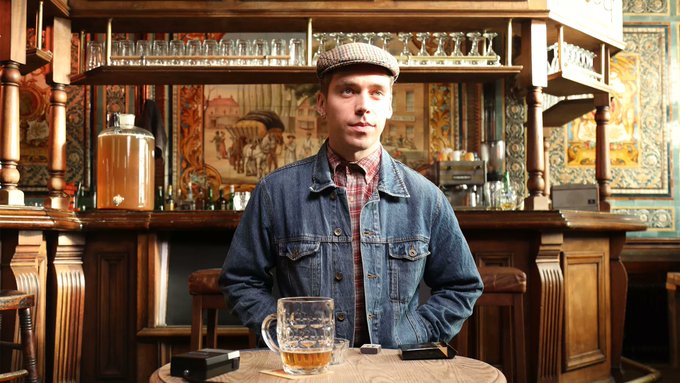
The Sparkle Weekend is a festival-style family event, featuring live music and entertainment, talks and workshops, and an opportunity for the corporate sponsors, grassroots charities, and trans-run businesses to engage with visitors.

They also work with local and national charities who support young trans and gender questioning people and their families so that all age groups feel included. 

One of the charity’s core values is that the event remains free-to-attend in order to be accessible to everyone, regardless of gender identity, race, religion, or physical ability.

The Sparkle Weekend currently costs tens-of-thousands of pounds to deliver and is currently funded by companies who share the charity’s values of equality and inclusion for all gender non-conforming individuals, and visitor donations. Sponsorship and donations mean that the Charity can also include smaller grassroots groups who support sub-sectional minorities in the event.  If you want to find out more, please contact  info@sparkle.org.uk 

‘I was kicked out for being gay. Now I’m laughing all the way to the bank’: How drag queen Lady Bushra went viral

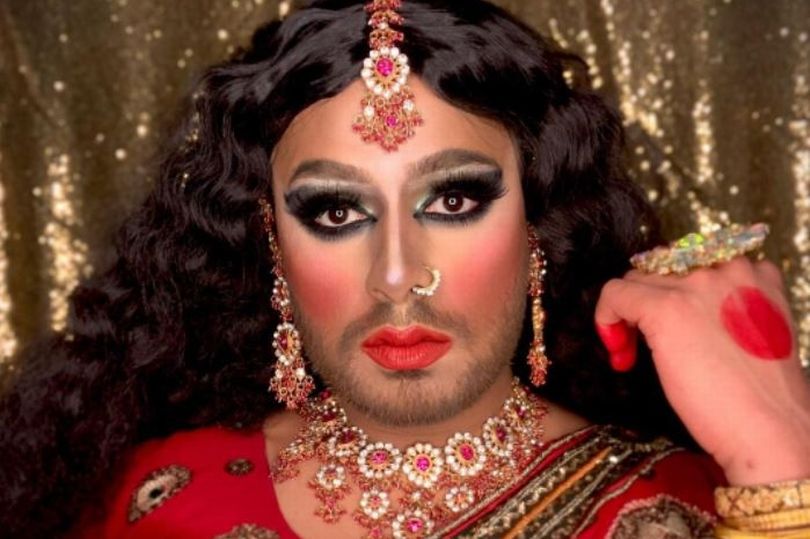
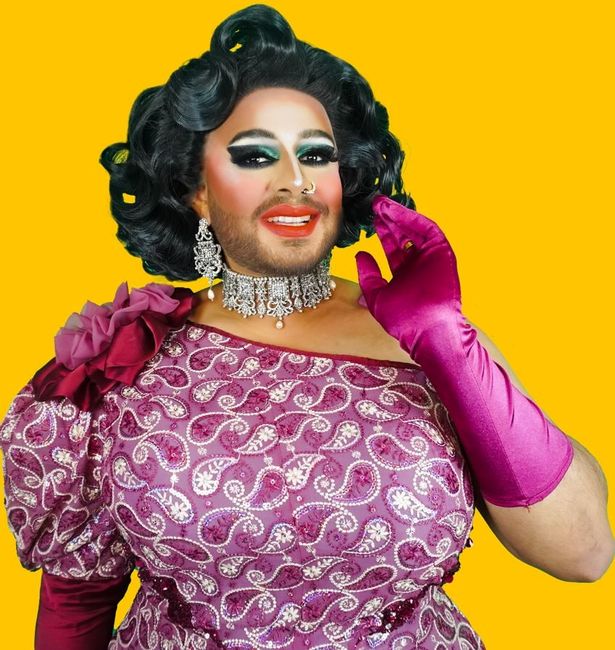
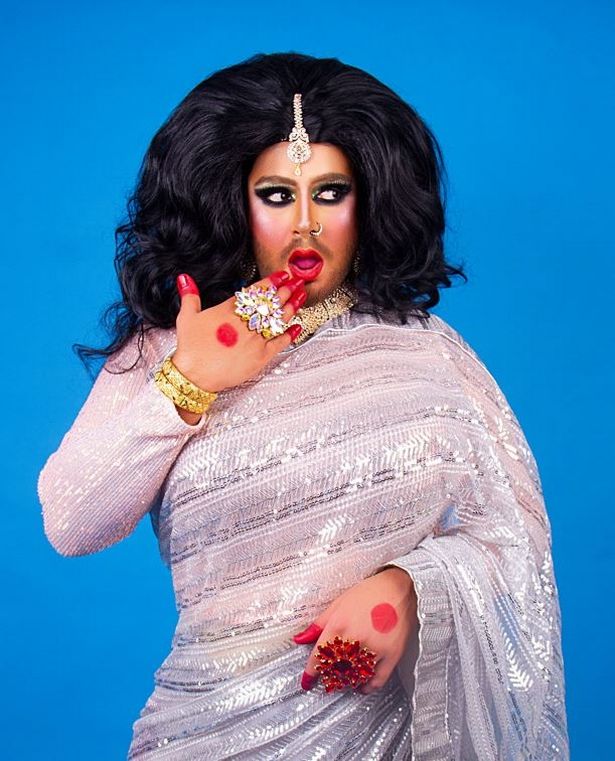
Lady Bushra wants to represent the queer South Asian community with her comedy and wit (Image: Instagram: @lady.bushra)

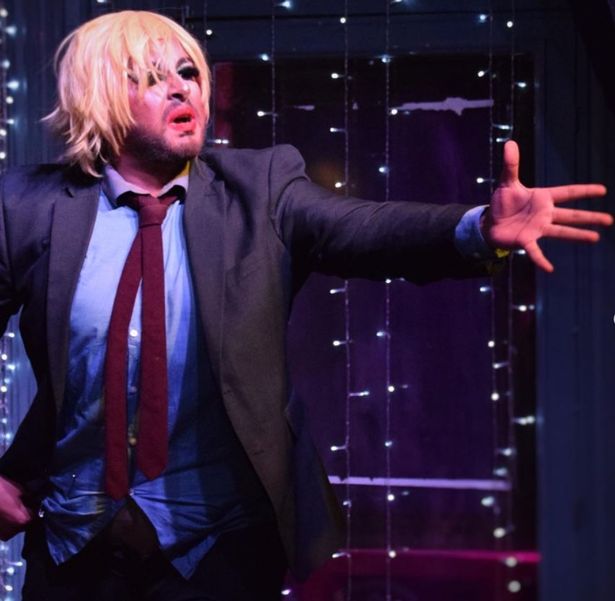
Covered head-to-toe in a black burka, a delicate figure stands at the door of Pot Kettle Black in Manchester’s Angel Gardens as the start of Lady Gaga’s Alice blares out from the speakers. But within seconds, the traditional garment is ripped apart to reveal an almost too lifelike impersonation of Boris Johnson hiding beneath.

The moment, with clumsy Prime Minister dancing and shenanigans included, has since gone viral on social media and, for many, served as their first introduction to South Asian drag queen and comedian Lady Bushra. But for those who know her, it’s just part of the territory when it comes to the ‘OG Bradford bad girl’.

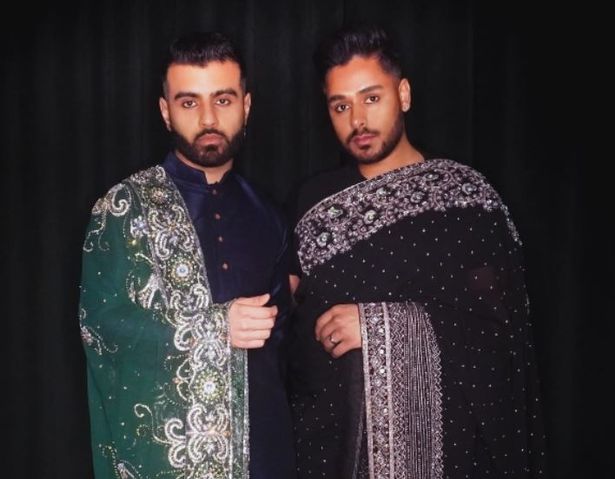
Originally from Bradford, Lady Bushra – also known as Amir – now lives in Manchester with husband Aamir. The decision to venture into the world of drag and comedy only began two years ago, but it’s one that she hasn’t looked back on.

“I’ve always been told that I’m funny and that I should do stand-up. When I was younger, I used to do bits of modelling and singing in religious places but I decided to start doing drag and comedy seriously in February 2020, and then the lockdown began.”

Using the lockdown as a chance to hone in on her drag skills and gain a reputation through virtual shows, Bushra was ‘booked and blessed’ when it came time for venues to reopen last year. “Myself and a lot of other queens had to take it upon ourselves to lighten the mood during what was quite a difficult time for everyone,” she explains.

“It also meant I got to challenge my creativity and channel my angst that I was experiencing into my art. I was able to make mistakes at home and it thankfully turned out to be one positive of the lockdown.”

Lady Bushra describes herself as the ‘OG Bradford bad girl’ (Image: Instagram: @lady.bushra)

In 2021, Bushra was shortlisted for the BBC New Comedy Award – something which the likes of Joe Lycett, Romesh Ranganathan, Sarah Millican and Tez Ilyas have also been nominated for. The drag persona of Bushra comes from Amir wanting to pay homage to his South Asian heritage, something often overlooked in not only the LGBT+ and drag communities, but also in comedy.

“I come from an ultra-orthodox Muslim family and quite a conservative household,” Bushra says. “The character is very honest and organic as she does reflect some of the experiences I’ve had growing up in a small town in Bradford. Lady Bushra is one of those boisterous girls that everyone knows – every culture and city has their own version of her.

She was created after I started discussing things with my friends. She really is that perpetual 19-year-old teenager from Bradford. I’m very pleased to be able to find a way to shine a spotlight on those Asian girls who don’t always get to be themselves and show off their personality.”

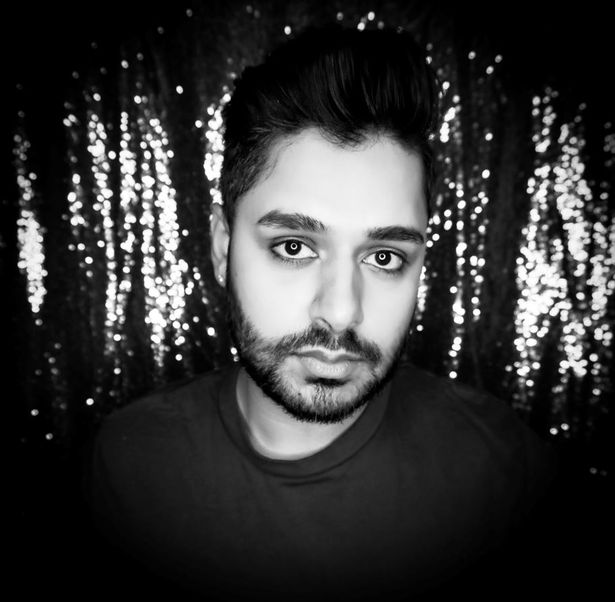
Amir out of drag

Growing up, Bushra says she never had a persona like her to look up to – the closest was Meera Syal’s characters in Goodness, Gracious Me. “When I was younger, people would bully me and I had to experience a lot of racial abuse,” Busha explains. “I started feeling embarrassed of who I am and what I’m about.

I tried to fit in and whitewash myself. I did it with the hair, the clothes and my mannerisms – I definitely tried to tone down the brown. But I’ve got to a point now where I don’t feel the need to do that. I’ve since learnt that my heritage is my strength.

I have a unique position where I am British but I am of a south Asian background and I’ve found a way of being able to tap into that. When you’re confident in knowing who you are, people are drawn into that confidence, and that’s something I’ve come to realise.”

Seven years ago – at the age of 25 – Amir came out to his family as gay. He says it’s something that had been building up over time, but the experience was sadly not a positive one.

“I don’t have a relationship with my family these days,” the performer explains. “They kicked me out as a result of being gay and I haven’t had any contact with them since then, really. But I’m the one laughing all the way to the bank now.

It was like death by a thousand papercuts. After university, I started getting a lot of pressure from my family to marry. When I came back home, they were putting that pressure on me and I just told them that the reason I didn’t want to marry is because I was gay.

Over time, it was like a slow snowball of deception. There is a limit, and I eventually reached that point. They might have kicked me out but I’ve since learnt that it’s in my best interests to stay away. I think it’s quite a profound way of looking at it, really.”

“Doing me and being my authentic self has been the only logical way to deal with things,” Lady Bushra says (Image: Instagram: @lady.bushra)

Through discovering drag and finding her husband – who she met through a mutual friend in 2014 – Bushra has learnt that authenticity is the way forward in life. Bushra explains: “Doing me and being my authentic self has been the only logical way to deal with things. I tend to find that not everyone has the ability to find their true calling.

Too many times I see people within my community doing things while fearing what people will say. I’m not here for Brownie points with toxic people and I’m pleased that, as a gay south Asian man, I’m able to say I’ve dismantled that and can do whatever makes me happy. It’s worked well for me so far.”

The couple wed in 2019 and hold the title as the first South Asian gay couple to get married in Bradford. A year later they moved to Manchester. The couple also host their own You Don’t Love Me podcast where they discuss their perspective as a gay South Asian couple. To date, they’ve recorded more than 80 episodes on everything from Ramadan to beauty standards.

Aamir and Amir (Image: Instagram: @youdontlovemeboys)

“I firmly believe the universe conspires,” Bushra laughs about the couple moving to the city-region. “We fancied moving to a bigger city but Manchester was never something on my radar at all. Despite that, it was one of the best decisions we ever made. It’s such a welcoming, open city. The drag scene here is fantastic and it’s a lot of fun. I’m happy to be a part of Manchester now.”

Lady Bushra performing as Boris Johnson (Image: Instagram: @lady.bushra)

In the last year, Bushra has performed at Manchester Pride – and will perform again this year – alongside events in London and Cardiff and even further afield in Prague, Berlin and Budapest. She says she loves getting the chance to surprise people during her cabaret shows.

“Drag is a very varied art form and people sometimes forget that,” she explains. “Bushra is certainly very varied – there’s not many places you’ll see Boris Johnson dancing to Lady Gaga.”

Going forward, Bushra wants to continue to perform their cabaret show – which is currently touring the country – and do stand-up when the opportunity arises. “I feel there’s a tiny gap in the market for Bushra to slide through with her nimble shoulders,” she says.

Can’t wait for Gay Uncle Day!

Party … The Day The World Came To Huddersfield … AIDS: The Unheard Tapes

News

Party

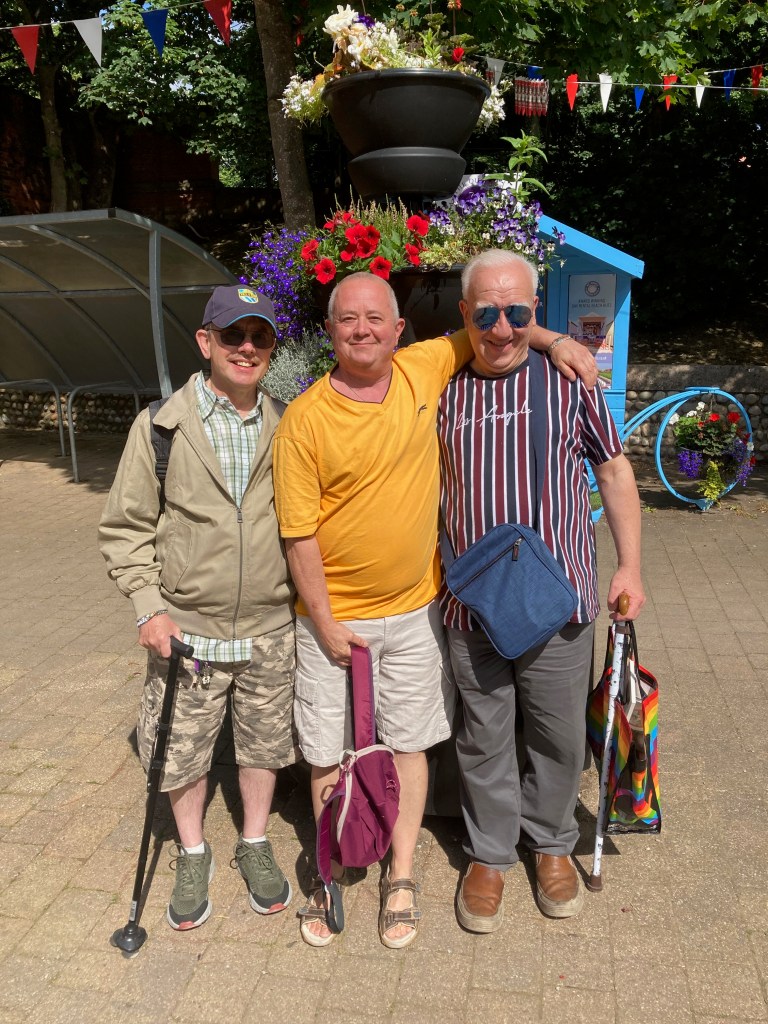
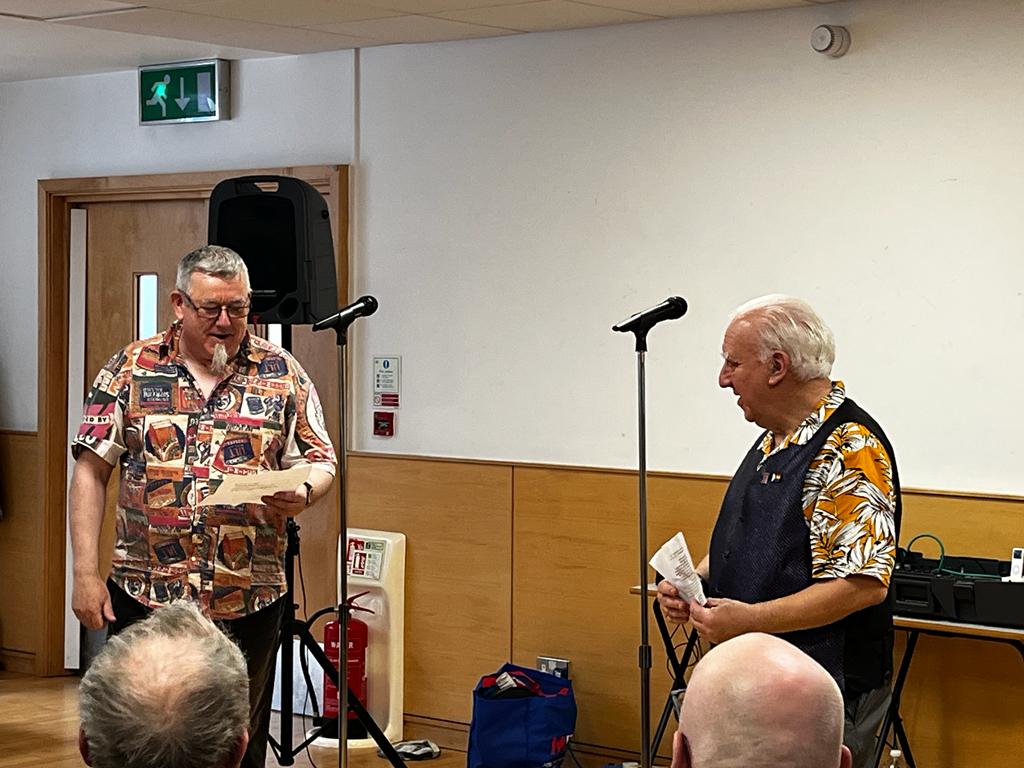
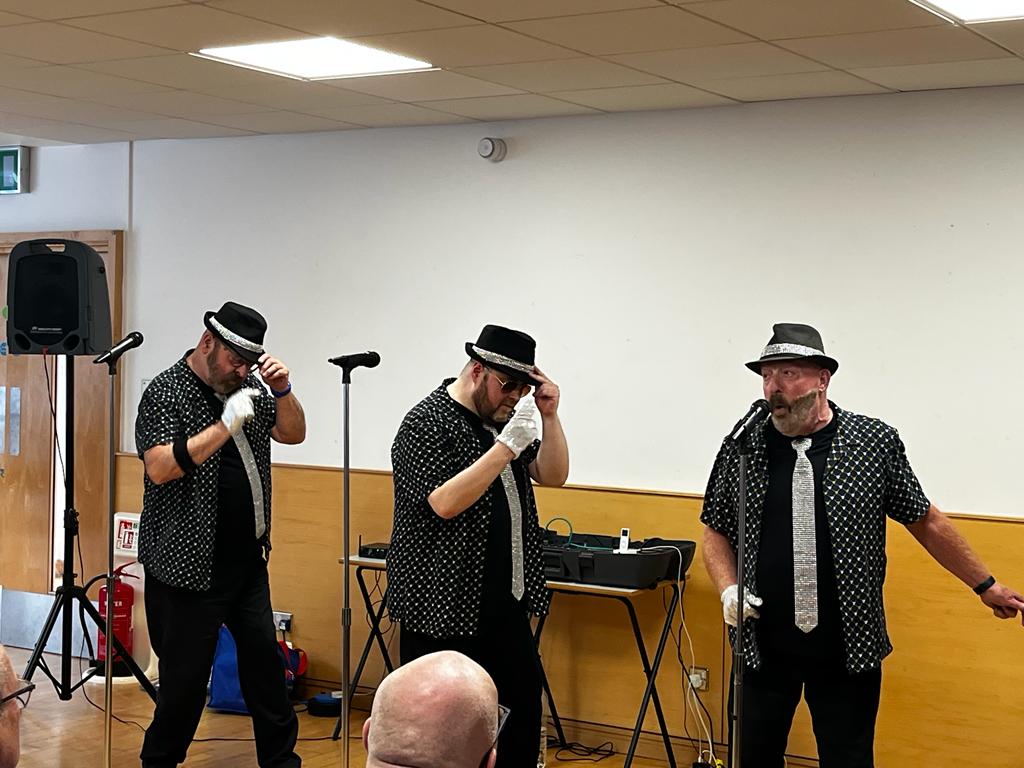
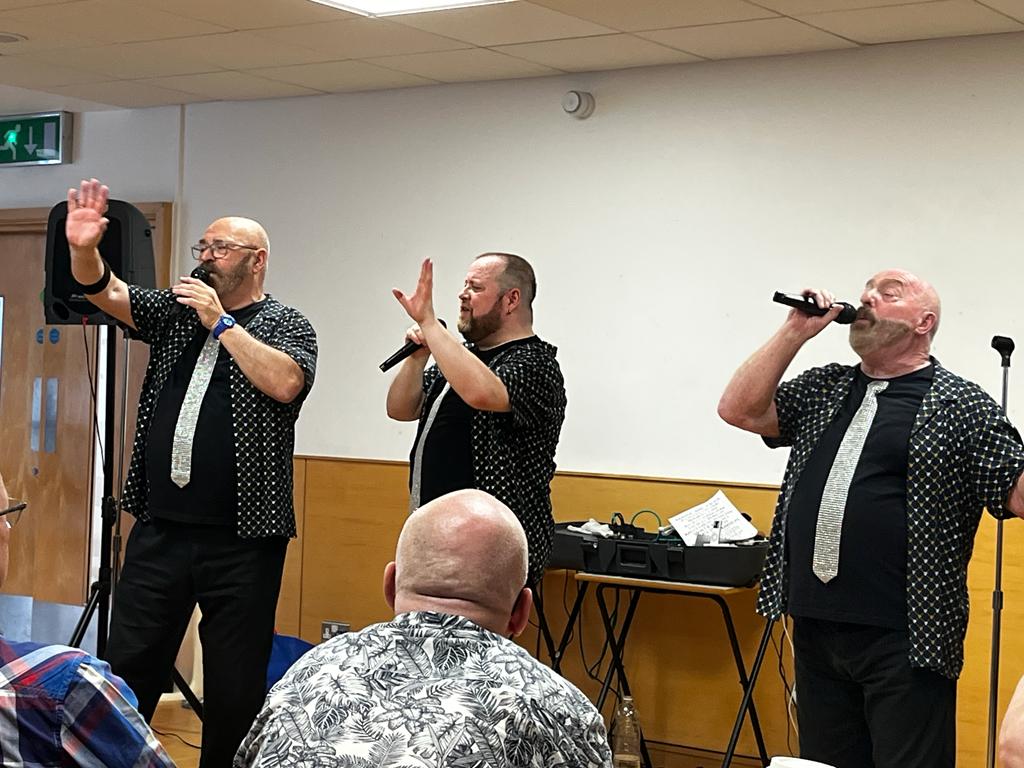
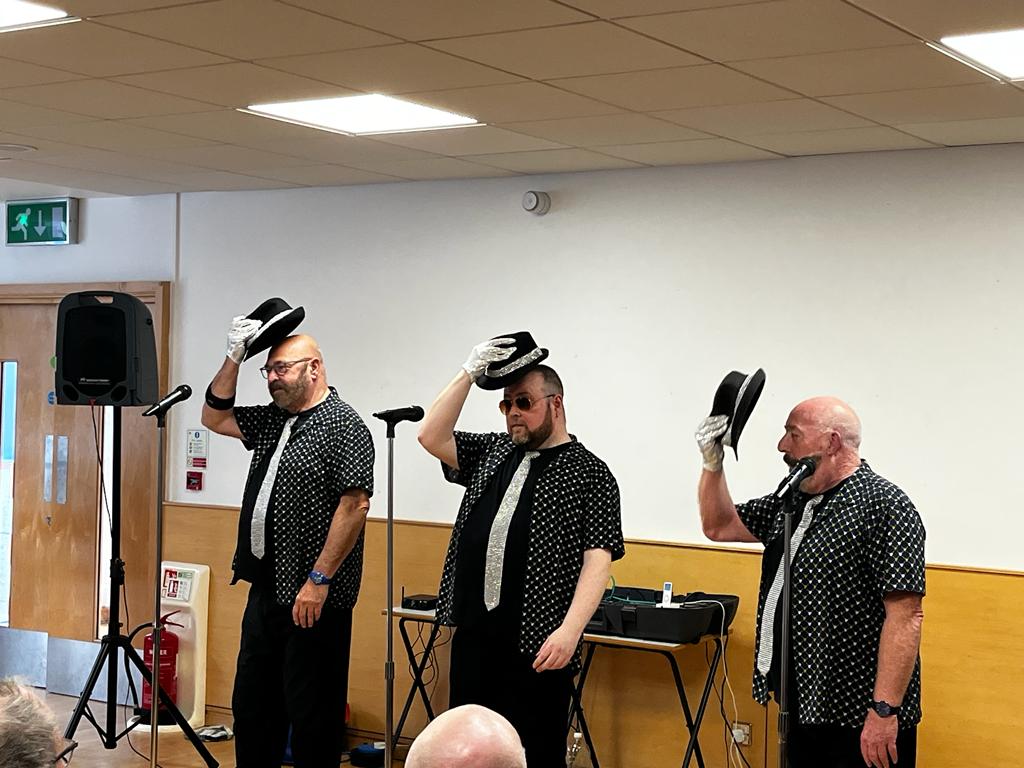
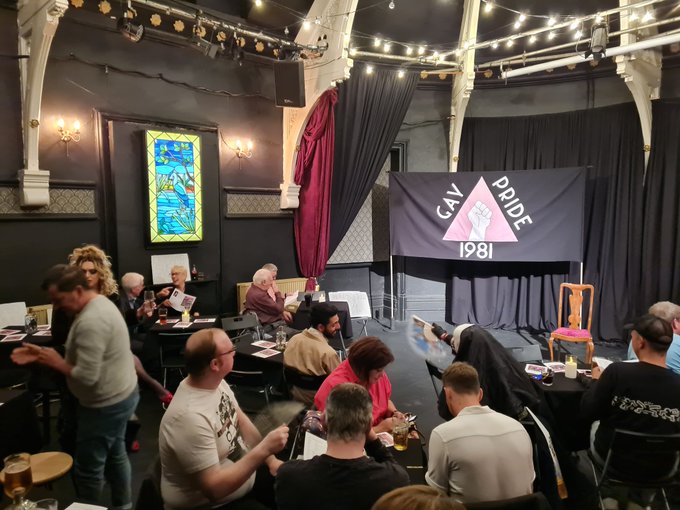
Forty five people came to the Welcome Party compered by Ken (as Larry Grayson, comedian and television presenter best known in the 1970s) with Norman and headlined by Wolf – the oldest boy band in the world.

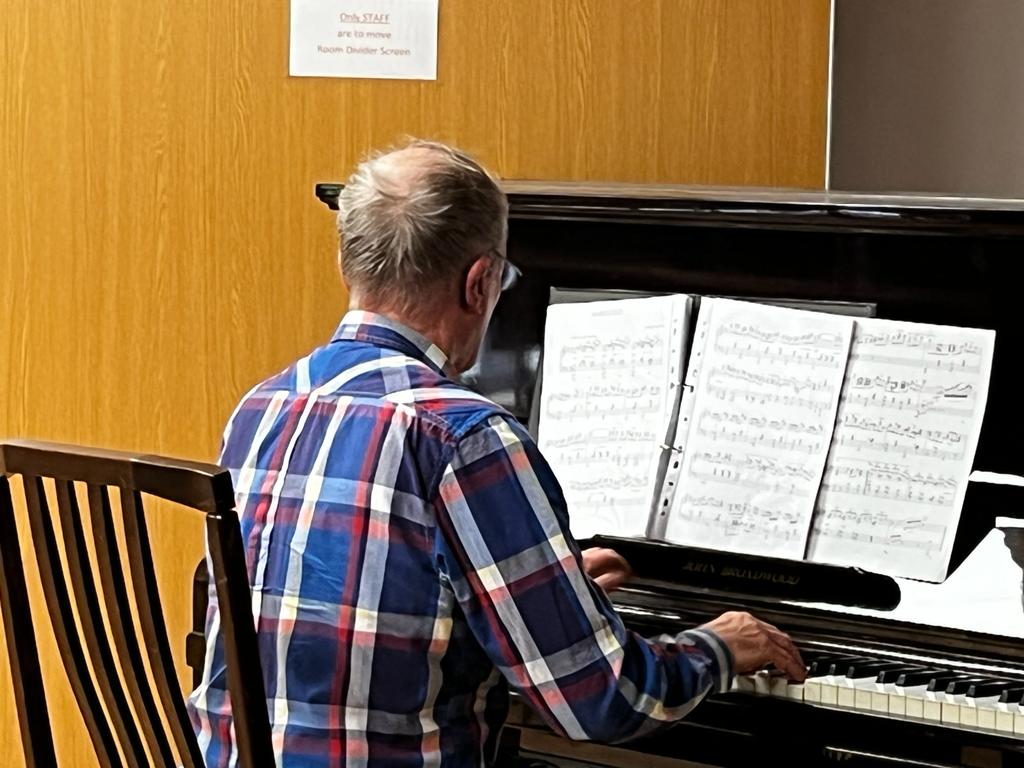
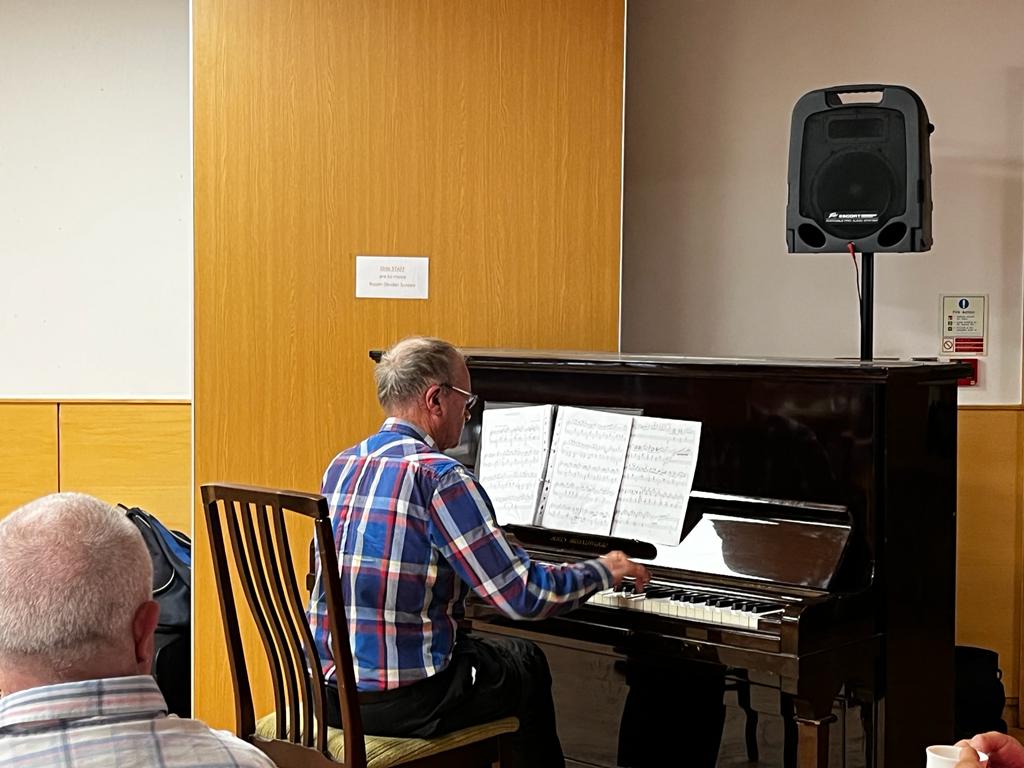
Patrick read a couple of poems and Peter played the piano before Wolf gave us a fantastic set mixing soul and classic pop tunes. Thanks to all performers and those who helped in setting up the room and working in the kitchen.

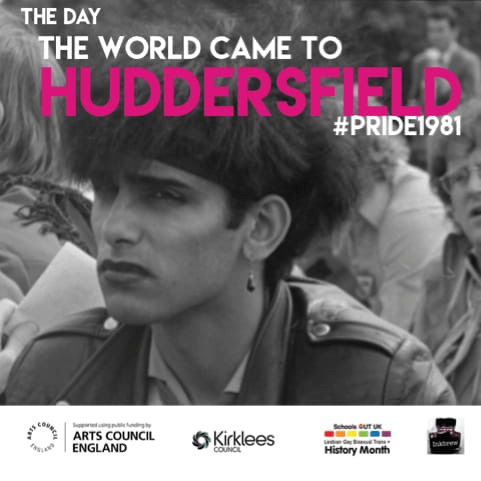
The Day The World Came To Huddersfield

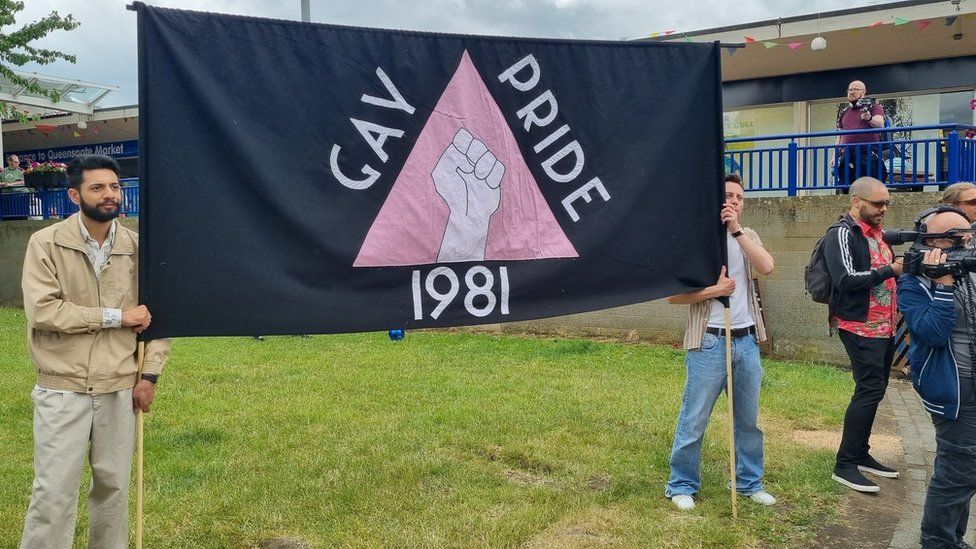
In 1981, the usual Pride march and rally was not held in London, decamping to Huddersfield instead as an act of solidarity with the Yorkshire gay community who claimed that West Yorkshire Police were harassing them by repeatedly raiding the Gemini Club, a leading nightclub in the North of England at the time.

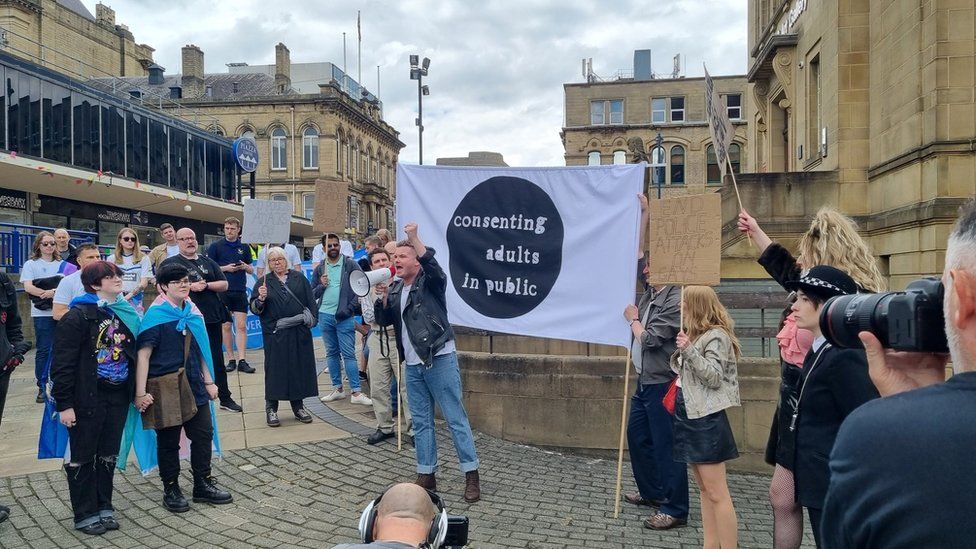
Monologues performed by actors retold the stories of the 1981 march

Monologues performed by actors retold the stories of the 1981 march.

The march was held in the West Yorkshire town in July 1981, in defiance of a police campaign against a popular gay venue.

The Gemini Club had been labelled “a cesspit of filth” by police, so Pride moved to Huddersfield in solidarity.

Stephen M Hornby created an immersive theatre event “The Day The World Came To Huddersfield” to retell the events.

The playwright wrote monologues based on interviews with people who took part, along with Abi Hynes, Peter Scott-Presland and Hayden Sugden.

The event saw actors mingling with crowds in the town centre, telling their stories as they restaged the march.

It was also performed at the Lawrence Batley Theatre in Huddersfield and the King’s Arms in Salford.

The theatre group took a similar route to the march more than 40 years ago.

An exhibition of portraits of some of the original marchers has also gone on display.

Prof Sue Sanders, chair of LGBTQ+ History Month and Schools OUT UK, said the Pride event in Huddersfield was “a wonderful piece of forgotten history that needs to be known across the UK”.

“This is an extraordinary project,” she said. “These performances are not just creating some wonderful new theatre, they are bringing the past to life in a wonderful, vivid and highly entertaining way.”

The street performance took place in the courtyard outside the Lawrence Batley Theatre and actors took a circular route through the town centre, which included parts of the original route.

Mr Hornby said: “The Pride march of 1981 was full of extraordinary characters from Huddersfield and from across the country.

It’s been a treasure trove for the playwrights who found some amazing tales.

When we bring them all together it really captures what marching in the UK’s first national Pride felt like.”

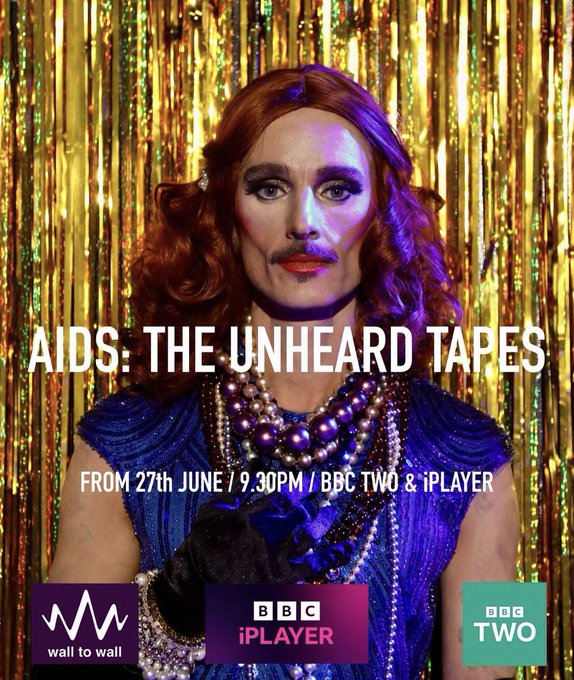
Aids: The Unheard Tapes – stories from the heart of a crisis

A new BBC documentary gives voice to those at the centre of the Aids epidemic. Pioneering oral historian Dr Wendy Rickard, who conducted the interviews, explains why it’s so important they are heard.

As the Aids crisis in Britain grew in the mid-1980s, pioneering researchers conducted audio interviews with gay men and their friends, producing an archive of frank, intimate discussions of life at the heart of the Aids epidemic. They have been in the British Library ever since.

Now, an innovative, important new documentary brings this real-time oral history project to life as young actors lip-sync to the original recordings. The effect is hugely powerful.

Aids: The Unheard Tapes, which aired from Monday 27 June (and 4 and 11 July) on BBC2 at 9.30pm, covers the period from 1982, when the first cases of a mysterious and deadly virus hit the gay community through to 1997, when combination therapy revolutionised survival hopes for people with HIV. Oral historian Dr Wendy Rickard conducted many of the original interviews.

Why was it so important to create this oral history archive?

Dr Wendy Rickard: As one interviewee said, oral history made it possible to “get into the closet with people”. It offered a way to carefully respect the wishes of the speakers, to preserve their words for a time when they might feel OK for people to listen to them. It was a way to value their stories and save them for the future.

Oral history gives you direct, unapologetic language, uncluttered by professional health, science, media and big pharma agendas. It challenges concepts of people with HIV being remembered only as objects of medical curiosity or as pitiable victims of disease or any other of those depersonalised, scientific records we have of people. And of course privacy and confidentiality were important, but it seemed to me that blanket privacy policies were also silencing people. The British Library were absolutely brilliant at helping us out of those ditches, to do something quiet but, it turns out, pioneering.

What are your abiding memories from conducting the original interviews?

Cycling round with a tape recorder, going to people’s houses, prison cells, university residences, homeless shelters, temporary housing association flats, voluntary agencies – wherever people were, we went there and recorded. We sat at their feet and listened intently for hours, sometimes long into the night, nudging them with a well-phrased question when needed. And helping do the shopping, get the prescription, feed the cat, hang the washing, fill out a form. And then having pauses when people were too unwell or visiting them in hospital or the hospice to carry on recording if they were bored or just to chat. So basically a whole range of things modern research protocols probably tell you not to do.

What do we learn by listening to contemporary or near contemporary interviews about the Aids epidemic and its impact?

It was important to me at the time to only interview people with HIV, to make their voices the loudest. Like all oral history, empowerment is key, generating from within communities the authority to explore and interpret their own experience, experience traditionally invisible in formal AIDS history because of predictable assumptions about who and what matters (doctors, scientists, drugs, money). By listening to these interviews now, we learn what happened to individuals, how raw it felt.

We learn what people were wearing, what happened to the last boyfriend, lots about sexual practices with this one and that one, why night sweats are crap, how to come to terms with gay domestic abuse, how best to padlock yourself to Westminster bridge on a protest, how to cash in your pension and live large, how grim day time TV and loneliness can be, what family means and what happens if you wash coffee grains down your sink every day. We learn how weird it is to plan your own death, how shocking when others die and you don’t. And so very, very much more.

For those who lived, both they and we learn how narratives have changed over time.

How important is this brilliant, innovative series – coming in the wake of It’s a Sin – in terms of educating and informing people about Britain’s Aids crisis?

It’s a Sin did a great job of waking the public up to HIV again. By using life stories, this innovative BBC series now follows and gives agency to people with HIV to tell their own story in their own words –its hard hitting, genuine and charming. It walks a nice line on big topics like tragedy and the culpability of Thatcherite politics. And it does not dilute loves and lives wrenched from people and its compelling and deeply moving to watch, so I hope it helps with educating and informing people in a refreshing new lip synching way.

It also opened a worm can about making sure everyone who features in the series was OK with their voice being heard like this, or their loved ones were. The series producer and director have been really commendable in their efforts to handle that side of things.

It’s 50 years of Pride in London and the 40th anniversary of the death of Terrence Higgins. How vital is it that we learn lessons from the past and preserve histories, especially as so many people who would have now been elders of the LGBTQ+ community were lost to Aids?

Absolutely vital. Look at the prejudices emerging again around monkey pox. Think of the children growing up with HIV, some of whom are themselves LGBTQ, whose parents are perhaps lost in old stigmas and harsh daily realities. There are glaring gaps in losing all those would-be elder voices, all that wisdom, all those rich ideas, that daring, that charm, that beauty, that presence, that experience of horrors and those ways of dealing with blatant injustice.

To have captured something of the essence of LGBTQ people who died (and those from other communities, as we did not just interview gay men) feels radically important and a huge privilege. It is unusual for younger people to record oral histories. It’s conventionally the preserve of those over 70 who have lived long and full lives. AIDS changed lots of things, including oral history. Does it sound stupid to say I think in a way we have got an idea of those elder voices to learn from, in the archive, in concentrated form, in their refreshingly youthful accounts, because they had to get wise swiftly, before dying too young. The BBC series has been great to get some of those voices out there in an absorbingly creative way.

AIDS: The Unheard Tapes is also available on the BBC iPlayer.