After travelling by tram and taking a short cut through Spindle’s Shopping Centre we squeezed into a packed Wetherspoons pub – “The Up Steps Inn”. There we enjoyed lunch before making our way to the Oldham Art Gallery.
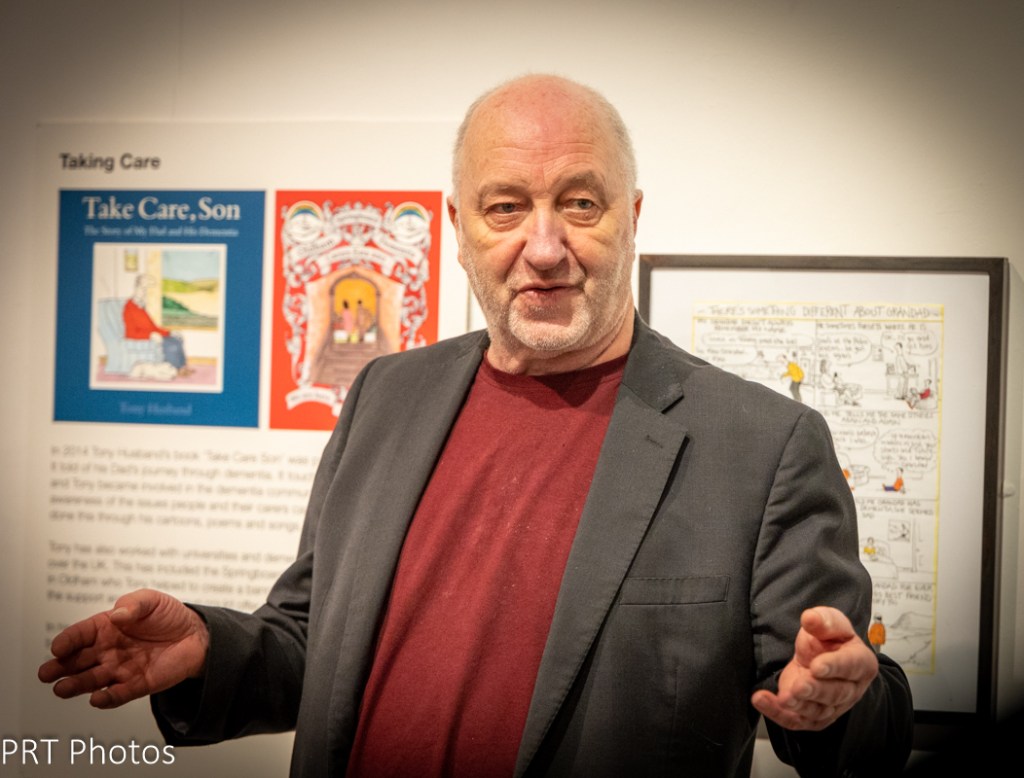
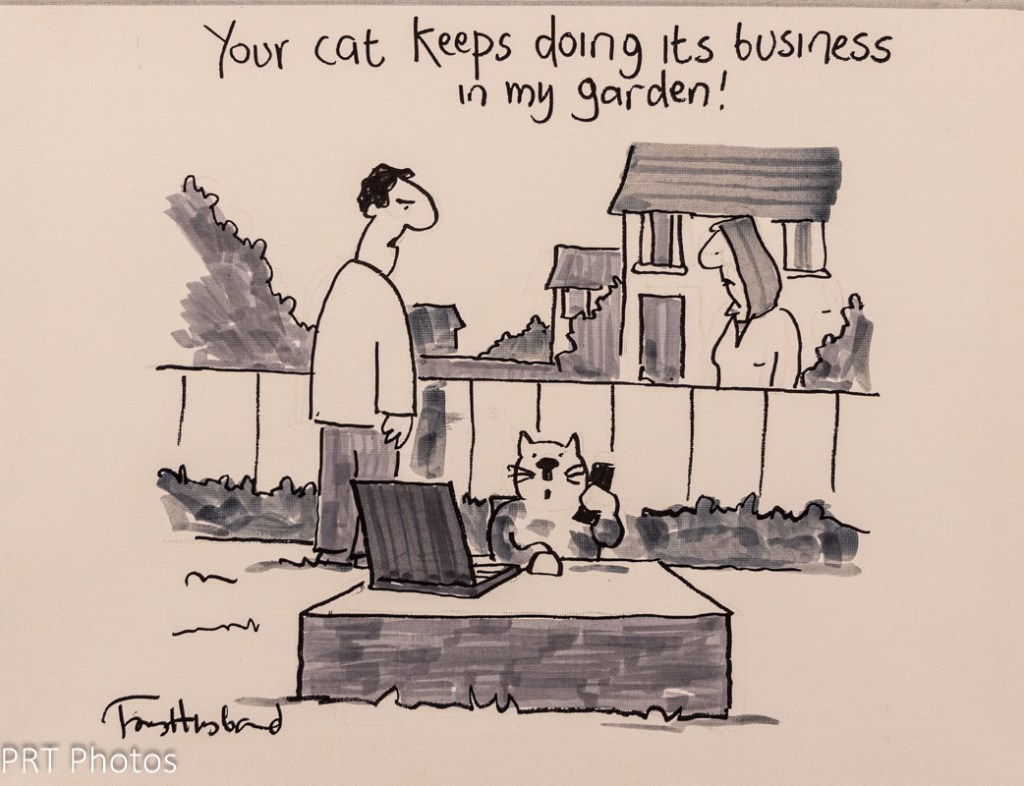
Tony Husband, a multi-award winning cartoonist, was giving a talk In Gallery 3 about his current exhibition. His work has appeared in numerous publications in this country and abroad including The Times, The Spectator and Private Eye for whom he has contributed to every issue for the last 37 years, maybe more!
He also has published over 60 books. Tony loves music, nature, fine wines and, er, Man United.
This exhibition brings together a range of Tony Husband’s best-known work. Expect to laugh out loud.
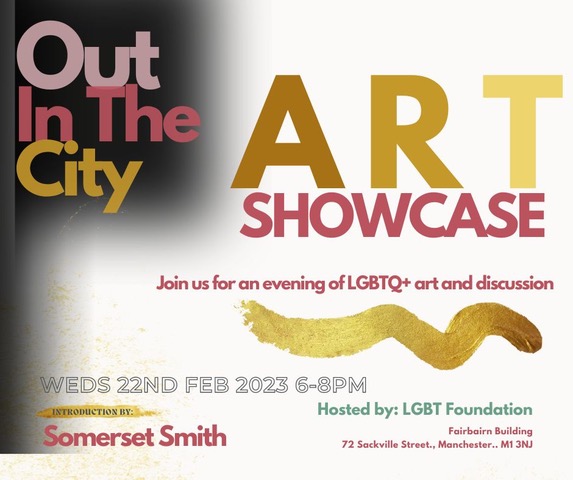
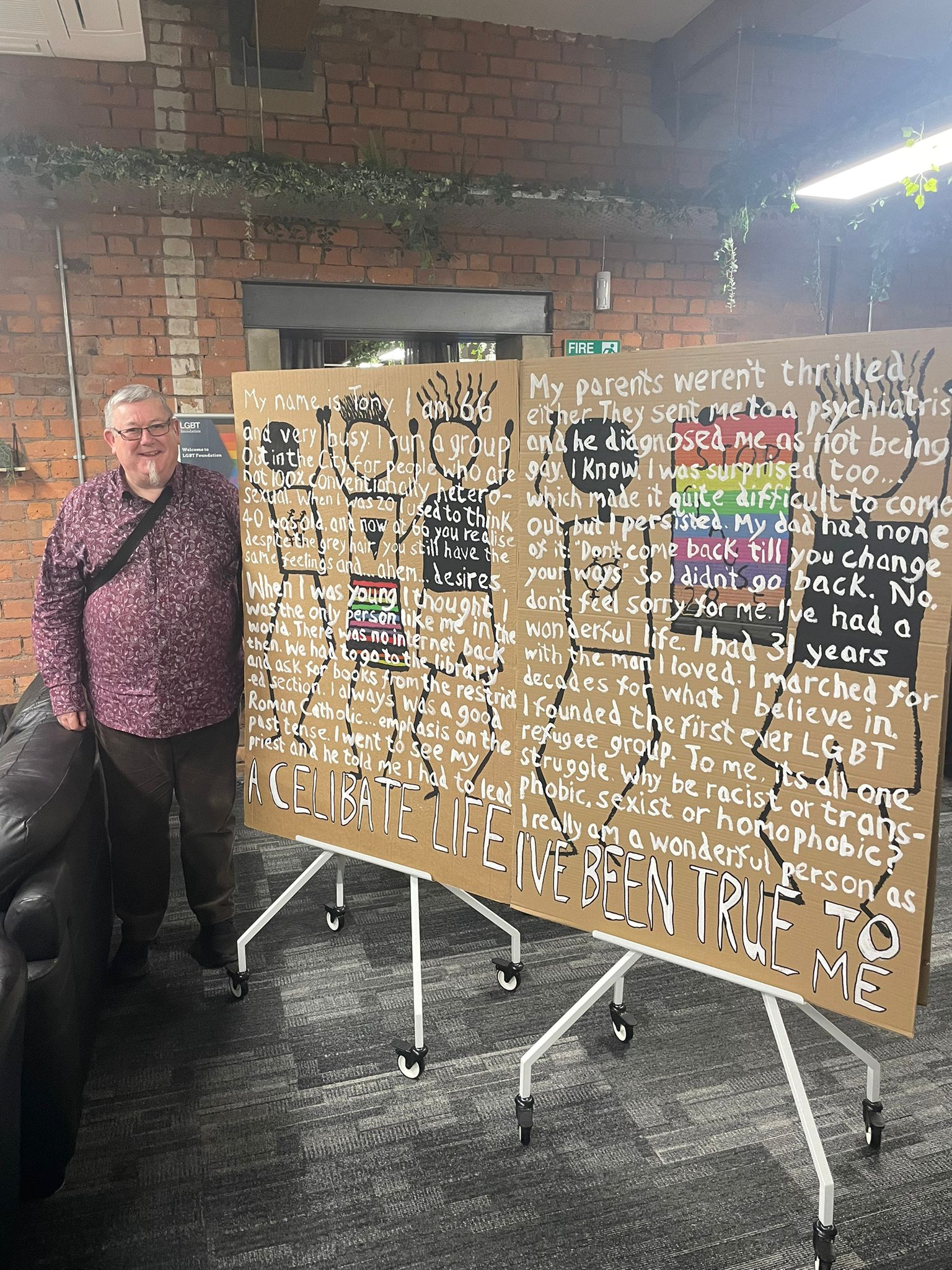
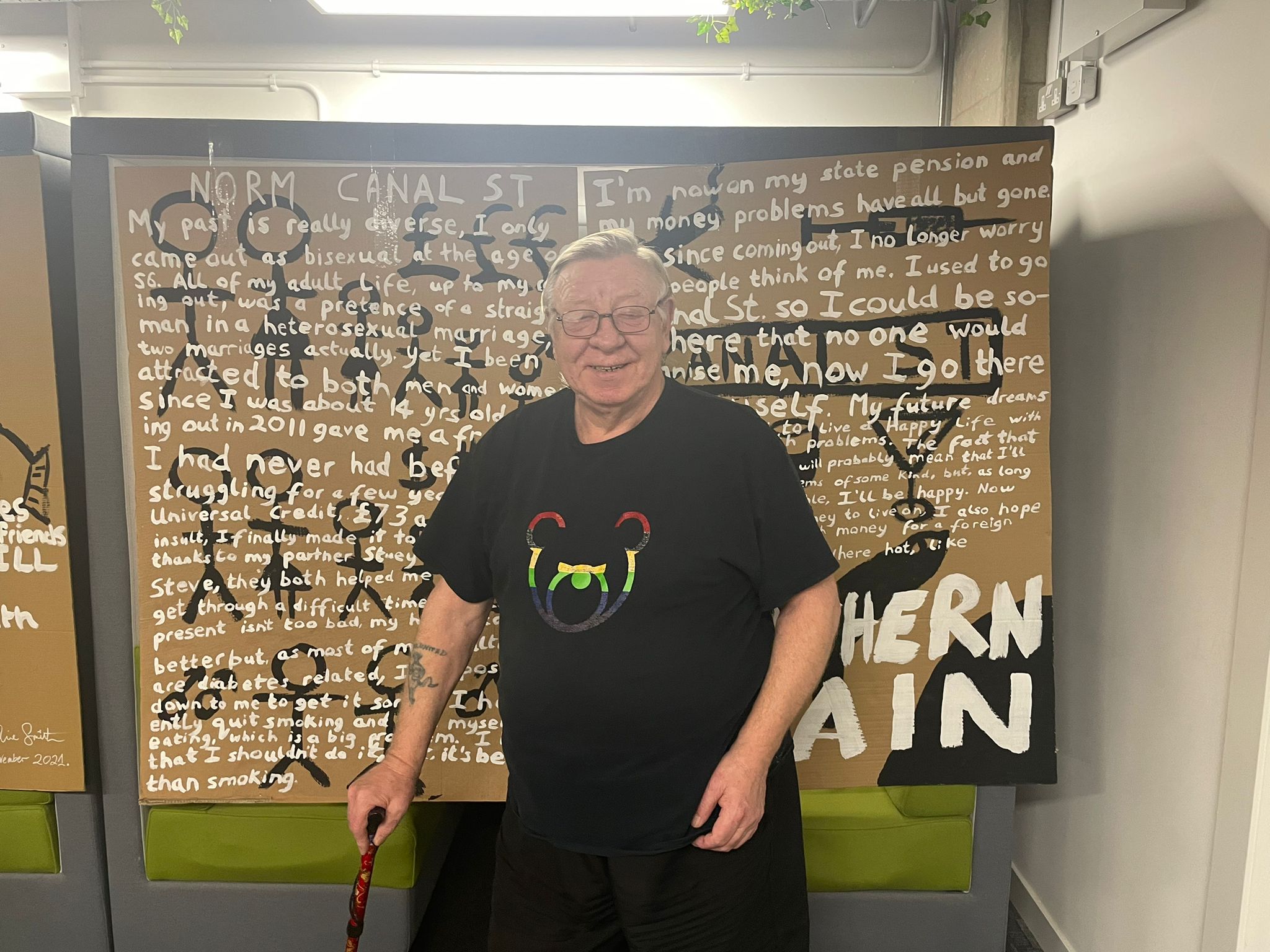
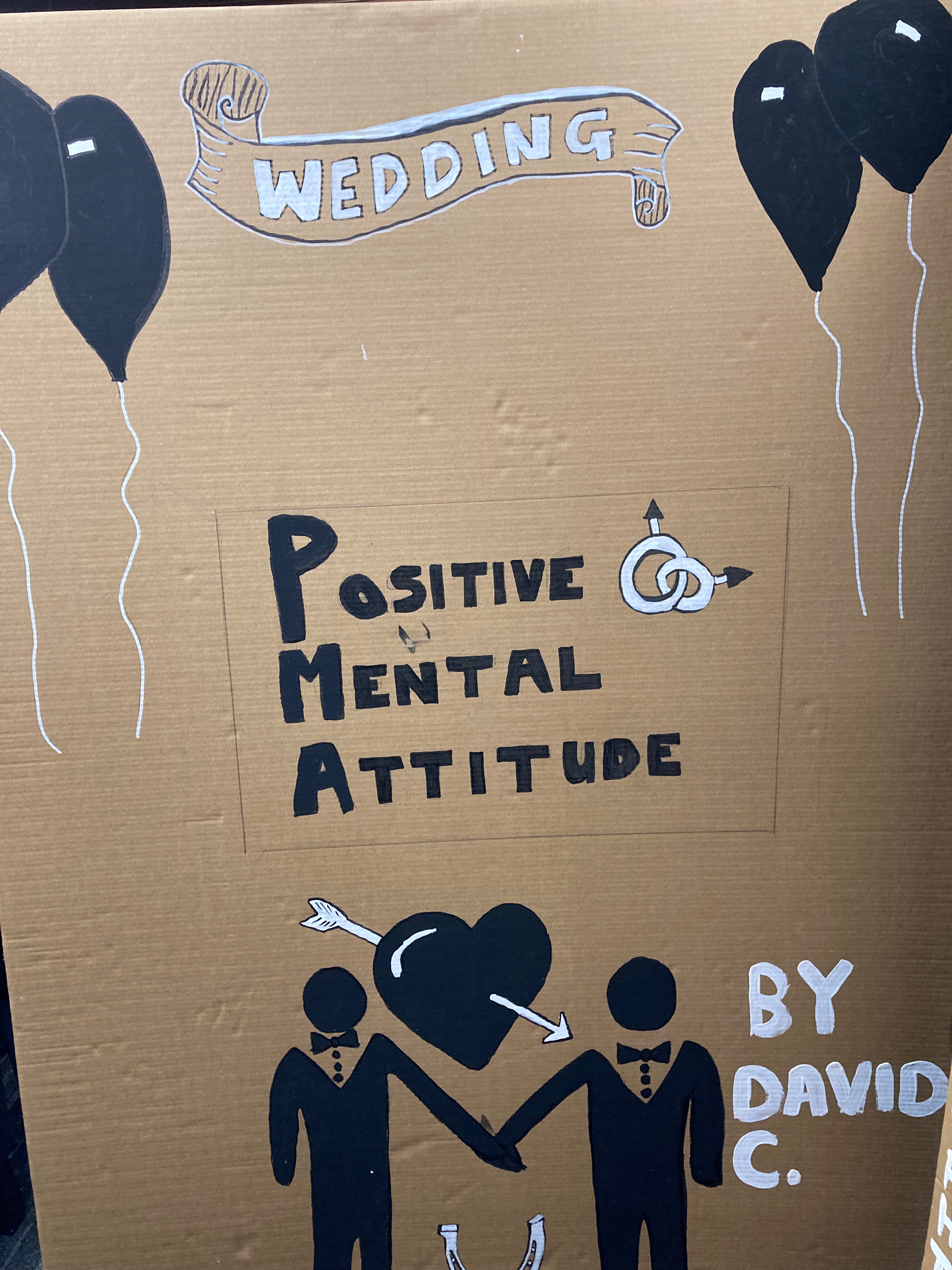
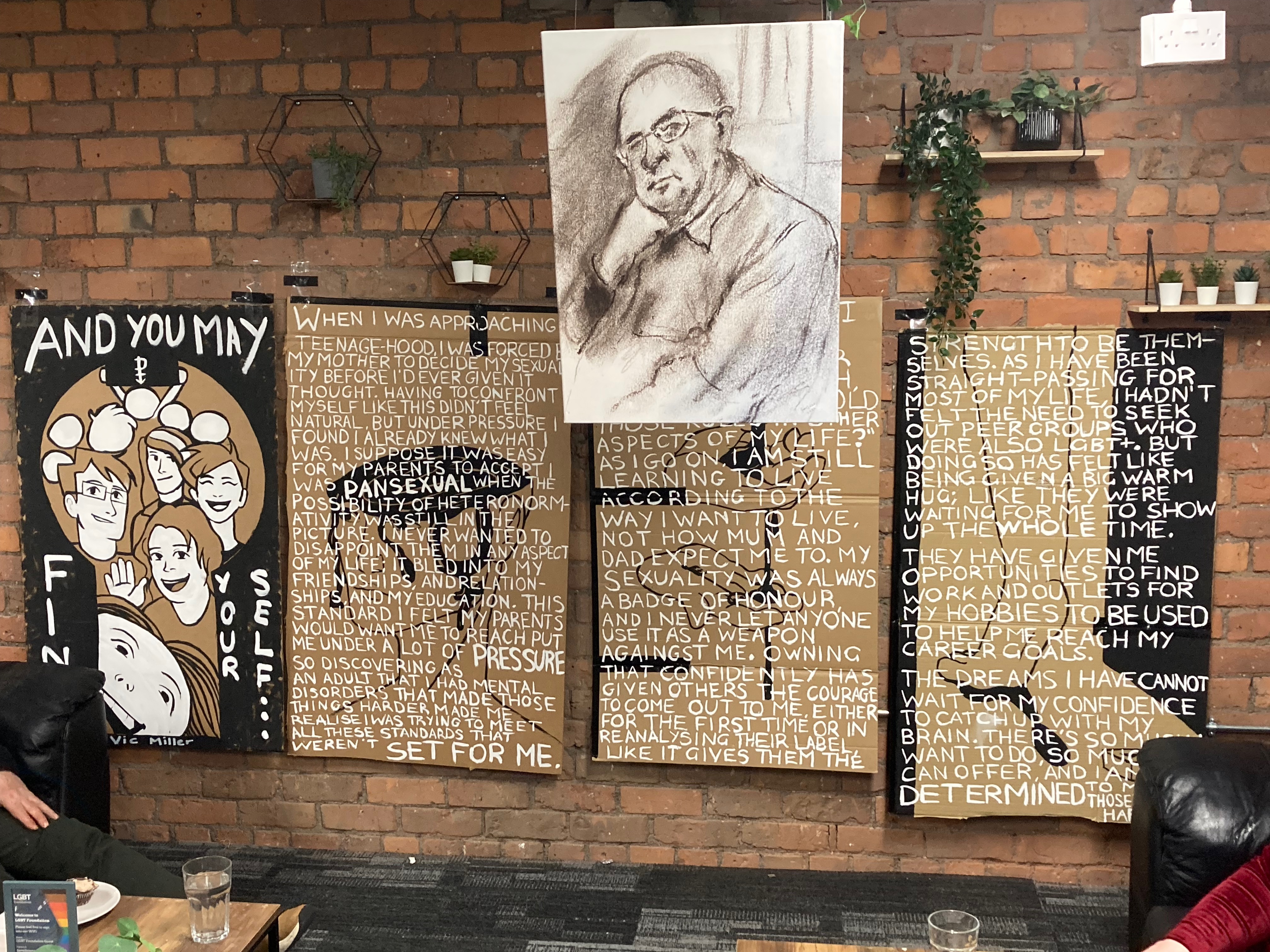
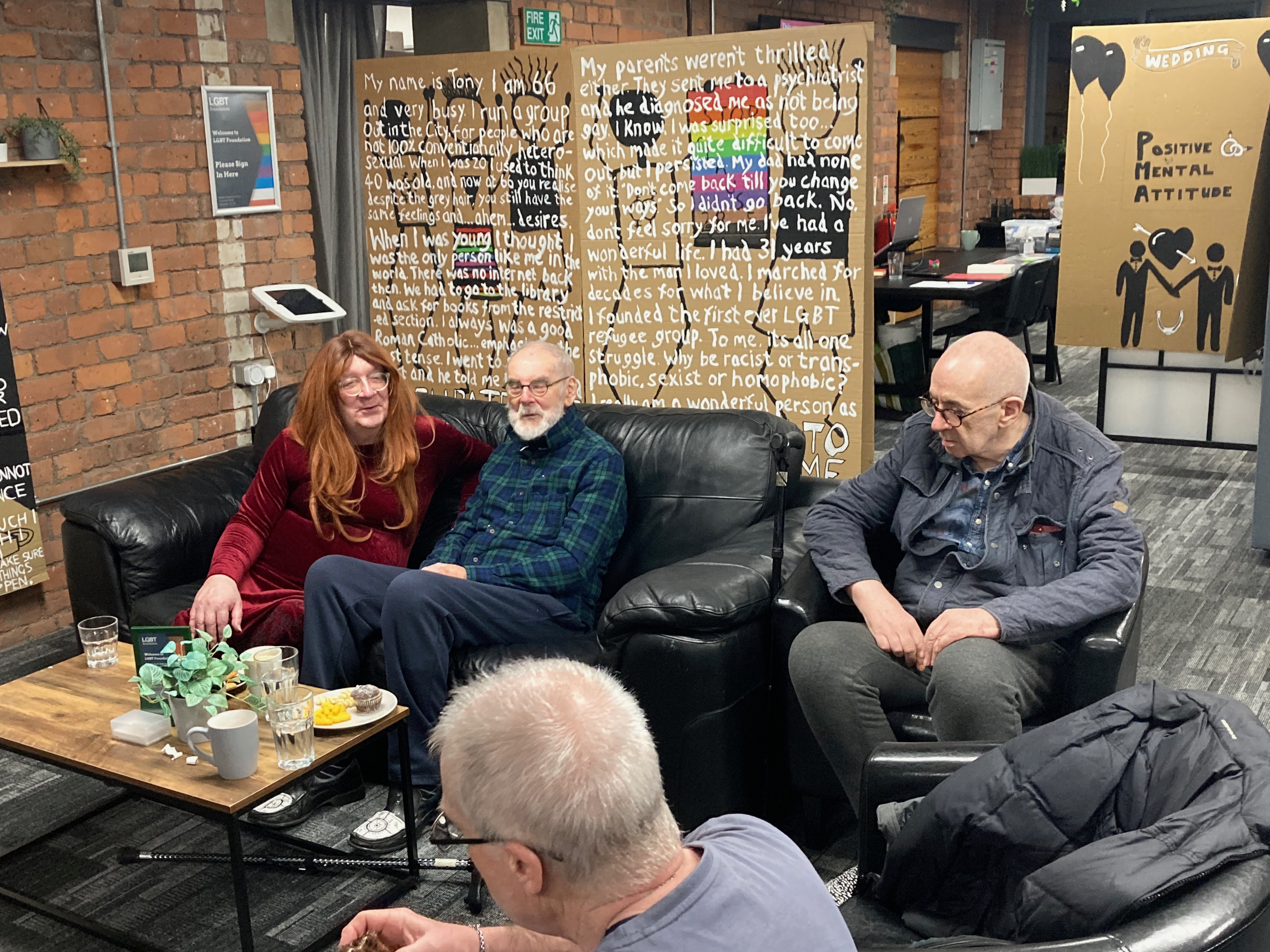
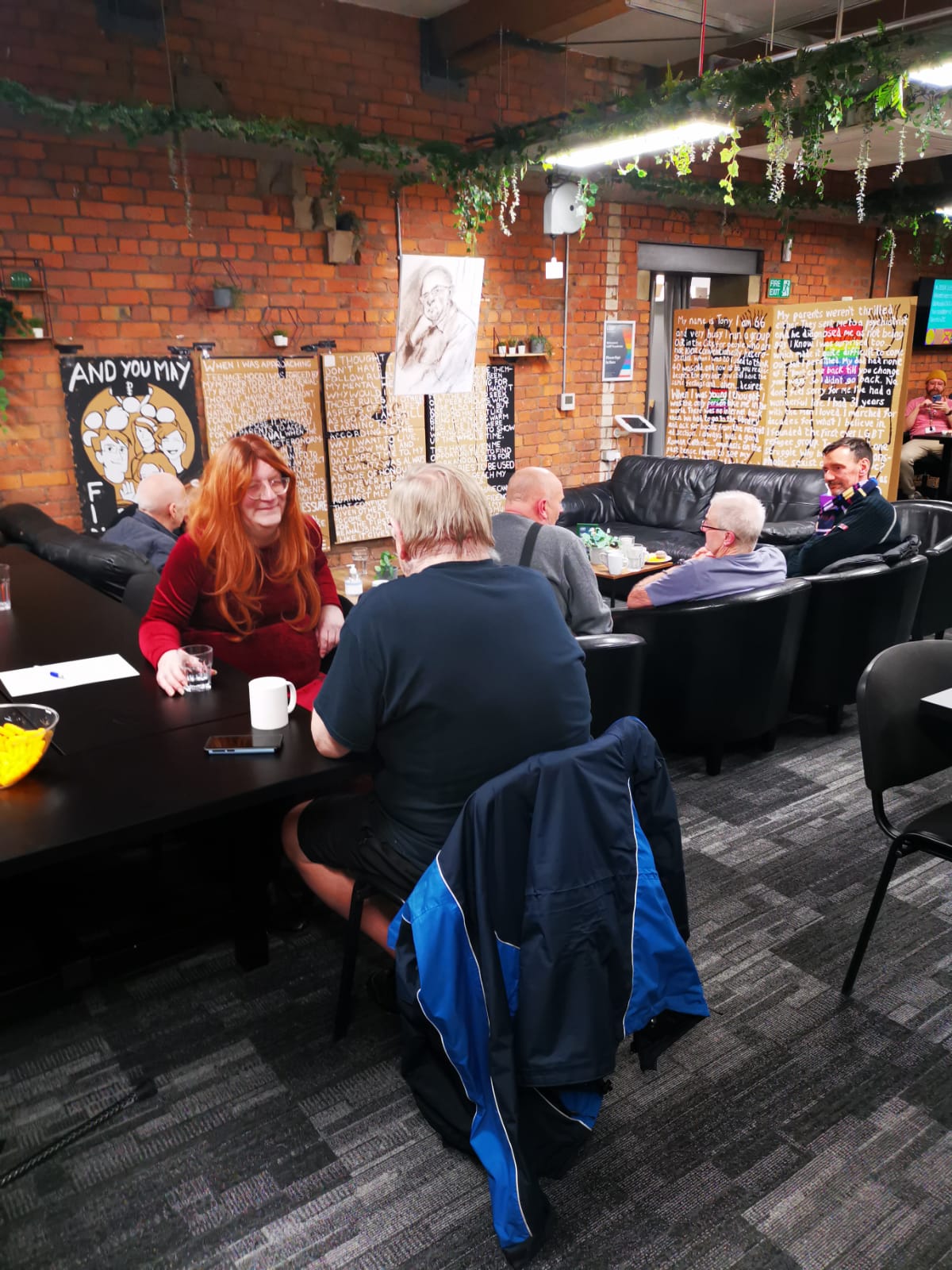
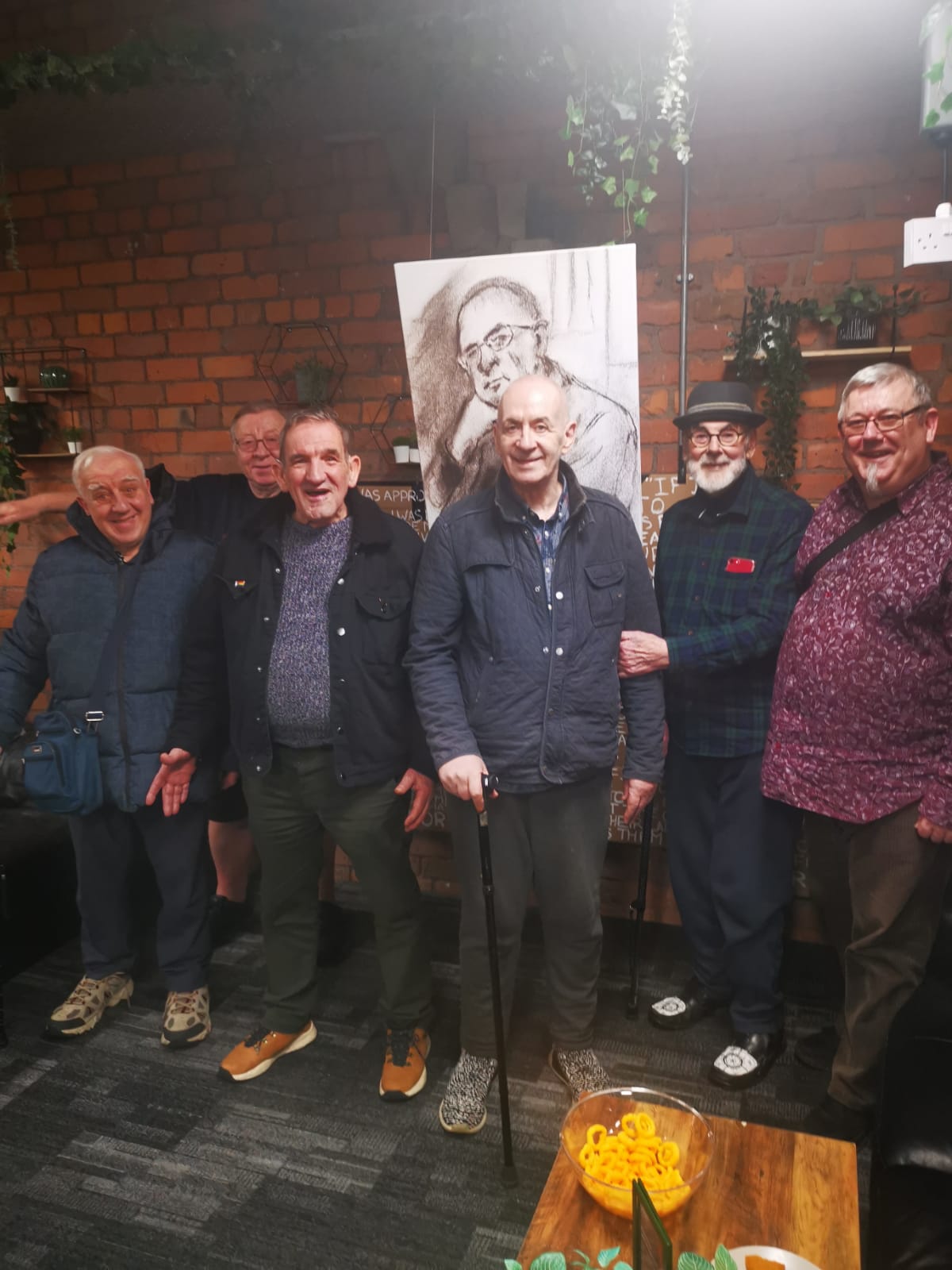
Out In The City launched the Creative Writing Art Exhibition on Wednesday, 22 February at the LGBT Foundation.
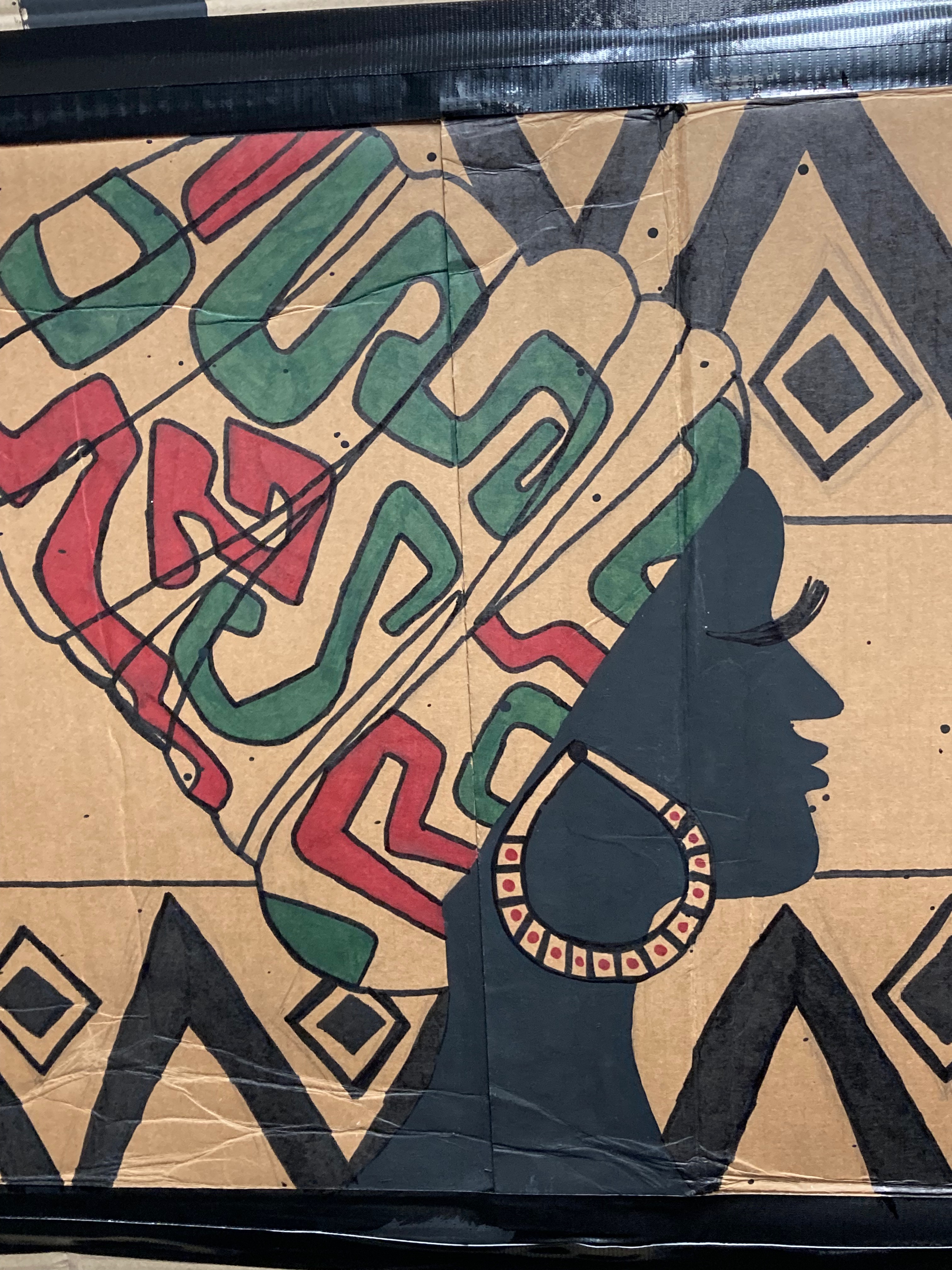
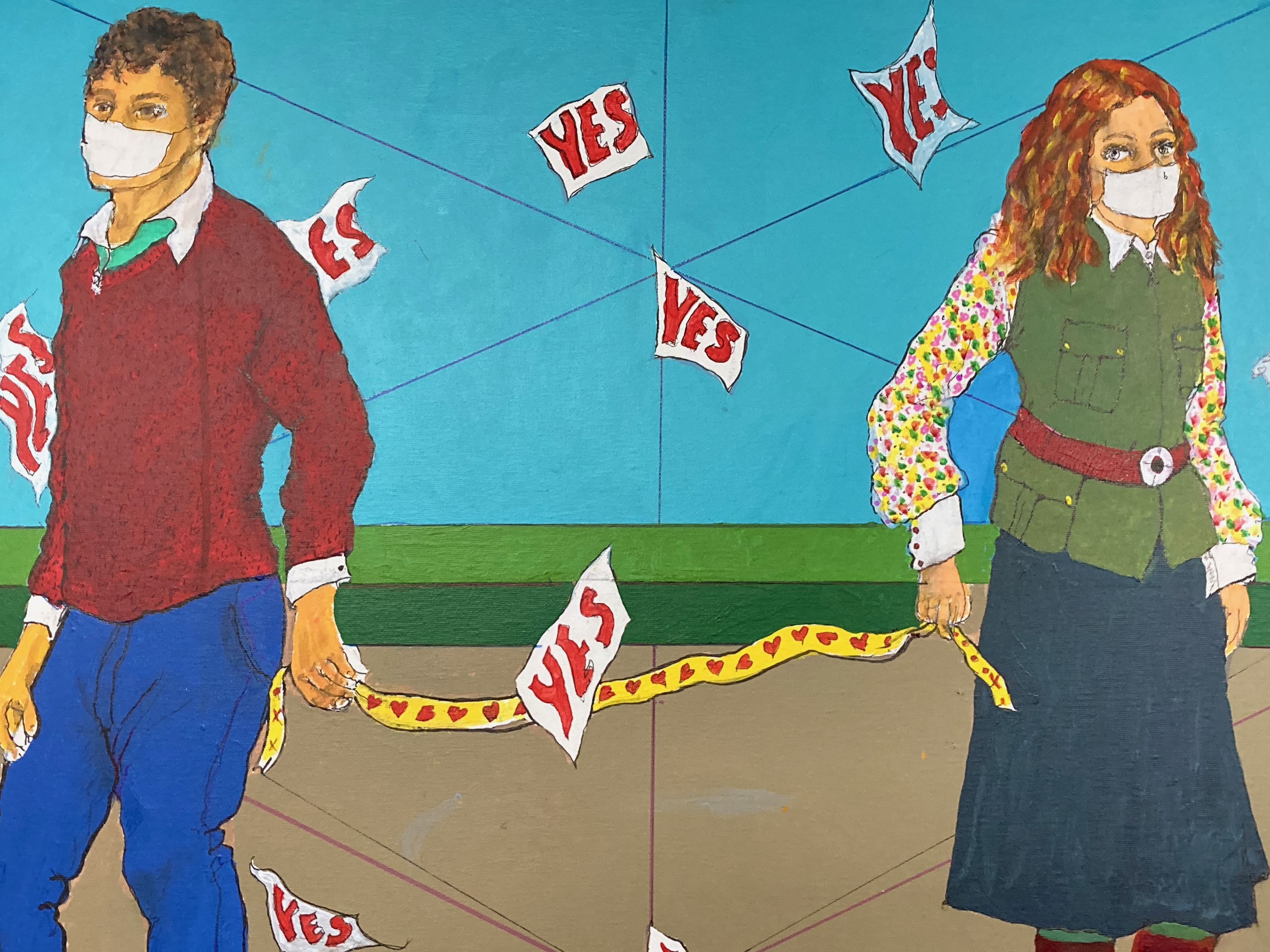
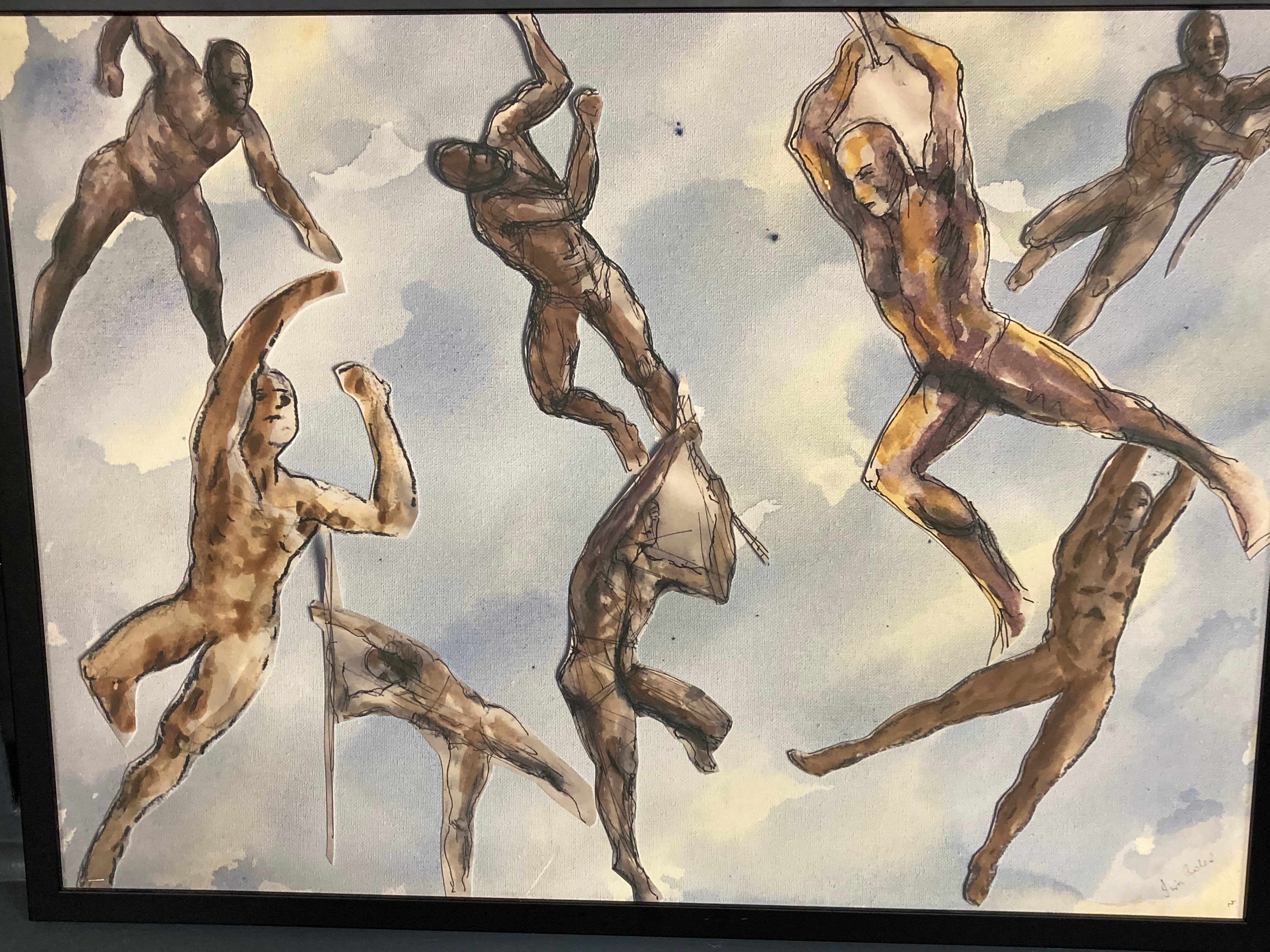
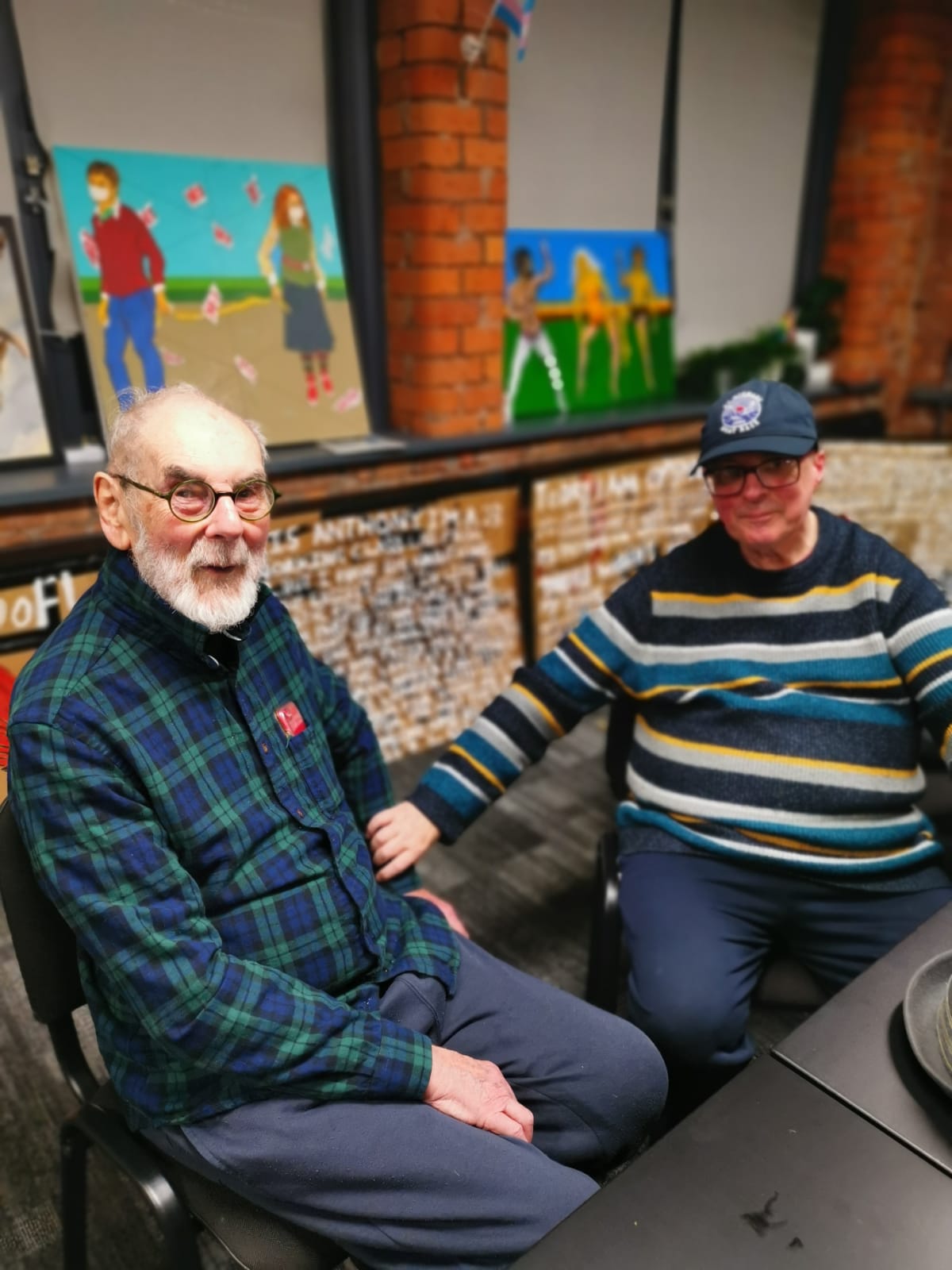
Artworks were shown by members of Out In The City (Bill, David, Mindy, Norman, Norman, Pauline and Tony) produced with the help and advice of Somerset and Simon from Manchester Street Poem. There were also artworks by Vicky on display together with paintings by Jim.
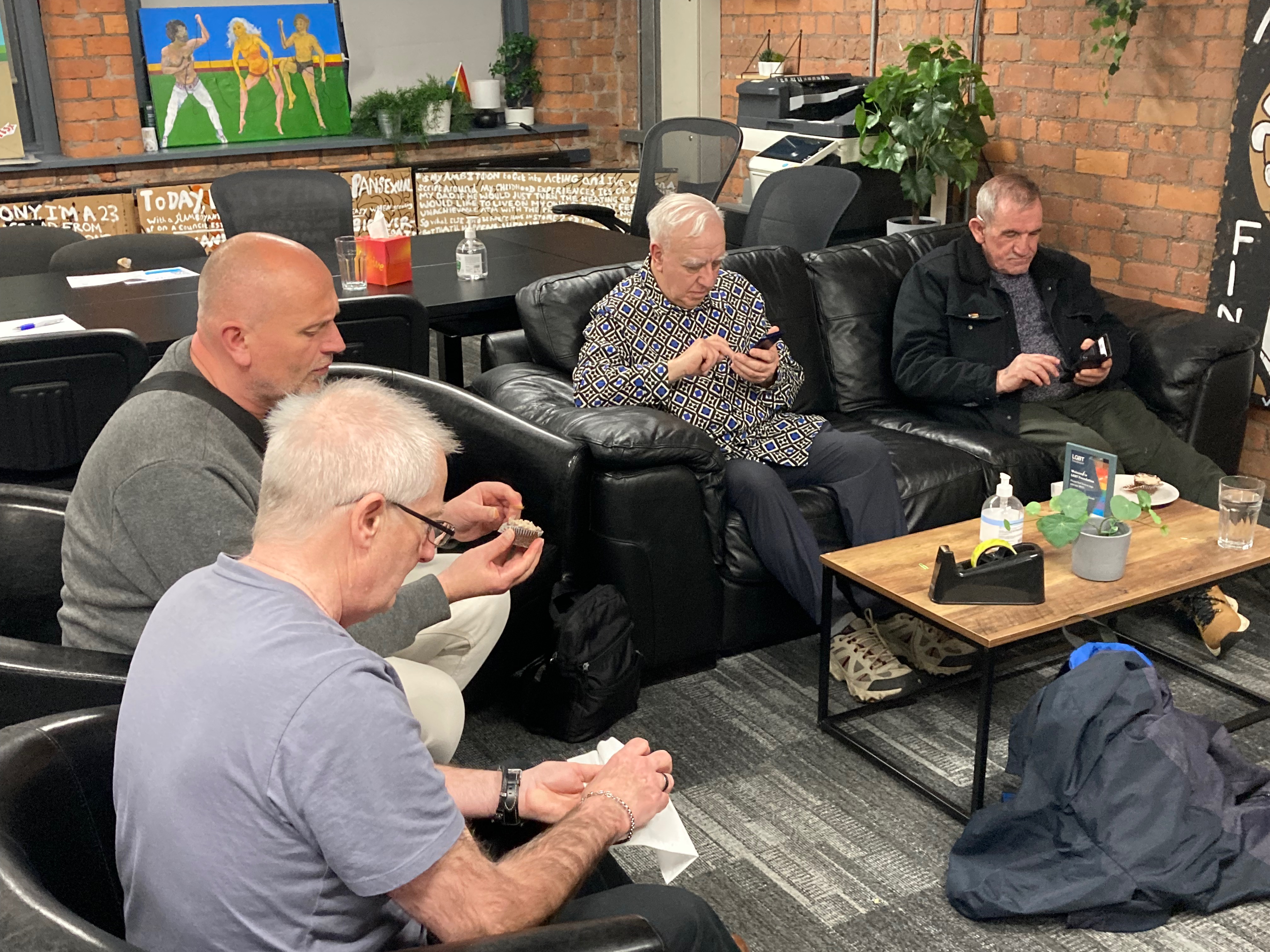
We also had the opportunity to look around the LGBT Foundation premises as about ten of us had never been to the building before.
Legacy of ‘67
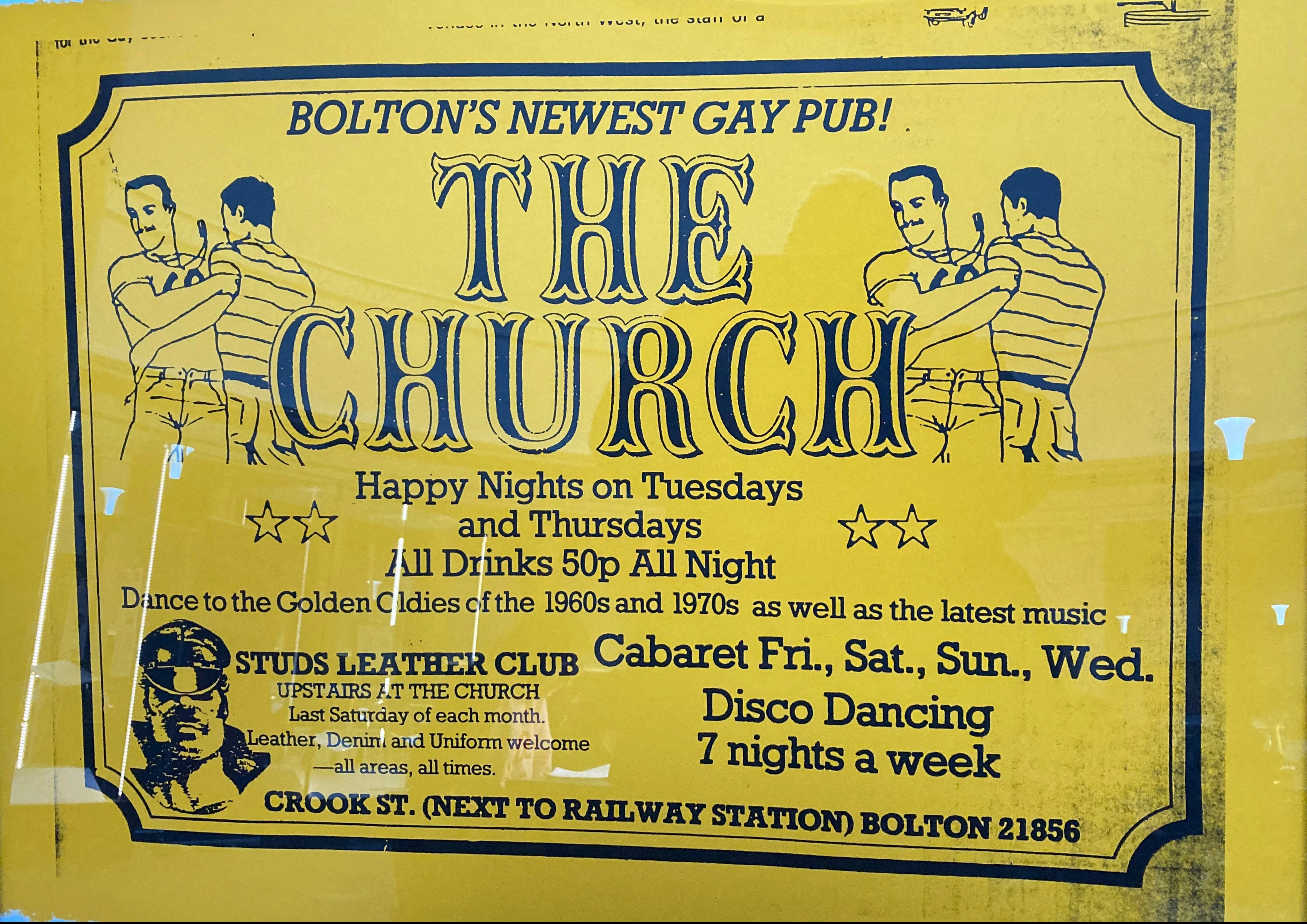
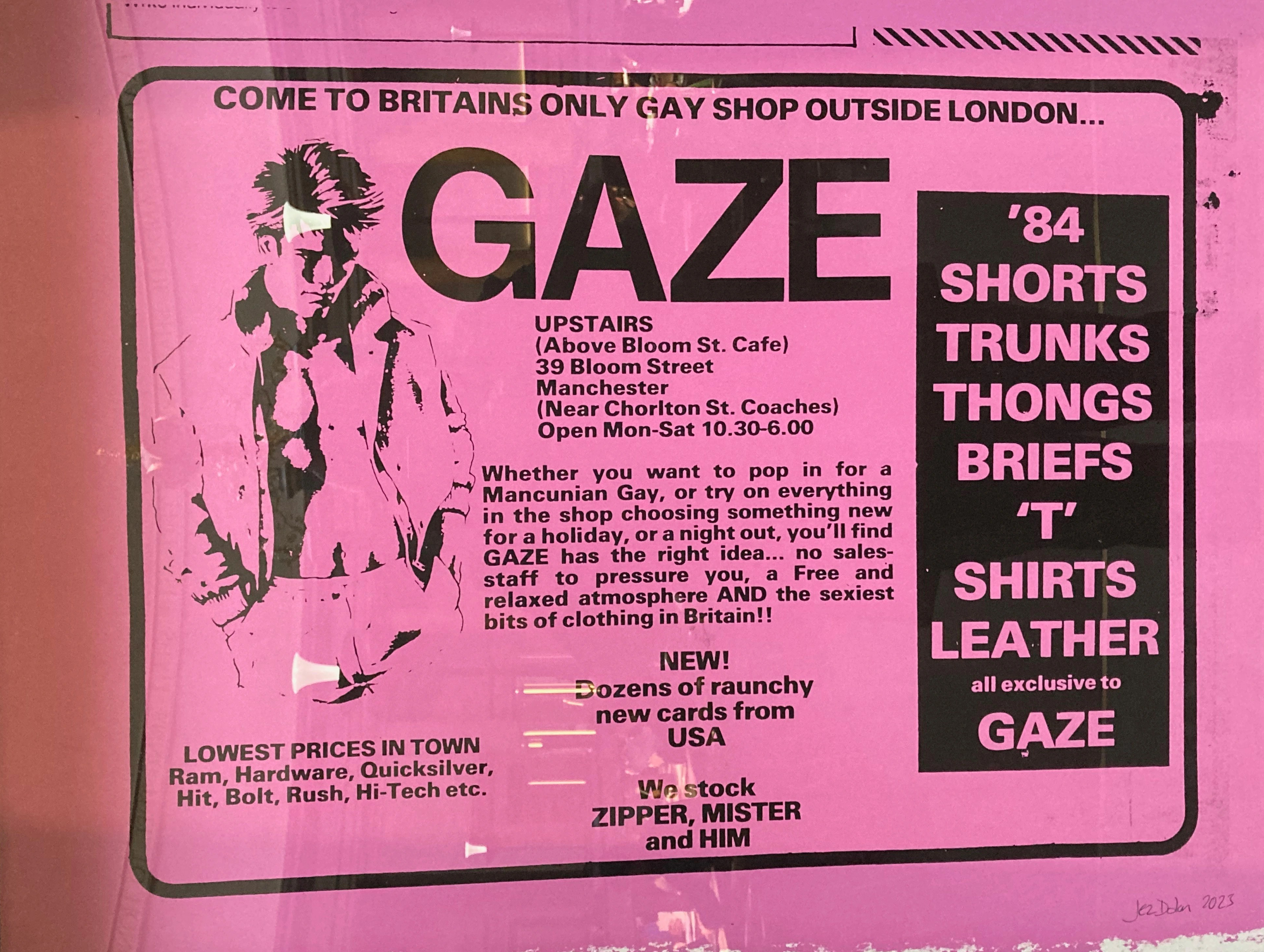
Jez Dolan’s solo show – Legacy of ’67 – is on display in the Reading Room on the first floor of Manchester Central Library.
The show is part of a larger project, supported by the National Lottery Heritage Fund, that explores the changes in the law that have affected LGBT+ people since the Sexual Offences Act in 1967 that partially decriminalised homosexual acts between men in private.
For the last twelve months Initiative Arts has been capturing the stories of people who have grown up between the ‘60s and the ‘80s to find out how these changes have affected them. They have recorded their testimony, which can be found in Archives+ at the Central Library and have conducted original research of contemporaneous source material to explore the changing attitudes towards LGBT+ people in general society.
Initiative Arts commissioned visual artist Jez Dolan to respond to this project and he has produced a series of eight original works that are on display in the Reading Room, together with an exhibition of original material from the archive.
Jez Dolan is an artist living and working in Manchester. His practice underlines the intersections between queerness, sexuality, identity, and memory. He works across multiple platforms including drawing, performance, printmaking and most recently painting.
The next stage of the project is “Great Indecencies” – a darkly comic play with music, that explores LGBTQIA+ memory, and the beginnings of homosexuality’s decriminalisation. It is the culmination of Legacy of ’67: Initiative Art’s year-long project that captures the real-life accounts of LGBT+ people during the last 50 years, charting the effect of a major change in the law in 1967 and its aftermath.
The play is on Thursday, 30 March to Saturday 1 April 2023 at 7.30pm at The Edge Theatre and Arts Centre, Manchester Road, Chorlton, Manchester M21 9JG. Tickets are £15 / £13.
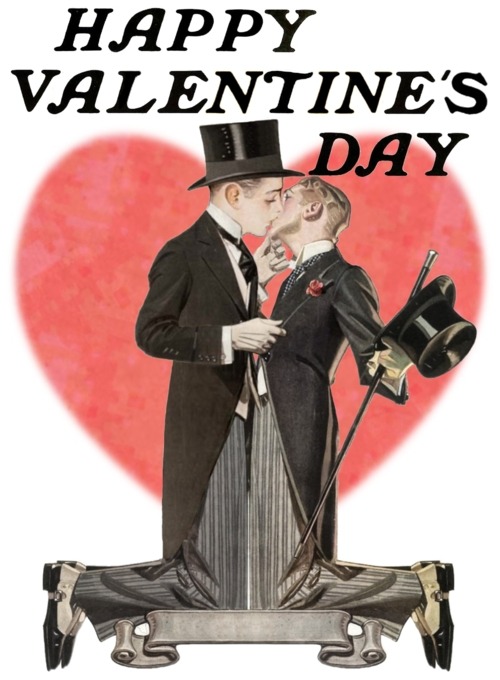
Let’s travel back in time and remember some of the most fabulous LGBT+ couples
We all have a favourite LGBT+ couple, one that melts our hearts and makes us believe in love and happy endings – but what about the romances through history that unknowingly paved the way for LGBT+ people today?
Honouring those before us is so important, as it allows us to reflect on how far we’ve come as a community while celebrating the bravery of those who lived as their true LGBT+ selves, whether publicly or behind closed doors before there were any protections for people like them.
So, let’s travel back in time and remember some of the most fabulous LGBT+ couples.
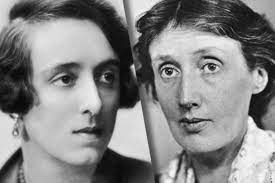
Virginia Woolf and Vita Sackville-West
Virginia Woolf and Vita Sackville-West
Virginia Woolf and Vita Sackville-West met at a 1920s dinner party, with Woolf offering to publish a book Sackville-West had been working on with her husband.
They quickly bonded over their love for literature and past emotional trauma, forming a strong emotional connection, which blossomed into romance. Their husbands were aware of their affair, but never did anything about it and remained respectful.
The two were lovers for ten years, with fellow poet and novelist Sackville-West and her tumultuous family history becoming the inspiration behind Orlando: A Biography. The gender-shifting protagonist became one of Woolf’s most popular creations.
After enjoying a sexually satisfying relationship for the first time, Woolf’s affair with Sackville-West ended in the late 1920s, but they remained close friends.
Anne Lister and Ann Walker
Anne Lister and Ann Walker
If you’re a fan of the series “Gentleman Jack,” you’ll certainly know who Anne Lister and Ann Walker are.
Lister is often referred to as the first modern lesbian, living totally without shame and presenting as far more masculine than the other ladies around her in the 1800s. She also made no secret of her desire to only spend her life with another woman.
She met Walker in the 1820s and they connected on various occasions over the years. In a monumental moment in history, landowner Lister and young heiress Walker took the sacrament together in 1834 in what is thought to be the first lesbian marriage.
Now, the Holy Trinity Church in Goodramgate, York, displays an official blue plaque on the wall outside to mark the occasion.
Lister and Walker did a great deal of travelling together, and they cohabited in the Lister estate, Shibden Hall, until she died in 1840.
It was only hundreds of years later that her story could be shared after coded diaries were discovered that documented her romantic relationships with other women.
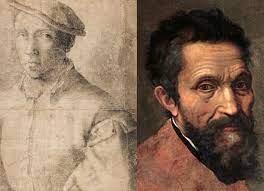
Michelangelo and Tommaso de Cavalieri
Michelangelo and Tommaso de Cavalieri
Italian sculptor Michelangelo and nobleman Tommaso de Cavalieri met in 1532 in Rome, and they remained close throughout their lives.
Then 57 years old, Michelangelo was instantly infatuated with Cavalieri’s appearance, as he fit the artist’s notions of ideal masculine beauty. In fact, Michelangelo described him as the “light of our century, paragon of all the world.”
Cavalieri became the object of Michelangelo’s passion, his muse, and the inspiration for letters, numerous poems, and works of visual art.
They were devoted to one another until the painter’s death, at which Cavalieri was present, in 1564.
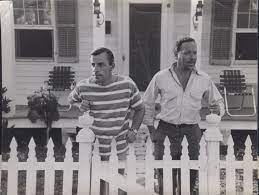
Tennessee Williams and Frank Merlo
Tennessee Williams and Frank Merlo
Tennessee Williams was an openly gay author and playwright, writing plays such as “A Streetcar Named Desire” and “Cat on a Hot Tin Roof.” Meanwhile, Frank Merlo was a working-class Italian American from New Jersey who performed on stage occasionally but was primarily Williams’ personal assistant.
The pair met in 1948 at a bar, and they soon hit off a relationship that lasted for 15 years. Describing the first time he clasped eyes on Merlo in his memoirs, Williams wrote: “… he leaned smoking against the porch railing and he was wearing Levis and I looked and looked at him. My continual and intense scrutiny must have burned through his shoulders, for after a while, he turned toward me and grinned.”
Williams and Merlo lived together in Manhattan, and they were some of the star’s most productive and happy years. Alas, their relationship became strained due to Williams’ promiscuity and his drug and alcohol abuse.
Despite this, Williams remained by Merlo’s side in 1962 when he was diagnosed with lung cancer; Merlo died the following year. It’s known that his last words to his lover were: “I’m used to you now,” which the actor accepted as a declaration of love.
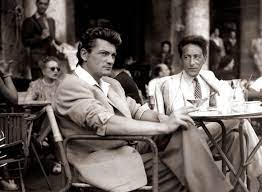
Jean Cocteau and Jean Marais
Jean Cocteau and Jean Marais
Writer Jean Cocteau met Jean Marais when Cocteau was 48 and Marais was 24. Marais had seen drawings by Cocteau, and they reminded him of himself.
After they managed to meet, they were lovers for many years, and they even made several films together, with Marais having starred in most of Cocteau’s most well-known projects, including “Beauty and the Beast” and “Orpheus”.
It’s known that their relationship was extremely passionate and intense, with Marais officially becoming his lover’s muse.
It’s also worth noting that the couple made the conscious decision to stay in Nazi-occupied Paris, despite the fascists’ attitudes towards homosexuality. They were openly gay and often ridiculed in the Nazi press.
Marais outlived Cocteau, who died of a heart attack in 1963. But, Marais described the late writer as the love of his life, wishing their paths had crossed sooner.
Eleanor Roosevelt and Lorena Hickok
Eleanor Roosevelt and Lorena Hickok
Former First Lady Eleanor Roosevelt and reporter Lorena Hickok first met on a Presidential campaign in 1932, with Hickok, the most famous woman journalist of her time, able to convince her editor that Roosevelt deserved her own reporter.
After growing close, it’s widely believed that they embarked on a love affair that lasted for several years. Hickok helped Roosevelt become more outspoken, and they worked together in her campaigns for democracy and human rights.
The nature of their very close relationship has been debated for years but in the 1970s, around 3,000 letters between them were discovered. They were warm, passionate, and typical love letters. They wrote to each other for three decades, sometimes twice a day.
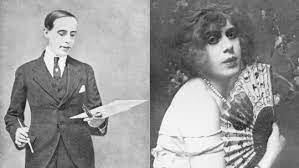
Lili Elbe and Gerda Gottlieb
Lili Elbe and Gerda Gottlieb
You might know of Lili Elbe and Gerda Gottlieb if you’ve seen the movie “The Danish Girl.”
Elbe was a Danish painter and transgender woman, amongst the earliest recipients of gender-affirming surgery in 1930.
She met fellow painter and illustrator Gottlieb while attending the Royal Danish Academy of Fine Arts in Copenhagen. They dated for a few years and married in 1904 when Lili was 22 and Gerda was 19. They travelled through Italy and France, eventually settling in Paris in 1912.
During this time, Elbe began experimenting with her gender expression, wearing women’s clothing and changing her name and persona.
Sadly, as Danish law at the time did not recognize marriage between two women, their marriage was annulled in October 1930 by King Christian X. Elbe died the following year due to complications from surgery.
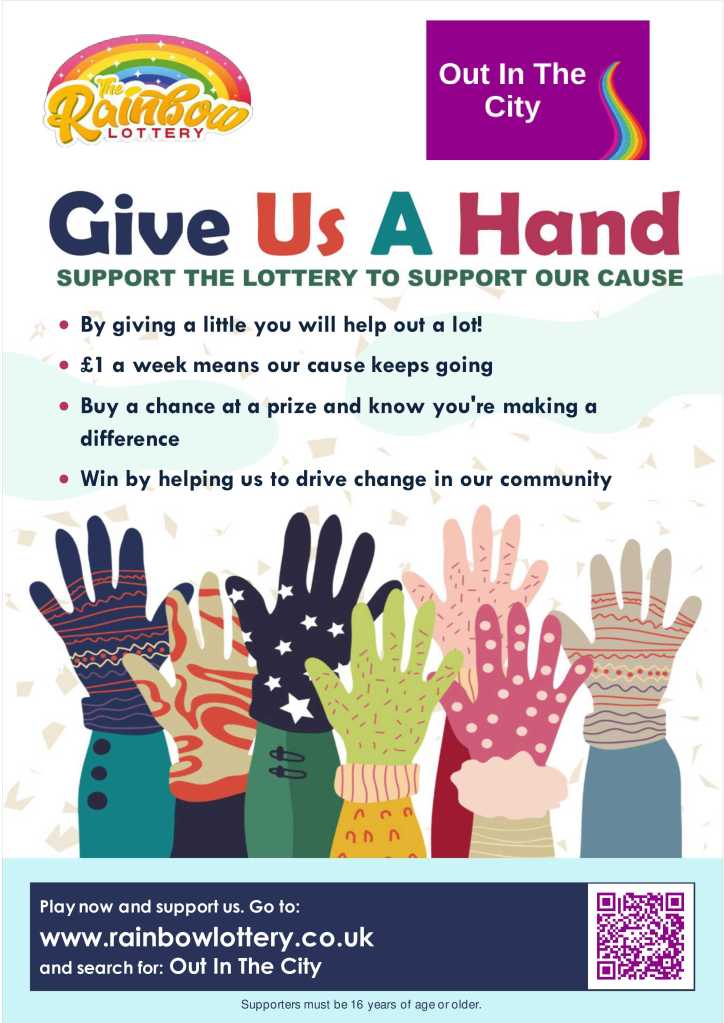
Rainbow Lottery
Whether you are trying to save some money on your weekly shop or just eat fresh and healthy, we’ve got the perfect prize for you.
As a thank you for your ongoing support for Out In The City, to kick off 2023 we’re giving you the chance to win an amazing prize: a whole YEAR of HelloFresh! These fantastic boxes deliver fresh high-quality ingredients direct to your door – with everything you need to create delicious dinners from scratch.
Special dietary requirements? Maybe you’re going veggie or vegan this year? HelloFresh have got you covered – with loads of options to choose from, there’s something to suit everyone!
The special prize draw will take place on Saturday 25 February. There’s no need to buy separate tickets, you will be automatically entered into this prize draw. Of course, you are welcome to buy additional tickets. Every ticket you buy is an extra chance to win, and an extra fundraising boost for Out In The City. It’s a win-win situation!
Thank you and good luck!
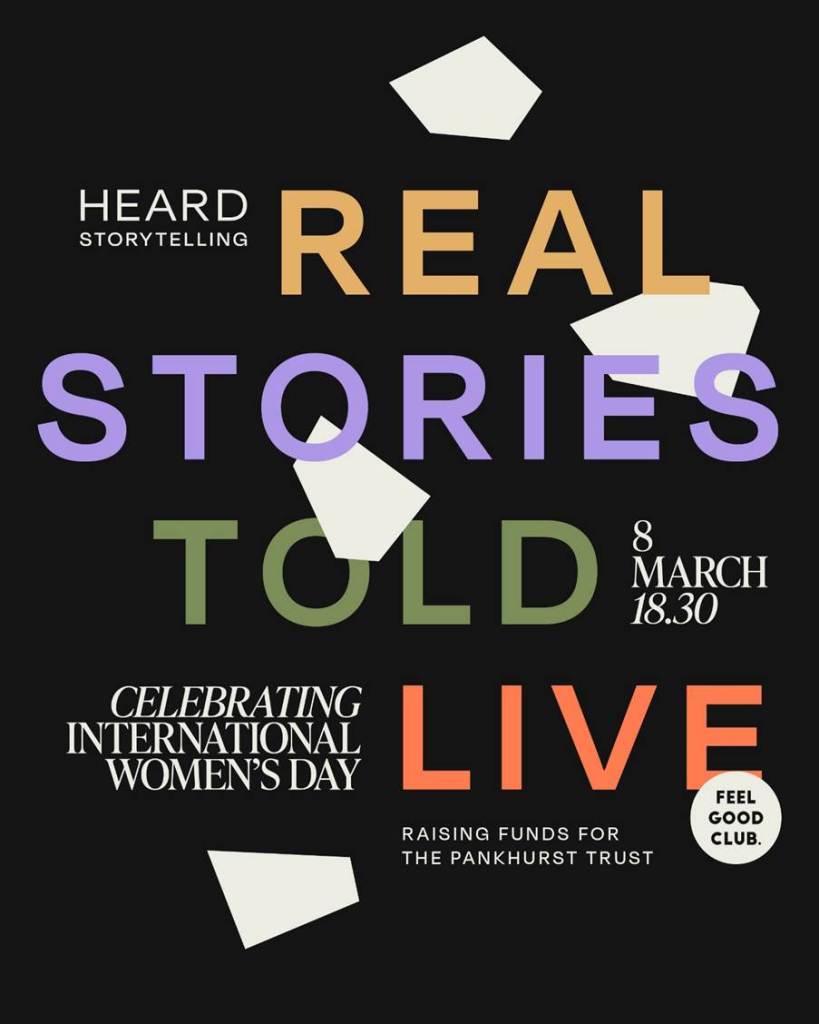
International Women’s Day
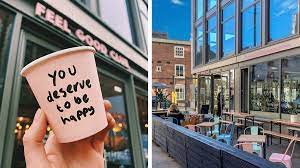
Heard Live is back! The true storytelling event, that harnesses the power of people’s lived experience to create positive change, is returning for International Women’s Day.
We would love to invite you along to the event, which is taking place on 8 March, 6.30pm – 9.30pm at Feel Good Club, 26 -28 Hilton Street, Manchester M1 2EH.
As well as enjoying a curated line up of storytellers, telling some truly inspirational and incredible stories, true to their open mic roots, there will also be a couple of spaces open for budding storytellers.
The event is raising money for The Pankhurst Trust to ensure the powerful story of the women who won the vote continues to inspire us all to challenge gender inequality, and to ensure that those suffering from domestic violence and abuse get the confidential help they need. We would love to see you there for an evening of captivating stories and connection. Booking link is here.
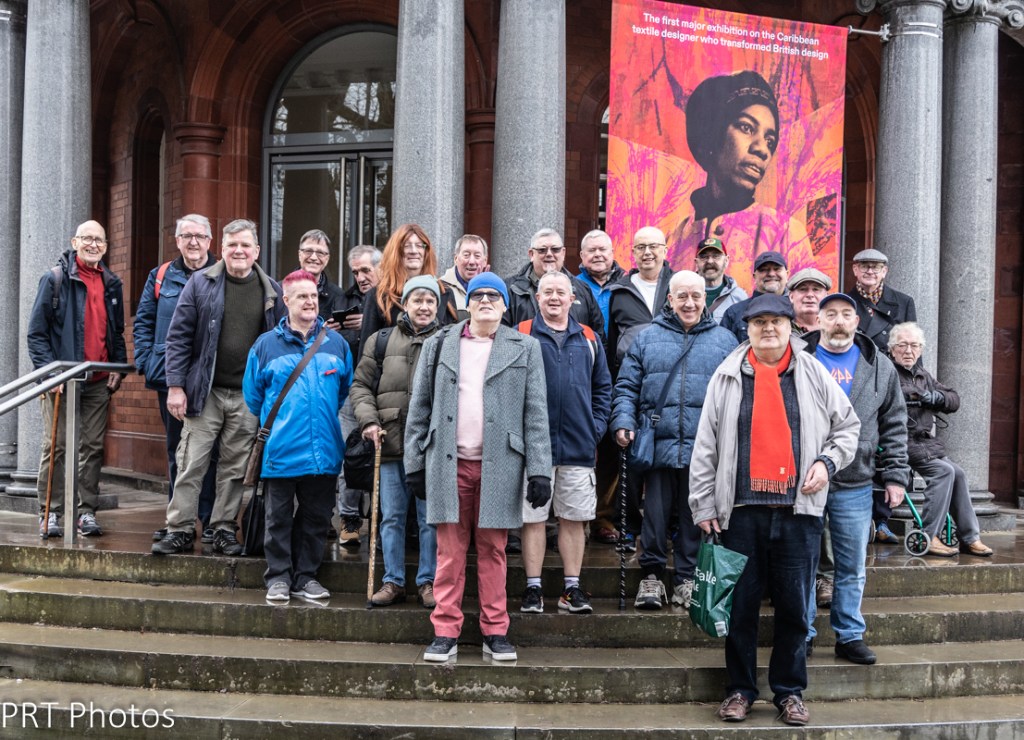
A short bus ride took us from Piccadilly Bus station to the university area where we dined at the Turing Tap, before visiting the Whitworth Art Gallery.
The current exhibition delves into the Whitworth’s collection to reveal a rich selection of works where artists have used their creativity to acknowledge their sexuality, or to explore and question gender identities.
(Un)Defining Queer is co-led by an intersectional group of participants who self-identify as LGBT+. Together, they propose how we can use a LGBT+ lens to disrupt binary notions of gender, sex and sexuality in order to challenge inequalities.
It is understood that labelling historic artists with contemporary notions of gender or sexuality is problematic because these concepts are nuanced, complex and individual. The word “Queer” has historically been used to discriminate but within the exhibition has been actively reclaimed and used in its broadest sense to be as inclusive to all gender and sexual minorities.
(Un)Defining Queer poses the question that without applying this language, how do we make LGBT+ communities visible within the collection? More specifically, the project and exhibition are seeking to redress historic omissions that have existed because of hetero-normative museum practice.
The exhibition has evolved from research and collaboration between the participants, staff, artists and activists over the last two years. The themes within the exhibition have been shaped and interpreted by the group.
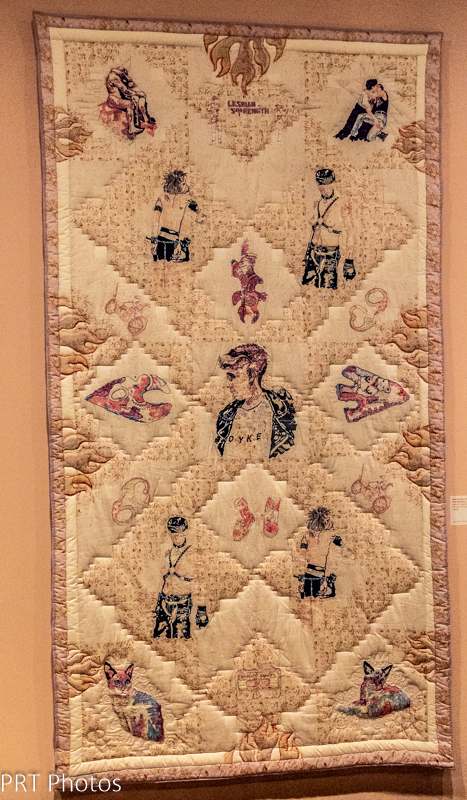
This piece “Lesbian Strength” comprises embroidery and quilting on cotton by Sarah-Joy Ford.
The Peter Tatchell Foundation has launched episode one of its new podcast – Be The Change – presented by former BBC journalist Simon Harris.
The topic of the inaugural episode centres on the origins of LGBT+ history month in the US in 1994 – and why it is important. Peter Tatchell discusses the impact the month has had and chooses three inspirational people from history who are LGBT+.
Be The Change is on all major platforms. See the website here.
Rompcast is a new podcast about gay men dating in a time before the internet – discussing how we met and where we met.
In the first episode 62-year old Colin talks about coming out in the 70’s and 80’s with stories of Moss Side riots, ITV World in Action and Queer as Folk.
In the second episode Ron, 79, from Cheshire talks about being gay from the 1950’s onwards; living with his partner Alan; AIDS and dealing with hospitals before and after the passing of the gay marriage bill. There’s also an insight into PrEP and dating online in your late 70’s.
Rompcast is on all major platforms. See the website here.
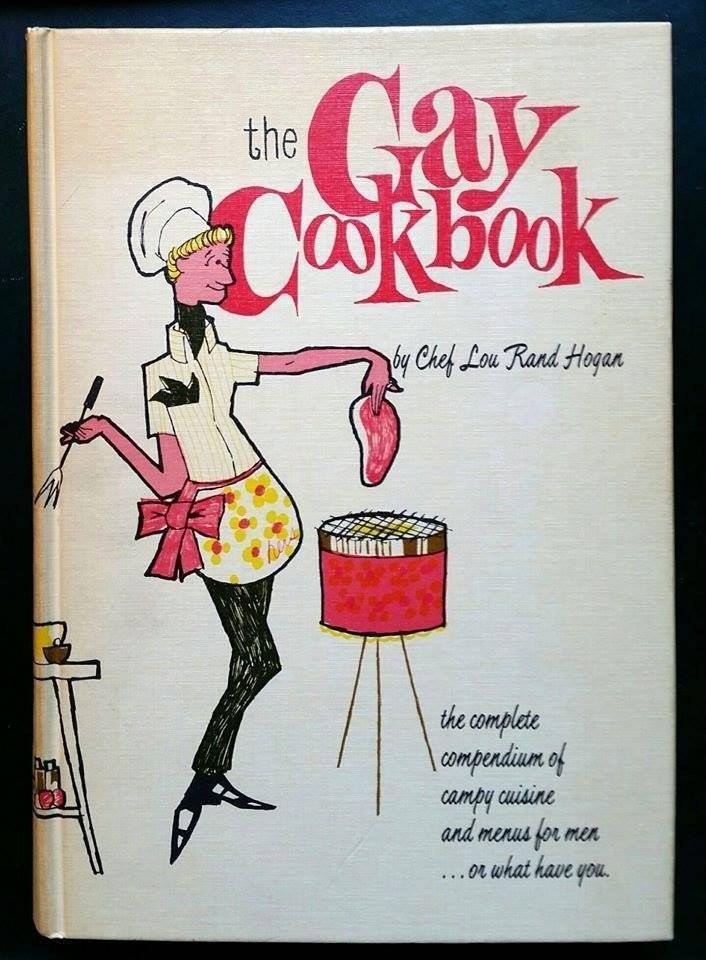
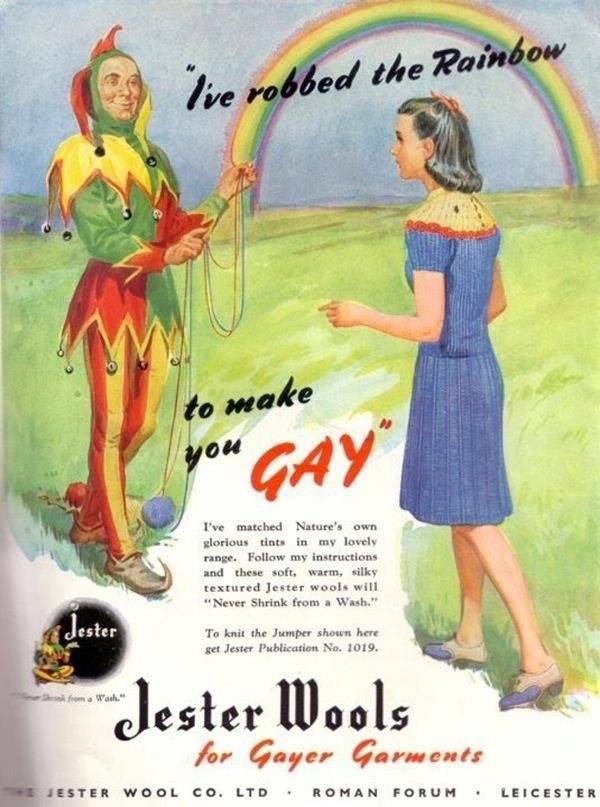
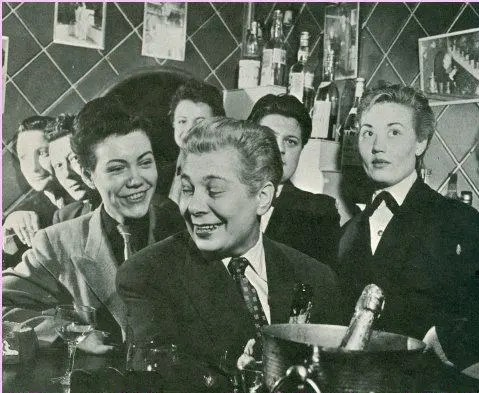
Some vintage photos:
The Gay CookbookDo you have the homosexual urge? Check your homosexual tendencies! “He” magazine 1956 “I’ve robbed the Rainbow to make you Gay”Drag Kings of Paris, 1963
Out In The City joined over 400 passionate and dedicated Forever Manchester supporters at the historic Kimpton Clocktower Hotel to celebrate Forever Manchester’s Birthday Party. It was a time to celebrate a year of local people doing extraordinary things and making Greater Manchester’s communities become even greater.
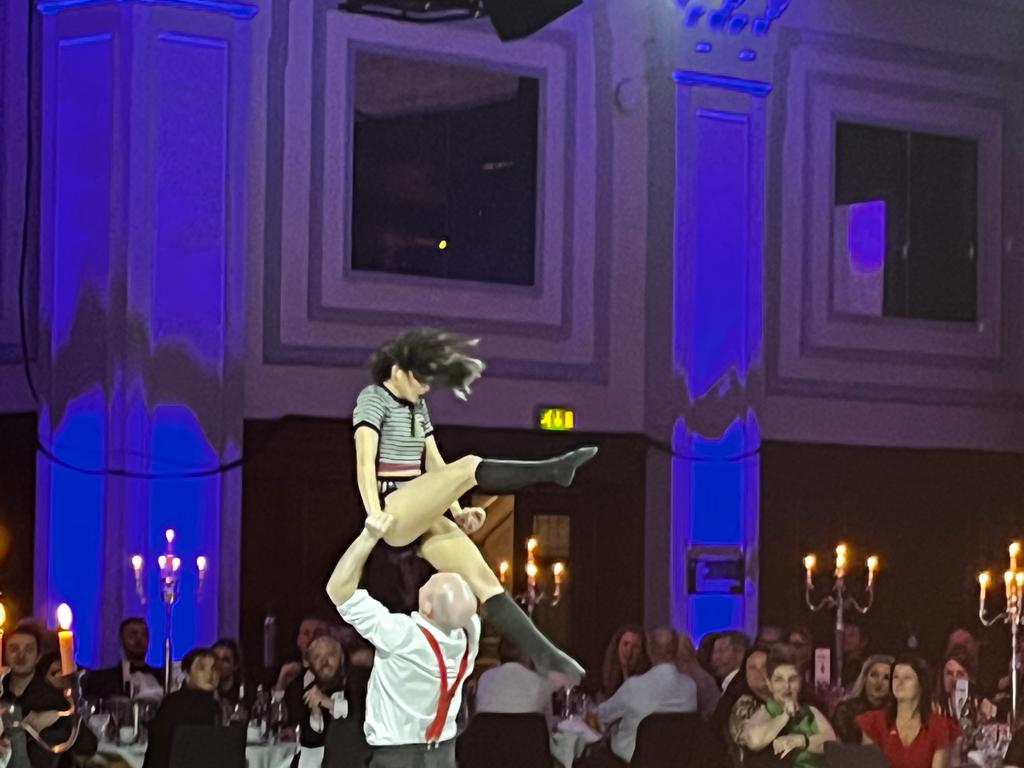
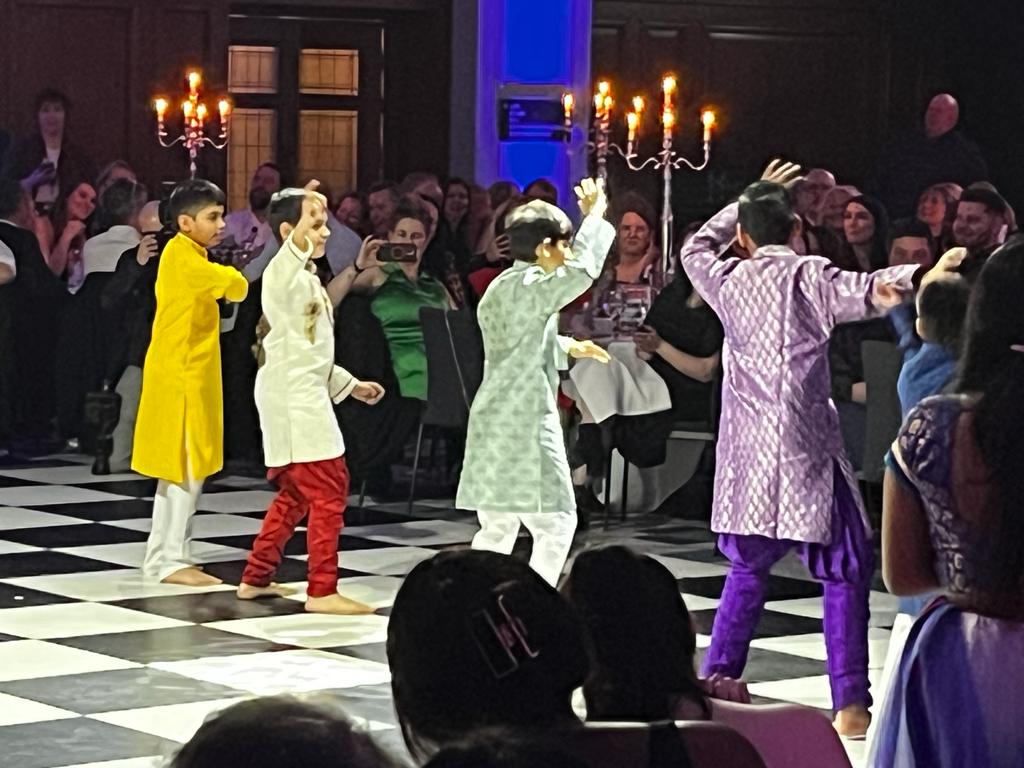
The evening involved a drinks reception, three course dinner, entertainment and awards. Entertainment was provided by TheCircus House, Bolton Mandhata Youth and the Manchester Proud Chorus.
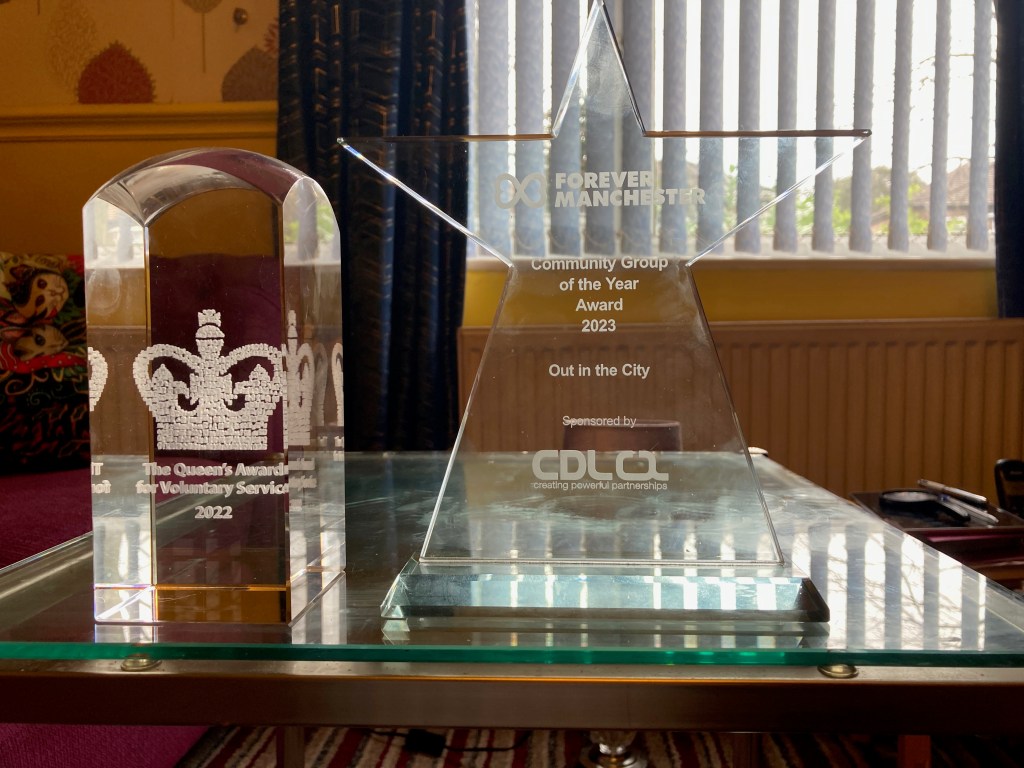
The Community Group of the Year Award is given in recognition of a community group that has made a meaningful and significant impact, strengthening communities, making a difference, and putting smiles on people’s faces.
The shortlist was:
Ashton Community Chess Club
Buile Hill Mansion Association
Community Buds
On Top of the World
Out In The City
Trafford Handball.
… and the winner was Out In The City.
Congratulations to all the shortlisted groups. More photos can be seen here.
‘The joy is waking up and liking who you are’: six LGBT+ guiding lights on the long road to now
As World Pride descends on Sydney in one of the planet’s biggest celebrations of LGBT+ lives, images of youthful revellers will dominate television, print and online coverage and postings on social media.
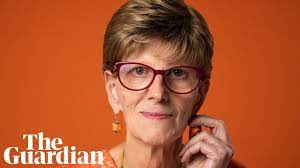
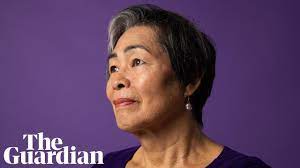
So the arrival at Sydney Town Hall of the city’s firstComing Back Out Salon – already a fixture of the Melbourne social calendar – is something of a corrective. Welcoming all ages, the salon honours older LGBT+ people, recognising them as guiding lights.
‘There’s a youth obsession’: Tristan Meecham, cofounder of All The Queens Men, and Russ Gluyas, coordinator of the LOVE Project.
“As much as we talk about inclusivity, it is an ageist community,” says Tristan Meecham, the cofounder of All The Queens Men, which produces the salon. “The experiences of older LGBT+ people – being imprisoned, hospitalised, going through an epidemic – the younger communities haven’t quite acknowledged or understood the amount of trauma still in elders’ bones.”
Ageism can compound earlier discrimination and stigma, says Russ Gluyas, coordinator of the LOVE Project (Living Older Visibly and Engaged). “There’s a youth obsession and it’s becoming more annoying, perhaps not recognising the experiences and lived history and the enormous amount of stories and love,” Gluyas says.
Six LOVE Project ambassadors talk about life, wisdom, issues still faced and hopes ahead.
‘We were told … there was no way out’ – David Polson, 68
David Polson
I grew up in Christchurch, New Zealand in the 1960s, which was a really homophobic city. I went to a macho high school and was regularly beaten up. I realised from an early age I was gay.
Just after I turned 18, I was offered a scholarship at Sydney’s Ensemble theatre. When the plane took off for Australia, I felt this enormous burden lift off my shoulders. The theatre world was wonderful because I could be who I was.
The moment I was diagnosed with HIV, in 1984, I felt like I was falling down this black, bottomless pit of guilt, shame and terror. But somewhere down there this little voice said, “No, you’re not going to die; Aids will not kill you.”
We were told we had a terminal illness and there was no way out. There was enormous ignorance fuelling hatred, fear and discrimination. [But] I’ve never seen such an outpouring of love and unity from the LGBT+ community as I did during that period. I regard my gay friends as my family.
I went through 28 HIV drug trials over 20 years with the late immunologist Prof David Cooper, all horrendous. I use the term chemotherapy, so everyone understands what it was like. I had probably the best medical attention, but there are still older HIV-positive people isolated in rural areas that are not getting the help they need.
When David died in 2018, I was chatting to his widow, Dorrie, who said, “Polly, David never got to see his vision of an Aids museum in Sydney.” I said, “Dorrie, this is going to happen; you’ve given me a project.” [Former high court judge] Michael Kirby thought it was a great idea, but he said, “You also need to include the oppressed and persecuted queer people over the decades.”
We formed a committee and Qtopia, Sydney’s queer museum, is finally launching on 16 February. As chair, I’ve found this absolute thirst for knowledge from young people, wanting to get involved with their elders.
‘I really love my body’ – Apple Jack (AJ) Brown, 55
AJ Brown: ‘I’m not frightened of navigating forward.’
Growing up in Derbyshire in the United Kingdom, I never really understood what gender was. My role modelling was probably on my father but wasn’t gender-specific. When I hit puberty, the devastation I [felt at realising I] was going to be a [specific] gender was confronting. I thought of myself as androgynous.
When I came to Australia, I went into sex work, a whole rainbow melding of gender and sexuality. The “girls” [my breasts] earned me a lot of money – I was a double E-cup – and I used to work in lingerie. I decided when I stopped bleeding and was about to go into menopause that I would take testosterone.
I had top surgery [chest reconstruction], which doesn’t make you who you are; it’s a reflection of what your optic sees in the mirror or what you feel. Somebody once asked me, “Do you feel less like a man because you don’t have a penis?” I thought, “No, I really love my body.” I’ve always loved the sexual element; that feeling of what I can vibrate.
Trans masculine people have often gone under the radar. Yesterday, somebody gave me a hug because I’d lost my dog and said, “Big, built farmers like you, it’s all right to cry, mate.” I thought, “I don’t know who you’re talking to.”
I have a voice and I’m not frightened of navigating forward, but the biggest fear is going into hospital, being put into a retirement home [and being misunderstood]. In the community, you’ve had to build up a tool kit of resilience and to have that just taken away is almost like having your body taken away from your mind.
‘We bring encouragement to the younger ones to not be afraid’ – Eliese Embrey, 73
Eliese Embrey
I grew up in the UK and always knew I was different, a female in a male body. When I was seven, my parents gave me a birthday party and boys and girls in our street came. I remember looking around the table and thinking I didn’t belong with either group. From that moment, I became a solitary child.
At 13 or 14, I remember seeing a transgender model on television and realised it was possible to change your gender, but I kept that secret inside me. One day I read about the £10 passage to Australia and thought this was a chance to get away from provincial England, so at 19 I emigrated.
In my early 20s, I secretly started to live as a gay guy. I was put on to Camp, the Campaign Against Moral Persecution [the subject of a new play during Sydney World Pride]. I dressed flamboyantly, but it wasn’t sexually right for me. I really just wanted closeness, but I wasn’t emotionally strong enough at first to deal with the social ramifications of changing my gender.
I went back to the UK to transition at the Charing Cross hospital in London. My parents were very supportive, but after my mother died, the rest of the family confronted me and said if I transitioned, I wasn’t welcome. It was a simple choice: suicide or transition. So I left my family behind and I’ve been a trans woman now for more than 30 years.
For 40 years, I was afraid. It was like being locked in a room with no windows and no doors. After transitioning, there are windows and doors and you can walk out a free person. Life is wonderful. We bring encouragement to the younger ones to not be afraid. We live in a different time. There’s support now to live your authentic self.
My [lesbian] partner, Jacqy, and I have known each other for three years and recently at Parramatta Pride we were in charge of a Pride history stall. Jacqy turned to me and said, “What about you and I?”, I said, “We can be anything you want us to be.”
So we declared our love for each other then and there.
‘I did not know another person who was gay’ – Ros Hope, 74
Ros Hope: ‘I’m non-binary: my brain is half male and half female.’
Ros Hope: ‘I’m non-binary: my brain is half male and half female.’
I grew up a little out of Bankstown, in Panania. I’d skateboard around the back shops with the boys. I’m non-binary: my brain is half male and half female. If anyone asks, I say I’m “bi-brainery”.
I had a girlfriend from 17 to 19. I wanted to move out with her, but Mum said, “If you ever leave home, you can never come back.” I married and eventually, in 1996, when I was 48, I left my husband for a woman and our two teenage kids came with me. I’ve only been with women since.
I was a late bloomer becoming a gay person. I had huge anxiety until my 50s, probably because of not knowing what my sexuality was. My mother was 80 when I came out to her as gay. It was all about her: “What will people think about me?” She only softened later when she was in a nursing home and she accepted my sexuality in the end.
My partner and I did not know another person who was gay. It was isolating and it took a long time to come out properly. After my dad died, in 2004, I decided I was going to go out into the LGBTQI community. I joined a lesbian open house discussion group on a Tuesday night.
I left that [female] partner when I was 58. My current partner of six years identifies as lesbian; at least, I think she does. She knows what I am.
‘We never stop becoming who we are’ – Jessica-Su Tang, 70
Jessica-Su Tang
My early years, up to eight, were predominantly in Darlinghurst and then in 1960 we moved to Earlwood. I’ve got five sisters and I grew up around the three youngest sisters. I was always fascinated with the feminine, particularly their clothes, the textures.
I gravitated to becoming Jessica and 2009 was the year I determined to live as a female full-time. There’s more congruency I feel as Jessica than as my former persona. I chose Jessica because my other name had a J and I got used to signing the J.
I call myself trans feminine, as opposed to trans woman, because the debate is, what is a woman? But there’s no problem with being trans feminine. There’s a spectrum from masculinity to femininity and everyone falls somewhere along that.
I didn’t transition until I was 57 and I’m happy to have [waited] because I know that women are disempowered in so many ways, particularly around image and safety. I’ve never had really any negative feedback [about transitioning]. The real struggle is within yourself, actually getting rid of what didn’t serve you.
I’ve investigated various surgical options and I’m happy to say I’ve saved a lot of money. The joy is waking up and liking who you are. It’s never ending; we never stop becoming who we are. If the mind-body-soul connection is congruent, then there’s no conflict.
‘They were going to throw me in the river’ – Trevor Pritchard, 71
Trevor Pritchard: ‘I felt I was trailblazing.’
I grew up in inner-western Sydney. When I was 12, my father died. My older brother had cerebral palsy.
I came out as gay in 1970, when I was 18. On a Sunday afternoon in 1972 I was with a mixed crowd at the Scarborough Hotel, 60km south of Sydney, and got a lift back with three guys. They turned out to be absolute homophobes.
They took me to the Royal national park and tied me up with bricks and said they were going to throw me in the river. All of this went on for four hours. I said, “Look, if you murder me, you’ll murder my widowed mother and my brother, who is disabled”. Saying that saved my life.
In those days, you wouldn’t report an attack to the police, who had a homophobic attitude. I eventually put a submission into the NSW parliamentary inquiry into LGBTQ+ hate crimes. I developed post-traumatic stress disorder, a debilitating fear of heights.
Oxford Street became our haven. We’d spend a lot of time in bars. It was our community, but when HIV hit, the party was over. I was fortunate enough to be HIV-negative, but a lot of guys who have HIV have issues about how much money they’ve got to live on.
In 1988, when I climbed into management at a cigarette factory, I decided to do this as a manager who was gay: not flaunt it but not deny it. I felt I was trailblazing.
At 50, I left work on a redundancy after a company merger. I did a lot of travelling and some writing. Eventually I thought, “I’m getting too isolated,” and I joined Mature Age Gays. For the past five years I have been visiting older gay men in aged care centres. My present client, who has dementia, loved the performing arts [so] I’m reading a biography on dancer Rudolf Nureyev.
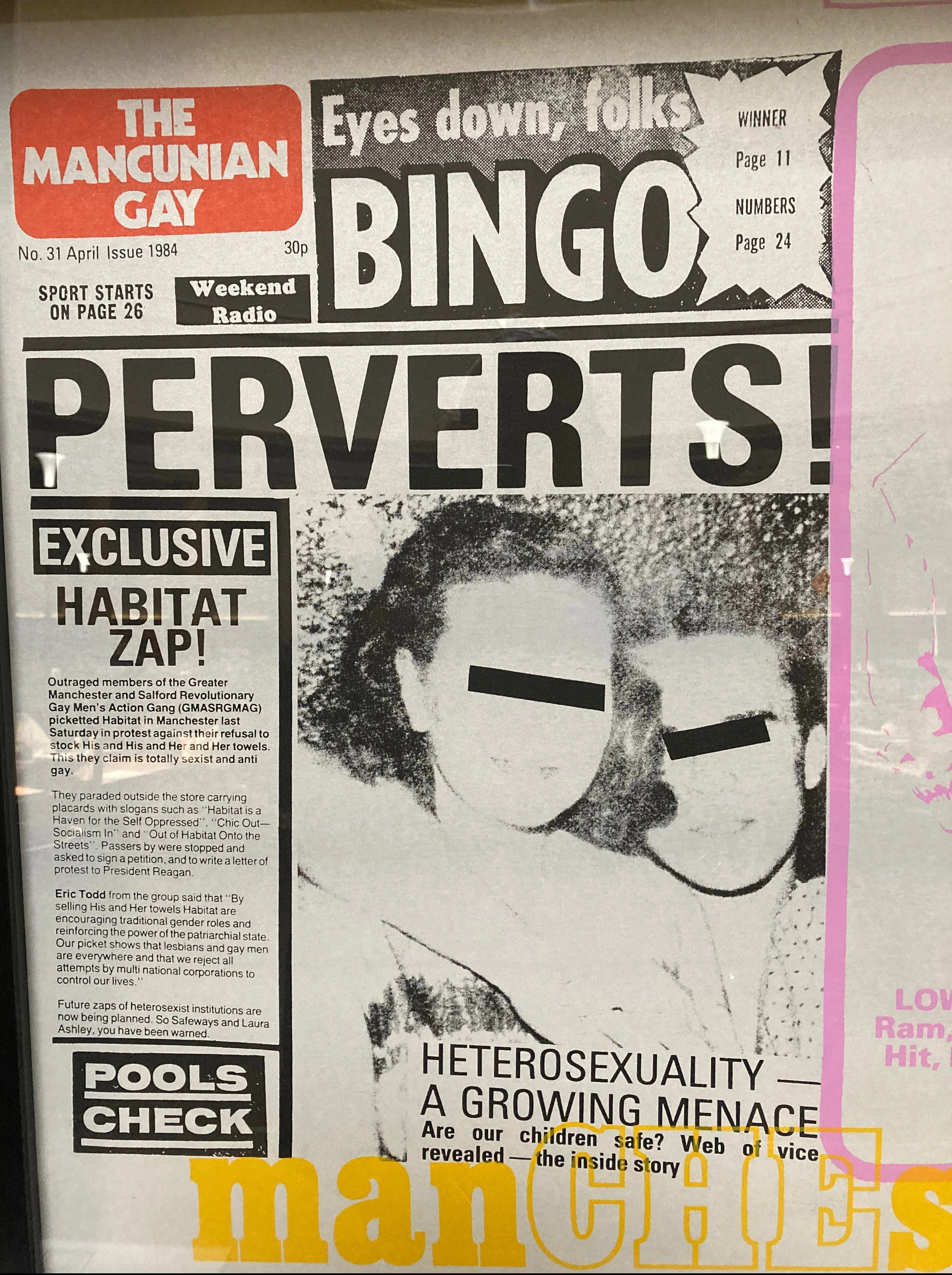
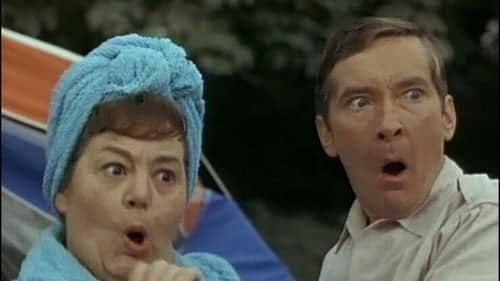
Oh … er, missus … note the date: 22 February, 5.30pm!
Launch of Out In The City Exhibition
On Wednesday, 22 February from 5.30pm to 8.00pm we will be launching the Out In The City Creative Writing Art Exhibition as part of LGBT History Month.
The venue is LGBT Foundation, Fairbairn House (2nd Floor), 72 Sackville Street, Manchester M1 3NJ.
Come and see artworks by members of Out In The City produced with Manchester Street Poem.
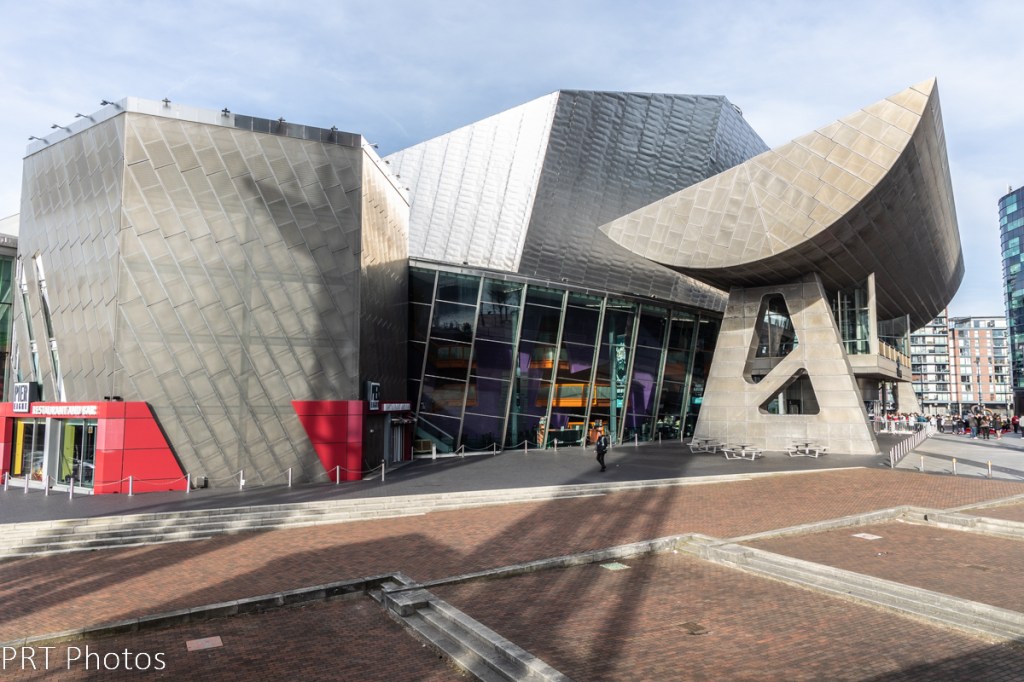
The Lowry is a landmark quayside building comprising two theatres and galleries.
The Lowry is named after Laurence Stephen Lowry (1887 – 1976) – an artist who spent much of his life in Salford and whose work is strongly associated with the city.
Salford Museum and Art Gallery had been a long-standing collector of his work and some 400 individual works – as well as an extensive archive of photographs, press cuttings and exhibition catalogues – were transferred to The Lowry on its opening in April 2000.
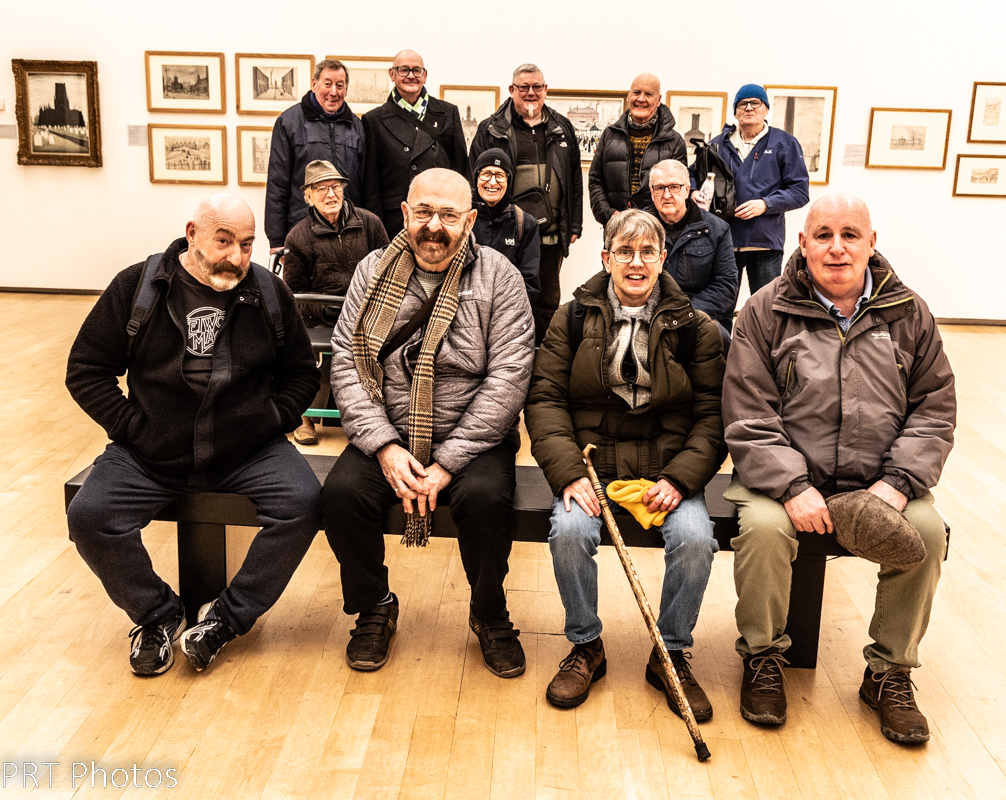
Today, The Lowry provides critical and curatorial analysis of his work and seeks to raise his profile as an artist of international stature. Our trip to the Lowry Theatre Gallery involved a chaotic visit to a pizza restaurant, a red carpet welcoming people auditioning for the “Britain’s Got Talent” show and a glimpse of TV presenting duo Ant and Dec.
Do you want to spend Valentines Night celebrating the best of LGBT+ films?
As part of the Love is Love: LGBTQ+ History Month Film Night event, Manchester Central Library, St Peter’s Square Manchester M2 5PD will be screening Beautiful Thing on Tuesday, 14 February at 6:00pm.
Death Sentence Against Lesbian Activist “Sareh” Overturned!
Zahra Sedighi Hamadani (known as Sareh) Source: 6Rang
Amnesty International has reported that the death sentences against Iranian activists Zahra Sedighi-Hamadani (Sareh), 31, and Elham Chobdar, 24, have been overturned. The pair were sentenced to death for “corruption on Earth” in September 2022, while they were detained in Urmia jail, located in the Northwestern town of Urmia.
“Corruption on Earth” is the Iranian title of capital crimes used to justify murdering those who “threaten social and political well-being.” Sareh and Chobdar were sentenced to death for their “perceived or real sexual orientation,” their support of LGBT rights on social media, and for “smuggling women and girls.”
“Through a complex, multi-layered and extraterritorial intelligence operation, the leader of a network involved in smuggling Iranian girls and women to neighbouring countries for the purpose of corruption and directing and supporting homosexual groups that work under the protection of (foreign) intelligence agencies,” The Intelligence Organisation of the Revolutionary Guards claimed.
Amnesty International called the allegations “spurious and baseless.”
“The allegations stem from the women’s real or perceived sexual orientation and/or gender identity and in the case of Zahra Sedighi-Hamadani, association with other Iranian LGBTI asylum seekers fleeing systematic persecution in Iran,” Amnesty International reported.
Sareh was first arrested by Iranian security forces when she tried to flee to Turkey, after returning to Iran from Iraqi Kurdistan, in late 2021. On top of “spreading corruption on Earth,” she was accused of “promoting homosexuality and Christianity,” and “communication with anti-Islamic Republic media channels.”
“The accusations stem from her public defence of LGBTI rights, including on her social media platforms such as Telegram and Instagram, and during an appearance in a BBC documentary aired in May 2021 about the abuses that LGBTI people suffer in the Kurdistan Region of Iraq,” Amnesty International reported.
The accusation of promoting Christianity was for when she wore a cross necklace and attended a house church in Iran several years ago.
Sareh was interrogated for 53 days. While in detention she was subjected to degrading insults about her appearance and “lifestyle,” as well as death threats. Interrogators threatened to take her two children away. At the same time, Sareh’s friends were arrested and forced to provide confessions against her. Some were aired on state TV.
In a video posted before she departed for Turkey, she said: “If I reach the other side it’ll be ok. If not, it’ll be obvious what has happened. I’m sending this video … so that you understand how much pressure we bear.”
6-rang, an Iranian gay support network, reported at the time, “It is clear to all of us that what has taken place is not due process, but a re-run of a show familiar to many of us who grew up in the suffocating atmosphere of the Islamic Republic.
Sareh must be released immediately and unconditionally. We ask all human rights organisations and the media not to ignore Sareh’s detention, and to work for her freedom.”
The two women are no longer on death row. Their cases have now been referred to the lower court, but the women remain in custody. 6-rang has created a petition to ensure the women’s release and safety.
One year ago today – A Minute’s Violence
Derek Jarman’s work creates a sacred space for us. At the launch of Jarman’s PROTEST! exhibition at Manchester Art Gallery there was a minute’s silence for World AIDS Day. In return, one year ago today, we offered A Minute’s Violence for Derek Jarman, inspired by the queer magick of his work and his activist life.
We cast a circle in the gallery and for a solid minute we each read simultaneously and aloud from a different text. The “violence” of our title comes from the intensity and urgency of our subjects: AIDS trauma, deportations, lesbian (in)visibility, racism, the Catholic church. Here is the film that Lee and Ben generously made of our zap – an experience of joy, excitement and power connecting us with queer heritage and community.

















 Out in the City