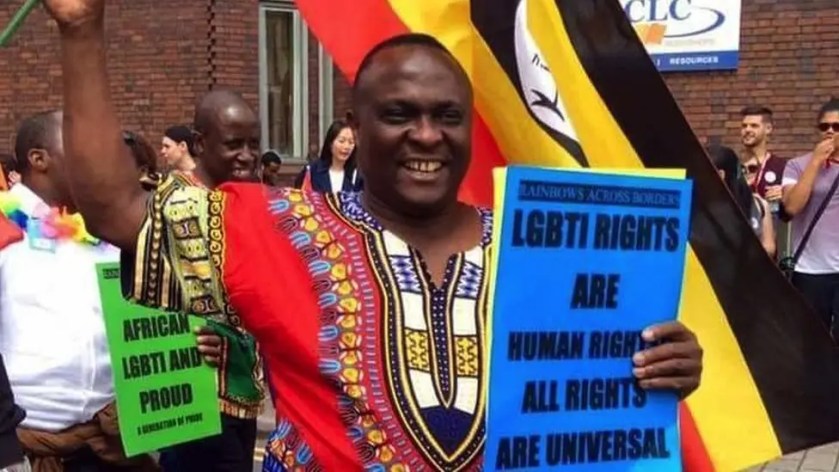
Bury Pride Rainbow Train … Lesbian Visibility Week … Invisible Women … False LGBT+ Asylum Claims … Sexuality Summer School

News

All Aboard The Rainbow Train!

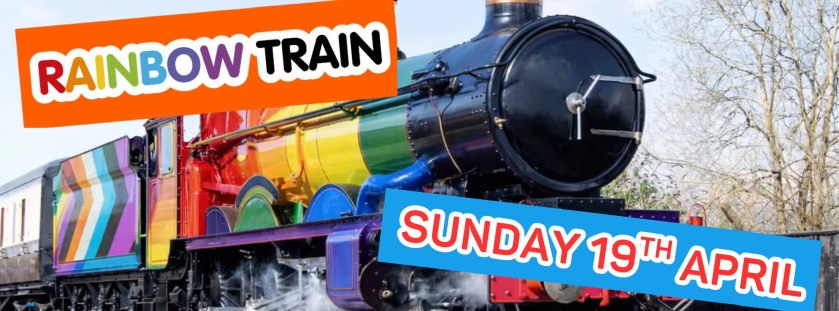
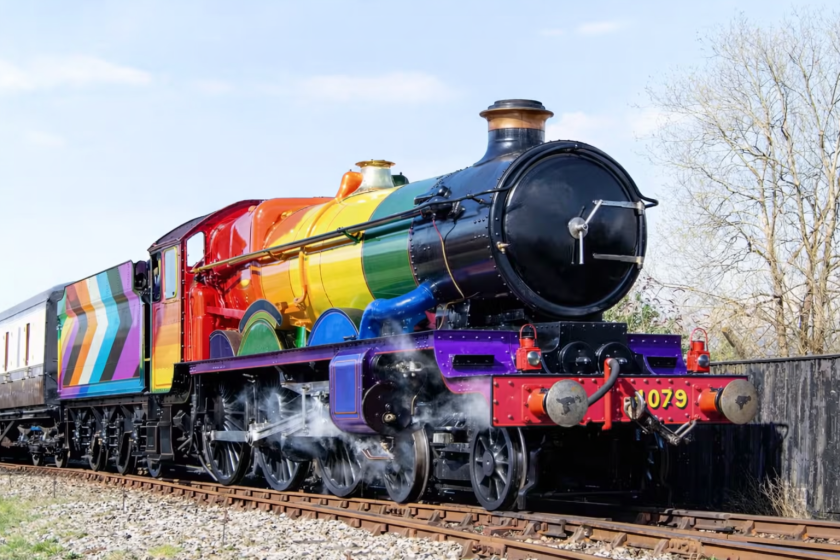
We joined the Bury LGBTQI+ Forum for the return of the Rainbow Train, bringing colour, pride and queer joy back to the tracks for another unforgettable journey.

Departing from Bolton Street Station, Bury, our vintage rainbow-themed steam train travelled to Rawtenstall and back again, delivering a two-hour celebration packed with LGBT+ performances, music and pure Pride energy.

This year, the House of Bridget Queens were joined by the brilliant Bury Fire Choir, performing a selection of Pride anthems on the platform at Bolton Street before departure.

At the Rawtenstall stop, we were treated to a live performance of disco classics.

Funds raised at the event will keep Bury Pride and the Bury LGBTQI+ Forum running each year.

Lots of great photos here.

Lesbian Visibility Week

Lesbian Visibility Week 2026 runs from Monday, 20 April to Sunday, 26 April, with Lesbian Visibility Day on 26 April. Founded by Linda Riley in 2020, this annual international movement celebrates lesbians, queer women and nonbinary individuals while advocating for increased representation, community safety and health.

The untold story of Manchester’s LGBT pioneers
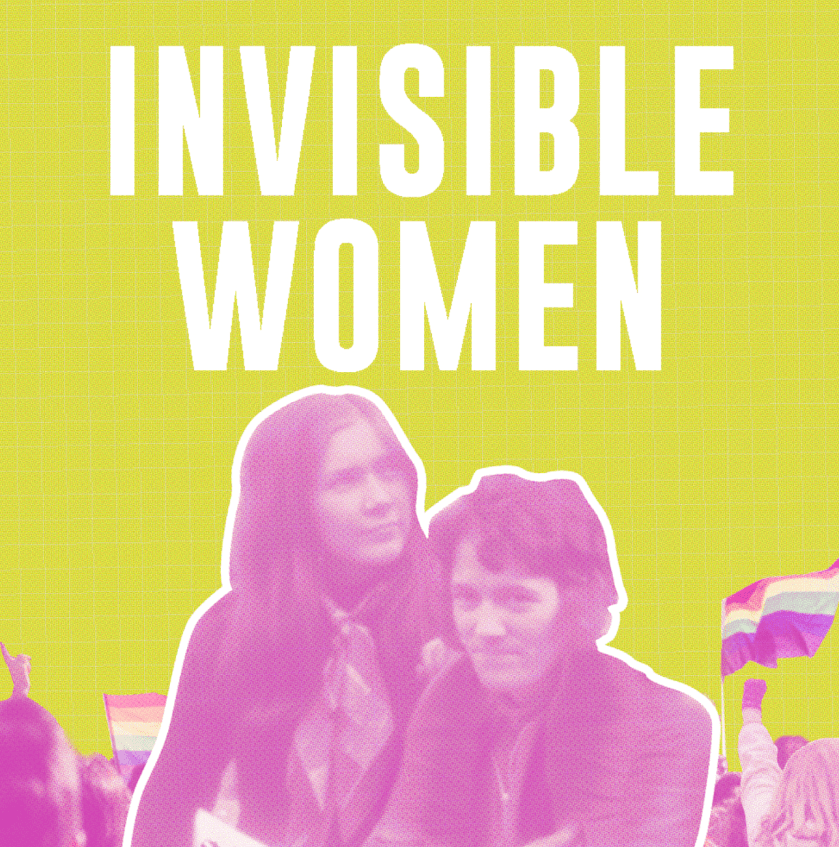
Together, Angela Cooper and Luchia Fitzgerald transformed the lives of thousands of women – yet no record of their activism existed.

“How could you sit on your arse your whole life and not get on the streets and fight?” declares Luchia Fitzgerald, speaking at the beginning of the documentary Invisible Women.

As the co-founder of the Manchester branch of the Gay Liberation Front (GLF), Luchia’s life and work serves as the subject of the aforementioned film, which explores the untold story of two LGBT+ revolutionaries. Together with her former partner Angela Cooper, the pair helped change the face of the city forever, transforming thousands of lives in the process. 

After meeting in a pub in 1969, Angela and Luchia would go on to play a pivotal role in Manchester’s women’s liberation movement. They opened the city’s first women’s refuge, started a rock band, and launched a radical queer printing press. But in Manchester Central Library, there is no record of their activism on file.  
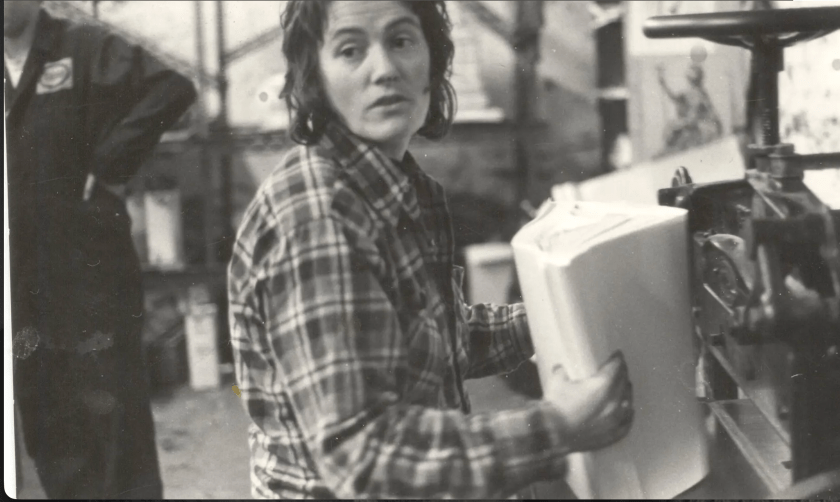
With Invisible Women, however, their story is finally being written into history. Speaking via email, the pair explain that they agreed to participate in the documentary “to create a true record for future generations, of ‘her-story.’”

In 2017 there was an outpouring of TV exploring LGBT+ lives, in response to the 50th anniversary of the partial decriminalisation of homosexuality in the UK. Yet these films focused mostly on white, middle class, London-based gay men. Producer Joe Ingham worked on the BBC’s Prejudice and Pride series, where he briefly met Angela and Luchia, but felt that these documentaries largely ignored women.

“The way broadcasters tried to spin these series was that it was all about the men, when in actual fact the GLF would never have happened if it were not for the involvement of women,” he explains. “They have done a hell of a lot of stuff, but it’s never been recorded.”

“Luchia is a fantastic storyteller. She’s just led this incredible life and I felt that her story needed to be told.”

As a teenager, Luchia ran away from Ireland after being rejected by her family. Upon arriving in Britain, she was arrested and sent for a lobotomy – a form of brain surgery that attempted to ‘cure’ homosexuals – but managed to escape to the streets of Manchester.

Shortly afterwards, she met Angela, a politically active student involved in Manchester’s underground gay community. This initial encounter sparked their romantic relationship, but more importantly, it ignited a political relationship too.

Back then, life was particularly difficult for the LGBT+ community. Queer bashings, blackmail, discrimination, homelessness, mental health issues – as well as the threat of aversion therapy, and lobotomies – made life particularly bleak. When the pair met, Angela was already a member of the women’s movement, but, together with Luchia, she decided to take those ideas of liberation into Manchester’s gay scene.
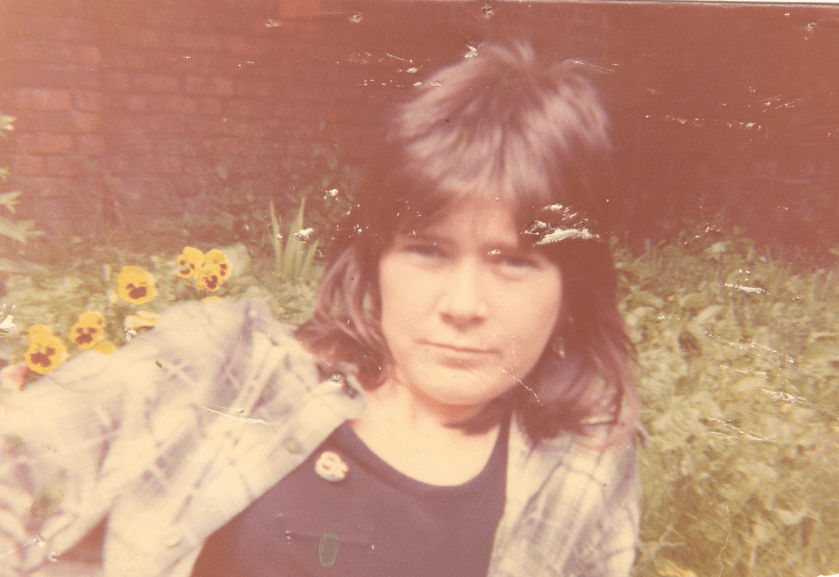
Responding to the hostility they faced in both general society and from within the LGBT+ community, (“which was a ghetto, and pretty unfriendly to lesbians in particular”) Angela and Luchia set up the Manchester branch of the GLF. “It was saying: ‘Fuck You. We’re here and we’re queer and we’re not going anywhere.’”

At the time, there was little support available for women – no Rape Crisis, no Women’s Line. In response, they set up a phone line for those in need of help, advertising the service with posters across Manchester. Several women responded seeking refuge, so the GLF decided to squat in an unoccupied house. “We had an advice line, did pregnancy testing, and then the police heard about us and started bringing women and children to us who had nowhere else to go.”

Thanks to the kind donation of a local solicitor, the GLF bought the house and turned it into a women’s refuge – only the second to be set up in the country at the time.
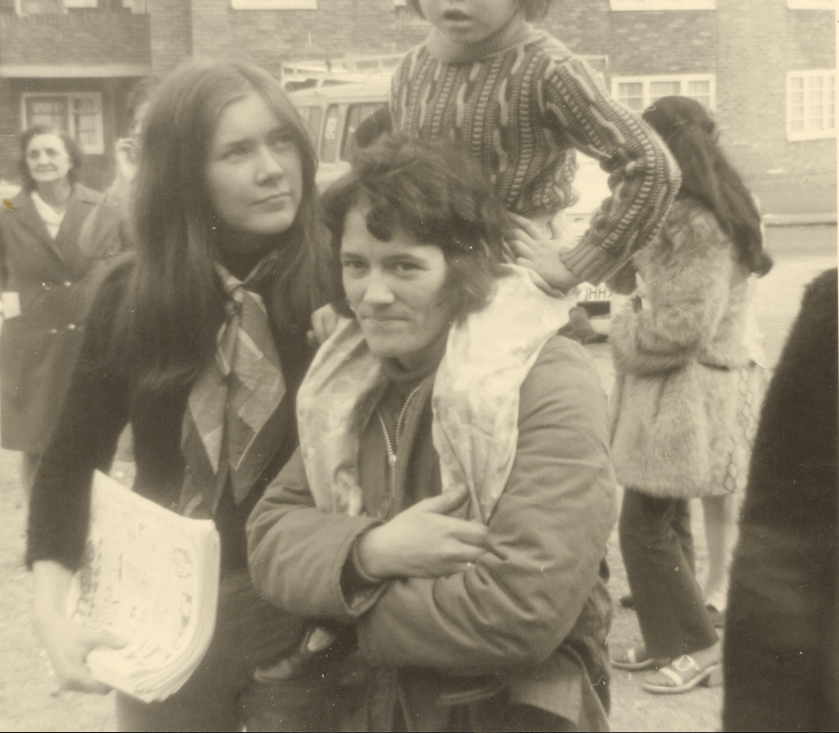
While they were working to improve the lives of LGBT+ women in the city, Angela and Luchia were both in their 20s, which meant – in their own words – lots of “sex, drugs, and rock and roll.” Joe initially came across Luchia after reading a blog about queer rock bands in the 70s. The band toured across the country, culminating in a now-infamous show in Glasgow. Luchia took off her top mid-performance, with the 1,700 crowd following suit. It was a defiant statement against their oppressors and, from what Angela and Luchia recall, an electric and inspiring performance.

On top of that, the duo also oversaw the GLF’s operation of a radical queer printing press. They printed pamphlets, leaflets, posters, independently publishing their own material and making their voices heard in the local community. “We wanted to be visible,” they say. “After hiding our sexuality all our lives it was great fun! We felt like outlaws, outside the system, with nothing to lose.”
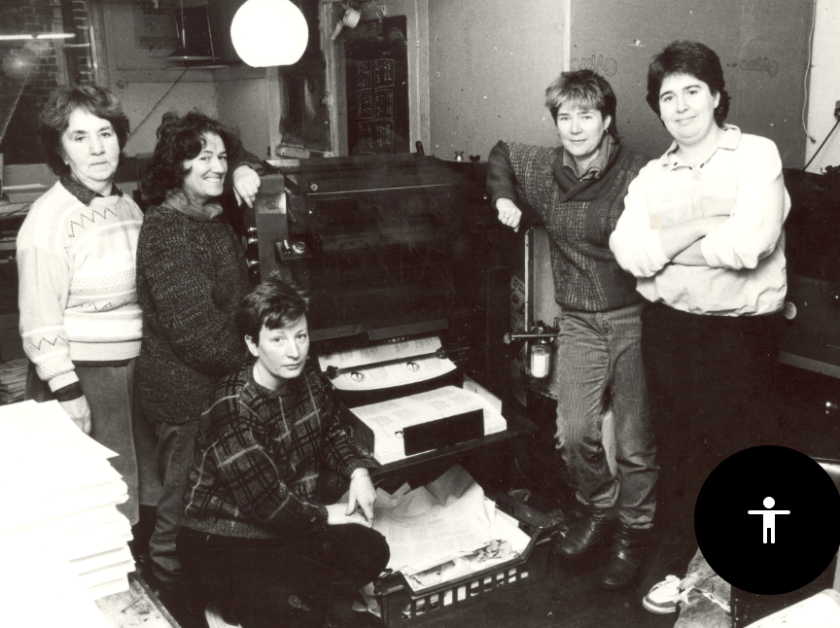
The couple were in a non-monogamous relationship and expressed their politics in ways that were radical for the time. The GLF first made headlines after painting ‘lesbians are everywhere’ across Manchester. They also organised ‘happenings’, where groups of women would go to straight pubs in groups. “The girls would then start kissing and cuddling to shock the drinkers – and then we ran like hell!”

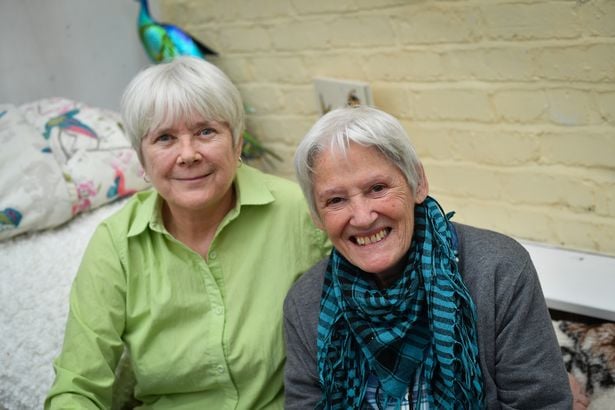
Eventually, the romantic relationship between Angela and Luchia fell apart. But, after the profound effect they’d had on one another’s lives, they were never out of contact. Luchia was the first lesbian that Angela had ever met which, she explains, allowed her to be herself “for the first time”. Luchia adds that, through meeting Angela, she found a new life. “I was introduced to ideas of liberation and fighting for your rights – and I never looked back.”

Today, they live around the corner from each other in Manchester and speak most days. “We are each other’s chosen family. Like most LGBT+ people, we had to find our own families.”

While researching for the project, director Alice Smith explains that it quickly became obvious that Angela and Luchia’s story wasn’t the only one out there. “We went round some houses at the beginning of the shoot and realised this could be a much larger social history,” says Smith. “There’s just a wealth of amazing stories out there from incredible women and they need to be told.” Inspired by working on Invisible Women, Angela has started an oral history project, which aims to record other invisible women and tell their ‘her-stories’.

Though Invisible Women primarily deals with Angela and Luchia’s activism in the ’70s and ’80s, it also highlights how they are both still fighting for women and LGBT+ people today. Both gave talks at screenings of the film about their past work, as well as “the need for activism now.” 

And, by the end of the film, it’s clear that Luchia is just as politically motivated now as she’s ever been. “I believe with every bone in my body that if there’s something that needs doing let’s get it done,” she says, resolutely. “So I’m never done. No, the fight never stops. It really doesn’t. It never stops.”
False LGBT+ asylum claims

We are aware of the BBC’s investigation into individuals allegedly helping people fabricate LGBT+ asylum claims. Any advice to misuse the asylum system should be condemned, but such behaviour by a small number of bad-faith actors does not reflect the reality of LGBT+ people seeking asylum.  

Almost 70 countries criminalise same-sex relations, some with the death penalty. The UK government itself recognises that in Pakistan consensual same-sex sexual activity between men is criminalised with penalties ranging from fines to life imprisonment.

LGBT+ people claiming asylum have fled life-threatening situations and are hoping to rebuild their lives in safety here. For many, claiming asylum can be their only way to escape persecution. 

The asylum system is hostile and complex, and particularly difficult for LGBT+ people as they are required to “prove” their sexual orientation or gender identity to complete strangers. Many have spent much of their lives hiding or denying who they are to avoid violence. Government cuts to legal aid only exacerbates this issue. 

The UK government’s most recent data release shows that only around 2% of all asylum claims included sexual orientation as a reason for needing protection and it is already the case that LGBT+ people must show a well-founded fear of persecution to qualify for refugee protection in the UK. 
Sexuality Summer School 2026: On The Biological

The Sexuality Summer School (SSS) is a postgraduate summer school held annually in May at the University of Manchester. It explores current political and intellectual debates about how the ‘biological’ shapes current and historical understandings of sex, gender, sexuality and race.

During the same week the Summer School also hosts a series of public events including lectures, films and performances.

Public Events Programme:

Changes to the schedule may be unavoidable; please check the website for updates – https://sexualitysummerschool.wordpress.com/

Monday 25 May, 4.30pm – 6.00pm
Plenary Lecture: Professor C Riley Snorton: ‘An Ambiguous Heterotopia, Or Some Informal Remarks on “Biology” After Samuel Delany, Judith Butler and Sylvia Wynter’
Venue: Anthony Burgess Centre, M1 5BY
No booking required, all welcome.

Tuesday 26 May, 3.00pm – 4.30pm 
Plenary Lecture: Professor Sarah Richardson: ‘A Sceptical Empiricist’s Guide to Sex Difference Science’
Venue: John Casken Lecture Theatre, Martin Harris Centre, M13 9PL 
No booking required, all welcome.

Tuesday 26 May, 5.45pm – 8.30pm
Film Screenings programmed with Club Des Femmes and introduced by So Mayer:
Laws of Love / Gesetze de Liebe (Magnus Hirschfeld, 1927); Sanctus (Barbara Hammer, 1990)
Venue: HOME Cinema, M15 4FN
Tickets required (booking link coming soon).

Wednesday 27 May, 4.00pm – 5.30pm
Plenary Lecture: Professor Kane Race: ‘Hijacking Neuroscience: Psychoactive Performatives’
Venue: C1.18, Ellen Wilkinson Building, M15 6JA
No booking required, all welcome.

Wednesday 27 May, 7.00pm – 9.00pm
Performance Reading: All the Devils (written by Jonathan Larkin; produced by Jayne Compton, Switchflicker; funded by The National Lottery Community Fund)
Venue: Anthony Burgess Centre, M1 5BY
No booking required, all welcome.

Thursday 28 May, 5.00pm – 6.30pm
Public Plenary: ‘Experimenting with Hormones’: Professor Celia Roberts in conversation with Professor Jackie Stacey 
Venue: John Rylands Library, M3 3EH
No booking required, all welcome.
Thursday 28 May, 8.00pm
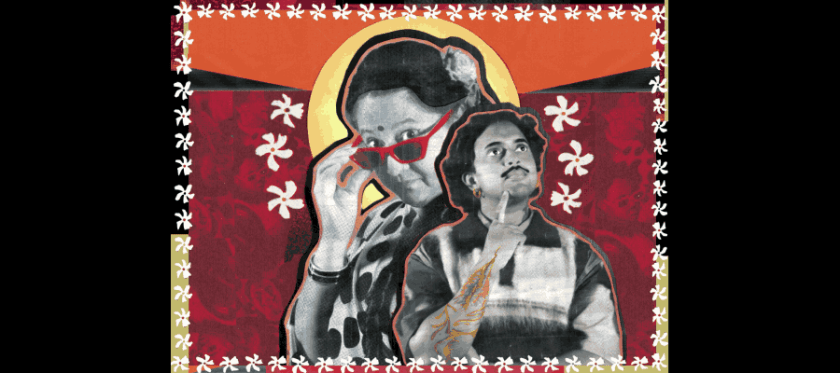
Performance: Second Trimester by Krishna Istha 
Venue: Aldridge Studio, The Lowry, M50 3AZ 
Tickets required. Click here to book. 

For any queries, please email sexualitysummerschool@gmail.com

Don’t forget:
Horizon of Khufu: Journey to Ancient Egypt … The Law is Changing … North West Pride Events

News

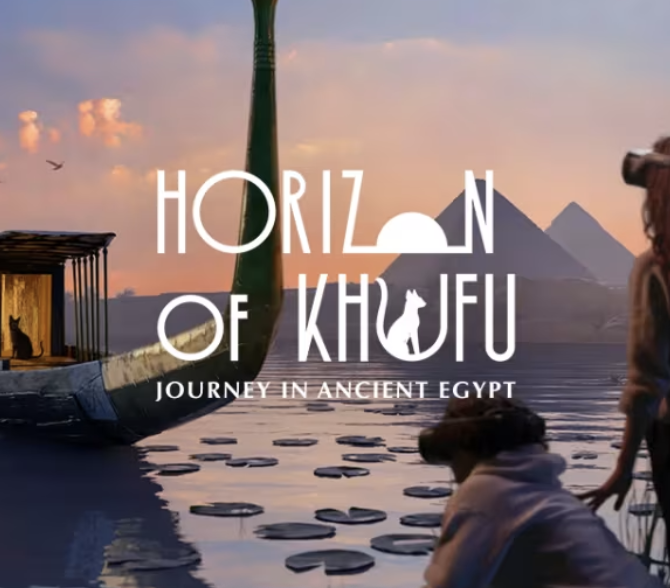
Horizon of Khufu: Journey to Ancient Egypt

What an amazing experience! We put on our virtual reality headsets and (figuratively) fastened our seatbelts! With Horizon of Khufu, we travelled thousands of years back to the heart of ancient Egypt. We discovered the secrets of one of the seven wonders of the world through an innovative concept: the immersive expedition.

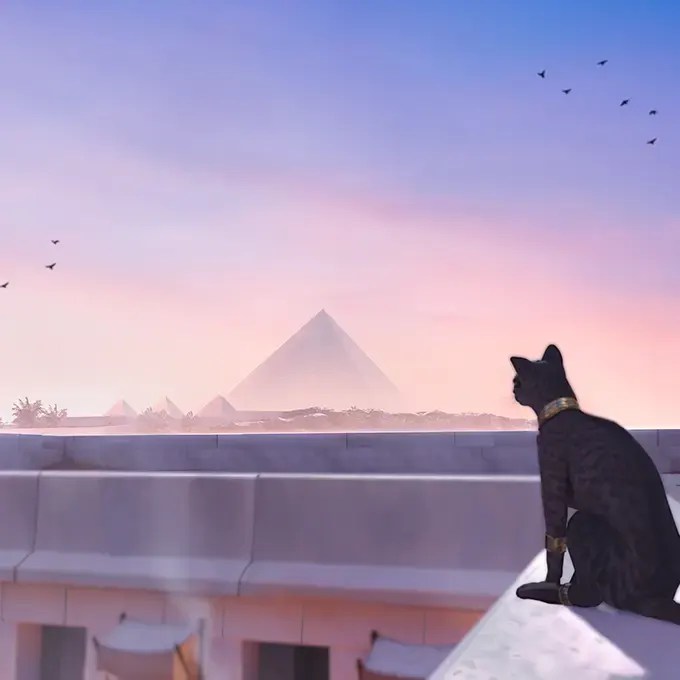
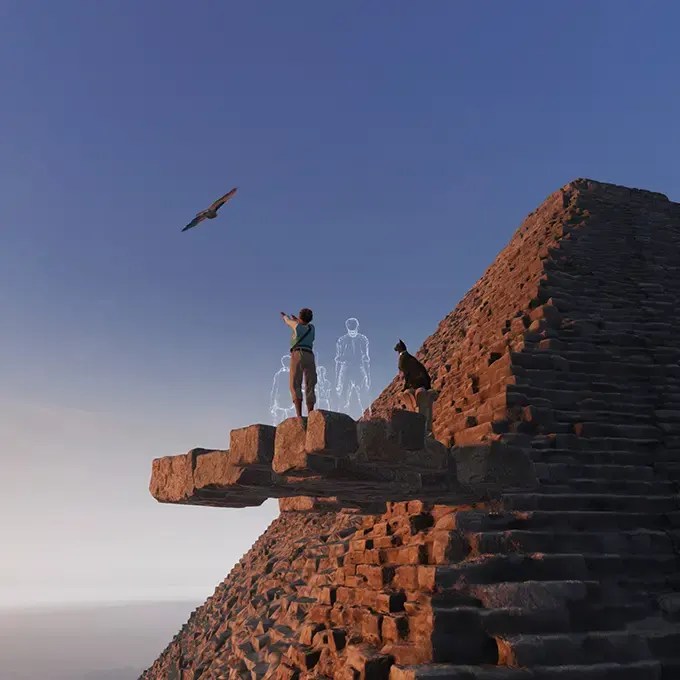
We explored the Great Pyramid of Giza as it was more than 4500 years ago. We walked through its mysterious corridors, entered the Queen’s Chamber and met the goddess Bastet.

It was absolutely stunning to rediscover the ancient Egyptian marvels that once defined human ingenuity and imagination, exploring the labyrinth of hidden corridors. We even had a ringside seat at the embalming ceremony of the great Pharaoh Khufu!

The experience was designed in collaboration with Harvard’s Egypt expert Peter der Manuelian, and offered a rare opportunity to witness what it was really like in ancient Egypt’s golden age.

We left exhilarated by a new appreciation for the civilization of the past which mystifies and excites to this day!

The law is changing

Over the years, society has become more inclusive for all: equal marriage, inclusive education in schools and anti-discrimination laws.

But when it comes to LGBT+ safety – we still have far to go. Anti LGBT+ hate crime has risen in recent years – online, on our streets and in public. 

Latest research from Stonewall reveals LGBT+ people do not feel safe to live their lives freely. Less than half (44%) of LGBT+ people feel safe holding their partner’s hand in public.

Even something as simple as reaching out to hold their partner’s hand now feels unsafe.  Everyone deserves to go about their daily lives free from the fear of abuse and harassment, no matter their identities. 

The latest statistics from the Home Office show that there were more than 18,000 hate crimes motivated by sexual orientation and over 2,500 trans related hate crimes in 2024. Behind these numbers are real people who deserve to feel safe to be themselves.

We want the government to ensure the safety of the LGBT+ community,

On 14 April 2026, the Crime & Policing Bill was amended to equalise the punishment of hate crime. The aggravated offence amendment was agreed by the House of Commons. When the law changes, anti-LGBT+ hate crimes will be considered more serious offences in the eyes of the courts – perpetrators will get stronger sentences and victims will have more time to access justice.

This vital change will deliver much needed equality in hate crime legislation.

North West Pride Events – April to June 2026

Here are a few dates for the diary:

Bury Pride Rainbow Train – 19 April

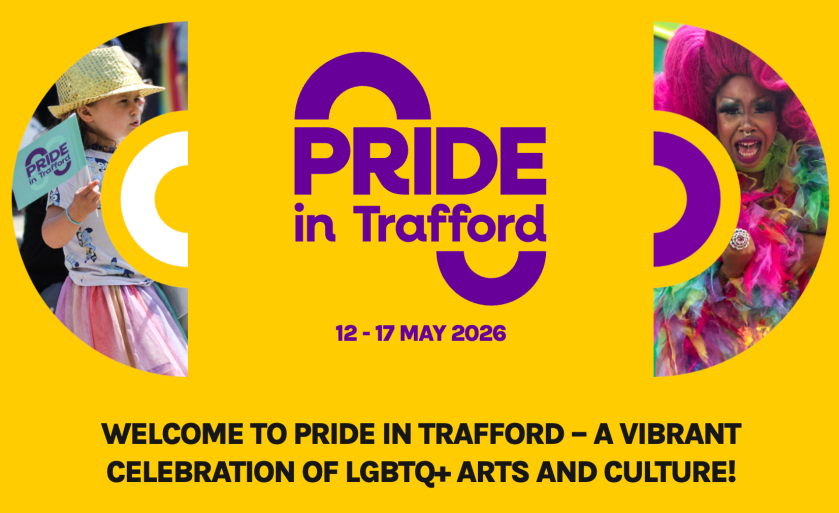
Trafford Pride (Sale) – 16 May

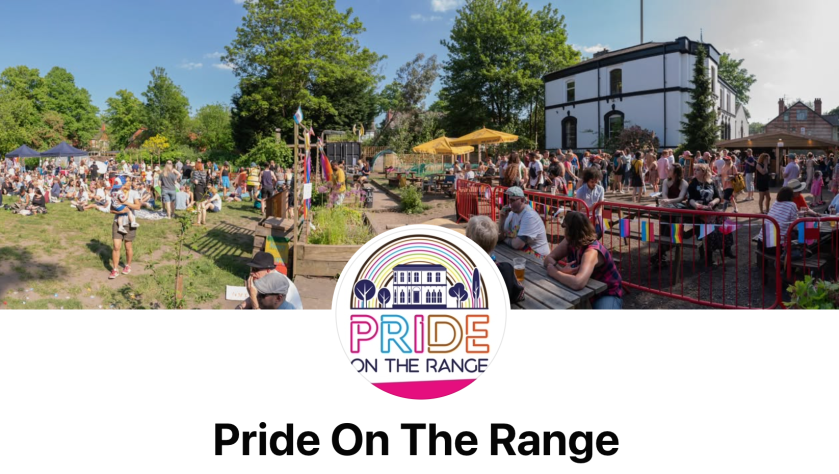
Pride on the Range (Whalley Range) – 23 May

Bury Pride – 30 May

Blackpool Pride – 6 June

Pink Picnic (Salford Pride) – 13 June

Warrington Pride – 13 June

Sparkle Weekend (Manchester) – 26 to 28 June.

More to follow …

Out On The Radio … The Remarkable Life of Reed Peggram … LEAP Study

News

Out On The Radio

Our monthly radio show – aimed at older members of the LGBT+ communities – goes out live on the first Tuesday each month from 2.00pm to 3.00pm on ALL FM 96.9.

Don’t worry if you miss it, as it has been uploaded to Mixcloud so you can listen at your leisure.

This month we interviewed El Stannage from the Holocaust Centre North and featured an eclectic choice of music.

Listen here.

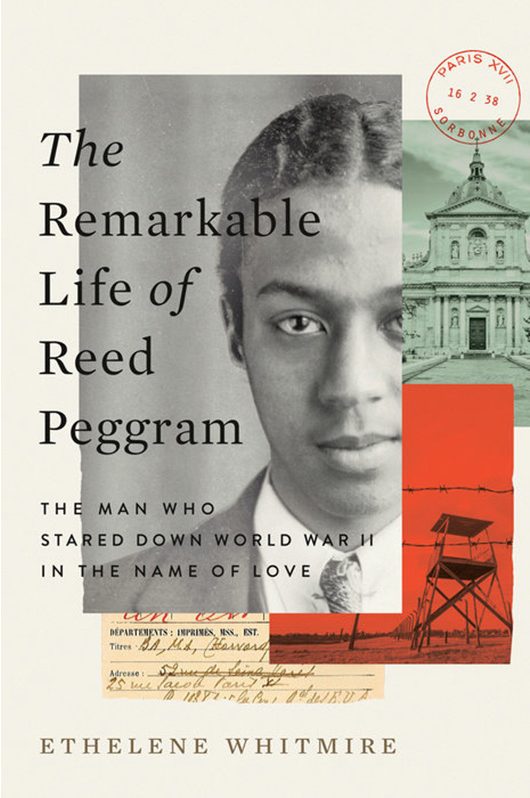
Book cover image – courtesy Viking

Risking it all for love during World War II

You couldn’t escape it. When you fell in love, that was it: you were there for good. Leaving your lover’s side was unthinkable, turning away was impossible. You would do anything for that person you loved – even, as in the new biography, “The Remarkable Life of Reed Peggram” by Ethelene Whitmire, you would escape toward danger.

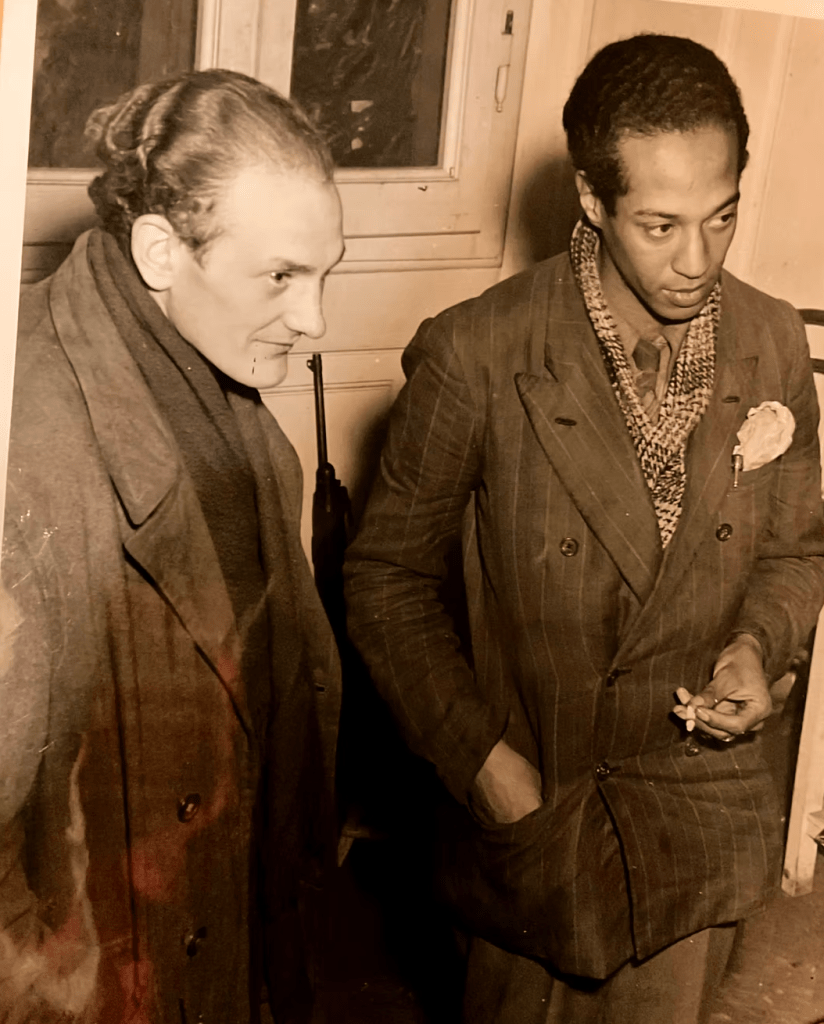
On 28 August 1938, Reed Peggram boarded a ship from Hoboken, New Jersey, hoping to “become a proper gentleman” and fulfill his dreams. A prolific writer and Harvard scholar of comparative literature, he had recently been awarded the Rosenwald Fellowship, which put him in the company of literary stars like W E B Du Bois, Zora Neale Hurston and Langston Hughes.

Both Peggram’s mother and grandmother were then domestic workers, and they had big expectations for him. Reed himself was eager to study abroad, for professional and personal reasons; he was “determined to become a French professor and an accomplished linguist” and “he also hoped to find love.”

What better place to do it than in Paris?

Outgoing and confident, Peggram made friends easily and had no trouble moving “through the world of his white male peers.” Where he faltered was in his lack of funds. He relied on the kindness of his many friends – one of whom introduced Peggram to a “man who would become so pivotal in his life,” a Danish man named Arne.

Peggram and Arne had a lot in common, and they began to enmesh their lives and dreams of living in the United States. But there were complications: homosexuality was largely forbidden, World War II was in its early stages, and it quickly became apparent that it was dangerous to stay in Europe. But returning home would be to a repressive, segregated America and a constrained life as a second-class citizen. 

Also, Peggram loved Arne. He refused to leave without him and so, while most visiting Black Americans fled the war in Europe, “Reed was trying to stay.”

There’s so much more to the story inside “The Remarkable Life of Reed Peggram,” so much to know about Reed himself.

It’s there, but not until nearly halfway through the book, which is when the tale takes a tender, urgent turn – albeit one with determination, rashness, and a dash of faux nonchalance. Also, if you’re expecting an unhappily-ever-after because, after all, it’s a World War II tale, don’t assume anything.

If you’re OK with minuscule details and want a heart-pounder, “The Remarkable Life of Reed Peggram” might be a good escape. This is the story of a personal fight for a life of love, freedom, beauty and dignity in a world set against him.

“The Remarkable Life of Reed Peggram”
By Ethelene Whitmire
2026, Viking Press
308 pages

LEAP Study – Callout for interviews with LGBTQ+ People Receiving Home Care

LEAP Study is a new study by the University of Kent looking into improving LGBTQ+ inclusion in home care. The study is now recruiting for LGBTQ+ interview participants aged over 60 who receive home care to take part in short interviews.

Please see the flyer for those receiving home care and the flyer for home care staff. Please do share with anyone you know who may be interested.

The aim of this study is to better understand how prepared people working in home care are to support older (aged 60+) LGBTQ+ people in England and Wales. The study is hosted by the University of Kent in collaboration with Cardiff University and funded by the NIHR Research for Social Care Programme. 

They want to interview older LGBTQ+ people about their experiences of receiving home care. They would like to ask for your help with spreading the word about their study to older people who have relevant experiences. As part of this study, they plan to conduct interviews (in-person or online) with older LGBTQ+ people or their partners / informal carers about their experience receiving home care. They are also inviting older LGBTQ+ people to send in letters about their experiences of receiving home care as an optional way of taking part. 

The criteria for participation are: 

i) identifying as LGBTQ+ and 60+ years of age 
ii) experience of receiving home care in England or Wales within the last 10 years 
iii) currently residing in England or Wales. 

All interview participants will receive a £20 high street store voucher as thanks for participation. 

They are seeking as much diversity as possible amongst the participants, so sharing the news about this study will help them to achieve this. Please get in touch if you have any questions about this research or would like to discuss the study. If you are happy for them to keep your contact details, they will update you on outputs from the project and a summary of key findings. 

Bolton Museum Open Exhibition 2026 … Joel Grey … Romania recognises transman

News

Bolton Museum Open Exhibition 2026

Twenty four of us gathered and enjoyed a fantastic meal in the Olympus Fish & Chip Restaurant before visiting the Open Exhibition 2026.

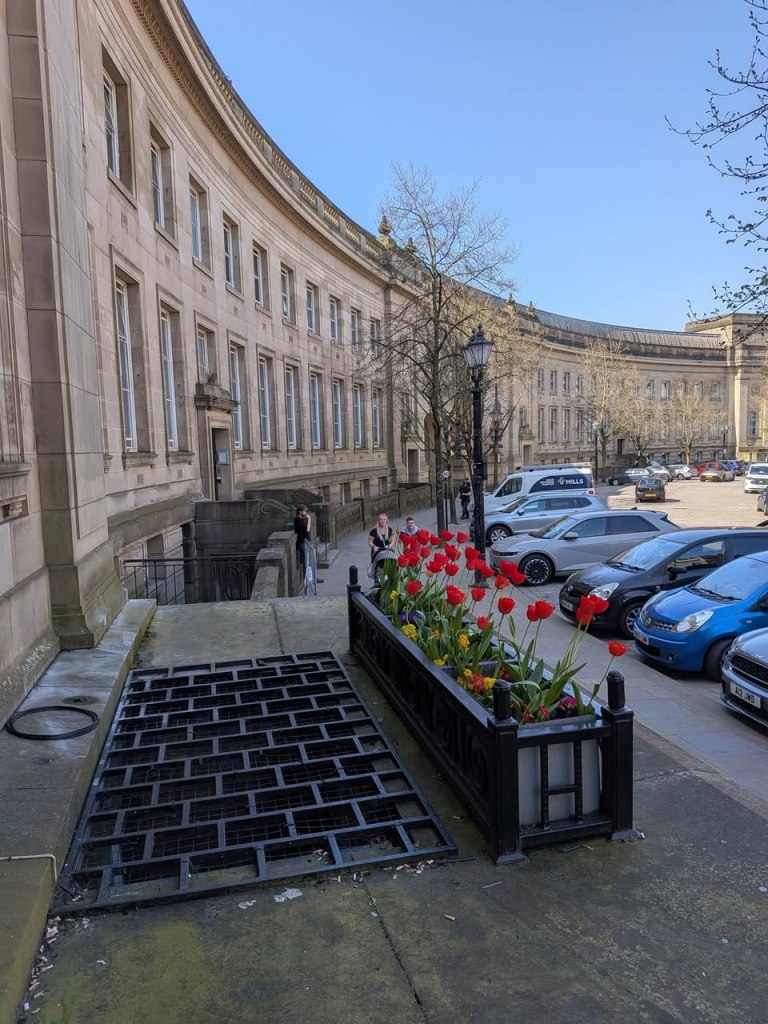
A cultural hotspot of Bolton, the Bolton Central Library and Museum hosts eclectic events, galleries and collections, one of which is its Egyptology collection – the largest of its kind in a local authority museum in the UK. You will also find Greater Manchester’s only public aquarium sitting inside this architecturally impressive, Grade II listed building.

The town’s creative talent was on display in Bolton Museum’s Open Art Exhibition, which was open to anyone aged 16 and over who currently lives, works or studies within Bolton.

Submitted artworks were considered by a panel of independent judges, and this year, the museum received over 240 submissions, giving the judges the hugely difficult task of selecting the final pieces for the exhibition.

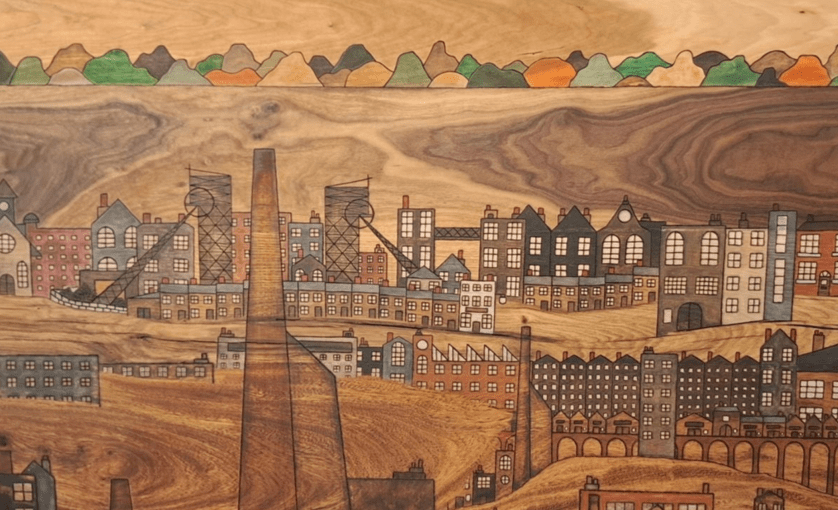
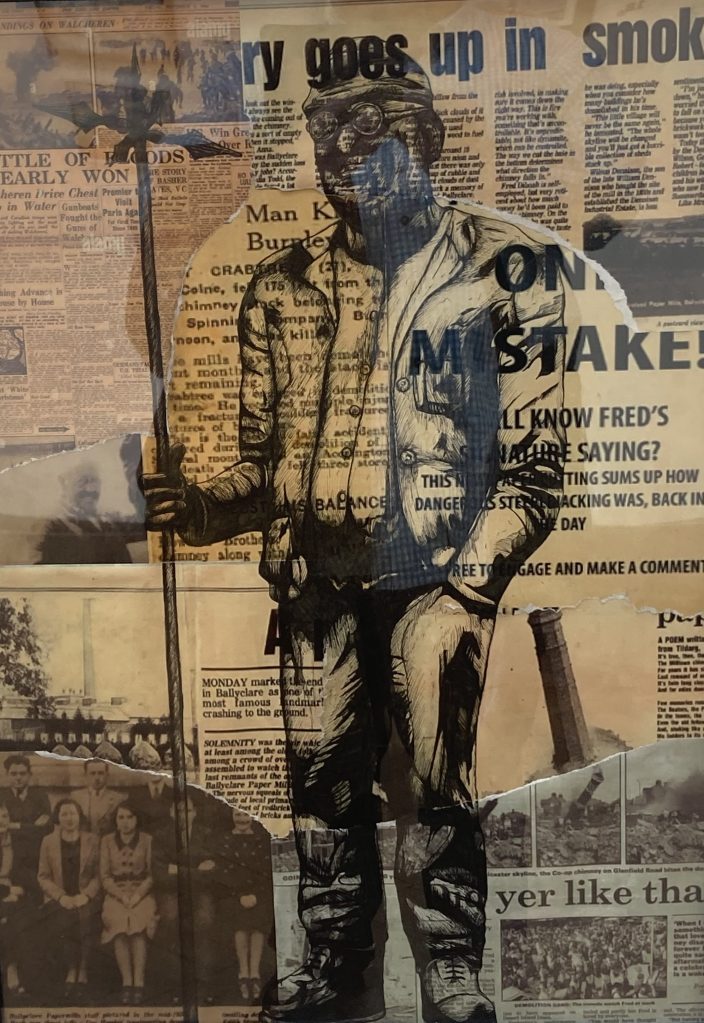
The judges also awarded prizes. The Winner’s Prize of £1,000 was awarded to Richard Wood for his artwork Ghost Chimneys:

Fred Dibnah

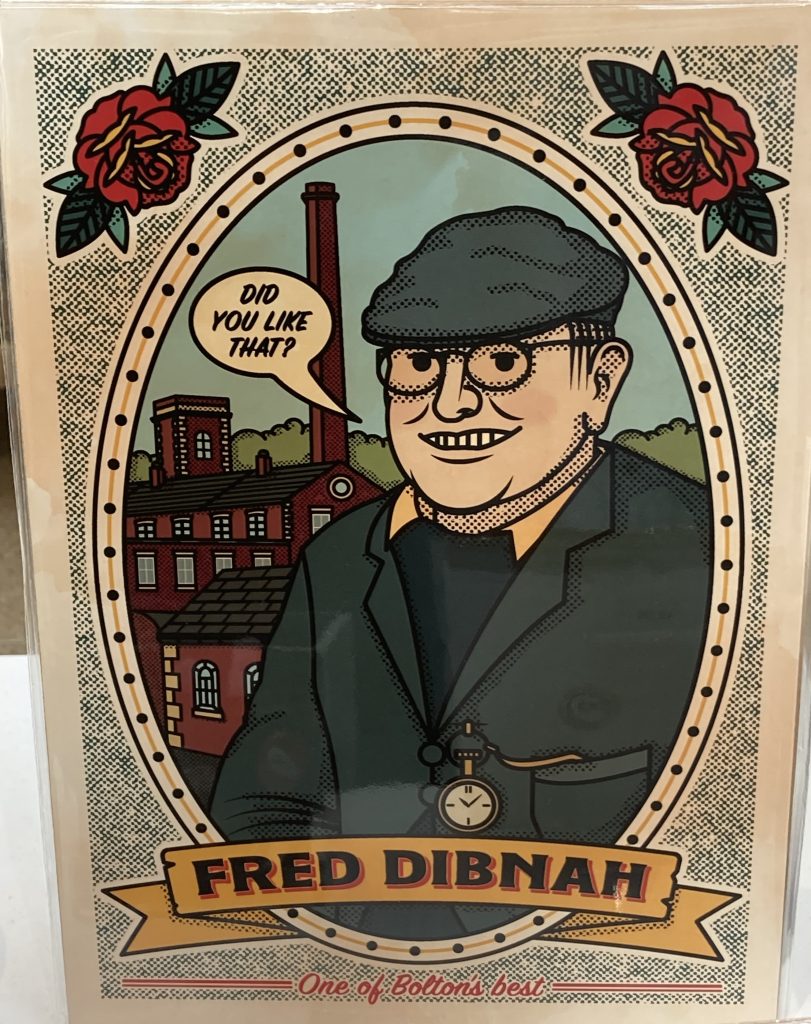
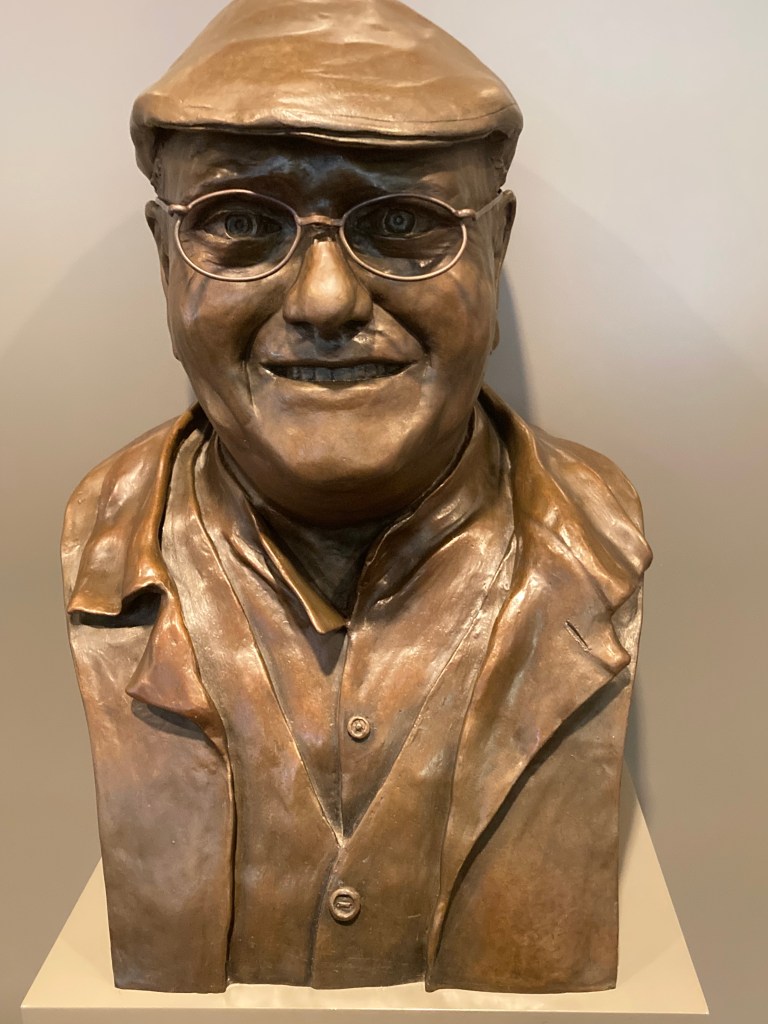
Although he later became well known for celebrating industrial heritage, Bolton man Fred Dibnah (1938 – 2004) first gained national fame when a documentary showed him demolishing mill chimneys. He is featured in the bronze above and various artworks.

After 1959 more and more mills fell into disuse, and demolition was one solution to derelict buildings. A survey in 2005 found that there were 110 mills still standing in Bolton.

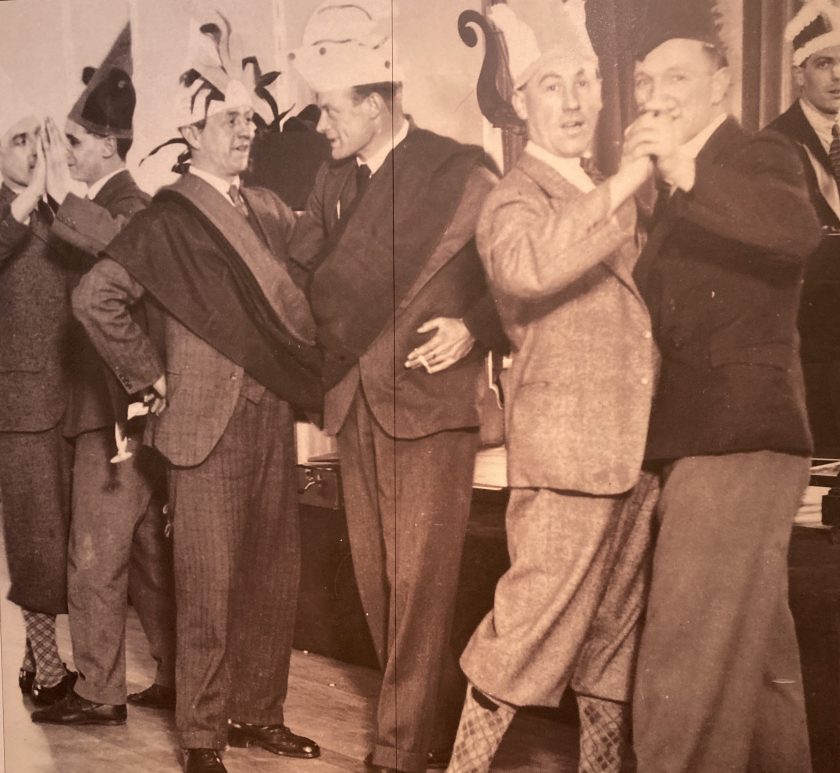
Bolton Wanderers Football Players dancing at a Christmas Party, 1920s

More photos can be seen here.

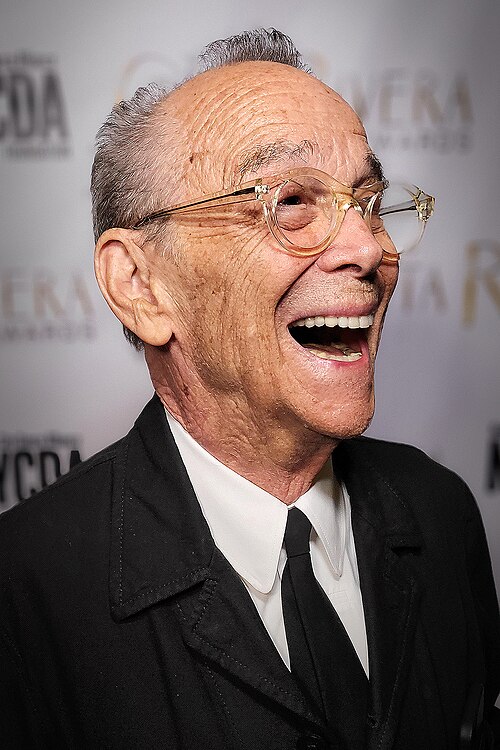
Joel Grey (born 11 April 1932)

“Cabaret” star Joel Grey played the MC on Broadway and in the classic 1972 film adaptation starring Liza Minnelli.

The actor publicly confirmed that he is gay back in 2015 at the age of 82 – showing it’s never too late to come out.

In an interview with People magazine, he said: “I don’t like labels, but if you have to put a label on it, I’m a gay man. All the people close to me have known for years who I am. Yet it took time to embrace that other part of who I always was.”

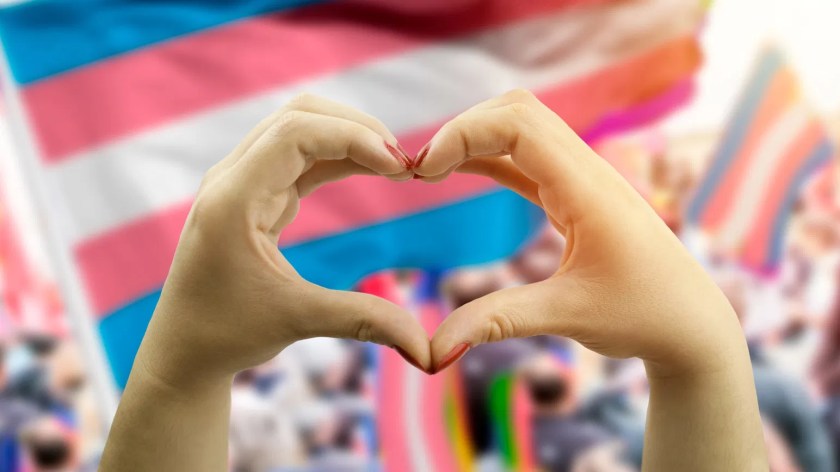
Romania recognizes man’s gender identity in landmark victory for trans Europeans

Shutterstock

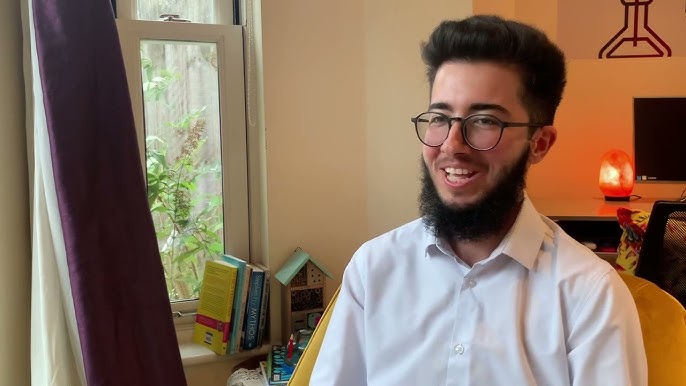
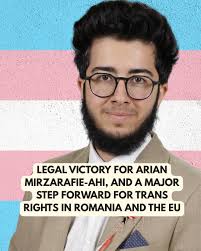
After refusing years earlier to acknowledge the gender of a Romanian citizen who transitioned in another European Union (EU) country, Romanian courts ruled on 2 April 2026 that the government must recognise the man’s identity. Advocates say it’s a landmark victory for transgender Europeans.

The case concerned is Arian Mirzarafie-Ahi, a transgender man with Romanian and British citizenship. He was born in Romania and moved to the United Kingdom in 2008, where he began his transition several years later. After obtaining legal documentation in the UK in 2020, the Romanian government declined to recognise Mirzarafie-Ahi’s gender identity, citing a disparity with documents he used earlier in Romania.

“This put him in the position of having two sets of documents with two different identities,” said ACCEPT, the Romanian advocacy group that helped shepherd Mirzarafie-Ahi’s case through the courts. In the UK, he was recognised “as a man, in Romania, as a ‘woman’.”

Mirzarafie-Ahi sued, and the Romanian court that heard his case advanced it to the Court of Justice of the European Union (CJEU) to settle the interstate argument. That court said in 2024 that the effect of Romania’s refusal to recognise Mirzarafie-Ahi’s gender identity impeded his freedom of movement among member states and was, effectively, a fundamental form of discrimination.

The court ruled, therefore, that all EU member states are obligated to recognise the identity documents of transgender individuals who have earned legal gender recognition in another EU state. (The UK left the EU in 2020.)

However, Romania, one of the most illiberal members in the EU when it comes to LGBT+ rights – it sits at the bottom of ILGA’s EU state rankings – resisted the order, with two different government agencies refusing to recognise Mirzarafie-Ahi’s identity.

Once again, Mirzarafie-Ahi took the Romanian government to court, but this time he won in his home country, with the same Romanian courts that sent his case to the CJEU now bound by its decision.

“Today, March 31, we celebrate Trans Visibility Day, and I am happy to use this opportunity to turn to the people in my community with good news,” Mirzarafie-Ahi said in a statement after his victory. “I have finally won in the courts of Romania! It is not only my victory, but also ours – of those who are still waiting to be seen, heard and recognised.”

Mirzarafie-Ahi’s case mirrors a similar one decided in March in Poland.

An administrative court in Poland found itself in a nearly identical situation, addressing the marriage of two men who had wed in Berlin years earlier. Government officials in Poland refused to recognise the marriage. That court, too, sent the interstate dispute to the CJEU, which decided in the men’s favour based on their right to freedom of movement throughout the European Union.

Fleetwood … Scotland Could Be First to End HIV Transmission … Section 28 Justice Coalition … Participate in Qustionnaires

News

Fleetwood

Fleetwood is a coastal town with fish processing still a major economic activity. But the town’s most significant employer is Lofthouse of Fleetwood, manufacturer of the lozenge Fisherman’s Friend which is exported around the world.

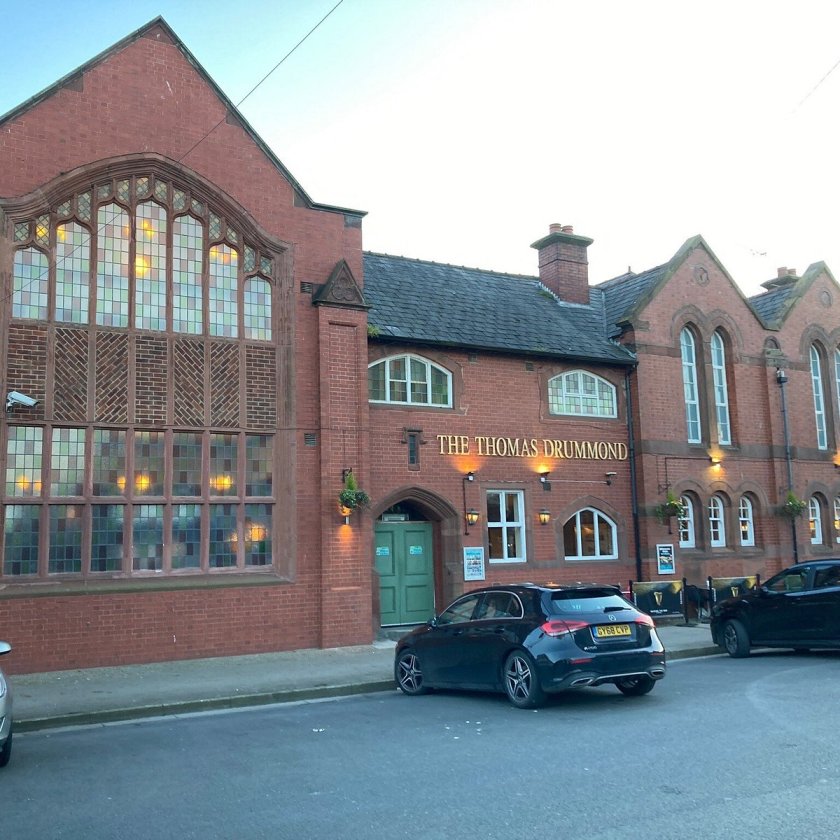
A small group of us met at 10.30am at Piccadilly Train Station and took the 11.02am train to Blackpool North. We arrived around 12.35pm just in time for a 25 minute wait for the next tram to Fleetwood. Unfortunately due to work on the tracks the last three stops were closed, so we got off at Fisherman’s Walk and carried on foot to The Thomas Drummond – a Wetherspoon’s pub that was formerly a church. We had a lovely meal, but then it was time to return home!

We never did see Fleetwood Museum famous for it’s maritime heritage.

Scotland could be first country in world to end HIV transmission, say leading charities

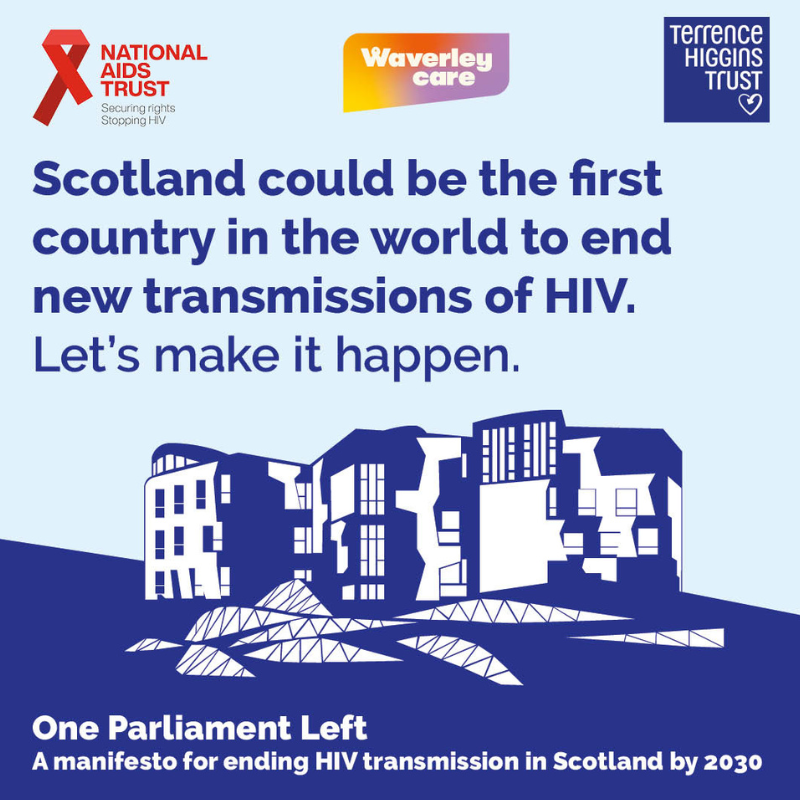
Scotland is in prime position to be the first country to end new HIV cases, according to leading HIV charities, but urgent action by the next Scottish Government is crucial to achieving the goal of getting there by 2030.

The Scottish Government committed in 2020 to ending new HIV cases by 2030, which would be the first time the onward transmission of any virus had been stopped without a vaccine or cure.

However, there are still an estimated 400 people in Scotland living with undiagnosed HIV, and up to 1,400 people who have been diagnosed but are no longer accessing life-saving care.

Terrence Higgins Trust, Waverley Care and National AIDS Trust have published a manifesto for ending new HIV transmissions in Scotland and are urging all political parties to commit to action ahead of the May election.

Medical advances mean that a person living with HIV and on treatment can live a long and healthy life and cannot pass HIV on to others. This progress – combined with the availability of the HIV prevention drug PrEP and rapid HIV testing – means Scotland has all the tools needed to reach its 2030 goal.  

The charities are calling on the next Scottish Government to make sure these tools reach everyone who needs them – including through a national online HIV prevention service, providing at-home test kits and access to PrEP, a National HIV Testing Week and a programme to re-engage those who have been diagnosed but are not accessing HIV care.

Section 28 Justice Coalition

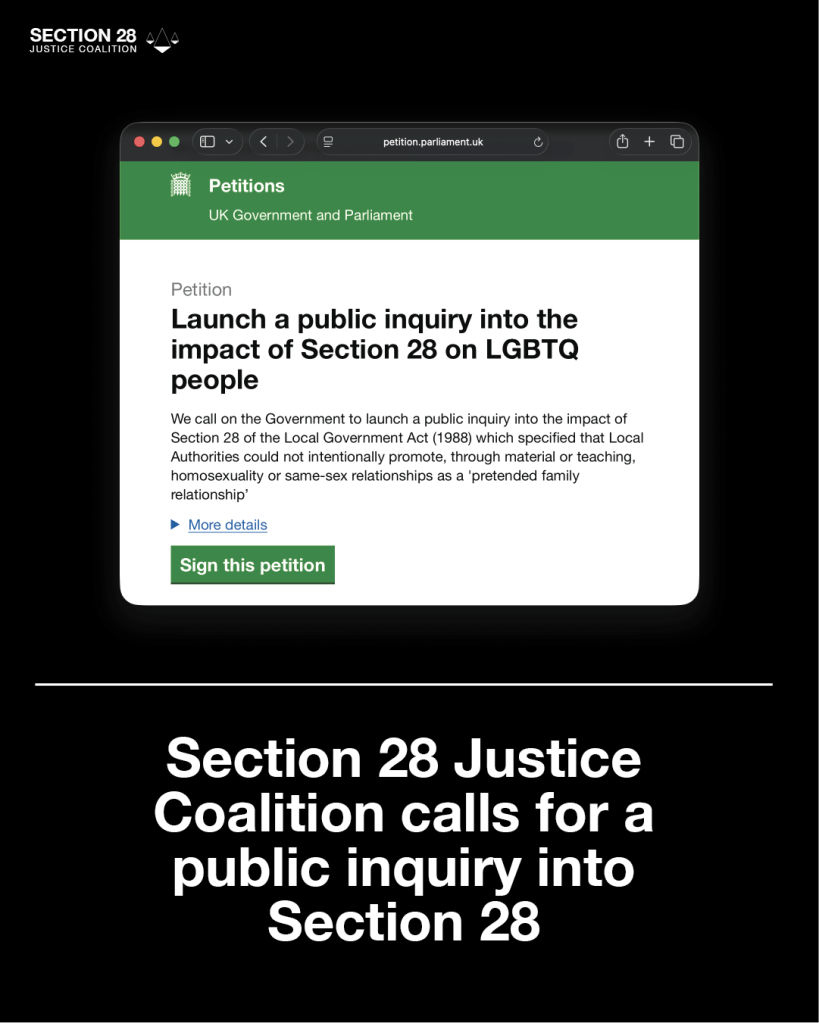
We have been contacted by a new group, the Section 28 Justice Coalition. They want to get a proper acknowledgement of the harms caused to LGBTQ+ people by Section 28 and stop censorship of LGBTQ+ issues, whether enforced by social pressure or by law. 

We’re witnessing increasing censorship laws, similar to Section 28 take hold internationally, and in the UK a more quiet form of censorship, enabled by social pressure, leading to book bans, pressure on libraries and schools, de-funding LGBTQ+ activities and an increase in protest of community and arts based events. 

Reflecting on Section 28 and the damage this law caused enables us to show how censorship laws don’t work, they actively harm people.

They have launched a petition, calling for a public inquiry into the impact of Section 28 on LGBTQ+ people to get justice for those who lived through it and to give recommendations on how to stop anything like it ever happening again. 

Their ‘Dear Section 28’ project is compiling an archive of personal experiences through letters addressed directly to the law and featuring a film called ‘Don’t say gay’ which will be released later this year. 

How you can support them

As they have just launched and are trying to get recognition for their campaign, they wanted to ask if you would consider supporting them in any way you can:

  1. You could sign our petition here and share it publicly
  2. Follow our instagram
  3. Share and contribute to our Dear Section 28 archive project

Creative agency Noodl are looking to hear from people from a range of communities and backgrounds who have an active interest in nature, history, art or culture and would be open to sharing their perspectives on how British cultural institutions and nature locations (beaches, woodlands, etc) can better connect with people living in towns and cities.

They’re currently recruiting for people to do a questionnaire over the next week and they’re paying £25 to those who take part, first come first served, plus you’ll be added to their network where they provide paid opportunities to participate in future creative projects.

If this sounds like you, click the link below to find out more and register your interest.

https://tally.so/r/KYDDAM