Seven LGBT+ Uprisings Before Stonewall … Books with Older LGBT+ Characters … Central Library Archives

News

Seven LGBT+ Uprisings Before Stonewall

The Stonewall Riots of 1969 are arguably the most famous and impactful uprisings for lesbian, gay, bisexual and transgender rights. But they are not the first LGBT+ uprising by far. Various smaller uprisings preceded Stonewall – some by over a decade – to push back against harassment, often from police and inequality.
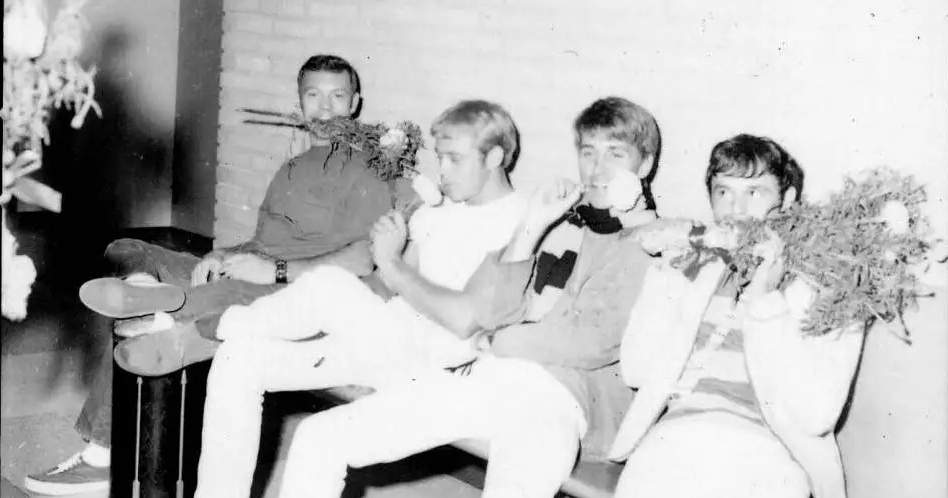
Protestors in the 1968 “flower power” protest camp out at the police department following a raid at the gay bar The Patch.
(Courtesy the ONE Archives at the USC Libraries)

1958: Los Angeles – Cooper Do-Nuts Riot

After nearby bars closed, a 24-hour Main Street donut café became the site of a large riot one morning in May 1958. “Two cops, ostensibly checking ID, a routine harassment, arbitrarily picked up two hustlers, two queens and a young man just cruising and led them out,” novelist and one of the hustlers John Rechy said in his book City of Night.

The situation quickly devolved as angry bystanders began throwing debris and items from Cooper Do-Nuts at the cops, who eventually retreated into their car. Disobedience turned into a riot, and soon enough police backup arrived. The officers blocked part of Main Street for the night and arrested several of the rioters.

There has been some confusion about the actual location of the 1958 brawl, but Rechy clarified in a 2021 interview in the LAnd, “There was no riot at Cooper’s. It was actually another donut shop, but at that time, people called every donut shop in the city ‘Cooper’s’ because there were so many. This particular one (on Main Street) is gone now.” 

1961: Milwaukee – Black Nite Brawl
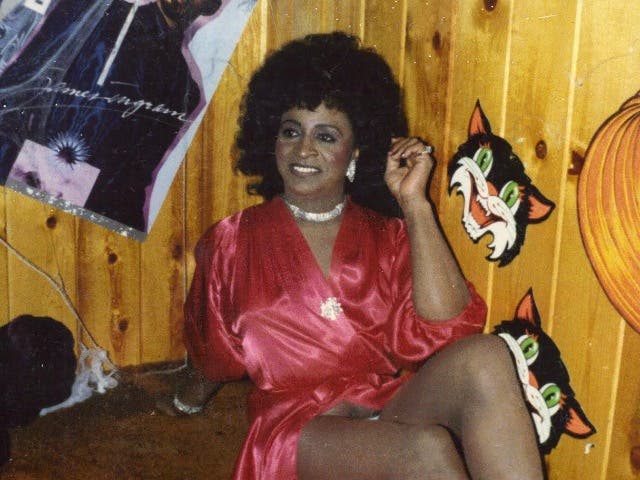
Josie Carter, who helped instigate the uprising
Courtesy of the Wisconsin LGBTQ History Project

On 5 August 1961, four party-going sailors entered Black Nite, a popular St Paul Avenue gay bar in Milwaukee, on a dare. They started a fight with the bouncer, only to be chased out of the bar by gender-nonconforming Black “Queen” Josie Carter, who knocked one of the men unconscious with a bottle.

The men later returned with reinforcements and began to tear the bar apart, but were met with stiff resistance by bar patrons. The sailors were arrested but the charges were later dropped due to “lack of evidence.” The bar suffered significant damage from the brawl and was eventually demolished for the extension of St Paul Avenue.

1965: Philadelphia – Dewey’s Restaurant Sit-In
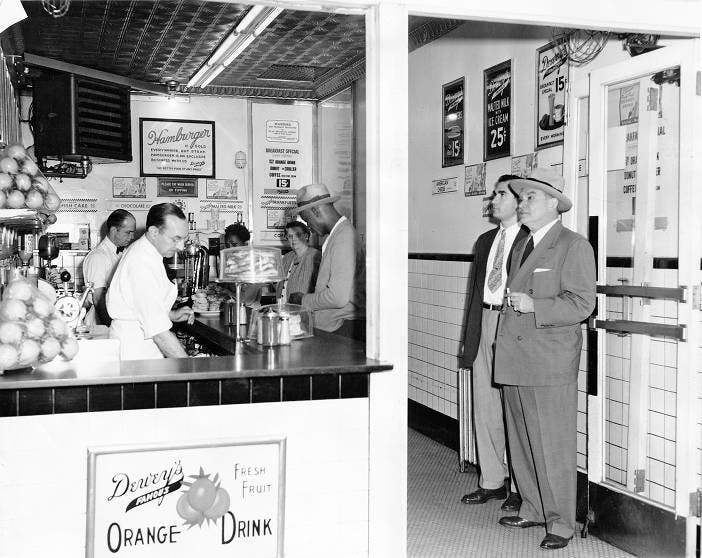
Dewey’s restaurant in Philadelphia, Pennsylvania as it appeared in May 1951.
Courtesy of the Special Collections Research Centre, Temple University Libraries, Philadelphia, PA

On 25 April 1965, the 17th Street location of Dewey’s restaurant in Philadelphia denied service to approximately 150 people who appeared to be gay or gender non-conforming. Three teenagers refused to leave and were later arrested, along with Clark Polak, leader of the homophile organisation Janus Society, after he offered to help the group obtain a lawyer.

Janus Society members protested outside of the restaurant for the next five days; on 2 May, three more people staged a second sit-in at Dewey’s. This time, the protesters weren’t arrested and instead left the restaurant voluntarily a few hours later. Dewey’s agreed to stop denying service to LGBT+ people.

1966: New York City ­– Julius Tavern “Sip In”

Fred W McDarrah / Getty Images

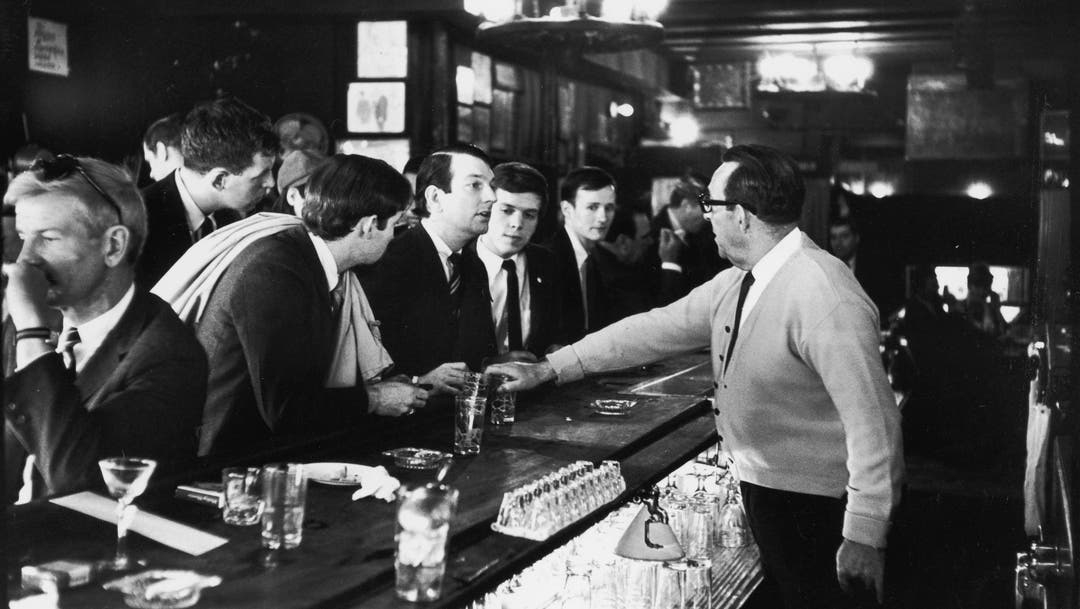
After pouring their drinks, a bartender in Julius’s Bar refuses to serve John Timmins, Dick Leitsch, Craig Rodwell and Randy Wicker, members of the Mattachine Society who were protesting New York liquor laws that prevented serving gay customers, 1966.

In Spring 1966, members of the early gay rights organisation Mattachine Society staged a “sip-in” – a twist on “sit-in” protest – in which they visited taverns, declared themselves gay, and waited to be turned away so they could sue. At the time, LGBT+ individuals couldn’t be served alcohol in public because liquor laws considered their gathering to be “disorderly.”

The group was finally denied service at the Greenwich Village tavern Julius, which had been raided by police a few days earlier for serving gay people. This led to the quick reversal of the state’s anti-gay liquor laws.

1966: San Francisco­ – Compton’s Cafeteria Riot

Nestled in the San Francisco Tenderloin neighbourhood, Compton’s Cafeteria was a 24-hour restaurant and refuge for sex-working trans women, who often faced intense violence from clients and police. One day in 1966, an officer placed his hand on a trans woman at Compton’s – she responded by throwing her cup of coffee in his face.

Chaos ensued with Compton’s patrons throwing cups, saucers and other diner items at the police, who retreated until reinforcements arrived. A riot erupted as dozens of trans people, drag queens and gay men fought the police. They broke windows, destroyed a police car and set a newsstand on fire. Drag queens hit police with heavy purses. In the end, however, police arrested the women.

1966–1967: Los Angeles ­– Black Cat Tavern Protests, Los Angeles

Opened in November 1966, Black Cat Tavern was a haven for Silver Lake’s LGBT+ community, who were subjected to harassment from police enforcing anti-homosexuality laws. On New Year’s Eve 1967, undercover cops tore apart couples celebrating at midnight and began beating them. The brutality eventually spread to a neighbouring bar where police attacked the bar’s owner and two bartenders. By the end of the night, 14 people were arrested and two of the men were later forced to register as sex offenders for kissing.

On 11 February 1967, over 200 demonstrators formed a picket line outside of The Black Cat Tavern to peacefully protest against police abuse. Though many police were dispatched to the protest, it remained charged, but peaceful.

1968: Los Angeles – The Patch Bar ‘Flower Power’ Protest
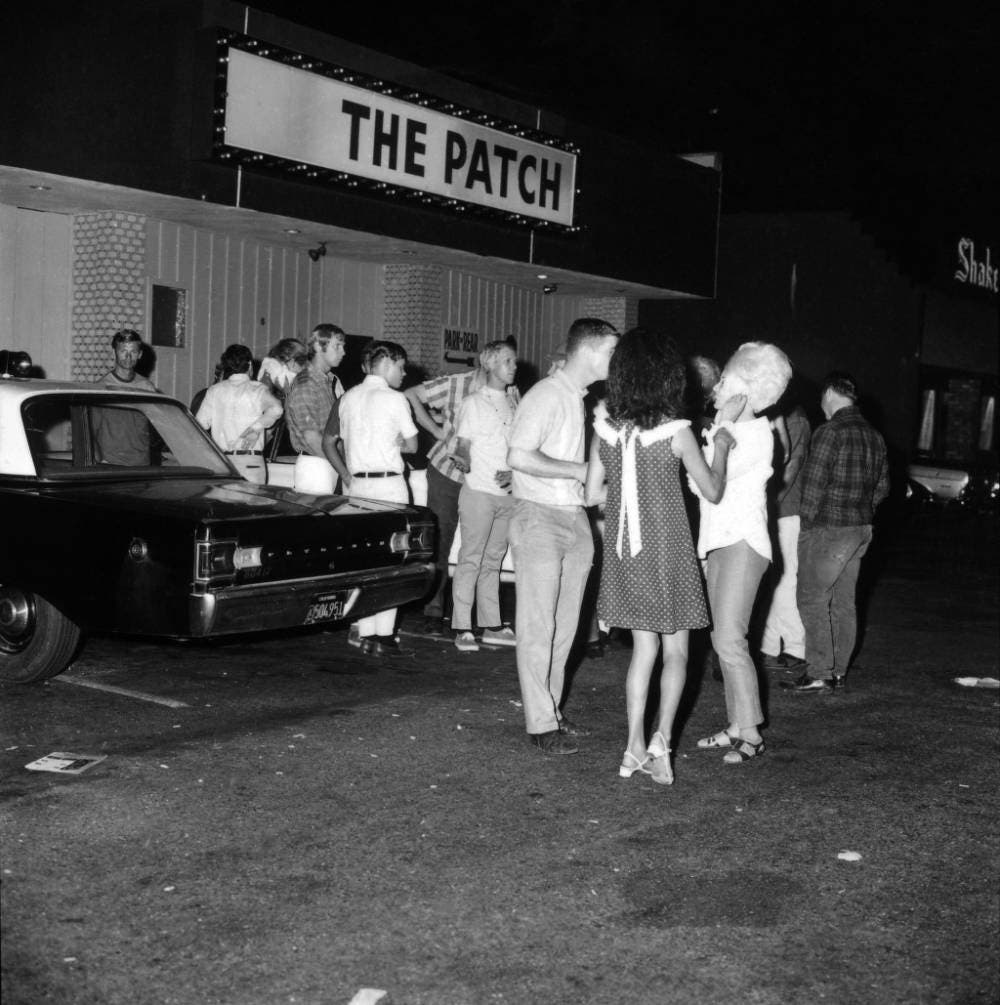
Courtesy the ONE Archives at the USC Libraries

The Patch was an LGBT+ bar in Wilmington owned and managed by Lee Glaze. Glaze, known as “The Blonde Darling,” was a larger than life character with a campy personality, recognisable chuckle, and short blond hair.

Glaze had a secret signal – he would play “God Save the Queen” on the jukebox – to announce that police officers were entering the bar, allowing patrons time to comply with the discriminatory laws. On 17 August 1968, undercover cops left the bar and returned with several uniformed officers for backup, though it’s unclear what prompted this action. They fanned out and began to screen the crowd, looking for IDs that didn’t “match” the holder’s outward appearance.

In the end, police arrested two bar patrons (Tony Valdez and Bill Hasting) for lewd conduct, enraging Glaze who knew the men were innocent. He led a crowd to buy massive quantities of flowers from a nearby shop owned by one of the bar’s customers. The crowd then went to the police station and camped in the waiting room, remaining until bail was posted for the arrested men.
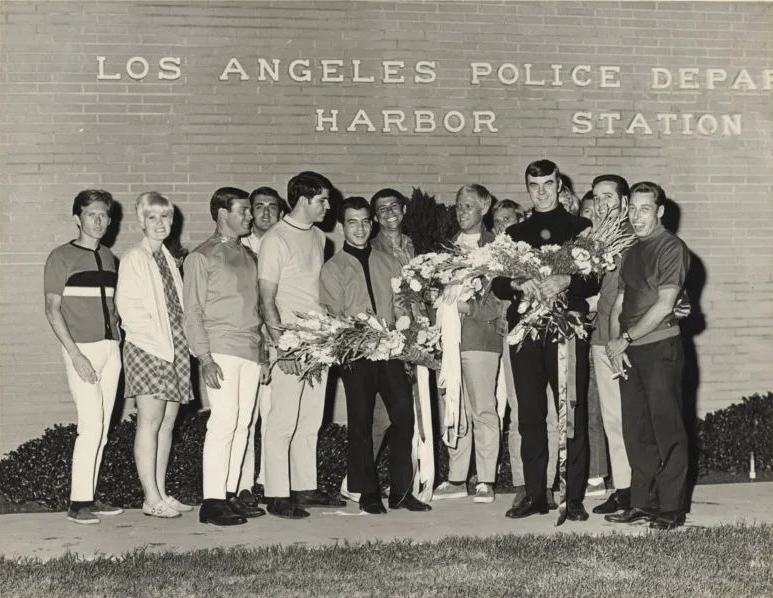
While the demonstrators waited, they staged a “flower power protest,” noting that the police were perplexed and speechless.

They didn’t know what to do with all the gay men waiting in the lobby.
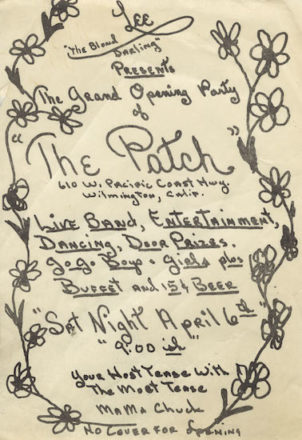
Lee Glaze opened his bar The Patch in Wilmington in 1967 with this flyer announcing the grand opening. Photo: Q Voice News.

Books with Older LGBT+ characters

Interested in reading books starring older LGBT+ characters? Here’s a quick list to get you started:
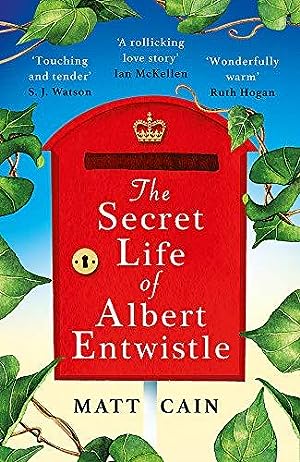
The Secret Life of Albert Entwistle by Matt Cain

Albert Entwistle was a postman. It was one of the few things everyone knew about him. And it was one of the few things he was comfortable with people knowing.

64-year-old Albert Entwistle has been a postie in a quiet town in Northern England for all his life, living alone since the death of his mam 18 years ago. He keeps himself to himself. He always has. But he’s just learned he’ll be forced to retire at his next birthday. With no friends and nothing to look forward to, the lonely future he faces terrifies him. He realises it’s finally time to be honest about who he is. He must learn to ask for what he wants. And he must find the courage to look for the man that, many years ago, he lost – but has never forgotten.

Join Albert as he sets out to find the long-lost love of his life, and has an unforgettable and completely life-affirming adventure on the way. This is a love story the likes of which you have never read before!
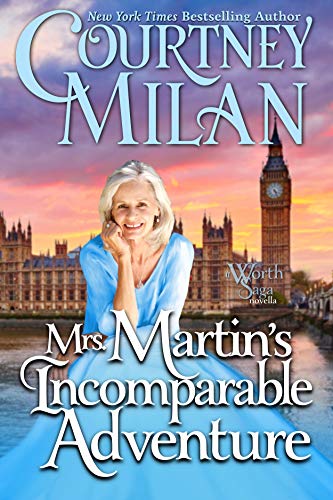
Mrs Martin’s Incomparable Adventure by Courtney Milan

Mrs Bertrice Martin – a widow, some seventy-three years young – has kept her youthful-ish appearance with the most powerful of home remedies: daily doses of spite, regular baths in man-tears and refusing to give so much as a single damn about her Terrible Nephew.

Then proper, correct Miss Violetta Beauchamps, a sprightly young thing of nine and sixty, crashes into her life. The Terrible Nephew is living in her rooming house, and Violetta wants him gone.

Mrs Martin isn’t about to start giving damns, not even for someone as intriguing as Miss Violetta. But she hatches another plan – to make her nephew sorry, to make Miss Violetta smile, and to have the finest adventure of all time.

If she makes Terrible Men angry and wins the hand of a lovely lady in the process? Those are just added bonuses.

The New Town Librarian by Kathy Anderson

Queer middle-aged librarian Nan Nethercott, a wisecracking hypochondriac with a lacklustre career and a nonexistent love life, needs to make a drastic life change before it’s too late. When she lands a job as librarian in a seemingly idyllic small town in southern New Jersey, Nan quickly discovers unforeseen challenges.

Nan’s landlady, Immaculata, launches daily intrusions from below. The library, housed in the former town jail, is overrun by marauding middle-schoolers. A mysterious reader leaves distressing messages in book stacks all over the library. Thomasina, the irresistible butch deli owner, is clearly a delicious affair and not the relationship Nan craves.

There’s no turning back though. Nan must come up with her own wildly unorthodox solutions to what the town and its people throw at her and fight for what she wants until she makes a shiny new life – one with her first true home, surprising friends, a meaningful career, and a promising new love.
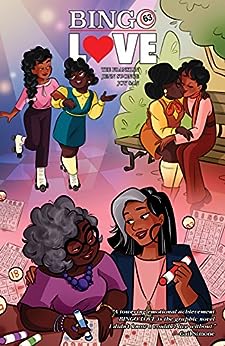
Bingo Love by Tee Franklin

When Hazel Johnson and Mari McCray met at church bingo in 1963, it was love at first sight. Forced apart by their families and society, Hazel and Mari both married young men and had families. Decades later, now in their mid-’60s, Hazel and Mari reunite again at a church bingo hall. Realising their love for each other is still alive, what these grandmothers do next takes absolute strength and courage. Bingo Love is a touching story of love, family and resiliency that spans over 60 years.
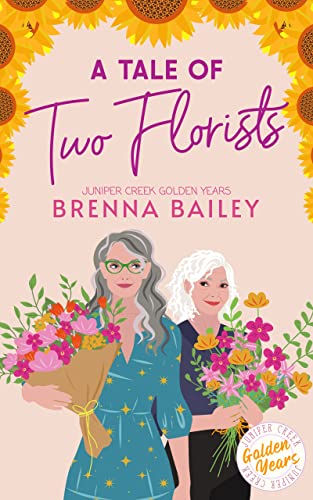
A Tale of Two Florists by Brenna Bailey

Minnie Thomas wouldn’t change a thing. The septuagenarian sees her closest friend every day, she owns the most successful (and only) flower shop in Juniper Creek, and she loves her star employee, Kat, like family. But when Kat inexplicably quits and Minnie’s friend goes out of town, Minnie’s stable world tilts off-kilter – especially when Kat’s newly arrived free-spirited grandmother opens a flower shop just down the street.

Eleanor Lennox is determined to embrace life again and get to know Kat better. She promised her late wife she would open a flower shop, but she never counted on resistance from Kat’s infuriating former employer. When the mayor asks the two of them to work together on the upcoming Sunflower Festival, Eleanor tries to smooth things over for Kat’s sake – but the feisty florist only works harder to run her out of town. Well, two can play that game.

After connecting during a road trip to pick up flower barrels for the festival, Minnie and Eleanor form a budding relationship – which shrivels when Minnie’s friend announces she’s moving. Will Minnie cling to the past so tightly that she misses out on the beauty the present has to offer her – love with Eleanor?

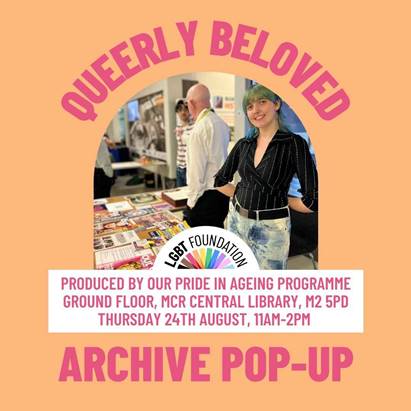
Pop in to Manchester Central Library on Thursday, 24 August (11.00am – 2.00pm) to see items from the archives produced by the Pride in Ageing programme at the LGBT Foundation.
Harrogate … Celebrating 10 Years of Equal Marriage … Mae West and Camp … Withington Pride

News

Harrogate

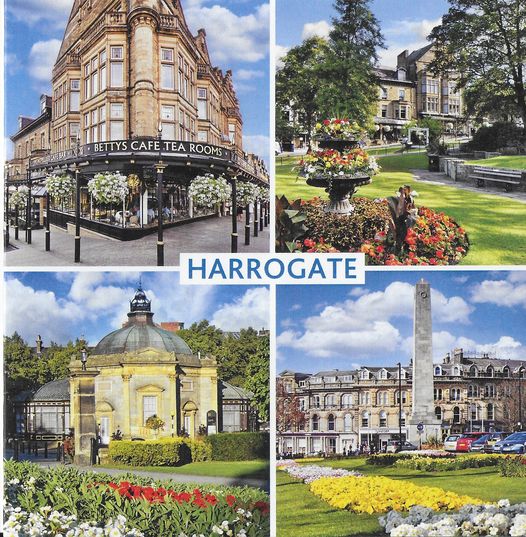
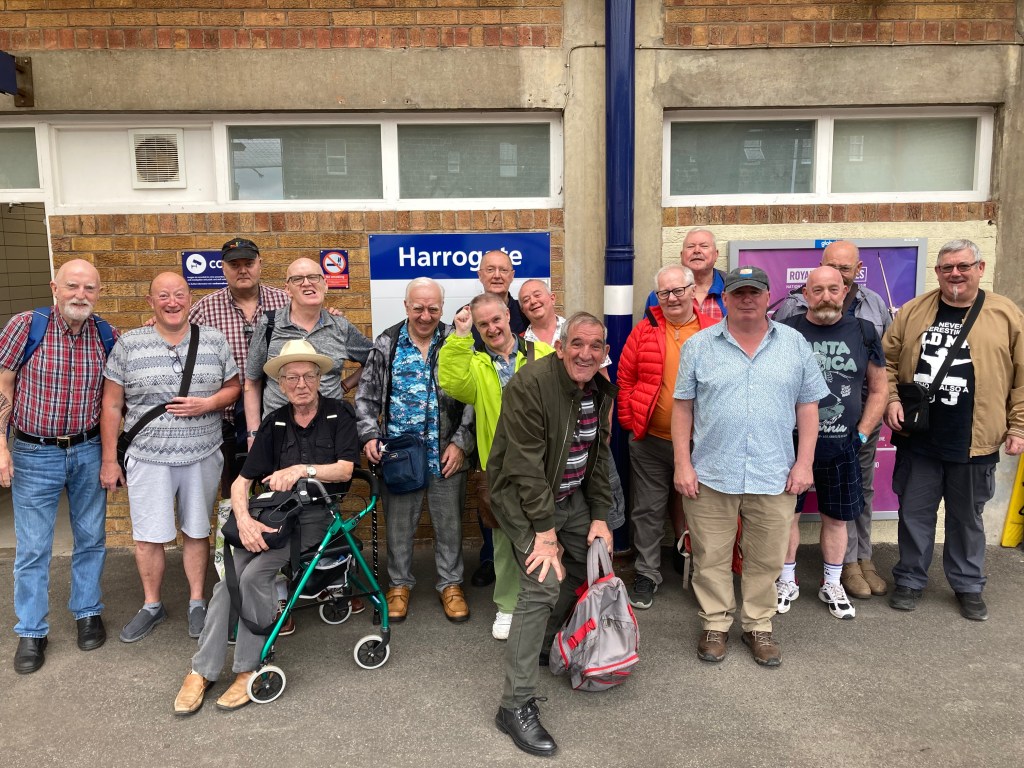
This week we visited Harrogate – a spa town in North Yorkshire.

Harrogate spa water contains iron, sulphur and common salt. The town became known as ‘The English Spa’ after its waters were discovered in the 16th century. In the 17th and 18th centuries its waters (containing iron) were a popular health treatment, and the influx of wealthy but sickly visitors contributed significantly to the wealth of the town.

We visited the Winter Gardens for lunch. This is a Wetherspoons pub, but unlike any other Wetherspoons pub. The former Royal Baths included the Winter Gardens – built so that visitors could relax and stroll in any weather. Its name lives on in this Wetherspoon pub. During the 1920s, people could relax here, amid potted palms, listening to music from a grand piano.

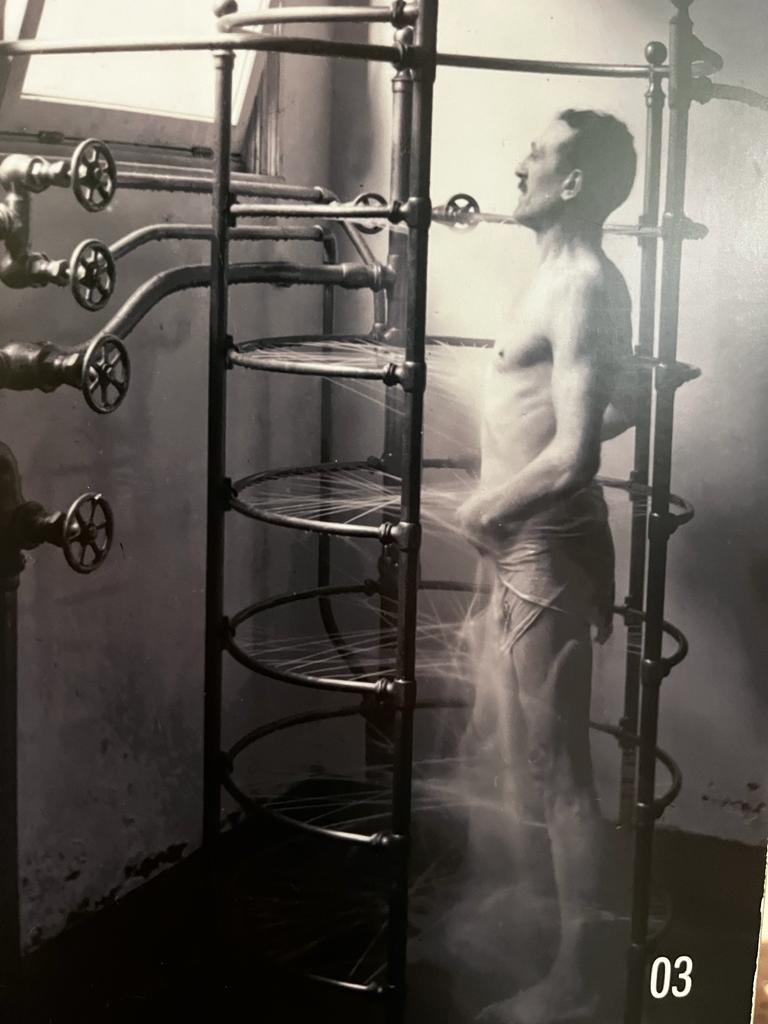
We then took a stroll to the Royal Pump Room Museum, which gave us a fascinating insight into the popular spa treatments known as “the cure’.

The Royal Bath Hospital

The Royal Bath Hospital opened in 1826, for the treatment of the poor who lived more than three miles from Harrogate. This was a charitable enterprise to help those who needed treatment, but could not afford to pay for accommodation. The hospital treated diseases that could be helped with spa treatments and for this purpose drew on the sulphur water of Bogs Field (now Valley Gardens).
In 1889 a new hospital was opened, which remained open until 1994.

The daily routine

A daily routine for the wealthy visiting Harrogate on the late 19th century to take the “cure” would be as follows:

7.00 – 8.00am Rise and visit Pump Room for first tumbler of water

7.00 – 8.15am Walk about, listening to the band

8.15am Take second tumbler of water

9.00am Breakfast

“For some people it is advisable that they drive; either by omnibus, carriage or bath chair but the walk home can be advantageous if it can be accomplished without undue fatigue. Care should be taken to avoid exertion.”

10.00 – 11.00am Morning paper or letter writing

11.00am Shopping / Walk / Listen to band / or Bath

11.30am Second visit to the Pump Room

1.00pm Rest for half an hour

1.30pm Lunch to be followed by one hour of rest

Afternoon: Driving, walking, cycling, golfing or third visit to the Pump Room. Afternoon tea in gardens, listening to the band.

7.00pm Dinner

Concert room

10.00pm Bed

For some patients massage is better than exercise.

We enjoyed our trip and lots of photos can be seen here.

Stephen decided to “take the waters” whilst we were there

Celebrating 10 years of equal marriage

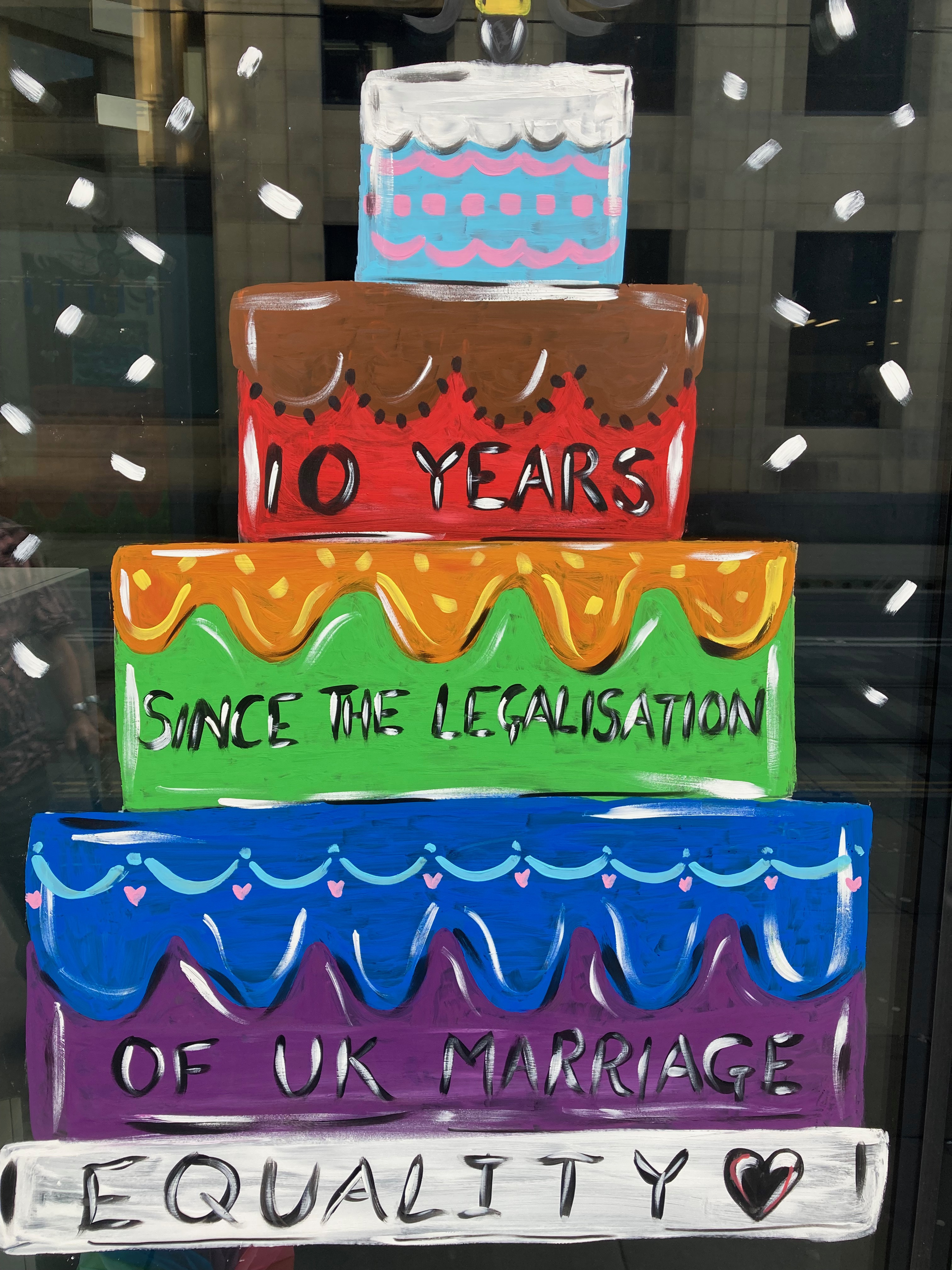
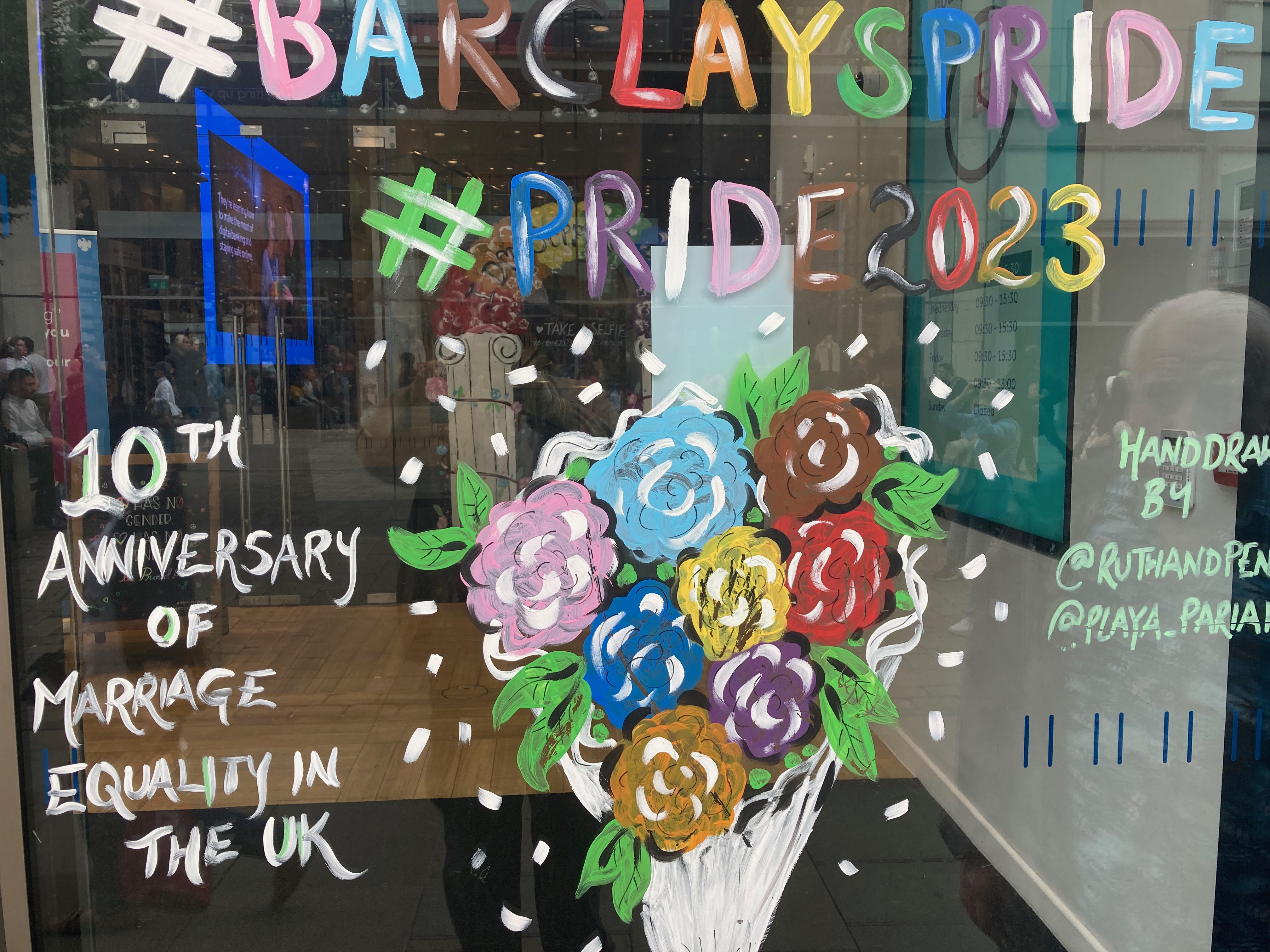
The Marriage (Same Sex Couples) Act 2013 gained Royal Assent on 17 July 2013, after months of intense work. We have recently celebrated the ten year anniversary.

The Act was drafted by Government Legal Department (GLD) lawyers, the Office for Parliamentary Council, Government Equalities Office and other government departments. It allowed same sex couples to marry, whether in a civil ceremony or a religious one, where the religious organisation allowed such marriages. Crucially, the Act provided protection for those religious organisations that did not want to authorise such marriages, thereby ensuring freedom of religion for all religious organisations.

The Act required legal knowledge on everything from marriage and civil partnership in England and Wales, consular and armed forces marriage, divorce law and the law on the Church of England. There were many challenges along the way, particularly with crafting appropriate religious protections for those religious organisations that did not support same sex marriage.

GLD lawyers Tracey Kerr and Suzanne Lehrer who worked on the Act, and who are still at GLD, said of their work:

Tracey Kerr, Deputy Legal Director at the Department for Education, “Leading the amazing GLD legal team who worked on this legislation has been one of the highlights of my career so far. To be at the forefront of delivering this and other life changing law for so many people is one of the main reasons why I love my job. It’s the perfect combination of challenging legal issues and making a real difference.”

Suzanne Lehrer, Senior Lawyer at the Department for Education, “I worked on the Bill and its implementation. It was very satisfying to take a policy right from the start up to its coming into force – especially one with such a huge impact on people’s lives. I’ve been to a wedding that happened because of the Act, which was all the more special as a result. It’s the work I’m most proud of in my career as a government lawyer.”
Peter McGrath and David Cabreza were the first couple who married following the 2013 law change. / Matt Writtle

Couples had to wait until March 2014 for the law to take effect and necessary changes to be made, meaning the first weddings happened on 29 March 2014.

It is now firmly established and supported by all sections of society, with a YouGov survey carried out in July 2023 finding 78 per cent of Britons say they support same-sex marriage, the highest level recorded to date.

A total of 62 per cent of over-65s back same-sex marriage, compared with only 27 per cent in 2011 when the plan to introduce it was first announced.

Almost half (47 per cent) of Britons say they personally know someone in a same-sex marriage.

Since the law was changed, there have been more than 50,000 same-sex marriages in the UK, according to the Office for National Statistics.

According to the latest census, there were about 402,000 people in legally formalised same-sex relationships — same-sex marriages or civil partnerships — in 2021 across England and Wales.

That compares with 104,942 at the time of the last census, in 2011, at which time same-sex marriages were not performed or recognised.

Mae West and Camp

A camp diva, a queer icon, and a model of feminism – the memorable Mae West left behind a complicated legacy, on and off the stage.

Mae West circa 1930 / Getty

She was born 130 years ago today on 17 August 1893.

You may recall that in 2019, New York’s Metropolitan Museum of Art’s annual gala celebrated all things camp. Jared Leto carried his own head as an accessory and Billy Porter arrived, swathed in gold sequins and actual wings, on a litter borne by six extremely muscular gentlemen.

The accompanying exhibit attempted, in a mint-green text panel, to define the whole affair in the words of actress Mae West: “Camp,” she commented in 1971, “is the kinda comedy where they imitate me.”

West had good reason to say this. In the long arc of a career that went from vaudeville to 1980s B-movies, West was a hardworking actress who loved to push envelopes. From obscurity to fame, comeback to caricature, she spent decades delighting in the stylisation, excess and shock value of what we would come to know as camp culture.

Susan Sontag is largely credited with popularising the phrase “camp” to describe the long-running cultural vogue for and fascination with things that are just a tiny bit extra; her “Notes on Camp” is an attempt to wrap arms around the cultural concept and its embrace of exaggerated artifice. Sontag, too, turns to Mae West as an example of camp well done, writing that while unwitting camp is the best kind, West could give something just as good – a performance that, “even when it reveals self-parody, reeks of self-love.”

Born in 1893, Mae West was performing in vaudeville by her teenage years. She debuted on Broadway as an eighteen-year-old dancer and hustled her way through various song-and-dance roles, becoming semi-famous for doing “the shimmy” in the Broadway revue Sometime. Still, by the 1920s, she was a theatre veteran with little name recognition and few prospects.

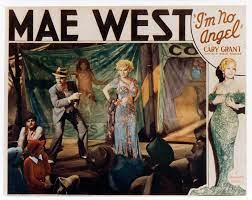
Mae West is presented on stage in a scene from the film ‘I’m No Angel’, 1933. / Getty

To bring her career in line with her ambitions, West started writing plays herself. Cobbling together financing and theatre rental, she put together a Broadway production, cast herself as the lead (a Montreal sex worker), and debuted it in 1926 under the rabble-rousing title: SEX

The play was unanimously panned by New York’s theatre critics, all of whom predicted its immediate failure and some of whom called for police intervention. Yet despite this condemnation – or rather, no doubt, in part because of it – SEX became one of the major hits of the 1926 season, playing to mostly full houses until forced to close in March 1927.
That forced closure was the result of a raid by the NYPD vice squad, thanks to which West was charged with obscenity and spent eight days in the women’s prison on Roosevelt Island – an event that, to West’s delight, only boosted her public profile. She continued to write boundary-pushing plays, centred on women’s sexuality and gay life. At a time when thin flappers and demure Ziegfeld girls were the fashion, West’s physicality and her embrace of burlesque tropes brought low-class entertainment onto high-class Broadway.

West took advantage of her own notoriety in her 1928 play Diamond Lil, sanding a few rough edges for the sake of public appeal. A vaudeville drama set in the Gay Nineties, Diamond Lil at last made West a star persona. She played a languid, singing, wise-cracking sexpot in drag – in her own words, “a little bit spicy, but not too raw.”

Not everyone was a fan of West’s excess, a version of femininity turned up to eleven and reliant on gay male culture. American cinema scholar Pamela Robinson recounts 1930s reviews that dismissed West as “the world’s best bad actress” and “the greatest female impersonator of all time.” But her hustle was undeniable. In 1928, the New Yorker claimed that West, who writes her own plays and then stars in them, is one hundred per cent good showman. Her showmanship is apparent always, natural, inborn. She may have added to it, learned a trick here and there, but her ability to put herself over and her delight in doing it is a trait that could not have been acquired.

In the 1930s, West got her big break in film. She was nearly forty years old, at an age when most actresses were considered past their prime. She went on to star opposite Cary Grant and W C Fields, and while at one time she was among the highest-paid actresses in Hollywood, she ultimately left the movie business due to clashes with censors, who didn’t feel her burlesque persona fit with the reality of Hays Code Hollywood.

West maintained a career on stage, in clubs, radio, television and music. She returned to films in 1970 as a libidinous casting agent in Myra Breckenridge, based on Gore Vidal’s 1968 transgender novel. The movie was ultimately released with a rare X rating and was universally panned (Film scholar Christie Milliken notes that critic Stanley Kauffman concluded that “The film looks like an abandoned battlefield after a lot of studio forces tussled and nobody won.”)

But West was used to bad reviews and suggestions of censorship, and Myra, along with the likes of late-night television and a 1971 Playboy interview in which she defined herself as camp incarnate, set her up as a resurgent celebrity. New generations with different attitudes toward sex and entertainment – and an appreciation for looking back on campy content – joyfully ate up her double entendres and husky swagger.

West died in 1980 at age eighty-seven. Since her passing, audiences and scholars have explored her legacy as a camp diva, a queer icon, and a model of feminism. The same words that were used to criticise her in her early career – she was “a grotesque, a man in drag, a joke on women, and not a woman” – have come up against a fuller, modern understanding of gender as performance.

Whether she (or camp, for that matter) belongs to any one audience has been debated, but scholar Michael Schuyler argues that Mae West is for everyone: “The best self-consciously produced camp doesn’t take sides but desires, instead, to be embraced by all sides. West, it seems, knew this.”

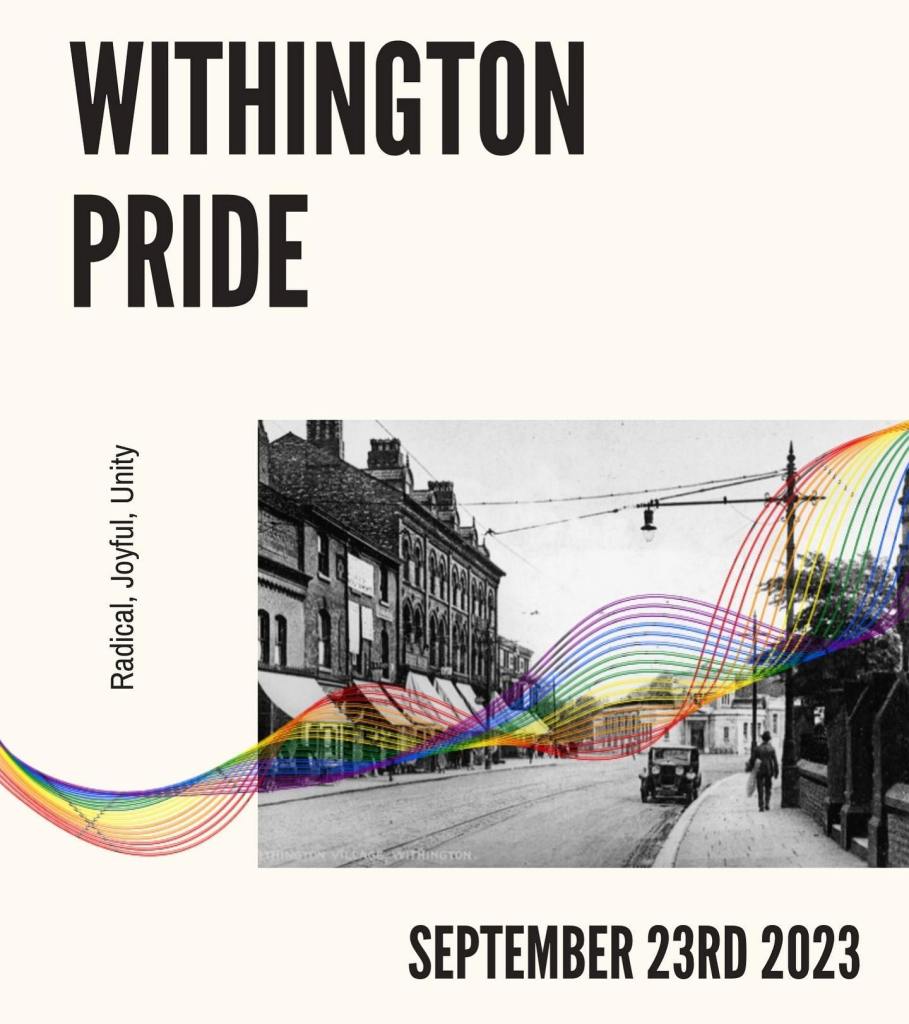
Withington Pride – please note the date

Withington Pride – 23 September 2023 – Radical – Joyful – Unity  

A day and night of events across Withington celebrating the local LGBTQ+ community’s vibrancy, creativity, & value, and building community networks of care, allyship and solidarity through music, art and dance!

There’ll be something for everyone from free kids crafts to a march and street party, keep your eyes peeled for more info!

Instagram: @withingtonpride

Barrowford … Manchester Astronomical Society … “Cruise” at HOME … LGBT+ Abuse in Care Homes

News

Barrowford

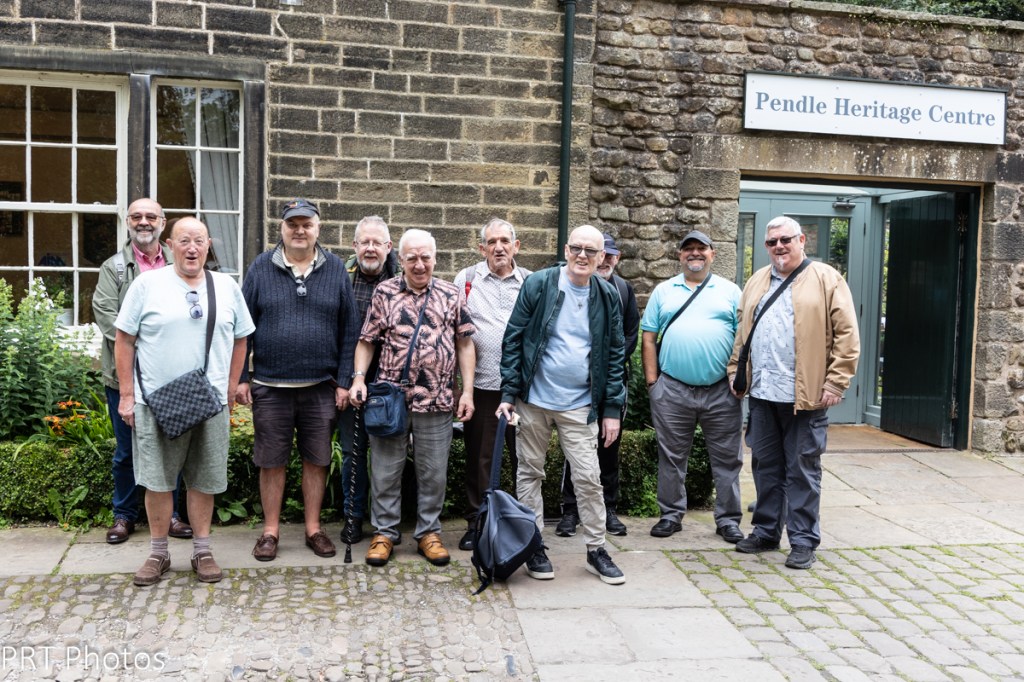
Barrowford is a large village and civil parish in the Pendle district of Lancashire.

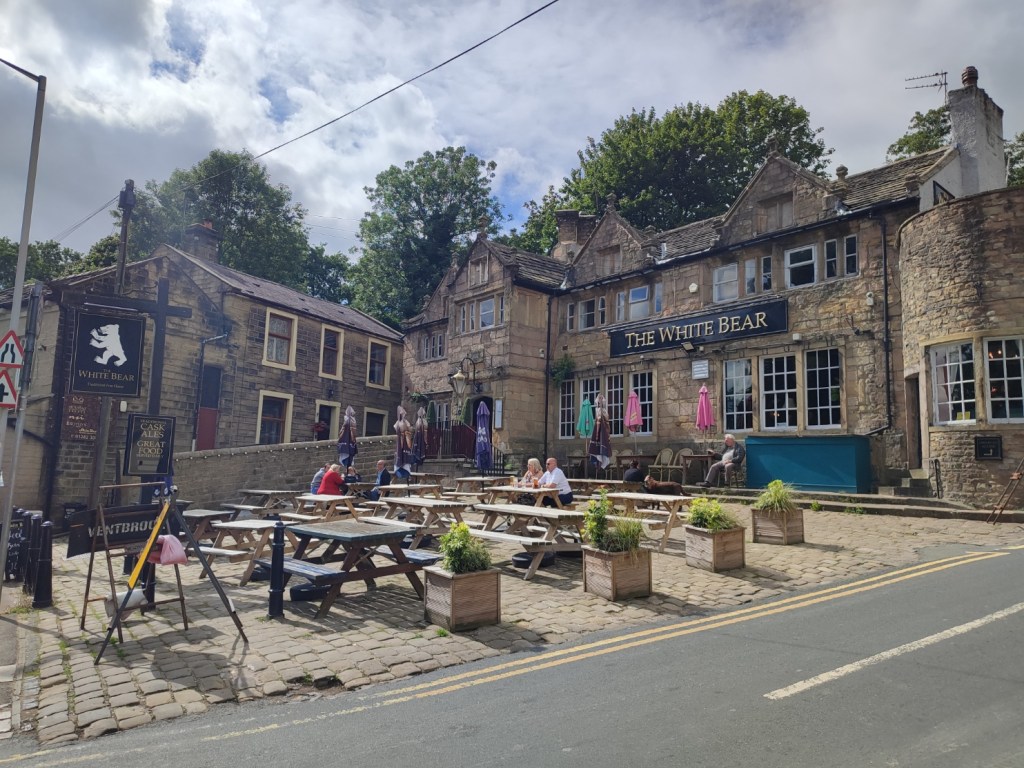
After travelling on Bus X43 from Manchester to Burnley, and then transferring to Bus Number 2, we eventually arrived at the White Bear Pub, which was built around 1667. There we enjoyed Steak and Ale Pies with Puff Pastry, Cheese and Onion Pies and Caesar Salads. The food was excellent and the service was brilliant.

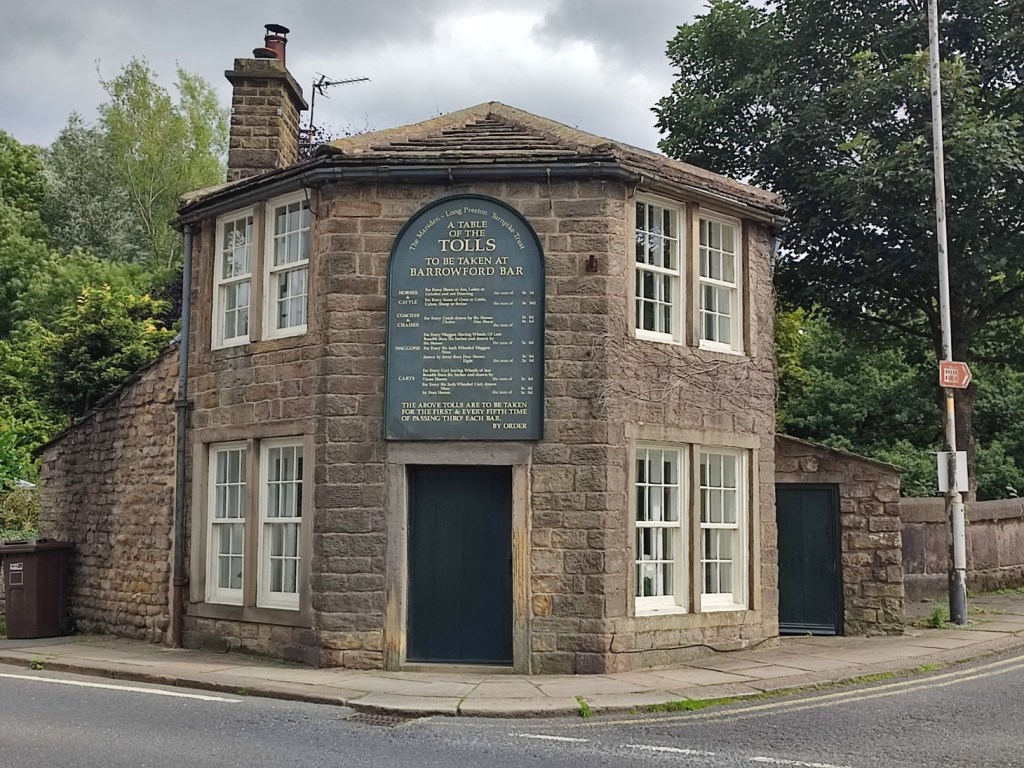
On the walk to the Pendle Heritage Centre, we passed one of the original toll houses, dating from 1804 at the junction with the road to Colne, complete with a reproduction of the table of tolls which were paid. The toll house was restored in the 1980s and is owned by the trust which operates the Heritage Centre.

The Centre includes a museum which explains the fascinating history of Park Hill and the ancient Bannister family, including the story of its modern descendant, Sir Roger Bannister, the first athlete in the world to run a mile in less than four minutes.

It tells about the mysterious Pendle Witches of the seventeenth century and of George Fox, whose vision on Pendle Hill inspired the international Quaker movement.

The exhibitions include “The story of the notorious Pendle Witches” which resulted in their famous trial of 1612. The twelve accused were charged with the murders of ten people by the use of witchcraft. All but two were tried at Lancaster Assizes on 18–19 August 1612. One was tried at York Assizes on 27 July 1612, and another died in prison. Of the eleven who went to trial – nine women and two men – ten were found guilty and executed by hanging; one was found not guilty.

Six of the Pendle witches came from one of two families, each at the time headed by a woman in her eighties. The outbreaks of ‘witchcraft’ in and around Pendle may suggest that some people made a living as traditional healers, using a mixture of herbal medicine and talismans or charms, which might leave them open to charges of sorcery.

The journey home was much quicker than the outward journey and some great photos can be seen here.

Manchester Astronomical Society

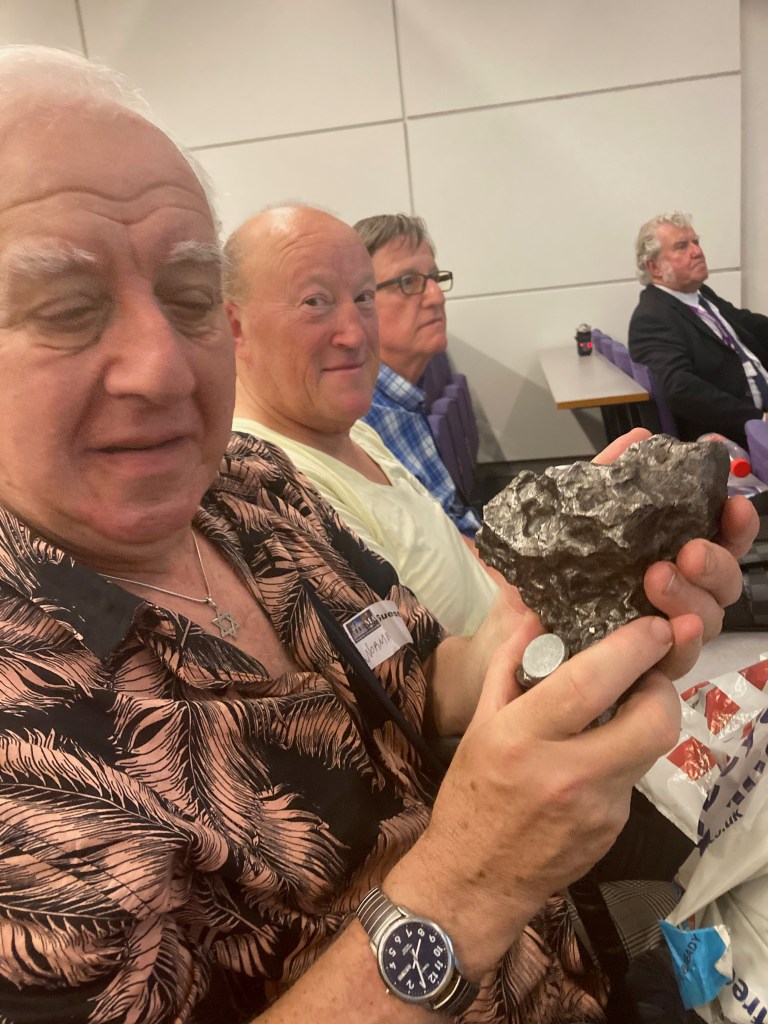
Last Thursday evening, ten of us went to an event  “Astronomy Under the Stars – A Superhuman View of the Cosmos“.

There were some really cool astronomy and space videos between 7:00pm and 7:30pm, which were followed by a presentation by Tom Vassos, Founder of Cosmologists Without Borders.

We saw what the cosmos would look like if we all had superhuman vision. We immersed ourselves in awe-inspiring images of nebulas, galaxies and supernova explosions that are invisible to the naked eye. We learnt about doomsday meteorites that are like 4.5-billion-year-old time capsules from the beginning of our Solar System and the birth of planet Earth.

We handled meteorites – actual evidence that reveals where we all came from. It was a fascinating experience, and a great evening

“Cruise” at HOME Theatre

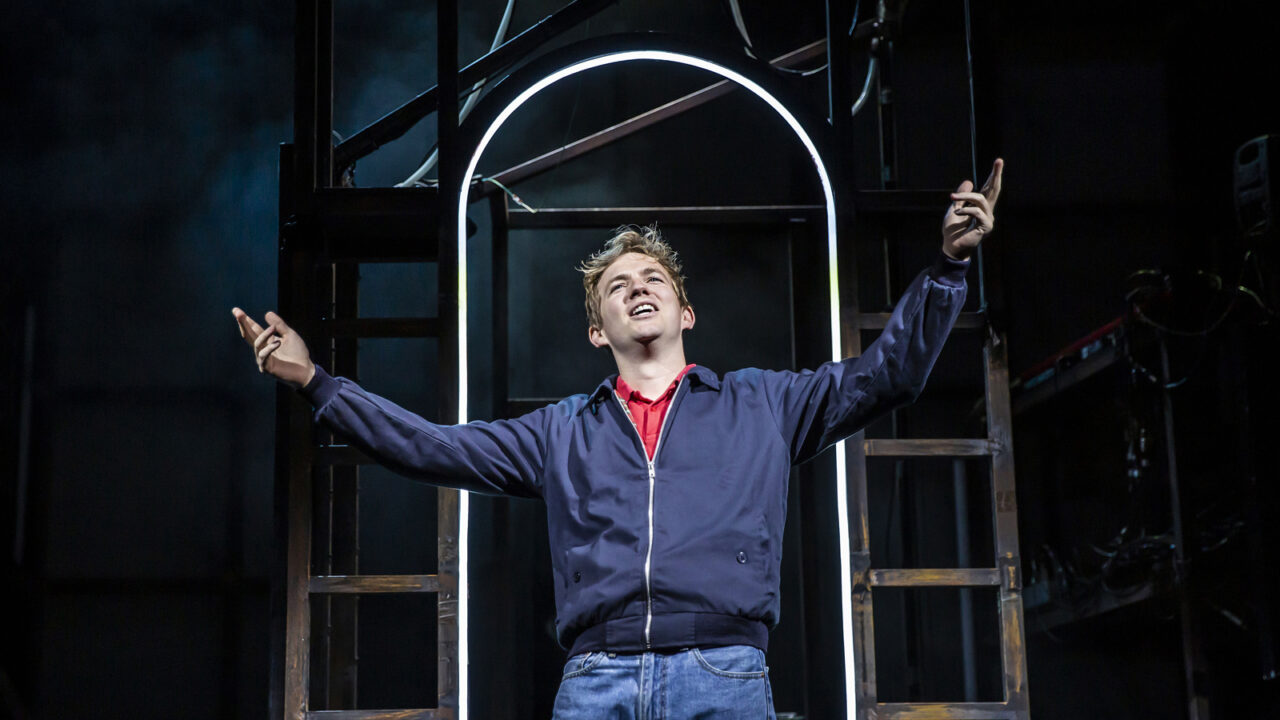
Fifteen of us went to see “Cruise” based in Soho in 1988.

The stunning, joyful and wholeheartedly life-grabbing Olivier award nominated play is the true story of what should have been Michael Spencer’s last night on earth.

When he’s diagnosed with HIV in 1984, Michael is told he’ll have four years to live – at most. On the last night of his four-year countdown, Michael decides to go out with a bang. He says his goodbyes, dances, sings, and says yes to everything and everyone … and then survives.

Written and performed with vast charm, empathy and energy by Jack Holden, “Cruise” is a celebration of queer culture. A kaleidoscopic musical and spoken word tribute to the veterans of the AIDS crisis with an irresistible 80s soundtrack. 

Cruise” will make you laugh, cry and inspire you to live every day as if it’s your last.

LGBT+ abuse in care homes revealed

One of the joys of growing old is being able to unashamedly be yourself – but sadly that isn’t proving to be the case for many older LGBT+ people living in care.

A report by the charity Compassion in Care found hundreds of cases of elderly people experiencing homophobic or transphobic attacks in care settings. Some are even being forced back into the closet.

Sackville Park … Significance of Safe Spaces for LGBT+ individuals … The Trans “Debate”

News

Sackville Park

Manchester City Council Parks Team are in the process of writing a development plan for Sackville Gardens.

It will look at how local residents and community groups make use of the park, and how you would like the park to better serve your needs.

We would love to hear from you about your aspirations for the park. Let us have your thoughts before 19 August 2023.

https://tinyurl.com/SackvilleGardens

The Significance of Safe Spaces for LGBT+ Individuals

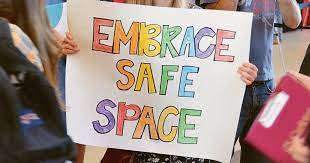
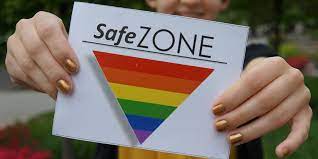
Safe spaces have emerged as a vital concept in today’s society, offering refuge and support for marginalised communities. In particular, safe spaces are crucial in providing solace and empowerment to LGBT+ individuals.

What is a Safe Space?

The Oxford Dictionary describes a safe space as a “place or environment in which a person or category of people can feel confident that they will not be exposed to discrimination, criticism, harassment or any other emotional or physical harm.” Safe spaces can look different to various people and communities. There may be designated safe spaces in institutions, such as counsellors’ offices. We can find safe spaces within our friends or family groups on an informal level.

The Need for Safe Spaces

We can generally comprehend the need for safe spaces when we understand something about human nature. Both official and unofficial safe spaces are crucial for different reasons. Human beings are social creatures. Feeling listened to, understood and accepted is the key to feeling fulfilled. Social anxiety and withdrawal are common reactions to a hostile social environment.

Members of the LGBT+ community are a minority group and one that is vulnerable. LGBT people are nearly four times more likely than non-LGBT people to experience violent victimisation, rape, sexual assault and aggravated or simple assault. Even though there have been many improvements in the quality of life for LGBT+ people, this community still faces widespread economic, social and political discrimination. These facts were reported in a 2017 study by Stonewall “LGBT in Britain – Hate Crime and Discrimination”. 
Why Safe Spaces Are Important

Here are six reasons why safe spaces are important:

1. Promoting Authenticity and Self-Expression

Safe spaces create an environment where LGBT+ individuals can express their true selves without fear of judgment or discrimination. These spaces empower individuals to embrace their identity by providing a platform for self-expression, fostering a sense of belonging and acceptance.
2. Emotional Support and Empathy

Navigating through a predominantly heteronormative society can be challenging for LGBT+ individuals. Safe spaces offer a refuge where they can find emotional support and empathy from people who share similar experiences. This support network helps combat feelings of isolation and loneliness, contributing to improved mental health and overall well-being.

3. Education and Awareness

Safe spaces also serve as educational platforms, fostering understanding and awareness about LGBT+ issues. Through workshops, discussions and informative sessions, these spaces help educate individuals about the challenges faced by LGBT+ communities, ultimately breaking down stereotypes and promoting inclusivity.

4. Combating Discrimination and Prejudice

LGBT+ individuals often face discrimination and prejudice in various aspects of their lives. Safe spaces provide a shield against this discrimination, offering respite from societal biases and creating an atmosphere where everyone is valued and respected regardless of their sexual orientation or gender identity.

5. Building Community and Networking

Safe spaces bring together LGBT+ individuals, creating a sense of community and belonging. These spaces facilitate networking opportunities, enabling individuals to connect with like-minded people, share experiences and build supportive relationships. Such connections can be invaluable for personal growth and empowerment.

6. Celebrating diversity

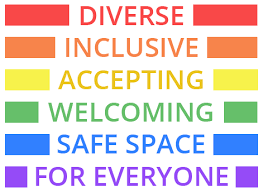
Safe spaces celebrate the diversity within the LGBT+ community. They create an environment where individuals from different backgrounds can come together, fostering a sense of unity and inclusiveness. By embracing diversity, safe spaces contribute to a society that values and respects all individuals, regardless of their sexual orientation or gender identity.

Are Safe Spaces Always Safe?

Unfortunately, no space is 100% safe. In Orlando, for instance, 49 people were killed in the Pulse nightclub shooting. In an often-intolerant world, gay clubs like Pulse are supposed to be “safe spaces.” Those spaces were violated, reminding us how dangerous intolerance and discrimination can be. 

The feeling of safety in a gay bar and actual safety are two different things. Though they are connected, there’s no such thing as a 100% safe space for LGBT+ people. LGBT+ people know this better than anyone. We live it, and our history is marred by it.

Out In the City’s “Safe Space” policy can be seen here.

Why does the trans “debate” continue to consume Britain despite a distinct lack of trans voices?

Trans people’s lives are not up for debate. But debates on trans rights do happen.

Have you or anyone you know ever seen a trans person in a public toilet or on your sports team?

If so, congratulations. And so what? You are a statistical marvel, given that with an estimated 200,000 trans people in Britain, they make up just 0.29 per cent of Britain’s 67.33 million population.

I say estimated because there is no concrete data on the true number of trans people in the UK. We just know that it’s a small number.

To put that in perspective, about 0.7 per cent of the population wrote Jedi on the census in England and Wales, almost double the amount of trans people. Bizarrely, 400,000 people being armed with light sabres or thinking it was funny to say so wasn’t considered so much of a risk as people wanting to live, die or marry in the gender they feel they are.

Trans people make up an astonishingly low percentage of the general populace; yet for some reason find themselves as a key punching bag in the culture wars.

Now you may be thinking, sure you don’t know any trans people, but that doesn’t mean you don’t know they are confused. I mean there was once a trans rapist, a trans shooter and a trans person who regrets transitioning.

Sure, but there are lots of rapists, endless shooters in America, and given NHS England waiting times for gender dysphoria, people remain deeply committed to living as they choose.

As a cis white gay man, I have trans friends who are tired, beyond tired of their lives being a political football, and of being made to feel unwelcome in this country, but we simply don’t hear from them.

In a Gay Times survey (of 996 respondents) 96.4% per cent said they believe that framing trans rights as a ‘debate’ is harmful.

But that’s what has happened. Papers and television shows filled with pundits talking about trans people because they fear what they don’t (want to) understand. Truly at this point, there are probably more columns criticising trans people than actual trans people.

This so-called ‘trans debate’ frequently sees human rights issues tossed around as if they are a trivial matter and fuels a wider anti-trans agenda.

On 29 March 2023, two days before Trans Day of Visibility, Talk RADIO ran Twitter polls asking if a woman can have a penis and whether or not a man can get pregnant.

“Equalities watchdog launches study aiming to ‘reduce distress’ in trans debate,” wrote The Telegraph a week earlier, referencing alleged “fears” that trans activists are “harming freedom of expression” and abusing feminist academics.

Four years earlier, the same outlet ran an article titled: “The tyranny of the transgender minority has got to be stopped.”

The list of examples could go on, as a quick Google search of “trans debate” returns 171,000,000 results.

On anti-Semitism, we hear from Jews, on racism, we hear from black people, on trans issues, we hear from the same people saying the same thing because there’s more clicks to be had in outrage rather than compassion.

Trans people are never given a platform to defend themselves, but in the meantime, trans lives will go on. They are bystanders in this debate that despite its ferocity, they continue not to be heard in.

Shakespeare Garden … Terrence Higgins honoured with Memorial Quilt … Lilli Vincencz Obituary … Four more Pride events

News

Shakespeare Garden

After meeting at Piccadilly Gardens Bus station we travelled to the Great Central pub in Fallowfield.

Many thanks go out to Bruce who lead us on a guided walk around the area passing through the Shakespeare Garden and ending in a walk through Platt Fields Park. His talk was very informative and interesting.

Some great photos can be seen here.

Terrence Higgins honoured with Memorial Quilt

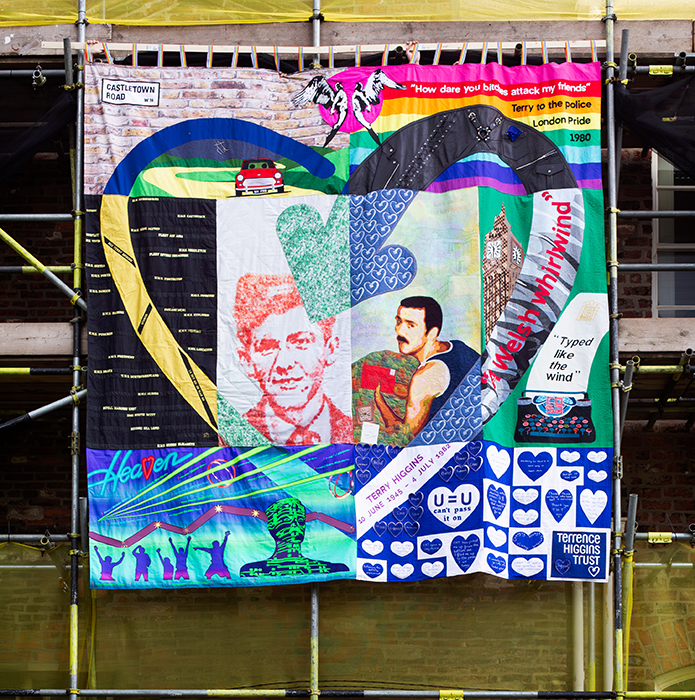
Terry Higgins, the UK’s first named person to die from AIDS-related illnesses, has been honoured with a memorial quilt four decades on from his death.

He passed away at the age of 37 on 4 July 1982, sparking the creation of Terrence Higgins Trust, which is now the country’s leading sexual health and HIV charity.

On 3 August 2023, a memorial quilt paying tribute to him was revealed for the first time at The Festival of Quilts in Birmingham’s NEC.

Making quilts to honour those lost to the AIDS epidemic first became popular in the 1980s and ‘90s to help people grieve those they lost and ensure they are never forgotten.

Terrence Higgins Trust worked with The Quilters’ Guild to create the new eight-panel memorial quilt, a project that was overseen by the charity’s co-founders Rupert Whitaker (Terry’s partner) and Martyn Butler, as well as Terry’s close friends Linda Payan and Maxine Saunders.

“It contains a sad, but beautiful, set of memories”

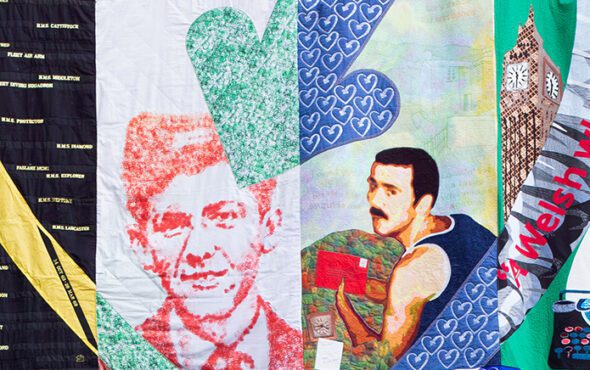
Discussing the significance of the quilt, Whitaker said: “This panel contains images of some of the most meaningful things connected with Terry: my favourite photo of him, his letters to me at uni, some song titles we used to dance to in Heaven, the clock he gave me for Christmas and the note he put in the back of it (which always makes me smile), my grandmother’s cottage in Boscastle where we stayed in the autumn and made crumble from freshly picked blackberries, and where, the following summer, I scattered his ashes in the Valency river nearby.

It contains a sad, but beautiful, set of memories that bring him right back to me. I’m so grateful for the kindness and artistry of Paula, the quilter.”

Each panel honours an aspect of Terry’s character, including as a Welshman, gay man and his time in the Royal Navy.

Two of them also explore his working life as a Hansard reporter in Parliament by day and his evenings spent as a barman and DJ in London’s Heaven nightclub.

Service users, volunteers and staff from Terrence Higgins Trust worked together on the final panel, which celebrates the progress made in the fight against HIV and the stigma surrounding it over the last 40 years.

Each panel contains part of the heart motif which is part of the charity’s logo.

“The Terry Higgins Memorial Quilt has surpassed all of our expectations. It is a fittingly stunning tribute to Terry as a friend, lover, Welshman, gay man, activist and to his incredible legacy through our charity Terrence Higgins Trust,” Richard Angell, Chief Executive of Terrence Higgins Trust, said.

“As well as celebrating Terry and the past 40 years, the quilt also celebrates how much progress has been made because of those who acted, including our co-founders Rupert Whitaker and Martyn Butler.

“We stand on their shoulders and today we’re fighting hard to ensure that the UK becomes the first country in the world to end new HIV cases – and, as always, doing so in Terry’s name.”

Lilli Vincenz, early activist in gay rights movement, dies at 85

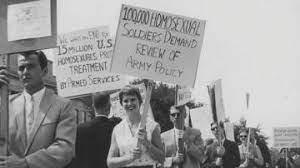
Vincenz, centre, protested outside the Pentagon in 1965, after she left the army

After being outed and discharged from the Women’s Army Corps, she became a central — if long unsung — figure in the struggle for gay equality in the early years of the gay rights movement.

She died 27 June 2023 at a care facility in Oakton, Virginia. She was 85.

Dr Vincenz devoted more than half a century to the cause of gay equality, beginning with her first courageous pickets in Washington in the 1960s and continuing into her later years, when she acted as a keeper of the history that she and other activists had lived.

She knew first hand the slights, injustices and humiliations facing gay and lesbian people. In 1963, while serving in the Women’s Army Corps, she was outed by a roommate and discharged.

The incident spurred her to activism. “Sometime you are the only person who can do something at a certain time,” she told an interviewer. “It’s the old question, ‘If not I, who?’”

In 1963, Dr Vincenz joined the Mattachine Society of Washington, a gay rights organisation co-founded by Frank Kameny, a Harvard-trained astronomer who had been fired from the Army Map Service because of his sexuality.

In 1965, at a time when living openly as a lesbian meant risking discrimination and ostracism, Dr Vincenz marched in what the Library of Congress describes as the first organised picket for gay rights outside the White House. She was the only lesbian among ten demonstrators.

“She was certainly a pioneer in that way,” Lillian Faderman, the author of the book “The Gay Revolution: The Story of the Struggle,” said in an interview. “They couldn’t get another lesbian to show her face.”

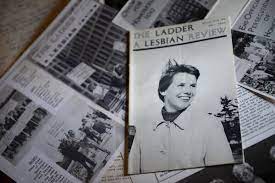
Dr Vincenz appeared on the cover of the lesbian magazine the Ladder in January 1966. (Linda Davidson / The Washington Post)

Dr Vincenz became “the first out lesbian ever to appear on a magazine cover that was displayed on newsstands around the country,” according to Faderman, when her radiant smile was showcased on a 1966 cover of the Ladder, a periodical published by the lesbian organisation the Daughters of Bilitis.

Three years later, Dr Vincenz co-founded the gay newspaper that became the Washington Blade. And throughout the 1970s, she hosted regular gatherings at her home in Arlington, Virginia, making it a focus of lesbian life. One regular attendee composed a song:

Come all you women in the DC vicinity

If loving women is your proclivity

Rev up your engine, roll up your bike

And point your wheels to Columbia Pike

Carlyn Springs to 8th Place; turn to the right

For Lilli’s open house on Wednesday night.

Dr Vincenz later became a psychotherapist, with a particular focus in her practice on empowering gay and lesbian people through counselling.

In 2013, the Library of Congress acquired Dr Vincenz’s papers in what to her admirers was a long-awaited recognition of her importance in the gay rights movement.

The collection included, among other artefacts, two 16mm films that she had recorded at early gay rights protests. The first, from 1968, documents one of the “annual reminders” convened in Philadelphia every Independence Day from 1965 to 1969.

Dr Vincenz titled her documentary “The Second Largest Minority” and, in seven minutes of film, recorded demonstrators dressed in business suits and dresses — their attire purposefully coordinated to make the group appear unthreatening — marching in an orderly circle.

The second film, “Gay and Proud”, runs 12 minutes and documents the first gay pride march in New York City, the Christopher Street Liberation Day March of 1970. Galvanised by the Stonewall uprising the previous year, the protesters in New York adopted a markedly more defiant tone.

“The operative word now is ‘pride,’” Mike Mashon, head of the moving image department at the library, wrote in an analysis of the two films, both of which can be viewed on the library’s website.

“It’s one thing to read about how the gay rights movement was catalysed by the Stonewall Inn riots of June 1969, but quite another to see that tonal shift illustrated so vividly in these bookend films,” Mashon continued. “Powerful movements can begin and be sustained in unlikely places, and how fortunate we are that Lilli Vincenz was there to record this one.”

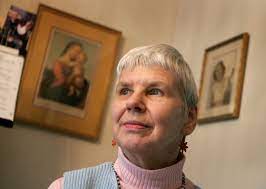
Dr Vincenz at her home in Arlington, Virginia, in 2012. (Jacquelyn Martin / AP)

Lilli Marie Vincenz, one of two daughters, was born in Hamburg on 26 September 1937. After her father’s death when she was 2, her mother married an American, and the family immigrated to the United States in 1949. Reflecting on her early life, Dr Vincenz told an interviewer that it “became painful after a while to realise that I was gay and I didn’t know anyone else who was gay. I was extremely lonely.”

With an affinity for literature, Dr Vincenz received a bachelor’s degree in French and German from Douglass College, part of Rutgers University in New Jersey, in 1959. She received a master’s degree in English and comparative literature from Columbia University the following year.

During that period in her life, she began exploring her sexuality and visited a lesbian bar in Provincetown, Massachusetts.

“At first I thought of all the consequences that could follow me from my being seen there,” she wrote in her journal. “But then I thought of all I’d gone through in these past years, and I knew I had to go — no matter what the consequences — for the sake of the past, of the pain, but also for the wishes I’d had, time and time again proclaimed to be willing, if only I had the chance. Now, I can fulfil everything. Well, that’s saying too much — I can fulfil something.”

She worked briefly as an editor at the Prentice Hall publishing house before joining the Women’s Army Corps in 1962. She was working at Walter Reed, the military hospital near Washington, when she was discharged the following year.

Dr Vincenz was one of the first lesbian members of the Mattachine Society of Washington. She joined its executive board and was the editor of its publication the Homosexual Citizen. In addition to the picket at the White House, the group mounted demonstrations outside the Pentagon, the State Department and the US Civil Service Commission.

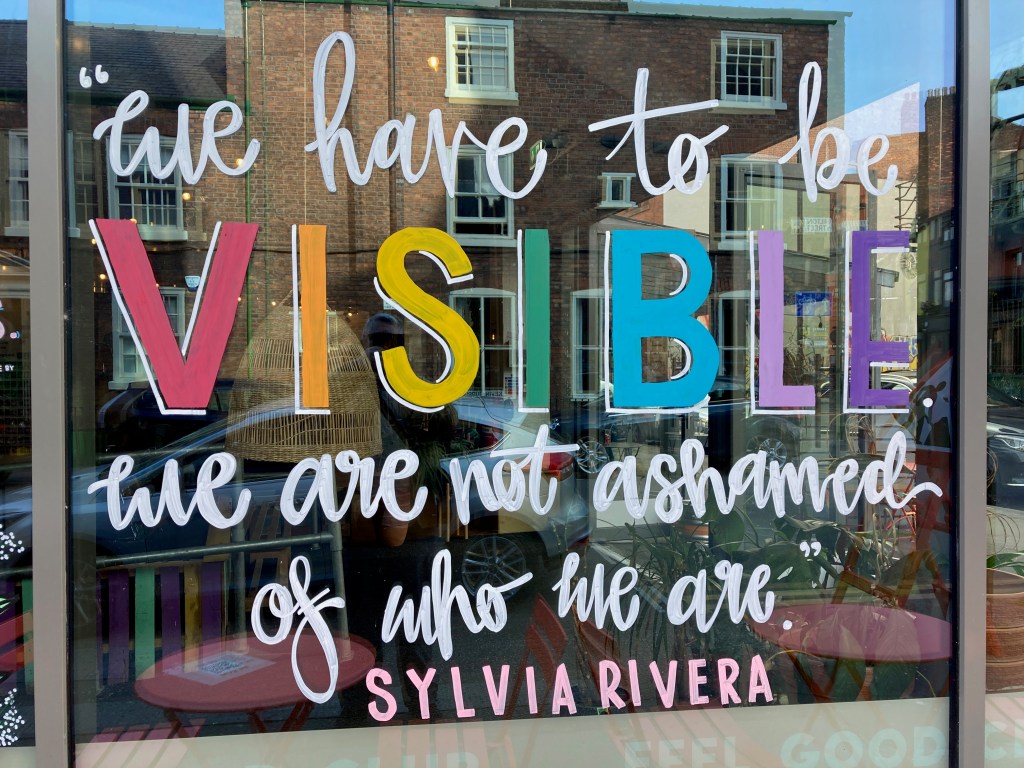
“It was so important that we become visible,” Dr Vincenz said, “because we weren’t really visible before.”

As she moved toward her career as therapist, Dr Vincenz received a master’s degree in psychology from George Mason University in 1976. She received a PhD in human development education from the University of Maryland in 1990.

Of her gay clients, she observed that “many of their wounds have been sustained in the pursuit of and validation of who they are and of not wanting to hide their identity or settle for less. I am grateful to be able to help and to witness their empowerment and healing.”

Dr Vincenz’s partner of 32 years, Nancy Ruth Davis, died in 2019. She had no immediate survivors.

“What did I want to accomplish?” Dr Vincenz told the publication Gay Today, reflecting on her life’s work. “Be with gay people, help the movement, help unmask the lies being told about us, correct the notion of homosexuality as a sickness and present it as it is, a beautiful way to love.”

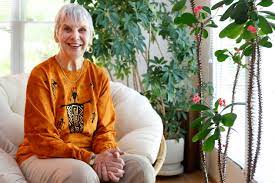
Dr Vincenz, left, with her partner, Nancy Ruth Davis, in 2013. (Linda Davidson / The Washington Post)

There are four Prides in the Greater Manchester area on 12 August: Levenshulme, Prestwich, Wigan and the first ever Trans Pride:

Levenshulme Pride

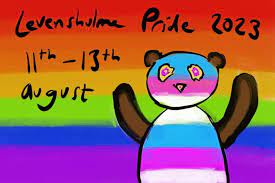
Levenshulme Pride is back on 11 – 13 August for another amazing weekend of FREE events and activities.

Levenshulme Pride started in 2017. They have established themselves as the largest free local Pride in Manchester outside the city centre. Open, inclusive, free and fabulous!

Origin story

Levenshulme Pride was started because a couple walking down the A6 holding hands were called “faggots”. In an instant a pleasant walk in the sunshine became a homophobic hate crime. Just like that. Very casual. No big deal. Except we think it is a big deal!

There was a discussion online where people were both appalled and supportive. What could be done? Well, Levenshulme Pride is what could be done. Levenshulme is a diverse, supportive, energetic and wonderful place to live but it faces challenges.

What better way to counteract hatred than to show the pride we have in our community, the pride we have as LGBT+ people, the pride we have as we come together as a community to celebrate the variety of people living here and the strength that comes from that?

The response to the suggestion of having Levenshulme Pride was amazing and immediate. The enthusiasm has been infectious and empowering. We started from nothing but we made something wonderful happen.

Who is Levenshulme Pride for?

Everybody. Levenshulme Pride will be an opportunity for LGBT people in Levenshulme and beyond to come together and celebrate being part of the great community of Levenshulme. It is a truly open and inclusive event. We welcome any and all people, community groups and businesses to show support for and become part of Levenshulme Pride. We are a People’s Pride.

Levenshulme Pride: No Barriers

Prestwich Pride

Prestwich will be holding its second Pride event over the weekend of 12 – 14 August.

The events are across a number of sites including bars Wine & Wallop, Cuckoo and The Goods In.

The line up includes a family event “Born To Be Wild Child” as well as performances from drag queens such as Miss Blair and Val the Brown Queen and DJ performances from Manchester’s revered LGBT+ scene, including Jase Jeffrey, Mix Stress and Antoin. Panama Hatty’s is hosting their much-loved drag brunch on Sunday 13 August.

Wigan Pride

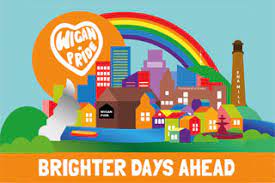
Wigan Pride promotes and celebrates equality and diversity by bringing together arts, music, a street parade and positive messages at a big annual event in Wigan. Wigan Pride takes place on Saturday 12 August 2023.

Retrieve your rainbows, raid your closet for something pink, white or blue, and get ready to have your say in style: Wigan Pride is back for 2023.

The Wigan Council backed summer event will return with a celebration of Northern music to the town centre.

Organisers also plan to acknowledge the role both Pride events and people from the region have played as pioneers of social change with a street parade, guest speakers and a competition designed to get young people thinking about their rights and responsibilities.

For the last few years, each Wigan Pride event has celebrated a different colour from the Pride flag, which each has its own meaning. In 2023, guests will be invited to dress in shades of pink and blue, inspired by the transgender flag, alongside the usual splash of rainbows.

As well as offering a fantastic day of entertainment for the whole family, Wigan Pride also helps remind our local community that equal rights are often hard won and should not be taken for granted. Celebrating equality helps us to value the importance of it and make sure that it continues.

​ Wigan Pride includes people of every race and faith, whether disabled or able-bodied, and all sexualities and genders including lesbian, gay, bisexual, asexual, queer, questioning, intersex, trans, genderqueer, gender variant or non-binary as well as straight and cis allies.

Trans Pride

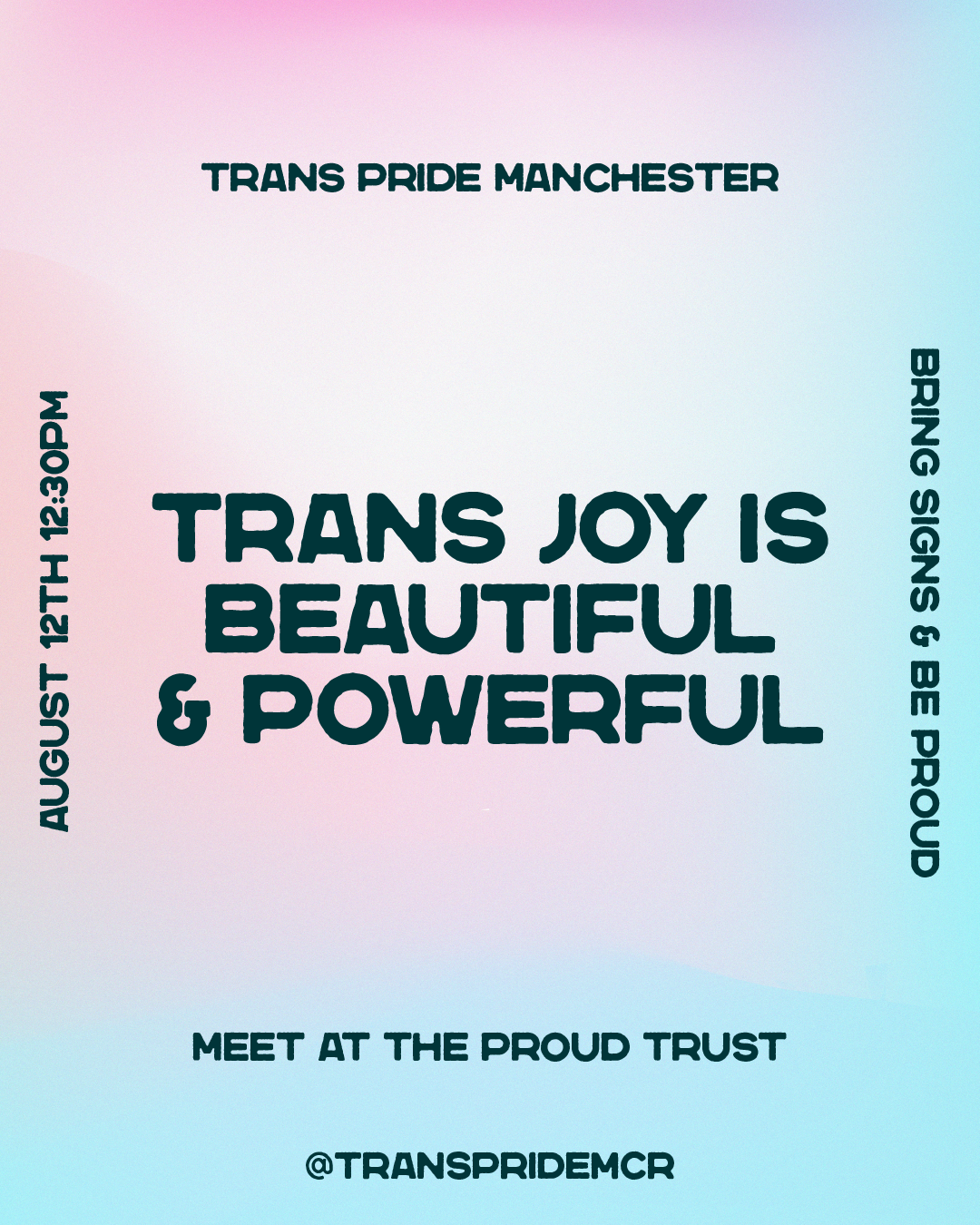
Join us for the first ever Trans Pride event in Manchester on the 12 August 2023.

Trans Pride Manchester is dedicated to supporting, advocating for and celebrating the transgender and non-binary community in the Greater Manchester area.

We aim to create safe spaces, empower individuals and promote education and awareness about the diverse experiences of gender identity.

What’s happening?

The programme for the day is:

12:00pm | Meet at The Proud Place

Meet at The Proud Place (49-51 Sidney Street, Manchester M1 7HB) for a 1:00pm start of the Protest March through the city centre.

13:00-14:00pm | Protest March

We will set off at 1:00pm. Bring signs, be proud and celebrate.

15:00-16:15 | Panel Event at Feel Good Club

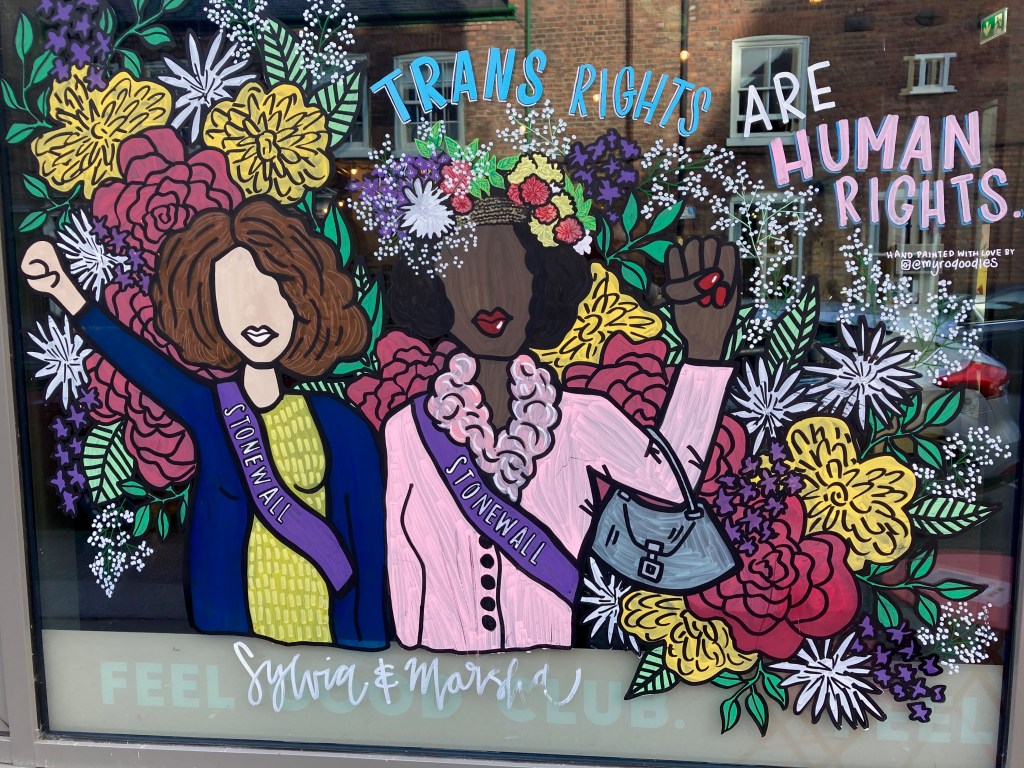
A panel event of wonderfully queer and trans humans discussing their journey, things they wish someone told them and also discussing all things gender euphoria and dysphoria. This is being held at Feel Good Club (26-28 Hilton Street, Manchester M1 2EH).

16:30-18:00 | Open Mic at Feel Good Club

Celebrate and amplify the vibrant voices of the trans community at Feel Good Club’s open mic event for Trans Pride! Performances will include singing, spoken word, poetry, comedy etc.

15:00-18:00 | Workshops at The Proud Place

There will be a series of workshops from self care, to binder measuring, changing your name and many more things!