Cooking on a Budget … Box of Life … Transparency … Charles Hamilton

News

Cooking on a Budget

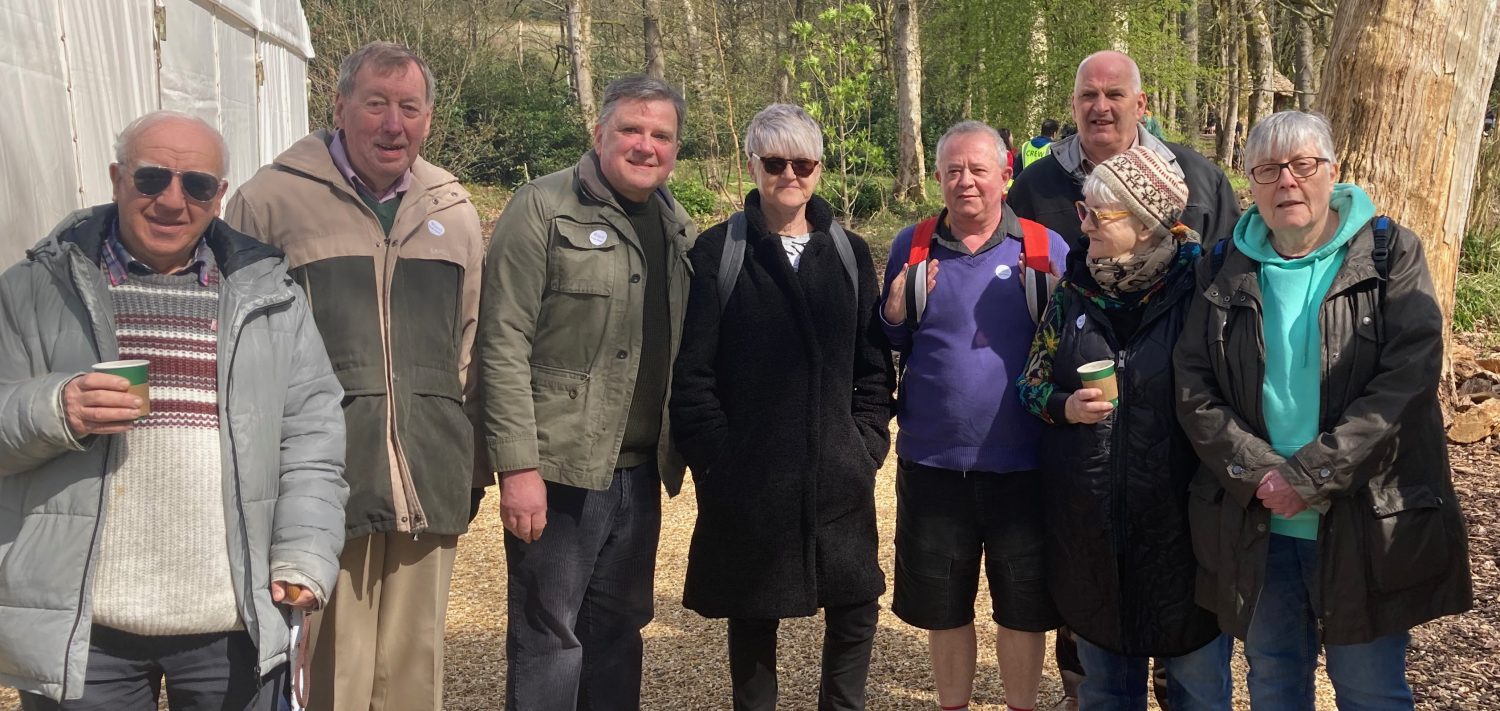
On Thursday 6 July, Alex Connell visited Out In The City for a cooking demonstration.

The plan was to prepare some meals and for us to taste pea and mint soup, paella, Lancashire hot-pot, sticky toffee pudding and flapjacks (all vegetarian).

However, it didn’t start well as we could not gain access to the building; Alex was late as he spent 45 minutes driving in circles trying to find a parking space; and the demonstration was curtailed when the smoke alarm was activated and we all had to evacuate the building!

However, it was an informative session and we came away with some good ideas for cheap meals.

This is the recipe for pea and mint soup:
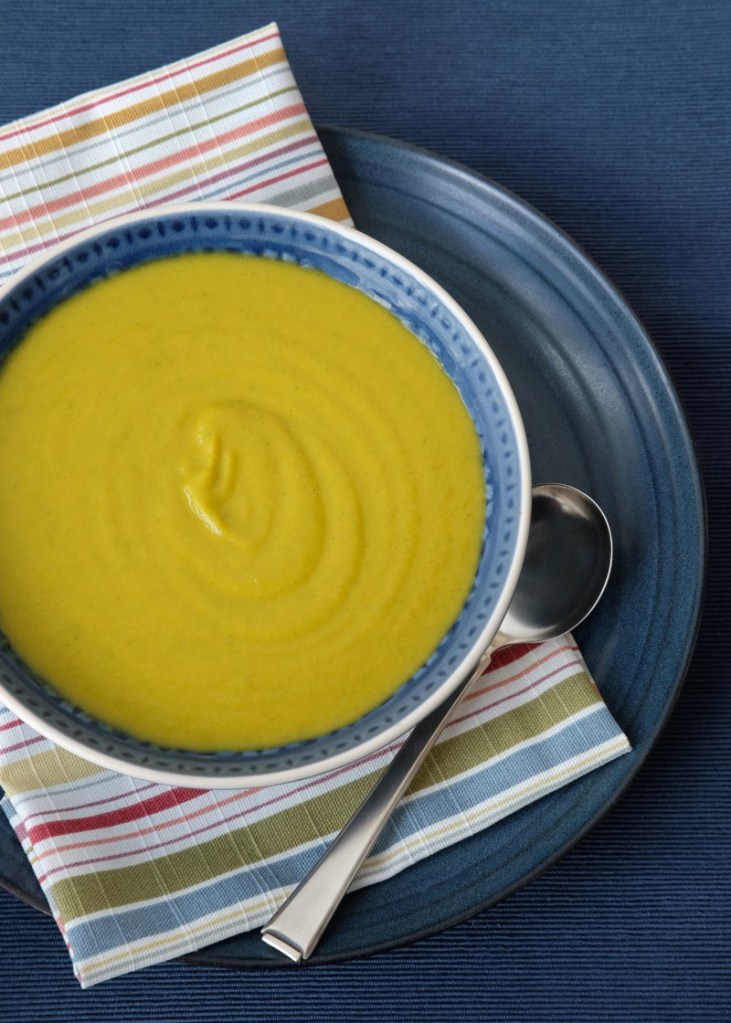
Serves: 2
Time to prepare: 10 minutes
Time to cook: 30 minutes

Ingredients:

1 tbsp olive oil, 1 onion, chopped, 2 medium carrots (160g), sliced, 500ml vegetable stock, 30g red lentils, 1 garlic clove, 1 small sprig of mint, 120g frozen peas, 50g vegan cream cheese

Instructions:

  • Gently fry the onion and carrots for 5 minutes in a tbsp of oil, making sure the onion doesn’t brown. Then add the stock, lentils, garlic and mint.
  • Bring to the boil, then simmer for 20 minutes. Add the peas and continue to cook for 5 more minutes.
  • Remove the sprig of mint then thoroughly blend the soup. Next pass through a fine sieve.
  • Return to the pan and add the cream cheese. Check the consistency is correct – add a little extra water or cream cheese to thin the soup if needed, or continue to cook if the soup needs thickening.

More recipes can be found on the website https://vegetarianforlife.org.uk/recipes/

End of Life and Box of Life
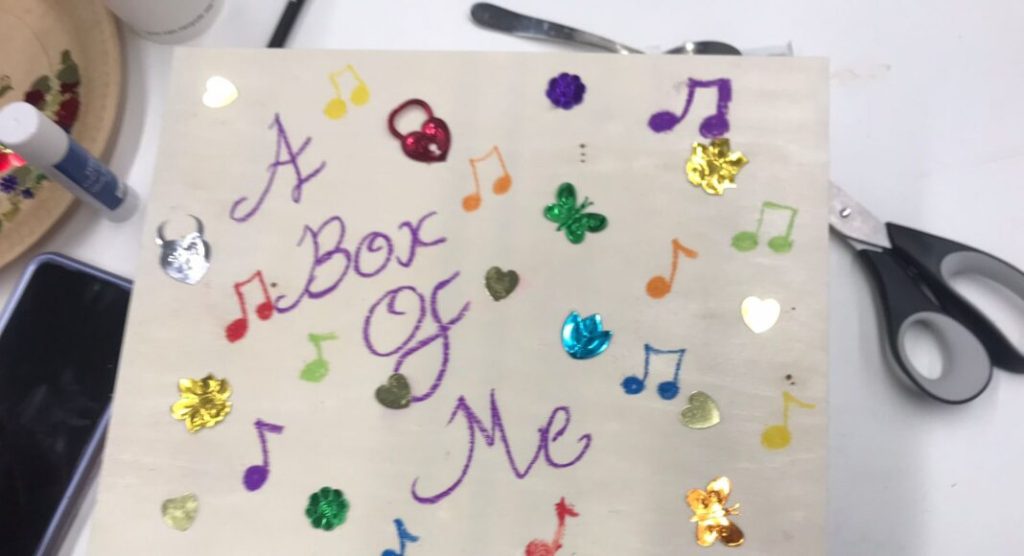
Pauline Smith tells us more about the idea of an ‘end of life’ box and the importance of talking about wishes surrounding your death:

When you are older and LGBT, some days your thoughts turn towards your own mortality. Death will come and it’s nearer when you are in your 70s, you are much closer to the End of Life.

How do you plan for this, and what would you like to leave as tokens and how would you like to be remembered when you have left this earthly place?

Last year three of us mulled over this sensitive issue – Pam Flynn, Mindy Meleyal and myself. We are all members of Pride in Ageing at the LGBT Foundation and all older, mature and hopefully wise.

How did we talk about what is still in the 2020s a taboo subject and what did we discuss?

We met on Zoom three times over a period of weeks and chatted about our own experiences of seeing those close to us die, and what kind of plans we would want for our deaths, what kind of funerals and what would we want to leave for our friends and family.

We talked about how living with dementia does not “cripple us” immediately, though it could impact on the quality of life as can other physical and mental effects which are more common as we get older.

The effects of ageing cannot be discounted, however, the three of us are like many older people and we still contribute a lot in different ways with our lived-in experiences and desire to help.

There are an estimated 50,000 LGBT older people in Greater Manchester and around 80,000 LGBT people living with dementia in the UK. We are also very aware of the lack of LGBTQ+ inclusive and/or specific bereavement services, this has been a common theme amongst stories we have heard.

As have been stories of discrimination towards our community in care homes for older people. Although dying is a sombre subject which Western societies tend to avoid talking about we did actually enjoy our short Zooms as we created a wish list of what we thought our LGBT peers would want for the end of their life, especially what is important.

Sometimes there was black humour, as our generation was impacted so dramatically by the AIDS crisis and we all talked about those we knew who were taken too young and remembered them with affection. As well as other dear departed friends.

Strangely there was also a burst of creativity from us. Mindy’s idea of a painting representing the flow of life became a tapestry illustrating the Nile delta … as individual lives go into different channels before being washed into the Mediterranean and then become clouds and go back to rain on the mountains and areas that are its source. An illustrative description of our lives.
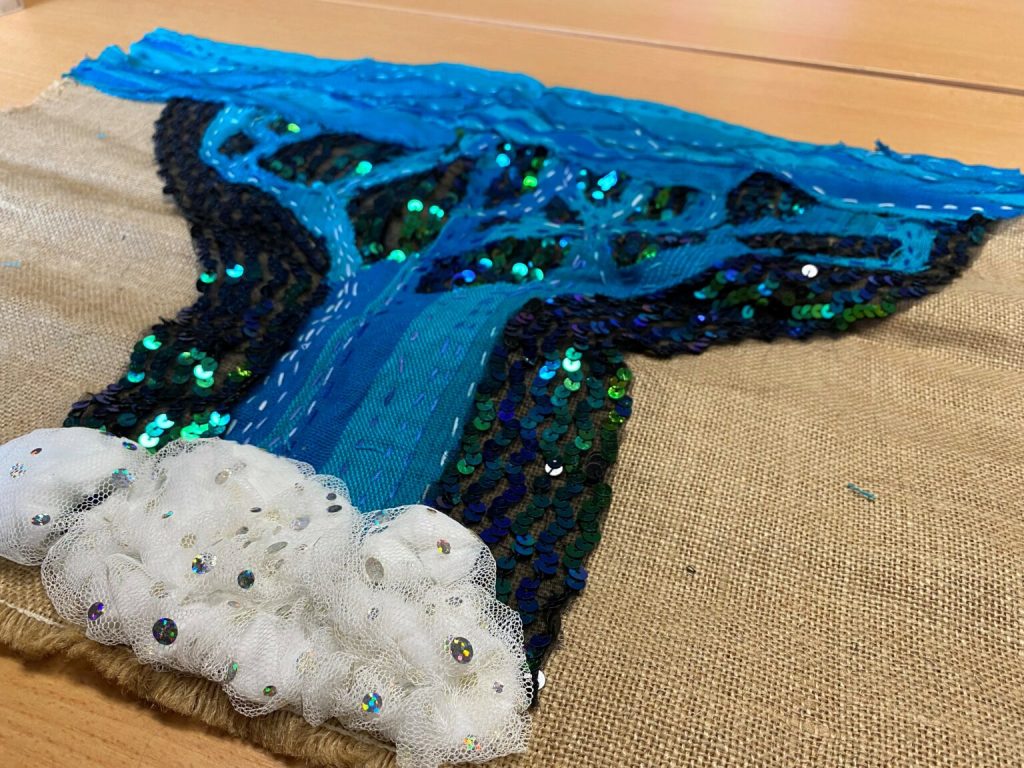
As for me, I wrote a poem about the ending for all of us LGBTers … End of Life – A Celebration. And we all agreed that a Box of Life, with rainbow coloured paper around it (or whatever takes your fancy) which would include all our wishes and key documents in one place was and is a great idea.

However our main thrust under Pam’s guidance and summarising of what is available for “End of Life” was a plan for those essential documents; after Mindy discovered that we all realise 45 hours before we are going to die that it is inevitable and … it’s a bit too late then to start planning.

She also discovered that there are seven main ways of dying – sudden, accident, illness, infection, suicide, neglect and assisted dying.

We came up with what we hope is a comprehensive “To Do” list of 10 key points for all LGBT people, as so many of us live alone and are often estranged from blood relatives.

Often our friends are “our family”, not always but often. We came up with this idea mainly for older LGBT people, however, this is really applicable for all LGBT adults.

  • Plan ahead – before you think you could die is a good idea. Once you are an adult plan ahead…you can always change your plan as your circumstances alter. Think 15 years ahead.
  • Ensure you have a Will, which is a legal one.
  • Having a Power of Attorney is a good idea, in case you are ill or have issues like living with dementia… that way your affairs can still be managed by whoever you authorise.
  • Having a “one stop” list if you live alone and have a fall or accident and cannot look after your cat or your home. And make sure you have a friend or relative who can be called to implement your list.
  • A list of all your electronic devices, email addresses and others with passwords
  • A funeral plan – to ensure your wishes are met
  • A memory box – or a Box of Life – which will include all of those items listed one to six and other things like notes for friends, relatives and some photos and memories
  • Ensure that your “special family” is listed – not all of us LGBTers have relatives of any kind that we still speak to and the special family is those you have chosen.
  • Have a plan for how you want to be treated in a care home or hospice. This can be critical for trans people, to ensure that misgendering doesn’t happen and its important for anyone’s identity who is LGBT.
  • Lastly ensure that the people caring for you – family, friends, medical professionals – whether at home or in hospital, care home or hospice – have a list of your wishes on things like resuscitation, intravenous feeding, aggressive treatments are adhered to.
  • Remember – It’s your life, and you should be able to retain your dignity and choose if you can how it ends.

After the three of us came up with this list we presented it our peers on the Pride in Ageing (PIA) advisory committee and Lawrie Roberts (PIA manager) and Siobhan Kenyon (St Ann’s Hospice) and the two of them developed an extensive programme which is now called Box of Life.

This has now been tested on various different LGBT Groups within the LGBT Foundation and was officially launched in May 2023. Lawrie, Siobhan, Mindy, Tony and myself have also recorded a short podcast about the Box of Life project.

If you have been affected by anything in this article then please contact any of the following links:

1. The LGBT Foundation – Pride in Ageing
email prideinageing@lgbt.foundation
telephone number 0345 3 30 30 30
helpline 0800 0119 100 (every day 10.00 until 22.00)

2. St Ann’s Hospice
telephone number 0161 702 8181

3. Samaritans
telephone number 116 123

4. Shining a Light on Suicide – For older people

End of Life – A Celebration

Whether you are trans like me
A gay man, lesbian or bisexual
Intersex or gender fluid
We all deserve respect
After living full lives

Many of us are older now
We have all experienced hate and discrimination
Often being who we are was illegal
Yet we have come through all of that
Battered bruised with our heads held high
Happy with who we are

All of us have left impressions on others
Yes we are different but the same
We are only human
We want our spend our end days
Our passing to be as we want
With dignity and respect

Whether its at home, hospital, hospice
or in a care home
We should all be prepared
with a will, power of attorney
A memory box
And our own wishes for our funeral service

No discrimination or insults or misgendering
In those final times
Many of us have no immediate family
No partner
No relatives who accept us
Being prepared is best
We all come to the end of life
And die

Our hope is
that our friends and relatives
will enable us to spend the end of our life
with dignity respect and no pain
and that our friends and family
can all celebrate our full lives
at our funeral
With Joy

Transparency
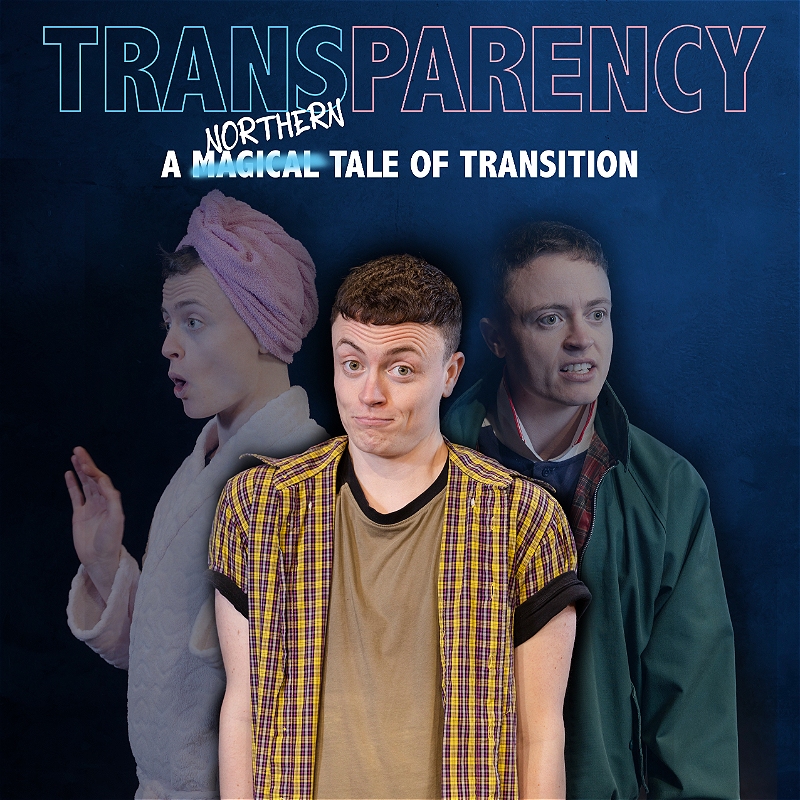
Transparency” is a transformational solo theatre performance written and performed by Jaden Adams. It moves through hard-hitting issues in a way that is at the same time vulnerable, jarring and heartwarming.

Dive into the everyday life of a transgender male through the relatable, hilarious and brutally honest lens of a northern working class family. Whilst Jack navigates the hurdles of transition, the old family dynamics are shaken up.

Will he find the courage to face his worst fears? Will he risk it all for love?!

Thursday 20 July 2023, 7.30pm

The Squad House, Unit D2A, 3rd Floor, Pear Mill, Stockport Road West, Lower Bredbury, Stockport SK6 2BP

Admission £10 / £5 (concessions). Buy tickets here.

If you miss this show, it’s coming to The Edge in Chorlton on 30 September.

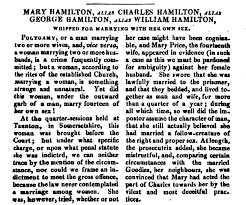
Charles Hamilton: the 18th century “female husband” who scandalised British society
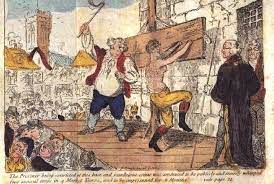
Photo: British Newspaper Archive

Image from a copy in Bristol Library of the pamphlet “The Female Husband” (1813 edition) by Henry Fielding. Cartoon is attributed to George Cruikshank. Text on the image says: “The Prisoner being convicted of this base and scandalous crime was sentenced to be publically and severely whipped four several times in 4 Market Towns, and to be imprisoned for 6 Months.”

Charles Hamilton, a travelling doctor in 18th-century Somerset, UK, was a dapper, charming suitor who could have his pick of the ladies – and according to some accounts, often did.

But it was love at first sight when the doctor laid eyes upon his landlady’s niece, the beautiful but naive Mary Price.

On 16 July 1746, at St Cuthbert’s Church in Wells, Somerset, Charles (or, as the parish register has it, James) Hamilton and Mary Price were married by the Reverend Mr Kingstone.

For two months, the couple travelled through Somerset as husband and wife selling quack remedies – unproven cure-alls that often had little medical value. Still, on 13 September, in a nearby town called Glastonbury, Mary denounced her husband to the town authorities.

It turned out that Charles was missing a vital piece of equipment – a penis.

Charles’ story scandalised and titillated society, courtesy of Henry Fielding’s hurriedly-written – and mostly fictionalised book – The Female Husband.

But who was Charles Hamilton?

The person first known to the world as Mary Hamilton was born in Somerset, a rural farming county in southwest England, in about 1725, the daughter of William and Mary Hamilton.

When still a child, her family moved to Angus in Scotland until, at about 14, Mary put on her brother’s clothes and set out on the road back to England alone. From this moment, Mary lived as a man, going by the names of James, George, and Charles Hamilton in the years that followed.

In Northumberland, as Charles Hamilton, he entered the service of Dr Edward Green, a ‘mountebank’, or seller of quack medicines. He then worked for Dr Finly Green before setting up independently as an unqualified doctor.

In May 1746, he arrived at Wells in Somerset and lodged in the house of Mary Creed, meeting her niece and falling helplessly in love. This fateful act led to the marriage that would cast him into infamy.

A deposition from Mary Price says that she and Hamilton travelled selling medicines after marriage.

During their time together, Hamilton “entered her body several times” and “so well did the imposter assume the character of man, that she still believed she had married a fellow-creature of the right and proper sex.”

But after gossiping with her neighbours, Mary soon began to suspect her husband was harbouring a secret. She confronted her husband when they were in Glastonbury – a town just a few miles away from their home in Wells. Hamilton admitted the truth to Price, who, in turn, instantly ratted him out.

The story was unusual enough at the time to attract the attention of the local newspaper, the Bath Journal.

According to those reports, after news of the arrest, many people visited the prison to gawp at Hamilton, described as being “bold and impudent”.

It added that “it is publickly talk’d that she has deceived several of the Fair Sex by marrying them.”

Another report says that at the trial, the prosecuting attorney, Henry Gould – misspelled as Gold in the newspapers – claimed that Hamilton had been married fourteen times.

The scandalised magistrates struggled to agree what the crime was – or even if one had been committed.
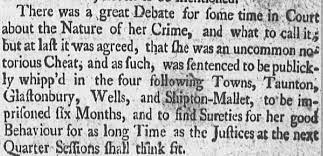
B

Records show that it was not so much that Hamilton dressed and worked as a man that was a problem as much as the fact that he deceitfully contrived penetrative sex. After much debate Charles Hamilton was labelled an ‘uncommon notorious cheat’ and was charged under the Vagrancy Act of 1744; an act meant to prosecute lack of employment or deceitful attitudes.

During the trial, members of Hamilton’s community wrote a letter to the clerk asking for severe punishment. They demanded public humiliation to ensure that Hamilton would never be able to live as a man again.

The severity of Hamilton’s sentence, and the terms in which the court delivered it, reflected the outrage and perplexity the case had aroused: ‘and we, the Court,’ they said, ‘do sentence her, or him, whichever he or she may be, to be imprisoned six months, and during that time to be whipped in the towns of Taunton, Glastonbury, Wells and Shepton Mallet.’

The newspaper recorded that the ‘bold and impudent’ Hamilton remained at that time ‘very gay, with periwig, ruffles, and breeches’, still defying the world as the world closed in.

He continued to sell his remedies surrounded by fascinated crowds who flocked to see him.

British Newspaper Archive

At three-week intervals, until Christmas 1746, Hamilton was whipped publicly in four different towns. That might have been the end of the saga for Hamilton if it weren’t for the novelist Henry Fielding.

Now considered the founder of the English novel, Fielding hurriedly cashed in on the salacious scandal, claiming he had his information “from the mouth” of Hamilton himself.

However, he likely never met the person he satirised in his work and it was instead cobbled together from court reports and his own (filthy) imagination.

The obscure – and pornographic – pamphlet was published anonymously. Like a Georgian-era 50 Shades of Grey, it was badly written, salacious and sold out almost immediately. Unlike 50 Shades of Grey, only four copies are known to exist today.

In his story, Fielding claims Mary Hamilton was born in 1721 on the Isle of Man, the daughter of a former army sergeant who had married a woman of property on the island.

In his version, she had been brought up in the strictest principles of virtue and religion but was seduced into “vile amours” by her friend Anne Johnson, an enthusiastic Methodist, and “transactions not fit to be mention’d passed between them”.

When Anne leaves him for a man, Hamilton seeks another female lover. He meets Mrs Rushford, a wealthy 68-year-old widow who takes her to be a lad of about 18. He pretends to be a Methodist preacher and promptly marries the widow.

According to Fielding, he deceived his bride by means “which decency forbids me even to mention.” The bride eventually discovers Hamilton’s birth sex, and Hamilton is forced to flee. Hamilton uses various other aliases to marry other women but is repeatedly forced to run when the ruse is discovered.

Finally, posing as a doctor, he marries Mary Price.

Gendering Hamilton as a woman, Fielding also claims that “on the very evening she had suffered the first whipping, she offered the gaoler money, to procure her a young girl to satisfy her most monstrous and unnatural desires.”
British Newspaper Archive

Historian Louis Crompton describes Fielding’s account as “one part fact to ten parts fiction” – so what did happen to Charles Hamilton once the storm had passed?

In July 1752, an unsigned letter appeared in the Pennsylvania Gazette, sent from Chester, just outside Philadelphia. It recounted the story of Charles Hamilton, an itinerant doctor living as a man, who was discovered to be biologically female.

According to the letter, Hamilton said he had been brought up in the business of a doctor and surgeon in the UK.

He said he had set sail for Philadelphia in Autumn 1751, cast away from North Carolina and made his way towards the city, selling medicine and treating people along the way.

Hamilton confessed he had used the “disguise” for many years.

So perhaps, Hamilton headed off to the New World and continued to live his life as he always had – true to himself and unashamed.
LGB Alliance Decision … Gay Love Letters from the 1920s … Next Pride Events

News

LGB Alliance Decision

With trans youth charity Mermaids – supported by several other LGBT+ organisations – questioning the Charity Commission’s decision to register LGB Alliance as a charity, the group for the first time had to legally defend the work it does, or doesn’t do, to actually improve the equality and human rights of LGB people.

After a hearing lasting five days in September 2022 and two further days in November 2022, the long awaited judgement was received on 6 July 2023.

The judgement of Mermaids v Charity Commission & LGB Alliance ruled that the case had been dismissed on the grounds that Mermaids did not have the legal right to challenge LGBA‘s charity status.

The LGB Alliance are now claiming to have won the case! They tweeted: “We are delighted that the tribunal found in our favour …”. The truth is the judges did not find in favour of the LGB Alliance. They only kept their charity status on a technicality that Mermaids couldn’t bring their case. Not a win at all.

The judges also castigated the Alliance for its abusive behaviour online.

Statement from LGBT Consortium:

Consortium are disappointed to learn that the appeal was dismissed on the grounds of legal standing. Although the judges were invited to indicate what their decision would have been on broader issues, they have chosen not to do so.

We are proud to have supported Mermaids and the Good Law Project throughout this appeal and firmly believe that charitable status should be reserved for those organisations that work towards a more inclusive society.

Paul Roberts, Consortium’s Chief Executive said, “We maintain that the LGB Alliance’s practice are fundamentally incompatible with the Charity Commission’s guidelines on how charities should provide a public benefit. We will continue to support our members across the LGBT+ sector to work for a more inclusive society, and not one that seeks to divide and spread misinformation.

Consortium is committed to fighting for equity, inclusivity and defending the rights of all LGBT+ organisations through our work, especially those who face the greatest marginalisation and hostility.

LGBT+ communities across the UK face an onslaught of misinformation and attacks in the mainstream press, in politics and on social media. Trans (including nonbinary and gender diverse) people are entitled, like everyone else, to support and understanding. Our LGBT+ communities will not be divided. We oppose transphobia in all its forms. We stand together.
Statement from Mermaids

Statement from Good Law Project

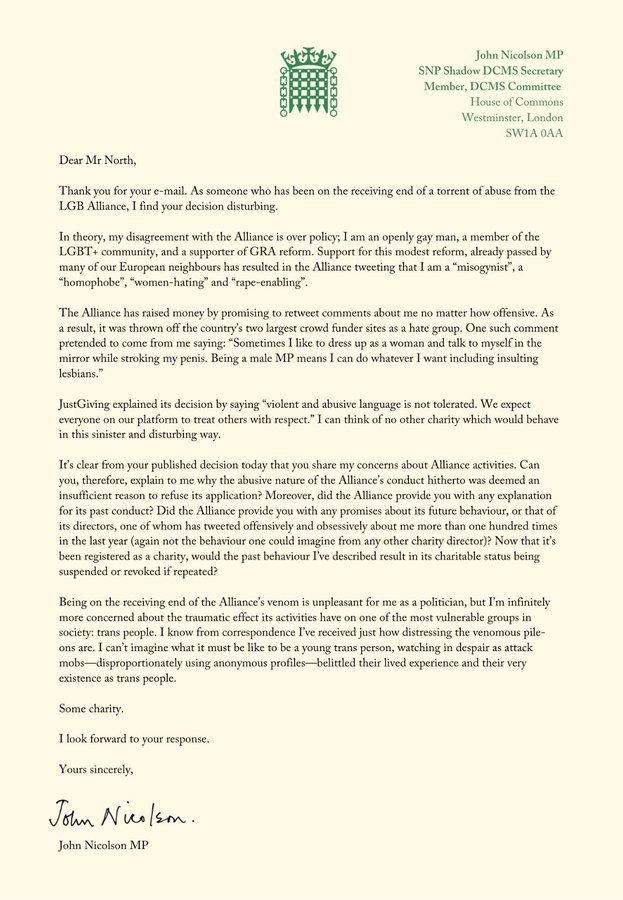
Letter from John Nicolson MP:

The judgement of Mermaids v Charity Commission & LGB Alliance dated 6 July 2023

Charity Commission’s Response

I was going to include the LGB Alliance statement but it is misleading and untrue.

Trans people’s lives are not up for debate. But debates on trans rights do happen and too often they are dominated by people who aren’t trans themselves, giving credence to perspectives that are not informed by personal experience, expertise or knowledge.

So instead of listening to those that seem determined to taint their legacy by opposing progress, we should be elevating the voices of those that don’t get heard, and those that are truly being silenced. 
Gay love letters from the 1920s kept in the UK National Archives

In November 1920 the youthful Ernest (Ernie) Smyth was arrested. At 22 years old he worked as a clerk in Belfast, describing himself as 5’5” in height, of medium build, about 26” waist, with dark hair and blue eyes. He had an interest in art and literature, he loved the Pre-Raphaelites and Oscar Wilde, but ‘abhorred ragtime jazz’.
Why was this young railway clerk arrested?

Found in his possession were hundreds of letters. Problematically for him these letters were between himself and many other men – ‘sodomites’, as the police file termed them. These letters provided criminal evidence of Ernie’s relationships with other men in a time when the law essentially criminalised their love.

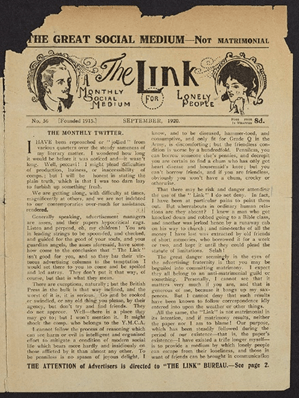
These men from all over the country had supposedly got in contact with Ernie through their classified adverts in The Link, a lonely hearts-style publication from the 1920s. In October 1920 Ernie had placed a personal advertisement in The Link, containing just the following words:

‘Youth (Ireland) 18 fond of music etc, literature well educated, refined, desires sincere friend, own sex. Any age to 35, all letters answered. Box No’

In his allocated 25 words Ernie had dropped in certain words, phrases and hints: ‘music’, ‘literature’, ‘sincere friend’ and most significantly, ‘own sex’. These words would serve both as a signal of his desire to meet other men, but also ultimately to incriminate him.

Through The Link Ernie had been able to meet many men. Indeed, the 200 letters found on him signal a substantial network, which seemed surprising for 1920s Britain.

‘What you desire in the way of a chum is also my own desire’

We can follow his relationship with one of these individuals pretty closely: Geoffrey (Geof) Smith, an ex-serviceman from Enfield. Because of Geof’s proximity to London, the Metropolitan Police requested that the Belfast Police send Ernie’s and Geof’s correspondence to the Met, which leads to these letters’ survival in the UK National Archives collections.

A selection of love letters found by the police on Ernest (Ernie) Smyth in Belfast

They appear to have initiated contact on 12 September 1920 when Geof wrote to Ernie, saying, ‘I feel sure we would be able to become excellent friends’.

The letters sent between them over a number of months provide a picture of their friendship and relationship. The Link and subsequent letters gave them a chance to correspond, despite the distance between Enfield and Belfast.

Through their vivid and open correspondence we can see that Ernie and Geof pursued a relationship, although whether they were ever able to actually meet is unclear. The intention, however, is clear. Geof writes longingly: ‘May the time (soon) come, Ernie, when we can meet and allow our sensuality to have full swing with each other’. On 2 October 1920 the correspondence continued: ‘I am longing to revel in the joys of your naked body.’

They talk about their fondness for each other and their mutual attraction. However, the letters also recount their sexual dalliances with other men, in what appears to be a competitive attempt to make each other jealous.

‘I cannot understand…’

In a particularly telling line Geof talks openly about his frustrations of the law:

‘I cannot understand why it should be considered a criminal offence for two people of the same sex, who are fond of each other & mutually agreed, to commit sodomy.’

Love letter to ‘Dear Earnest” from his ‘sincere chum’ Geof B Smith, typed up as evidence in a police file

It would take a further 40 years for the State to partially decriminalise homosexual acts. Essentially 22-year-old Ernie would have lived the majority of his life having to hide his sexuality from the law and wider society.

These letters now provide a remarkable and rare insight into LGBT+ lives in the 1920s; they tell a story of love, but also of criminalisation.

The consequences

Ultimately Ernie and Geof were arrested, as well as the self-styled bohemian Walter Birks, who had also met men through The Link. In a particularly incriminating letter he had written, ‘All my love is for my own sex and I am very affectionate’. All three men were arrested under the charge of conspiring to commit ‘gross indecency’.

One further individual was arrested – Walter Barrett, the proprietor of The Link himself, on the charge of aiding and abetting his advertisers, conspiring to enable the commission of such unnatural acts. All were tried at the Central Criminal Court, the Old Bailey.

At the trial Barrett himself claimed The Link was intended for decent people, and was used by decent people: ‘The other sort is not desired’. He admitted he had been careless – not realised people’s ‘true character’. Clearly the police saw differently.

Each was charged and received two years’ imprisonment with hard labour at Wormwood Scrubs.

Despite a successful life as an author and publisher, this proved to be Barrett’s downfall. The Link ceased to exist.

There is no clear evidence that Ernie and Geof ever met again.

One hundred years on, people still instinctively crave ways to meet other people, whether it is through online dating apps or classified advertisements. The stories of people in The Link reflect themes that are still current and topical among the LGBT+ community: the need for LGBT+ spaces (physical and written), the loneliness and isolation that comes from a lack of social acceptance, and the instinctive desire to love and be loved.

In one particular letter Geof comments that ‘I think the “Link” and the UCC (thought to refer to the Universal Correspondence Club) are about the only ways I know about to become acquainted with people like ourselves’. What an extraordinary publication The Link was, enabling people to meet and love despite the law.

Forthcoming Pride Events

Welcome to Tameside Pride

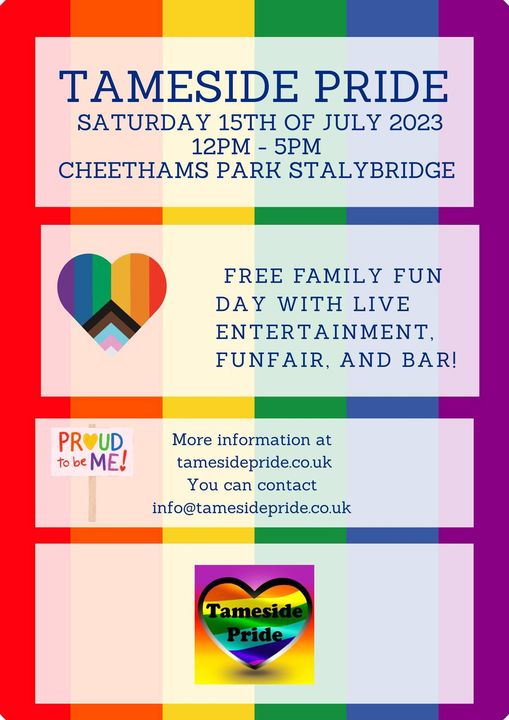
The day-time free-to-all event will be held in Cheetham’s Park, Stalybridge from 12.00 noon to 5.00pm on Saturday 15 July. There will be a market with stalls from a range of LGBT+ supportive organisations, a big stage with acts throughout the afternoon, a kids playground, and a food / refreshment area.

Rochdale in Rainbows

Back again this year, Rochdale in Rainbows is excited to present the second Pride in the Park! The free event will be held in Broadfield Park from 12.00 noon to 5.00pm on Sunday 16 July.

Join in an afternoon filled with queer joy, family fun, performances and creative and wellbeing activities for LGBTQIA+ communities and allies. There will also be stalls from local organisations, groups and charities in Rochdale Borough.

Castlefield Viaduct … London Pride … It’s Not Therapy – It’s Abuse

News

Castlefield Viaduct

Castlefield Viaduct is a 330m (1,080ft) disused railway viaduct built in 1892, which used to carry heavy rail traffic in and out of the Great Northern Warehouse, located in the Castlefield area of Manchester.

It closed in 1969 and stood unused, though has been regularly maintained by National Highways.

The viaduct was designed by Heenan & Froude, the same engineering company behind Blackpool Tower.

Plans by the National Trust to turn it into a ‘sky park’ were unveiled in June 2021 with the work started in March 2022.

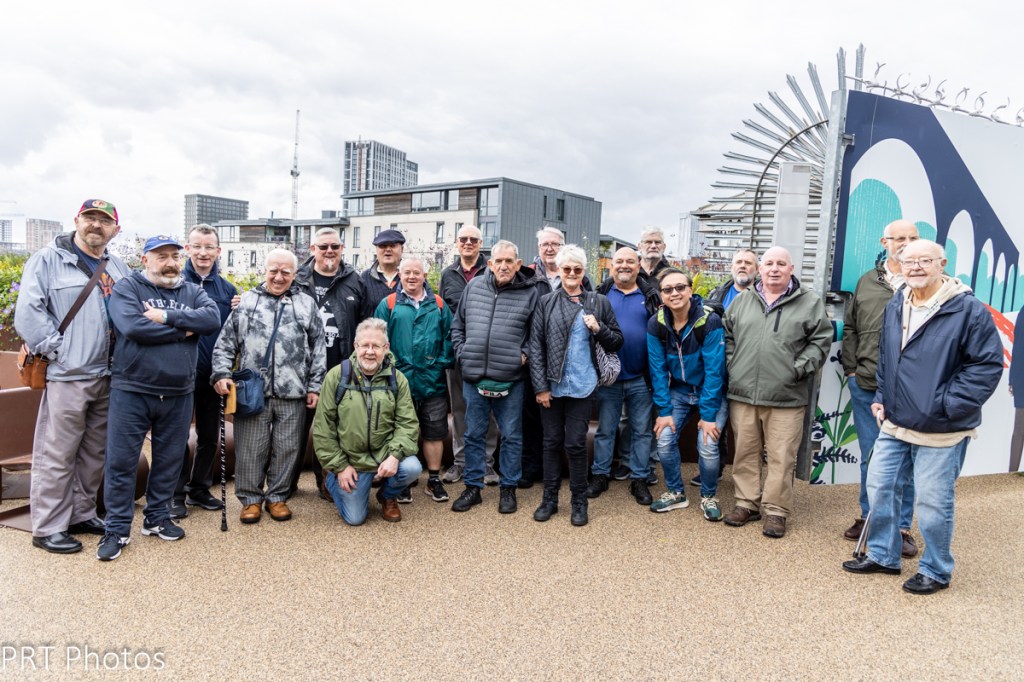
Tours are free of charge but need to be booked in advance. Our guide, Grace, was very informative but the loud music from the Castlefield Bowl was intrusive and spoilt the atmosphere of the “garden oasis” in the city.

More great photos can be seen here.

London Pride – Sit Down Protest outside Uganda House

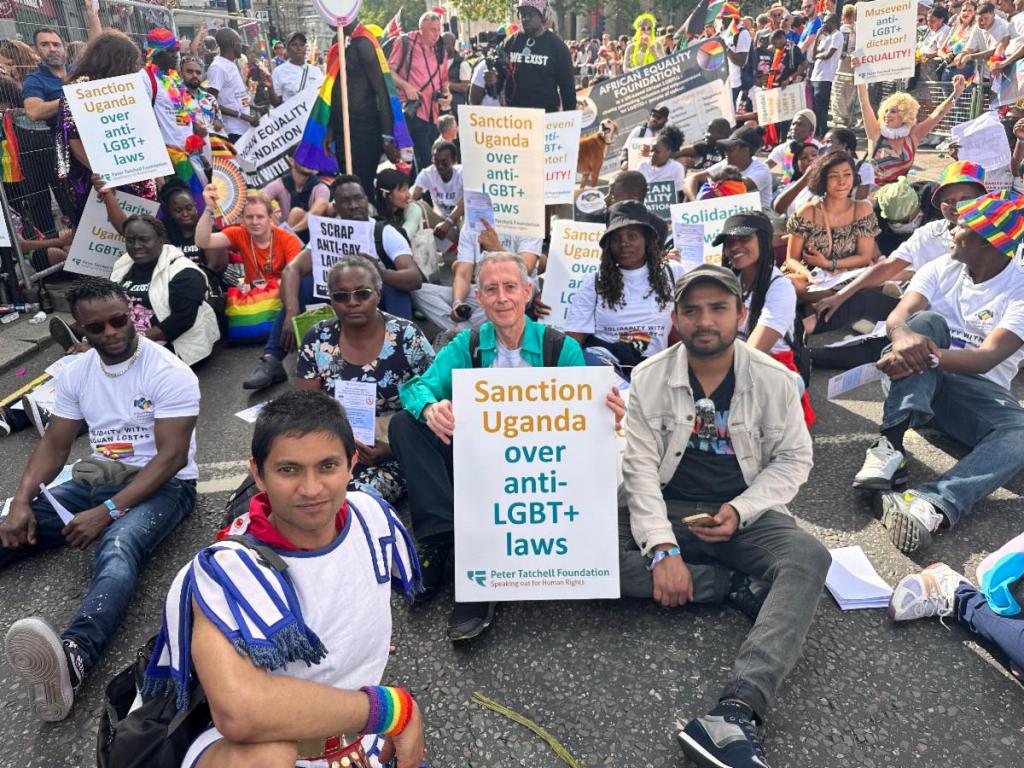
On 1 July 2023 the Pride London parade was stopped when hundreds of marchers, including Ugandan LGBT+ refugees, staged a sit down protest outside the Ugandan High Commission in Trafalgar Square.

They received cheers and applause from the Pride crowds and remained on the roadway for 15 minutes, despite Pride stewards trying to move them on.

Besieging the Ugandan High Commission, they chanted:

“Hey hey! Ho ho! Anti-gay laws have to go!” and
“What do we want? Sanctions on Uganda. When do we want them? Now!”

The sit-down marchers were protesting the country’s draconian new Anti-Homosexuality Act, which became law on 26 May.

They urged the UK government and international community to impose travel bans and asset freezes on Ugandan MPs who voted for the new anti-LGBT+ legislation.

The protest was organised by the Peter Tatchell Foundation, with the support of members from the African Equality Foundation and Out and Proud African LGBTI – many of whose members have fled Uganda to escape arrest, imprisonment, torture and mob violence.

The marchers waved placards with the words:

Solidarity with Ugandan LGBTs!
Sanction Uganda over anti-LGBT+ laws
Uganda! Scrap homophobic laws!
Museveni! Homophobic dictator! EQUALITY!

The Anti-Homosexuality Act stipulates the death penalty for repeat homosexual offenders and for gay sex with a person aged over 75 or under 18. It includes 20 years jail for advocating LGBT+ human rights, and seven years imprisonment for renting housing to LGBT+ people – and much more.

Peter Tatchell, Director of the Peter Tatchell Foundation, noted:

“We took non-violent direct action outside Uganda House to stand in solidarity with heroic Ugandan LGBT+ campaigners and to register our strong objection to the new Uganda legislation. It is one of the most sweeping and draconian homophobic laws in the world. Almost every aspect of LGBT+ existence is outlawed, including LGBT+ sex, advocacy, and organisation. The Act violates the Commonwealth Charter. It also breaches Article 21 of the Uganda constitution, which guarantees equal treatment and prohibits discrimination.”

Gay Ugandan Abbey Kiwanuka of Out and Proud African LGBTI said:
“Uganda is going backwards. As LGBTI Ugandans, we are not even asking for same-sex marriage; we are advocating for LGBTI people to be left free to love whoever they want without fear of harm. Politicians in Uganda scapegoat LGBTIs and use homosexuality as a pretext to divert people from questioning their failed policies. It’s high time Ugandans woke up and realised that homosexuality is not the cause of people’s suffering. The problem is the rotten, corrupt system.”

Edwin Sesange of the African Equality Foundation, also from Uganda, added:
“Uganda must stop its persecution, respect LGBTI human rights, and uphold the equality and non-discrimination principles of the Commonwealth Charter. I call on the Commonwealth leadership to speak out and hold Uganda accountable.”

The global fight is far from over.

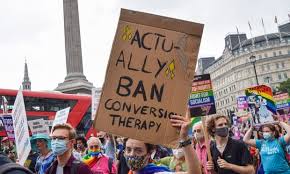
It’s not therapy – it’s abuse

It’s five years (and four Prime Ministers) since the UK Government first promised to ban so-called “conversion therapy”. During this time, Stonewall estimate thousands of LGBT+ people in the UK have suffered due to these harmful attempts to ‘cure’ us.

The time for a clear and concrete timetable from the UK Government is now. No more delays. No more loopholes. Time is running out.

Stonewall are calling on the UK Government to publish the draft Bill immediately and bring forward the final Bill by the King’s Speech in November.

Conversion “therapy” isn’t therapy, it’s abuse. And nobody can consent to abuse.

Follow this link to watch a short film and to email your MP.

A New Start After 60 … Coming Out as Bisexual at 69 … Rwanda Plan Ruled Unlawful … Sparkle Weekend

News

A new start after 60: I’m gay but had done nothing for LGBTQ+ people. So I used my pension to launch a lottery

‘It’s a primal thing to do something important before you die’ … Tom Gattos. Photograph: Sarah Lee / The Guardian

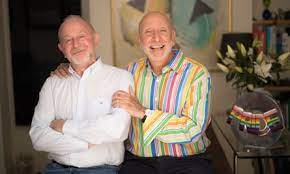
During lockdown, Tom Gattos liked to play the national lottery. “There was nothing else to do,” he says. Checking the winning numbers one Sunday, it occurred to him that he and his partner, David, “really should be playing a lottery that supports the LGBTQ+ community”. They looked around online but couldn’t find one. “We thought: ‘We’ve got this little pension pot saved. Why don’t we invent the Rainbow Lottery?’” In June 2021, Gattos, who was 70, announced the first set of winning numbers.

Two years on, the Rainbow Lottery has amassed more than 1,700 players, signed up 150 good causes to support, and raised more than £100,000 a year for everything from the Terrence Higgins Trust to local Pride groups. But Gattos hopes for more. “We have only just scratched the surface,” he says. “There are supposed to be 4 million LGBTQ+ people in the country.”

The Rainbow Lottery is a not-for-profit organisation, and neither of its founders takes a salary. Gattos is an advertising copywriter and gets up at 4.30 each morning to do consultancy work before spending the rest of the day on the lottery. “Consequently, we are penniless,” he says. In two years, the only new item of clothing he has bought is a rainbow-coloured shirt. So why did he and David put themselves in a place of financial stress at this point in their lives?

“Maybe it’s a primal thing to do something important before you die,” he says. “We don’t have any children. We lived our lives in a bubble. I’m an advertising copywriter; my partner’s an architect. I guess the pandemic brought us that much closer to death. It was like: ‘Oh my God, is this it? Quick, quick! What can we do?’ It was in my mind: what are we good at? We are good at being gay!”

Gattos, who grew up in Detroit, met David in London 43 years ago. “There was a pub on Kings Road that was only gay on Saturday lunchtimes: the Markham Arms. My friend and I used to cruise in there every Saturday, to see who we could see. He claimed he saw David first. All three of us went out to dinner that night and David chose me. We have been together ever since.”

“This is payback time for us,” he continues. “We are gay, but we’ve never done anything for the community.” The lottery has given him a new sense of belonging. “We are card-holding LGBTQ+ members now.”

‘This is payback time for us’ … Gattos (right) with David, the lottery’s co-founder and his partner of 43 years. Photograph: Sarah Lee / The Guardian

This year, Gattos’s lottery was shortlisted at the Rainbow Honours for the new brand / organisation of the year award. Gattos has pictures of himself with Rylan Clark, Sinitta and Nicola Sturgeon. He had wondered as he got older: “What’s going to keep us active and busy and interested? If you had said to me a few years ago that I’d be meeting celebrities and dining with transgender people, I would have said, ‘What are you thinking?’” Now, he says, a richer “new life” has opened up.

Gattos says he has mostly avoided homophobia, despite living with David in Dubai for 13 years, though he has never felt comfortable “walking down the street holding hands”. But shortly before he had the idea for the lottery, he was walking in south-west London where he lives when the driver of a white van rolled down his window and yelled: “Fucking poof!”

“I thought: ‘Oh my God, London, in the 21st century, really?’ There are still people out there who need to know we are human beings as well.”

Two of Gattos’s brothers died last year, his sister shortly before. He is the last remaining sibling. “Life is about growing and expanding,” he says. “This money was supposed to last us the rest of our lives. We could have gone on spending it until we die. But we wanted to invest it in something solid, that we can do for the world. We don’t regret a single penny.”

If you want to buy a Rainbow Lottery ticket (or two!) and help Out In The City at the same time, please follow this link.

Norman not only came out as bisexual and joined a great community – he also found love

Norman Goodman ‘didn’t know how’ to come out after his late wife passed away, but felt ‘tremendously happy’ once he did and he wants to encourage others to do the same.

He was interviewed by Danielle Kate Wroe, Lifestyle Writer at The Daily Mirror on 29 June 2023:

During Pride Month, one of the main messages from the LGBT+ community is that it’s okay for people to be themselves – no matter their sexuality.

And nobody is prouder of the person they have become today than 73-year-old Norman Goodman.

After “straight acting” for the majority of his life, when his late wife passed away, Norman decided it was time to embrace his bisexuality – but he didn’t know where to start.

Now he’s encouraging other LGBT+ people to embrace themselves, no matter what their age, sharing that ‘Out In The City’ – a group that helps people over the age of 50 to socialise – has been a “lifeline” for him and even introduced him to his partner of 18 months.

Norman, a Reform Jewish man who lives in North Manchester, came out as bisexual in 2019 after his “lovely wife” Marilyn passed away in 2017.

As a child, he always knew he was “different”, which prevented him from forming relationships with other people.

Between the ages of 11 and 17 he was convinced he was a girl and wanted gender-affirming surgery.

“I was admitted to a psychiatric unit and I was given electroconvulsive therapy when I was about 17”, he shared.

Electroconvulsive therapy is a procedure where small electric currents are passed through the brain, intentionally triggering a brief seizure.

“I had a course of shock treatment, and then I had aversion therapy as they were trying to make me a man.”

Aversion therapy is psychotherapy designed to cause a patient to reduce or avoid an undesirable behaviour pattern by conditioning the person to associate the behaviour with an undesirable stimulus.

“I tried and tried because I wanted to be straight, and when I met my wife I fell in love so I thought ‘I must be straight’. But a few years later I realised that I was still attracted to men too.

“So I kept it all to myself and when I was 44, the tension had built up inside me and I was sick of straight acting so I told my wife.

“She said: ‘Look Norman, I already know. Let’s keep it just between us.’ Then I went to counselling, we stayed together, and two years after she died I decided to come out.

“It hasn’t been easy because I’ve spent my life straight acting, but I feel like I’ve found my true identity. For me now, the world is a nice place.”

He described himself as “absolutely dying to come out”, but he “didn’t know how”, until the LGBT Foundation came to do a talk at the Royal Exchange Theatre in Manchester, where he volunteered.

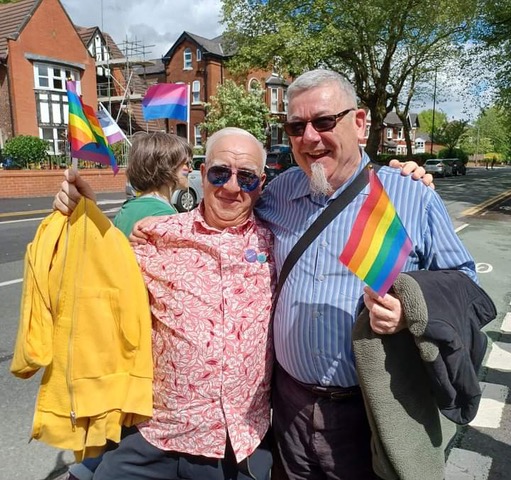
Norman met Tony when he joined ‘Out In the City’

“At the end of the talk, they were looking for volunteers over 60 to make some cassette tapes so that in years to come, young people listen to the tapes, and they will know what homosexuality was like in the 50s and 60s and how things have progressed”, he said. “And that was how I came out!”

Norman continued: “Then I got told about a group for people over 50 that were LGBT+ called ‘Out In The City’, so I decided to go, and it has given me a new lease of life.

“We have an outing every week and I’ve made a lot of lovely friends and we all have a laugh and a chat. And the coordinator and I have been in a relationship for the last 18 months.”

Norman said that he just wants to help people for as many years as he’s got left

After living almost his whole life without officially acknowledging his true sexuality, he’s described himself as “tremendously happy”, saying being out and proud is “better than winning the lottery.”

Norman wasn’t looking for love when he joined the group three and a half years ago, initially rejecting 68-year-old Tony Openshaw’s advances, but now he describes the pair as “really happy”. The group has also brought him a sense of fulfilment.

“I’ve been to places I never knew existed with the group”, Norman shared. “We go to museums, art galleries, we go on day trips, so it really is a lifeline as many older LGBT+ people are isolated. The oldest member of the group is 94, and there are many in their 50s too, so it’s a good mix.

“Sometimes we even have speakers in to give talks about health, we had somebody in from Mind, the mental health charity, mobility, benefits, so it’s very interesting. There’s always something going on.

The road hasn’t been easy for Norman, but he’s glad about how far he’s come.

“It’s just a group of LGBT+ people 50 and over and we can talk to each other and confide in each other. My social life has improved tremendously since joining.

“Tony, my partner, has been an activist since he was 19 because when he was that age, his parents kicked him out for being gay, and they were Catholic. So he’s done very well for himself to be running the group.

“I’ve spent my life feeling inferior for being LGBT+ and I’ve spent time trying to protect myself, so it’s nice that we’re all comfortable together. Now, the whole world can know that Norman Goodman is bisexual. And I want to help other people to come out – I want to give encouragement to others. Times have changed now.”

But not everybody has reacted positively to his coming out journey – four of his late wife’s cousins have all fallen out with him over his relationship with Tony.

“It’s because I’m in a same-sex relationship”, Norman shared. “I was a bit upset at first, but I think of it now as their problem, rather than mine.

“My late wife and I loved each other very much, and she would be absolutely disgusted with them.

“But I just want to strive forward for as many years as I’ve got now, I just want to help other people.”

Rwanda plan ruled unlawful

On 29 June the Court of Appeal ruled that Rwanda is not a safe country for people seeking asylum to have their claims processed. This means that for now, nobody seeking asylum in the UK will be removed to Rwanda.

The majority of the judges concluded that there is a real risk that people sent there will not be given a fair hearing and could be returned to their home countries where they are fleeing from, putting their lives in danger all over again.

The Government will make plans for its next steps, with the possibility of taking the case to the Supreme Court.

Meanwhile MPs raise specific concerns about LGBT+ refugees being sent to Rwanda

MPs are “deeply concerned” that relocating LGBT+ refugees seeking asylum to Rwanda could put them at greater risk of harm, according to a new report from the Women and Equalities Committee.

It has called for an “urgent review” of the safeguards in place for vulnerable people in all types of asylum accommodation, including that which currently exists, as well as the Home Office’s proposed use of barges.

“Housing vulnerable asylum seekers, including single women, mothers, children and LGBT people, in crowded hotel and other types of contingency accommodation is unacceptable,” part of the report’s summary said. “While use of hotels and other contingency settings persists, there must be effective policies and practices in place to better protect vulnerable adults and children from harm.”

The Committee, which is chaired by Conservative MP Caroline Nokes, also highlighted “clear risks that the asylum provisions in the Nationality and Borders Act 2022 will have unequal impacts” on certain groups of people, including members of the LGBT+ community with “complex sexual orientation and gender-based claims”.

“People with vulnerabilities arising from Equality Act protected characteristics, including women with histories of gender-based violence and abuse, children, lesbian, gay, bi-sexual and transgender (LGBT) people, and disabled people, experience unnecessary risks under the Home Office’s management of the asylum process,” the summary continued. “Recent and proposed changes to the system are likely to increase those risks. The Home Office must demonstrate it is taking effective steps to mitigate unequal effects.”

If the Illegal Migration Bill becomes law, more people could be detained for longer periods of time – something which has been proven to come with greater risks for LGBT+ people who may experience hate crimes or abuse while in detention.

The report urges the government to set out plans of how it intends to mitigate risks of harm to vulnerable groups in detention, as well as to collect and monitor data on where LGBT+ people are being held and for how long – something which is not currently tracked.

It also calls on it to “set out how it intends to monitor and ensure those removed to Rwanda do not suffer harm or experience discrimination in that country”.

“The inhumane policies towards people seeking asylum in the UK have to stop immediately”

Rwandan law forbids the changing of someone’s legal gender and, although homosexuality is not technically illegal, LGBT+ people often face arrest under laws that exist to uphold “good morals” there.

As such, LGBT+ activists and organisations have been critical of the government ever since it announced its intention to send refugees there.

Leila Zadeh, Executive Director at Rainbow Migration, a charity that helps LGBT+ refugees through the asylum and immigration process, said: “This report, for which Rainbow Migration gave oral and written evidence, is sending a very clear message to this government. The inhumane policies towards people seeking asylum in the UK have to stop immediately.

“This government’s legislation will put LGBTQI+ people seeking protection in dangerous situations, by detaining them in greater numbers and sending them to countries where they could face discrimination and violence.

“Instead, this government needs to focus on creating a compassionate and caring asylum system that treats people with kindness”.

The report can be read in full here.

The Sparkle Weekend: 7 – 9 July 2023

The Sparkle Weekend is the world’s largest free-to-attend celebration of gender diversity, and a safe space for anyone who identifies as gender non-conforming, their families, friends, and allies. In 2019, we welcomed more than 22,000 visitors over the weekend. 

The Sparkle Weekend is a festival-style family event, featuring live music and entertainment, talks and workshops, and an opportunity for our corporate sponsors, grassroots charities, and trans-run businesses to engage with our visitors.

We also work with local and national charities who support young trans and gender questioning people and their families so that all age groups feel included. 

One of the charity’s core values is that the event remains free-to-attend in order to be accessible to everyone, regardless of gender identity, race, religion or physical ability.

See Sparkle for more information.

Blackpool Model Village … “Our Proud Past” Exhibition … “My Gay Best Friend” … Mens Fashion Ads from the 70s … LGBT Documentary

News

Blackpool Model Village

The Blackpool Model Village and Gardens is a tourist attraction featuring handcrafted models of buildings including a castle and a Tudor village in a garden setting.

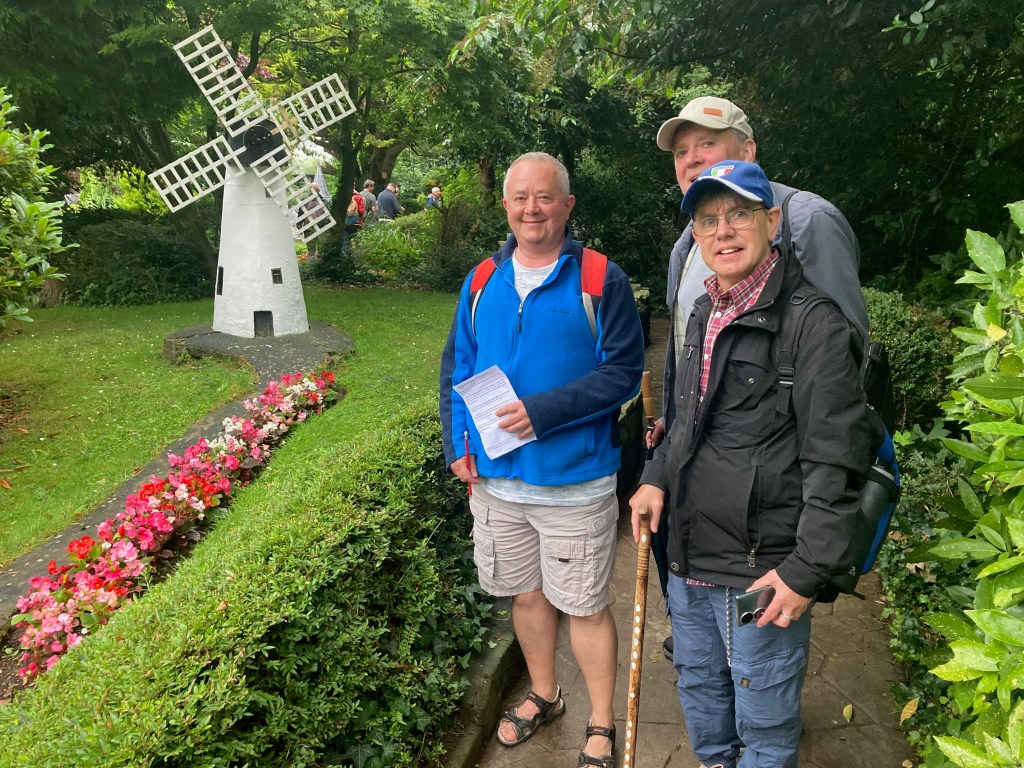
The model village is set in a beautiful landscaped 2.5 acres of carefully tended gardens with paved pathways that provide full access for visitors. The rain fell during our visit, but it didn’t dampen our spirits. The fact that the book shop was owned by “Bess Sellars” made us laugh.

It was a fascinating visit and photos can be seen here.

“Our Proud Past” – Exhibition Launch

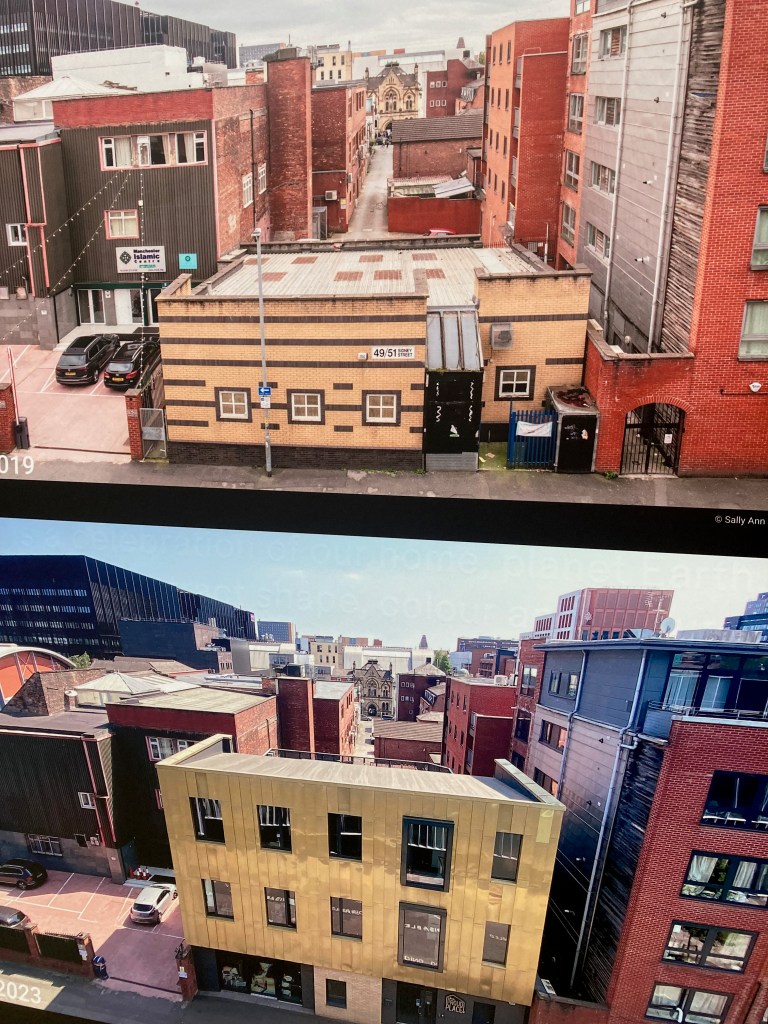
Our Proud Past: a photography exhibition celebrating the past, present and future of Manchester’s LGBT+ Centre was publicly launched on Wednesday 28 June at KAMPUS Garden on Aytoun Street, Manchester M1 3GL.

Manchester’s LGBT Centre 2019 (top) and 2023 (bottom)

In 1988, Manchester’s LGBT+ Centre was constructed; it was the first purpose-built centre for the LGBT+ community in the UK (and possibly Europe).

In 2020, the single storey building was demolished, and a new three-storey Centre erected in its place.

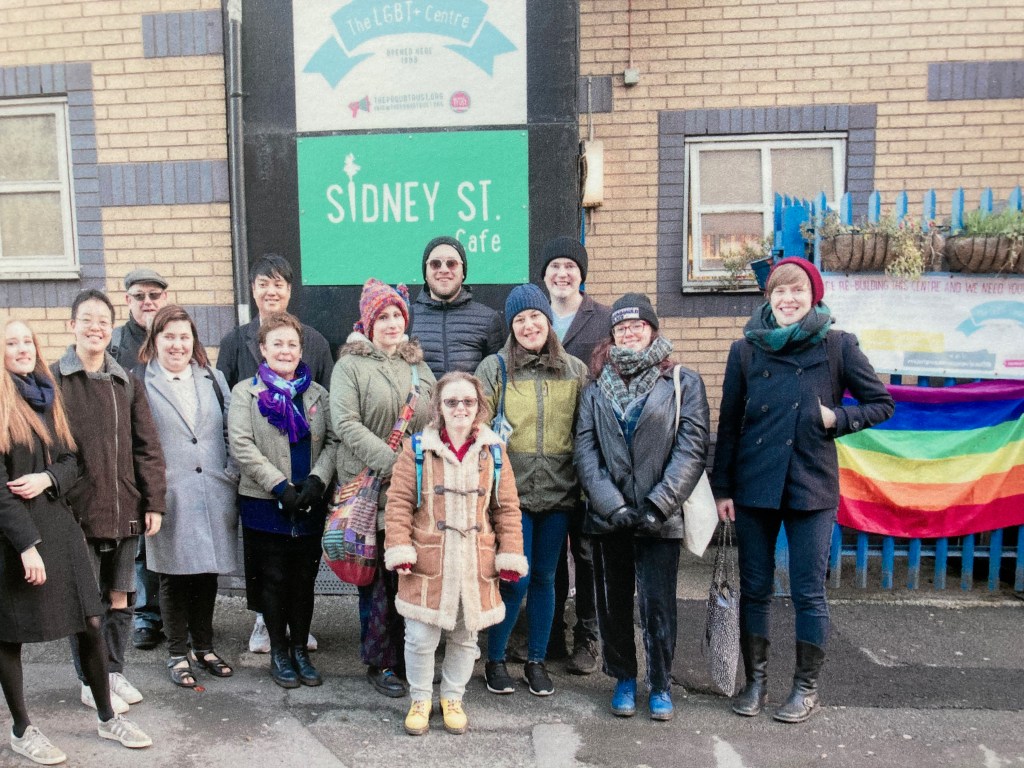
The exhibition displays photos of the 1988 Manchester LGBT+ Centre and the community groups who have met or meet there, as well as photos of community groups meeting at the new LGBT+ Centre (which opened in 2022).

The aim of this exhibition is to make visible some of the more invisible members of the LGBT+ community. It also celebrates a year of the new Centre being open to the public and shares the outputs of research activities carried out as part of the ‘Documenting Demolition’ project.

The Proud Trust have worked in collaboration with Emily Crompton (an architect and researcher who has been working on the project for 10 years including archival research, architectural design and participatory action, and on the project’s board as a design expert and engagement advisor) as well as architectural photographer Sally-Ann Norman to document and record the demolition and re-building process of Manchester’s LGBT Centre, now known as The Proud Place.

Outside the old building in 2019

We heard from several speakers including Paul Fairweather (the city’s first gay men’s officer), Caroline Topham (a previous trustee) and Charlie Lee (a young person who attended the centre).

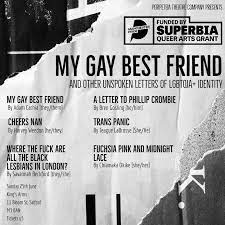
My Gay Best Friend (and Other Unspoken Letters of LGBTQI+ Identity)

This show, funded by a Queer Arts Grant from Superbia, at The Kings Arms in Salford on 25 June was an interesting concept.

What one thing have you’ve wanted to say to your straight mates but never had the chance to? How much of our struggles and joys do straight people really know about the LGBT+ community?

Six letters, written and sealed by LGBT+ identifying writers, were opened and read by straight identifying actors live for the first time in front of an audience.

This was the start of what aims to be an annual anthology series in which LGBT+ identifying writers express their personal and political opinions that are often left unspoken. The result however was a mixed bag. Although the letters were honest and personal, the presentation varied sometimes from the humourous to the serious. Not all the letters kept my interest and attention, but on the whole it was a worthwhile experience.

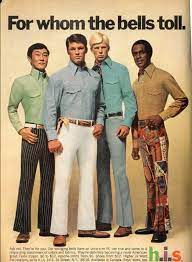
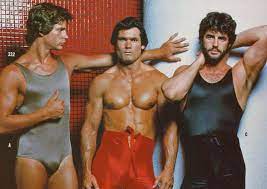
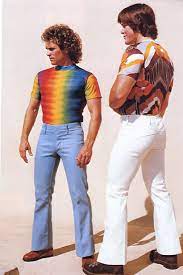
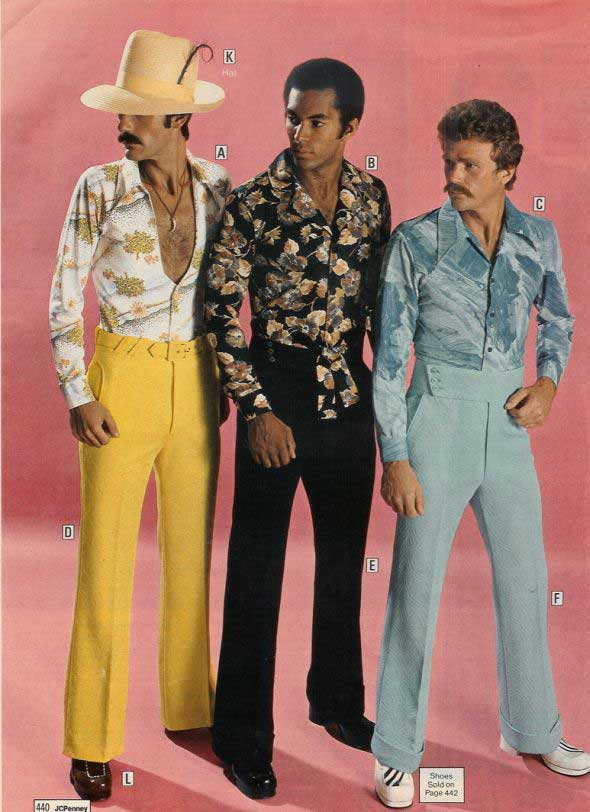
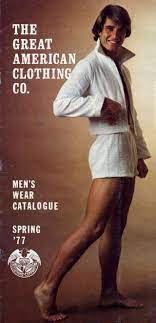
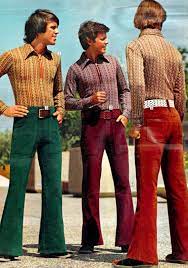
Mens fashion ads from the ‘70s

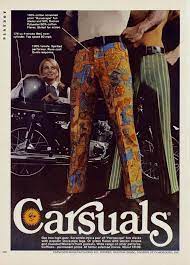
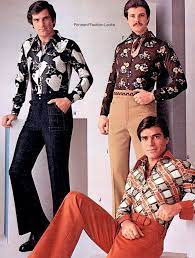
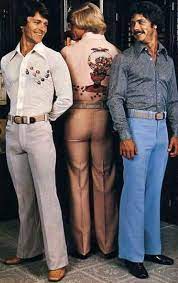
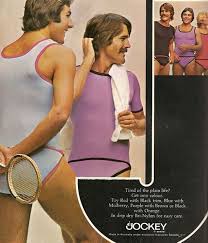
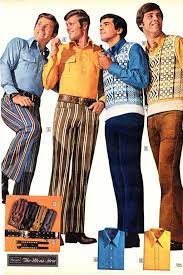
For a long time, it was popular to disapprove of 1970s styles for men: big collars, high waists, and tight crotches had fallen out of fashion. But the trend cycle can’t be stopped, and these once reviled looks are back, and in a big, big way.

The ‘70s expanded on trends of the previous decades. They took the bright palette of the ‘50s and the long-haired look of the ‘60s and turned them up to 11, giving rise to a variety of iconic styles. From the tie-dye and bell-bottoms of the hippie, to the ruffles and bold colours of the so-called “peacock revolution,” to the androgyny and revealing cuts of the glam rocker, every aesthetic of the era was totally groovy, baby.

But what really sets the ‘70s style apart is the fit. Every outfit was tight in all the wrong places.

Now, in the 2020s, ‘70s styles like flared pants, loud patterns, and skin-tight tops are finally back in fashion (thank you, Harry Styles!). There’s no better way to see what’s in store for the future than to look back to the past, particularly the advertisements of the era. These ads, for everything from jumpsuits to bell-bottoms to underwear, are certainly eye-catching, whether you think they’re fashion faux pas or the epitome of style.

Now, take a look back at the ads of the era to see if you’re buying what they’re selling …

LGBT documentary: Gay, Old and Out (2018)

Meet the people who paved the way for LGBT rights. It has been a long hard fight to secure acceptance for the LGBT community, and the older people who fought the fight often get overlooked and forgotten.

This documentary follows the astonishing and moving stories of members of the Opening Doors London project – whose personal struggles and successes paved the way.