Harris Museum, Preston … Remembering Candy Darling … Ruth Coker Burks … A Queer Scrapbook

News

Harris Museum, Preston

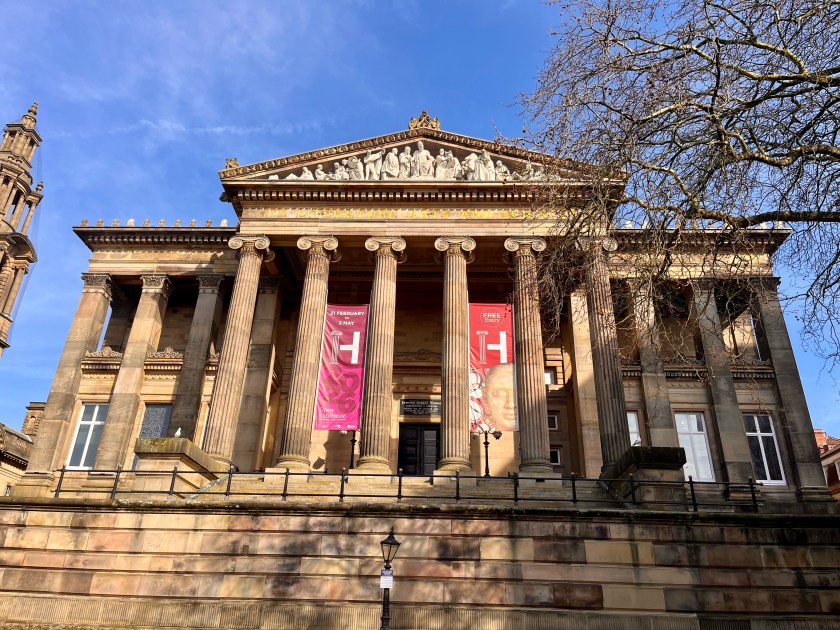
I’m finding it hard to describe this museum – there was so much to see, and it was certainly the best museum we have visited in a long time. I will let the photographs “do the talking” – there are more to see here.
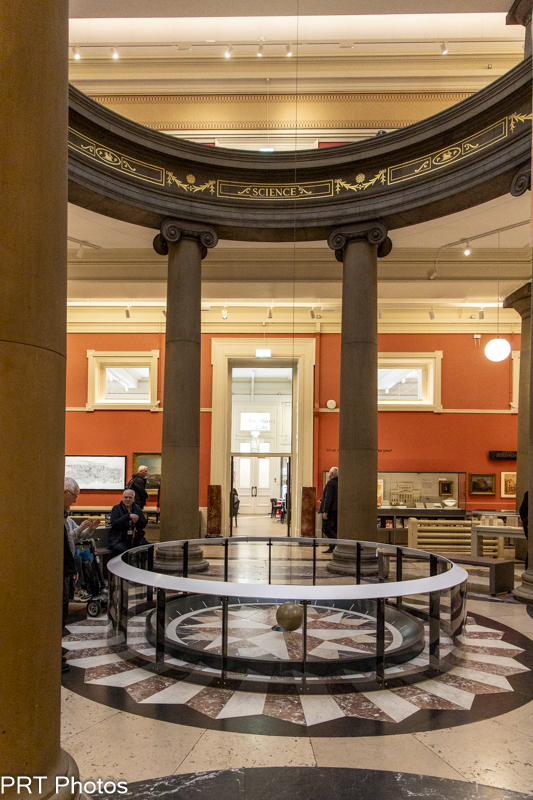
The Foucault pendulum was particularly impressive. At 35 metres, this is the longest Foucault pendulum in the UK.

Like any pendulum it swings from side to side, but in addition, the direction of the swing slowly rotates clockwise, due to the motion of the Earth. This is called precession. At the latitude in Preston (53 degrees north), the swing direction completes a full 360 degree turn in 30 hours.

The pendulum shows us the rotation of the Earth completely independently of the motion of the Sun or the stars. In history, some believed that Earth didn’t move, and the Sun and stars rotated around the Earth. In fact this became the official doctrine of the Catholic Church, and in 1600 Giordano Bruno was burned at the stake by the Inquisition for teaching that the Earth rotated and moved around the Sun.

Shortly after, in 1615, the scientist Galileo Galilei was also investigated by the Inquisition for the same Sun centred theory. Fortunately he decided to back down and admit that he might be wrong (he wasn’t) but he still had to spend the rest of his life under house arrest!

Finally, the matter was settled once and for all in 1851 when Leon Foucault constructed his pendulum in Paris.
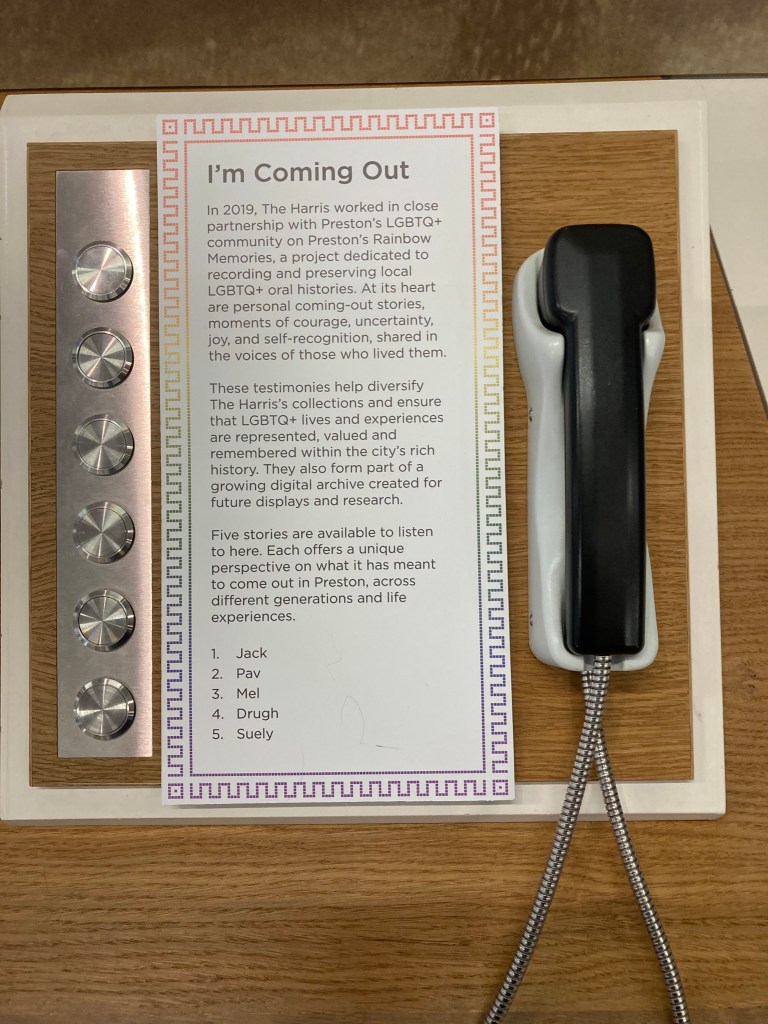
I also enjoyed listening to some “Coming Out” stories.

More photos can be seen here.

Jack Mitchell / Getty Images

Remembering Candy Darling, a Trailblazing Trans Warhol Muse and Unlikely Star

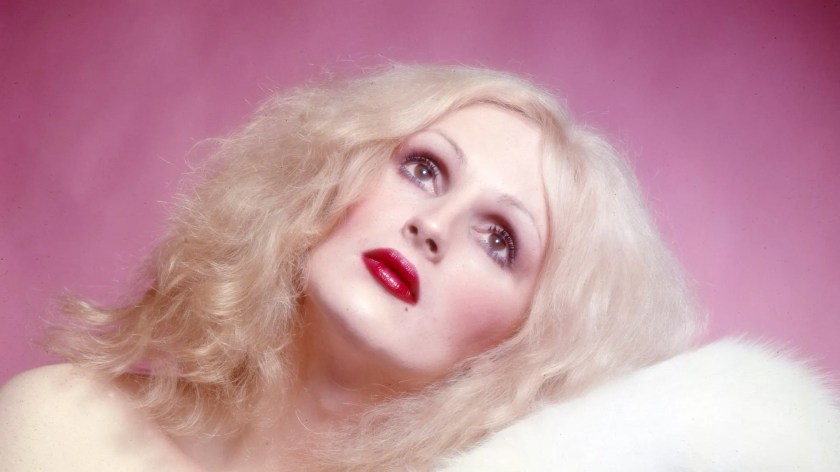
It’s hard to have one favourite photograph of Candy Darling, but mine lives in the New York Public Library’s Billy Rose Theatre Division. In this photo by Kenn Duncan, she’s wrapped in a white fur and a golden yellow dress, her signature blond curls falling loosely around dark eyes and red lips. She’s easily one of the most beautiful performers ever to grace analogue film.

In her time, Candy Darling’s portrait was taken by some of the greatest photographers of their day, including Richard Avedon, Peter Hujar, and Cecil Beaton. As author Cynthia Carr shares in her biography Candy Darling: Dreamer, Icon, Superstar, Candy was apparently only more beautiful in person. But Carr’s biography, the first of its kind about the star, preserves her legacy as not just a great beauty, but as an actress, an artist and a trailblazer of contemporary transgender history.
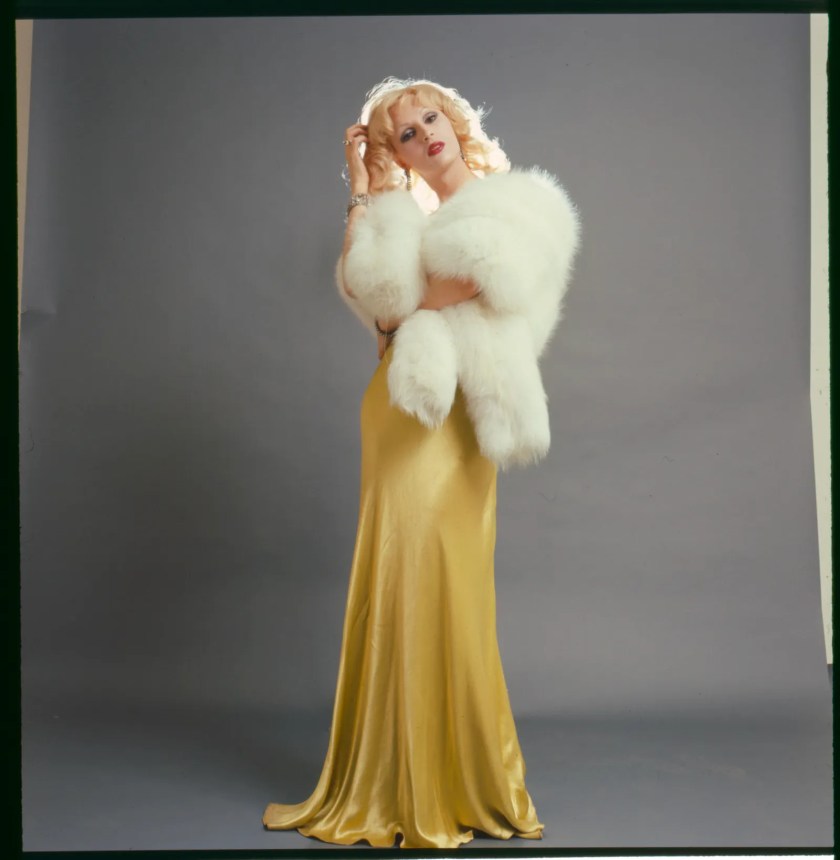
Photo by Kenn Duncan, Billy Rose Theatre Division, The New York Public Library for the Performing Arts

Candy Darling is usually associated with Andy Warhol; she starred in two of the artist’s films, 1968’s Flesh and 1971’s Women in Revolt as one of his Superstars, as his coterie of on-screen performers were known. But she also appeared in theatre and film productions independently as a performer, though she never studied theatre. That Candy lived as a glamorous public persona at all, frequenting exclusive parties and appearing in cool downtown print publications like After Dark and Warhol’s Interview, is astounding for the time. The word “transgender” wasn’t even in use yet – the word “transsexual” was used then, though Candy only referred to herself as a woman and often wrestled with how to describe her gender identity. While she sought to embody a starlet persona on and off screen, she regularly faced discrimination and was often struggling to survive. Carr was initially spurred to write Candy’s biography in part because of these contradictions.

The thing I most admire about her is she seemed to figure out who she was when she was still a teenager and she made this statement: ‘I am me. Do not tell me what I’m supposed to be, accept me for what I am or stay away.’ It was a bold way to live at the time especially when there was so little trans visibility, aside from pioneering trans celebrity Christine Jorgensen. It’s still not that easy to be transgender as we know. In fact, it seems to be getting harder. In spite of the difficulties Candy faced, she sought to live in a world where she didn’t have to and wouldn’t apologise for being herself, something people still seek today.

There were people throughout Candy’s life who heeded her suggestions in both directions. In Manhattan, for example, Candy attended parties with Andy Warhol and high-end uptown socialites, but when visiting her mother’s home in Massapequa Park on Long Island, she was asked to arrive late at night and run into the house so nobody would see her.

Famed playwright Charles Ludlam loved her onstage and wanted her in his Ridiculous Theatrical Company, but thought it might be too difficult for her since he felt her life was so chaotic. While originally from Long Island, as immortalised in Lou Reed’s 1972 song “Walk on the Wild Side,” Candy rarely had a stable place to live. She lived a life of in-betweens, stunted by others’ social and artistic shortsightedness, fear, or what we’d call transphobia today. Where one person wanted to work with her because of her undeniable star power, like legendary playwright Tennessee Williams, for example, a potential producer or co-star might write her off as “a cheap drag queen”.
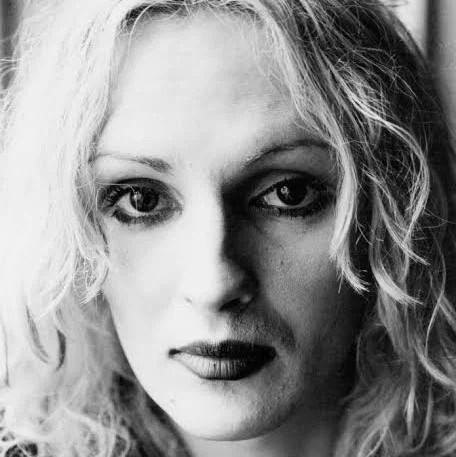
Jack Mitchell / Getty Images

She did eventually work with Williams, however, at one point starring alongside him in his 1972 play Small Craft Warnings. She also had a host of small parts in other films, and a larger supporting role in the 1971 film Some of My Best Friends Are … among the earlier films explicitly about being a queer person in New York. Even in the wake of others’ negativity, though, Candy imagined herself a beacon. “I’ve always felt my spirit was once a movie star,” she said. “I think I may have been Jean Harlow.”

Candy’s story appeared previously in the 2009 documentary Beautiful Darling by the actress’s longtime friend Jeremiah Newton, albeit in a more fragmented way. By Newton’s own admission, the story wasn’t as far reaching as he would have liked, mostly just chronicling their friendship. Newton approached Cynthia Carr to write the biography. She waded through all of the archival material Newton had compiled of Candy’s over the years to make it happen, and then some. Writing the biography took Carr 10 years, in part because Candy never had a long-term regular residence and her personal effects were scattered in so many different places, if they were kept at all.

This can be the nature of recording lives of some queer and transgender historical figures, those who may have faced homelessness and/or joblessness simply because of who they were, like Candy. This was also an era, as Carr writes, before we understood the personal as political. Another reason Candy is interesting is because she had no interest in politics. Candy just wanted to be Candy, to be glamorous and beautiful, to be a star like Jean Harlow or Kim Novak in the golden age of Hollywood, to be loved for who she was. In a life of juxtapositions, she’d succeed in some spheres – becoming a known downtown presence, for example – while also facing extreme challenges, like finding regular work and a place to live.

Carr’s biography sparkles with intricate details about the star’s life, but it’s also an unflinching portrait. Candy wasn’t a saint, as none of us are, and when some narratives about marginalised identities can lean toward exceptionalism, this is one that humanises its subject in all of her light and darkness, in all of her truths and fictions. Carr recognises queer figures from the margins may only get one shot at having their stories told, so it’s important to have all their layers in order to understand someone as a person and not a token.

Candy created a fantasy world where she could be a starlet because that’s a place she could live happily and safely. It was also a place where she had a kind of control over her life and her narrative that she may not have had otherwise. She exercised this down to her last days, when she was in the hospital being treated for lymphoma. She asked Newton to find someone to photograph her, and the resultant image by Peter Hujar is now among the photographer’s most famous. At 29, Candy lies in the hospital surrounded by flowers, her makeup flawless. Hujar took the picture, but it was Candy who made herself immortal.
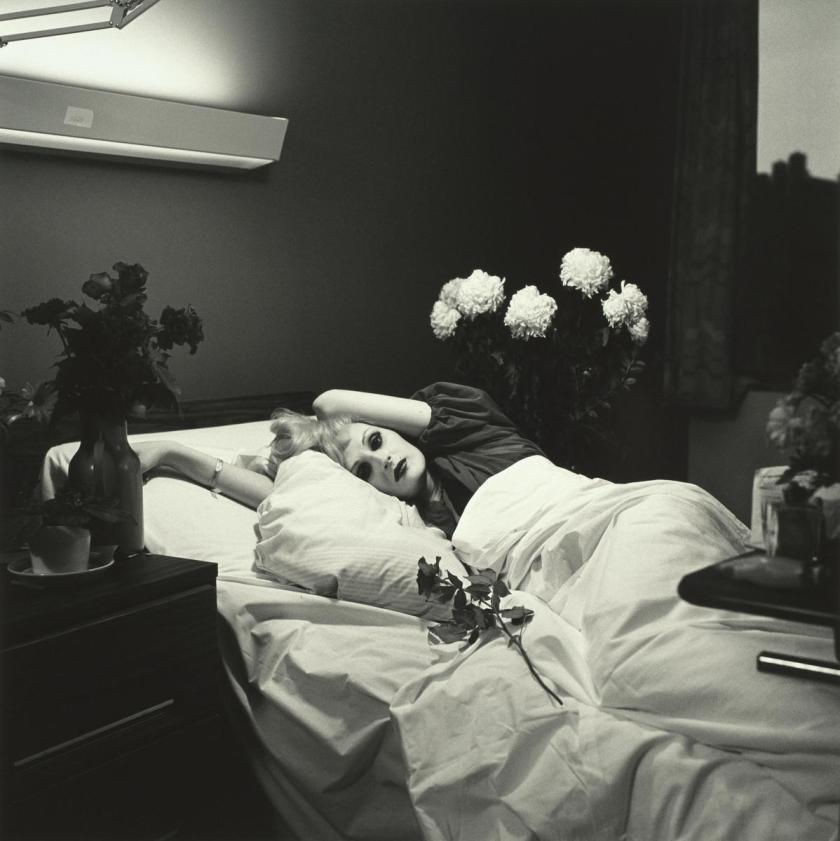
“She was the princess in the fairy tale, completely devoted to the fairy tale because that’s where she was allowed to be the woman she knew herself to be,” Carr writes. “It’s why she didn’t want an acting class. She wasn’t acting. She was living.”

Candy Darling died on 21 March 1974.
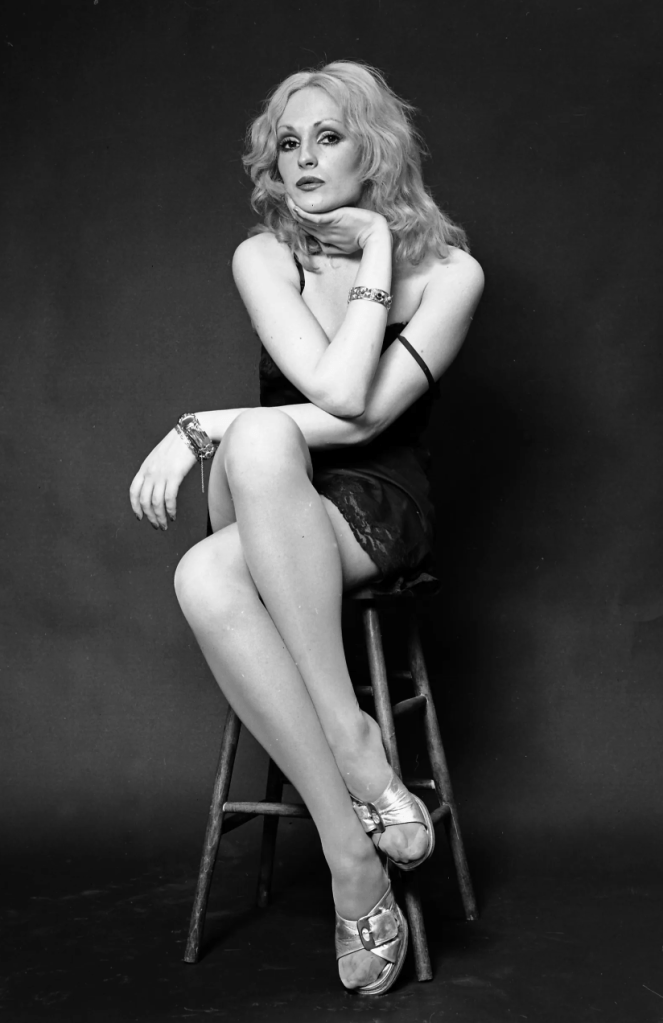
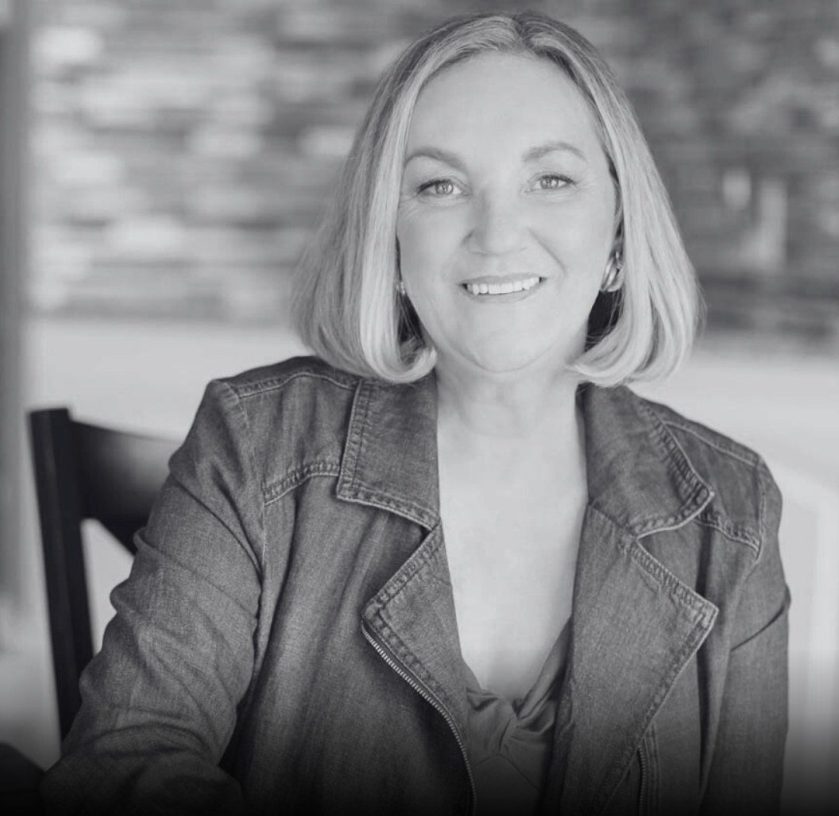
Ruth Coker Burks (born 19 March 1959)

She saw a red bag over a hospital door – and walked in anyway. What she found changed 1,000 lives.

1984. University Hospital, Little Rock, Arkansas.

Ruth Coker Burks, 25 years old, was visiting a friend when she noticed something that made the nurses turn away: a hospital room door marked with a big red biohazard bag.

She watched nurses draw straws to see who would have to go inside.

Ruth had a gay cousin. She understood what that red bag meant in 1984. AIDS. The disease that was killing young men by the thousands. The disease everyone feared touching, breathing near, even speaking about.

She didn’t draw straws. She walked in.

Inside was a skeletal young man, maybe 32 pounds, dying alone. He was terrified. He was in pain. And he kept asking for his mother.

Ruth told the nurses: “Call his mother.” They laughed. “Honey, his mother’s not coming. He’s been here six weeks. Nobody’s coming.”

Ruth convinced them to give her the mother’s phone number. She called one last time. The mother’s response was clear: her son was sinful, already dead to her, and she would not be coming to see him die.

So Ruth went back into that room. She took his hand. And she stayed.

For 13 hours, she held the hand of a stranger while he took his last breaths on Earth. When he died, his family refused to claim his body.

Ruth decided to bury him herself.

She owned hundreds of plots in her family’s cemetery – Files Cemetery – where her father and grandparents were buried. “No one wanted him,” she said, “and I told him in those long 13 hours that I would take him to my beautiful little cemetery, where my daddy and grandparents were buried, and they would watch out over him.”

The closest funeral home willing to cremate an AIDS patient was 70 miles away. Ruth paid out of her own savings. A friend at a local pottery gave her a chipped cookie jar to use as an urn.

She used posthole diggers – the kind you use to build fences – to dig the grave herself.

She buried him, and she said a few kind words, because no priest or preacher would come to speak over the grave of a man who died of AIDS. Ruth thought that would be the end of it.

It was only the beginning.

Word spread across Arkansas: there’s a woman in Hot Springs who isn’t afraid. There’s a woman who will sit with you when you’re dying. There’s a woman who will bury you when your family won’t. They started coming. From rural hospitals across the state. Dying young men, abandoned by the people who were supposed to love them most. Ruth became their hospice.

Over the next ten years, Ruth Coker Burks cared for more than 1,000 people dying of AIDS – most of them young gay men whose families had disowned them.

She buried 40 of them herself in Files Cemetery. Her young daughter would come with her, carrying a little spade while Ruth worked the posthole diggers. They’d have “do-it-yourself funerals” because still, no one would say anything over their graves.

Out of those 1,000 people, only a handful of families didn’t reject their dying children. Ruth would call parents. She’d beg them to come. To say goodbye. To claim their child’s body.

Most refused. “Who knew there’d come a time,” Ruth said, “when people didn’t want to bury their children?”

But while Ruth saw the worst in people – parents abandoning children, churches refusing burials, communities turning their backs – she also saw the best.

She watched gay men care for their dying partners with devotion that would break your heart. “I watched these men take care of their companions and watch them die,” she said. “Now, you tell me that’s not love and devotion.”

And she saw how the community (lesbians and gay men) supported each other – and her. “They would twirl up a drag show on Saturday night and here’d come the money. That’s how we’d buy medicine, that’s how we’d pay rent. If it hadn’t been for the drag queens, I don’t know what we would have done.”

The drag queens fundraised. The gay community rallied. Ruth kept digging graves and holding hands and making sure no one died alone.

By the mid-1990s, better treatments emerged. Education improved. Social acceptance – slowly, painfully – began to shift. Ruth’s work became less necessary. She stopped caring for patients personally.

And then, like so many heroes of the AIDS crisis, Ruth Coker Burks was largely forgotten.

Her story slipped into the background of history, known only to the community she’d served and the few who remembered what Arkansas was like in the 1980s, when dying of AIDS meant dying abandoned.

But Ruth never forgot the 40 people buried in Files Cemetery. The ones in cookie jars and ceramic urns. The ones whose families never came. The ones she’d promised would be remembered.

For years, she dreamed of a memorial. Something to say: this happened. These people existed. They were loved. They mattered. Thanks to a crowdfunding campaign, that memorial is finally being built.

Ruth hopes it will read, in part:

“This is what happened. In 1984, it started. They just kept coming and coming. And they knew they would be remembered, loved and taken care of, and that someone would say a kind word over them when they died.”
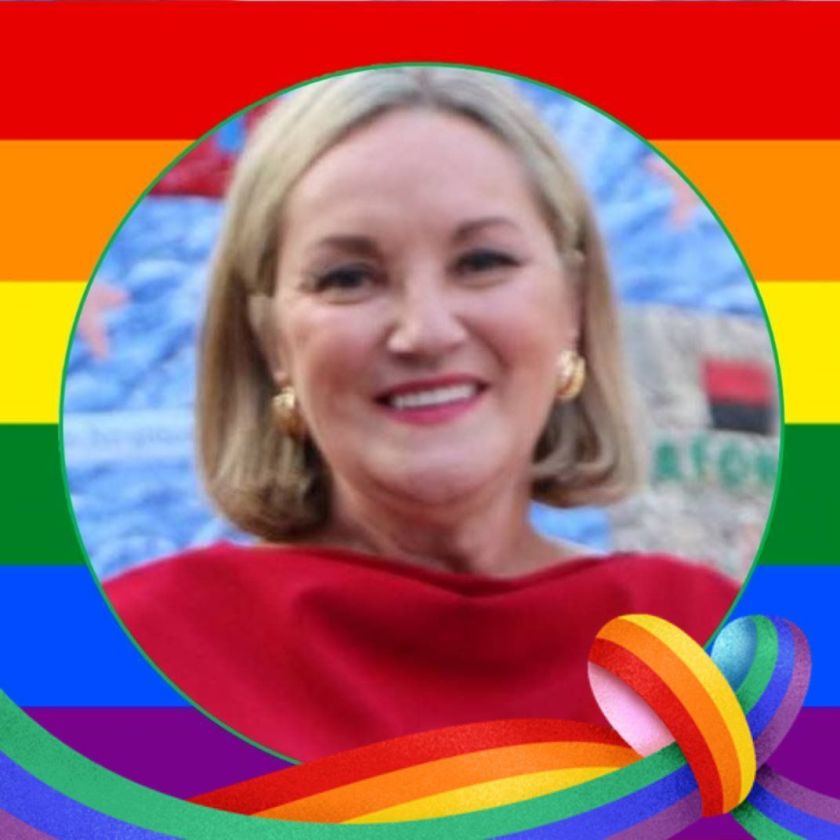
Ruth Coker Burks is in her 60s now. She wrote a memoir in 2020 called “All the Young Men” because she wanted people to know what happened in Arkansas in the 1980s. What happened across America. What happens when fear and prejudice convince people to abandon their own children.

What happens when one person decides to walk through the door everyone else is afraid to open.

She didn’t have medical training. She didn’t have institutional support. She didn’t have much money. She had compassion. She had courage. And she had posthole diggers and a family cemetery. That was enough to make sure 1,000 people didn’t die alone.

The next time someone tells you one person can’t make a difference, remember Ruth Coker Burks.

Remember the red bag on the door.

Remember the 13 hours she stayed.

Remember the 40 graves she dug herself.

Remember the drag queens who organised fundraisers on Saturday nights.

Remember that compassion is stronger than fear.

Remember that sometimes the most powerful thing you can do is simply refuse to let someone die alone.

Ruth saw a red bag over a hospital door in 1984.

She walked in anyway.

1,000 lives were changed because of it.
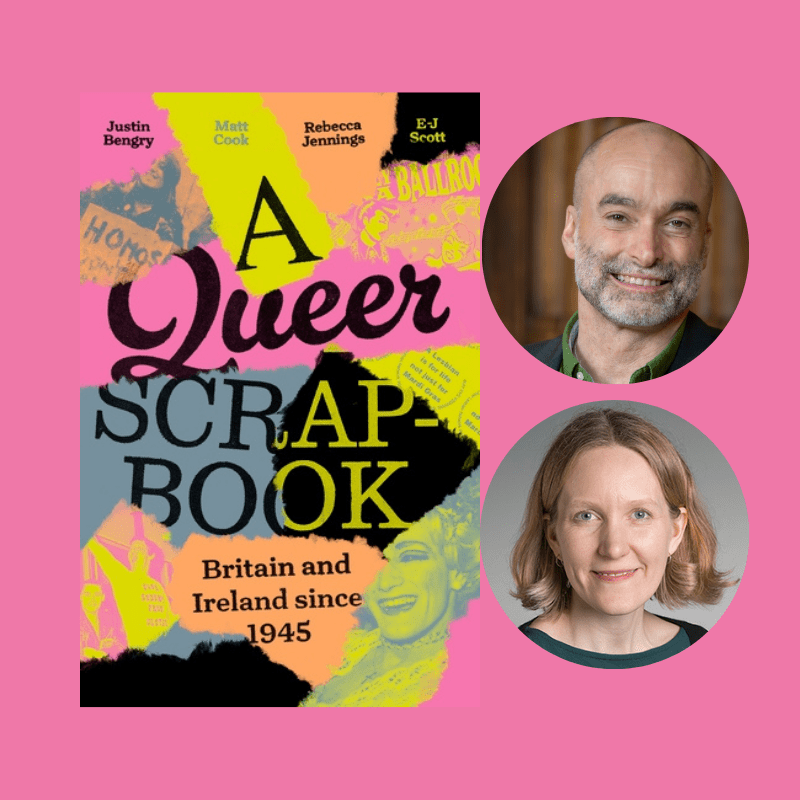
Thursday, 26 March – 6.00pm – 7.00pm – A Queer Scrapbook – Free

Join us for the second instalment of our Salon series, where we will be joined by book editors Rebecca Jennings and Matt Cook in discussion of their new release, A Queer Scrapbook

A Queer Scrapbook offers a treasure trove of LGBTIQ+ histories from across Britain and Ireland. Packed with materials, from interviews and newspaper articles to photographs and flyers, the book explores urban, rural and regional queer life since 1945. 

📅 Thursday, 26 March 2026 – 6.00pm – 7.00pm.


📍 Manchester Histories Hub, Lower Ground Floor, Manchester Central Library / Online.

🎟️ Free to attend.

Book your free ticket here.
Bayard Rustin … Manchester-produced Queer Film Wins BAFTA Award … Landmark Transgender Rights Ruling … Camelia

News

Bayard Rustin

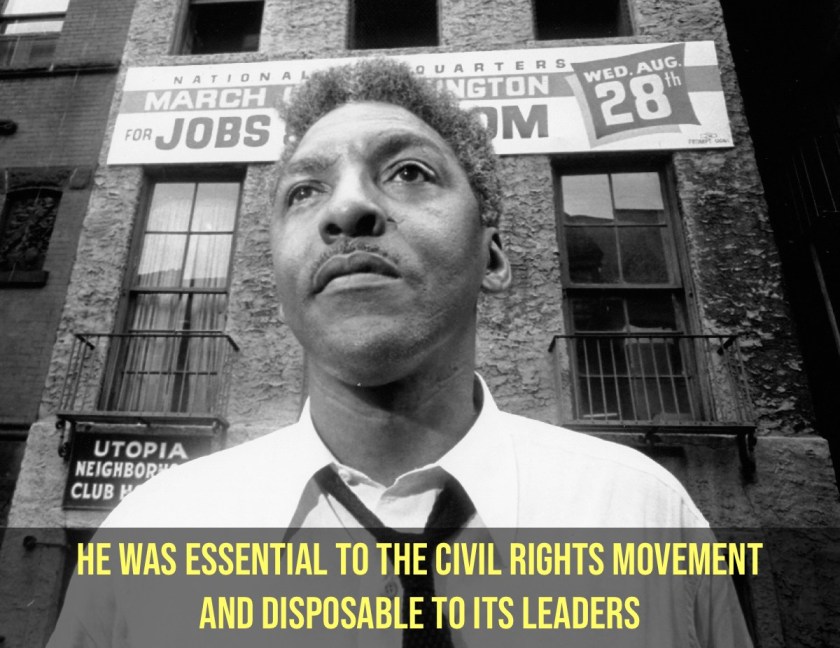
Bayard Rustin was born on 17 March 1912. He built the civil rights movement. But instead of being celebrated, he was hidden like a shameful secret.

He helped plan the 1963 March on Washington. He coached Dr Martin Luther King Jr on nonviolence. He also helped win the labour movement into the civil rights movement. But through it all, he was told to stand offstage, to stay out of sight, and to keep quiet about being gay.

He did the work anyway. Bayard Rustin was the chief architect of the 1963 March on Washington.

He believed mass protest only worked if workers were involved. He pushed civil rights leaders to see economic justice as non-negotiable, not a side issue. That belief came straight from labour organising.

Rustin helped build the first major Black labour union. He understood how organised workers could shut down injustice faster than speeches ever could. He argued that racism thrived where poverty was protected. If you wanted real freedom, you had to confront both.

That made him dangerous.

It also made him inconvenient to people who needed him but did not want to defend him. Rustin was arrested in 1953 for having sex with another man. Opponents waved that charge like a warning label. Allies treated it like a reason to sideline him.

After a congressman threatened to falsely accuse Rustin and Martin Luther King Jr of being “gay lovers,” MLK forced Rustin out of his inner circle and leadership roles.

Three years later, he asked Rustin to organise the March on Washington. Rustin planned it but had to stay in the background, ensuring everything ran smoothly.

Later in life, Rustin wore his sexuality more openly. He spent his final decade advocating for gay rights, insisting the movement belonged inside civil rights, not outside it.

In 1977, he met Walter Naegle, a younger man who became his partner and caregiver. The law did not recognise their relationship, and marriage was not an option. So they found a workaround that says everything about the era.

Rustin adopted Naegle. Not as a metaphor or a gesture, but as a legal act. It was the only way they could have a family protected by law, including access to each other in a hospital, inheritance and basic dignity. Love translated into paperwork. That was love under constraint.

Rustin died in 1987. He never saw marriage equality or federal labour protections catch up to his vision.

But his argument still holds: civil rights without economic justice is unfinished business. LGBT+ freedom without material security is fragile.

Manchester-produced queer film wins BAFTA award

Two Black Boys in Paradise was written by Ben Jackson (left), Dean Atta (centre), and by Baz Sells (right)

An animated film produced in Manchester has won a BAFTA. Two Black Boys in Paradise picked up top honours at 19 festivals, including the Oscar-qualifying Woodstock Film Festival in New York and the BAFTA-qualifying festivals Thessaloniki Animation Festival and Encounters Film Festival.

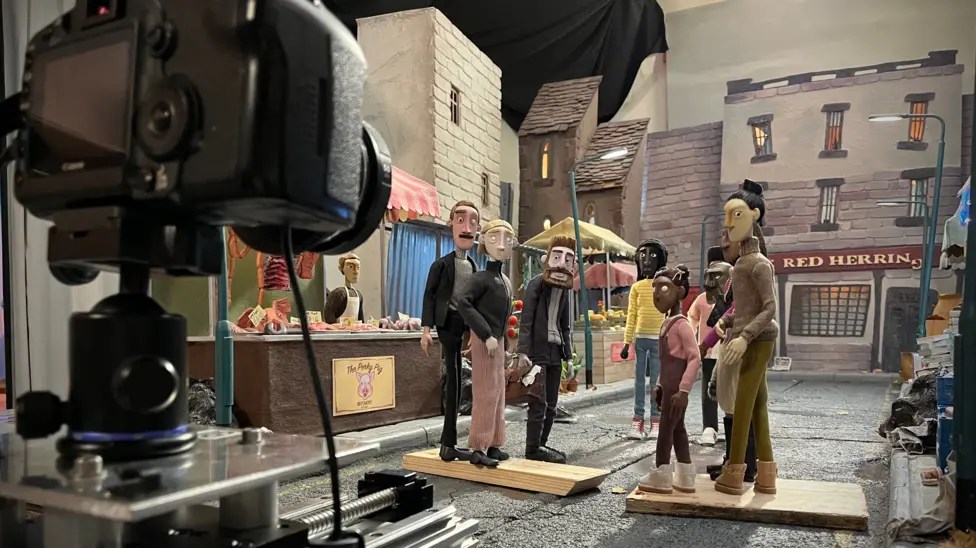
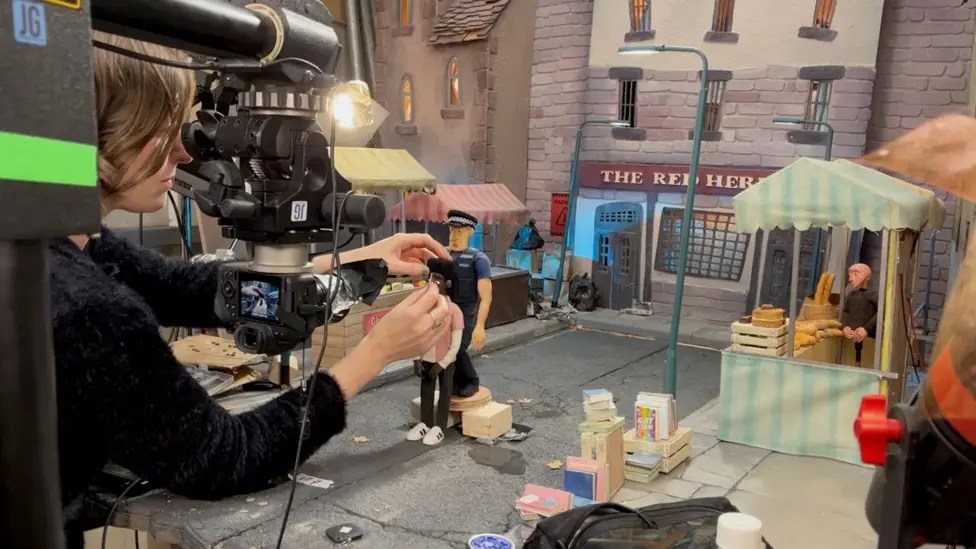
Two Black Boys in Paradise, which was filmed in a warehouse in the Cheetham Hill area, was awarded the 2026 BAFTA Film Award for British Short Animation.

Filmmakers Ben Jackson, Baz Sells and Dean Atta were presented with the BAFTA for the nine-minute film – based on a poem by award-winning writer Dean Atta – at the awards ceremony in London.

Producer Jackson said winning the award was “absolutely everything beyond his wildest dreams”. “So many people gave so much to it over five years,” he said. “So for everyone involved, I’m just really proud and really happy.”

Two Black Boys in Paradise has won multiple awards since its release

Two Black Boys in Paradise was produced by Manchester-based One6th Animation – a production company founded by Jackson and Sells in 2018.

Described by Jackson as a “genuine passion project” for both him and director Sells – the film took five years to complete and has won 22 international awards since its release in November 2025.

The stop-motion short follows Edan, 19, and Dula, 18 – two young black boys on a journey toward self-acceptance.

Inspired by Atta’s poem, There is (Still) Love Here, the film explores the themes of race, sexuality and identity – and tackles homophobia and racism through a tender, hopeful lens.

The plot follows the teens’ love for each other and their refusal to conceal it, following their journey to a “paradise free from shame and judgement”, as described by One6th Animation.

The film is a ‘celebration of queer love and queer black love’

Speaking of their win, poet and co-writer Dean Atta said he feels “incredibly proud of the whole team”.

He added: “I’m glad we could bring so many people with us today to celebrate this journey, which has been the ride of a lifetime and I’m really grateful to Baz and Ben for taking me on this journey with them.”

Film director Sells said: “The recognition is incredibly welcome because so many people worked so hard.

“There were a lot of tough challenges that were only overcome because we had such an extraordinary crew.

“I’m so proud of Ben and Dean for bringing their stories to the screen and allowing us collectively to share it with the world.”

Top EU court issues landmark transgender rights ruling

On 12 March 2026 the European Union’s highest court ruled that member states must allow transgender people to legally change their name and gender on ID documents.

The EU Court of Justice in Luxembourg issued the ruling in the case of “Shipova,” a trans woman from Bulgaria who moved to Italy.

“Shipova” had tried to change her gender and name on her Bulgarian ID documents, but courts denied her requests for nearly a decade.

A ruling the Bulgarian Supreme Court of Cassation issued in 2023 essentially banned trans people from legally changing their name and gender on ID documents. Two Bulgarian LGBT and intersex rights groups – the Bilitis Foundation and Deystvie – and ILGA-Europe and TGEU – Trans Europe and Central Asia supported the plaintiff and her lawyers.  

“Because her life in Italy also depended on her Bulgarian documents, the lack of documents reflecting her lived gender creates an obstacle to her right to move and reside within EU member states,” said the groups in a press release. “This mismatch between her gender identity and expression and her gender marker in her official documents leads to discrimination in all areas of life where official documents are required. This includes everyday activities such as going to the doctor and paying for groceries by card, finding employment, enrolling in education, or obtaining housing.” 

Denitsa Lyubenova, a lawyer with Desytvie, in the press release said the case “concerns the dignity, equality, and legal certainty of trans people in Bulgaria.”

TGEU Senior Policy Officer Richard Köhler also praised the ruling “Today, the EU Court of Justice has taken an important step towards a right to legal gender recognition in the EU,” said Köhler. “Member states must allow their nationals living in another member state to change their gender data in public registries and identity cards to ensure they can fully enjoy their freedom of movement. National laws or courts cannot stand in their way. Thousands of trans people in the EU are breathing a sigh of relief today.”

Lynn Oddy

It would have been Lynn’s birthday on 13 March.

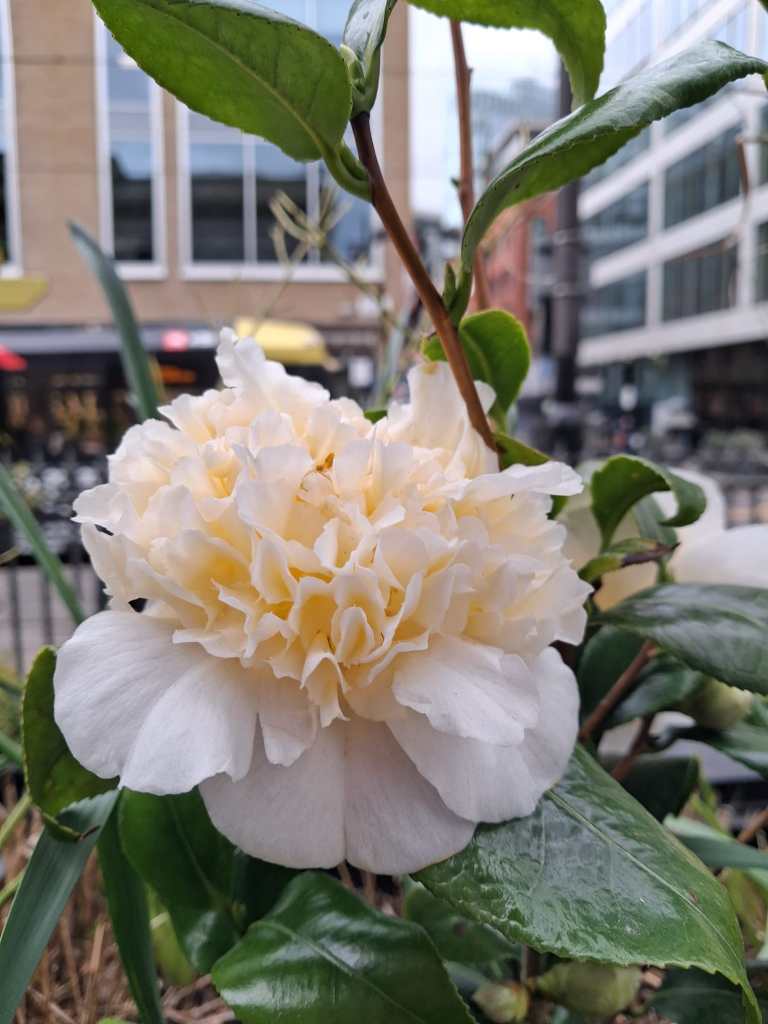
The Camelia we got in memory of Lynn is in flower now. It’s in the Jarman Garden at the front of Manchester Art Gallery on Mosley Street. The garden is maintained by six Pride in Ageing volunteers (all of whom are also Out In The City members).

National Memorial Arboretum … Chaps Out Culture … Publishing Queer Berlin

News

The National Memorial Arboretum

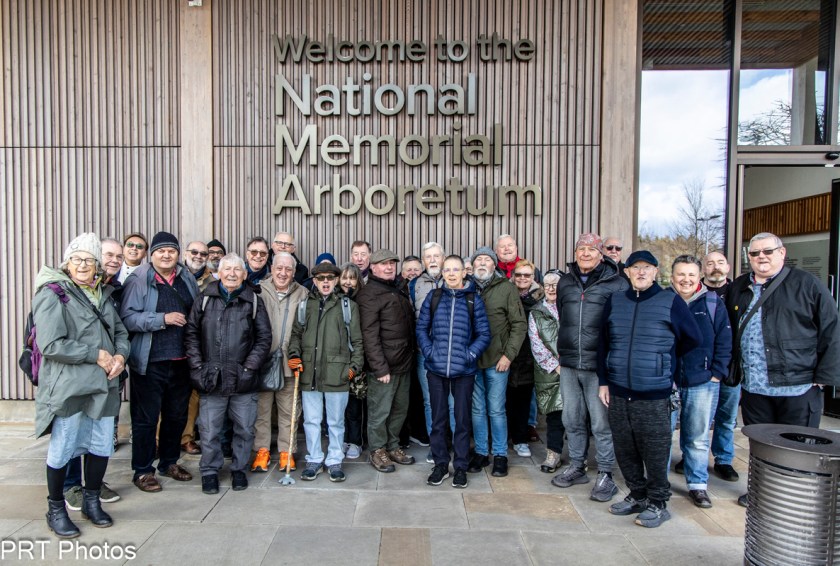
The National Memorial Arboretum is a British site of national remembrance at Alrewas, near Lichfield, Staffordshire.

The National Memorial Arboretum is a space where everyone can celebrate lives lived and remember lives lost.

A beautiful and inspiring place, the 150-acres of the Arboretum form a living landscape, a home for more than 400 memorials waiting to be discovered.

Tales of bravery shown in the most extraordinary of times, selfless service and sacrifice, camaraderie and care are represented by the memorials. From the Armed Forces and Emergency Services to civilian organisations that supported our Nation in times of need, people from all walks of life are represented by the memorials, with designs that are rich in symbolism reflecting those they remember.

No More Shame

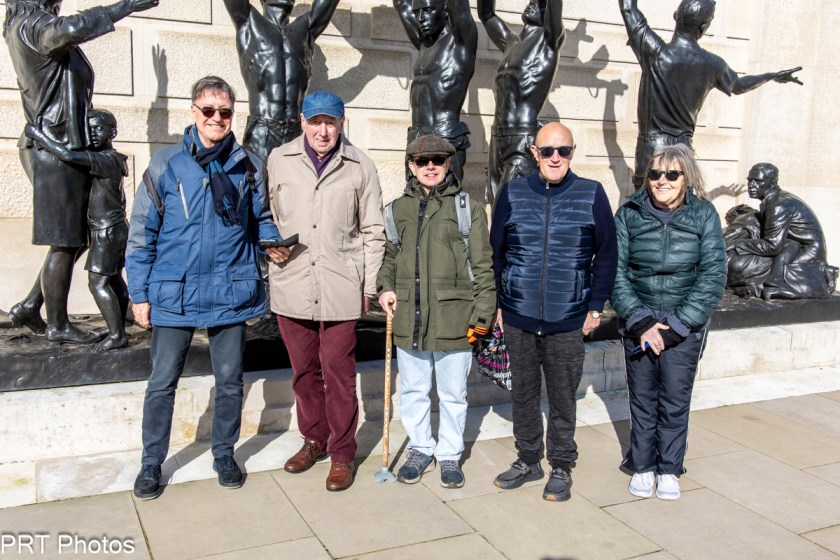
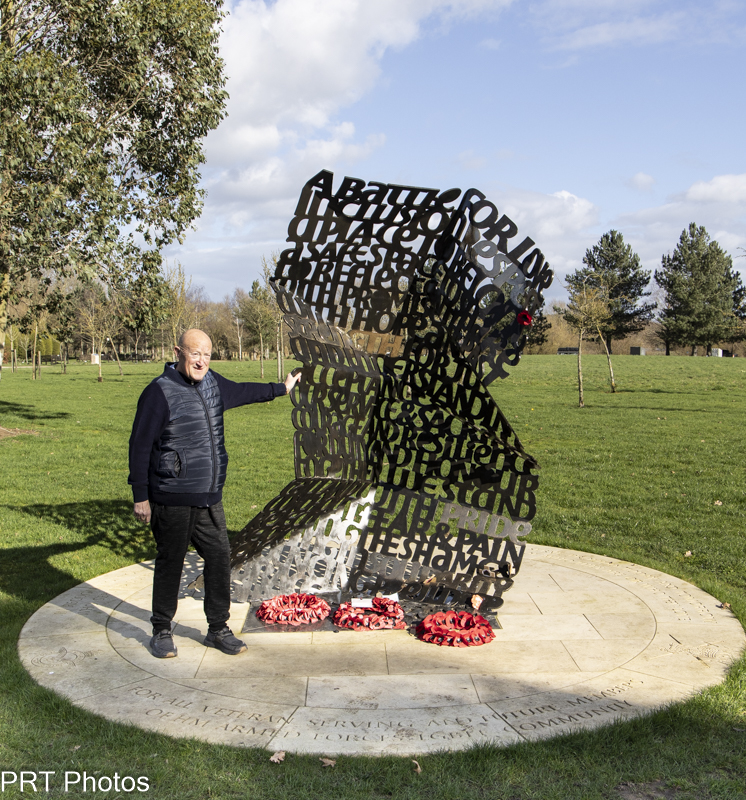
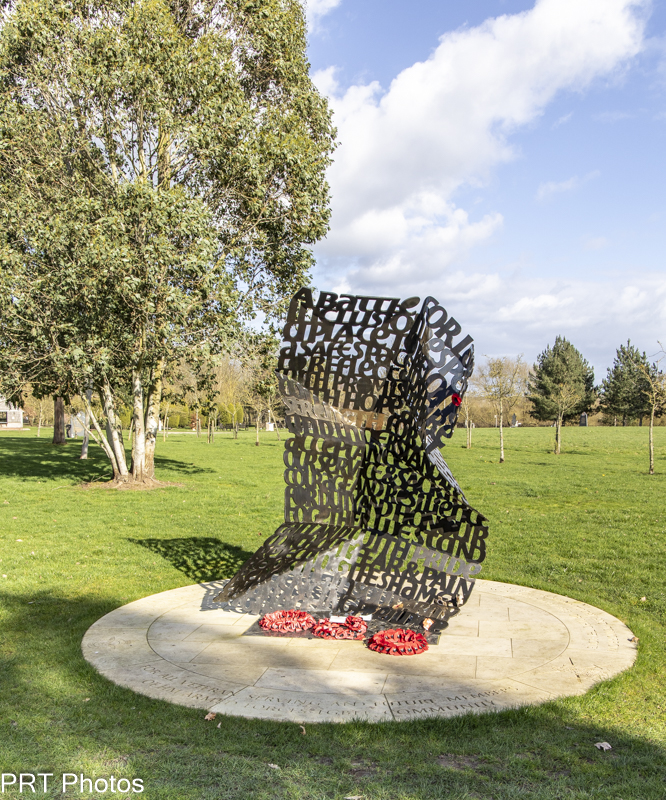
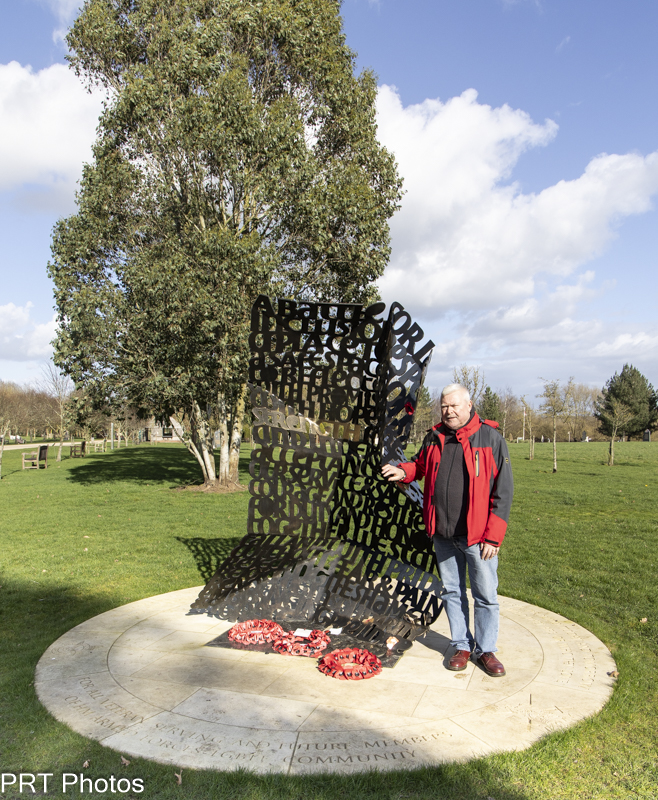
One of the Memorials is a sculpture, named An Opened Letter, which was unveiled by King Charles III to commemorate LGBT+ veterans affected by the ban of same-sex couples in the armed forces until 2000. It was his first official engagement in support of the LGBT+ community.

The sculpture resembles a crumpled piece of paper containing words from personal letters which were used as evidence to incriminate people.

During the time of the ban, those who were gay – or were perceived to be – faced intrusive investigations, dismissal and in some cases imprisonment.

More photos can be seen here.
Chaps Out Culture

In this episode of Chaps Out Culture, host Grant Philpott is joined again by guest Norman Goodman who recommends Bi Community News, a quarterly magazine dedicated to bisexual people across the UK and beyond.

Norman describes the publication as essential reading for anyone who is bisexual, especially those who are just coming out. With community listings, advice, personal stories, legal guidance, health awareness, adoption information, and features on bisexual lives, Bi Community News plays a vital role in increasing bisexual visibility and representation in a world where bi voices are often overlooked.

The episode explores why bisexual representation matters, how media can help people feel seen and understood, and why having dedicated bi spaces is so important for mental health, connection, and confidence. Norman also shares his wider LGBTQ+ cultural highlights, including film recommendations and reflections on the power of storytelling to change lives.

If you’re passionate about queer culture, LGBTQ+ history, meaningful conversations, or uncovering hidden cultural treasures, this episode is made for you.

Publishing Queer Berlin

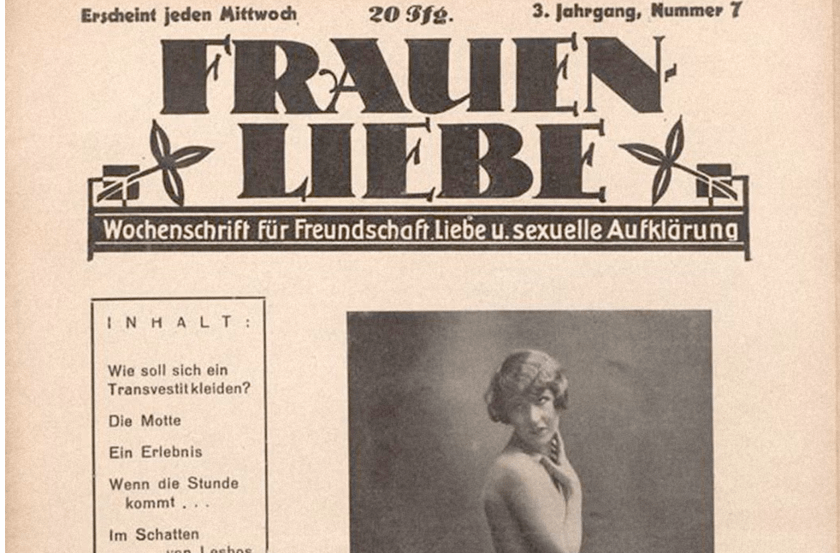
A cover of Frauen Liebe, 1928 via Wikimedia Commons

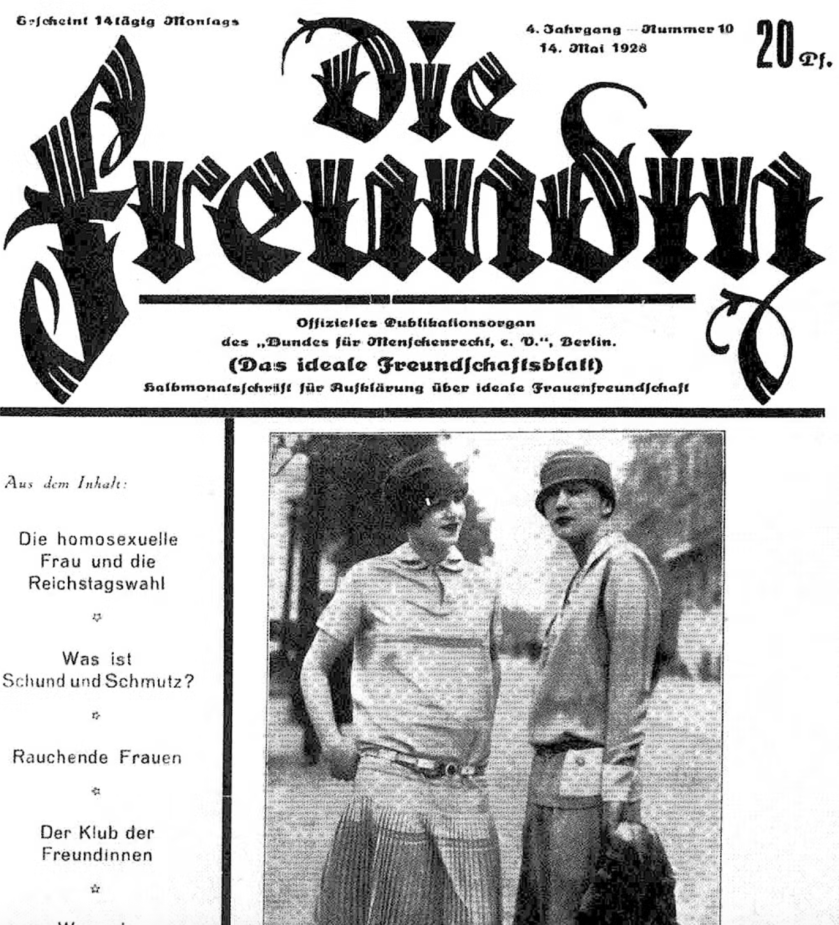
Berlin in the 1920s was ablaze with sexual and gender freedom. Magazines at newsstands boasted covers featuring people who were transgender and clad scantily. Their headlines touted stories on “Homosexual Women and the Upcoming Legislative Elections,” and offered, on occasion, homoerotic fiction inside its pages.

Publications like Die Freundin (The Girlfriend); Frauenliebe (Women Love, which later became Garçonne); and Das 3Geschlecht (The Third Sex, which included writers who might identify as transgender today), found dedicated audiences who read their takes on culture and nightlife as well as the social and political issues of the day. The relaxed censorship rules under the Weimar Republic enabled gay women writers to establish themselves professionally while also giving them an opportunity to legitimise an identity that only a few years later would be under threat.

“Reading stories about other queer women was such a powerful way that women came to terms with their own queerness,” Laurie Marhoefer, a professor of history at the University of Washington, said. “That was super important for women more than for men because men would just have more opportunities to find other queer people.” Marhoefer, who first learned of these publications as a graduate student in Berlin in the 2000s, is part of a growing group of academics focusing on this oft-forgotten moment in German history.

The primary source documents that miraculously survived the period of the Third Reich and subsequent and repressive Cold War years provide a rich and complicated picture.

There were some twenty-five to thirty queer publications in Berlin between 1919 and 1933, most of which published around eight pages of articles on a bi-weekly basis. Of these, at least six were specifically oriented toward lesbians. What made them unique is the space they made for queer women, who had traditionally been marginalised on account of both gender and sexuality, to grapple with their role in a rapidly changing society.

An issue of German lesbian periodical Die Freundin, May 1928 via Wikimedia Commons

In these interwar years in Germany, queer and transgender identity became more accepted, in large part thanks to the work of Magnus Hirschfeld, a Jewish doctor whose Institut für Sexualwissenschaft focused on issues of gender, sex, and sexuality. At the same time, women in Germany were making strides toward greater independence and equity; they gained the right to vote in 1918, and feminist organisations like Bund Deutscher Frauenvereine cultivated space for women in public spheres, encouraging their advancement in politics. The German Communist Party created the Red Women and Girls’ League in 1925 to attract more women and working-class people, particularly through organising factory workers.

More generally, German women were becoming increasingly empowered. LGBT people – including women – rallied around the abolishment of contemporary sodomy laws. This struggle created a wider climate of publication, activism, and social organisation that was much more embracing of different types of queer and trans lives.

Magazine fiction of the time challenged some of the restrictions of class and race in its love stories. A 1932 issue of Die Freundin, for instance, includes a story about a relationship between the German Töpsdrill and the Moroccan Benorina. Exoticising of the “other” was common; In another piece of fiction published in Ledige Frauen (Single Women) in 1928 about Helga, a German coffee importer, who falls for Nuela, a servant from Java. Notwithstanding the white, sometimes racist perspectives of the narrators, such stories offered compelling renderings of women-centred utopias.

Outside of fantasy, these publications also created a space for readers to assert themselves in the real world through personal ads and event listings. These included cream puff eating contests, ladies and trans balls, and lake excursions on paddle steamers. In fact, aspects of lesbian culture also seeped into the mainstream, particularly when it came to fashion, with a rise in the popularity of short haircuts, straight skirts, and pantsuits. There was little difference between the imagery in mainstream fashion magazines and the masculinised aesthetic eroticised in the queer ones. The hint of queerness in the mainstream was sexy and fascinating, but also a bit scary and potentially off putting. A popular element in lesbian publications, the monocle was similarly charged, and a queerly coded, quite masculine symbol of owning the gaze.

Such sartorial choices were in keeping with debates in the lesbian magazines of the time around the extent that masculinity might be seen as hierarchically superior to that of the feminine lesbian women. Moreover, these debates foreshadowed the butch/femme debates of the 1980s and 1990s.

Style was particularly significant for trans women and men who in the Weimar Republic defined themselves with a variety of terms: both as transvestites and masculine women who wore men’s clothes but identified as women. Trans people were given space in both their own magazines and even in some of the lesbian ones, highlighting a sense of cross-identity camaraderie. Die Freundin had a regular trans supplement highlighting these voices.

In a 1929 issue, a writer named Elly R criticised the treatment of trans people in mainstream media, referencing sensational coverage of men wearing their wives’ wedding dresses. “Everywhere in nature we find transitional forms, in the physical and chemical bodies, in the plants and the animals,” she wrote. “Everywhere one form passes into another, and everywhere there is a connection. Nowhere in nature is there a delimited, fixed type. Is it only in man that this transition should be missing? As there is no fixed form in nature, a strict separation between the sexes is also impossible.”

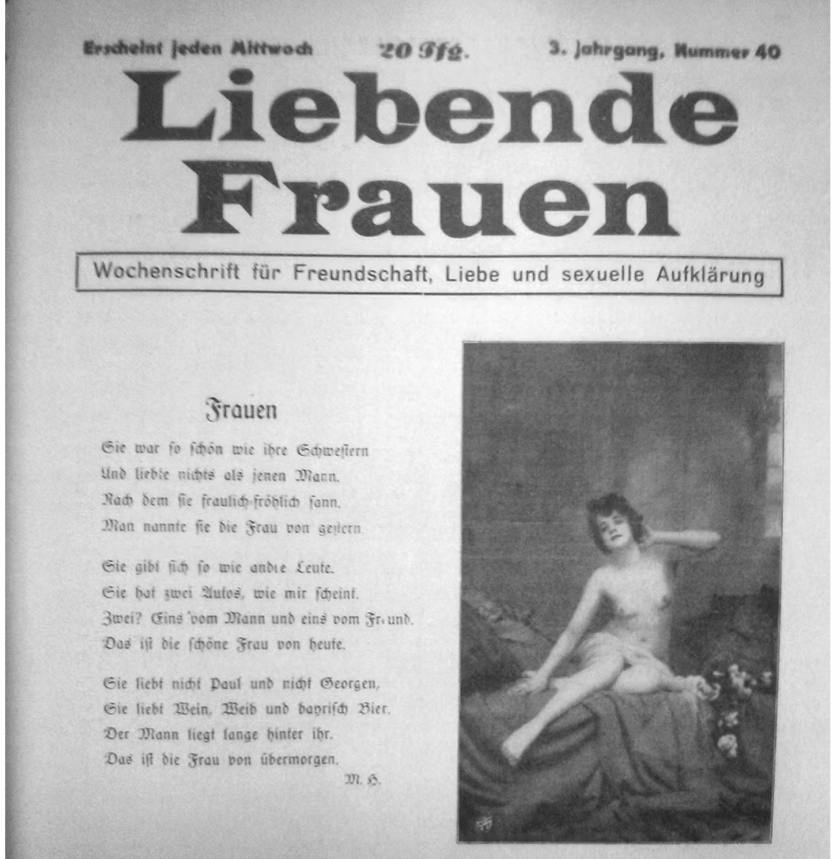
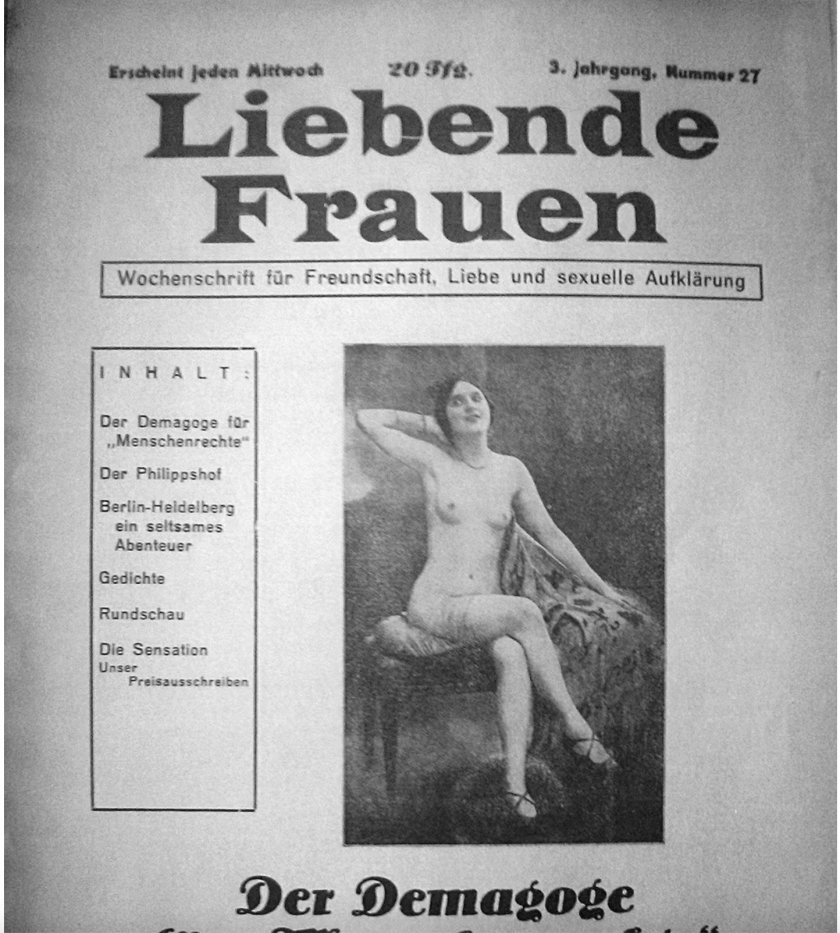
From the lesbian magazine Liebende Frauen, Berlin, 1928 via Wikimedia Commons

 These magazines were resilient, a testament to the strength of the communities they served. Still, they faced challenges. The 1926 Harmful Publications Act was intended to impose moral censorship on the widespread pulp literature sold at kiosks and newsstands, including the queer publications, which often featured nude photographs.

The Catholic and Protestant Churches as well as public morality organisations and conservative politicians led the fight against what they called “trash and filth literature.”

Despite their relative progressivism, these publications also represented a rather narrow, bourgeois segment of the German population. Even if women had greater access to education and publishing opportunities, the women who enjoyed this greater access were largely urban elites. The plight of sex workers was largely excluded from consideration.

These magazines gave precious little foresight into what was to come in Germany: the attempted extermination of all who did not fit the Aryan ideal. That, of course, included lesbians.

As feminist and queer activism grew in Germany in the 1970s, so too did interest in the Weimar period. In 1973, Homosexual Action West Berlin began to collect flyers, posters, and press releases in an effort to create a comprehensive archive of lesbian history. The group eventually morphed into Spinnboden, Europe’s largest and oldest lesbian archive, with more than 50 thousand items in its holdings, magazines among them.

Katja Koblitz, who runs the archive, says the existence of these lesbian periodicals is invaluable. “These magazines were in one part a sign of the blossoming and of the richness of the lesbian subculture in these days,” she said. “Reading these magazines was a form of reassurance: Here we are, we exist.”

Golden Age Big Band … Ethel Smyth … El Daña … Manchester … Manchester United

News

Golden Age Big Band

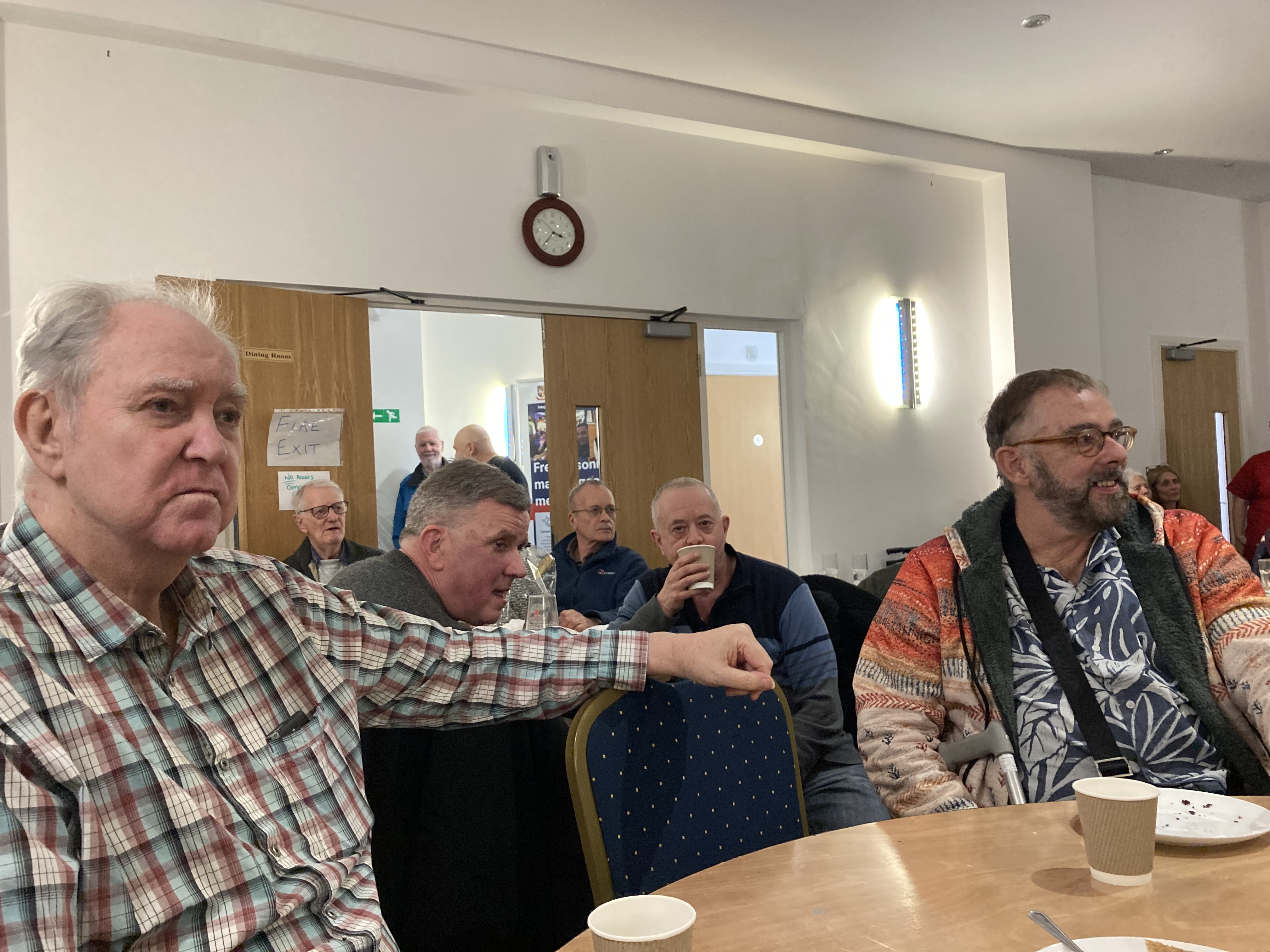
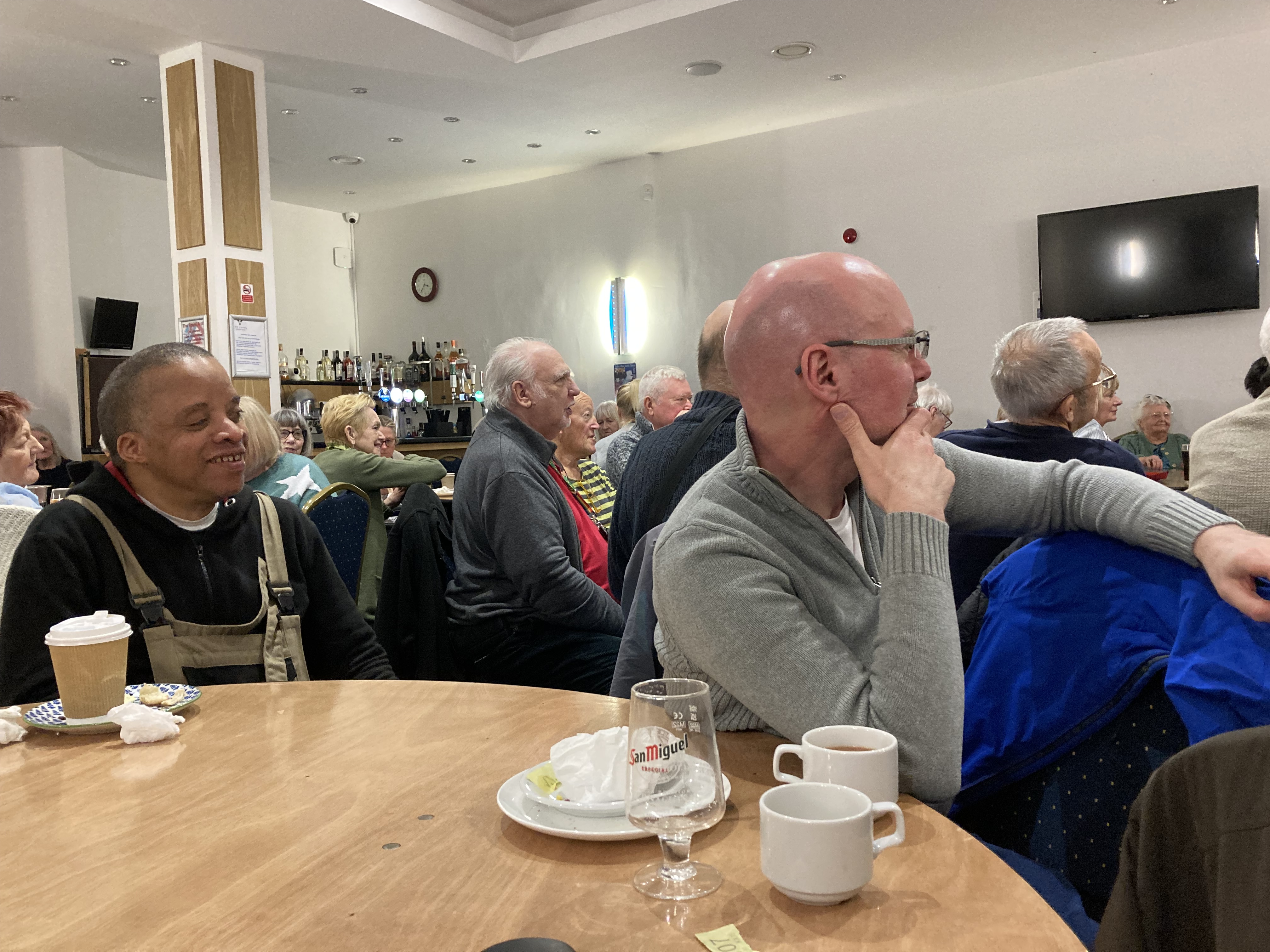
The John Alker club, where the Golden Age Big Band have performed previously, have temporarily closed their doors … but the show must go on!

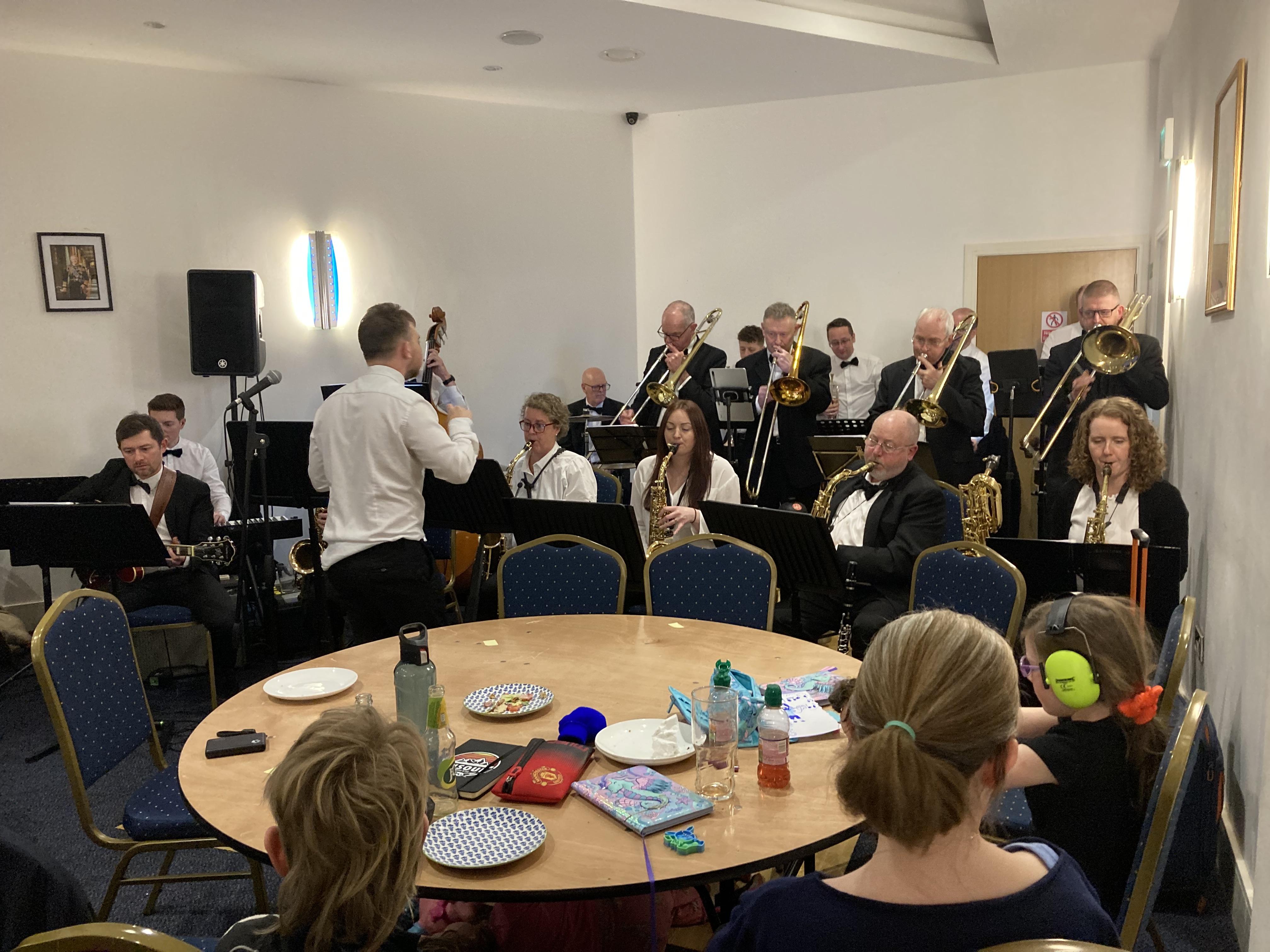
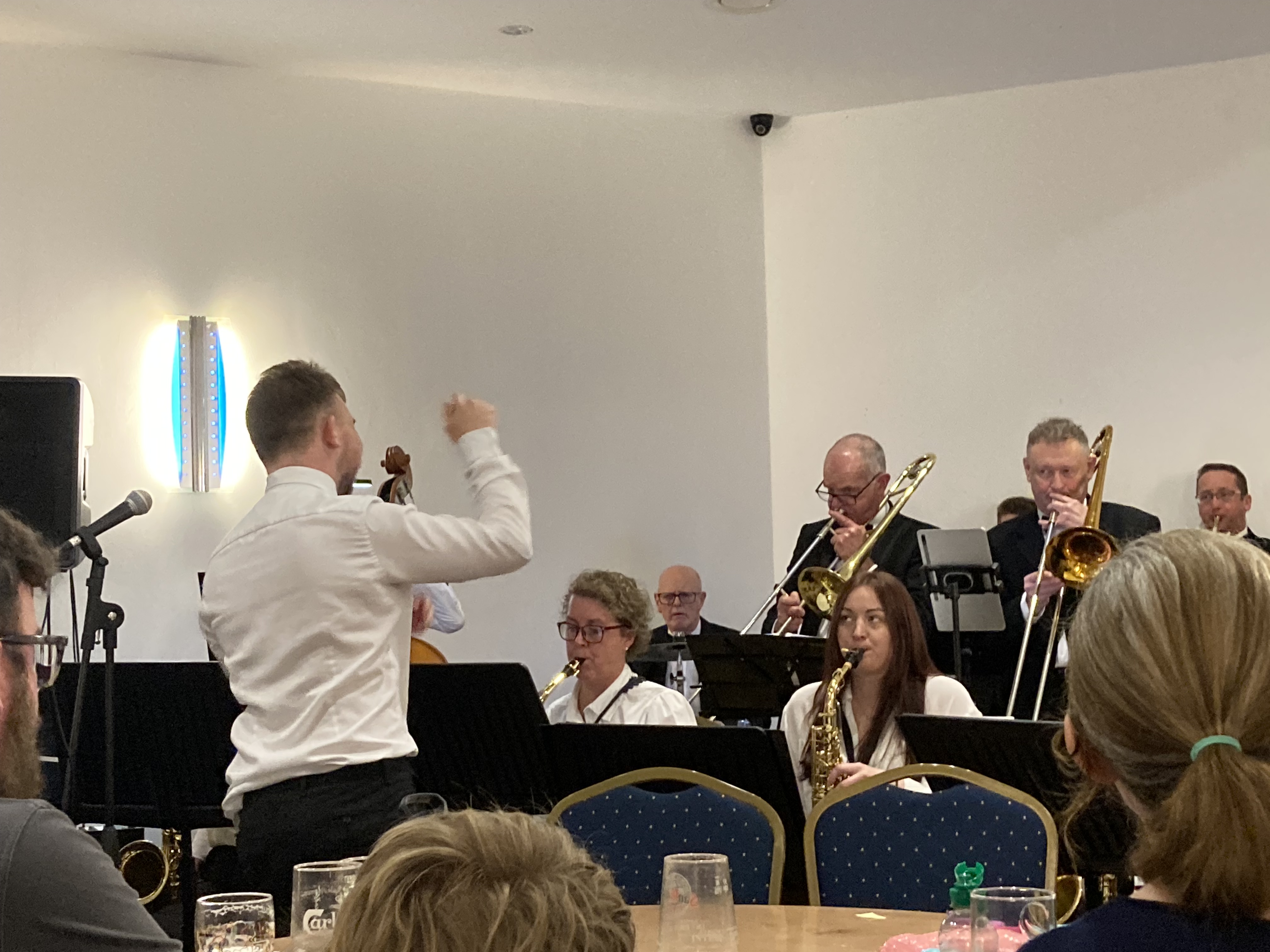
A new location – ”The Venue / Lounge 1881” – was found in Urmston at short notice! The room was a lot smaller than the club, but it made for a terrific atmosphere and an amazing afternoon.

Joe Cockx with his 17 piece band performed songs by Dean Martin, Glenn Miller, Frank Sinatra and many more from the “golden age” of big bands.

During the interval we tucked into sandwiches and cakes.

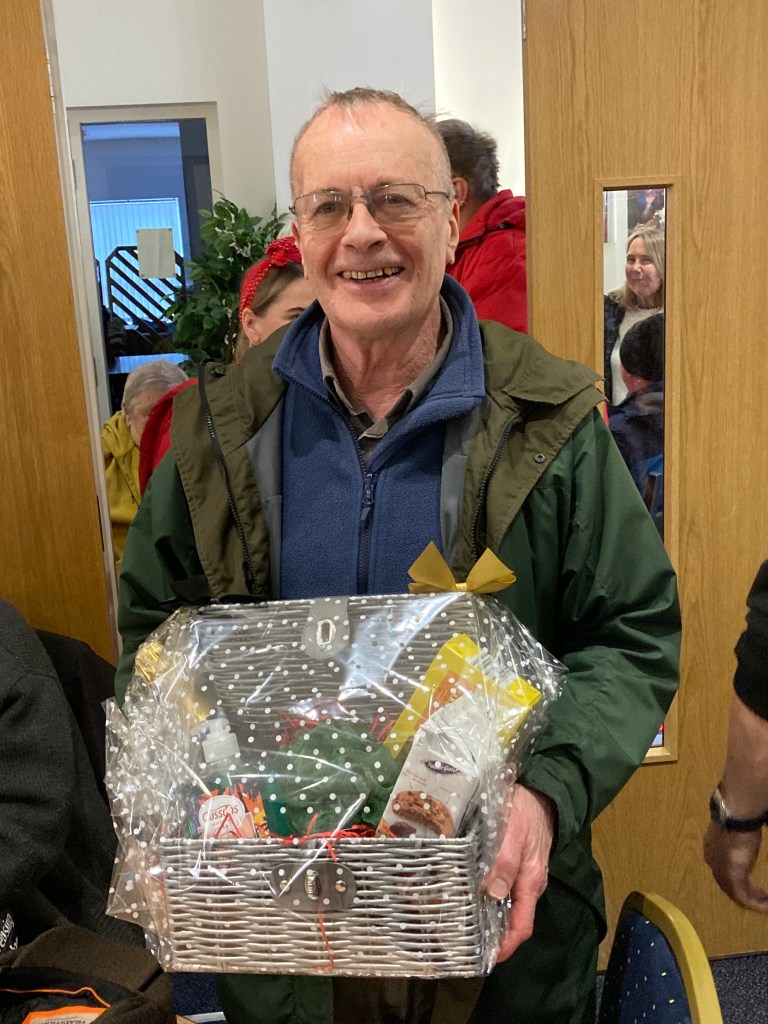
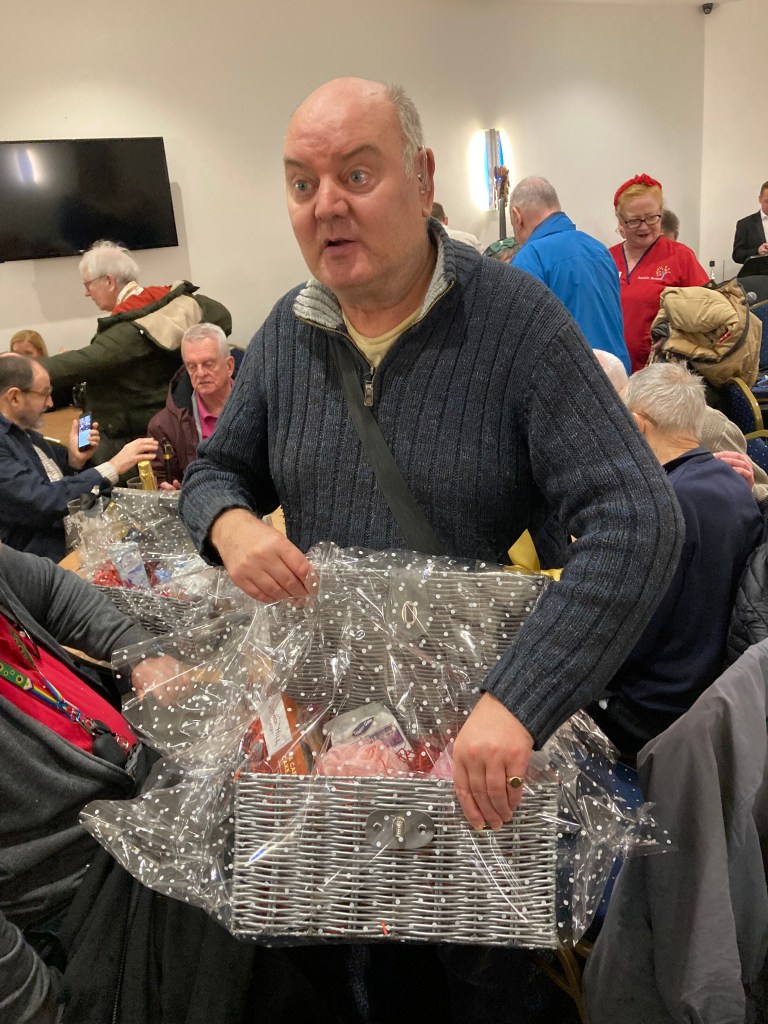
There were three hampers as raffle prizes and all the prizes were won by members of Out In the City!

The big band swing is one of our favourite outings, so no doubt we will catch up with them again soon.

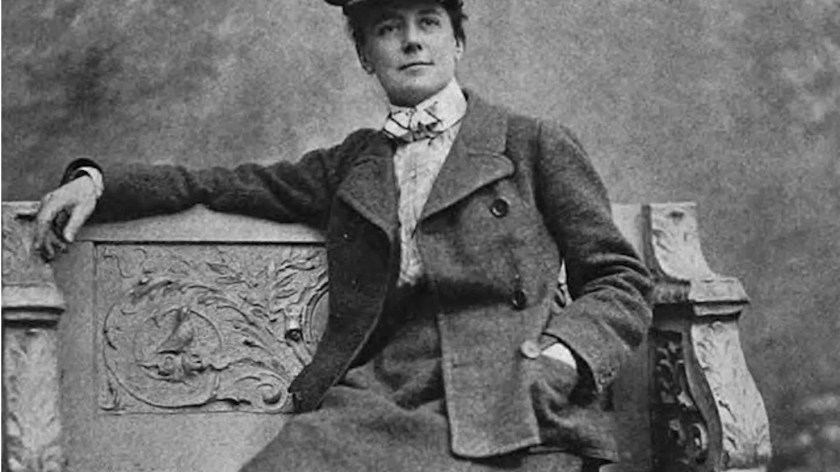
Ethel Smyth in 1916 | Public Domain via Wikimedia Commons

The suffragette known for scandalous affairs, bold protests and writing famous operas

In March 1912, Ethel Smyth stood side by side with activist Emmeline Pankhurst outside the office of MP Lewis Harcourt, a well-known anti-suffragist. Calmly and with accuracy, the two women threw a series of bricks through his office windows, sending shards of glass flying everywhere. 
This calculated action was part of a coordinated campaign whereby over 100 suffragettes smashed windows across London. Nearly all were arrested and dragged away while screaming and shouting suffragette slogans. Among them was Smyth, who was sentenced to two months in Holloway prison. When her friend Thomas Beecham visited her there, he recalled that the women exercising in the courtyard were marching and singing with Smyth, who conducted them from her cell window using her toothbrush. 

Smyth’s name rarely comes up in conversations about suffragettes. Yet in the 1910s, she was deeply involved in every aspect of women’s fight for the right to vote in Britain. Tall and often donning tweed suits and men’s hats while riding her bicycle, she was an eye-catching figure on the streets of London. In the words of fellow suffragist and writer Sylvia Pankhurst, there was “little about her that was (traditionally) feminine.” Nevertheless, she attracted admirers of both sexes wherever she went. 

Smyth transcended social and gender norms almost from birth. A talented and passionate musician, she had her ambitions and work dismissed as frivolous because she was a woman.

Smyth was also an unapologetically lesbian woman who had passionate affairs with numerous women, including the Irish novelist Edith Somerville and the royal courtier and women’s rights advocate Lady Mary Ponsonby. She also developed an intimate friendship with Virginia Woolf, though it is unclear if the relationship ever became more than that. Woolf once wrote of Smyth, “Let me fasten myself upon you, and fill my veins with charity and champagne.” Others with whom she was intimately involved included the author Violet Trefusis, the American painter Romaine Brooks, and the artist Renata Borgatti, although once again, it is not clear whether the attachments became physical.

Defying the expectation of the age, Smyth wrote opera and chamber music, which was far beyond the scope of the composition of parlour music usually available to women. When she met Pankhurst in 1910, she turned her talents to supporting the suffragette cause, composing music, writing essays, and, of course, smashing windows. 

Resisting the “male machine”

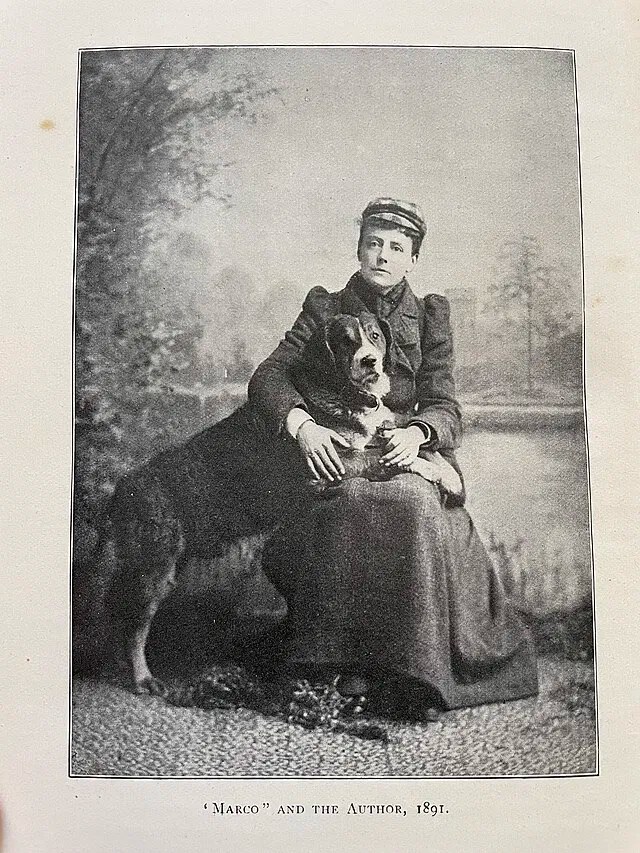
Ethel Smyth and her dog Marco, 1891

Born in Sidcup, England, in 1858, Smyth was not a typical Victorian child and was despaired of by her military father. She was passionate about music from a young age, but the field was male-dominated, and women’s skills were dismissed. Smyth was fiercely ambitious, and although her father disapproved, he eventually relented and allowed her to attend the Leipzig Conservatoire in Germany. She was determined that the music she wrote should not be relegated to parlour music to be played by women in their drawing rooms for the entertainment of men. Instead, she aimed to write great and dramatic operas. 

In later recollections, Smyth denounced the world of the Conservatoire as a “male machine” but welcomed the chance to learn. While there, she met and was dismissed by the composer Johannes Brahms, but the composer Pyotr Ilyich Tchaikovsky recognised her as a rare talent and encouraged her, writing that “Miss Smyth can seriously be considered to be achieving something valuable in the field of music creation.” She also met Clara Schumann, the wife of composer Robert Schumann, who likewise recognised her ability. She became friends with musician Heinrich von Herzonbery and his wife, who was herself a composer and pianist. 

Smyth produced a large body of music, and upon her return to England, she slowly began to receive recognition for her talent. Her Mass in D was performed in the Royal Albert Hall in 1893 to widespread acclaim. Her opera The Wreckers premiered in 1906 and became one of her most famous works.

Throughout her life, Smyth would say that she composed best when she was happiest. Her sweepingly dramatic compositions indeed reflected the turbulence of her personal life, and she had plenty of drama to draw on. 

Remarkably explicit & never ashamed

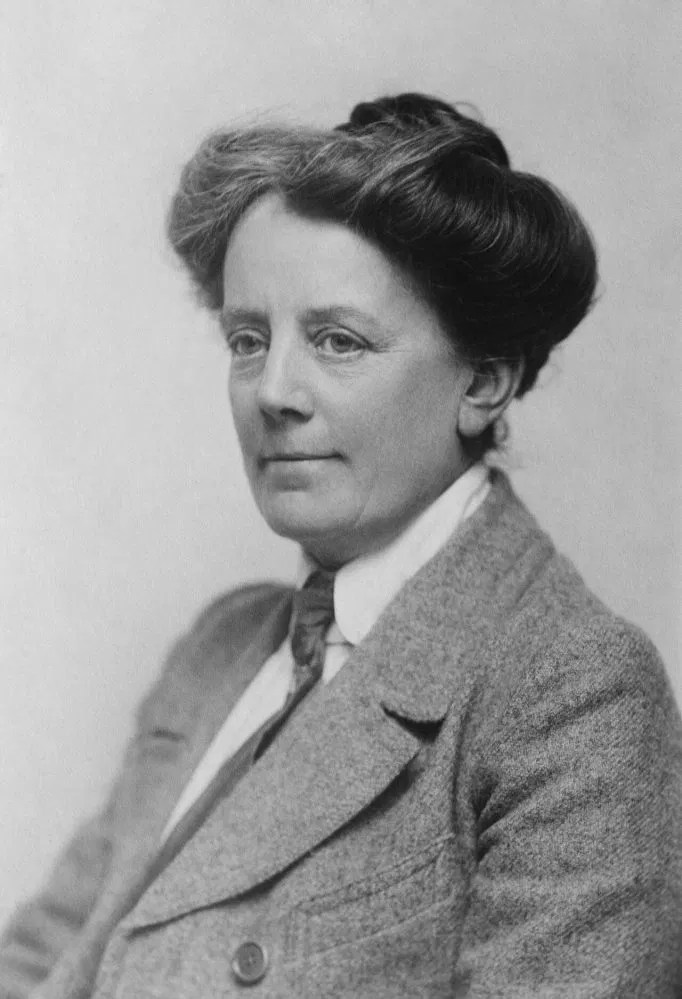
Ethel Smyth in 1922

In 1910, Smyth heard Pankhurst speak at a meeting at the home of writer Anna Brassey, and she immediately joined the suffragette cause. She quickly became enamoured with Pankhurst and the two formed the “deepest and closest of friendships.” 

Smyth certainly felt a romantic attachment to Pankhurst, although whether this was reciprocated in any way is unclear (though Virginia Woolf tells us in a letter that “they shared a bed”). From an early age, Smyth had been aware that she was attracted to women, as well as sometimes to men, writing that “from the first my most ardent sentiments were bestowed on members of my own sex.” In her memoirs (published in 1919 under the title Impressions That Remained), she is remarkably explicit when talking about her relationships with women. She’s never ashamed, and she never shies away from the reality of her desires. 

She also had as a lover the American poet, writer, and philosopher Henry Brewster, but she steadfastly refused to marry him, knowing that she was primarily attracted to women. She mused on the nature of desire, asking him, “I wonder why it is so much easier for me … to love my own sex passionately rather than yours?” In the early to mid 1880’s, she ended up in a menage a trois with Brewster and his wife, Julia, which led to scandal when the situation resulted in a publicised divorce petition. In later life, she also had a romantic relationship with the musician Violet Gordon-Woodhouse. 

In 1911, Smyth wrote the suffragette anthem, The March of the Women. It was described in January 1911 by the WSPU suffragette newspaper as “at once a hymn and a call to battle,” with its first performance celebrating the release of suffragettes from prison after the Black Friday protest. Soon afterwards, Smyth took up window-smashing. 

Smyth remained a dedicated suffragette. She ultimately fell out with the Pankhursts over their support of the war effort, though she played her part by working as a radiological assistant in France.

Despite the scandals surrounding her personal life, Smyth’s music was well respected, and in 1922, she became a Dame of the British Empire, with her work recognised by an honorary Oxford University degree. She died peacefully in 1944. 

Smyth is not well known today, largely because her openness about her sexuality meant that her life and work were unacceptable to the mid-20th century British establishment. Her memory lived on in those who knew her, though. 

In Smyth’s eulogy, Author Vita Sackville-West described her as follows:

“Wild welcomer of life, of love, of art.
Your hat askew, your soul on a dead level, 
Rough, tough, uncomfortable, true
Chained to the iron railings of your creed”

The world’s oldest active drag king has shaped the art form for decades

El Daña at an Out100 Event | Adam Perez

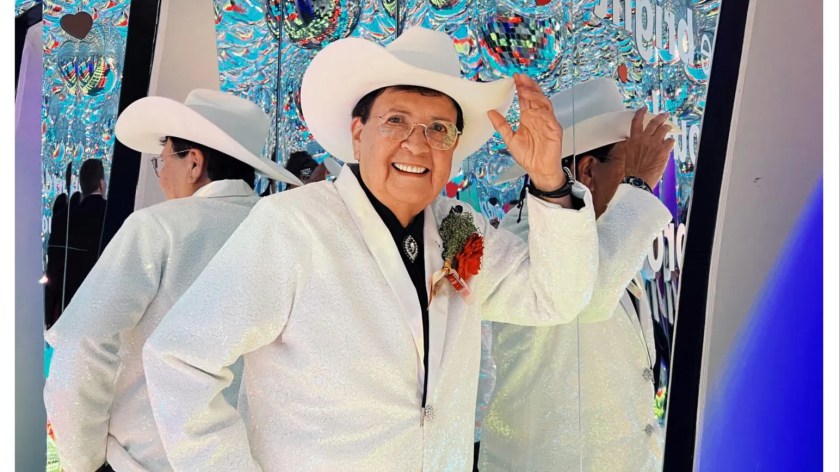
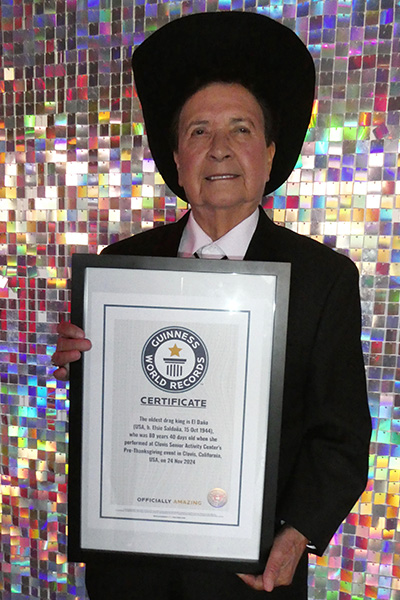
With the perfect combination of swagger and sass, El Daña is both a stud and a sweetheart. At 80 years old, she was recently certified as the world’s oldest performing drag king by Guinness World Records.

The Mexican American male impersonator is a true icon. She began performing in 1965 in California’s Central Valley and regularly travelled throughout the state. Her career spanned decades, from before Stonewall to the present, and she was also part of the famed Imperial Court System, an organisation that demonstrates not only drag’s artistry but also its commitment to community service and activism.

El Daña started performing in November 1965 the month before she had turned 21. She stated: “I always wanted to perform. Back then, it was mostly radio, so I would turn it on, and I would hear Vic Damone, Frank Sinatra, Bobby Darin, Bobby Vee, all those. Before I was 21, well, if I liked a song, I would grab a brush and pretend that I was doing that number.

El Dana holding her Guinness World Records Certificate

When I found out that the Red Robin (a gay bar in Fresno, California) had shows, I auditioned. The Red Robin would advertise down in LA and San Francisco. They would recruit the drag queens that were professional. I would dress up in a suit, like the character I was doing, just a little bit of makeup to hide my blemishes. Back then, instead of saying “lip-sync” like they do now, the word was “pantomime.”

My very first performance was “La Bamba.” And believe me, my knees were shaking really bad when I got on stage, but once I got started, and the audience accepted me, I forgot about my knees shaking.

Performing drag is my own dream, and it comes from the bottom of my soul. On stage, I allow myself to shine and release anything that’s negative about me. I’ve been told by many that when I’m on stage, I just sparkle. They see me sparkle in my eyes.

To me, it’s very personal. I love it, and I want everybody else to enjoy it just as much as I enjoy it. And, to my surprise, they really do. Even today, as old as I am, they love it. And they’re feeding my ego, they’re feeding my talent. My whole soul is being fed by this beautiful cheering and joy and clapping. It gives us pleasure for a moment, you know, to forget what’s happening outside of that venue.

Back in the 1960s, a lot of us were in the closet. Once I was old enough, I didn’t care. They either accepted me or not, and I never had a problem with that. And back then, there were a lot of private parties; you had to be invited once you got known out there. And it was more difficult for the gay men, I think, than for the lesbians. They had to be careful what they were wearing underneath their dress, if they were in drag. Because they could get arrested, and they would get harassed. But I never really experienced anything like that. Me and my girlfriends, like a group of us, we hung out together. The Central Valley is very agricultural, and we would go out in the fields and drink and party and make out and all that. And nobody would bother us.
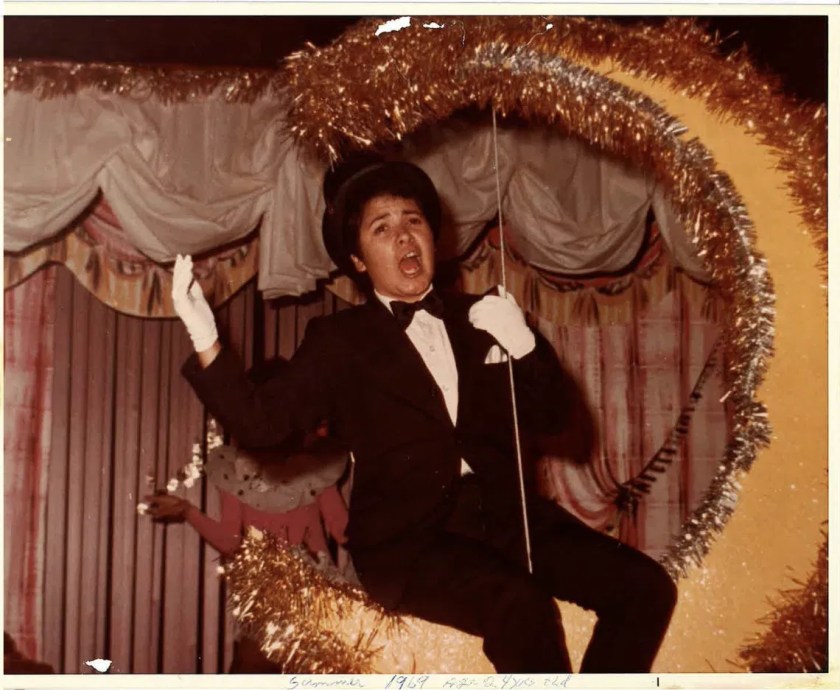
When the Girl of the Golden West opened up, the owner, Bob Benson, would put together production shows, like that picture of me on the moon. That’s Cabaret. And the audience was below me, with me on that moon being hoisted down to the stage. It was neat! And I would be the one that would have all the male lead parts, like in My Fair Lady and Showboat. From 1965 until the early 70s, you know, I was the only male impersonator around. That bar was way out in nowhere-land, and people from San Francisco and LA would come, and we would pack that little bar up, standing room only sometimes.

El Daña in Cabaret | Courtesy of El Daña

And then after the bar would close, there was a little restaurant right off Route 99 called Tiny’s, and we’d go have breakfast afterwards. And the waitresses just loved seeing us coming, because we would have fun. There would be maybe 10 to 20 of us at one table. And sometimes the police would walk in. But they would say nothing, they wouldn’t harass us. I think the manager of the restaurant would probably tell the police, “They really don’t bother anybody, they have breakfast, they tip good, and they’re just having a good time.”

And I would end up going home at like 3 or 4 in the morning. I’d sleep a couple of hours or so, then had to go to work. At the time, I was working as one of those catering drivers on a lunch wagon, and I had to be at work by 6 o’clock. So I wouldn’t get much sleep, but it was fun. When you’re young, you can go on for hours, you know? I’m 81 years old, and I can look back at my 20s and say: “I’m glad I did what I did,” and not say I wish I had.

Who knows if I’ll be here next year? At least enjoy what’s coming to me. And I’m going to accept everything with open arms because I do want to be in the spotlight.

My advice to young drag kings is to be better than the ones that are so negative, especially toward gay society. Be kinder, be gentler, be prettier. Be yourselves in a manner that they can’t do nothing but respect you.

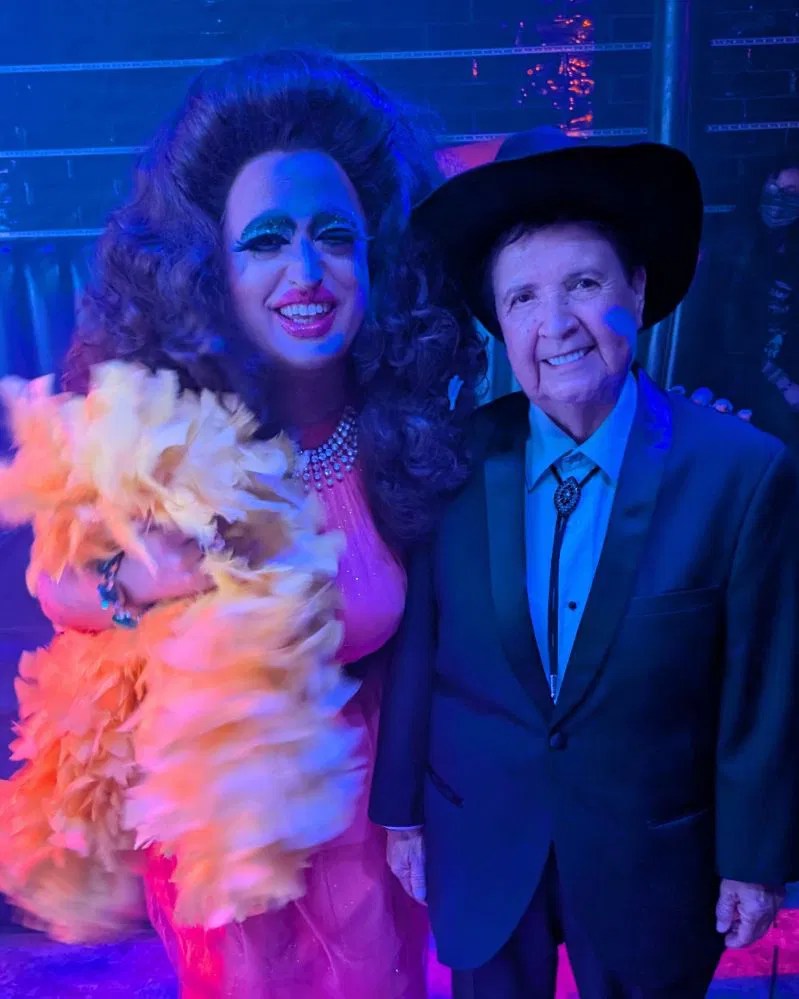
Lil Miss Hot Mess and El Daña at the King of Drag premiere at Beaches Tropicana in West Hollywood, 22 June, 2025

Manchester is home to:

  • more than 200 languages spoken
  • 2 writing schools
  • 3 writing agencies
  • 10+ indie publishers
  • 40 arts and culture festivals
  • 4 historic libraries
  • 23 public libraries
  • 2 literary heritage houses
  • More than 18 bookshops.

Manchester United

Jack Fletcher, an 18-year-old rising star at Manchester United, has been banned for six matches for calling an opponent a homophobic slur at an under 21s match. He’s also been fined £1500, and will have to attend an education programme. The Football Association has now confirmed that Fletcher was sent off for calling an opponent “gay boy”.

However, in an important caveat to the ban, it can only be applied when he is not playing a Premier League match, limiting its impact now he’s joined the senior team.

In his apology, he said the phrase had no homophobic intention but recognised “I completely understand that such language is unacceptable and immediately apologised after the game. I want to be clear that this momentary lapse of character absolutely does not reflect my beliefs or values.” 

Why black gay elders are re-closeting … CHAPS Out podcast … International Women’s Day … Questionnaire

News

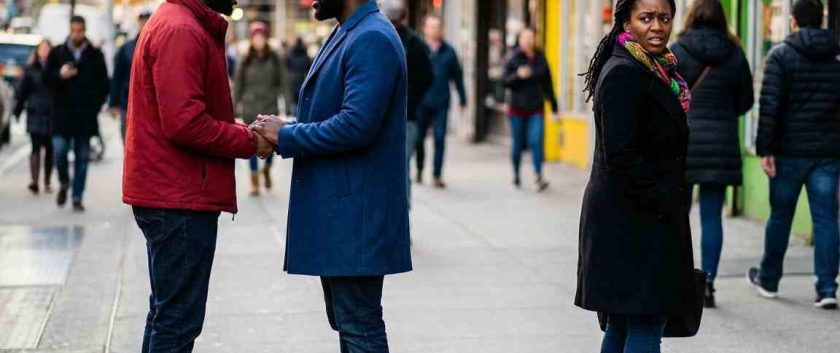
Why Black Gay Elders Are Re-Closeting

It can feel like hard-won victories slipping away.

LGBT+ elders are facing a new crisis: the return to the closet in old age. After surviving criminalisation, police raids, the AIDS epidemic and decades of enforced silence, many now fear losing their dignity and safety in care homes, hospitals and unreliable family‑based support systems.

For black gay men in particular, elder‑care anxiety has become one of the most powerful – and least discussed – pressure points.

This article explores why elder‑care anxiety is rising, how re-closeting operates and what dignity‑driven solutions can protect LGBT+ people as they age.

Note: While this piece focuses on the experiences and challenges most familiar to gay and bisexual black men, many of these patterns also shape the lives of other LGBT+ elders.

Re‑Closeting among black gay elders

The Final Closet: What Re‑Closeting Means

Re‑closeting refers to the phenomenon where LGBT+ elders are forced to hide their sexual orientation or gender identity again after years of living openly. It most often happens in care settings – nursing homes, assisted‑living facilities or family‑based elder care – where safety can feel uncertain, and visibility becomes a risk. For many, retreating into secrecy is a survival strategy to avoid discrimination, neglect or hostility from staff, other residents or relatives.

For black gay men, re‑closeting is often a return to silence. Men who have lived openly may retreat into silence when entering institutional care, fearing discrimination from staff or peers who do not share their cultural or generational context.

Silence functions as risk management – a calculated strategy to ensure one is fed, bathed and housed without hostility.

The UK has robust legal frameworks, such as the Equality Act 2010, which technically protects LGBT+ people from discrimination in care settings. However, the lived reality for black gay men often tells a different story.

The Complex Case of Black Gay Elders

Research from Stonewall and SAGE shows many LGBT+ elders lack trust in care systems and worry that revealing their identity will lead to poorer treatment.

Black gay men in care facilities often face a “triple jeopardy.” These spaces are usually predominantly white, predominantly straight and culturally unfamiliar – creating a complex intersection of racism, homophobia and cultural isolation that compounds vulnerability.

The Quiet Return to the Closet—Ed-Gar’s Story

Ed-Gar a 75 year old black gay man moved into a care home in Hackney London

Ed-Gar, a 75-year-old black gay man, moved into a care home in Hackney. He’d migrated decades ago from Jamaica, worked most of his life as a bus driver, and built a “chosen family” of friends and partners. In the care home, he is separated from his support network. Surrounded by strangers who do not understand his history of migration or his gay identity, he stayed up one night, while everyone was asleep, to remove and refold photos of partners and friends he’d initially put up to blend in. His new roommate, Martha – a lovely woman who knits magic with her hands – has already confessed she likes him. For Ed-Gar, the tragedy isn’t just ageing; it is the forced “re-closeting” required to avoid being othered in the very place meant to care for him.

LGBT+ Elders and The Dementia Trap

Dementia often acts as a “truth-teller” as weakened cognitive filters collapse the ability to maintain a double life. Gay elders with dementia may unintentionally reveal hidden aspects of their identity, such as mentioning partners or recounting memories. This might result in awkwardness or isolation if care staff lack adequate LGBT+ training.

Legal Erasure of Chosen Family

Death and incapacity are moments where the system defaults to biology. Without airtight legal documentation (like a Power of Attorney), hospitals and care homes default to “next of kin.” Lifelong partners and friends can be barred from bedsides or excluded from funeral planning.

Policy Recommendations

Restoring dignity in LGBT+ elder care requires targeted, systemic changes:

  1. LGBT+ Cultural Competency Training
    Training of care staff in sexuality, gender identity, and intersectionality including race and cultural diversity.
  2. Dementia-Specific Identity Protocols
    Develop care guidelines that affirm identity during cognitive decline, preventing misgendering or erasure.
  3. Recognition of Chosen Family
    Update care policies to ensure partners and chosen family have equal decision-making rights.

Conclusion

Ageing should mean freedom – not a return to the closet. For black gay men, dignity in later life should include the right to be seen, supported, and safe without compromise. Building systems that honour this truth is the real test of whether our societies value every life.


CHAPS Out Podcast

This podcast for men explores coming out later in life, midlife sexuality, and men’s mental health. If you’re questioning your sexuality or navigating a major life transition, this conversation is for you.

In this episode, host Grant Philpott speaks with guest Norman Goodman who shares his inspiring story of coming out as bisexual at the age of 69. From decades of marriage to widowhood, Norman talks candidly about his struggles, self-discovery, and the courage it takes to live authentically. Hear how Norman found love with his partner Tony, navigated societal expectations, and became a voice for older LGBT+ adults. He discusses the importance of bisexual visibility, mental health, and reaching out for support, offering guidance to anyone exploring their own coming out journey.

This episode is a must-listen for those seeking advice on coming out later in life, LGBT+ support, and embracing identity at any age. Whether you’re bisexual, gay, or an ally, Norman’s story shows it’s never too late to live openly, connect with the community, and find joy.

Chaps Out is a UK-based podcast giving voice to perspectives you don’t often hear. We provide relatable, uplifting, and positive conversations that offer encouragement, affirmation, and support for anyone on the journey of coming out, while celebrating and supporting bisexual and gay men.

Don’t miss our companion podcast, CHAPS OUT CULTURE, where guests recommend their favourite LGBTQ+ inspired art, music, literature, film, theatre, and TV.

International Women’s Day

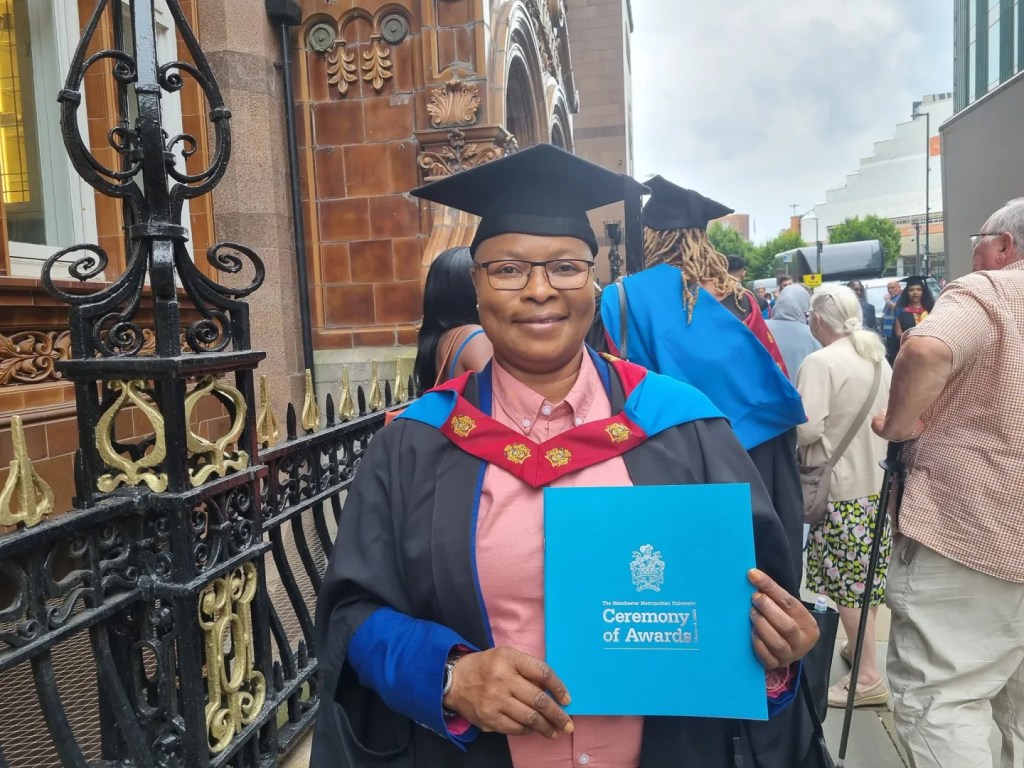
This is the story of an awesome woman – Aderonke Apata – Founder of African Rainbow Family.

“No-one wants to leave their home. It’s painful being separated from your family and not being able to see them. I would love to be home and it makes me sad not to be there but it is so homophobic and draconian, it is impossible. 

I was prosecuted as a lesbian in Nigeria and had to flee the country for my own safety. My initial experiences of this country were not pleasant. Having been in the closet in my own country, I was expected to be ‘out’. I was being judged by a Western-world standard but I was coming from a country where it was not acceptable to be LGBTIQ. How was I meant to come to a strange land and open up straight away?

I’m the founder of African Rainbow Family (ARF) which supports LGBTIQ people of African heritage who are seeking or have sought asylum. We campaign for global LGBTIQ freedom and equality as well as on behalf of those seeking asylum in the UK on the basis of their sexuality. Alongside my voluntary role at ARF, I took a post-graduate Law degree and became a barrister.

I personally believe that I can do anything! I don’t see that there are challenges for me. If I want to do it, I will make it happen. But in supporting people seeking asylum, I have seen so many challenges. 

Going to another country, having to prove who you are and the discrimination you face is huge. So many people live in fear of being detained or deported; and even when they receive asylum they are tired. It takes a lot of resilience to strive.

My greatest achievement is that I have been able to influence the asylum process and bring a change to it. Also that I made it through my own campaign to stay in the UK; it took 13 years to go through the asylum system and it was hell. But I’ve also made new friends here who have become family to me; who have shown me love.

To women celebrating International Women’s Day, stay strong and take courage, don’t give up on anything. We will make it; it may take time but we will get there. Believe you can do it. 

I’ll be celebrating with my African Rainbow Family community raising awareness of our plight but also spreading the love!“