Lesbian Day of Visibility … Lesbian & Bi Women’s Walking Group … Same sex parents … Lesbian Period Drama

News

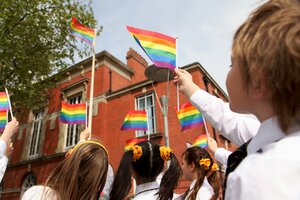
Lesbian Day of Visibility

Held on 26 April every year, Lesbian Day of Visibility showcases women loving women, providing a platform for lesbian role models to speak out on the issues facing female sexual minorities.

The origins of the day remain mysterious, but it has been running since 2008. Having initially started in the US, Lesbian Day of Visibility – thanks to the wonders of the worldwide web – is now celebrated internationally.
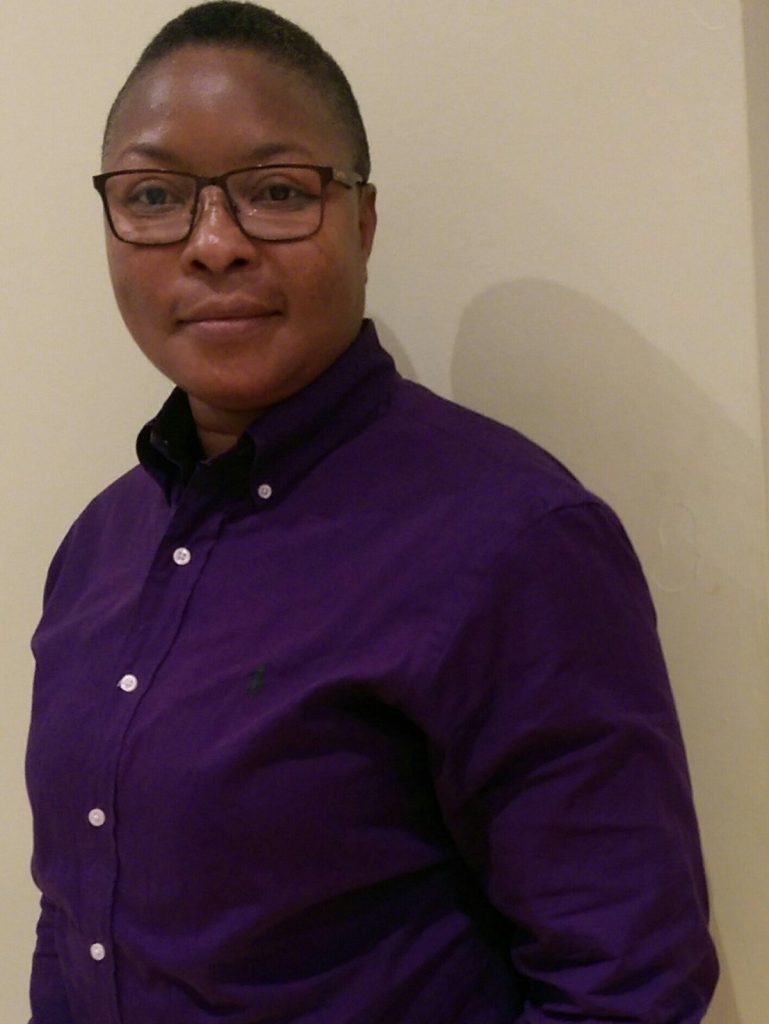
Aderonke Apata, human rights activist and founder of African Rainbow Family

Aderonke Apata said: “Lesbian Visibility Day means a lot to me. I see it as a day when we can celebrate who we are as people who don’t conform to the heteronormative narrative. 

At African Rainbow Family we celebrate Lesbian Visibility Day and continually use it to raise awareness about lesbians of colour, as well as for demanding a fair and humane asylum system for lesbians.

It is important that we are visible as lesbians in order to avoid our erasure. There are many lesbians around the world that live in fear of freely identifying [as gay]. In 36 Commonwealth countries, same-sex love is illegal.

The more we celebrate Lesbian Visibility Day and continue the conversation, the more we raise awareness about the fact that love is not illegal. We can encourage lesbians in the closet to ‘come out’ and demand their freedom.

This brings me back home to lesbian women that are seeking asylum in the UK and other countries. The treatment of lesbians seeking asylum in the UK by the Home Office is disgraceful and appalling … they don’t believe you can be a lesbian and have children, or have been married previously due to conforming to societal norms.”

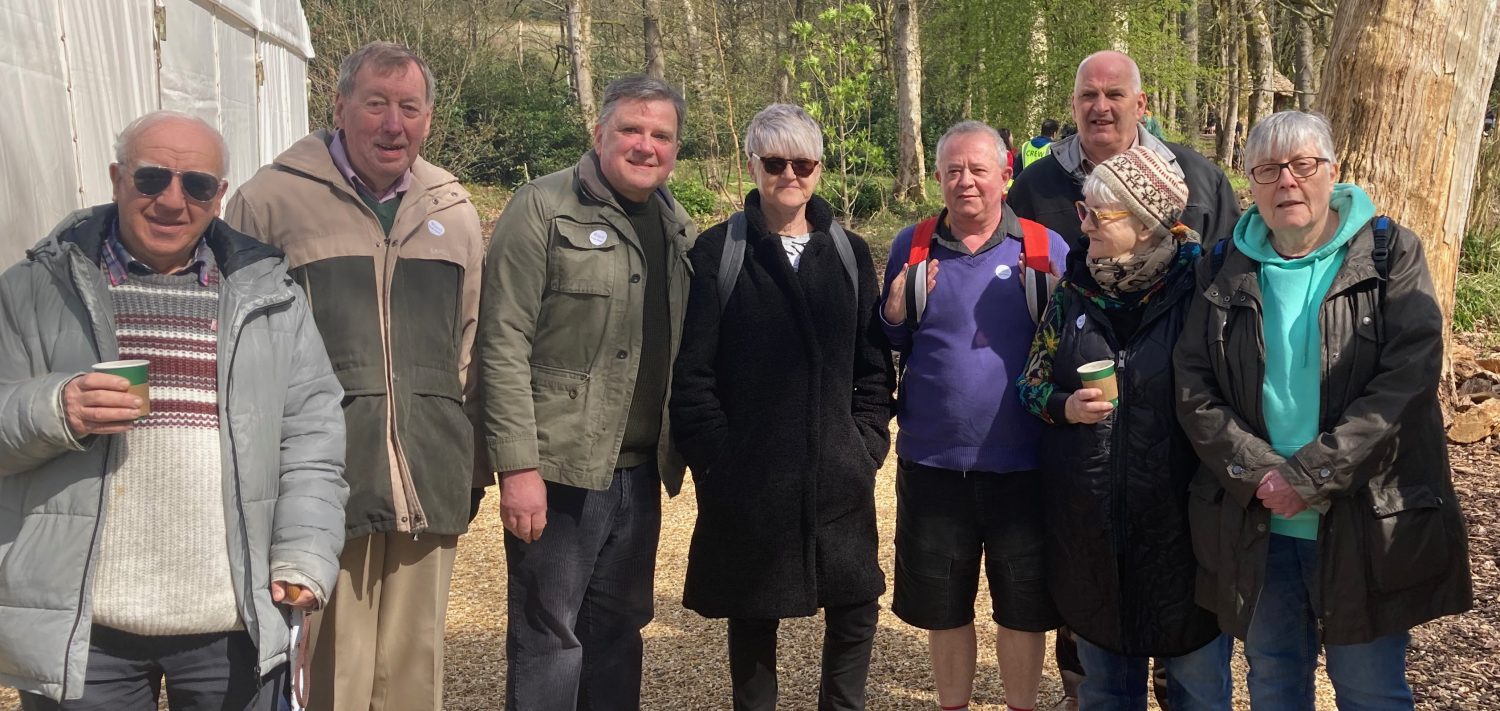
Introducing Lesbian and Bi Women’s Walking Group

They are a walking and social group for lesbian and bisexual women. All walks will be offered on a volunteer basis in the North West, so if you have a walk you would like to offer, that would be great.

The walks can be easy or hard, and they will endeavour to cater for all abilities.

They may also offer social events, such as meals out etc, as the group evolves.

Join them to enjoy fun walks and good company.

The world is changing for same-sex parents

Until recently, same-sex couples in New York could only be recognised as equal parents after birth. But Arwa Mahdawi (a columnist for The Guardian) and her partner are the first to benefit from a new law.


‘Because of the pandemic, we had our court hearing virtually, meaning I officially became a mother on Microsoft Teams. Just like I’d always dreamed I would!’ Photograph: Ridofranz / posed by models / Getty / iStockphoto
Arwa Mahdawi (a columnist for The Guardian)

My unborn child doesn’t have a name yet, but she has already had her very first court hearing. On Monday, my partner, E, and I made (minor) history when we became the first couple in New York to be granted a pre-birth parentage order under a new suite of laws protecting same-sex families. Because of the pandemic, we had our court hearing virtually, meaning I officially became a mother on Microsoft Teams. Just like I’d always dreamed I would! You know how babies born on planes sometimes get free plane tickets for life? Well, I think I deserve at least a lifetime subscription to Microsoft Office.

You may be wondering what exactly a pre-birth parentage order is. The situation is this: E is giving birth in a few weeks to a baby we planned to have. After long discussions along the lines of “your womb or mine?”, we decided she would be the one to carry. We picked out a sperm donor together. We paid for the (very expensive) sperm and multiple rounds of artificial insemination together. We went to doctors’ appointments together. We brainstormed names – and have so far failed to decide on one – together. The baby may not be genetically mine but, in our hearts and minds, we are equal parents to She Who Has Yet to Be Named. In the eyes of the law, however, it’s more complicated. We can both be listed as parents on the birth certificate but, as the non-gestational mum, my rights aren’t 100% clear.

Until very recently, lesbian parents in New York had to go through a second parent adoption in order to secure more legal recognition for the non-birth mother. That’s a gruelling process: it can take a year and cost thousands in legal fees. It’s also incredibly invasive: you have to list everywhere you’ve lived in the past 28 years, provide fingerprints for a background check, have a home visit from a social worker and more. You also can’t start the adoption process until the baby is born, meaning you can be stuck in legal limbo if a medical emergency happens during childbirth. Extremely luckily for us, however, a new law came into effect in February 2021 streamlining this process. All you need to do now is get several documents notarised and appear before a judge; you can do all this before the baby is born – although it took about 57 phone calls to different people in the court system until we established this to be the case.

New York isn’t the only place to have recently brought its family law into the 21st century. Last month two women from Cork became the first same-sex couple in Ireland to be legally recognised as parents on their children’s birth certificates. Alas, not everyone has it so easy. The EU court of justice is deliberating over the case of a child born to Bulgarian and British lesbian mothers in Spain: the baby is at risk of being stateless because same-sex relationships are not legally recognised in Bulgaria and the child isn’t able to obtain British citizenship from the other mother. A Namibian court is also refusing to issue a gay man with emergency travel documents so that he can bring his daughters, born by surrogate in South Africa, back home. The hearing in which I was permitted parentage of my unborn kid lasted under 10 minutes, but was a very long time in the making. When I first came out, almost 20 years ago, the Netherlands was the only place in the world where same-sex marriage was legal. Now, I’m able to marry the person I love in our respective home countries of the UK and US – and have our child legally recognised as belonging to both of us. I don’t take any of that for granted. Love may make a family, but legal recognition makes having a family a hell of a lot easier.
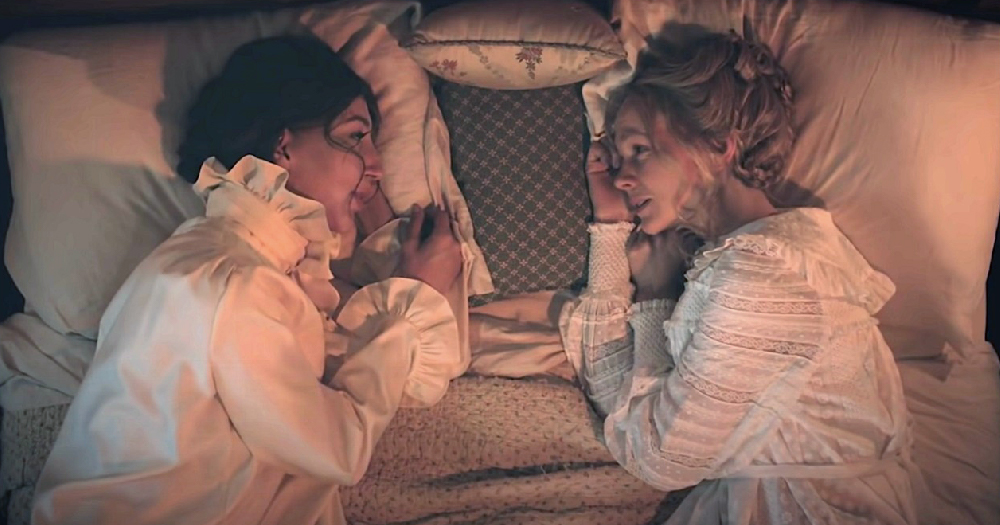
Lesbian Period Drama parody is hilariously accurate

The latest skit from Saturday Night Live is a “film that isn’t afraid to ask: will these lesbians be lesbians together?”

What is it about lesbian period pieces that Hollywood loves so much? Is it the corsets, the forbidden yearning, the inevitable unhappy endings? Whatever it is, Saturday Night Live’s latest skit “Lesbian Period Drama” perfectly encapsulates the stereotypes of the subgenre. Starring Kate McKinnon, Carey Mulligan, and Heidi Gardener, the 3-minute clip accurately parodies the likes of Portrait of a Lady on Fire and Ammonite, in a manner that’s bound to make you burst out laughing.

The sketch aired on Saturday Night Live was hosted by Carey Mulligan, who stars in the piece as one of “two straight actresses who dare not to wear makeup”.

At the beginning of the teaser, Mulligan is brought to a doctor by her husband with his reason being that “She’s a bummer”. It is here where she is introduced to Heidi Gardener’s character, her “female companion” for prescribed grey-aired “long rocky walks”.

“Lesbian Period Drama” continues with the narrator describing it as, “another film that isn’t afraid to ask: will these lesbians be lesbians together?”, boasting “twelve lines of dialogue” within its “two and a half-hour run time”.

The piece also features “Academy award-winning glance choreography” and “Best supporting actress nominee: The Wind” – two tropes that viewers are all too familiar with. But this teaser would not be complete without the appearance of the “stone-cold ex” played by Kate McKinnon, a real-life lesbian. Who would have thought it possible?

Decorated with sad flirting, finger grazing, and portrait drawing, perhaps the most accurate feature of all is the “sex scene so graphic you’ll think, ‘Oh right, a man directed this’.” Despite having seen different versions of the same film many times before, there is no doubt that lesbians worldwide would still be queueing up to view and support this spectacle. While “Lesbian Period Drama” should be enjoyed as a comedy sketch, it also highlights the need for a more diverse range of plots, stories, and cast members within LGBT+ cinema.

This subgenre is often dominated by white straight actresses, and can still be influenced by the male gaze. Although many of the examples that we have today are loved and appreciated within the community, there is still room for improvements, and the Saturday Night Live skit highlights that in an engaging and hilarious way.

(Thanks to Gay Community News, Ireland for permission to reprint this article)

Fuse fm … Free Live Stream Performances with Bury Pride … Pride in Trafford – Festival 2021 … New book by Matt Cain

News

Fuse fm

Fuse fm is an internet radio station based at Manchester University. A member of Out In The City, Don, was interviewed about campaigning and activism to create a show with an intergenerational connection. The students involved, as part of their course on Drama, are interviewing contributors in their 20s and people over 60.

The show is built around different interviews each week, intertwined with music, and will be streamed live on Friday 23 April from 1.00pm – 2.00pm on https://fusefm.co.uk/

Free Live Stream Performances with Bury Pride

Saturday, 24 April at 7.30pm

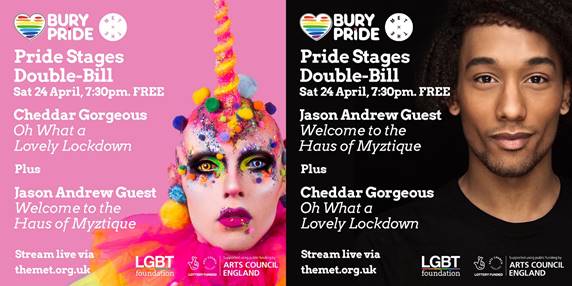
Greater Manchester LGBTQ+ Arts and Culture Network is proud to present the first performances from our Pride Stages Bursary artists – Cheddar Gorgeous and Jason Andrew Guest – this Saturday as part of a new series of FREE digital events from Bury Pride and The Met across this summer celebrating LGBTQ+ communities – until we can meet again.

Full details are below. To watch this weekend’s Pride Stages Double-Bill live stream please go to:

Cheddar Gorgeous:

Oh What a Lovely Lockdown

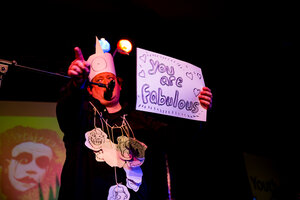
Drag artist, activist and academic Cheddar Gorgeous explores the experience and ‘blitz spirit’ of the pandemic in a new performance using spoken word, comedy and satire – drawing upon their experiences as an eccentric-attention-hungry artist navigating loneliness with delusions, a plucky attitude, and a tune or two!

Jason Andrew Guest:

Welcome to the Haus of Myztique

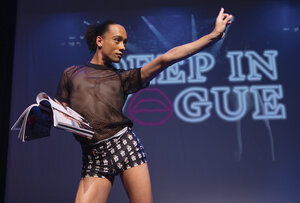
A showcase of QTIPOC Excellence from vocalist, dancer, choreographer and creative powerhouse Jason Andrew Guest, celebrating Black Queer artists, musicians, and icons through vocal house and high fashion. Expect Diva star quality and iconic fashion moments inspired by Diana Ross, Grace Jones, Ru Paul, Naomi Campbell, Tyra, Naomi Sims and more.

Pride in Trafford – Festival 2021

Monday 17 May – Saturday 22 May

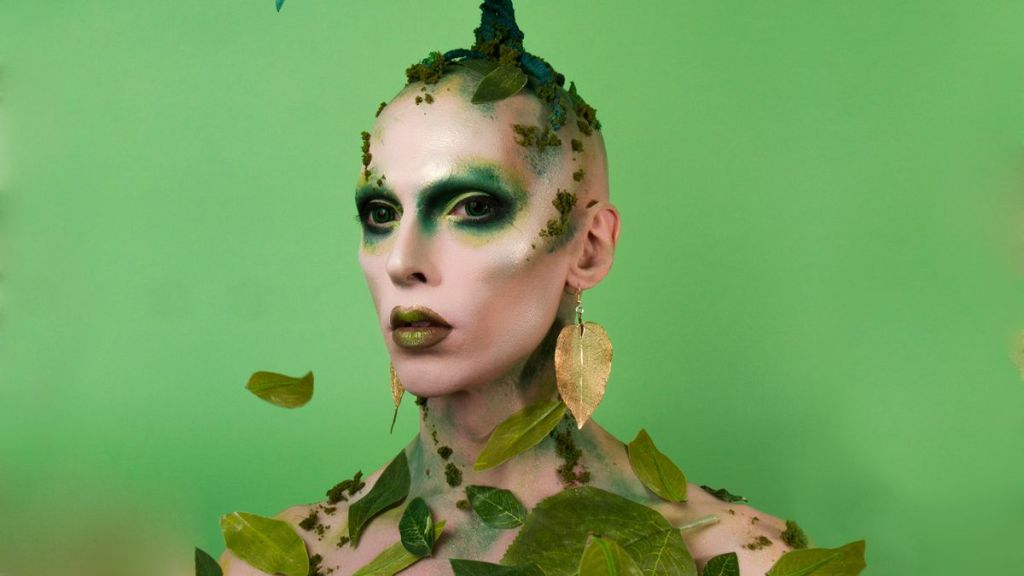
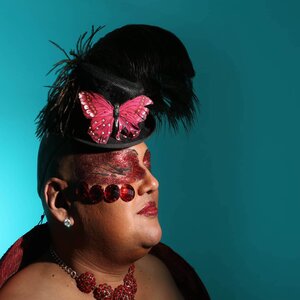
Cheddar Gorgeous

The annual Pride in Trafford Festival ties in with the opening week at Waterside Arts (1 Waterside Plaza, Sale, Trafford M33 7ZF), and kicks off on Monday 17 May. 

After 421 days closed, come and join them for an exciting summer programme of live theatre, music, comedy, dance and events – both in and outside the venue.

In line with government guidelines, they have a number of Covid measures in place so you’ll be in safe hands when returning to the venue this summer.

The Pride in Trafford programme explores and celebrates identity and LGBTQ+ life with comedy, cabaret, storytelling, dance and theatre shows showcasing local and up and coming LGBTQ+ artists and performers. 

See the festival programme here.

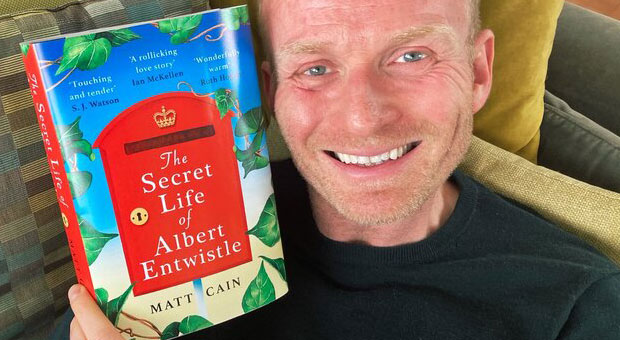
New book from Matt Cain – The Secret Life of Albert Entwistle

Albert Entwistle was a postman. It was one of the few things everyone knew about him. It was one of the few things he was comfortable with people knowing.

64-year-old Albert Entwistle has been a postie in a quiet town in Northern England for all his life, living alone since the death of his mam 18 years ago. He keeps himself to himself. He always has. But he’s just learned he’ll be forced to retire at his next birthday. With no friends and nothing to look forward to, the lonely future he faces terrifies him. He realises it’s finally time to be honest about who he is. He must learn to ask for what he wants. And he must find the courage to look for George, the man that, many years ago, he lost – but has never forgotten . . .

Join Albert as he sets out to find the long-lost love of his life, and has an unforgettable and completely life-affirming adventure on the way . . .

This is a love story the likes of which you have never read before!

To pre-order from Queer Lit, follow this link – £13.49

Matt Cain

Review by Peter Johnson for Canal St Online:

The Secret Life of Albert Entwistle is a captivating novel that may have not made sense even twenty years ago. Set in the Lancashire I know, the story of Albert helps us to reflect on friendship, acceptance and the changes that have happened during that time.

Matt Cain has skilfully drawn our attention to the struggles and experiences LGBT individuals have faced in the past and today, but also how society has changed to embrace and celebrate diversity.

The story is totalling engaging and takes you on a journey where the characters and locations are vividly accurate. As the chapters unfold the story brings tears of joy, laughter and poignant reflections. 433 pages of sheer bliss! I read it in one sitting. I implore Matt Cain to write a sequel because Albert has so much more to say, he now lives in my head! It is a compelling tale of hope and discovery that many will identify with.

An Evening with David Sedaris … An Evening with Armistead Maupin … Visual Stories of LGBT people aged 50 -70

News

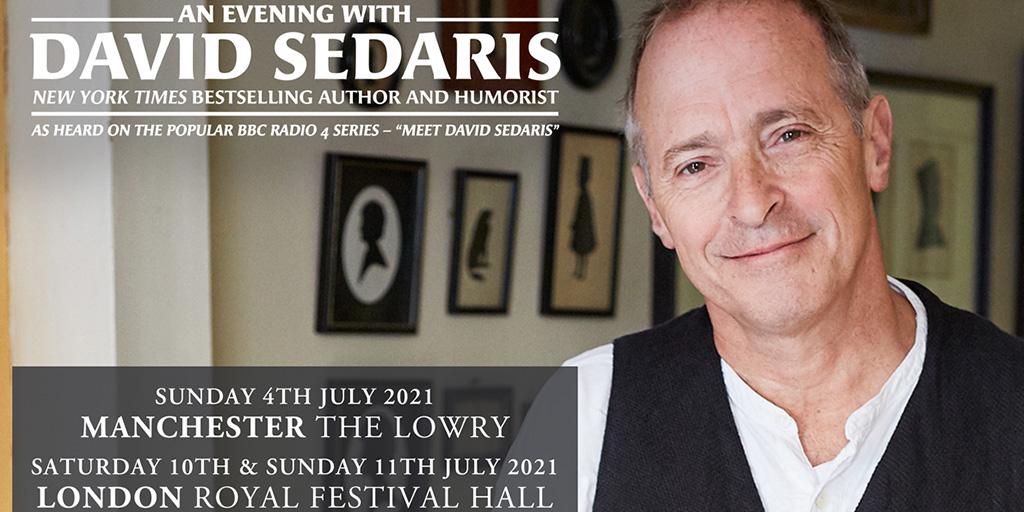
An Evening with David Sedaris

Sunday, 4 July 2021, 7.00pm

Salford Lyric Theatre at The Lowry, Salford Quays, Salford M50 3AZ

With sardonic wit and incisive social critiques, David Sedaris has become one of America’s pre-eminent humorists. He is appearing at The Lowry in Salford on Sunday, 4 July.

Sedaris at the Frankfurt Book Fair 2018

He is the master of satire and one of today’s most observant writers addressing the human condition. Calypso, his latest collection of essays, is a New York Times best seller, and a Washington Post Best Book of the Year. The audio book of Calypso has been nominated for a 2019 Grammy in the Best Spoken Word Album category.

Much of Sedaris’s humour is ostensibly autobiographical and self-deprecating and often concerns his family life, his middle-class upbringing in the suburbs of Raleigh, North Carolina, his Greek heritage, homosexuality, jobs, education, drug use, and obsessive behaviours, and his life in France, London, and the South Downs.

Sedaris lives in Rackham, West Sussex, England, with his long time partner, painter and set designer Hugh Hamrick. Sedaris mentions Hamrick in a number of his stories and describes the two of them as the “sort of couple who wouldn’t get married.”

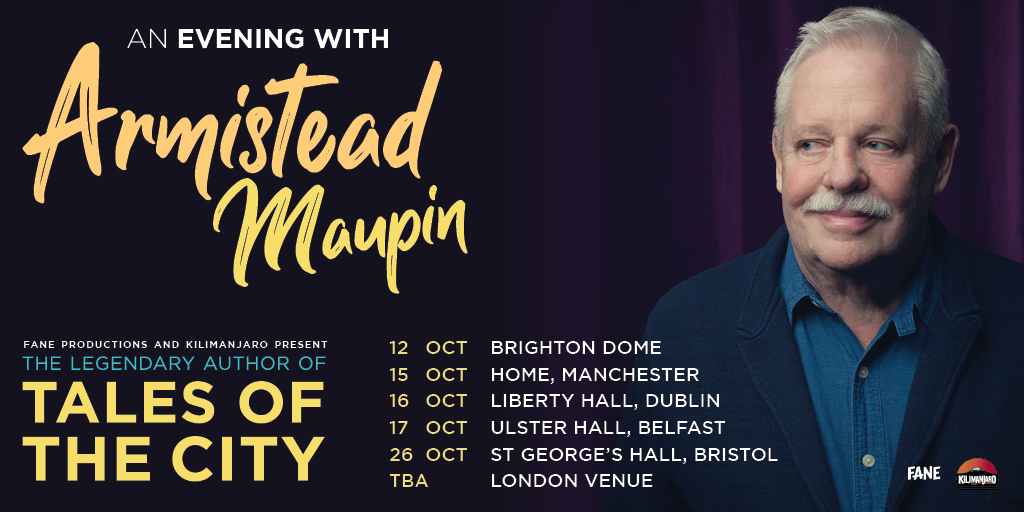
An Evening with Armistead Maupin

Friday, 15 October 2021, 7.30pm

HOME, 2 Tony Wilson Place, First Street, Manchester M15 4FN

Armistead Maupin, the much loved author and LGBT activist, is appearing at HOME on Friday, 15 October.

Maupin (left) with husband Christopher Turner in May 2013

Maupin has been blazing a trail through popular culture since the 1970’s, when his iconic and ground-breaking series Tales of the City was first published as a column in the San Francisco Chronicle. The novel series has been taking the literary world by storm ever since, and is currently being adapted by Netflix into a much-anticipated new series, starring Laura Linney, Olympia Dukakis and Elliot Page.

Don’t miss the chance to join America’s ultimate storyteller, as he recounts his favourites tales from the past four decades, offering his own engaging observations on society and the world we inhabit.

Visual stories of LGBT people aged 50 – 70

The Centre for Ageing Better is working with a photographer and journalist to produce visual stories of five older LGBT+ people for Pride Month.

They are planning something similar to their AgeProud series where photos and a short piece of text tell the stories of older people who identify as LGBT+.

They need people aged approximately 50-70 to share their experiences as an older person and as someone who’s part of the LGBT+ community – to consider other issues, such as, ageism, employment, housing, social connections and the impact of COVID or how attitudes towards LGBT+ people have changed throughout their lifetime. If you are interested then please contact us.

New prostate cancer scan … LGBT homelessness … From Bud to Blossom: Our Lesbian Journeys

News

New prostate cancer scan ‘could replace invasive exam and save lives’

A patient undergoing an MRI scan. Prostagram employs MRI scanning and is modelled on breast cancer screening. 
Photograph: Juice Images / Alamy

Prostagram is found to be almost twice as effective at detection as standard blood test in trials.

Scientists say they have developed a prostate cancer scan accurate enough to potentially replace current invasive examination techniques and save thousands of lives each year.

Prostagram, developed by experts at Imperial College London, employs MRI scanning and is modelled on breast cancer screening, where women are routinely offered a mammogram scan every three years as part of a national programme.

A trial of 408 men found that Prostagram detected approximately twice as many clinically significant cancers as the standard PSA (prostate specific antigen) blood test.

Previous MRI scans have had reliability issues but the Prostagram, which identified about 75% of aggressive prostate cancers in volunteers, is the first that is accurate enough to be considered for screening. The researchers say the trial results suggest the 15-minute scan could find an extra 40,000 cases of prostate cancer a year in the UK alone.

Prof Hashim Ahmed, senior author and chair of urology at Imperial College London, said: “Prostagram has the potential to form the basis of a fast, mobile national-screening programme for prostate cancer and could be a gamechanger. Prostagram also has the potential to detect more aggressive cancers earlier and pass over the many cancers which don’t need to be diagnosed. By finding these aggressive cancers at the earliest opportunity, men have the opportunity to be offered less invasive treatments with fewer side-effects.”

The number of prostate cancer deaths in the UK has overtaken the number of breast cancer deaths (approximately 12,000 compared with 11,000), with the national breast screening programme credited with saving an estimated 1,300 lives a year.

Last year, Prostate Cancer published research showing it is the most commonly diagnosed cancer in the UK, with 57,192 new cases in 2018.

PSA tests are not recommended for screening because they are unreliable and can yield false positive results, while digital rectal examinations (DREs) are invasive, which can put men off being tested, and also have issues with reliability.

A third of the men in the Prostagram trial were black, which is significant given their increased risk of prostate cancer. One in four black men in the UK will be diagnosed with prostate cancer in their lifetime compared with one in eight in the general UK population.

Dr David Eldred-Evans, another researcher and developer of the Prostagram, said: “Plans for a more extensive trial covering 20,000 men are well advanced and will proceed in the coming months subject to funding. If results from this study are similar or better than those revealed today, there is then a clear pathway to the widespread implementation of Prostagram into the general population.”

Funders of the research, which has been supported by Stephen Fry, include the Urology Foundation, the Wellcome Trust, the BMA Foundation for Medical Research and the National Institute of Health Research Imperial Biomedical Research Centre.

LGBT homelessness: ‘I had to pretend to be straight’

Some LGBTQ young people have felt unable to leave “toxic environments” during the pandemic

For Sara, university was a ticket out of an abusive home.

Sara, who identifies as queer, says she was used to hiding her identity from her Muslim family and pretending to be straight when accessing services.

But her mental health worsened after spending holidays alone in empty student halls.

“I had a roof over my head but no-one else to talk to. My mental health got really bad and I ended up dropping out. I was going to be homeless so I ended up going back to my abusive household,” she says.

“It was difficult – I was rotting away in a corner of our tiny flat while trying to look for places [to live].”

Sara, now 21, came out as bisexual to one of her parents and confronted them about the abuse, but they refused to accept what she was saying.

She says she became suicidal before a charity, the Albert Kennedy Trust (AKT), helped her to find a room at a women’s shelter.

Sara’s story is not unusual, says the Trust, which supports young LGBTQ people at risk of homelessness.

The pandemic means many have been unable to leave “toxic environments”, says its director of services Lucy Bowyer.

“We’ve seen young people going back in the closet and feeling they have to go home, stay home and that they can’t express themselves. Then people trying to access support have found it not welcoming and that has re-traumatised them.”

Temporary housing options such as staying on a friend’s sofa were no longer available as people became nervous about mixing with those outside their bubble, she says.

A scheme was brought in during the pandemic to bring all rough sleepers indoors in England

Joe, in Manchester, also had to move back in with his family after facing money troubles during the pandemic.

But he ended up homeless after a family member started to taunt and hit him.

“He was using my gayness and throwing it at me,” Joe says.

His abuser paid the household bills, meaning other family members were reluctant to intervene.

Joe slept on the streets for two weeks before being helped to rent a flat by the charity.

More than six in 10 LGBTQ young people surveyed said they felt frightened or threatened by their family members before they became homeless, according to an AKT report, while more than half feared being evicted from the family home if they came out.

The report also claimed that six in 10 faced some form of discrimination or harassment while accessing services.

The research took place over six months to January and interviewed 161 LGBTQ people aged 16-25 who had experienced homelessness in the past five years.

Both Joe and Sara said they had faced barriers while accessing services that were linked to their sexuality, ranging from homophobia from landlords or other homeless people, to forms that didn’t list their sexuality.

“My default is putting on a straight persona when accessing help,” Sara says. “It is exhausting.”

A scheme was introduced at the start of the pandemic to bring all rough sleepers indoors in England.

“Everyone In” took more than 37,000 people off the streets by January 2021, the government says.

But the impact has been patchy. In some areas, more than 80% of those helped are in longer-term accommodation, while in others it is less than 15%.

Ms Bowyer said her clients’ experience of the scheme had been “really varied”.

“In London, one borough would help anybody who turned up, but in another borough, no-one would even answer our emails and our clients couldn’t get hold of them.”

The government says the Equalities Office is conducting research to help better understand LGBTQ people’s experiences of homelessness, the challenges they face, and to enable tailored support to be provided.

(Names have been changed)

From Bud to Blossom: Our Lesbian Journeys

During quarantine Nancy Allen wrote a book “From Bud to Blossom: Our Lesbian Journeys.” It is a compilation written by ten different women sharing their path of embarking on lesbian relationships.

Nancy Allen came out at age 72, and has just celebrated nine years together with her partner, Kelly Thomas.

The book is aimed at women curious about lesbian relationships.

We are hearing more about LGBTQ relationships and issues. With the approval of same-sex marriage, many people have become curious about what same-sex relationships are. They may just want to understand them better or they may be considering trying one out.

This book explores the lives of women who at first did not consider a same-sex relationship. Somewhere along the way they started to acknowledge their bisexual / lesbian tendencies. Now they are willing to share their stories for the purpose of revealing what a romantic relationship is like with a woman partner.

What will you do first? … Gay Activist’s Alliance … News from Los Angeles

News

What will you do first?

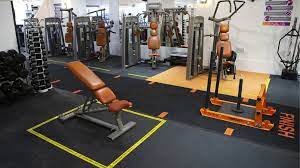
The first major re-openings are set for 12 April, under step two of the roadmap, with pubs, shops and hairdressers all scheduled to re-open.

Haircuts, nails, pub garden or gym – what will you do first?

The History of Manchester’s Gay Activist’s Alliance

(Thanks to Superbia Spotlights for this article)

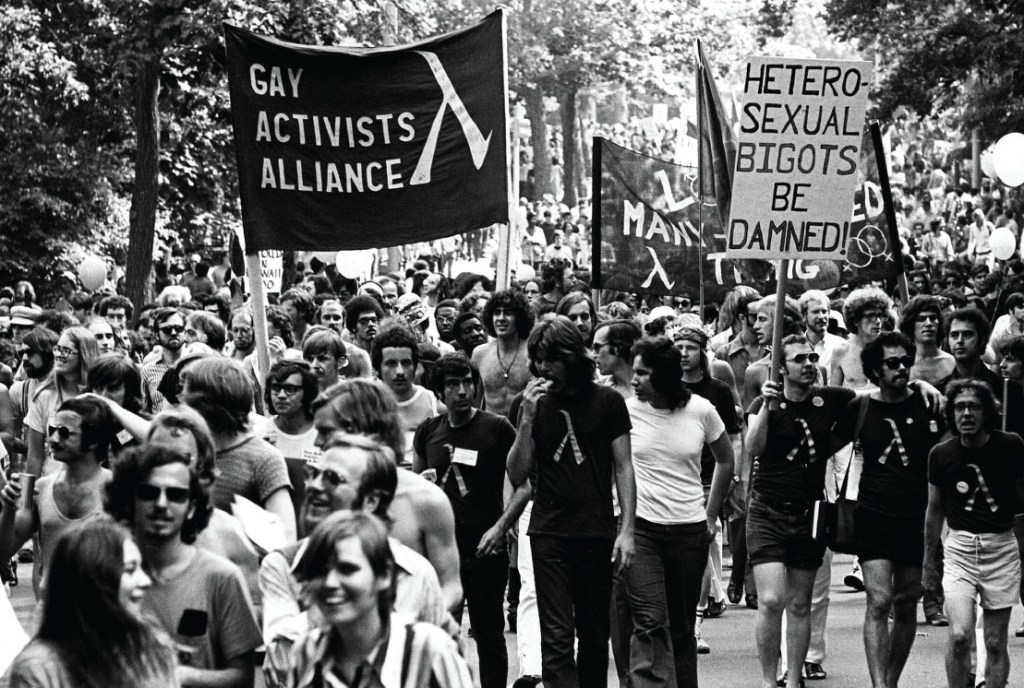
Manchester was at the forefront of promoting the rights of LGBT+ people in the UK. It continues to be the home to a vibrant Gay Village and one of the largest LGBT+ communities in the UK.

Have you heard of GAA (Gay Activist’s Alliance) a national campaigning group started in 1978 following the prosecution of Gay News magazine for blasphemy? There was a very active group in Manchester who campaigned, picketed, and fought for LGBT rights at a time when the community had very few.

Paul Fairweather came to Manchester in 1978 to work for the Campaign for Homosexual Equality (CHE), which was the main gay rights organisation in those days. He’s been active in a whole range of LGBT+ activities since.

In the first half of the 1980s, he was working at the Lesbian & Gay Centre, in the second half of the 1980s he worked for Manchester City Council as one of their Gay Men’s Officers. Paul has a keen interest in LGBT+ history, in particular, that of Manchester. 

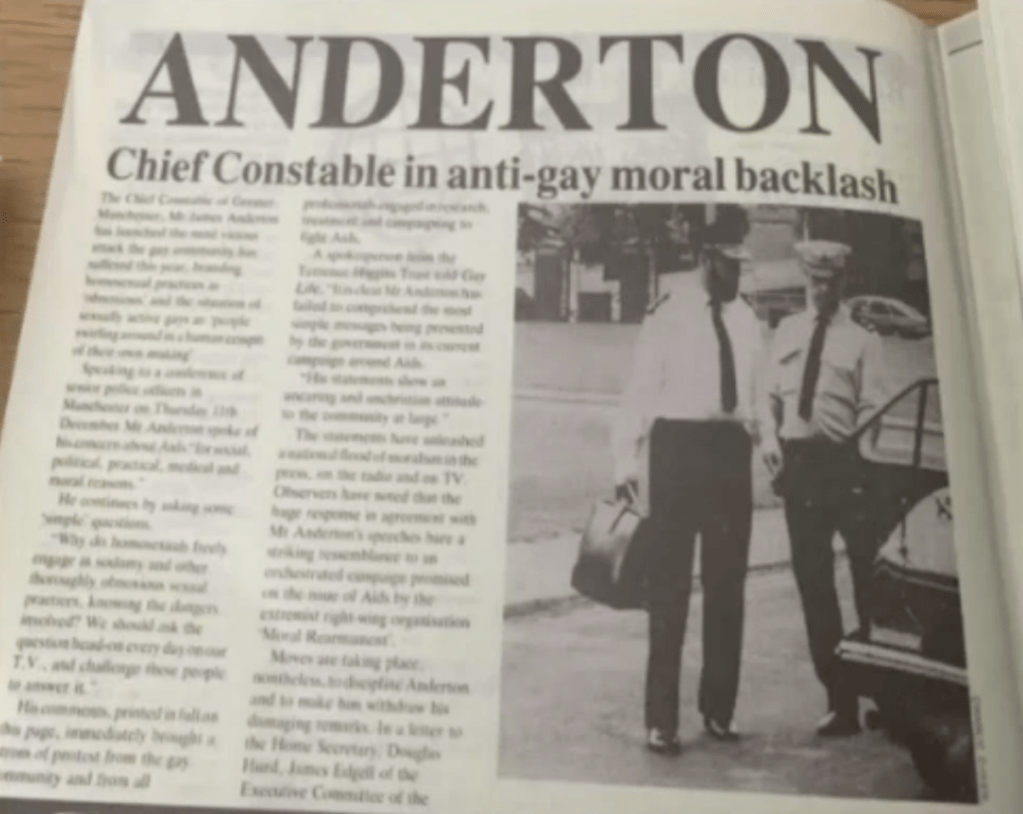
Paul Fairweather’s article in the Mancunian Gay for the ‘Anderton Must Go’ campaign

In this talk Paul takes us through a presentation about how Manchester’s Gay Activist’s Alliance came about, why it was formed, how it actually operated as an organisation and the campaigns it ran to advance the rights of LGBT+ people in the city and beyond.

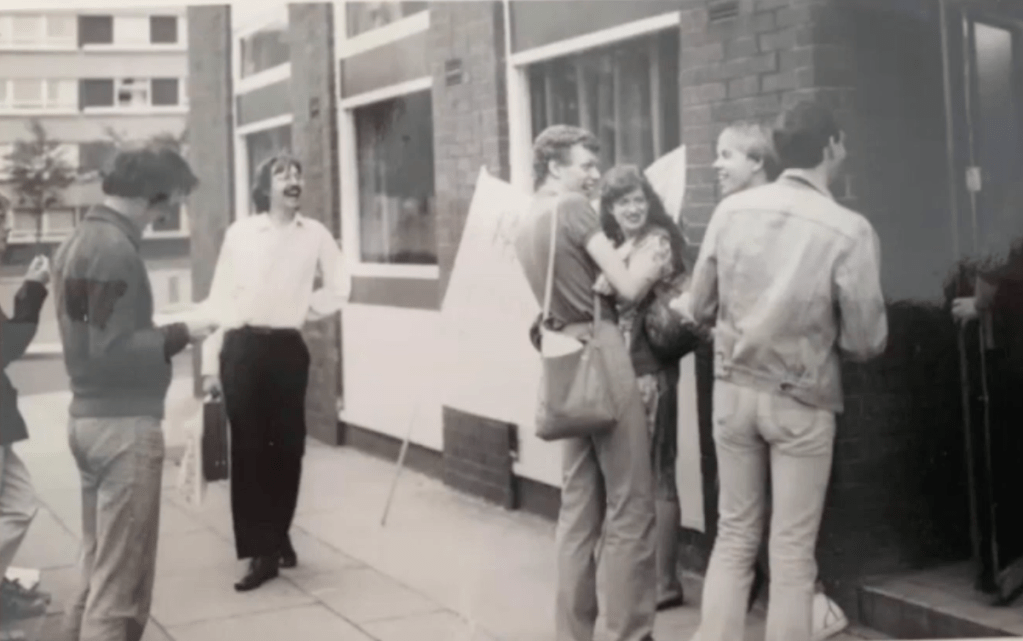
Find out more about the lesbian bus driver sacked in Burnley, the picket of a gay bar in Didsbury, how a Labour club in Hulme banned a gay disco and an ongoing campaign against homophobic Chief Constable James Anderton.

No Queers Here campaign against Hulme Labour Club

Following the presentation, Paul hosts a Q&A session with friends Greg Thorpe, Andrew Lowrey, Terry Waller, John Cotterill, Ann Algar and David Mottram.

Follow this link

News from Los Angeles

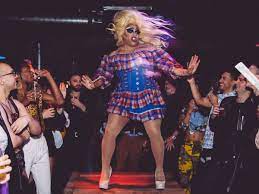
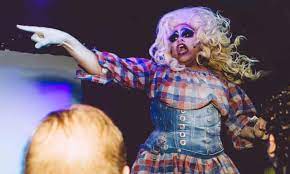
Meatball, an LA drag queen, performs at Precinct.
The club in downtown is raising funds so it can remain open. 
Photograph: Jeremy Lucido

Historic queer institutions across southern California that have been safe spaces for LGBT+ crowds for decades are in danger of closing permanently.

“I can’t imagine a world without Precinct,” said Meatball, a drag queen. “These places were our safe havens.” 
Photograph: Jeremy Lucido

The Covid-19 pandemic has permanently closed more than 100,000 bars and restaurants across the United States but in LA, which has been under some form of lockdown restrictions since last Marchthe impact on nightclubs has been particularly brutal.

Four iconic Los Angeles gay bars, touting a combined history of 130 years, have permanently closed during the pandemic and many more have warned that they are on the brink of shutdown.

The four LGBT+ bars shuttered in West Hollywood last year, included Rage, a legendary nightclub that closed after 37 years, and Gold Coast, a 39-year-old dive bar down the street on Santa Monica boulevard. Then in January, as LA become one of the worst Covid hotspots in the nation, Oil Can Harry’s, a beloved gay country bar in Studio City, said it was closing for good after half a century of hosting gay line dancing.

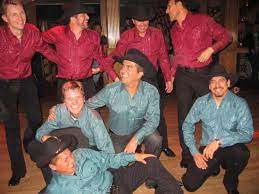
Rick Dominguez, back row, second from left, was part of the dance group LA Wranglers that performed at Oil Can Harry’s in 2012. The bar closed permanently in January. Photograph: Courtesy Rick Dominguez

Oil Can Harry’s still had a siren on site that staff used in the 60s to warn customers that police were coming and allowed them to quickly switch to partners of the opposite gender, said Rick Dominguez: “New generations aren’t going to get to know this space.”

Tony Soto, who performs at Akbar, says he’s hopeful that bars will survive the pandemic. Photograph: Paul Brickman

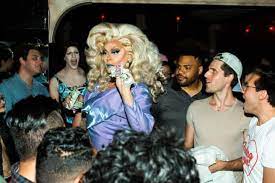
Tony Soto, a drag queen who performs at Akbar and Precinct, said some performers gave up and fled LA during the pandemic, but he was hopeful that the bars that have survived would draw big crowds once it was safe: “We are social animals, we need to be around each other.”

He has been doing weekly shows on Zoom, but was desperate to be in the same room as his audience again: “I haven’t heard real applause and real laughter in over a year.”