Manchester Astronomical Society … International Women’s Day … Global News Quiz

News

Manchester Astronomical Society

The Manchester Astronomical Society is an organisation that promotes amateur and popular astronomy in North West England.

After a meal in Via on Canal Street we walked to the Godlee Observatory located in the Sackville Building, University of Manchester, where the Society is based. It is one of the oldest provincial astronomical societies in England, and membership is open to anyone with an interest in astronomy.

The Godlee Observatory on the roof of the Sackville Building, University of Manchester. Image © Michael Oates

The society’s origins lay in the North Western Branch of the British Astronomical Association, which was established in 1892. However, a number of members gradually became dissatisfied with the Association’s treatment of the branch (particularly in relation to funding) and the Branch’s members consequently decided to dissolve the branch to form the Manchester Astronomical Society at a meeting at the Godlee Observatory in September 1903.

Tony and Phil gave us a talk on the history and current activities of the Astronomical Society and we got to hold a piece of meteorite, which was over 4,000 years old and was found in Argentina.

It was a great visit and more photos can be seen here.

Moon © Martyn Jones – 06/02/22

International Women’s Day

International Women’s Day is a global holiday celebrated annually on 8 March to commemorate the cultural, political, and socio- economic achievements of women. It is also a focal point in the women’s rights movement, bringing attention to issues such as gender equality, reproductive rights, and violence and abuse against women.

The 2022 UN theme for International Women’s Day is “Gender equality today for a sustainable tomorrow”, looking to highlight the contribution of women and girls around the globe, who participate in their communities promoting on climate change adaptation, mitigation, and response, in order to build a more sustainable future for all.

First in the Fight Exhibition

Launch on Tuesday 8 March 2022, 6.30pm – 7.30pm

The Bungalow, Kampus M1 3GL

A poignant, open-air exhibition paying tribute to the women who shaped Manchester’s history opens in the Kampus garden on International Women’s Day. The exhibition will comprise of ten pieces of art depicting ten women who had an impact on the city.

It‘s part of a collaboration between Women In Print, an artist-led project telling the stories of women from the north of England, through print and design, and author Helen Antrobus. Following the unveiling of the Emmeline Pankhurst statue in Manchester’s St Peter’s Square in 2018, Helen co-authored the ‘First In The Fight’ book to tell the stories of the 19 other incredible women who had been shortlisted by the public for the statue.

The month-long exhibition at Kampus will be free for the public to attend, with original art nestled among the lush garden opposite Canal Street. To mark Women’s History Month, visitors will also be encouraged to celebrate a woman in their life by emblazoning the garden with ribbons in the colours of the suffragettes – white for purity, purple for dignity and green for hope.

Among the women profiled at the exhibition will be (left to right): 

• Kathleen Ollerenshaw (1912 – 2014), a mathematician and politician, who dedicated her life to improving access to education. (Artwork by Alex Francis)

• Louise Da-Cocodia (1934 – 2008), who came to the UK in 1955 to train as a nurse. After she experienced the openly racist attitudes towards black nurses, she dedicated her time to improving race relations in Greater Manchester. (Artwork by Ellie Thomas)

• Sunny Lowry (1911 – 2008), a woman synonymous with Victoria Baths, the place where she honed her skills before swimming the English Channel in 1933. (Artwork by Eve Warren)

• Sylvia Pankhurst (1882 – 1960), daughter of Emmeline and Richard Pankhurst who, along with her mother and sisters, was a founding member of the Women’s Social and Political Union (WSPU), the militant organisation campaigning for women to have the vote on the same terms as men. (Artwork by Halah El-Kholy). 

A selection of the prints from the exhibition will be available to buy at https://womeninprint.uk/ – with proceeds going to Women’s Aid. 

The First In The Fight book can be purchased from The Pankhurst Centre, on Nelson Street in Manchester or the People’s History Museum. 

If you wish to attend RSVP to lewis@fontcomms.com

Global News Quiz

Test your knowledge of news from around the world.

1.         A married gay couple has become the first in which Asian country to adopt a child together – but their legal victory hasn’t been extended to other couples like them.

Taiwan / Japan / China / South Korea / Vietnam

2.         A man in which Oceanic country has pled guilty to charges stemming from the death of a gay American man in 1988?

New Zealand / Fiji / Australia / Tonga / French Polynesia

3.         A measure that would give school administrators and superintendents the power to remove books, lessons, and ban student participation in events or clubs that are LGBTQ+ affirming passed the lower house of parliament in which European country?

Bulgaria / Poland / Czechia / Italy / Romania

4.         Prominent LGBTQ activist Badr Baabou was brutally assaulted in the capital city of which North African country by two men, one wearing a police uniform, who left him bruised and bloodied, and who robbed him of his phone, wallet, and laptop?

Egypt / Morocco / Algeria / Tunisia / Libya

5.         Conversion therapy is now illegal in which North American country, marking a major milestone in LGBT+ rights in this country?

Canada / United States / Mexico

Answers:

1.         Taiwan

2.         Australia

3.         Poland

4.         Tunisia

5.         Canada

Annual Manchester Pride Conference … The Day The World Came to Huddersfield … Gallup research

News

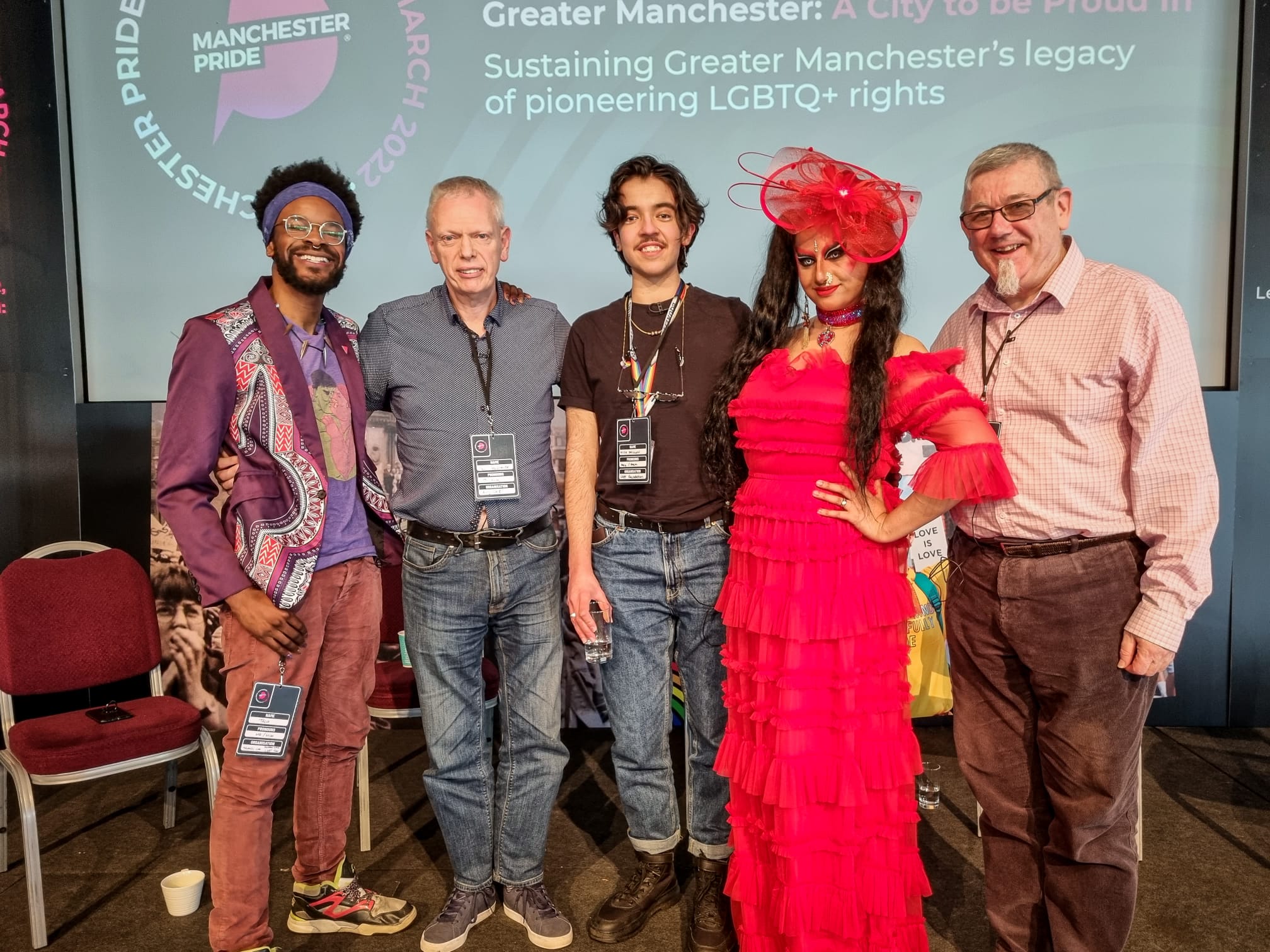
Sustaining Greater Manchester’s Legacy of Pioneering LGBTQ+ Rights

Join Manchester Pride at their fourth annual Manchester Pride Conference on Tuesday 22 March 2022!

Greater Manchester is a city to be proud in. A city dedicated to transformation, unity, collaboration, social justice and equality … we do things differently here.

From the legacy of Alan Turing to the campaigning work of Allan Horsfall in 1958; from Manchester’s Gay Activists Alliance and the radical acts of ACT UP Manchester; to the unified protesting of Clause 28 in 1988 – Greater Manchester has a long and rich history of being at the forefront of the fight for LGBTQ+ liberation for all.

Manchester’s activist roots run deep, and local activists played pivotal roles that continue to transform the UK’s social and political landscape today.

As we campaign for a world where LGBTQ+ people are free to live and love without prejudice, we’re eager to open conversations about how each one of us can work to sustain Greater Manchester’s legacy of pioneering LGBTQ+ rights.

> > Book Your Free Place Here < < 

About The Conference

We’re pleased to welcome you to our fourth annual Manchester Pride Conference, taking place in-person on Tuesday 22 March 2022 at the Lowry, Salford Quays. The event will also be live streamed to ensure the Manchester Pride Conference is accessible to all.

The Manchester Pride Conference provides the opportunity for audiences to attend a diverse range of panels and workshops featuring some of the UK’s leading LGBTQ+ voices. The conference aims to assist attendees in expanding their knowledge on LGBTQ+ issues, whilst also providing practical tools and resources to drive change within organisations and as individuals, all year round.

Panels

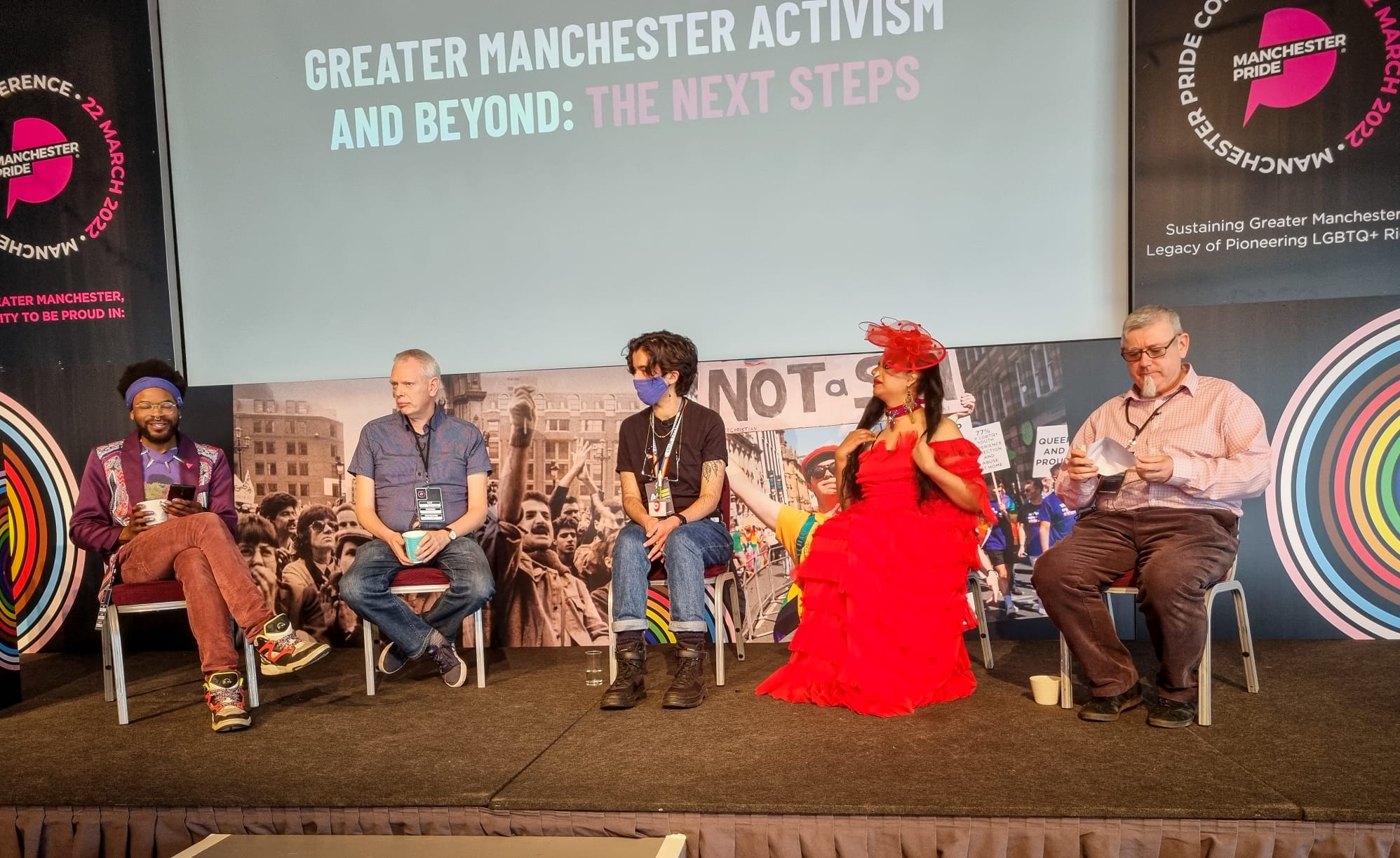
Greater Manchester Activism and beyond: The Next Steps

Tackling racism within the LGBTQ+ community

How are we making spaces accessible for neurodivergent and disabled LGBTQ+ people?

The Changing Landscape of LGBTQ+ Rights

Protecting Trans Youth

Working Class and Queer

Workshops

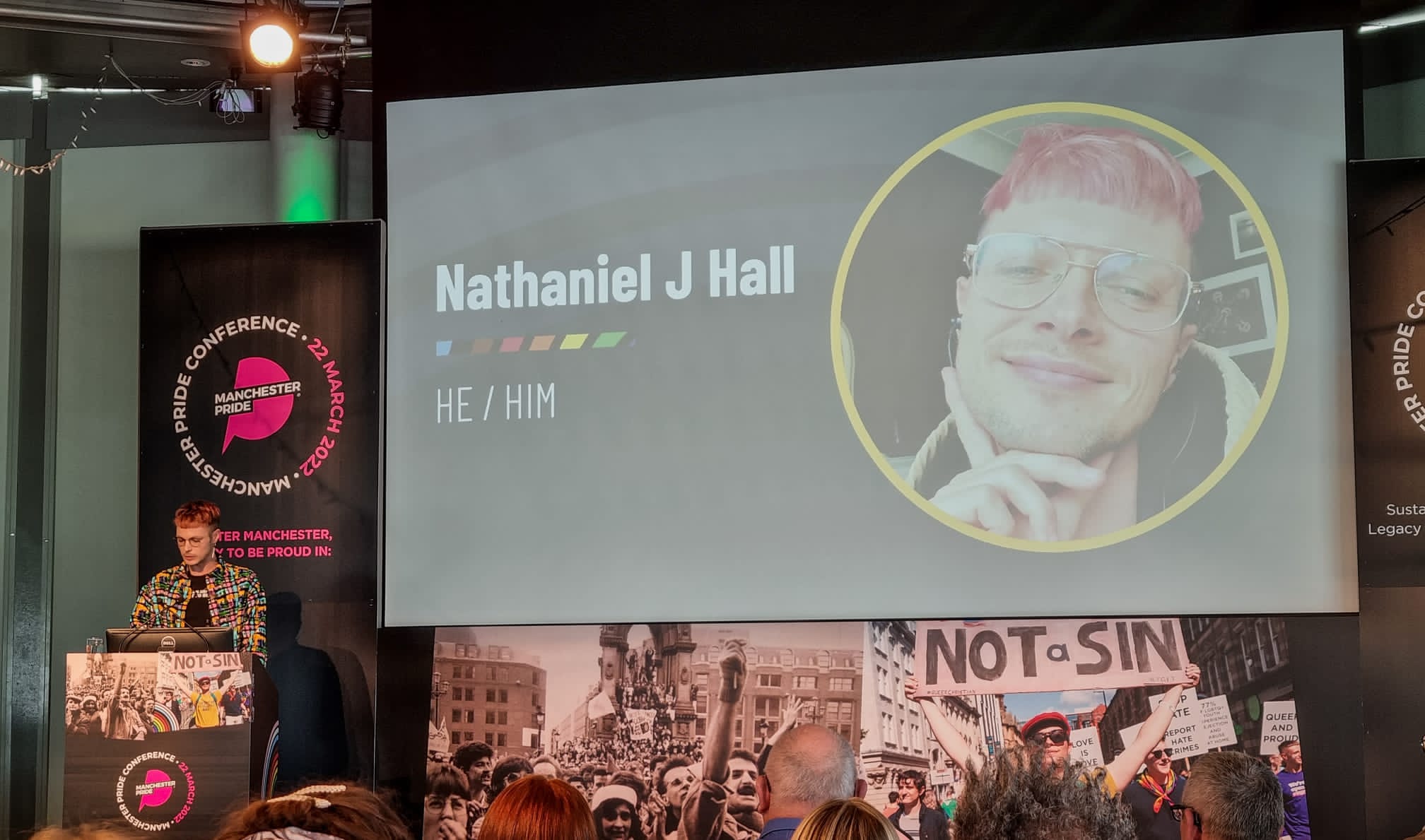
LGBTQ+ Affirmation and the future of EDI, facilitated by Dr. Christopher Owen, Inclusivity Development Manager at Manchester Pride. The Conference will feature a Spotlight Presentation from Mancunian writer, actor and HIV activist, Nathaniel Hall (He/him). Nathaniel’s award-winning solo show ‘First Time’, a powerful story about living with HIV, received audience and critical acclaim.

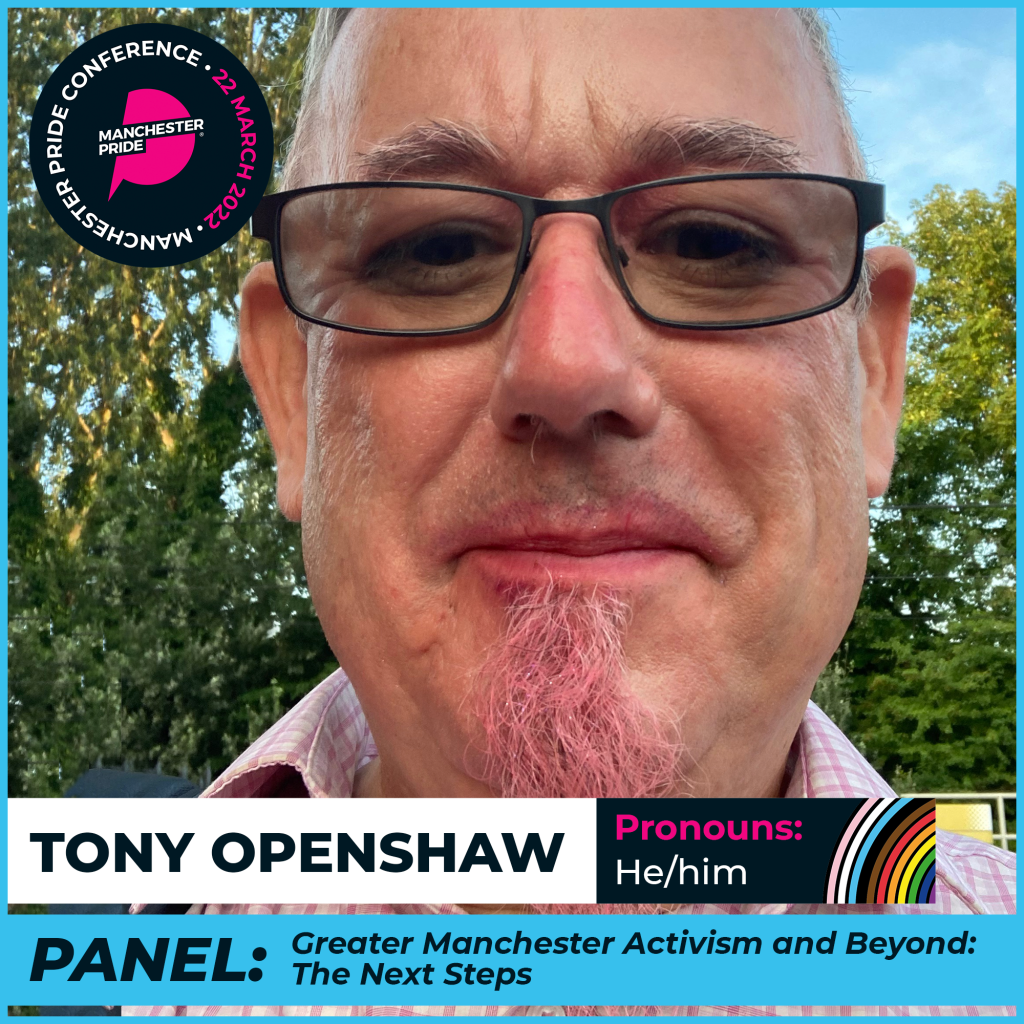
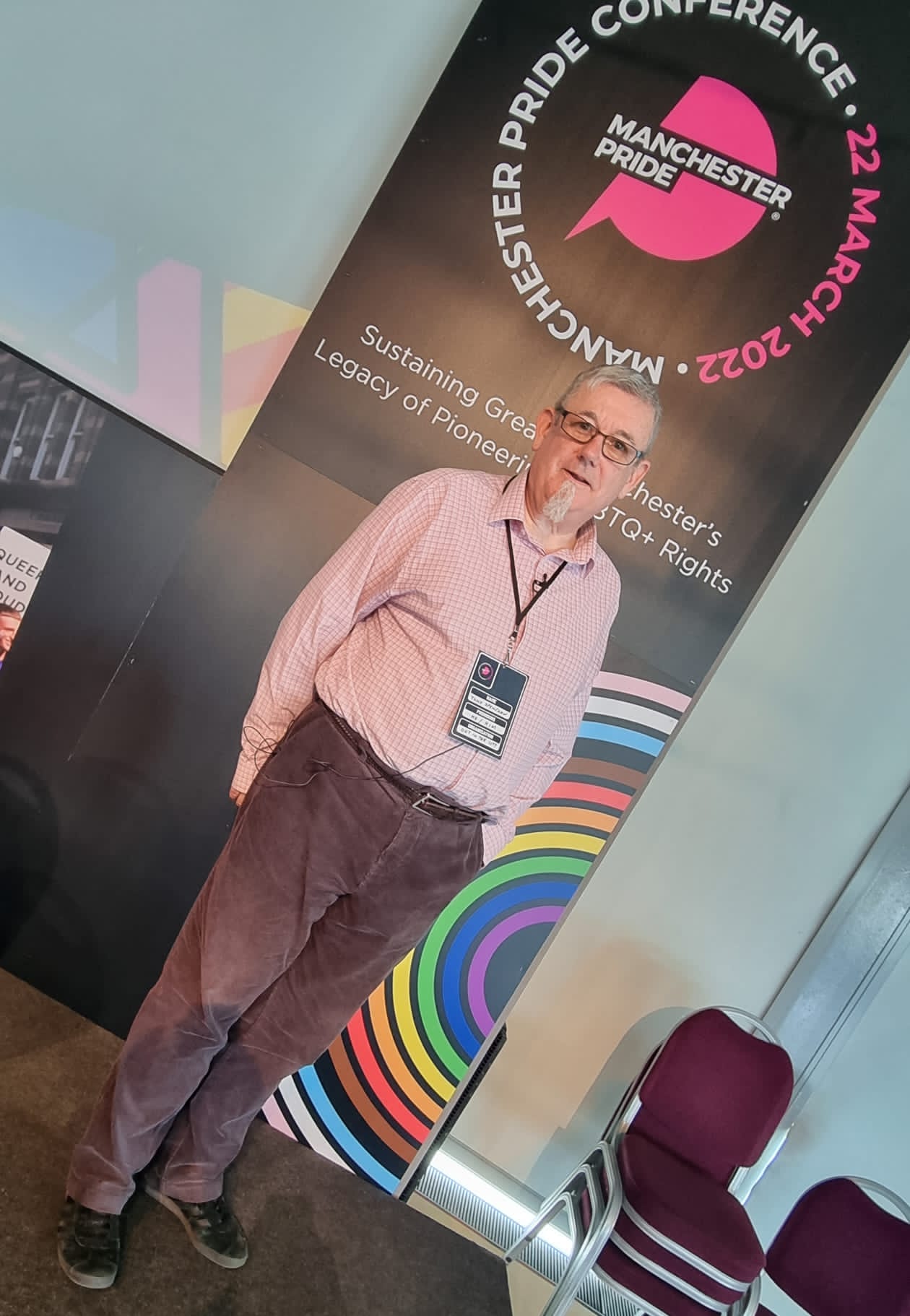
Joining our panel on Greater Manchester Activism and beyond: The Next Steps will be local LGBTQ+ rights pioneer Tony Openshaw (He/him), co-ordinator of the over 50’s LGBTQ+ social and support group, Out In The City.

Lady Bushra (He/she) is the brainchild of British Asian comedian, Amir, and joins us as a panellist on The Changing Landscape of Global LGBTQ+ Rights following a stellar performance at the Gay Village Party in 2021.

Taking part in our panel on Protecting Trans Youth, award-winning trans activist and author, Charlie Craggs (She/her), is best known for her national campaign Nail Transphobia, her poignant book To My Trans Sisters and her BBC documentary Transitioning Teens.

Ali Wilson (She/her) is a neurodivergent and queer theatre maker, producer and comedian based in Manchester. Ali is also Director of Every Brain, and will join our How are we making spaces accessible for neurodivergent and disabled LGBTQ+ people? Panel with the intent to open discussions on the intersections of neurodivergence and queerness. Also joining the panel is Joshua Hubbard (all pronouns) – originally from Oldham, Joshua is a working class, neurodivergent (ADHD), queer, award-winning dance artist, actor, director and producer.

Founder and curator of The Cocoa Butter Club, Sadie Sinner (She/her) also joins this year’s Conference! Sadie Sinner is creates productions which celebrate performers of colour, and facilitates workshops on reclaiming and redistributing the narrative of racially, gender and sexuality othered bodies.

We’re thrilled to welcome Manchester-based queen and star of Channel 4’s Drag SOS, Anna Phylactic (She/they/he) to this year’s Conference, and Creative Director and DJ, Rebecca Swarray (She/her), of RebeccaNeverBecky collective!

Keep an eye out for more exciting announcements.

The Day The World Came To Huddersfield

The UK’s first Pride march taking place through Huddersfield town centre on 4 July 1981 (Image: Kirklees Archive)

The UK’s first-ever national Pride took place in Huddersfield town centre on 4 July 1981 and archivists are asking people who took part and took pictures to get in touch.

There were threats of violence and police intimidation ahead of the march by gay rights activists.

To mark the 40th anniversary, a series of arts and archive events will take place until autumn 2022.

Part of these events is a call-out from the West Yorkshire Archive Service (WYAS) to anyone who attended or watched for photos, banners, posters, badges and flyers from the march.

As part of the project, the pictures will then be made available online free for anyone to view and will become a permanent part of the archives collection.

In addition to this archive work, there will also be two arts strands to the project:

The first will involve internationally renowned photographer Ajamu X3 who will take a series of 20 portraits of people who marched in 1981 and people who are part of the LGBTQ+ community in Huddersfield today.

Ajamu was born in Huddersfield and saw the original Pride 81 march.

The full set of portraits will be displayed at the Lawrence Batley Theatre from 1 June to 31 August 2022.

After that, they will become a part of the permanent collection at Huddersfield Art Gallery.

The 1981 gay pride march in Huddersfield (Image: Peter Scott-Presland)

The second event will see Inkbrew Productions create an immersive performance recreating Pride 81.

The audience will be participants in the march, co-creating the piece with actors playing activists from 1981, who tell their stories as they march. The piece will also be performed as a showcase at the Lawrence Batley Cellar Theatre, Huddersfield and the Kings Arms, Salford from 1-3 July 2022.

Percentage of LGBTQ adults in United States has doubled over past decade, Gallup finds

If younger Americans continue to come out at increasing rates, Gallup predicts the proportion of adults who identify as LGBTQ will exceed 10 percent in the near future.

People celebrate in Washington Square Park during New York City’s Pride Parade on 27 June. Mathias Wasik / dpa / picture alliance via Getty Images

The percent of American adults who identify as something other than heterosexual has doubled over the last 10 years, from 3.5 percent in 2012 to 7.1 percent, according to a Gallup poll released on 17 February 2022.

Gallup found that the increase is due to ​​”high LGBT self-identification, particularly as bisexual, among Generation Z adults,” who are 18 to 25.

It asked 12,416 American adults how they identify during telephone interviews last year, and found that younger American adults are much more likely to identify as LGBTQ than older generations.

More than 1 in 5, or 21 percent, of Generation Z adults identify as LGBTQ, Gallup found. That’s almost double the proportion of millennials, who are 26 to 41, at 10.5 percent, and nearly five times the proportion of Generation X, who are 42 to 57, at 4.2 percent. Less than 3 percent of baby boomers, who are 58 to 76, identify as LGBTQ, compared to just 0.8 percent of traditionalists, who are 77 or older.

As the youngest Americans slowly outnumber and replace the oldest, Gallup predicts the number of LGBTQ-identifying adults will only increase — and likely at a much faster rate than past generations.

If the trend of millennials and Generation Z increasingly identifying as LGBTQ continues, “the proportion of LGBT Americans should exceed 10 percent in the near future,” Gallup found.

Bisexuals make up 4 percent of all American adults

Bisexuality is the most common identifier used among LGBTQ Americans, which is in line with a Gallup report released last year. More than half of LGBTQ Americans, at 57 percent, are bisexual. 

Over one-fifth of LGBTQ respondents, or 21 percent, are gay, 14 percent are lesbian, 10 percent are transgender and 4 percent identify as something else. 

Overall, 4 percent of American adults identify as bisexual, compared to 1 percent who identify as lesbian, 1.5 percent as gay, 0.7 percent as transgender and 0.3 percent as other. Heterosexuals comprised 86.3 percent of total respondents, and 6.6 percent did not offer an opinion.

Generation Z adults are the most likely to identify as bisexual, at 15 percent overall, compared to 6 percent of millennials and less than 2 percent of Generation X, baby boomers and traditionalists. 

Increasing acceptance — in certain areas

According to Gallup, 70% of Americans are currently in support of same-sex marriage, marking a steep increase from 1996, when only 27% of Americans supported it.

But that support varies when broken down further. For example, Gallup’s annual Values and Beliefs survey found last year that 66 percent of people favour allowing openly transgender people to serve in the military, but at the same time, 62 percent of Americans say trans athletes should only be allowed to play on sports teams that correspond with the sex they were assigned at birth, while 34 percent say they should be able to play on teams that match their gender identity.

Mara Keisling, former executive director of the National Center for Transgender Equality, noted that as more Americans know trans people and more young people identify as LGBTQ, acceptance will grow. As for those pushing anti-transgender legislation, she added, “Someday, they’ll be in the dustbin of history.”

Whitworth Art Gallery … HIV Treatment … Pioneers Who Broke Barriers and Changed Lives … Manchester Pride Conference 2022

News

After visiting the Turing Tap for lunch, we visited the Whitworth Art Gallery.

Thanks to Angel for this write-up: “Sir Joseph Whitworth was an engineer born in Stockport, Greater Manchester, in 1803. He was a pioneer in the design and assembly of elements in textile machines, which were previously built as unique parts.

When he died, he had an estimated fortune of £130 million. With that money, the Whitworth High School and Park was created, which currently monitors thousands of works of art. Whitworth Institute has historically promoted “useful art,” both in textile products, Sir Joseph Whitworth’s specialty, architecture, furniture and everything around us in everyday life.

One of Sir Joseph Whitworth’s contributions was to “industrialise” textile designs, which were manually produced in India, Africa and America, making them popular and affordable to the whole world. This work was not odd to the expulsion of colonies during the “Pax Britannica” (1815-1914), a period that coincided with Victoria’s reign and the British imperial boom. Currently, Whitworth High School seeks to restore the historical rights of the creators of the former colonies.

The park and gallery are open to the public free of charge.”

More photos can be seen here.

Treating HIV is about to get a whole lot easier

Photo: Shutterstock

The United States Food and Drug Administration (FDA) has approved a form of HIV treatment that only needs to be taken once every two months with an injection in the buttocks.

The FDA already approved a once-a-month injection in January 2021. The shot contains cabotegravir (ViiV Healthcare) and rilpivirine (Janssen Pharmaceuticals). At the time, its makers said they were confident that the shot could work for longer, but needed more data to back up the claim.

The once-every-two-month injection is for HIV-positive adults who are already virally suppressed, have shown no previous treatment failure or resistance to either of the drugs involved.

The FDA granted approval after results from a trial showed the injections remained efficient if given every couple of months.

The lead researcher involved with that trial, Turner Overton, MD, a professor of medicine in the division of infectious diseases at the University of Alabama at Birmingham, said in a statement, “Many people living with HIV face challenges with daily therapies and are interested in alternative dosing options.

In clinical trials, approximately nine out of every ten trial participants preferred long-acting cabotegravir and rilpivirine dosed every two months compared to daily oral cabotegravir and rilpivirine.”

Viiv Healthcare is predominantly owned by GlaxoSmithKline. Lynn Baxter, Head of North America at ViiV Healthcare, said in a statement announcing the approval, “Today’s approval is a remarkable achievement given where HIV treatment was just a decade ago. We know some people living with HIV struggle with taking daily oral pills, and Cabenuva may allow them to maintain viral suppression while significantly reducing dosing to as few as six times a year.”

Long-acting cabotegravir and rilpivirine are already approved for use every two months in Canada under the name Cabenuva and in the EU as Vocabria and Rekambys.

Matthew Hodson, Chief Executive of HIV information organisation NAM aidsmap, welcomed the news: “For many people taking daily pills becomes an emotional burden, a constant reminder that their health is at risk without medication. For some, who are unable to be open about their need for HIV treatment, it can create considerable obstacles to necessary adherence required for HIV medication to be effective. For many, a switch to injections just six times a year will be a liberation.”

Pioneers Who Broke Barriers and Changed Lives

The LGBTQ+ community shares a rich community history rooted in courage, compassion, defiance, and activism that we should be proud of. Here are just a few of the LGBTQ+ pioneers who broke barriers and changed lives:

Ernestine Eckstein | 1941 – 1992

Ernestine Eckstein was one of the most radical thinkers of her time and an influential activist in the LGBTQ+ equality and Black Feminist movements of the 1960s. During a period of history when the vast majority of the LGBTQ+ equality movement was led by, strategised by, and voiced by white people, Ernestine brought her insight and experience with the Civil Rights Movement and pushed for greater lobbying and demonstration efforts. She saw public demonstrations as an essential tool for enacting change, and in 1966 said: “Picketing I regard as almost a conservative act now. The homosexual has to call attention to the fact that he’s been unjustly acted upon. This is what the Negro did.” Most of the recorded history we have is from an interview that Ernestine did with “The Ladder” in 1966. She was one of only two women of colour to be featured on the cover.

Audre Lorde | 1934 – 1992

Audre Lorde committed her life to combating the racism, sexism, classism, and homophobia that she encountered. Lorde found her passion for poetry when she was a young teenager and as she got older, compiled a library of powerful poems of protest and literature surrounding the feminist, civil rights, LGBTQ+ equality, and black cultural movements. Audrey herself was an accomplished essayist, and in 1981 founded Kitchen Table: Women of Color Press to provide a platform for other black feminists to publish their literature. Whether raising her voice during the National March on Washington for Gay and Lesbian Rights or writing from her home, Audrey never hesitated to speak out against injustice and discrimination.

James Baldwin | 1924 – 1987

One of the 20th century’s most acclaimed writers, James Baldwin used his literary platform to explore and expose racial and social issues. James’ first novel, “Go Tell It On The Mountain” was published in 1953. The following year, James received the Guggenheim Fellowship, with which he wrote his second novel, “Giovanni’s Room”,  featuring a complex – and at the time, taboo – depiction of homosexuality. James was open about his sexuality and relationships with both men and women, and continued to depict this controversial topic in his writing. Throughout his career, he never failed to provide a prolific and starkly honest window into the black LGBTQ+ experience.

Mabel Hampton | 1902 – 1986

Mabel was an outspoken lesbian, activist, and philanthropist during the Harlem Renaissance. Mabel was a dancer in all-Black productions, an active volunteer for the New York Defence Recreation Committee, and a committed supporter of numerous LGBTQ+ organisations. When she was 82, Mabel stood up at the New York City Pride Parade and shouted to the crowd, “I, Mabel Hampton, have been a lesbian all my life, for 82 years, and I am proud of myself and my people. I would like all my people to be free in this country and all over the world, my gay people and my black people.” Throughout her long life, Mabel preserved letters and records capturing the experiences of Black women and lesbians, which she later donated to the Lesbian Herstory Archives.
Bayard Rustin | 1912 – 1987

Bayard Rustin was an incredible leader in the American civil rights, socialism, nonviolence, and LGBTQ+ equality movements. Best known for his civil rights activism, Rustin helped organise the 1941 March on Washington, he facilitated Freedom Rides, and was an organiser of the March on Washington for Jobs and Freedom, where Martin Luther King Jr gave his famous “I Have a Dream” speech. However, Bayard was much more than just a civil rights activist. He was also a passionate humanitarian who advocated for many missions, including aiding refugees from Vietnam and Cambodia, as well as in Haiti. In the 1980s, Rustin began to engage in LGBTQ+ activism, testifying on behalf of New York State’s Gay Rights Bill in 1986.

Marsha P Johnson | 1945 – 1992

Who better to end with than the iconic Marsha P Johnson? Born in Elizabeth, New Jersey, she moved to New York City in 1963 with $15 and a bag of clothes. Marsha supported herself as a sex worker, but could often be found in Greenwich Village on her nights off. Marsha was only 23 on the night that the Stonewall Inn was raided, yet she was right in the front, alongside those resisting the police. But Marsha’s impact spanned far more than a single, albeit iconic, night. She was a dedicated AIDS activist, an outspoken voice for LGBTQ+ equality, and a co-founder of Street Transvestite Action Revolutionaries, a collective that provided support for homeless LGBTQ+ people and sex workers.

Manchester Pride Conference 2022

Join Manchester Pride at their fourth annual Manchester Pride Conference on Tuesday 22 March 2022!

Greater Manchester, A City to be Proud In: Sustaining Greater Manchester’s Legacy of Pioneering LGBTQ+ Rights

This is a full day of conversations, panels and workshops at The Lowry, Salford.

Please go to the website here to find out more details and to register. Each person must register in order to attend.

Research on covid-19 and Social Exclusion … Fred Barnes

News

Prize winning Research on Covid-19 and Social Exclusion

A number of members of Out In The City were interviewed two or three times by researchers from the Manchester Urban Ageing Research Group (MUARG) on social exclusion following covid-19.

Sophie Yarker from the University of Manchester advised that: “The Manchester Urban Ageing Research Group have won the Manchester Sociology Public Engagement Prize for their research into covid-19 and older people living in Greater Manchester. The panel specifically commended the collaborative nature of the project which would not have been possible without your help and support so I would like to take this opportunity, on behalf of the whole research team, to thank you for your valuable contributions to the project.”

Pride In Ageing was also a key collaborator for this research – giving interviews during the lockdowns, finding participants and supporting recommendations that LGBT communities be identified as a key group within their report’s focus and findings.

Fred Jester Barnes

Music hall character and comedy vocalist Fred was born in Birmingham on 31 May 1885, the son of Thomas William, moderately successful local butcher, and his wife Lady Alice (née Jester).

He was educated at a school in Malvern, and made his first appearance at the Gaiety Theatre, Birmingham, in December 1907. His London debut was at the Empress music hall, Brixton, in March the following year, where his success was immediate.

Afterwards he was featured at one time or another on the bills at almost every metropolitan and provincial music hall of note in the British Isles, as well those in Australia and South Africa; he also starred briefly in vaudeville in America. Fred Barnes made the occasional pantomime appearance, including as one of the Dandies in Cinderella at the Opera House, Middlesborough (Christmas 1907), and was seen in the London Palladium revue The Whirl of the Town in 1915.

The latter part of Fred Barnes’s career was overshadowed by self-inflicted misfortune about which he wrote an article, “How Success Ruined Me,” for Thompson’s Weekly News in 1932. Off stage he lived a scandalously carefree life, never hiding his preference for the company of other men. In an age when this was not openly tolerated he was increasingly shunned, even by friends in the music hall profession. A minor incident in a motor car, in which his passenger was a young sailor, in Hyde Park on the evening of 19 October 1924 lead to a charge of being drunk while driving and driving without a license, for which he was later imprisoned for a month and fined.

Although Fred Barnes’s career continued, his fondness for alcohol rendered him unfit to perform on several occasions and by the mid 1930s he had all but dropped out of sight. Eventually suffering from tuberculosis he went to live with John Senior, friend and manager, in a small flat at Southend-on-Sea where on 23 October 1938 he was found dead from the effects of gas poisoning.

Phyllis Christopher’s Best Photograph … Bi Community News

News

Joy and Nakedness at San Francisco’s Dyke March

Shirtless statement – Dyke March 1999. Photograph: Phyllis Christopher

Phyllis Christopher writes:

“In San Francisco, the night before the annual Pride parade is reserved for the Dyke March, a celebration of lesbian life throughout the city. It was like our Christmas – the biggest night of the year – and half of us would be so hungover we wouldn’t make it to Pride the next day.

I remember getting a call from an editor at On Our Backs, a lesbian magazine run by women that billed itself as offering “entertainment for the adventurous lesbian”. It was a bedrock of the lesbian community – one of the few ways to communicate with one another, and to celebrate sex and educate each other about it at a time when AIDS had brought so much devastation to queer communities. The editor wanted me to shoot a kiss-in, but the tone of her voice sounded almost guilty – like she couldn’t quite bring herself to ask me to work on the biggest party night of the year, but to me, it was the most fun I could imagine.

Lesbians from all over the country, many of whom I knew, had gathered in the park, mingling and chatting to whoever came along – gay, straight, whatever gender. But when the Dyke March began, the crowds cleared and the Dykes on Bikes took the lead, with the rest of us forming a column behind.

I’ve always found something beautiful about that moment: people stepping aside to give lesbians their space, to celebrate and applaud them. Many of the women would march shirtless as a gesture of their freedom. It was a time for lesbians to assert themselves in the public sphere, a moment of safety and joy.

The rules of the Dyke March were pretty much “anything goes as long as it’s fun”. Women were celebrating being half naked, feeling safe and supported by everyone. There were no protestors because there were simply too many queer people in San Francisco. It was a moment of wild abandon, marching through the street, climbing bus stops, on top of cars, hanging out of windows.

The photo above was taken on 18th Street in the Castro, one of the centres of queer life in San Francisco. Anyone who had an apartment on the march route would take full advantage of their windows. Every year, the inhabitants of houses would lean out of the windows, often with signs, screaming for the crowd and the crowd would scream back.

More than 20 years later, this image still hits me in my gut: I feel the power in it. It encapsulates a kind of joy that, at the time, was absolutely necessary. It was a way of celebrating sex in the face of the death wrought by AIDS, and in opposition to voices on the right who blamed us for the epidemic. We couldn’t marry and job security was still uneven for queer people. We still felt like outlaws.
I have immense respect for the women who let me photograph them. It was a real political statement. But there was a feeling that it was also essential to let other gay women know that they were not alone. There’s always this stereotype of the lesbian as angry. Often we had reason to be. But sometimes, we were too busy having a great time.”

An exhibition of Phyllis Christopher’s work is at the Baltic, Gateshead, until 20 March.

Her book “Dark Room: San Francisco Sex and protest, 1988 – 2003” is out now, cost £24.00.

Bi Community News

Bi Community News (commonly shortened to BCN) is a bimonthly magazine, and the United Kingdom’s only magazine serving the bisexual population. It includes many articles reflecting bisexual life and media representation as well as news from the bisexual community.

The current editor is Jen Yockney MBE, who interviewed Norman for the latest issue (Winter 2021):

Telling Tales
As part of Manchester Pride there was a display for a local LGBT+ Oral Histories Project. Set in a public garden an assortment of posters of ordinary queer folk were tagged with QR codes that let you listen to their stories.

I went to the launch event and as someone who goes to LGBT talks fairly often it was a delight to have the first speaker talk about their experiences as an older bi man – that felt so rare. As the opening medley by a women-and enby choir came to an end, Norman talked about his experiences coming out as a bi man in later life. I grabbed him for a quick chat afterwards.


Norman: “It does me good talking about my story and I’m glad if it helps others as well, especially the older people.
I’m 71 and for the older LGBTQ – and bisexual, which is sort of swathed in between – I’m very proud to be part of the Pride in the gay village, which I’ve only started coming to in the last two years and feels so very comfortable. I’m part of an older LGBTQ people’s group and we meet in person again now. That group has let me make some lovely friends to laugh and joke with but be supporting and welcoming.”

How did he find his sense of being bi?

“We have sometimes not known which way to go as bi people – and when I was young, I was so very in love with my wife and really wanted to be straight. It took a long long time, it’s only in the last few years I have accepted I am bisexual. I’ve always said when bad things happen in life something good comes out of it and I loved my wife very much. I could not come out while she was here, but here I am now and it can be the same for other people.

It was difficult a few years after we got married I’d kept this to myself. When I told my wife, she told me that she already knew. She was intuitive and clever and she said: no, we are going to stick together. We would laugh and joke, she’d say that if I met a man I should bring him back for her, and she knew I was not so comfortable with some of the chatter of the men folk and would draw me in to being with her and her friends in social settings.”

His face lights up as he explains that the exhibition had got him on local TV and radio. “I’m thinking the more this gets into the media the more we can help people – there are people out there where there is still stigma about being LGBTQ, it’s why we still have a gay village where people can be themselves

For other older bis: “My advice is try to talk to someone, if there is no one then phone up a helpline. A doctor may be able to send you to a counsellor, or you can google for help groups for LGBTQ that are out there. Don’t do what I did and bottle it up for years because of others – you need to think of yourself. I have a relative in Bury and I’ve told her, she’s not told her husband yet but after he sees me on TV tomorrow – I am not worried at all what will happen any more, because I am me.”

Chatting with an older bi man made me reflect on the generation gap not just for bis but in the wider LGBT community, between people who grew up more recently who have been able to take so much freedom for granted.

Debates on same sex marriage are the best part of a decade old now – you can be old enough to marry and barely remember it being limited by gender. Never mind how long ago things like Section 28 or sex between men being legal is.

Yet hundreds of thousands – maybe millions? – of us grew up before all that. So many queers grew up with laws telling us we weren’t right or that we should make particular life choices to fit in better with cis and hetero normality. The lack of reflection of our lives in the media was its own version of the crass misrepresentations of social media campaigns today about the imaginary threat posed by trans people getting the same rights to function in society as cis folk are used to. It’s more often an issue for bis as we are more likely to have wound up in mixed gender relationships, with all the pressures that can bring around not coming out as it might either unsettle our partner or make friends assume there is a break up on the horizon.

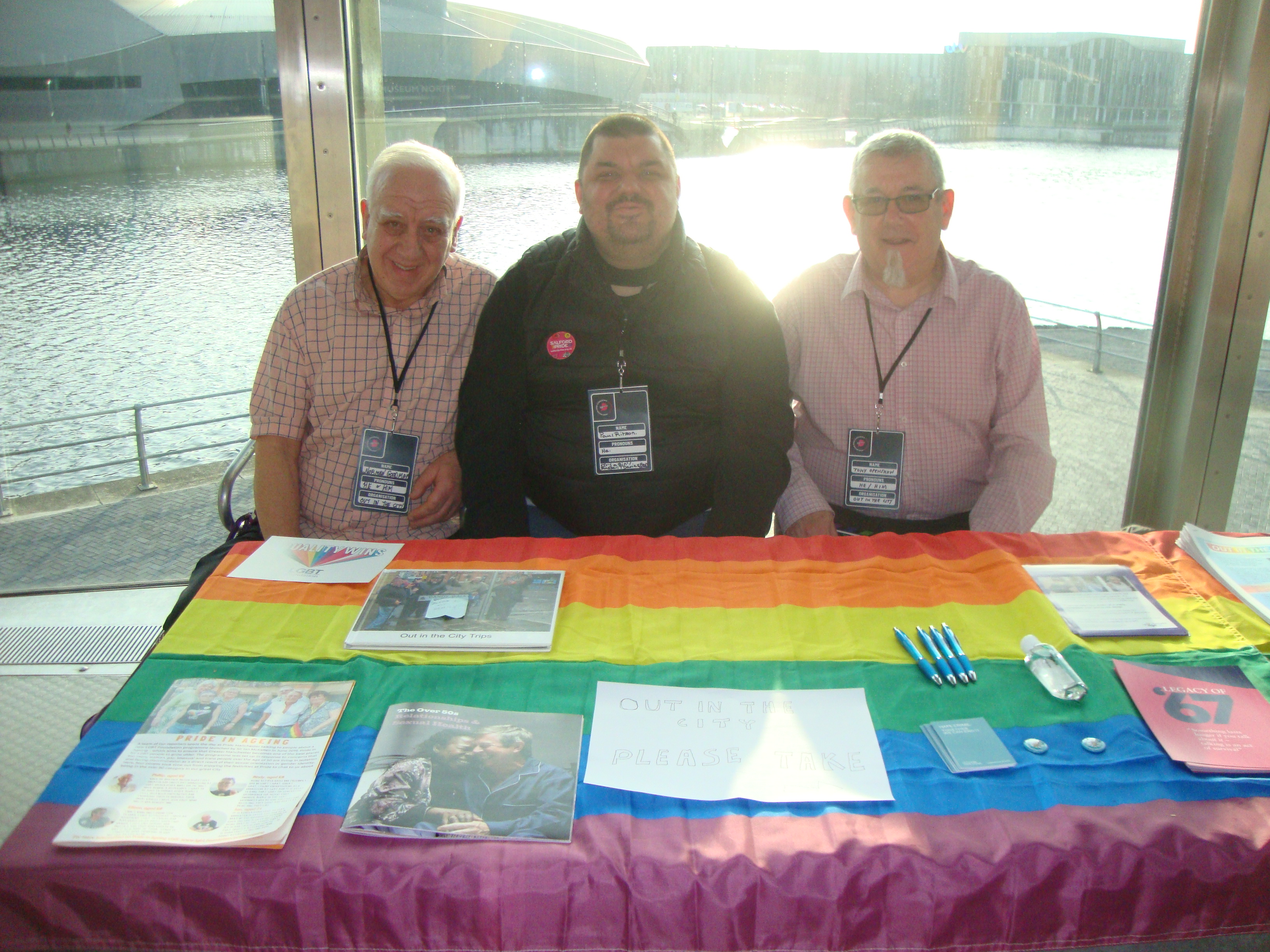
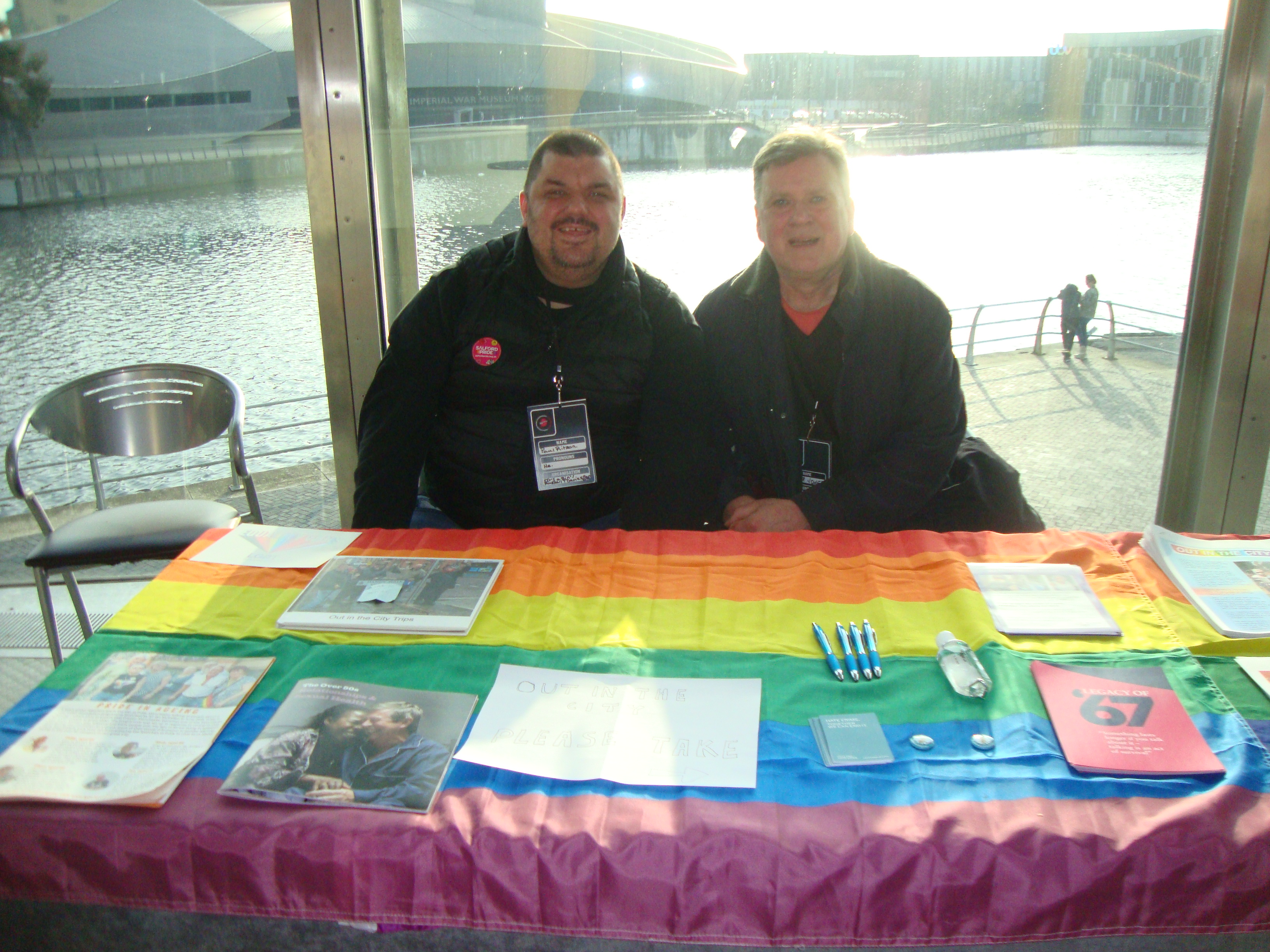
Out In The City at Manchester Pride in 2009