Number of people who identify as lesbian, gay or bisexual at UK high

News


Happy Birthday to Paul R on 28th May

and

Happy Birthday to Jackie on 30th May.


…………………………………………………………………………………………………………….

LGB population rises to 2.2%, while proportion identifying as heterosexual falls to 94.6%

The number of people identifying as lesbian, gay or bisexual (LGB) in the UK has increased by more than a third in four years, figures show.

Data taken from the annual population survey (APS), which collects information on self-perceived sexual identity from people aged 16 and over, found that the number had increased from 1.6% in 2014 to 2.2% in 2018.

The overall proportion of the UK population that identify as heterosexual, or straight, decreased from 95.3% in 2014 to 94.6% in 2018.

In 2018, there were an estimated 1.2 million people aged 16 years and over who identified as LGB. Young people, aged between 16 and 24, were the most likely to identify as LGB at 4.4%.

More than two-thirds of the UK’s LGB population were unmarried or had not entered into a civil partnership by 2018, according to the figures.

Sophie Sanders, from the Office for National Statistics population statistics division, said: “People in their late teens and early 20s are more likely to identify as LGB than older age groups.

“Meanwhile, more than two-thirds of the LGB population are single and have never married or entered into a civil partnership.

“This reflects the younger age structure of this population, the changing attitudes of the general population to marriage and the fact that legal unions have only been recently available for same-sex couples.”

Civil partnerships were introduced for same-sex couples in the UK in December 2005 and same-sex marriage has been legal in England, Wales and Scotland since 2014 and in Northern Ireland from February this year.

Robyn Peoples, 26, and Sharni Edwards, 27, made history when they became the first same-sex couple to tie the knot in Northern Ireland.

Laura Russell, the director of campaigns, strategy and research at Stonewall, welcomed the rise in the number of people identifying as LGB.

“This is likely because more and more people feel comfortable to be open about who they are,” she said.

“But we know these figures still won’t be an entirely accurate representation of the number of lesbian, gay and bi people in the UK.

“If we want to live in a world where everyone is accepted without exception, we need every person who believes in equality to stand up and support their LGBT friends, family and the wider community.”

Another survey … COVID 19: the impact on older people’s experiences of social exclusion

News

We have been contacted regarding a new study by Manchester Institute for Collaborative Research on Ageing (MICRA) at the University of Manchester.

It is a small project looking into LGBT people over 60 who were experiencing social exclusion / isolation before the pandemic and the impact of social distancing rules on their circumstances.

Please contact me if interested, so arrangements can be made.

Introduction to Research

Background

This research is being led by researcher at the Manchester Institute for Collaborative Research on Ageing (MICRA) at the University of Manchester.

The research will involve interviews (by telephone) with older people about their current experiences of social distancing and self-isolation at the time of the Covid 19 pandemic. We are interested in how people are coping with social distancing, what support they are able to access and what gaps in support might exist.

We want to find out how social distancing is affecting people’s everyday lives, from your perspective. We will talk to a range of people from a range of backgrounds, different communities and who are living a range of circumstances such as those living alone and those who live with their extended families.

The reason that we are carrying out this research is that there has been lots of attention brought to the negative impact of the virus on older people. But we feel that the voices and stories of older people have not yet been heard, and that older people have not been consulted about the types of support which have been provided so far.

The aim of our research is to collect a range of detailed accounts of everyday live during coronavirus, so we can advise services about what is currently working well, and where people over 60 need more support.

We feel that it is important to understand the experiences of a range of groups of people over 60 and to raise attention to where there are gaps or issues which need to be addressed.

If you do choose to take part in the research your anonymity will be protected and all names and other identifying information removed.

Taking part

The research will involve you speaking to our researcher, Luciana Lang by telephone.

The first telephone call will be short and a chance for you to introduce yourself to each other and for you to ask any questions you have about the research. Luciana will also ask for some background information such as your age, who lives in your household, occupation and health status etc.

The first interview will take place about a week later. All interviews will be audio recorded for our note taking and then transcribed. The interview should last around 30 minutes.

You will then receive a check up phone call about 2-3 weeks later to see how you are getting on and to update you on how the research is progressing. We will then organise another time for follow up interview to see how their experiences have changed over time.

The Second interview again will be audio recorded.

Ethics

  • Ethical approval has been given by the University of Manchester.
  • Verbal consent will be required over the telephone.
  • All interviews will be recorded and transcribed
  • We may wish to use some of the interviews at a later date to create a podcast, or to play in presentations

Data protocol

All documents containing participant information should be locked – a password will be agreed by the project team.

News updates

News

One of the issues arising from the lockdown is that I need my hair cutting badly … or do I mean, I badly need my hair cutting?

It’s Norman G’s birthday on 20 May. I wonder how old he is? Here’s a clue:

………………………………………………………………………………………………………………………..

Talking About My Generation

I was interviewed by Talking About My Generation and this is the article they have produced:

Campaigners celebrate 30-year anniversary of homosexuality being declassified as a mental disease

It has been three decades since the World Health Organisation removed homosexuality from the classification of diseases and related health problems.

And while this now seems an absurd reality in 2020, it is a time that was lived through by many people across Greater Manchester – and 68 countries still criminalise same-sex relations.

Sunday (May 17) marked the start of the International Day Against Homophobia, Transphobia and Biphobia (IDAHO) celebrations, which aims to raise awareness of LGBT rights and discriminations.
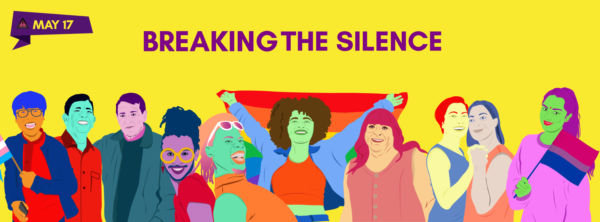
This year the theme is Breaking the Silence, so to help with that we caught up with Tony Openshaw, who runs Out in the City – a social group for over 50s in the LGBT community to get his thoughts on how far we have come in society to be inclusive, what more needs to be campaigned for and the lasting effects discrimination has on people’s mental health.

Tony said: “For LGBT people, IDAHO serves as an interesting retrospective on our history and how much has changed and how much we need to continue pushing for change.

“It is also a rallying cry for the eradication of the continued discrimination, prejudice, and violence LGBT people face at home, in public, and in written law every day.

“We have come so far, there have been many positive changes in my lifetime. But I am of the generation that it was very difficult for. My parents sent me to a psychiatrist because I told them I was gay, I was evicted from a house I was living in for being gay at one point in time, and I know two people who have been given electric shock therapy to ‘help’ them to not be gay, and a women offered a lobotomy.

“If you ask many young people today, they would be shocked that up until 1990, homosexuality was classified as a mental disorder – but this is not something people from my generation in the LGBT community easily forgets.

“I am glad that it is better for this generation – that is what we fought for. But it can still be a big stigma for older LGBT people

“Discrimination and violence against LGBT people continues to occur at unacceptable rates, and we all have a responsibility to use our voices to speak up, in relation to our own challenges and the struggles of others. A culture of inclusivity and freedom can only extend to everyone if we fight for it.


“The anniversary of this pivotal day also falls in Mental Health Awareness Week, and it is important to remember that while Manchester is leading the way when it comes to acceptance and inclusivity for the LGBT community, there are still many people struggling with how to cope with coming out from every walk of life.

“But one area of society that I feel passionate about is supporting LGBT asylum seekers, who have had so much discrimination in their own countries and need support to start a new and better life here in the UK.”

As well as his campaigning work, Tony runs Out in the City, a project (supported by Age UK Manchester) to support members of the lesbian, gay, bisexual and transgender communities who are over 50 years of age.

For more information go to https://outinthecity.org/

………………………………………………………………………………………………………………………..

King Lear Prizes:

The new national creative arts competition for the over 70s stuck at home because of Coronavirus

Many people in the UK are still staying at home due to Coronavirus, and older people have been particularly restricted in what they can do and who they can see.

Our greatest writer, William Shakespeare, was faced with a similar situation, with outbreaks of the plague throughout his career, and in particular in 1605 – 06, when he wrote his King Lear.

The King Lear Prize Committee have launched the King Lear Prizes to encourage amateurs and beginners to have a project to get stuck into, and to create new works of literature, poetry, music, drama and art during the time they are quarantined.

There are various categories with a chance to win £1,000. See the following link for rules and how to enter:

https://www.kinglearprizes.org.uk/

Pauline has already made a start:

Light the Torch ~~~~ Pride in Ageing

50 thousand of us

Old and bold

Old and not so bold

We are the older LGBT people

In Our Place

In all ten boroughs across Manchester.


Last June we lit the torch

to fight yet again for what we believe

Dignity, compassion, self worth

In our place

We are everywhere

Your neighbour…your gran, your grandad.


Pride in Ageing is about

Our self worth…our inner being

We are 50 plussers

50 thousand strong

Determined and feisty.


Do we want to be taken into care?

Not now

Covid 19 is not the real issue for us

Discrimination is

Can we be who are are,

And want to be in our twilight?


Last year something new

As oldies we lit the torch

With Barclays and the LGBT Foundation

Pride in Ageing its called

For a reason…..


As young people we fought

Just to be us…with Pride

Against Section 28 and other rules

We survived Aids

We have lit the torch again


And the flame burns brightly

We will pass on the torch

To those who come after us

All of us LGBT people

“Who take a walk on the wild side”


Yes …we do care

About dignity, self worth and compassion

In our older years

For all of us

And all those who come after.

Pauline Smith May 2020

………………………………………………………………………………………………………………………..

The LGBT Foundation is launching a new national campaign #MyPrideIs which will debut in the new issue of a major LGBT publication. Does anybody have any photos from Pride events which could be used in the campaign? Please let us know.

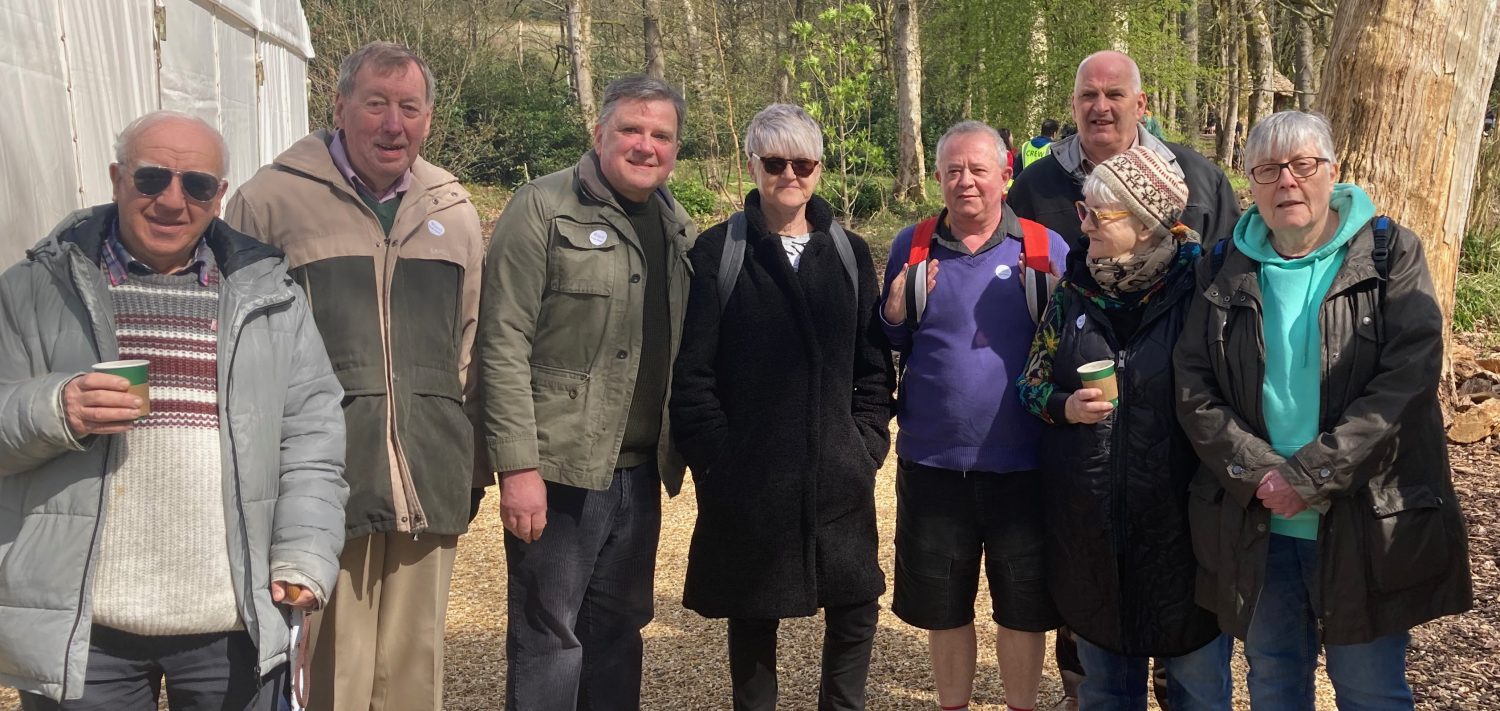
Leeds & Manchester Prides cancelled

News

Leeds Pride (the 15th anniversary celebrations) that were due to take place on 2 August 2020 has been cancelled. The event attracts over 50,000 people.

The Manchester Pride has also been cancelled. This is the full statement:

“We are both heartbroken and devastated to deliver the news that we have made the decision to postpone this summer’s Manchester Pride Festival until August 2021. 

Whilst we are a charity that campaigns all year round, the Festival is our flagship event. It is one of the biggest celebrations of LGBTQ+ life in the UK and the highlight of the year both for our team, and for many of you. 

This decision is not one that has been taken lightly. Our small team has been working tirelessly to ensure we would be prepared for every eventuality, and we have consulted with everyone that we needed to in order to reach this decision. To put it simply, the ongoing situation is incredibly uncertain and it would be too much of a risk to go ahead with plans to deliver the Festival this year. 

While some of you may have been expecting this, we know many of you will be just as disappointed and upset by this news as the Manchester Pride team. We have anticipated the many questions you may have and ask that you read through the communication on our website to better understand this decision.

We know that those of you who have bought tickets will be wondering what happens with them. To reassure you and to secure your place at the Festival we’re rolling them all over to the new date in August 2021.

Manchester Pride Festival has a massive impact on many people’s lives including our attendees, community organisations, local artists and Gay Village businesses. We extend our solidarity to everybody affected by this news, and although we cannot deliver the Festival as we know and love this year, we are still planning to celebrate LGBTQ+ life in Greater Manchester. We’re in the very early stages of working on ideas for an alternative celebration in 2020 and we’ll share our plans with you once they can be confirmed.

In the meantime, the Manchester Pride team will continue working towards our vision of living in a world where LGBTQ+ people are free to live and love without prejudice.

The Trustees and Team at Manchester Pride.”

……………………………………………………………………………………………………

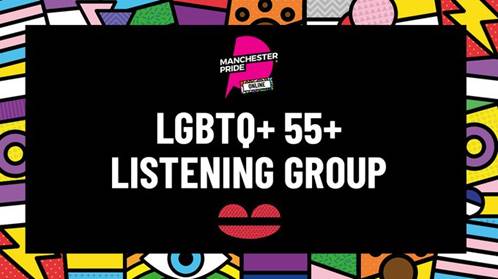
Manchester Pride have now released further details of their Listening Group for over 55’s. This will happen on 4 November 2020 via Zoom.

The Listening Groups are consultations so that the Manchester Pride team can better represent, support and celebrate the community.

The Listening Groups are as follows:

23 May 2020 – Trans Listening Group

5 June 2020 – Women’s Listening Group

14 July 2020 – Access Listening Group

8 September -2020 – Bi+ Listening Group

24 September 2020 – Black, Asian & Minority Ethnic Listening Group

8 October 2020 – Non Binary Listening Group

4 November 2020 – LGBTQ+ 55+ Listening Group

More info on how to sign up here

You can take part using video and audio, video or audio or simply using the chat function. If you would like to take part but don’t feel comfortable using these methods please contact engagement@manchesterpride.com

………………………………………………………………………………………………………………………..


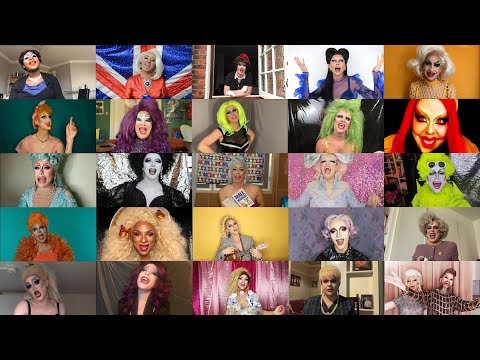
In a previous posting we reported that some of the biggest names in Manchester’s drag scene have collaborated with drag performers from around the world to raise money for Age UK.

The original target was £2,000, but the Quarantine Queens have exceeded that and raised £3,015 (so far). Thank you!!


IDAHO

News

“Happy Birthday” to Ed on 11 May – at least you get to eat all the cake. Hope it’s gluten free!

The International Day Against Homophobia, Transphobia and Biphobia is observed on 17 May 2020 and aims to coordinate international events that raise awareness of LGBT rights violations and stimulate interest in LGBT rights work worldwide.

Previously, the commemorations have taken place in 132 countries across the globe, including 37 where same-sex acts are illegal.

You may have heard of the acronym IDAHO, but you may not be entirely sure what it signifies – the International Day Against Homophobia, Transphobia and Biphobia. It’s coming up on 17 May, so now is the perfect time to brush up on your knowledge of how IDAHO started, what it represents and how to celebrate.

For LGBT people, IDAHO serves as an interesting retrospective on our history and how much has changed as well as a chance to publicise how much we need to continue pushing for change.

It may surprise you to learn that up until 17 May 1990, the World Health Organisation classified homosexuality as a mental disorder. In 2004, the IDAHO movement chose this date to host the very first International Day Against Homophobia, Transphobia and Biphobia to reflect the contemporaneous struggles and stigmatisation that still occurs across the globe for LGBT people.

According to the official website, IDAHO is an entry-point to understanding the vast community of individuals who identify with a diverse range of sexual orientations, gender identities or expressions and sex characteristics. Other commonly used acronyms for the day include IDAHOTB and IDAHOBIT – the day is intended to be used by all, with a non-exhaustive list of issues to publicise and ways to participate.

Indeed, the day has grown in scope and influence. IDAHO is a call to action and a reminder that our community needs to remain consistent in making demands in relation to equality. Accordingly, organisations and individuals are encouraged to participate at all levels – from national to local and community initiatives.

While physical events may be off limits for 2020, there are still a number of ways to show your solidarity on 17 May. Socially distant initiatives are a way to showcase your creativity as you get involved – you may be in a position to fundraise online, display a pride flag, join an online event or attend a social media protest. You may also take the opportunity to watch an LGBT documentary or read a book.

Discrimination and violence against LGBT people continues to occur at unacceptable rates, and we all have a responsibility to use our voices to speak up, in relation to our own challenges and the struggles of others. A culture of inclusivity and freedom can only extend to everyone if we fight for it.

Step up! For more information on IDAHO and to register your May commemoration, make sure you visit may17.org and register yourself to join in the springtime celebrations. The 2020 IDAHO theme is Breaking the Silence, and there are a number of online resources to help you research and plan your participation. There’s even a map tool online to see which countries are participating.

The Day is not one single campaign. It is a moment when thousands of ideas and initiatives converge over a single vision: freedom and equality for all sexual, gender and bodily minorities. You can join in whichever way you want: be creative, this is YOUR day!