Human Rights Day … Feast of Festive Fun … Noel Coward … Coronation Street is 60!

News

Human Rights Day – 10 December 2020

Human Rights Day commemorates the day the General Assembly of the UN adopted and proclaimed the Universal Declaration of Human Rights. The UDHR is one of UN’s major achievements as well as the first enunciation of human rights across the world.

Adopted on 10 December 1948, the Declaration stipulates universal values and a shared standard of achievement for everyone in every country. While the Declaration is not a binding document, it inspired over 60 human rights instruments that today make a common standard of human rights. It is the most translated document around the globe available in over 500 languages.

2020 Theme: Recover Better – Stand Up for Human Rights

This year’s Human Rights Day theme relates to the COVID-19 pandemic and focuses on the need to build back better by ensuring Human Rights are central to recovery efforts. We will reach our common global goals only if we are able to create equal opportunities for all, address the failures exposed and exploited by COVID-19, and apply human rights standards to tackle entrenched, systematic, and intergenerational inequalities, exclusion and discrimination.

10 December is an opportunity to reaffirm the importance of human rights in re-building the world we want, the need for global solidarity as well as our interconnectedness and shared humanity.
 

Pride in Ageing’s seasonal celebration event for over 50s (presented in partnership with Southway Housing) is this weekend. Join us on Zoom on Saturday, 12 December from 3.00 – 5.00pm for an afternoon of camp, festive fun with The Jingle Belles (a trio of iconic Manchester drag queens). Tickets are free and booking is via Eventbrite here.
 

Noël Coward’s private lives: the photographs that could have landed him in jail

A newly discovered album contains intimate, joyful glimpses of the playwright drinking, partying and holidaying with his famous friends and lovers. The result is an astonishing insight into gay life in the interwar years

On sale this month … some of the images of Coward and his friends, compiled by Joyce Carey

In 1931, Noël Coward was the highest-earning author in the western world, celebrated for his scintillating comedies and sensational dramas of hidden love such as The Vortex, Private Lives and Easy Virtue. As well as writing hit songs, musicals, novels and short stories, he painted and, not least, performed. But perhaps the most astounding thing of all is the fact that – at a time when homosexuality was illegal and would remain so for some time – he lived an openly gay life.
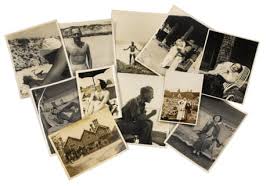
Bearing witness … more images from the album, including one of his Kent house

It is this that makes a newly discovered photograph album so extraordinary. It shows intimate glimpses from the private life of this towering cultural figure. Apparently compiled in the 1930s by Coward’s closest female friend, Joyce Carey, the album is a remarkable insight into gay lives of the interwar years, lived in plain sight. Carey died in 1993. It is because of her long-held loyalty to the man she and other intimates only half-ironically called the Master that the album has only now come to light, due to be sold at a London sale room later this month.

Many of the shots were taken at Goldenhurst, Coward’s country retreat in Kent, an extended redbrick farmhouse he bought in 1926. Here, and at more exotic sites, we see the artist and his famous friends at play. They bask in the ancient, faded sunlight, these people whose lives were bookended by two world wars. There’s Lord Mountbatten, fishing – Coward was later to play him in the wartime film In Which We Serve. And here’s Alec Guinness, in smart sunglasses, with his seraphic smile that gave little of his personal life away.

Many of Coward’s guests are highly glamorous theatre women: Beatrice Lillie, Gertrude Lawrence, Tallulah Bankhead, Gladys Calthrop. But Coward’s allure extended far beyond the stage: the writers Rebecca West and Virginia Woolf were also his good friends. And then there are all those handsome young men, sporting droopy woollen swimsuits that leave nothing to the imagination.
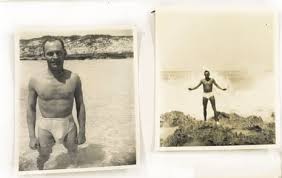
Mad dogs and Englishmen … Coward, on right, in the Bahamas with Alan Webb, with whom he had a tempestuous relationship

The mere existence of such images could have brought the punitive weight of the law – and public prejudice – down on Coward’s head. Yet these men were his lovers and he made no secret of it. His relationship with Alan Webb, then starring in Coward’s Tonight at 8.30, was tempestuous, and ended in tears. We see the two men posing on the beach at Nassau in the Bahamas, holidaying there together in 1937. As John Gielgud once told me, Webb was “a very caustic and brilliant actor … one of the few who dared to oppose Noël”. Graham Payn, an altogether less troubling young man, was to become Coward’s longest and most constant companion, and became the executor of his estate when the dramatist died in Jamaica in 1973.

Then there’s Jack Wilson, Coward’s American manager, who has the square-jawed look of Marlon Brando, or an American football player. Wilson was the great love of Coward’s life, but his alcoholism and infidelities drove them apart. It’s a story wittily and lovingly camped up in a novel by Goldenhurst’s later owner, Julian Clary, under the title Briefs Encountered.
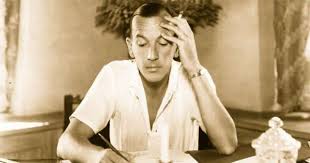
A role model … Noël Coward at Goldenhurst in 1935. Photograph: Sasha / Getty / Hulton Archive

Not all of Coward’s female friends approved. Katharine Hepburn loved Coward. She visited him often along with her girlfriend Irene Selznick. But she complained that he and his guests spent all their time lying naked in the sun. She thought they ought to be playing tennis, she told Selznick, as the two women drove away in their red, open-topped sports car.
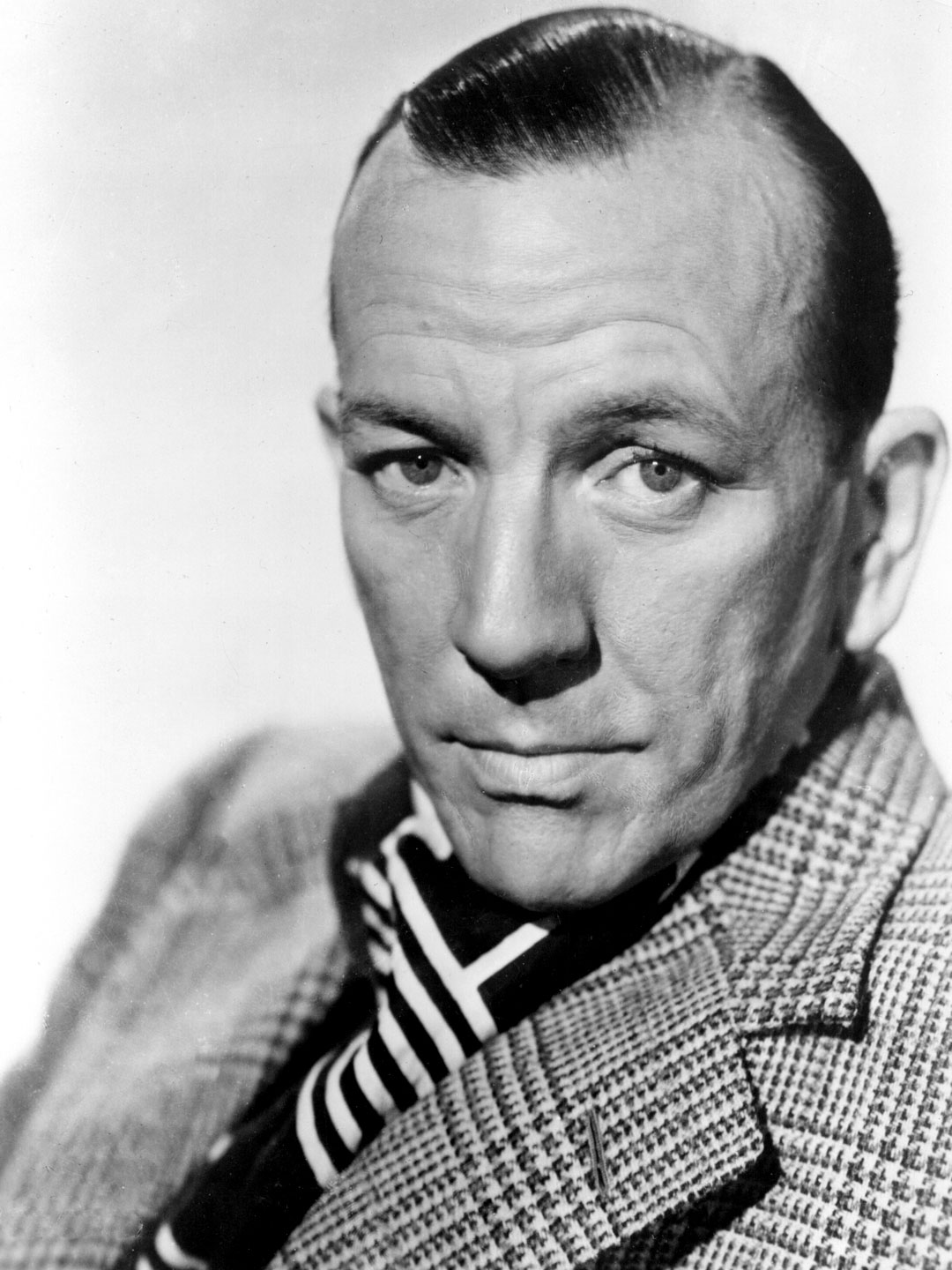
Noel Coward, circa 1941

But there is a shadow that falls across these images. Coward, like his fellow gay theatrical superstar Ivor Novello, lived in fear of Oscar Wilde’s fate. And it wasn’t so far away: as a teenager, Coward had known Robbie Ross, Wilde’s literary executor and first male lover. At any point, these private parties and cocktail hours – and anything that came after – could have ended in arrest and imprisonment. Indeed, in 1953, Coward’s friend John Gielgud would be arrested for importuning sex with a man in a public lavatory. He escaped with a fine, but suffered a nervous breakdown as a result of the incident.

This did not stop the Master from making a joke of it all. Wit was the great man’s defence. Once, crossing Leicester Square with a friend, he looked up and saw a cinema marquee advertising a new film: Michael Redgrave and Dirk Bogarde in The Sea Shall Not Have Them. Coward turned to his friend and said: “I don’t see why not. Everyone else has.”

While Gielgud and Bogarde had a great love and respect for Coward, Carey was more reserved. She kept her counsel, as the great witness to her friend’s pleasures and pains. As Amanda, the star of Coward’s most famous play, says: “I think very few people are completely normal really, deep down in their private lives.”

Of course, Coward had the privilege to be able to live privately like this. But importantly, like Wilde, he was the role model for an entire generation of gay people. You might live in suburbia, but with a cheap cocktail glass and a perfumed cigarette, you could be king or queen for a day.

Sworders online auction of Noël Coward photographs is on 15 December.


Coronation Street is 60!

Inspired and created by a gay man, Coronation Street has covered LGBT issues so well.

In the 60 years since the first episode was aired, the soap has gone from kitchen-sink serial to cultural institution.

In the winter of 1960, John F Kennedy had just been elected, a young rock band had changed its name to the Beatles, and – at 7.00pm on Friday, 9 December – a mournful cornet was heard in homes across the north of England.

The Coronation Street theme tune signalled the then unpromising start of a new TV series. Granada Television had commissioned 13 black-and-white episodes, assembling a cast of little-known stage actors in Weatherfield, a fictional town inspired by the working-class terraces of Salford.

Few expected it to succeed, but Coronation Street would transform television, becoming a cultural institution and tabloid juggernaut. It has survived wayward stars, a revolving door of producers, the rise of streaming TV and – in its diamond anniversary year – a global pandemic. The more than 10,000 episodes have included 57 births, 131 marriages (including five acts of bigamy) and 146 deaths (25 of them murders, variously involving a shovel, a crowbar and a small statue).

But before all the love rats, family spats, big stunts, ratings clashes and even before the sense of humour that was always the show’s lodestar, there was a nation on the cusp of change – and a frustrated young writer called Tony.
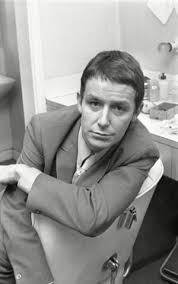
Tony Warren grew up sitting under his grandmother’s kitchen table, listening to the gossip and caustic asides of Salford’s no-nonsense matriarchs. He devoured plays in Manchester Central Library and, aged 15, hitchhiked to London to write cabaret and routines for strippers.

Back in Manchester, Warren also absorbed the speech and personalities of gay men at pubs such as Paddy’s Goose. But as a junior writer at Granada, which had only begun broadcasting in the still starchy world of TV in 1956, he grew tired of writing Biggles scripts. Postwar Britain was in flux. There was a yearning for recognition and self-assertion among the working class. Desperate for an outlet for the characters buzzing in his head, Warren begged the producer Harry Elton for a shot. Elton agreed, despite scepticism from the Granada supremo, Sidney Bernstein.

Warren, who was 23, was allowed to write 12 episodes – plus a finale in case they bombed. His work stunned the script editor Harry Kershaw, who wrote later: “You closed your eyes and you could see the antimacassars and the chenille tablecloths … You sniffed and you could smell the burning sausages and the cheap hairspray and the tang of bitter beer.”

Warren got the nod … and here we are, 60 years later.

Out in the City report … Bi Flag … Rainbow Laces

News

Older LGBT People’s Health Inequalities

On 4 December 2020, NHS England’s LGBT Health Team organised a virtual roundtable to discuss the issues affecting older LGBT people, including the current impacts of COVID-19.

The presentations included Terri from Age UK Manchester on the lived experiences of older LGBT people and Pauline from Out In The City which you can download here:

age-uk-manchester-slides-final.ppt


22 Years of the Bisexual Flag

The bisexual flag turned 22 years old on 5 December 2020.

The pink, purple and blue colours that have come to represent the bi community in their stripes were not new back in 1998, but refashioning them into a very simple flag was a bright idea from Michael Page of online chat forum BiCafe (a website which ran for fifteen years until 2012 – sadly gone).

He took the pink, purple and blue that were being used as a bi symbol through a set of overlapping triangles – a pink and a blue triangle overlapping and creating a purple triangle as their intersection. In Germany the same colours were being used in a pattern of crescent moons due to historic associations between the triangle and the Nazi regime making them less socially acceptable a choice of emblem.

The USA-based BiCafe website was launched in 1997 and the flag was launched at its first birthday celebrations, on 5 December 1998.

In correspondence with a writer for the flagspot website Michael explained, “The pink colour represents sexual attraction to the same sex only (gay and lesbian), the blue represents sexual attraction to the opposite sex only (straight) and the resultant overlap colour purple represents sexual attraction to both sexes (bi).”

The “correct” bi flag design is made up of three distinct colour blocks, but sometimes people use a wash of colours from pink to blue via purple. That’s pretty well in keeping with his original concept, as Michael explained: “The key to understanding the symbolism of the Bisexual pride flag is to know that the purple pixels of colour blend unnoticeably into both the pink and blue, just as in the ‘real world,’ where bi people blend unnoticeably into both the gay/lesbian and straight communities”

Wouldn’t the rainbow flag do the job? On the (now closed) website BiFlag.com, Michael wrote that “the vast majority of bi people I have spoken with, feel no connection to the rainbow flag, the pink triangle, the black triangle, the Lambda symbol or the double-edged hatchet. These symbols are viewed as gay and lesbian icons, which was their initial intent.”

It slowly spread as an image around the bi world, including appearing on the back of the programme booklet for the UK and International BiCon in 2000.

Despite this, in the late 1990s and 2000s it was still fairly unknown as a symbol in the wider LGBT scene, not least because in the days when colour printing was so much harder to afford, promotional materials for bi groups and bi projects tended to be in black and white.

But the wave of non-geographic bisexual community that growing internet access brought, and the way pixels cost the same whatever shade they are, helped transform that. Today there are a plethora of web graphics using the three colours, as well as lots of bi-coloured accessories to subtly communicate your bi-ness to others. It even lets us question bi-coloured things in popular culture to ask whether we should co-opt them as bi, such as the My Little Pony: Friendship Is Magic character Twilight Sparkle.

The flag itself – now easily obtainable online for a few pounds as a small hand-held flag-on-a-stick or as a five foot long fabric sheet – makes a simple and popular cape to wear at LGBT pride events, turning the usual problem of bisexual invisibility on its head by literally wrapping yourself in the flag.

Over the past 22 years it has flown from town halls worldwide and given us a code by which to know one another and so helped end bisexual invisibility – including the sometimes controversial trend of “bisexual lighting” to hint at TV characters’ sexual orientations.

Last spring it was at the centre of internet controversy over its ownership, which ultimately reaffirmed its place as a freely usable symbol for us all.

So all of our thanks to Michael, and happy birthday the pink, purple and blue flag (and remember, you can’t have a birthday without a bi).


Rainbow Laces Day

Rainbow Laces Day will be celebrated on Wednesday, 9 December 2020.

The organisation Stonewall will be sharing stories and considering how we can all play our part in making sport everyone’s game.

Join the #RainbowLaces movement today:

  • Sign up to find out more about how you can play your part;
  • Use Stonewall’s top tips for making your sport community more LGBT inclusive; and
  • Read on to meet Stonewall’s Sport Champions, read LGBT people’s stories and buy your Rainbow Laces.

Football has the power to bring us together.

Clubs and communities are stronger when everyone feels welcome, and it’s down to all of us to make that happen.

That’s why the Premier League proudly stand alongside Stonewall in promoting equality and diversity.

The Premier League will ensure everyone within the organisation and all those connected to clubs, including supporters, feel safe and welcome, irrespective of sexual orientation or gender identity.

A key focus of the partnership with Stonewall will be encouraging LGBT+ acceptance among children and young people involved in community and education initiatives such as Premier League Primary Stars and Premier League Kicks, and within Academies.

Coaches, teachers and leaders will be equipped with bespoke resources and programmes developed by the League and Stonewall which promote positive attitudes towards the LGBT+ community.

Football clubs will also come together between 4 – 13 December to celebrate the latest Rainbow Laces campaign and show support for all LGBT people in football and beyond.

At all Premier League fixtures across the two Match weeks, there will be Rainbow Laces ball plinths, handshake boards and substitutes boards as well as the LED perimeter boards at the stadiums highlighting the campaign.

There will also be rainbow armbands for captains, rainbow laces and pin badges to let everyone show their support.

Digital channels will feature a rainbow Premier League logo and promote the campaign as well as the LGBT+ inclusion work of Premier League clubs.


World AIDS Day Vigil … Manchester Village Stories

News

World AIDS Day Vigil

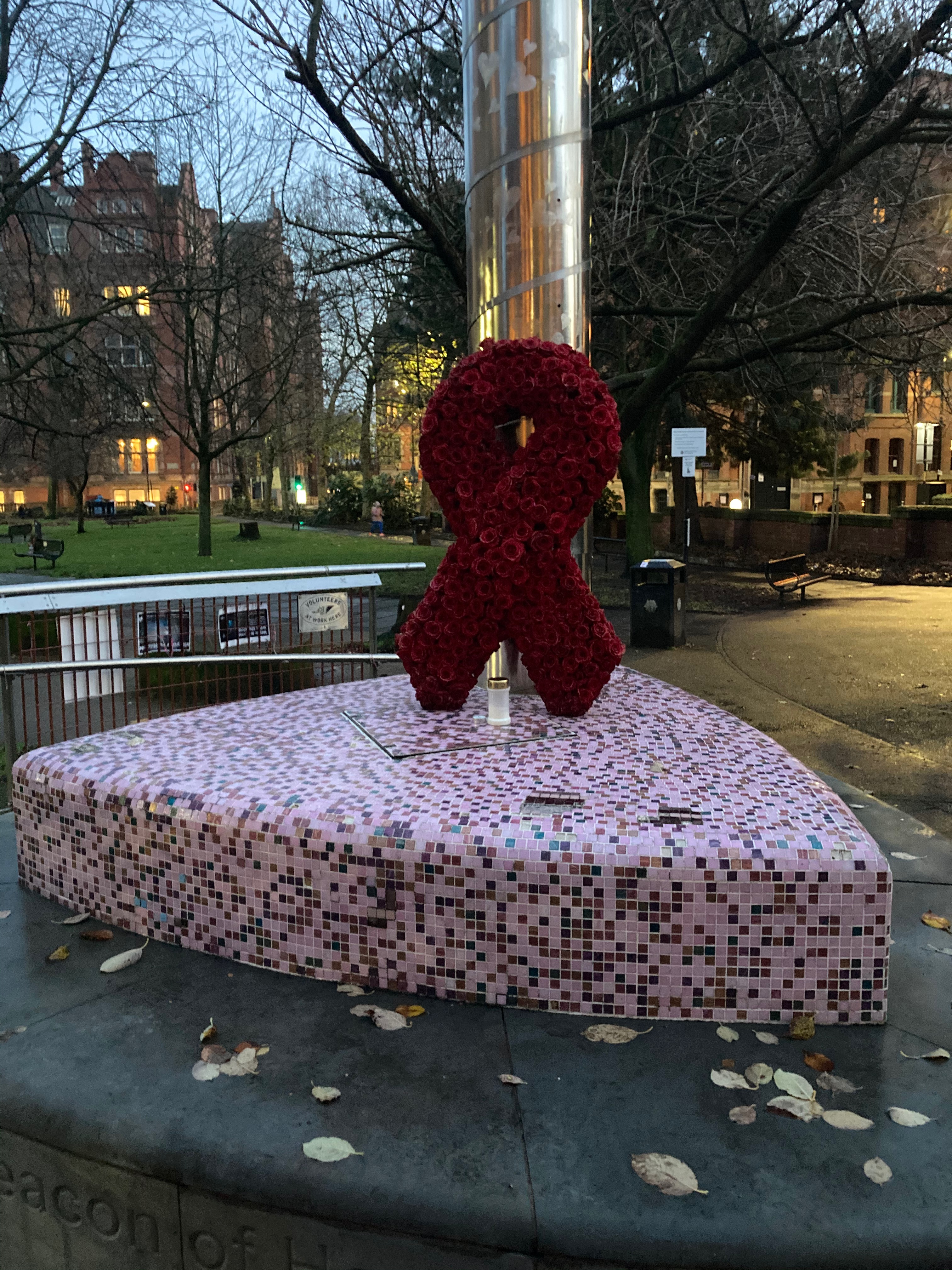
This year the World AIDS Day Vigil was held online, on 1 December, as we remembered people lost to HIV, showed our solidarity with people living with HIV around the world and committed ourselves to challenging HIV stigma and discrimination.

The Beacon of Hope in Sackville Park, which was conceived in 1997 as Manchester’s answer to the threat of HIV/AIDS, was decorated with a red ribbon.

The Beacon of Hope, designed by Warren Chapman and Jess Byrne-Daniels, consists of a series of elements combining together the existing ‘Tree of Life’ with the ‘Beacon of Hope’ light sculpture. They describe a metaphorical journey through life, providing the opportunity for remembrance, contemplation and celebration.


Manchester Village Stories

Manchester Village Stories is a research project at The University of Manchester. We are interested in learning about:

  • Your experiences of Manchester’s Gay Village
  • Why and how the Village is important for you as an LGBTQ+ space
  • If and how your everyday experiences and feelings about the village have changed over time
  • How you think the Village should look in the future

All are welcomed to participate, but we are particularly interested in hearing the stories and experiences of older LGBTQ+ people. This research will help to inform policy about urban development in Manchester.

Sharing your thoughts:

You may wish to share a memory from decades ago or even yesterday. Perhaps you would like to simply provide a word or reflection that springs to mind as you think about a particular part of the Village or surrounding area that is significant to you. You can share as many stories as you like here.

Here are some ideas for inspiration:

  • Which parts of the Village (or surrounding area) are important to you and why?
  • What is your most significant memory of the Village?
  • What three words would you use to describe your experience of the village now, and in the past?
  • Why and how do you use the Village now, and in the past?
  • How might recent developments in the area impact the Village, your use of the space, and its relationship to the wider Manchester area?


What will happen to my contribution?

After a short moderation process your contribution will be publicly available on the map (on the website) and you will receive an email letting you know. Your story will be anonymous for regulatory reasons. Please contact the research team if you have any questions or for further information.

The Village, at a glance:

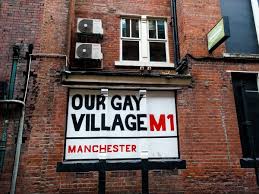
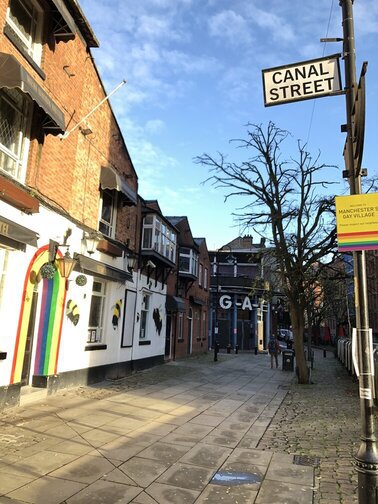
Manchester’s LGBTQ+ Village has, for generations, functioned as a space where people can gather to express diverse sexual and gendered identities away from the glare of public opinion. As is common in the histories of LGBTQ+ city districts in the UK (and the US), the area was originally heavily industrialised and, as such, relatively sheltered from the hustle and bustle of city life. The pubs that existed in this area therefore became popular places for LGBTQ+ people to meet, but, as is common in these stories, these areas were also heavily impacted by criminal activity. This meant that LGBTQ+ people were exposed to risk not only from criminality but from a hostile police force as well. This was especially significant in a context where homosexuality was not legalised in the UK until 1967 and the Section 28 Regulations that were introduced in the 1980s.

The Village is now largely pedestrianised and is currently home to over forty LGBTQ+ bars, nightclubs, and local businesses, and is considered an LGBTQ+ hub and tourist destination. Recent redevelopment has already resulted in the removal of some landmarks that have been important in the history of the Village as an LGBTQ+ space. Future plans for the Village include extensive commercialisation and the construction of new buildings around the Rochdale Canal.

Our goal:

We want to evoke an image of what the Village was, what it is, and what it could become.

We want to open a conversation about the kinds of spaces, venues and services that have existed in the Village, exist now, or people would like in the future. We use an approach called ‘participatory mapping’ to help people think about the Village and its importance.

With your help, we can gather enough material to have input in policy decisions around urban development in Manchester, service provisions, history and heritage.

Who are we?

We are a team of four researchers based at The University of Manchester interested in understanding people’s experiences of Manchester’s Gay Village. We are Dr Amy Barron (Geography, SEED), Dr Jamie Garcia IglesiasDavid Dobson and Jess Mancuso (Sociology, SOSS). You can contact us here.


World HIV Day Online Vigil … In Equal Parts … Superbia Spotlights … Focus Group

News

World HIV Day Online Vigil

Join us for a very special online World AIDS Day Vigil as we remember people lost to HIV, show our solidarity with people living with HIV around the world and commit ourselves to challenging HIV stigma and discrimination.

The Vigil will be broadcast at https://ght.org.uk/vigil at 7.00pm on Tuesday, 1 December.

The Vigil is organised by the Passionate about Sexual Health (PaSH) Partnership, a collaboration between BHA for Equality, George House Trust and LGBT Foundation.

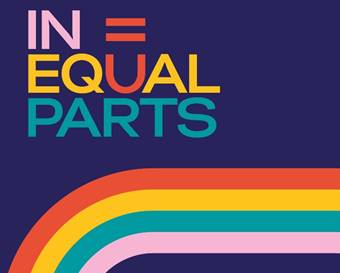
In Equal Parts: World AIDS Day 2020

Straight after the vigil, at 8.00pm, join the GHT Positive Speakers from George House Trust along with HIV+ artists Jordan Roberts and Nathaniel Hall for this stigma-smashing event. Hear their remarkable stories and ask all the questions you always wanted (but were too scared) to ask about HIV.

A digital event hosted by Contact and presented in association with George House Trust and Superbia. The event is part of Manchester-based Dibby Theatre’s community-led creative outreach project tackling HIV stigma and shame.

The event is free and is online via zoom. You will need to book so find out more here.

In the second half of this event, there will be the premiere of a brand new film by Jordan Roberts: To Whom It May Concern … explores HIV past, present and future through music, drag, vogue-dance and textiles. It is funded by Superbia and GMCA.

Confirmed artists:

Singer – Adam O’Shea

Drag Artiste – Ana Phylactic

Vogue Dancer – Tyrone John

Textiles Artist – India Chetta-Roberts

Vogue House Mother – Darren Pritchard

The event will contain frank discussion of HIV, diagnosis, treatment and the impacts of stigma. There will be signposting support during the event for anyone who feels affected by the topics raised.


Superbia Spotlights

Superbia is Manchester Pride’s year-round programme of arts and culture, designed to support, curate, fund and promote LGBTQ+ events throughout Greater Manchester.

Superbia supports LGBTQ+ artists by promoting events through its events page and social media, funds LGBTQ+ events with Superbia Grants and by curating original events through collaboration with partners, venues, groups, curators, community members, artists and creatives.

Superbia Spotlights is their new partnership with Manchester’s Finest ( https://www.manchestersfinest.com/ ). Throughout 2020, they have shone a light on some of the incredible Superbia-supported arts and culture talent across Greater Manchester.

The Superbia Spotlights programme is a growing list of artwork, articles and interviews with LGBTQ artists in Manchester.

They have made a handy list here which links to each of the different pieces.

Day With(out) Art – World AIDS Day 2020

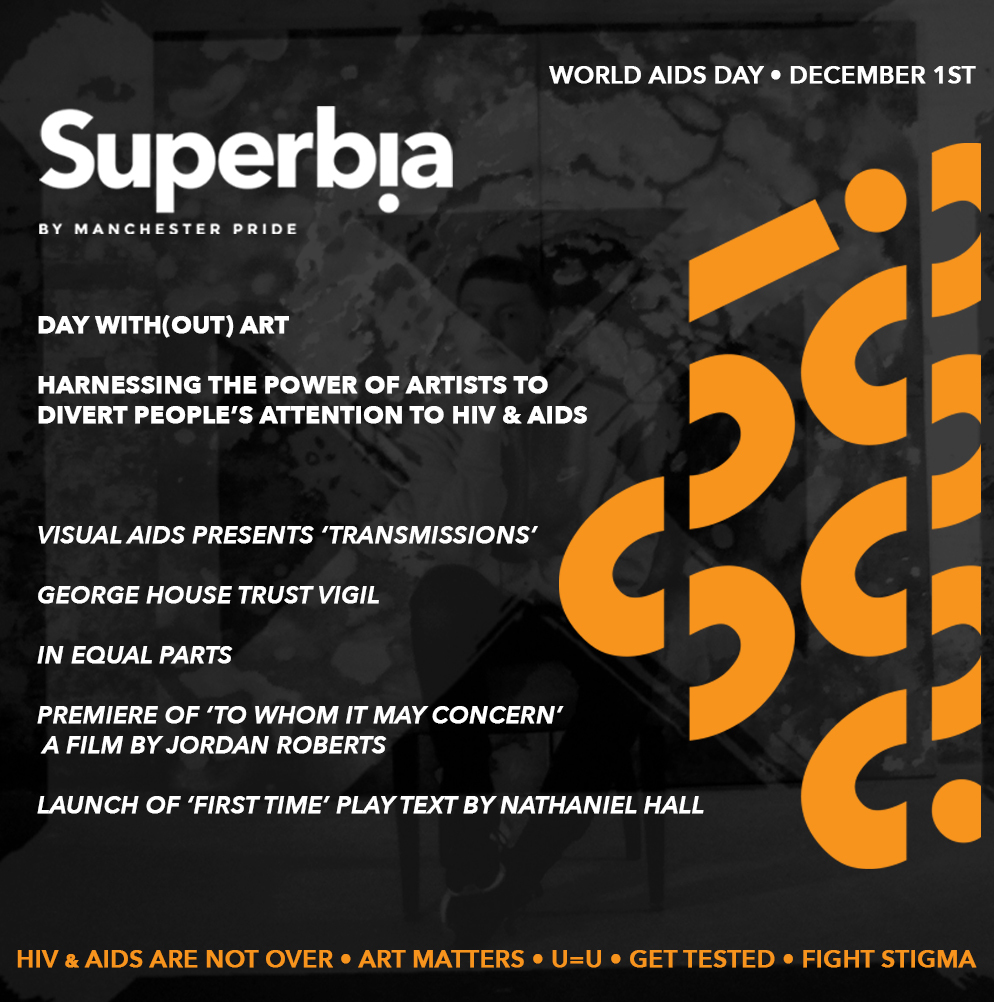
Each year on World AIDS Day (1 December) Superbia brings the creative tradition of Day With(out) Art to Manchester, harnessing the power of artists to divert people’s attention to HIV and AIDS.

They do so in tribute to the many people lost to illness, in a reaffirmation of the fight for access to treatment, and against stigma and discrimination, and to honour those who are living with HIV.

This year the programme of work will all take place online but the messages are as loud and clear as ever: HIV and AIDS are not over. Art matters. U equals U. Get tested. Fight stigma!

Check out the full programme of work for 2020 that Superbia is proud to curate, promote, fund or support.


Are you over 50, from Greater Manchester and living with HIV?

Would you like to take part in a focus group to shape the exciting development of the UK’s first LGBT Extra Care Scheme?

To give a bit of background to the project, in 2017, after discussions with LGBT Foundation, Manchester City Council announced their intention to develop the UK’s first purpose-built LGBT-affirmative Extra Care Scheme in the city and identified the site in Whalley Range the following year.

An extra care scheme is a type of ‘housing with care’ which means you retain independence while you’re assisted with tasks such as washing, dressing, going to the toilet or taking medication.

LGBT Foundation has set up a Community Steering Group to advise the development of the Extra Care Scheme and the group has recognised that we need to hear more from groups across our communities. The first group we want to learn from are people over 50 who are living with HIV. Your contribution will help to ensure that the Extra Care Scheme can best meet the needs of everyone in our communities.

The focus group will take place online via zoom, with an option to telephone in, at 4.00pm on Monday, 7 December 2020 and you will receive a £25 voucher as a thank you for your time.

If you would like to attend the focus group please email bob.green@lgbt.foundation who will send you further details about the focus group.

If you would like to share your views but cannot make the focus group, then please email Bob to arrange an individual interview.

All comments made in the focus group and interviews will be anonymous.

Older LGBT Health Inequalities Round Table … Man Made

News

Older LGBT People’s Health Inequalities Roundtable – 4 December, 10.30am – 1.00pm

NHS England’s LGBT Health Team is planning a virtual roundtable with the sector to discuss the issues affecting older LGBT people, including the current impacts of COVID-19. Presentations will include:

  • Dr Michael Brady, National Advisor for LGBT Health – introduction and overview of LGBT health inequalities
  • Age UK – lived experiences of older LGBT people and local initiatives
  • LGBT Foundation – dementia care and Pride in Ageing / Brew Buddies
  • Opening Doors London – new research report and the impacts of COVID 19 on older LGBT people
  • King’s College Hospital – recent survey of LGBT+ patients and results from the LGBT+ awareness training provided to healthcare staff in the Geriatric Department

The event will take place over Microsoft Teams on Friday, 4 December, 10:30am – 1:00pm (including a short break). If you would be interested in attending please email: england.lgbtadvisor@nhs.net for details.


Man Made: behind a powerful documentary about trans bodybuilders

Film-maker T Cooper has used the world’s only all-trans bodybuilding competition as the window into a kaleidoscope of trans male stories.

T Cooper, the director of Man Made. Photograph: Courtesy of Journeyman Pictures

In a locker room in Atlanta, a group of men – black, brown and spray-tanned, some carved like Hercules, others softer – flex their muscles. The camera lingers on their bodies, each hinting at larger stories – there are top surgery scars and bandages, chests with breast tissue. The gaze is direct and uncompromising, but not ogling – a scene of different presentations of masculinity literally presenting to judges, an audience and the camera of film-maker T Cooper.

A still from Man Made. Photograph: Courtesy of Journeyman Pictures

Cooper’s film, Man Made, centres on the 2016 Trans FitCon Bodybuilding Competition in Atlanta, the only all-transgender bodybuilding competition in the world, open to any trans person who self-identifies as male regardless of physical presentation. It follows four of these competitors in the year leading up to the event, as they navigate the vagaries of everyday life and the path back to the Trans FitCon stage. Cooper, a trans film-maker, novelist and TV writer (his credits include The Get Down and The Blacklist), first filmed the 2015 Trans FitCon after hearing about it “through the trans grapevine” in his adopted home of Atlanta. At the time, it was a small affair, around five guys, but Cooper saw a potential window in a particular slice of trans experience. “As a trans person, especially as a trans guy, I just don’t feel like our stories are out there,” Cooper said. “I don’t see my story. It’s a tiny corner of a tiny corner of the trans population and it just felt like, hey, this is a perfect opportunity … the metaphor of bodybuilding is so rich to tell these stories against.”

The sport of bodybuilding – the disciplined pursuit of a muscular aesthetic – offers an especially poignant lens into an experience grounded in physical transformation, and Cooper’s cast intentionally represents different perspectives on race, geography, financial stability, body shapes and gender expressions. “It was important for me to spread that out so that it felt like a cross-section of trans male life in our country at this moment,” said Cooper.

Man Made centres on the 2016 Trans FitCon Bodybuilding Competition in Atlanta, the only all-transgender bodybuilding competition in the world. Photograph: Courtesy of Journeyman Pictures

There’s Dominic Chilko, a swaggering 26-year-old aspiring rapper from Minnesota who, early in the film, undergoes long-awaited top surgery (in one of Man Made’s best and most moving moments, his partner Thea reveals pictures of his un-bandaged chest for the first time; Chilko breaks down, disbelieving. “That’s me?!” he cries). Mason Caminiti, a wizened forty-something from Cleveland, is a veteran of mainstream bodybuilding competitions and speaks directly to the insecurity of being the only trans competitor in the room. Rese Weaver, a Black Lives Matter activist and single parent to a young son who still calls him “Mommy”, struggles with homelessness and acceptance in his hometown of Atlanta. Kennie Story, a trainer in small-town Arkansas, continues his transition and bodybuilding training even as it poses challenges to his relationship with his partner, a self-identified lesbian.

Man Made thrives in intimate and casual moments, in locker rooms and family kitchens, moments of trust Cooper attributes to his sensibility as a fellow trans man. The film-maker-subject relationship is “this sacred space”, said Cooper, “and I really do think that that sacred space was allowed to exist and flourish and be so trusting because I’m trans”.

Caminiti agreed: “I don’t want to appear to seem ungrateful that trans stories are being told by non-trans storytellers – I think that’s really important,” he told the Guardian. “But I think it’s so rare to have it told by trans people.” Both Caminiti and Cooper acknowledged coverage of trans stories often make pain and struggle the defining storyline instead of just one of many. “Unfortunately, that’s what a lot of trans storytelling focuses on,” Cooper said. “I just wanted to make sure that, yes, there’s some shitty stuff that happens … but to me, ultimately it’s a triumphant, hopeful story.”

Not that Man Made doesn’t address struggle head-on; Cooper catches Weaver coolly reflecting on rejection from Atlanta shelters; no longer accepted at his mother’s house, Weaver floats in and out of homelessness. “There is no housing for trans people,” he said. So what do they tell you? Cooper asks. Weaver shrugs: “Here’s a granola bar, here’s an orange, best of luck.”

But Man Made weaves these difficult moments in with the easy-going, less self-conscious ones – Caminiti making hand shadows on the wall with his mother-in-law, or Weaver teaching his son to flex before a McDonald’s trip. And there are the moments of wonderment, too, ones outside the journey to Trans FitCon. In the middle of the film, Chilko, adopted by a white Minnesotan family as an infant, finally meets his birth mother. Buzzing with adrenaline as he pulls up, he invokes the rush and control of the gym, “I’ve gotta pump, pump, pump it up,” he reassures himself. The first hug with his mother “beats, like, every fuckin’ moment I’ve ever had, like, including my top surgery”, he says. “And everybody knows my top surgery was my shit.”

Telling those stories was in and of itself a journey, and Cooper is frank about the difficulty of bringing his film to the finish line. The four-year process snowballed slowly, made possible by grants, backing from producers such as the actor and executive producer Tea Leoni, and a critical Sundance Institute documentary film program grant. Still, “the indifference you encounter is heartbreaking”, said Cooper of the process. “I’m not trying to be bitter, just realistic – nobody gives a shit about these guys’ lives. And that’s why I’m insisting on telling their stories.”

The fight for visibility continues; first released in festivals in 2018, Man Made reaches its widest audience yet ahead of Trans Awareness Week, traditionally the second week of November, and pegged to Trans Day of Remembrance in honour of those lost to violence, which continues to disproportionately effect trans people, particularly trans women of colour. According to the Human Rights Campaign, at least 22 trans or gender non-conforming people have died violently in 2019; Man Made includes a social media call for peace from Weaver in the wake of his friend Crystal Edmond’s murder in Baltimore in 2016. Trans Remembrance Day recognises “a hostile world that’s literally trying to extinguish us and our lives, as far as the rates of violence of trans folk [go], especially trans women of colour”, said Cooper. “So for me that’s why it’s so important that these stories get out there.”

The film ends where it started, on stage at the Trans FitCon, this time with more participants, more varieties of bodies, camaraderie and cheers from loved ones in the audience. There are trophies for lightweight and heavyweight, and one winner to be named overall, but Caminiti tells the competitors that they’ve already beaten the odds by getting to the stage.

Cooper’s camera finds Caminiti’s wife and mother-in-law in the crowd, Chilko’s top surgery scars, Story’s unslumped shoulders – details in this competition that trace the long arc to the stage. They’re competitors, but also “fathers, brothers, husbands, sons, boyfriends”, said Cooper. “There’s just so much more to us than the shitty things that happen to us because of being trans that we mostly see in portrayals, and so much more to us than our transitions.”

The film’s kaleidoscope of experience is, at its core, a project of empathy and compassion – and a statement. “We’re here, we’re not going away, we exist, we’re beautiful,” said Cooper. “Our lives are as intricate and complex as anybody else and being trans is just one of those complexities.”

Man Made is available digitally in the US and UK now