The 200-year-old diary that’s rewriting gay history … Manchester’s Gay Village … LGBT conversion therapy

News

The 200-year-old diary that’s rewriting gay history
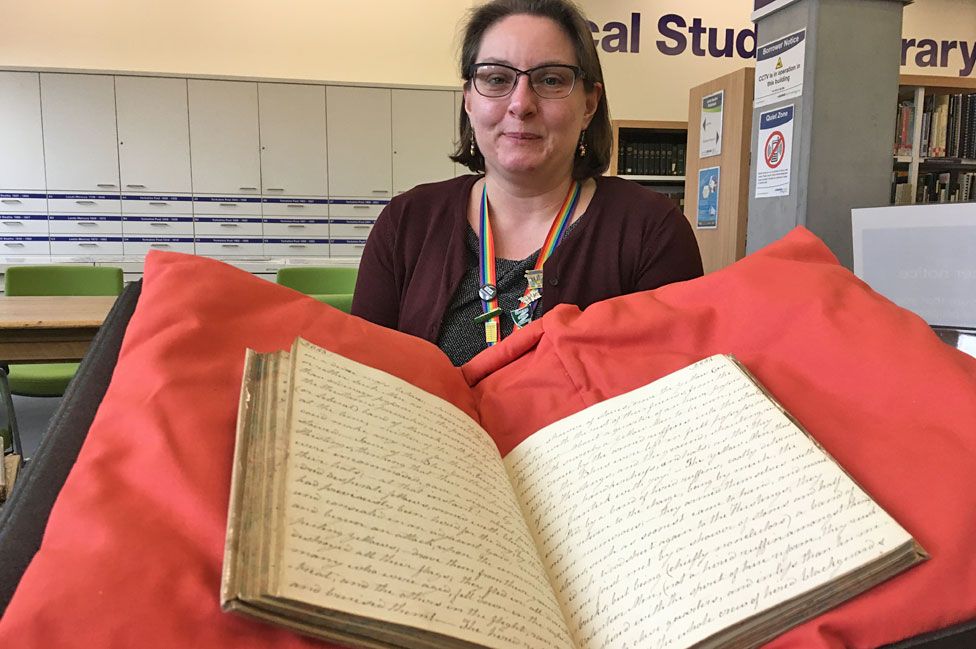
Claire Pickering in Wakefield library imagines the diary writer speaking in a Yorkshire accent

A diary written by a Yorkshire farmer more than 200 years ago is being hailed as providing remarkable evidence of tolerance towards homosexuality in Britain much earlier than previously imagined.

Historians from Oxford University have been taken aback to discover that Matthew Tomlinson’s diary from 1810 contains such open-minded views about same-sex attraction being a “natural” human tendency.

The diary challenges preconceptions about what “ordinary people” thought about homosexuality – showing there was a debate about whether someone really should be discriminated against for their sexuality.

“In this exciting new discovery, we see a Yorkshire farmer arguing that homosexuality is innate and something that shouldn’t be punished by death,” says Oxford researcher Eamonn O’Keeffe.
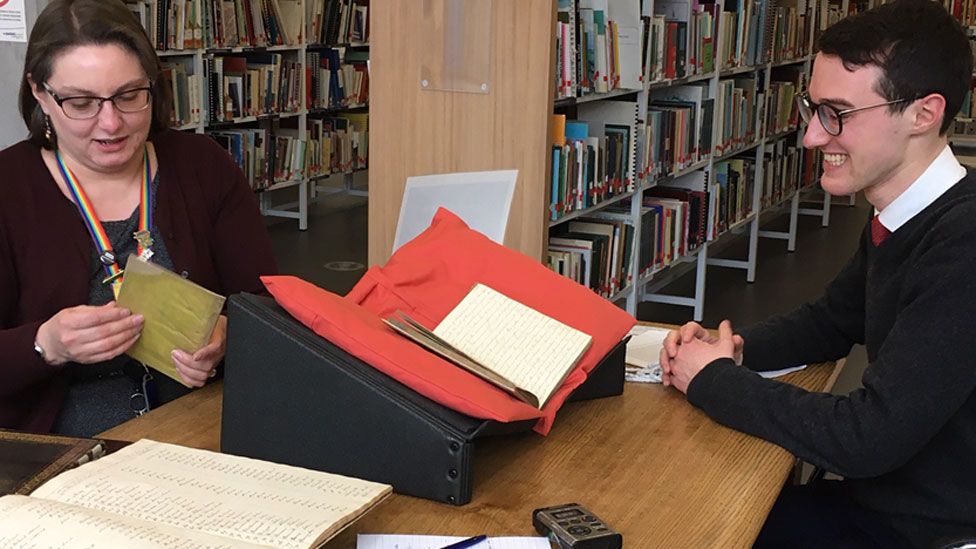
The diaries were handwritten by Tomlinson in the farmhouse where he lived and worked

The historian had been examining Tomlinson’s handwritten diaries, which have been stored in Wakefield Library since the 1950s.

The thousands of pages of the private journals have never been transcribed and were previously used by researchers interested in Tomlinson’s eye-witness accounts of elections in Yorkshire and the Luddites smashing up machinery.

But O’Keeffe came across what seemed, for the era of George III, to be a rather startling set of arguments about same-sex relationships.

Tomlinson had been prompted by what had been a big sex scandal of the day – in which a well-respected naval surgeon had been found to be engaging in homosexual acts.
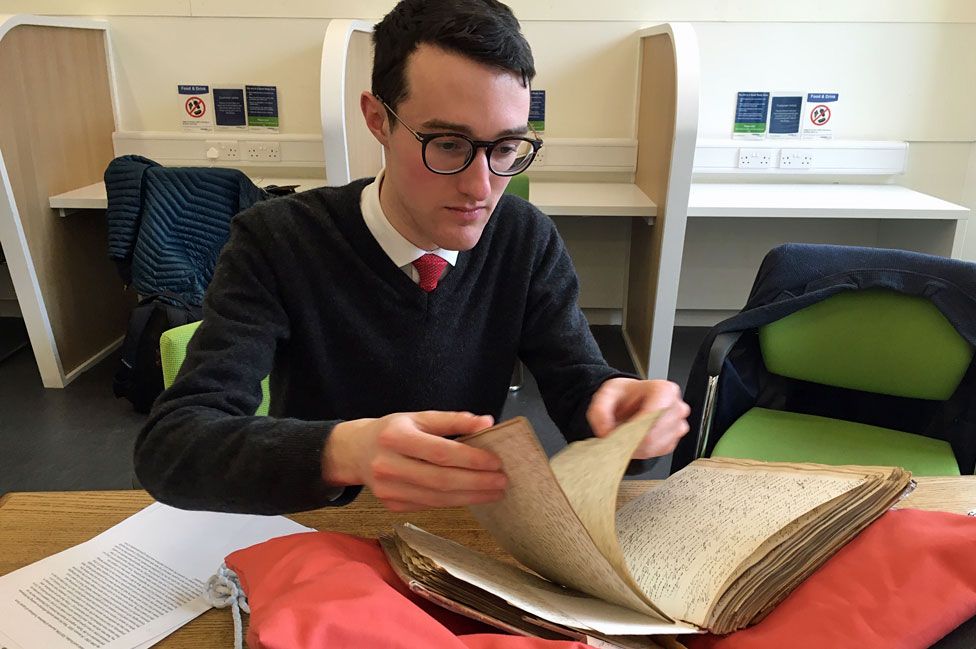
Historian Eamonn O’Keeffe says the diaries provide a rare insight into the views of “ordinary people” in the early 1800s

A court martial had ordered him to be hanged – but Tomlinson seemed unconvinced by the decision, questioning whether what the papers called an “unnatural act” was really that unnatural.

Tomlinson argued, from a religious perspective, that punishing someone for how they were created was equivalent to saying that there was something wrong with the Creator.

“It must seem strange indeed that God Almighty should make a being with such a nature, or such a defect in nature; and at the same time make a decree that if that being whom he had formed, should at any time follow the dictates of that Nature, with which he was formed, he should be punished with death,” he wrote on 14 January 1810.

If there was an “inclination and propensity” for someone to be homosexual from an early age, he wrote, “it must then be considered as natural, otherwise as a defect in nature – and if natural, or a defect in nature; it seems cruel to punish that defect with death”.
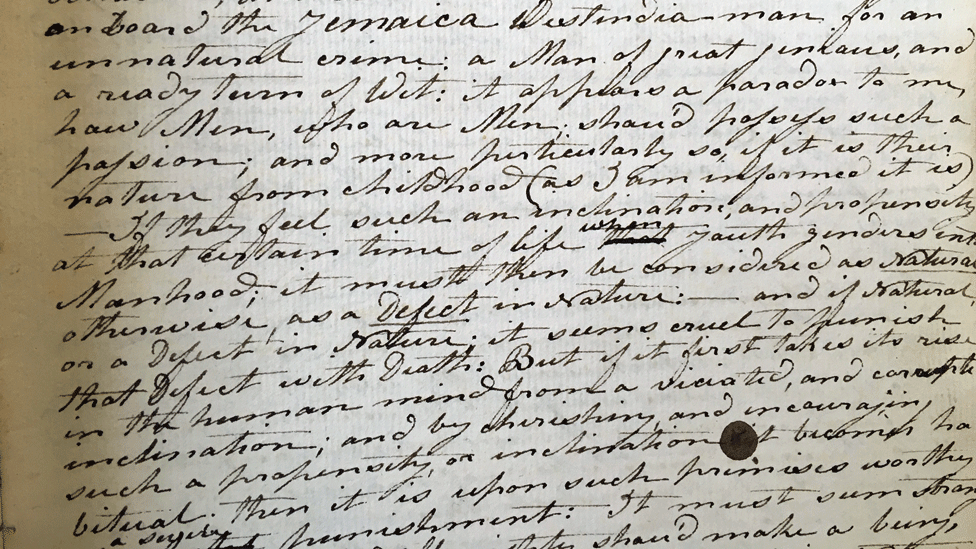
The diarist makes reference to being informed by others that homosexuality is apparent from an early age – suggesting that Tomlinson and his social circle had been talking about this case and discussing something that was not unknown to them.

Around this time, and also in West Yorkshire, a local landowner, Anne Lister, was writing a coded diary about her lesbian relationships – with her story told in the television series, Gentleman Jack.

But knowing what “ordinary people” really thought about such behaviour is always difficult – not least because the loudest surviving voices are usually the wealthy and powerful.

What has excited academics is the chance to eavesdrop on an everyday farmer thinking aloud in his diary.
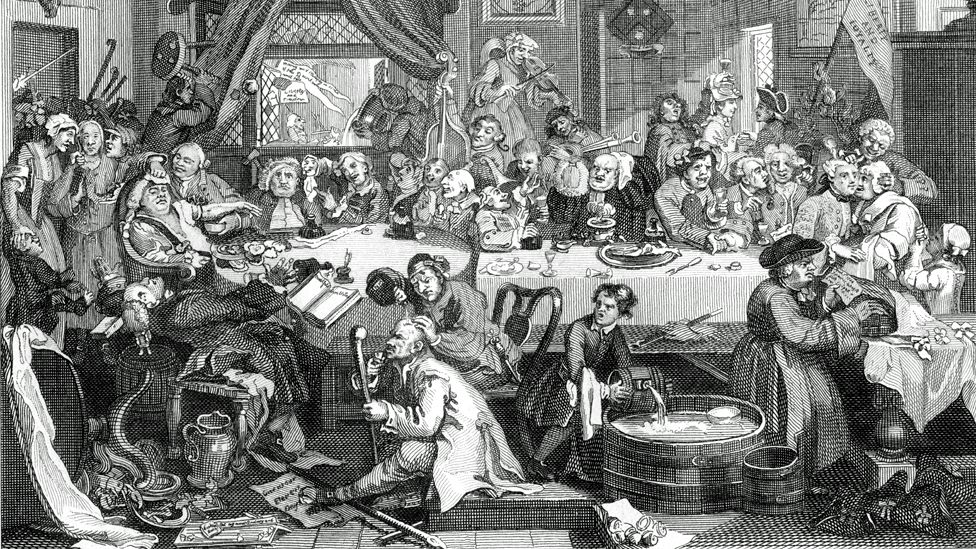
Tomlinson was appalled by the levels of corruption during elections

“What’s striking is that he’s an ordinary guy, he’s not a member of the bohemian circles or an intellectual,” says O’Keeffe, a doctoral student in Oxford’s history faculty.

An acceptance of homosexuality might have been expressed privately in aristocratic or philosophically radical circles – but this was being discussed by a rural worker.

“It shows opinions of people in the past were not as monolithic as we might think,” says O’Keeffe.

“Even though this was a time of persecution and intolerance towards same-sex relationships, here’s an ordinary person who is swimming against the current and sees what he reads in the paper and questions those assumptions.”

Claire Pickering, library manager in Wakefield, says she imagines the single-minded Tomlinson speaking the words with a Yorkshire accent.
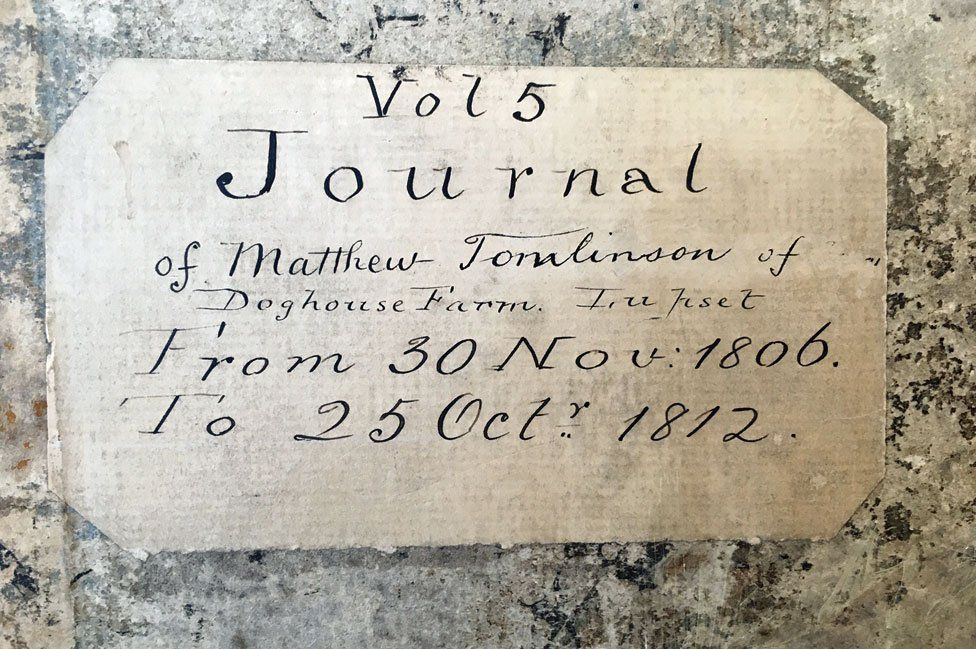
There are three volumes of Tomlinson’s diaries at Wakefield Library

He was a man with a “hungry mind”, she says, someone who listened to a lot of people’s opinions before forming his own conclusions.

The diary, presumably compiled after a hard day’s work, was his way of being a writer and commentator when otherwise “that wasn’t his station in life”, she says.

O’Keeffe says it shows ideas were “percolating through British society much earlier and more widely than we’d expect” – with the diary working through the debates that Tomlinson might have been having with his neighbours.

But these were still far from modern liberal views – and O’Keeffe says they can be extremely “jarring” arguments.

If someone was homosexual by choice, rather than by nature, Tomlinson was ready to consider that they should still be punished – proposing castration as a more moderate option than the death penalty.

O’Keeffe says discovering evidence of these kinds of debate has both “enriched and complicated” what we know about public opinion in this pre-Victorian era.

The diary is raising international interest.

Prof Fara Dabhoiwala, from Princeton University in the US, an expert in the history of attitudes towards sexuality, describes it as “vivid proof” that “historical attitudes to same-sex behaviour could be more sympathetic than is usually presumed”.

Instead of seeing homosexuality as a “horrible perversion”, Prof Dabholwala says the record showed a farmer in 1810 could see it as a “natural, divinely ordained human quality”.

Rictor Norton, an expert in gay history, said there had been earlier arguments defending homosexuality as natural – but these were more likely to be from philosophers than farmers.

“It is extraordinary to find an ordinary, casual observer in 1810 seriously considering the possibility that sexuality is innate and making arguments for decriminalisation,” says Dr Norton.


Canal Street: The history of Manchester’s iconic ‘gay village’

Many cities have a ‘gay village’ – an area with bars and clubs where LGBT+ people can feel safe to express their identity. Manchester’s is called Canal Street. It’s recognised as one of the UK’s liveliest LGBT+ hubs.
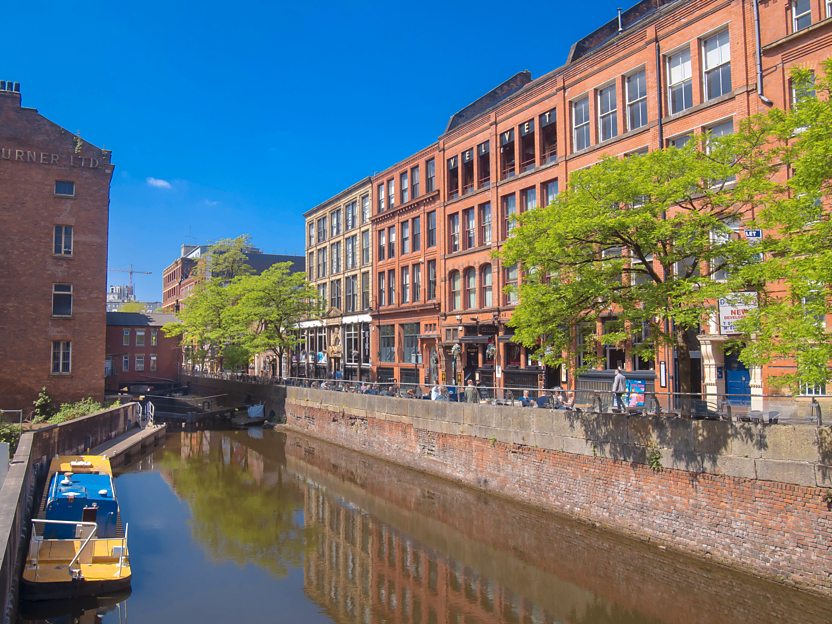
Canal Street runs alongside the Rochdale Canal

The beginnings of Canal Street

In the 19th century, the area surrounding Canal Street was thriving – not with bars and clubs but with the cotton trade. Manchester had become Cottonopolis – at its peak producing 30% of the worlds cotton. At the heart of Cottonopolis was the network of canals that kept the cotton trade moving through the city.

Booms are typically followed by bust, and when canals were replaced by other transport methods and the cotton industry stalled, the areas around the canals became deserted. This vacuum created a red light district, attracting prostitutes and gay men to the area.

On the corner of Canal Street today stands a pub called the New Union. It was built in 1865, and in the 1950s became a place for lesbians and gay men to meet up.

It looks like a normal pub, but when you take a closer look you can see the windows are filled with clouded glass – anyone on the outside can’t see in. This meant that those in the bar wouldn’t be spotted by anyone walking past.

Decriminalisation and the raids

In 1967 homosexuality was partially decriminalised – gay men could have sex as long as it was in private, was only between two men and both were over 21. For many people it still didn’t feel safe to be openly homosexual, and for years there were still laws that could be used against LGBT+ Mancunians.

Long-time Manchester resident and LGBT+ campaigner Paul Fairweather recalls: “In 1978 the police raided Napoleon’s under ancient by law called Licentious Dancing, which prevented two men or two women dancing together and this clearly was an attempt to get the club shut down, which failed.”

During the 1970s and 80s these raids continued: “From the mid-1980s the police used to regularly raid Clone Zone. James Anderton, Chief Constable made a famous statement about gay men ‘swirling in a cesspit of their own making’. It was clearly very, very hostile to the lesbian and gay community,” says Paul.

Manchester’s first Pride and Manto

But despite that hostile environment from the police, the LGBT+ community in Manchester began to flourish, launching its first gay Pride in 1985. It started on a small scale – as a charity event for those with HIV and AIDS. Today it’s an internationally renowned event, attracting huge acts and thousands of visitors.

In 1990 there was another turning point: the opening of a club called Manto. With huge glass windows, you went there to be seen, not to hide.

Club manager Steph was there from the opening night: “Manto was an absolute game changer. Manto was the first venue that was visible.”

Canal Street goes Mainstream

By the end of the 90s Canal Street had grown and was ready for the mainstream. On 23 February 1999, three and a half million people tuned into Channel 4 to watch Queer as Folk. The series showed Canal Street to be full of great parties and an amazing atmosphere.

The success of the series made Canal Street internationally famous, and it meant that Canal Street now wasn’t just popular with an LGBT+ crowd. This was great for the businesses on the street, but for some it meant that the street lost some of its identity.

What some would argue was Canal Street’s loss is the rest of Manchester’s gain. As the new Millennium progressed, it became more normal for the bars and clubs of the city to fill with visitors who feel able to hold hands, find a partner, kiss, be themselves – something that were once only able to do on Canal Street.

Canal Street is still a popular destination today and continues to be somewhere for LGBT+ people to feel safe and express themselves.


Conversion therapy

The Chair of the Liaison Committee, Sir Bernard Jenkin, has written to Jacob Rees-Mogg on legislation awaiting time in the Government’s legislative programme. This includes urging them to bring forward legislation to ban the practice of LGBT conversion therapy.

Sir Bernard Jenkin

The Petitions Committee has continued to receive petitions on this issue and the Government has made repeated commitments in response. A petition “Make LGBT conversion therapy illegal in the UK” attracted 256,392 signatures. The petition is now closed.

Stonewall and the LGBT Foundation are jointly calling out to people with experience of conversion therapy:

“We have a real opportunity this year to push the Government to introduce an effective ban on conversion therapy. But we need to collect and share people’s experiences of conversion therapy to help us show the wide range of ways the practice is happening and the long-lasting impact it has on people.

A group of LGBT+ faith and health organisations are working together on the campaign, and Stonewall is coordinating how we gather people’s stories.

If you have experience of conversion therapy and would be interested in sharing your story (could be anonymously) please fill in this short form: https://stonewall.typeform.com/to/Sp8cfHZv

We will then contact people for a full story where their stories fit with the diversity of stories we want to tell.”

 

“Back in the closet” … Lesbian life in the 70s … Two vets celebrate love … Sonder Radio course

News

“Back in the closet”

A new series of films is being released this Friday (19 February 2021) by Manchester HOME, which will cover a range of topics, such as ageing in LGBT communities and life in older people’s accommodation. More explanation and booking details to view online are below.

Image: Still from ‘Lifesolation’, a film by Anna Raczynski in collaboration with Bill Moss for ‘Back in the Closet’

‘Lifesolation’, the first artwork from the Back in the Closet project premieres as part of a virtual short film showcase at HOME. The 10 minute film by filmmaker Anna Raczynski has been developed as part of a residency with Great Places Housing Group, and is one of five artist residencies that are currently taking place remotely with residents from retirement schemes across Greater Manchester. The residencies are focussed around the theme of LGBT visibility in older people’s housing schemes, and are supported by Pride in Ageing at LGBT Foundation, Great Place at Greater Manchester Combined Authority and Houseproud North West.

Please sign up to this event here and you will receive a link to watch all of the films in this showcase (starting from 19 February). You will also receive an invitation to a panel discussion event on 25 February at 7.00pm, where you will hear from the filmmakers. Please refer to programme guidance from HOME around content in these films.

Lesbian life in the 70’s

‘We wanted people to see that we exist’: the photographer who recorded lesbian life in the 70’s

Interview with Joan E Biren (known as JEB) by Charlotte Jansen

She toured America photographing women like herself, at a time when being out could cost you your job, home and family. As Eye to Eye, a book of her groundbreaking work is republished, Joan E Biren recalls why the images were so vitally important.

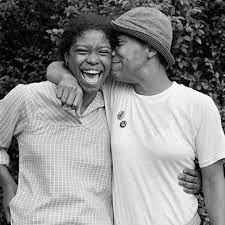
‘I thought of the pictures as propaganda’ … Baltimore couple Gloria and Charmaine, 1979, from the book Eye to Eye. Photograph: JEB

The thing that’s really hard for people to understand today,” says Joan E Biren, “is that in the 70s, it was impossible to find authentic and affirming images of lesbians. They didn’t exist.” Biren, or JEB as she is better known, is widely regarded as the first lesbian photographer to compile a book of photographs of lesbians for lesbians.

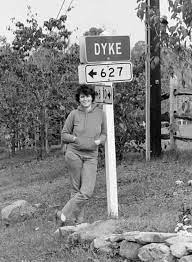
Self-starter … JEB. Dyke, Virginia. 1975. Photograph: JEB

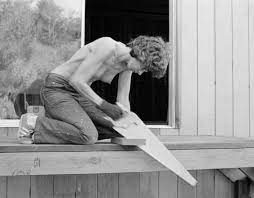
It was 1979 when Biren self-published her revolutionary Eye to Eye: Portraits of Lesbians, an extensive documentation of the realities of contemporary lesbian life across the US, the result of years of careful and close collaboration with her subjects, making pictures (she prefers this term) at their homes, at Womyn’s festivals, or after conferences, marches and events. The portraits show lesbians across America as they’d never been seen before: mostly, doing ordinary, everyday activities. Two mechanics fix up a car; a bare-chested builder saws wood; a mother leans in tenderly to kiss her daughter. Some of these women might have “passed” as heterosexual in their daily lives.
“I didn’t see it as art in any way,” says Biren of Eye to Eye. “It was entirely political. I originally thought of the pictures as propaganda. I wasn’t thinking about anything other than the movement. Material survival came second.” One of the first offers of money for an image came from a group who wanted to use it to promote an anti-homosexuality campaign. “At that point, I understood I couldn’t ever have an agent – and I’ve basically never made money out of a photograph. But it was very important to me to control who saw the pictures and where they were published.”

Realities … Jane. Willits, California. 1977. Photograph: JEB

After publishing Eye to Eye, Biren began to tour the US with Dyke Show, a slideshow presentation of lesbian images in photography from 1850 to 1982. This evolved and expanded as she met more photographers. In the 1980s, Biren also participated in The Ovulars, photography workshops that took place in Womyn’s lands, as separatist lesbian communities were called.

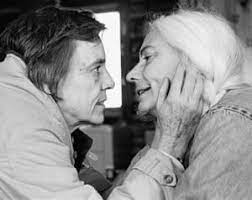
Forty years on, Eye to Eye has been revived by Anthology Editions. Although it has fresh introductions by photographer Lola Flash and soccer star Lori Lindsey, the new edition is faithful to the 1979 original and features the same photograph on the cover: a portrait of a couple, Kady and Pagan, locked in an intense and affectionate gaze. Even today, it is rare to see women represented with facial hair, imperfections, and looking their age. But what chiefly emanates from the photograph is their ease – with one another, with themselves, and with the photographer.

Biren, now 76, photographed Kady and Pagan at their home in upstate New York. “When I arrived at their tiny cabin, they greeted me by saying, ‘What took you so long? We’ve been waiting for someone to photograph us!’ They had this sense of themselves. They were worth being put into an image that would last.”

‘What took you so long?’ … Pagan and Kady, the couple on the cover of Eye to Eye. Photograph: JEB

Speaking from Washington DC, the city she grew up in and a place that shaped her social conscience and inspired her political activism from an early age, Biren says of those days: “There was only the male gaze on lesbians who were young and slim, like David Hamilton’s photographs – or porn images. My work was to counter that, to show something we could see ourselves in, what our friends and lovers looked like to each other. Everyone hungers for that.”

The overwhelming feeling in the pictures – and in the accompanying accounts of some women who appear in them – is one of profound joy and quiet confidence. And this is no rose-tinted view: Biren doesn’t avoid women who struggle as a result of their sexuality or the body they inhabit. One woman is a recovering alcoholic, another writes of her battle with mental illness. “I did it consciously for others who were struggling to see themselves reflected anywhere.”

Mother and daughter … Darquita and Denyeta. Alexandria, Virginia. 1979 Photograph: JEB

Biren’s inclusive approach was ahead of its time. Even by today’s standards, few photographers attempt to reflect so many lives and experiences. “It’s about being human,” she says, “and being human covers the whole spectrum of experiences. I wanted to show diversity in every way I could, with the limited resources I had.”

At the time the photographs in Eye to Eye were being made, the consequences of being out as a lesbian in the US were dire – and finding subjects wasn’t easy. “No one was willing to be photographed. They would run away from the camera, put bags over their heads. There was an enormous fear and it was justified because being identified as a lesbian meant you could be fired, you could lose custody of your child, be banished from your family, expelled from your place of worship, deported, thrown out of your rented apartment – and lots of other horrible things that were completely legal and quite common.”

Knowing how high the stakes were meant Biren had to work carefully. In Eye to Eye, all of the women are named, but some surnames are left out. “Not everyone could go that far. It was a big leap to have faces, names, places all together in a book. I wanted to make as much of a statement as possible about being out, but I had to protect them. Trust was the most important thing. It wasn’t my skill with the camera or anything else.”

Biren also had to think about how she used her camera, a machine that’s point-and-shoot action has associations with the phallus. She knew it was sometimes talked of as a weapon and did not want hers to be seen as a tool to dominate and oppress. “I would never say ‘take a picture’, ‘shoot the film’, or ‘capture an image’. All of those predatory, violent words were part of the vocabulary I wouldn’t use.

“I would always get together with my subjects first without the camera, and explain why I wanted to make the photograph, that it was for publication and that I wanted other people to know it was possible to be out, in spite of the discrimination and the oppression. I would tell them why I thought it was important lesbians saw each other, and then of course why they specifically were amazing. If they agreed, we would figure out a time and a place to photograph.”

‘I needed to see a picture of two women kissing’ … Biren’s self-portrait with former partner Sharon. Photograph: © JEB

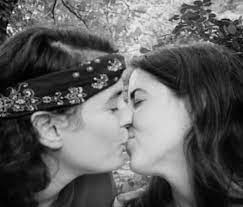
Biren never directed her subjects, nor did she ask them to pose or stage an image. She simply spent time with them, until “they forgot the camera was there”. The first picture she ever made was a self-portrait with her lover at the time, Sharon Deevey. It shows the couple kissing and smiling. The only indication of its time is the bandana Biren wears. The camera is slightly raised and at arms length, much like a selfie today. It was a picture that Biren had hungered to make.

“It was absolutely not spontaneous!” she says. “It was something I felt very personally and strongly. I needed on a deep level to see a picture of two women kissing and I couldn’t find one. So I had to make it myself. At that point, I didn’t even own a camera, so I borrowed one and did it myself. That picture means so much to me.”

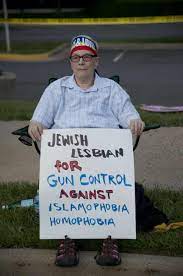
Remarkable journey … Biren protests outside the National Rifle Association headquarters in Virginia in 2016. Photograph: Patsy Lynch/Rex/Shutterstock

The image marked the beginning of her remarkable journey across the US to document lesbian life and change the way lesbians saw themselves and were seen. “I had no artistic training. My vision came from the lesbians around me, as we built communities together. I did the best I could to show the beauty, the strength, the energy of the women I was surrounded by. That was what inspired me.”

The texts in Eye to Eye are mostly reflections from some of the subjects about their experiences as lesbians, as women, and as US citizens. But there are also poems, including one by the late Audre Lorde, the activist, writer and self-proclaimed “warrior” who Biren met and would later photograph. “The scene wasn’t that big and we were in the same places. I heard Audre read her work. She was the most extraordinary person. I showed her my images and asked her if I could put a poem in the book and she said yes. I’m so fortunate to have got to know her.”

While Eye to Eye received warm reviews in gay, feminist and lesbian publications – some of which Biren regularly contributed to – it was overlooked by the mainstream American press. Back then, she never expected to reach audiences beyond the lesbian community – but four decades on, the photographer is finding new and receptive audiences. People are more aware of how much representation matters to all kinds of minorities, she says – “how important it is to see women like Kamala Harris and Amanda Gorman up on the national stage”.

This, she believes, is critical – and not just for the people being represented. “Other audiences need to see and understand who we are – to see that we did exist, we did live, and love.”

• Eye to Eye: Portraits of Lesbians by JEB, will be published by Anthology Editions.


2 Vets Celebrate Love: “If You Came To See The Bride, You’re Out Of Luck”

This story is three years old, but I thought it would be relevant as a “good news” story during LGBT History Month.

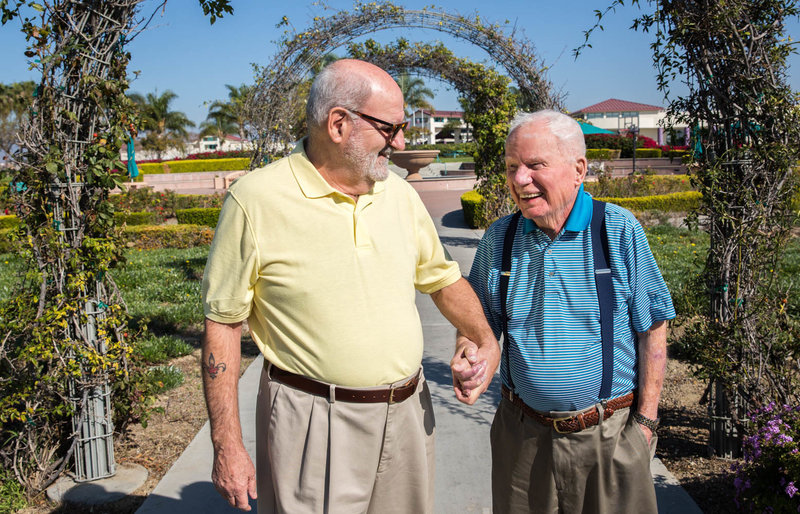
Jerry Nadeau, 72, (left) and his husband, John Banvard, 100, stand outside their home in Chula Vista, California. Photo npr.org

When John Banvard, 100, met Gerard “Jerry” Nadeau, 72, in 1993, neither of them had been openly gay.

“When we met, we were sort of in the closet, and I’d never had a real relationship. Now, we’ve been together almost 25 years,” Jerry tells John.

“What would it have been like if you didn’t meet me?” Jerry asks John.

“I would have continued being lonely,” John says. “I’d been absolutely lost.”

Both are veterans, having served in World War II (John) and Vietnam (Jerry), and when they moved into the veterans home together in Chula Vista, California, in 2010, Jerry says people there wondered what their relationship was.

“Well, when we got married, they knew what our relationship was,” Jerry says, laughing.

The couple married in 2013, and John says he was surprised by the warm reception they received. “I was expecting we’d be ridiculed, and there was very little of that,” he says.

“We’d gotten married at the veterans home, and we said, ‘If you came to see the bride, you’re out of luck.’ Do you remember that?” Jerry asks John.

“Yes, of course,” John says. The two indulge in the memory of a casual wedding — a frank display, if you will, of their unabashed love — featuring hot dogs as a main course, which, John says, “is hardly wedding food.”

Later, their achievement was affirmed by a simple introduction. “I was with you in the cafeteria, and somebody came up with their family, and they said, ‘This is Gerard Nadeau, and this is his husband, John,’” Jerry recounts. “I’d never heard that before.”

“Yes, that was very nice,” John says.

“You’ve made my life complete,” Jerry tells John.

“I could say the same to you,” John replied. “I think we’re probably as happy together as any two people you’re likely to meet.”


Sonder radio

From 15 March to 26 March 2021 (with a taster session on the 11 March), Sonder Radio is running a two week online radio making course via Zoom.

During the course, those attending will learn new creative digital skills, develop confidence, make new friends, build skills for employment and even plan and broadcast their very own live show as a group.

There will be additional support/wellbeing sessions and opportunities for volunteering following these dates. Those interested can reserve their free place now by getting in touch via email or by phone.

Learn more: sonderradio.com

The Bidding Room … Molly Houses & Madams … Keith Haring

News

The Bidding Room

The Bidding Room is a programme on BBC1. Set in an emporium deep in the Yorkshire countryside, a group of expert dealers attempt to outbid each other to buy extraordinary items brought in by the public.

Nigel Havers welcomes people with an item they would like to sell, introducing them to a valuation expert who gives them the specialist information they need to drive a hard bargain. Tooled up with this information, Nigel guides the sellers through to the bidding room, where the five eager dealers square up to spend their money.

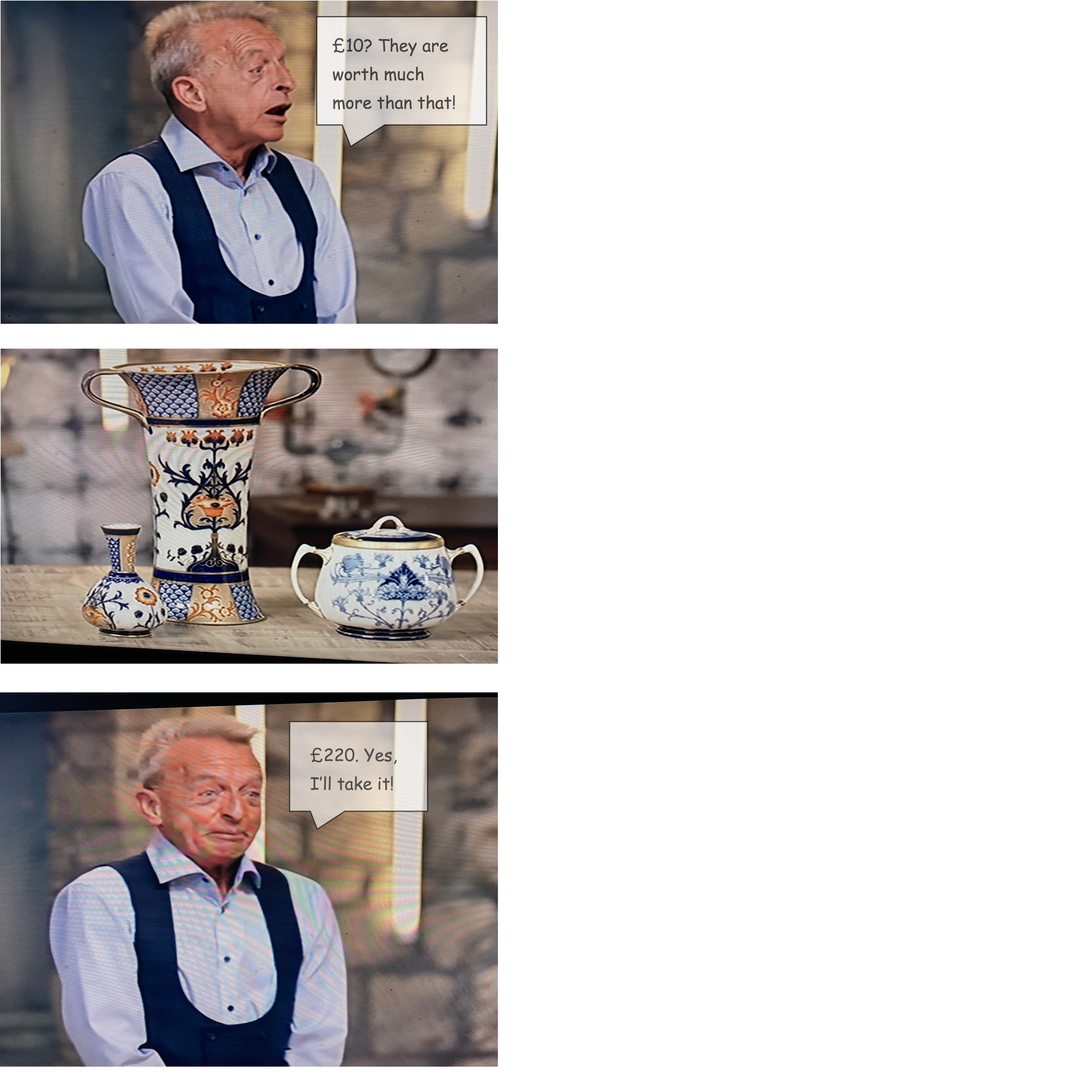
Philip from Out In The City was featured in a recent programme:


Molly Houses and Madams: Unravelling Georgian Subcultures

Tuesday, 16 February 2021, 7:30pm – 8:30pm

This is an online event. Bookers will be sent a link in advance giving access and will be able to watch at any time for 48 hours after the start time.

Established in 1691, the Society for the Reformation of Manners aimed to suppress all immoral behaviour in London – from profane plays and prostitution to salacious art and sodomy.

Its results were a raft of highly publicised prosecutions and raids on brothels, molly houses and contemporary literature. An unexpected consequence was a veritable goldmine of archival material into previously under-acknowledged London subcultures.

In this talk, Dan Vo (Victoria & Albert Museum LGBTQ tour coordinator), Mark Ravenhill (award-winning playwright Mother Clap’s Molly House) and Professor Kate Williams (bestselling author and historian) lift the lid on the secret worlds of 18th century London – from Molly Houses and bawdy houses, to writers and madams.

Price: Full Price: £5.00, Member: £0.00

Enquiries: +44 (0)1937 546 546 or boxoffice@bl.uk


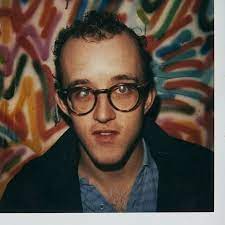
Keith Haring

On 16 February 1990 (31 years ago) Keith Haring died of AIDS-related complications at the age of 31.

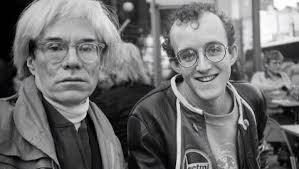
Moving from Pennsylvania to New York, from street art to the 80’s modern art scene, Keith Haring quickly shot up to global fame. He chose to work in a wide variety of methods, from subway drawings, sculptures, large-scale paintings, posters, worldwide public art, and workshops, to commercial endeavours such as the opening of Pop Shop, with the encouragement of Andy Warhol, where he sold his original goods. Above all was the aesthetics, “art is for everybody”.

Although three decades have passed since his death, not a year passes by without his work being exhibited around the world and his art is continuously employed in fashion, social activism, and entertainment. Haring’s energy generated by his strong wish for equality, human rights, and world peace lives endlessly through his art.

You can watch the film – Keith Haring: Street Art Boy – on BBC iPlayer.

This highly recommended and compelling film – told using previously unheard interviews with Haring, which form the narrative of the documentary – is the definitive story of the artist in his own words.


Goldilocks & The Three Bears

Window Open … Black History Month … James Baldwin

News

Window Open – A Play by Andrew Seedall

Window Open is a play by Andrew Seedall, exploring the complicated lives of a gay couple during the late 1960s navigating the confusing worlds of private love and public fear.

With Chris Currie, photographer, they are looking for lifelong same sex couples who have been together for 10 years or more and/or LGBTQ+ widows / widowers from lifelong relationships to volunteer for photography portraits to accompany the main narrative in Andrew’s play.

The process is a collaboration to ensure each person involved feels comfortable with the process and is happy with the results.

If you are interested then please contact us.


Black History Month

As well as it being LGBT+ History Month in the UK it’s Black History Month in the US. We celebrate the LGBT+ members of ethnically diverse communities with these great images.


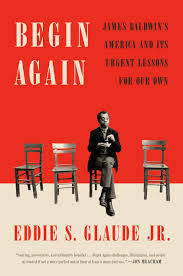
Begin Again: James Baldwin’s America and Its Urgent Lessons for Today – book review

The great writer’s passion and resilience resonate anew in Eddie S Glaude Jr’s timely, powerful study.

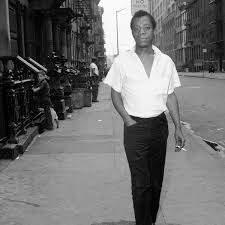
‘A giant and an anomaly’: James Baldwin in New York, June 1963. Photograph: Dave Pickoff/AP

Michael Ondaatje once wrote that if Van Gogh was “our 19th-century artist-saint” then James Baldwin was “our 20th-century one”. For many, Baldwin’s writing has long been a touchstone of anti-racist humanism, but the sense of that particular epithet has never landed more emphatically than while reading Eddie S Glaude Jr’s Begin Again, his potent meditation on the enduring legacy of Baldwin’s life and thought, a New York Times bestseller and one of a number of titles that have spoken to the soul of public outrage at George Floyd’s killing in Minneapolis last May.

Glaude, who is distinguished professor and chair of the African American studies department at Princeton University (where he has been teaching a seminar on Baldwin for several years), is also a native of Jackson County, Mississippi, the US state that suffered the highest number of lynchings – 581 between 1882 and 1968. The trauma of that inheritance – “our bodies carry the traumas forward,” Glaude writes – is never far from the page. Nor is the trauma felt across black America in his parents’ generation when in 1968 Martin Luther King Jr was assassinated, crushing hopes for “fundamental change” that had been gathering around the US civil rights movement for the best part of a decade.

As a figure of Glaude’s parents’ generation, Baldwin was both a giant and an anomaly – the kid from Harlem whose depiction of black American life through the great migration (in 1953’s Go Tell It on the Mountain) had made him a literary sensation while still in his 20s. By the age of 30, he was a household name, at which point he dared, at the height of his celebrity, to write, in 1956’s Giovanni’s Room and 1962’s Another Country, from the viewpoint of protagonists who were both white and gay, endearing himself to liberals and to fashionable society but suffering, as a result, “the label of bootlicker [back home] for making this point that categories can shut us off from the complexity within ourselves”.

The son of a preacher, Baldwin wrote repeatedly of love, and of his belief in America’s future as a multiracial society, and his hope of redemption for white Americans and black Americans alike – a vision that perhaps saw its most focused articulation in the blistering essays of 1963, The Fire Next Time, which were seen as giving voice to the emerging civil rights movement.

As the 1960s unfolded, though, and the optimism of the civil rights era was met with renewed violence and resistance, Baldwin’s own voice hardened and his tolerance of liberals became short – “I don’t want anybody working with me because they are doing something for me,” he said – and a question arose for him, writing in defence of a new generation of young black radicals, the first exponents of black power, whether white America was really worthy of so much energy and concern (as Martin Luther King continued to insist that it was).

Then King was killed and, like so many of his time, Baldwin found himself derailed. “He went to pieces,” Glaude tells us. “He witnessed what was happening in ghettos, where the workings [of white supremacy] impoverished millions. He saw the beginnings of mass incarceration and its effect on black communities. He also felt the emotional trauma of dashed hopes and expectations.” He remained a witness to it all and “12 years later”, Glaude continues, “he watched the country elect Reagan, a clear indication, if there ever was one, that white America had no intention of changing when it came to matters of race”.

“What we are living through,” Glaude writes of the current context, “even with our cellphone cameras, is not unlike what Baldwin and so many others dealt with as the black freedom movement collapsed with the ascent of the Reagan revolution.” Baldwin’s response demonstrates the resilience that’s needed to be a witness through an era of despair.

There is a common reading of his career, dismissed by Glaude as a “stale characterisation”, that he hit the heights of his literary genius in 1963; that, thereafter, “his rage and politics got the best of him” but that he subsequently lost his nuance, lost touch with the love that had distinguished his voice in his prime, abandoned his gift for complexity; that in the aftermath of King’s assassination and with the collapse of the civil rights movement, he’d left himself nowhere to go; that by 1972 he was a writer in decline; that by the time of his death from stomach cancer in 1987, he was, to use a phrase from Darryl Pinckney, “a spent force”.

Glaude challenges this convention with conviction. He invites us with him to “read Baldwin to the end” and reveals a writer, not spent, but rather illuminating the path beyond despair – the work of a saint if ever there was such a thing. This witness through the dark times, which Glaude argues are upon us once again, is, he says, the true measure of Baldwin’s greatness: an enduring testament to his love and the belief that the US can and must be something more than it is.


Begin Again: James Baldwin’s America and Its Urgent Lessons for Today by Eddie S Glaude Jr is published by Chatto & Windus (£16.99).

LGBT History Month: Six LGBT+ sports people you should know more about

News

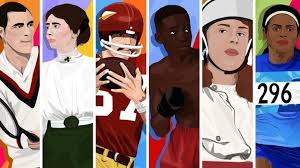
To mark LGBT History Month, BBC Sport looks at the lives of six LGBT+ sportspeople who made history in their respective sports, but whose stories may not be as widely known.

(L-R) Bill Tilden, Freda du Faur, Jerry Smith, Panama Al Brown, Roberta Cowell, Dutee Chand

From the first known British transgender woman to a Wimbledon champion, an NFL Pro-Bowler and a sprinter who successfully challenged her sport’s governing body.

Here are six LGBT+ sportspeople we think you should know more about.

This article includes references to suicide, drug use and other issues such as sexual misconduct.

  1. Panama Al Brown

“One of the big things is being mentally tough.”

Alfonso Teofilo Brown, better known as Panama Al Brown, was the first Latin American boxing world champion and is regarded as one of the greatest bantamweights in history.

During his career, Brown won an incredible 59 fights by knockout and was the bantamweight world champion for six years.

Brown was born in 1902 to Afro-Caribbean immigrant parents in Panama. His mother was a cleaner and his father died when Brown was 13 years old. As a teenager, Brown was working as a clerk at the Panama Canal Zone when he saw American soldiers boxing and decided to take up the sport.

Brown turned professional aged 20 and, the following year, won his first fight abroad in New York. He moved to the city, where his rise to the top of his sport was emphatic.

In 1926, after boxing across the USA for three years, Brown fought in Paris for the first time. He enjoyed it so much, he decided to move there.

In 1929, Brown became the first Latin American world champion when he beat Spain’s Gregorio Vidal by a 15-round decision in New York. The victory made him a hero in Panama and he became renowned around Latin America.

Brown’s fights attracted massive crowds, attended by the likes of Pablo Picasso and Ernest Hemingway. Brown also became a popular boxer in Paris and fought in 40 bouts around Europe between 1929 and 1934.

He spent much of his life in the French capital and was reportedly adored by the French because of his ability to speak seven languages and his all-night partying.

He performed in cabaret shows too, and even tap-danced in one that showcased black talent and launched the career of Josephine Baker.

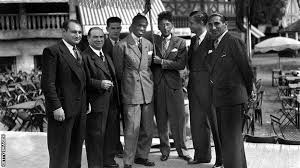
But not everyone loved the Panamanian. Brown was in a relationship with French writer Jean Cocteau, who became his manager, despite knowing little about the sport.

When rumours of Brown’s sexuality spread, people began attending his fights just to jeer or spit at him during ring-walks, and after one fight, he was beaten unconscious by spectators.

All of this on top of the racial discrimination he already faced.

Brown was in a relationship with French writer, artist and filmmaker, Jean Cocteau, pictured holding a parasol over the boxer.

When World War Two began, Brown moved back to New York and tried to find work in cabaret clubs in Harlem, without success.

He began boxing again but was a faded force. In 1942, he was arrested for cocaine use and deported to Panama for a year.

After returning to Harlem, Brown – by now in his late 40s – got by as a sparring partner for aspiring boxers, earning a dollar per round.

Brown died of tuberculosis aged 48 in 1951. He was initially buried in a small grave in Harlem, until some boxing fans raised money to send his remains to Panama.

  1. Dutee Chand

“One may fall in love anytime and with anyone. One does not decide that based on caste, religion or gender.”

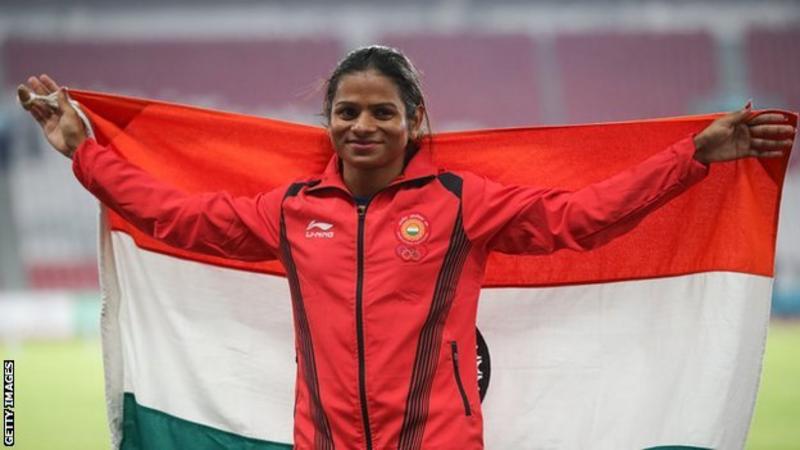
Dutee Chand, born in 1996, is the third Indian woman to qualify for the 100m at an Olympic Games and was the first Indian to reach a global sprint final – at the World Youths – and has two Asian Games silver medals. She is also the first openly gay athlete to compete for India.

Chand grew up in Chaka Gopalpur, a poor, rural village in Odisha’s Jajpur district. She came out in 2019 – a year after India’s Supreme Court decriminalised gay sex – and faced public backlash from people in her village, as well as her parents.

Chand’s father told the Times of India his daughter’s relationship was “immoral and unethical”, and she had “destroyed the reputation of [their] village.”

Her mother added: “We belong to a traditional Odia weaver community which does not permit such things. How can we face our relatives and the society?”

At the 2019 World Universiade in Naples, Chand became the first Indian to win a 100m gold medal at a global event

But the media attention wasn’t new for Chand. When she was 18 years old in 2014, she was disqualified from the Commonwealth Games because of her testosterone levels.

Like South African 800m legend Caster Semenya, Chand’s natural levels of testosterone were normally only found in men. This is also known as difference of sexual development, or DSD.

Chand missed out on competing at the Commonwealth and Asian Games in 2014 because of the suspension, refusing to subject herself to the “corrective” treatment (hormone suppression therapy) prescribed by the IAAF (now World Athletics) and the International Olympic Committee (IOC).

Fast-forward a year, and Chand became the first athlete to challenge the “hyperandrogenism rules”. They were temporarily suspended and Chand could compete again, and she went on to become an Olympian the following year. That same rule challenge was rejected for Semenya.

Chand is only the third Indian woman to qualify for the 100m at the Olympic Games

In 2018, Chand spoke about how she met Semenya at the Rio Games, who made her feel like a “close friend”.

“She told me not to worry about the case and to focus on the sport. I am glad that my battle is over, but hers is not,” said Chand.

In 2019, the Court of Arbitration for Sport ruled in favour of the controversial rule, meaning athletes with DSD, like Semenya, would have to take the hormone-limiting drugs if they wanted to compete in the 400m, 400m hurdles, 800m, 1500m, one mile races and combined events over the same distances.

As a sprinter, Chand is exempt from the rule. But she reportedly offered Semenya her legal team that worked on her 2015 appeal.

During the coronavirus pandemic, Chand spent time distributing food deliveries and sanitary pads to people in her village.

She is also planning on opening an athletics academy for locals, and told Vogue: “I want another child aspiring to be a runner to run barefoot like me.”

In contrast to being banned from the 2014 Commonwealth Games, Chand was recently announced as one of four ambassadors for the Birmingham 2022 Games’ Pride House.

  1. Roberta Cowell

“It’s easier to change a body than to change a mind.”

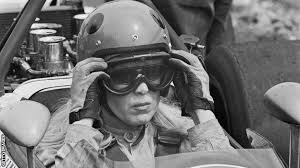
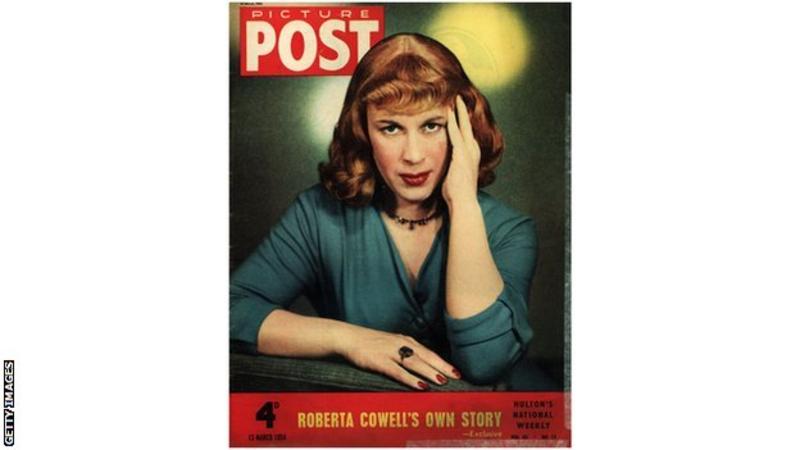
Roberta Cowell, born in 1918, was a racing driver, a World War 2 fighter pilot and the first known British trans woman to have sex-reassignment surgery.

Cowell’s father was Major General Sir Ernest Marshall Cowell, honorary surgeon to King George VI – the Queen’s father.

She became interested in cars and racing, saying in her biography: “It was the be-all and nearly the end-all of my existence.”

Cowell left school at 16 and would later join the RAF, but her ambition of becoming a fighter pilot was initially dashed by airsickness.

She instead started studying engineering in 1936 at University College London, where she also began pursuing her interest in motor racing.

What started as Cowell donning mechanical overalls to sneak into car service areas at Brooklands racing circuit to gain experience led to her racing alongside her studies and in 1939 she competed at the Antwerp Grand Prix.

At 23, Cowell married fellow race car driver Diana Zelma Carpenter and the couple had two daughters.

During World War 2, Cowell transferred back to the Royal Air Force, working as a temporary pilot officer. In 1944, she spent five months in German prisoner of war camps after her aircraft crashed and she was captured by German troops.

During her time in prisoner of war camps, Cowell taught automotive engineering to fellow prisoners and made two escape attempts that led to her spending several weeks in solitary confinement.

Cowell raced competitively after the war but was increasingly uncomfortable with her body – by 1950 she was still living as a man, but taking large doses of oestrogen.

She met doctor Michael Dillon, the first trans man to get a phalloplasty (a construction of a penis), and he carried out an operation on Cowell to remove her testicles – a procedure that was illegal in the UK at the time.

This allowed Cowell to get a document stating she was intersex from a private gynaecologist, which enabled her to obtain a new birth certificate that stated her sex as female.

In 1951, Cowell became the first person in Britain to have a vaginoplasty (construction of a vagina out of penile tissue). It was carried out by Sir Harold Gillies, widely considered the father of plastic surgery, who has only previously performed the procedure on a cadaver.

In 1954, Cowell told the story of her transition in Picture Post magazine. It gained international public interest. In her autobiography, she wrote, “I have become woman physically, psychologically, glandularly and legally.”

After her transition, Cowell returned to motorsport and continued to race during the 1950s and 1960s, before running into financial problems.

Cowell died aged 93 in 2011 while living alone in south west London. She had requested there be no publicity when she died, and her daughters, who she had not seen since before her divorce decades earlier, only found out about her death two years later when an obituary was published.

  1. Freda du Faur

“I was the first unmarried woman to climb in New Zealand, and in consequence I received all the hard knocks until one day when I awoke more or less famous in the mountaineering world, after which I could and did do exactly as seemed to be best.”

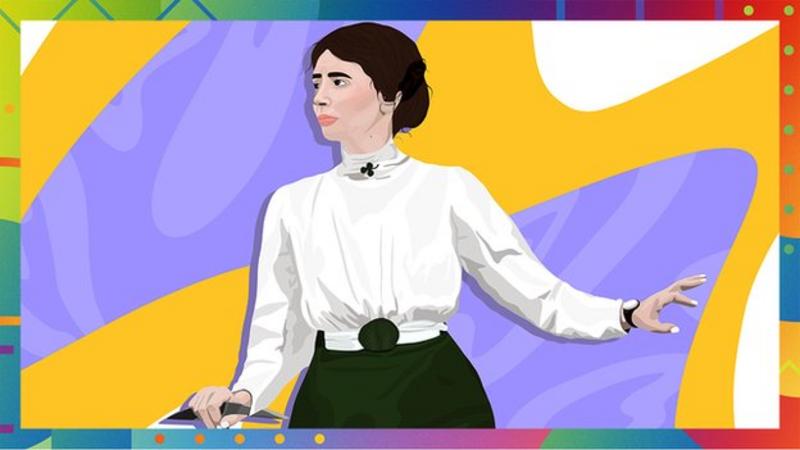
Freda du Faur, born in Sydney in 1882, was an Australian mountaineer who became the first woman to climb Mount Cook, New Zealand’s tallest mountain, in 1910.

Du Faur grew up near Ku-ring-gai Chase National Park where she taught herself to rock climb. She was studying to be a nurse when she received inheritance money from her aunt that allowed her to travel and become a full-time mountaineer.

Du Faur prepared for her climb of Mount Cook at a physical education institute in Sydney, where she met trainer Muriel Cadogan, who would eventually become her partner.

On 3 December 1910, guided by Peter Graham and his brother Alec, Du Faur became the first woman to climb the 3,760m tall Mount Cook, in a then-record time of six hours.

After the climb, Du Faur said: “I gained the summit – feeling very little, very lonely and much inclined to cry.”

In the following years, she climbed several other mountains, including one that was later named after her, as well as the second-highest mountain in New Zealand, Mount Tasman.

Du Faur became known for her agility and endurance, and always wore a skirt while climbing – despite objections.

In 1914, Du Faur moved to England and lived with Cadogan in Bournemouth while writing a book about climbing Mount Cook.

In 1929, Cadogan had a nervous breakdown and Du Faur tried to admit her to a mental facility.

Instead, they were both admitted, drugged and separated against their will. Unlike male homosexuality, which was a crime, lesbianism was then classed as a psychological disorder.

Eventually, Cadogan was sent back to Sydney and took her own life on the cargo boat on the journey back.

After Cadogan’s death, Du Faur was released from the facility. She returned to Australia to live with her family, but remained confused and depressed.

Du Faur killed herself in 1935 and her family buried her in an unmarked grave. In 2006, a plaque was added to her grave site to commemorate her legacy.

As well as the mountain named after Freda, the Southern Alps of New Zealand are home to the Cadogan Peak, named after Muriel Cadogan.

  1. Jerry Smith

“Playing with fire is bad for those who burn themselves. For the rest of us, it is a very great pleasure.”

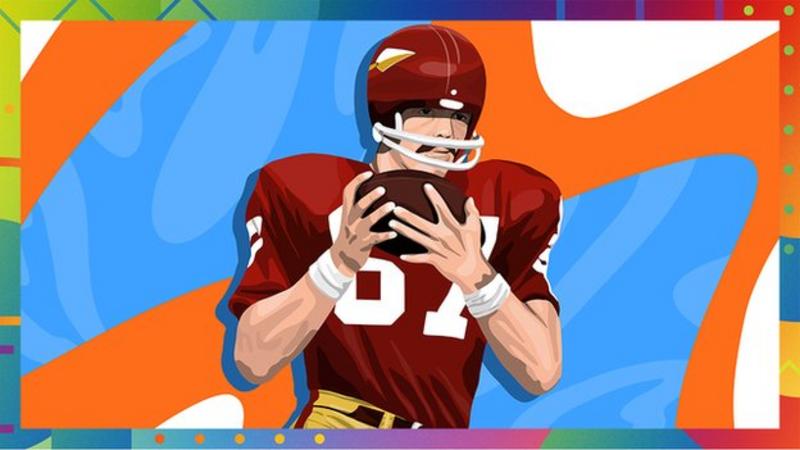
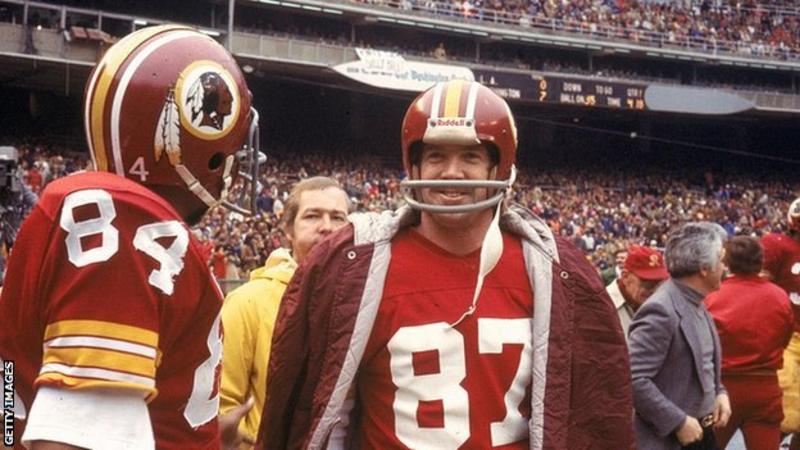
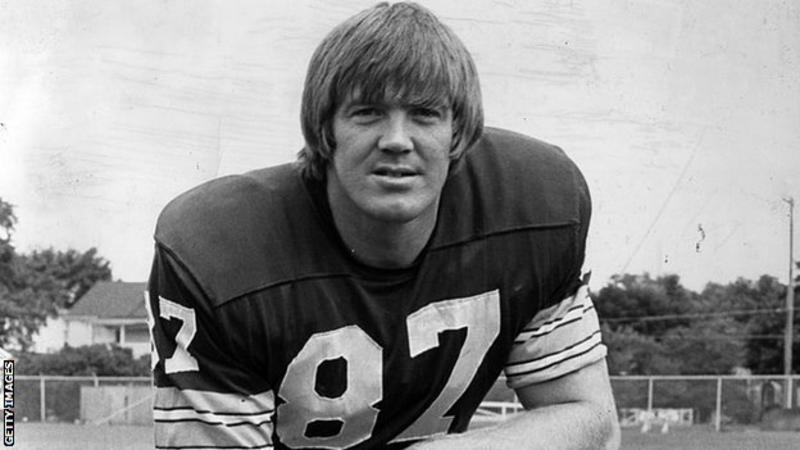
Jerry Smith, born in Oregon in 1943, was a tight end for the NFL’s Washington Redskins for 13 seasons. When he retired, Smith held the NFL record for most career touchdowns by a tight end (60). The two-time Pro-Bowler never publicly came out as gay before he died of Aids aged 43.

At 6ft 3in, Smith was considered small for a tight end. But he went on to have a long and successful career, holding various NFL records, and was widely regarded as one of the best tight ends of his time.

Smith’s record for most career touchdowns was only broken in 2003 by Shannon Sharpe, who was inducted into the Pro Football Hall of Fame in 2011. Smith’s close friend and team-mate Brig Owens has claimed Smith would also be in the Hall of Fame if not for his sexuality.

Smith played for Washington for 13 seasons, from 1965 to 1977

Smith was in a brief relationship with team-mate David Kopay, who in 1975 became the first NFL player to come out, three years after retiring.

Kopay referred to a sexual encounter with Smith, using an alias for him, in his autobiography. Smith never spoke to Kopay again.

Smith was briefly coached by NFL legend Vince Lombardi, who he loved playing for, and whose brother was openly gay.

Lombardi tried to ensure there was tolerance for everybody in the locker room, reportedly hinting to Smith that he knew about and accepted his sexuality.

Shortly before he died, Smith said: “Every important thing a man searches for in his life, I found in Coach Lombardi. He made us men.”

Owens, who often roomed with Smith, said that Smith lived in fear and never came out because he worried if people knew he was gay, his career would be ruined.

In 1986, Smith became the first professional athlete to announce he had been diagnosed with Aids. He died two months later.

A few weeks before his death, he was interviewed for an article in the Washington Post so that, as he said, ‘Middle America’ might finally accept that Aids could affect anyone. Even an NFL player.

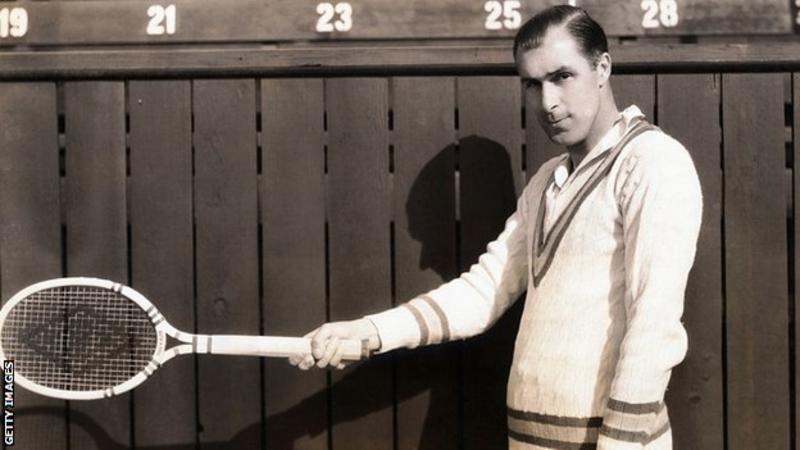
  1. Bill Tilden

“Tennis is more than just a sport. It’s an art, like the ballet. Or like a performance in the theatre. When I step on the court I feel like Anna Pavlova. Or like Adelina Patti.”

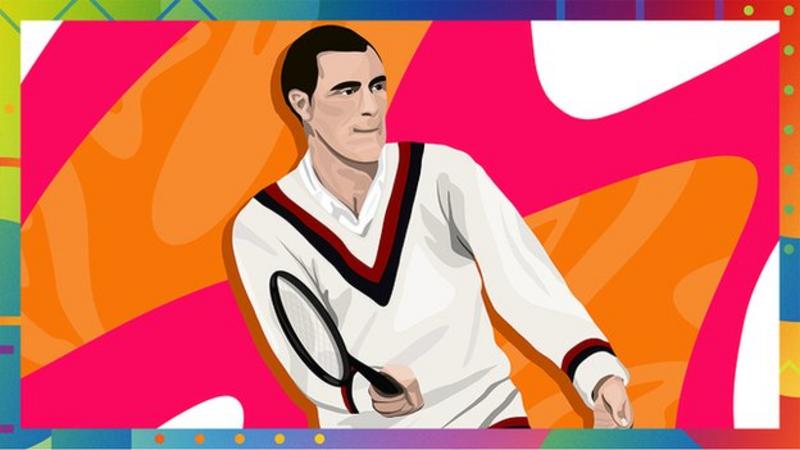
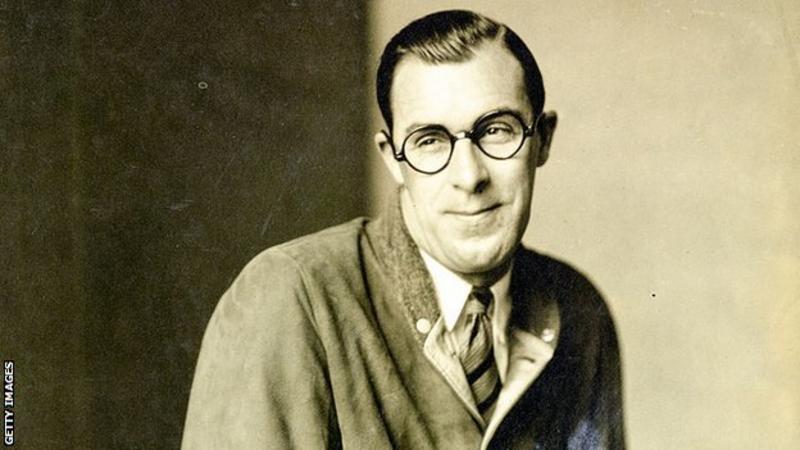
Bill Tilden, born in 1893, won 10 Grand Slam titles including three Wimbledon and seven US Nationals (now US Open) titles.

He dominated tennis for more than a decade, at one point winning every major tournament he entered for six years. He was also openly gay.

In 1929, Tilden became the first men’s player to reach 10 finals at a single Grand Slam event – a record which was only broken in 2017 when Roger Federer reached his 11th Wimbledon final.

Tilden was born to a wealthy family in Philadelphia. He played tennis as a child, but it wasn’t until his early 20s that he started taking the sport seriously.

By the age of 22, both his parents and his older brother had died, causing him to suffer from severe depression. Tennis became his way of coping.

Tilden became the first American man to win Wimbledon in 1920. He won again the following year and said it was “too easy”, so didn’t play at the tournament for the next three years.

In 1930, aged 37, he became the oldest man to win a Wimbledon singles title. The following year, desperately needing to earn money, Tilden began playing professionally and continued on the pro circuit into his 50s.

Tilden, nicknamed ‘Big Bill’ because of his height, was world number one from 1920 to 1925, during which time he won six consecutive US singles championships

However, in 1946, Tilden was arrested, charged and sentenced to a year in prison for ‘contributing to the delinquency of a minor’ – although he disputed his conviction.

On his release, Tilden’s parole conditions were strict and lasted five years, and the tennis world shunned him. Tilden could no longer earn an income from giving lessons anymore – apart from when his friend Charlie Chaplin allowed him to use his private court.

Tilden was arrested again in 1949 for groping a 16-year-old hitchhiker. He served 10 months in prison.

Tilden was openly gay and one of the most dominant figures in US sport during the 1920s

Despite those convictions, in a 1950 Associated Press poll, Tilden was unanimously voted the greatest tennis player of the half-century. This was just weeks after being released from prison.

During the years he spent on the pro tour, Tilden lived in a suite in a New York hotel where he wrote Broadway shows that he would produce and star in, as well as books on tennis strategy. He faded from public life and in 1953, aged 60, died of heart complications.