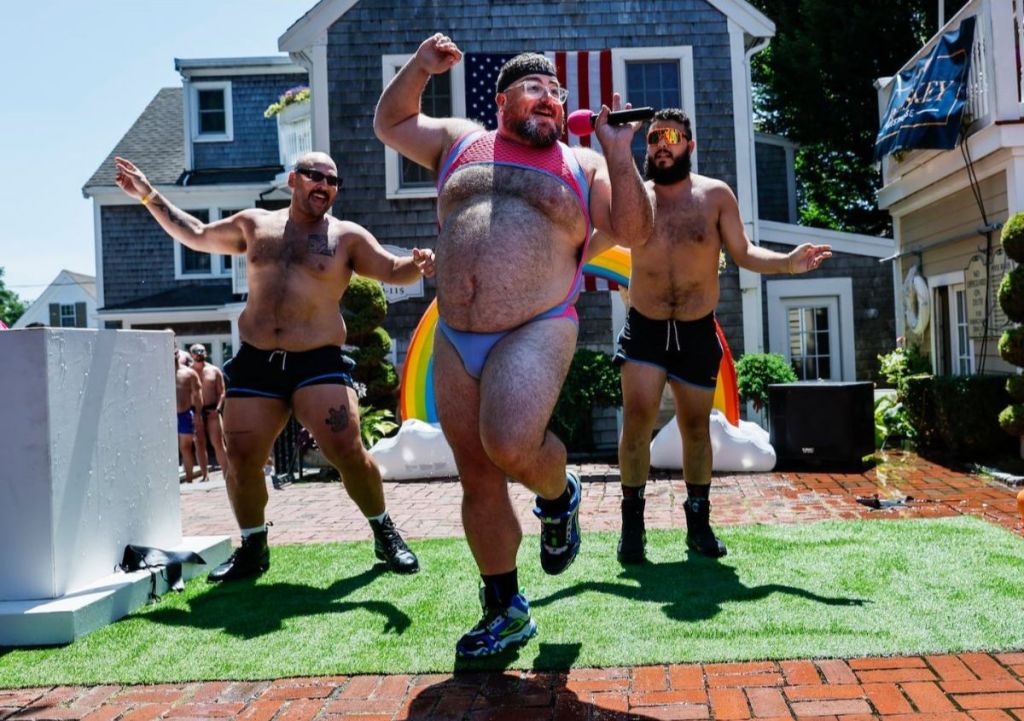
International Drag Day is an annual event held on 16 July. It is a day to celebrate and honour the art of drag and drag culture. This day was created to recognise and appreciate the drag queens, drag kings, and all members of the LGBTQ+ community who have made a significant contribution to the drag community.
Every time some people pass a dog, they go all gooey and warm and start cooing, “Awwww, look at the puppy I wanna pet it!” because they are easily swayed by adorable fuzzy things.
The thing that is really weird for me is when pet owners dress their dogs. Your dog hates it and everyone thinks you are weird for doing it. Save the money you would have used on that miniature designer outfit and just get your puppy a cuddly toy!
That being said the following photos of dogs and drag is the best thing ever:
Open Community Dinner and Choir Performance
Join us for dinner and a show! Open dinner and a performance from Lesbian Boy Band Choir.
The Proud Place, 49-51 Sidney Street, Manchester M1 7HB
Tuesday, 6 August – 6.00pm – 9.00pm
To kick off Manchester’s Pride Month, we are hosting a free community dinner at The Proud Place and we’d love for you to join us!
We’ll have a range of delicious veggie and vegan hot and cold food supplied by Oak Street Kitchen, as well as a very special performance from Lesbian Boy Band Choir.
This will be a great opportunity to connect with both new and longstanding members of our community in the run up to Pride, and it’s completely free to attend so snap a ticket up while you can!
In the United States in the 1950s or early 1960s, readers browsing in booksellers or bus terminals were likely to see racks filled with books with cheap, sensational covers that hinted at lesbian content within. “Her choice: Normal marriage or lesbian love?” asked one cover. “In love with a woman,” asked another, “must society reject me?”
Society did reject lesbians. The era was one of blatant homophobia and the overwhelming silence of societally-enforced closets. But for many women, the cheap pulp novels that some dismissed as salacious entertainment were an eye-opening lifeline. The content packaged to titillate men actually gave lesbian women much-needed representation.
Academics shouldn’t ignore lesbian pulp fiction because it was marketed toward straight men. Though they engendered profoundly mixed feelings, the books offered some of their era’s only representations – and celebrations – of lesbian lives. For many women grappling with sexualities that were regarded as unhealthy and even criminal, these dismissed, yet foundational narratives offered a readily available, popular discourse that put the word lesbian in mass circulation as never before.
Between 1950 and 1965, more than five hundred lesbian pulps were published in the US. Cheaply manufactured and sold en masse, they came with salacious covers and dramatic titles like Spring Fire, Odd Girl Out and Twilight Girl. After the publication of Women’s Barracks, an autobiographical novel by Tereska Torres that has sold an astonishing four million copies in the US alone, the genre took off. Some stories masqueraded as journalistic looks into “deviant” lives. Others centred men and featured lots of sex. But many were authored by women, and offered stories of realistic and even happy lesbian relationships.
Scandalous cover art and text that focused on “savage” or “strange” loves all but shouted the lesbian content that could be found within.
In a world that hid homosexuality from view, lesbian pulps were surprisingly pervasive, and popular. Many of the books, and nearly all of their covers, reinforced homophobic stereotypes of lesbianism. But for women in search of more information about lesbianism, they were lifelines.
Lesbianism may have been taboo, but the pulps profited from proscriptions against same-sex relationships until the genre died out around 1965. Lesbian pulp novels helped set the stage for future LGBT+ activism, the women’s movement, and the cultural shifts of the late 1960s.
They may have been steamy, but books about lesbian sexuality were anything but disposable.
The beautiful story of Maurice Dobson, a cross-dressing miner who found love in a Barnsley pit village
Maurice Dobson wore make-up, lived with Fred and was accepted in Darfield’s community.
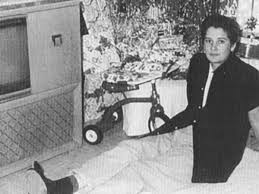
The carefully crimped hair, immaculately manicured eyebrows and flamboyant lipstick give this image all the hallmarks of 1950s fashion and femininity.
But what makes it remarkable is that this is a photograph of Maurice Dobson – former coal miner, war veteran and boxer – who was openly gay in his hometown of Barnsley during an era where homosexuality was illegal and rarely discussed.
A further twist is that Maurice and his partner Fred Halliday were – by and large – accepted as part of the Darfield community where Maurice had grown up and ran a corner shop in the post-war decades.
Poet and village resident Ian McMillan described it as “a story of tolerance”.
Mr McMillan talks of Maurice’s distinctive demeanour behind the counter of the shop – sat on a high stool, wearing a powder blue suit, with a cigarette in a holder between his fingers. To complete the image, a swearing parrot was also in the room.
In that era, where Barnsley’s pit villages were insular and traditional communities, it must have taken strong reserves of courage or conviction – maybe both – to take the course followed by Maurice and Fred.
Maurice’s dress sense meant he would stand out in any circumstances but he had a reputation for dressing as a woman while out on the streets of Darfield and nearby Wombwell.
When Maurice was born in Low Valley, a mile or so from the shop, in 1912 his future would have been beyond the imagination of those around him.
His early years were entirely normal, starting work at Mitchell’s Main Colliery aged 14 like most of his peers, but after three years his independent spirit took him off to join the Army – a posting which would last 17 years, see service in North Africa, hone his boxing skills and find his life-long partner in Fred.
After being demobbed they spent a decade working in hotels to coastal resorts, before returning to Darfield to take on the shop, then an off-licence owned by the Barnsley Brewery – the force behind the legendary Barnsley Bitter.
Living heritage: Today Maurice Dobson’s home is a museum
They were eventually able to buy the shop and ran it until Maurice hit 65, when it was immediately closed and stayed that way until both men died, with Fred’s departure in 1988 and Maurice two years later.
They had been avid antiques collectors and retirement allowed that to continue, though Ken said Maurice was far from expert – once sawing down a leg on a Jacobean chair to make it rest evenly on the stone floor of their home.
He also had a sense of mischief, with the unwary finding a magazine photograph in a cameo frame where a skillfully painted portrait might have been expected to sit.
But there were treasures and today they are held at the Cannon Hall museum, with the house and shop left to Barnsley Council and now Darfield Museum, to tell the story of both Maurice and the wider village.
Mr McMillan said: “People liked them, they respected them. I have always thought of it as a story of tolerance.
They would walk up and down the village, dressed up, and nobody would say anything.”
Maurice and Fred (with unknown woman)
Mr Brookes said there may have been confrontations, largely involving groups of lads gathering outside the large Georgian window of their shop.
But such problems were “sorted out” by Maurice, who’s tough military background was acknowledged by most, whatever they may have thought about his lifestyle.
His personality was “a bit sharp”, said Mr Brookes, who acts as a guide at the museum, and even after Fred’s death – which left him devastated – he was still able to “fall out with his ashes”, putting them away in a cupboard until he felt the matter was resolved.
He describes the shopkeeper as Darfield’s Noel Coward.
“He was only a small fellow, but he had done 17 years in the forces and you didn’t mess with him. He sorted things out himself in the early days. I think the police were glad of that, as well.”
Mr Brookes was a teenager in the late 1950s and was a regular customer in the shop, which was across the road from a tennis club he used frequently and the Darfield Empire theatre.
But like most in that era, he was unaware of the realities of the lifestyle the two shopkeepers led. Or at least which they were assumed to lead, he said wistfully.
Because no one ever knew for sure how the relationship worked beyond the public gaze.
International Non-Binary People’s Day is observed each year on 14 July and is aimed at raising awareness and organising around the issues faced by non-binary people around the world. The day was first celebrated in 2012 and was chosen for being precisely midway between International Men’s Day (19 November) and International Women’s Day (8 March).
Being non-binary can be dismissed by some as a new fad, born from a western identity-obsessed culture – however non-binary people have been recognised and recorded round the world. In India non-binary people have been mentioned in Hindu texts dating back over 2000 years, and many cultures, such as some Native American peoples, Hawaiians, and Tahitians, have a history of inclusion of a third gender in their societies’ roles.
Pride For All Ages
Older LGBT+ people were visible at Pride Edinburgh 2024:
Beauty contests – then and now
In 1967 Stephanie Germain, a 22-year-old, won a beauty contest in Atlantic City, Wyoming. She entered just a year after she transitioned. Unfortunately, the judges disqualified her after she informed a fellow competitor she was (in the words of the day) a sex-change.
Miss Maryland USA
On 1 June 2024, Bailey Anne Kennedy became the first trans woman to be crowned Miss Maryland USA.
Kennedy is a Cambodian American, making her also the first Asian American to win the pageant. She holds the honour of being the first military spouse to win as well.
Kennedy’s victory marks a transformative moment in how transgender individuals are perceived in the US. This milestone will inspire confidence within the trans community, encouraging more trans and gender nonconforming individuals to aspire towards their dreams and break barriers.
Other winners
Kataluna Patricia Enriquez was the first transgender woman to be crowned Miss Nevada in 2021. She was also the first trans woman to compete in the national Miss USA pageant.
Marina Machete Reis was the first trans woman to be crowned Miss Portugal in 2023.
Rikkie Valerie Kollé was the first trans woman to be crowned Miss Netherlands in 2023.
Angela Maria Ponce Camacho won the title of Miss Spain in 2018 and was the first trans woman to ever compete in the Miss Universe pageant.
After years of resistance, more and more major beauty pageants are selecting transgender women to compete. It’s shaking up ideas about inclusivity, questioning the modern world’s beauty standards — and perhaps redefining gender itself.
Kimpton Clocktower Hotel announced a brand new free art exhibition, a celebration of the power and beauty of queer artistry, in partnership with queer art collective Friends of Dorothy, which opened in June in line with Pride month.
Launch night, Thursday 6 June
Under the guidance of Rob Devlin, Friends of Dorothy is an innovative art project focussed on inclusivity and artistic expression, dedicated to amplifying the voices of queer artists and fostering connections within the LGBT+ community. From its humble beginnings as a lockdown-inspired project in 2021, Friends of Dorothy has evolved into a dynamic force, showcasing the vibrant tapestry of queer artistry within the vibrant cities of Manchester and Los Angeles.
A proud partner of the LGBT+ community and supporter of Northern talent, Kimpton Clocktower will host an art collection by 16 of Friends of Dorothy’s Manchester-based artists, a diverse mix of established and new and emerging talent.
Out In The City organised a private viewing which included a complimentary tea or coffee in the wonderful surroundings of the Refuge Building and a tour of the amazing Refuge Building by Fran.
Kelly Andreasson, Hotel Manager of Kimpton Clocktower Hotel, said: “As part of the Kimpton family and neighbours to Manchester’s iconic gay village, we are honoured to be hosting this collection of artworks by LGBTQ+ creators. We are grateful to Rob and Friends of Dorothy for the opportunity and can’t wait for our guests and customers of Refuge to experience it between June and our annual Clocktower Pride celebration, the Come as You Are weekend in August.”
The Friends of Dorothy exhibition will be free and open to the public on the walls of Refuge, Kimpton Clocktower Hotel until 1st September.
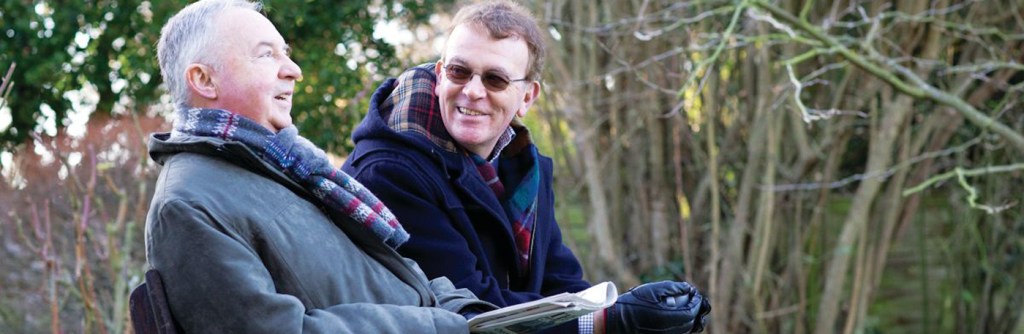
“I was married but longed for men” James Barnard, 84 came out at 65
The first person I came out to was my friend Brenda, who I walk to church with. It was September 2005 and I’d just started seeing my first boyfriend, who I’d introduced to friends at church as “my Irish friend”. Brenda and I were walking home from church when she said, “So who’s this Irish guy, Jim, then?” I couldn’t keep the lie up. I was apprehensive when I said, “I’ve been meaning to tell you, I am gay, Jim is my first boyfriend and I am very much enjoying being gay!” She was shocked but absolutely delighted. It was a great relief.
From the age of 14 I knew I was attracted to boys, but at that time it was illegal. Suppressing that emotion over the years has been terrible. I remember being a teenager and going to the beach where I was surrounded by half-naked men and I didn’t know where to look. I was terrified that someone would catch me looking at them. I had to hide it all the time. I felt such fear and embarrassment.
In 1963 I got married because it was what everyone did. We moved to Manchester in 1967 – the year that being homosexual was legalised in England. We had two children. We quickly found out that my wife was bipolar – she had deep depressions followed by manic highs. A psychiatrist told me that she may never get better.
My wife and I had a group of gay Christian friends. She was a musician and we used to have the Gay Christian Movement to summer teas with music and strawberries every July. She noticed I was a little uncomfortable and assumed I was slightly homophobic – I must have given that impression just to protect myself. At that time Aids was in the news and the stigma around being gay was horrific.
My wife was wonderful and caring but her depressive periods – sometimes two years long – were awful for her and us. There were times I had to take the children out of the house while I dealt with her situation and my work. It was dire. I’d never bothered with what I wanted and I never wanted to put my needs first. I pushed being gay out of my head.
I was never going to leave her because I don’t think she would have coped on her own. In those days you promised to stay together in sickness and in health. I just learnt to live with my desires and repressed them. I became type 1 diabetic in 1965 and that was hard for her too. In my late fifties I became incredibly depressed and sad and I still longed for men. I worked hard both in my life at home and in my work and tried to remain positive.
In 2003 my wife developed oesophageal cancer and it was very quick. In nine months she died and it was a shock to everyone. After the grief I knew I had the opportunity to come out and my whole life changed. Laws were changing and public attitudes were progressing.
After dealing with the grief of his wife dying, James realised he had the chance to change his life. Photo: as a teenager c. 1957
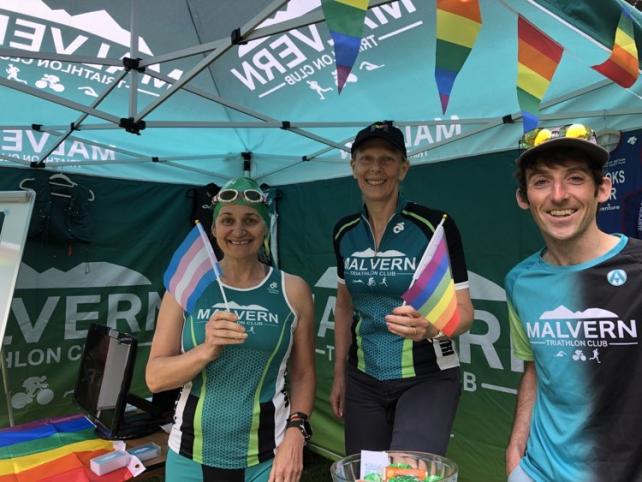
After telling Brenda I was gay, I made visits to each of my friends, one by one, to tell them. I was received with total happiness by all of them – we even had celebration drinks. There wasn’t a scrap of homophobia in any of them. Then I started joining every gay group imaginable in Manchester. I went to my first Pride, joined a reading group, a poetry and writing group, and I started volunteering at the LGBT Foundation on the helpline and with its befriending programme. I became a trustee and served for nearly ten years.
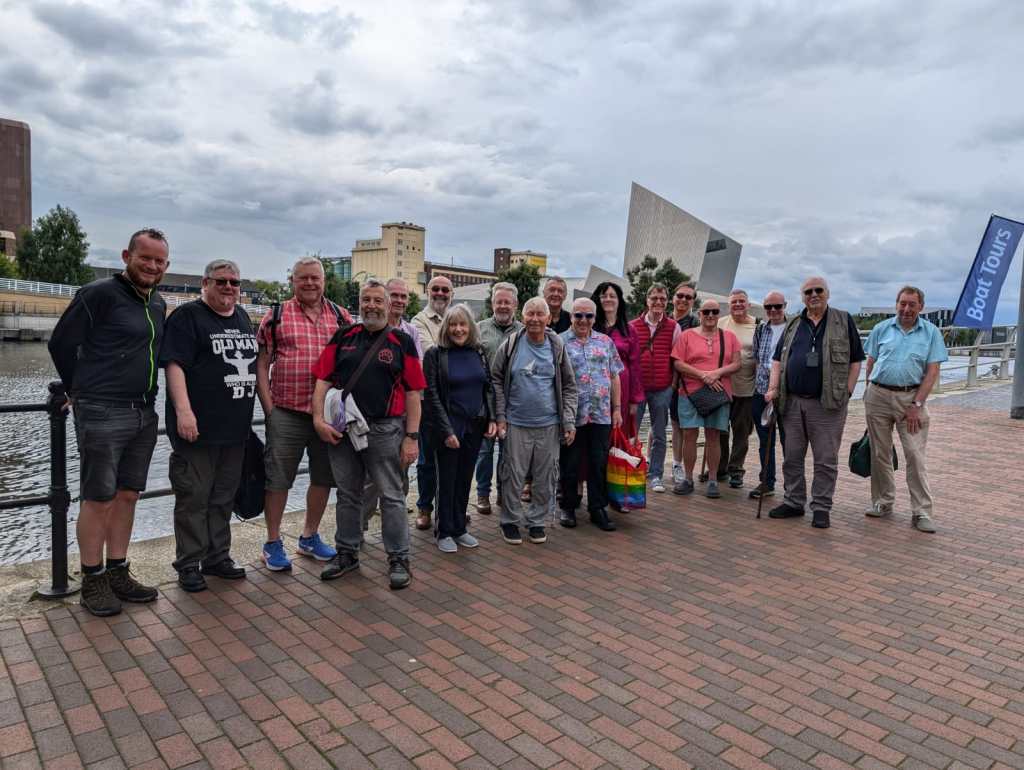
When I came out to my children they had no idea what had been going on in my head. They told my grandchildren too. My daughter, who is now 56, has gay friends and has been to gay weddings in London. I think she loves having a gay dad.
I never got to the point where I could do what everyone seems to suggest you should be able to do and “love yourself”. I think that’s a crazy idea. Maybe it’s my age, but I find it an impossibility.
I have had several boyfriends over the years. I was seeing Jim for about nine months, but after my life with my wife I was just not ready to settle down. He’s still one of my best friends and we support each other.
All of my friends – lovely people – are gradually dying. But thanks to the groups I have joined, I have a wide community. We go for lunches and days out. I have never wanted to settle down and I still don’t.
At 84 I can’t offer anyone a long-term relationship! I often think that I could have had a wonderful gay marriage. I would have been ready to love someone very warmly. I still have dreams about it sometimes, but I know it’s too late now. It’s not going to happen.
I don’t regret not telling my wife, we had a tough life as it was. We married before it was legal to be gay, so I had no choice. I regard the past 20 years as a bonus – I never thought I’d have this time to enjoy being myself. I can’t worry about anything else I’ve missed while I’m enjoying the life I now have.
An older gay couple comes out to their adult grandchildren after 50 years of marriage in this hilarious new web series
Image Credit: ‘Stories From My Gay Grandparents,’ BAE Communications
They say it’s never too late to come out, and that maxim gets explored to hilarious effect in the comedic Canadian web series Stories From My Gay Grandparents.
Nearly 50 years ago, Russell and Barbara Butters got married, started a family, and led your typical, suburban heteronormative lives – at least that’s what it always looked like to their queer grandkids Mason and Rebecca Michelle.
But after a near-death experience, they decide it’s finally time to ditch the “beards” and live their lives to the fullest. So, they show up at Mason and Rebecca Michelle’s door in Toronto with the big news …
Surprise! They’re gay! Extremely gay. And they always have been. In actuality, they’re longtime gay besties who, half a century ago, decided to “cover for each other” and just sort of, well, stuck with it.
Image Credit: ‘Stories From My Gay Grandparents,’ BAE Communications
Mason and Rebecca Michelle are shocked, to say the least, and also overwhelmed as they find themselves playing both babysitters and mentors to their grandparents who are effectively “baby gays” in our modern queer world.
Oh, sure, Russell and Barbara have had their secret flings over the decades, but now they’re finally ready to live out and proud, looking for guidance from their grandkids as they embrace their authentic “extremely gay selves.” Stories From My Gay Grandparents gives viewers a golden oldie view of today’s LGBTQ+ community, all of its beauty – and absurdities. Check out the official trailer for the web series here:
Over the course of 10 fun-sized episodes (all ranging between 8 to 13 minutes long), Russell and Barbara fret over how to meet people on the apps, learn the lay of the land in Toronto’s historic gay village, try to tie up loose ends with past lovers, experience their first drag show, reclaim the homophobic slurs that have been flung at them in the past, visit the queer nude beach, and find themselves getting competitive over who’s doing “gay” better.
Created, written, and produced by stars Scott Farley and Perrie Voss, the fun and colourful series aims to clear a path for those who have struggled to come out – at any age – to step into their queerness and their power.
“As queer filmmakers, we aim to share our stories on screen so that everyone can feel seen,” Farley and Voss share in their artists’ statement. “For generations, the decision to remain hidden or come out of the closet has been at the centre of the queer community. As more of us become visible and increasingly accepted, a growing number of people have begun to step into the light by sharing their authentic selves.”
Image Credit: ‘Stories From My Gay Grandparents,’ BAE Communications
They continue: “This late-in-life coming out story is a funny yet truthful look at gay culture through various generations. We hope it makes you laugh, cry and burst with joy as you watch our grandparents, Barbara and Russell, develop new relationships with everyone around them, including themselves.”
Stories From My Gay Grandparents made its world premiere earlier this year to a sold-out crowd at Toronto’s Inside Out LGBTQ+ film festival. And now that web series is online, in all its gay glory, you can check it out for yourself! It’s part of a handy YouTube playlist where you can find all 10 episodes in one place.
Pride in London is an annual LGBT pride festival and parade held each summer in London.
However, on 4 July 1981, the usual Pride march and rally was not held in London, decamping to Huddersfield instead as an act of solidarity with the Yorkshire gay community. They were claiming that the West Yorkshire Police were harassing them by repeatedly raiding the Gemini Club, a leading nightclub in the North of England at the time.
A watershed moment’: Pride marchers take on West Yorkshire police in Huddersfield. Photograph: Tim Bolton-Maggs, CHE
There were 2,000 gay rights campaigners on a full-scale Pride march through the town centre, holding hands, kissing, larking about and singing chants like: “Two, four, six, eight … is that copper really straight?” The marchers came from all over the UK and the events of 4 July 1981 deserve to be remembered as nothing less than the UK’s first national Gay Pride.
A Brief (but Incomplete) History of French LGBT+
Lesbian, gay, bisexual and transgender (LGBT) rights in France are progressive by world standards. Although same-sex sexual activity was a capital crime that often resulted in the death penalty during the Ancien Régime, all sodomy laws were repealed in 1791 during the French Revolution.
Discrimination, violence and anti-LGBT+ hatred remain a reality in France (and around the world), but France has been at the forefront of defending LGBT+ rights. In 2008, it launched the first campaign for the universal decriminalisation of homosexuality.
A brief history
Jean Diot (1710) and Bruno Lenoir, were the last persons executed in France as punishment for homosexuality. In 1750 a watchmen caught them engaged in sex on the rue Montorgueil. One magistrate described the charges against them as “committing crimes which propriety does not permit us to describe in writing”. The two were strangled and burned to death. In 1791 the French Revolutionary government legalised homosexuality.
The Chevalier d’Éon (1728) is one of the most famous French LGTBQ+ people in history. d’Éon worked as a spy during the Seven Years’ War, infiltrating the Russian court before becoming a diplomat. d’Éon claimed to be a woman & won legal recognition as a woman from Louis XVI’s court. Upon death a doctor examined d’Éon’s body & found male organs with female characteristics, implying that d’Éon may have been intersex.
Jean-Jacques-Régis de Cambacérès (1753) was a famous lawyer and French revolutionary. He was one of the authors of the incredibly influential Napoleonic Code. He was also openly gay. When he recruited a woman for a job Napoleon joked “You’ve come closer to women?”
Arthur Berloget was born male in 19th century Paris. As an adolescent, Berloget began dressing in women’s clothes, identifying as a woman, took up the name ‘Pauline’ and had many male lovers, including one marquis. While living as a courtesan in Paris, she earned a living as a cabaret and café-concert singer. She became a central part of the queer scene in Paris, and her fellow admirers dubbed her ‘The Countess.’ She wrote an important autobiography The Secret Confessions of a Parisian: The Countess, 1850-1871, which was published in 1895, that details the 19th century Paris queer scene.
19th century writers Jane Dieulafoy (1851) and Marc de Montifaud (1845) were born female and sometimes identified as men in their writings.
Marguerite Vallette-Eymery was born 1860 in Dordogne. Under the name ‘Rachilde,’ she went on to become a symbolist author and one of the most prominent figures associated with the Decadent Movement of fin de siècle France. Rachilde cross-dressed and even identified as male in some of her literary works. She had relationships with notable literary figures, male and female, including Gisèle d’Estoc.
Gertrude Stein (1874) was born on the outskirts of Pittsburgh, Pennsylvania. In 1903 she moved to Paris and spent the rest of her life in France. She wrote her first novel Q.E.D. about a lesbian love affair, which she followed up with many other great works. She was most famous for hosting a Paris salon, where the leading figures of modernism in literature and art, such as Pablo Picasso, Ernest Hemingway, F Scott Fitzgerald, Sinclair Lewis, Ezra Pound, Sherwood Anderson and Henri Matisse, would meet. She maintained a romantic relationship with her ‘wife’ Alice B Tokias, until her death in 1946.
Renée Vivien (née Pauline Mary Tarn) was born in 1877. A British-born French poet, she was a high-profile lesbian writer in Belle Époque Paris. She was the subject of a pen-portrait by her friend and neighbour Colette.
Suzy “Solidor” was born in Brittany, 1900. She moved to Paris and became a popular singer who managed to open her own nightclub, La Vie Parisienne, which catered to lesbians like herself. One of the singer’s most famous publicity stunts was to become known as the “most painted woman in the world”. She posed for some of the most celebrated artists of the day including Pablo Picasso, Georges Braque, Raoul Dufy, Tamara de Lempicka, Marie Laurencin, Francis Picabia and Kees van Dongen. Her stipulation for sitting was that she would be given the paintings to hang in her club, and, by this time, she had accumulated thirty-three portraits of herself. La Vie Parisienne became one of the trendiest night spots in Paris. Like many artists of the period she performed for German soldiers to keep her business going. The French government punished her for this, banning her from public entertainment for 5 years.
Marguerite Yourcenar was born in Brussels to French parents in 1903. She became a successful author and translator. In 1939 her partner, the American translator Grace Frick, invited her to the US to escape the war. Yourcenar continued her writing career, even getting nominated for the 1965 Nobel Prize. Yourcenar’s partner of three decades died in 1979, the year before Yourcenar became the first female member elected to the Académie Française.
The bisexual Josephine Baker (1906) born in the US, was a prominent member of the Harlem Renaissance, moved to France and became a model and performer. She became a top-level spy in the Resistance and a leader in the US Civil Rights movement. What a life! (Pictures 1920s, France)
Roger Vivier was born in 1907. Originally studying sculpture, he became a shoe designer who gained his fame when German actress Marlene Dietrich wore his shoes. He fled the Nazi occupation for New York City where he made hats. Upon returning to France he invented the modern stiletto heel. Ava Gardner, Gloria Guinness and The Beatles were all Vivier customers, and he designed shoes for Queen Elizabeth II for her Coronation in 1953. Vivier designed shoes for Christian Dior & Yves Saint-Laurent while founding his own brand, which still exists. He was also a well-known homosexual, though he kept the details of his love life private.
Charles Trenet was born in Narbonne, 1913. Trenet proved a brilliant musician from an early age, and travelled to Berlin and Paris to hone his craft. From 1933-1936 Trenet and Swiss pianist Johnny Hess formed a music duo with a record deal with Columbia. During this time Trenet gained his lifelong nickname: The Singing Madman. Trenet was called to service in 1940, but returned to civilian life during the Occupation. He performed for German crowds to keep his career alive. After the war, the French government investigated him for collaboration, and gave him an official reprimand. Trenet left France for the United States for a few years, meeting Louis Armstrong and developing a lifelong friendship with Charlie Chaplin. He returned to France in 1951 and his musical career boomed. However, things took a turn in 1963 when his homosexuality became public. Despite this, he was still respected, and helped spread French culture abroad when in 1970, Trenet flew to Japan to represent France at the Universal Exhibition in Osaka. He died at the age of 87 in 2001, having composed the music and lyrics for over 1,000 songs.
Pierre Seel was born to a wealthy Alsatian family in a castle in Haguenau in 1923. As a young man he became involved in the local gay scene. His life took a rapid downward turn following the Nazi invasion. On 3 May 1941, Seel was arrested, tortured and raped. He was deported to the Schirmeck-Vorbrück concentration camp for his homosexuality, and witnessed his lover Jo’s execution by guard dogs. Curiously, the Germans then conscripted him to fight in the East. Seel served in various positions until he voluntarily surrendered to the Soviets. Despite this, the Soviets decided to execute him, and he only survived by singing The International in front of the firing squad. Between 1945 – 1960 France experienced a pronounced period of homophobia, and Seel was publicly ridiculed for his homosexuality. In 1981 he became the only French person to have testified openly about his experience of deportation during World War II due to his homosexuality. He went on to be an advocate for fellow gays and a public figure for their remembrance in Holocaust history.
Famous Parisian lesbian bar Le Monocle, 1930s
Maria Schneider (1952) was a legendary French actress who promoted equality for women and queer people. In the late 1960s she barely made enough money to live working as a model and film extra. When she told superstar Brigitte Bardot that she was homeless, Bardot offered Schneider a room in her house. Schneider is best known for co-starring opposite Marlon Brando in Last Tango in Paris (1972). While that film made her an international star, it broke her mentally due to a graphic rape scene, which she was only informed of a few minutes before the cameras started rolling. Afterwards she publicly advocated for more women directors and better treatment of women in films. She also came out as bisexual, saying “I’ve had quite a few lovers for my age … probably 50 men and 20 women. I’m incapable of fidelity; have a need for a million experiences. Women I love more for beauty than for sex. Men I love for grace and intelligence.” She died of cancer at the age of 58. She has since been immortalised in the film “Maria” (2024).
Dominique Crenn was born in 1965. Her adoptive mother took her on trips to Paris to sample world cuisine, inspiring Crenn to become a chef. She worked at various restaurants across the United States before landing a job In Jakarta. She was Indonesia’s first ever female head chef, but was forced to flee the country during civil unrest in 1998. She returned to San Francisco and founded several highly-awarded restaurants. As of 2016 she became the only woman to have a three-star Michelin restaurant in the US. In 2024 she married actress Maria Bello.
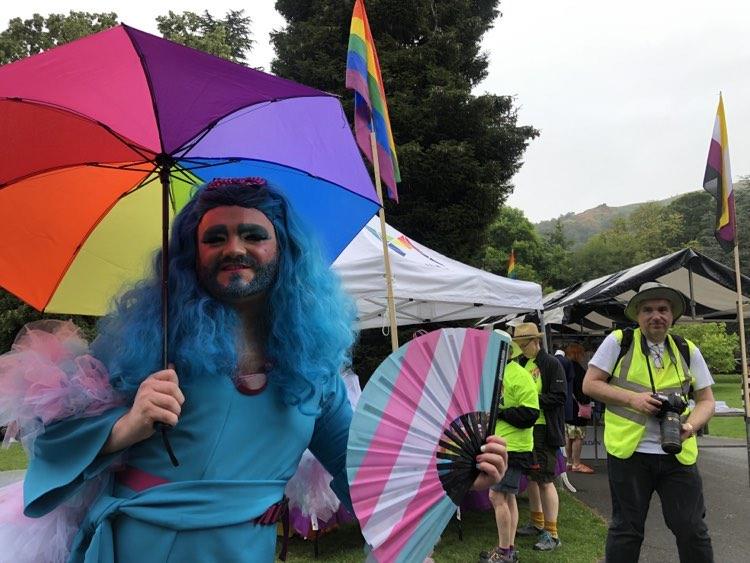
RHS Garden Bridgewater was delighted to announce Pride In Nature was back on 30 June 2024. Now in its third year and taking place during Pride month, Pride In Nature 2024 looked to build on the success of previous events and celebrate all things LGBTQIA+ in the beautiful natural environment.
During the day there were a host of activities taking part across the garden from in conversations, performances and this year for the first time the day long celebration ended with the first Pride In Nature parade.
The full programme of events included:
In Conversation with …
“In Conversation With …” was an enlightening panel discussion that brought together voices from the LGBTQIA+ community to share their experiences, challenges, and triumphs. As we navigate through the complexities of identity, rights, and social acceptance, this panel aimed to shed light on the diverse narratives within the LGBTQIA+ community, and remind us why Pride events are not only a celebration of love and identity but also a crucial platform for advocacy and change.
Greater Manchester LGBTQIA+ Community Area
The Greater Manchester LGBTQIA+ Community Area was a vibrant space dedicated to bringing together the LGBTQIA+ community and allies to celebrate love, acceptance, and learn all about the amazing work being done by these communities, in a space for reflection and celebration of the progress we’ve made together.
Family Drag Queen Bingo
We were ready to dab our way through a garden of diversity and inclusivity, where every bingo card blooms with the promise of fun, laughter, and a celebration of love in all its forms. Hosted by the most dazzling drag queens from BarPop & The Church in Manchester, this family-friendly bingo extravaganza was designed to entertain and inspire attendees of all ages.
Drag Queen Gardener’s Question Time
Don’t let your garden be a drag – the drag queens helped make it fabulous! Drag Queen Gardener’s Question Time transformed our garden into a space that’s bursting with life, colour, and a touch of fabulousness where diversity blooms and inclusivity grows. The expert panel answered our gardening questions to make sure that no matter what we’re planting, we are doing it with style, sass, and a sprinkle of drag queen magic.
Pride In Nature Parade
Pride In Nature 2024 concluded with the inaugural Pride Parade at RHS Garden Bridgewater – a vibrant celebration of love, diversity, and nature like you’ve never seen before. Featuring performers from throughout the day, alongside heartfelt contributions from Greater Manchester LGBT+ Community Groups, this event promised to be a kaleidoscope of colour, culture, and celebration. History was made together at the first Pride In Nature Parade at RHS Garden Bridgewater. Let’s bloom in unity and diversity.
Pride Season – dates for the diary
Greater Manchester’s Pride Season continues and the following Prides are scheduled during July:
Sparkle Weekend – Friday 12 – Sunday 14 July
Rochdale in Rainbows – Saturday 13 July
Oldham Pride – Saturday 20 & Sunday 21 July
Leigh Pride – Saturday 27 July
London Switchboard LGBT+ Helpline
This year, London Switchboard LGBT+ Helpline is celebrating its 50th birthday. Since 1974, it is estimated there have been up to 10,000 Switchboard volunteers who have participated in over 4 million conversations with folks across the UK.
Founded on 4 March 1974, Switchboard LGBT+ is the oldest LGBT+ telephone helpline in the UK. Originally founded in a small room above a bookshop near King’s Cross station as London Lesbian and Gay Switchboard, for 50 years the helpline has provided a safe space for LGBT+ people to discuss topics including sexuality, gender identity, sexual health and emotional wellbeing.
Courtesy of Switchboard LGBT+
During this time, Switchboard has been at the forefront of supporting LGBT+ people. In the aftermath of the partial decriminalisation of male homosexuality in 1967, it was a vital source of information and support for the UK’s gay community as it faced a hostile press and a police campaign that ruthlessly targeted gay spaces. In the 1980s, Switchboard was the leading source of information on HIV/Aids, holding the UK’s first conference on the disease without receiving any government funding. It also helped people to navigate Section 28 – the infamous law that prevented local authorities from promoting or publicising homosexuality. In the following decade, Switchboard supported the LGBT+ community in the aftermath of the Admiral Duncan nail bombing in 1999. Its volunteers answered hundreds of calls from concerned friends and relatives but also helped many people deal with the after-effects of the attack. While trans people face elevated levels of discrimination and are vilified in certain quarters of the media, Switchboard continues to offer calm words as queer identities develop and adapt.
Switchboard volunteers have provided support and vital information to generations of LGBT+ people, their friends, families and allies. So, we say a HUGE thank you to each and every person who has picked up a phone, responded to a chat message or replied to an email to offer a non-judgmental, caring and empathetic response.