Quarantine Queens and two surveys

News

Some wise words: Two metres – is that OK? A hundred metres – two hundred metres – still see me? And keep in mind, when you are close to someone, really close, you cannot see them clearly, but when apart you cannot see anything else.

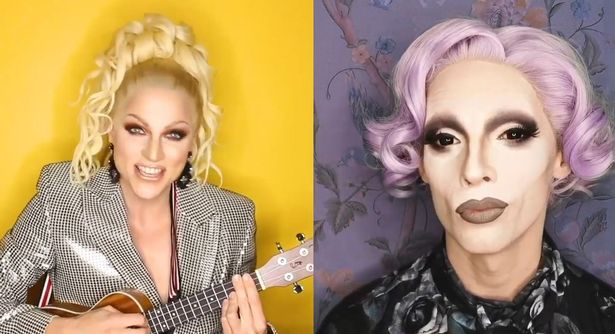
Some of the biggest names in Manchester’s drag scene have collaborated with drag performers from around the world to raise money for Age UK.

The 26 drag queens from five different countries join forces to perform a cover of “We’ll Meet Again” by Vera Lynn.

Manchester’s Anna Phylactic, Liquorice Black, Misty Chance and Julie Noted appear in the video, alongside RuPaul’s Drag Race UK and USA stars Courtney Act, Crystal, and Blu Hydrangea.

Other names from around the world include Hollow Eve, Pangina Heals, Peaches Christ, Yshee Black and Meth.

Courtney Act and Cheddar Gorgeous in the video

“Older people are some of the most isolated and at risk in this crisis and as the recent revelations about care homes have shown they are all too easy to brush under the chintzy carpet,” Cheddar Gorgeous, who organised the project, said.

“It’s always been a drag tradition to draw attention to things that matter with a bit of glitter and hairspray. We want to make sure our elders know that we love them, miss them and that we will meet again.”

Cheddar says it took her just two weeks to get videos from performers and edit it together, and says it’s been just as helpful to her as she hopes it is to the older generation.

“It’s been good for us drag queens too,” she says.

“We’ve been missing each other and performing for others.”

The video hopes to inspire people to donate funds to Age UK, providing older people with care and support.

“Older people can be so easily ignored, but they’re usually the ones who are struggling the most,” Cheddar adds.

“While we’re all able to stay connected with each other online, that’s something that many of them can’t do or struggle with. I hope that when people watch it they will stop to think about our elders and how they’re feeling right now. But, ultimately, I also hope the video is something older people can watch and enjoy too. I think drag is an incredible, special thing and it has always had the ability to connect people together.”

You can donate to the Drag Queens in Quarantine fundraiser here

………………………………………………………………………………………………………………………..

The LGBT Foundation is carrying out a survey on how LGBT communities are being affected by corona virus. Sparing 10 minutes to answer will improve their understanding of how our communities are being impacted and will ensure that the right support is being provided:

www.surveymonkey.co.uk/r/covid19impactlgbt

………………………………………………………………………………………………………………………..

We have received the following message from Benji Taylor:

Good morning,

I am community development worker from the Integrating Care for Trans Adults Project at Yorkshire MESMAC and I am contacting you about our work.

For more info on the project please see: http://business-school.open.ac.uk/research/projects/icta/description

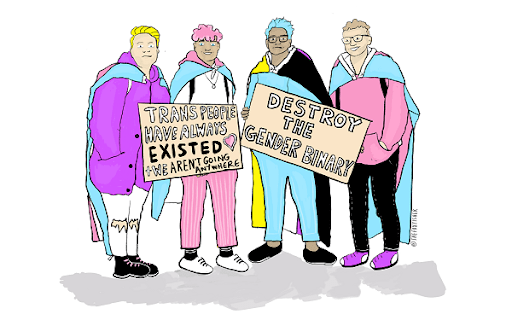
We are asking for your support as we keep up the momentum we’ve built up during these difficult times. We recognise that it is a scary and confusing time at the moment for everyone and we are all having to rethink how we go about daily life. This is why we think it is important to continue spreading word of the project because it is such a positive step for the transgender including non-binary communities.

From this project we plan to take our responses to the NHS and convey to them where their patients stand on the quality of care they are given. This is a brilliant opportunity for trans people to help create change within the care systems they are a part of.

We want to have as complete a picture as possible, this can only be achieved by having responses from all over the trans community, this includes the older members. Not only have they had more experiences but they’ve also been able to see how the NHS has changed over the years which is something we are very interested in hearing. Older people are also more likely to have more varied or complex medical needs, which means they have more interactions with the NHS, we want to know if being trans has affected their care.

This is also a trans/non-binary led project, which we believe is a vital and integral aspect of what makes the project important. This is the biggest project of its kind and it is unlikely to be repeated especially with such a strong trans presence behind it. We are a collaboration between community and academia; Yorkshire MESMAC, the Open University and the LGBT Foundation have come together to create this space for members of our community to evidence the ways health care needs to change but also to show where good practise is and how to emulate that.

It is so important not only to listen to trans people but also to have trans people as the listeners. There is so much empathy within this project because of the shared and similar life experiences. So often trans people have been used as psychological study rats, which creates no tangible outcomes. The Museum of Transology agrees that as trans people we have “research fatigue” from these cisgender/clinical lead studies. They also agreed that this is the most important project which British trans people can benefit from in this life time. We are very much of the mind that there is ‘nothing about us without us’.

What we would love you to do is forward this information and our survey through your channels.

For the survey http://www.thissurvey.com/ICTAWebsite

Please don’t hesitate to contact me with any queries:

Email: b.taylor@mesmac.co.uk

I also have a twitter (@benji_mesmac), we would be grateful if you could retweet some of the project tweets.

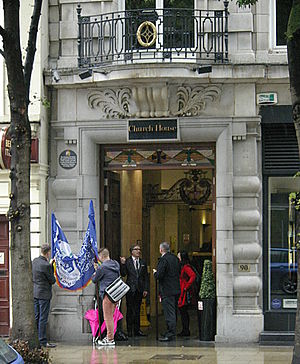
Church House, 90 Deansgate, Manchester

News

Hope everyone is well. During lockdown I seem to have swopped 10,000 steps each day for 10,000 calories!

The building where Out In The City meets has a very interesting history. In the 1940’s there were jazz concerts.

From the late 1960’s to the 1970’s, it was a venue for rock concerts and Barclay James Harvest, Ralph McTell, Roy Harper, Generation X,  Buzzcocks and many others all played there. John Peel was a DJ there on at least two occasions.
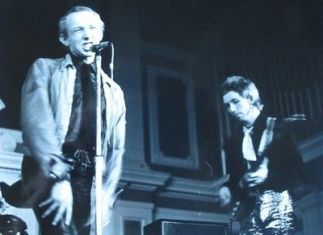
Buzzcocks 1976

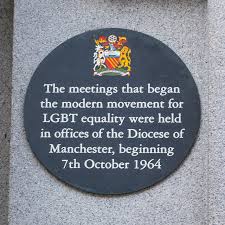
On 7 October 1964 the building held the first meeting of the North West Homosexual Law Reform Committee. There is now a plaque on the wall and a rainbow tile on the pavement.

The following article was originally published in the LGBT Foundation’s magazine Out North West in October 2004.

Andrew Gilliver interviewed Allan Horsfall (1927-2012) and Ray Gosling (1939-2013) the pioneers of the North West Homosexual Law Reform Committee (later Campaign for Homosexual Equality):

In the 1950’s no one used the word “gay”. Same sex relationships were illegal and there was no gay political movement at all campaigning for change.

 Many people were quite happy living their lives in semi-secrecy, there were no great trials or persecutions of gay men. There was no mention of lesbians as they didn’t exist, even in the imagination, thanks to Queen Victoria’s influence.

There was however a lot of blackmail. It wasn’t until a sensational trial where three prominent men, Lord Montague, Peter Wildeblood and Michael Pitt-Rivers, were imprisoned for sex with two airmen that a lot of people realised something must be done to stop the persecution of gay men. Incidentally the RAF men involved were given immunity from prosecution in exchange for their evidence against the others. In the early 1950’s the government of the day were prompted (mainly by one Tory MP, Robert (later Lord) Boothby who was bisexual) to set up an inquiry into the anti-gay laws.

The Wolfenden Report

In 1957 Sir John Wolfenden recommended the decriminalisation of homosexuality, several influential liberal-minded people in London decided to set up a reform society to think about a change in the law. These liberals were the kind of people who wanted to do the right thing, good white Christian-minded people who wanted to do something for “the queers”, not out of approval, more from a position of tolerance. However it was to be a further ten years before being “gay” was no longer illegal.

Following on in 1958, A E Dyson, a gay man who was a lecturer at Bangor University, wrote many letters to the Spectator and the Times and to many prominent people asking for support to form the Homosexual Law Reform Society. Support came with many other founder members who in the main were not gay, but distinguished folk such as Lord Attlee and Bertrand Russell who were on the honorary Committee of the Homosexual Law Reform Committee. The Albany Trust was formed as the charitable arm with the first ever out UK gay activist – Anthony Grey. The trust took its name from J B Priestley’s flat in the Albany where meetings were held.

Allan Horsfall

At that time gays were starting to come out – albeit slowly – in support of the cause and most notable was Allan Horsfall a colliery clerk and labour councillor from Nelson, Lancashire. It was through Allan’s energy that a group eventually gathered in Manchester to support Anthony Grey in London. The group made demands for full equality, and they were much more radical than their southern counterparts.
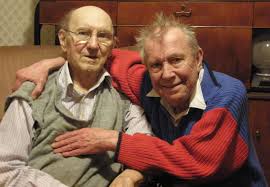
Allan & Ray

It all started in 1959 when Allan tabled a motion to back the decriminalisation of homosexuality and introduced his local Labour Party to the ideas of law reform for gays. It has to be said that the motion was very firmly rejected.

NWHLRC

Allan set up the North West Homosexual Law Reform Committee (which later became the Campaign for Homosexual Equality) which had its first semi-public meeting on 7 October 1964 in Houldsworth Hall (now Church House) at 90 Deansgate, Manchester.

Early meetings were supported by the Church of England, Manchester Diocese who provided meeting rooms and the group received much support from the Bishop of Middleton. It was the only grassroots gay movement which acted to hasten the eventual change in the law to make gay relationships legal in 1967. The law at that time however only applied to two people behind locked doors. It was still a criminal offence for more than two people to be present if a homosexual act took place. The armed forces were also exempt from this law.

Rocking the boat

Allan remembers those first meetings in Manchester. “People didn’t want it to be official or to have minutes taken – they were frightened of having their names mentioned and being outed. Just because you’re paranoid doesn’t mean that people aren’t out to get you”, he quipped. “People were worried we were attracting police attention and our friends in London thought we were rocking the boat. I kept asking why was there no progress in the reform of the law. In 1960 I wrote a piece in New Left Review entitled “Wolfenden in the Wilderness” but originally had no intention of starting a reform campaign. I wrote to the Homosexual Law Reform Society in London asking them to form provincial branches but they didn’t want to lose ownership so it wasn’t until 1963 after a witch hunt in Bolton around gay men that I became more committed to get involved myself.”

Bolton Evening News

Allan continues, “There was a situation where gays were getting into trouble that involved no public sex, no young men, no group sex and I protested – writing a letter to the Bolton Evening News. The editor said he had received visits from the police after carrying my letter and subsequent letters of support for reform.”

“He also said that he had hundreds of letters against reform but seeing as they were full of unprintable ranting he couldn’t print them. He was a bit of a homophobe anyway so I didn’t know whether to believe him or not.”

“Something had to be done”

Allan was determined though. “Something had to be done”, he says. “However, people were facing professional ruin and prison sentences just for being queer. I tried again to expand the Homosexual Law Reform Committee across the country and when Anthony Grey took over he was far more receptive to my requests. Together with Colin Harvey, the senior social worker for the Manchester Diocesan Board for Social Responsibility, who was regarded as a safe pair of hands, I decided that if we didn’t do something ourselves, nobody else would. So we launched the new campaign by printing 10,000 leaflets. Each of these bore my address, a Coal Board house in what was virtually a colliery village, since we were unable to use a church address (too controversial) and we felt that a Box Number would give the campaign an air of furtiveness. The Coal Board were not best pleased, but in the end took no action against us!”

Allan continues, “Many people opposed it, but many supported us. MP’s like Dennis Skinner said that homosexual rights wouldn’t succeed outside London! But, the local paper ran with a front-page story about us and the sky didn’t fall in. With the support we were receiving we realised that if we can make something happen here in the North West, it could be done anywhere.”

Allan continues, “Local labour parties weren’t interested but church groups and university groups were. People took it upon themselves to inform their work colleagues and it was from all this happening in the provinces that word got around to the tea rooms of Parliament. London’s attitude was then to help us. What happened in Manchester was all about frustration of inactivity since the Wolfenden Report in 1957. God knows what would have happened if it had been delayed even further and we had HIV and Clause 28 to deal with.”

“Flaunting Homosexuals”

Originally one of the supporters of a change in the law, Lord Arran famously said during the third and last reading of the 1967 reform bill in the House of Lords “flaunting homosexuals must remember although there is nothing bad about being a homosexual, there is nothing good about being homosexual either.”

The media in the late 60’s were keen to maximise disapproval of the change in the law though many people gay and straight alike didn’t seem to notice much of a change at the time.

TV and newspapers had to remind everyone to be repulsed about gay life. Gay men in the many documentaries of the time highlighted the “desperately lonely men” who were “beaten up in public lavatories”. Programme makers wanted to highlight the unpleasant side of gay life but real life wasn’t as miserable as the BBC would have us believe.

Homophobic tabloids

Allan continues, “Interestingly in all my dealings with the press before 1967 no one ever questioned my sexuality! The press weren’t as intrusive in those days. We were never denounced. Now we have homophobic tabloids with hacks like Gary Bushell, Richard Littlejohn and their regional equivalents. That never happened before ’67.”

“Blackmail happened before ’67 but gays weren’t beaten up as a blood sport as they have been since, in a way many people were right to be worried about coming out because since the decriminalisation of homosexuality homophobic incidents have increased.”

Unbelievable Humiliation

Ray Gosling, a well-known journalist in the North West wasn’t keen on coming out at the time but it took a friend of his to be prosecuted for living with another man that made Ray so angry he had to join the campaign. Ray remembers, “The police wanted to get John Clarkson – a gay friend of mine – so much they stalked him and even took away his bed sheets for exhibiting in a court of law. It was in front of a jury that semen stains were pointed out as evidence of sexual activity between John and his lover. It was unbelievable humiliation.” The resulting conviction of three years in prison for both men shocked Ray into doing something, needless to say it ruined his friends relationship.
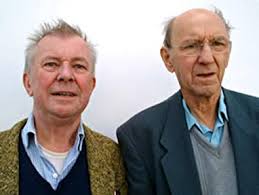
Ray & Allan

Gay clubs

It was when Ray joined the Campaign for Homosexual Equality that an idea of the organisation to set up clubs around the country to enable gay men to have somewhere to meet and socialise gathered momentum. They were to be a bit like working men’s clubs.

An early supporter of the clubs was Reg Kilduff, manager at the time of The Rembrandt Hotel on Sackville Street. He was the first publican, gay himself, to run a noted “queer bar”. By 1970 the law had changed but not without creating new problems as Ray recalls, “People didn’t want to come out in public even though there had been a lot of support for the clubs in places like Nottingham, Brighton, Leeds and Sheffield.”
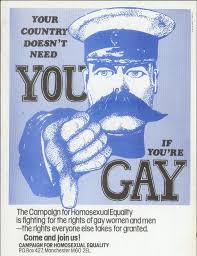
A moral victory

It was when a local Burnley paper got hold of the story that all hell let loose. A campaign was led by a Roman Catholic priest who said defiantly, “We’ll have no buggers clubs in Burnley.” A meeting was held in Burnley’s main library which Ray (by now a well-known local TV presenter) chaired. “I couldn’t see any hope at all. It was going very badly”, remembers Ray, “until one woman in dark glasses stood up and said ‘My son was gay and he killed himself. He would be alive today if there had been a club like this here today where people could meet’. To stunned silence from the assembled audience the moral victory had been won.” Ray continues, “Other obstacles were in our way after this and there were laws that needed tidying up, but by 1973-74 Allan was life president of CHE and other campaigning groups had picked political issues up. It wasn’t until 1997-98 that I got involved again with the infamous case of the Bolton 7.” Since that trial Allan and Ray have been the only ones working in the area of malicious prosecutions and unsafe convictions.

The present day

In March 2000, Allan received the Pink Paper award for Services to the Gay Community. Now Manchester City Council have agreed to honour Allan, Ray and the NWHLRC / CHE by commissioning a commemorative plaque for what became the greatest mass democratic national organisation of gays the UK had ever seen. A special ceremony was held on 5 October 2004 at Manchester’s Town Hall. It’s now the right time to begin to remember the pioneers of our very own gay rights movement. Remember this all happened before the Stonewall riots in New York in 1969. From lobbying Parliament for change when all male gay sex was illegal to set up social clubs were there was no gay life, no bars or clubs, no press or gay magazines and everything was secretive and done in fear. These men were indeed pioneers.

The fight goes on …

Commenting on the lack of interest around the many issues that Ray, Allan and other groups have fought hard for and are still having to fight just to have their voices heard, he says, “It’s a shame after 40 years that people are still victimised, still judged unfairly because of their sexuality and still not being heard.”
Church House
Rainbow Brew Buddies and more news

News

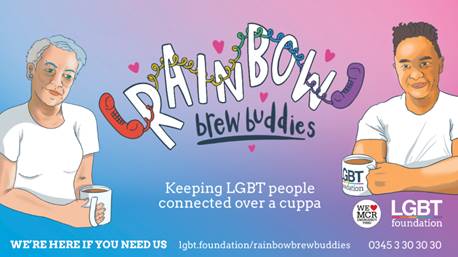
The LGBT Foundation have set up a new telephone befriending programme – Rainbow Brew Buddies.

We can all agree that a chat over a brew is one of life’s greatest simple pleasures, but not everyone always has someone to do this with regularly. The new telephone befriending programme Rainbow Brew Buddies aims to reduce loneliness for lesbian, gay, bisexual or trans (LGBT) people across Greater Manchester who may have reduced opportunities to make social connections due to the recent coronavirus outbreak or other circumstances in their life.

Those who sign up for the service will be allocated a buddy, who will have received training from LGBT Foundation and have passed a DBS check. You will then “get-together” over the phone with them for a brew and a chat at least once a week for around 30 minutes. After 8 sessions over one or two months you will graduate from the programme and be given access to the range of LGBT Foundation groups, including the chance to meet others who have benefited from the Brew Buddies programme.

They are particularly inviting sign-ups to this service from the over 50s. Find out more here: https://lgbt.foundation/rainbowbrewbuddies or give them a call on 0345 3 30 30 30 for more information.

…………………………………………………………………………………………………….

Jim, our oldest member was on BBC television, talking about his situation and the corona virus.

………………………………………………………………………………………………………

Desert Island Discs is a much loved radio show, where guests become “castaways” and choose their favourite songs they couldn’t live without.

Here is Tony’s selection:

For a bit of fun, imagine you’ve been invited on the show. Pick 5 or 6 songs, a luxury item and your favourite book. I picked “The Making of Americans” as it’s more than 900 pages!

Send your selections (photo is not obligatory) and we will print in a future posting. Send to openshawtony1@gmail.com

………………………………………………………………………………………………………

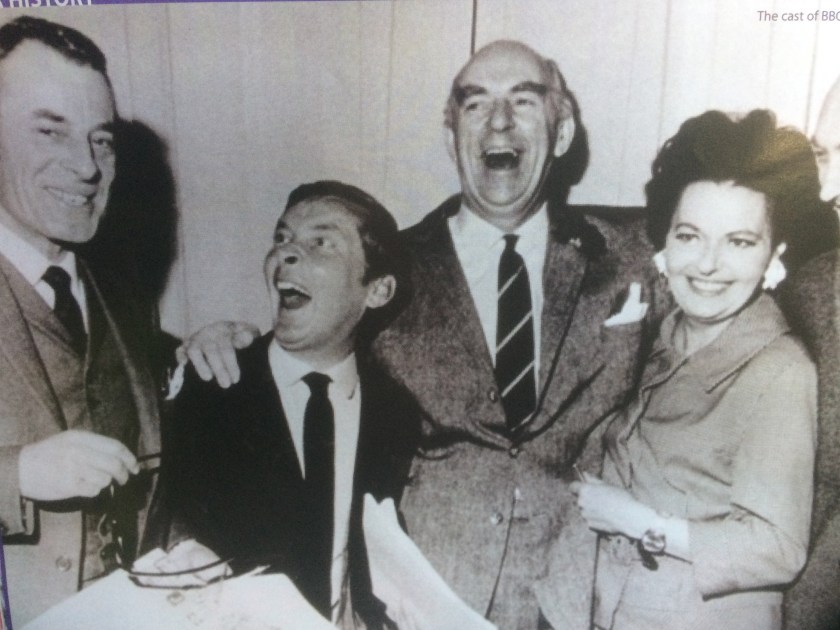
Cast of Round The Horne

How bona to vada your dolly old eek! or in these times … it’s not bona to catch the corona!

Polari is a form of British gay slang that some gay men used before homosexuality was partially decriminalised in 1967. Although it derives from 19th century theatre folk, sailors, showmen and criminals, 20th century gay men used it as a way to discuss their lives at a time when being gay could get you fired, thrown in jail and chemically castrated.

Because Polari provided a way to gossip and talk trash about people’s appearances and sex lives, the phrases are often a bit backhanded ie not politically correct!

 Some Polari words:

batt = shoe               bevvy = drink               bijou = small                        bimbo = sucker       

bona = good                camp = showy

charper = to search dolly = nice                  dona = woman                    drag = clothes         

eek = face                    fantabulosa = excellent

feele = child              lally = leg                     lattie = house, lodgings      leucoddy = body      naph = bad                   nante = none or nothing

ogle = eye                 omi = man                    omipalone = homosexual 

palare = talk              palone = woman         riah = hair

tosheroon = half a crown                              troll, = walk, wander         vada = look              walloper = dancer        zhoosh = fix, tidy.

and perhaps you might like to count to ten in Polari:

una, duey, trey, quater, chinker, sey, setter, otto, nobber, dacha.

Just to get you started:

“As feely homies, we would zhoosh our riahs, powder our eeks, climb into our bona new drag, don our batts and troll off to some bona bijou bar.”

Quiz – translate these polari phrases:

  1. Let us put our best lallie forward and with our eeks shining with hope, troll together towards the fantabulosa futurette!
  2. I’m not bibi, but anyone with ogles can varda that palone-omees got a bona bod.
  3. I’ve nanti dinarly; park me some handbag for another buvare.
  4. Mais oui ducky! Let’s nish the chat and go troll for rough trade … just gardy loo for chickens and don’t blag an orderly daughter!
  5. Everyone thinks that auntie is a total fruit, but her gildy clobber makes me think she’s a duchess.
  6. I don’t mean to cackle, but he’s not manly Alice. When I first varda-ed at her mince at the sweat chovey, I thought, “She’s mauve.” 
  7. As an omi, he’s naff. But in drag, she’s fantabulosa! She titivates with fortuni slap, zhooshes up a switch and is one hell of a hoofer.
  8. And no flies! It’s so bona to vada you! Your lovely eek and your riah! Sharda that we don’t palare more often!
  9. I’ve nanti jarry, nante latty and what’s worse, nante doss. I’m basically living off the national handbag — I might as well become a Dilly boy.


Answers:

  1. Let’s put our best foot forward and with out faces shining with hope, walk together towards a fantastic future.
  2. I’m not bisexual, but anyone with eyes can see that lesbian has got a nice body.
  3. I’ve got no money. Give me some money for a drink.
  4. Oh yes! Let’s stop talking and go look for a sex partner … just watch out for underage men and don’t pick up a cop!
  5. Everyone thinks that older gay man is a total old queen, but his nice clothes make me think he’s a rich gay man.
  6. I don’t mean to gossip, but he’s not a masculine gay man. When I first looked at his effeminate walk at the gym, I thought, “He’s someone who appears to be gay.”
  7. As a man, he’s dull. But in women’s clothes, he’s fabulous! She makes herself look great with gorgeous makeup, styles up a wig and is one hell of a dancer.
  8. Honestly! It’s so good to see you. Your lovely face and hair! What a shame that we don’t talk more often!
  9. I’ve no food, no place to live and what’s worse, no bed. I’m basically living on welfare — I might as well become a male sex worker.

Community conversation

News

During lockdown I’ve discovered that my three hobbies are going to restaurants, going to shops that sell non-essential items and touching my face!

Hope you are all keeping well. I did an interview with Manchester Pride. The link is below, but for convenience, I’ve printed the whole article:

https://www.manchesterpride.com/blog/community-conversations:-out-in-the-city

Community Conversations: Out in the City

As people all over the world continue to adapt to social distancing and the ‘lockdowns’ that have been put in place to ensure the safety of all, businesses, organisations and community groups are finding new and innovative ways to reach their audiences. LGBTQ+ people are already known to be disproportionately affected by mental health issues and isolation, so continuing to reach out to the community is more vital than ever.

One such group finding their feet in the current situation is Out in the City, a project that aims to support members of the lesbian, gay, bisexual and transgender communities who are over 50 years of age in Greater Manchester. Before now, its members typically met every Wednesday from 1.00pm to 3.00pm at Church House in Deansgate.

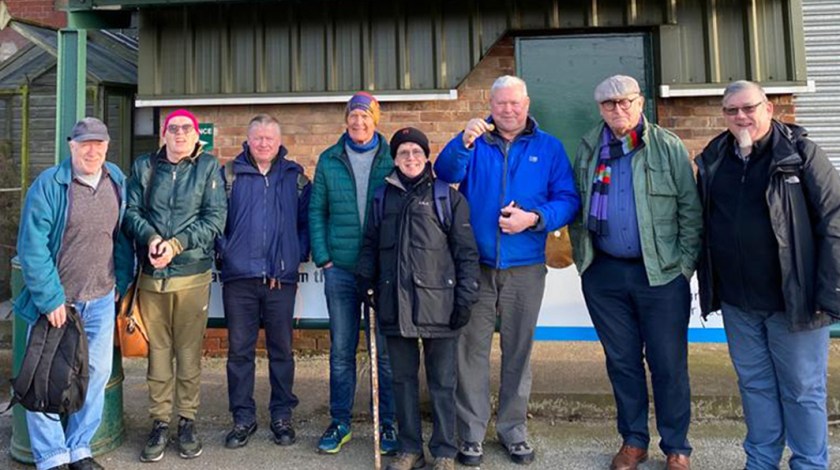
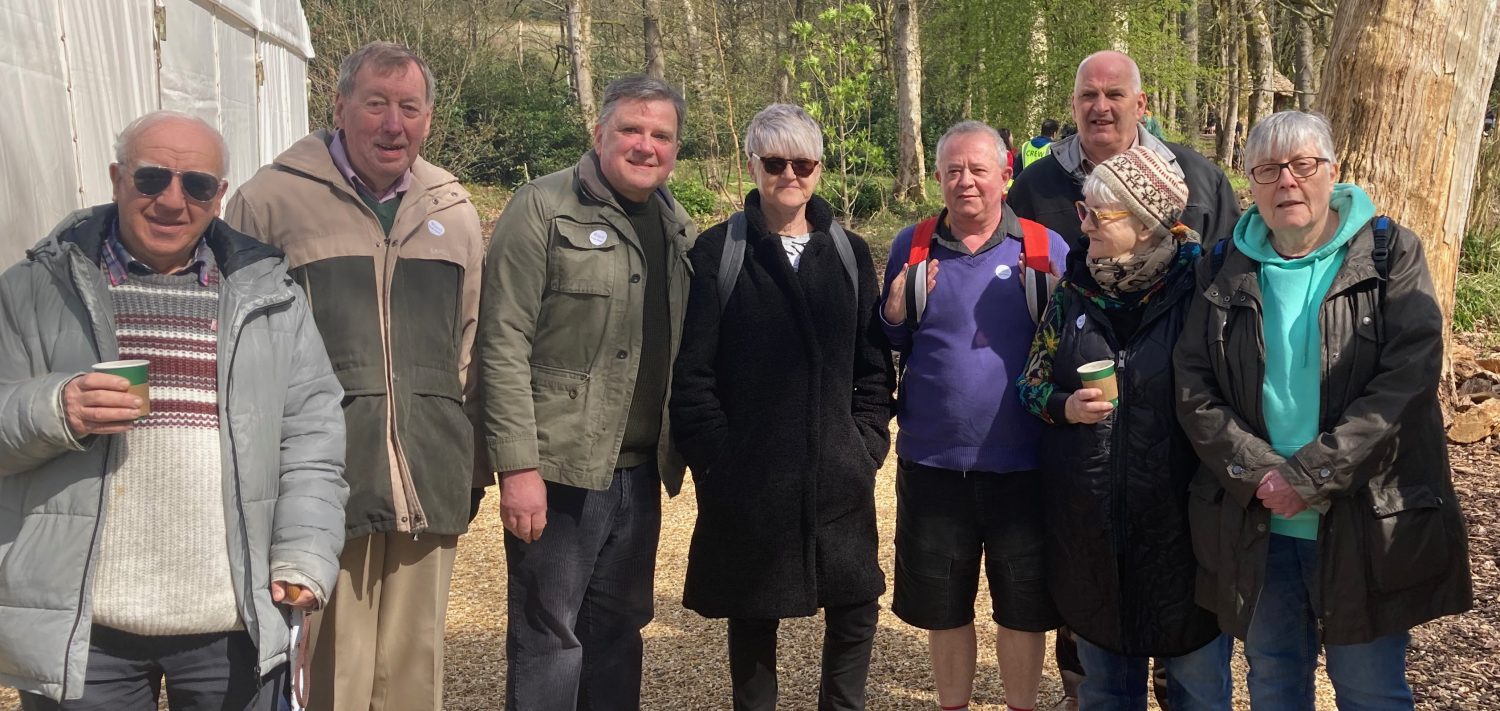
In the first of our new series ‘Community Conversations’, we spoke to Tony Openshaw (second from right), organiser of Out in the City, about how the community group is adapting to the present circumstance in new ways.
“We normally meet up weekly and go out and do trips. Most recently we had a £500 grant from Manchester Pride, which we did a lot with it, such as trips to local places like the Centre for Chinese Contemporary Art, and tours of Bridgewater Hall and the Police Museum. We also organised trips further away to places like the National Coal Mining Museum and a minibus trip to LLandudno in Wales, but obviously we can’t do those kind of things right now. Out in the City is a big focus for many people in the group – it’s the main thing that they do each week – so it’s left a bit of a gap for many of us because people have lost that touch point.”

“For people who are living alone and have fewer connections, it’s quite a difficult time at the moment and Out in the City are trying to find ways around this. Some members of the group are being shielded by the Government, which means they are not able to leave their homes for twelve weeks. We’re keeping in touch with those members regularly, but we don’t have the same technological access that younger people generally have. We’re having to learn new ways to connect, like using Zoom and Whatsapp.

For most of us it’s telephone calls and text, so we’re having to learn how to connect. We’ve been linked with AgeUK for many years, in fact the organisation was originally run by them up until two years ago. They’ve offered support in the form of phone calls to keep in touch to tackle loneliness. We’ve also seen local neighbours getting in touch with some members, passing numbers round and offering support like getting shopping or sparing time to chat.”

“My advice to other organisations or community groups that are trying to continue their important work during this trying time is to take each day as it comes, and try not to think about how long it’s going to last. Link in with other groups; We’re working with AgeUK and Manchester Cares. Personally, I am reading – I just finished a book called Bass Culture which is about the history of reggae music. One of our members, who has learned how to use Zoom, did an online wine tasting with his neighbours and people in his local community.

Some people don’t speak to their family, and it can be quite a lonely time so it’s a good chance to be thankful for the big LGBTQ+ family we’ve made. Within the group, people have made more time to build friendships, taking more time to chat over the phone, to reach out and being generally very supportive of each other.

If you would like to get involved with Out in the City, use the contact page on the website if you’d like to support or join! We’re all looking forward to the end of this and hoping everyone keeps safe and well.”