Out In The City “Meet Up” and other news

News

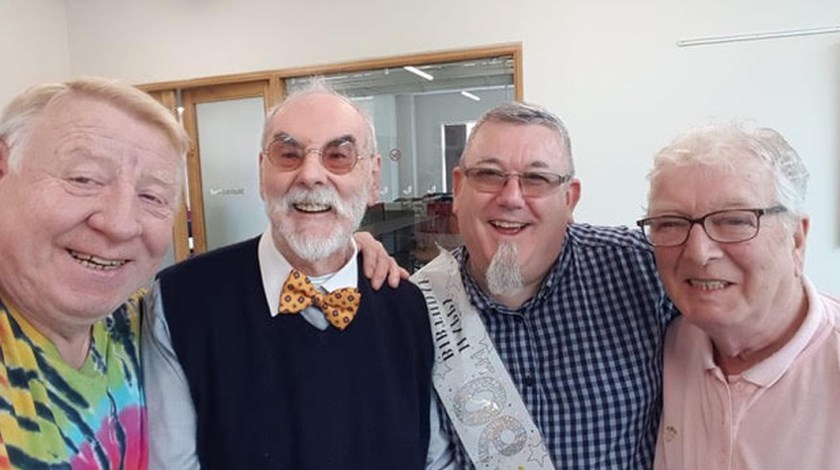
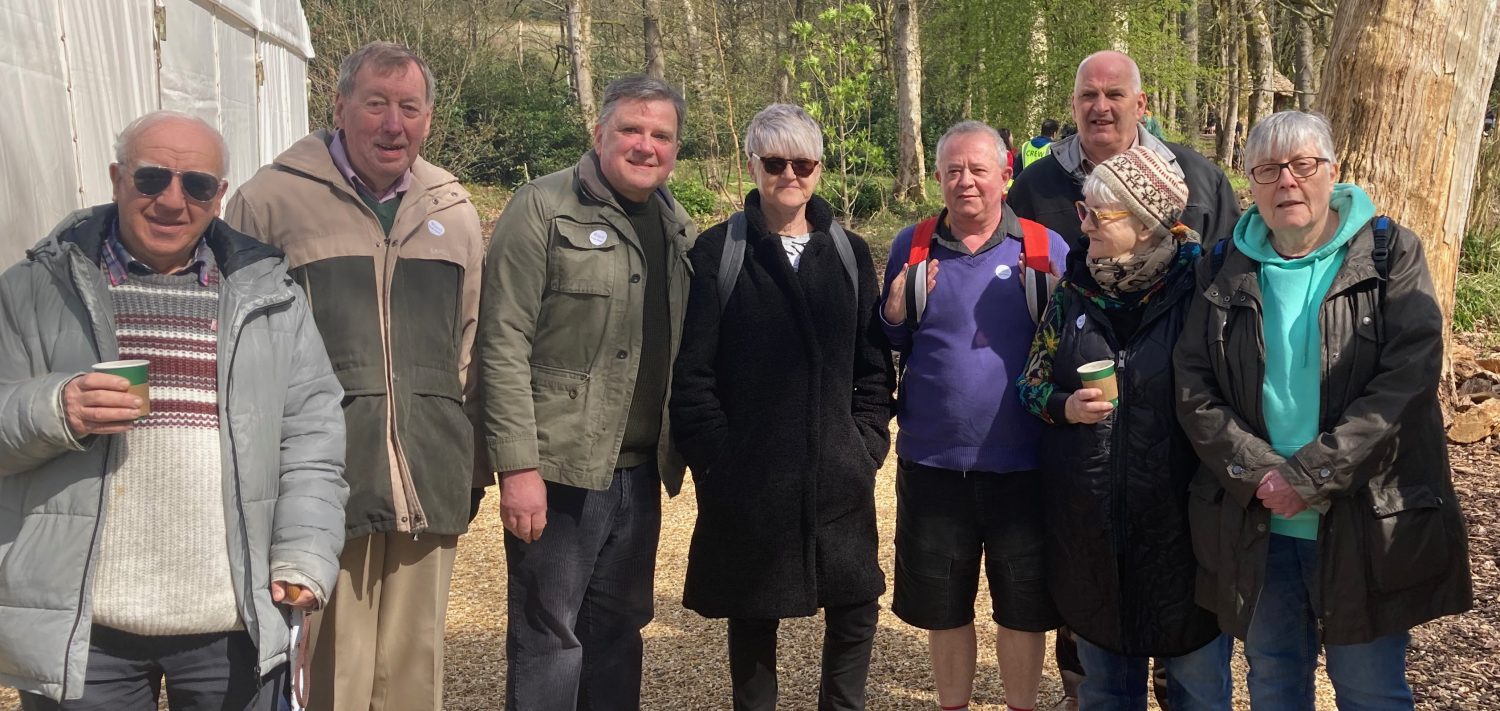
Happy Birthday to Jim on 12 June – 91 years young!

Jim’s 90th Birthday (last year)

……………………………………………………………………………………………………..

I am proposing an Out In The City meet up on Wednesday, 24 June from 1.00pm to 3.00pm (subject to weather permitting).

The venue is Sackville Gardens on Sackville Street. If you are coming on public transport you need to wear a face covering (scarf or mask). In order to keep social distancing we will meet in groups up to six people. There are some benches, but it would be helpful if people brought blankets to sit on and each person needs to bring their own sandwich or snack and drink.

It is essential to contact me so we are aware of numbers attending. Please phone or text or send a message here
……………………………………………………………………………………………………..

Pauline reports on two Pride in Ageing meetings and the LGBT Foundation Volunteer Awards (held on Zoom):

Pride in Ageing 1st Birthday Party – 5 June 2020

It’s hard to believe it’s just over a year since so many of us from Out in the City attended the launch of Pride in Ageing on 5 June 2019.

On 5 June 2020 there were two birthday celebrations, the first was a small group of about five or six of us from the Pride in Ageing Advisory Committee. We had a sort of “kaffee klatsch” (or on line coffee and cakes) in a Zoom meeting from 10.00am to 11.00am, which was hosted by Lawrie Roberts and Emma Meehan from the LGBT Foundation.

Emma is covering for Lawrie for the next 3 weeks as he is on furlough. It was mainly catch up about how we are all coping and struggling with lockdown in different ways, from loneliness through to seeing people on line rather than physically.

Part way through Paul Martin from the LGBT Foundation joined us with his coffee and cake and expressed his concerns about how many older LGBT people are struggling with loneliness and isolation during lockdown, especially those of our community who do not use digital media or the internet.

I had been talking with Sarah Timms, who is the UK Press Officer for Age UK about something else and asked her after the meeting how Age UK was handling this issue. My email was forwarded to the groups at Age UK who are working on this; I figure if I can be proactive we may find different ways to help those in our group who are dependent on landlines and mobile phones. Maybe we go back to using letters … the old snail mail to stay in touch with those on our group who struggle?

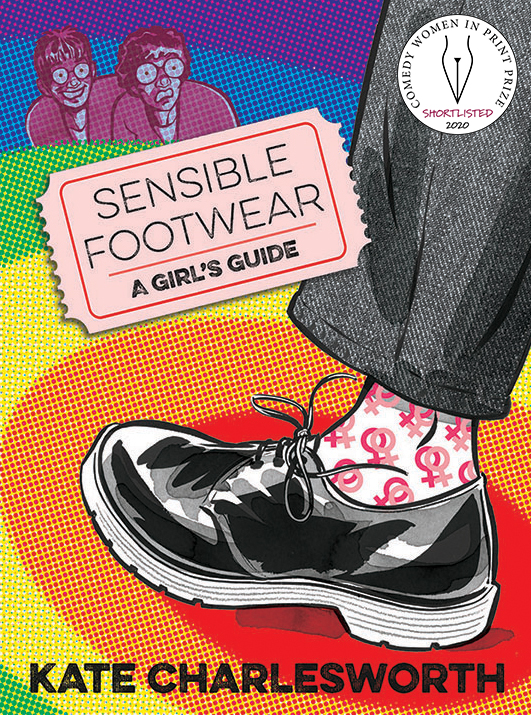
Sensible Footwear

The second and main celebration was a Zoom meeting in the early afternoon with Kate Charlesworth, a lesbian, activist, cartoonist and story teller; she was born in 1950 in Barnsley and studied at Manchester Art College in the 60s, where she discovered Canal Street and the Union. In her words … her first steps as a baby dyke.
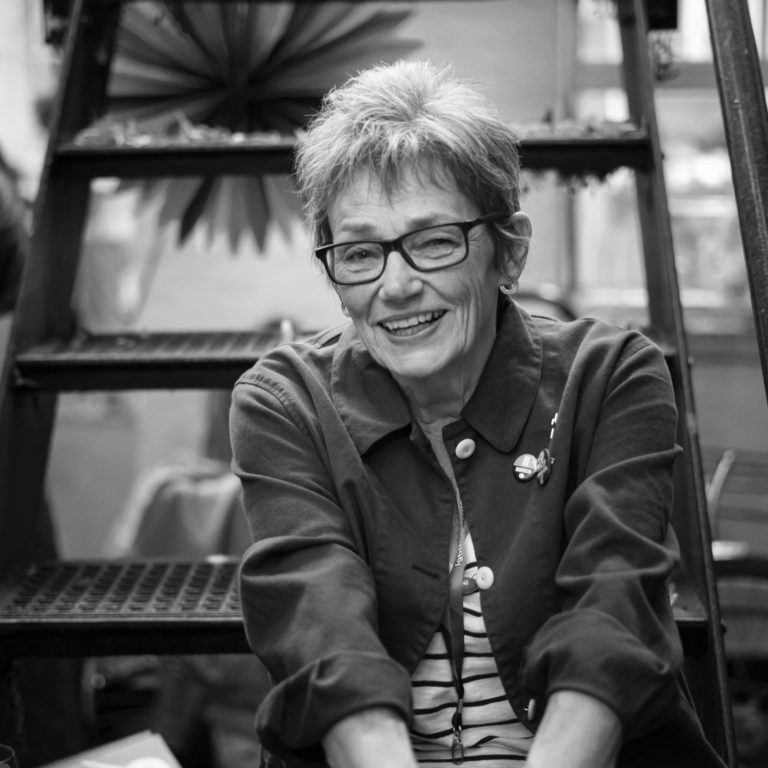
Kate Charlesworth

All of us on the Advisory Committee had (if they wanted) a free copy of her autobiography and history of LGBT struggles and rights since 1950. The book is called Sensible Footwear, A Girl’s Guide. It is 320 pages of her story with each page packed with drawings and cartoons – a tour de force indeed; it is published by Myriad Editions.
There were about 60 visitors on line watching Lawrie ask various questions and Kate showed us her storyboards for her book, which took five years to write and draw, and answered all the questions.

The Advisory Committee had had chance to submit one question each before, and mine was included. Kate started by explaining her current thinking, and made some trenchant comments about the shambles of the current government and how nasty racism has raised its ugly head again.

Then she explained why it took her five years to put the book together and the time she spent looking through old photos, all her memorabilia, ephemera and clothes from different decades. Her goal was to write a personal memoir as the thread to hold the story and the cartoons together.

It is much much more than an LGBT encyclopedia and history, as her own story is interwoven. She wrote the story line first with all the research needed and then she put together storyboards to show where the drawings and cartoons would fit, and finally a chart of the whole book on one huge piece of paper. She showed us some of the storyboards, with rough drawings and then the whole big storyboard. It was amazing to see all the detail, and also how clearly she is very professional and how good her rough drawings were.

Then my question: When did you accept being a gay woman / lesbian?

Her answer: Playing “games” as a child with another girl and it not being accepted by her parents, especially her mother was very difficult. And then for the rest of her life there was a gradual process of acceptance. It was easier since her mother died and coming out was her saviour.

Another question: What were the influences on her art?

Her answer: Her art teacher helped her develop her skill. And she learnt much from Daily Express cartoonists … Giles with his depictions of strong women and Osbert Lancaster using words and drawings. Other influences included Minnie the Minx, the Backstreet Kids and Desperate Dan in 50s comics. And Ronald Searle.

Another question: About memories and archives?

Her answer: A large part of the book is about growing from a baby dyke to a young dyke. She talked lovingly about being at Art College in Manchester in the1960s, and going down Canal Street and how she loved being in the Union, which she said was really rough then. And then in the Anderson years going to places like Ashton-under-Lyne for night life without God’s copper. Looking at her life from the mid 1980s was interesting; she remembers coming to Manchester for the Big March against Clause 28.

Another question: Your involvement in the older LGBT scene in Scotland (where she now lives)

Her answer: Not many LGBT only spaces. She had an exhibition in Edinburgh in 2006, and received lots of comments like “we have never seen anything like that” from people in the LGBT community. She is also enjoying being in an LGBT choir.

Another question: You use the word “dyke” a lot (lots of positive texts about this during the Zoom show)

Answer: I think we should take back ownership. She felt originally it was a word from the black community in US to disparage gay women. And lovingly referred to Dykes Delight magazine with its old “teddy boy” look. Also it was seen as an oppressive or even fashionable word. In the 1980s there was a trend for leather wear and leather jackets from Boss; and lesbian sex in the 80s/90s was about what kind of sex to have with a political ideological stance. Were you choosing to be a lesbian, you could make jokes about it then?

And she reflected on the lesbian wars, which have been reprised by the trans wars, except that Facebook and Twitter make it worse nowadays. She hated the lesbian sex wars and she hates the trans wars too.

Another question: What is your focus now?

Answer: Her archives and memorabilia have been packed away and sent to Glasgow Library as she has left all her archives to them. Covid has slowed down creative stuff and there is a lot of lethargy about new stuff (from her). She is finding it tough right now to start a new project.

Final question: The financial impact of Covid?

Answer: Its tough for cartoonists right now with no government support. Many cartoonists are sharing ideas and luckily in Scotland bookshops are classed as essential places to go.

LGBT Foundation Volunteer Awards – Friday 5 June 6.30pm till late

The Volunteers Awards party ran from about 6.30pm till after 8.15pm … it was still going strong when I left at 8.30pm. Like many other attendees I had slightly too much to drink. Sadly there were not too many volunteers. It was mainly trustees (we all were part of a video which included clips of each of the Trustees) and staff.

There were various prizes and awards and an amazing video put together of famous people that Carl Austin Behan knows (he is a trustee too, but with much more weight and contacts than me) … starting with Rowetta, some drag artistes (both M to F and F to M) that I didn’t know, some singers I didn’t know to Owyn the BBC weather man and drummer, Michael Cashman reading out a story and finally Graham Norton. It will be hard to reprise that next year.

One of the highlights were various members of the management lip synching to a Donna Summer record, with various people in 60s outfits and one woman as Mrs Slocombe with a purple dress and wig.

I am really getting too old for this and as the theme was the 1960s I had on a flared frock with big petticoats … but on Zoom you can’t see that of course. It was very enjoyable even if I was a tad Brahms and Liszt at the end.

……………………………………………………………………………………………………..

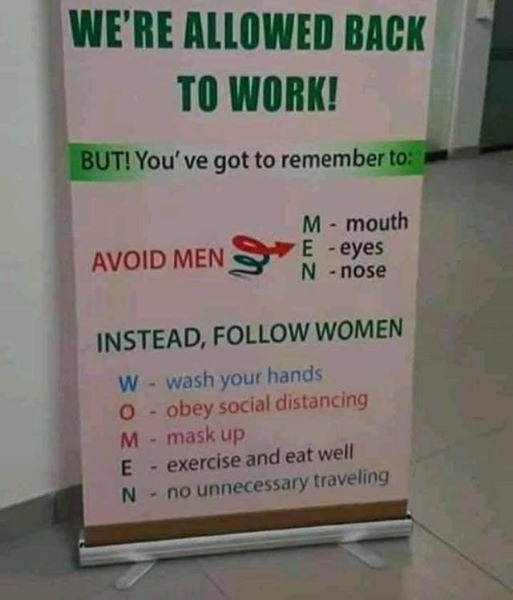
Saw this on Facebook:
Derek Jarman Exhibition / Pride in Ageing

News

Happy Birthday Normski on 8 June. You are catching up with me!

……………………………………………………………………………………………………..

The Derek Jarman exhibition PROTEST! at Manchester Art Gallery has been temporarily postponed.

The exhibition is a major retrospective of the work of Derek Jarman (1942-1994), one of the most influential figures in 20th century British culture. The exhibition brings together the diverse strands of his practice as a painter, film maker, writer, set-designer, gardener and political activist, shown together for the first time in over 20 years.

PROTEST! captures Jarman’s engagement with art and society, including political protest and personal freedoms arising from the AIDS crisis.

However, the Gallery has now published the Derek Jarman archives (including film and audio content) with a commentary. See here

The comments are from LGBT Foundation following a discussion between staff and community members from the Pride in Ageing programme.

……………………………………………………………………………………………………..

Pride in Ageing had its first anniversary last week

Launched by Sir Ian McKellen in June 2019, Pride in Ageing has already made huge strides in helping to ensure that Greater Manchester becomes one of the best places for LGBT people to grow older.

This programme was set up in response to concerns that too many lesbian, gay, bisexual and trans people over the age of 50 are living in isolation and facing discrimination as a direct result of their sexual orientation or gender identity. Laws change but attitudes can be harder to shift.

The initiative is ensuring that the voices of LGBT people over the age of 50 are heard when it comes to ageing policy and activity in Greater Manchester, with an advisory group of LGBT community members at the heart of the project. The views of LGBT people in mid and later life are now also directly informing the services and support delivered by the LGBT Foundation.

Pride in Ageing is also set to launch a new quality assurance standard and social prescribing service, which will help adult social care services and housing providers to better support their LGBT residents and service users.

Here are photos from the launch a year ago:

Manchester Pride Listening Group for Women / #My Pride Is Campaign

News

Manchester Pride have organised a Listening Group for Women. This will happen on Friday, 5 June 2020, 5.00pm to 7.00pm via Zoom.

The Listening Groups are consultations so that the Manchester Pride team can better represent, support and celebrate the community, not just at Pride, but all year round.

More info on how to sign up here

You can take part using video and audio, video or audio or simply using the chat function. If you would like to take part but don’t feel comfortable using these methods please contact engagement@manchesterpride.com

…………………………………………………………………………………………………………….

Pride is an incredibly important time for many LGBT people. Understandably, many pride events have been cancelled or postponed this year.

#MyPrideIs is a new national LGBT pride campaign set up by the LGBT Foundation to celebrate pride in all its forms – our histories, our love, our families, our communities, our identities, our movement, our rights and more.

Pride is an incredibly important time for many LGBT people. It is a chance for us to celebrate how far we have come on the road to equality, and reenergise ourselves for the struggles ahead. In a world which often tells us there is something wrong with who we are, it is a time to come together as a community and celebrate our richly diverse identities.

For some, Pride is the only time of the year that we see same-gender couples holding hands. For others, it may be the only time of the year that we see others who look like us. When you have spent the majority of your life being a minority, there is magic in being amongst people like you and no longer being the “other”. Pride can be a place where you feel like you finally belong.

In a recent study by LGBT Foundation on the impact of coronavirus on LGBT communities, one person responded:

Most of the prides have been cancelled […] This makes it extremely hard to have any motivation to work, as all the rewards I work for have been taken away.”

Our sense of Pride comes from our collectiveness, our unity and our resilience. This will never fade away.

#MyPrideIs is a new national LGBT pride campaign to reduce feelings of isolation and loneliness by reassuring our communities that although we can’t be together physically at the moment, our sense of community will prevail. The campaign celebrates the rich diversity and shared histories of our communities – giving a voice to those in our communities who have been marginalised and underrepresented for too long.

The LGBT Foundation are asking you to reflect on what pride means to you, share memories of previous pride events that have played a big role in your life and offer hope and support to others who may be struggling.

#MyPrideIs is all about bringing our communities together, and the LGBT Foundation would LOVE you be a part of it! Below are some of the ways you can get involved:

  • To be featured in the campaign, send a photo which represents pride for you and complete the sentence “My pride is…”. You can send this to joe.nellist@lgbt.foundation
  • Share your favourite memory of a pride event on social media with your friends and family using #MyPrideIs
  • Learn about the history of pride, from the stonewall riots in 1969, the UK Gay Pride Rally of 1972 to the start of your local pride
  • Why not host your own pride event at home and invite your friends to join you on videochat? In your photos use the tag #MyPrideIs

There’s a number of digital pride events popping up. This gives us the chance to come together as a global LGBT community like never before!

The LGBT Foundation asked people what pride means to them. Below are some of the responses. What does pride mean to you?

 “My Pride Is…

  • supporting my child 110% in whatever choices they make. Not saying it’s easy all of the time, but love comes above all… #bewhoyouare #beproud
  • solidarity with LGBT people from across the world
  • remembering the struggles & our heroes & using #Pride to highlight the global battles #LGBTQ still need to win!
  • celebrating how far we’ve come that we’re able to parade our community through the streets of cities globally showing the diversity of the LGBTQI+ spectrum and all its eccentric uniqueness. Prides may be cancelled this year, but the celebration lives within us. Pride will still be happening this year in the small moments we cultivate to show how proud we are. #lovewins
  • finally being able to go to my first pride parade in Philly and NYC last year and finally coming out to friends and family
  • to be myself and knowing my existence matters
  • celebrating the freedom that for centuries people never had
  • people standing up together and saying to the world this is who we are, and also working together every day to make a better world
  • coming together, celebrating our progress, showing solidarity with others who suffer and work towards a more inclusive world.
  • learning about and understanding all the things that have happened. And celebrating the positive changes.
  • we are all together fighting for rights.

Here is my submission:

The LGBT Foundation are still taking submissions for the campaign and plan to run it throughout the summer. If you would like to be a part of the campaign, please contact joe.nellist@lgbt.foundation

Manchester … so much to answer for …

News

There are over 30 places called Manchester in the United States, as well as places called Manchester in Australia, Canada, Jamaica and South America.

But we are talking about “our” Manchester the second most visited city in the UK after London. It is notable for its architecture, culture, musical exports, media links, scientific and engineering output, social impact and sports clubs.

Manchester is a city of notable firsts: Manchester Liverpool Road railway station was the world’s first inter-city passenger railway station and the oldest remaining railway station. The city has also excelled in scientific advancement, as it was at The University of Manchester, in 1917, that scientist Ernest Rutherford first split the atom. The university’s further achievements include the development of the world’s first stored-programme computer in 1948; and, in 2004, Andre Geim and Konstantin Novoselov successfully isolated and characterised the first graphene.

Bands that have emerged from the Manchester music scene include Van der Graaf Generator, Oasis, The Smiths, Joy Division and its successor group New Order, Buzzcocks, The Stone Roses, The Fall, The Durutti Column, 10cc, Godley & Creme, The Verve, Elbow, Doves, The Charlatans, M People, The 1975, Simply Red and Take That.

Previously, notable Manchester acts of the 1960s include The Hollies, Herman’s Hermits and Davy Jones of the Monkees as well as the Bee Gees who grew up in Chorlton.

So it’s no wonder that the website of Out In The City, based in Manchester – a small social and support group catering for members of the LGBT communities over 50 – should attract visitors from many countries around the world!

Since the website started in July 2017 there have been visitors from 54 countries, and since lockdown in March 2020 we have had 172 visitors from 23 countries: Australia 14; Bangladesh 1; Brazil 2; Canada 5; China 18; Finland 1; France 4; Greece 2; India 7; Indonesia 1; Isle of Man 1; Moldova 2; Netherlands 2; New Zealand 1; Philippines 2; Poland 2; Russia 1; Slovenia    2; Spain 7; Switzerland 4; Uganda 4; US 88; and Vietnam 1.

Manchester is a friendly place, and we wish a HUGE “Thank You” greeting to all our international readers, as well as those who have adopted the city as their home.

Number of people who identify as lesbian, gay or bisexual at UK high

News


Happy Birthday to Paul R on 28th May

and

Happy Birthday to Jackie on 30th May.


…………………………………………………………………………………………………………….

LGB population rises to 2.2%, while proportion identifying as heterosexual falls to 94.6%

The number of people identifying as lesbian, gay or bisexual (LGB) in the UK has increased by more than a third in four years, figures show.

Data taken from the annual population survey (APS), which collects information on self-perceived sexual identity from people aged 16 and over, found that the number had increased from 1.6% in 2014 to 2.2% in 2018.

The overall proportion of the UK population that identify as heterosexual, or straight, decreased from 95.3% in 2014 to 94.6% in 2018.

In 2018, there were an estimated 1.2 million people aged 16 years and over who identified as LGB. Young people, aged between 16 and 24, were the most likely to identify as LGB at 4.4%.

More than two-thirds of the UK’s LGB population were unmarried or had not entered into a civil partnership by 2018, according to the figures.

Sophie Sanders, from the Office for National Statistics population statistics division, said: “People in their late teens and early 20s are more likely to identify as LGB than older age groups.

“Meanwhile, more than two-thirds of the LGB population are single and have never married or entered into a civil partnership.

“This reflects the younger age structure of this population, the changing attitudes of the general population to marriage and the fact that legal unions have only been recently available for same-sex couples.”

Civil partnerships were introduced for same-sex couples in the UK in December 2005 and same-sex marriage has been legal in England, Wales and Scotland since 2014 and in Northern Ireland from February this year.

Robyn Peoples, 26, and Sharni Edwards, 27, made history when they became the first same-sex couple to tie the knot in Northern Ireland.

Laura Russell, the director of campaigns, strategy and research at Stonewall, welcomed the rise in the number of people identifying as LGB.

“This is likely because more and more people feel comfortable to be open about who they are,” she said.

“But we know these figures still won’t be an entirely accurate representation of the number of lesbian, gay and bi people in the UK.

“If we want to live in a world where everyone is accepted without exception, we need every person who believes in equality to stand up and support their LGBT friends, family and the wider community.”