
Ordsall Hall
Ordsall Hall is a large former manor house in the historic parish of Ordsall, now part of the City of Salford, in Greater Manchester. It dates back nearly 850 years, although the oldest surviving parts of the present hall were built in the 15th century.
Ordsall Hall has had a long and interesting history with many different uses – a family home, working men’s club and church hall. The most important period of its life is undoubtedly as the family seat of the Radclyffe family who resided there for over 300 of those years. It was first mentioned in records in 1177!
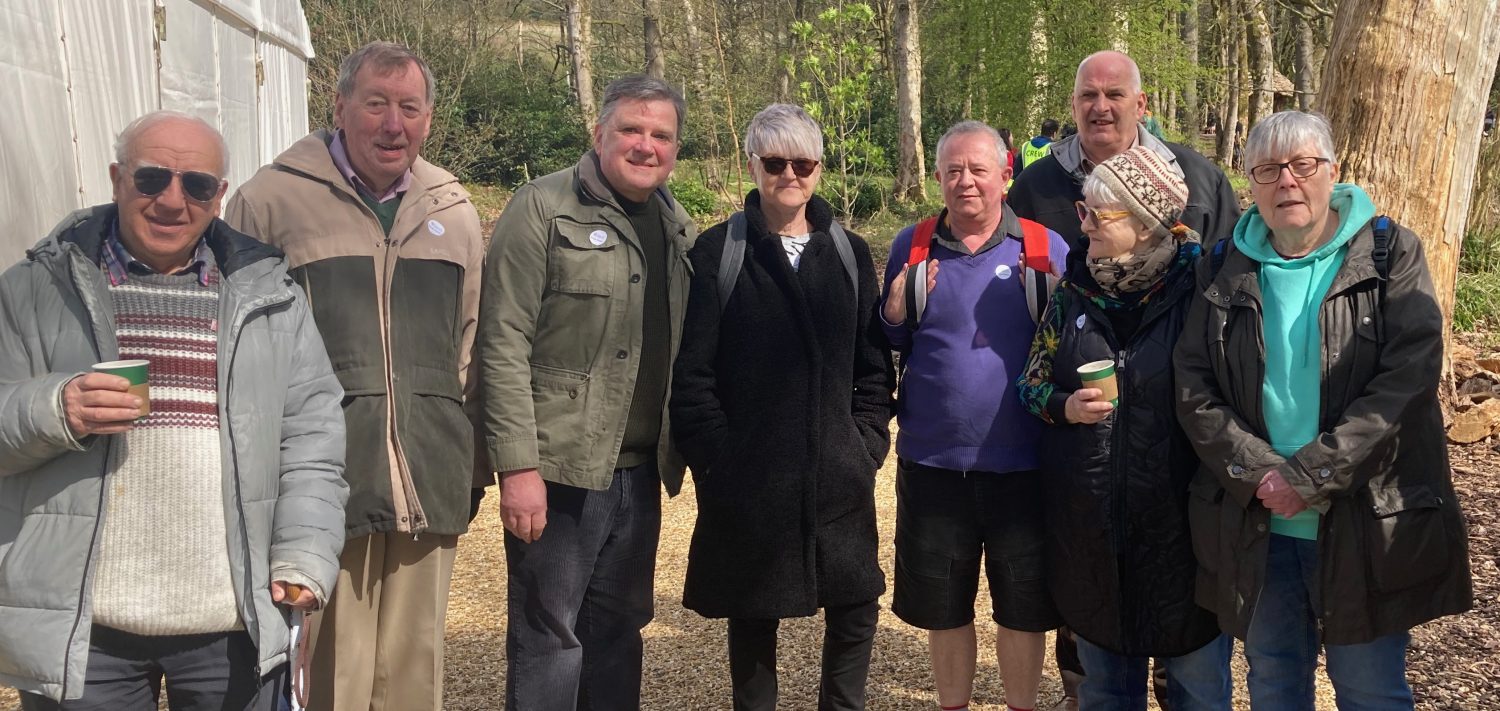
With the assistance of a guided tour we explored a variety of rooms throughout the hall, including the Great Hall, the Kitchen, Star Chamber and the Great Chamber.
More photos can be seen here.

40 Years Together – 18 Years Legally Married
Before marriage equality became law, George and Brad Takei were already building a life together.
Now, four decades after they first found each other, the beloved couple is celebrating 18 years as legally recognised husbands.
George shared a beautiful anniversary photo of himself and Brad in New York City, smiling with their arms wrapped around each other—the same love, the same partnership, after all these years.

Their journey began 40 years ago, but it wasn’t until 14 September 2008, that they could finally say “husband and husband” in the eyes of the law.
They exchanged vows at the Democracy Forum of the Japanese American National Museum in Los Angeles, following the California Supreme Court’s historic decision striking down the state’s ban on same-gender marriage.
Four decades of love. Eighteen years of marriage. One incredible reminder that love can endure long before the law catches up.
Happy Anniversary, George and Brad Takei.
Rose Valland
In 1940, the Nazi High Command marched into the Jeu de Paume museum in Paris. They saw a quiet, unassuming French woman straightening frames and organising files, and they dismissed her as harmless background noise.
They were wrong.
As Hermann Göring arrived to personally select stolen masterpieces for his private collection, the greatest art heist in history unfolded. While most curators were pushed out, the Germans kept one administrator to manage the building’s logistics.
This was Rose Valland. To the occupiers, she was just a low-level bureaucrat keeping the facility running. But they made a fatal miscalculation: they assumed she only spoke French.
Rose spoke fluent German. For four terrifying years, she never let that secret slip. Not once.


She stood silently in the corners while officers discussed top-secret shipment schedules. She listened as they debated which trains would carry Vermeers and Rembrandts to bunkers in Germany. She heard them laugh about the Jewish families they had robbed. The mental toll was agonising; she had to watch the heritage of her nation being crated and erased.
Every night, she went home and risked immediate execution by secretly cataloging everything – the artist, the original owner, and the destination code on each crate. She used scraps of paper and memorised train numbers, writing them down only when she was safely alone.
When the French Resistance considered bombing the railways to stop German transports, Rose intervened with specific intelligence. She told them which trains held munitions and which held the soul of France. By providing this data, she ensured the tracks were sabotaged just enough to delay the transport without destroying the irreplaceable cargo.
Then came the Liberation in 1944. The “Monuments Men” – the Allied unit tasked with recovering the art – arrived in Paris. They knew the art was gone, but they had no idea where to start looking in the chaos of the falling Reich.

Rose Valland finally broke her silence. She approached Captain James Rorimer and handed over her maps, her train numbers, and the exact coordinates of the stockpile at Neuschwanstein Castle. Because of her meticulous records, the Allies knew exactly where to go.
She saw their greed, she kept their secrets, and she witnessed their downfall.
Eventually, over 60,000 works of art were repatriated to France, largely due to her secret ledgers. Rose wasn’t just a curator; she was one of the most effective spies of the war. Today, when you look at a masterpiece in a European museum, there is a good chance it hangs there because a quiet woman knew how to listen.
Courage isn’t always a shout; sometimes, it is a whisper.
Valland had a relationship with Joyce Helen Heer (1917–1977), a Liverpool-born secretary-interpreter at the Embassy of the United States. The two women shared an apartment on rue de Navarre in the 5th arrondissement of Paris. The relationship ended upon Heer’s death from breast cancer; she was interred in Valland’s family vault.


