The Refuge
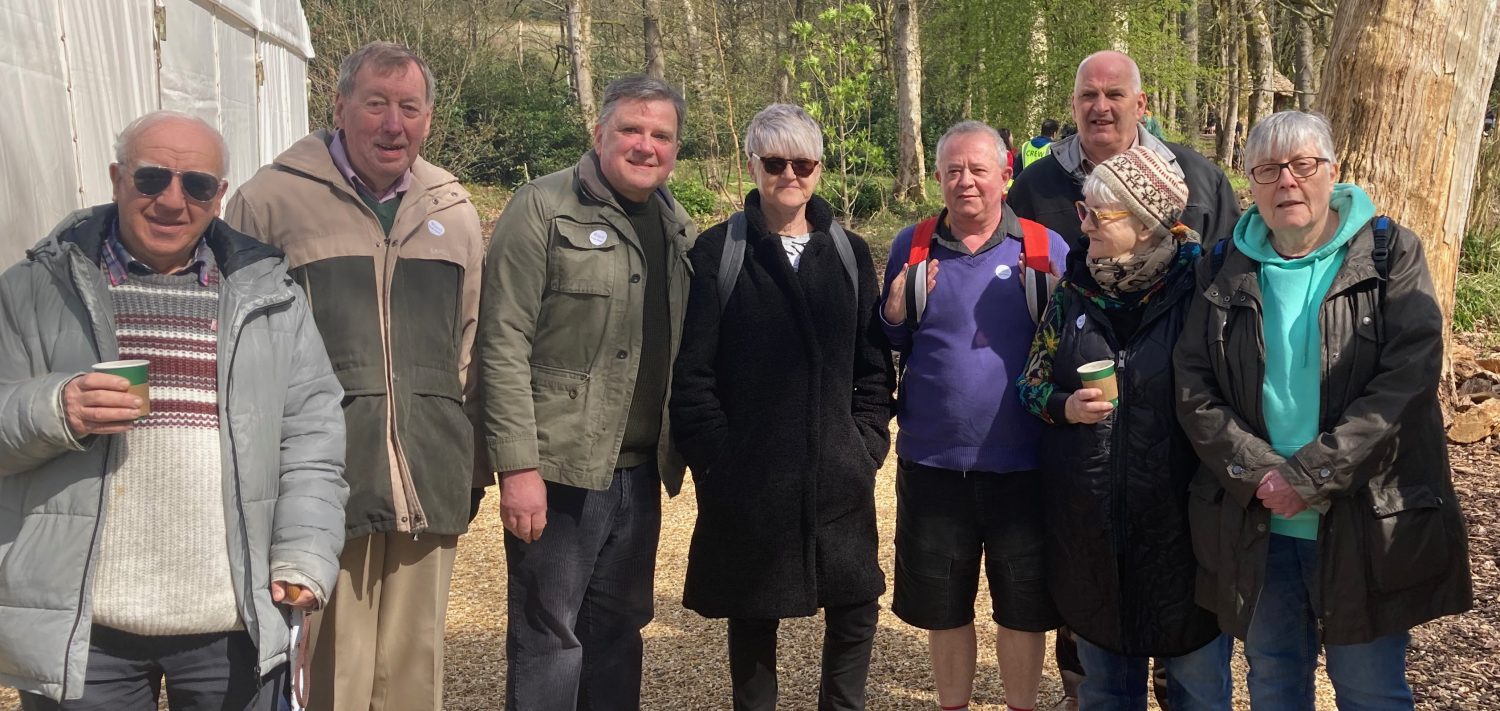
Thirty-one of us met for an afternoon tea and backstage tour of The Refuge building, a former life insurance and pensions company.
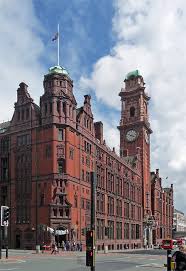
From 1895 to 1987 the head office of the Refuge Assurance Company Limited was in the magnificent Grade II listed building on Oxford Street in central Manchester.
Earlier the majority of us ate at Society, a food hall serving pizzas, Korean food and burgers.
It was a short walk to The Refuge and we settled in The Winter Gardens. The tea, coffee, cakes and scones were a surprise treat for Out In The City members. Our hosts, Josie and Jean, were amazing and the service was above and beyond excellent.
We split up into small groups and our guides, Amy and Alex, were similarly excellent. We were shown the staircase that only gentlemen could use (back in the day) and Room 51 which costs £1,500 to £2,000 per night. Previous occupants included Lady Ga Ga and Janet Jackson.
Overall it was a brilliant visit and lots of great photos can be seen here.

Silence is Golden
You’ve probably heard of Ramon Novarro, the devastatingly sexy Mexican star of the silent screen whose gayness surprised exactly nobody. Maybe you’ve also heard of William Haines, another all-but-openly-gay silent actor who transitioned to a successful interior decorating career in the 1930s. We all know the bisexual folklore about Rudolph Valentino.
In the silent era, before the Hays Code cracked down on gay representation on screen and off, there were plenty of gay (and gay-coded) actors making a living playing matinee idols. But one of the most intriguing of these figures has been all but erased.
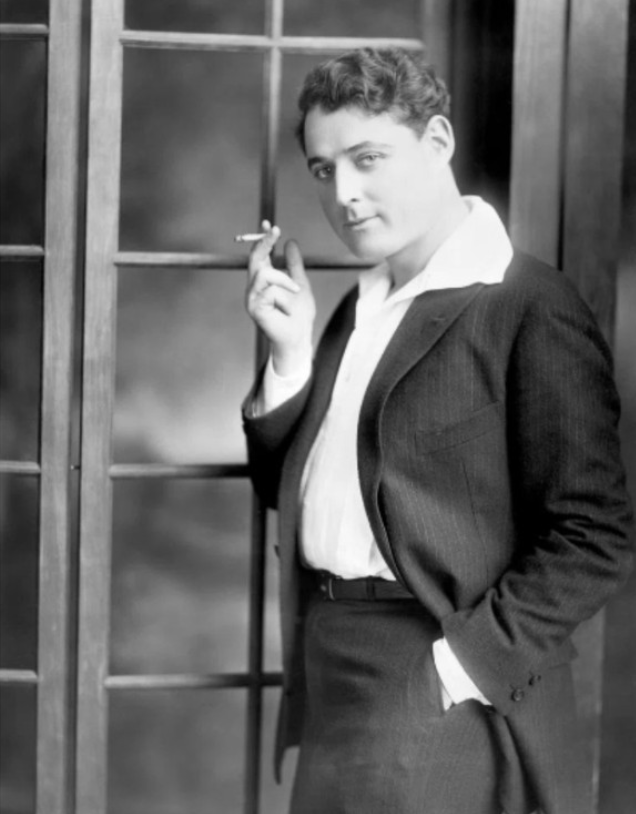
J Warren Kerrigan had all the stuff of a dashing action hero and heartthrob. By the time he starred in one of his final movies, 1924’s The Covered Wagon, he’d had over 10 years and 400 films of experience under his belt.
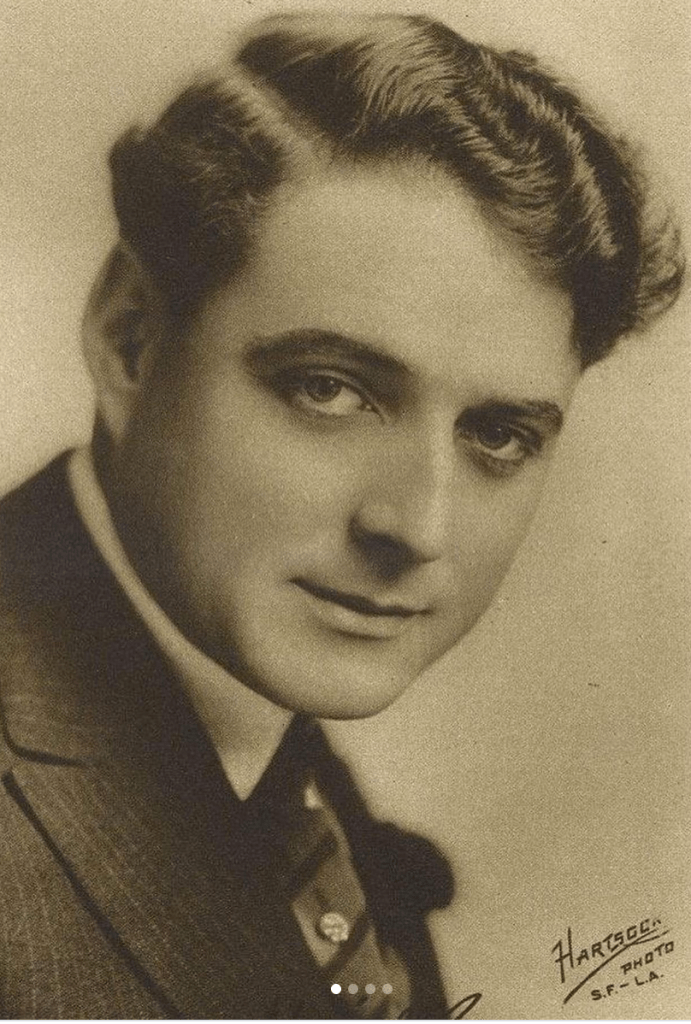
The soulful-eyed leading man was a box office draw from the start: in an era when “Gibson Girls” like Evelyn Nesbit were considered the epitome of female beauty, critics dubbed Kerrigan “The Gibson Man” due to his good looks, charm, and extra “je ne sais quoi”.
But Kerrigan wasn’t a he-man like Douglas Fairbanks or a stolid Western hero like William S Hart. He was more along the lines of what Gary Cooper would become in a later era: a quiet cowboy who walked softly and carried a big heart.
Behind the scenes, things were more complicated than fans might have suspected. Kerrigan lived openly and proudly with his mother at the height of his stardom, as well as with his partner, fellow silent actor James Carroll Vincent. Kerrigan wasn’t too interested in hiding his sexuality from his public, but it wasn’t his gayness that put an early end to his career. It was his comments about World War I.
In 1917, Kerrigan was at the height of his fame. He’d outgrossed even Mary Pickford at the box office and had just completed a massive tour across North America. But when an interviewer asked him about whether or not he’d be joining the war effort overseas, Kerrigan spoke a little too honestly.
“I am not going to war. I will go, of course, if my country needs me, but I think that first they should take the great mass of men who aren’t good for anything else, or are only good for the lower grades of work.”
People didn’t take kindly to Kerrigan’s comments, and they turned against him quickly.
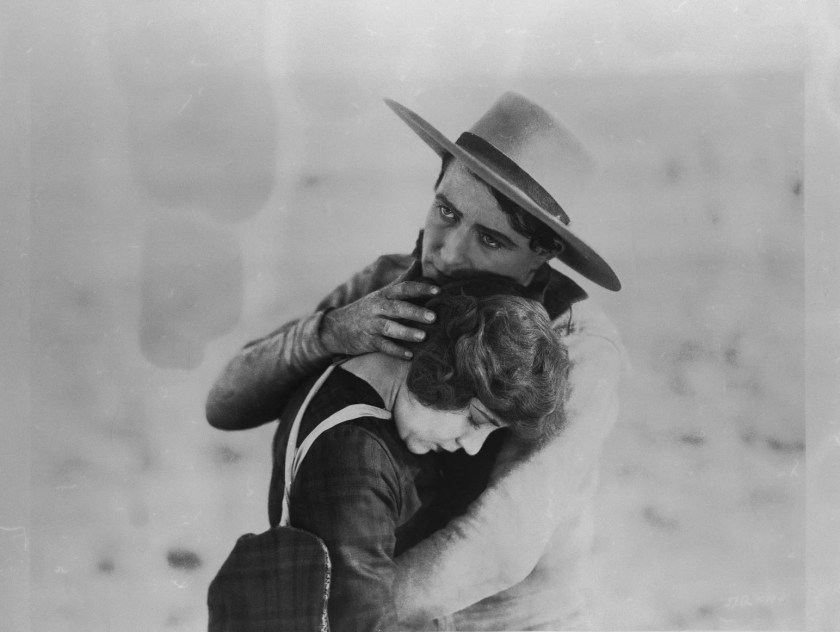
It probably didn’t help that he wasn’t all that interested in pretending to be just another ladies’ man. While he received many proposals from female fans and co-stars, he didn’t want a “beard”, and at the time, the studio system wasn’t too worried about enforcing a straight-seeming marriage on their gay stars. With time, that would change, as studio heads like Louis B Mayer made it their business to protect their gay leading men from any kind of scrutiny about their sexuality.
But in 1917, the tired old trope of “bachelor who lives with his mother and male secretary” wasn’t the obvious shorthand it would become by the mid-20th century.
Kerrigan kept on working until 1924, the year when a car accident marred his good looks and took away his ability to perform as a handsome hero. Luckily, he’d saved enough money from his previous films to be able to enjoy a happy, if early, retirement. He and his partner Vincent even took in a drag performer – Vardaman, aka The Gay Deceiver – as a free lodger in the 1930s
After the death of his mother, Kerrigan lived out the rest of his life happily with Vincent, whom the press referred to as either his secretary and/or his gardener, until Kerrigan’s death in 1947. Bereft from the loss of his soulmate, James Carroll Vincent ended his own life nine months after Kerrigan’s passing.
J Warren Kerrigan didn’t have the easiest time in Hollywood, but he did seem to live his life mostly on his own terms, which was not the case for so many closeted stars who came after. Most of his films – mainly one-reel shorts filmed on nitrate – have long since disappeared, but in the few glimpses that remain, we can see the makings of a sensitive type of leading man recognisable in later gay stars like Montgomery Clift, Rock Hudson and Tab Hunter.
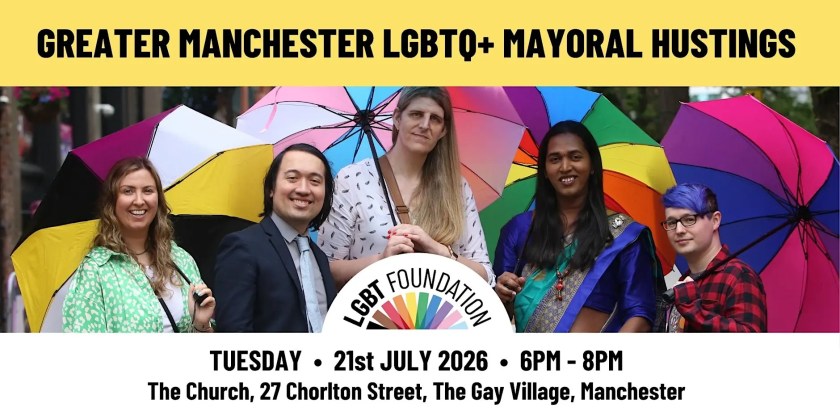
LGBTQ+ Hustings with Greater Manchester Mayoral Candidates
Come and hear from the Greater Manchester mayoral hopefuls on the issues that matter to LGBTQ+ voters.
Greater Manchester LGBTQ+ Mayoral Hustings
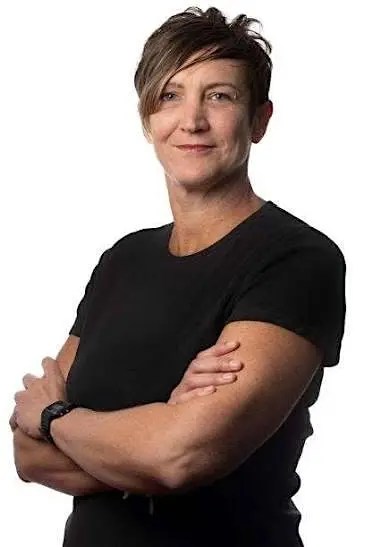
Host
Join us for an important evening of conversation, community and democratic participation, hosted by Emma Goswell.
All mayoral candidates have been invited to take part in this event, providing LGBTQ+ voters and allies with the opportunity to hear directly from those seeking to lead Greater Manchester.
This is your chance to ask the questions that matter most to you, have your voice heard and find out how the candidates plan to address the issues affecting LGBTQ+ communities across the city-region.
Whether your concerns are around safety, healthcare, housing, inclusion, education, employment or equal opportunities, the hustings will provide a platform for open discussion and meaningful engagement. Mayoral candidates will have the opportunity to share their priorities and vision for Greater Manchester, while attendees can gain valuable insight into their policies and commitments.
To help shape the discussion, attendees are encouraged to submit questions in advance. This will ensure that the issues and concerns most important to LGBTQ+ communities are represented during the event.
Come along, take part in the conversation and make an informed choice about the future of Greater Manchester.
Be seen. Be heard. Be counted. Book here.

(Labour and Co-operative Party)
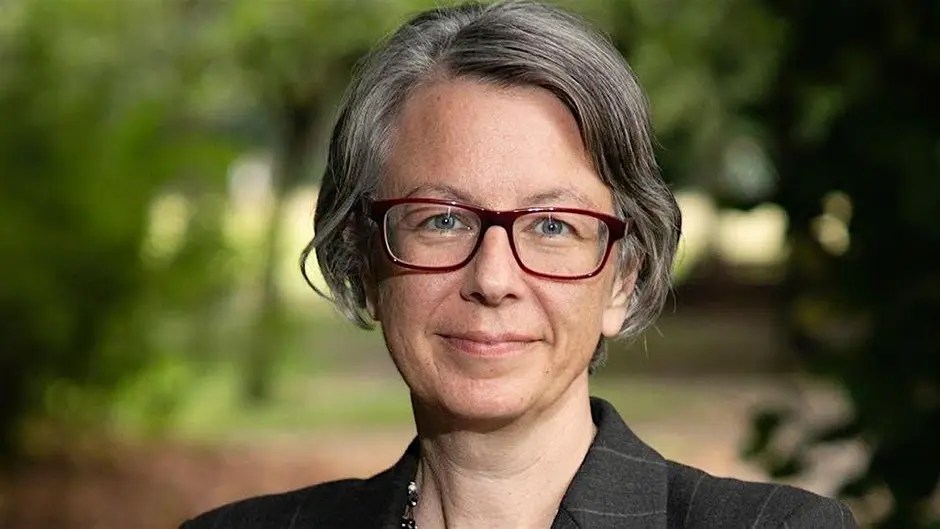
(The Green Party)
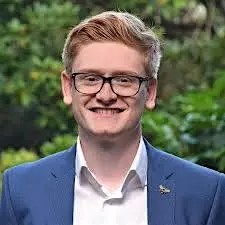
(Liberal Democrats)
Open Eye Gallery Commissions
Out In The City member, Helen Constantinou MA, has been awarded two commissions by Open Eye Gallery, Liverpool. Both commissions involve the creation of a single image relating to the historic Anti Section 28 Marches that took place in 1988. She is also hopeful that a third commission will follow; that will involve moving the project forward to “now” and delving into the impacts that the law actually had on our lives.
The first image, entitled The Gathering, will focus on the coming together of protestors prior to the start of one of the marches. This will be a modified version of an image Helen created for her Masters submission last year. The image will be further enhanced by the inclusion of the recorded memories of those who marched against Section 28 becoming law. The image and the recordings are scheduled to be shown in the Gallery in September (exact dates to be confirmed).
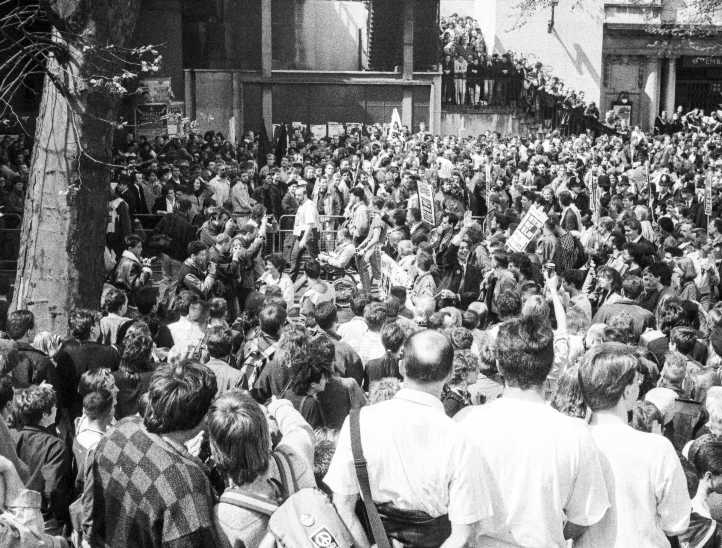
The second work, entitled The March, will focus on the marches that took place. Again, recorded memories will accompany the image when it is exhibited at the Open Eye Gallery in November (exact dates to be confirmed).
To create these commissioned pieces Helen is using multiple images from her own photographic archive to create a single, larger work that invokes a stronger sense of time, place and presence. To get an idea of the images which will be used in the creation of the final works, please go to https://section28project.myportfolio.com.
If you took part in the marches, or you remember not taking part, and would like to add your memories to the exhibitions please see the questions below. The questions are designed to elicit your key memories that will fit in with the ethos of the work.
1. The Gathering:
a) What motivated you to take part (or not) in a Stop the Clause march?
b) What were your first impressions when you saw the size of the crowd that was gathering for the march?
c) At the time, did you believe that taking part in the march could make a difference?
2. The March:
d) What were your impressions of the other people taking part in the march?
e) Are there any particular moments from the march that have stayed with you?
f) Looking back now, do you think the marches had an important impact, even if they didn’t achieve their goal?
Responses can be submitted in written form, including via email, or can be recorded. If you wish to record your response please contact Helen by email (constantimagery@gmail.com) to arrange a method and / or time to provide your responses. Your contribution can be attributed to you by name or attributed to “Anonymous” if you prefer.
Please note,
1) Open Eye Gallery has retained the right to edit vocal submissions and, given that their viewing audience includes children and young people, it might be wise to “moderate your language”!
2) Participants will be asked to complete a consent form for their written or recorded submission to be exhibited.
 Out in the City