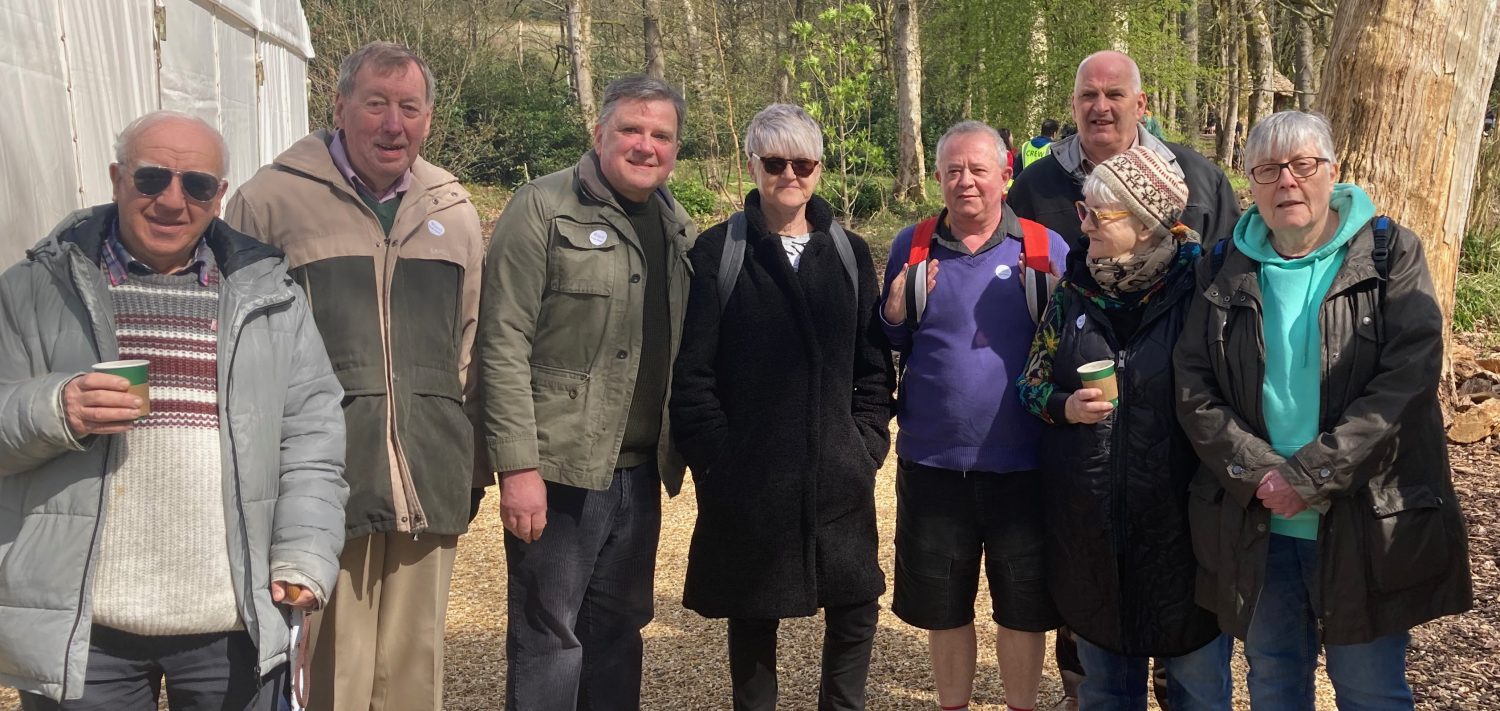
Martha Shelley
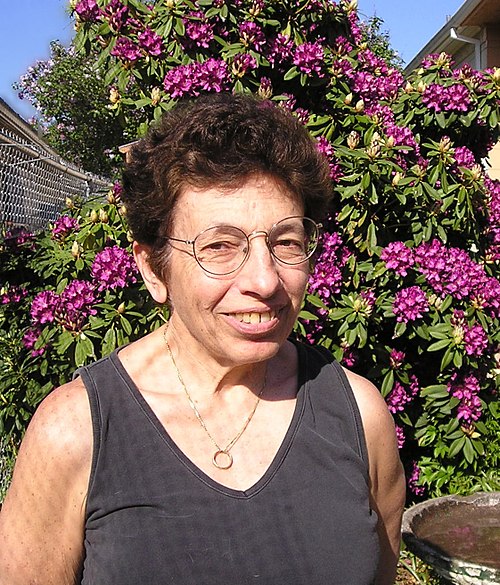
Martha Altman was born on 27 December 1943, in Brooklyn, New York, to parents of Russian-Polish Jewish descent. In 1960, she attended her first women’s judo classes in New York City, trying to meet lesbian women. Two years later, at age 19, she moved out of her parents’ home to a hotel and went to lesbian bars, where she “was miserable”. She did not find herself fitting in to the roles of “butch” or “femme”, common lesbian gender roles during this period.
In November 1967 she went to her first meeting of the New York City chapter of the Daughters of Bilitis (DOB), of which she later became president.
Due to FBI surveillance, members of the DOB were encouraged to take aliases, and Altman took Shelley as a surname.
While in a leadership role with the DOB, Shelley sometimes provided tours to women who were in New York City to learn about how to make their own chapter of the organisation. While giving one of these tours to women from Boston the night of the Stonewall riots, Shelley and her visitors walked past the beginnings of the riots outside of the Stonewall Inn. Shelley dismissed them as anti-war protests initially but was later informed about the actual cause.
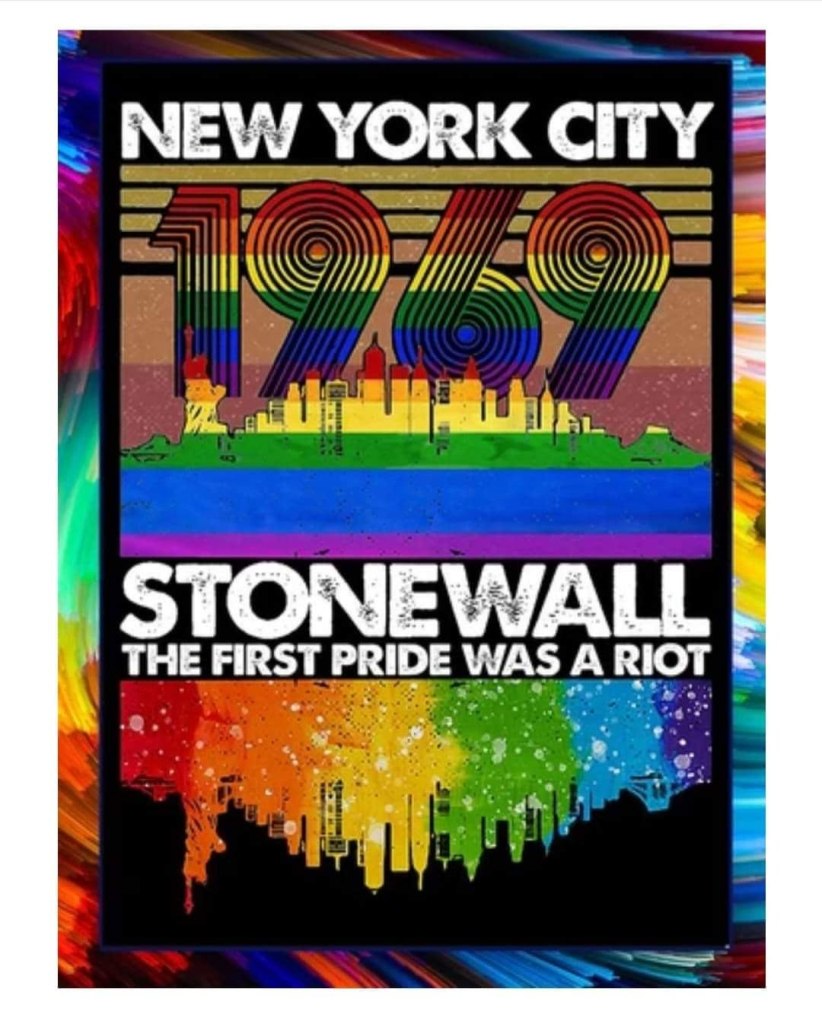
Activist Mark Segal recounts that Shelley and Marty Robinson stood and made speeches from the front door of the Stonewall on 29 June 1969, the second night of the riot. Recognizing the significance of the event and being politically aware, Shelley proposed a protest march and, as a result, DOB and Mattachine sponsored a demonstration.
With time, it became clear to those involved that Shelley and others desired a new organisation to better serve their political goals; she was one of the twenty or so women and men who formed the Gay Liberation Front after Stonewall and was outspoken in many of their confrontations.
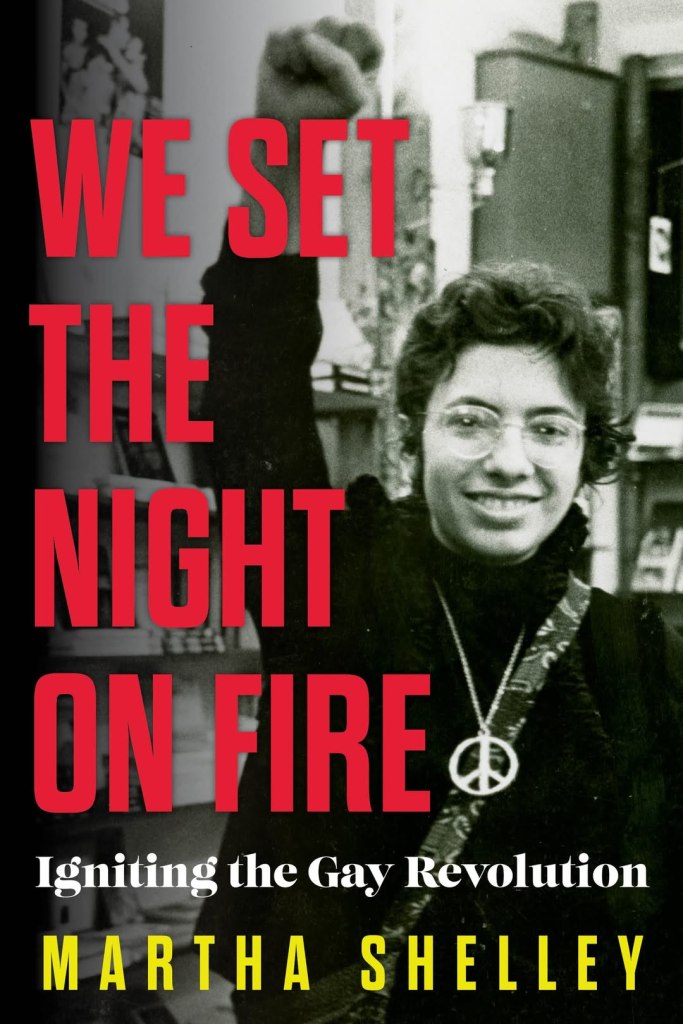
In 2023, she published a memoir, We Set the Night on Fire: Igniting the Gay Revolution.
She also wrote the following: “Lies, Myths, and Stonewall”
“Eyewitnesses often can’t agree on events that happened yesterday, let alone 50 years ago – like the Stonewall Riots. Inevitably, some nations, interest groups, and individuals attempt to shape the narrative to promote their own agendas. They glorify their achievements, gloss over their misdeeds, and disparage or even omit the real achievements of others. When I attended public school in New York, I was fed a history that exalted the Founders, various US presidents, and a handful of other white men, as though they had done everything worthwhile that ever happened here. I was taught that all progress had been a gift from those leaders, and we were told next to nothing about Black people, Hispanics, Native Americans, the women’s movement and the labour movement.
A similar process has been happening with regard to the gay movement during and after Stonewall. (I say “gay movement” rather than LGBT because that’s what we called ourselves in those years.) Here is what I know and remember about Stonewall:
The riots started on Saturday night, June 28, 1969. I was passing by at the time, saw a young white man throwing something at the cops, and assumed it was an anti-war demonstration. I had been in other anti-war demos, but that night I had out-of-town guests with me and was taking them home, so didn’t join in. However, I recently spoke to Mark Segal, one of my comrades from the Gay Liberation Front (GLF), who had participated in the riots himself. He said there were no leaders, just people rebelling in individual ways – throwing things, breaking windows, setting fires to trash cans, whatever. No one was taking more of a leader role than anyone else. Newspaper accounts at the time, and historians who interviewed hundreds of people, report that the rioters were mostly young white gay men. One of the bar owners stated that the bar patrons were “98% male.” The bar was not welcoming to drag queens, lesbians, or non-whites, so they rarely patronised it.
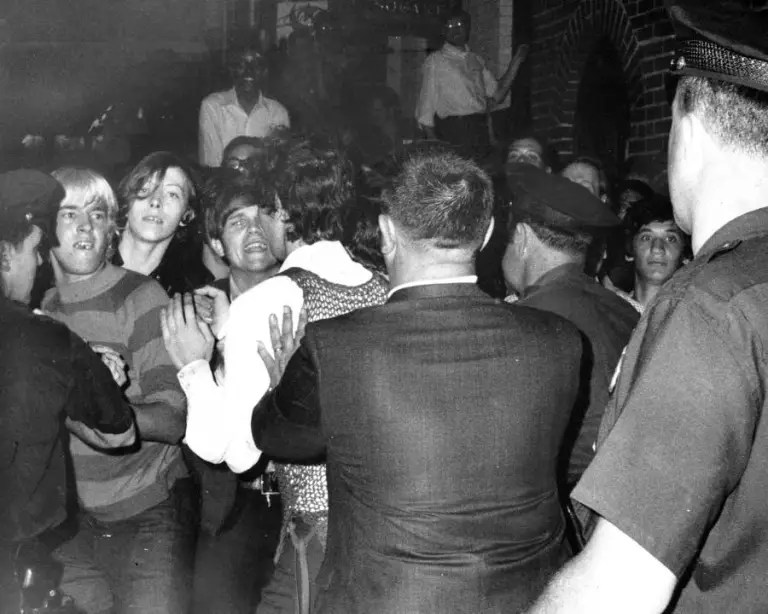
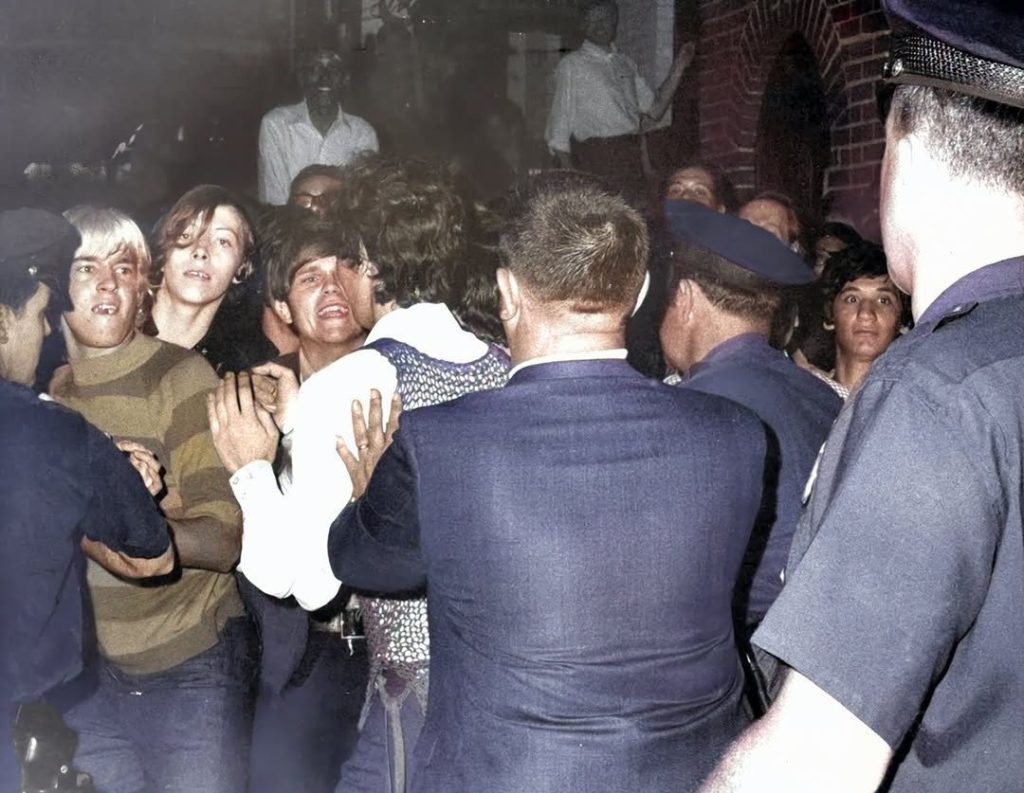
Within one week after the Stonewall riot, a few of us – gay men and lesbians – formed GLF. Exactly one month afterward, we held a protest march in Greenwich Village. According to undercover police, around 400 people attended. The enormous progress in LGBT rights since those days, including same sex marriage, came about as a result of actions by GLF and many successive organisations.
Now let’s look at the mythology:
It started almost immediately. A mocking article in the Village Voice suggested that riots could be attributed to gays mourning Judy Garland’s death. As though we had no other reason to be angry – not police cruelty, not harassment, not shaming or violence or the threat of violence, not the constant public abuse heaped on us by articles like that one. Yet that lie has persisted for years.
After the gay movement began to make progress, to even become fashionable, hundreds or even thousands of people stepped up to claim that they had been at Stonewall, had even thrown the first brick. (There were no loose bricks in the neighbourhood at the time.) As has been said, if all those claimants had been present, they would’ve filled Yankee Stadium. One lesbian feminist wrote in her published memoir that she and I were having a drink in the bar that night when the riot broke out. I can only think that her memory is playing tricks on her. The first time I set foot in the Stonewall was in 2015, during the push to declare it a national monument. I was surprised at how small the place was.
Eventually the gay movement became LGBT, and then LGBTQ+. Now it seems, however, that a subset of the trans movement has appropriated the history, along with various leftists who want to be seen as allies. About a year ago, Democracy Now! reported that the riots were led by “transwomen of colour.” This is so far from actual events that I wrote to them trying to correct the misinformation but never heard back.
The way the legend goes these days is that two transwomen, Sylvia Rivera and Marsha P Johnson, led the Stonewall rebellion. More than that, they organised the gay movement after the riots. New York City is now erecting a statue in their honour. This year I was asked to speak for GLF at the rally prior to the big Pride parade in New York this year. While waiting my turn, I heard a speaker intone Sylvia and Marsha’s names as though invoking deities. Each time the crowd roared.
Here’s what I know and remember about Rivera and Johnson: First, they called themselves transvestites, not transgender. Few people, if any, identified as transgender in those days. They identified themselves as male or female at different times. Then, as Johnson herself said afterwards, she didn’t arrive at the Stonewall that evening until 2.00 am, long after the rebellion had started. Rivera was uptown all evening and never participated in the riots. I remember, myself, that immediately afterward they were not leaders of or even participants in the movement for gay rights. Neither of them became involved in GLF until September 1970, when they took part in an action by our organisation and the Student Homophile League at New York University.
Once in GLF, Rivera and Johnson formed Street Transvestites Action Revolutionaries (STAR). Rivera kicked her heroin habit. They opened the STAR House for homeless street transvestites, people whom no one would hire and who had no way to make a living except as prostitutes. STAR helped the street transvestites work toward getting off drugs. If they were arrested, Rivera or Johnson would go to Riker’s Island to help bail them out and make sure they were safe. Later, during the last 10 years of her life, Rivera went to work at the Metropolitan Community Church and ran a homeless shelter and soup kitchen.
Sylvia Rivera and Marsha P Johnson deserve to be remembered for the years of courageous and compassionate work that they actually did. Elevating them to sainthood erases their humanity, and pretending that they were the leaders of the Stonewall rebellion and the gay liberation movement erases their real history and everyone else’s actions as well.
More importantly, elevating any activist to sainthood encourages people to worship a hero, to passively wait for someone larger than life to swoop down from the skies and rescue them. The work of the LGBT movement was done by thousands of people, before and after Stonewall. And each one of you, readers, has a gift to share, a contribution to make toward a better future for us all. Don’t sit home lighting candles to imaginary saints. Go out and do what needs to be done.”

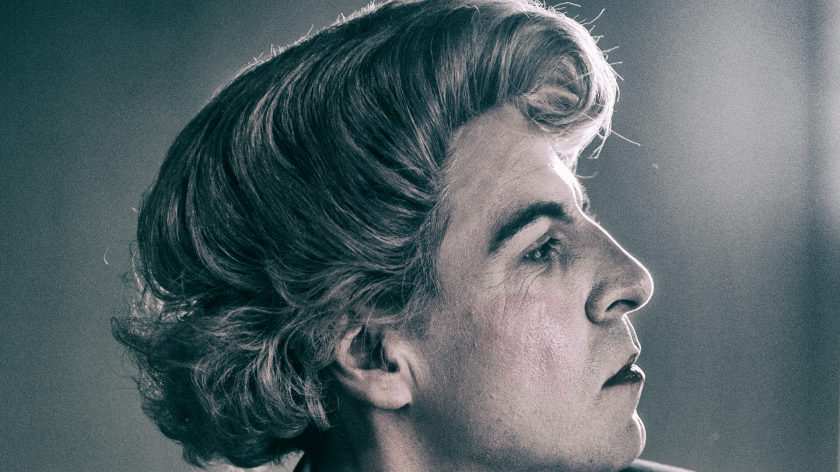
Quentin Crisp: Naked Hope
Written and performed by Mark Farrelly and directed by Linda Marlowe
Mark Farrelly brings his hugely-acclaimed solo play to Hope Mill for an up-close encounter with the original Englishman in New York.
From a conventional upbringing to global notoriety via The Naked Civil Servant, Quentin Crisp was one of the most memorable figures of the twentieth century. Openly gay as early as the 1930s, Quentin spent decades being beaten up on London’s streets for refusing to be anything less than himself. His courage, and the philosophy that evolved from those experiences, inspire to the present day.
Naked Hope depicts Quentin at two phases of his extraordinary life: alone in his Chelsea flat in the 1960s, certain that life has passed him by, and thirty years later, performing An Evening with Quentin Crisp in New York. Packed with witty gems on everything from cleaning (“Don’t bother – after the first four years the dust won’t get any worse”) to marriage (“Is there life after marriage? The answer is no”), Naked Hope is a glorious, uplifting celebration of the urgent necessity to be your true self.
Mark’s Triple Bill
For three night’s only, Mark Farrelly is bringing three different shows!
Where: Hope Mill Theatre, 113 Pollard Street, Ancoats, Manchester M4 7JA
Dates & Times:
Quentin: Monday 14 September – 7.30pm
Silence of Snow: Tuesday 15 September – 7.30pm
Jarman: Wednesday 16 September – 7.30pm
Prices:
Ticket to one show: £14.50 + £1.50 Fee
Tickets to two shows: £24 + £1.50 Fee
Tickets to three shows: £30 + £1.50 Fee
Book here.
The Forgotten Gender Nonconformists of the Old West
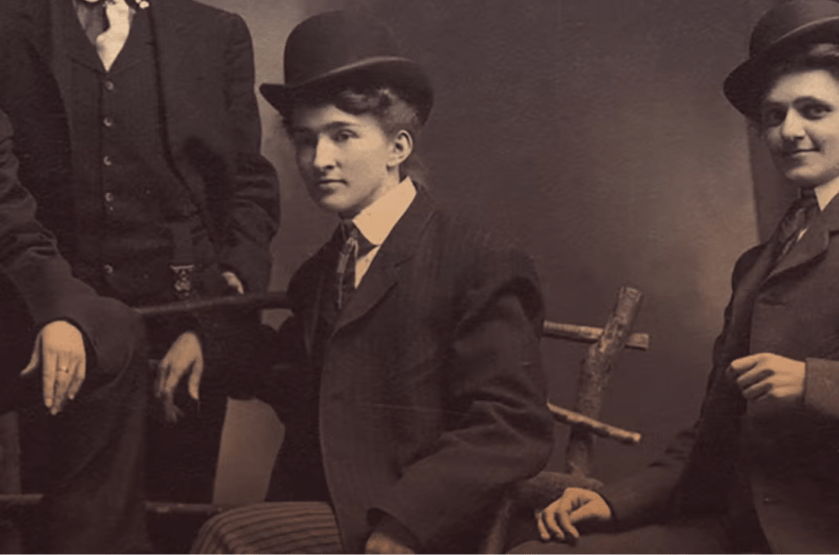
It’s difficult to think of a world with clearer gender roles than the Old West, or at least the Old West as we know it from movies, television shows and genre novels. But when historian Peter Boag studied the real nineteenth-century American West, a different narrative emerged. For one thing, hundreds of people lived as the opposite gender from the one they were assigned at birth – and that’s just counting the people whose stories were reported in newspapers.
In many cases, Boag writes, cross-dressing served practical purposes. It was a disguise for criminals on the run, a safety device for travelling women and a necessity for taking jobs reserved for the other gender. But, he argues, in many cases Old West “cross-dressers” were probably people who we would identify as transgender today.
Boag describes a Mrs Nash, who was born in Mexico and worked as a laundress in the Seventh Cavalry in 1868. Nash was married three times to enlisted men over the next decade and was highly respected for her cooking and her skills with delicate laundry. The rest of the post only learned of her “male” anatomy after she died of appendicitis and her body was prepared for burial.
Another of Boag’s subjects was Bert Martin, who was convicted of horse theft and spent months in prison before officials forced him into women’s clothing and moved him to the female side of the prison. Boag’s research revealed that Martin was most likely born with ambiguous genitalia.
Boag, who studied these stories for his book Re-dressing America’s Frontier Past, was interested not just in how these people lived, but in how the public understood them at the time, and why they were later forgotten.
In the late nineteenth century, American sexologists used the word “inversion” for all sorts of gender non-conformity, including same-sex desire and cross-gender dressing. The academic term spread to the broader public. Other popular terms like “queer” also denoted what we would see today as a range of sexual and gender identities. Newspaper accounts described one person we might now identify as a heterosexual trans man as a “man-woman” or a “what-is-it.” In another case, a paper asked whether the subject of a story might be “a woman with the soul of a man.”
While contemporary newspapers often sensationalised these cases, Boag writes, later writers simply ignored them, or downplayed aspects that had come to seem particularly deviant. Female-to-male cross-dressing became identified with spunky, heterosexual heroines like Calamity Jane. Male-to-female figures were simply dropped from the narrative.
The now-closed Western frontier became a mythical place of physically active, white, manly men. By the end of the nineteenth century, sexologists specifically identified inversion as a disorder of urban, industrialised society.
 Out in the City