
Alan Turing
| Born | Alan Mathison Turing 23 June 1912 Maida Vale, London |
| Died | 7 June 1954 (aged 41) Wilmslow, Cheshire |
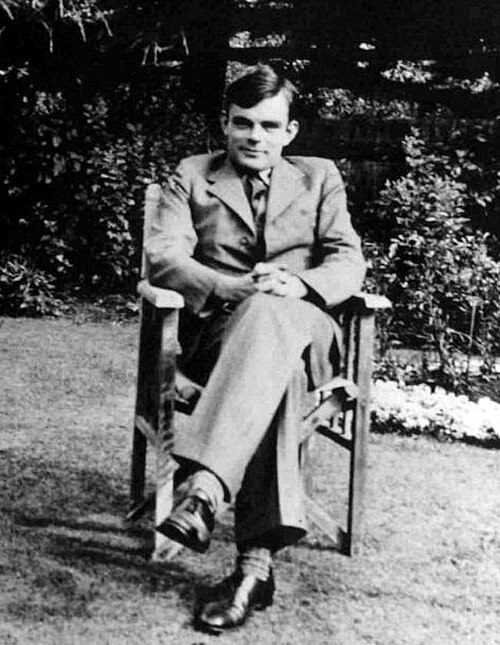
Turing left an extensive legacy in mathematics and computing which has become widely recognised with statues and many things named after him, including an annual award for computing innovation.
His portrait appears on the Bank of England £50 note, first released on 23 June 2021 to coincide with his birthday.
The audience vote in a 2019 BBC series named Turing the greatest scientist of the 20th century.

Gallup Poll’s recent data
Gallup has been asking people around the world, “Is the city or area where you live a good place or not a good place to live for gay or lesbian people?” since 2006, meaning they now have 20 years of data to look at.
Currently, 40% of people say their area is a good place, while 44% say it’s not. This is a significant improvement over the 23% who said that their area was a good place in 2006 and the 53% who said it was not.
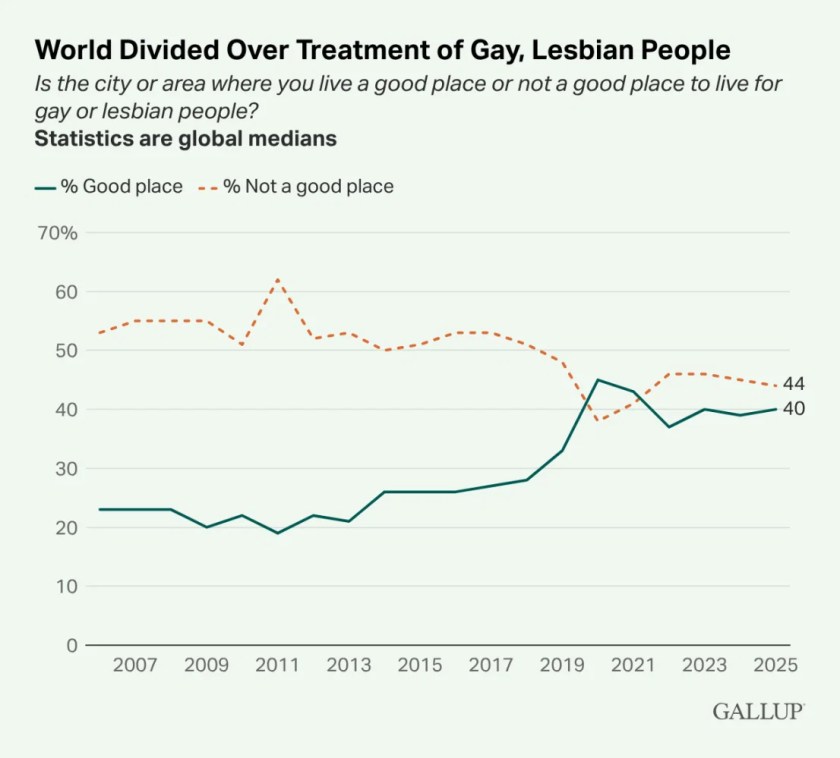
To be clear, this question isn’t an exact statistic measuring how many LGBT+ people are safe worldwide. First, mostly cishet people were surveyed because they’re just the vast majority of the population, and they are the people who are least likely to know what conditions LGBT+ people are living under. Second, the question focused just on “gay or lesbian people,” which excludes a large part of the community, although it’s unclear how aware straight people would be of that fact.
Last, it’s not clear what “a good place” even means in this context. Obviously, it doesn’t mean “gay and lesbian people are treated just as well or better than straight people” since that’s true nowhere in the world. So, at best, the question is asking if the discrimination and oppression gay people face in one’s locality is somewhat less than what gay people face elsewhere, based on the respondents’ imagination of what it’s like to be gay wherever they live.
More likely, though, respondents were just answering based on whether they personally are OK with having gay people in their area. So this poll can offer some insight into broad trends, but don’t take it too literally.
Gallup showed poll results separated by countries that have legalised marriage equality and those that haven’t. The countries that legalised it saw a significant increase in the percentage of people saying their locality is a “good place” from 2006 to 2015 (39% to 73%), while the remaining countries saw some growth in the period after that (16% to 26%).
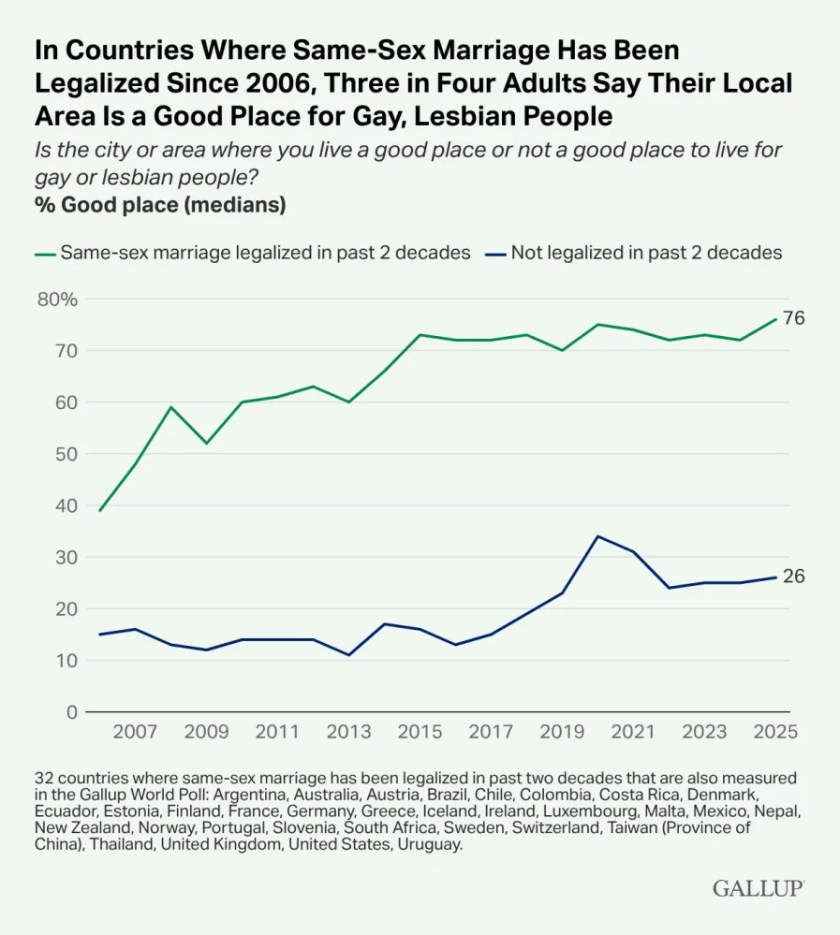
It’s also notable that Gallup is not legally allowed to ask this question in some countries. Several countries banned either homosexuality or “LGBTQ+ propaganda” in the 2020s or increased the penalties for it, which means that the stagnation is likely worse than what is seen here. Also, the 2020 results are likely skewed because COVID prevented Gallup from conducting in-person interviews and from surveying certain countries altogether.
Section 28 Petition Passes 10,000 Signatures
The petition could see the Government acknowledge the harms of the Thatcher-era law.
A petition calling for a public inquiry into the devastating impacts of Section 28 on LGBT+ people has passed 10,000 signatures, meaning the Government must respond to it.
Section 28 of the Local Government Act (1988) was a Thatcher-era law which banned the “promotion” of LGBT+ identities in schools and by local authorities for more than two decades. It was eventually repealed in 2000 in Scotland and 2003 in England and Wales. However, a hangover from this discriminatory legislation meant for many years after educators did not feel they could talk about LGBT+ identities in the classroom, denying countless young people vital information and continuing an environment of isolation.
The petition was published on the UK Government’s official petition platform on 24 March and will run for six months until 24 September. It achieved 10,000 signatures on 12 June and currently has more than 17,750 signatures.
When a petition on the platform achieves more than 10,000 signatures the Government must issue a response; if a petition receives more than 100,000 signatures by its end date then it will also be debated in Parliament.
The campaign has been supported by big names like Boy George and Russell Tovey.
You can sign the Petition here.
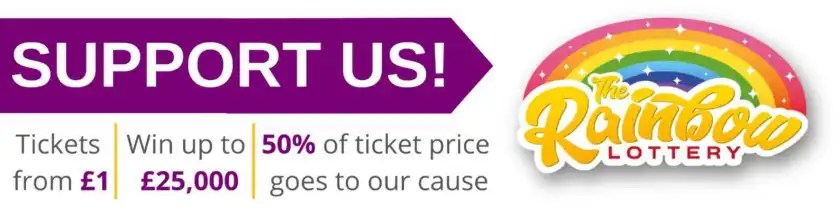
It’s Pride Season: Play the Rainbow Lottery and support Out In The City
The Rainbow Lottery is the UK’s first and only lottery supporting LGBT+ good causes.
Welcome to the Rainbow Lottery, the exciting weekly lottery that raises money for over 200 LGBT+ good causes totally, openly and exclusively.
The hope is to make a difference to good causes so they can carry on their vital work – which helps us all. Play the lottery, support the community – it’s fun, it’s simple and everybody wins!
How the lottery works:
- £1 per ticket – that’s right, unlike many other lotteries, the lottery tickets are only £1 per week.
- For every ticket you play, 80% goes to good causes and prizes.
£25,000 jackpot prize
- Match all 6 numbers and you win the JACKPOT! There are also prizes of £2000, £250, £25 and 3 free tickets for following week.

- Every month there is a Super Draw. June’s Super Draw is a £1,000 Last-Minute Getaway (or £1,000 cash alternative or plant 1,000 trees).
Buy tickets here.
Cats

A person who doesn’t want to be around people is an Introvert.
A person who likes to be around people is an Extrovert.
But I like to be around cats.
Does that make me a Purrvert?
 Out in the City
With all the damage Reform councils are already doing to LGBT+ freedoms and our presence in libraries etc it is imperative the government takes the Section 28 petition very seriously.
LikeLike