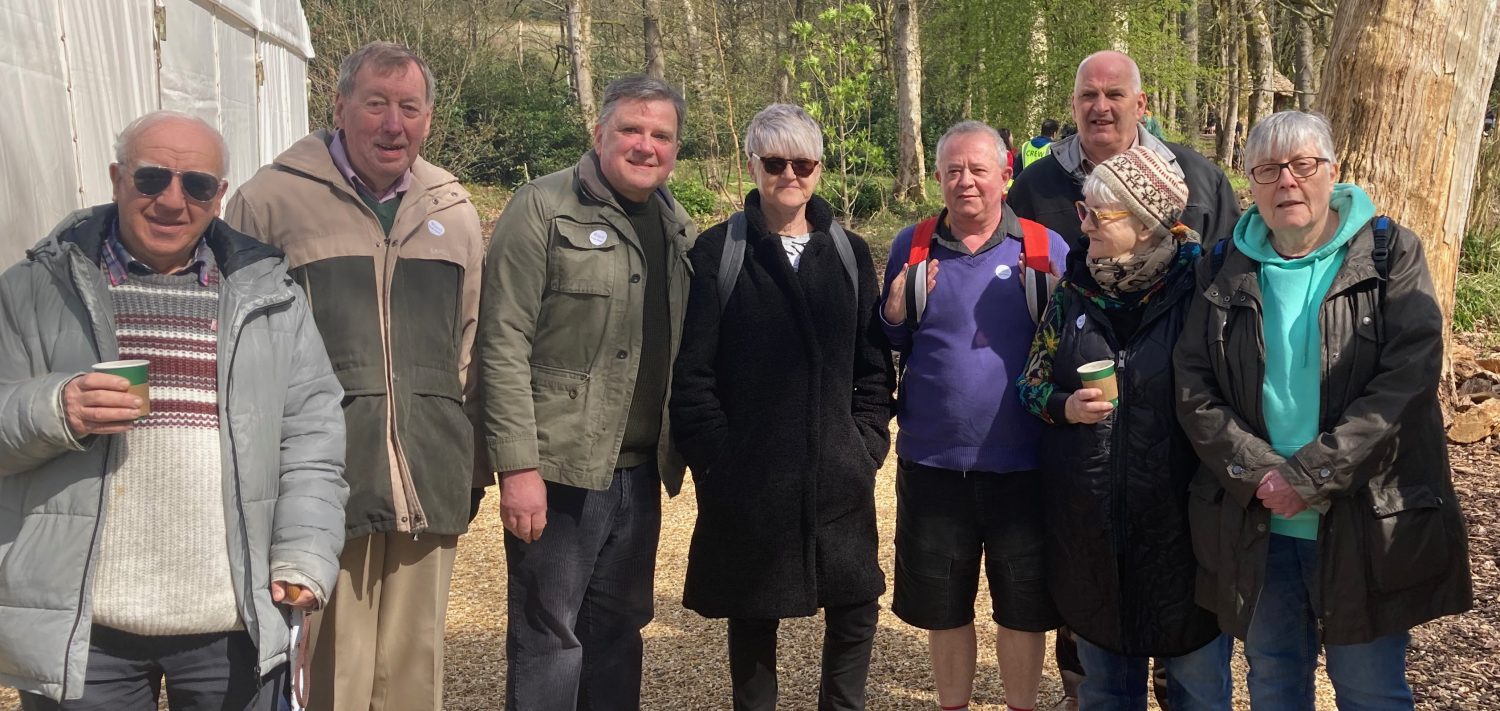
1853 Restaurant
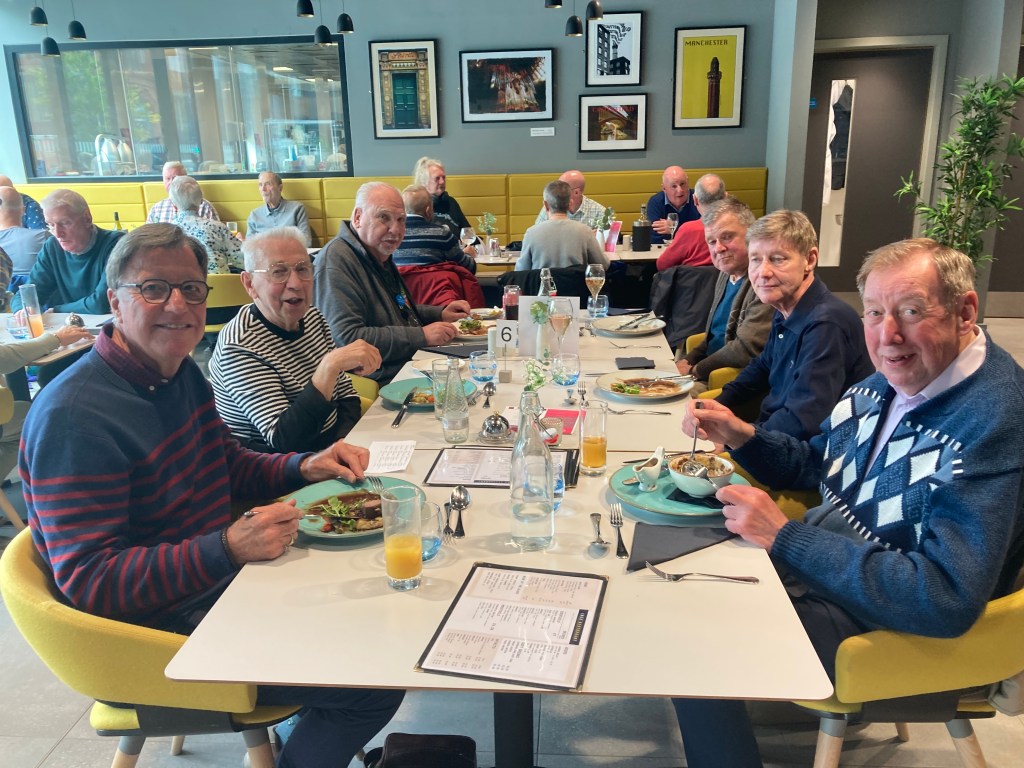
Thirty six of us enjoyed a lunch time meal at the 1853 Restaurant.
In a friendly and relaxed environment, the food is crafted and served by students from The Manchester College City Centre Campus. This is a hidden gem offering a delightful dining experience, where the quality of the food and service is exceptional.
More photos can be seen here.

Bigots hounded me out of Bolton as a young man. I won’t let it happen again.
Ahead of Tip Toe – a new Russell T Davies drama about rising homophobia – the author turned LGBTQ+ publisher Matt Cain explains why the fight against hatred never ends.
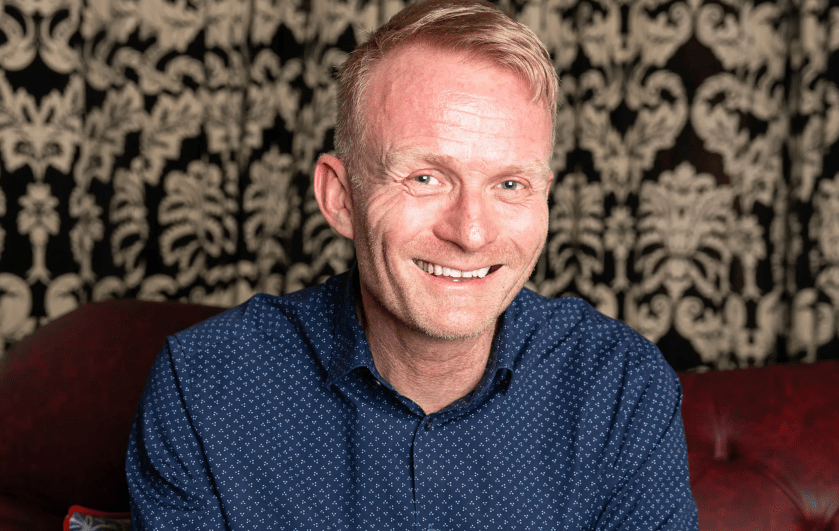
I couldn’t believe what I was reading: “They’ve been pushing this sick agenda for 100 years”, “More paedophiles in schools” and “Nobody is homophobic – we are homo-fatigued”. These are just some of the comments that appeared under a recent Bolton News article about me when it was posted on Facebook. The comments flung me back to a painful time in the past – and they threatened to disrupt my reconciliation with my hometown.
I’ve always had a fractious relationship with Bolton. Growing up in the 1980s as a sensitive and obviously gay child, I was the victim of savage homophobic bullying. At school, I was called “poof”, “queer” and “pansy”. Kids refused to sit next to me in case they caught AIDS, and I was punched in the face in the middle of a PE lesson. Outside school, I was spat at in the street and my effeminacy was mocked by the family milkman and by tradesmen working in our home. I fled Bolton to find my tribe among fellow creatives and outsiders, first in Manchester and then in London.
But I was drawn back to Bolton by family events, especially the births of nephews and nieces. As the children grew up, I saw the town through their eyes and realised there was a lot to love: the beautiful Lancashire moors, the warmth of the people and the strong sense of community.
When I started writing novels, I set them in Lancashire and Greater Manchester. I was influenced by the region’s tradition of storytelling with humour and heart, from the character-based comedy of Victoria Wood and Peter Kay to classic Coronation Street. I found it was the perfect setting for stories celebrating human connection. As my books featured gay characters and themes, when they became bestsellers it felt like acceptance.
In 2015, Bolton held its first ever Pride event and I went back to stand on the steps of the town hall – lit up in the colours of the Pride flag – and make an emotional speech about my reconciliation with my hometown. When I looked out at the crowd, I tried not to wonder if it included any of my school bullies. I tried to ignore the fact that the catalyst for the event was the 135% rise in reported hate crimes against LGBTQ+ people in the town. I told myself that, even if things weren’t perfect, they were moving in the right direction. “For the first time in my life,” I declared, “I’m not just proud to be gay but also proud to be from Bolton.”
But when an article about me, my latest novel and the LGBTQ+ publisher I’ve set up appeared in the Bolton News, its post on Facebook was greeted by insults that have jolted me back to the school playground. “Deviant perverts,” the Facebook comments read, “We don’t want queer stories” and “More paper for bonfire night”.
It’s a startling change. The Bolton News has always been supportive of my career, just last year running an article on the MBE I was awarded for services to LGBTQ+ culture – and that didn’t generate any online backlash. I can only assume it’s because I launched a queer publisher during a local election campaign, with Reform UK pledging to take down Pride flags and cancel initiatives aimed at diversity and inclusion. As one Facebook user commented: “He’s probably going to vote for the greens or labour.” The fact that Reform has made significant gains across the country – including in Bolton – I find truly chilling.
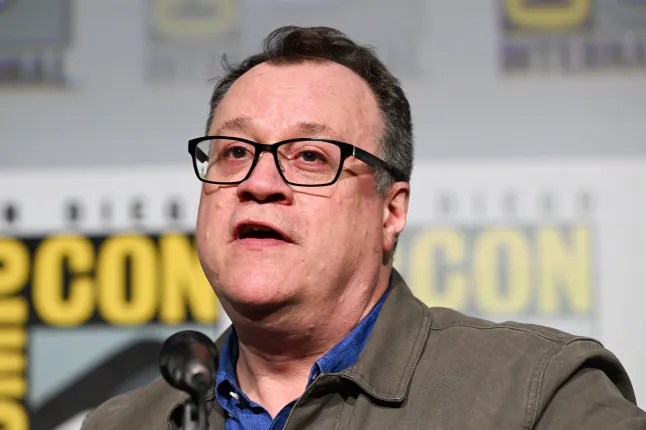
It does make me wonder if, more generally, homophobia is on the rise. This is the premise of Russell T Davies’s new drama Tip Toe, screening on Channel 4 and is about the feud between a gay bar-owner (played by Alan Cumming) and his neighbour (David Morrissey). Davies has described it as his “angriest and darkest” series yet. I certainly agree with him that, online, some media outlets (and I don’t include the Bolton News) deliberately post articles with clickbait headlines to stir up hatred and boost engagement, and although there are laws regarding hate speech on social media, there doesn’t seem to be any policing. But the threats are sometimes terrifying. Responding to a Facebook user who defended me, one person wrote: “You’d best never leave your home because we are everywhere.”
Although I was upset by this barrage of homophobia, I wasn’t entirely surprised. Throughout history, when the rights and visibility of minority groups have improved, there’s often been a backlash. There’s no giving up the fight: and that applies to any form of bigotry.
But at the age of 51, I’m exhausted by the battle. It’s lucky, then, that I have a new weapon in my LGBTQ+ publisher. And what did we choose to call it? Pansy, to reappropriate a homophobic slur. And, despite the local election results, when I launch Pansy with my next book, I’ll be doing it from Bolton.
Billy Joel’s “Piano Man”
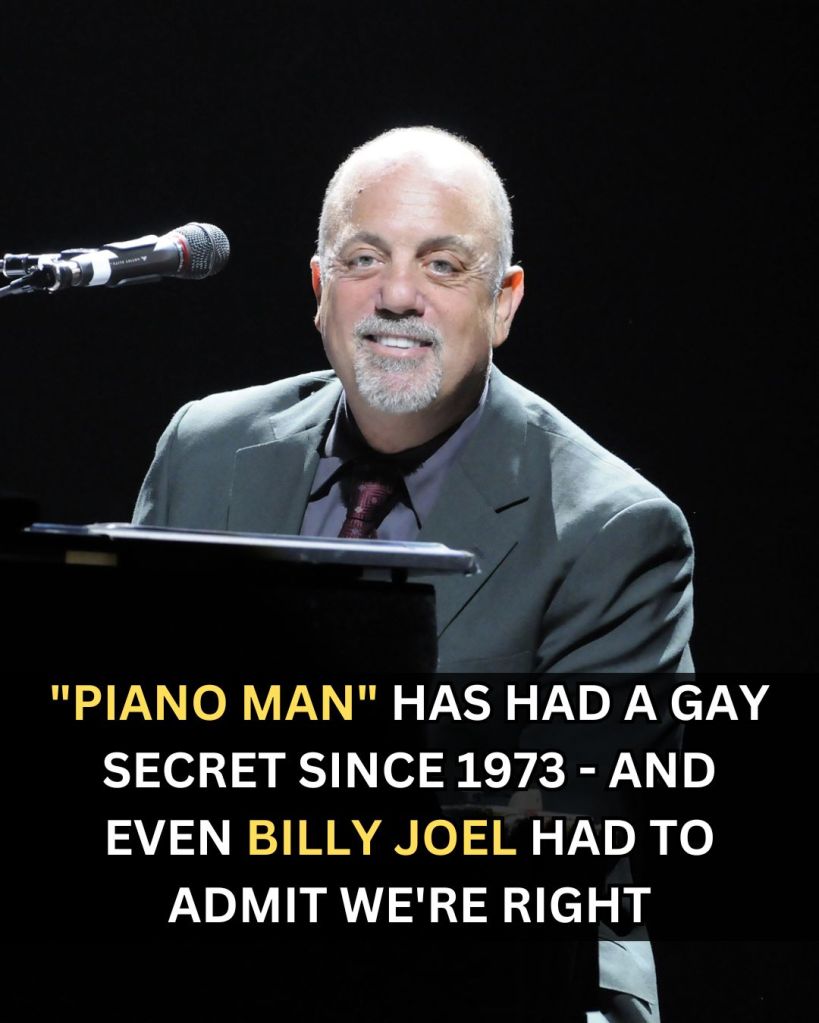
The biggest song in Billy Joel’s catalogue has been hiding a gay secret for 50 years – and even he had to admit it makes sense.
“Piano Man,” released in 1973, has long been a fan favourite among gay audiences who believe the song is set in a gay bar.
The theory goes that the narrator is a clueless straight man playing piano while the regulars around him – Paul who “never had time for a wife,” Davy who’s “probably in the Navy for life” – are closeted gay men finding refuge in the only place they felt safe. The line “Man, what are you doing here?” takes on a whole new meaning.
When Billy was asked about it directly in 2024, he didn’t dismiss it. “I see how that could be,” he said. “It’s a whole theory – it’s very funny, actually!” He even sang “In the Navy” at shows, clearly in on the joke by then.
Happy 77th Birthday, Billy Joel (born 9 May 1949)!
“I gave The Repair Shop a broken book – I got back a piece of history”
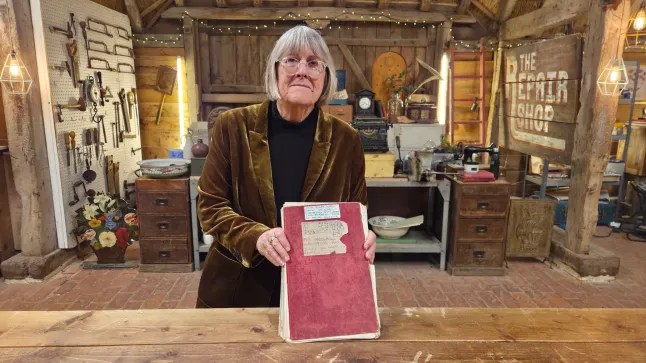
There are few episodes of The Repair Shop that could be more important than the one that aired last week.
Lisa Power is a prominent LGBT+ activist who, through volunteering at the first LGBT+ helpline, Gay Switchboard, has been at the centre of the most significant moments in queer history of the last 50 years.
Founded in 1974, Switchboard became an essential lifeline for LGBT+ people.
It was created when there were no legal protections for gay people and the world was actively fighting against them – they needed someone on the end of the line to tell them they are loved, they are wonderful, and most importantly, they are not alone.
There is next to no documentation of the LGBT+ experience before the 1980s, when the gay community was being obliterated by AIDS and demonised by politicians and the media.
Letters, books and documents were usually burned for discretion, making Switchboard’s early logbooks one of the only points of reference to provide an authentic understanding of what was really happening on the ground to LGBT+ people in the 1970s and beyond.
The books have become an essential part of modern queer culture. They were essential research materials for Russell T Davies when he created the blistering Channel 4 drama It’s A Sin, and have been used for several LGBT+ television shows and movies too.
Power brought the very first book to restorers Chris Shaw and Sonnaz Nooranvary to salvage what is one of the most important artefacts of modern British history, which has been neglected for decades.
‘It was in a terrible state,’ Lisa said. ‘It wasn’t even a book at all – it became a collection of papers with a couple of pieces of cardboard bracketing it.’
This is the first time the books have been given some TLC since they were discovered gathering dust in an attic, when one of Lisa’s colleagues found them and realised their importance.
‘”The first one, this one, was in an appalling state, and of course it’s the one everyone wants to read. Until now, they’d been preserved in plastic, but it had become so delicate it couldn’t easily be handled anymore.”
‘The Repair Shop was a godsend.’
Watching Chris work his magic on the book is remarkable – the pages, alive with the stories of volunteers, the beginnings of ideas that became reality, sewn back together and then attached with a new spine.
“Working on the Switchboard logbook was an amazing thing to be a part of. I grew up in the 1970s, so for me it was a real social comment and an insight into what was really happening at the time. It was fascinating that they had discovered them, and the comments that were in them were enlightening to the situation at the time,” he stated.
“It was also fascinating to see whose hands had touched them and amazing to be a part of restoring social history at such a crucial time. To highlight an artefact that shows real people’s lives at such an important point in history.”
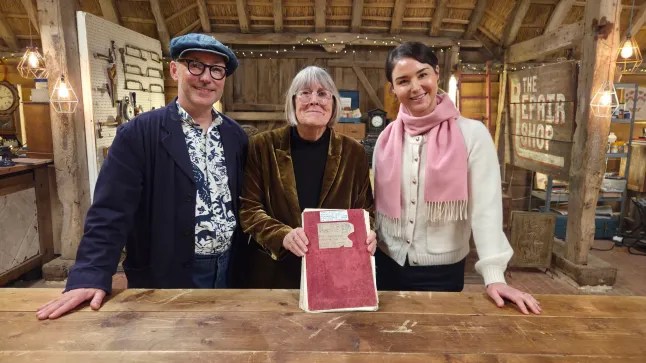
“I was gobsmacked,” Lisa says, recalling the moment she saw the book restored in all its glory for the first time. “I can’t believe what Chris has managed to do with it, it was so different – it’s a brand new book.”
“We overuse the word iconic, but this book is iconic. It’s in Bishopsgate archives now, so people can take a look at it. I’m also a trustee of Queer Britain museum, and I very much hope that at some point it will go on display there, but that’s up to Switchboard and Queer Britain.”
After all these years, Switchboard LGBT is still such an integral part of keeping the LGBT+ community safe and heard. In 2024, it answered more than 14,000 calls from people who needed its vital help – from people living in the closet to those discreetly getting sexual health advice they’re too scared to seek elsewhere.
It’s not lost on Lisa quite how special a moment it is that they’ll now be displayed in front of millions on The Repair Shop, because so rarely does LGBT+ history get such a significant spotlight.
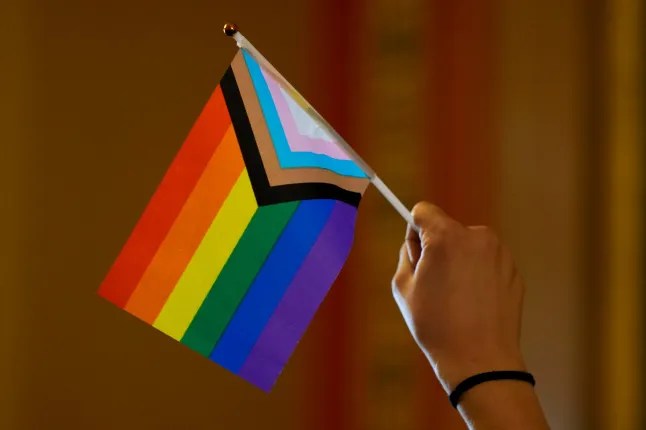
“We are starting to see a lot of people being emboldened to be unpleasant, particularly to trans people, but on a sliding scale to the rest of our community too,” she says.
“For us to keep having those really clear positive images of respect for our past and our current existence is really important.
I used to be the press officer for Switchboard, and we understood incredibly strongly that one mention on a soap opera or a family programme on TV was worth any amount of demonstrations or documentaries to show us as just part of everyday life with the same rights to exist and to celebrate as everybody else is. It’s as important now as it was then.
I’m just very grateful to The Repair Shop for celebrating our history, our existence and giving us back something that will be of immense use to researchers, but also just as an iconic object.
I’ve stood next to Oscar Wilde’s prison door and almost burst into tears, and this carries as much symbolic weight.
All of these items show that we exist, that we’ve been around and that we can fight for our rights and to be alongside everybody else.”
The Repair Shop is available to watch now on BBCiPlayer.
Section 28 Justice Coalition
Their petition for a public inquiry into the impact of Section 28 is continuing. They now have over 2,800 signatures but they desperately need your help to get more, and to reach the 10,000 threshold to get a response from the Government. The petition is a crucial part of their campaign to stop LGBT+ censorship and get justice for all those who lived through Section 28.
Sign the petition here.

 Out in the City