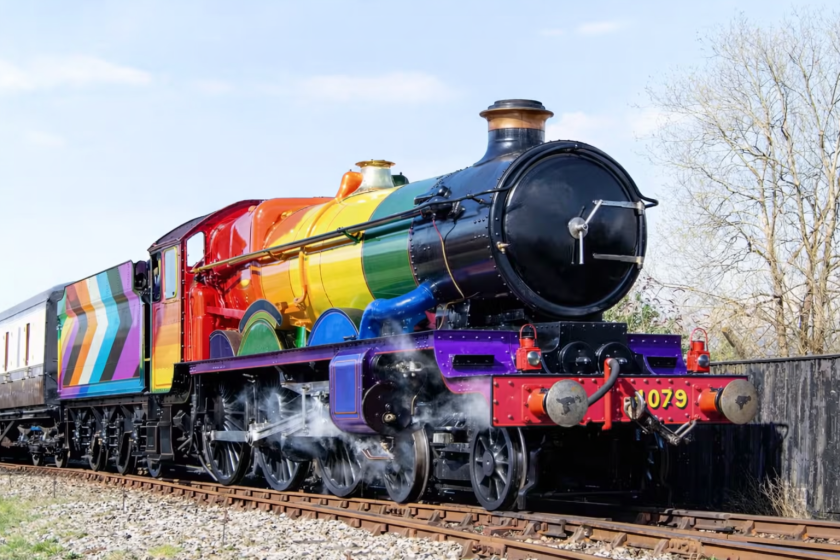
All Aboard The Rainbow Train!
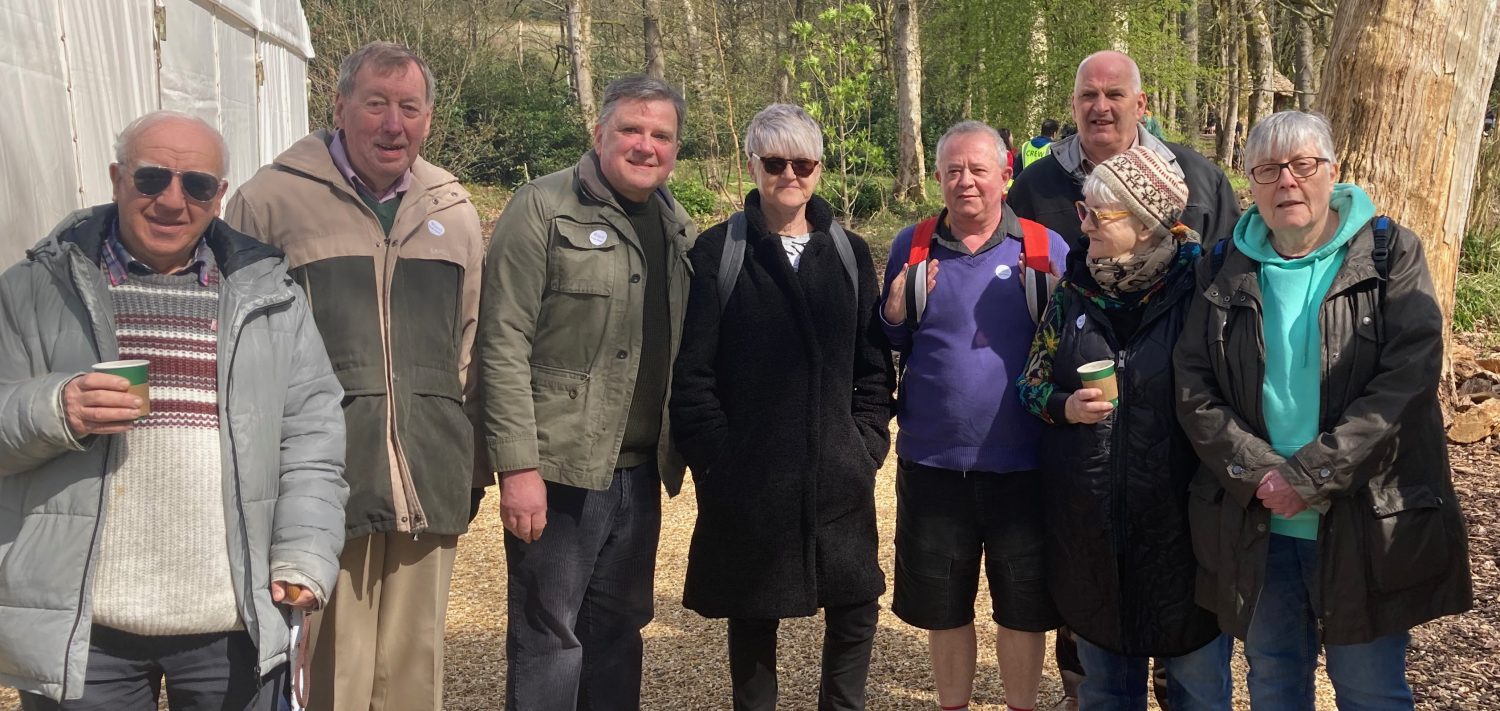
We joined the Bury LGBTQI+ Forum for the return of the Rainbow Train, bringing colour, pride and queer joy back to the tracks for another unforgettable journey.
Departing from Bolton Street Station, Bury, our vintage rainbow-themed steam train travelled to Rawtenstall and back again, delivering a two-hour celebration packed with LGBT+ performances, music and pure Pride energy.
This year, the House of Bridget Queens were joined by the brilliant Bury Fire Choir, performing a selection of Pride anthems on the platform at Bolton Street before departure.
At the Rawtenstall stop, we were treated to a live performance of disco classics.
Funds raised at the event will keep Bury Pride and the Bury LGBTQI+ Forum running each year.
Lots of great photos here.

Lesbian Visibility Week
Lesbian Visibility Week 2026 runs from Monday, 20 April to Sunday, 26 April, with Lesbian Visibility Day on 26 April. Founded by Linda Riley in 2020, this annual international movement celebrates lesbians, queer women and nonbinary individuals while advocating for increased representation, community safety and health.
The untold story of Manchester’s LGBT pioneers
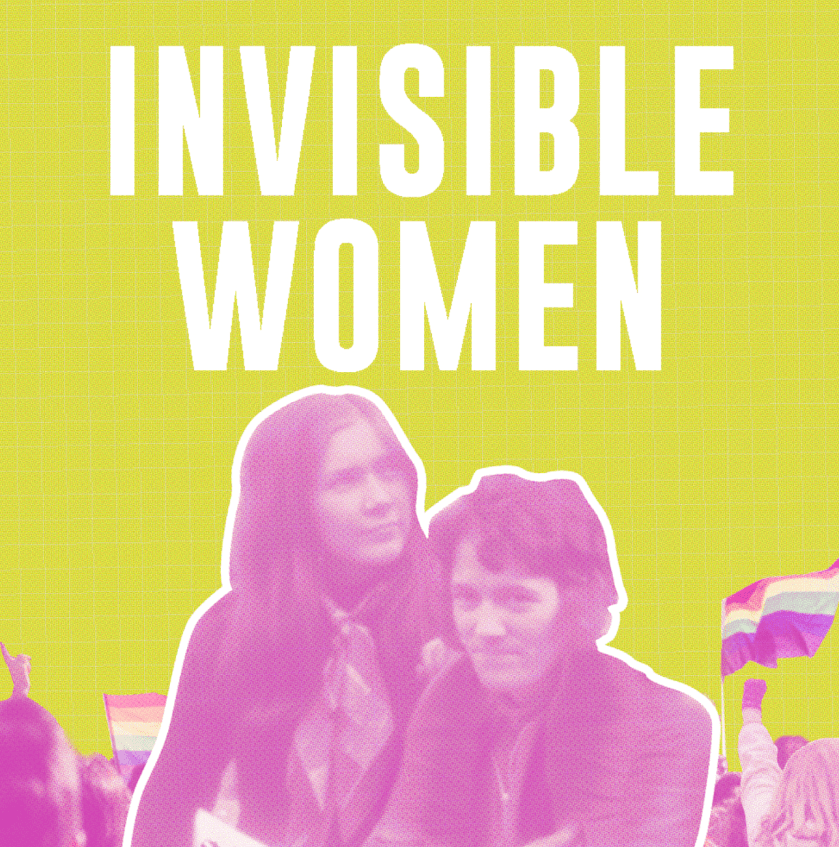
Together, Angela Cooper and Luchia Fitzgerald transformed the lives of thousands of women – yet no record of their activism existed.
“How could you sit on your arse your whole life and not get on the streets and fight?” declares Luchia Fitzgerald, speaking at the beginning of the documentary Invisible Women.
As the co-founder of the Manchester branch of the Gay Liberation Front (GLF), Luchia’s life and work serves as the subject of the aforementioned film, which explores the untold story of two LGBT+ revolutionaries. Together with her former partner Angela Cooper, the pair helped change the face of the city forever, transforming thousands of lives in the process.
After meeting in a pub in 1969, Angela and Luchia would go on to play a pivotal role in Manchester’s women’s liberation movement. They opened the city’s first women’s refuge, started a rock band, and launched a radical queer printing press. But in Manchester Central Library, there is no record of their activism on file.
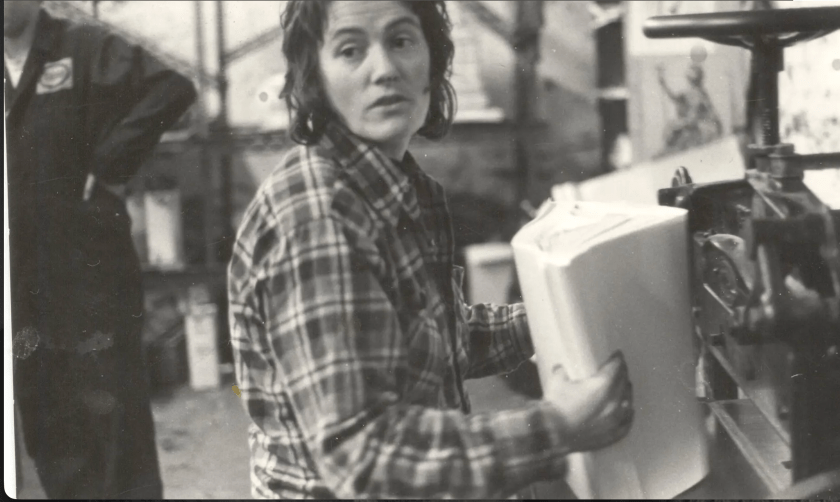
With Invisible Women, however, their story is finally being written into history. Speaking via email, the pair explain that they agreed to participate in the documentary “to create a true record for future generations, of ‘her-story.’”
In 2017 there was an outpouring of TV exploring LGBT+ lives, in response to the 50th anniversary of the partial decriminalisation of homosexuality in the UK. Yet these films focused mostly on white, middle class, London-based gay men. Producer Joe Ingham worked on the BBC’s Prejudice and Pride series, where he briefly met Angela and Luchia, but felt that these documentaries largely ignored women.
“The way broadcasters tried to spin these series was that it was all about the men, when in actual fact the GLF would never have happened if it were not for the involvement of women,” he explains. “They have done a hell of a lot of stuff, but it’s never been recorded.”
“Luchia is a fantastic storyteller. She’s just led this incredible life and I felt that her story needed to be told.”
As a teenager, Luchia ran away from Ireland after being rejected by her family. Upon arriving in Britain, she was arrested and sent for a lobotomy – a form of brain surgery that attempted to ‘cure’ homosexuals – but managed to escape to the streets of Manchester.
Shortly afterwards, she met Angela, a politically active student involved in Manchester’s underground gay community. This initial encounter sparked their romantic relationship, but more importantly, it ignited a political relationship too.
Back then, life was particularly difficult for the LGBT+ community. Queer bashings, blackmail, discrimination, homelessness, mental health issues – as well as the threat of aversion therapy, and lobotomies – made life particularly bleak. When the pair met, Angela was already a member of the women’s movement, but, together with Luchia, she decided to take those ideas of liberation into Manchester’s gay scene.
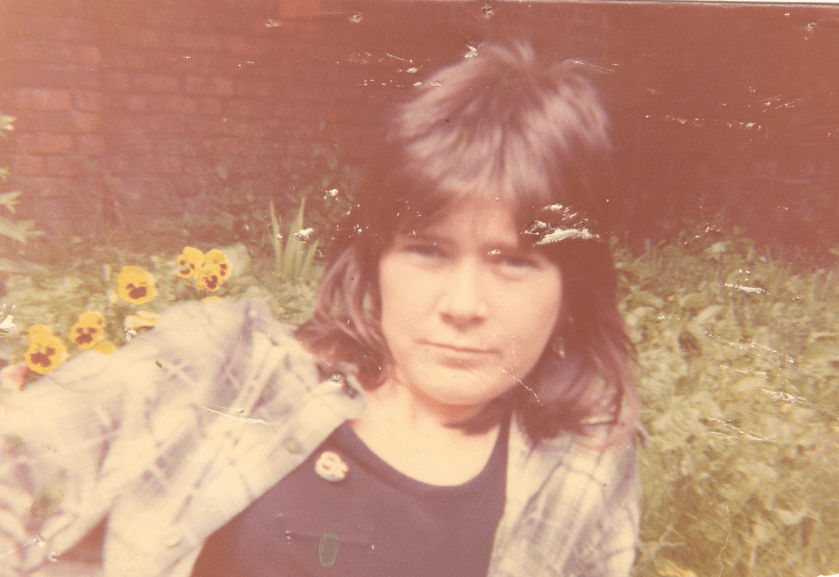
Responding to the hostility they faced in both general society and from within the LGBT+ community, (“which was a ghetto, and pretty unfriendly to lesbians in particular”) Angela and Luchia set up the Manchester branch of the GLF. “It was saying: ‘Fuck You. We’re here and we’re queer and we’re not going anywhere.’”
At the time, there was little support available for women – no Rape Crisis, no Women’s Line. In response, they set up a phone line for those in need of help, advertising the service with posters across Manchester. Several women responded seeking refuge, so the GLF decided to squat in an unoccupied house. “We had an advice line, did pregnancy testing, and then the police heard about us and started bringing women and children to us who had nowhere else to go.”
Thanks to the kind donation of a local solicitor, the GLF bought the house and turned it into a women’s refuge – only the second to be set up in the country at the time.
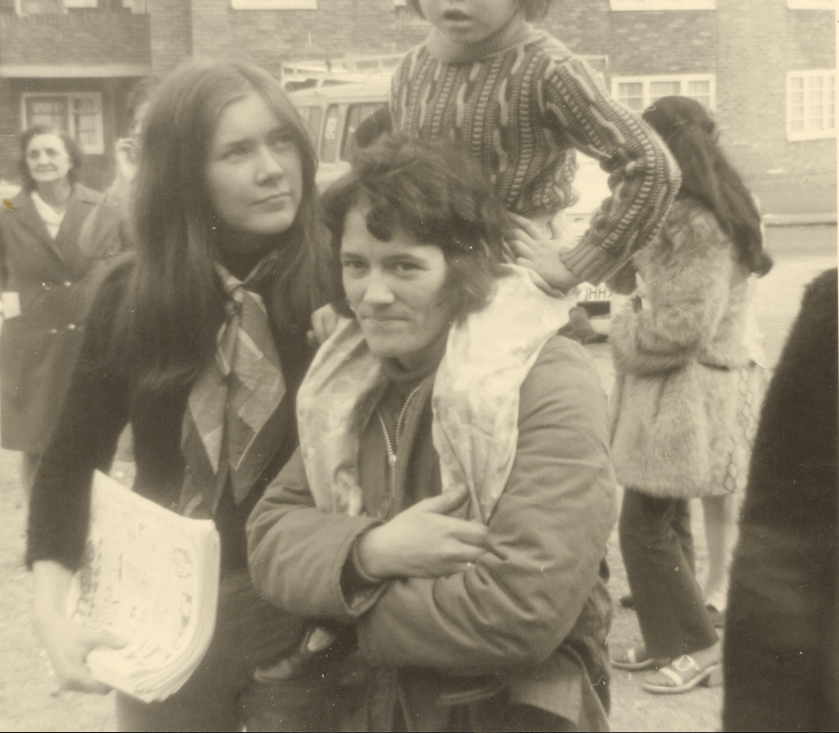
While they were working to improve the lives of LGBT+ women in the city, Angela and Luchia were both in their 20s, which meant – in their own words – lots of “sex, drugs, and rock and roll.” Joe initially came across Luchia after reading a blog about queer rock bands in the 70s. The band toured across the country, culminating in a now-infamous show in Glasgow. Luchia took off her top mid-performance, with the 1,700 crowd following suit. It was a defiant statement against their oppressors and, from what Angela and Luchia recall, an electric and inspiring performance.
On top of that, the duo also oversaw the GLF’s operation of a radical queer printing press. They printed pamphlets, leaflets, posters, independently publishing their own material and making their voices heard in the local community. “We wanted to be visible,” they say. “After hiding our sexuality all our lives it was great fun! We felt like outlaws, outside the system, with nothing to lose.”
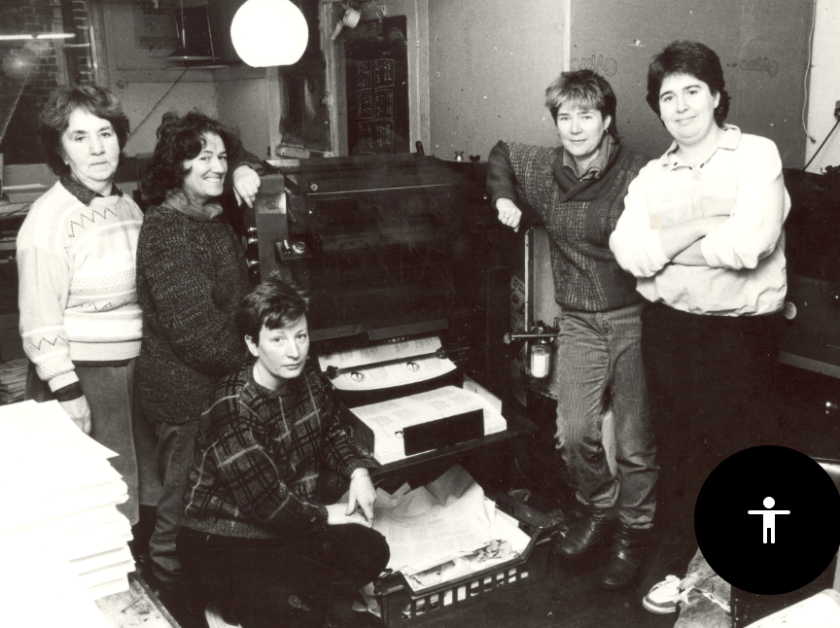
The couple were in a non-monogamous relationship and expressed their politics in ways that were radical for the time. The GLF first made headlines after painting ‘lesbians are everywhere’ across Manchester. They also organised ‘happenings’, where groups of women would go to straight pubs in groups. “The girls would then start kissing and cuddling to shock the drinkers – and then we ran like hell!”
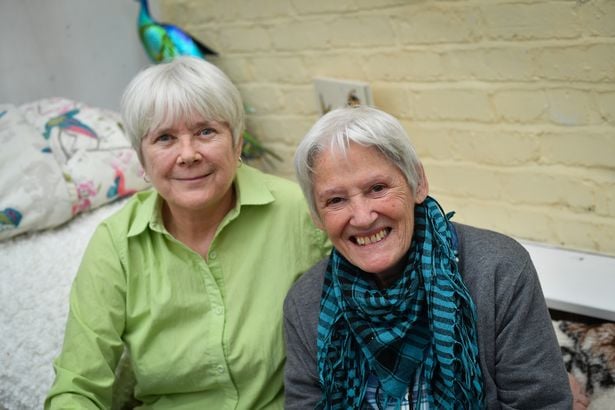
Eventually, the romantic relationship between Angela and Luchia fell apart. But, after the profound effect they’d had on one another’s lives, they were never out of contact. Luchia was the first lesbian that Angela had ever met which, she explains, allowed her to be herself “for the first time”. Luchia adds that, through meeting Angela, she found a new life. “I was introduced to ideas of liberation and fighting for your rights – and I never looked back.”
Today, they live around the corner from each other in Manchester and speak most days. “We are each other’s chosen family. Like most LGBT+ people, we had to find our own families.”
While researching for the project, director Alice Smith explains that it quickly became obvious that Angela and Luchia’s story wasn’t the only one out there. “We went round some houses at the beginning of the shoot and realised this could be a much larger social history,” says Smith. “There’s just a wealth of amazing stories out there from incredible women and they need to be told.” Inspired by working on Invisible Women, Angela has started an oral history project, which aims to record other invisible women and tell their ‘her-stories’.
Though Invisible Women primarily deals with Angela and Luchia’s activism in the ’70s and ’80s, it also highlights how they are both still fighting for women and LGBT+ people today. Both gave talks at screenings of the film about their past work, as well as “the need for activism now.”
And, by the end of the film, it’s clear that Luchia is just as politically motivated now as she’s ever been. “I believe with every bone in my body that if there’s something that needs doing let’s get it done,” she says, resolutely. “So I’m never done. No, the fight never stops. It really doesn’t. It never stops.”
False LGBT+ asylum claims
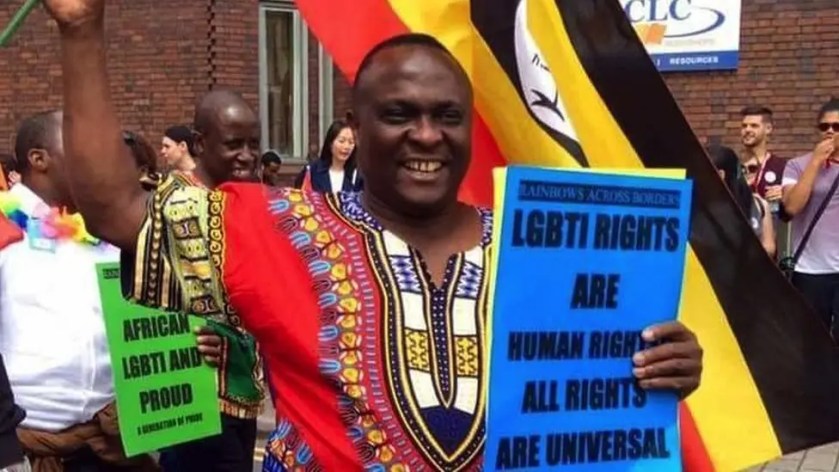
We are aware of the BBC’s investigation into individuals allegedly helping people fabricate LGBT+ asylum claims. Any advice to misuse the asylum system should be condemned, but such behaviour by a small number of bad-faith actors does not reflect the reality of LGBT+ people seeking asylum.
Almost 70 countries criminalise same-sex relations, some with the death penalty. The UK government itself recognises that in Pakistan consensual same-sex sexual activity between men is criminalised with penalties ranging from fines to life imprisonment.
LGBT+ people claiming asylum have fled life-threatening situations and are hoping to rebuild their lives in safety here. For many, claiming asylum can be their only way to escape persecution.
The asylum system is hostile and complex, and particularly difficult for LGBT+ people as they are required to “prove” their sexual orientation or gender identity to complete strangers. Many have spent much of their lives hiding or denying who they are to avoid violence. Government cuts to legal aid only exacerbates this issue.
The UK government’s most recent data release shows that only around 2% of all asylum claims included sexual orientation as a reason for needing protection and it is already the case that LGBT+ people must show a well-founded fear of persecution to qualify for refugee protection in the UK.
Sexuality Summer School 2026: On The Biological
The Sexuality Summer School (SSS) is a postgraduate summer school held annually in May at the University of Manchester. It explores current political and intellectual debates about how the ‘biological’ shapes current and historical understandings of sex, gender, sexuality and race.
During the same week the Summer School also hosts a series of public events including lectures, films and performances.
Public Events Programme:
Changes to the schedule may be unavoidable; please check the website for updates – https://sexualitysummerschool.wordpress.com/
Monday 25 May, 4.30pm – 6.00pm
Plenary Lecture: Professor C Riley Snorton: ‘An Ambiguous Heterotopia, Or Some Informal Remarks on “Biology” After Samuel Delany, Judith Butler and Sylvia Wynter’
Venue: Anthony Burgess Centre, M1 5BY
No booking required, all welcome.
Tuesday 26 May, 3.00pm – 4.30pm
Plenary Lecture: Professor Sarah Richardson: ‘A Sceptical Empiricist’s Guide to Sex Difference Science’
Venue: John Casken Lecture Theatre, Martin Harris Centre, M13 9PL
No booking required, all welcome.
Tuesday 26 May, 5.45pm – 8.30pm
Film Screenings programmed with Club Des Femmes and introduced by So Mayer:
Laws of Love / Gesetze de Liebe (Magnus Hirschfeld, 1927); Sanctus (Barbara Hammer, 1990)
Venue: HOME Cinema, M15 4FN
Tickets required (booking link coming soon).
Wednesday 27 May, 4.00pm – 5.30pm
Plenary Lecture: Professor Kane Race: ‘Hijacking Neuroscience: Psychoactive Performatives’
Venue: C1.18, Ellen Wilkinson Building, M15 6JA
No booking required, all welcome.
Wednesday 27 May, 7.00pm – 9.00pm
Performance Reading: All the Devils (written by Jonathan Larkin; produced by Jayne Compton, Switchflicker; funded by The National Lottery Community Fund)
Venue: Anthony Burgess Centre, M1 5BY
No booking required, all welcome.
Thursday 28 May, 5.00pm – 6.30pm
Public Plenary: ‘Experimenting with Hormones’: Professor Celia Roberts in conversation with Professor Jackie Stacey
Venue: John Rylands Library, M3 3EH
No booking required, all welcome.
Thursday 28 May, 8.00pm
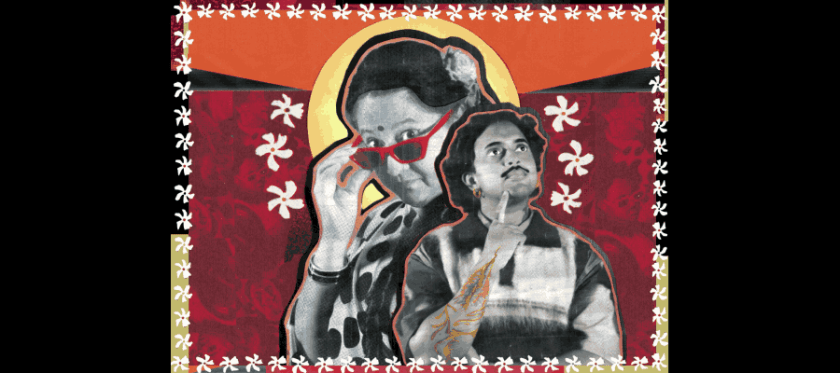
Performance: Second Trimester by Krishna Istha
Venue: Aldridge Studio, The Lowry, M50 3AZ
Tickets required. Click here to book.
For any queries, please email sexualitysummerschool@gmail.com
Don’t forget:
 Out in the City
Good to see that the Rainbow Train was well attended and a great day out
LikeLike