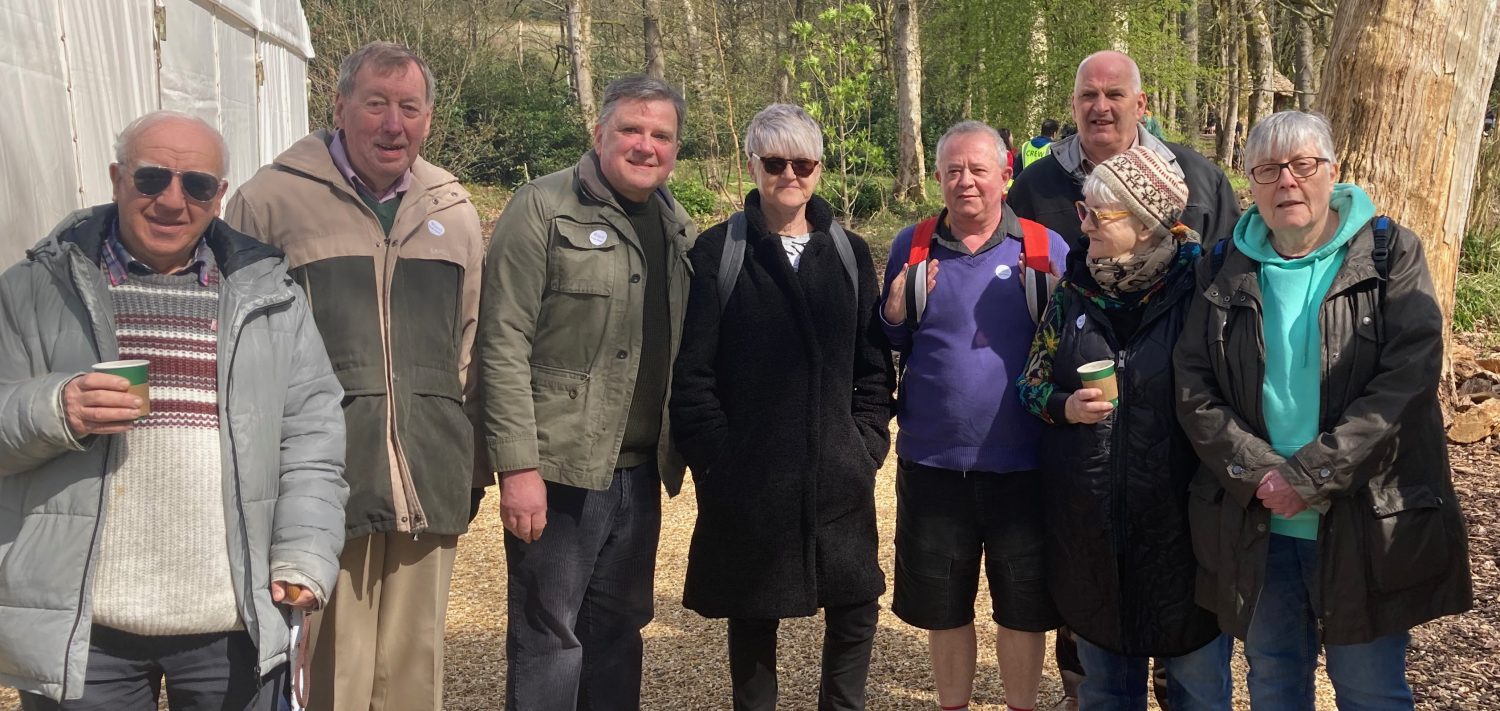
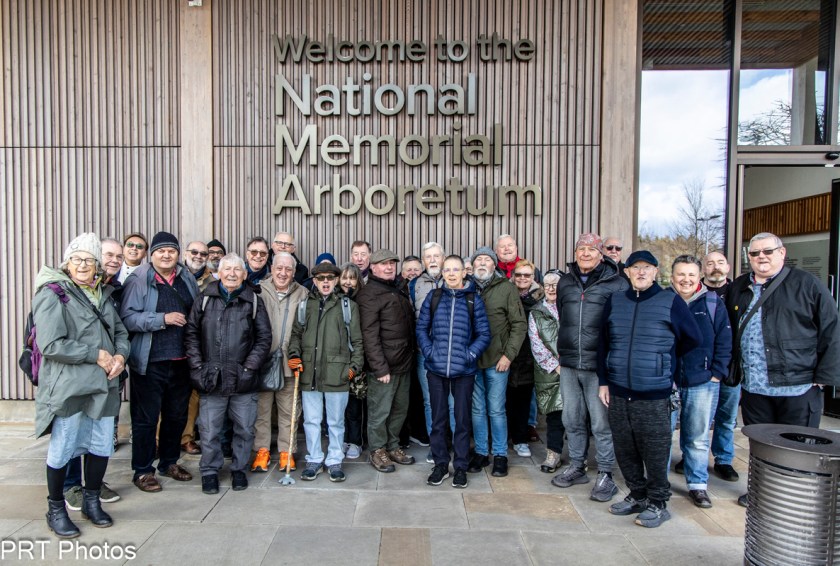
The National Memorial Arboretum
The National Memorial Arboretum is a British site of national remembrance at Alrewas, near Lichfield, Staffordshire.
The National Memorial Arboretum is a space where everyone can celebrate lives lived and remember lives lost.
A beautiful and inspiring place, the 150-acres of the Arboretum form a living landscape, a home for more than 400 memorials waiting to be discovered.
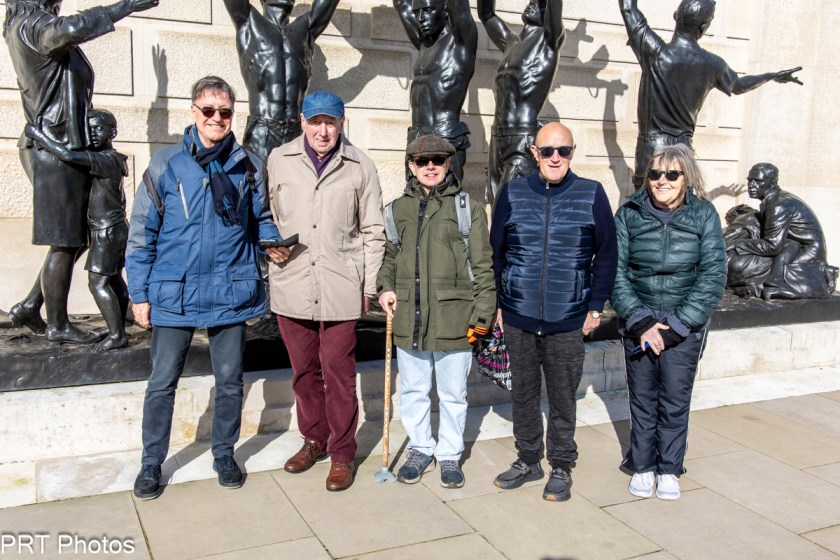
Tales of bravery shown in the most extraordinary of times, selfless service and sacrifice, camaraderie and care are represented by the memorials. From the Armed Forces and Emergency Services to civilian organisations that supported our Nation in times of need, people from all walks of life are represented by the memorials, with designs that are rich in symbolism reflecting those they remember.
No More Shame
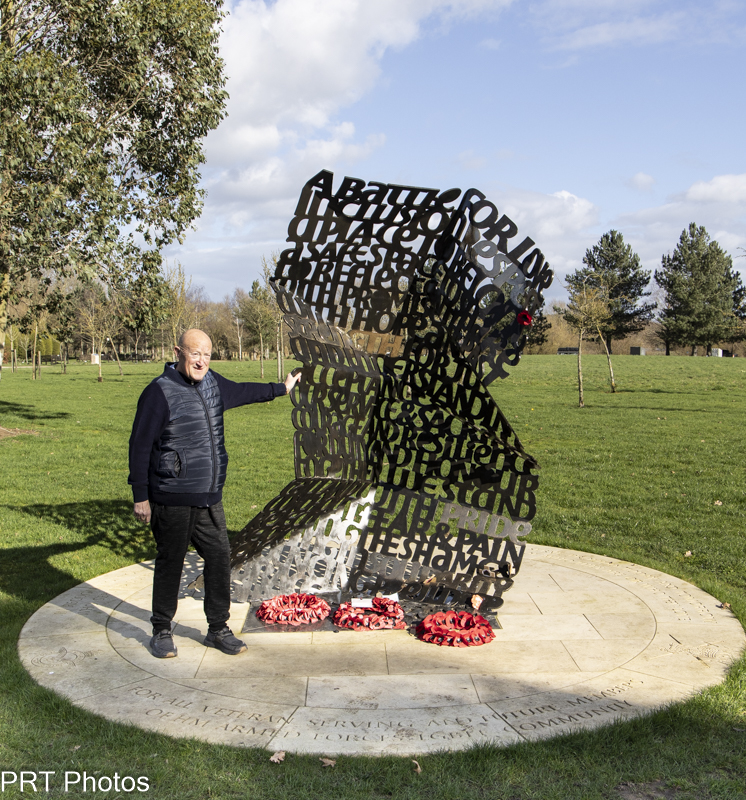
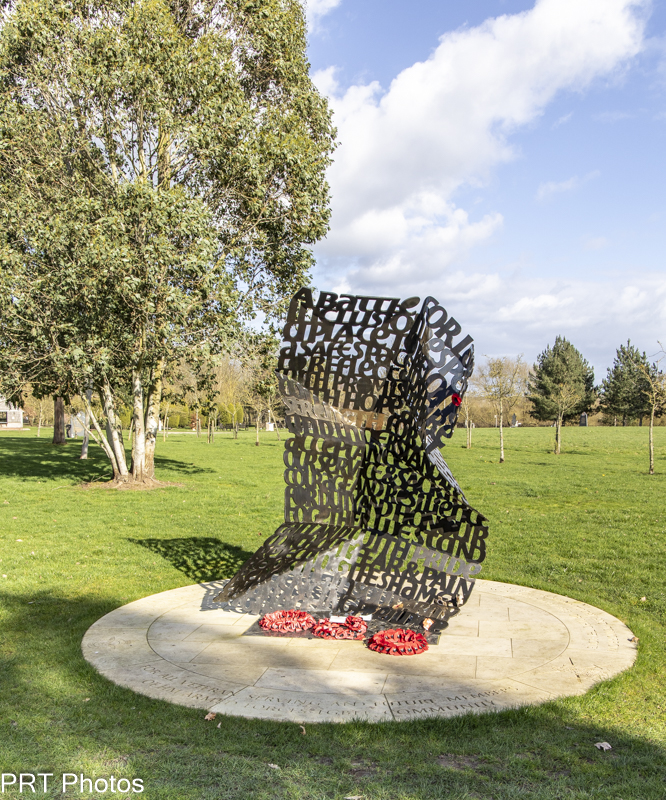
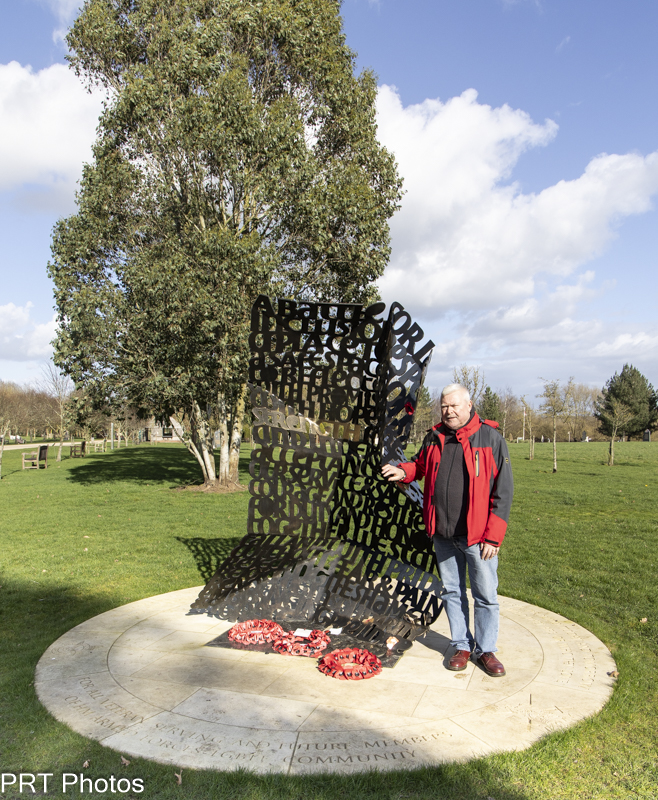
One of the Memorials is a sculpture, named An Opened Letter, which was unveiled by King Charles III to commemorate LGBT+ veterans affected by the ban of same-sex couples in the armed forces until 2000. It was his first official engagement in support of the LGBT+ community.
The sculpture resembles a crumpled piece of paper containing words from personal letters which were used as evidence to incriminate people.
During the time of the ban, those who were gay – or were perceived to be – faced intrusive investigations, dismissal and in some cases imprisonment.
More photos can be seen here.

Chaps Out Culture
In this episode of Chaps Out Culture, host Grant Philpott is joined again by guest Norman Goodman who recommends Bi Community News, a quarterly magazine dedicated to bisexual people across the UK and beyond.

Norman describes the publication as essential reading for anyone who is bisexual, especially those who are just coming out. With community listings, advice, personal stories, legal guidance, health awareness, adoption information, and features on bisexual lives, Bi Community News plays a vital role in increasing bisexual visibility and representation in a world where bi voices are often overlooked.
The episode explores why bisexual representation matters, how media can help people feel seen and understood, and why having dedicated bi spaces is so important for mental health, connection, and confidence. Norman also shares his wider LGBTQ+ cultural highlights, including film recommendations and reflections on the power of storytelling to change lives.
If you’re passionate about queer culture, LGBTQ+ history, meaningful conversations, or uncovering hidden cultural treasures, this episode is made for you.
Publishing Queer Berlin
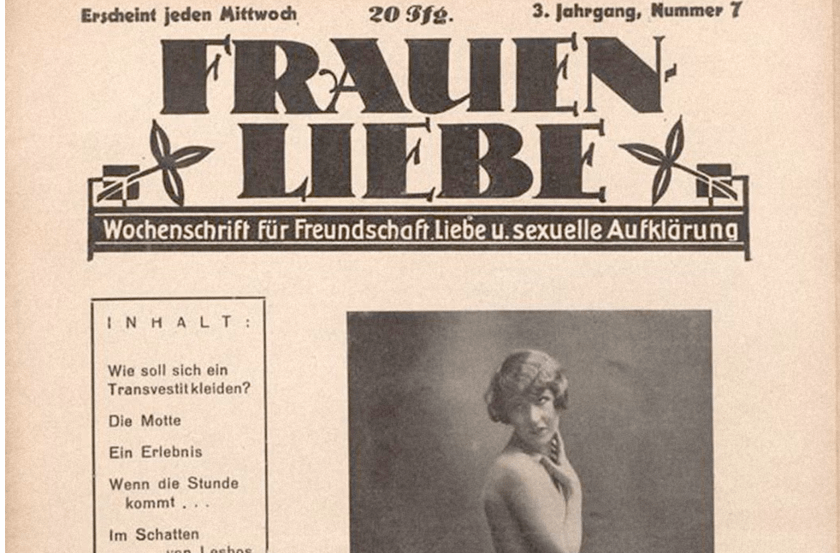
Berlin in the 1920s was ablaze with sexual and gender freedom. Magazines at newsstands boasted covers featuring people who were transgender and clad scantily. Their headlines touted stories on “Homosexual Women and the Upcoming Legislative Elections,” and offered, on occasion, homoerotic fiction inside its pages.
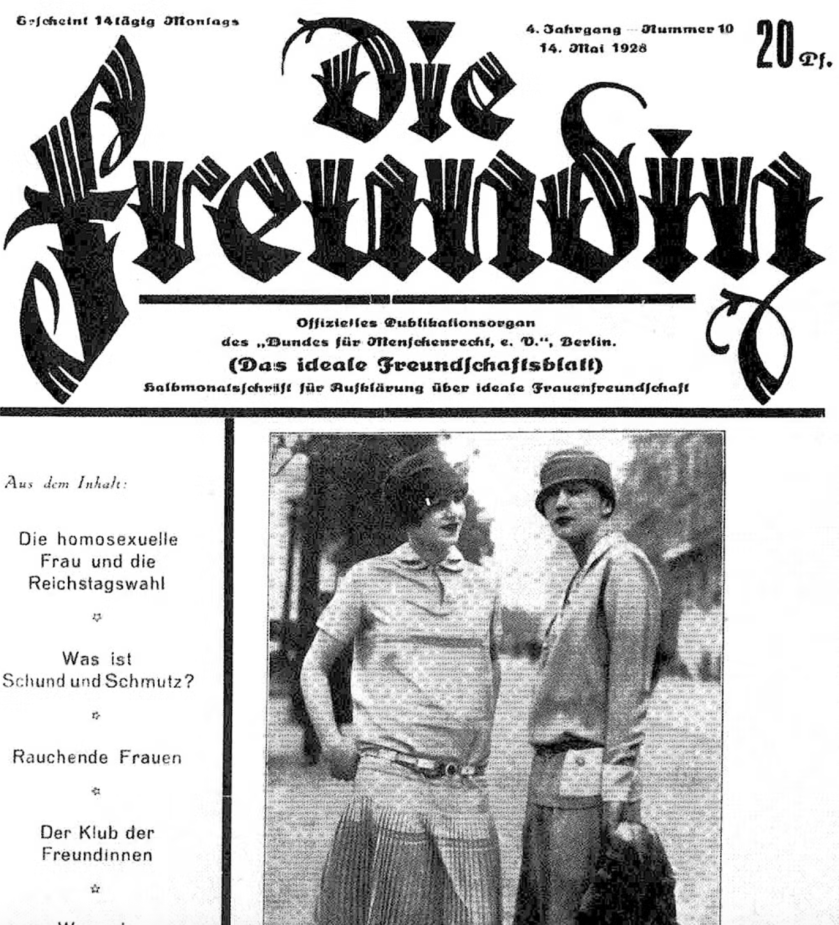
Publications like Die Freundin (The Girlfriend); Frauenliebe (Women Love, which later became Garçonne); and Das 3. Geschlecht (The Third Sex, which included writers who might identify as transgender today), found dedicated audiences who read their takes on culture and nightlife as well as the social and political issues of the day. The relaxed censorship rules under the Weimar Republic enabled gay women writers to establish themselves professionally while also giving them an opportunity to legitimise an identity that only a few years later would be under threat.
“Reading stories about other queer women was such a powerful way that women came to terms with their own queerness,” Laurie Marhoefer, a professor of history at the University of Washington, said. “That was super important for women more than for men because men would just have more opportunities to find other queer people.” Marhoefer, who first learned of these publications as a graduate student in Berlin in the 2000s, is part of a growing group of academics focusing on this oft-forgotten moment in German history.
The primary source documents that miraculously survived the period of the Third Reich and subsequent and repressive Cold War years provide a rich and complicated picture.
There were some twenty-five to thirty queer publications in Berlin between 1919 and 1933, most of which published around eight pages of articles on a bi-weekly basis. Of these, at least six were specifically oriented toward lesbians. What made them unique is the space they made for queer women, who had traditionally been marginalised on account of both gender and sexuality, to grapple with their role in a rapidly changing society.
In these interwar years in Germany, queer and transgender identity became more accepted, in large part thanks to the work of Magnus Hirschfeld, a Jewish doctor whose Institut für Sexualwissenschaft focused on issues of gender, sex, and sexuality. At the same time, women in Germany were making strides toward greater independence and equity; they gained the right to vote in 1918, and feminist organisations like Bund Deutscher Frauenvereine cultivated space for women in public spheres, encouraging their advancement in politics. The German Communist Party created the Red Women and Girls’ League in 1925 to attract more women and working-class people, particularly through organising factory workers.
More generally, German women were becoming increasingly empowered. LGBT people – including women – rallied around the abolishment of contemporary sodomy laws. This struggle created a wider climate of publication, activism, and social organisation that was much more embracing of different types of queer and trans lives.
Magazine fiction of the time challenged some of the restrictions of class and race in its love stories. A 1932 issue of Die Freundin, for instance, includes a story about a relationship between the German Töpsdrill and the Moroccan Benorina. Exoticising of the “other” was common; In another piece of fiction published in Ledige Frauen (Single Women) in 1928 about Helga, a German coffee importer, who falls for Nuela, a servant from Java. Notwithstanding the white, sometimes racist perspectives of the narrators, such stories offered compelling renderings of women-centred utopias.
Outside of fantasy, these publications also created a space for readers to assert themselves in the real world through personal ads and event listings. These included cream puff eating contests, ladies and trans balls, and lake excursions on paddle steamers. In fact, aspects of lesbian culture also seeped into the mainstream, particularly when it came to fashion, with a rise in the popularity of short haircuts, straight skirts, and pantsuits. There was little difference between the imagery in mainstream fashion magazines and the masculinised aesthetic eroticised in the queer ones. The hint of queerness in the mainstream was sexy and fascinating, but also a bit scary and potentially off putting. A popular element in lesbian publications, the monocle was similarly charged, and a queerly coded, quite masculine symbol of owning the gaze.
Such sartorial choices were in keeping with debates in the lesbian magazines of the time around the extent that masculinity might be seen as hierarchically superior to that of the feminine lesbian women. Moreover, these debates foreshadowed the butch/femme debates of the 1980s and 1990s.
Style was particularly significant for trans women and men who in the Weimar Republic defined themselves with a variety of terms: both as transvestites and masculine women who wore men’s clothes but identified as women. Trans people were given space in both their own magazines and even in some of the lesbian ones, highlighting a sense of cross-identity camaraderie. Die Freundin had a regular trans supplement highlighting these voices.
In a 1929 issue, a writer named Elly R criticised the treatment of trans people in mainstream media, referencing sensational coverage of men wearing their wives’ wedding dresses. “Everywhere in nature we find transitional forms, in the physical and chemical bodies, in the plants and the animals,” she wrote. “Everywhere one form passes into another, and everywhere there is a connection. Nowhere in nature is there a delimited, fixed type. Is it only in man that this transition should be missing? As there is no fixed form in nature, a strict separation between the sexes is also impossible.”
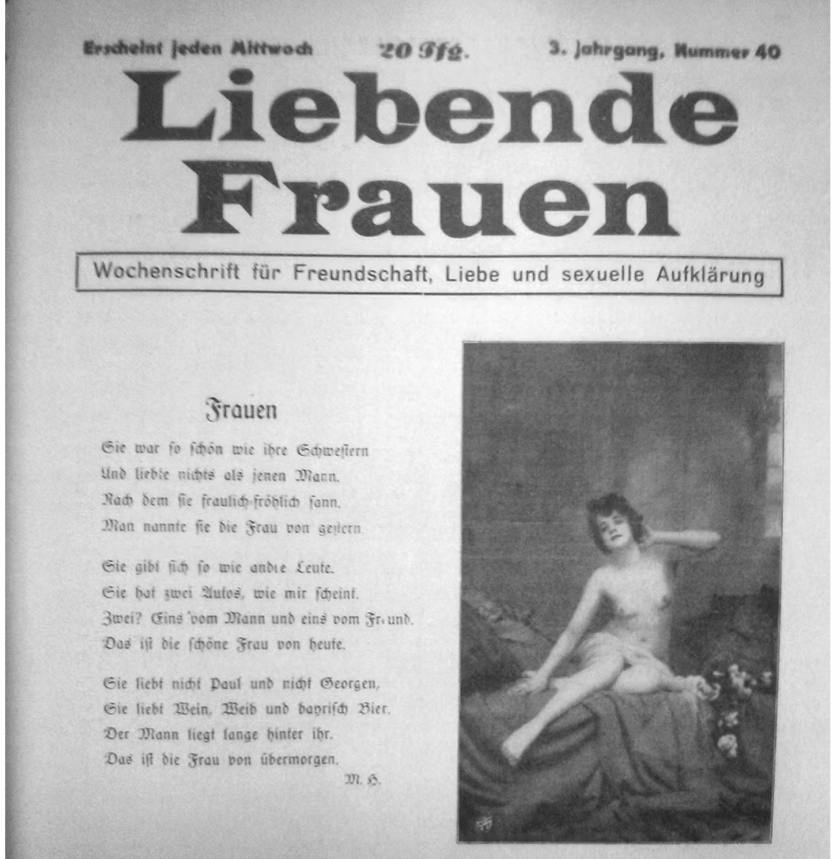
These magazines were resilient, a testament to the strength of the communities they served. Still, they faced challenges. The 1926 Harmful Publications Act was intended to impose moral censorship on the widespread pulp literature sold at kiosks and newsstands, including the queer publications, which often featured nude photographs.
The Catholic and Protestant Churches as well as public morality organisations and conservative politicians led the fight against what they called “trash and filth literature.”
Despite their relative progressivism, these publications also represented a rather narrow, bourgeois segment of the German population. Even if women had greater access to education and publishing opportunities, the women who enjoyed this greater access were largely urban elites. The plight of sex workers was largely excluded from consideration.
These magazines gave precious little foresight into what was to come in Germany: the attempted extermination of all who did not fit the Aryan ideal. That, of course, included lesbians.
As feminist and queer activism grew in Germany in the 1970s, so too did interest in the Weimar period. In 1973, Homosexual Action West Berlin began to collect flyers, posters, and press releases in an effort to create a comprehensive archive of lesbian history. The group eventually morphed into Spinnboden, Europe’s largest and oldest lesbian archive, with more than 50 thousand items in its holdings, magazines among them.
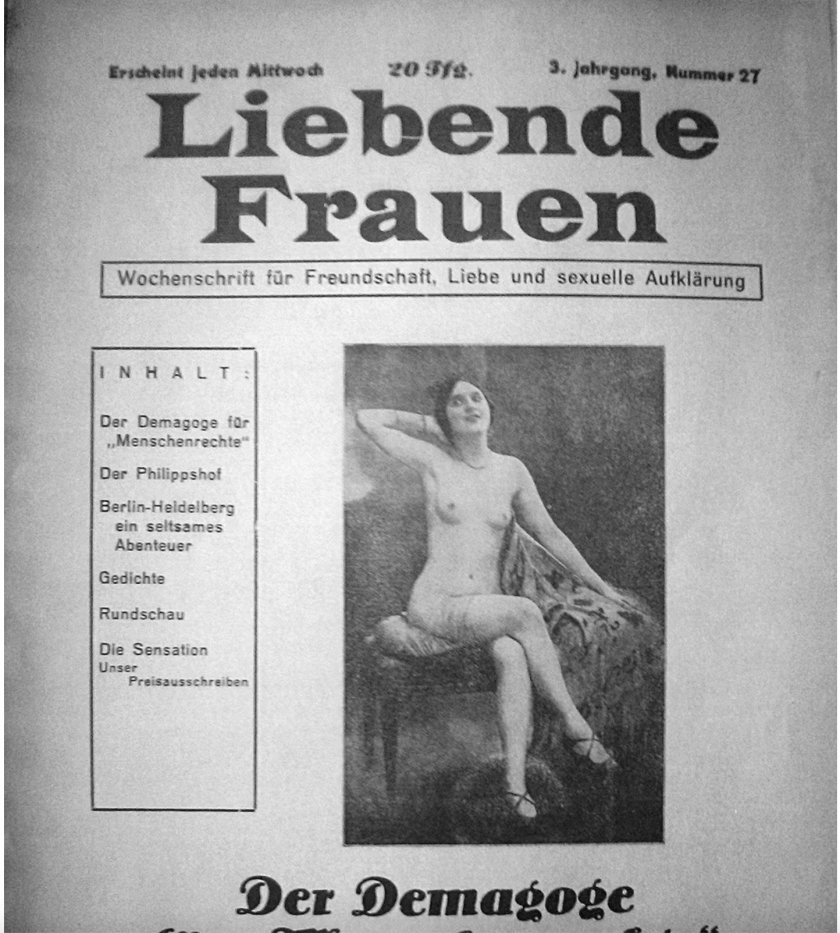
Katja Koblitz, who runs the archive, says the existence of these lesbian periodicals is invaluable. “These magazines were in one part a sign of the blossoming and of the richness of the lesbian subculture in these days,” she said. “Reading these magazines was a form of reassurance: Here we are, we exist.”
 Out in the City
Thanks for organising the trip to the Arboretum yesterday Tony. I really enjoyed it: moving and educational.
LikeLike