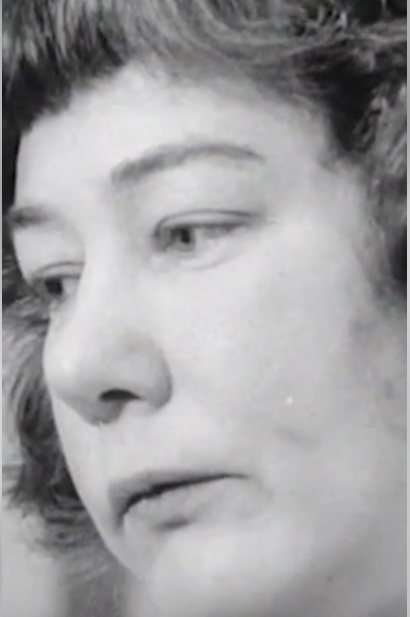
Incredible clip from the 1960s shows a lesbian bravely talk about her complex quest for love
In a clip from a 1960s TV show, a lesbian can be seen talking about how she goes about finding a partner.
She goes on to say that the difficulty in finding a partner in the 1960s means that she has to “keep making friends with people”, adding that “if they are lesbian, there’s hope for me, but even then there isn’t hope unless they happen to take to me”.
Magee, who became a Labour MP in 1974, asks her if she can tell by looking at a woman whether she is a lesbian or not, to which the interviewee responds: “Not at all. It’s an absolute myth, because I have been looking hard enough.”
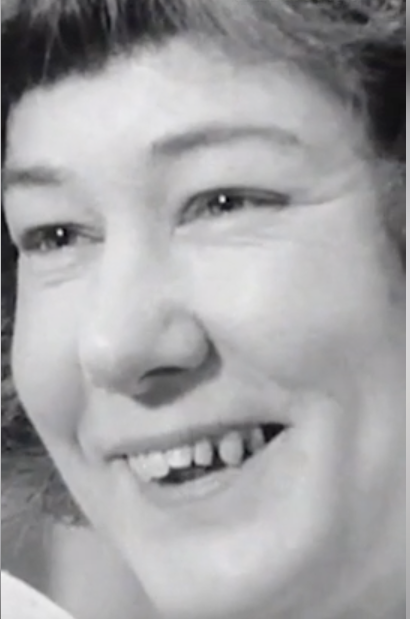
The clip, from a 1965 episode of ITV’s current affairs programme This Week, shows the unnamed secretary from the North Midlands revealing the challenges she faces.
At the time, male homosexuality was still illegal in Britain, but lesbianism was not. The presenter, Bryan Magee, who died in 2019, says this makes it a “much easier subject for us to deal with”. The woman is open about her experiences, insisting that all she wants is “to love and be loved by another woman”.
Jackie Kay, another lesbian, who grew up in rural Scotland in the Sixties, said that in her teens, she really did believe she was “the only Black lesbian in the whole world”.

The Black Cat protests in Los Angeles
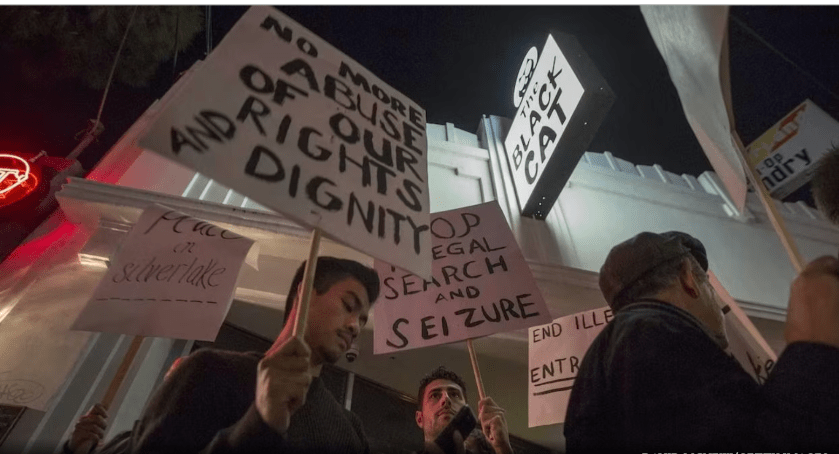
The Black Cat, a gay bar in Los Angeles’s Silver Lake neighbourhood, was raided by police on New Year’s Eve of 1966. As balloons dropped from the ceiling to mark the New Year of 1967, undercover cops ripped Christmas decorations from the walls, brandished guns, then beat and handcuffed 14 people. Two men arrested for kissing were later forced to register as sex offenders; one bartender suffered a ruptured spleen. Violent police raids on gay bars weren’t uncommon in the ’60s, but this time the gays didn’t let it slide.
“The police brutality was unbelievable and extended down to another gay bar,” Alexei Romanoff, the last known survivor of the raid, said in 2018. “Undercover police officers came in and started to beat the people who were there. Two men kissing longer than a few seconds was considered a crime, and so these people were charged with a lewd conduct. We were upset, as any community would be, so we started to organise.”
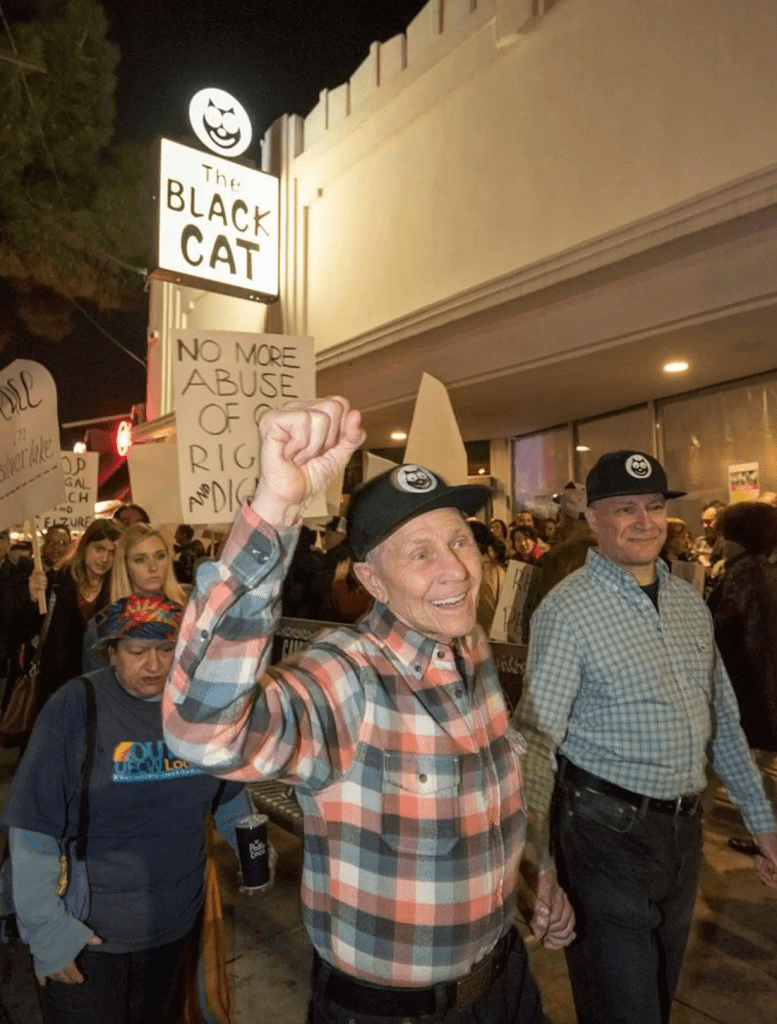
“When you have an illegitimate law preventing people from doing certain things, that affects society, and you’ve got to stand up, you’ve got to say, ‘I’m mad as hell and I’m not gonna take it anymore,’ like we did,” he continued.
Some political changes affected the situation. “There had been frequent gay bar raids in the Los Angeles area up through about 1964,” said Romanoff’s husband, historian David Farah. “There had been a truce called citywide, and there hadn’t been any gay bar raids for about two years (until that New Year’s Eve). What had happened in the election of ’66 was Ronald Reagan was elected governor of California. He became governor that night at midnight, and with the change of party, the police decided they could go back and start raiding gay bars.” Reagan, a Republican who would go on to court the religious right when he ran for president, succeeded Democrat Edmund G “Pat” Brown, father of future governor Jerry Brown.
On 11 February 1967, over 200 demonstrators peacefully gathered outside the Black Cat, forming a picket line with a planned rally featuring speeches and printed leaflets promoting their cause against police abuse. The march was sombre, serious, and orderly, with the protestors determined not to give the police any reason to escalate the situation or defame their efforts as a riot. “It was an angry demonstration,” Romanoff said. “But orderly.” Large numbers of police were dispatched to the scene, as city leaders feared a riot, but this only served to aid the protestors in staying calm, refusing to give the oppressive force any ammunition to continue the very practices they were protesting.
Notably, none of the protestors picket signs mention homosexuality explicitly; this was largely due to local straight nightclub/café Pandora’s Box attempts to call off the demonstration.
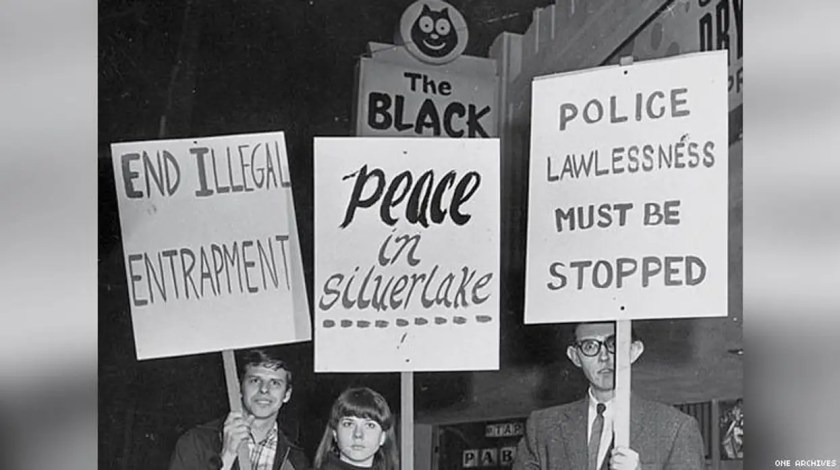
In 1967, there was a series of protests at the Black Cat, with some drawing 500 to 600 people, Romanoff said. A group called Personal Rights in Defence and Education, or PRIDE, organised the demonstrations. No local news outlet would cover them. So two gay men, Richard Mitch and Bill Rau, decided to take over the PRIDE newsletter and develop it into a news magazine, The Los Angeles Advocate. The first issue came out in September 1967. The magazine soon expanded into covering news nationally, becoming The Advocate. It covered another uprising against police raids, the Stonewall riots, in 1969. Neither the Black Cat protests nor Stonewall immediately stopped police brutality against LGBT+ people or won equal rights – but a movement was coming together.
In 2008, the city of Los Angeles designated the Black Cat site as a Los Angeles Historical-Cultural Monument for its role in the early LGBT+ rights movement. A plaque at the building details its importance.
The original Black Cat eventually closed, and since then there have been bars under various names at the site, most of them catering to gay customers. But now it’s an upscale gastropub, with a general clientele, using the Black Cat name once again.
In 2019, Eric Garcetti, then mayor of Los Angeles, praised the city’s role in civil rights. “Los Angeles doesn’t follow, we lead,” he told The Advocate. “I think many people think civil rights history is written in other parts of the country – the South for racial equity, New York for LGBT equality. Los Angeles can lay claim to being at the forefront of desegregated schools, of pushing forward (for LGBT+ rights) long before Stonewall happened, with the Black Cat, and Cooper’s Donuts a decade before.”
The Black Cat protests have been commemorated in film. In 2017, a short film was released called Silver Lake Out Loud, featuring Romanoff. A 2018 documentary, A Long Road to Freedom: The Advocate Celebrates 50 Years, covers the Black Cat along with other milestones in the LGBT+ rights movement. And the PRIDE name lives on.
“The spirit is still here,” Romanoff said at a Black Cat anniversary rally in 2017. “And I’m depending on all of you to go on and carry this forward.”
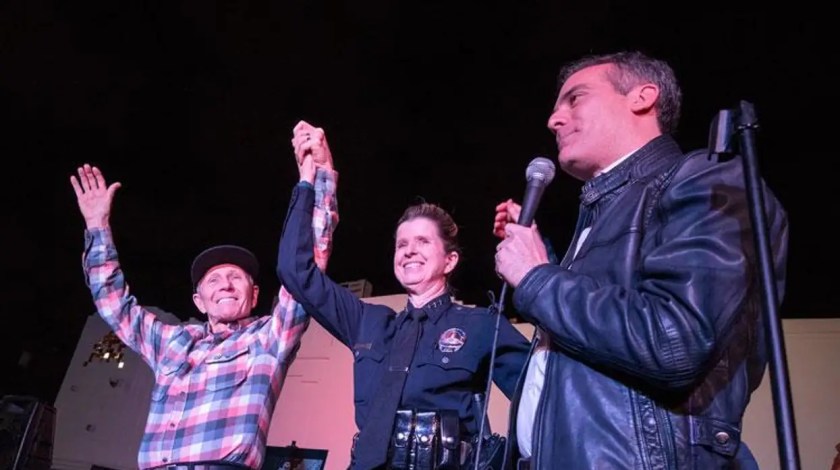
From left: Alexei Romanoff with unidentified Los Angeles police officer and Mayor Eric Garcetti at the Black Cat anniversary rally
LGBT+ History Month Reception – Speaker’s House, Westminster
Wednesday, 4 February 2026
by Raymond Langford Jones
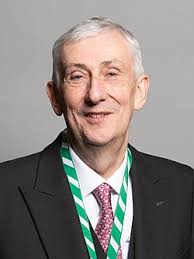
I was flattered to be invited to represent Tony Openshaw and Out in the City at The Rt Hon Sir Lindsay Hoyle’s Reception last Wednesday evening. This is becoming an annual event.
After negotiating the convoluted Houses of Parliament security system, the group of representatives from a wide range of UK LGBT+ organisations,* including LGBT+ celebrities from the entertainment world, were guided to the sumptuous Speaker’s House. There must eventually have been around a hundred people present.
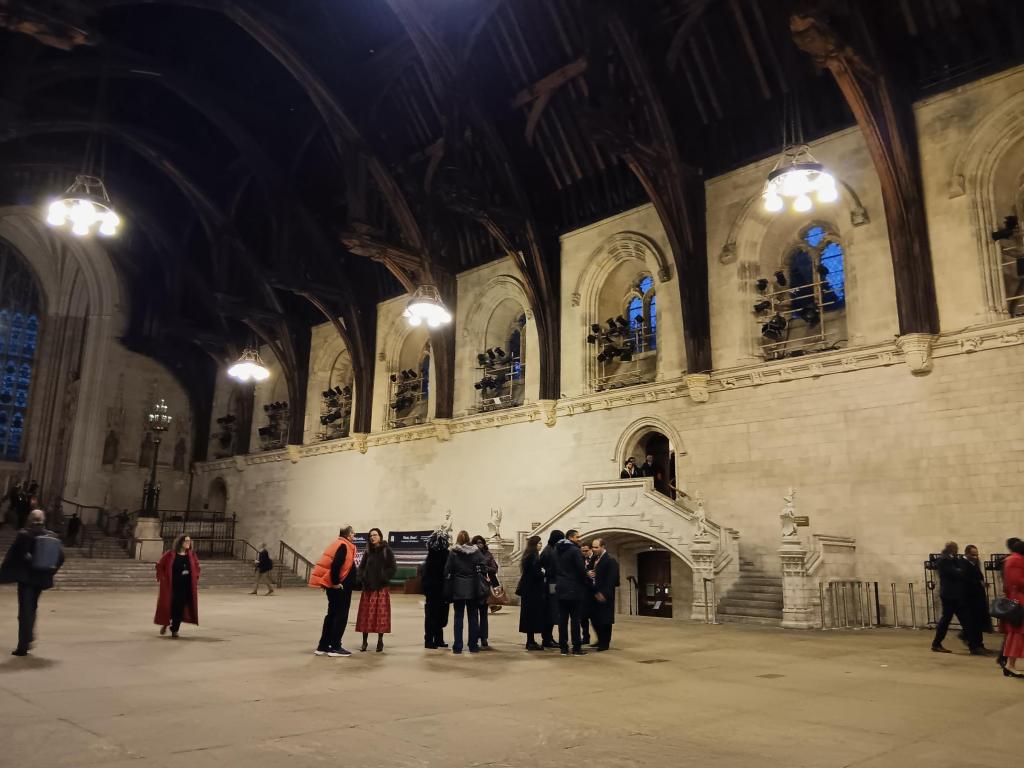
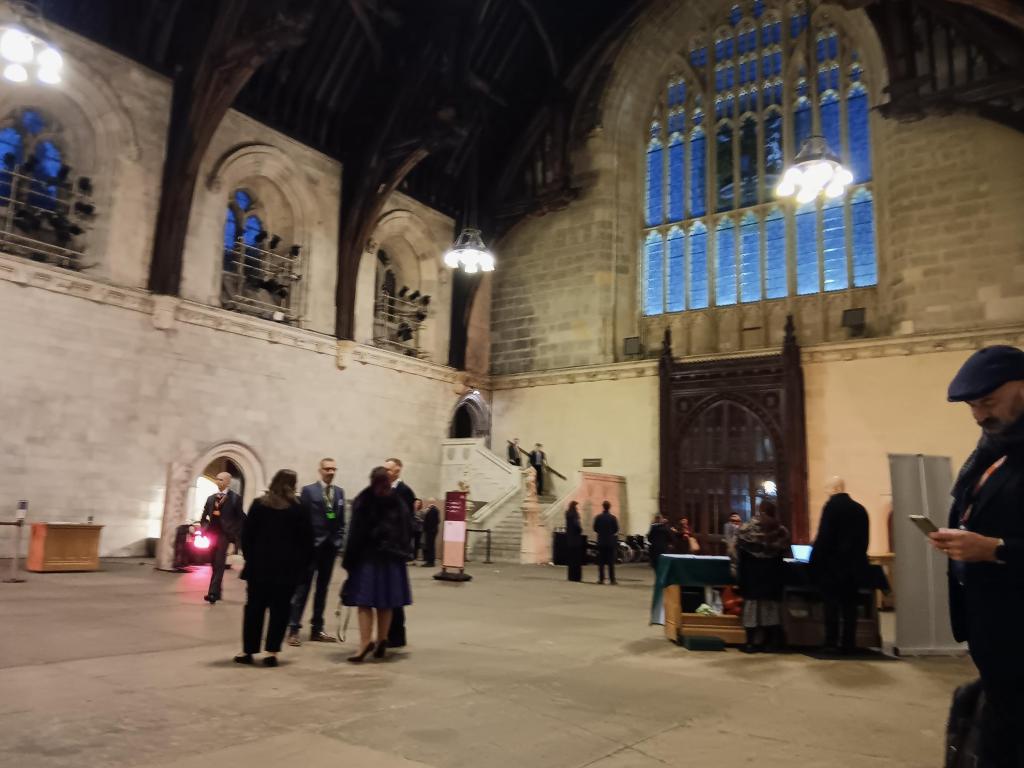
The reception was held in a suite of handsome, period-dressed rooms on the first floor, one with an impressive cordoned-off four poster – for the Speaker to rest between sittings? – where we were served drinks and delicious nibbles.
In another room, a small display of historical artefacts from the National Archives showed how members of our community have participated in Britain’s parliamentary system, and the extent to which social attitudes have changed over time. A glossy programme featured a short biography of William John Bankes MP and copy of his maiden speech in the House of Commons. Bankes was also an explorer (1786-1855) whose dangerous liaisons and addiction to handsome guardsmen eventually forced him into exile.
In due course, everyone crowded into the largest room to be warmly welcomed by Sir Lindsay. He reminded us that we currently have ‘the gayest Parliament in the world’ and how it is over a quarter of a century since the Sexual Amendment Act finally gave homosexuals the same rights as everyone else. He reiterated his commitment to the LGBT+ movement and that he advocates sexual diversity in Parliament. He also drew attention to well-known out-and-proud names from showbiz in the room. (I could almost wave to Amanda Barrie but couldn’t find Daniel Brocklebank – so good on you, Corrie!)
Sir Lindsay then introduced The Barberfellas, ‘a queer vocal ensemble from London with a shared loved of barbershop music’. They entertained us with an eclectic mix of songs beginning with an outrageous gay lyric to the tune of My Favourite Things.
Next came three short speeches. First on the podium was David Mundell MP, who in 2016, publicly came out as the first openly gay Conservative cabinet minister. Then, bubbly Jane Hill, the BBC presenter and newscaster, revealed how her life had changed for the better since she’d fully accepted who she was in her thirties, and wished she’d had the courage to do so earlier. Finally, Olivia Blake explained how, in 2019 and still in her twenties, she had morphed from being a biologist into Labour MP for Sheffield Hallam.
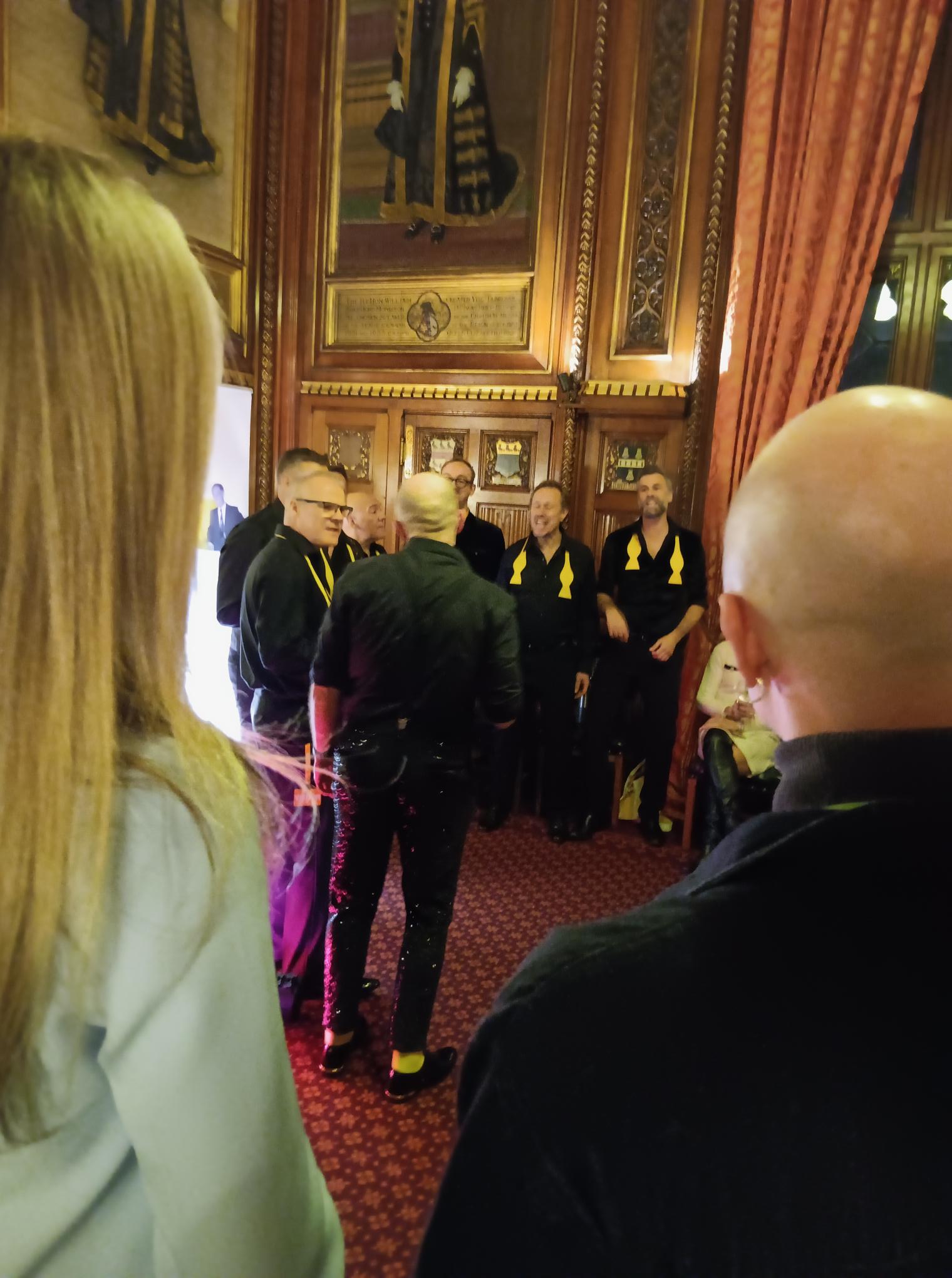
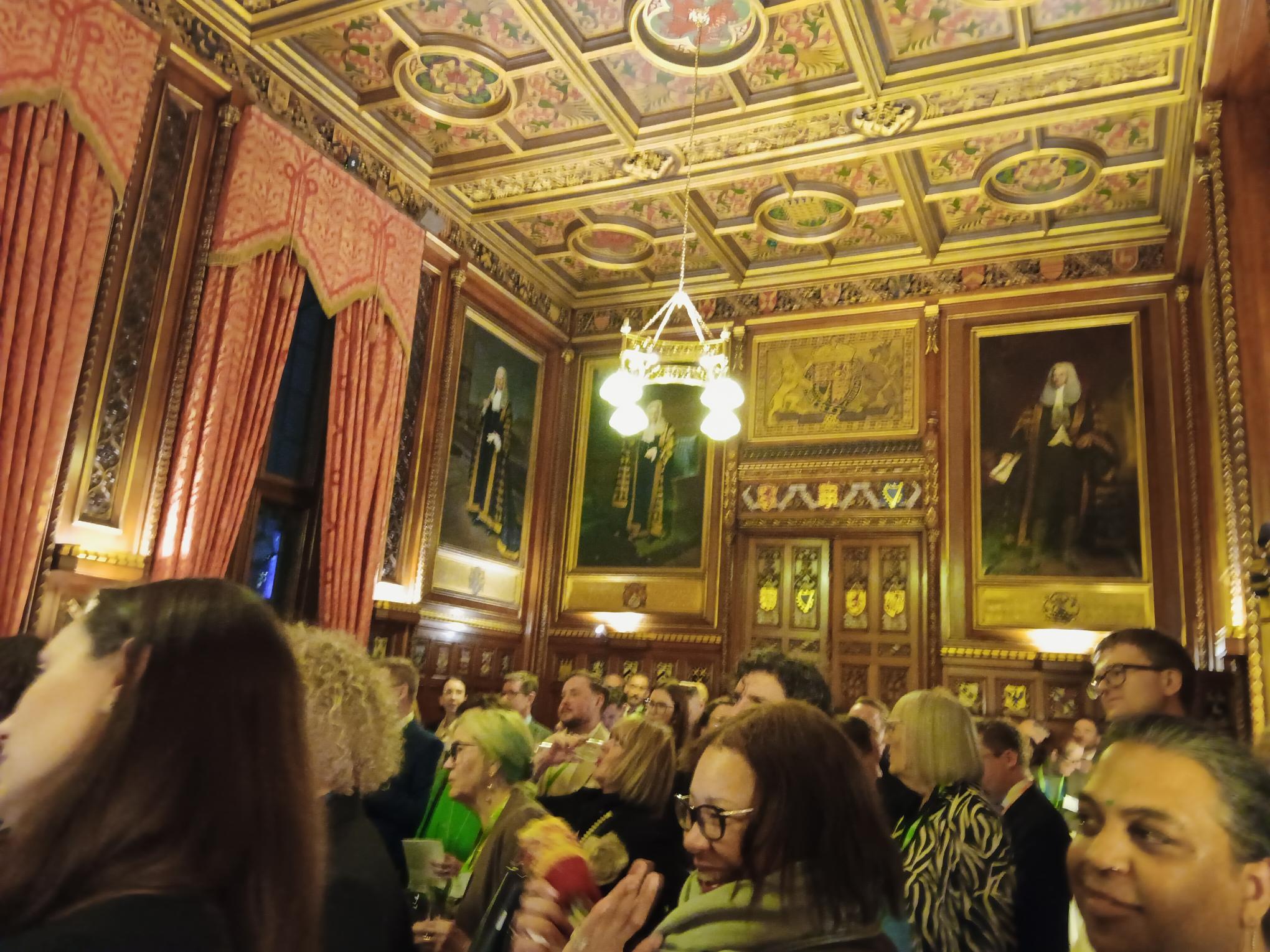
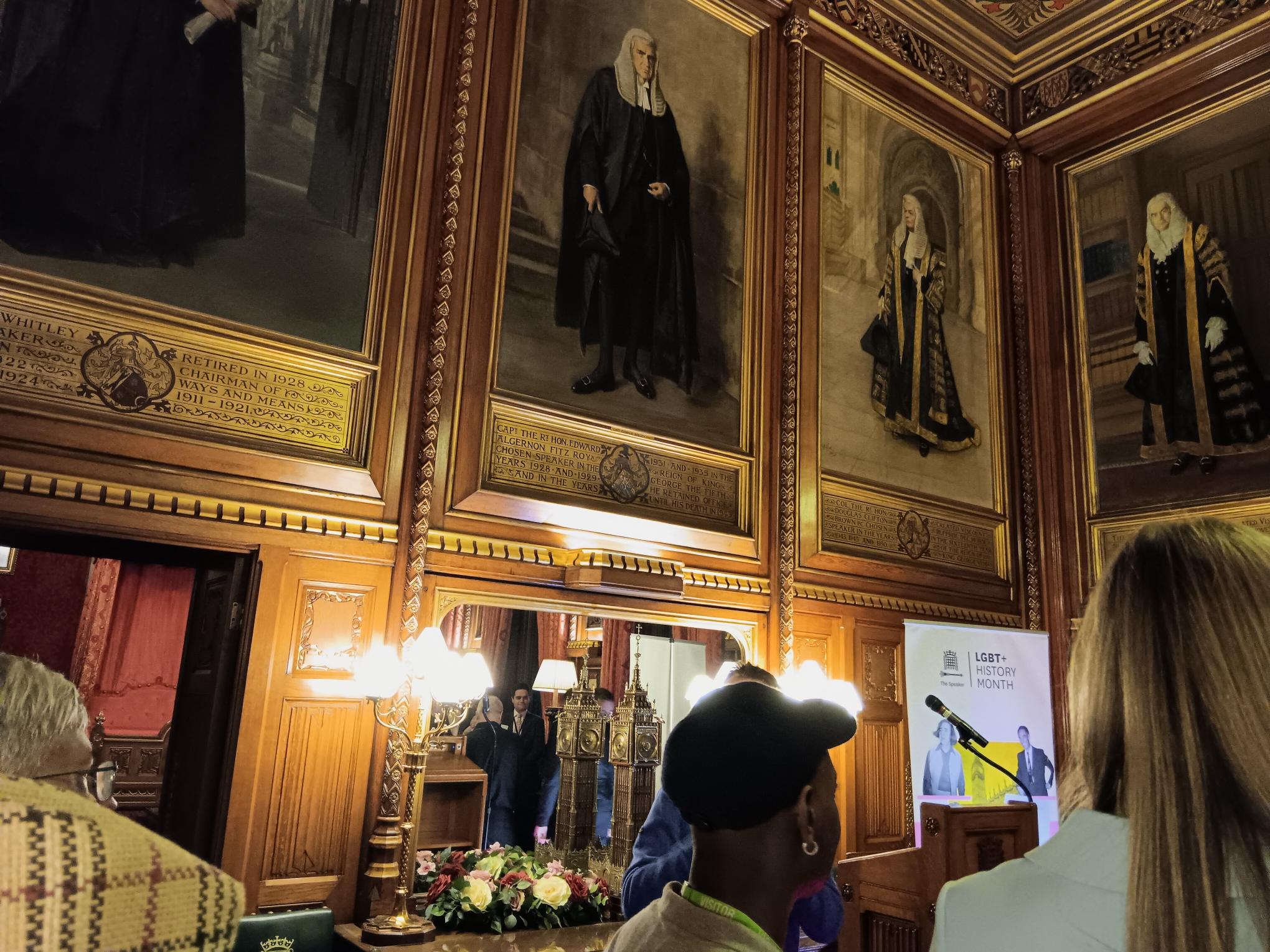
What I took away from the generally upbeat, glad-to-be-gay tone of the speeches, was a cautionary note: we mustn’t take for granted the rights we have fought for so valiantly over the years, especially since enduring the appalling attitudes towards gay people inflicted on us at the time of AIDS and Section 28. We need to be aware of how strong voices are now emerging in favour of rescinding our liberties (specific names being carefully avoided), and must continue to make ourselves heard so that people everywhere may continue to have the right to be themselves.
An enjoyable and uplifting evening in gorgeous surroundings. Thank you, Sir Lindsay!
* Those attending included representatives from: Beyond Reflections, Biscuit, Club Kali, Kaleidoscope International Trust, Keshet UK, London Bisexual Games, London Cruisers Basketball Club, London Deaf Rainbow Club, Mosaic Trust, North Midlands LGBT+ Older People’s Group, Oasis Norfolk, Out North East, Outpatients, Say it, Schools Out UK, Terrence Higgins Trust, The Centre Place, The Outside Project, The Rainbow Project, Transparent Change – and, of course, Out in the City.
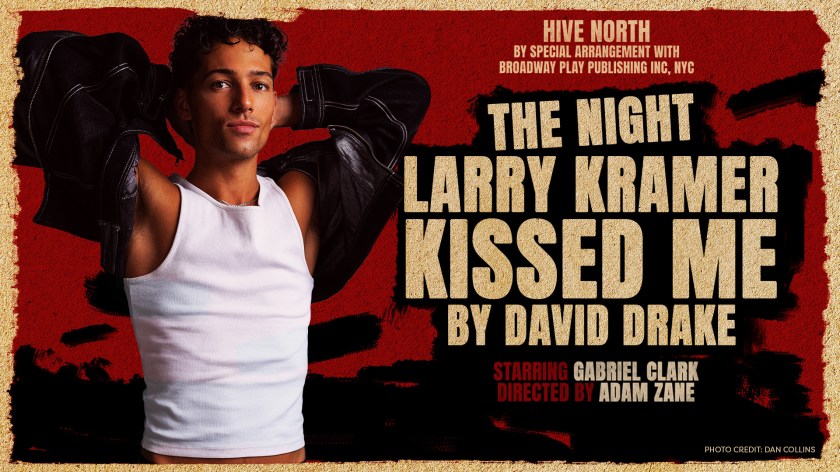
Tuesday, 10 February 2026 – Saturday, 14 February 2026 – “The Night Larry Kramer Kissed Me”
Hope Mill Theatre, 113 Pollard Street, Manchester M4 7JA
The Night Larry Kramer Kissed Me. Part love letter, part rallying cry, David Drake’s award-winning solo play is a fierce, funny and deeply moving journey through queer life and the legacy of ACT UP. It’s theatre as activism. Urgent, uplifting and made for LGBT History Month.
Fresh from his standout performance in Jock Night, Gabriel Clark takes the stage for a blistering, intimate performance that celebrates community, confronts stigma and reminds us how hard-won our rights really are.
In Manchester for just 8 performances. Get your tickets now because when they’re gone, they’re gone.
The wonderful Dr Monica Pearl will be “In Conversation” with Gabriel Clark on the opening night, Tuesday, 10 February.
Book tickets here – £21.50 – £29.50
 Out in the City
Such interesting articles. Wonderful to see that Out in the City was represented at the Parliamentary event
LikeLike