

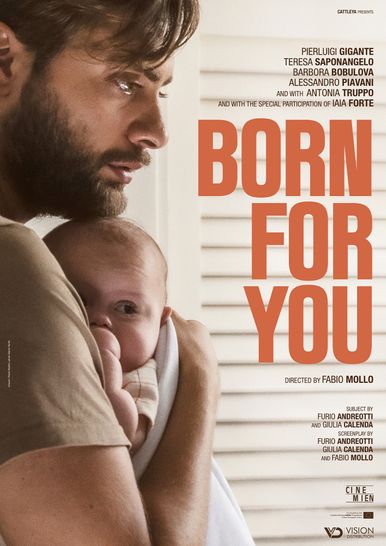
“Born for You”
This film, directed by Fabio Mollo, is based on a true story set in Italy.
Luca together with his male partner desire to adopt a child. However, the couple encounter difficulties within their relationship and split up.
Meanwhile, a pregnant woman delivers a baby girl with Down syndrome and rejects the child, abandoning her in the hospital. The hospital authorities name her Alba.
Although thirty seven heterosexual couples, looking to adopt, reject the child, the authorities are reluctant to encourage Luca because he is homosexual.
With the help of an enthusiastic, but inexperienced lawyer, Luca shows determination and the social worker eventually warms to the idea of entrusting Alba to Luca. He is overjoyed.
He is the first single gay man in Italy to adopt a child. Be sure to take a handkerchief as this is a very emotional film.
This film was shown as part of Odeon Pride Nights – community focused events where they are screening LGBTQI+ films at the Odeon Cinema, Great Northern, 235 Deansgate, Manchester M3 4EN. The next films are “Out” on Monday, 1 December at 7.00pm and “The Bearded Mermaid” on Monday, 5 January at 7.00pm.
Herculine Adélaïde Barbin
Herculine Adélaïde Barbin, later known as Abel Barbin (8 November 1838 – February 1868), was a French intersex person who was assigned female at birth and raised in a convent, but was later reclassified as male by a court of law, after an affair and physical examination.
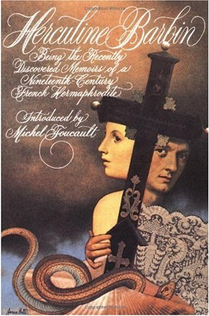
Herculine Barbin: Being the Recently Discovered Memoirs of a Nineteenth-century French Hermaphrodite is a 1980 English language translation of Herculine Barbin’s nineteenth century memoirs, which were originally written in French.
Most of what is known about Barbin comes from her later memoirs. Barbin was born in Saint-Jean-d’Angély in France in 1838. She was assigned as female and raised as such; her family named her Alexina. Her family was poor but she gained a charity scholarship to study in the school of an Ursuline convent.
According to her account, she was enamoured of an aristocratic female friend in school. She regarded herself as unattractive but sometimes slipped into her friend’s room at night and was sometimes punished for it. Her studies were successful and in 1856, at the age of 17, she was sent to Le Château to study to become a teacher. There, she fell in love with one of her teachers.
Although Barbin was in puberty, she had not begun to menstruate and remained flat chested. The hairs on her cheeks and upper lip were noticeable.
In 1857, Barbin received a position as an assistant teacher in a girls’ school. She fell in love with another teacher named Sara. Sara’s ministrations turned into caresses and they became lovers. Eventually, rumours about their affair began to circulate.
Although in poor health her whole life, Barbin began to suffer excruciating pains. When a doctor examined her, he was shocked and asked that she should be sent away from the school, but she stayed.
Eventually, the devoutly Catholic Barbin confessed to Jean-François-Anne Landriot, the Bishop of La Rochelle. He asked Barbin’s permission to break the confessional silence in order to send for a doctor to examine her. When Dr Chesnet did so in 1860, he discovered that although Barbin had a small vagina, she had a masculine body type, a very small penis, and testicles inside her body. In 19th-century medical terms, she had male pseudohermaphroditism.
A later legal decision declared officially that Barbin was male. She left her lover and her job, changed her name to Abel Barbin and was briefly mentioned in the press. She moved to Paris where she lived in poverty and wrote her memoirs, reputedly as a part of therapy. In these memoirs Barbin would use female pronouns when writing about her life prior to sexual redesignation and male pronouns following the declaration. Nevertheless, Barbin clearly regarded herself as punished, and “disinherited”, subject to a “ridiculous inquisition”.
In his commentary to Barbin’s memoirs, Michel Foucault presented Barbin as an example of the “happy limbo of a non-identity”, but whose masculinity marked her from her contemporaries.
Barbin’s own writings showed that she saw herself as an “exceptional female”, but female nonetheless.
In February 1868, the concierge of Barbin’s house in rue de l’École-de-Médecine found her dead in her home. She had died by suicide by inhaling gas from her coal gas stove. The memoirs were found beside her bed.
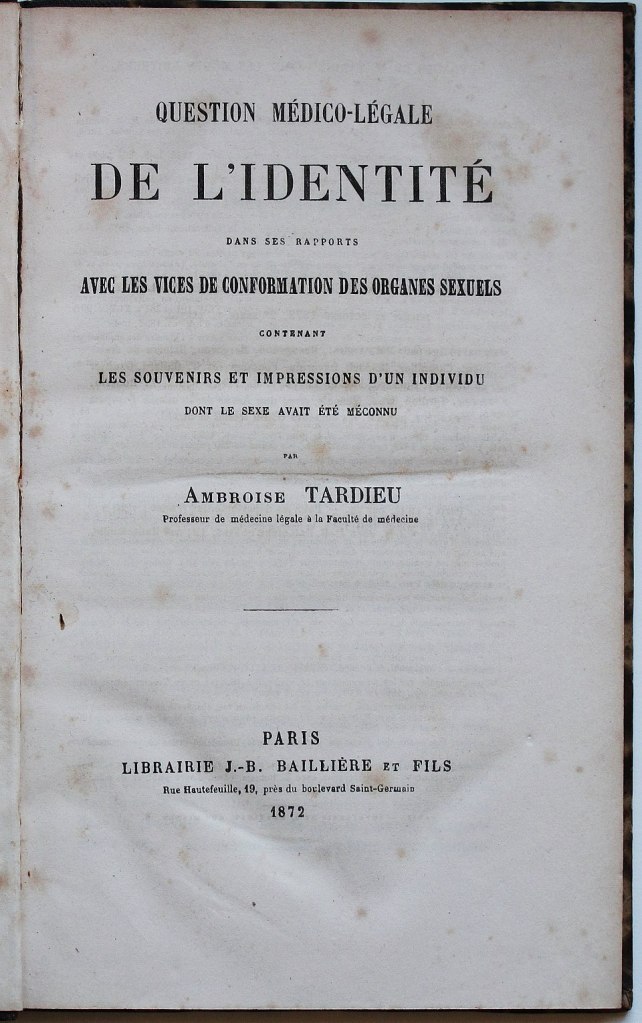
The birthday of Herculine Barbin on 8 November is marked as Intersex Day of Remembrance. The event appears to have begun on 8 November 2005.
South Korea census allows same-sex couples to identify as spouses in “historic” change
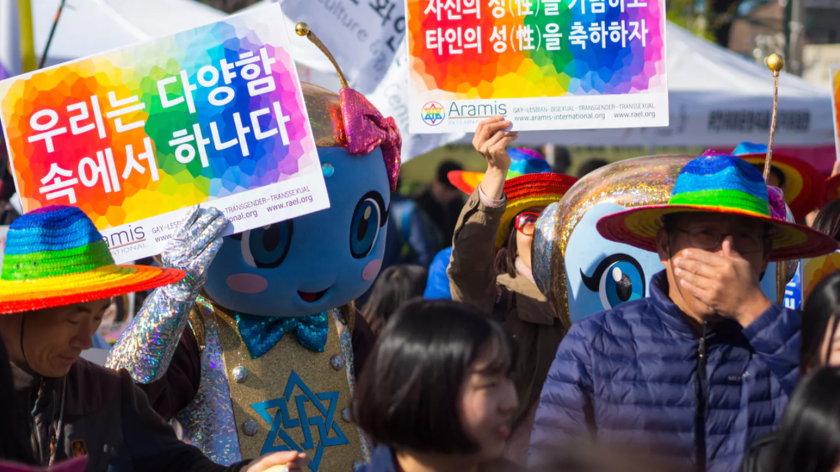
The South Korean census will allow same-sex couples to identify themselves as spouses for the first time in a move LGBT+ activists have praised as a significant step toward equality.
The census is conducted every five years. The Ministry of Data and Statistics confirmed that committed same-sex couples can now check “spouse” or “cohabiting partner.” In the past, doing so would cause a form to be rejected or marked with an error.
While homosexuality is not criminalised in the country, same-sex marriage remains illegal. There are also no anti-LGBT+ discrimination protections, and only 23% of the public fully supports LGBT+ people being open about who they are.
Despite South Korea’s portrayal in its global entertainment industry as modern and gay-friendly, the country has long tolerated LGBT+ discrimination and, in a 2020 report, was ranked among the least gay-inclusive countries in the Organisation for Economic Cooperation and Development.
The absence of progress can be traced to lobbying efforts by The United Christian Churches of Korea and other church associations, and to very public hate campaigns by loosely affiliated groups like Anti-Homosexuality Christian Solidarity, who have deep-rooted connections to the country’s political class.
Efforts to pass a broad anti-discrimination law through the legislature have failed many times, but hope was renewed last year when the country’s liberal party took a majority of seats in the legislature.
Advocates have praised the census change as a critical step forward.
Rainbow Action Korea, a coalition of 49 LGBT+ groups, called it a “historic decision” and “the first step towards having LGBT+ citizens fully reflected in national data.
“We believe this will lead to further change,” the country’s Justice Party also said in a statement. “The day will come when even transgender citizens are visible in national statistics.”
While LGBT+ rights have a long way to go in South Korea, advocates scored another major victory in the summer of 2024, when the nation’s top court ruled to uphold the rights of people in same-sex relationships, giving them the same rights as people in heterosexual relationships.
The landmark ruling states that benefits from South Korea’s National Health Insurance Service (NHIS) can be claimed by people in same-sex partnerships and that treating same-sex couples differently from heterosexual ones is “an act of discrimination that … violates human dignity and the right to pursue happiness.”
Older LGBTQ+ Londoner’s Guide
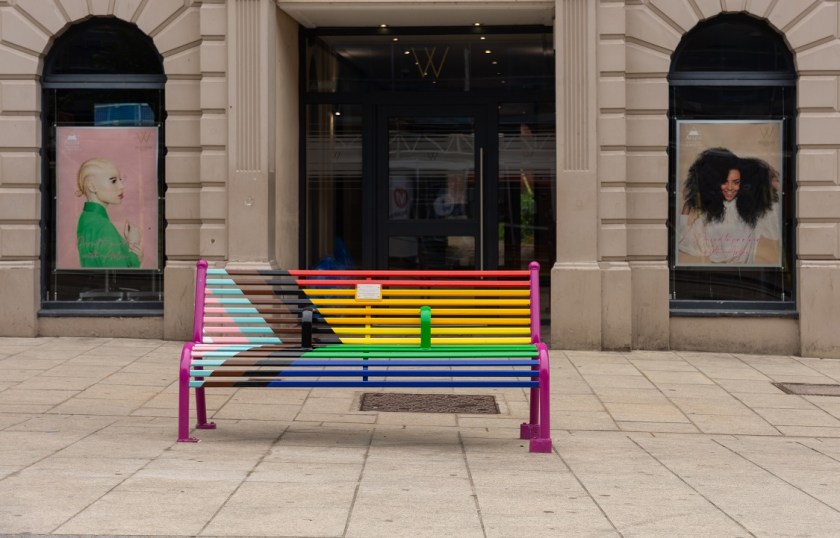
LGBT+ Consortium has been hosting the Older LGBTQ+ Londoner’s Roundtable, a group of LGBTQ+ organisations who support or are led by LGBTQ+ people over 50. This group meets quarterly to discuss the serious gaps in provision for older LGBTQ+ people in London and the challenges that older LGBTQ+ people face, including the social and health consequences of a lifetime fighting discrimination.
One of the aims of the roundtable has been to map services and groups after the closure of Opening Doors in 2024.
Together they have created the Older LGBTQ+ Londoner’s Guide to Socials, Events and Services 2025 which offers a smaller-scale list of LGBT+ groups, additional resources and contact information.
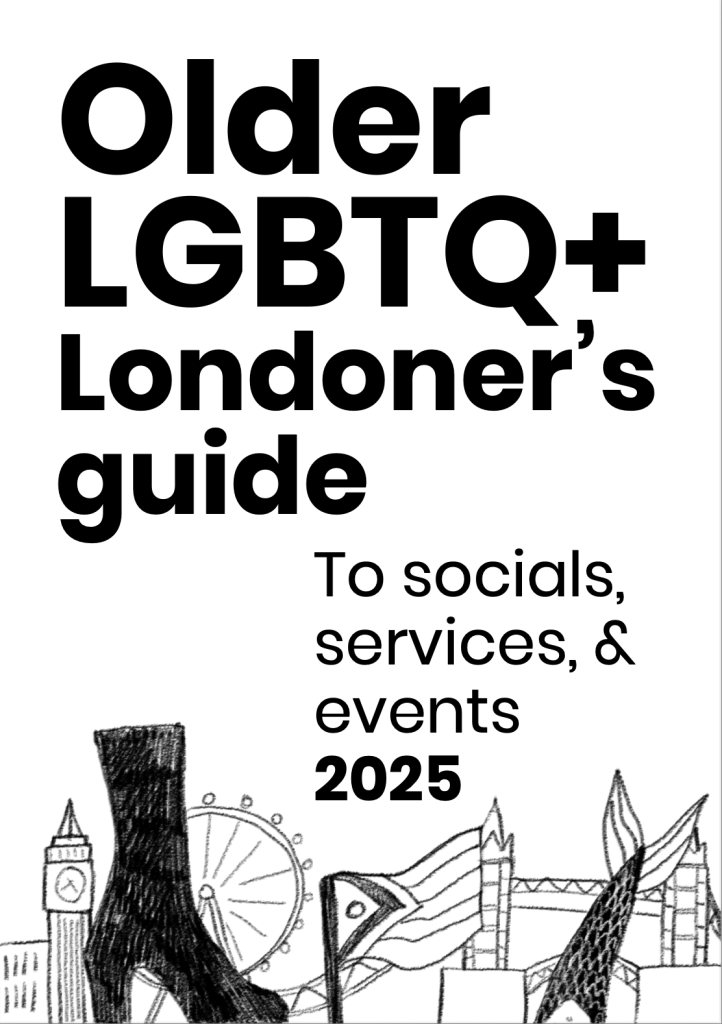
Access this free new guide, sharing events, socials and services for Older LGBTQ+ Londoners. The guide is intended to be shared, distributed, and freely printed. Please share this resource far and wide if you can.

Introducing LGBT Foundation’s new national billboard campaign running through November and December, following the success of This is What a Woman Looks Like – this is Man Enough.
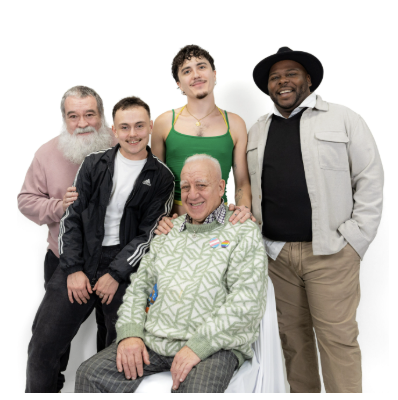
Man Enough was created to challenge harmful stereotypes about masculinity and to celebrate the visibility of gay, bi, and trans men. Through powerful images of queer brotherhood, allyship and solidarity they want to send a clear message to men of all backgrounds and identities: who you are is enough, and it matters.
Being Man Enough isn’t about fitting into outdated ideas of masculinity. It’s about showing up – for yourself, for others, and for your community.
From billboards across the high streets of our cities to the timelines of your favourite social feeds, this campaign is a visible, proud declaration that all men – trans men, gay and bisexual men, men of colour, disabled men, older men, working-class men, migrant men, and many more – of all shapes, sizes and walks of life – deserve to be seen, heard, and celebrated.
Special thank you to everyone who answered the public open call for men to take part in this campaign.
Thank you to QPOC artist Scarlett Novoa for helping bring the campaign to life.
 Out in the City
Good to have advance notice of the forthcoming films at the Odeon.
Like the Man Enough campaign.
Chris Wilde
Sent from my iPhone
LikeLike