“An Opened Letter”
Until the year 2000, it was illegal to be gay while serving in the British Armed Forces, leading many to be thrown out of the military for their sexuality.
A year ago an apology for their treatment was issued after an independent review recommended that the UK government make reparations – including giving compensation – but that is yet to happen.

One example is Paul Wilson who joined the Army band aged 15 – unaware then of his sexuality. His career was brought to an abrupt end when officers found out he was gay.
He was subsequently arrested, held in the jail at Edinburgh Castle and later dismissed from service.
A spokesperson for the UK government said it “deeply regrets” the treatment of LGBT service personnel and that it has been working to implement a number of reparations.

King Charles III has unveiled a memorial to lesbian, gay, bisexual and transgender military personnel after a decades-long campaign against a ban on being gay in the armed forces.
In his first official engagement in support of the LGBT+ community, the King visited the sculpture, named “an opened letter”, at the National Memorial Arboretum in Staffordshire.
The memorial is dedicated to those from the LGBT+ community now serving in the forces, as well as those who served at a time when it was illegal to be gay in the military.
During the ban, which lasted until the year 2000, those who were gay – or were perceived to be – faced intrusive investigations, dismissal and in some cases imprisonment.
Affected veterans, many of whom attended the ceremony, said the monument signified “closure” after years of campaigning first to change the law, and then to push the government to make reparations.
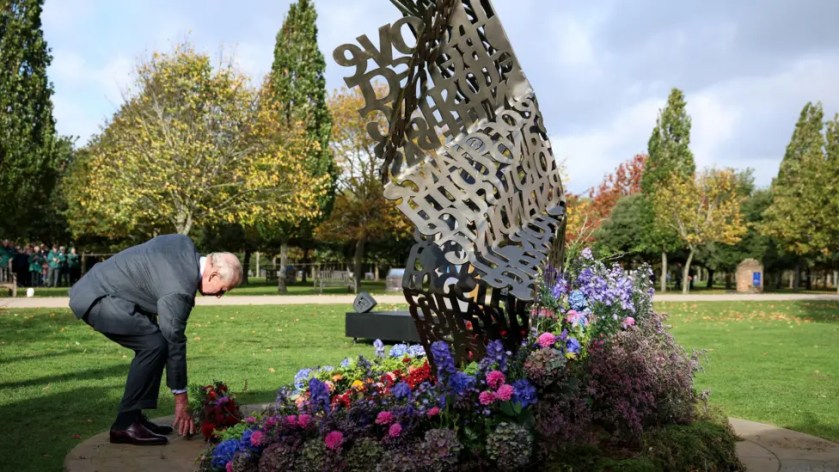
The bronze sculpture was designed by Norfolk-based artist collective Abraxas Academy.
It resembles a crumpled piece of paper containing words from personal letters which were used as evidence to incriminate people.
The artists, Charlotte Howarth and Nina Bilbey, say that the “concept for the memorial symbolises the personal letters of endearment collected as evidence to convict, expel and imprison LGBTQ+ personnel during the ban, and the anxiety of living in constant fear of receiving a formal letter accusation.”
Prime Minister Keir Starmer said the memorial “stands as a lasting tribute to the bravery and service of these veterans”.
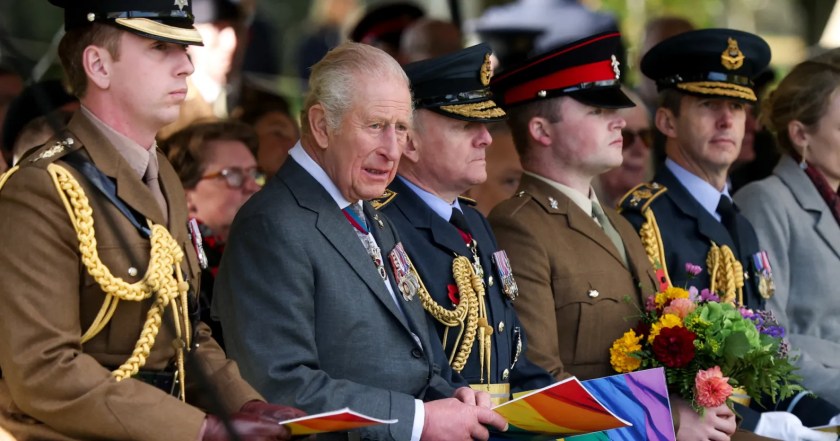
The visit is the King’s first official engagement in support of the LGBT+ community
Louise Sandher-Jones, the minister for veterans and people, told the BBC she was “horrified” to hear how people suffered under the ban, and said the memorial’s unveiling represented a “moment of healing”.
The LGBT+ Veterans Memorial is one of 49 recommendations made by The Etherton Review, an independent report commissioned by government which looked at the treatment of LGBT+ veterans who served under the ban.
The report’s author, the late Lord Etherton, said it gave “shocking” evidence of a homophobic culture, bullying and sexual assaults endured by those who were pursued under the ban, including Pádraigín Ní Rághillíg.
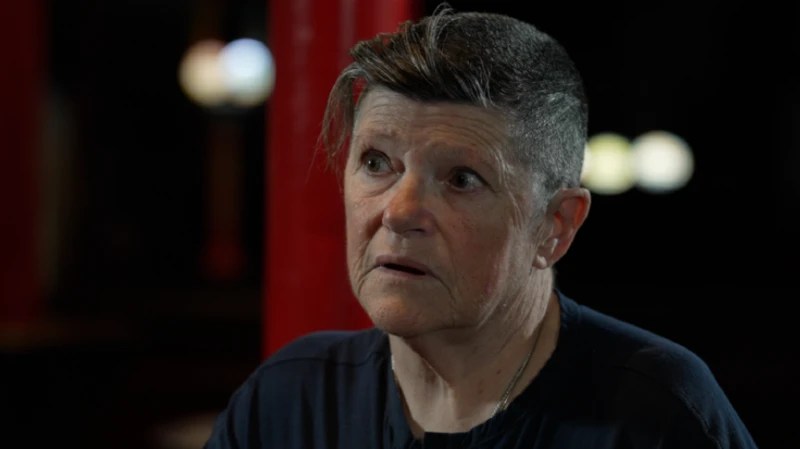
Ms Rághillíg, 69, hadn’t realised she was lesbian when she joined the Women’s Royal Air Force in 1976, but began to understand her sexuality when she developed feelings for a female friend.
After divorcing her husband, she was posted to RAF Gibraltar where she worked as a telegraphist, a job which saw her work with morse code and given high level security clearance.
However, when a colleague saw her kissing a woman from the Women’s Royal Navy (WRN) it signalled the end of nearly a decade of service.
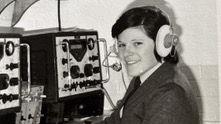
She says she faced intrusive interrogations in which she was asked intimate questions about her sex life, was outed to friends and family and lied to in an attempt to get her to give up the names of other gay personnel.
While waiting for repatriation back to the UK, Ms Rághillíg says she was sexually assaulted by a male colleague in an attempt to turn her straight.
She said: “He was touching my breasts and trying to put his hand down my trousers. He said: ‘I’ll sort you out’.
“Apparently there was some kind of sweepstake, some of the guys were betting on who could ‘sort me out’, which was terrifying.”
Similar accounts of dozens of other LGBT+ veterans who were sexually assaulted after revealing their sexuality are well-documented in the Etherton Report.
Abraxas Academy, a collective of artists behind the LGBT+ Armed Forces Community Memorial, were chosen from over 35 submissions by a panel made up of current and former LGBT+ personnel and groups including the Royal British Legion.
Nina Bilbey, design lead for the monument, said it was “humbling” to be involved in such an emotive project.
She said: “They’ve waited so long for some kind of recognition, we didn’t want to let them down.”
For Ms Rághillíg, the memorial signals “closure” for the treatment she endured in the name of the ban, and will also help ensure the ban and its effects are remembered for future generations.
“Given another 20 or 30 years, none of us will be left, but the memorial will be there and that’s really important,” she said. Pádraigín was given high security clearance in her role as a telegraphist while stationed in Gibraltar

The memorial project was led by Fighting With Pride, an LGBT+ veterans support charity set up to campaign for justice and support those impacted by the ban.
Its chief executive, Peter Gibson said: “It’s a deeply emotional moment, expressing in physical form that what happened to them should never have taken place.”
Veterans impacted by the ban can apply for a financial redress payment of up to £70,000.
Mr Gibson said he hoped the memorial would encourage veterans who have not yet come forward to apply for reparations, or to get in touch with the charity for support.
“We know there are more veterans who suffered under the ban who are owed justice and reparations,” he said.
Other measures already completed include pardons for criminal convictions, a special LGBT+ veterans ribbon for those affected by the ban and the return of medals and berets.
A Ministry of Defence spokesperson said it “deeply regrets” the treatment of those impacted by the ban, and that what they experienced was “not reflective of today’s values or the inclusive culture of our armed forces”.
It added: “We commend the courage of those who have shared their experiences, and we remain dedicated to ensuring all personnel feel valued, respected and able to thrive in our armed forces.”
The dedication of the memorial marks King Charles’s first official support of the LGBT+ community since he became King in September 2022. Like his mother and predecessor, Queen Elizabeth II, Charles has largely avoided discussing LGBT+ rights publicly. That has led activists like Peter Tatchell to say that through “his silence, he acquiesces with our tormentors.” His sons, Prince William and Prince Harry, have both supported the LGBT+ community through positive messages and HIV initiatives.

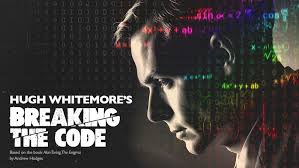
Breaking the Code
A group of us from Out In The City went to HOME Theatre 1 to see a new production of Hugh Whitemore’s Breaking The Code.
Alan Turing is famed for cracking the Enigma code at Bletchley Park, effectively securing victory for the Allied forces in WWII. He is arguably one of the most important and inquisitive minds of the twentieth century.
In this brilliant play we got to know a human being who loved, lost and never stopped asking questions in a quest for truth and understanding.
For the first time, taking into consideration his recent Royal pardon and the development of Turing’s law, the original play featured a new epilogue by Neil Bartlett that speaks to Turing’s lasting legacy on modern Britain.
What Is Paint The Town Red?
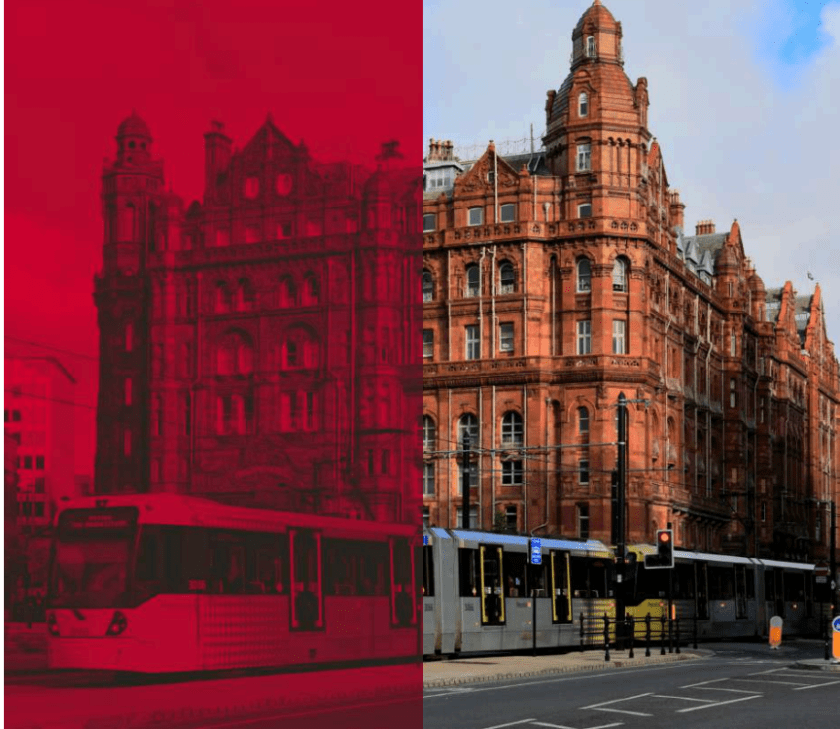
Paint The Town Red is George House Trust’s month-long campaign during November to resist, show solidarity and remember people living with HIV in the run-up to World AIDS Day.
They are asking you to Act Up and show support by ‘painting the town red’, whether it be wearing a red ribbon in support of people living with HIV or organising a fundraiser that supports their life-changing work.
For 40 years, George House Trust have been inspiring people living with HIV to live healthy confident lives through support, advice and advocacy services.

Today, they offer over 30 services to people living with HIV from all backgrounds across Greater Manchester and Liverpool, with their support ranging from peer-support after a first diagnosis to formula milk for new parents and employment upskilling and support.
By supporting George House Trust, you are helping thousands of people living with HIV and contributing to a world where HIV holds no one back.
Painting The Town Red By Resisting, Acting Up and Showing Solidarity
Starting on 1 November and culminating on World AIDS Day on 1 December, they are aiming to raise £40,000 in their 40th year for people living with HIV. Your support, whether it be for the whole month or just for one day, can help to create a world where HIV holds no one back.
For more info, please contact info@ght.org.uk

| Concessionary Bus Pass Trial – November |
| The 9.30am restrictions on the use of bus passes for older people creates inequity, particularly in accessing health-related appointments. We were therefore delighted that the decisive step was taken to pilot a scheme in August that gave older and disabled residents in Greater Manchester access to free bus travel at any time of day. This pilot has been extended for a second trial period this November. The scheme allowed concessionary pass holders to travel before 9.30am, a restriction that normally limits free travel until after the morning rush. During the August trial, more than 100,000 early-morning journeys were made, with up to 6,000 people using the benefit each day. Often dubbed “twirlies” by drivers for being “too early” to board, passengers with concessionary passes were finally able to travel freely on early services – a move that advocates say had a real and immediate impact on people’s daily lives. Transport for Greater Manchester (TfGM) want to make travel easier and more affordable for everyone. The trial will allow eligible pass holders to get out to work, healthcare, leisure and shops round the clock. What you need to know Trial takes place on buses from 1 to 30 November 2025. Unlimited, free bus travel is valid for TfGM issued older person’s or disabled person’s travel pass holders only. Available on Bee Network buses, not on trams and trains. Passes also accepted before 9.30am on non-Bee Network buses within the Greater Manchester boundary only. As well as free early morning travel, the trial will allow pass holders to use the Bee Network’s night buses as well. |

 Out in the City
A really interesting and informative post Tony. Many thanks.
LikeLike
Thanks for sharing your thoughts. Very insightful and thought-provoking.
LikeLike