
Celebrating 50 Years of LGBT Foundation
In 2025 LGBT Foundation is celebrating 50 years of being at the forefront of LGBT+ rights, health and wellbeing. Paul Fairweather tells us about the early roots of the organisation in the 1970s, which began with the Manchester Gay Switchboard helpline.
“I came to Manchester in 1978 to work for the Campaign for Homosexual Equality and it was then that I heard about the Manchester Gay Switchboard which had launched in 1975.

Before the internet it was harder for LGBT+ to get support or information – there was Gay News, a fortnightly newspaper but most shops refused to stock it. There was also very little protection for lesbian, gay, bisexual and trans people at that time – you could lose your job or be denied services. So giving my time to volunteer for the telephone helpline felt crucial – we were not only providing information about LGBT+ groups and gatherings but also referring to further support.
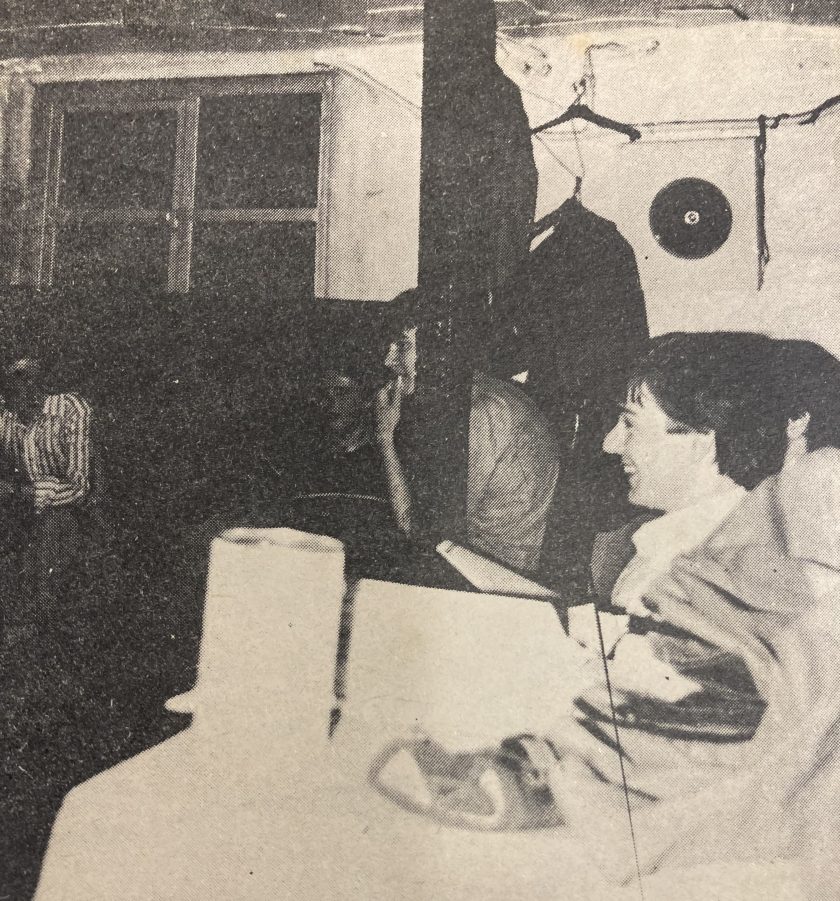
We had the free use of a basement at the University of Manchester and the room we took calls in was tiny and grotty – and we still felt very hidden away. Of those first calls I remember talking to a gay man who had never spoken to anyone about his sexuality and was really terrified – particularly about what his parents would say. He eventually came along to a support group and I saw him blossom there – it felt good to be able to help someone to grow as an LGBT+ person.
Very quickly the basement became occupied by a range of LGBT+ groups and services and became known as the first ‘Manchester Gay Centre’. The efforts of this group of volunteers to start Manchester Gay Switchboard has been a catalyst for a whole range of other organisations that still continue, such as LGBT Foundation, so I’m still really proud of what we did.”
LGBT Foundation’s helpline offers support and advice for LGBT+ communities. The line is open from 9.00am – 6.00pm Monday to Friday and can be reached on 0345 3 30 30 30.
The LGBT Foundation also runs the Pride in Ageing programme for LGBT+ over 50s that creates joyful, fun and empowering events all year round. For more information call 0345 3 30 30 30.
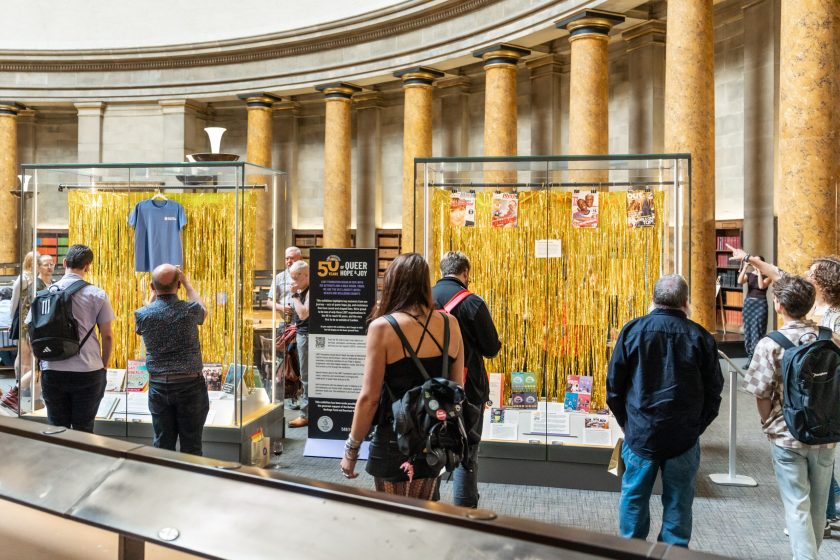
50 Years of Queer, Hope & Joy Exhibition
27 June – 31 December – Manchester Central Library, St Peter’s Square, Manchester M2 5PD – Free
The 50 Years of Queer Hope & Joy Exhibition at Manchester Central Library invites the public into a powerful, moving and often joyful journey through the stories that shaped five decades of LGBT+ life in Greater Manchester and beyond.
From never-before-seen archive materials and oral histories to community artefacts and campaign posters, the exhibition showcases the resilience, resistance, and creativity of LGBT+ people across generations.
Whether you’re rediscovering the past or encountering it for the first time, this in-person exhibition places the lived experiences of LGBT+ people at the heart of the narrative.

The Word “Homosexuality”
The word “Homosexuality” first appeared in a letter written by pioneering Austrian-Hungarian sexologist Karl-Maria Kertbeny (pictured, left) to his colleague, German gay rights advocate, Karl Ulrichs on 6 May 1868.
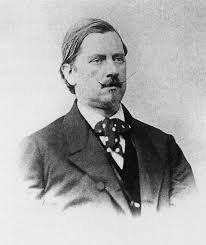
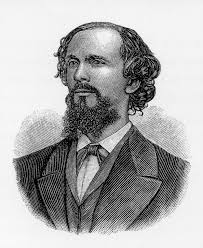
It was the first time in recorded history that the term is known to have been used. “Homosexualität” would not appear in a publicly accessible document – a pamphlet published anonymously by Kertbeny – until the following year.
Several German advocates (German became the “unofficial language” of the emerging field of sexology) embraced its use, though for years terms such as “invert” would continue to be used to describe what had for years gone unnamed.
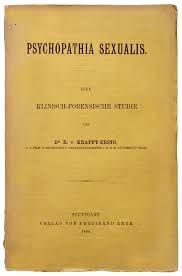
“Homosexuality” would make its debut in English when Richard von Krafft-Ebing’s 1886 Psychopathia Sexualis was translated in 1894. Because any discussion of the subject was considered obscene, it was only through technical journals that information would make it into the hands of the growing number of people who were desperate to understand the condition.
The Word “Gay”
The most recently acquired meaning – or sense – of the word “gay” among young people, is a derisive term similar in meaning to “lame” or “stupid”. It can be used to indicate disapproval of a thing (“a gay sweater”) or an activity (“playing a certain video game is gay”).
“Gay” can also be used as a pejorative. By calling someone “gay”, you effectively project the negative characteristics that are stereotypically associated with homosexual men onto that person, eg lack of physical prowess and unmanliness.
Yet the word “gay” has not always been synonymous to “homosexual” or “stupid”. It has actually known a fascinating history where its sense was dependent on the context, the intent of the speaker, and the variety of English (ie British or American English). Keep in mind, therefore, when a new sense first came into use, that does not mean that the previous senses were thereby obsolete. Many of these different senses have coexisted for a long time before one sense gained prominence over another.
Furthermore, resources like the Oxford English Dictionary (OED) of a previous denotation only gives us an indication as to when a particular use of a word had become current; it does by no means mean that that sense was not used before the dictionary’s first citation. Dictionaries are very much products of their editors, and are therefore subjective, even though most people consider dictionaries as authoritative resources.
There are a number of different senses that the word “gay” has taken on ever since its entry into the English language.
The origin of the word “gay”
The first recorded usage of the word “gay” in the OED dates back to around 1200 when it was used as an adjective meaning “brig or lively-looking, especially in colour.” The word had most probably come into the English language from Old French where “gay” meant “merry”, “cheerful” or “happy”. In The Canterbury Tales, Geoffrey Chaucer wrote, “Why is my neighebores wyf so gay?” (“Why is my neighbour’s wife so cheerful?”)
Depending on the context, “gay” also came to be used to denote “noble”, “beautiful” and “excellent” around 1325, with additional meanings of “light-hearted” and “carefree” around 1380.
The word acquired a tinge of promiscuity towards the end of the 14th century, when it obtained the senses of “wanton” and “lewd”. These newer senses were effectively extensions of a previous denotation of “gay”, namely that of being “carefree”. Evidently people had started to associate “carefree” and “not having moral constraints”, thereby causing “gay” to take on this additional meaning as well. The use of the word in this sense became even more solidified when it also started to be used towards the end of the 16th century as an adjective denoting a person who was “dedicated to social pleasures, dissolute, promiscuous, frivolous, hedonistic”.
“Gay” became even more closely linked to immorality in the 1790s when the word became associated with prostitution. In England, a “gay woman” had become a euphemism for a prostitute, whom you could find in a brothel or “gay house”.
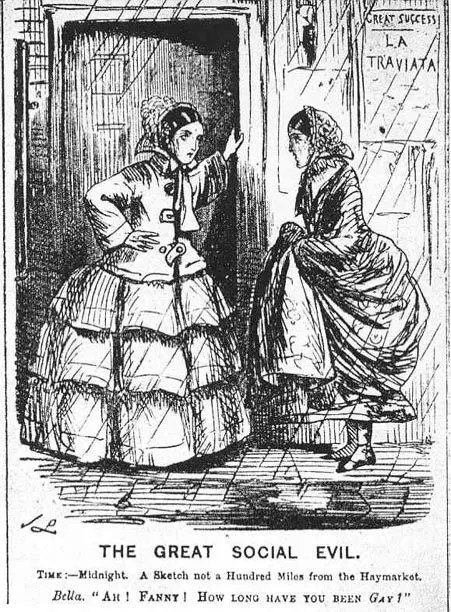
In 1857, a satirical cartoon was published in Punch magazine. It showed two women talking at midnight; one was wearing lower-middle-class women’s clothes, while her much more expensively-dressed friend stands in a doorway with an expression of annoyance on her face.
“Ah! Fanny! How long have you been gay?” asks Bella, the one in the less-fashionable outfit.
Meanwhile, Fanny stares at her angrily. The reason? Fanny, the lady in fine clothes, has been ‘gay’ (i.e. she’s been working as a sex worker) and her friend has just found out. The ‘Great Social Evil’ in the title refers directly to sex work in Victorian England.
Around the same time, a number of other uses of the word with negative senses had been recorded by the OED, such as “a person who has ceased adhering to the plain and simple life or beliefs of the community”. This particular use was current among religious groups in the United States, specifically the Quakers. “Going gay” in these circles had come to denote the action of a religious person forsaking his or her religious beliefs.
The OED did however also record a positive use of the word around sixty years later; “gay” was used in specific regions in England to indicate that one was in good health. The OED’s earliest record of the word being used in this sense stems from 1855 with the phrase “I am quite gay, thank you.”
In the US, however, “gay” had retained its negative connotation; it had become a slang term for someone who is “too free in conduct, forward, impertinent.”
Gay = Homosexual
It is not entirely clear when exactly “gay” came to mean “homosexual”. Gertrude Stein, an American writer, is often mentioned as being the first person to popularise the word as a synonym for homosexuality. She used the word in this sense in her short story called “Miss Furr and Miss Skeene”, which she wrote in the early 1920s. Still, it would take until the 1940s before this sense would become more commonly used in the United States, and only as a slang word. Another person who was credited for being among the first to use “gay” to refer to homosexuals was researcher G W Henry, who had collected a great number of case studies on gays, bisexuals and lesbians in America. He published his work called “Sex Variants: A Study of Homosexual Patterns” in 1941, which naturally also included a definition of “gay” as “an adjective used almost exclusively by homosexuals to denote homosexuality, sexual attractiveness, promiscuity … or lack of restraint, in a person, place, or party.” Note how this definition includes promiscuity and lack of restraint.
The Stonewall Riots
A series of violent riots and demonstrations in America, which would later become known as the Stonewall Riots of 1969, jumpstarted the use of the word “gay” in its “homosexual” sense outside of the homosexual community. The riots sparked the beginning of the gay rights movement, which eventually inspired the founding of the Gay Liberation Front. Interestingly, the advent of the lesbian and gay liberation movement in the 1960s not only brought the slang definition of “gay” to everyone’s attention, it also inspired a change in who the word came to refer to. Whereas “gay” had initially been used to denote predominantly homosexual men, it had now become the preferred generic referent for both women and men. The term “homosexual” had been dismissed as too clinical, since the American Diagnostic and Statistical Manual of Mental Disorders still had homosexuality listed as a mental disorder at that time, only to remove it from its list in 1974.

Gay today
Despite initial apprehensiveness about the word among homosexuals because of its previous sexual connotations, “gay” has now become firmly established as the preferred term of self-reference for both gay men and women, with lesbian being an additional option for female homosexuals.
Its previous meanings of brightness, excellence, merriness, carefreeness, lewdness, prostitution, promiscuity, lack of restraint, good health and forwardness have effectively faded out of use.
The terms gay and lesbian are now favoured over “homosexual” by the LGBT community because the term’s clinical history seems to suggest that gay people are somehow diseased or psychologically emotionally disordered.
Nevertheless, the most recent derogative sense of the word meaning “lame” is rapidly gaining ground. Efforts have been made to change this negative usage and promote a more inclusive and respectful language. Only time will tell whether “gay” will eventually revert back to having predominantly negative connotations, or whether the gay community will continue to claim the word as their own and thereby retain its positive connotation.
Birthday

 Out in the City
I always believed the word GAY came from ‘Good As You’ ?
LikeLike