Shibden Hall
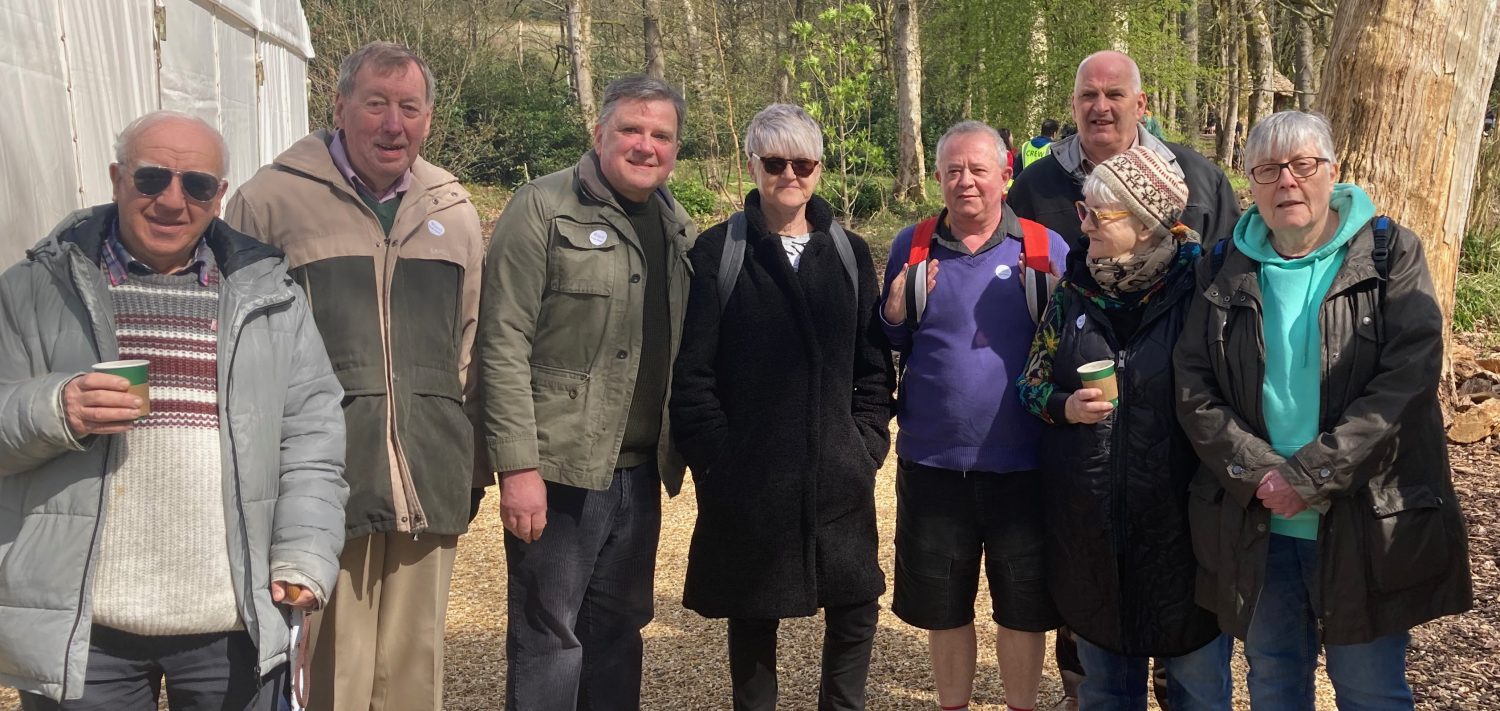
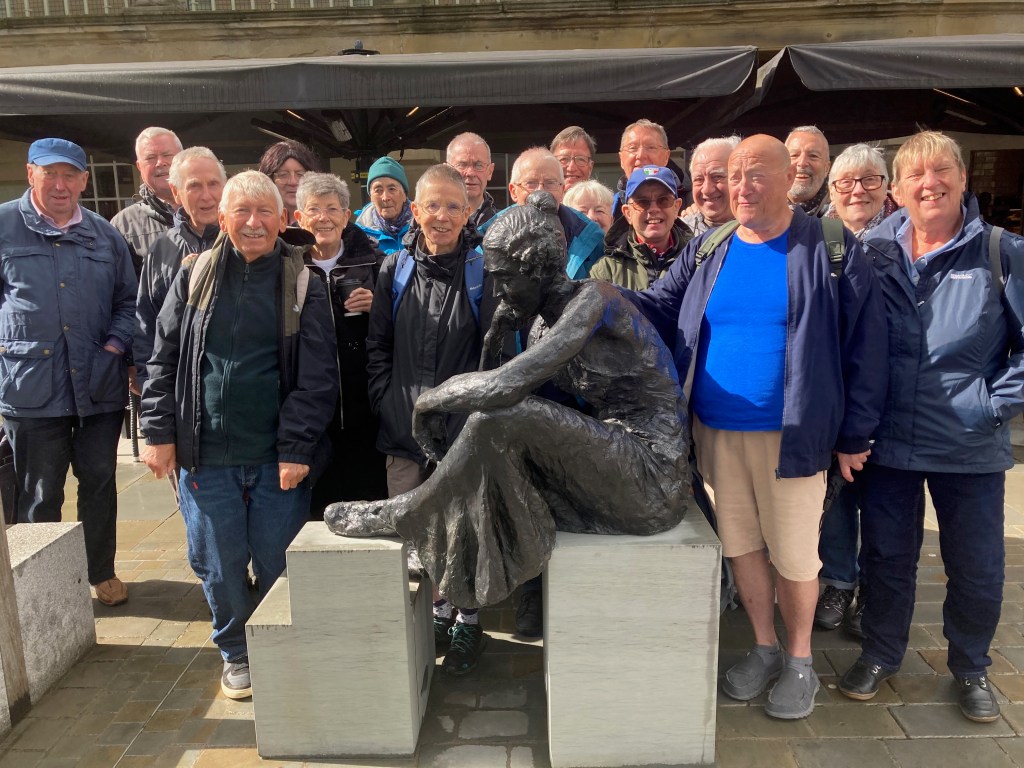
On a beautifully sunny day, twenty of us travelled to the West Yorkshire town of Halifax.
We walked to The Piece Hall where a bronze statue of the 19th-century diarist Anne Lister, known as Gentleman Jack, was installed in September 2021. Lister is sometimes described as the first modern lesbian, and lived near by in Shibden Hall for many years.
Anne Lister is Shibden Hall’s most well known owner, She was a noted diarist whose 27 volumes (4 to 5 million words), written between 1806 and 1840, give a unique insight into her daily life as a landowner, business woman and traveller. Anne devised a code to keep some of her thoughts concealed. Once cracked, the diaries revealed her most intimate private life including her love affairs with women.
Anne Lister was born 3 April 1791 in Halifax and grew up at Skelfler, a small family estate in the East Riding of Yorkshire. Anne attended school in Ripon and then the exclusive Manor School in York. Her hobbies included walking, riding and shooting, and she made many visits to Shibden, home of her uncle James and his sister, Anne. After the death of her brother in 1813, she became heiress to the Shibden estate and moved in with her aunt and uncle, taking over the management of the estate.
In 1832, Anne developed a relationship with the wealthy heiress Ann walker (1803 – 1854) and they later set up home together at Shibden, which Anne became sole owner of in 1836.
Anne was a keen traveller and set off with Ann Walker in June 1839 to travel through Russia and overland to Persia. She was bitten by a fever-carrying tick and died on 22 September 1840. Her remains were brought back to Halifax, arriving in late April 1841.
Once again, we had a very interesting trip out. More photos can be seen here.

Bette Bourne Obituary – by Neil Bartlett / The Guardian
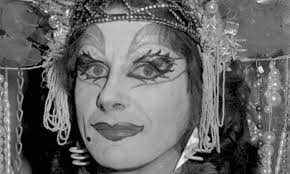
Photograph: Robert Workman from the Robert Workman Archive, Bishopsgate Institute
Bette Bourne, actor and activist, born 22 September 1939; died 23 August 2024.
In 1980, the New York magazine the Village Voice captioned a centre-spread photo shoot of Bette Bourne and his radical drag troupe the Bloolips with the phrase “living proof not only that rhinestones and politics can live together, but that they must”.
Bette, who has died aged 84, doubtless received the accolade with the same arched-eyebrow disdain that greeted all attempts to summarise his work or life – but it’s not half bad as an introduction to the world of a man who revelled in turning contradiction into an art form.
The Bloolips’ riotous early performances mixed tap dancing, repurposed musical comedy show tunes, elaborate white-face makeup and polemic gay lib narratives. The defining feature of the radical drag for which the company became well known was that it had nothing to do with traditional female impersonation. Instead, the all-gay, all-male company arrayed itself in gender-defying combinations of visibly second hand gowns with junk-shop accessories. The effect was to turn the whole world queer; as Bette himself once put it: “It wasn’t so much a question of me doing Hedy Lamarr, as of me doing John Gielgud doing Hedy Lamarr.”

Photograph: Tristram Kenton / The Guardian
After 13 shows in London, numerous tours of Europe and six seasons off-Broadway – and never a penny of public subsidy – Bette retired the Bloolips as a company in 1998. By then, his work at the 180-seat Drill Hall in London – notably his appearances in my own A Vision of Love Revealed in Sleep (1989-90) and Sarrasine (1989), both created with the composer Nicolas Bloomfield – had begun to draw the attention of the theatrical mainstream. Some of its more adventurous directors duly began looking for roles in which his unique combination of Old Vic technique with simmering sexual threat could be suitably employed.
Highlights of Bette’s later career included a notably savage Jaques in As You Like It for Maria Aitken at the Open Air theatre, Regent’s Park, in 1992, a magisterial Lady Bracknell in The Importance of Being Earnest for English Touring Theatre in 1995, and a flinty yet giggly Pauncefort Quentin in Noël Coward’s The Vortex for Michael Grandage at the Donmar in 2002. He also made time to work for younger queer producers such as Duckie in London and Marlborough Productions in Brighton, and often went out of his way to encourage the many young queer artists who approached him for advice or inspiration.
In 1990, Bette and his long time partner and fellow Bloolip, Paul “Precious Pearl” Shaw, had collaborated with the New York lesbian performance troupe Split Britches on a notable reworking of A Streetcar Named Desire (retitled Belle Reprieve), still at the Drill Hall; however, he also worked on a grander scale at the National Theatre (2005), for the Royal Shakespeare Company (2007) and at the Globe (2004, 2013).
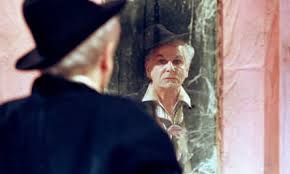
Photograph: Tristram Kenton / The Guardian
From 1999 to 2001 Bette toured the world in Resident Alien, Tim Fountain’s homage to Bette’s own good friend Quentin Crisp; in 2003 he contributed an unforgettable Gower to my Olivier-nominated staging of Shakespeare’s Pericles at the Lyric Hammersmith. In 2009 he collaborated with Mark Ravenhill to create A Life in Three Acts, a performed (and later filmed) memoir that documented the extraordinary range of his theatrical (and life) achievements.
Born in Bangor, during the wartime evacuation of his East End family from London to north Wales, Bette was christened Peter (the name by which he was known for the first 20 years of his career) then brought back to the family home in Stoke Newington at the age of six weeks. His father, a driving instructor, was distant and violent, creating in Peter a lifelong mistrust and even hatred of conventional masculinity. His mother, Jeretta (“Jet”), however, was a glamorous and fun-loving medical secretary with a passion for amateur dramatics, and it was she who nurtured her son’s early talent for singing and showing off.
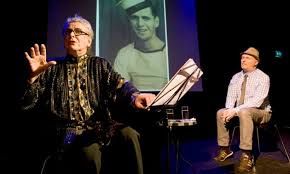
Photograph: Murdo Macleod / The Guardian
Peter was educated first at Church Street School then at Upton House in Hackney. Seeking employment as soon as he could, in 1954, aged 15, Peter got temporary work in rep at the Intimate theatre in Palmers Green, where his duties included playing a corpse. Only his feet were visible, sticking out from behind an upstage sofa, but Peter insisted on applying full makeup for every performance. Aged 16, he began working first as a trainee printer and then as an assistant electrician at the Garrick theatre in the West End.
In 1958, with Jet’s encouragement, Peter secured a funded place to attend the Royal Central School of Speech and Drama. He graduated three years later, and his striking good looks and assured vocal technique – plus his willingness to play by the rules in the homophobic world of the 60s British entertainment industry – soon secured him regular work. He featured in seasons at the Bristol Old Vic (1961-62), the London Old Vic (1962) and the Nottingham Playhouse (1963); in 1969, he toured in the Prospect Theatre Company’s famous pairing of Christopher Marlowe’s Edward II with Shakespeare’s Richard II, playing opposite the young Ian McKellen.
He appeared regularly on TV, featuring in Dixon of Dock Green (1963-65), The Saint (1967) and The Avengers (1966-68). He was also – briefly – a boyfriend of Brian Epstein, manager of the Beatles. Throughout all of this, however, although he had come out to his mother in 1961, he stayed firmly in the professional closet.
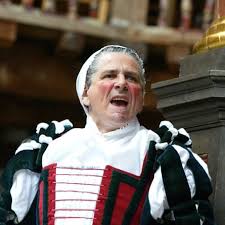
Photograph: Tristram Kenton / The Guardian
By the time Peter was working for Prospect, the first wave of gay liberation was already hitting London. Frustrated with being obliged to endlessly edit his personality out of his performances, he became an eager attender of the early London Gay Liberation Front meetings; he later claimed that this was only because of the abundance of good-looking men at the meetings. By 1974, all attempts at a conformist career had been gleefully abandoned; Peter had become a full-on activist, living in a drag commune in Notting Hill and working in drag in the nearby Powis Square children’s playground – and preaching the fieriest possible version of gay lib to anyone who questioned the wisdom of doing so.
It was at this point that Peter was rechristened with the drag name Bette by his fellow queens; he never referred to himself as Peter again. As well as his firebrand daily presence on the street and at meetings, his activism also included taking a leading role in demonstrations such as the “zap” which so successfully disrupted the Christian morality campaigner Mary Whitehouse’s Festival of Light at the Methodist Central Hall in London in 1971.
It was a visit to the Oval House in Kennington by the New York gay performance troupe the Hot Peaches in 1976 that originally lit the fuse on the explosive connections between Bette’s queer politics and his work. He briefly joined the company on tour; then, when the Peaches left town, assembled his first crew of Bloolips, rehearsing in the commune’s front room and quickly building the company’s reputation. Although the following decades saw many changes in his career, the wit, anger and sheer magnetism of those early performances remained his trademarks.
Bette’s relationship with Paul began in 1977; in 2013, they became civil partners. In 2015, Bette was diagnosed with dementia. The disease gradually robbed him of the ability to learn and deliver lines, but he continued to make personal appearances and to teach the occasional master class. All through his illness Bette was indefatigably cared for by Paul, and their deeply committed relationship was an inspiration to those who knew them.
Bette is survived by Paul, his younger brother, the actor and singer Mike Berry, and his sisters, Val and Pam.

Creating Inclusive Artspaces for Older LGBTQ+ People
Join the Pride UK team on Wednesday, 25 September from 12.00 noon to 1.30pm to learn more about the lived experiences of older LGBTQ+ people and explore how to create inclusive art spaces.
The free online session – delivered by lesbian and gay HR professionals with 30 years’ experience of LGBT+ equalities training and consultancy – will address:
- Relevant research into the lives of older LGBTQ+ people
- Living as LGBTQ+ in the hostile climate of the 1950’s – 1980’s
- The medical establishment treatment of homosexual illness
- Later life as LGBTQ+ and anxieties of approaching home care alone
- The Pride movement and section 28 fightback for LGBTQ+ human rights
- How induction, training and accreditation strengthen LGBTQ+ inclusion in the arts.
Join us to share ideas, refine your working practices, and meet other progressive people who are striving to innovate and excel in services for older people.
Get tickets here.

 Out in the City
Thanks for posting the Bette Bourne obituary. I first saw Bette at Manchester’s Green Room when she performed with Bloolips. He absolutely mesmerised me! I couldn’t take my eyes off him, even when the focus was meant to be one of the other performers. For me, he personifies the joy of being gay. Nothing seemed to be too outrageous. And then there was the tap dancing… camp as a row of tents at a scout jamboree. I couldn’t wait until Bloolips toured again with a new show. Bette has remained in my memories ever since I saw him. May he rest in gloriously camp peace.
LikeLike