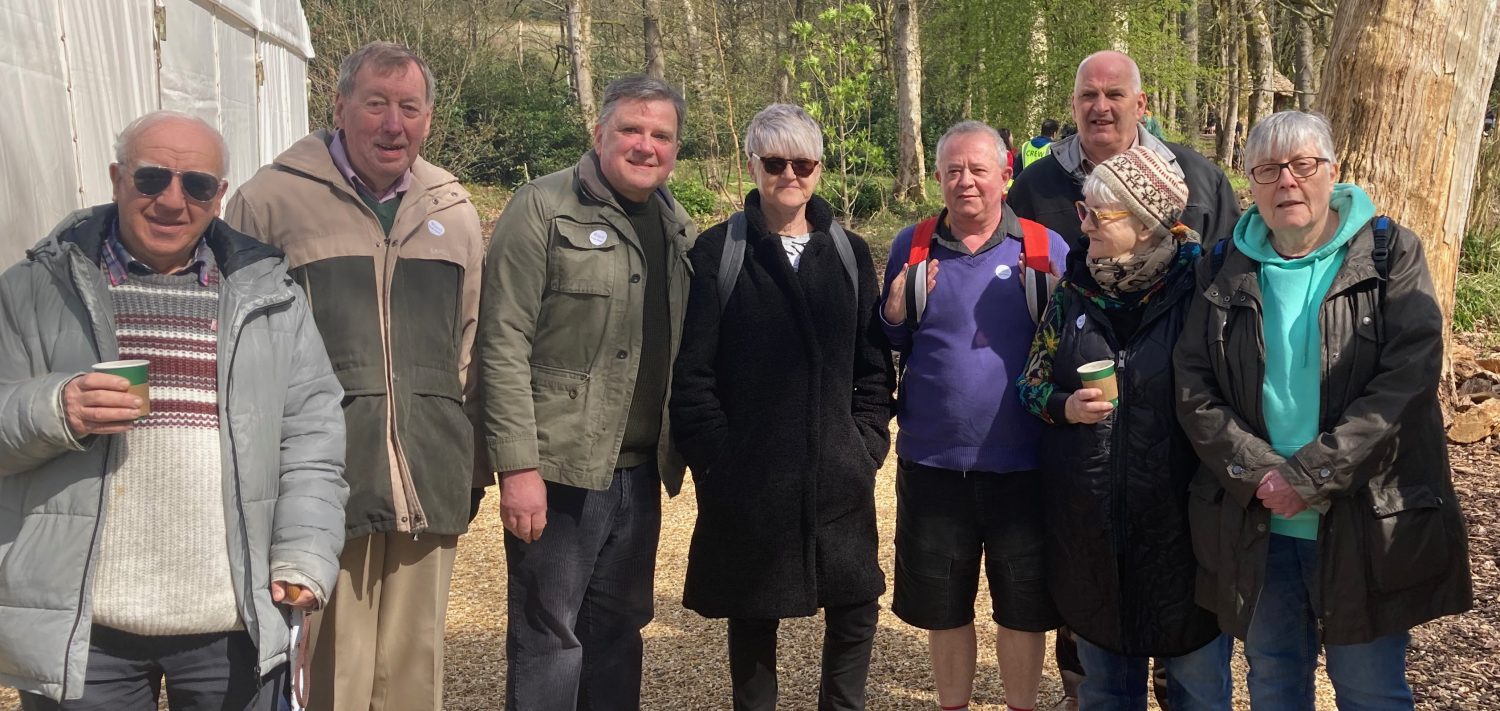
Intergenerational Project
Members of BEE YOUth at the Proud Trust and Pride in Ageing at the LGBT Foundation have been working together on a project.
BEE YOUth is a weekly group for LGBT+ young people, and those questioning their gender or sexuality, aged 13-19 (and up to 25 with additional needs) who live or spend time in Greater Manchester.
The Pride in Ageing programme was set up in response to concerns that too many lesbian, gay, bisexual and trans people over the age of 50 are living in isolation and facing discrimination as a direct result of their sexual orientation or gender identity.
The two groups have been meeting over the last few months, which culminated in “Things Have Only Got Better” – a fantastic evening of songs, poetry, workshops, readings, dance, exhibition and more!


Russia
Russia’s Supreme Court has declared what it described as the “LGBT public movement” an extremist organisation and banned its activities across the country.
The ruling was prompted by a motion from the justice ministry, although no such organisation exists as a legal entity.

Russia’s constitution was changed in 2020 to make it clear that marriage meant a union between a man and a woman. Same-sex unions are not recognised in Russia.
In recent years the country’s LGBT community has come under increasing pressure from the authorities. In 2013 a law was adopted prohibiting “propaganda of non-traditional sexual relations” aimed at minors.
Last year, those restrictions were extended to all age groups in Russia. References to LGBT people have been deleted from books, films, adverts and TV shows.
In November, one Russian TV channel discoloured a rainbow in a South Korean pop video, to avoid being accused of violating the “gay propaganda” law.
Queendom review – queer drag artist’s dangerous protest in Putin’s Russia
Queendom is a documentary which suggests that when performer Gena Marvin takes to the streets she is squaring up not only to prejudice but to the state.
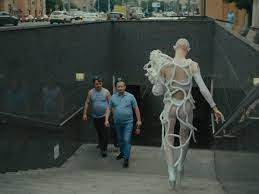
It often takes actual physical courage to be different anywhere you grow up – but it takes superhuman courage to be different in Vladimir Putin’s Russia. Queendom is a study of queer drag performance artist Gena Marvin (born Gennadiy Chebotarev), who challenges the machismo of the Putin regime, the attack on Ukraine and the Russian state’s homophobic attitudes in general by taking to the streets in Moscow, either as part of a demonstration or on her own, always in extravagant, surreal outfits and vertiginous heels, like a Giacometti figure — sometimes subversively assuming the three colours of the Russian Federation’s flag. Often she is beaten up.
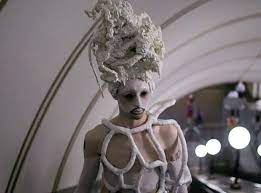
Gena was born in the grimly remote far eastern town of Magadan, associated with forced labour camps of the Stalin era; here she infuriated the locals with drag experiments, got a wide following on TikTok, then moved to Moscow to study. Then she got thrown out of college and had to come home, before finally going to France as a refugee. She is also an orphan who was brought up by her grandparents and has an explosive relationship with her grandfather who never makes any secret of his alienation from Gena’s identity and his profound irritation that it is getting Gena into trouble. He even demands that Gena join the army and Gena (perhaps to humour him) finally shows up at the recruitment centre in fatigues – but doesn’t enter.
Gena is only 21. She stages radical performances in public that become a new form of art and activism. By doing that, she wants to change people’s perception of beauty and queerness and bring attention to the harassment of the LGBT+ community. The performances – often dark, strange, evocative, and queer at their core — are a manifestation of Gena’s subconscious. But they come at a price.
The documentary is being screened at HOME Cinema, 2 Tony Wilson Place, Manchester M15 4FN on Tuesday 5 December at 4:10pm and will be preceded by a recorded Q&A with director Agniia Galdanova, presented by Reclaim the Frame.
The screening and the recorded Q&A will have standard English subtitles.
Was Roman emperor Elagabalus really trans?
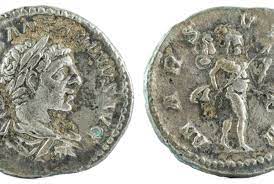
There are legendary dinner parties, and then there are the stories told about those thrown by the Roman emperor Elagabalus. The teenage ruler, who managed just four years as emperor before being assassinated at the age of 18 in AD222, would serve bizarre dishes like camels’ heels or flamingos’ brains to guests, stage themed nights when all the food was blue or green, or release lions or bears to roam among the diners.
On one famous occasion, according to a Roman historian, those present at a dinner were suffocated to death under an enormous quantity of rose petals; another saw guests seated on slowly deflating whoopee cushions – their first recorded use in western history.
But did he really do all those things? Or perhaps we should be asking – did she? The obscure young emperor made headlines this week when it was reported that North Hertfordshire Museum in Hitchin has changed the pronouns it uses with reference to a coin of Elegabalus in its collection, and would now refer to the emperor as a trans woman using “she” and “her”.
It’s not such a stretch as it may sound. As well as throwing wild parties, Elagabalus was also said to have openly flouted contemporary gender roles. The emperor is said to have also dressed as a female sex worker, “married” a male slave and acted as his “wife”, asked to be referred to as “lady” rather than “lord” and even, according to one account, begged to have a surgical vagina made by a physician.
The stories led Keith Hoskins, executive member for arts at North Herts council, to say in a statement: “Elagabalus most definitely preferred the she pronoun, and as such this is something we reflect when discussing her in contemporary times … It is only polite and respectful.
“We know that Elagabalus identified as a woman and was explicit about which pronouns to use, which shows that pronouns are not a new thing.”
But do we know that? Thanks to a growing awareness of more complex ideas of gender in history, and a desire to reject historical prejudices, Elagabalus has been reclaimed in recent decades as a genderqueer icon.
However, many historians disagree that the evidence is as unambiguous as the museum says. Mary Beard, formerly professor of classics at Cambridge University, directed followers on X to her latest book, titled Emperor of Rome, which opens with a lengthy discussion of the “tall stories” told about Elagabalus.
The accounts of sexual unconventionality (and extravagant cruelty) largely originate with hostile historians who wanted to win the favour of Elegabalus’s successor, Severus Alexander, and so portrayed the emperor in the worst light possible, she says. “How seriously should we treat them? Not very is the usual answer,” Beard writes, calling the stories “untruths and flagrant exaggerations”.
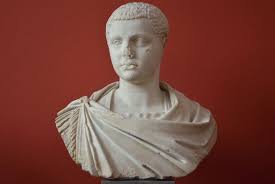
The Romans may not have shared current understandings of trans identity, but several of the contested accounts about Elagabalus feel remarkably modern, points out Zachary Herz, assistant professor of classics at the University of Colorado in Boulder, who has written about how we should approach the story of Elagabalus in the context of queer theory.
Asserting that Elagabalus requested female pronouns is an “astonishingly close translation” of a story written by the third-century historian Cassius Dio, says Herz. “Elagabalus is literally saying, ‘Don’t call me this word that ends in the masculine ending, call me this word that ends in the feminine.’ So it’s unbelievably close to correcting someone’s pronouns.”
The problem, as he sees it, is that “I just don’t think it really happened.” “The quote-unquote biographies” written under Elagabalus’s successor are “hit pieces”, he says. “I would be inclined to read [them] as basically fictional.”
Martijn Icks, a lecturer in classics at the university of Amsterdam and author of a book about Elagabalus’s life and posthumous reputation, agrees that the stories about the emperor should be taken with “a large pinch of salt”. The same “effeminacy narrative” that has made Elagabalus a queer icon “was meant to character assassinate the Emperor, to show that he was completely unsuitable to occupy this position,” he says, adding that other so-called “bad emperors” including Nero and Caligula were described in very similar terms.
Racial prejudice also played a part, says Icks: before coming to Rome to rule it, Elagabalus was a priest in an obscure cult in Syria that venerated a black stone meteorite – a culture that would have been deeply strange to the Romans.
“And the stereotype that Romans had of Syrians … is that they were very effeminate and not real men like the Romans were.”
Some facts about Elagabalus’s biography can be asserted with confidence, says Herz, but in truth, comparatively few. And so while he says he considers it “perfectly justifiable” if his students use “they/them” to refer to the emperor (“if we don’t know a person’s gender, it’s a perfectly polite thing to use”), he believes “he” and “him” more accurately reflect the emperor’s own wishes.
“We don’t know what Elagabalus was like. We don’t know how Elagabalus saw himself. But we have portraits and coins that all look male, that portray him with male facial hair, male features and in garments that would have been understood as male within Elagabalus’s culture – including the coin that the museum has at the centre of its display.” While “there is a long history of people who have been expected to be good at being a man or being a woman and have had a hard time with that”, says Herz, “I worry that when we tell our students they should care about Elagabalus because she’s trans or because they’re non-binary – because they fit a modern category that our students use for themselves – we’re depriving them of the richness of history.”

I’m not just one of your many toys
You don’t own me
Don’t say I can’t go with other boys
In November 1980, Klaus Nomi released his self titled debut album featuring the song “You Don’t Own Me”.
 Out in the City
Hey there! Came across your post on the WordPress feed and couldn’t resist saying hello. I’m already hooked and eagerly looking forward to more captivating posts. Can’t seem to find the follow button, haha! Guess I’ll have to bookmark your blog instead. But rest assured, I’ll be keeping an eye out for your updates!
may i leave a link to my blog here? feel free to post a comment on my site and leave your link 🙂 helps both our sites !!
Hope to see your comment soon 🙂
https://pomeranianpuppies.uk/2023/05/15/the-pomeranians-adaptability-how-well-do-pomeranians-adjust-to-new-environments/
LikeLike