Same Gender Couples from History
“Behind every great man, there is a great woman,” or so the saying goes. But, in some cases, great men in history have been supported – and loved – by members of the same sex. Similarly, over the centuries, women have not always played second fiddle to men, with numerous examples of two women of literature or science forming loving bonds.
Of course, people weren’t always as accepting of same-sex relationships as they tend to be today. In many cases, such unions might have been kept secret or covered up to protect an individual’s reputation. However, some loves were just too great to be lost in the passages of time. Thanks to the clues they left behind, including diaries and letters to the objects of their affection, we can be pretty certain that some of the most notable figures of times past gave their hearts to members of the same sex. Here are just a few of those men and women:
Greta Garbo and Mercedes de Acosta
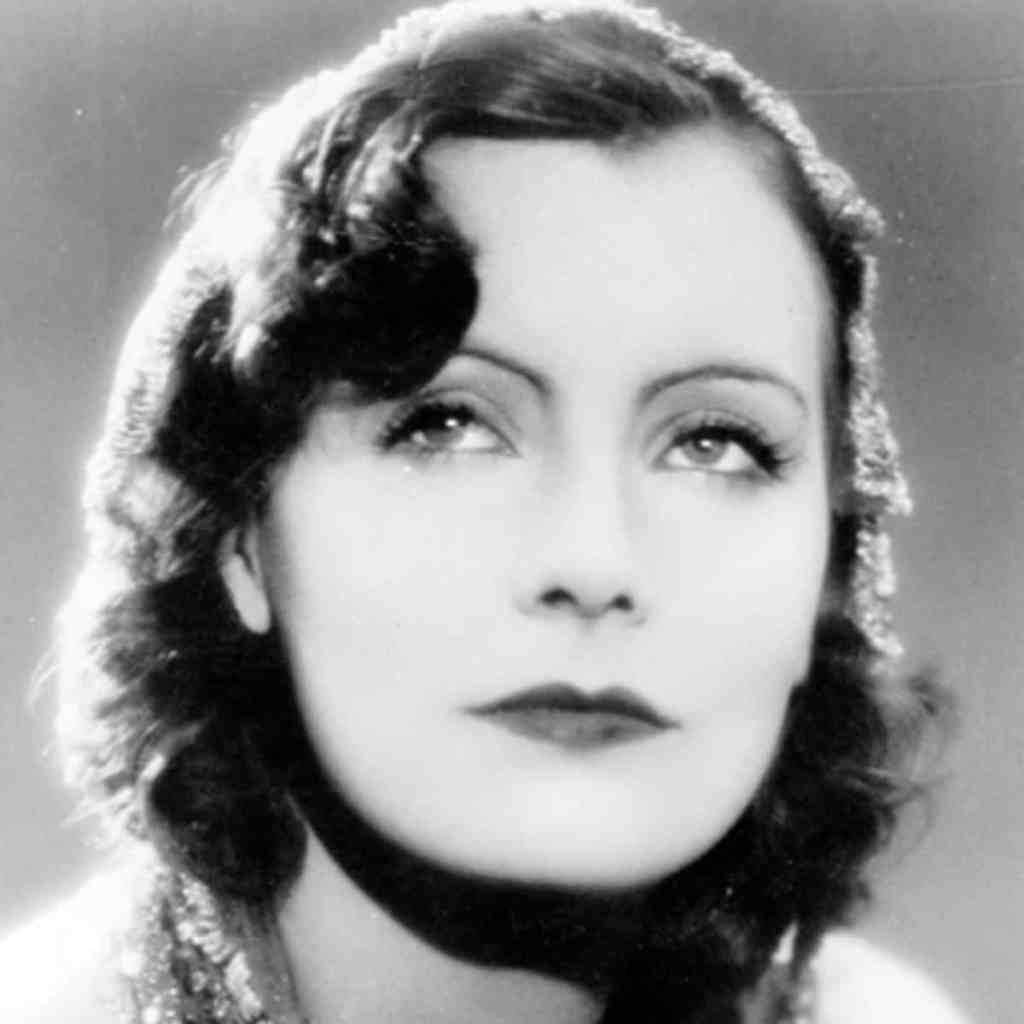
Swedish-born Greta Garbo may have been one of Hollywood’s greatest ever stars, but she was notoriously reserved in her private life. She shied away from publicity and, while she was adored by millions, preferred to live on her own. Despite having been in several relationships with men, she remained unmarried and childless and her sexuality was and continues to be, the source of much speculation. Above all, her relationship with the writer Mercedes de Acosta, an out and proud lesbian, was almost certainly more than simply platonic.
The pair met in 1931, four years after the end of Garbo’s most famous romance, her relationship with actor and frequent co-star John Gilbert. Over the course of three decades, the two women enjoyed a romance that was volatile, to say the least. However, for every fight, there was a reconciliation. It’s possible one reason for such volatility was the colourful love life of Acosta. As well as Garbo, she counted numerous Hollywood leading ladies among her lovers and eventually became known more for her affairs of the heart than for her prose. Moreover, while Garbo and many other Hollywood stars of the time preferred to keep their private lives out of the newspapers, Acosta openly flaunted her sexuality.
Despite Acosta showing no sign of wanting to settle down, Garbo continued to be infatuated with her. In fact, she sent more than 180 cards, letters and telegrams to the writer over the years, many of them believed to be romantic or even raunchy in nature. However, while these items of correspondence have survived and are housed in a special archive, the families of both women have only made fewer than half of them available, further fueling speculation that Acosta was far more than a friend and occasional professional collaborator.
Mercedes De Acosta died in 1968, having endured several years of ill health and financial struggles. Tragically, her later work was widely shunned by the literary world due largely to its alleged promotion of homosexuality. Garbo was to survive her former partner by 22 years, dying fabulously wealthy but alone. More than a decade after the screen icon’s death, relatives of the Swedish actress and theatre director Mimi Pollark released correspondence she received from Garbo, letters which suggest that the two women also enjoyed a romantic relationship that lasted for several years. In one, Garbo lamented: “We cannot help our nature, as God has created it. But I have always thought you and I belonged together.”

Virginia Woolf and Vita Sackville-West
The Bloomsbury Group of writers and thinkers dominated the London cultural scene in the years between the wars. But despite their undoubted literary talents, at the time they were sometimes better known for their colourful private lives as they were for their novels, essays or poems. And few lives were as colourful as that of the author Virginia Woolf, widely acknowledged as one of the most important British writers of the twentieth century.
Born into an upper-class family and benefitting from an elite education, Virginia Stephen followed convention and married fellow writer Leonard Woolf, a key member of the Bloomsbury set, in 1912. By her own admission, the marriage was a happy one, though in true bohemian style, it was a relaxed union, with both free to pursue other romantic adventures. So, when Virginia met the gardener and aspiring writer Vita Sackville-West in 1922, she sensed they could be more than good friends.
While both women were married, they embarked on a sexual relationship. Interestingly, both of their husbands were aware of the affair but raised no objections. Indeed, the men even encouraged their partners to pursue their own happiness. As Sackville-West’s own letters testify, the relationship was only fully consummated on two occasions. However, the connection was more than merely sexual. At this time, Sackville-West was by far the better-known and more successful writer and she encouraged Woolf to believe in herself. She also offered emotional and practical support when Woolf suffered one of her many episodes of serious depression.
The romance came to an end at some point towards the end of the 1920s. However, the pair remained firm friends, with their bond only broken with the death by suicide of Woolf in 1941. After her death, Woolf was to receive the popular and critical acclaim many believed she deserved during her lifetime and is now regarded as a true literary pioneer. She is also held up as a pioneer in feminism. Sackville-West, meanwhile, died in 1962 at the age of 70. Their romance lives on, not just through the correspondence they shared, but also in the shape of theatre works and even movies telling the tale of their deep love.
Gertrude Stein and Alice B Toklas
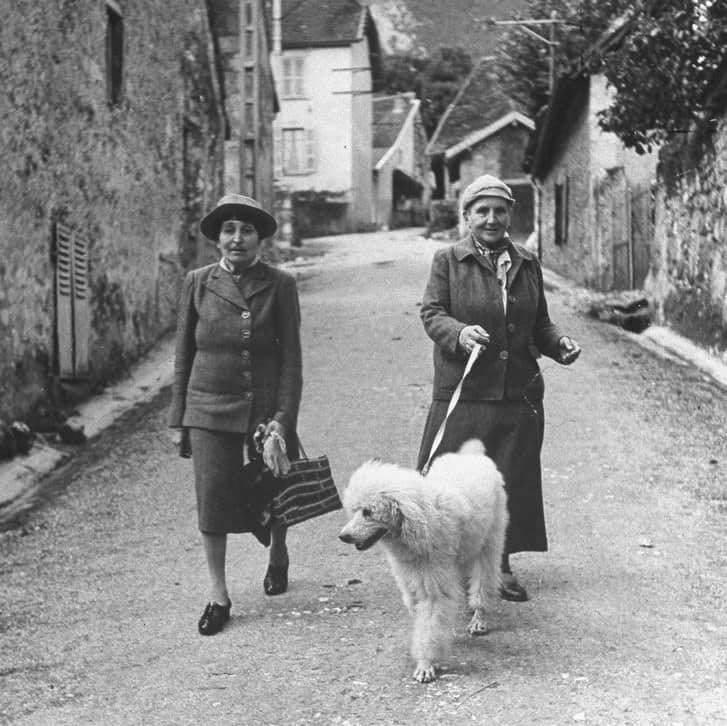
Paris at the beginning of the twentieth century was the epitome of the bohemian good life. Among those American writers who made their home on the Left Bank was the novelist, poet and playwright Gertrude Stein. It was to the City of Light that Toklas, herself an aspiring artist, moved to in 1907. Just one day after arriving in the French capital, Toklas met Stein and one of the most celebrated romances in modern American literature was born.
The pair soon became a central part of the avant-garde movement. They hosted regular literary salons at the flat they occasionally shared, attracting such figures as Ernest Hemingway (who referred to Toklas as Stein’s ‘wife’) and the Spanish artist Pablo Picasso. After two years together, while they spent time back in the United States and summered in Italy, Toklas moved in with Stein, adding a new level of commitment to the relationship. Throughout the 1920s and 1930s, they were hardly ever apart, travelling Europe and the world together, as well as working side-by-side.
While for more than two decades Toklas was happy to remain in the background, serving as her lover’s cook and secretary as well as her muse and best critic, she was thrust into the limelight herself with the publication of her memoirs, The Autobiography of Alice B Toklas in 1933. From then on, the pair were both literary darlings and capitalised on their fame and fortune to travel extensively and lecture across America. With the outbreak of the Second World War, the pair were forced to relocate to a country house in the French mountains. While they were both Jewish, they escaped persecution thanks to the connections a mutual friend boasted in the Gestapo.
Toklas and Stein remained a committed couple right up until the latter’s death in 1946. Sadly, while Stein left the majority of her estate to her partner, their relationship was not recognised in French law, meaning Stein spent her remaining years struggling from financial troubles as well as from ill-health. In the 1980s, Yale University Library made public hundreds of love letters exchanged between the pair over the decades, revealing the true depth of their affection as well lots of smaller details, such as the cute nickname each had for the other.
Walt Whitman and Peter Doyle
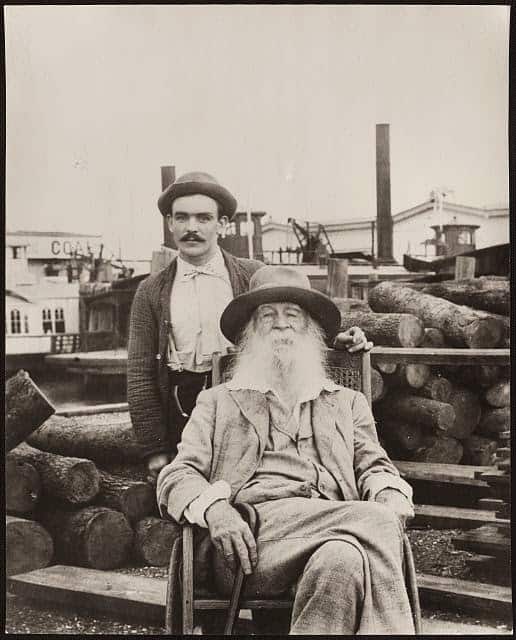
In 1865, Walt Whitman was 45 and making a name for himself as one of America’s finest wordsmiths. Irish-born Peter Doyle, meanwhile, was just 21 and worked as a streetcar conductor on the streets of Washington DC. But, while they may have been poles apart, when their paths crossed, there was an immediate spark. So much so, in fact, that Whitman didn’t get off at his stop but carried on riding the streetcar so he could spend more time with Doyle. The pair even spent that first night together in a Georgetown hotel.
While Whitman might have enjoyed numerous relationships with men during his colourful life, his connection with Doyle was altogether more intense. For a full eight years, after they first met, the pair were inseparable, walking the streets of the capital and spending the nights in the city’s hotels. Though for understandable reasons, Whitman declined to make the relationship public, or even acknowledge his homosexual tendencies, his contemporaries had little doubt of the lifestyle he secretly led. Oscar Wilde was reportedly among those who, having met Whitman in America in 1882, believed the great poet to be gay.
For Whitman and Doyle, the age difference eventually began taking its toll. After Whitman suffered a stroke, Doyle helped nurse him back to health. After a second stroke, however, Whitman left Washington to live with his brother in New Jersey. Despite regular, often steamy letters, the relationship slowly came to an end.
Doyle did manage to see Whitman before the writer’s death and their partnership has been preserved for posterity through his homoerotic verses and the letters the pair exchanged over the years. In his own writings, Whitman would describe the decade he spent in Washington DC as the happiest years of his life, almost certainly due to this being the time he spent with Doyle, the love of his life.
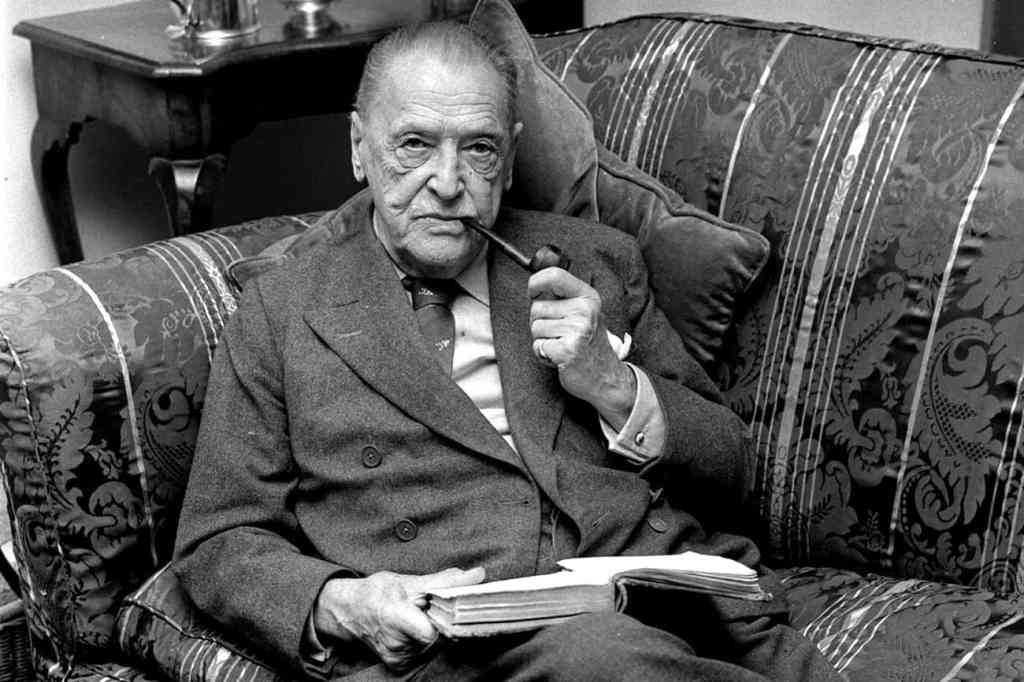
Somerset Maugham and Gerald Haxton
Forget Hemingway or Fitzgerald; William Somerset Maugham is credited with being the highest-earning author of the 1930s. Certainly, he was one of the most interesting characters of this literary period, with much of his work influenced by his time serving as a Red Cross ambulance driver in France during the First World War. It was here, in the midst of the unimaginable carnage of the Western Front, that Maugham met Gerald Haxton, a San Francisco native almost 20 years his junior. The pair embarked on a romantic relationship almost immediately.
The partnership was far from straightforward. As Maugham exclaimed to his nephew. ‘I tried to persuade myself that I was only three-quarters normal and only a quarter of me was queer – whereas really it was the other way around’. However, this was no time to be ‘queer’. From the very start, both men had to remain guarded. The trial of Oscar Wilde, arrested and imprisoned for his homosexuality, meant that gay men were living in fear and stayed very much in the closet. Despite this being a time of extra caution, Haxton was arrested for engaging in ‘indecent behaviour’ with another man while on leave in London in 1915. He was ultimately deported from Britain back to his native California, bringing his relationship with the English writer to an abrupt end.
The bisexual Maugham, meanwhile, met Syrie Wellcome and persuaded her to leave her pharmaceutical magnate husband and wed him. Perhaps unsurprisingly, the eventual union was an unhappy one and the pair divorced after 13 years together, leaving Maugham free to travel and reunite with Haxton.
The pair settled on the French Riviera and were inseparable until the latter’s death in 1944. Thereafter, Maugham embarked on several same-sex relationships before settling down again with his long-time private secretary Alan Searle. This was to be the last affair of the great writer’s life and only ended when Maugham died in 1965.

A Festive Celebration of the LGBT+ Community – Monday, 18 December 7.00pm – 9.00pm
Manchester Cathedral – FREE – ticket needed – apply here.
The Proud Trust, akt, LGBT Foundation, George House Trust and Manchester Pride are coming together for a festive gathering of Greater Manchester’s LGBT+ community at Manchester Cathedral – a space for celebration and inclusion.
We are stronger when everyone is included, and this event will be a celebration of all within our wonderfully diverse LGBT+ community.
Please join us for a joyful evening of Carols and readings. This is a free event, with donations made on the evening supporting The Proud Trust, akt, LGBT Foundation and George House Trust charities, who work hard to keep our community safe and strong.


Rainbow Lottery Super Draw!
We’re thrilled to bring you another amazing prize! This October, one lucky supporter will win a £1,500 Luxury Theatre Trip: a voucher for theatre tickets, a hotel stay, and £500 spending money! For added flexibility, the winner can now choose to take the £1,500 cash, to spend on whatever they like!
The special prize draw will take place on Saturday 28 October. If you already have tickets, you don’t need to do anything extra, but you can always buy extra tickets.
Thank you and good luck!
Buy tickets here.

Today’s Forecast (thanks to Brian Bilston)
After a wet start, rain will give way
to intermittent showers, interspersed
with outbreaks of rain.
As the day progresses, rainclouds
will blow in from the west, bringing with them
the chance of rain-based precipitation
until the early evening,
when the weather will finally settle down
and it will rain constantly.
Tomorrow’s outlook: rain with occasional intervals of rain.

 Out in the City
I’m sure people know that in Hollywood, it was quite usual then for gays and lesbians to be wedded off, so preserving the illusion that they were straight. Gary Grant was married off three times!
LikeLike