
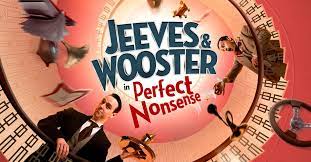
Jeeves and Wooster
Bolton is less than twenty minutes away from Manchester by train, and Bolton Interchange links up the train station with the bus station. When you come out of the Interchange the first building you see is the Olympus Fish & Chip Bar, where we had a very enjoyable lunch.
Despite the rain, golly gosh we couldn’t wait to be welcomed by the Octagon Theatre for an afternoon of very silly nonsense in Jeeves and Wooster In Perfect Nonsense!
Yes, the iconic duo, Jeeves & Wooster have arrived in Bolton to put on a splendid afternoon of theatre.
A brilliantly talented cast of just three perform Jeeves and Wooster in Perfect Nonsense, an absolutely glorious masterpiece in farcical storytelling.
From the character names to the absurd plot (which it was impossible to keep up with), the audience cannot help but laugh out loud at this perfectly silly but hugely enjoyable comedy, in which the audience show their huge appreciation for the actors as they change character, become two characters in one - yes bizarre but brilliant.
The plot centres around the charming Bertie Wooster, who has a tale to tell from playing matchmaker between his newt-fancying acquaintance and the girl of his dreams. Bertie must also secure an elusive silver cow-creamer for his formidable Aunt Dahlia.

Yes, absolutely perfect nonsense but superbly performed by Luke Barton as Bertie, Alistair Cope as Seppings and Patrick Warner as Jeeves.
Warner’s portrayal of reliable and ever so patient Jeeves is perfect and his hilarious performance as Victor and Victoria – at the same time – is a show stealer and earns him a round of applause from the audience.
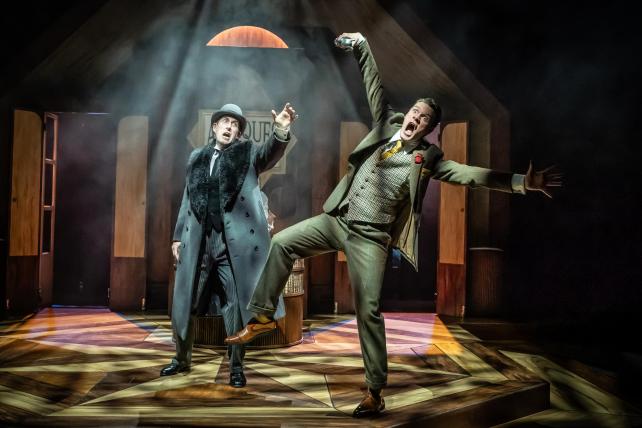
The trio’s comic timing is spot on and the character depictions were a riot – It was a fast paced and dazzlingly inventive comedy with so many twists, turns and mishaps.
It was incredibly silly but hugely entertaining.

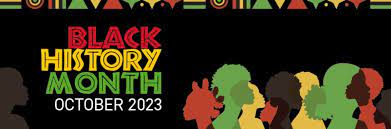
Black History Month
Black History Month is an annual observance originating in the United States, where it is also known as African-American History Month. It has received official recognition from governments in the United States and Canada, and more recently has been observed in Ireland and the United Kingdom.
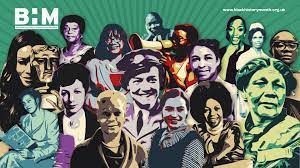
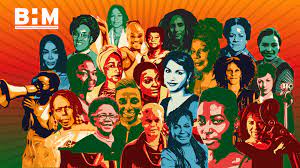
The theme this year is Saluting our Sisters. Black History Month 2023 is a landmark occasion to recognise and applaud the invaluable contributions of black women to British society, inspire future generations, and empower them.

Here are some stories about a black lesbian, black bisexual woman and a black gay man, that are possibly lesser known:
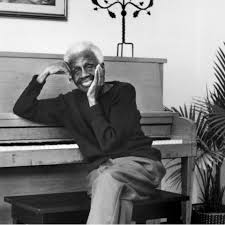
Ruth Ellis (1899 – 2000)
“I was always out of the closet. I didn’t have to come out.”
– Ruth Ellis
Ruth Ellis was born in Springfield, Illinois to parents who were conceived in the last years of slavery. Her life spanned through moments of great turmoil and upheaval – from the Springfield Riot of 1908 to the Detroit Riots of 1967 – an endless backdrop of conflict from which Ellis managed to extract an exuberance for life that was incandescent.
She came out as a lesbian at the age of 16, and got a high school diploma at a time when fewer than seven percent of African Americans graduated from secondary school. In 1936 she met her partner of 34 years, Ceciline “Babe” Franklin, with whom she moved to Detroit, Michigan in 1937.
Ellis became the first African American woman to own an off-set printing business in that city. Her success as an entrepreneur from 1946 to 1971 inspired the couple to turn the home they shared into the “Gay Spot” – a place where young gays and lesbians, who were denied access to both white gay clubs and black straight clubs – could congregate and enjoy a welcoming night club atmosphere decades before the Black Civil Rights Movement and the Stonewall Riot would begin to alter their outlook and options.
Ellis became a fierce advocate for African Americans, senior citizens and the gay and lesbian communities. She offered assistance to lesbians of colour researching their history and their roots; she proposed a variation on Big Brothers / Big Sisters, where younger gays and lesbians would be matched as social companions with gay and lesbian seniors according to similar interests; and the Ruth Ellis Centre, founded in 1999, continues to provide shelter and aid for LGBTQ youth in Detroit.
Her extraordinary life was chronicled in the acclaimed documentary Living With Pride: Ruth Ellis @ 100 (1999) and the city of Detroit recognises her contributions every February, during Black History Month (in US), by celebrating Ruth Ellis Day. She died in her sleep at her home on 5 October 2000, at the age of 101.
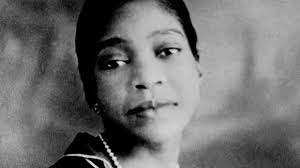
Bessie Smith (1894 – 1937)
“No time to marry, no time to settle down; I’m a young woman, and I ain’t done runnin’ around.”
– Bessie Smith
Born into poverty in Tennessee, Elizabeth Smith lost both her parents at an early age. At 8 she began performing, earning money by singing on the streets of Chattanooga. By 1912 she had joined a travelling vaudeville troupe and was taken under the wing of blues legend (and possible lover) Gertrude Ma Rainey.
With her powerful voice and audience rapport, Smith rapidly became a huge tent show star. In the early 1920s she starred in the musical “How Come?” which went to Broadway. Soon she was known as The Empress of The Blues, the biggest headliner of the black Theatre Owners Booking Association, and the nation’s highest paid black entertainer.
Smith was already widowed from her first husband when she married her second, Jack Gee, but her open bisexuality prompted him to leave her. In 1923 she started recording for Columbia Records, the first of her 160 tracks for the label was “Downhearted Blues.” By then she was touring in her own double-decker train carriage which also provided housing when she and her chorus line could not find hotels that would accommodate black people.
She appeared in the film “St Louis Blues” (1929) and when her Columbia contract ended two years later, she recorded briefly with John Hammond. In 1937 Smith was seriously injured in an automobile accident and had to wait 7 hours before an ambulance would take her to the hospital, where she died of her injuries. Her estranged husband refused to pay for a headstone. 30 years later bisexual Rock and Roll singer Janis Joplin finally bought Smith the memorial she deserved.
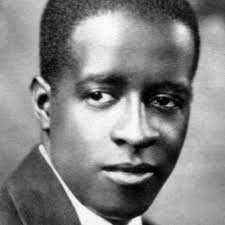
Wallace Thurman (1902 – 1934)
“Being a Negro writer these days is a racket and I’m going to make the most of it while it lasts. About twice a year I sell a story. It is acclaimed. I am a genius in the making. Thank God for this Negro literary renaissance. Long may it flourish.”
– Wallace Thurman
Wallace Thurman was born in Salt Lake City. During his troubled and unstable childhood, he found solace in reading and wrote his first novel at 10.
He began as a pre-med student at the University of Utah, but transferred to USC in Los Angeles. Instead of earning his degree, he left academia to become a reporter and columnist for a black owned newspaper. He began the magazine “Outlet,” which was intended to be the West Coast equivalent of the NAACP’s “Crisis” periodical.
In 1925 Thurman moved to New York and became an integral part of the Harlem Renaissance – a broad cultural movement of African American artists, singers, writers and performers who had migrated to New York. There he worked as an editor and publisher, while writing plays, novels, and essays as well.
In 1926 he became editor of “The Messenger,” a socialist journal for black people, where he was the first to publish the adult-themed stories of Langston Hughes. That same year he collaborated in founding the literary magazine “Fire!” which challenged the notion that black art should be a form of propaganda for white approval, claiming instead that black art should reveal the reality of African American life.
Thurman’s apartment at 267 West 136th Street, its walls adorned with Richard Bruce Nugent’s homoerotic murals, became the cultural meeting place of this new black artistic movement. In 1928 Thurman edited the magazine “Harlem: A Forum of Negro Life.”
That same year he married Louise Thompson, who soon sought a divorce claiming Thurman was a closeted homosexual and their union incompatible. Thurman, the first African-American reader for a major publishing house, is best known for his work The Blacker the Berry: A Novel of Negro Life (1929) which explored discrimination based on skin tone within the black community. Later that year his play, “Harlem,” debuted on Broadway. Thurman died in 1934 from tuberculosis exacerbated by alcoholism.

National Coming Out Day
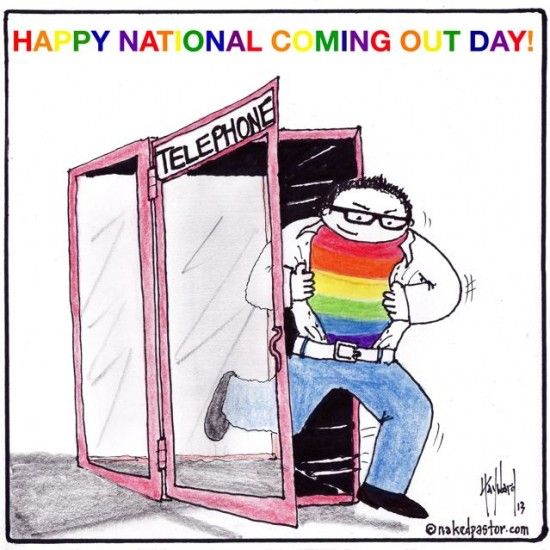
It was National Coming Out Day on 11 October.


 Out in the City
Thanks for an enjoyable afternoon in Bolton
LikeLiked by 1 person