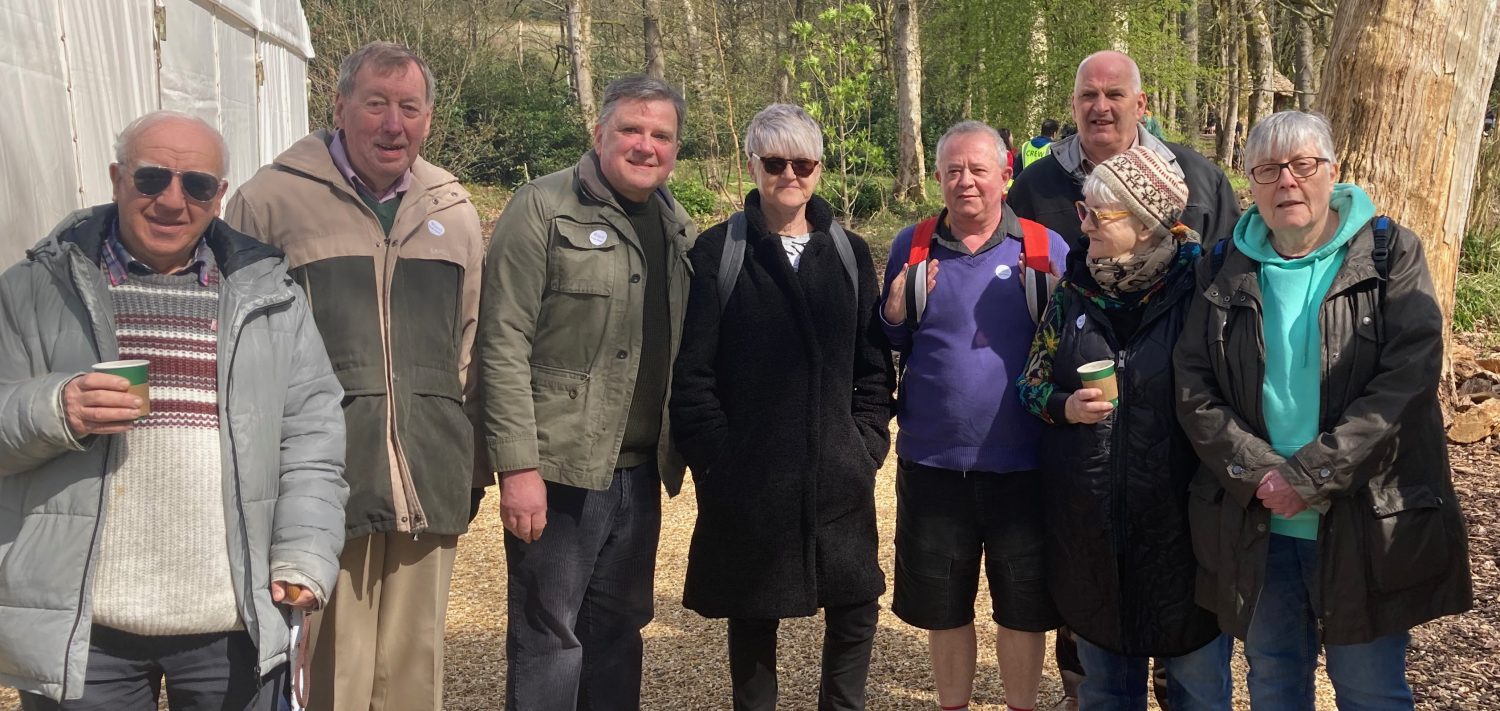
Harrogate
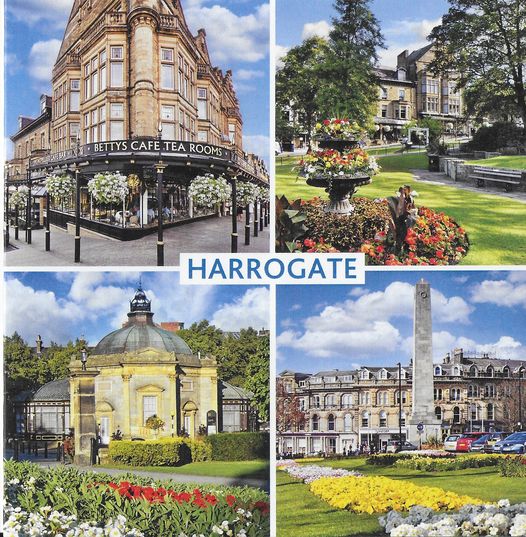
This week we visited Harrogate – a spa town in North Yorkshire.
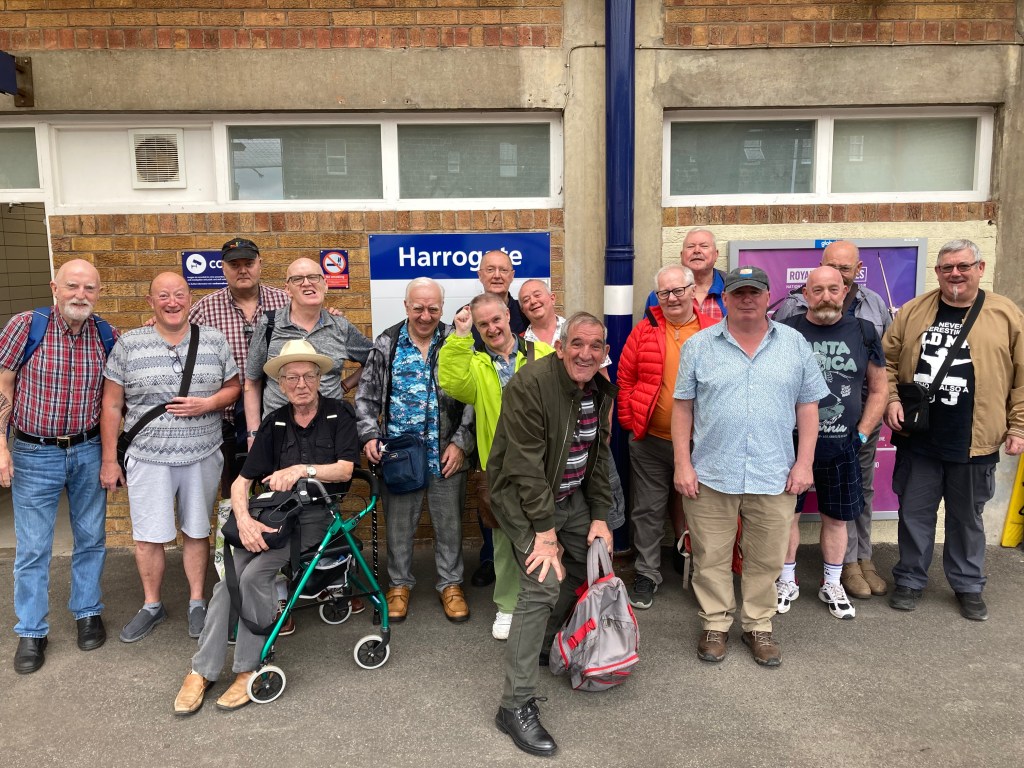
Harrogate spa water contains iron, sulphur and common salt. The town became known as ‘The English Spa’ after its waters were discovered in the 16th century. In the 17th and 18th centuries its waters (containing iron) were a popular health treatment, and the influx of wealthy but sickly visitors contributed significantly to the wealth of the town.
We visited the Winter Gardens for lunch. This is a Wetherspoons pub, but unlike any other Wetherspoons pub. The former Royal Baths included the Winter Gardens – built so that visitors could relax and stroll in any weather. Its name lives on in this Wetherspoon pub. During the 1920s, people could relax here, amid potted palms, listening to music from a grand piano.
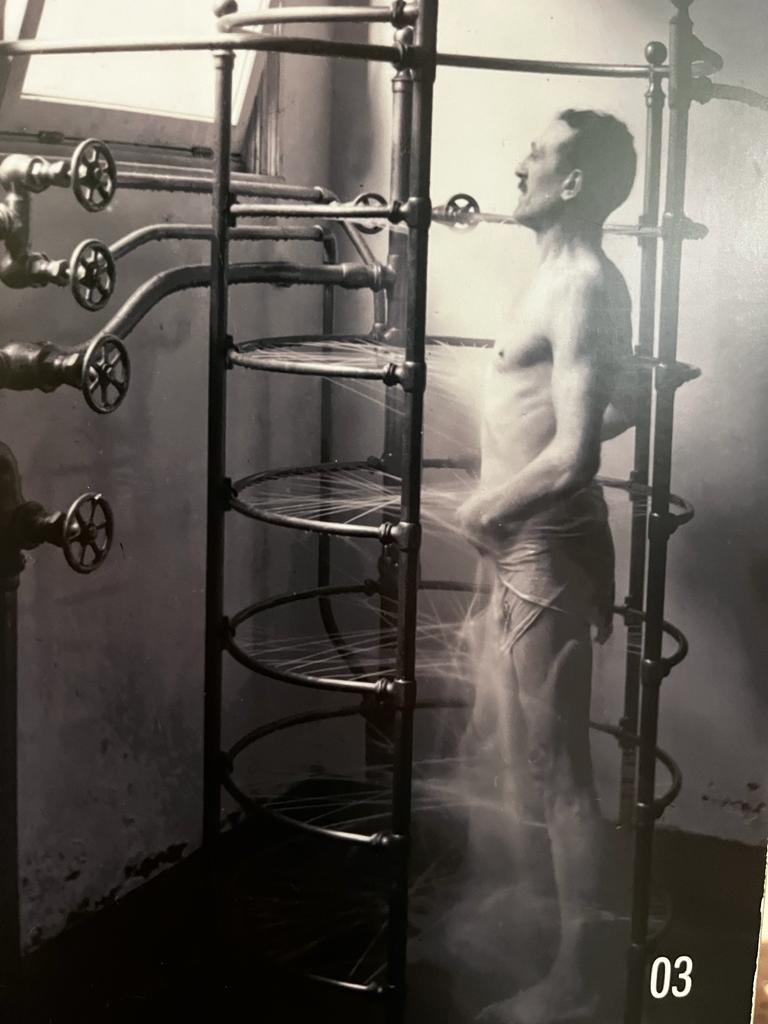
We then took a stroll to the Royal Pump Room Museum, which gave us a fascinating insight into the popular spa treatments known as “the cure’.
The Royal Bath Hospital

The Royal Bath Hospital opened in 1826, for the treatment of the poor who lived more than three miles from Harrogate. This was a charitable enterprise to help those who needed treatment, but could not afford to pay for accommodation. The hospital treated diseases that could be helped with spa treatments and for this purpose drew on the sulphur water of Bogs Field (now Valley Gardens).
In 1889 a new hospital was opened, which remained open until 1994.
The daily routine
A daily routine for the wealthy visiting Harrogate on the late 19th century to take the “cure” would be as follows:
7.00 – 8.00am Rise and visit Pump Room for first tumbler of water
7.00 – 8.15am Walk about, listening to the band
8.15am Take second tumbler of water
9.00am Breakfast
“For some people it is advisable that they drive; either by omnibus, carriage or bath chair but the walk home can be advantageous if it can be accomplished without undue fatigue. Care should be taken to avoid exertion.”
10.00 – 11.00am Morning paper or letter writing
11.00am Shopping / Walk / Listen to band / or Bath
11.30am Second visit to the Pump Room
1.00pm Rest for half an hour
1.30pm Lunch to be followed by one hour of rest
Afternoon: Driving, walking, cycling, golfing or third visit to the Pump Room. Afternoon tea in gardens, listening to the band.
7.00pm Dinner
Concert room
10.00pm Bed
For some patients massage is better than exercise.
We enjoyed our trip and lots of photos can be seen here.

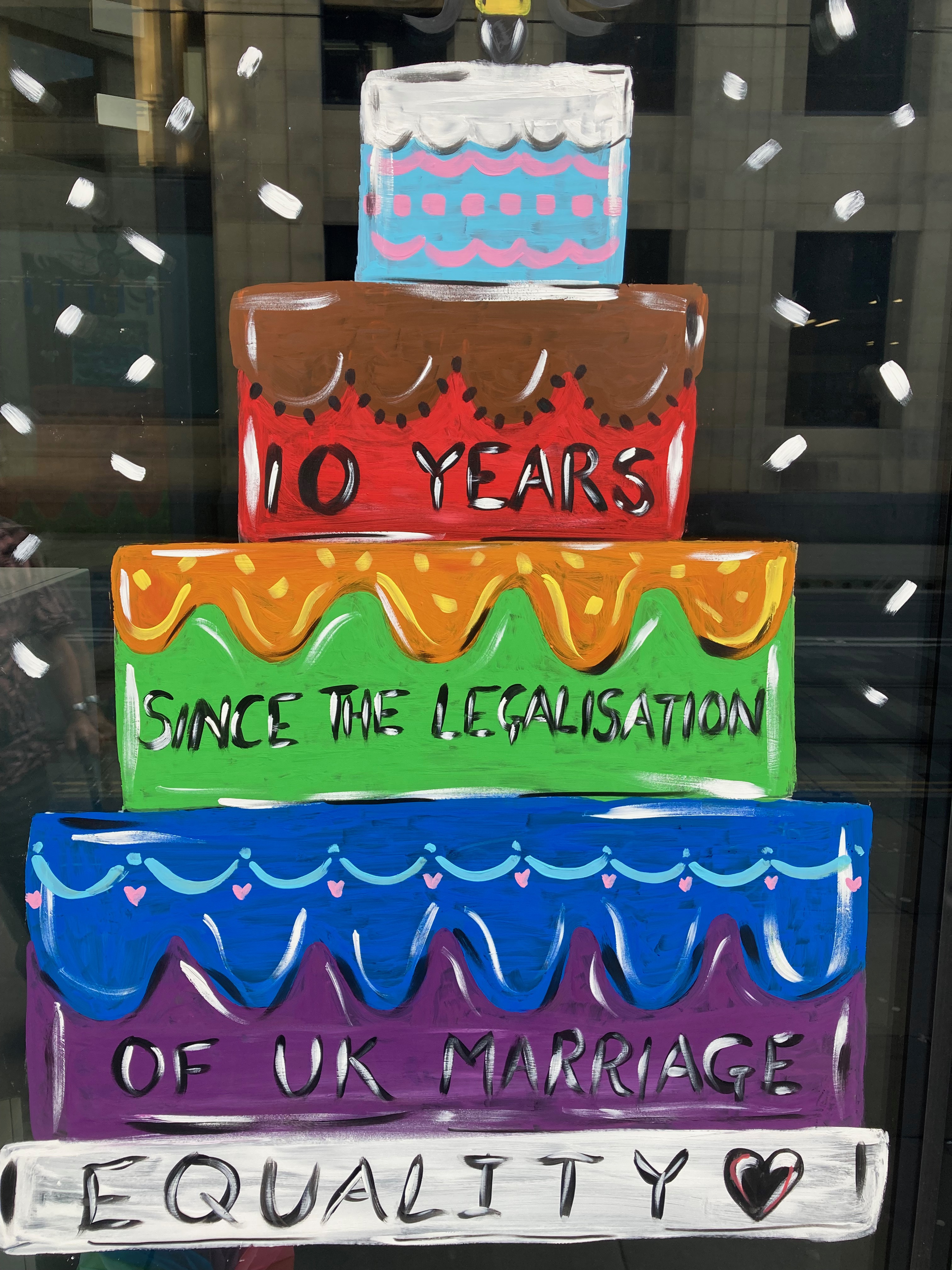
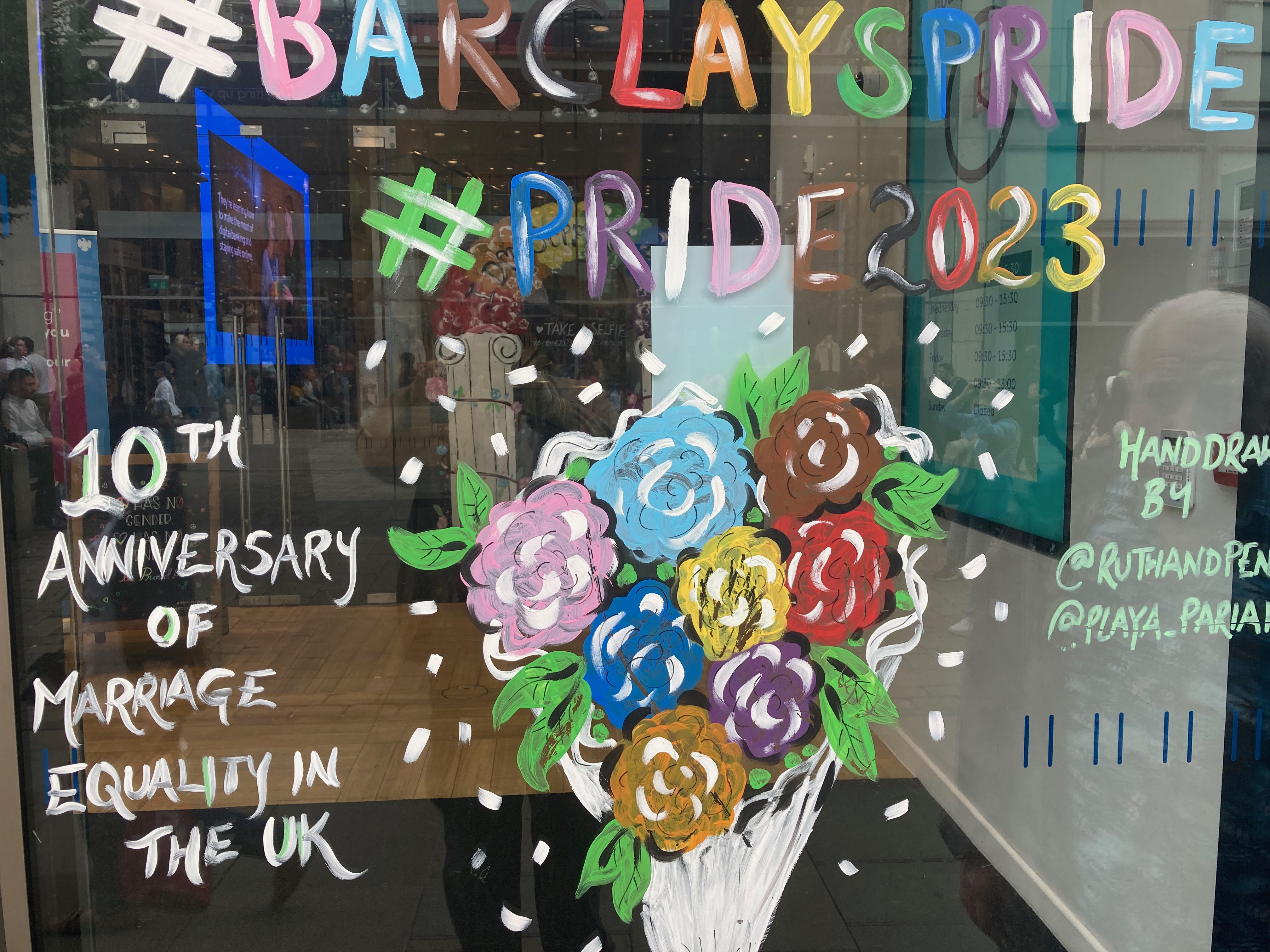
Celebrating 10 years of equal marriage
The Marriage (Same Sex Couples) Act 2013 gained Royal Assent on 17 July 2013, after months of intense work. We have recently celebrated the ten year anniversary.
The Act was drafted by Government Legal Department (GLD) lawyers, the Office for Parliamentary Council, Government Equalities Office and other government departments. It allowed same sex couples to marry, whether in a civil ceremony or a religious one, where the religious organisation allowed such marriages. Crucially, the Act provided protection for those religious organisations that did not want to authorise such marriages, thereby ensuring freedom of religion for all religious organisations.
The Act required legal knowledge on everything from marriage and civil partnership in England and Wales, consular and armed forces marriage, divorce law and the law on the Church of England. There were many challenges along the way, particularly with crafting appropriate religious protections for those religious organisations that did not support same sex marriage.
GLD lawyers Tracey Kerr and Suzanne Lehrer who worked on the Act, and who are still at GLD, said of their work:
Tracey Kerr, Deputy Legal Director at the Department for Education, “Leading the amazing GLD legal team who worked on this legislation has been one of the highlights of my career so far. To be at the forefront of delivering this and other life changing law for so many people is one of the main reasons why I love my job. It’s the perfect combination of challenging legal issues and making a real difference.”
Suzanne Lehrer, Senior Lawyer at the Department for Education, “I worked on the Bill and its implementation. It was very satisfying to take a policy right from the start up to its coming into force – especially one with such a huge impact on people’s lives. I’ve been to a wedding that happened because of the Act, which was all the more special as a result. It’s the work I’m most proud of in my career as a government lawyer.”

Couples had to wait until March 2014 for the law to take effect and necessary changes to be made, meaning the first weddings happened on 29 March 2014.
It is now firmly established and supported by all sections of society, with a YouGov survey carried out in July 2023 finding 78 per cent of Britons say they support same-sex marriage, the highest level recorded to date.
A total of 62 per cent of over-65s back same-sex marriage, compared with only 27 per cent in 2011 when the plan to introduce it was first announced.
Almost half (47 per cent) of Britons say they personally know someone in a same-sex marriage.
Since the law was changed, there have been more than 50,000 same-sex marriages in the UK, according to the Office for National Statistics.
According to the latest census, there were about 402,000 people in legally formalised same-sex relationships — same-sex marriages or civil partnerships — in 2021 across England and Wales.
That compares with 104,942 at the time of the last census, in 2011, at which time same-sex marriages were not performed or recognised.

Mae West and Camp
A camp diva, a queer icon, and a model of feminism – the memorable Mae West left behind a complicated legacy, on and off the stage.

She was born 130 years ago today on 17 August 1893.
You may recall that in 2019, New York’s Metropolitan Museum of Art’s annual gala celebrated all things camp. Jared Leto carried his own head as an accessory and Billy Porter arrived, swathed in gold sequins and actual wings, on a litter borne by six extremely muscular gentlemen.
The accompanying exhibit attempted, in a mint-green text panel, to define the whole affair in the words of actress Mae West: “Camp,” she commented in 1971, “is the kinda comedy where they imitate me.”
West had good reason to say this. In the long arc of a career that went from vaudeville to 1980s B-movies, West was a hardworking actress who loved to push envelopes. From obscurity to fame, comeback to caricature, she spent decades delighting in the stylisation, excess and shock value of what we would come to know as camp culture.
Susan Sontag is largely credited with popularising the phrase “camp” to describe the long-running cultural vogue for and fascination with things that are just a tiny bit extra; her “Notes on Camp” is an attempt to wrap arms around the cultural concept and its embrace of exaggerated artifice. Sontag, too, turns to Mae West as an example of camp well done, writing that while unwitting camp is the best kind, West could give something just as good – a performance that, “even when it reveals self-parody, reeks of self-love.”
Born in 1893, Mae West was performing in vaudeville by her teenage years. She debuted on Broadway as an eighteen-year-old dancer and hustled her way through various song-and-dance roles, becoming semi-famous for doing “the shimmy” in the Broadway revue Sometime. Still, by the 1920s, she was a theatre veteran with little name recognition and few prospects.
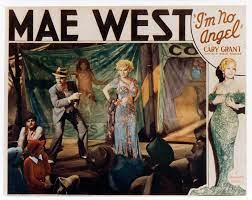
To bring her career in line with her ambitions, West started writing plays herself. Cobbling together financing and theatre rental, she put together a Broadway production, cast herself as the lead (a Montreal sex worker), and debuted it in 1926 under the rabble-rousing title: SEX.
The play was unanimously panned by New York’s theatre critics, all of whom predicted its immediate failure and some of whom called for police intervention. Yet despite this condemnation – or rather, no doubt, in part because of it – SEX became one of the major hits of the 1926 season, playing to mostly full houses until forced to close in March 1927.
That forced closure was the result of a raid by the NYPD vice squad, thanks to which West was charged with obscenity and spent eight days in the women’s prison on Roosevelt Island – an event that, to West’s delight, only boosted her public profile. She continued to write boundary-pushing plays, centred on women’s sexuality and gay life. At a time when thin flappers and demure Ziegfeld girls were the fashion, West’s physicality and her embrace of burlesque tropes brought low-class entertainment onto high-class Broadway.
West took advantage of her own notoriety in her 1928 play Diamond Lil, sanding a few rough edges for the sake of public appeal. A vaudeville drama set in the Gay Nineties, Diamond Lil at last made West a star persona. She played a languid, singing, wise-cracking sexpot in drag – in her own words, “a little bit spicy, but not too raw.”
Not everyone was a fan of West’s excess, a version of femininity turned up to eleven and reliant on gay male culture. American cinema scholar Pamela Robinson recounts 1930s reviews that dismissed West as “the world’s best bad actress” and “the greatest female impersonator of all time.” But her hustle was undeniable. In 1928, the New Yorker claimed that West, who writes her own plays and then stars in them, is one hundred per cent good showman. Her showmanship is apparent always, natural, inborn. She may have added to it, learned a trick here and there, but her ability to put herself over and her delight in doing it is a trait that could not have been acquired.
In the 1930s, West got her big break in film. She was nearly forty years old, at an age when most actresses were considered past their prime. She went on to star opposite Cary Grant and W C Fields, and while at one time she was among the highest-paid actresses in Hollywood, she ultimately left the movie business due to clashes with censors, who didn’t feel her burlesque persona fit with the reality of Hays Code Hollywood.
West maintained a career on stage, in clubs, radio, television and music. She returned to films in 1970 as a libidinous casting agent in Myra Breckenridge, based on Gore Vidal’s 1968 transgender novel. The movie was ultimately released with a rare X rating and was universally panned (Film scholar Christie Milliken notes that critic Stanley Kauffman concluded that “The film looks like an abandoned battlefield after a lot of studio forces tussled and nobody won.”)
But West was used to bad reviews and suggestions of censorship, and Myra, along with the likes of late-night television and a 1971 Playboy interview in which she defined herself as camp incarnate, set her up as a resurgent celebrity. New generations with different attitudes toward sex and entertainment – and an appreciation for looking back on campy content – joyfully ate up her double entendres and husky swagger.
West died in 1980 at age eighty-seven. Since her passing, audiences and scholars have explored her legacy as a camp diva, a queer icon, and a model of feminism. The same words that were used to criticise her in her early career – she was “a grotesque, a man in drag, a joke on women, and not a woman” – have come up against a fuller, modern understanding of gender as performance.
Whether she (or camp, for that matter) belongs to any one audience has been debated, but scholar Michael Schuyler argues that Mae West is for everyone: “The best self-consciously produced camp doesn’t take sides but desires, instead, to be embraced by all sides. West, it seems, knew this.”
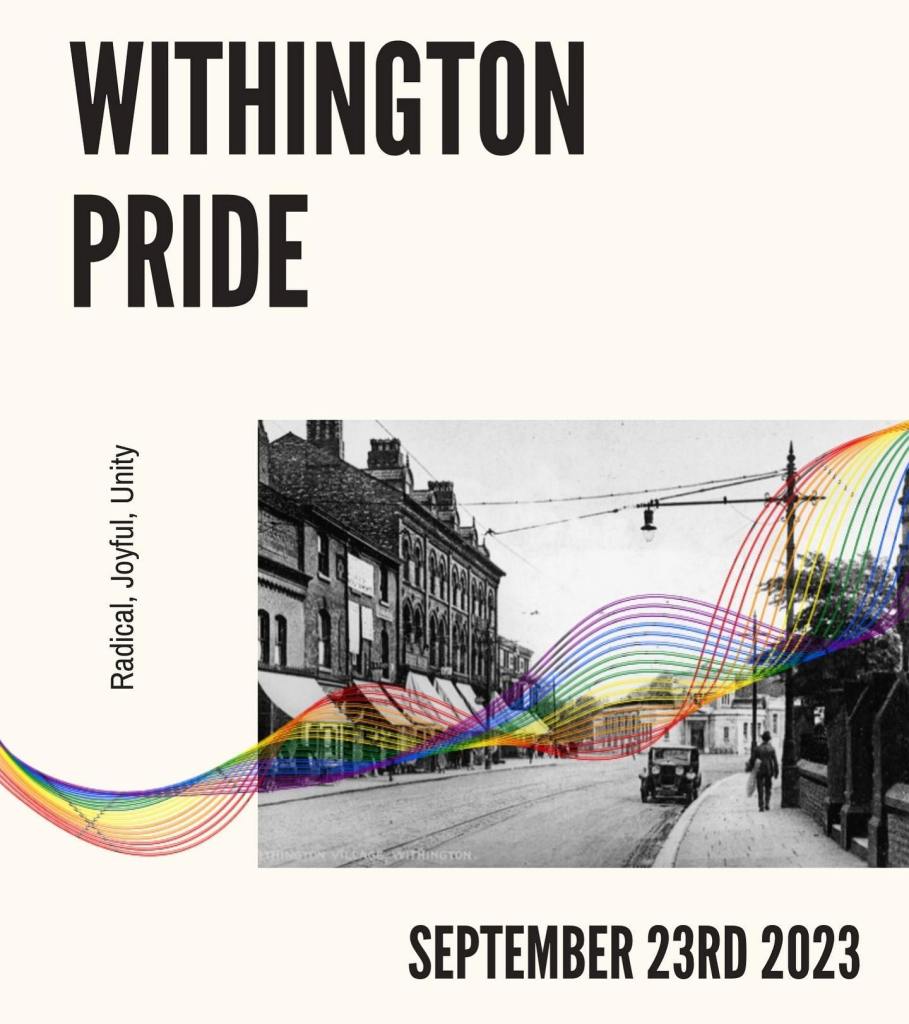
Withington Pride – please note the date
Withington Pride – 23 September 2023 – Radical – Joyful – Unity
A day and night of events across Withington celebrating the local LGBTQ+ community’s vibrancy, creativity, & value, and building community networks of care, allyship and solidarity through music, art and dance!
There’ll be something for everyone from free kids crafts to a march and street party, keep your eyes peeled for more info!
Instagram: @withingtonpride
 Out in the City
Spa treatment seems good. Probably for arthritis. Lovely scenery in Harrogate too.
LikeLike