“Dandy Style” … National Trust continues to celebrate Pride … Transgender Awareness Week

News

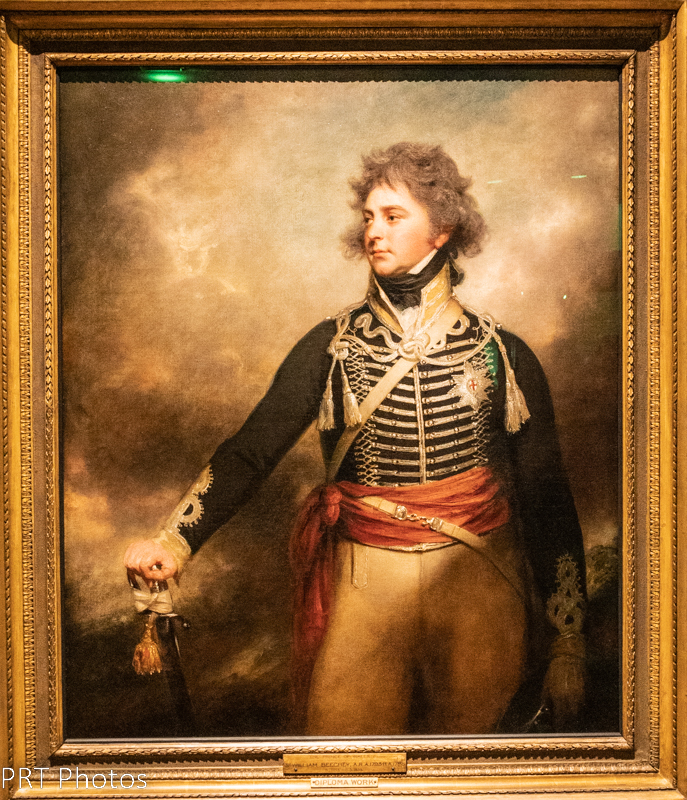
Dandy Style, 250 Years of British Men’s Fashion

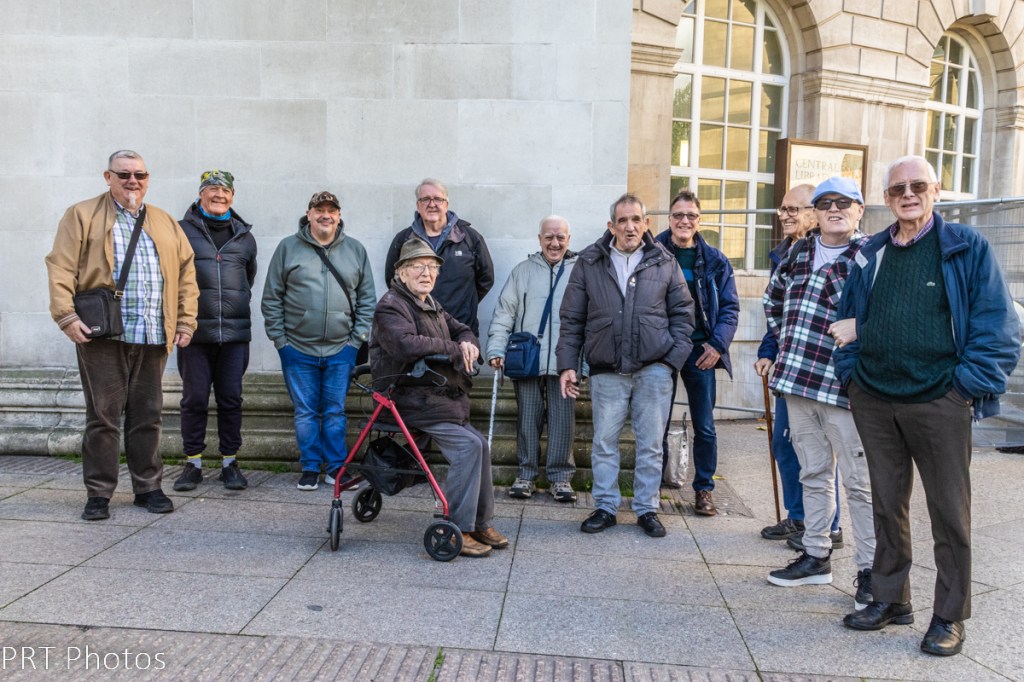
Most of the group dined at the China Buffet restaurant, but we all gathered at Manchester Art Gallery at 1.30pm in order to view the latest exhibition “Dandy Style”.

The exhibition explores approaches to men’s style and self-image. Fashion and art show what certain British men have chosen to wear and how painters and photographers have depicted them. On display was a vibrant mix of the historic and the contemporary, the provocative and the respectable, the personal and the public.

Beginning with the example of the Regency socialite Beau Brummell around 1800, the term dandy has come to define a range of contrasting, always rather mannered male styles; from tailored simplicity to flamboyant embellishment. This exhibition presents this elegance, carefulness and spectacle from the 18th century to the present day.
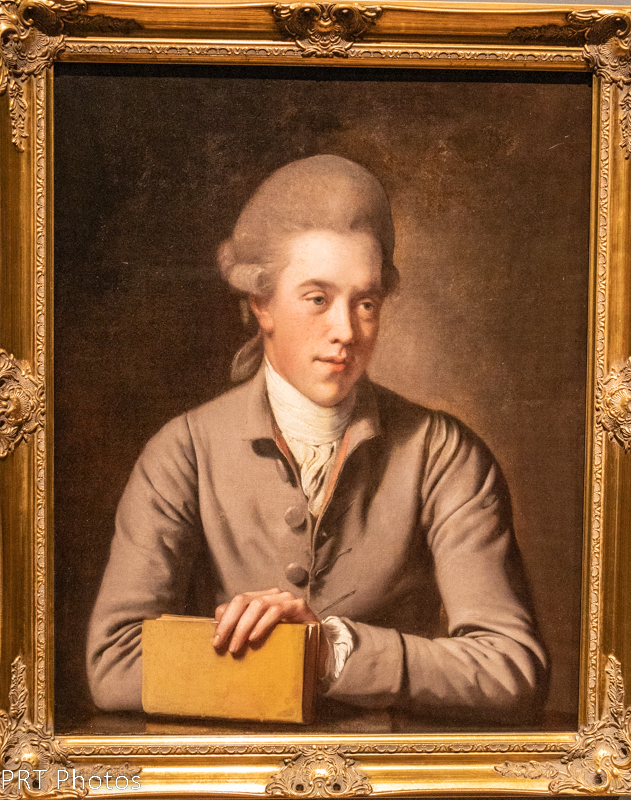
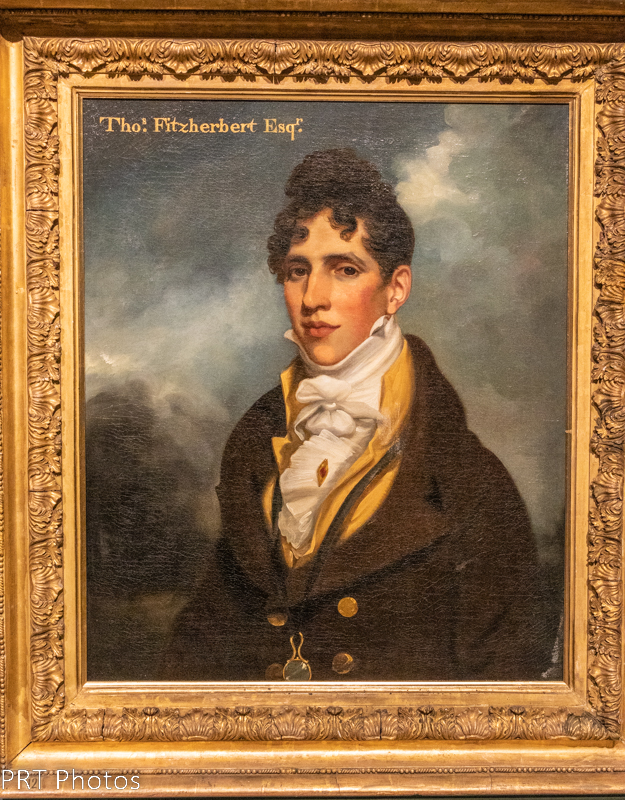
During the 18th century, fashionable British men dressed in highly decorated clothing. This remained the norm for those men able to afford it until around 1800. Embroidery represented the costliest of decorative techniques and still provides a rich source of creative inspiration for recent designers such as Versace and McQueen.

Although British menswear took a more sober turn in the 19th century, even then, colour and decoration could be incorporated in subtle ways according to personal taste. Striped, checked and patterned trousers and waistcoats remained popular into the 1860s. Middle and upper class Victorian men also dressed flamboyantly in a domestic context wearing decorated or patterned gowns or smoking jackets to receive guests. Men dressed themselves as dandies, revelling in military-inspired ornamental braiding, subverting the seriousness of army uniform and wearing garments with deliberately aesthetic decoration such as floral embroidery.
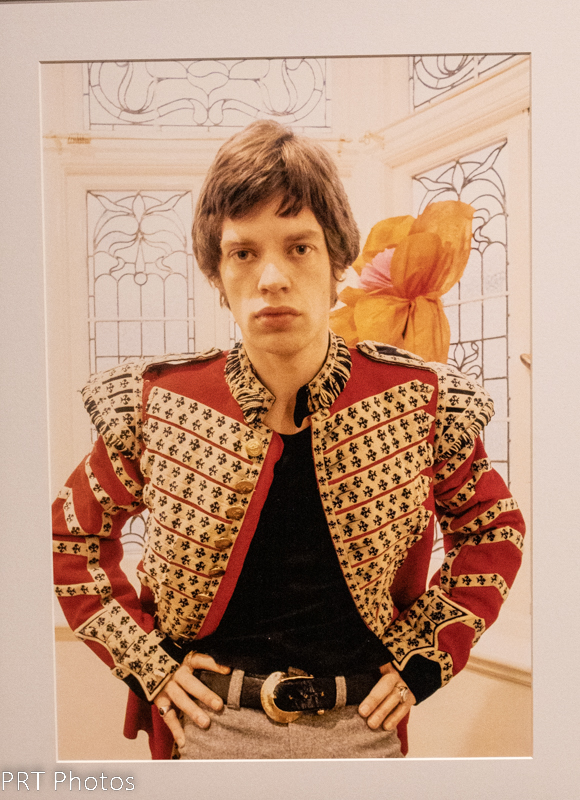
The 1960s saw another generational revolt against social norms and restrictions towards more imaginative dress. Colour and pattern were allowed far freer rein. Shirt frills and ruffles, bold rococo patterns, bright printing and braiding were reintegrated into men’s wardrobes.

Menswear has retained a certain, though not universal, extravagance in the late 20th and early 21st centuries, largely driven by street culture. It now has an established confidence in a vibrant, unapologetic and multi-cultural context

It was an interesting exhibition and more photos can be seen here.

National Trust members vote to continue celebrating Pride despite bigots’ best efforts
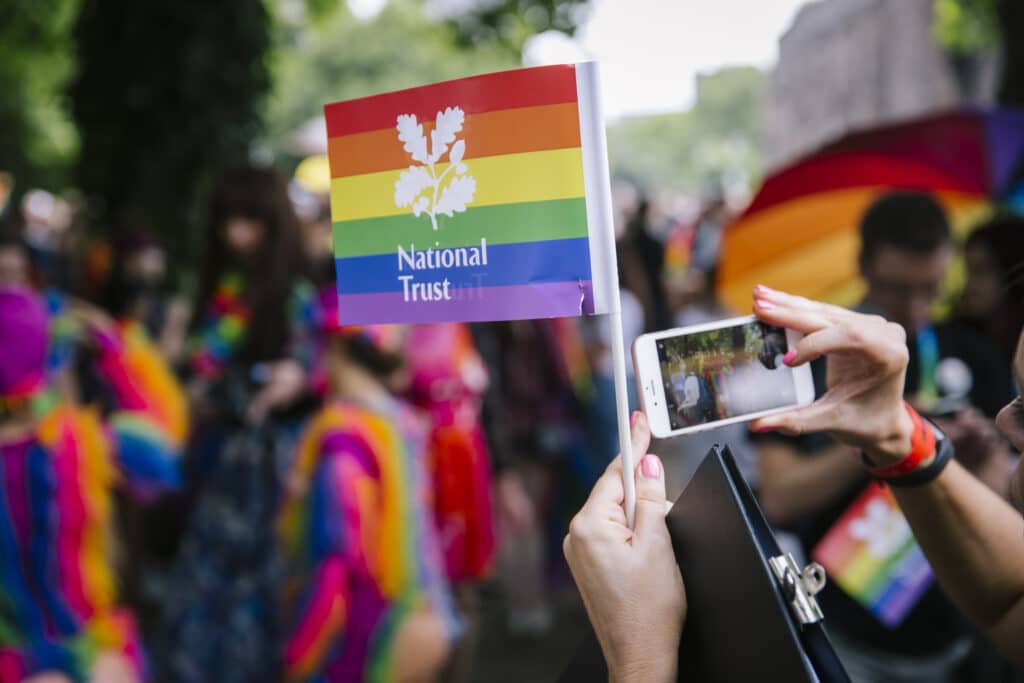
(Twitter / National Trust)

The National Trust is a charity and membership organisation for heritage conservation in England, Wales and Northern Ireland, and owns a wide array of land and historic buildings across the country.

Earlier this year, anti-LGBT+ National Trust members submitted a motion to be put to a vote at the AGM asking members to back banning “divisive” Pride events.

The effort was spearheaded by Stephen Green, a National Trust member and director of the far-right, anti-LGBT+, anti-abortion, anti-evolution and anti-feminism website Christian Voice.

But at the AGM on Saturday, 5 November, when 127,000 (out of six million National Trust members) voted on resolutions, 65 per cent voted against the anti-LGBT+ motion.

The AGM also saw a vote for seven vacant council positions, with Green and other candidates running for election, under the banner Restore Trust. Green has referred to being gay as a “deviant lifestyle”, supported the death penalty for LGBT+ people, and argued that it is impossible for a husband to rape his wife.

Luckily, he and six other Restore Trust candidates were all unsuccessful.

On the Pride motion, a National Trust spokesperson said: “The National Trust was founded for the benefit of everyone. We serve the whole of our wonderfully diverse society and we want to do that to the very best of our ability. This includes supporting our staff, volunteers and visitors to take part in cultural celebrations including Pride, which they have been doing for many years. We fully support our staff, volunteers and visitors being able to take part in celebrations of LGBT+ society and history, including Pride.”
Transgender Awareness Week

Transgender Awareness Week between 13 – 19 November is a week when transgender people and their allies take action to bring attention to the community by educating the public about who transgender people are, sharing stories and experiences, and advancing advocacy around the issues of prejudice, discrimination, and violence that affect the transgender community.

The event is closely followed by the Transgender Day of Remembrance on 20 November, which shows support for victims of transphobic violence.

There have been many pivotal historical moments that relate to transgender advocacy:

1952: Christine Jorgensen is featured in American national media – provided a large number of people with access to information about transgender issues for the first time as she was the first American publicly known to have undergone sex reassignment surgery.

1954: news of the first known British trans woman, Roberta Cowell, broke, gaining public interest around the world.

1964: American trans man Reed Erickson creates the Erickson Educational Foundation – the first foundation to donate millions to promote transgender and gay equality.

1972: Sweden legalises gender reassignment – the first country to legally allow citizens to change sex.

1975: the Gender Dysphoria Clinic at Queen Victoria Hospital, Melbourne was established by Dr Trudy Kennedy and Dr Herbert Bower.

1979: the Victorian Transsexual Coalition and the Victorian Transsexual Association is formed, Australia’s first transgender rights and advocacy organisations were established.

1979: A Change of Sex, the BBC documentary about male to female transgender person Julia Grant.

1986: Lou Sullivan founds FTM International – the first advocacy group for transgender men; the purpose was to challenge the popular idea that all trans men were lesbians before they transitioned into male.

1998: Rita Hester‘s murder – murdered on 28 November because of gender identity, a candlelight vigil was held on 4 December to honour Hester’s life; death lead to inspiration for the idea of the first International Transgender Day of Remembrance started by trans woman Gwendolyn Ann Smith.

1999: The murder of Private Barry Winchell for dating a trans-woman Calpernia Addams.

1999: The first observance of International Transgender Day of Remembrance to commemorate victims of anti-transgender hate crimes, observed on 20 November.

2002: Transgender Law Center founded – aimed to alter laws and opinions regarding transgender people so they could live a life without discrimination based on gender identity.

2002: Sylvia Rivera Law Project founded – provides legal and educational services and works towards altering policies.

2003: National Center for Transgender Equality founded – founded to progress the equality of transgender people through advocacy, collaboration, and empowerment.

2009: The first observance of International Transgender Day of Visibility – this day was created by Michigan transgender activist Rachel Crandall to serve as a positive counterpart to Transgender Day of Remembrance,

2010: the Australian Defence Force policy was amended to allow transgender Australians to openly serve.

2010: Gender Health Center, Sacramento, California, United States of America opened its doors.

2012: The Equal Employment Opportunity Commission declares transgender people protected against employment discrimination because of violations to Title VII of the Civil Rights Act of 1964.

These are just a few of the many important moments that have led to increased transgender advocacy and awareness.
Central Library Backstage Tour … Community Group of the Year Award

News
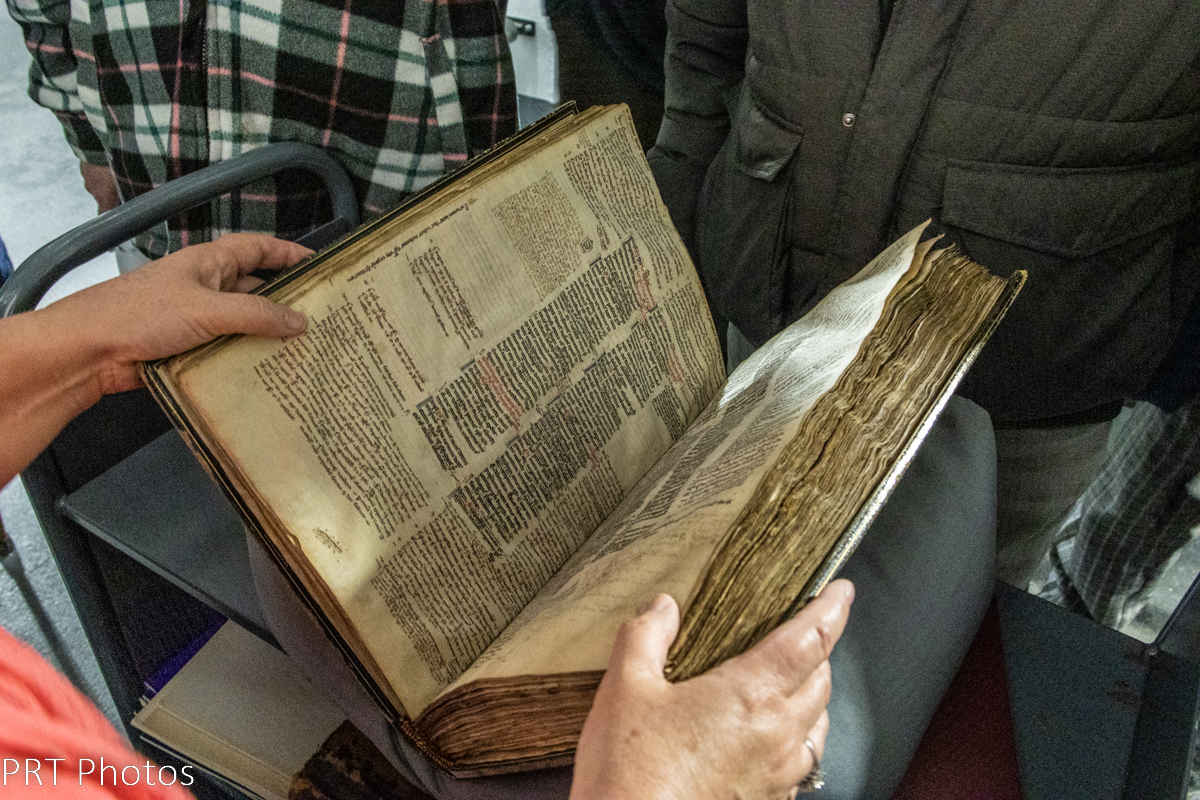
Law book (in Latin) from the 14th Century

Central Library Backstage Tour

Last week we visited Manchester Central Library where we met our guide, Siobhan from Archives+. She showed us around the interactive items on the ground floor before visiting the lower ground floor strong rooms – an area not normally accessible to the general public.

The archives include documents, books, maps, photographs, plans, newspapers and magazines. Siobhan explained to us how to access the archives and collections free of charge.

A section of the archives is dedicated to the history of the LGBT+ community as it is an important part of the social and cultural history of Manchester and the North West.

Manchester has the United Kingdom’s largest lesbian, gay, bisexual and transgender community outside London and is renowned for its Gay Village centred around Canal Street. It has been the home of festivals such as Pride, It’s Queer Up North and Get Bent as well as celebrations around LGBT History Month.

The LGBT Foundation is the UK’s biggest LGBT charity while The Proud Trust has supported young people for more than 30 years. Manchester was the birthplace of the Campaign for Homosexual Equality in 1964 and we were hugely influential in the campaign against Clause 28 in the late 1980s and early 1990s.

The LGBT Foundation’s archive is now held at Central Library. It includes the LGBT Foundation’s own project and event files on HIV, sexuality, LGBT culture and sexual health as well as press cuttings, photographs and lots more.

There is also a wide range of published sources including Attitude magazine (1994 to present), the Pink Paper (1991 to present) and many other lesbian and gay publications such as Gay Times, Gay News, Diva, Boyz and Outnorthwest. The LGBT Foundation published Outnorthwest, the North West’s only free LGBT bi-monthly lifestyle, health and listings magazine, from 2000 to 2014.

The library archives even includes a copy of Tales from Out in the City: an Anthology of Memories (2009) – a volume of memories and reminiscences from older members of the gay community in Manchester, published by Out In The City / Age Concern.

It’s Queer Up North archives

Dance and debate, clubs and comedy, literature and live art, films and fairies, plays and puppetry, thespians and theory – these were just some of the experiences on offer from our city’s very own international LGBT arts festival, It’s Queer Up North.

Thanks to a Heritage Lottery Fund grant, the archives have been catalogued, repackaged and made available at Central Library. The collection as a whole includes promotional materials, artists’ files, photographs, and film from 1992-2006. In addition, an oral history project has recorded the memories and experiences of those involved with the festival.

Lots of great photos can be seen here.

Community Group of the Year Award

Out In The City has been shortlisted for an award at Forever Manchester’s annual Birthday Party on Friday 10 February 2023 at the Kimpton Clocktower Hotel, Oxford Street, Manchester.

The Forever Manchester Birthday Party brings together over 400 passionate and dedicated Forever Manchester supporters to celebrate another great year of helping local people to do extraordinary things together.

This award is in the “Community Group of the Year” category and given in recognition of a community group or project that has made a meaningful and significant impact, strengthening communities, making a difference, and putting smiles on peoples faces.

The shortlist of Community Groups is:

Ashton Community Chess Club, Buile Hill Mansion Association, Community Buds, On Top of the World, Out In The City and Trafford Handball.

Peter Tatchell on Homophobia, Hope and Qatar … Records of Gay Military Sackings deleted by Ministry of Defence

News

‘I’ve had hundreds of death threats, hundreds of violent assaults’

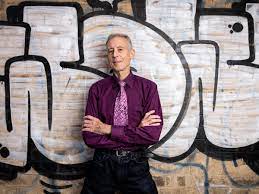
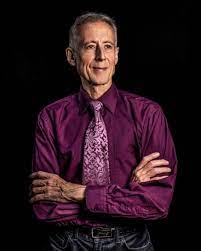
‘The roll of issues that need to be addressed is endless’ … Tatchell. Photograph: Jessica Hromas / The Guardian

Interview with Zoe Williams from The Guardian:

I speak to Peter Tatchell by zoom from Sydney, where he has recently arrived after his day in Qatar, protesting against that nation’s human rights abuses. He hasn’t slept in three days but is perfectly lucid and the weariness only tells in his minute corrections: “No, let me rephrase that”; “Sorry, let me think.” He is 70 years old, wrung out, back in Australia where he was born and raised, talking to me while fielding frequent phone calls. Has he no plans just to hang out for a bit, see some cousins? He’s a bit bemused by the question: “That’d be a very fine thing. But after Qatar I’ve got two other campaigns coming up – quiet time would be a stretch. I, with many others, have contributed to so many positive changes. It’s a great motivator.”

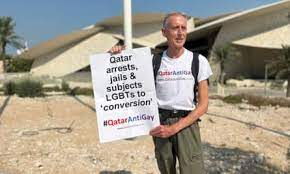
The protest in Qatar, which happened on 25 October, comprised only Tatchell and a colleague, Simon Harris, from Tatchell’s eponymous foundation. It featured a single placard, which they had smuggled into the country between the pages of a copy of the Daily Telegraph. “The only existing broadsheet newspaper today,” he says, pleased at the irony of the paper coming in handy, despite itself. The wording on the placard was: “Qatar arrests, jails & subjects LGBTs to ‘conversion’ #QatarAntiGay.” “I never dictated the terms,” he says. “I took the message directly from my contacts in Qatar.”

Tatchell held up his placard outside the National Museum of Qatar in Doha at 11.30am. “A Muslim woman walked past,” he says, “a horrified look on her face. She said: ‘You’d better put that away, you’ll end up in prison.’” He corrects himself. “Maybe those weren’t her exact words; she basically warned me that it’s not permitted.” He didn’t put it away, and 35 minutes later, state security officials arrived in big white Land Cruisers, the police soon joining them, nine men in all. Harris managed to upload some video of the protest – on Instagram, Tatchell looks dignified, solitary and incongruous, stood on sandy pebbles in front of the statement architecture of the museum – before the police took his camera and deleted the rest. The pair’s details were taken, their documents scrutinised. Tatchell says they were told, “what you’re doing is illegal, it’s not permitted in Qatar, the conversation was a mixture of broken English and broken French. It was very clear that we were not free to leave. We were there for 49 minutes before they eventually said: ‘OK, we advise you to go to the airport and get your flight.’ I interpreted that as a warning.”

‘I took the message directly from my contacts in Qatar’ … Tatchell staging his protest in Doha. Photograph: Peter Tatchell Foundation

There was some beef on social media later, as Tatchell’s YouTube channel had described the men as being “seized by the Qatari security services”; one academic at Qatar’s research university complained that Tatchell had misled people, lied even, since they were not arrested. It was just the fog of protest, the office losing contact briefly with Tatchell and Harris. Maybe Tatchell himself puts things a little strongly at times, but it’s hard to overstate how much sheer cortisol is coursing through the man during actions like these. “I knew that it was possible I’d spend some time in a police cell and possibly be prosecuted, even jailed. The view was that was unlikely and more likely that I’d be deported straight to Sydney. But I was very anxious, and we were always worrying that we’d made some inadvertent misstep and put the security services on to us. On Sunday night [before they left London], I hardly slept, rehearsing in my mind all the different scenarios. On the Monday night – it was an overnight flight – I was so anxious I couldn’t sleep a wink. In Doha on the day of the protest, my stomach was churning over, I had a very strong headache and despite the heat, I felt cold and a bit shivery. I had a constant urge to urinate and defecate.” The idea that he does this stuff blithely, for self-promotion, is for the birds, I think.

Yet, as last year’s Netflix documentary, Hating Peter Tatchell, puts it pithily, he is the focal point of an awful lot of hatred: “I’ve got a lot of bile and hatred against me over the decades because I ruffle feathers. I have made powerful people and their apologists very angry. It’s led to tens of thousands of hate mails, hundreds of death threats, hundreds of violent assaults.”

But if you engage seriously with what Tatchell is saying, I feel that he’s only doing what we all should be doing: the World Cup is about to take place in a country where LGBT+ people, women and migrant workers are oppressed and victimised. In waving this through on the promise that Qatar would somehow change, between the decision in 2010 and now, Fifa has legitimised the nation’s impunity and traduced the idea of universal human rights as a minimum entry requirement into the international club. The foreign secretary James Cleverly – this was presumably inadvertent, like so many of his remarks – distilled what this actually means, when he asked football fans to be “respectful of the host nation”, concluding: “I think with a little bit of flex and compromise at both ends, it can be a safe and secure World Cup.” Be a bit less gay just for a couple of weeks, and it’ll all be fine.

“The primary motivation of my work has always been a love of other people and a love of freedom, justice and equality of all human beings on this planet. I wouldn’t like to suffer. If I was suffering, I’d want other people to help.”

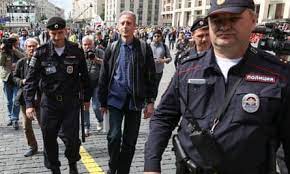
Tatchell being led away by Russian authorities in Moscow after his one-man protest at the World Cup, 2018. Photograph: Aaron Chown / PA

He hasn’t come out unscathed from this life. “It’s very tough,” he says at one point. “I have periods of real emotional meltdown and depression, feeling that despite the efforts of myself and many, many other people, we haven’t been able to prevent some terrible abuses.” But “lots of the issues that I and others championed decades ago are now mainstream,” he adds. Besides, “when you’re living under a tyrannical regime, you need international solidarity. The roll of issues that need to be addressed is endless.”

Records of gay military sackings deleted by Ministry of Defence

Jean MacDonald was dismissed from the Armed Forces for being gay

Military police records of service personnel who were dismissed from the Armed Forces for being gay have been destroyed.

Veterans who requested documents about investigations and interrogations into them by the military police have been told the files were deleted in 2010.

The Ministry of Defence advised it had a legal duty to ensure the details were erased from service records.

But one veterans’ group said: “To many, this may feel like a cover-up.”

The MoD only revealed the data had been destroyed after two veterans had been unable to obtain records of military investigations into their sexuality.

Campaign group Fighting with Pride said, without the information, it could be difficult for its members to reclaim lost pensions or compensation from the government.

Until 2000, people who were gay were barred from serving in the military. An independent review is currently looking at how the Armed Forces dealt with members of the LGBT+ community.

Full of shame

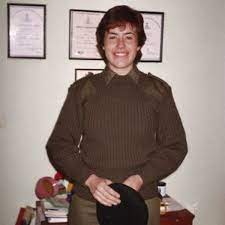
Jean MacDonald was a lance corporal in the Women’s Royal Army Corps. But in 1981 she was dismissed from the service for being gay.

“All of a sudden you’ve lost your whole career, you’ve lost your friends, you’ve lost your accommodation, you know, your whole way of life – it’s just full of shame,” she said.

After years of poor mental health she was diagnosed with complex PTSD. And in May this year, she requested her complete service records from the MoD.

Jean MacDonald was a lance corporal in the Women’s Royal Army Corps

Earlier this month, she received an email saying all record of the investigation into her by the Royal Military Police was destroyed in 2010. The email said it followed an order from the “Defence Police Chiefs’ Council”.

It added: “All investigations into offences relating solely to sexuality … were to be removed from our systems and deleted from the records of the affected service personnel.”

A search of the service police database produced only one document, which detailed the reasons for her dismissal. It read: “Conducting oneself disgracefully – unnatural act.”

Ms MacDonald said it left her feeling “invisible”. “We’re a bit of hidden history”.

Another veteran also discovered his Military Police Service record had been destroyed.

Tremaine Cornish, 66, was a private in the Royal Army Catering Corps, and also passed the All Arms Commando course. He joined at the age of 15 and was dismissed in 1977, having been accused of being homosexual.

It makes me furious

He said the Army “took away my life, my prospects, my sense of worth”.

When he applied for his complete service records this year, he was also told papers relating to the police investigation were “safely and appropriately disposed of”.

He was told it was done “in accordance with policing and data protection principles”.

However, Mr Cornish said it reinforced “the institutional homophobia we were attacked with”. “It makes me furious – furious about the state, furious about the institution, about the forces that we had signed up to.”

Tremaine Cornish was a private in the Royal Army Catering Corps

In January this year, the government announced it was setting up an independent review to look into the impact of the military ban on members of the LGBT+ community.

Lord Etherton, who is leading the review, has begun gathering evidence and is likely to look at possible means of compensation.

A MoD spokesman said the “historical policy prohibiting homosexuality in the Armed Forces was abhorrent”.

The spokesman added: “We deeply regret LGBT+ members serving in defence suffered injustice as a consequence. Our priority now is to understand the full impact of the historic ban and find appropriate ways to address the wrongs of the past. 

“The policy followed at the time was to remove references to these former offences and investigations from service records. There was a legal duty to ensure these records were erased from individuals service records.”

Fighting with Pride estimates that between 5,000 and 15,000 men and women may have been affected by the policy between 1967 and 2000.

Craig Jones, from the organisation, is now calling for an urgent meeting with the defence secretary. “You can imagine what that looks like to people who will have a great deal of difficulty trusting the MoD and the government.”

Mr Jones said the MoD needs to provide clarity about what it has done and why.