World AIDS Day 2022 … World AIDS Day 1990 … Tory Government cuts £400 million in HIV funding … Job at LGBT Foundation

News

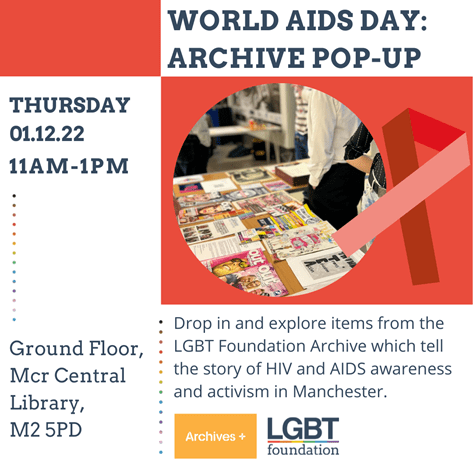
LGBT Foundation Archive Pop-Up for World AIDS Day

1 December, 11.00am – 1.00pm at Manchester Central Library, St Peter’s Square, Manchester M2 5PD (Ground Floor)

Drop in to Manchester Central Library on World AIDS Day to see a selection of items from the LGBT Foundation Archive at Archives+ which tell the story of HIV and AIDS awareness and activism in Manchester.

The Sexual Health Team will be on hand to discuss HIV testing and support through the years and what is accessible in Greater Manchester today.

FREE, no need to book.

Bury LGBTQI+ Forum: HIV Past – Present – Future

1 December, 4.00pm – 6.00pm at Fusilier Museum, Moss Street, Bury BL9 0DF

To book a place, contact paul.fairweather@buryvcfa.org.uk

Thursday, 1 December – World AIDS Day Vigil – Sackville Gardens – 6.00pm

Information can be found here

Friday, 2 December – Superbia Cinema returns to Mini Cini for a series of short films in recognition of World AIDS Day

Ducie Street Warehouse, Ducie Street, Manchester M1 2TP

Superbia Cinema is a celebration of queer filmmaking, and each month they showcase films by talented LGBTQ+ creatives.

Superbia Cinema is a great way for film enthusiasts and those interested in LGBTQ+ arts to come together and immerse themselves in queer culture.

The films:

  • HIDEOUS
  • As Much As I Can
  • Kia LaBeija
  • Trans People Taking PrEP
  • RATED X
  • My Neighbor, Miguel
  • Young Women in South Africa – At Greater Risk of HIV/AIDS

Stick around after the film screenings for a special Q&A with Gerry Potter, Monica Pearl and Paul Fairweather!

Schedule:

Screening 1 – 6:00pm

Screening 2 – 7:20pm

Q&A – 8:30pm – 9:00pm

Please note:

Please choose the screening time that you would like to attend when booking your ticket. Free tickets are limited to 1 per order – each attendee must register for their own ticket.

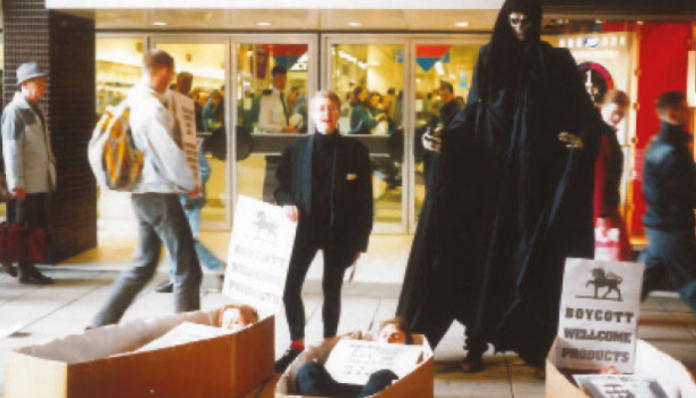
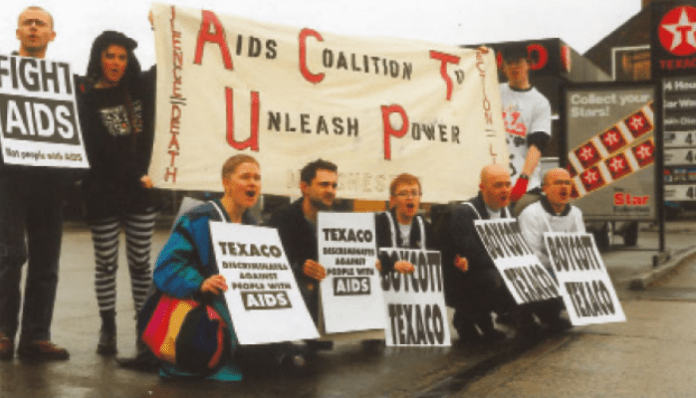
World AIDS Day 1990
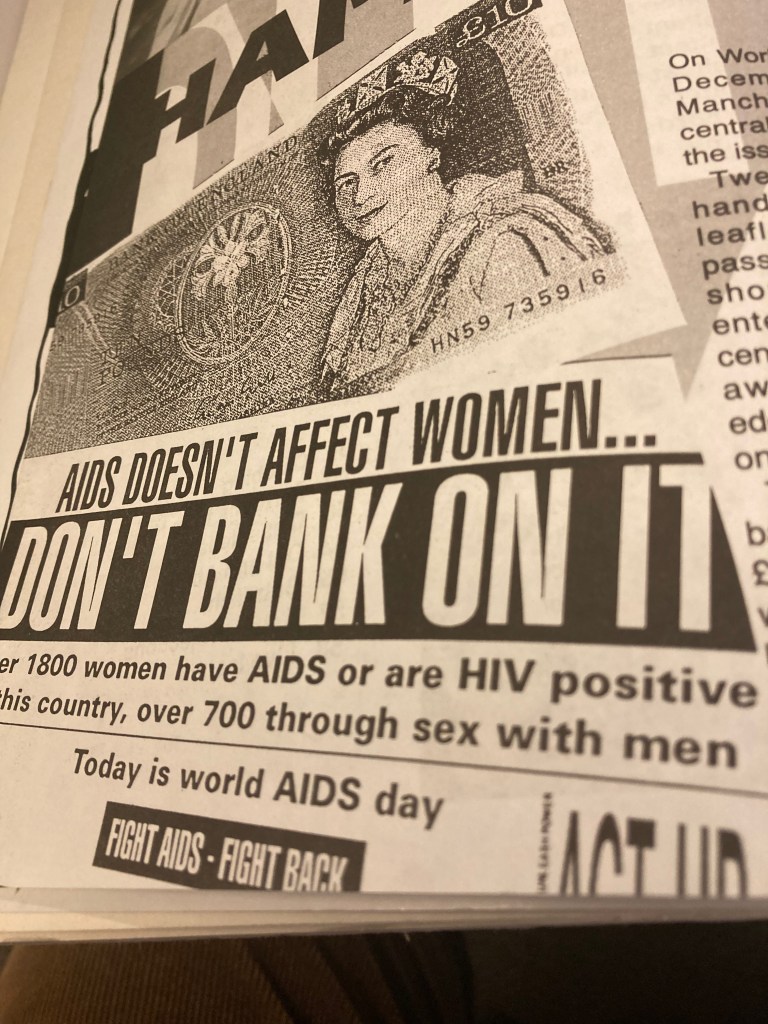
On World AIDS Day, Saturday 1 December 1990, Act-Up Manchester held an action in central Manchester to highlight the issue of women and AIDS.

Twenty two group members handed out condoms and leaflets to shoppers and passers-by. At the peak of the shopping day Act-Up then entered the Arndale shopping centre and launched 5,000 AIDS awareness leaflets over the edge of the upper shopping mall onto the main lower concourse. The leaflets which were backed with an image of £5 and £10 notes read, “Aids doesn’t affect women … don’t bank on it”.

Act-Up were able to leave the shopping centre without any arrests being made – just!
Tory government cuts hundreds of millions in HIV funding despite promise to eradicate virus by 2030
Rishi Sunak (Getty Images)

The UK government has cut funding to a major player in the fight against HIV, a decision that has prompted condemnation from MPs across the divide.

The UK government last year pledged £1.4 billion to The Global Fund, which fights HIV/AIDS, tuberculosis, and malaria worldwide, but this year funding has been slashed to £1 billion.

Since being established by the G7 in 2002, The Global Fund is believed to have saved 50 million lives.

Just last year, it gave lifesaving antiretroviral therapy for HIV to 23 million people and helped 5.3 million with treatment and care for tuberculosis.

The move has been criticised by the All-Party Parliamentary Group (APPG) on HIV and AIDS, which said it could “jeopardise the UK’s own domestic efforts in ending HIV”.

“As we’ve clearly learned from COVID-19, pandemics don’t respect borders. If we can’t control HIV globally, it’ll jeopardise our domestic efforts,” a statement said.

The cross-party group said that while the pledge is “welcomed” in the fight against HIV and AIDS, the government’s decision to cut funding by £400 million was “disappointing”, especially as other G7 nations increased their funding.

Labour MP Lloyd Russell-Moyle, who lives with HIV, told PinkNews that Tory ideology was risking progress and was a threat to the goal of ending new HIV transmissions this decade.

“While I welcome the funding pledge, which has come already two months late because of political turmoil in the Tory party, it is almost a 30 per cent cut in funding, when all other G7 nations have increased their contribution by almost 30 per cent.

This cut will mean less research into curing HIV/AIDS, TB and Malaria, it will make it harder to reach our ambitious target to eliminate new HIV transmissions by 2030 and it will slow vital research.

All because the Tories have an ideological cap of 0.5 per cent GDP on aid, treat all Ukrainians living here getting support as aid, and have wrecked the economy creating a £60 billion black hole, one which could be covered by abolishing the upper limit on National Insurance and having corporation tax at the same as other G7 nations.”

Government cuts to foreign aid and funding for HIV and AIDS organisations including UNAIDS were criticised in 2021, with a report stating cuts were “setting the stage for a resurgence of the [HIV/AIDS] pandemic”.

The report, by STOPAIDS, Frontline AIDS, and the APPG on HIV and AIDS, states: “Even before COVID-19, the HIV response was already in a precarious position.

The global HIV response is now teetering – caught in a perfect storm of waning political and public engagement, diminishing funds, and the global shock of COVID-19”.

The report added that while the UK has been an “historic leader” within global healthcare, a “renewed leadership from the UK government for the HIV response is desperately needed”

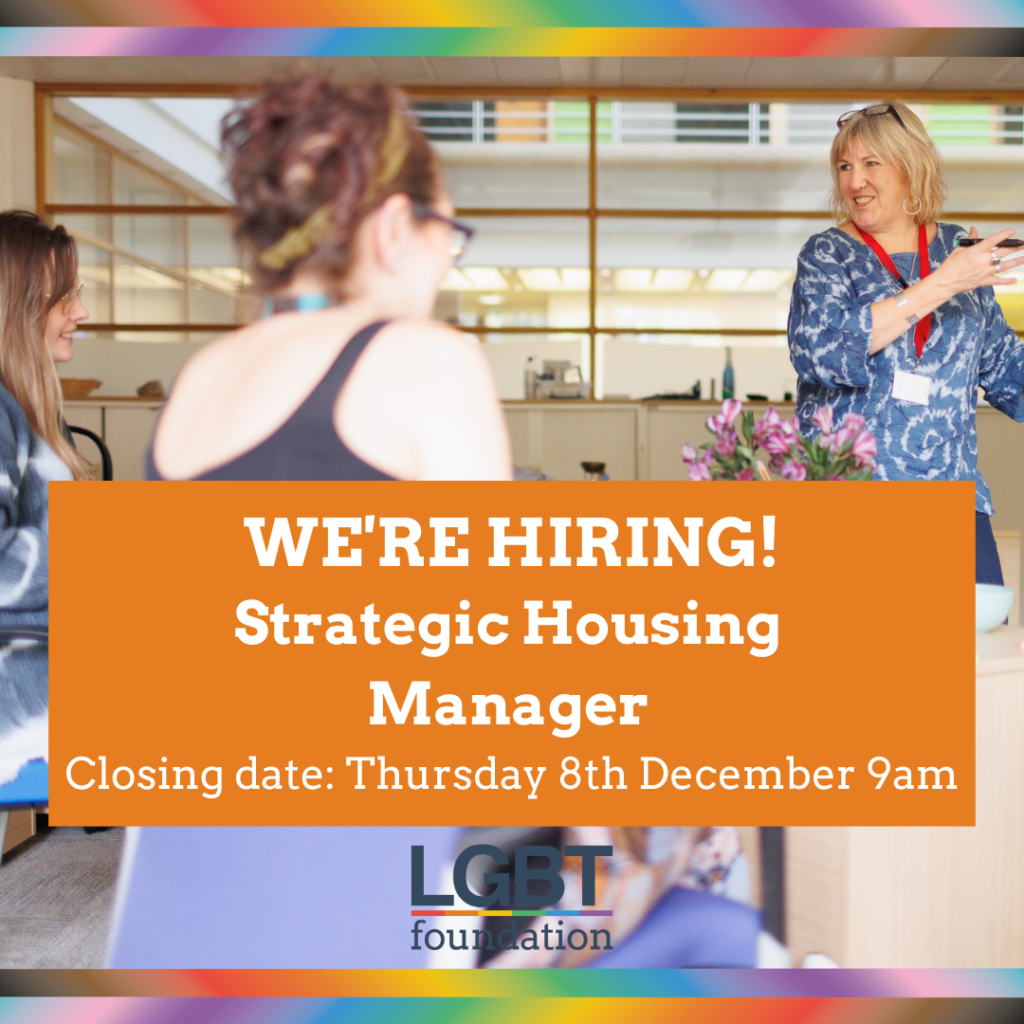
Job at LGBT Foundation

Strategic Housing Manager

Are you a forward thinking, innovative and strategic individual with a flare for enabling successful partnership working?

If you think you have the skills and knowledge to support the development of a brand new set of LGBTQ+ services and projects, designed to support the most marginalised of our communities then this may be the role for you!

LGBT Foundation is looking for a Strategic Housing Manager to work with the Community Steering Group, the wider LGBTQ+ community, the appointed Housing Provider, a range of stakeholders and Manchester City Council to support the development of the LGBTQ+ Extra Care Scheme in Whalley Range.

The role will also support the Pride in Ageing Accreditation Scheme across housing and care services in Manchester and will work with the Chief Executive to support the development of new housing services and projects.

Job Title:              Strategic Housing Manager
Salary:                  £34,568
Hours:                  37 hours per week
Special Terms:    Full time, permanent (subject to funding – initially 3 years)
Closing Date:      9.00am on Thursday, 8 December 2022.

Interview Date:   To Be Confirmed.

The link to this role is at https://lgbt.foundation/jobs
Salford Museum & Art Gallery … Five Gay Authors … Sir Lady Java

News

Salford Museum and Art Gallery

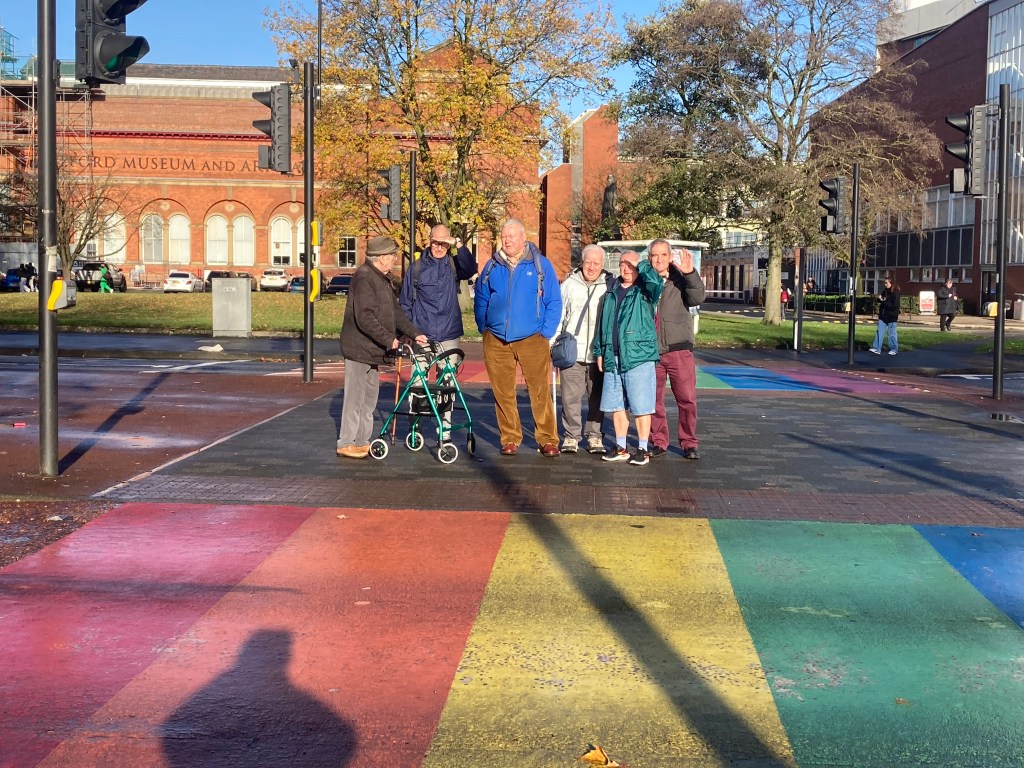
A small group of us gathered at Piccadilly Gardens Bus Station to take the short bus ride to Salford.

A pair of rainbow crossings greeted us on The Crescent leading from the bus stop to the Salford Museum. Salford Council opened the rainbow crossings about two years ago to celebrate LGBT+ Pride in the city.

The museum café was quite busy but we enjoyed soups, toasties and sandwiches before visiting the various galleries. The Victorian Gallery is packed with paintings and sculptures. The other galleries feature a changing programme of contemporary art exhibitions, but the highlight was Lark Hill Place. This is an atmospheric re-creation of a typical northern street during Victorian times.

Photos can be seen here.

Five gay authors whose stories show us how to age gracefully

With year-end “best of” lists coming out fast and furious over the final weeks of 2022, there are more notable LGBT+ writers to choose from than ever before. The year provided a remarkably broad and diverse number of authors with novels, history and poetry sharing points of view neglected in the past by publishing’s traditional gatekeepers.

In the early 1980s gay male writers were instrumental in centring gay themes in literature, inspiring later and diverse generations of authors to write about what they know and where they came from.

These new gay books from 2022 reflect on age, impermanence and the subjective quality of time:

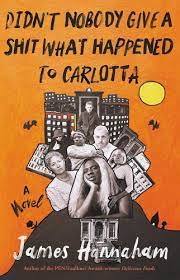
James Hannaham – “Didn’t Nobody Give a Shit What Happened to Carlotta”

Hannaham, 54, is a visual artist as well as a writer. He studied art at Yale and creative writing at the Michener Center at the University of Texas. His debut novel from 2009, God Says No, was a Lambda Literary Award finalist, while his 2015 novel, Delicious Foods, won the PEN / Faulkner Award and Hurston / Wright Legacy Award. He lives in Brooklyn with his husband.

His latest work, the irreverent and heartbreaking Didn’t Nobody Give a Shit What Happened to Carlotta tells the story of the titular character, Carlotta Mercedes, over the course of a Fourth of July weekend in Brooklyn after she’s released from a men’s prison; 20 years earlier she’d gone into stir as a man.

As the years changed Carlotta, so too did the Brooklyn she once called home, where time is a prison all its own. “Carlotta remembered that people used the same term for coming home from prison and coming back from outer space,” Hannaham writes. “Re-entry.”

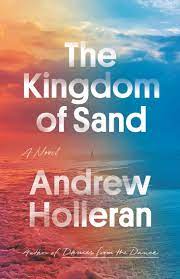
Andrew Holleran – “Kingdom of Sand”

Holleran, 78, is best known for Dancer from the Dance, published in 1978. His debut novel achieved cult status for its depiction of halcyon days and nights in New York’s discos and on the beaches of Fire Island in the years between Stonewall and the AIDS epidemic.

His latest novel, Kingdom of Sand, is a bookend to that story of young, reckless beauty. Now, aging while gay is another kind of reverie, and time is not fleeting but stretched, seemingly endless, something to be studied and admired. Alone in a house by a lake in Florida, Holleran’s narrator observes: “Now the drought had gone on so long that something unexpected had happened: the dry lake bed had become more beautiful than the lake.”

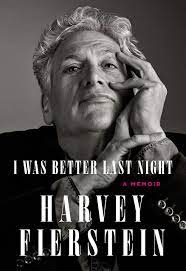
Harvey Fierstein – “I Was Better Last Night: A Memoir”

Every decade has a Harvey Fierstein cameo. In 1979 Gay Presses of New York published Fierstein’s play, Torch Song Trilogy. The actor made a name for himself in the 1980s starring in the show on Broadway as well as the film version, which he also wrote. In the ’90s, Fierstein made Mrs Doubtfire and in the 2000s, Fierstein sang and danced the character Edna Turnblad in the musical version of Hairspray on Broadway.

Stories of those productions and others fill his memoir, I Was Better Last Night, a meditation on the 70-year-old actor and writer’s place in the universe in general, and on Broadway and in Hollywood specifically. Of the latter, Fierstein never felt a good fit. Of the former, he was gobsmacked from the start by the smell of the grease paint and the roar of the crowd.

Torch Song came about because Fierstein found The Boys in the Band and A Taste of Honey, both gay breakthroughs in their time, burdened with self-loathing. His gay breakthrough would be written with joy.

David Sedaris – “Happy-Go-Lucky”

If you were lucky enough to discover David Sedaris in real time, when he read his Santaland Diaries in 1992, or you picked up his first collection of essays, Barrel Fever in 1994, or you were gifted Naked  in 1997, then you’ve probably stuck with the acerbic and self-deprecating author – and you probably look forward to reading the latest instalment of what’s become a long-running serial detailing his dysfunctional and perfectly normal American family, his long time and forever boyfriend Hugh, his own quirks and foibles and sexual proclivities, his slashing wit, his despair, his compassion.

The latest collection of essays, Happy-Go-Lucky, is just that. It follows an onslaught of output from the 65-year-old writer. He’s published seven books in the last five years alone, including two more essay collections, two diaries clocking in at 500 pages each, along with a visual compendium and an e-book.

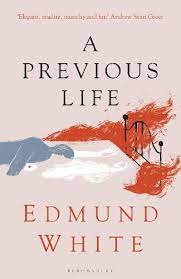
Edmund White – “A Previous Life”

At 82, Edmund White is the éminence grise among gay literati. He’s best known for his The Joy of Gay Sex, written with Charles Silverstein in 1977, along with his trilogy of semi-autobiographical novels, A Boy’s Own StoryThe Beautiful Room Is Empty, and The Farewell Symphony.

In the 1980s, while White was in residence in France, where he learned he was HIV-positive, he wrote the definitive biography of French writer Jean Genet. In 2019, he received the National Book Award’s Medal for Distinguished Contribution to American Letters.

Set primarily in 2050, A Previous Life flashes back and forward through a couple’s sexual histories, including a meta-meeting of the minds between one of the protagonists and an 80-year-old White himself, which ends with the author’s heart broken.

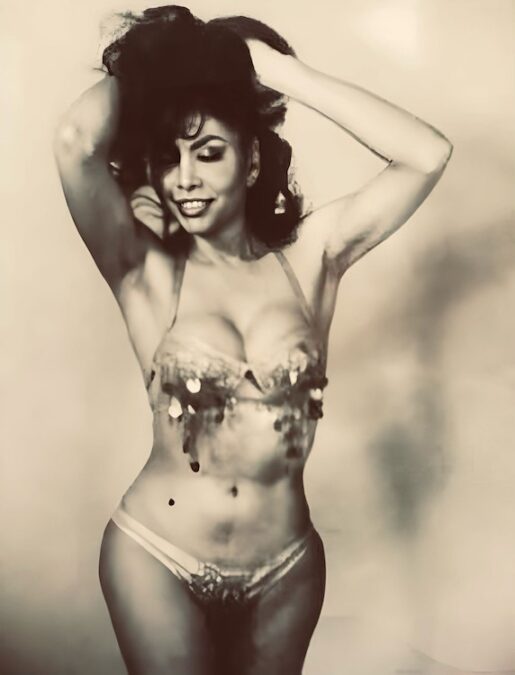
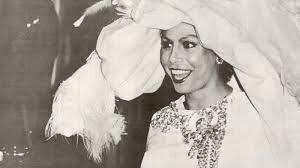
Sir Lady Java is a transgender pioneer who fought discrimination

Sir Lady Java was a pioneering transgender activist fighting against a Los Angeles law that restricted drag performance. Photo: Sir Lady Java

Sir Lady Java was a waitress, dancer, singer, comedian, and drag performer in the 1960s Los Angeles club scene. She delighted audiences with her stand up routines, go-go dancing gigs and performances with the likes of Sammy Davis Jr and Richard Pryor. She also was a pioneering transgender activist who fought against laws that restricted drag performance.

As a black gender non-conforming activist, she witnessed a point in history – the intersection of discriminatory law enforcement tactics targeting black communities as well as lesbian and gay communities in Los Angeles in the 1960s. These types of police campaigns also took place in numerous cities across the US.

Only a few years into Sir Lady Java’s career, police began attempting to shut down her shows specifically because she was an “impersonator.” In one of their first attempts, the Los Angeles Police Department (LAPD) sent around 50 officers to arrest her under the “three-piece rule.” This rule stated that a person must be wearing at least three articles of clothing that corresponded to the sex they were assigned at birth, or they would be arrested for cross-dressing. Java thought quickly and pointed out her socks, wristwatch, and bow tie—which had all been deemed “male articles” by the LAPD—and avoided arrest. 

Rule #9

Passed in 1958, LA’s notorious ordinance Rule #9 said bar owners couldn’t hire anyone who performed as the opposite sex to the one they were assigned at birth.

Java was targeted because she was successful, and the idea was that shutting down the show of a top performer would cause all other impersonator performances to stop. By targeting trans and drag performers through the guise of “impersonator” performance, police also targeted establishments that were considered safe spaces for gay people.

The impacts of the law reached a fever pitch for her in 1967 during a run of performances at the Redd Foxx, a black-owned nightclub.

The club applied for a performance permit, but in October 1967, the Los Angeles Police Department denied the request.

After the permit was refused, she protested at the Redd Foxx, arguing for her right to work.

Historic protest, court case

Sir Lady Java made history because she was the first person to not only protest the law, but also challenge it.

The American Civil Liberties Union (ACLU) sued the city on her behalf, but the court refused to hear the case because only bar or club owners could file a lawsuit.

The ACLU couldn’t find a bar owner willing to sue Los Angeles, and the case was dismissed, but her protest did raise awareness and visibility about the issue.

Two years later, the ordinance was overturned in a separate lawsuit.

With the law overturned, Sir Lady Java returned to the stage and continued performing in LA nightclubs in the 1970s and early 1980s.

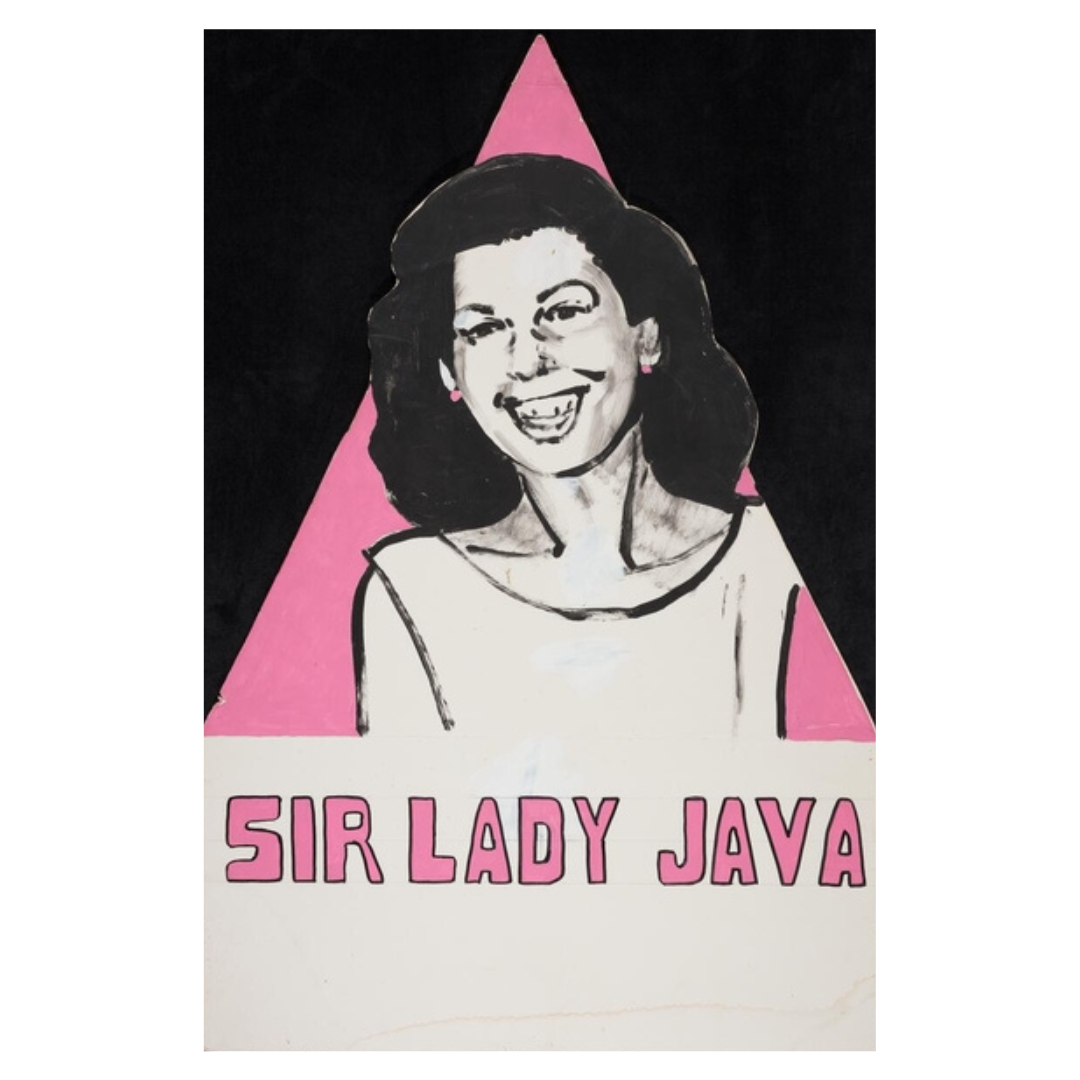
ACT UP Los Angeles, “Sir Lady Java,” 1989. ACT UP Los Angeles picket sign collections,
ONE National Gay & Lesbian Archives at the USC Libraries

Painted jars ready for World AIDS Day on 1 December

A Conversation with Stephen Whittle OBE … One Magazine … Uncle Donald

News

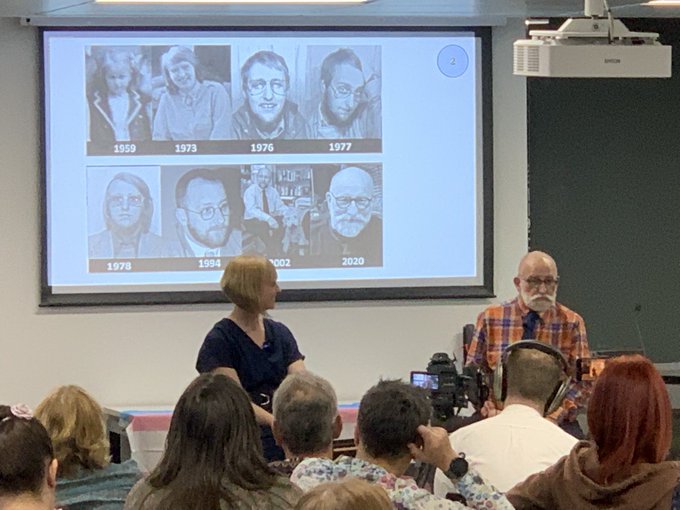
On 17 November we attended the Pride in Leadership event where the Director Claire Ebrey was in conversation with Stephen Whittle.

Stephen is Professor of Equalities Law in the School of Law at Manchester Metropolitan University. A multi-award winner, he co-founded Press for Change in 1992, and was president of the World Professional Association for Transgender Health (WPATH) between 2007 and 2009.

The discussion covered Stephen’s incredible life story, his perceptions on the progress to date and what we need to do next, and his advice for business leaders.

You can watch the whole event by clicking on the video below.

Stephen’s biography

Stephen transitioned from female to male in 1975. Having lost numerous jobs because of being transgender, he was working in the property development and building trade when in 1985 he decided to obtain legal training on the part time LLB evening course at Manchester Metropolitan University. He primarily wanted to challenge the discrimination he and other trans people experienced. He went on to obtain a Masters, and a PhD.
In 1992, Stephen co-founded Press for Change (PFC), the UK’s trans rights lobby group. PFC’s very successful campaigns have resulted in several major case law successes at the European Court of Justice and the European Court of Human Rights, which have led to significant legal changes since the mid-1990s, including the Gender Recognition Act 2004, and full protection under the Equality Act 2010.

Stephen has advised on transgender rights and law to the UK, Scottish, Irish, Italian, Japanese, Hong Kong, and South African governments, as well as the European Union & the Commission, and the Council of Europe. He regularly advises lawyers and writes briefs, or is an expert witness, for courts worldwide. He has authored many academic papers, non-academic articles, several books and writes a regular blog.

He recently co-created exhibitions on what it means to be trans. In 2013, he advised on, and wrote the historical timeline for Liverpool Museum’s exhibition Portrait of a Lady, the history of transsexual people in the UK told through the story of model, April Ashley.

He is married to Sarah – they’ve been together since 1979, and have four children.

Stephen’s honours include:

  • 2002 | Human Rights Award by the Civil Rights group Liberty, for his commitment and dedication to ensuring the advancement of rights for transsexual people through judicial means in the UK, Europe, and around the world
  • 2005 | OBE for ‘services to Gender Issues’
  • 2006 |Virginia Prince Lifetime Achievement Award by the USA’s International Federation for Gender Education.

One Magazine

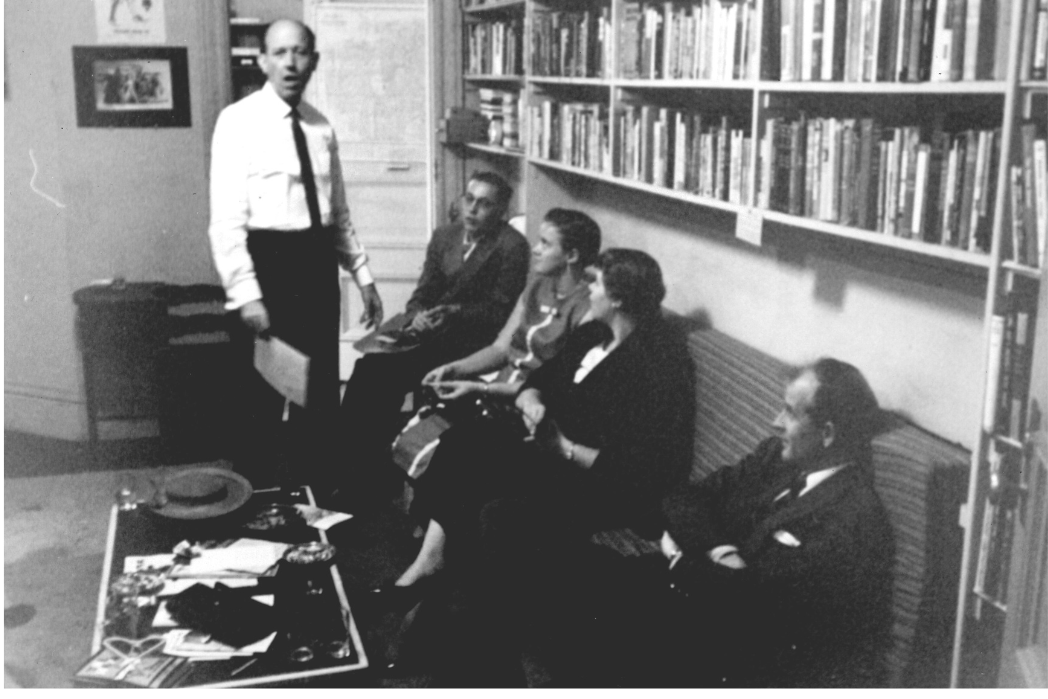
Staff at One magazine (1957-1958) from ONE National Gay & Lesbian Archives at the USC Libraries

Founded 70 years ago on 15 November 1952, ONE, Inc. was one of the most prominent early American homophile groups, known as the publisher of ONE Magazine, the first widely distributed gay and lesbian publication in the country.

In the 1950s, LGBT+ people in the US still faced insurmountable legal and social barriers to communicating openly and building community. Despite the risk, organisations such as ONE, Inc., the Mattachine Society and Daughters of Bilitis saw periodicals as a crucial means to organise members and celebrate LGBT+ life and culture.

ONE, Inc. launched the first issue of ONE Magazine in January 1953. The publication quickly took off as a hub for stories on homosexual love, poetry, book reviews, scholarly articles, and even artwork. However, this success was built not without challenges. The October 1954 issue of ONE Magazine was seized by the Los Angeles postmaster on charges of obscenity, catapulting ONE, Inc. into a 4-year-long legal battle that reached the Supreme Court.

The landmark 1958 ONE, Inc. v. Olesen ruling was the first to address free speech rights with regards to LGBT+ people, and laid the groundwork for the creation of a national network of activists and publications.

Don Slater, W Dorr Legg and Jim Kepner

We’re proud of the multigenerational work that our forebears did to pave the way for queer culture today.

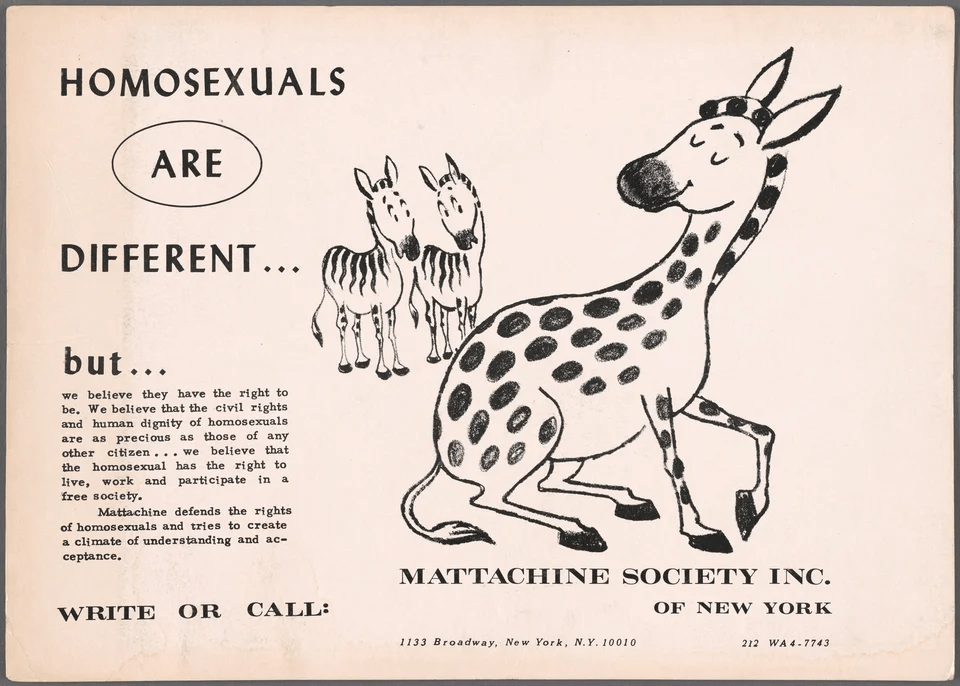
Mattachine Society’s “Homosexuals Are Different” Advert

Founders of the Mattachine Society, the first major American gay-rights advocacy organisation, in 1951

The Mattachine Society advert, printed sixty years ago, bears the image of a zebra proudly wearing spots instead of stripes – and it shares a message still relevant today.

“Homosexuals are different … but … we believe they have the right to be,” the advert reads. “We believe that the civil rights and human dignity of homosexuals are as precious as those of any other citizen … we believe that the homosexual has the right to live, work and participate in a free society. Mattachine defends the rights of homosexuals and tries to create a climate of understanding and acceptance.”

The image comes from the New York Public Library, which has the original advert in its Manuscripts and Archives division. The library also displayed the advert as part of its “Love and Resistance: Stonewall at 50” exhibit in 2019.

The advert also marks the Mattachine Society’s definitive answer to the question of whether to assimilate, a question that activist Jim Kepner pondered in a 1954 issue of the magazine ONE.

“Are homosexuals in any important way different from other people?” Kepner wrote. “If so, ought that difference be cultivated, or hidden under a bushel, or extirpated altogether? … What can a Society accomplish if half of it feels its object is to convince the world we’re just like everyone else and the other half feels homosexuals are variants in the full sense of the term and have every right to be?” (For the record, Kepner was all for the differences. “Homosexuals are natural rebels, he wrote.”)

Magazine cover courtesy of ONE Archives Foundation

Uncle Donald

Uncle Donald

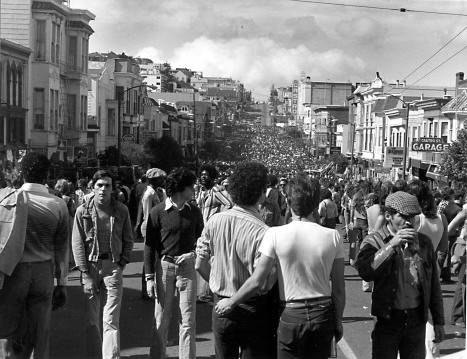
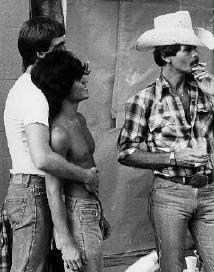
Donald Eckert (known as Uncle Donald) curated a website TheCastro.net about the emergence of the gay community in San Francisco’s Castro District in the 1970’s.

The aim was “to keep the history of the Castro Street experience alive, to preserve our memories, to help us all remember where we came from so that we can steer true north to where we are going, and to thank the greatest gay generation for paving the roads, opening the doors, and standing up when others did not.”

Here is one of Uncle Donald’s Presentations:

P is for PARADE

Publisher of Personal Page is Pleased to Present Pictures and Provide Pleasant Prose Pertinent to Previous Pride Parades.

Personally Present at Plenty Past Public Parties, Playing Photographer Pointing Pentax at:

Pushy Perverts Promenading in Provocative Pink Pedal Pushers,

Pumped Pansies Posing Positively Perfect Physiques,

Prominent Politicians Passing in Plush Polished Phaetons Promising Prosperity,

Portly Priests Posing as Private People Promoting Peace and Penitence,

Passionless Plebes Passing Pamphlets Promoting Progressive Programs,

Perky Pert Peachy Prostitutes Prancing Proudly,

Pleasantly Polite (Probably Paranoid) Police Providing Protection.

Possible Part of Popularity of Past Pride Parades:

Personal Presence Posed Potential to Prevail in Plan to Pick Physically Perfect Promiscuous Partner and Pursue Prurient Possibilities Playfully Probing Pleasant Pal’s Private Parts!

Bridgewater Hall Mid-Day Concert … Liverpool Town Hall Tour … Transgender Day of Remembrance … Beyond The Rainbow’s Arch

News

Bridgewater Hall Mid-Day Concert

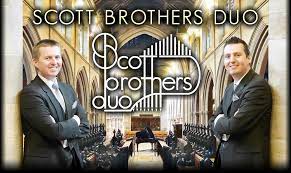
On Tuesday 15 November, the Scott Brothers Duo (Jonathan Scott – organ and Tom Scott – piano) entertained us with a fantastic mid-day concert.

It was an unmissable programme demonstrating the range of sounds available from this brilliant combination. Their programme included original works for piano and organ as well as the duos own arrangements of well known classical works.

Liverpool Town Hall Tour

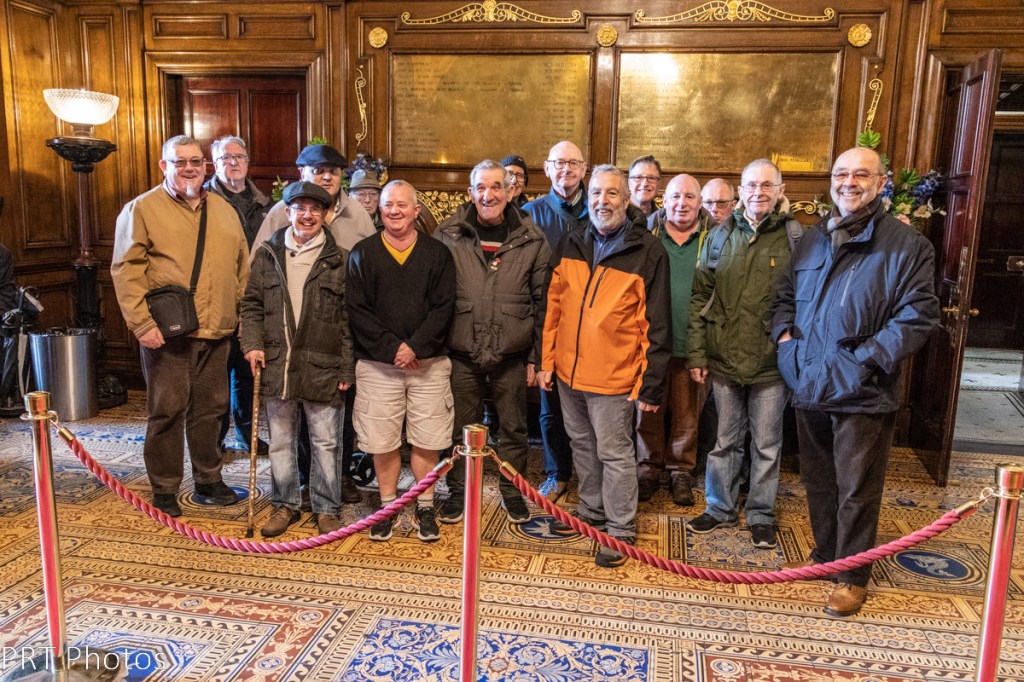
The next day, fifteen of us gathered at Victoria Train Station to take the fast train to Liverpool Lime Street Station where we met two others. Here we split up as some settled for a meal at Wetherspoons and others wanted something a little more … well, a little more than Wetherspoons, and then we met up again at Liverpool Town Hall for a guided tour at 2.00pm.

The guided tour allows visitors an exclusive opportunity to explore one of the finest surviving town halls of the 18th century!

A base for the city’s Lord Mayor and all civic business, the Town Hall was established back in 1749 and is much revered, due to its masterful Georgian architecture.

Passing residents, visitors and commuters may have already admired the breath-taking exterior of this iconic landmark, which is crowned by a statue of Minerva and has all manner of decorative curiosities hidden in plain view. However, stepping inside will leave you with a whole new perspective of a building which has greeted Queen Elizabeth II, The Beatles and the Dalai Lama among many other esteemed guests.

From the impressive vestibule – complete with a decorative vaulted ceiling, a tiled Minton floor and an ornate fireplace – we were guided upstairs towards the upper level, where we were welcomed by the luxurious grand, sweeping staircase. We could view the city’s civic regalia – an exquisite collection of silver which only ever comes out of its display cabinet during major official functions.

Once upstairs, we admired the astonishing interior of the Town Hall’s dome, before ambling through an impressive collection of reception rooms, and leading through to the Main Ballroom. This sublime room comes with a maple sprung dance floor beneath a dazzling glow of chandeliers.

We returned to the ground level to the poignant surroundings of the Hall of Remembrance, which contains Liverpool’s official Roll of Honour and we could pay our respects to the city’s fallen.

We were then guided through to the distinguished oak and mahogany decorated Council Chamber, which serves as the epicentre for all civic business.

In the basement is the plushest, most old-fashioned working toilets in existence in which scenes from the popular BBC series Peaky Blinders was filmed.

So, if you’re in search of a visual feast, laden with history and civic importance, then look no further than the resplendent Liverpool Town Hall!

You can see some fantastic photos here.

Transgender Day of Remembrance

Transgender Day of Remembrance is an annual observance on 20 November that commemorates the memory of the transgender people whose lives were lost in acts of anti-transgender violence.

Beyond The Rainbow’s Arch

Beyond the Rainbow’s Arch

Beyond The Rainbow’s Arch is a podcast written and produced by Harry Hansen in 2021. It features interviews with Bill, Ken, Lynn and Tony from Out In The City and Lawrie from Pride in Ageing at the LGBT Foundation.

Listen here.

Pride in Practice … Our Ageing Population … Touchy

News

Pride in Practice

We know that many LGBT people worry about accessing services for fear of experiencing discrimination or even hostility on the grounds of their sexual orientation, gender identity or trans status.

The Pride in Practice programme works with GP practices, dental surgeries, pharmacies and optometrists in Greater Manchester to ensure that all lesbian, gay, bisexual and trans people have access to inclusive healthcare that understands and meets the needs of our communities.

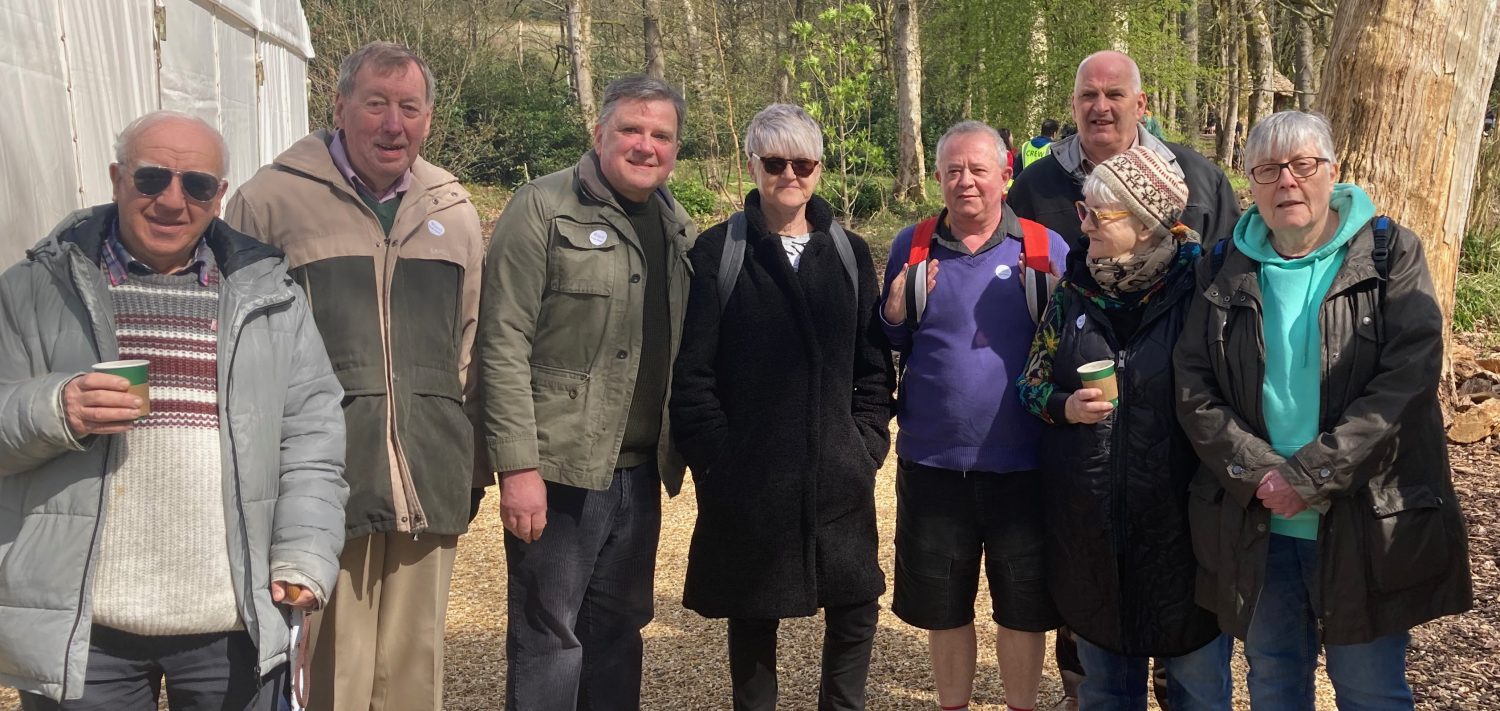
Andrew Gilliver, Pride in Practice Co-ordinator at the LGBT Foundation visited Out In The City asking us about accessing local primary care services and our experiences as older LGBT+ persons.

We discussed questions such as:

  • How does your GP practice treat their LGBT patients?
  • Why is it important that my dentist knows my sexual orientation / trans status?
  • What can optometrists tell us about our wider health?
  • How can we get the best service from our pharmacy services?

To facilitate this work, LGBT Foundation would like to hear from you. If you would like to share your experiences of primary care please contact pip@lgbt.foundation

Our ageing population: Living longer lives

The population of England and Wales has continued to age, with Census 2021 results confirming there are more people than ever before in older age groups. Over 11 million people – 18.6% of the total population – were aged 65 years or older, compared with 16.4% at the time of the previous census in 2011. This included over half a million (527,900) people who were at least 90 years of age.

This article goes beyond the numbers to explain why census data are particularly useful. What do we know about the lives of older people and the challenges they face? How do the data help to plan for an older population? And, what do older people themselves think about ageing and how we could all age better?

Why are data about ageing important?

Angele Storey is head of the Office for National Statistics (ONS) Ageing Analysis team.

She said: “While living longer is something to be celebrated and our ageing population presents opportunities, it also has implications for the economy, services and society. Knowing the size and structure of the population is fundamental for decision makers and policy makers in the UK.”

The ONS works in partnership with organisations such as the Centre for Ageing Better, Age UK and the International Longevity Centre to ensure that evidence on the UK’s ageing population is relevant and helpful.

David Sinclair, chief executive of the International Longevity Centre UK, said: “For all of the big challenges which come with an ageing population, we are reliant on data to help us to tell the story. The census data give consistency, within reason, over 200 years and also allow us to look to the long term. The census gives really detailed local data, which is extraordinarily important. One of the other advantages for us, is that it is accessible and free.

Good quality data presented in really clever ways can identify and target interventions better, that can help address inequalities.

We have done some work that shows if you keep people healthier for longer, they work more, they volunteer more, they care more and they spend more money. You can use data to present solutions.”

How diverse are older people?

Older people are as diverse as the rest of the population, and it is important not to assume everyone has the same issues and needs simply because of their age.

That is the view of Dr Elizabeth Webb, head of research at Age UK, which provides national and local support and advice to older people, as well as the friendship helpline service Silver Line.

She said: “Older people don’t all fit neatly into convenient boxes and stereotypes. They are enormously varied in terms of their age, health, capabilities, independence, disability, their caring responsibilities, engagement with the labour market, incomes, and the extent to which they’re dependent on the state. There are also other diversities like ethnicity, sexual orientation and gender identity. Later life is diverse and complex.”

What are the challenges of ageing?

The Centre for Ageing Better was launched in 2015. Dr Aideen Young, Senior Evidence Manager at the Centre, highlights some of the challenges facing older people.

She said: “Older people are a highly diverse group in terms of health and wealth, and within that group there are people very much in need – who are living in poverty, in poor housing and in poor health. Their precarious situation has been exacerbated by the cost of living crisis. They are the people that we really need to pay attention to.

We have the oldest housing stock in Europe so there are many people living in non-decent and inappropriate homes. These homes are simply not suitable for people who are older or who have disabilities.”

The UK had been ageing very slowly when compared with places such as South Korea, Hong Kong or Singapore.

Dr Webb added: “If we had more accessible public transport and public toilets this wouldn’t just be good for older people, it would help people on lower incomes, people with disabilities, and parents and children too. A lot of our interests align.”

Angele Storey said a census provides one of the best sources of data for planning. “It can also be combined with administrative-based data or survey data to build a greater understanding of complex populations and their needs,” she added.

Which areas have the oldest populations?

Across England and Wales, 2021 Census data showed that the local authorities with the highest proportions of older residents in their populations tended to be either or both rural and coastal areas. North Norfolk had the highest, where a third of residents (33.5%) were aged 65 years and over.

The local authorities with the lowest proportions of residents aged 65 years and over were the London boroughs of Tower Hamlets (5.6%), Newham (7.2%) and Hackney (7.9%).

Dr Young said: “However, it’s not enough just to know where the older people are because of course it also matters whether they are ageing well in those places. We are also looking forward to the coming census data, at both a national and local level, that tells us about other aspects of people’s lives, for example, their health and the number living alone. We also look forward to data on the numbers of older people from ethnic minority communities because we know there is enormous inequality in how they experience ageing. We need to know the numbers to be able to know where action is needed; we need the numbers to present to policymakers and that’s why the census data is so vital for us.”

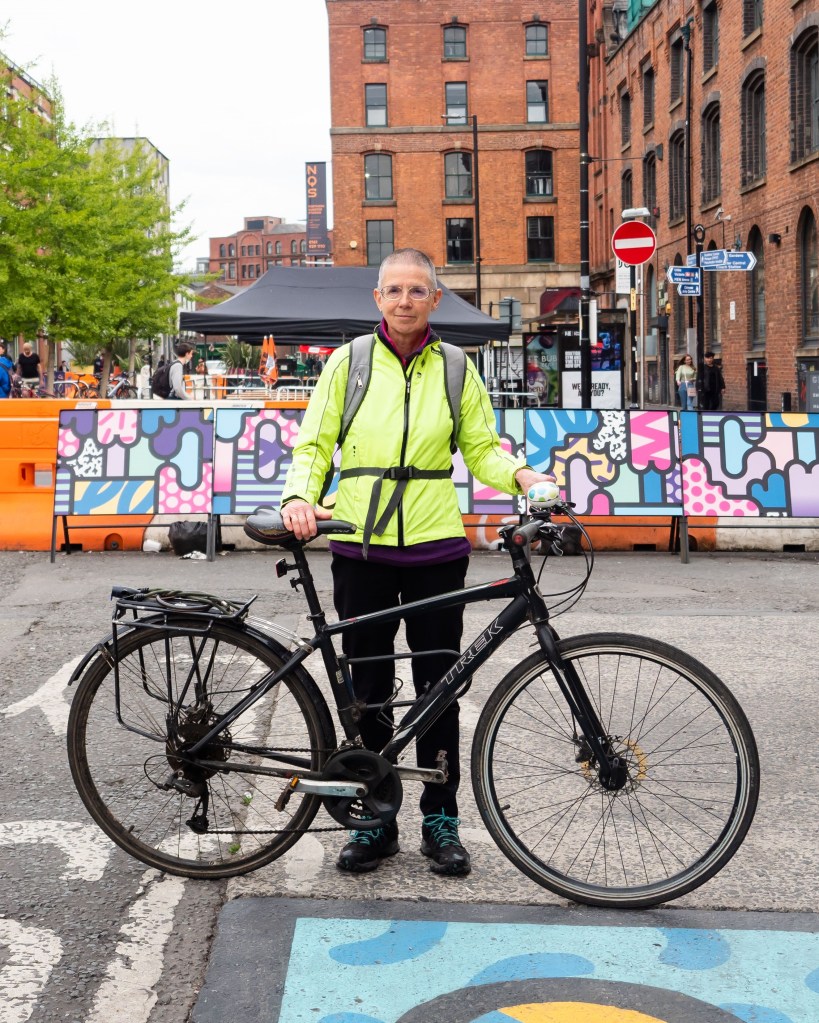
Lizzie Gent, aged 64 years, lives in Manchester and is a part-time librarian and volunteer. She moved to half-time working in 1997 to look after her partner Marion who had multiple sclerosis. She died around eight years ago.

Lizzie said: “Like many people who lose a partner, I had to build another life after she died and become someone different.

That’s when I started volunteering and I also joined a choir. I am now chair of the choir committee. I cycle a lot and do a fitness routine at home some mornings. I hope I am going to carry on cycling into my 90s.

Most of my friends are my age and are fit and active. I am also surrounded by really positive older women in their 70s. Some live with things like arthritis or other aches and pains. My mum is aged 99 and lives in a care home. I am very aware of other friends who are struggling to pay for their elderly parents’ care.

To keep healthy and live longer I would advise people to keep active, maintain a good group of friends and do an activity that brings you into contact with people like singing or volunteering. Seek out new experiences and learn new skills. Try to enjoy life as much as possible and go out into the countryside.

People often have an image of older people as an amorphous bunch. It is important to acknowledge that older people have lived fascinating and interesting lives and have individual stories to tell.”

Dr Young encouraged people to think about the fact that they are going to get older themselves. She said: “Ageism is discrimination against your future self and that makes no sense.”

Touchy

Max, a young trans guy guides us through his discoveries around social touch with a funny and heart-warming animation.