“Safe / Haven: Gay Life in 1950s Cherry Grove” Exhibition … Quentin Crisp: Naked Hope

News

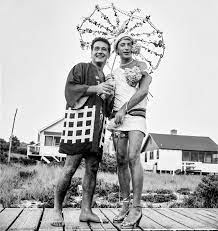
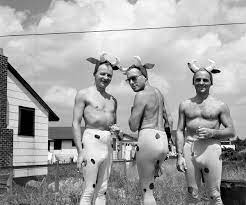
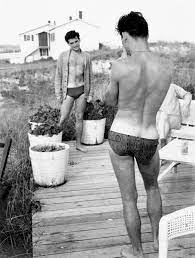
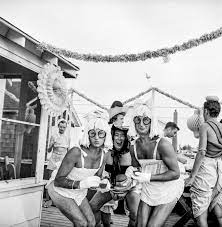
A fascinating new exhibition proves that LGBT life in the pre-Stonewall era wasn’t always conducted in the shadows. These incredible photos show what gay life was like in a 1950s LGBT resort.
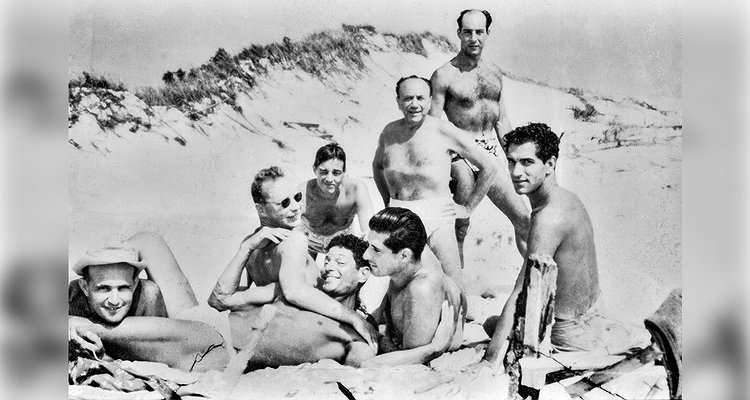
Image: courtesy of the Cherry Grove Archive Collection

While it’s true that much of the LGBT experience in the age before decriminalisation consisted of furtive glances and clandestine meetings, a fascinating new exhibition in New York reminds us that, in some areas at least, gay life was able to flourish out in the open.

The New York Historical Society museum is hosting a rare collection of photographs and images documenting life in 1950s and ’60s Cherry Grove on New York’s Fire Island – an area which has remained a popular LGBT retreat ever since.

Cherry Grove’s isolated location off Long Island – accessible in the mid-20th century only by ferry or seaplane – led to it becoming an LGBT safe haven from the 1930s onwards as writers, artists, dancers, theatre people and Hollywood celebrities were attracted to its sandy shores.

By the 1950s and ’60s, the small hamlet was home to one of the world’s most vibrant gay scenes, with gay men and women able to socialise openly on its beaches or at local hotspots such as Duffy’s Hotel Bar, where they could enjoy same-sex dancing late at night.

Flamboyant costume parties which would have otherwise violated strict New York laws prohibiting ‘risqué’ attire and cross-dressing became a regular part of Cherry Grove’s social calendar.

Images on display at New York Historical Society’s exhibition “Safe / Haven: Gay Life in 1950s Cherry Grove” give a fascinating and heart warming insight into the lives of gay men and women who were able to experience love, friendship and unselfconscious self-expression at a time where they found their very identity criminalised.
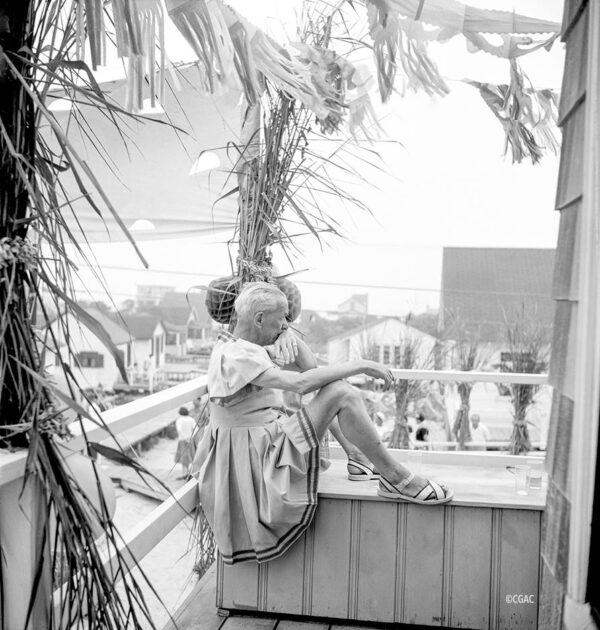
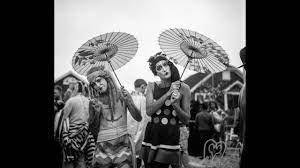
Sadly, and perhaps inevitably for the time, Cherry Grove’s growing renown as an LGBT haven during the 1950s led to a growing pushback from the area’s longstanding heterosexual residents, and police raids began to become common throughout the 1960s, with men in particular being vulnerable to arrest and subsequent exposure in local newspapers.

As the 1969 Stonewall uprising in nearby New York City sparked a growing wave of LGBT politicisation and emancipation, Cherry Grove was able to preserve its status as one of the USA’s most popular gay resorts.

In 2013, the Cherry Grove Community House and Theatre was listed on the USA’s National Register of Historic Places – one of only a few sites included to date for their role in LGBT history. 
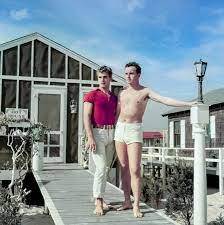
Photographs from the exhibition will be on display at the New York Historical Society giving a new generation of LGBT people the chance to step back in time to an era that is now on the cusp of leaving living memory. The exhibition includes 70 photographs and additional ephemera including recorded accounts from notable residents.

Cherry Grove on Fire Island became a weekend and summer destination for gay men and women in the pre-Stonewall era of the 1950s and 1960s,” said Dr Louise Mirrer, president and CEO of New York Historical Society.

At a time when they faced homophobia and persecution, the residents of Cherry Grove found a sanctuary where they could socialise and express themselves freely. We are proud to partner with the Cherry Grove Archives Collection to display these joyful images.”

Susan Kravitz from the Cherry Grove Archives Collection adds: “The Cherry Grove Archives Collection is honoured to exhibit our 1950s Cherry Grove photographs and ephemera at the New York Historical Society.

As you walk around this exhibition, we hope you will become aware of the joyous freedom of expression that LGBT people demonstrate in so many of these photographs, remembering that pre-Stonewall 1950s was a time when persecution and prosecution ruled the lives of homosexuals in mainland America.

Yet the 1950s was a richly creative historical period in Cherry Grove when gay and straight people worked and played together, whether in theatrical productions, costumed cocktail parties, annual balls or a range of community-sponsored events.”

In the summer of 1953, Audrey Hartmann was 23 years old and on vacation with friends. She was staying in Ocean Bay Park, a small beach town on Fire Island, sixty miles from New York City.

She’d heard whispers about a place down the beach called Cherry Grove. A few miles away, it was said to be a welcoming community of gay people. She’d heard there were lesbians there. 

Hartmann walked down, and what she saw is on display at the exhibition, as well as chronicled in the 1993 book “Cherry Grove, Fire Island: Sixty Years in America’s First Gay and Lesbian Town” by Esther Newton. Hartmann encountered “charming little houses” lit by gas lamps, and wherever she walked were canopies of trees. She caught a glimpse into some of the homes and said, “I remember seeing women by candlelight sitting there,” and wished she were one of them.
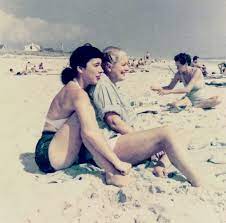
Patricia Fitzgerald & Kay Guinness, Cherry Grove Beach, September 1952

Her wish came true. She would go on to live in Cherry Grove and became a beloved member of the community. She and her long time partner were some of the first women to buy a home on the island. Hartmann, now 90, was interviewed for the exhibition: “It was an escape for everyone to be able to come out here on the weekend and be yourself. It was a safe haven. I could say to someone, ‘I’m Audrey Hartmann … and I’m gay.’” That, at the time, was unheard of.

Cherry Grove was one of the first gay beach towns in the United States, joining a handful of LGBT vacation spots and resorts that became popular in the pre-Stonewall era, along with places like Provincetown, Massachusetts, and Saugatuck-Douglas, Michigan. 

The striking images in the collection are special because of their rarity, as well as the joy and intimacy displayed in them. There is a relaxed nature to the photos, of couples with their arms around each other, friends out at parties or spending time together on the beach. 

Most people didn’t share themselves in that way because they couldn’t be documented. It could be held against them legally,” said Parker Sargent, 46, one of the curators of the exhibit and a representative of the Cherry Grove Archives Collection. In Cherry Grove, gay residents were able to form a community, have a voice in how things were run and be out. “And that’s revolutionary in a really quiet way,” Sergeant said.

Because it’s isolated, people are not judging you, like you’d be afraid of in the real world,” said Susan Kravitz, 77, who curated the exhibit with Sargent. “The women in the ‘50s had to wear skirts and dresses … but when they came to Cherry Grove, they could wear trousers – and that was a big deal. Not just pants, but trousers … It’s always about freeing oneself to be who you want to be, and where else can you do that?” 

Cherry Grove did have its share of raids and arrests, but the last boat left the island at midnight, meaning there was no police presence once the boat left the dock. That contributed to a vibrant nightlife, so integral to the community, that a section of the exhibit is devoted to theatre, performance and the social scene. Theatre is a lasting legacy of Cherry Grove, as it was theatre people who began to vacation there as early as the 1930s, laying a foundation of creativity and openness that has had a lasting draw for the LGBT community.
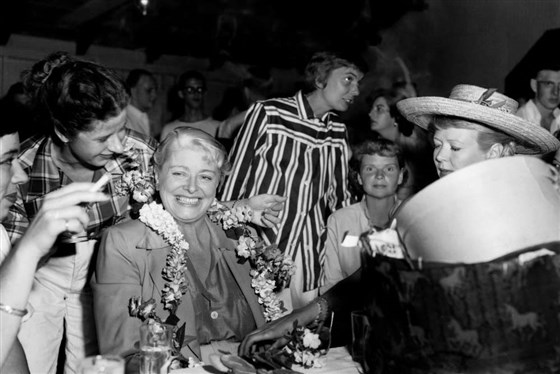
Pat Fitzgerald, Kay Guinness, Mary Ronin & Bea Greer c1950

Cherry Grove was different from the city, where the gay bars were run by the mob, according to Sargent, who described these urban watering holes as “dark and seedy clubs” where “you always had to be careful that the lights would come on,” signalling a police raid.

In Cherry Grove, you were suddenly out in nature and sitting on people’s front porches and going to house parties,” Sargent said. “There was a levity and a freedom of not being caught.” 

Cherry Grove continued to evolve after the 1950s, moving from a sanctuary for mostly white and affluent gay men and women to a more inclusive place with the advent of the 1960s, as the civil rights movement gained traction and more commercial real estate in the area led to affordable housing options for greater swaths of the community. As the decades move forward, photographs begin to show black and working class LGBT people.

You will see such joy in these photographs, you will see happiness, you will see laughter, and you would never think that would be the case given the times in which these people lived,” Kravitz said.
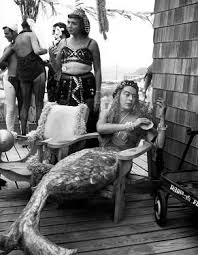
Part of the mission behind “Safe / Haven: Gay Life in 1950s Cherry Grove” is to create an archive where there has been none. 

It’s more than just the photos or the old videos,” Sargent said. “It’s getting that material out there for people to see and to rewrite our history in a way that has been very blank because we tend to think that gay life started at Stonewall. People have a look at gay history before Stonewall. We’ve always been here.” 

Today, Cherry Grove remains a beloved summer destination for LGBT beachgoers, particularly lesbians, as has the adjoining community of the Fire Island Pines, which has traditionally catered to gay men. Though the world has become more accepting over the decades, these two Fire Island enclaves remain important to the community, and just as vibrant as ever, welcoming hundreds of thousands of visitors to its boardwalks every season.

The New York Historical Society presents “Safe / Haven: Gay Life in 1950s Cherry Grove” from 14 May – 11 October 2021, but you can watch the exhibition here
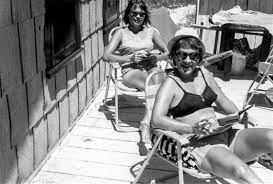
Quentin Crisp: Naked Hope

Waterside Arts Centre,1 Waterside Plaza, Sale, Trafford, M33 7ZF

Friday 25 June 2021, 8.00pm (Ticket Price about £16.00)
Event information

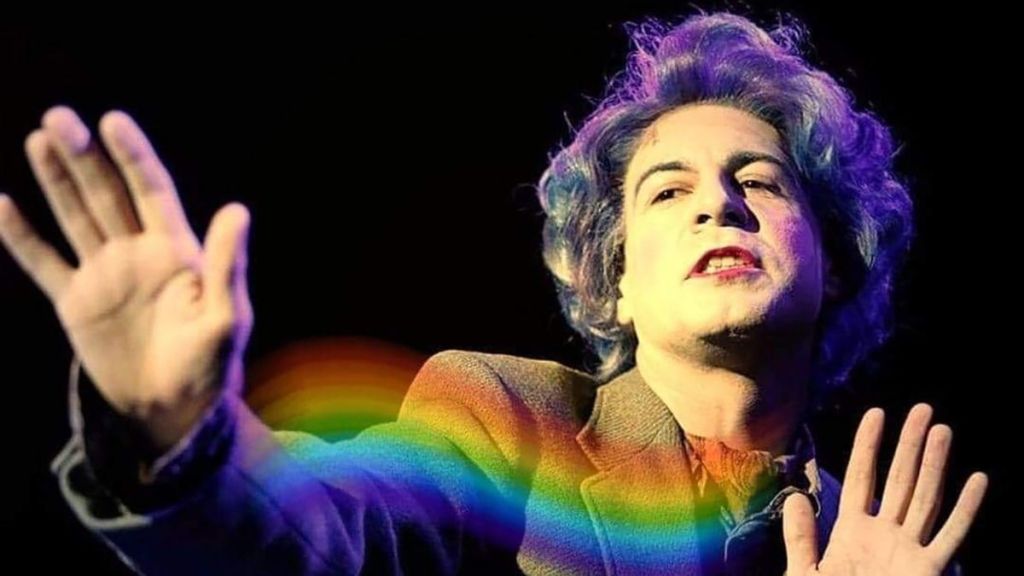
From a conventional upbringing to global notoriety via The Naked Civil Servant, Quentin Crisp was one of the most memorable figures of the twentieth century. Openly gay as early as the 1930s, Quentin spent decades being beaten up on London’s streets for his refusal to be anything less than himself. His courage, and the philosophy that evolved from those experiences, inspire to the present day.

Naked Hope depicts Quentin at two phases of his extraordinary life: alone in his Chelsea flat in the 1960s, certain that life has passed him by, and thirty years later, giving a performance of his one man show An Evening with Quentin Crisp in New York.

Packed with witty gems on everything from cleaning (“Don’t bother – after the first four years the dirt won’t get any worse”) to marriage (“Is there life after marriage? The answer is no”), Naked Hope is a glorious, uplifting celebration of the urgent necessity to be your true self.

Covid-19 information

The venue capacities have been reduced to allow for social distancing and to ensure your visit is safe. There are staggered audience arrival times.

Please note that all staff and visitors over the age of 11 will be required to wear a face covering at all times whilst in the venue, including for the duration of the performance, except when consuming food or drink. If you’re exempt from wearing a face covering, please let one of the team know when you arrive so they can make sure not to disturb you during the show.

Additional Covid-19 safety measures may be put in place, such as temperature checks and changes to arrival times and are subject to change at short notice. Please look out for your pre-show email which you will receive with the latest information about the event.

If Government guidance changes and they are unable to proceed with the performance you have booked for, please be assured that you will be offered an exchange or refund on your tickets.

Level access seating, wheelchair spaces + essential companion tickets are available from the box office directly on 0161 912 5616 or hello@watersidearts.org

Running time

75 minutes, no interval

Book here
Stormé DeLarverie … Everyone Is Awesome: Lego to launch first LGBT+ set … Ambition for Ageing podcast

News

Stormé DeLarverie

On 28 June 1969 an uprising began at the Stonewall Inn, New York City, which went on to impact the future of LGBT rights around the world.

Today marks seven years since Stormé DeLarverie died, and it seems like a good time to honour her as she was often overlooked when Stonewall was featured in the media.

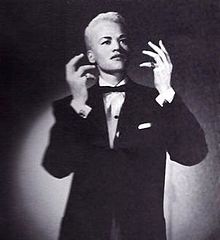
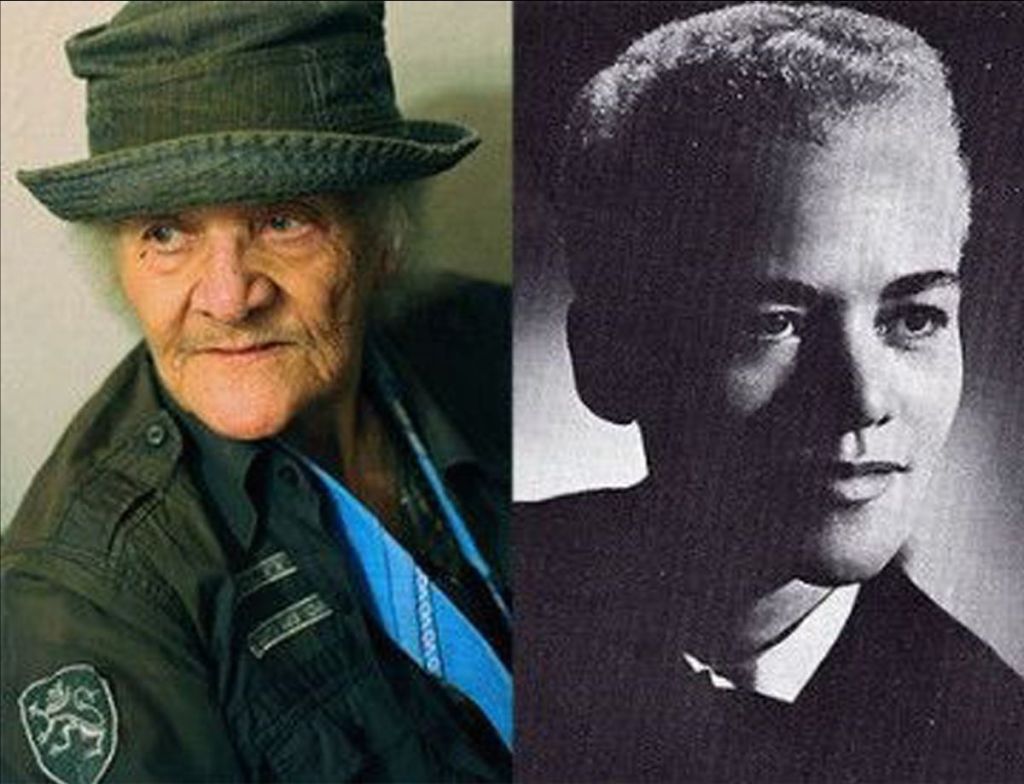
Stormé DeLarverie (24 December 1920 – 24 May 2014) was an American woman known as the butch lesbian whose scuffle with police was, according to Stormé and many eye witnesses, the spark that ignited the Stonewall rebellion, spurring the crowd to action.

She was born in New Orleans, and is remembered as a gay civil rights icon and entertainer, who performed and hosted at the Apollo Theatre and Radio City Music Hall. She worked for much of her life as an MC, singer, bouncer, bodyguard and volunteer street patrol worker – the “guardian of lesbians in the Village” (Greenwich Village, New York City).

Before Stonewall

DeLarverie’s father was white; her mother was African American, and worked as a servant for his family. According to DeLarverie, she was never given a birth certificate and was not certain of her actual date of birth. She celebrated her birthday on 24 December.

As a child, DeLarverie faced bullying and harassment. She rode jumping horses with the Ringling Brothers Circus when she was a teenager, but stopped after being injured in a fall. She realised she was lesbian near the age of eighteen.

Her partner, a dancer named Diana, lived with her for about 25 years until Diana died in the 1970s. According to friend Lisa Cannistraci, DeLarverie carried a photograph of Diana with her at all times.

Stonewall uprising

The events of 28 June 1969 have been called “the Stonewall riots”.

However, DeLarverie was very clear that “riot” is a misleading description: “It was a rebellion, it was an uprising, it was a civil rights disobedience – it wasn’t no damn riot.”

At the Stonewall rebellion, a scuffle broke out when a woman in handcuffs, who may have been Stormé, was roughly escorted from the door of the bar to the waiting police wagon. Police brought her through the crowd several times, as she escaped repeatedly. She fought with at least four of the police, swearing and shouting, for about ten minutes. Described by a witness as “a typical New York City butch” and “a dyke-stone butch,” she had been hit on the head by an officer with a baton for, as one witness stated, announcing that her handcuffs were too tight. She was bleeding from a head wound as she fought back. Bystanders recalled that the woman, whose identity remains uncertain (Stormé has been identified by some, including herself, as the woman), sparked the crowd to fight when she looked at bystanders and shouted, “Why don’t you guys do something?” After an officer picked her up and heaved her into the back of the wagon, the crowd became a mob and went “berserk”: “It was at that moment that the scene became explosive.” Some have referred to that woman as “the gay community’s Rosa Parks”.

“‘Nobody knows who threw the first punch, but it’s rumoured that she did,” said Lisa Cannistraci, owner of the Village lesbian bar Henrietta Hudson. “She told me she did.”

Whether or not DeLarverie was the woman who fought her way out of the police wagon, all accounts agree that she was one of several lesbians who fought back against the police during the uprising.

The Jewel Box Revue

From 1955 to 1969 DeLarverie toured the black theatre circuit as the MC (and only drag king) of the Jewel Box Revue, North America’s first racially integrated drag revue. The revue regularly played the Apollo Theatre in Harlem as well as to mixed-race audiences, something that was still rare during the era of racial segregation in the United States. She performed as a baritone.

Stormé DeLarverie

During shows audience members would try to guess who the “one girl” was, among the revue performers, and at the end Stormé would reveal herself as a woman during a musical number called, “A Surprise with a Song,” often wearing tailored suits and sometimes a moustache that made her “unidentifiable” to audience members. As a singer, she drew inspiration from Dinah Washington and Billie Holiday (both of whom she knew in person). During this era when there were very few drag kings performing, her unique drag style and subversive performances became celebrated, influential, and are now known to have set a historic precedent.

The movie, Stormé: The Lady of the Jewel Box, about DeLarverie and her time with the revue was released in 1987.

Influence on fashion

With her theatrical experience in costuming, performance and makeup, DeLarverie could pass as either a man or a woman, black or white. Offstage, she cut a striking, handsome, androgynous presence, and inspired other lesbians to adopt what had formerly been considered “men’s” clothing as street wear. She was photographed by renowned artist Diane Arbus, as well as other friends and lovers in the arts community, in three-piece suits and “men’s” hats. She is now considered to have been an influence on gender-nonconforming women’s fashion decades before unisex styles became accepted. 

Life after Stonewall

DeLarverie’s role in the Gay Liberation movement lasted long after the uprisings of 1969.

In the 1980s and 1990s she worked as a bouncer for several lesbian bars in New York City. She was a member of the Stonewall Veterans’ Association, holding the offices of Chief of Security, Ambassador and, in 1998 to 2000, Vice President. She was a regular at the gay pride parade. For decades Delarverie served the community as a volunteer street patrol worker, the “guardian of lesbians in the Village.”

Tall, androgynous and armed – she held a state gun permit – Ms DeLarverie roamed lower Seventh and Eighth Avenues and points between into her 80s, patrolling the sidewalks and checking in at lesbian bars. She was on the lookout for what she called “ugliness”: any form of intolerance, bullying or abuse of her “baby girls.” … “She literally walked the streets of downtown Manhattan like a gay superhero. … She was not to be messed with by any stretch of the imagination.”

— DeLarverie’s obituary in The New York Times

In addition to her work for the LGBT community, she also organised and performed at benefits for battered women and children. When asked about why she chose to do this work, she replied, “Somebody has to care. People say, ‘Why do you still do that?’ I said, ‘It’s very simple. If people didn’t care about me when I was growing up, with my mother being black, raised in the south.’ I said, ‘I wouldn’t be here.'”

For several decades, DeLarverie lived at New York City’s famous Hotel Chelsea, where she “thrived on the atmosphere created by the many writers, musicians, artists, and actors.” Cannistraci says that DeLarverie continued working as a bouncer until age 85.

In June 2019, DeLarvarie was one of the inaugural fifty American “pioneers, trailblazers, and heroes” inducted on the National LGBTQ Wall of Honor within the Stonewall National Monument (SNM) in New York City’s Stonewall Inn. The SNM is the first US national monument dedicated to LGBT rights and history and the wall’s unveiling was timed to take place during the 50th anniversary of the Stonewall uprising.

Illness and death

DeLarverie suffered from dementia in her later years. From 2010 to 2014, she lived in a nursing home in Brooklyn. Though she seemingly did not recognise she was in a nursing home, her memories of her childhood and the Stonewall uprisings remained strong. She died in her sleep on 24 May 2014, in Brooklyn. No immediate family members were alive at her time of death. Lisa Cannistraci, who became one of DeLarverie’s legal guardians, stated that the cause of death was a heart attack. She remembers DeLarverie as “a very serious woman when it came to protecting people she loved.” A funeral was held on 29 May 2014, at the Greenwich Village Funeral Home.

Everyone Is Awesome: Lego to launch first LGBTQ+ set

Toy company’s designer says he was inspired to support the community with a rainbow-themed creation.

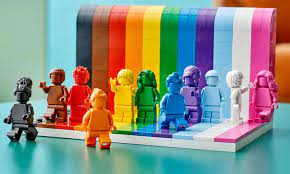
In all but one case no specific gender has been assigned to the figures, who are intended to ‘express individuality, while remaining ambiguous’. Photograph: Lego

In the “spraying room” at Lego HQ, tiny figurines are layered with bright, glossy paint before being placed on a rainbow arch. The result, a waterfall of colour with 11 brand new mini-figures striding purposefully towards an imagined brighter future, is the Danish toymaker’s inaugural LGBT+ set, titled Everyone Is Awesome.

The colours of the stripes were chosen to reflect the original rainbow flag, along with pale blue, white and pink representing the trans community, and black and brown to acknowledge the diversity of skin tones and backgrounds within the LGBT+ community.

In all but one case no specific gender has been assigned to the figures, who are intended to “express individuality, while remaining ambiguous”.

The exception, a purple mini-figure with a highly stylised beehive wig, “is a clear nod to all the fabulous drag queens out there”, said the designer, Matthew Ashton, who initially created the set for his own desk.

“I’d moved offices, so wanted to make the space feel like home with something that reflected me and the LGBT+ community I’m so proud to be a part of,” Ashton said.

But the set attracted attention and was soon in demand. “Other members of Lego’s LGBT+ community came by to tell me they loved it,” Ashton said. “So I thought, ‘maybe it’s something we should share’.” He also wanted to be more vocal in support of inclusivity.

“Growing up as an LGBT+ kid – being told what I should play with, how I should walk, how I should talk, what I should wear – the message I always got was that somehow I was ‘wrong’,” he said. “Trying to be someone I wasn’t was exhausting. I wish, as a kid, I had looked at the world and thought: ‘This is going to be OK, there’s a place for me’. I wish I’d seen an inclusive statement that said ‘everyone is awesome’.”

Ashton said he was really happy to work for a company that wants to be outspoken over such matters. Jane Burkitt, a fellow LGBT+ employee at Lego who works in supply chain operations, agreed.

“I’ve been at Lego for six years and I’ve never hesitated to be myself here, which isn’t the case everywhere,” Burkitt said. “When I joined Lego, I hoped it would be an inclusive place – but I didn’t know. People like me wonder, ‘will I be welcome here?’ And the answer is yes – but this set means that, now, everyone knows it.”

Gay Pride float

The set goes on sale on 1 June, the start of Pride month, but a few Afols (adult fans of Lego) and Gayfols have been given a preview.

“This set means a lot,” said Flynn DeMarco, a member of the LGBT+ Afol community and a contestant on the television show Lego Masters US. “Often LGBT+ people don’t feel seen, especially by corporations. There’s a lot of lip service and not a lot of action. So this feels like a big statement.”

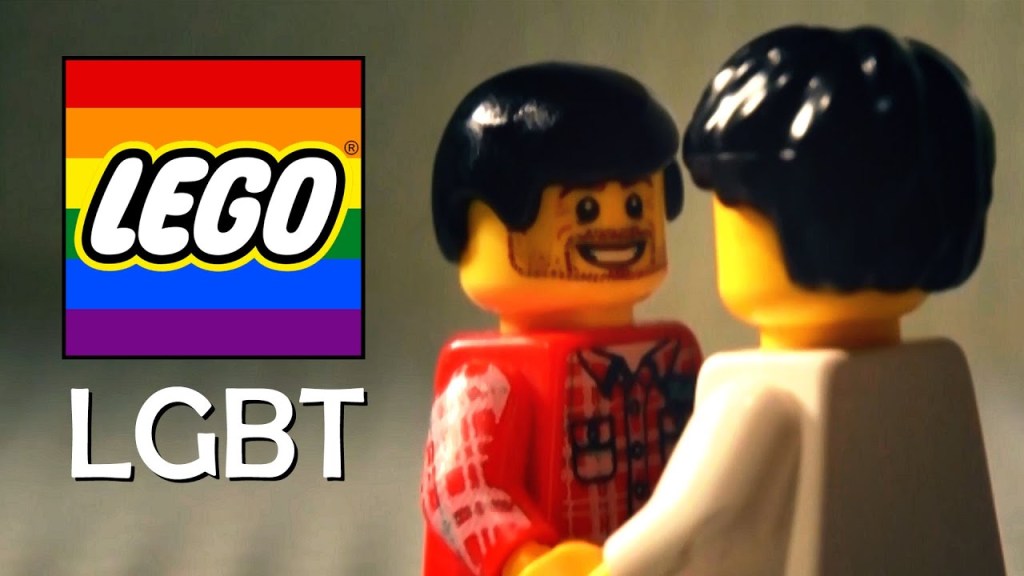
Other LGBT+ representations by Lego – including a tiny rainbow flag in a build of Trafalgar Square, and a bride and groom BrickHeadz sold separately, so that fans could put two women or two men together – have been subtler.

“This is much more overt,” said DeMarco, who hopes the set will help broaden people’s minds. “People look to a company such as Lego – a company they love and enjoy – and think, ‘Hey if it’s OK for Lego, maybe it’s OK for me, too.’”

And his own response? “For Lego to do something so inclusive, so full of joy – it made me smile, then cry, then smile a little more.”

Ambition for Ageing podcast

The Greater Manchester Centre for Voluntary Organisation (GMCVO) has launched its very first podcast, and it’s available now for you to listen to.

Over seven episodes, they bring together different guests to discuss all aspects of ageing, looking at everything from social isolation and loneliness to the benefits of ageing and building age-friendly places.

Join host Kirsty alongside academics and policy makers, researchers, front line delivery staff and of course, older people themselves.

The episode featured here includes stories from older people, including members of Out In The City

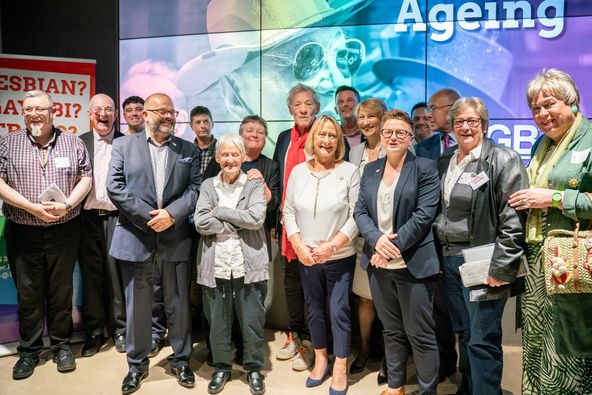
This podcast was recorded when Pride in Ageing was launched by Sir Ian McKellen in June 2019. Pride in Ageing aims to help ensure that Greater Manchester becomes one of the best places for LGBT people to grow older.

Pride in Ageing Launch

In this episode, we hear life stories from a number of different older people, who share their experiences of growing older as a member of a marginalised community as well as their experiences of discrimination.

We talk to older people from Pride in Ageing LGBT group (Michael Teo, Ian Dyer, Tony Openshaw and Philip Harper-Deakin), the Greater Manchester BAME Network and the Greater Manchester Older People’s Network about the impact of inequality and importance of diversity.

Listen here

Read the transcript here

Truman Capote & Tennessee Williams … Rainbow Death Café … Pride in Practice patient survey

News

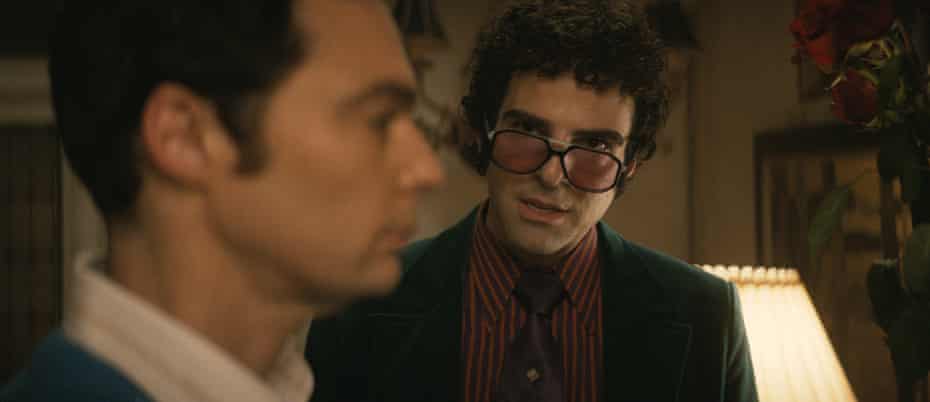
Jim Parsons and Zachary Quinto: ‘Truman and Tennessee were lightning rods’

The Big Bang Theory and Star Trek actors lend their voices to Truman Capote and Tennessee Williams in a film about their friendship.

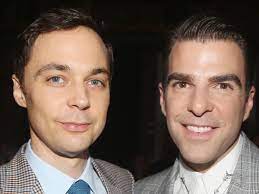
Jim Parsons and Zachary Quinto at a 50th anniversary celebration of The Boys in the Band. 
Photograph: Bruce Glikas / FilmMagic

“It really was an intellectual friendship,” Truman Capote said of his 40-year relationship with the playwright Tennessee Williams. “Though people thought otherwise.”

The two aspiring writers met in 1940, when Capote was 16 and Williams was 29, still a few years off his first success with The Glass Menagerie. Both were southerners (Capote from Louisiana, Williams from Mississippi); had impossible relationships with their families; went from being what Williams called the “teased queer in the schoolyard” to out gay celebrities; created iconic female characters (Holly Golightly in Breakfast at Tiffany’s, Blanche DuBois in A Streetcar Named Desire); and later became recognised as giants of 20th-century American literature.

Their lifelong friendship – and occasionally bitter rivalry – is the subject of Lisa Immordino Vreeland’s artful documentary Tennessee & Truman: An Intimate Conversation.

Zachary Quinto and Jim Parsons, the actors who lend their voices to Williams and Capote in the film, have plenty in common, too: they are gay men in Hollywood who have spent most of their careers in the gravitational pull of entertainment behemoths playing characters who are fluent in Klingon. Quinto is best known for his recurring role as Spock in three Star Trek movies, Parsons for his 12 seasons as Sheldon the uber-geek in the much-loved sitcom The Big Bang Theory. While they had known each other socially for years, it was a revival of Mart Crowley’s play The Boys in the Band, a seminal work of LGBT+ theatre, that cemented their friendship – first in the 50th anniversary Broadway production in 2018 and then in the 2020 movie adaptation for Netflix.

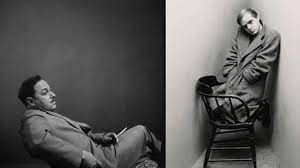
‘There’s a beautiful, brutal honesty about them’ … Tennessee Williams and Truman Capote. Photograph: Clifford Coffin; Irving Penn / The Irving Penn Foundation

Tennessee & Truman is an unexpected pleasure. This is partly because it conjures a world of literary glamour far from the reality in which we are all confined: high art, high bitchery and delightful archive photographs of a fifty-something Capote cavorting in Studio 54.

Capote appears vicious, bitchy, highly curated; Williams is large, loose, almost oozing out of the screen. “It’s like comparing an elf to an ape,” as Parsons puts it. Capote was frequently unkind about Williams – he observes that it is possible to be a writer of genius and yet lack intelligence: “Tennessee is not intelligent.”

Truman & Tennessee – Official trailer

As astute as Quinto and Parsons’ performances are, the real delight lies in the archive interviews – the astonishing intimacy of the questions asked, the artfulness with which they are answered.

“If we want to get right to it, it was a very different thing to be a homosexual back then,” says Parsons. “They were so unapologetic about it. There’s a beautiful, brutal honesty about them. And they are game-players at the same time. In those interviews, their answers are both very revealing and also cat-and-mouse. It feels like you get some deep truths from them, but it’s so playfully done.”

The careers of Quinto and Parsons appear not to have been harmed by being out gay men in Hollywood – indeed, Parsons was until recently the highest-earning TV star in the world (between 2014 and 2019, he was paid more than $25m a season for The Big Bang Theory). Now, having spent the past few years concentrating on LGBT+ stories, both are hoping to diversify as production cranks up again.

Quinto hopes that the film will bring renewed respect to Williams and Capote as “trailblazers” at a time when there were few out gay public figures. “I think, back then, identity was less tied to social progress, representation, political advancement. There was a fascination with these people who were unapologetic. They were lightning rods. It wasn’t the same as what it means today, when it’s about equality, social integration, progressing an agenda for the community. But it was the foundation that all the stuff that came after it was built upon. All of the things that we’re able to advocate for today wouldn’t exist if it weren’t for these outliers.”

Pride in Ageing’s Virtual Rainbow Death Café is back on Monday 24 May at 4.00pm.

This event is a chance to talk openly about death and dying in a relaxed, LGBT-friendly group space. More information and free tickets can be booked here.

Pride in Practice patient survey

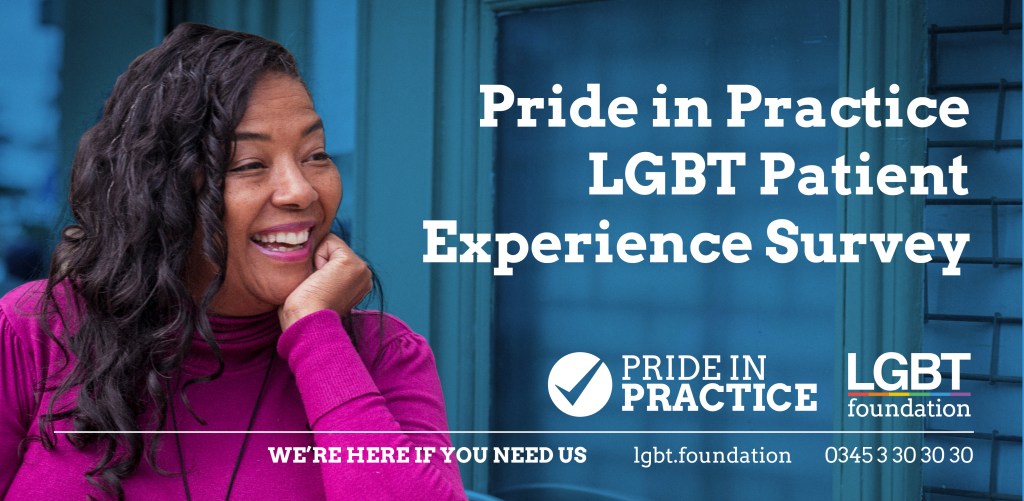
LGBT Foundation’s Pride in Practice LGBT Patient Experience Survey is open from 17 May until 31 July 2021. This annual survey is an opportunity for lesbian, gay, bisexual and trans people to share their experiences of accessing GPs, dentists, pharmacists and optometrists.

In 2018, 13% of LGBT people said that they had received some form of unequal treatment from healthcare staff because they were LGBT. This figure rose to 19% for LGBT people of colour.

This survey will enable a better understanding of LGBT people’s experience of healthcare as well as identifying areas where things are going well, and how they can be improved. The survey can be completed at www.lgbt.foundation/pipsurvey2021 and anyone completing the questionnaire can enter a prize draw for £200 in shopping vouchers.

About Pride in Practice

This research is part of Pride in Practice, a quality assurance and social prescribing programme for primary care services and LGBT communities. Pride in Practice provides training, assessment, accreditation and ongoing support for healthcare services to help them be inclusive of LGBT patients. Pride in Practice is funded by the Greater Manchester Health and Social Care Partnership.

About the survey

This survey asks about your experiences of accessing healthcare services from your GP, dentist, pharmacist and optometrist. It aims to build a picture of current healthcare provision by primary care services for lesbian, gay, bisexual and trans (LGBT) people. The findings of this research will be turned into a report which will be used to make sure that primary care services are better able to recognise and meet the needs of their LGBT patients.

This survey is for LGBT people living in England and responses from people who are not LGBT or live outside of England will not be included in the analysis, and are not eligible to be entered into the prize draw.

The survey should take around 20-40 minutes, depending on your answers. To thank you for your time, you may choose to enter into a prize draw to win £200 worth of shopping vouchers or 3 prizes of vouchers worth £25. 

The information you provide will remain confidential and anonymous. All survey data will be stored securely in line with GDPR. If you have any questions about how your date is stored, please contact pip@lgbt.foundation. This survey has been reviewed in line with LGBT Foundation’s Research Ethics and Integrity Policy.

IDAHOBIT … The countries where it is illegal to be gay … Alphabet Soup … “Conversion therapy” … Hugs

News

IDAHOBIT

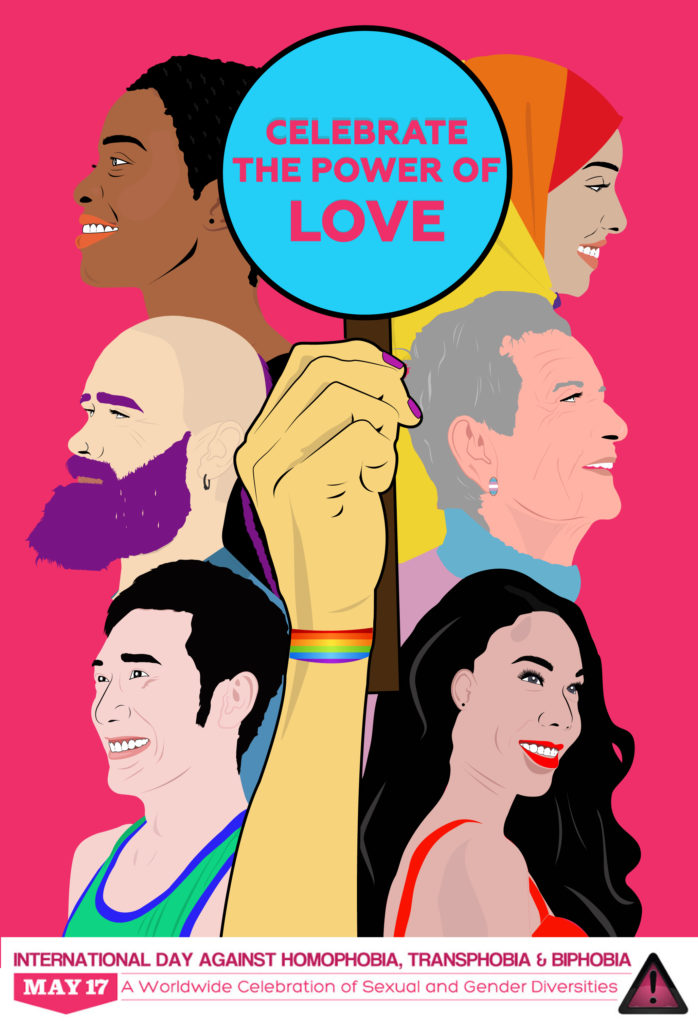
The International Day Against Homophobia, Transphobia and Biphobia (IDAHOBIT) was created in 2004 to draw attention to the violence and discrimination experienced by lesbian, gay, bisexual, transgender, intersex people and all other people with diverse sexual orientations, gender identities or expressions, and sex characteristics.

The date of 17 May was specifically chosen to commemorate the World Health Organisation’s decision in 1990 to declassify homosexuality as a mental disorder.

The day is now celebrated in more than 130 countries, including 37 where same-sex acts are illegal. Thousands of initiatives, big and small, are reported throughout the planet.

IDAHOBIT has received official recognition from several States, international institutions such as the European Parliament, and by countless local authorities. Most United Nations agencies also mark the Day with specific events. Even if every year a “global focus issue” is promoted, IDAHOBIT is not one centralised campaign; rather it is a moment that everyone can take advantage of to take action, on whatever issue and in whatever format that they wish.

Homosexuality: The countries where it is illegal to be gay

A crackdown on lesbian, gay, bisexual, and transgender people in Cameroon has resulted in the arrest or assault by security forces of dozens of people this year, according to Human Rights Watch.

In the most recent incident, two transgender Cameroonians have been sentenced to five years in prison after being found guilty of “attempted homosexuality”.

Where is homosexuality still outlawed?

There are 69 countries that have laws that criminalise homosexuality, and nearly half of these are in Africa.

However, in some countries there have been moves to decriminalise same-sex unions.

In February this year, Angola’s President Joao Lourenco signed into law a revised penal code to allow same-sex relationships and bans discrimination on the basis of sexual orientation.

In June last year, Gabon reversed a law that had criminalised homosexuality and made gay sex punishable with six months in prison and a large fine.

Botswana’s High Court also ruled in favour of decriminalising homosexuality in 2019.

Mozambique and the Seychelles have also scrapped anti-homosexuality laws in recent years.

In Trinidad and Tobago, a court in 2018 ruled that laws banning gay sex were unconstitutional.

But there are countries where existing laws outlawing homosexuality have been tightened, including Nigeria and Uganda. In others, efforts to get the laws removed have failed.

A court in Singapore dismissed a bid to overturn a law that prohibits gay sex early last year.

In May 2019, the high court in Kenya upheld laws criminalising homosexual acts.

Colonial legacy

Many of the laws criminalising homosexual relations originate from colonial times.

In many places, breaking these laws could be punishable by long prison sentences.

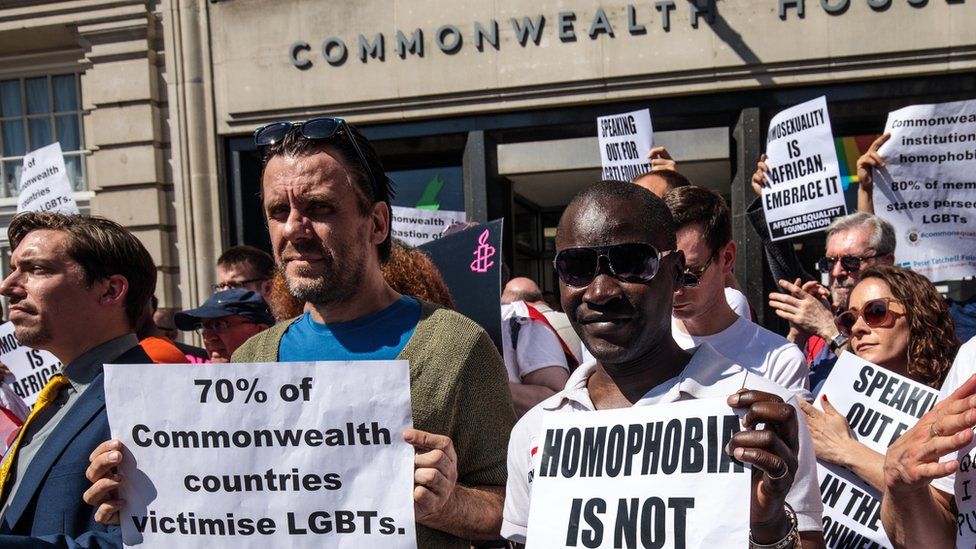
Out of the 53 countries in the Commonwealth – a loose association of countries most of them former British colonies – 36 have laws that criminalise homosexuality.

Countries that criminalise homosexuality today also have criminal penalties against women who have sex with women, although the original British laws applied only to men.

The International Lesbian, Gay, Bisexual, Trans and Intersex Association (ILGA) monitors the progress of laws relating to homosexuality around the world.

It says the death penalty is the legally prescribed punishment for same-sex sexual acts in Brunei, Iran, Mauritania, Saudi Arabia, Yemen and in the northern states in Nigeria.

Sudan repealed the death penalty for consensual same-sex sexual acts last year.

In Afghanistan, Pakistan, Qatar, Somalia and the United Arab Emirates, the laws against same-sex relations do not prescribe the death penalty, but it’s still been used in some instances.

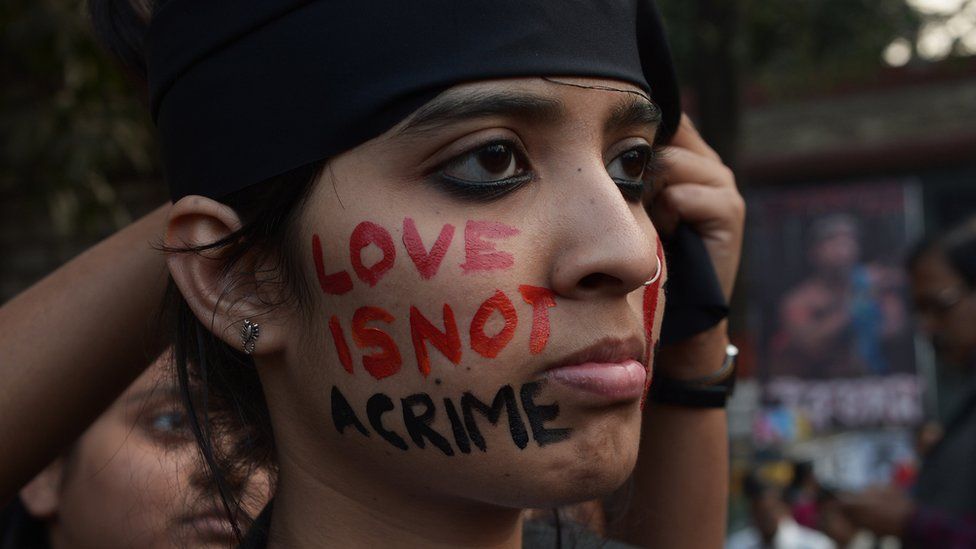
An Indian gay rights activist protests against a court ruling in 2013 upholding a law which criminalises gay sex.

Some observers note that the risk of prosecution in some places is minimal.

For example, a 2017 report on Jamaica by the UK Home Office said that Jamaica was regarded as a homophobic society, but that the “authorities do not actively seek to prosecute LGBT persons”.

Activist groups say the ability of lesbian, gay, bisexual and trans (LGBT) organisations to carry out advocacy work is being restricted.

Changing trend

There is a global trend toward decriminalising same-sex acts.

So far, 28 countries in the world recognise same-sex marriages, and 34 others provide for some partnership recognition for same-sex couples, ILGA says.

As of December 2020, 81 countries had laws against discrimination in the workplace on the basis of sexual orientation. Twenty years ago, there were only 15.

Full list of countries where homosexuality is outlawed:

Afghanistan, Algeria, Antigua & Barbuda, Bangladesh, Barbados, Bhutan, Brunei, Burundi, Cameroon, Chad, Comoros, Cook Islands, Dominica, Egypt, Eritrea, Eswatini, Ethiopia, Gambia, Ghana, Grenada, Guinea, Guyana, Iran, Jamaica, Kenya, Kiribati, Kuwait, Lebanon, Liberia, Libya, Malawi, Malaysia, Maldives, Mauritania, Mauritius, Morocco, Myanmar, Namibia, Nigeria, Occupied Palestinian Territory (Gaza Strip), Oman, Pakistan, Papua New Guinea, Qatar, Saint Kitts and Nevis, Saint Lucia, Saint Vincent and The Grenadines, Samoa, Saudi Arabia, Senegal, Sierra Leone, Singapore, Solomon Islands, Somalia, South Sudan, Sri Lanka, Sudan, Syria, Tanzania, Togo, Tonga, Tunisia, Turkmenistan, Tuvalu, Uganda, Uzbekistan, Yemen, Zambia and Zimbabwe.

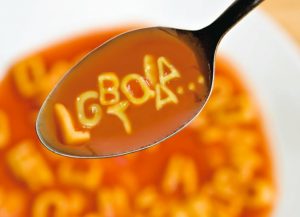
The Alphabet Soup of Identity

How did we get from Gay to LGBT to LGBTQIA to LGGBDTTTIQQAAPP etc? Who or what constitutes inclusion? There was much soul-searching and sometimes acrimonious debate on whether to add Bi and Trans. Moreso, when Intersex or Asexual are considered.

Young people appear to have reclaimed “Queer”, but how can this suffice as an all-inclusive umbrella word as this upsets too many of our generation that experienced “queer-bashing”?

Certainly, defining characteristics are being “other” and minority.

Does everyone / anyone even want to be included? Some LGBs don’t want Trans included. Some Trans people who identify as straight don’t see why they are included.

In the UK during 2018-19 calls from a minority of Lesbians to “Get the L Out” came in response to disagreements over Trans inclusion and conflation of sex and gender identity.

Many European LGBT+ rights and policy groups have gone LGBTI. Yet, has anyone asked Intersex people if they want including? Stonewall did, and half those invited wanted in, the other half, out – so stalemate and Stonewall evolved to be LGBT but not LGBTI – even that caused trouble for some.

Two Hundred Identities

There are some 100 to 200 identities now used to describe sex, gender, sexuality, and romantic attraction – or their lack thereof. Many of these overlap and there are 40+ acronyms attempting to summarise them:

LGBT – These 4 letters do not cover all the sexes, genders or sexualities;

Variant and inconsistent additions: LGBTI, LGBTQ, LGBTQIA, LGBTIQAP, LGBTQIA2S, LGBTQQICAPF2K, LGGBDTTTIQQAAPP etc.

Some alternatives have been trialled eg GSM (Gender and Sexual Minorities), but in the end, LGBT has stuck, though for a while, and particularly in the USA, GLBT was prominent whilst LGBT or LGBTQ with or without + are now considered more internationally universal.

Some one suggested: “We do seem to expend so much energy over this naming business. There’s only one sure way of ending the alphabet soup nonsense, It’s LGBTQQINQBHTHOWTB – LGBTQQ Not Queer But Happy To Help Out When They’re Busy or it could be shortened to LGW (Lesbian, Gay or Whatever)”.

The dilemma of those wanting to keep it short is their disregard of anyone but gay or lesbian and the historical who came first privilege.

One of the longest seen is the safe space advertised at Wesleyan University in Connnecticut, USA:

LGBTTQQFAGPBDSM

“a safe space for Lesbian, Gay, Bisexual, Transgender, Transsexual, Queer, Questioning, Flexual, Asexual, Genderfuck, Polyamourous, Bondage / Discipline, Dominance / Submission, Sadism / Masochism (LGBTTQQFAGPBDSM) communities and for people of sexually or gender dissident communities. The goals of Open House include generating interest in a celebration of queer life from the social to the political to the academic. Open House works to create a Wesleyan community that appreciates the variety and vivacity of gender, sex and sexuality.” 

At Out In The City we usually use LGBT+ communities, but someone, somewhere, will dispute the inclusion or omission of every or any letter. What do you think?

“Conversion therapy”

On 11 May, the Government announced its plans to ban LGBT “conversion therapy”, as part of the Queen’s Speech. The Government’s plans are intended to introduce laws which will protect people from being subjected to the practice. 

The Government has also announced the creation of a support fund for LGBT people impacted by “conversion therapy”. 

Read more about the Government’s plans here.

Read the Queen’s Speech background briefing notes for more information on the Government’s proposed Bills here.

What is the Queen’s Speech?

The Queen’s Speech is the speech that the Queen reads out in the House of Lords Chamber on the occasion of the State Opening of Parliament. 

It’s written by the Government and sets out the programme of Bills – new laws, and changes to existing laws – that the Government intends to put forward in this new Parliamentary session. A session of Parliament usually lasts around one year.  Once the Government puts forward a Bill in Parliament, Parliament then debates the Government’s proposal and decides whether to adopt the changes to the law set out in the Bill.

Hugs

“Hugs,” everybody keeps saying. “Who do you most want to hug on 17 May?” It’s an absurd act of prudishness. The real headline, of course, is that this is the first day on which it will be legal (in England and most of Scotland, but not yet Wales or Northern Ireland) to have sex with a stranger since 22 March 2020.

So, is oral sex more Covid-safe than kissing? Should you have a lateral flow test before sex? Doctors, scientists and other experts answer the big questions here.

National Honour Our LGBT Elders Day … Quilter’s Guide to the Lesbian Archive … Let’s Get Musical

News

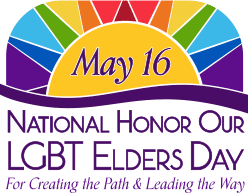
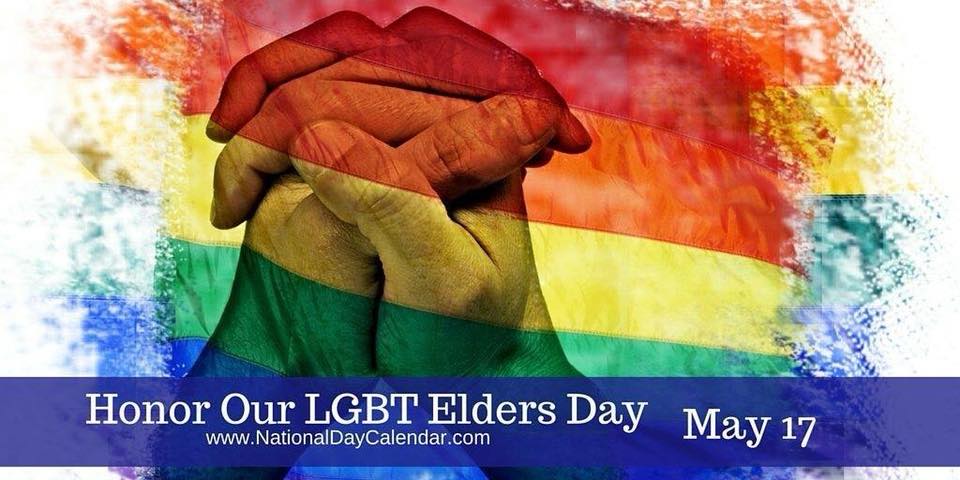
National Honour Our LGBT Elders Day

Celebrate an LGBT elder who made a difference in your life, and spread the word about the importance of LGBT older adults in your community on Sunday, 16 May – National Honour Our LGBT Elders Day.

Join in as we celebrate National Honour Our LGBT Elders Day virtually with videos and retrospectives on the event’s official Facebook page, www.facebook.com/LGBTEldersDay.

Visit the website to see videos honouring an LGBT elder who made a difference. You can also learn more about the history and purpose of National Honour Our LGBT Elders Day.

The LGBT Foundation advise that there are at least 7,650 older lesbian, gay and bisexual people living in Manchester today, and over the next 20 years, Manchester will see the number of over 65s increase by 45%.

In the United States there are an estimated 3 million LGBT adults over the age of 55.

“It’s important to celebrate elders every day,” said Sam McClure, executive director of the Centre for LGBTQ Health Equity, which inaugurated the national day of recognition in Baltimore in 2016. “Respect for those with more experience is an essential element of civility. In intergenerational dialogues, we discover we have differing opinions based on our experiences and perspectives. I love seeing elders and youth learning from each other.”

For more information visit www.lgbteldersday.org

Sarah-Joy Ford: Archives and Amazons Exhibition

Monday 17 May 2021 – Sunday 11 July 2021 – Free, just drop in

HOME, 2 Tony Wilson Place, Manchester M15 4FN

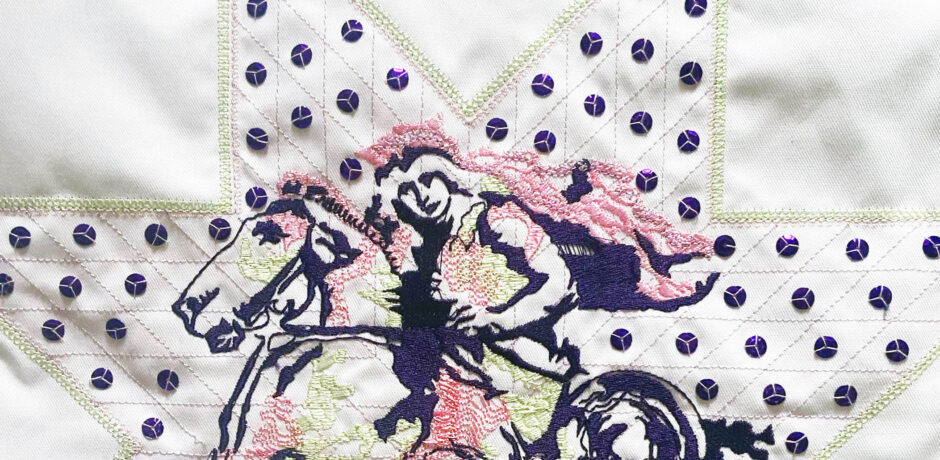
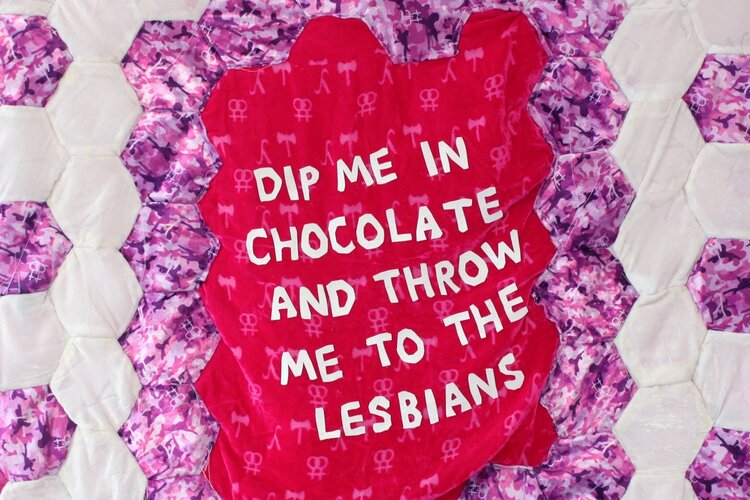
A Quilter’s Guide to The Lesbian Archive is a new exhibition as part of HOME’s reopening programme.

Sarah-Joy Ford presents a new body of work following several years of research in the Lesbian Archive Collection at Glasgow Women’s Library. Sarah-Joy Ford’s work takes pleasure in connecting with this lesbian heritage, acknowledging the complexities of archiving and stitching through to new legacies with this work.

This exhibition is an exercise in taking pleasure in identification, recognition and connection with the lesbian pasts represented in the archive. It provides material space to remember the stories of the dyke lands, lesbian history walks and lesbian spaces hidden in their vaults. Ford’s work examines what it means to look backward through a largely unknown history; acknowledging failed utopias, and stitching through the complex politics, feelings and affects of the Lesbian Archive, creating a new legacy for lesbian lives in every thread.

Using quilt as a methodology, Ford has responded to and re-visioned archival material. Each stitch is a mediation between the feelings, sensations, and pleasures of exploring lesbian pasts. This reflection indulges in the images, iconographies and symbols that have been used to invoke lesbian strength, power, and community throughout the 20th and 21st century. These iconographies are woven textile tales from Lesbos, the interlocking Venus, and the labrys to the Amazon woman.

Sarah-Joy Ford is an Artist and Researcher based in Manchester, where she is a member of Proximity Collective and co-director of The Queer Research Network Manchester. Her current PhD research examines quilting as a methodology for re-visioning lesbian archive material.

Want to know more about Sarah-Joy Ford?

This exhibition is in partnership with Glasgow Women’s Library

Let’s Get Musical

Sonder Radio is an online radio station working with residents of Manchester who are 50+ – www.sonderradio.com

They have an exciting course coming up – a 2 week long online project “Let’s Get Musical” (plus online and taster sessions) – for 50+ residents of Manchester who are not currently in employment, in partnership with Manchester Adult Education Service. 

The programme includes an introduction to music, production and creative writing with a focus on confidence building and teamwork. The group will produce and present a radio show together on the last Friday to an invited audience. 

It’s completely free to attend and they will provide laptops and data if this is a barrier. If you have attended one of their face-to-face courses in the past, you are still very welcome to join them again to learn more.

Dates:

Getting Online Sessions – 19 & 20 May (10.30am -1.30pm)

Taster Session – 27 May (1.00pm – 3.00pm)

Let’s Get Musical – 31 May – 4 June & 7 June – 11 June (10.30am – 3.30pm)

If you are interested in signing up, please fill in this form.

If you have any questions, they would be happy to speak to any potential participants about the programme. Please see the flyer for contact details.