Ted Brown: the man who held a mass kiss-in and made history … Pride Radio Shows & Top 10’s

News

London’s revolutionary kiss-in

Ted Brown is a black LGBT rights pioneer who helped organise the UK’s first Gay Pride march in 1972, featuring a mass ‘kiss-in’ that, at the time, would have been considered gross indecency, which was against the law.

When Brown realised he was gay, homosexuality was illegal in Britain – the only person he came out to was his mother. She cried and told him he’d have to battle not just racism but homophobia too; both were rife in society at the time. At one point Brown felt so dismal about his future that he considered taking his own life. But inspired by the Stonewall Riots, he found hope in Britain’s Gay Liberation Front and became a key figure in fighting bigotry in the UK.

In this interview with the BBC he tells his moving life story.

Ted Brown (left) with his partner Noel and human rights campaigner Peter Tatchell (right) at the first Pride march in London, 1972
Credit: Courtesy of Ted Brown

Ted Brown: the man who held a mass kiss-in and made history

Forty nine years ago today (on 1 July 1972) Ted Brown walked through central London, stopped at Trafalgar Square for a kiss – and made history. He was at the event he had helped to organise, the UK’s first official Gay Pride, in which more than 2,000 people marched through the capital before holding a mass kiss-in.

Half a century later, his memories of the day are euphoric. “It was amazing,” he says. “I felt that we were continuing the legacy of the civil rights march.” That day he took photographs of buoyant butch lesbians and men in drag, crowding around the Trafalgar Square lions and fountains, draping them with banners and demanding liberation for all.

Organised by the Gay Liberation Front (GLF), the London march followed the Stonewall uprising and first Pride parade in the US. “The basic principle of the GLF was that one should come out to show people who we actually are,” says Brown.

His work with the GLF, his efforts to improve the treatment and representation of LGBT people in the media, and his battle against abusive policing make him a key figure in both British civil rights history and LGBT history. He was one of the few Black people in the first Pride march, and remembers it being composed of “mostly young people, mostly white, inevitably, and mostly hippies. It was only five years after 1967, the Summer of Love and the peak of the hippy movement.”

This was not the GLF’s first march for gay rights. In 1970, Brown was at Highbury Fields, north London, to protest against the arrest of Louis Eakes, the chairman of the Young Liberals. Eakes had been arrested for cruising following a “pretty police” sting – where police officers posed as would-be sex partners. The following year “our youth group marched against the unequal age of consent laws”, says Brown. At the time some men were paying a heavy price for this law. “There was one man who was 21 and his boyfriend was 19, and he got a 14-year sentence. And we managed to campaign and get an appeal and get it reduced to something like three years.”

This nascent gay liberation movement was intrinsically intertwined with the civil rights movement for racial justice, Brown says. In fact, the UK branch of the GLF was formed after the LSE students Aubrey Walter and Bob Mellors met at a September 1970 conference in Philadelphia facilitated by the Black Panther Movement. And all of its demonstrations were coalitions with other liberation groups. “One of the very first GLF marches,” says Brown, “was held in Notting Hill Gate, and run by people from the Mangrove” – the Caribbean restaurant on All Saints Road, Notting Hill, which became a hub of Black organising activity, and was the subject of a recent film by the director Steve McQueen. The GLF was also joined by “people who had been involved in the miners’ strikes and the [radical left group] Angry Brigade, and had been closeted in those campaigns”, says Brown. Many of these groups marched alongside the GLF at the 1972 Pride demonstration.

Brown, 71, was born in New York to Jamaican parents – his mother was a pharmacist and his father a garage attendant. By the time he was born his parents were no longer together and their relationship was frighteningly turbulent. When Dorothy Walker was pregnant with Brown in 1949, his father was determined to keep her away from Brown’s older sister, Jewel. One day he invited Walker to the new home he was sharing with an American girlfriend and gave her a cup of coffee, which he had laced with drugs. He then called the hospital, says Brown, telling them: “This woman is crazy.” Walker was detained in Pilgrim State hospital in Brentwood, New York, where Brown was born on 1 February 1950. “Some people say that explains a lot,” he laughs.

When she was released, Brown and his mother moved to Harlem, where he attended the Catholic Our Lady of Victory school – the only place where he could meet up with Jewel. The divorce courts had given his parents shared custody of his sister, but his father would stop his mother from picking her up at weekends. “I’ve met my sister since, recently, and she explained how they would actually hide her in the laundry in their home and say she wasn’t there. They told my sister that she wasn’t wanted by our mother.”

Despite this parental animosity, Brown describes a happy life in Harlem, surrounded by other Black children. “I remember a lot of games we used to play, I remember loving the streets. We had a lot of basketball courts.” He was also aware of the cultural legacy being built around him. “Black sports people were having great achievements, particularly people like the Harlem Globetrotters. They, along with musical artists like Billie Holiday, Sarah Vaughan, Billy Eckstine, Ella Fitzgerald, were achieving great fame and positive images for the Black community.”

Ted Brown in Central Park, New York in 1975

Yet he was under no illusions that he could ever be safe in a world where anti-Black violence was so visible. He was five when the 14-year-old Emmett Till was lynched in Mississippi, and remembers television coverage of the child’s murder. Even though he didn’t live in the south, the young Brown was terrified it could happen to him. “We were being warned about white people in the streets, being told by our parents to be very careful. Even in Harlem, although it was a predominantly Black area, we still had incidents of white people coming into the area and behaving irresponsibly.”

A year later Brown and his mother were hit by the full force of a more legal form of discrimination. His mother was involved with the National Association for the Advancement of Colored People – and was listed by the FBI as a “troublemaker”. On 23 April 1956, Walker, Brown and his younger half-sister, Jackie, were deported to Jamaica. The official documentation for her removal states that Walker was “a person of poor character, having been involved in disturbances instigated by the NAACP”.

Walker’s partner at the time, Jackie’s father, was a white Jewish man and could not relocate with them; he died before the pair could be reunited. Brown’s biological father was due to be deported too but, unbeknown to Brown and his family, he had married his American girlfriend. “Literally, as we were going up the steps to the SS Arcadia, the ship that was going to take us to Jamaica, he whipped out his marriage certificate, which gave him American citizenship. And that saved him.” It was the last time Brown would see his father.

While for his mother it must have been a traumatic experience, Brown was less troubled. “For me, the deportation just seemed like an adventure. I was going on a ship, to a country that I’d never seen before.” And childhood in Jamaica was fun. “I was running barefoot in the streets. A lot of Jamaica, although poor, was very beautiful.” Yet even here he could not escape prejudice. His mother found a job as a pharmacist in Canada, and he and his younger sister were left in Jamaica. But the family members who were happy enough to take in his sister would not accept him. “We didn’t have to guess that they were keeping my sister because she had light skin – they actually told us. Our family said: ‘We’re not taking Ted – he’s too dark.’”
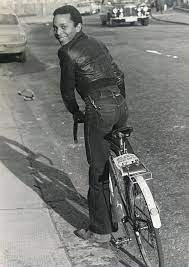
Ted Brown in 1973. Photo courtesy of Ted Brown

When his mother could support them, the children joined her in Canada, and then together they took a ship to the UK in 1959. Coming hot on the heels of the first Windrush arrivals, his mother, now pregnant with Brown’s younger half-brother, Bobby, had a single suitcase and two young children. Yet as they looked for accommodation the signs they saw said: “No Blacks, no dogs, no Irish”. The family were forced to sleep rough for a few weeks, before they found a room in Brixton, south London, with peeling wallpaper, warmed only by a small paraffin heater. Later, when Brown was about 12, they moved to Deptford in south-east London, but left for Greenwich after the National Front pushed dog waste through their letterboxes and broke their windows.

It took a film, Carmen Jones, to make Brown realise he was gay. “There’s a scene where Harry Belafonte plays Joe, and he tries to push a Jeep out of this creek. And he’s all muscles. And my little heart was beating.” The thrill of this epiphany at 13 was soon clouded by Brown’s sense of isolation. But he began to suspect that his best friend, another young Black boy, might feel the same way. “We didn’t have sex or anything. I just got a feeling. There were various things about our behaviours.” Brown was never certain, but the boy’s death by suicide at age 15 left him distraught. “I kind of understood, because later, partly due to depression about what had happened to him, I felt very much the same way.”

His friend’s death drove him to come out to his mother. “I had to tell somebody. And she cried on my shoulder. I cried on her shoulder. She said: ‘Well, you’re going to have to deal with the racism, and also society’s hostility to homosexuals.’” Brown was initially stunned at his mother receiving the news with nothing but love and concern, but she told him about hearing the speeches of the gay civil rights activist Bayard Rustin, describing the civil rights movement as a coalition that advocated the liberation of gays and women, too.

Not long afterwards, on 22 November 1965, Brown’s mother died. She was just 50. She had a concurrent heart and asthma attack in front of Brown and his siblings. “I tried to give her mouth-to-mouth resuscitation and ran out to the telephone box to call the ambulance, but they didn’t turn up for 20 minutes. By that time she was gone.” He credits her with imbuing him with the spirit of revolutionary love and rejection of bigotry.

Due to the age difference, Brown and his siblings were sent to separate children’s homes following his mother’s death, and his isolation deepened. He recalls a school trip to Brighton where other children spoke of their ambitions for the future – the dream job, marriage and kids. Ted could not see any of this for himself. “I had no idea what I was going to do. I didn’t know any other gay people.”

When he returned to the children’s home that day, he decided he would end his life. But he was saved by the realisation that his younger brother and sister would have no one to keep an eye on them. “I was looking at it from the point of view of when I’m 25, when I’m 30, if I don’t meet anybody, or my younger brother and sister find out I’m a homosexual, I’ll be alone.”

Then, at 19, he experienced a watershed moment. It was 1969 and he still knew no one who was openly gay, but he came across a news report on the Stonewall riots. The report explained how “some queens with handbags were fighting with the police at a bar in New York,” he says. To Brown just hearing about other gay men taking action together was incredible. “I remember doing cartwheels all around the living room.”

The next year, in November, he went to watch the landmark gay film Boys in the Band. Outside, members of the GLF were leafleting. Brown went along to the group’s third meeting, at the LSE, and remembers how exciting it felt. “I’d never been in a room with other homosexuals who were angry about the way that we were being treated, and wanting to fight back about it,” he says.

Finding the GLF allowed him to see a future for himself for the first time, while activist spaces gave him a clear purpose, friendships and lovers. After his early years in the GLF, Brown set up his own organising collectives. He led the Black section of Galop, the Gay London Police Monitoring Group, set up in June 1982 to address homophobic policing, but left after a furious confrontation with a white gay man in the organisation who used a racial slur and told a joke about how white girls only went out with Black boys “to get their handbags back”. Brown went to work for Lewisham Action on Policing, set up following the New Cross fire in January 1981.

Brown also founded Black Lesbians and Gays Against Media Homophobia, and in 1990 began a year-long struggle against Black British tabloid the Voice, to force an apology for its homophobic coverage of the footballer Justin Fashanu. On 29 October 1991 the paper published a full-page “right to reply” – an article by Brown entitled: “Fighting racism and homophobia – a united battle”.
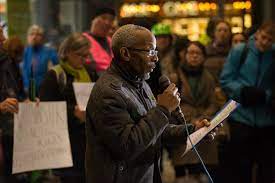
At a vigil in London in 2015. Photo: Jeff Gilbert / Alamy

The group also campaigned to remove “murder music” by dancehall artists such as Buju Banton from BBC radio and other audio outlets. After Brown appeared on youth programme The Word to protest against Banton in 1992, a group of fans came to his home in Brixton, confronted him for trashing Banton, and beat him unconscious. When the police visited him in hospital the next morning, they appeared so uninterested in taking the matter further that his partner, Noel, had to provide them with a notepad and pen, Brown says. Brown complained about the police’s nonchalance, “but it was a dead end, really”. Despite this violent backlash, Brown is adamant that Black communities are no more homophobic than white ones, pointing to the “Brixton fairies” group that squatted on the Railton and Mayall roads in Brixton in the 70s.

Securing more positive coverage for LGBT people and fighting against the media’s homophobia are Brown’s proudest achievements. He vividly remembers as a 12-year-old reading an article headlined: “How to spot a possible homo”, but today “people who are homophobic are no longer in the position of being able to get away with it unchallenged, which was the situation which existed right up until 1969. They could say and do whatever they wanted to LGBT people and not face any challenge. We now feature in television, radio and media much more significantly.” Now his anger is focused on the hostile media environment for trans people, describing it as identical to the degrading and cruel treatment of gay people in his youth.
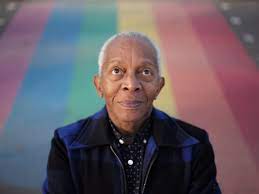
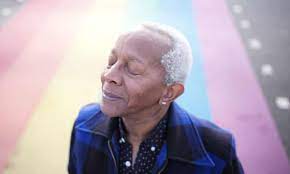
He has not attended Pride for years, believing it has lost its political edge. “It’s being sponsored by brands like Coca-Cola, and some military and police organisations, which are completely contradictory to Pride’s original aims.” He notes how Pride in London has rejected concerns about Metropolitan police involvement in the parade, something he believes ignores the history of police brutality and entrapment the gay community has faced, and which he joined Galop to address. When lockdown suspended 2020’s celebrations, Brown and his old GLF comrades organised their own march along Haymarket and Regent Street on 28 June, which met the Black Trans Lives Matter march. For Ted Brown, it was like being back in 1972 again.
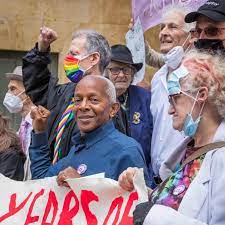
Celebrating the 50th anniversary of the Gay Liberation Front. Photo: Zefrog / Alamy

Looking Back With Pride

“After Stonewall, it was like the sun had come out,” recalls David, 75, in Looking Back With Pride, part of British Vogue’s second annual Pride video series celebrating LGBTQIA+ communities. In the affecting short film, David, Peggy, 73, Ted, 71, and 69-year-old Adele reflect on their memories of coming out, the remarkable change they’ve witnessed in their lifetimes, their hopes for the future, and what they’d like to tell their younger selves. “I’m optimistic about the future because I’ve seen what can be achieved,” says Ted. “We overturned almost 2,000 years of homophobia. We’re determined to fight, and I know that we will win.”

Pride Radio Shows & Top 10’s
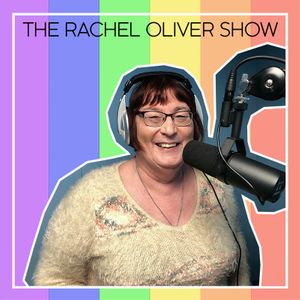
Pride 2021

Rachel Oliver presents a transgender themed music show for those who are trans themselves, those who are allies of the trans community and those who simply want to learn more about the trans community, which includes facts, stories and some amazing songs! Listen here

LGBT+ Musicians: 10 Pioneering Artists

Whether standing firm against adversity, fighting for rights and medical research, or providing a platform for those whose voices were hitherto unheard, these pioneering LGBT+ musicians have added their own splash of colour to the walls of popular music’s everlasting corridors. Listen here
Patrick’s Top 10

10. Dusty Springfield – Arrested By You

9. Janis Ian – At Seventeen

8. Joan Armatrading – Love and Affection

7. Melissa Etheridge – Bring Me Some Water

6. Rufus Wainwright – Going To A Town

5. Labi Siffre – So Strong

4. George Michael – Faith

3. Elton John – Tiny Dancer

2. Jimmy Somerville – For A Friend

1. Years & Years – King
Andy’s Top 10

10. Michael Bolton – How Am I Supposed To Live Without You 

9. Take That – Why Can’t I Wake Up With You 

8. U2 – Drowning Man

7. ABC – Poison Arrow

6. Donna Summer – This Time I Know It’s For Real

5. Pet Shop Boys – King Of Rome

4. Spice Girls – 2 Become 1

3. Men at Work – Dr Heckyll and Mr Jive 

2. George Michael – Careless Whispers

1. Bronski Beat – Why? 

Older LGBT+ people fear going ‘back in the closet’ in retirement … Anniversary of Stonewall uprising … Riot Act … Sir Ian McKellen

News

Older LGBT+ people fear going ‘back in the closet’ in retirement

Schemes in Manchester and London are providing tailored healthcare for older LGBT+ people – but charities say it isn’t enough.

In Manchester, there are plans to open an LGBT-Affirmative retirement care scheme

LGBT+ people fear they will be forced “back in the closet” in their older years, due to a lack of care available in their retirement.

Currently there is no retirement provision specifically for LGBT+ people in the UK and people in the community say it’s something they badly need.

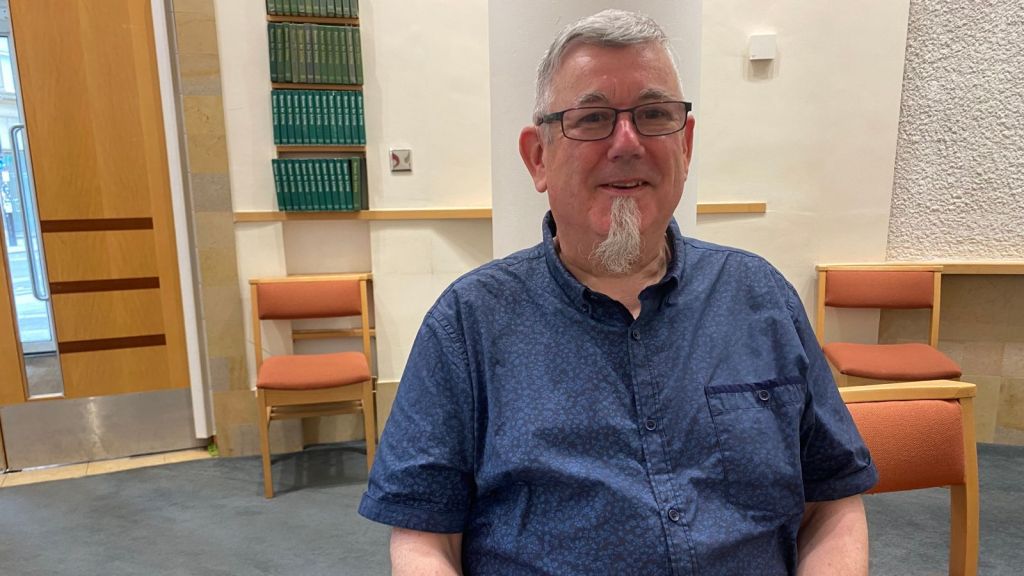
Tony Openshaw, 66, is the chairman of Out In The City, a social group for Manchester’s LGBT+ over 50s. He has faced prejudice in his past and fears confronting it again in the future.

Tony Openshaw was made homeless in his twenties due to his sexuality

“I was evicted from a house when I was in my early 20s because I was gay,” he said.

“The landlord took me to court and his solicitor said: ‘This is a homosexual’ and the judge said: ‘That’s outrageous. He should leave’. I was given seven days to leave.”

Mr Openshaw said experiences like this meant he would feel more comfortable if LGBT+ retirement provision existed. “We’d like to retire and still be ourselves and not have to go back into the closet,” he added.

It’s 52 years since The Stonewall Uprising

The Stonewall riots (also referred to as the Stonewall uprising or the Stonewall rebellion) were a series of spontaneous demonstrations in response to a police raid that began in the early morning hours of 28 June 1969, at the Stonewall Inn in the Greenwich Village neighbourhood of Manhattan, New York City.

Riot Act – Wednesday, 21 July 2021 – 7.30pm

Oldham Coliseum Theatre, Fairbottom St, Oldham OL1 3SW

Riot Act is a solo verbatim show, created entirely, word for word, out of interviews with three key-players in the history of the LGBT+ rights movement; Michael Anthony Nozzi; a survivor of the Stonewall Riots, Lavina Co-op; an alternative ‘70s drag artist, and Paul Burston; ‘90s London AIDS activist.

This critically acclaimed audience favourite is a breathtaking, rip-roaring, whiteknuckle ride through six decades of LGBT+ history, taking the audience right up to the present day.

Provocative, tender, truthful, funny, political and personal, these are stories of gayness, sexuality, activism, addiction, family, childhood, love, sex, drag, community, togetherness, conflict, identity, youth, ageing, loss, fierce queens and a Hollywood diva.

Riot Act is a celebration of LGBT+ activism across the decades, pulling no punches, hilarious and inspiring … it’s a riot.

All tickets must be bought in advance; you will not be able to purchase tickets on the door. You can book for all shows online here. The Box Office phone line is open on Mondays and Wednesdays, 10.00am – 4.00pm (excluding bank holidays). For phone sales only, call 0161 624 2829.

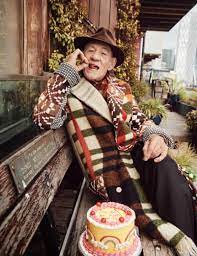
Sir Ian McKellen: ‘What does old mean? Quite honestly I feel about 12’

“Oh, birthdays,” Sir Ian McKellen growls, on the occasion of his 82nd (25 May). “At my age I don’t do birthdays.” The wider world has not yet been informed, however, and cheerful cards have come in stacks to McKellen’s London townhouse. Messages chime in on his computer and two landline phones ring on his desk, one after the other. “But, darling,” McKellen says, answering a call and interrupting a well-wisher mid flow, “I’m trying to avoid it all this year. Actors don’t need this special attention. We get cards and presents on first nights. Everyone makes a fuss of us. Birthdays are wonderful things for people who don’t get treated as special all year round.”

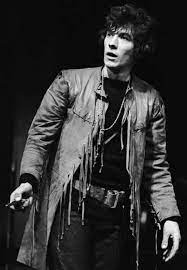
Sir Ian as Hamlet, the first time, in 1971. Photograph: Donald Cooper / Alamy

Sir Ian McKellen is perhaps the best we’ve got, that ideal embodiment of Tolkien’s Gandalf across six Hollywood movies, a landmark Richard III on stage and screen, Magneto, a critically acclaimed Macbeth, Sherlock, Edward II, Rasputin and later this year he will play Hamlet, for the second time in his career. He has also played seven of Shakespeare’s kings on stage, also Romeo, Iago, Claudio, Coriolanus, Faustus, Napoleon, Inspector Hound, Captain Hook and Widow Twankey.

“When I was young I was always playing old parts,” McKellen says. “And, of course, I was having to imagine it. Because what does ‘old’ mean? I had no idea! Now that I’m old I do know. And I also know what it’s like to be young. Because as you get older, inside, you’re ageless. Inside? Quite honestly? I feel about 12.”

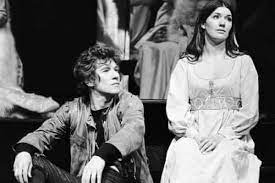
The great Dane: Ian McKellen (Hamlet), Susan Fleetwood (Ophelia) in Hamlet, directed by Robert Chetwyn for the Prospect Theatre Company in 1971. Photograph: Donald Cooper / Alamy

Why is it that actors can go on and on into their 80s and even 90s when artists in other disciplines tend to fade away earlier? “It’s the nature of the job that allows us to carry on, I think, rather than the nature of the people we are. Don’t forget, actors are only the conduit, not the source. So we’re not – as a writer would be, as a composer, as a painter – having to re-imagine the world around us or within us. We are presented with the material. And then we just have to bring it to life. Some actors retire, but usually because they can’t learn the lines any more. That hasn’t been the case for me. Fortunately. At the moment.”
When McKellen was a little boy, he fell in love with a summer-holiday friend called Wendy. They wrote each other letters for a time. They were about 10. And that was it, the last heterosexual relationship of his life. By the time McKellen was a teenager he knew he was gay. His mother died of breast cancer around then and he never had a chance to speak to her about it. Perhaps in Greater Manchester in the 1950s (McKellen was raised in Burnley, Wigan and Bolton) there wasn’t much that could be said. He never told his father either. The fact that both his beloved parents died without knowing this one essential fact about him remains a great regret.

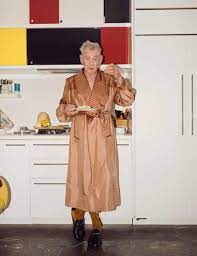
At home. Photograph: Alex Bramall / The Observer

Having to hide his sexuality, however, turned out to be a total boon for the career. Being gay in those days necessitated a talent for disguise. And McKellen found in acting a profession that rewarded this talent. He appeared in plays as an undergraduate at Cambridge – correctly sensing that this was where he would get to meet the colleges’ other gays – and later as a graduate he got a job in regional theatre in Coventry.

He knew people who were arrested, “simply for having sex”; but McKellen admits that for large chunks of his youth he more or less ignored the discriminatory laws at play in Britain. As a closeted gay man in stable relationships, he felt he could afford to. “I didn’t feel particularly disadvantaged by the very harsh laws that prevailed up till then. The laws were absolutely cruel, but I didn’t take them personally. And I only began to think about it, and realise what the situation was, when the Thatcher government decided to introduce the first bit of anti-gay legislation for nigh-on 100 years. That I took personally.” To make a political point, he came out. He was in his late 40s and well established by now as an actor on stage and screen.

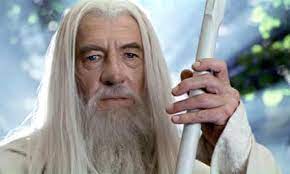
Arch goodie: as Gandalf in The Lord of the Rings: The Two Towers. Photograph: Allstar Picture Library / Alamy

McKellen actually found he thrived as an openly gay actor. He was the arch villain Magneto in the first of several X-Men movies in 2000. Between 2001 and 2014 he was the arch goodie Gandalf in six of Peter Jackson’s Tolkien adaptations. After decades of being buttoned up about his private life, he started to write an honest personal blog from the set of Lord of the Rings in New Zealand in the early 2000s. He has since maintained the habit of public diarising, sometimes publishing snatches of memoir on McKellen.com, his website.

The Hope Speech

Ian McKellen reads Harvey Milk’s Hope Speech, first delivered on the steps of San Francisco City Hall, encouraging people to celebrate their differences and offering hope for the future.

At a time of political turmoil, unprecedented world events and an increasingly divided society, what does inspiring leadership sound like?

Alan Turing … Public support for Radclyffe Hall … New podcast: The Out Crowd … HIV+Me

News

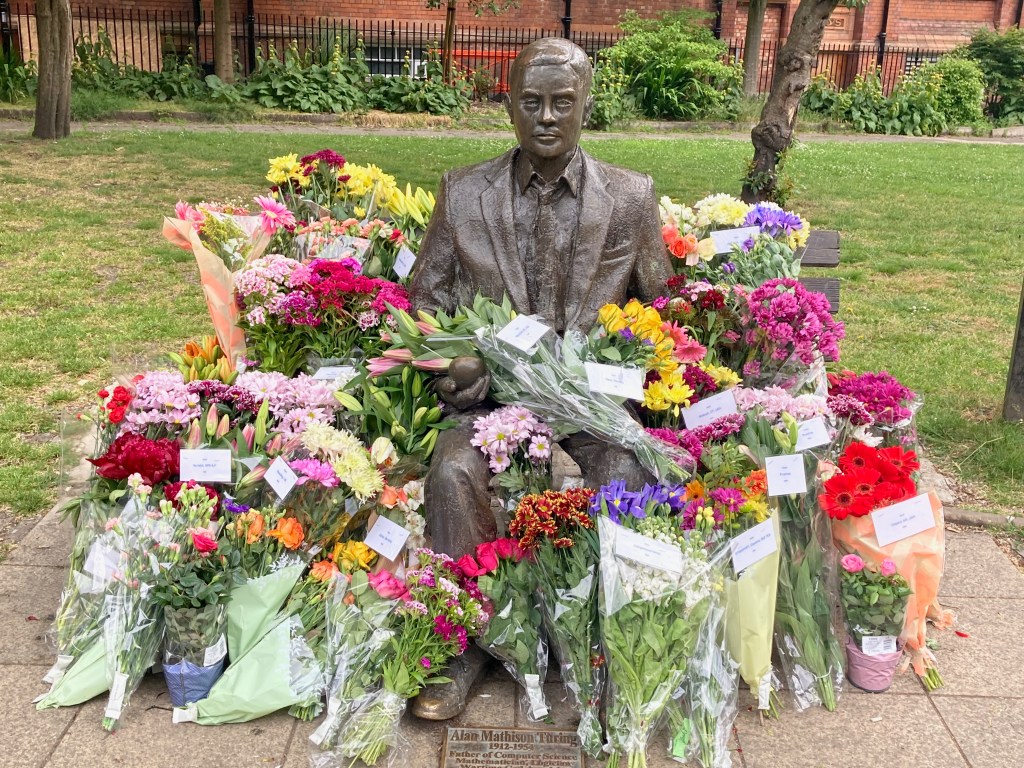
Alan Turing would have been 109 years old on 23 June 2021, and a new £50 note featuring the mathematician, computer pioneer and codebreaker entered circulation today.

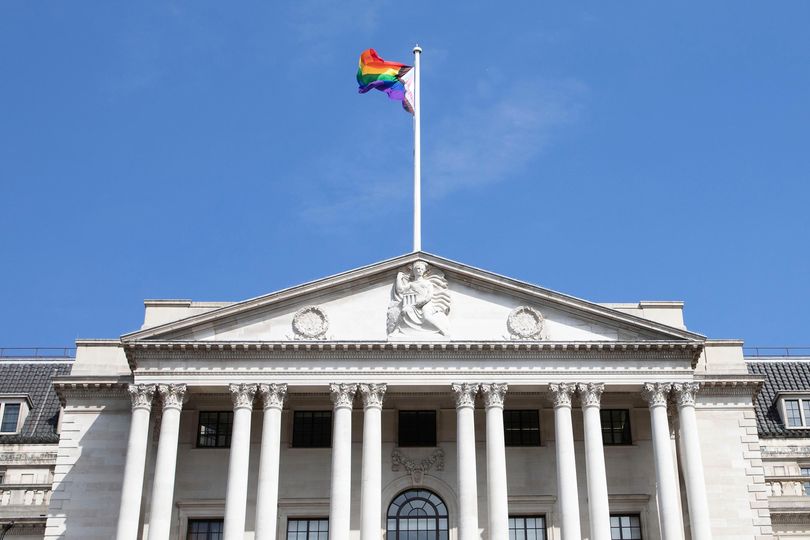
To celebrate Alan Turing’s life, the Bank of England are proudly flying the Pride Flag above their Threadneedle Street building in London.

Public support for lesbian novelist Radclyffe Hall over banned book

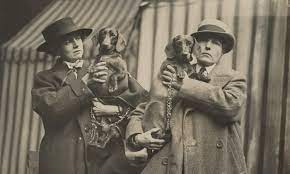
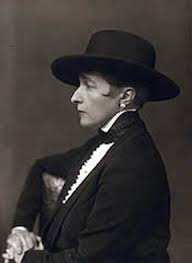
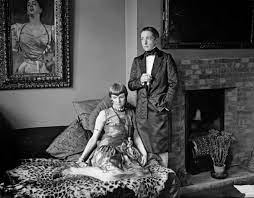
Una Vincenzo, Lady Troubridge and Radclyffe Hall (right) with their dachshunds at the 1923 Crufts dog show. 
Photograph: Harry Ransom Center

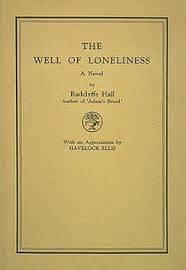
Radclyffe Hall’s 1928 novel The Well of Loneliness was subjected to a vicious campaign of attack led by the Sunday Express for its depiction of lesbian relationships, eventually being suppressed and censored in the UK as a piece of “obscene libel”. The editor even said he would rather give “a healthy child prussic acid to drink than read such an obnoxious book”.

But the author’s own papers, which have been digitised, reveal the outpouring of support Hall received from members of the public around the world, who wrote to thank her for creating, in her heroine Stephen Gordon, a character with whom they could identify.

Seen today as a seminal work of gay literature, The Well of Loneliness tells of the “invert” Stephen Gordon, who realises from a young age that she is attracted to women, dresses in masculine clothes, and falls in love.

The book has its shortcomings both as a work of literature and as an apologia for a homosexual way of life and love; nevertheless, for decades these have been outweighed for many readers by the novel’s mere existence in telling them that they were not alone, and by the courage of its author in both writing and defending it.

Hall, a lesbian herself, wrote it to “put my pen at the service of some of the most misunderstood people in the world”. At its raciest, it goes no further than “she kissed her full on the lips, as a lover”, with a night of passion described as “that night they were not divided”. It ends with Stephen’s plea: “Give us also the right to our existence!

Sunday Express editor James Douglas led a campaign against the novel, writing in his paper: “In order to prevent the contamination and corruption of English fiction it is the duty of the critic to make it impossible for any other novelist to repeat this outrage. I say deliberately that this novel is not fit to be sold by any bookseller or to be borrowed from any library.” Despite support from writers including Virginia Woolf and EM Forster, it was banned in the UK until 1949, after Hall’s death. But newly revealed papers from the author’s archive, which have been digitised by the Harry Ransom Center at the University of Texas alongside those of her partner, the artist Una Vincenzo, Lady Troubridge, show that the novel was also supported by thousands of readers, who wrote to Hall in outrage at the ban.

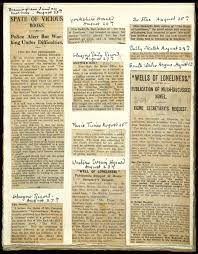
Hall’s scrapbook of clippings about the suppression and censorship of The Well of Loneliness, 1928. 
Photograph: Harry Ransom Center, The University of Texas at Austin

The picture you paint of the poor invert should make everyone more charitable … No one could finish your book, Miss Hall, without donning a sword and shield forever in the cause of inverts,” wrote one reader from the US, where the novel was not withdrawn despite a challenge, a court declaring it not obscene.

It has made me want to live and to go on … I discovered myself in Paris and I dreaded this thing which I thought abnormal,” wrote another.

In the UK, an 18-year-old man told Hall he had “experienced many of the terrors of the invert”, hailing her “truly marvellous but searing book”. Others offered to send money to help Hall in an appeal against the judgment, or wrote of how the book changed their perspectives. “At first it repulsed and disgusted, and then the pathos and beauty of it got me, and if I had it in my power to help those poor souls I would have offered my services,” wrote a London correspondent.

Dr Steven MacNamara, who has researched Hall’s papers, said she received “thousands of letters of support”.

The letters demonstrate the public’s awareness that The Well of Loneliness was not an obscene novel, and that Hall had been unfairly and unjustly treated by the government and the media. Access to these letters, through the digitalisation project, will enhance the importance and understanding of this groundbreaking novel for Hall’s contemporary readers,” he said.

In one letter, a married coal miner in Doncaster wrote that he had “marvelled at the bigoted outlook of so-called ‘thinking men’, who are ashamed to let broader minded folk than themselves delve into the great sex problems”. The miner added: “Some day we will wake up, and demand to know ourselves as we profess to know about everything else.”

The project has seen more than 38,500 images from Hall and Troubridge’s papers digitised and made available online. Alongside Hall’s notebooks and drafts for The Well of Loneliness, the archive also includes diaries, letters – including around 650 that Hall wrote between 1934 and 1942 to Evguenia Souline, a Russian émigrée with whom she had an extended affair – and evidence gathered by Hall’s American lawyer before her obscenity trial in the US in 1929.

In a telegram, physician Dr Logan Clendening writes that “it is incredible to the scientific mind that an honest and sensitive presentation in literary form of a subject familiar and tragic to every physician should be threatened due to the pornographic imagination of a censor.”

Ransom Center director Stephen Enniss said: “The richness and depth of this material goes well beyond the subsequent censorship and cultural controversies sparked by The Well of Loneliness.”

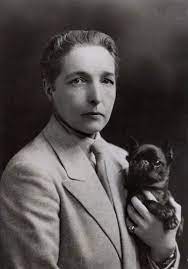
Lady Una Troubridge and Radclyffe Hall in 1927. 
Photograph: Fox Photos / Getty Images

Jana Funke, senior lecturer at the University of Exeter and author of The World and Other Unpublished Works by Radclyffe Hall, said the archive also includes early drafts of The Well of Loneliness, which are “more explicit in their depiction of lesbian desire and more affirmative regarding the protagonist’s gender non-conforming identity”. Hall dropped earlier sections from the book “arguably to try and make the book less scandalous – a strategy that obviously failed,” said Funke.

One chapter in an early draft, included in Funke’s book, begins with the protagonist having sex with a woman during wartime at the frontline. “They spoke very little, for the darkness was rent by intolerable noise, and by sudden swift flashes that penetrated even into this darkness between cracks in the war-scarred brickwork,” wrote Hall. “And something, perhaps this near presence of death, seemed to quicken their bodies into agonised loving, so that they felt the throb of their bodies in each separate nerve and muscle and fibre, so that they ceased to be two poor atoms, and became one transient imperative being, having reason for neither good nor evil – the primitive, age-blind life force.”

Funke said that when people read The Well of Loneliness, knowing that it was banned as obscene in the UK, “they are often surprised and disappointed to find that there is no explicit sexual content. It was banned simply because it argued that lesbian sexuality and gender non-conformity should be accepted by society.” Hall and Troubridge, she added, “are internationally recognised as LGBTQ pioneers, and it is vitally important that audiences around the globe have access to their papers now and in the future”.

New podcast celebrates the LGBT+ community

From protests to parades, parties to politics, Pride is all about visibility. The LGBT+ community is loud and proud, here and queer, after many years forced inside the closet.

A brand new podcast will learn what it means to be LGBT+ in 2021.

Launched during Pride Month this June, The Out Crowd is a new LGBT podcast speaking to members from all gender identities and sexualities about their experiences in the past and present – and their hopes for the future.

Joe Ali is the host of LGBT+ podcast The Out Crowd
 

Podcast host Joe Ali hopes that The Out Crowd will help raise more awareness about the LGBT+ community.

He said: “I’m really looking forward to getting this podcast out into the world. More awareness of LGBT+ people and our past is absolutely vital. A lot of people still don’t understand what the community has sacrificed and continue to sacrifice to be authentically themselves.”

Joe added: “I really hope that a young LGBT+ person will pick up on this podcast and feel less alone.”

The battle for equality still remains, and the podcast will look at the history of the struggle from those who continue to fight for it.

You will hear from activists, artists, drag queens, writers, educators, journalists, family, friends, and colleagues, as they answer the questions about the LGBT+ community you may have been too shy to ask: What does non-binary mean? What are the correct pronouns to use when speaking to trans people? What’s the difference between bisexual and pansexual?

Daniel J McLaughlin, podcast producer, argues that “Pride is not just for June – it’s for life”

Daniel J McLaughlin, who produced the podcast, argues that “Pride is not just for June – it’s for life”.

He said: “I wanted to create an LGBT+ podcast. The struggle for equality lasts longer than just one month, and we hope that The Out Crowd will make a fabulous noise in Pride Month and beyond.

As a bisexual man, I am looking forward to learning more about members of the LGBT+ community that I belong to – as well as providing an insight into modern LGBT+ life for those not accustomed to it.

Like the rainbow flag that represents the LGBT+ community, The Out Crowd will hear the inspirational, fascinating, and entertaining tales from all those on the sexuality and gender spectrum: lesbian, gay, bisexual, asexual, transgender, non-binary, and more!”

The Out Crowd is available on all major podcasting platforms, and Episode 1 features an interview with Lisa Power.

Hiding behind fake profiles, some internet trolls gave the following reviews:

Missbettyboop: “Disgusting ban it”

Wendigo: “Its for this hetrophobic group only. Build a wall around the village.”

TheTruthHurts18: “What a waste of Space”

Alphaonezero: “Couldn’t care any Less if I Tried !!!!!”

Personally, I enjoyed it (except for the adverts!) and looking forward to listening to more episodes.

Meet the people from Greater Manchester determined to end HIV stigma and shame.

HIV+Me showcases three people living with HIV and their extraordinary stories in three beautifully shot short films.

Paul remembers the lovers and friends he lost whilst fighting and campaigning from a grotty basement just off Canal Street. ​

Mark revisits the squat he used to call home on Claremont Road and reflects how a positive diagnosis marked the beginning of a new life.

Yvonne recalls a lifetime of hiding in the shadows before she found something inside so strong that now helps her help others.

Credits: Stories written and performed by Paul Fairweather, Mark Holder and Yvonne Richards and directed by Nathaniel Hall.

The stories are powerful and very moving – highly recommended.

New £50 note is revealed … GCHQ releases ‘most difficult puzzle ever’ … On-line celebration organised by Queer Britain … George House Trust Age+ Project

News

New Alan Turing £50 note design is revealed

The £50 note will be made of polymer for the first time

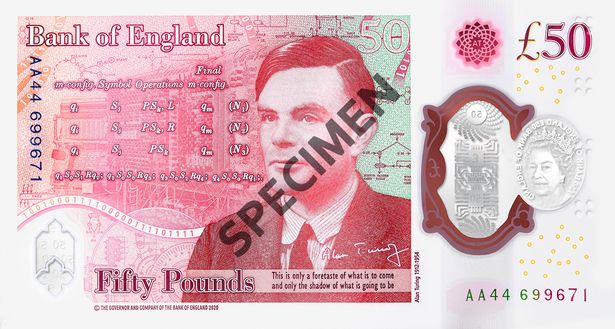
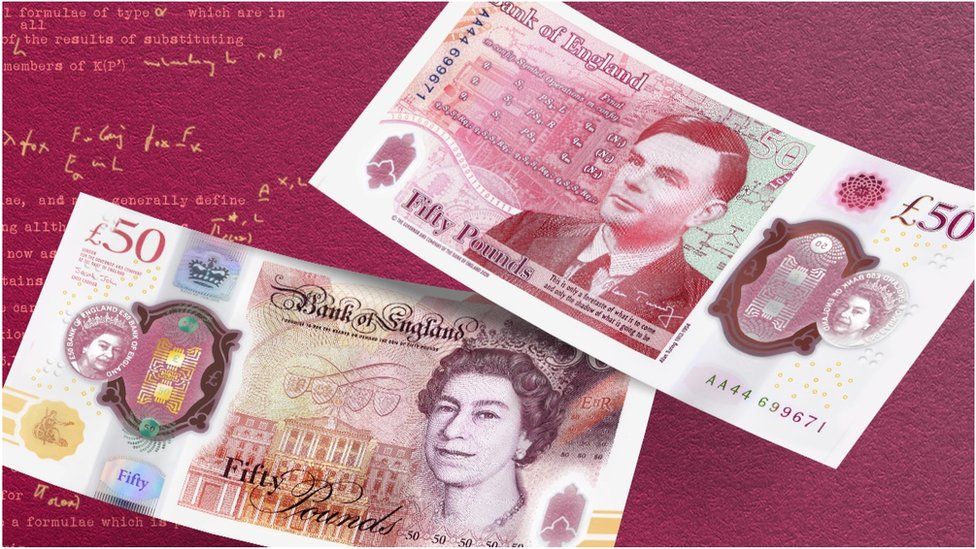
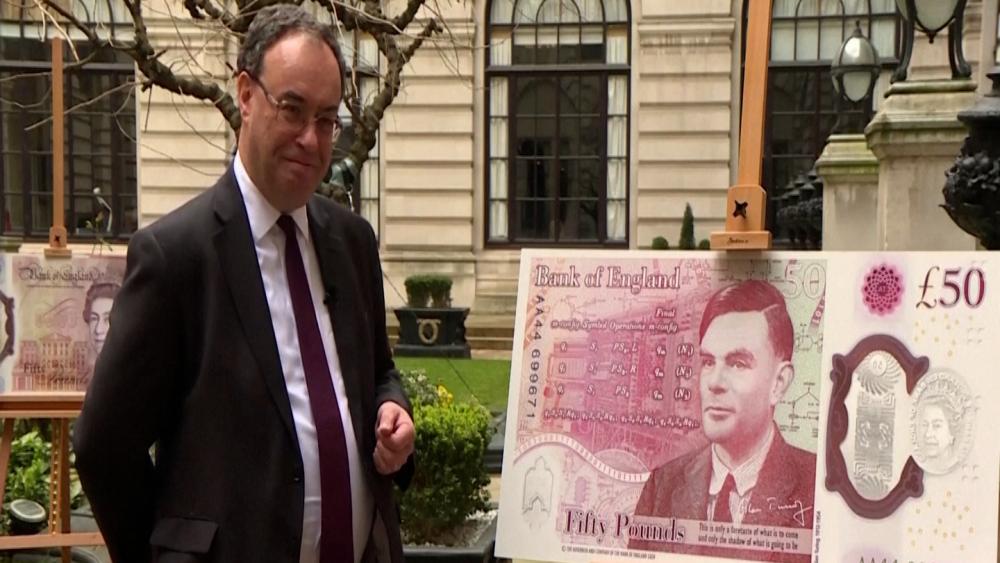
The design of the Bank of England’s new £50 note, featuring the computer pioneer and codebreaker Alan Turing, has been revealed.

The banknote will enter circulation on 23 June, which would have been the mathematician’s birthday.

It will be the last of the Bank’s collection to switch from paper to polymer. In keeping with Alan Turing’s work, it has advanced security features. Old paper £50 notes will still be accepted in shops for some time.

Why is Alan Turing on the note?

The work of Alan Turing, who was educated in Sherborne, Dorset, helped accelerate Allied efforts to read German Naval messages enciphered with the Enigma machine. His work is said to have been key to shortening World War Two by two years and saving 14 million lives.

Less celebrated is the pivotal role he played in the development of early computers, first at the National Physical Laboratory and later at the University of Manchester.

Alan Turing (1912 – 1954)

Key dates:

1912 – Alan Mathison Turing was born in West London

1936 – Produced “On Computable Numbers”, aged 24

1952 – Convicted of gross indecency for his relationship with a man

In 2013, he was given a posthumous royal pardon for his conviction for gross indecency. He had been arrested after having an affair with a 19-year-old Manchester man, and was forced to take female hormones as an alternative to prison. He died at the age of 41. An inquest recorded his death as suicide.

Andrew Bailey, the governor of the Bank of England, said: “He was a leading mathematician, developmental biologist, and a pioneer in the field of computer science.

He was also gay, and was treated appallingly as a result. By placing him on our new polymer £50 banknote, we are celebrating his achievements, and the values he symbolises.”

The Bank is flying the rainbow flag above its Threadneedle Street building in London as a result.

What features are on the note?

The new note will feature:

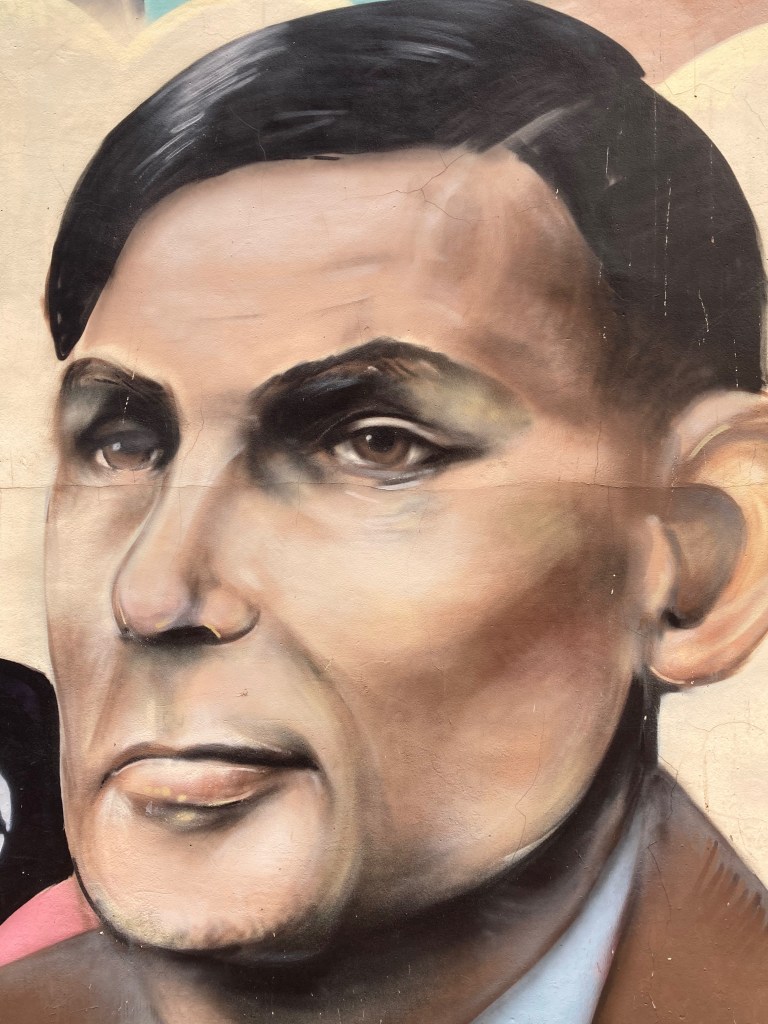
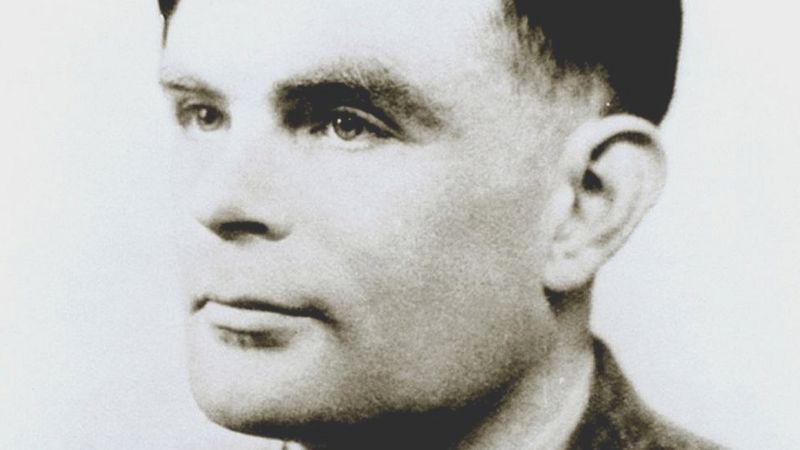
  • A photo of Turing taken in 1951 by Elliott and Fry, and part of the National Portrait Gallery’s collection;
  • A table and mathematical formulae from Turing’s 1936 paper “On Computable Numbers, with an application to the Entscheidungsproblem” – foundational for computer science;
  • The Automatic Computing Engine (ACE) Pilot Machine – the trial model of Turing’s design and one of the first electronic stored-program digital computers;
  • Technical drawings for the British Bombe, the machine specified by Turing and one of the primary tools used to break Enigma-enciphered messages;
  • A quote from Alan Turing, given in an interview to The Times newspaper on 11 June 1949: “This is only a foretaste of what is to come, and only the shadow of what is going to be”;
  • His signature from the visitor’s book at Max Newman’s House in 1947 which is on display at Bletchley Park; and
  • Ticker tape depicting Alan Turing’s birth date (23 June 1912) in binary code. The concept of a machine fed by binary tape featured in Turing’s 1936 paper.
Sarah John, the bank of England’s chief cashier, whose signature is on the note

There are also a series of security features, similar to other notes, including holograms, see-through windows – based partly on images of Bletchley Park – and foil patches.

The Bank also says that plastic banknotes are more durable and harder to forge.

Sarah John, the Bank’s chief cashier whose signature features on the note, said: “This new £50 note completes our set of polymer banknotes. These are much harder to counterfeit, and with its security features the new £50 is part of our most secure series of banknotes yet.”

Do we need a £50 note?

The £50 note is the least likely to be in people’s wallets or purses. There were 351 million £50 notes in circulation last year, out of a total of nearly four billion Bank of England notes. The government has previously discussed whether it should be abolished.

The banknote was described by Peter Sands, former chief executive of Standard Chartered bank, as the “currency of corrupt elites, of crime of all sorts and of tax evasion”.

The debate continues, with the added element that cash use has declined, particularly during the Covid pandemic.

The UK’s intelligence agency GCHQ has set what it describes as its toughest ever puzzle to mark the new note. Although Turing was, among other accomplishments, the co-creator of the first computer chess programme he claimed not to be that good at puzzles himself.

The new note though marks another step in the recognition of a man whose wartime work was secret, and who took his own life soon after his conviction for homosexuality in 1952.

“Turing was embraced for his brilliance and persecuted for being gay,” said current GCHQ Director Fleming. “His legacy is a reminder of the value of embracing all aspects of diversity, but also the work we still need to do to become truly inclusive.”

GCHQ releases ‘most difficult puzzle ever’ in honour of Alan Turing

Alan Turing was instrumental in helping to crack the Enigma code

Government Communications Headquarters (GCHQ) has released its “most difficult puzzle ever”, a set of 12 riddles linked to design elements of the new £50 note featuring the mathematician and codebreaker Alan Turing.

The questions begin with a relatively straightforward crossword-style puzzle that starts by asking where GCHQ’s predecessor agency, where Turing worked, was based during the second world war. A two-word answer, nine letters then four, is required.

‘It captures so much of Turing’s work’: Bank of England unveils new £50 note

The spy agency, which believes setting puzzles gives the public an insight into its surveillance work, said it thought the multi-part “Turing challenge” would take an experienced puzzler seven hours to complete.

Colin, described by the agency as its “chief puzzler,” said GCHQ’s riddles were generated by “a mix of minds from across our missions” in honour of Turing, who he said had inspired many recruits to join.

GCHQ chiefs also took the opportunity to apologise again for the post-war treatment of Turing, who helped develop the Bombe, a machine to help crack the German Enigma code, that is regarded as a forerunner of modern computers.

LGBT staff were banned from working in Britain’s spy agencies until the early 1990s, and if somebody was believed to be gay they were dismissed from the secret services, a policy that has resulted in several retrospective apologies.

In February 2021, the new head of MI6 apologised publicly to officers who were thrown out of the spy agency before 1991, and said the foreign intelligence service operated a “wrong, unjust and discriminatory” ban on LGBT staff in its ranks.

Try the puzzle here.

On-line celebration organised by Queer Britain

Join Queer Britain for an online event to celebrate the Bank of England’s new £50 note.

They will be exploring Turing and his legacy, asking who the unsung queer heroes of Science and Technology are and, after the pardons, what next? 

The Audience will also be privy to a special announcement from the Bank of England.

When: Thursday 8 July, 6.00pm – 7.15pm
Where: Zoom

The discussion will be led by: 

Dr Dominic Galliano, Head of Public Engagement from UCL, and features: 

Sarah John, the Chief Cashier of the Bank of England; 

Josh Little, the lawyer who led the Allen & Overy team advising Stonewall on 2017’s gross indecency ‘Turing Law’ pardons; and

Dr Alex Moylett, Quantum Scientist.

While there is no charge for tickets, they would be grateful for a donation upon booking.

George House Trust launch Age + project to Empower People Ageing with HIV

George House Trust will launch Age+ – a new project which will empower people over the age of 55 to live confidently with HIV in Greater Manchester.

An ever-growing ageing population of people living with HIV means support services need to change and adapt to meet their diverse needs.

Launching in June 2021, the Age+ project will provide services to support people over 55 years of age, living with HIV in Greater Manchester, including social networking opportunities, skills-based training sessions, new volunteering opportunities and one to one support.

Another key element of the project will be the delivery of HIV training and awareness sessions to residential care homes, social care providers and other organisations in contact with, or supporting, older people. This will increase knowledge and understanding of living and ageing with HIV.

Funding for the project was provided by ViiV Healthcare, a global specialist HIV company. Sylvia Nicholson, Policy Director at ViiV Healthcare UK said: “We are delighted to be able to support this project provided by George House Trust to better serve an important group of people living with HIV with evolving needs in Greater Manchester.”

Darren Knight

Darren Knight, George House Trust’s Chief Executive, said, “This funding from ViiV means that we can do more work with people ageing with HIV, building their confidence, skills, reducing loneliness and tackling the stigma and discrimination that still exists for people living with HIV. As part of this project, we’ll also be working with care homes and social care providers and developing our essential work in raising awareness of HIV amongst staff in those settings, which will improve the experience of people in care living with HIV.”

About Age+ Project

This project will launch on 21 June 2021. People who are living with HIV who are over the age of 55, care homes and social care providers should contact Anna Hughes on anna@ght.org.uk for more information on how to get involved.

About George House Trust

Since 1985, George House Trust has provided services to people living with, and affected by, HIV. We believe that people living with HIV have the right to live happy and healthy lives, free from stigma and discrimination.


Darren Knight is the CEO of George House Trust

Interview with Darren Knight

“The stigma around HIV can massively impact on those living with the virus. In the early 1980’s, there was a huge lack of understanding around what HIV was. There was no cure, no effective treatment and a lot of fear.

Fast forward to 2021 and people with HIV can expect to live a normal life expectancy and are more likely to die from something other than HIV, but knowledge and understanding has not kept pace. These days, when taking effective treatment, the HIV virus becomes undetectable and can no longer be passed on to others. We call this U=U which means undetectable equals untransmittable.

However, the significant stigma for those living with HIV remains. HIV is a long-term chronic health condition, similar to diabetes, but it is not viewed as the same and those with a HIV status can be treated very negatively due to a lack of understanding and stigma. Those disproportionately affected by HIV are gay and bisexual men and African men and women. However, it is not just people in these communities who are living with HIV. There are many groups impacted by HIV, but the important thing to remember is that anyone can be diagnosed with HIV. As a virus, it doesn’t discriminate.

There is work being done to raise awareness including our Positively Speaking programme, where people living with HIV share their story to dispel the myths that still exist. The lived experience of people living with HIV is so important in changing people’s deeply held views.

However, there’s other important things that need to happen including more testing for those who potentially have HIV, ensuring that the funding is available for HIV prevention and HIV support, more training and awareness for first point of contact professionals like GP’s, dentists, other health professionals and our colleagues across the voluntary sector too. George House Trust continues to work with partner organisations like the LGBT Foundation and BHA for Equality to raise awareness through the Passionate about Sexual Health (PaSH) project in addition to the wide range of other projects that George House Trust offers including access to welfare grants, food parcels, nutrition support, peer support, life coaching and training to name a few.

Ultimately, HIV is an issue that we all need to work together on. The Government pledge to end HIV transmission by 2030 is achievable if we all work together to tackle HIV, but we must first challenge the stigma associated with HIV. You can start by supporting the work of George House Trust or booking a Positive Speaker.”

For more information, call 0161 274 4499 or email talk@ght.org.uk or visit the website at https://ght.org.uk/

Exclusive Online Premiere of HIV+Me on Wednesday 23 June, 7.30pm

Dibby Theatre’s YouTube Channel will exclusively premiere HIV+Me, three remarkable short stories of surviving, living and thriving with HIV.

HIV+Me showcases three ordinary people living with HIV and their extraordinary stories in three beautifully shot short films:

  • Paul remembers the lovers and friends he lost whilst fighting and campaigning from a grotty basement just off Canal Street.
  • Mark revisits the squat he used to call home on Claremont Road and reflects how a positive diagnosis marked the beginning of a new life.
  • Yvonne recalls a lifetime of hiding in the shadows before she found something inside so strong that now helps her help others.

Nathaniel Hall, writer, performer and HIV activist (First Time, It’s A Sin) directed the films. The YouTube premiere is on Wednesday 23 June 2021 from 7.30pm – 7.50pm. Make sure you are logged in to YouTube if you wish to write comments during or immediately after the live broadcast here.

Pride flowers

Manchester Day … Refugee Week … Gay rights in Ghana

News

Manchester Day

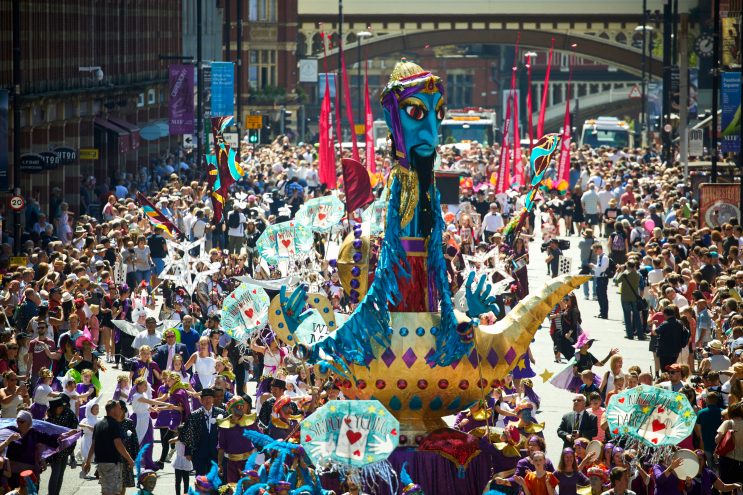
Manchester Day is an annual event that celebrates everything great about the city. It is a day for families, residents and visitors to get together and celebrate all things Mancunian that have made Manchester one of the world’s most iconic cities.

It has taken place every year since 2010, but unfortunately it wasn’t possible for the last two years in light of the Covid-19 pandemic.

Previously, 100,000 people gathered in the city centre to watch the procession which featured 22,000 people and 80 community groups ranging from the Manchester Chinese Centre to the trans youth group Afternoon Tea and the Greater Manchester Fire and Rescue service. This is all of Manchester coming together, very visibly demonstrating all of its diversity and all of its solidarity.

This is why I love Manchester:

Refugee Week

Refugee Week is taking place from 14 to 20 June and is regularly used as a platform for hundreds of arts, cultural and educational events.

Refugee Week events are often intended to celebrate the contribution of refugees to the UK, and encourage a better understanding between communities.

The theme for Refugee Week is “We Cannot Walk Alone” and recent events in Ghana show exactly why we still need to support refugees and those seeking asylum.

Idris Elba and Naomi Campbell sign letter backing gay rights in Ghana

A group of 67 high-profile figures say they are ‘deeply disturbed’ by the recent closure of the LGBT+ centre in Accra.

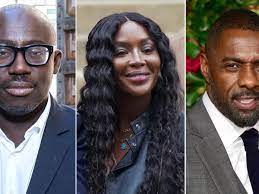
Edward Enninful (left), Naomi Campbell and Idris Elba are among the signatories of the letter. Photograph: Agencies

Some of the UK’s most prominent people of Ghanaian heritage have joined together to condemn their former homeland for its stance on gay rights in what will be seen as an extraordinary show of diaspora power.

The influential names in fashion, film and media, including Idris Elba and the Vogue editor-in-chief, Edward Enninful, have signed an open letter in support of Ghana’s LGBT+ community. Naomi Campbell and Labour MP Diane Abbott, although not of Ghanaian heritage, have also put their names to the letter.

In February 2021 a community centre for LGBT+ people in Ghana closed its doors after mounting pressure by religious groups and anti-gay organisations against sexual minorities. Police later raided the centre its staff said, after its leaders were forced into hiding.

The letter, signed by 67 celebrities, politicians and other influential people largely of Ghanaian heritage, said they were deeply disturbed by the events and called on Ghana’s president, Nana Akufo-Addo, and other political leaders to offer protection to the LGBT+ community: “We have watched with profound concern as you have had to question the safety of your vital work at the LGBT+ Rights Ghana Centre in Accra, and feared for your personal wellbeing and security. It is unacceptable to us that you feel unsafe,” it said.

“As prominent and powerful advocates for this great country, we are beseeching His Excellency, the President of the Republic of Ghana, Nana Addo Dankwa Akufo-Addo, and political / cultural leaders to create a pathway for allyship, protection and support. We petition for inclusivity which will make the nation even greater and even stronger,” it continued.

In recent weeks several high-profile figures in Ghana had demanded the closure of the centre, intended to be a safe space for LGBT+ people to meet and find support. Yet since the centre’s opening in January in the capital, Accra, many people have received death threats and online abuse.

The opening of the centre amplified discrimination against the community, said activists. Although same-sex relationships are illegal in Ghana, the law is rarely enforced, according to a 2018 report by Human Rights Watch. Yet activists say abuse against LGBT+ Ghanaians has intensified in recent years, fuelled by influential anti-gay campaigners.

The community centre was set up by LGBT+ Rights Ghana. A fundraising event to mark the opening was attended by the Danish ambassador, the Australian high commissioner and EU delegates, which caused outrage and prompted repeated claims that the international community was promoting LGBT+ rights in Africa.

Earlier in February, the Catholic church in Ghana bishops’ conference released a statement demanding the centre be shut down and condemned “all those who support the practice of homosexuality in Ghana”. It urged the government “never to be cowed down or to succumb to the pressure to legalise the rights of LGBTQIs in Ghana”.

Roslyn Mould, a board member of LGBT+ Rights Ghana, said the group hoped the community space would protect LGBT+ people from threats and abuse in Ghana, increasing in recent weeks.

“This space or office was made to support a vulnerable community, these persons have been under attack for a long time,” she said. “We would also like this opportunity to thank all the allies who have supported the community throughout this ordeal.”

Ghana’s National Coalition for Proper Human Sexual Rights and Family Values has in recent weeks ramped up threats against sexual minorities, Mould said, including proposing conversion therapy.

Outcry after 21 people arrested in Ghana for ‘advocating LGBT activities’

Rights groups say the targeting and abuse of LGBT+ people in Ghana has sharply risen this year. Photograph: Micha Klootwijk/Alamy

Rights groups have condemned the arrest of 21 people by Ghanaian police for “unlawful assembly” and promoting an LGBT+ agenda, in the latest move against sexual minorities in the country.

Several rights groups called the arrests illegal, saying those detained did not have access to legal representation before they were remanded to court, and that some suffered medical illnesses and needed treatment for trauma.

The arrests came after a group of journalists reportedly descended on an event by Rightify Ghana, which was held to provide training for activists and paralegals when supporting LGBT+ people.

“The press teamed up with the police to storm the meeting location, started taking images, took their belongings and arrested them,” Rightify Ghana said.

The targeting and abuse of LGBT+ people in Ghana has sharply risen this year, said Alex Kofi Donkor, the founder and director of LGBT+ Rights Ghana, an advocacy and aid organisation based in Accra.

“The [event] was to train them on paralegal services for vulnerable groups – how we can document issues of abuse, and how best these trained paralegals can provide support,” Donkor said.

“There is no law preventing advocates or LGBT+ people from existing or gathering. It’s a constitutional right.”

Same-sex relationships are illegal in Ghana, yet while prosecutions are rare, rights groups say it has led to widespread targeting and extortion of vulnerable people and anyone suspected to be gay.

A statement by the police calling members of the public to come forward with information about LGBT+ activities amounted to “a witch-hunt”, Donkor said.

“It is very, very disturbing – also for the fact that the police are now inciting the public against Ghanaians. It’s already a vulnerable situation for LGBT+ people in Ghana,” he said.

Last year over 10,000 people were identified in the UK as possible victims of human trafficking or modern slavery, around two thirds of whom were foreign nationals from places like Albania, Sudan and Vietnam.

22 June 2021 will mark the fourth national Windrush Day and 73 years since the SS Empire Windrush arrived at Tilbury Docks in Essex in 1948 carrying the first Caribbean migrants to the UK to help re-build Britain after the Second World War.