Elizabeth Gaskell House … Bury Pride Rainbow Train … International Day of Older Persons

News

Mystery trip

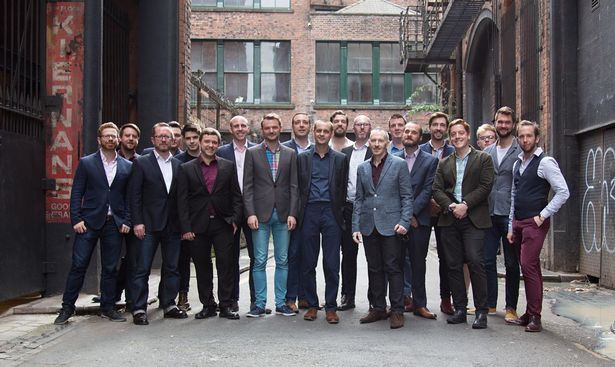
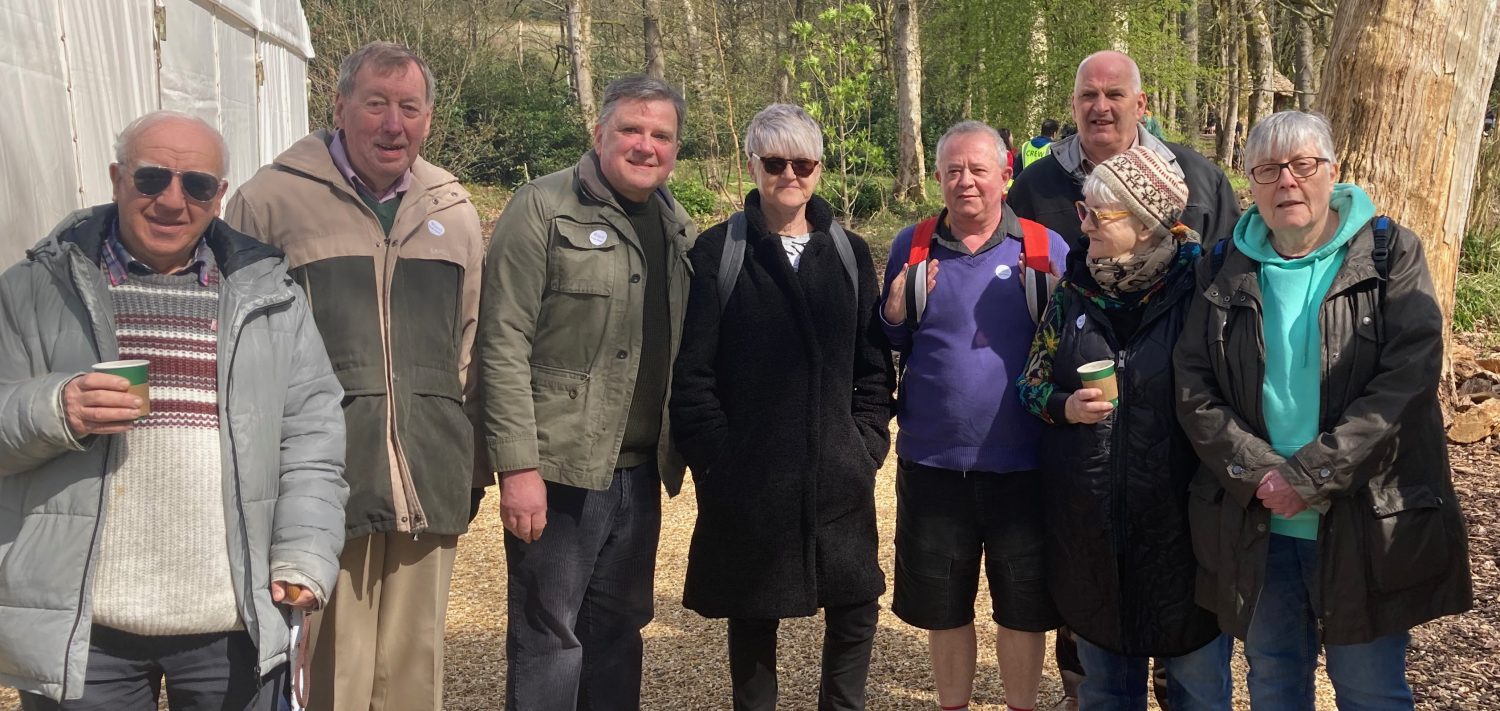
On Thursday, 23 September, twelve members of Out In The City, went on a “mystery trip”.

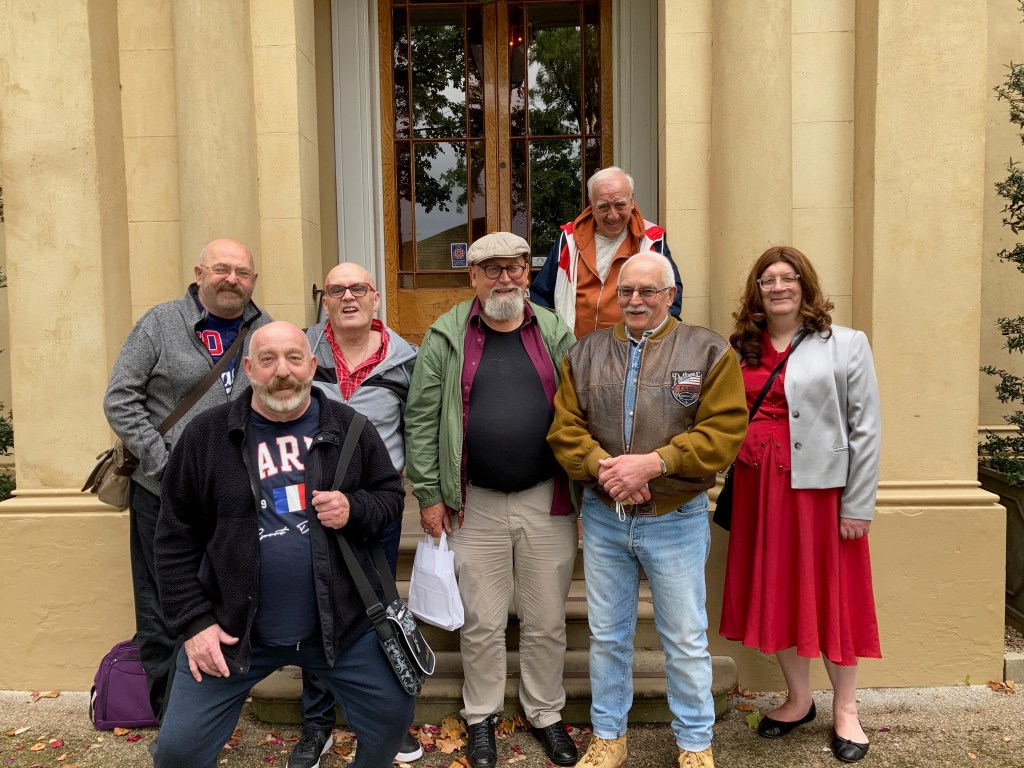
We met in the centre of Manchester but the end of our visit was kept secret. We took a bus to the university area and our first stop was at “The Turing Tap”, a pub dedicated to Alan Turing. They serve a wide range of food and drink. The pub is just a few minutes walk from the Whitworth Art Gallery and the Manchester Museum, and is just round the corner from the Pankhurst Centre (the home of Emmeline Pankhurst and the birthplace of the suffragette movement). The group did not know where we were going. However, once I had given the clue that we were heading “North and South” to “Cranford”, Walter guessed that our destination was Elizabeth Gaskell’s House. Those are two of her books.

84 Plymouth Grove, now known as Elizabeth Gaskell’s House, is a writer’s house museum in Manchester. The Grade II* listed neoclassical villa was the residence of William and Elizabeth Gaskell from 1850 till their deaths in 1884 and 1865 respectively.

Elizabeth Gaskell’s writing desk

The house itself was granted listed building status in 1952, partly due to its association with the Gaskells. This granted it protection from demolition, however, 84 Plymouth Grove slowly descended into a state of disrepair due to neglect.

The Manchester Historic Buildings Trust commenced a restoration project in 2009, aiming to see the building returned to its state as the Gaskells left it. By 2011, the Trust had finished the exterior, which included structural repairs and removing the pink paint that had coated the house for several years. On completion of the £2.5 million restoration, the building was reopened to the public on 5 October 2014.
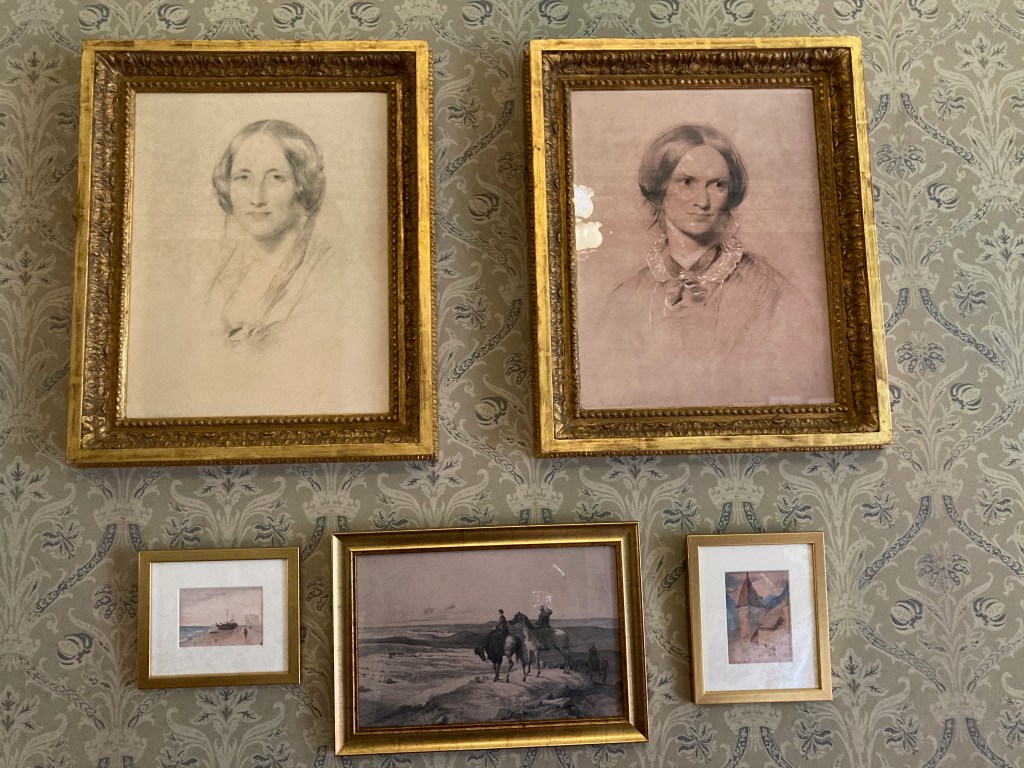
Elizabeth Gaskell (picture top left) and Charlotte Brontë (picture top right)

Charlotte Brontë, who visited the house three times between 1851 and 1854, described it as “a large, cheerful, airy house, quite out of Manchester smoke”. On one occasion, the meek Brontë even hid behind the curtains in Gaskells’ drawing room as she was too shy to meet the other guests.

Visitors to the house during Elizabeth Gaskell’s lifetime included Charles Dickens, who, on one occasion in 1852, made an impromptu visit to the house, along with his wife at 10.00am, much to the dismay of Elizabeth, who mentioned it to be “far too early”, John Ruskin, Harriet Beecher Stowe, American writer Charles Eliot Norton and conductor Charles Hallé.

The house has twenty rooms and there is now a café in the basement (previously the accommodation for the domestic staff including a cook, several maids, a handyman for outdoor work, as well as a washerwoman and a seamstress). In 1850 the rent was considered as very expensive at £150 per annum. William Gaskell was a member of Portico Library and also the Reverend at Cross Street Chapel.

More photos can be seen here

Bury Pride Rainbow Train

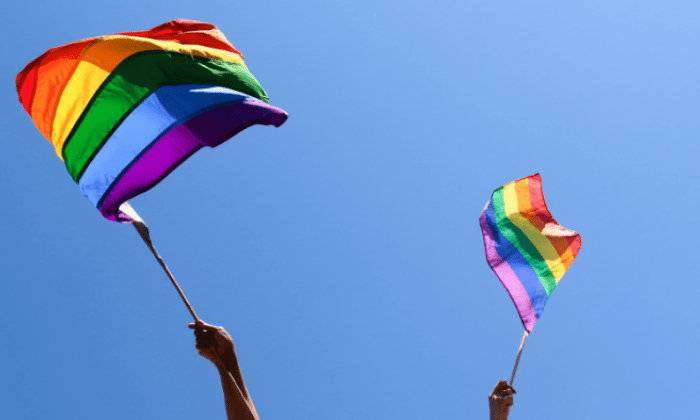
For the second time the East Lancashire Railway became the “Bury Pride Rainbow Train” to celebrate Pride in Bury.

Members of Out In The City joined people from Out on Sunday, Out In The Valley, the Bury LGBTQI+ Forum and others to board the steam train from Bury to Rawtenstall.

The event started with goody bags being distributed at the station and entertainment with a samba band.

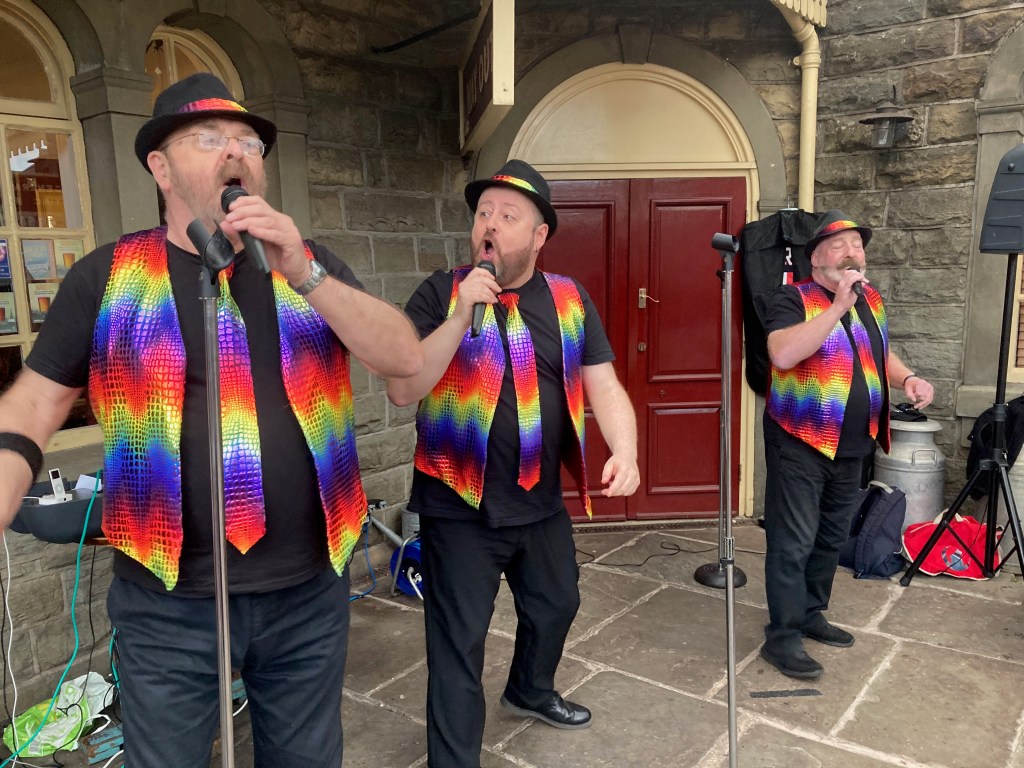
Wolf kept us entertained when we arrived at Rawtenstall performing “Do The Locomotion” amongst other songs.
More photos can be seen here.

International Day of Older Persons

In 1990, the United Nations General Assembly designated 1 October as The International Day of Older Persons.
Did you know?

  • The composition of the world population has changed dramatically in recent decades. Between 1950 and 2010, life expectancy worldwide rose from 46 to 68 years.
  • Over the next three decades, the number of older persons worldwide is projected to more than double, reaching more than 1.5 billion persons in 2050 and 80% of them will be living in low- and middle-income countries.
  • Prevalence figures based on a survey of 83,034 people in 57 countries found one in every two people held moderately or highly ageist attitudes (i.e. stereotypes and prejudice).

Activists set to tell their stories at living library event

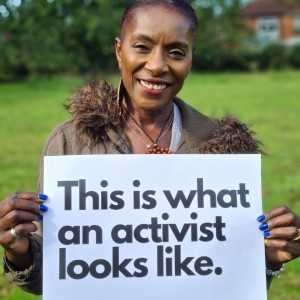
A living library event is being held on Friday, 1 October – to mark the launch of a new campaign that breaks stereotypes on what an activist looks like and showcase how generations are working together to tackle climate change.

The ‘This Is What An Activist Looks Like’ campaign launch coincides with the International Day of Older Persons and the living library event will give people the opportunity to talk to activists from all walks of life to be inspired to make a change in their communities.

All are welcome to the free drop-in event, which is being held at Manchester Central Library between 2.00pm – 3.30pm. The afternoon will also premiere a new campaign video that features eight activists – young and old – uniting in the fight against climate change.

A living library event allows visitors to browse the ‘bookcases’ and choose the ‘story’ they want to listen to, pull up a pew, and have a conversation with their chosen activist, who will be all set to share their personal stories about their activism to inspire all generations to act.
Dorretta Maynard

Among the ‘books’ will be community activist Dorretta Maynard from Trafford, who has spent most of her life volunteering in her community.

She said: “I’m a woman who stands up for her rights, who is calm, approachable and always has open arms. I want to help the next generation rise.”

Chris Barnes from Salford has turned a patch of wasteland in Salford into a blooming community garden, not only to act as a space for people to get together but also to grow their own produce.

The campaign has been commissioned by Greater Manchester Older People’s Network (GMOPN) and supported by the Talking About My Generation team.

We hope to see you there!

The Derek Jarman Pocket Park will also launch on 1 October at Manchester Art Gallery, ahead of the Derek Jarman Protest! exhibition opening on 1 December.
International Celebrate Bisexuality Day … Sunday Boys … Too Desi Too Queer … Timeline of LGBT History in Manchester

News

Why do we need Bi Visibility Day?

23 September is Bi Visibility Day. Bi people are often the forgotten part of the LGBT+ community. Their experiences are commonly assumed to be the same as lesbian and gay experiences, and their identities are frequently made invisible or dismissed as something that doesn’t exist, by people both inside and outside of this community.

They face a number of negative stereotypes, the primary ones being that they’re greedy, manipulative, incapable of monogamy and unable to make their minds up – the last of which is the same as saying who they are isn’t real.

The assumptions about bi people are also gendered. Bi women are more likely to be viewed as ‘actually straight’, their sexual orientation merely a performance to attract straight men, whereas bi men are frequently seen as going through a ‘phase’ on the way to coming out as gay.

Added to the above is also the problem of media representation. Depictions of bi identities are still extremely rare on screen, and when they do feature, they often fall into the usual pervasive negative stereotypes. In fact, the general public are as likely to have seen negative portrayals of bi public figures as they are to have seen something positive.

The challenges bi people face, often unshared by lesbian and gay peers, can also have a huge impact on their lives and frequently mean they feel unable to be themselves, even among their friends and family.

Research by Stonewall published last month showed that almost half of bi men (46 per cent) and a quarter of bi women (26 per cent) aren’t open about their sexual orientation to anyone in their family, compared to 10 per cent of gay men and just five per cent of lesbians.

This means a huge proportion of bi people are facing the harmful effects of biphobia in their daily lives – the stereotypes, the invisibility, the lack of belief that bi people exist – without the benefit of support, reassurance and acceptance. This is why we need Bi Visibility Day. It’s an opportunity to celebrate diverse bi identities, raise the voices of bi people, and call for positive change.

Inspirational Manchester LGBT+ choir up for major award

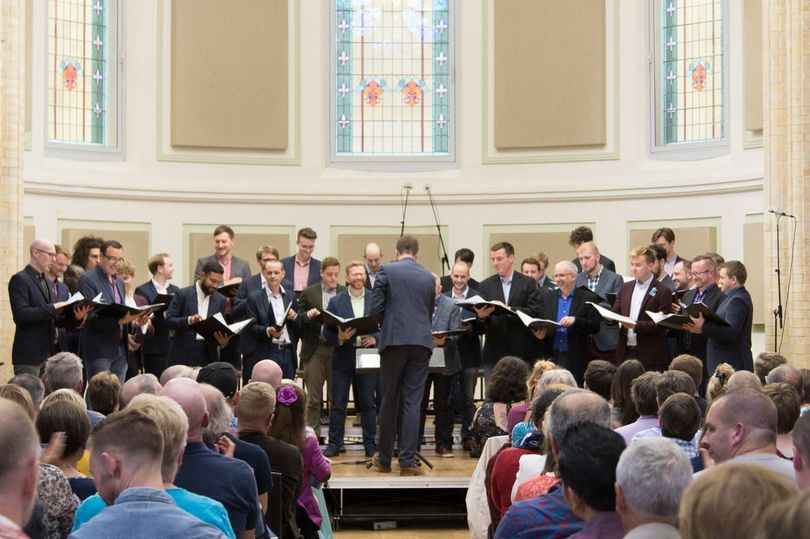
The Sunday Boys have been nominated for ‘Project of the Year’ at the National Lottery Awards

A LGBT+ choir in Manchester has been nominated for a prestigious award from the National Lottery.

The Sunday Boys was formed in 2016 as a way for low voice singers to sing, perform and meet like-minded people with shared interests in the city.

The group, which has quickly become an important voice for the LGBT+ community, has beaten off stiff competition from more than 1,500 organisations to reach the public voting stage in this year’s National Lottery Awards.

They are now one of 17 shortlisted groups vying for a £3,000 cash prize and, of course, the iconic National Lottery Awards trophy for ‘Project of the Year’.

Michael Betteridge, Artistic Director of The Sunday Boys, said the shortlisting had been the culmination of a difficult last year which had only further highlighted the significance of the group.

“The Sunday Boys were created to give Manchester an inclusive LGBT+ choir for people to learn how to sing great music, perform and of course make friends,” Michael says.

The Sunday Boys were formed five years ago as a place for LGBT+ people to share a love for singing

“It’s amazing to see the impact the group has on not only its members, but the people we perform to as well.”

The group, which recently performed at Manchester Pride’s candlelight vigil, regularly perform around the country and meet up every Sunday at their base in Ancoats to rehearse.

Michael adds: “Pre-Covid we were performing around the country and it was such a privilege to work with guest workshop leaders, rehearsing to help the choir focus and improve whilst taking great pride in supporting other artists.

“We are really proud of the work we’ve done in the local LGBT+ community and the funding received from the National Lottery has been pivotal to our success, especially during the pandemic.

“Regardless of the outcome, it’s been incredible to be recognised for everything that we do – it’s a real honour and we really hope people will get behind us for the vote and beyond!”

Jonathan Tuchner, from the National Lottery, added: “The Sunday Boys have done some fantastic work within the LGBT+ community and they thoroughly deserve to be in the finals of the National Lottery Awards Project of the Year 2021.”

You can vote for The Sunday Boys here. Voting runs until 5.00pm on 4 October.

Too Desi Too Queer

Wednesday 29 September 2021 at 6.30pm at HOME, 2 Tony Wilson Place, Manchester M15 4FN

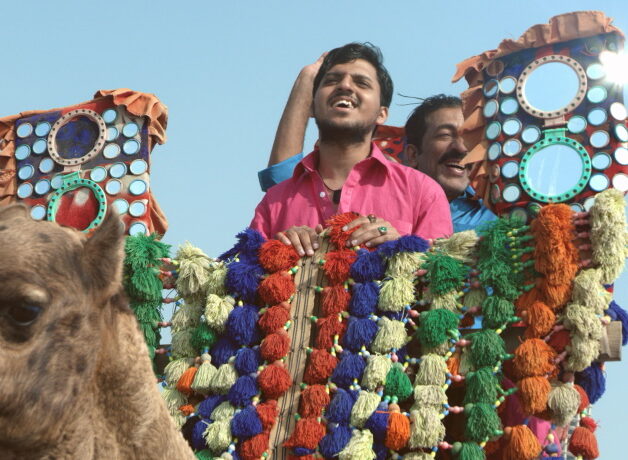
Bagri Foundation London Indian Film Festival is proud to return with its super-hit Too Desi Too Queer programme, a dynamic and thought-provoking selection of recent LGBTQIA+ short films exploring the lives, experiences and well-being of South Asian LGBTQIA+ communities in the Subcontinent and diaspora.

The films screening as part of the Manchester Indian Film Festival will be:

Stray Dogs Come out at Night (11 minutes / Punjabi with English subtitles)
Iqbal, a ‘maalishwala‘ by profession, cannot come to terms with his illness. He convinces his uncle to take a day trip to the beach, desperate for respite. The Arabian sea beckons.

Wig (26 minutes / Hindi with English subtitles)
Arkita believes herself to be modern, liberal and most importantly independent. An unprecedented encounter with a transgender sex worker questions her beliefs.

Compartment (5 mins)
A closeted young man’s inner desires are unleashed after a chance encounter with an effeminate person.

Ekaant (6 mins / Marathi with English subtitles)
Manasi, a poet, and Sudha, a housewife, are deeply in love with each other but the restrictions of their society has put chains around their relationship.

I Know Her (3 mins)
In the afterglow of a seemingly fated hookup, two women realise that perhaps they have a little too much in common.

Vaidya (23 mins / Hindi and English with partial English subtitles)
After a chance encounter while on holiday, Kabir and Vaidya’s whirlwind romance is brought crashing down when Kabir has to return home.

Timeline of LGBT History in Manchester

We have added a timeline of notable events in the history of the lesbian, gay, bisexual and trans community in Manchester here.

If there are any additions or amendments please contact us here.

Portico Library … Casa Susanna

News

Portico Library

The Portico Library on the corner of Mosley Street and Charlotte Street in Manchester, is an independent subscription library designed in the Greek Revival style by Thomas Harrison of Chester and built between 1802 and 1806. It is recorded in the National Heritage List for England as a Grade II* listed building and has been described as “the most refined little building in Manchester”.

The library was established as a result of a meeting of Manchester businessmen in 1802 which resolved to found an “institute uniting the advantages of a newsroom and a library”.

The library’s notable members include John Dalton, Reverend William Gaskell, Sir Robert Peel and more recently Eric Cantona.

Out In The City members met at Piccadilly Gardens Bus Station and took the short walk to the library.

We had booked the café area for the afternoon and enjoyed tomato and basil soup and various sandwiches followed by tea or coffee with biscuits in the library’s tranquil interior.

We were able to view the books on display and the current exhibition – Refloresta! – a groundbreaking installation of immersive sculptural and textile works by world-renowned Brazilian artist Maria Nepomuceno. Maria’s brightly-coloured artworks bring the vibrancy of the natural world alongside natural history books and archive materials from the Library’s 19th-century collection.

There are more photos to see here.

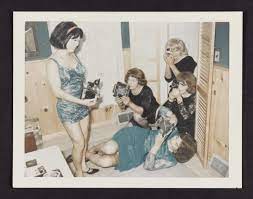
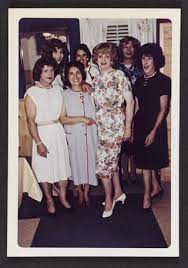
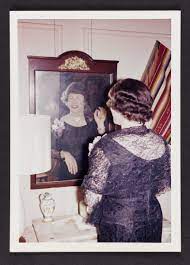
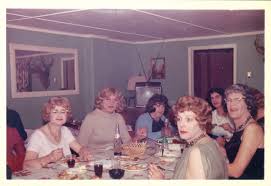
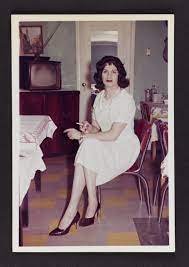
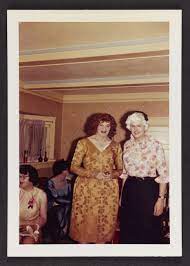
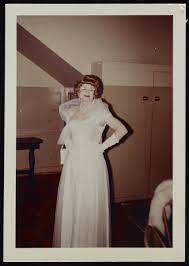
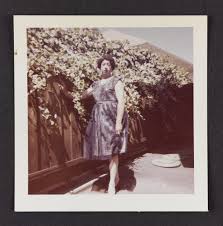
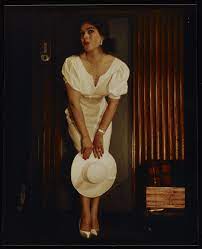
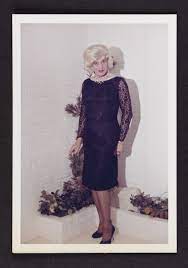
Casa Susanna, a 1960s resort where cross-dressing was safe

In the 1960s, Casa Susanna was a haven for cross-dressers, away from a world that didn’t understand the peace that came from trading in masculine clothing for bouffant hairdos and simple day dresses.

Many guests were heterosexual men who identified as transvestites, a term often considered derogatory today. Later in life, some would identify as trans women.

Photos taken at the Catskills resort were displayed at the Art Gallery of Ontario (AGO) as part of an exhibition, Outsiders: American Photography and Film 1950s-1980s, which features snapshots of people on the perceived margins of society, from musicians and bike gangs to cross-dressers.

In 2003, collectors Robert Swope and Michel Hurst found a box of photo albums and loose snapshots of 1960s cross-dressers, taken in a bucolic country setting, in a cardboard box at a New York City flea market. “I was electrified. I realised instantly that these photographs were extraordinary and something that no one, outside of the group, was ever meant to see,” Swope says. A business card was attached: “Susanna Valenti. Spanish Dancing and Female Impersonation.”

Swope and Hurst published the photos in a book in 2005, and the AGO acquired the collection last year. The photos mostly showed life at two resorts in upstate New York that catered to the cross-dressing community back in the 1960s: Chevalier d’Eon and Casa Susanna, both run by Susanna Valenti and wife Marie. Some pictures had notes scrawled on the back — “Do you like my hair like this or like that?”

That the photos escaped the dustbin of history is “wonderful” to think about, says Sophie Hackett, the AGO’s associate curator of photography. “They are an amazing record of trans community in the becoming,” she says. “They are typical snapshots on the one hand — there they are on the front porch, there they are at a picnic, or at the diving board. But then you kind of realise how exceptional they are as well, just for the subject matter alone.”

Virginia Prince (far left)

Virginia Prince, far left in the photo, was a pioneer in the trans movement. A guest at Chevalier d’Eon for the first time in 1961, she wrote about it in Transvestia magazine, hoping to reach out to the fearful: “Here we were, 15 otherwise normal active men living and dressing like women, and very happy and comfortable we were too. It wasn’t a ‘show,’ a special ‘situation’ or even a ‘party’. We were like any bunch of women who had gone on a weekend trip to some resort.”

Swope, one of the collectors who found the photos, was touched by the courage of the people they portrayed, who risked their families and livelihoods if anyone found out. “These photos are not pictures of drag queens exaggerating femininity but men who longed to experience what it would be like to be a woman,” he says. The resort was not just for the Zsa Zsa Gabors and Marilyn Monroes, Prince wrote in her 1961 article. “The cost is nominal; the value in acceptance, sociability, freedom of expression, conviviality and satisfaction is tremendous.”

Many of the photos in the AGO’s collection are attributed to “Unknown American.” There are several linked to Andrea Susan. Michael Gilbert, a York University professor who researches gender theory, says his late friend, who cross-dressed as Andrea Susan, took photos at the resort and developed them on site in a darkroom, because of the paranoia and fear that would come from handing them over to a stranger.
“You can almost feel their pleasure at being who they are,” says Gilbert, noting how it felt the first time he went to a gender diversity conference, dressed in a skirt and top, and walked outside in 1995. “I had to sit down on the bench and breathe deeply to keep from bursting into tears. Then of course, the next question is why can’t I do this whenever I want to? Who does it hurt? It doesn’t hurt anybody, and that’s the sadness.”

Susanna Valenti, the co-owner of the resort, wrote an advice column for Transvestia magazine. In 1969, she wrote that she had lost the “fabulous thrill” of the two identities and was going to live as Susanna full-time. It was one of her final columns, after which “we lose track of Susanna altogether,” curator Sophie Hackett says. The AGO suspects this collection was hers — perhaps something she tossed out or, if she died, something that was taken to a flea market.

Virginia Prince founded Transvestia magazine in 1960, and was prosecuted in 1961 for distributing obscene materials in the mail. In the late 1960s, she began living as a woman full-time. Michael Gilbert, the York professor and a lifelong cross-dresser who has the alter ego of Miqqi Alicia, calls her “the grandmother of us all.” Prince was very encouraging to others, but as she got older, she became very opinionated and alienated some people, he says. “In those days she was the only game in town.” Prince died in 2009.

In 1966, Darrell Raynor published A Year Among the Girls, which describes Raynor’s time at the inn. “If there was a place where transvestite friendships were made and sealed it was at this resort,” Raynor wrote.

“He shared an apartment with two other men, neither of whom has any suspicion of his transvestism,” Raynor wrote. “I was curious how he could share an apartment and get away with it. He explained that he kept his feminine clothing in a locked bureau. He slept in satin nightgowns, kept his bedroom locked, and managed to attend to his special laundering without anyone ever spotting it.”

Katherine Cummings is a transgender rights advocate from Australia. She visited Casa Susanna as a 28-year-old student, then living in Toronto. Like several of the cross-dressing community who went to the resort, she later had gender-confirming surgery. In an article for Polare magazine, she called it “the first place where I could walk around openly in daylight, confident that anyone I met could be engaged in conversation without the need for subterfuge about my underlying sex.”

Gloria was a Midwestern steel magnate who owned a Polaroid camera, a prized possession because “the results are instantaneous and transvestites cannot wait one minute longer than necessary to be shown just how beautiful they are,” Cummings writes in Katherine’s Diary. “The other reason for their popularity is the need to hide one’s oddness from the world.”

40 years of celebrity interviews … National Health & Wellbeing Survey 2021 … Manchester’s Gay Village before the ’90s

News

What 40 years of celebrity interviews taught me about attitudes towards gay men

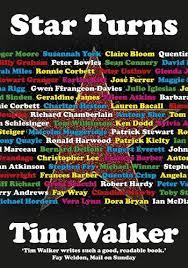
Tim Walker

Tim Walker is a journalist, broadcaster and award-winning author. Star Turns, his anthology of interviews, is published this month (SunRise Publishing).
Walker has worked for The Observer, the Daily Mail, the Daily Telegraph, the Daily Mirror, The European and The New European. He stood as a parliamentary candidate for the Lib Dems in Canterbury in the 2019 general election, before controversially standing down and falling behind his Labour opponent.

Star Turns brings together more than 70 celebrity interviews originally published in The New European over several years. With subjects ranging from Roger Moore to Peter Ustinov, Charlton Heston and Diana Rigg, Walker’s unique style throws new light on familiar faces from stage, screen and life. He regularly uncovers facts and facets not previously revealed.

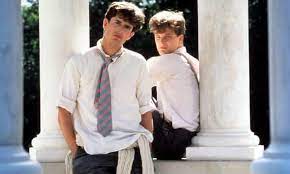
In the 1980s, after the film Another Country made him a star, Rupert Everett had to contend with sly digs about his sexuality in Nigel Dempster’s Daily Maildiary. Photograph: Ronald Grant

It used to be “Don’t talk about my private life!” to avoid a tabloid onslaught. Thankfully there’s more acceptance today.

Michael Grandage’s film My Policeman, which has just finished filming in Brighton, tells the story of a married couple in a loving and enduring menage a trois. The third party is the husband’s male lover.

The adaptation of Bethan Roberts’ novel covers a period in recent English history – stretching from the 1950s to the 90s – when attitudes to homosexuality underwent significant change. What was once illegal, and supposedly scorned by right-thinking members of society, became accepted to the extent that, in 2014, same-sex marriage was recognised in law.

That Rupert Everett should play the titular policeman’s lover in later life is poignant as the actor, now 62, had to live through the tail end of the often painful journey towards greater enlightenment.

In the 1980s, after the film Another Country made him a star, Everett had to contend with sly digs about his sexuality in Nigel Dempster’s Daily Mail diary. It wasn’t until 1995 that the actor finally felt able to confirm what had become an open secret, in an interview with the Daily Express.

Young gay men may now wonder why it took him so long but, while homosexuality may have been decriminalised in 1967, attitudes didn’t change overnight. Everett himself made the point that few, if any, of his contemporaries felt able to be honest about their sexuality until they had first established themselves. He feels, looking back, that his openness about his sexuality had an impact on his career: he blames not filmgoers, largely oblivious to actors’ private lives, but risk-averse studio executives who could never, for instance, have countenanced him in a role as overtly heterosexual as James Bond.

Looking back at the celebrity interviews that Tim Walker has conducted over almost 40 years, it makes him wonder if the public were ever quite as obsessive – and puritanical – about the sex lives of stars as some newspapers. It’s depressing how actors such as Richard Chamberlain and Antony Sher asked their PRs to tell me on no account to inquire about their private lives. Both have since come out and found contentment, but Chamberlain would, in his Dr Kildare days, get himself photographed with women; and Sher went so far as to get married to one. Making such a fuss about not talking about his private life was, as Sher now wryly accepts, like “putting a gigantic neon sign over my head saying ‘This guy is gay’”.

It’s hard to blame either actor for being defensive, as the Aids epidemic had, in the 1980s, not engendered sympathy towards gay men from the tabloids, only more hostility. Liberace and Rock Hudson were afforded neither privacy nor dignity in their final days as they were dying. Piers Morgan, then an ambitious young reporter on the Sun, wrote an article calling for East Enders to be banned after it dared to show “yuppie poofs” kissing. He has since apologised.

There were others, of course, who got through those times by living their supposedly scandalous lives in plain sight. John Schlesinger, who made Sunday Bloody Sunday in 1971, never bothered going through with a conventional marriage, as his fellow director Tony Richardson had. I met him in 1991 when, midway through the interview, he got up and gave a male house guest who was leaving a kiss.

Psychologists talk airily of how shame always requires punishment – almost as if it’s a process some gay men have to work through – and LGBT rights campaigners may today say that not being open about sexuality amounts to cowardice, which holds back the cause of equality. It’s too easy, however, to judge with hindsight. 

What’s not in question is that the tabloids and some politicians had made these relatively recent years a distinctly hostile environment for gay people.

National Health & Wellbeing Survey 2021

Opening Doors London (ODL) is the largest UK charity providing activities, events, information and support services specifically for lesbian, gay, bisexual, trans, queer, non-binary or gender fluid (LGBTQ+) people over 50.

Every year they carry out research with the aim of improving the lives of LGBTQ+ people over 50. This year they are focusing on people’s health and wellbeing and our experiences using health services.

Whilst it’s always hard to influence for improvements in our healthcare, personal testimonies make the arguments for better healthcare much more powerful. Please click here for the survey.

The survey isn’t long or complicated but if you need help completing it, one of their volunteers can conduct the survey over the phone. Just leave a voicemail to request this on 07971 954 918.

For those who prefer to complete a paper copy of the survey, please contact ben.thomas@openingdoorslondon.org.uk and they will post out a survey and stamped addressed return envelope. 

The survey closes on 15 October 2021. Their final report and recommendations will be published on their website on 1 December 2021: http://www.openingdoorslondon.org.uk

Opening Doors London

Secret codes and blacked out windows – What Manchester’s Gay Village was like before the 1990s

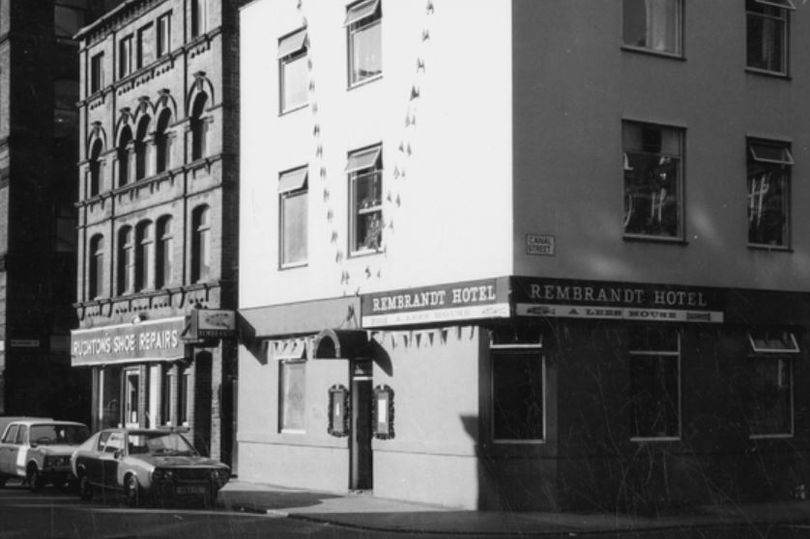
The Rembrandt Hotel on Sackville Street in 1973 (Image: Manchester Library Archives)

It’s safe to say that walking down Canal Street in the seventies and eighties was a totally different experience to today.

While rainbow flags can often be seen draped across the walls and outside the bars today where drag queens, the LGBT+ community and allies proudly enjoy themselves, the few gay-friendly pubs in the area during the 70s were very discreet.

Most had blacked out windows so you couldn’t see what was going on inside – and for good reason as well.

Since homosexuality had been partially decriminalised in 1967, Canal Street was slowly starting to grow an identity of its own.

But just because the law had changed to allow two gay men to have sex together – as long as it was in private and both were over the age of 21 – it didn’t mean that public attitudes had yet changed.

Police raids were still a regular occurrence in the Gay Village.

Places like The New Union and the Rembrandt Hotel were often visited by police in an attempt to try and catch gay men engaging in sexual activity in public.

To get the lowdown on gay events and news happening in the area, people would have to visit one of the bars and discreetly ask the bartender for a copy of the “Football Pink”.

Under the clever guise of the Manchester Evening News football edition of the same name at the time, they were actually asking for a locally-distributed gay newspaper called The Mancunian Gay Magazine.

Started in 1978, the newspaper gave a voice to Manchester’s growing LGBT+ community and, for 20p a copy, contained articles such as “This Thing Called S & M” and “Gays – The New Untouchables?”.

But as Manchester’s gay scene was trying to emerge from the shadows, the police were gaining new tactics to catch up on what was happening in Canal Street.

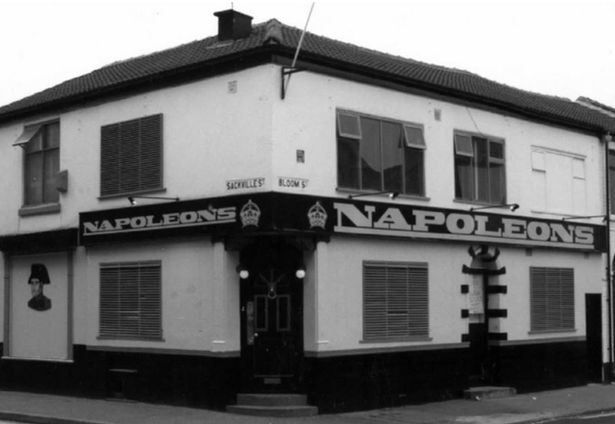
Napoleons on Bloom Street in 1986 (Image: Manchester Library Archives)

The Mancunian Gay Magazine reported an incident in November 1984 where 23 plain-clothed police officers raided the Napoleon’s pub.

Police felt the manager was “permitting licentious dancing” – a local byelaw dating back to 1882 which prohibited dancing deemed to be a “breach of the peace”.

The pub’s membership list was seized and police obtained the names of addresses of everyone that frequented the venue.

Gay people, many not out to their friends, family, or colleagues, were at risk of being outed and potentially shunned by their local community.

The incident led to The Gay Activists Alliance calling an emergency meeting, where it was agreed that a police monitoring group would be set up with the support of Manchester council.

But, just as the emergent community was finding its feet, it was thrust back into the closet in the 1980s – thanks to the association of homosexuality with the AIDS epidemic.

James Anderton, Greater Manchester’s Chief Constable at the time, even went as far as saying in December 1986 that homosexuals and others with HIV/AIDS were “swirling in a human cesspool of their own making”.

Two years later, Margaret Thatcher enacted Section 28, a British law prohibiting the “promotion of homosexuality” by local authorities.

This led to huge protests in the city with over twenty thousand people waving banners in defiance.

But, somehow, the LGBT+ community has always tried to find a way to rise above the discrimination.

The Thompsons on Sackville Street in 1970 (Image: Manchester Library Archives)

The launch of Mantos bar in 1990 was heralded as the commercial start of Manchester’s Gay Village, solidified by the success of Queer As Folk in 1999.

The commercialisation of Manchester Pride over the years has also highlighted the area as a beacon for many LGBT+ people – although, of course, there are others who feel it is drifting from its roots.

It’s evident that the Gay Village holds many memories – both good and bad – of historic importance.

People enjoying themselves at Manchester Pride 2019. (Image: ABNM Photography)

Visit to Saltaire … Sebastian Vettel

News

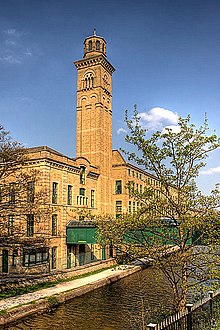
Saltaire is a Victorian village in Shipley, part of the City of Bradford Metropolitan District, in West Yorkshire. The Victorian era Salt’s Mill and associated residential district located by the River Aire and the Leeds and Liverpool Canal is a designated UNESCO World Heritage Site.

Saltaire was built in 1851 by Sir Titus Salt, a leading industrialist in the Yorkshire woollen industry. The name of the village is a combination of the founder’s surname and the name of the river. Salt moved his business (five separate mills) from Bradford to this site near Shipley to arrange his workers and to site his large textile mill by the Leeds and Liverpool Canal and the railway.

Salts Mill, Saltaire

Salt built neat stone houses for his workers (much better than the slums of Bradford), wash-houses with tap water, bath-houses, a hospital and an institute for recreation and education, with a library, a reading room, a concert hall, billiard room, science laboratory and a gymnasium. The village had a school for the children of the workers, almshouses, a park, allotments and a boathouse.

Out In The City members met some of our friends from Yorkshire and most of us dined in the pub overlooking the River Aire, before visiting Salt’s Mill.

The mill is now an art gallery including several large rooms given over to the works of the Bradford-born artist David Hockney. There is a lot to see and unfortunately we didn’t have enough time to properly explore the area. Some photos can be seen here.

Sebastian Vettel on speaking out as an LGBT+ ally: ‘Everyone has the same right to love’

Even by Formula 1’s dramatic standards, the recent Hungarian Grand Prix was a thriller – yet an image captured before it began may prove its biggest legacy.

The race seemed to have everything, from a shock first win for Esteban Ocon to the surreal sight of Lewis Hamilton lining up alone at the start.

There was another moment that made headlines around the world, though.

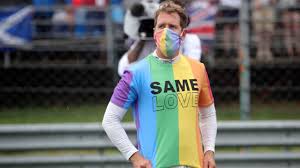
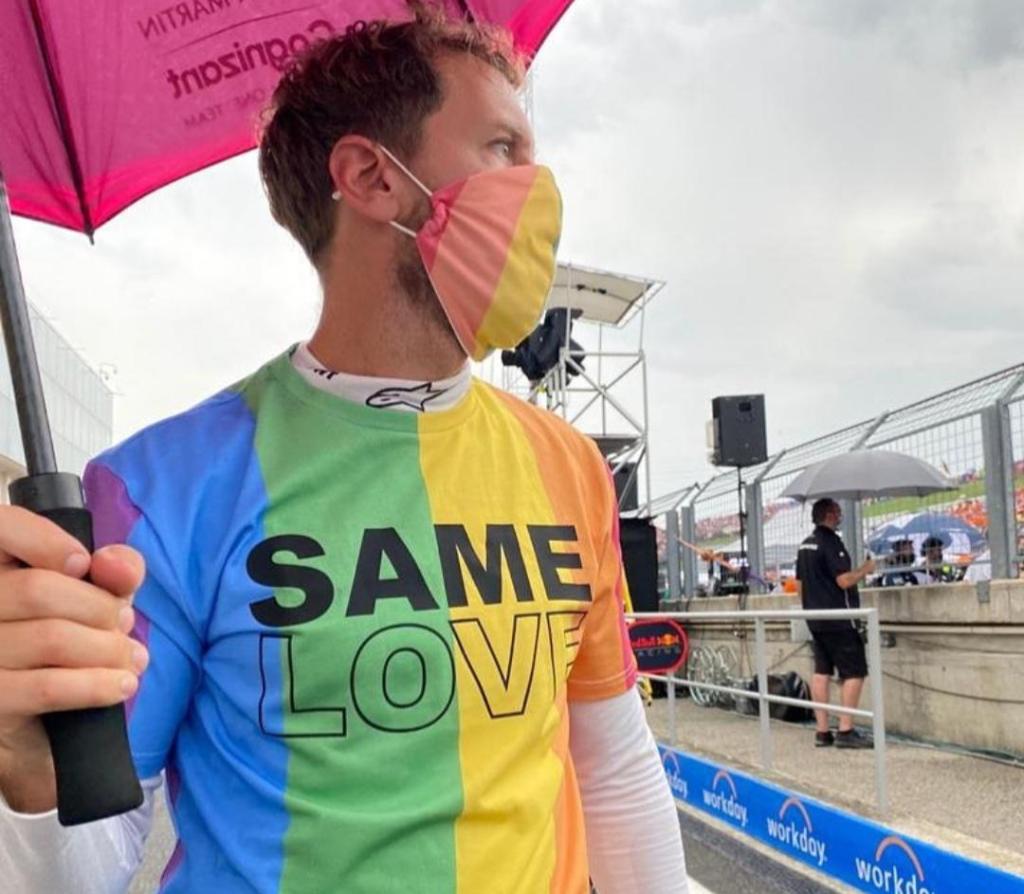
During the pre-race national anthem ceremony, Sebastian Vettel sported a Pride shirt in protest against anti-LGBT+ legislation brought in by Hungary’s government.

In a special episode of the BBC’s LGBT Sport Podcast, the four-time world champion explains why he decided to take a stand, and the difference he hopes it will make.

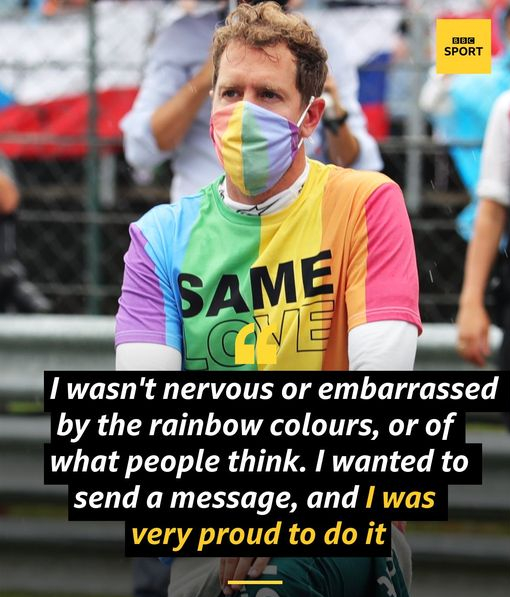
“I wasn’t nervous or embarrassed by the rainbow colours, or of what people think,” Vettel says. “I wanted to send a message, and I was very proud to do it.”

‘It doesn’t matter who you fall in love with’

Vettel competed in Hungary wearing a racing helmet featuring a rainbow

Vettel’s decision was not an impulsive one.

The Aston Martin driver knew that Formula 1 would be heading to Hungary this summer, and that the country’s government was widely seen as hostile to the LGBT+ community, passing a law earlier this year banning the promotion of homosexuality and transgender issues in schools.

In the weeks before the grand prix, the European Parliament voted in favour of taking legal action against the new law; Hungary’s Prime Minister Viktor Orban responded by saying school policy was a matter for his country, not “Brussels bureaucrats”.

“I remembered I’d seen in the news that the current government doesn’t have the most progressive views on certain things,” Vettel says. “There was a lot of debate about the laws that prohibit access to all ages getting a wholesome education and leaving some parts out, which I think is completely wrong.

So the idea was born that we have this moment before the race where we are able to put out certain messages, and I thought it was a good opportunity to send out a small sign.”

That’s exactly what the German did.

There was a rainbow sweeping up the side of his trainers and across his racing helmet; a Pride-coloured face mask as he walked around the track; and that T-shirt bearing the message: ‘Same Love’.

“It’s the name of a beautiful song by Macklemore, and I think it explains in a nice way some of the wrong perceptions people have,” Vettel says.

“It doesn’t matter your skin colour, it doesn’t matter your background, it doesn’t matter where you come from, it doesn’t matter who you fall in love with. In the end, you just want equal treatment for everybody.”

‘It meant a lot to me’

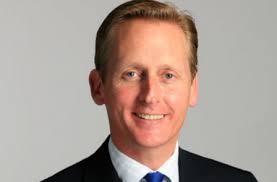
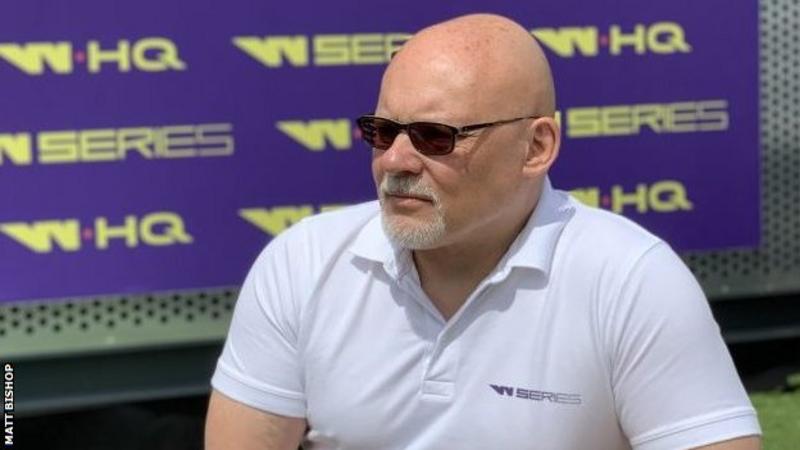
Matt Bishop spent 10 years with McLaren and was communications director for the W Series before joining Aston Martin in January

Vettel’s actions resonated with Matt Bishop, Aston Martin’s chief communications officer, a veteran of the F1 world, and a founder-ambassador for the Racing Pride group.

“I joke that, when I arrived nearly 30 years ago, I was the only gay in the F1 village,” says Bishop.

“Now I’m not that, but LGBT+ people in Formula 1 are still a rarity. So to have someone like Seb, who is a straight man who completely understands that one should be able to live and let live, and love and make love to whoever you like, is very heartening. It’s what we call allyship, and as I said to Sebastian, it meant a lot to me.”

Following Vettel’s actions in Hungary, messages of support came in from across the LGBT+ community as well as from Lewis Hamilton, who posted a message on Instagram promising to “join you next time with the same shirt”.

“I was surprised it was so much of a big deal,” Vettel admits. “Ideally, there wouldn’t be any reaction because it’s just normal.

There are countries still arguing about whether gay marriage should be legal or not legal. I think there’s enough marriage for all of us, you know. It makes no difference to straight people whether gay people are allowed to get married or not, but it makes a huge difference to gay people to be able to get married like everyone else.

So yeah, I was surprised – but it shows that there’s still so much that needs to be done.”

And what about the reaction of those who felt that the Aston Martin driver should stick to racing, and that “politics and sport shouldn’t mix”?

“I get the point,” Vettel says.

“I grew up in the sport, and had lots of discussions with experts and media and communications, and you hear this statement a couple of times. But are we talking about ‘politics’ when we’re talking about human rights? I don’t think so.

I think there are some topics where you can’t duck or say: ‘It doesn’t belong here, let’s not talk about this.’ Some topics are so big that they belong literally everywhere, and everyone has to be aware.”

‘Just push the door open … you will become a superstar’

“I wasn’t surprised that LGBT+ people would take Sebastian to their hearts,” Bishop says.

“But I think it’s particularly important when someone who is well-known as a straight family man takes up the cause. And I’ll tell you this. If a gay man becomes a Formula 1 driver, drives for a good team and wins, he will become the biggest and most loved sports star in the whole wide world.

So if somebody is in Formula 3 or Formula 2 and is nervous, just push the door open. It will spring open for you, and you will become a superstar.”

Vettel believes that showing an inclusive attitude is vital.

“If I can be an inspiration, that’s great, but in the end, the whole environment has to be inviting,” the German says.

“So if small things like what I did help to raise awareness and express support, that’s great. But we have to stop judging people on what they like to do and who they love. We should be seeing the people first, and everyone is different and everyone has a beauty about them.

Let’s just treat people the way we want to treat them, equally, and not based on who they love.”

Sebastian Vettel and Matt Bishop were speaking to Jack Murley on the BBC’s LGBT Sport Podcast.